
Kaizen Success Stories
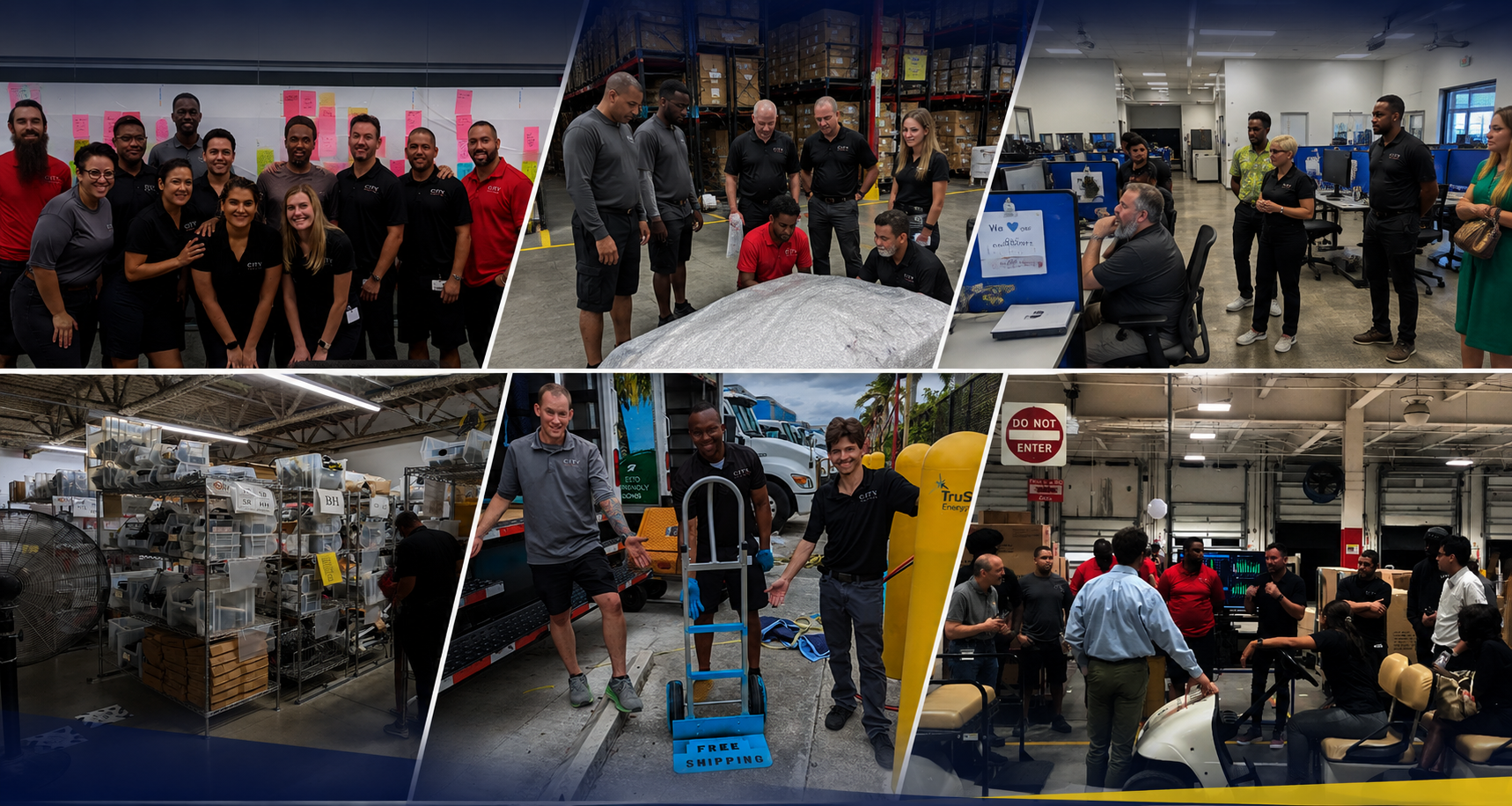
Real Manufacturing Results. One Kaizen at a Time
Explore real-world Kaizen success stories showing how manufacturing teams solved critical problems, improved performance, and created sustainable results.
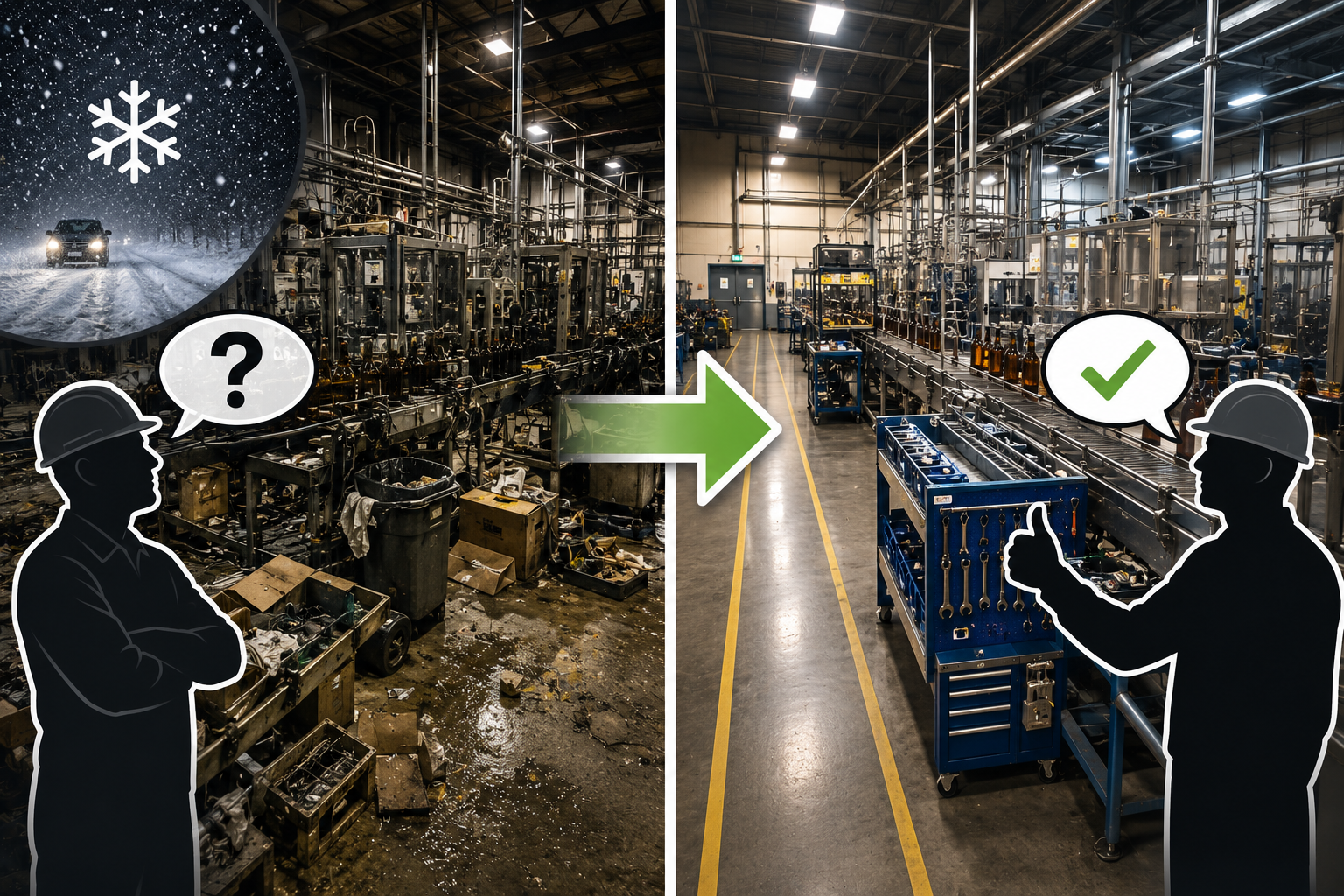
What Are You Going to Screw Up Today?
A historic winter storm shut down the plant, stranded team members, and cut a four-and-a-half-day Kaizen nearly in half. Most people would have postponed the event. Instead, the team cut changeover time by nearly 50% and turned one skeptic into one of its biggest supporters.
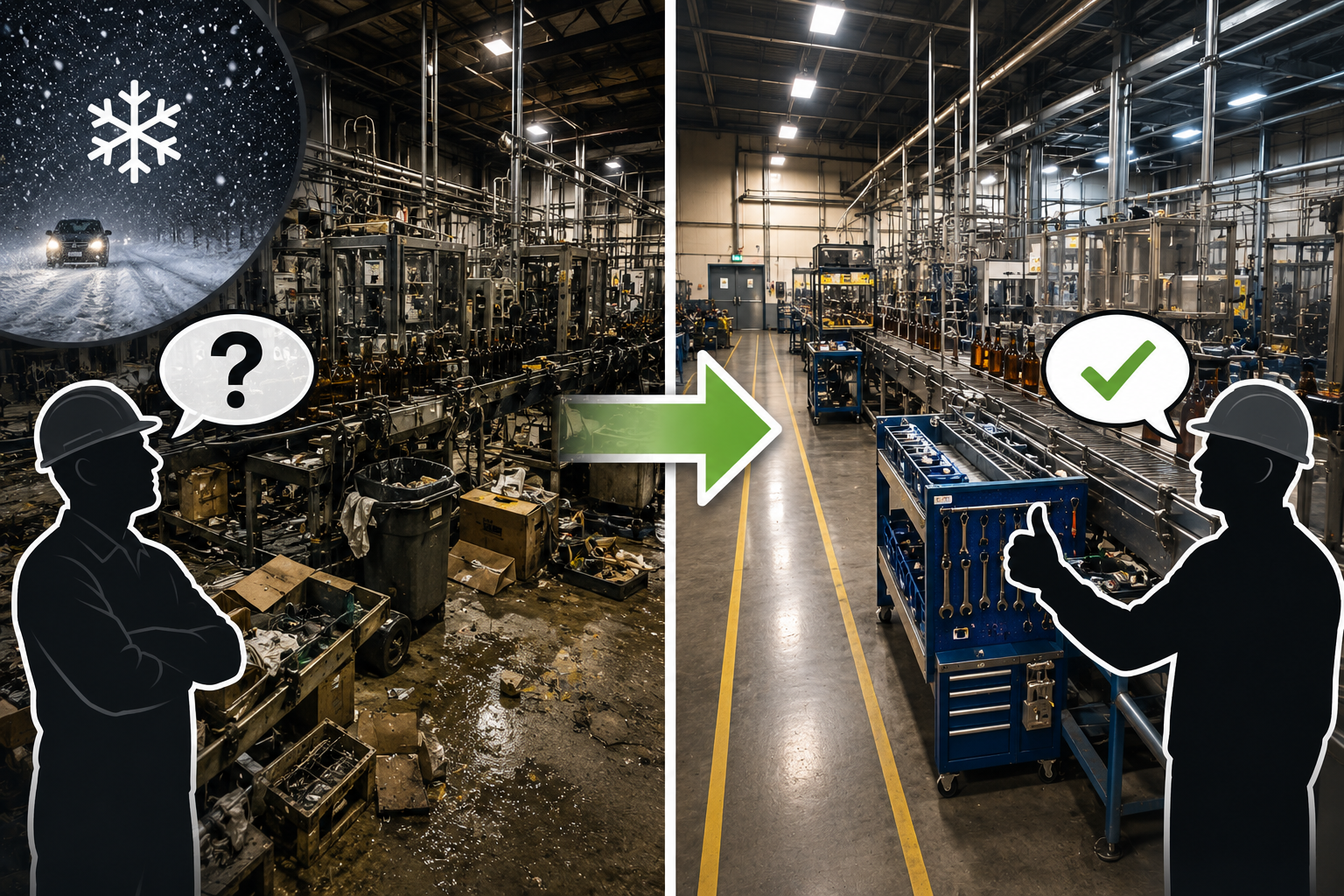
Kaizen Snapshot
Setting: Bottling line at a major beverage manufacturer
Challenge: Reduce lengthy changeovers despite losing nearly half the planned Kaizen to a historic winter storm.
Stakes: Limited time, missing team members, production pressure, and widespread skepticism about improvement efforts.
Approach: SMED training, operator-led process redesign, hands-on implementation, and coaching the production crew through the new process.
Outcome: Changeover time reduced by nearly 50%, operator travel reduced by an estimated 80–90%, and a skeptical employee became one of the strongest advocates for the improvement effort.
Key Lesson: You don't need perfect conditions to achieve breakthrough results.
What Are You Going to Screw Up Today?
The Situation
I was scheduled to facilitate a SMED (Single-Minute Exchange of Die) Kaizen to reduce changeover time on a bottling line at a major manufacturing facility. Like most changeover events, we had a carefully planned four-and-a-half-day schedule.
Then Mother Nature had other ideas. Weather forecasts predicted a major winter storm, so instead of flying in on Sunday as I normally would, I decided to leave a day early. That decision turned out to be the only reason I made it.
My connecting flight was canceled as snow began falling. After scrambling with the airline, I found a flight to Indianapolis, rented a car, and spent nearly three hours driving through a snowstorm to reach my hotel in Kentucky. When I arrived, the roads were covered with snow and ice. The town was nearly deserted. The plant had already shut down. At one point, we weren't even sure the Kaizen would happen.
What Was Getting in the Way
By Sunday, things had only gotten worse. The entire town was effectively closed. Restaurants were closed. The plant remained shut down. Employees couldn't leave their homes.
Our carefully planned schedule disappeared almost overnight. Eventually, leadership decided they would try to restart the facility late Monday afternoon, allowing us to begin the Kaizen on Tuesday if enough team members could safely make it to work.
Even then, several participants were still snowed in. We would have fewer people. Less time. And somehow, we still needed to deliver meaningful results.
What We Did
Tuesday morning finally arrived. The roads were passable. People slowly began making their way into the plant. Some looked genuinely happy just to have survived the drive. Instead of focusing on what we had lost, we focused on what we could still accomplish.
The team learned the principles of SMED before walking the Gemba to observe the current changeover. Operators mapped their movements using spaghetti diagrams. For many, it was the first time they had ever stepped back and looked at the entire process instead of just their own responsibilities. The waste quickly became obvious:
Long walks.
Poor organization.
Equipment that wasn't properly aligned.
No visual controls.
Little standard work.
The team generated improvement ideas and immediately began putting them into practice.
The Breakthrough
While we were observing the first changeover, a machine operator from the neighboring production line kept watching us. Finally, he walked over and asked, "What are you guys going to screw up today?"
Apparently, previous improvement efforts hadn't left him with much confidence. I smiled and replied, "Hopefully nothing. Our goal is simply to help this team make their work easier, safer, and better." He didn't look convinced. But our team was.
As they tested improvements during their own changeovers, something changed. Every success generated another idea. Every improvement inspired another. Despite losing nearly half the planned week, momentum kept building.
What Changed
By the final day, we made what many facilitators might consider a risky decision. Rather than spending the morning polishing our presentation, we invested those hours implementing a few final improvements. Then we handed the process back to the production crew.
Not to demonstrate it. Not to do it for them. To coach them through it. Each Kaizen team member partnered with a crew member, helping them follow the new process while explaining why each change had been made. The crew wasn't simply following instructions. They were learning the new standard from the people who had designed it. That investment paid off.
The production crew completed the changeover in just under half the original time. Spaghetti diagrams showed operator travel had been reduced by an estimated 80 to 90 percent. The line restarted smoothly. The crew looked confident. The improvements were no longer the Kaizen team's. They belonged to the operators.
The Moment That Said It All
Later that day, the same operator from the neighboring line walked over. This time he wasn't skeptical. He smiled and asked, "When can you help my line?"
That single question said more than any metric ever could. Trust had been earned.
The Report-Out
Despite the shortened week, the team delivered one of the most energetic report-outs I've ever witnessed. The excitement was genuine because every improvement had come from the people doing the work. The team leader later commented that in all his years participating in Lean projects and Kaizen events, he had never seen a team so engaged.
What began as a week threatened by weather had become one of the most successful changeover events they'd experienced. Even better, the improvements created a model that could now be replicated across the facility's other production lines.
The Takeaway
Kaizen isn't about having perfect conditions. It's about helping people solve real problems together. Snowstorms, compressed schedules, and missing team members. Those things make improvement harder. They don't make it impossible.
When people own both the problem and the solution, remarkable things can happen—even when the odds aren't in your favor.
Why This Matters
Many organizations delay improvement because they believe they need more time, more resources, or better circumstances. In reality, the greatest breakthroughs often happen when teams stop waiting for perfect conditions and begin improving with what they have.
The goal isn't perfection. The goal is progress. And when people experience that progress firsthand, skepticism turns into ownership—and ownership creates sustainable results.
Ready to Cut Your Changeovers in Half?
Long changeovers aren't usually caused by one big problem. They're the result of hundreds of small inefficiencies that have quietly become accepted over time.
A focused SMED Kaizen helps your team see those opportunities, eliminate unnecessary motion, create better standards, and dramatically reduce downtime—without sacrificing safety or quality.
Schedule a Breakthrough Assessment to discover how much hidden capacity is waiting inside your current changeover process.
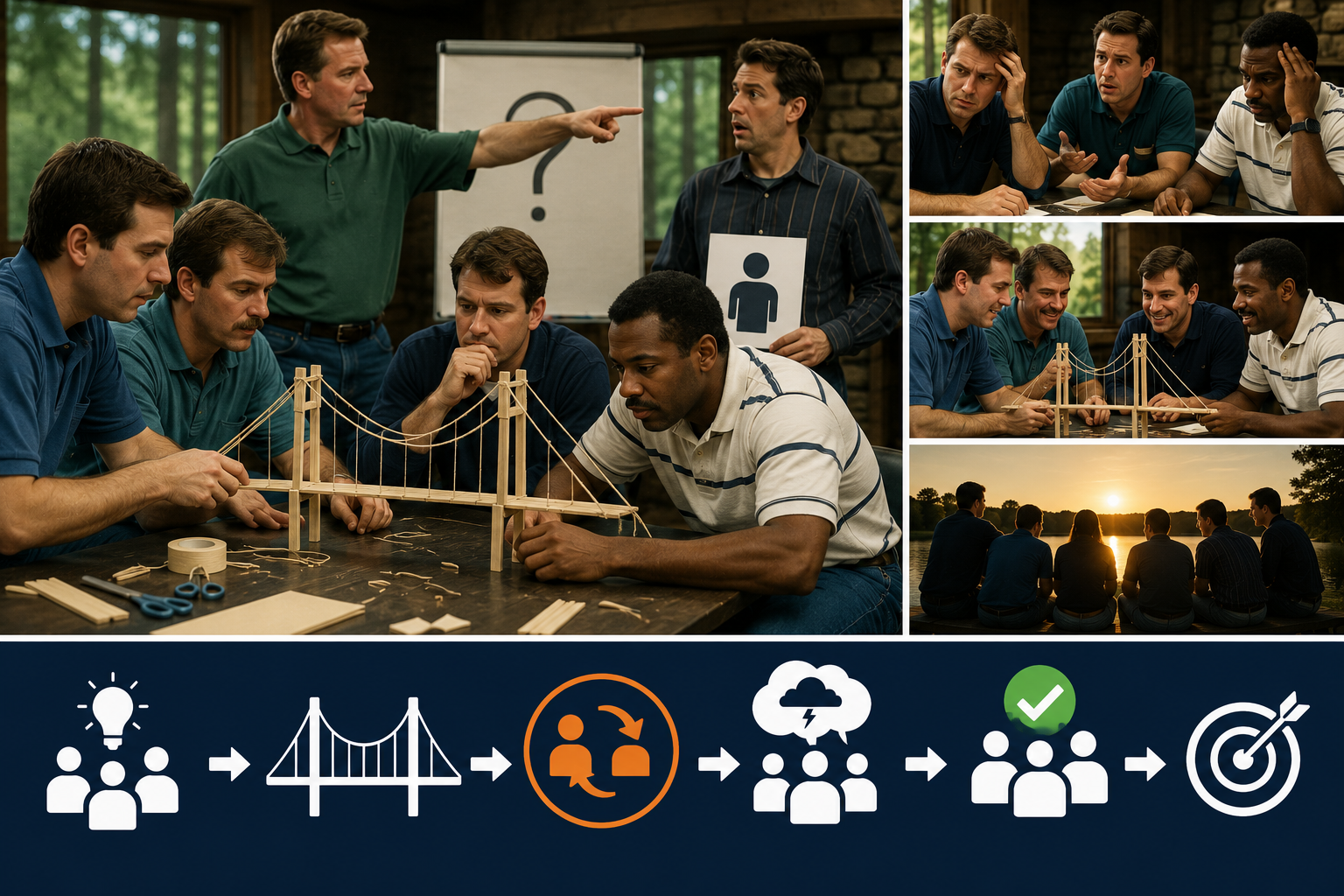
The Week They Kept Moving the Goalposts
I expected a week of management training. Instead, I spent five days having the rules changed, my plans disrupted, and my assumptions challenged. It became one of the most valuable leadership lessons of my career and one that still shapes every Kaizen event I facilitate today.
Kaizen Snapshot
Setting: Worthington Armstrong Venture (WAVE) management development program
Challenge: Learn a new management philosophy through a week of constantly changing, unpredictable team exercises.
Stakes: Develop leadership skills, adapt to a new corporate culture, and learn how to lead effectively when plans don't go as expected.
Approach: Experiential learning, team challenges, unexpected changes, and continuous reflection instead of traditional classroom instruction.
Outcome: A completely different perspective on leadership, teamwork, and facilitation, one that has influenced every Kaizen event and leadership workshop I've led since.
Key Lesson: Great leaders don't avoid uncertainty. They learn to thrive in it.
The Week They Kept Moving the Goalposts
The Situation
A little over a year after becoming a plant supervisor at a small Armstrong World Industries facility near Chicago, my career took an unexpected turn. Armstrong and Worthington Steel formed a joint venture called the Worthington Armstrong Venture (WAVE), and I was transferred to a larger manufacturing facility near Baltimore as the Industrial Engineer and Quality Manager.
As the new organization began adopting Worthington's culture, I was selected to attend the company's management development program. I expected a typical week of management training with classrooms, lectures, overhead transparencies (no Power Point at the time), and a few role-playing exercises.
Instead, I found myself living at a camp in Ohio with managers from across the company. It wouldn't take long to realize this wasn't going to be anything like the management training I had experienced before.
What Was Getting in the Way
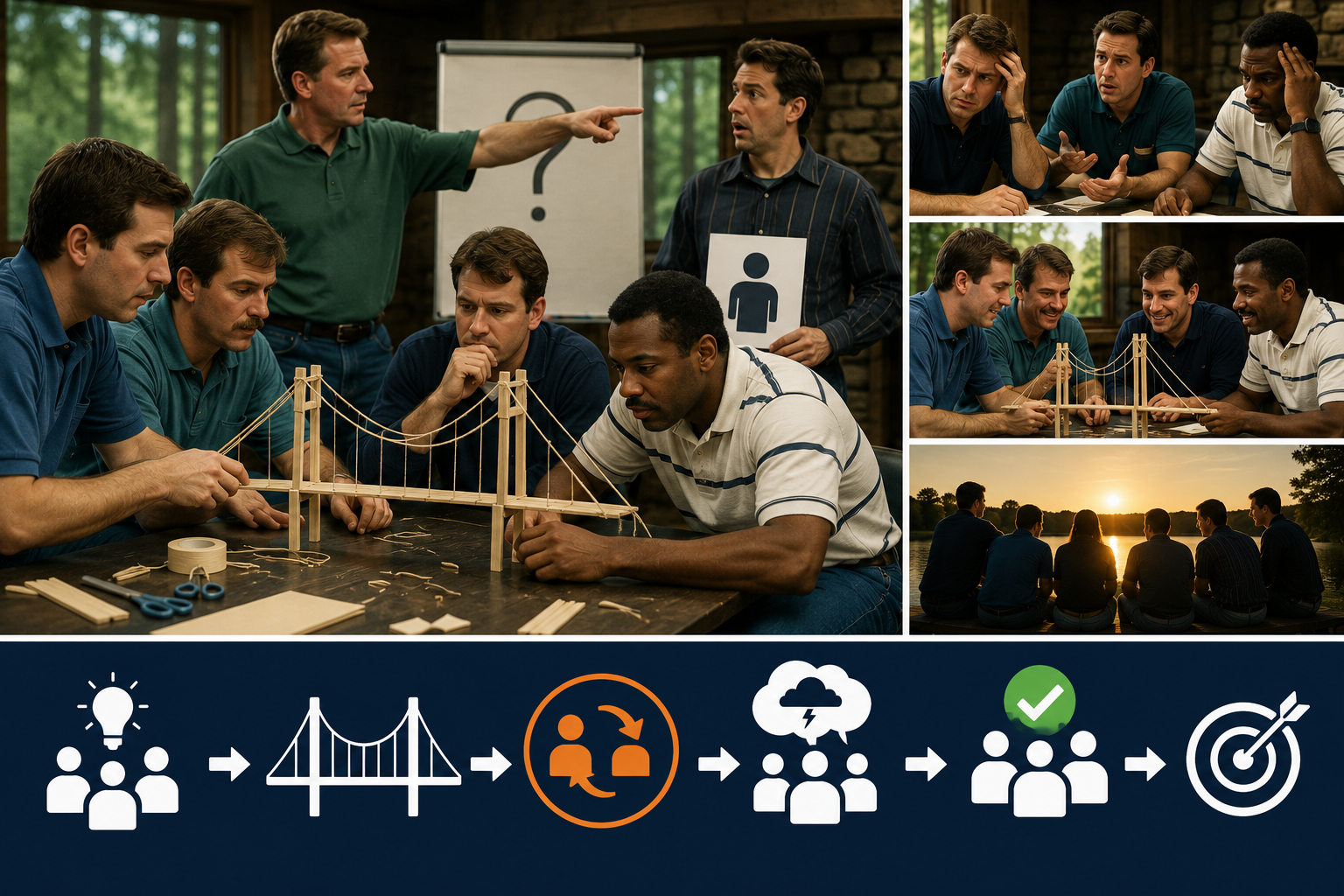
The first exercise seemed straightforward. Our team was asked to design and build the best suspension bridge possible using a limited set of materials. Like any engineering team, we quickly organized ourselves, assigned responsibilities, and developed a plan.
Then everything changed. About fifteen minutes into the exercise, an instructor walked into the room. Without warning, our team leader was removed. Someone we had never met was assigned to replace him. We weren't allowed to start over. We simply had to adapt. At first, it felt frustrating, then confusing, then interesting.
What We Did
As the week continued, the pattern repeated itself. Every time we thought we understood the assignment the rules changed, the team changed, the priorities changed, or the circumstances changed.
Every exercise included an unexpected twist. Eventually, our conversations shifted. Instead of asking, "Why do they keep doing this to us?" we began asking, "What are they trying to teach us this time?"
Without realizing it, we stopped expecting stability. We started expecting change. Something remarkable happened. We became much better at helping one another navigate uncertainty.
The Breakthrough
By the middle of the week, I realized this wasn't management training. It was adaptability training. The instructors weren't evaluating our original plans. They were watching how we responded after those plans stopped working.
Some participants struggled whenever a curveball appeared. Others became frustrated when their carefully constructed plans suddenly unraveled. I found myself naturally stepping into a different role. Helping people regroup, refocus, stay calm, and remember the real objective.
The goal had never been to build the perfect bridge. The goal had been learning how to lead when the unexpected happened.
What Changed
Looking back, that week changed the way I viewed leadership. It taught me something I've carried throughout my career. No matter how well you prepare, something will change. A key leader won't be available. Equipment will fail. Priorities will shift. Weather will interfere. Someone will challenge the plan.
The organizations that succeed aren't the ones that avoid those moments. They're the ones that adapt to them. That lesson has shaped every Kaizen event, workshop, and leadership engagement I've facilitated ever since.
The Takeaway
Today, people sometimes ask why I stay so calm when something unexpected happens during a Kaizen event. The answer goes back to that week in Ohio. I've learned that the plan is never the goal. Learning is the goal. The plan is simply where you begin.
Why This Matters
Organizations spend enormous amounts of time developing detailed plans. Planning is important. But no plan survives unchanged once real people, real equipment, and real business pressures enter the picture.
The strongest teams don't panic when circumstances change. They adjust. They learn. And they keep moving toward the objective together. That's one of the most valuable leadership skills any organization can develop.
Ready to Build Teams That Thrive Through Change?
Transformation rarely follows a perfectly written script. The organizations that consistently improve are the ones that develop leaders who remain calm, keep people aligned, and adapt quickly when the unexpected happens.
Whether through a Breakthrough Assessment, a Kaizen event, or leadership development, building that capability may be one of the greatest competitive advantages your organization can create.
One of my favorite sayings today is: "It's not a great Kaizen unless something goes sideways." I don't say that because I expect failure. I say it because some of the greatest breakthroughs begin the moment the original plan no longer works.