
Kaizen Success Stories
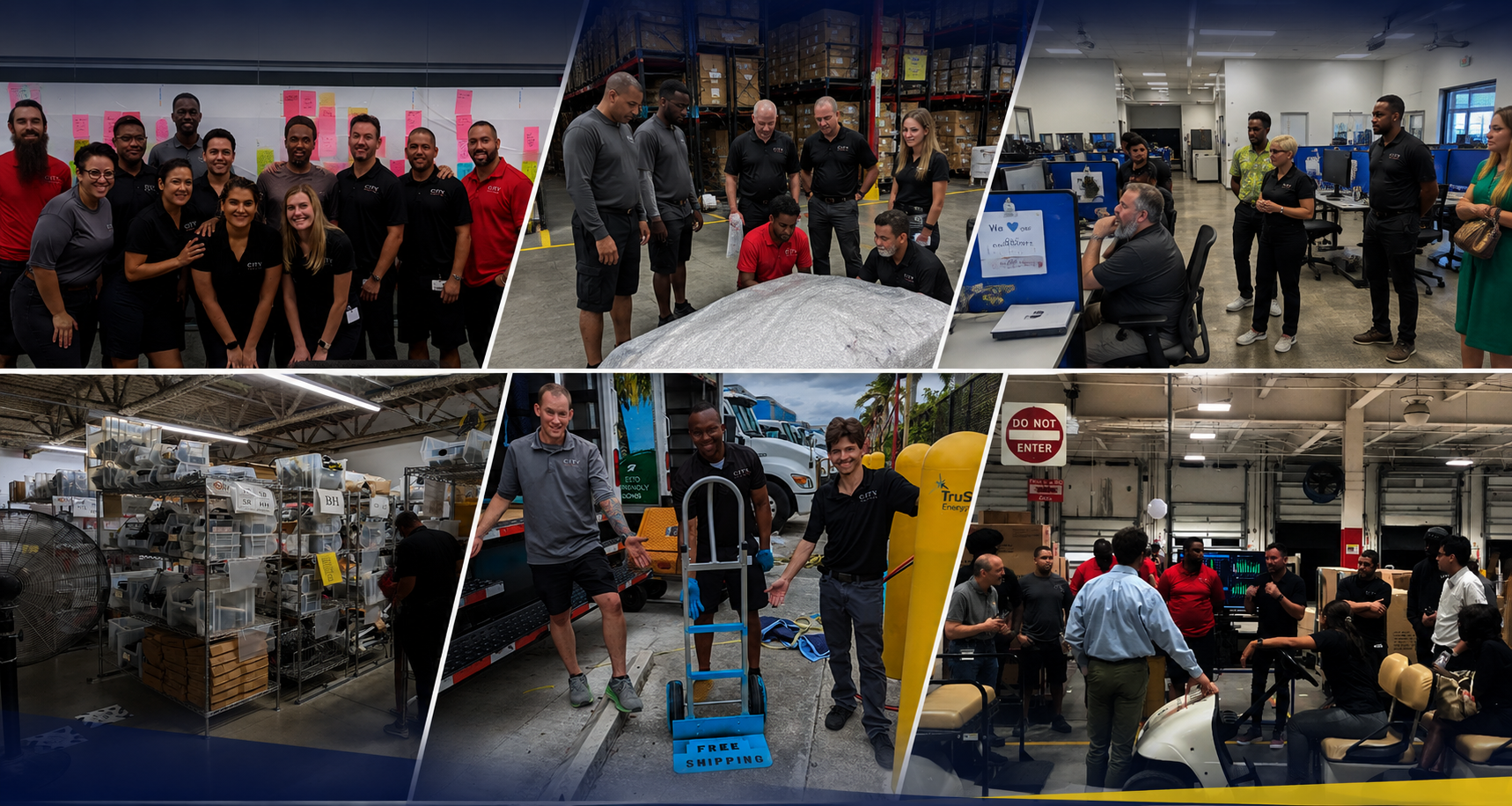
Real Manufacturing Results. One Kaizen at a Time
Explore real-world Kaizen success stories showing how manufacturing teams solved critical problems, improved performance, and created sustainable results.
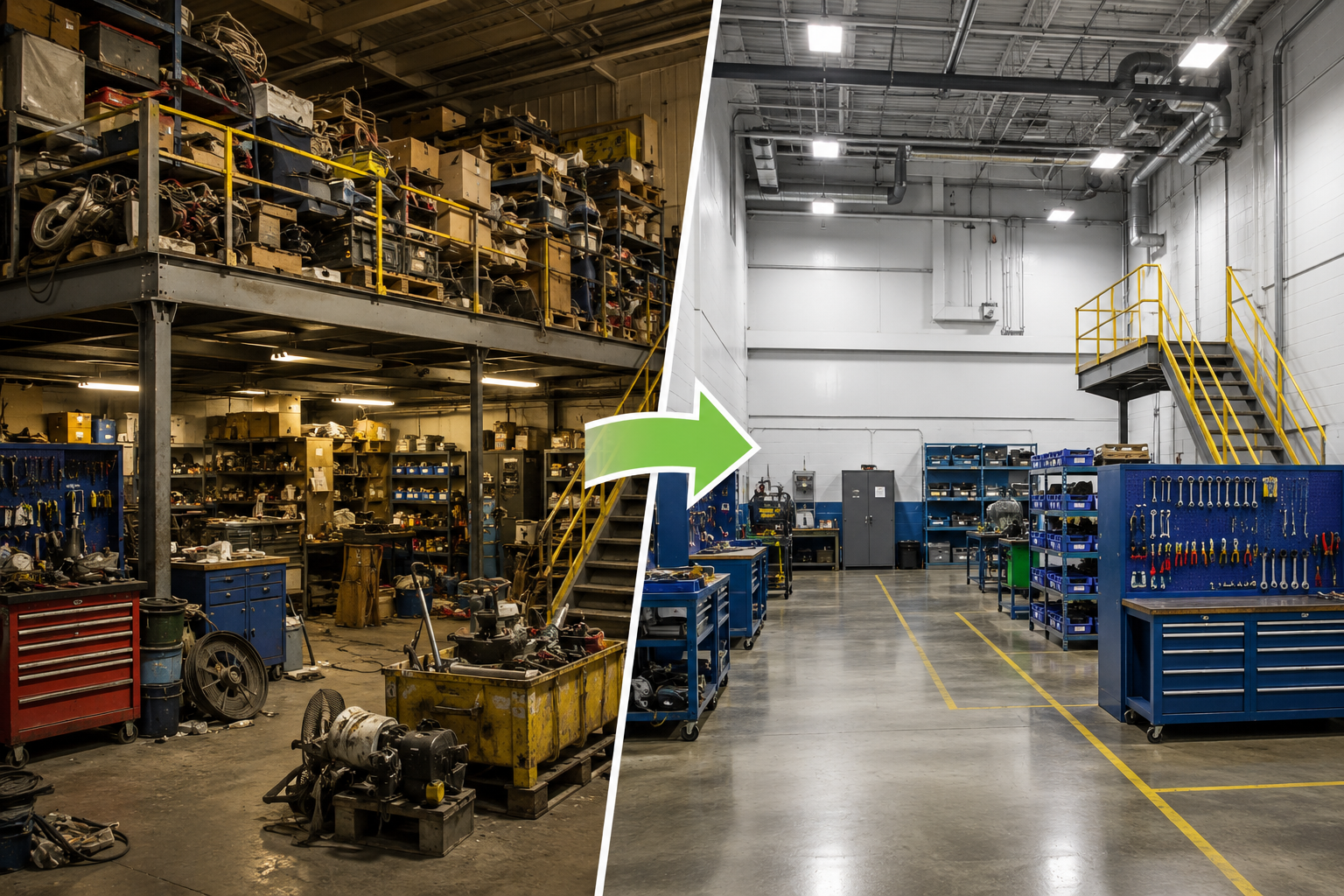
Hidden Capacity Was Sitting Above Their Heads
Sometimes your biggest capacity expansion isn't a new building—it's hiding inside the one you already have. Discover how a 5S Kaizen transformed a cluttered maintenance shop into an organized workplace while creating new manufacturing capacity and inspiring employees to take ownership of the improvements.
Kaizen Snapshot
Setting: Maintenance shop at a large power generation manufacturer
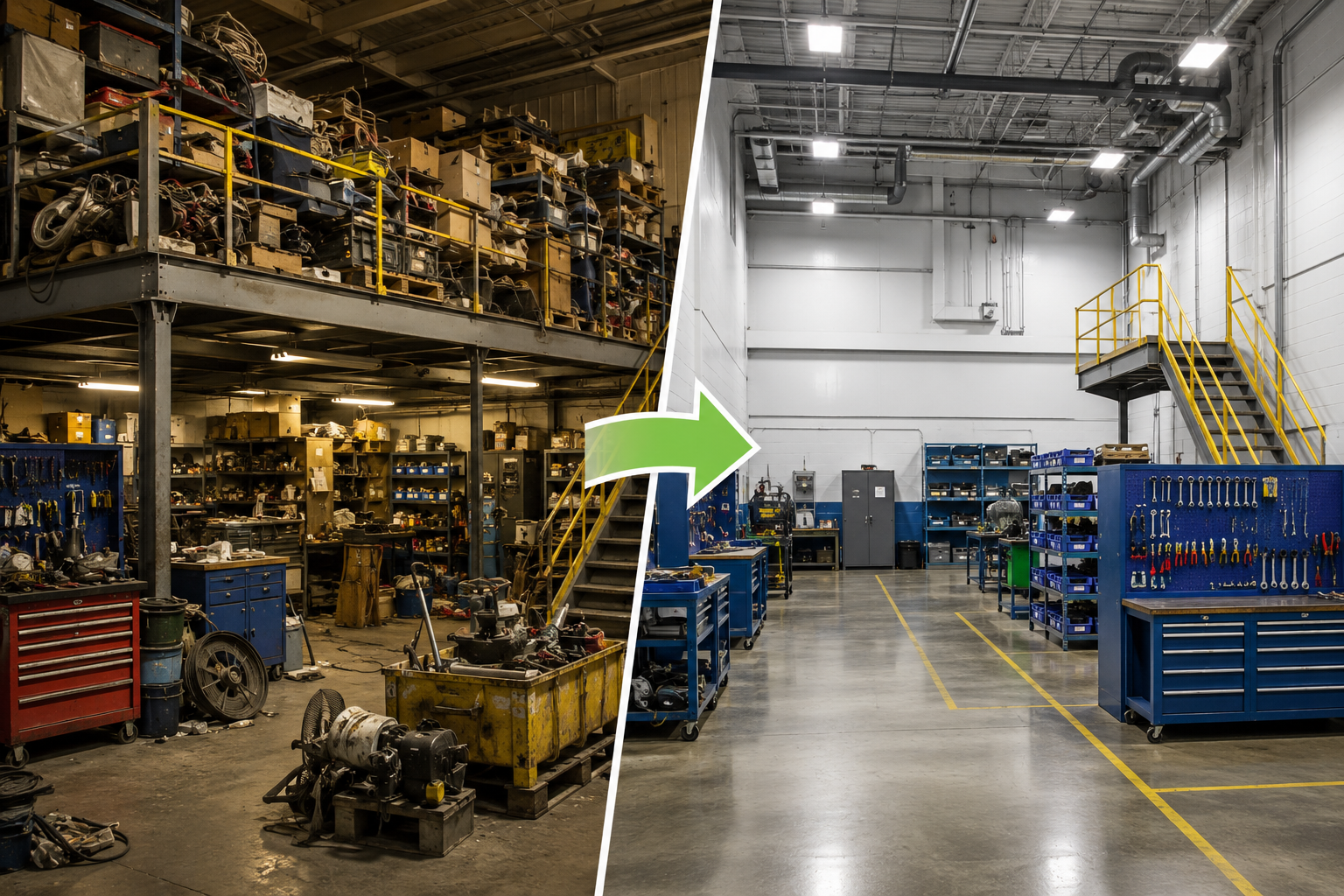
Challenge: A maintenance shop buried under years of clutter, making work slower, less safe, and consuming valuable production space.
Stakes: Lost productivity, longer search times, reduced safety, and a mezzanine blocking future manufacturing capacity.
Approach: 5S Kaizen, hands-on team engagement, visual management, and assigning area ownership.
Outcome: Search time reduced from 22 minutes to 2.3 minutes (90%), the mezzanine was completely cleared, and the newly available space was later converted into additional production capacity.
Key Lesson: The greatest result wasn’t organizing tools—it was creating ownership.
The Situation
After two successful 5S Kaizen events at another facility, I was invited to facilitate a maintenance shop transformation at a different manufacturing plant.
Before the event even began, the sponsor and team leader shared a hidden objective. Above the maintenance shop sat a large mezzanine packed with years of accumulated material. If the team could completely empty that space, leadership could eventually remove the mezzanine and reclaim valuable production space.
Rather than keeping that goal a secret, we made it the team’s challenge from Day One.
What Was Getting in the Way
Walking the Gemba made the problem obvious. Four different maintenance areas were overflowing with obsolete equipment, excess inventory, forgotten parts, and items nobody could confidently identify.
The clutter affected everything:
Mechanics spent unnecessary time searching for tools and parts.
Valuable floor space disappeared.
Hidden hazards went unnoticed.
Even the maintenance leader admitted he struggled to throw things away.
To establish a baseline, we asked experienced maintenance technicians to locate six randomly selected items throughout the shop before the event began. Even the people who worked there every day needed an average of 22 minutes to find them. Most of the team doubted that one week of 5S could make much difference.
What We Did
The week began with Lean and 5S training before heading to the Gemba. To reinforce credibility, one of the maintenance technicians from the previous successful 5S event joined our team to share firsthand experience.
As the team sorted through years of accumulated material, something interesting happened. People began realizing just how much unnecessary clutter had quietly become “normal.” Instead of asking, “Should we throw this away?” the conversations became, “Why have we been keeping this?” Once they understood that anything truly needed could be replaced if necessary, hesitation disappeared. Momentum accelerated.
By the third day, the entire mezzanine had been emptied. With the clutter gone, maintenance issues that had been hidden for years suddenly became visible—including wiring, lighting, ductwork, and other infrastructure that could finally be repaired. Even employees who weren’t part of the Kaizen volunteered to help.
The Breakthrough
One maintenance technician had been the biggest skeptic on Day One. He had spent the most years in the department and wasn’t convinced 5S would change anything. By midweek, he had completely changed. He wasn’t simply participating anymore. He was protecting the new workplace.
When I introduced the concept of an Area Owner on Day Three, it became immediately obvious who should take the role. Another teammate even volunteered to cover the responsibilities during his upcoming vacation so the improvements wouldn’t slip backward.
By Friday, the former skeptic proudly announced, “Take my picture.” He wanted everyone to know he would be responsible for keeping the area that way. That may have been the most important improvement of the week.
What Changed
At the end of the Kaizen, we wanted to know whether the improvement was real, not just familiar to the team that had spent the week organizing the space. So instead of asking the maintenance technicians to repeat the exercise, we handed slips of paper listing six randomly selected items to people who were not familiar with the maintenance shop. We also intentionally avoided choosing easy items.
Even with those tougher conditions, the average search time dropped from: 22 minutes → 2.3 minutes. A reduction of nearly 90%.
The improvement wasn’t just measurable. It was obvious. The maintenance shop looked completely different. Anyone could walk in, immediately identify what belonged there, and quickly locate what they needed.
Leadership toured the area during the report-out and described the transformation as night and day. A month or two later, the final piece of the story unfolded. The empty mezzanine was removed. The plant gained valuable production space to support future growth.
The Takeaway
5S isn’t about cleaning. It’s about removing everything that prevents people from doing great work. When employees help build the system themselves, they don’t just maintain it, they own it.
Why This Matters
Many organizations think of 5S as housekeeping. The best 5S events do far more:
They improve safety.
They eliminate wasted motion.
They reduce frustration.
They create pride.
And sometimes they even create entirely new manufacturing capacity that was hidden in plain sight.
Ready to Unlock Hidden Capacity?
If your maintenance shop, warehouse, or production area has become harder to navigate, less safe, or filled with years of accumulated clutter, a focused 5S Kaizen can deliver results far beyond better organization. Sometimes the biggest capacity gains aren’t found in new equipment. They’re already sitting inside the space you have today.
Schedule a Breakthrough Assessment to uncover the opportunities hiding in plain sight.
What Are You Going to Screw Up Today?
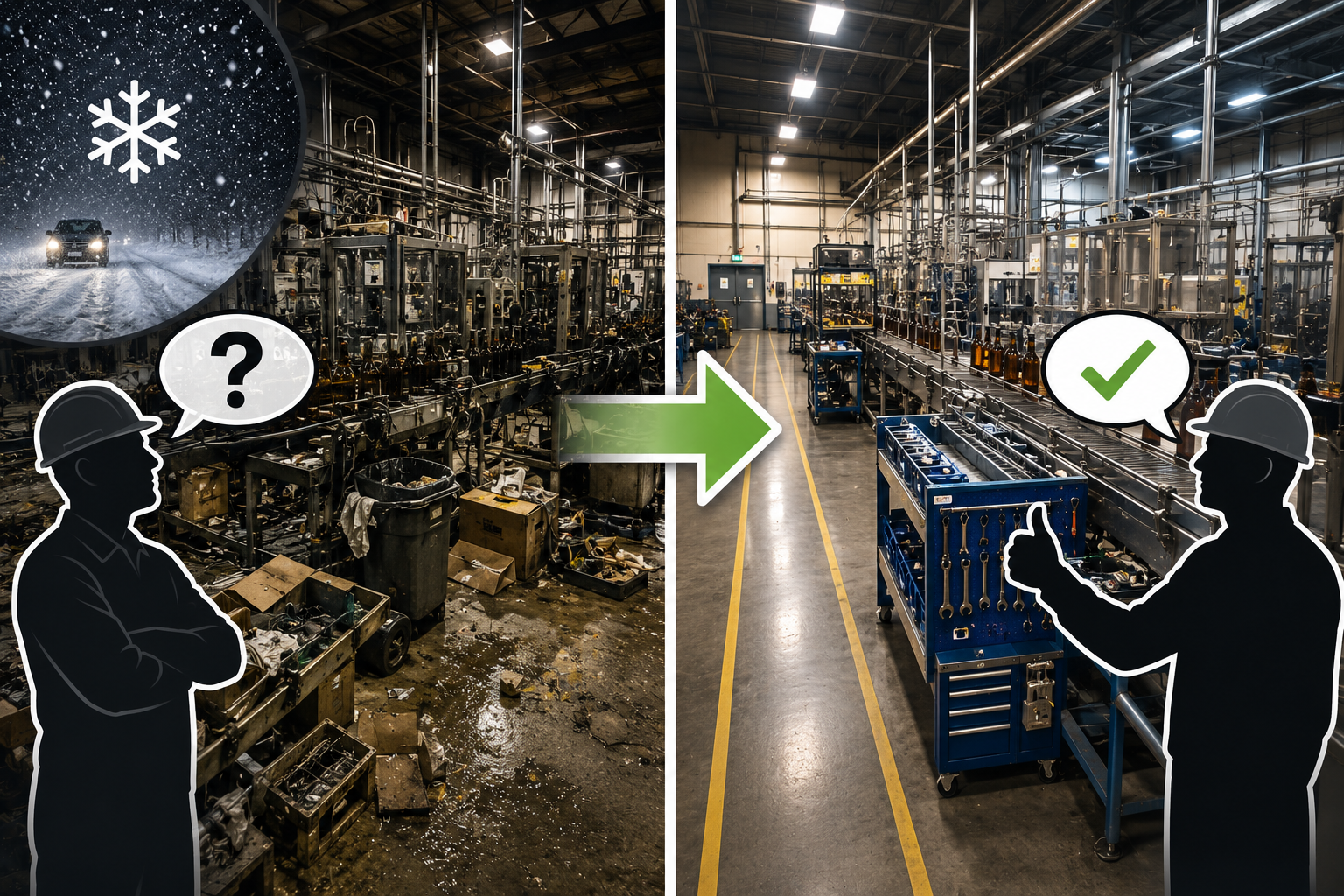
A historic winter storm shut down the plant, stranded team members, and cut a four-and-a-half-day Kaizen nearly in half. Most people would have postponed the event. Instead, the team cut changeover time by nearly 50% and turned one skeptic into one of its biggest supporters.
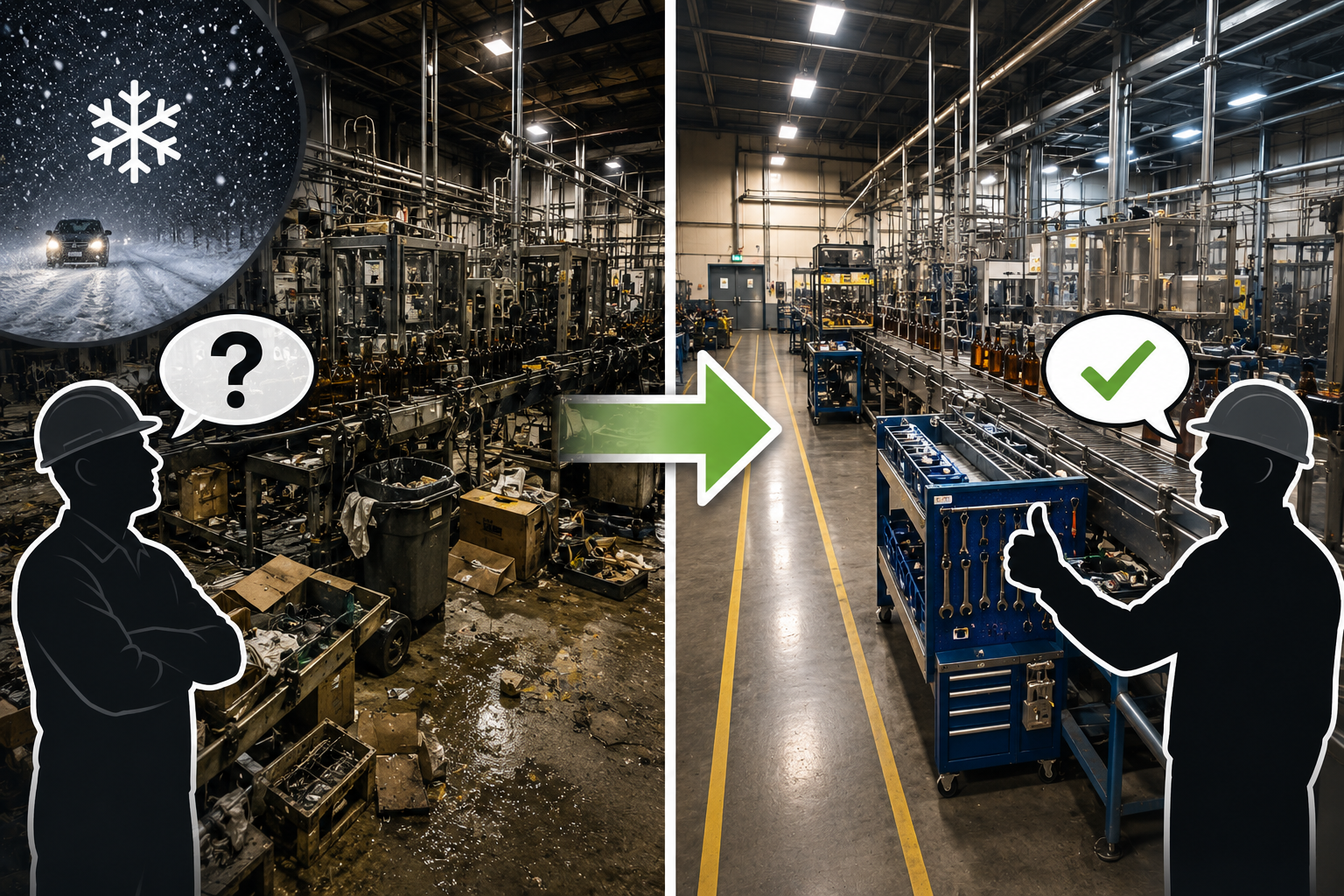
Kaizen Snapshot
Setting: Bottling line at a major beverage manufacturer
Challenge: Reduce lengthy changeovers despite losing nearly half the planned Kaizen to a historic winter storm.
Stakes: Limited time, missing team members, production pressure, and widespread skepticism about improvement efforts.
Approach: SMED training, operator-led process redesign, hands-on implementation, and coaching the production crew through the new process.
Outcome: Changeover time reduced by nearly 50%, operator travel reduced by an estimated 80–90%, and a skeptical employee became one of the strongest advocates for the improvement effort.
Key Lesson: You don't need perfect conditions to achieve breakthrough results.
What Are You Going to Screw Up Today?
The Situation
I was scheduled to facilitate a SMED (Single-Minute Exchange of Die) Kaizen to reduce changeover time on a bottling line at a major manufacturing facility. Like most changeover events, we had a carefully planned four-and-a-half-day schedule.
Then Mother Nature had other ideas. Weather forecasts predicted a major winter storm, so instead of flying in on Sunday as I normally would, I decided to leave a day early. That decision turned out to be the only reason I made it.
My connecting flight was canceled as snow began falling. After scrambling with the airline, I found a flight to Indianapolis, rented a car, and spent nearly three hours driving through a snowstorm to reach my hotel in Kentucky. When I arrived, the roads were covered with snow and ice. The town was nearly deserted. The plant had already shut down. At one point, we weren't even sure the Kaizen would happen.
What Was Getting in the Way
By Sunday, things had only gotten worse. The entire town was effectively closed. Restaurants were closed. The plant remained shut down. Employees couldn't leave their homes.
Our carefully planned schedule disappeared almost overnight. Eventually, leadership decided they would try to restart the facility late Monday afternoon, allowing us to begin the Kaizen on Tuesday if enough team members could safely make it to work.
Even then, several participants were still snowed in. We would have fewer people. Less time. And somehow, we still needed to deliver meaningful results.
What We Did
Tuesday morning finally arrived. The roads were passable. People slowly began making their way into the plant. Some looked genuinely happy just to have survived the drive. Instead of focusing on what we had lost, we focused on what we could still accomplish.
The team learned the principles of SMED before walking the Gemba to observe the current changeover. Operators mapped their movements using spaghetti diagrams. For many, it was the first time they had ever stepped back and looked at the entire process instead of just their own responsibilities. The waste quickly became obvious:
Long walks.
Poor organization.
Equipment that wasn't properly aligned.
No visual controls.
Little standard work.
The team generated improvement ideas and immediately began putting them into practice.
The Breakthrough
While we were observing the first changeover, a machine operator from the neighboring production line kept watching us. Finally, he walked over and asked, "What are you guys going to screw up today?"
Apparently, previous improvement efforts hadn't left him with much confidence. I smiled and replied, "Hopefully nothing. Our goal is simply to help this team make their work easier, safer, and better." He didn't look convinced. But our team was.
As they tested improvements during their own changeovers, something changed. Every success generated another idea. Every improvement inspired another. Despite losing nearly half the planned week, momentum kept building.
What Changed
By the final day, we made what many facilitators might consider a risky decision. Rather than spending the morning polishing our presentation, we invested those hours implementing a few final improvements. Then we handed the process back to the production crew.
Not to demonstrate it. Not to do it for them. To coach them through it. Each Kaizen team member partnered with a crew member, helping them follow the new process while explaining why each change had been made. The crew wasn't simply following instructions. They were learning the new standard from the people who had designed it. That investment paid off.
The production crew completed the changeover in just under half the original time. Spaghetti diagrams showed operator travel had been reduced by an estimated 80 to 90 percent. The line restarted smoothly. The crew looked confident. The improvements were no longer the Kaizen team's. They belonged to the operators.
The Moment That Said It All
Later that day, the same operator from the neighboring line walked over. This time he wasn't skeptical. He smiled and asked, "When can you help my line?"
That single question said more than any metric ever could. Trust had been earned.
The Report-Out
Despite the shortened week, the team delivered one of the most energetic report-outs I've ever witnessed. The excitement was genuine because every improvement had come from the people doing the work. The team leader later commented that in all his years participating in Lean projects and Kaizen events, he had never seen a team so engaged.
What began as a week threatened by weather had become one of the most successful changeover events they'd experienced. Even better, the improvements created a model that could now be replicated across the facility's other production lines.
The Takeaway
Kaizen isn't about having perfect conditions. It's about helping people solve real problems together. Snowstorms, compressed schedules, and missing team members. Those things make improvement harder. They don't make it impossible.
When people own both the problem and the solution, remarkable things can happen—even when the odds aren't in your favor.
Why This Matters
Many organizations delay improvement because they believe they need more time, more resources, or better circumstances. In reality, the greatest breakthroughs often happen when teams stop waiting for perfect conditions and begin improving with what they have.
The goal isn't perfection. The goal is progress. And when people experience that progress firsthand, skepticism turns into ownership—and ownership creates sustainable results.
Ready to Cut Your Changeovers in Half?
Long changeovers aren't usually caused by one big problem. They're the result of hundreds of small inefficiencies that have quietly become accepted over time.
A focused SMED Kaizen helps your team see those opportunities, eliminate unnecessary motion, create better standards, and dramatically reduce downtime—without sacrificing safety or quality.
Schedule a Breakthrough Assessment to discover how much hidden capacity is waiting inside your current changeover process.
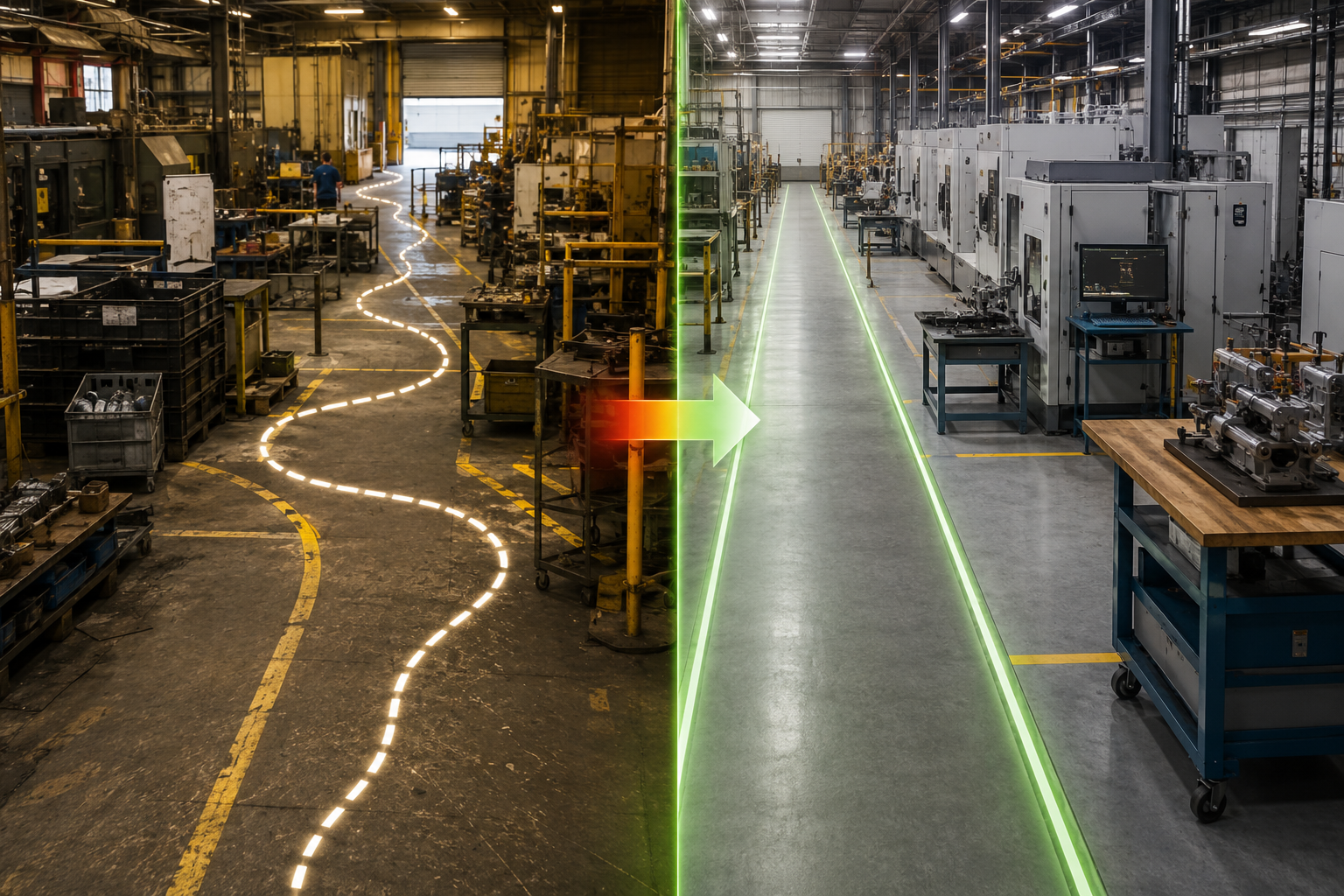
From 330 Feet to 4 Feet in 3 Days
A manufacturing team spent years living with an inefficient quality testing process. In just three days, they reduced travel distance from 330 feet to 4 feet, cut processing time in half, and uncovered a solution worth millions in additional capacity.
Kaizen Snapshot
Industry: Manufacturing
Challenge: Excessive travel, batching, safety risk, and delayed quality feedback
Approach: Kaizen Event Facilitation using rapid experimentation and team-led design
Results:
Distance traveled per part reduced from 330 feet to 4 feet
QC travel reduced from 175 feet to 4 feet
Batch size reduced from 6 pieces to single-piece flow
Processing time cut from 40+ minutes to approximately 20 minutes
Part lifts reduced from 4 to 1
More than 95% reduction in travel
More than 95% reduction in safety risk
Wastewater stream eliminated
Potential to double capacity
The Situation
A manufacturing team had been struggling with the same problem for years.
Every part required a quality test, but the process was designed around batching and distance. Parts were tested away from the production line, which meant multiple additional parts could already be in process before quality issues were identified.
The process had become accepted as "the way we've always done it," even though everyone knew it was inefficient.
The baseline measurements told the story:
330 feet of travel per part
175 feet of travel for QC per batch
Batch size of 6
More than 40 minutes of processing time
Multiple lifts of an 18-pound component
The team knew improvement was possible. They simply had not found a way forward.
What We Did
Rather than spending days discussing solutions, the team focused on building and testing them.
On Day 1, seven team members generated seven ideas each, creating forty-nine potential solutions.
The team quickly narrowed those ideas to seven concepts worth testing and immediately built prototypes using materials already available on-site.
On Day 2, the team established evaluation criteria and test procedures. They ran experiments, challenged assumptions, and narrowed the field to two leading concepts.
On Day 3, they combined the strongest elements of both approaches into a single design and implemented it directly in the production environment.
Equipment was relocated.
Material flow was redesigned.
The new process was tested using an actual production part.
The Results
The impact was immediate.
MeasureBeforeAfterDistance Traveled per Part330 ft4 ftQC Travel175 ft4 ftBatch Size61Processing Time40+ min~20 minPart Lifts41
Additional benefits included:
More than 95% reduction in travel
More than 95% reduction in safety risk
Complete elimination of waste entering the wastewater stream
Potential capacity increase worth millions annually
The Most Important Result
The numbers were impressive.
The people impact was even more powerful.
One operator, who had never participated in a Kaizen event before, looked at the redesigned process and said he couldn't believe how much easier his job had become.
At the final report-out, he stood in front of senior leadership and confidently explained what the team had accomplished.
It was the first time he had ever presented to leadership.
The pride, ownership, and confidence in the room were impossible to miss.
The team didn't just improve a process.
They proved to themselves what they were capable of accomplishing.
Key Lesson
Sustainable improvement happens when people stop talking about solutions and start building them.
In just three days, a team that had struggled with the same problem for years transformed its process, dramatically improved safety and efficiency, and created a solution they were excited to own.
That's the power of a well-facilitated Kaizen event.
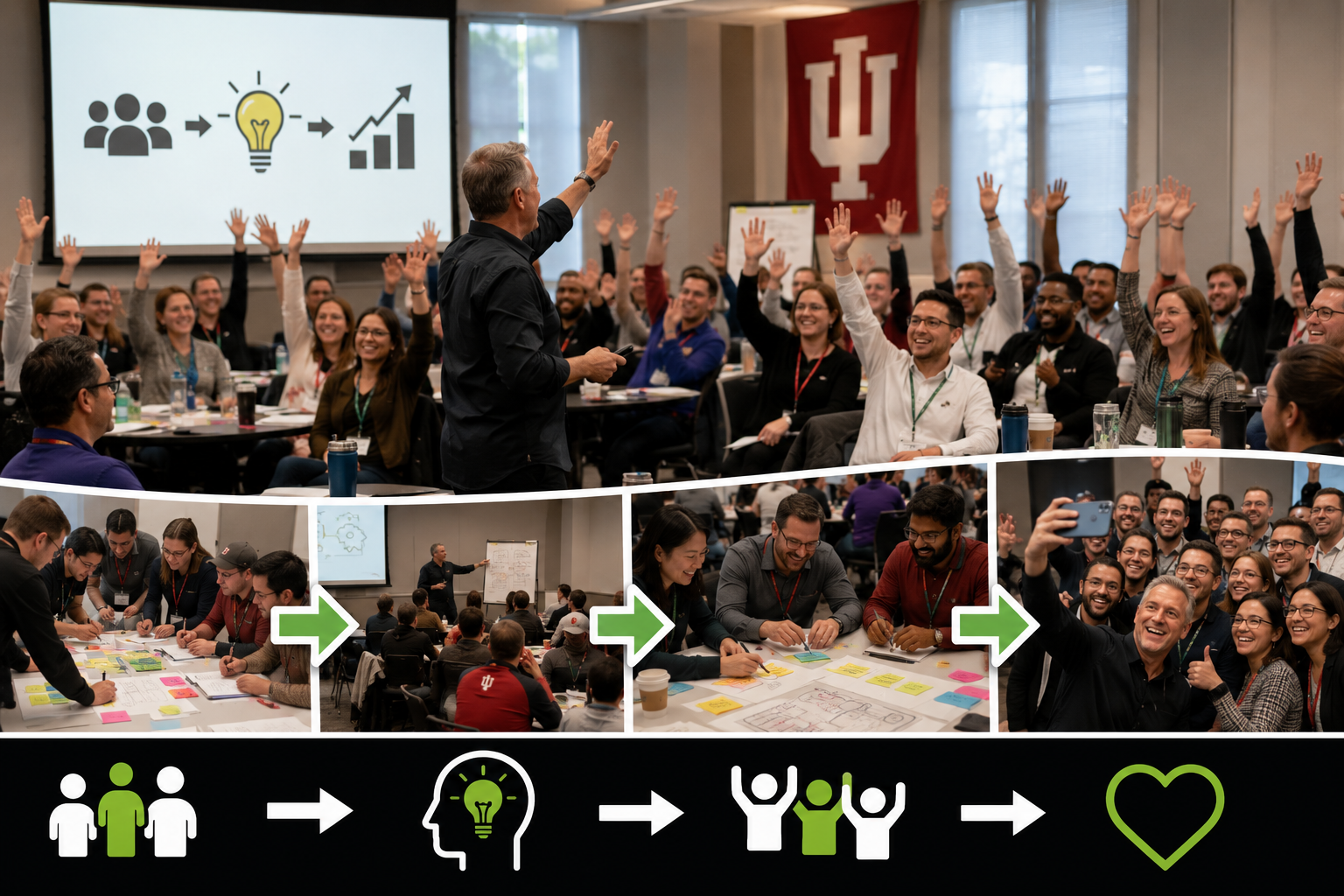
The Audience That Wouldn’t Leave
Conference attendees were free to come and go throughout the day. Instead, most stayed for every workshop. Discover how interactive facilitation transformed a room full of strangers into a learning community that didn't want the day to end.
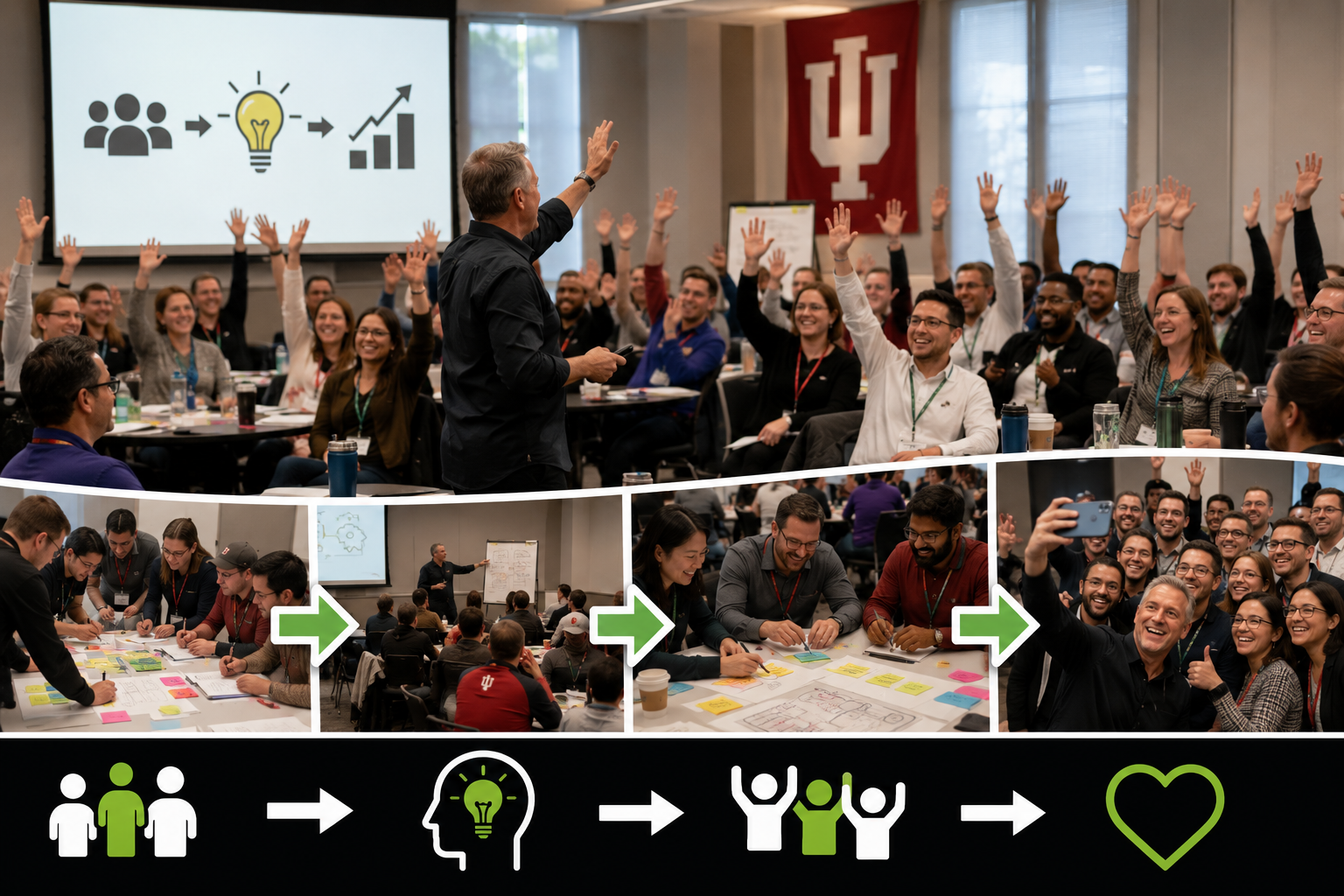
Kaizen Snapshot
Setting: 2025 Global Lean Summit at Indiana University
Challenge: Deliver five highly interactive Lean workshops to a changing audience while keeping participants engaged throughout an entire day.
Stakes: Create meaningful learning experiences, maintain energy across multiple sessions, and adapt as new attendees joined while others chose to stay.
Approach: Activity-based facilitation, storytelling, experiential learning, and progressively building Lean concepts throughout the day.
Outcome: Most participants stayed for nearly every workshop, engagement increased with each session, lasting relationships were built, and one participating organization later invited me to perform a Breakthrough Assessment with plans for a Value Stream Mapping engagement.
Key Lesson: The best learning experiences don't end when a presentation is over—they inspire people to stay for the next one.
The Audience That Wouldn't Leave
The Situation
For the fifth consecutive year, I was invited to participate in the Global Lean Summit hosted by Jared and Anna Thatcher. The 2025 Summit was held at Indiana University and brought together Lean practitioners, leaders, consultants, and students from across the country for three days of learning and collaboration.
On the second day of the conference, most attendees would travel to Toyota Material Handling for a plant tour. For those remaining on campus, including university students, I was asked to lead four interactive workshops while fellow presenter Karil Sampson delivered a fifth.
It sounded like a full day. I had no idea how memorable it would become.
What Was Getting in the Way
Teaching one workshop is energizing. Teaching five in a single day is a different challenge. Each presentation needed to stand on its own while also building on the ideas from earlier sessions.
Adding another layer of complexity, I expected people to rotate in and out throughout the day. That meant constantly introducing new participants while trying to keep returning attendees engaged. It would require more than simply delivering presentations. It would require creating an experience.
What We Did
The day began with Chartering to Win, exploring how leaders create alignment before launching improvement efforts. Rather than lecturing, I filled the room with activities. People stood up. Worked together. Wrote on flip charts. Shared ideas and laughed. When the session ended, I assumed most people would head off to something else. Instead, many of them stayed.
The next workshop was Facilitate Like a Ninja, where participants practiced techniques for engaging teams, generating ideas, and creating energy during improvement events. Again, I expected the audience to change. Again, they stayed.
After lunch, Karil delivered an outstanding workshop on Root Cause Problem Solving while I recorded his presentation so he could use it in the future. By then, something had changed. The room no longer felt like a collection of conference attendees. It felt like a team. We were taking selfies. Recording videos. Laughing together between sessions. People who had been strangers that morning were now learning from one another.
The Breakthrough
The fourth workshop focused on the Wheel of Sustainability and Sustainable Leadership. As more students joined throughout the day, I found myself repeatedly reviewing introductory concepts to help newcomers catch up. I thought I was helping.
The returning participants taught me something. Their feedback was simple: "You don't have to keep starting over." They already understood the foundations. They were ready to move forward. It was a valuable reminder that great facilitators don't just pay attention to who's arriving. They also recognize when people are ready for the next challenge.
What Changed
The final workshop covered Value Stream Mapping. One of my favorite exercises asks teams to map the process of making a peanut butter and jelly sandwich. It sounds simple. It never is.
By this point, the audience knew the rhythm. They understood the activities. They anticipated the questions. In fact, during portions of the workshop, participants were practically presenting the material alongside me. The conversations became richer. The collaboration became stronger.
The room had transformed from a group of individuals into a genuine learning community. Watching that happen was every bit as rewarding as delivering the presentations themselves.
The Moment That Said It All
When the final workshop ended, I was exhausted. Five workshops in one day. Hundreds of conversations. Dozens of activities.
But what stayed with me wasn't the fatigue. It was the realization that people had chosen to stay session after session.Not because they had to. Because they wanted to. As a facilitator, there may not be a greater compliment.
What Changed After the Summit
One of the participating organizations had sent a large group of employees to the Summit. A few weeks later, they invited me to perform a Breakthrough Assessment at their facility.
Our conversations during the Summit had turned into the beginning of a partnership, with plans to follow that assessment with a Value Stream Mapping engagement.
Sometimes the greatest opportunities begin simply by creating an environment where people want to keep learning.
The Takeaway
Great facilitation isn't about delivering information. It's about creating experiences. When people become active participants instead of passive listeners, something remarkable happens. Learning becomes contagious. Ideas spread. Confidence grows. And strangers become teammates.
Why This Matters
Organizations often invest heavily in technical training while overlooking the importance of engagement. People rarely remember every slide from a presentation. They remember how they felt. They remember contributing. They remember solving problems together.
Those experiences are what create lasting learning and lasting change.
Ready to Build More Engaged Teams?
Whether you're developing internal facilitators, strengthening leadership, or looking for an engaging keynote that combines real-world Kaizen stories with practical Lean tools, the right learning experience can create momentum that lasts long after the event ends.
If you'd like to energize your next conference, leadership retreat, or facilitator development program, let's start the conversation.
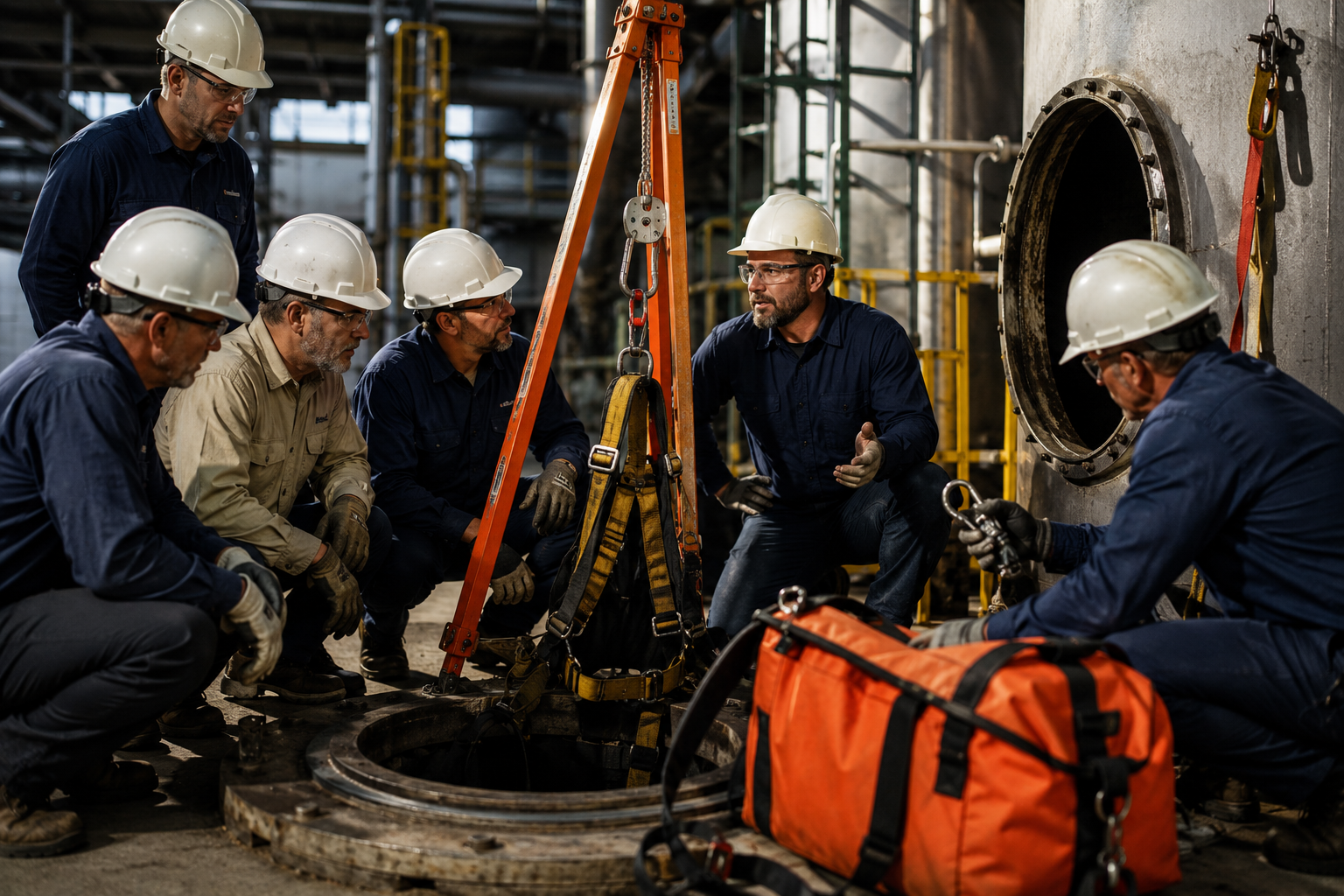
From Compliance to Confidence
How a paper mill eliminated critical safety risks and created a sustainable confined-space system in one week
Kaizen Snapshot
Industry: Paper Manufacturing
Challenge: Confined Space Entry and Rescue Compliance
Approach: Kaizen Event Facilitation focused on standardization, risk reduction, and rapid implementation
Results:
90 confined spaces identified and brought into compliance
Approximately 15 previously unidentified confined spaces discovered
Standardized signage developed and installed
Training requirements defined and implemented
Hazard identification standards created for every confined space
Rescue capability improved for all employees, including specialized equipment for a 300+ pound team member
Rescue equipment organized using 5S for rapid access
The Situation
A paper mill in Oklahoma faced a significant safety challenge.
The facility needed to ensure that every confined space met entry and rescue requirements.
Before the Kaizen event began, the team believed they had identified between 75 and 80 confined spaces throughout the mill.
The goal seemed straightforward: verify compliance and close any gaps.
What the team discovered was something very different.
What We Found at the Gemba
After learning the fundamentals of Lean thinking and waste identification, the ten-person Kaizen team headed to the floor.
The facility consisted of two major operations:
The paper mill
The converting operation that produced tissue, paper towels, and toilet paper
The Oklahoma summer heat was relentless.
Temperatures exceeded 90 degrees as the team spent nearly four hours walking the entire facility.
They inspected every area, questioned assumptions, and challenged the existing inventory.
By the end of the walk, they realized the actual number of confined spaces wasn't 75 or 80.
It was 90.
Approximately 15 confined spaces had never been included in the official inventory.
The challenge had just become much larger.
What We Did
The team quickly identified three elements that were essential for compliance:
Signage
Every confined space needed clear, consistent visual identification and entry requirements.
Training
Employees needed a standardized understanding of confined space entry procedures and rescue expectations.
Hazard Identification
Each confined space required a clear understanding of the risks associated with entry.
The team divided into three focused sub-teams and developed standards for each area simultaneously.
Rather than tackling one confined space at a time, they built systems that could be applied across the entire facility.
The Hidden Safety Risk
As the team worked through compliance requirements, another issue surfaced.
One employee regularly worked in confined spaces and weighed more than 300 pounds.
The existing rescue equipment could not safely recover him in the event of an emergency.
Fortunately, a rescue had never been required.
But everyone recognized that hoping nothing would happen was not an acceptable safety strategy.
The team immediately addressed the issue.
They identified rescue equipment with a 500-pound capacity, secured approval, and purchased the equipment during the Kaizen event.
Before the week ended, the equipment had arrived on-site and was stored in a location where it could be accessed quickly if ever needed.
The team also applied 5S principles to organize all rescue equipment, making emergency response faster and more reliable.
The Results
By the end of the week:
MeasureResultConfined Spaces Identified90Previously Unidentified Spaces Found~15Confined Spaces Brought into Compliance90Standardized Signage Implemented100%Training Standards DevelopedCompleteHazard Identification Standards CreatedCompleteRescue Equipment UpgradedCompleteRescue Equipment Organized Using 5SComplete
What appeared to be an overwhelming challenge on Monday became a completed mission by Friday.
The Most Important Result
The biggest accomplishment wasn't compliance.
It was confidence.
At the beginning of the week, the team viewed the challenge as nearly impossible.
The scope was unclear.
The inventory was incomplete.
Critical rescue gaps existed.
Yet by working together, dividing responsibility, and focusing on solutions instead of obstacles, the team achieved something that initially seemed out of reach.
They didn't just identify problems.
They solved them.
And they left behind systems that would protect employees long after the event was over.
Key Lesson
Safety improvement doesn't happen because organizations care about safety.
It happens when teams translate good intentions into clear standards, proper equipment, and disciplined execution.
In one week, a team of ten people transformed an overwhelming compliance challenge into a sustainable safety system.
That's what becomes possible when the right people are empowered to solve the right problem.
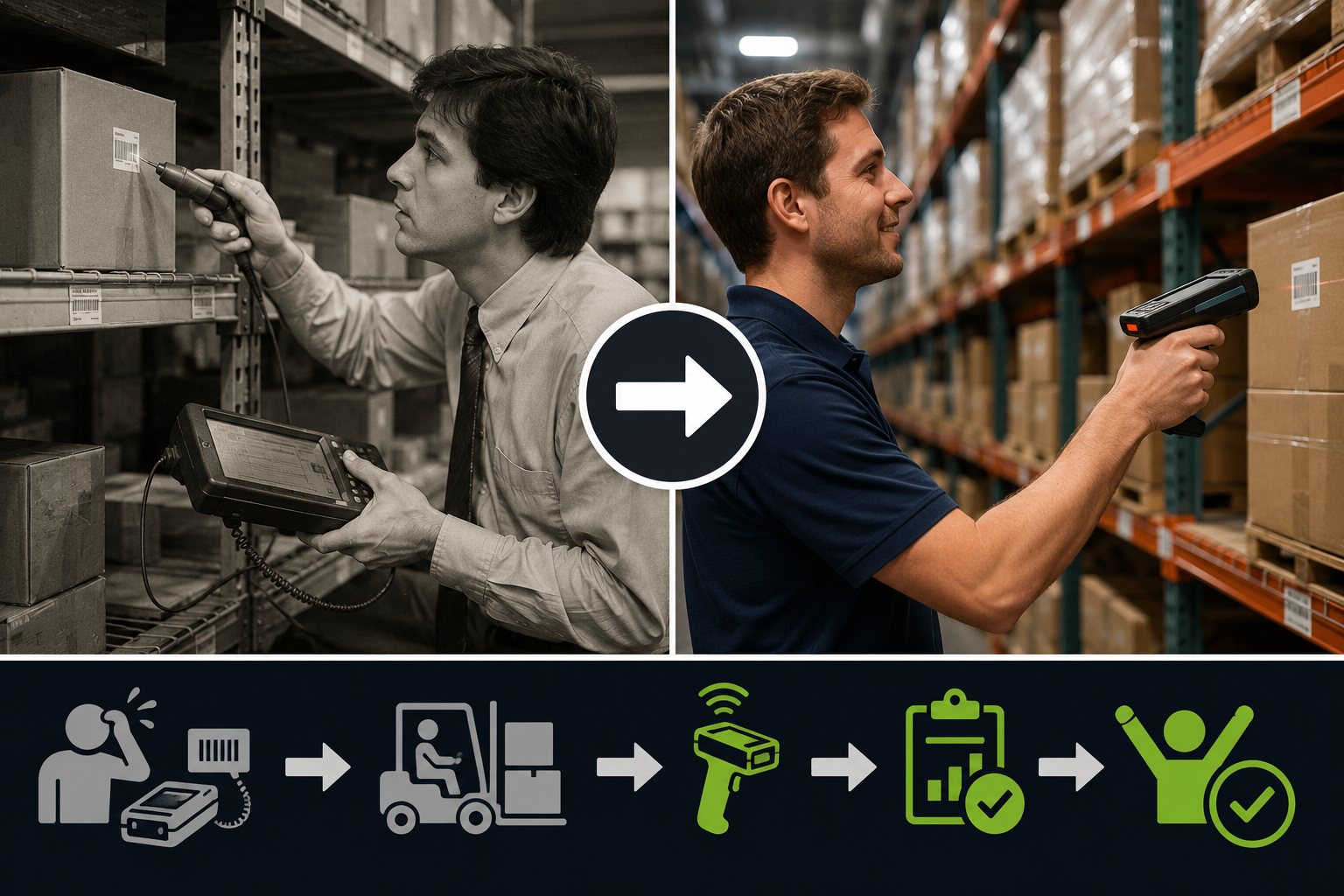
The Day I Stopped Fixing Barcode Readers
I thought my job was to fix barcode readers. Instead, a warehouse full of employees taught me one of the most important lessons of my career: the best improvements begin by listening to the people doing the work.
Kaizen Snapshot
Setting: Thomasville Furniture corporate warehouses, late 1980s
Challenge: Support an aging barcode inventory system that was becoming increasingly frustrating and inefficient for warehouse employees.
Stakes: Inventory accuracy, warehouse productivity, employee frustration, and making better use of emerging barcode technology.
Approach: Observe the work firsthand, listen to warehouse employees, understand their daily challenges, and redesign the system around their needs rather than the technology.
Outcome: New scanning barcode readers were implemented throughout the warehouse network, inventory work became faster and easier, accuracy improved, and warehouse managers began viewing Industrial Engineering as a partner in solving operational problems.
Key Lesson: The best improvements don't begin by fixing technology. They begin by listening to the people who use it.
The Day I Stopped Fixing Barcode Readers
The Situation
When I graduated from Virginia Tech with a degree in Industrial Engineering, I accepted a position as a Corporate Industrial Engineer with Thomasville Furniture in North Carolina. One of my first responsibilities was supporting the company's barcode inventory system across multiple warehouses.
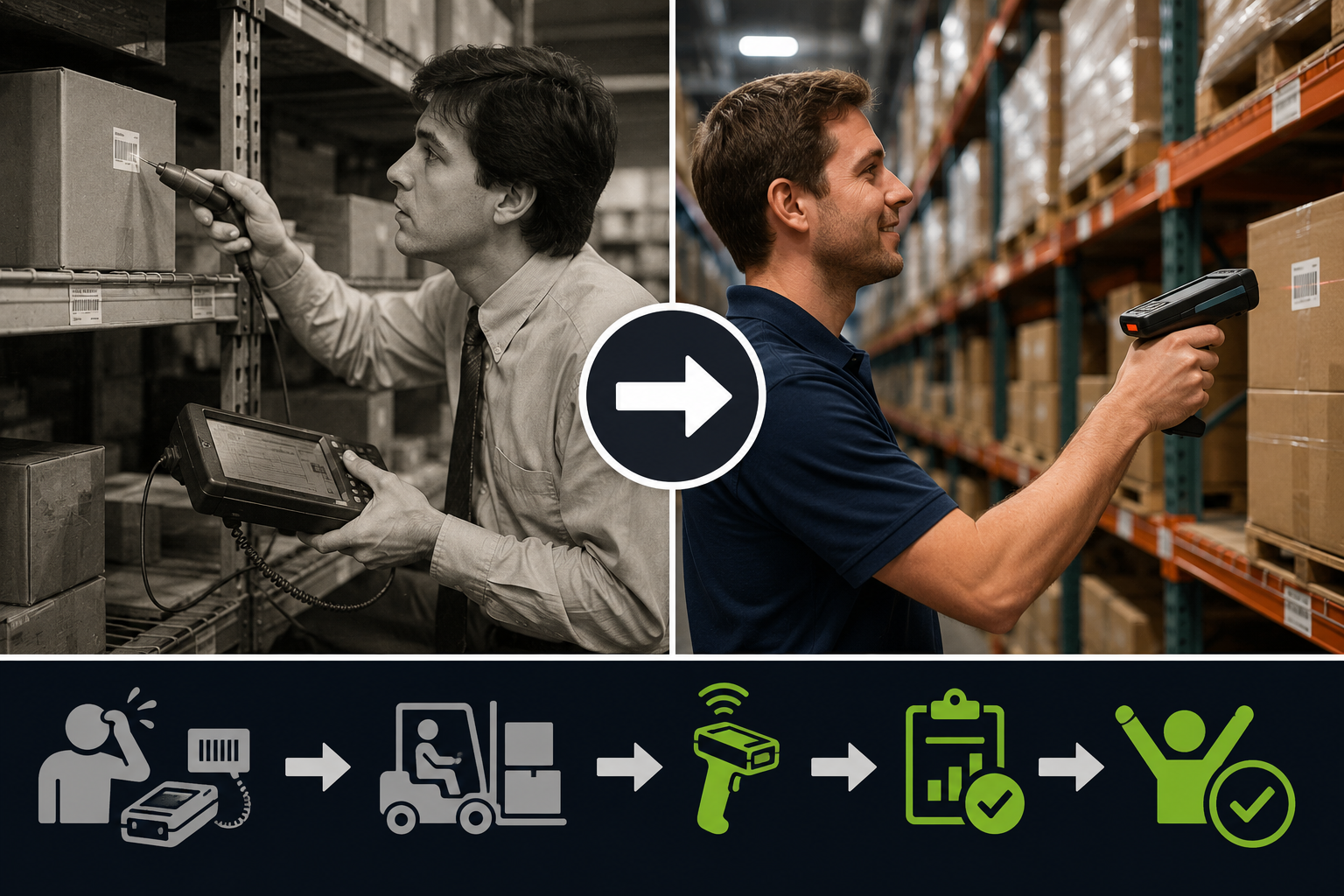
At the time, barcode technology was still in its infancy. There were no wireless scanners. No QR codes. No handheld devices like we know today. Warehouse employees carried readers about the size of a tablet with a cord attached to a lighted wand. To scan a barcode, they had to physically drag the wand across each label.
The engineer before me gave me a quick overview before moving into a leadership role. His advice was practical. "You'll get calls when the readers don't work. Sometimes people don't know how to reboot them or use them correctly. Just help them get back up and running." At first, I thought that was my job. Keep the barcode readers working.
What Was Getting in the Way
Instead of waiting for phone calls, I spent time walking through the warehouses. I watched people receive inventory, move furniture, store products, and retrieve orders. Most importantly, I watched how they actually used the barcode system.
The technology worked, but the work didn't. Employees often had to climb off forklifts or reposition large pieces of furniture simply to touch a barcode with the scanning wand. Sometimes they struggled with the equipment. Other times they struggled with the process itself. One warehouse employee jokingly told me, "This thing is almost like Braille."
He wasn't criticizing the technology. He was describing the experience. That comment stuck with me. The more time I spent in the warehouse, the more I realized I wasn't hearing complaints, I was hearing opportunities.
What We Did
Rather than asking, "How do we fix the barcode readers?" I began asking, "How do we make the inventory process easier?" That simple shift changed everything.
As I researched emerging barcode technology, I discovered a company developing one of the first scanning barcode readers that could read labels from a distance instead of requiring physical contact. Today that sounds ordinary. In the late 1980s, it was anything but. Suddenly, warehouse employees wouldn't have to reposition furniture or climb down from forklifts just to scan a label.
Even better, the new technology opened the door for entirely new capabilities. Instead of simply recording items entering or leaving inventory, we could create additional applications and reports that made warehouse operations more useful and informative. After presenting the opportunity, leadership agreed to invest in the new scanning technology.
The Breakthrough
The scanners solved a problem. Listening solved many more. As employees began using the new equipment, inventory became faster. Accuracy improved. Physical effort decreased. The technology removed frustrations that had quietly become accepted as "just part of the job." But something even more important happened.
Warehouse managers stopped seeing me as the person who fixed barcode readers. They started calling with ideas. "Could we use barcodes to help us do this?" "Would this process work better another way?" Instead of fixing equipment, we were improving systems together.
What Changed
By the time I left Thomasville Furniture, the new scanning barcode readers had been deployed throughout the company's warehouse network. Inventory management had become faster, easier, more accurate, and less physically demanding.
But looking back, those weren't the biggest improvements. The biggest change happened in me. Without realizing it, I had learned one of the most important lessons of my career. The people doing the work usually understand the problems better than anyone else.
If you're willing to spend time where the work happens:
Watch carefully
Ask questions
Truly listen
They'll often tell you exactly where improvement should begin.
The Takeaway
At the time, I thought I was learning about barcode technology. In reality, I was learning something much more valuable. Technology rarely solves the right problem by itself. People do.
The best improvements begin by understanding the work through the eyes of the people doing it every day.
Why This Matters
Organizations often invest in new technology hoping it will solve operational challenges. Sometimes it does. But technology alone rarely creates lasting improvement. Real improvement starts by understanding the frustrations, obstacles, and opportunities experienced by the people closest to the work.
Only then can technology become an accelerator instead of a substitute for good process design. Although I didn't realize it at the time, this early experience became the foundation for how I would approach every Kaizen event, leadership engagement, and improvement effort throughout the rest of my career.
Ready to Discover What Your Team Already Knows?
The people closest to your processes often have the best ideas for improving them. A Breakthrough Assessment helps uncover those opportunities by combining observation, employee engagement, and practical problem solving to reveal improvements that reports and dashboards alone can never find.
Sometimes the answers aren't hiding in the data. They're already being experienced every day by the people doing the work.
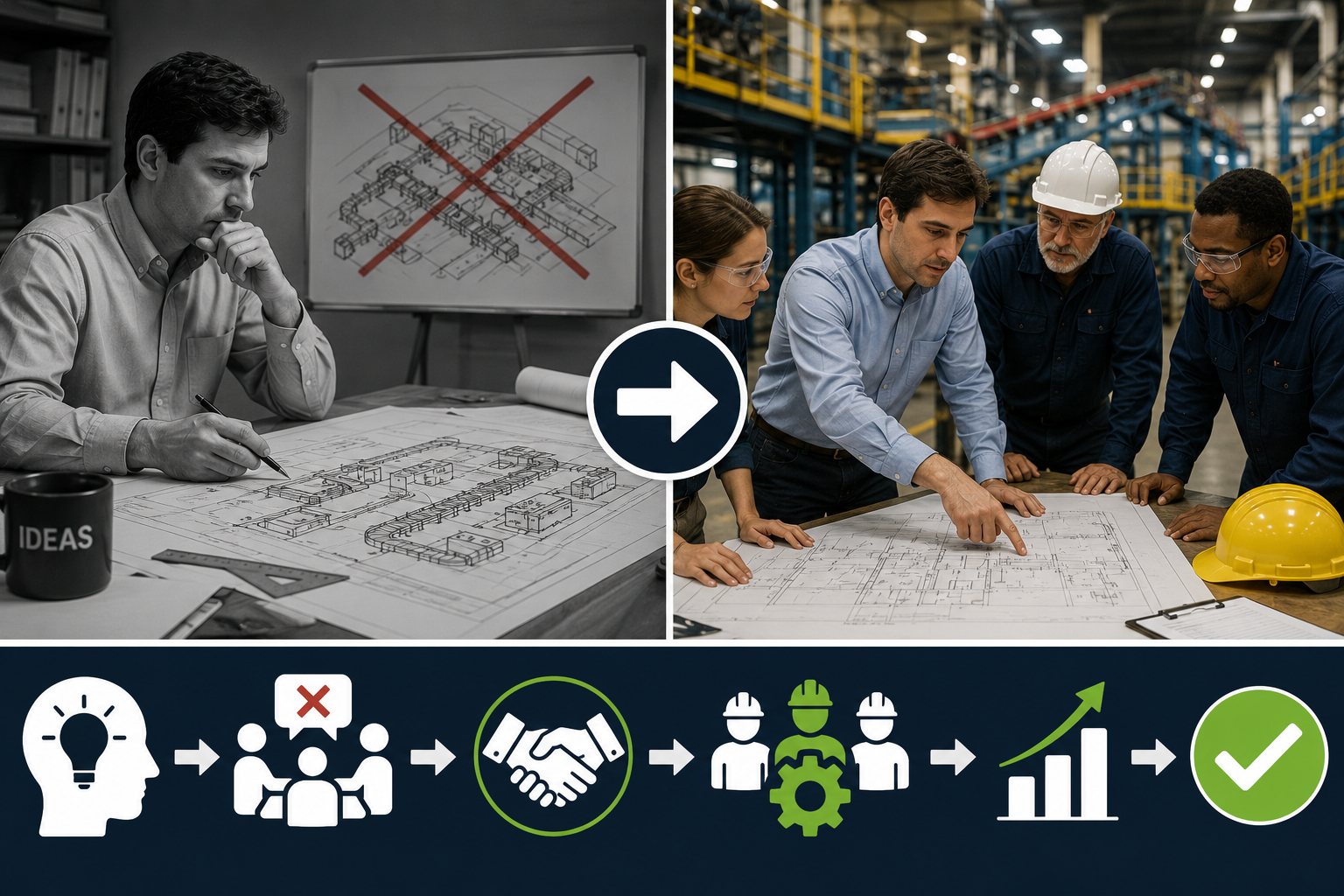
When My Design Didn't Win
I believed I had designed a better solution. Leadership chose a different direction. What happened next taught me one of the most valuable leadership lessons of my career: once the decision is made, your job is no longer to be right, it's to help the team succeed.
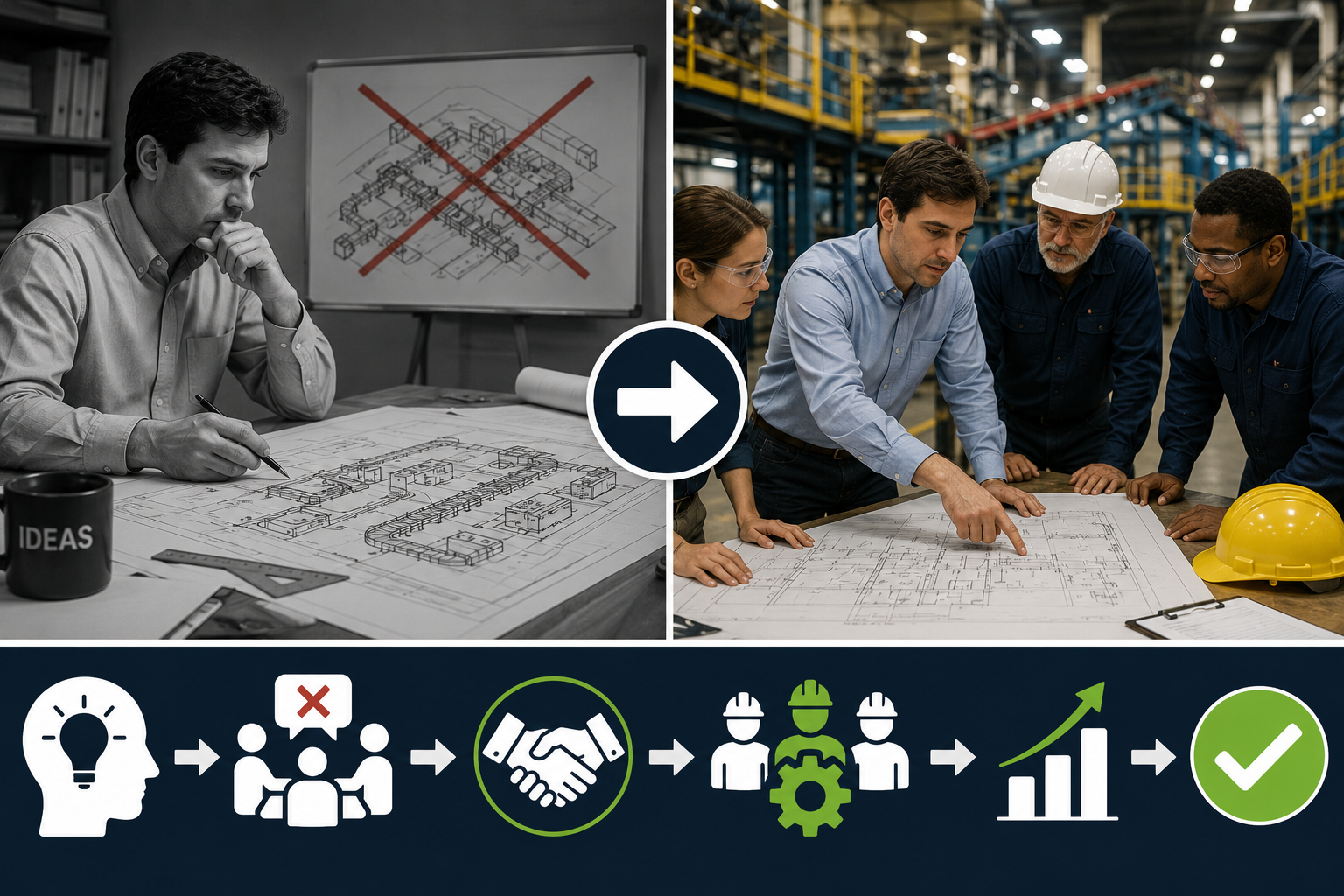
Kaizen Snapshot
Setting: Armstrong World Industries – Pensacola Integration Project
Challenge: Help redesign and integrate multiple production lines into a single-flow manufacturing system while supporting a design direction I didn't believe was the best option.
Stakes: Millions of dollars in capital investment, worker safety, operational flow, changeover efficiency, and long-term plant performance.
Approach: Challenge the proposed design with a thoughtful alternative, support leadership's final decision, and focus on making the chosen solution as successful as possible.
Outcome: The integrated production system launched successfully, numerous changeover improvements were implemented, and several innovations were later adopted at other Armstrong facilities.
Key Lesson: Great leaders aren't defined by whether their ideas are selected. They're defined by what they do after the decision has been made.
When My Design Didn't Win
The Situation
Early in my career as a Corporate Industrial Engineer for Armstrong World Industries, I was invited to join one of the company's largest manufacturing redesign efforts.
Known as the Pensacola Integration Project, the initiative would connect multiple production lines into a single, continuous flow system at the Pensacola, Florida plant. Instead of moving product in batches between disconnected operations, the new design would allow material to flow much more smoothly through the manufacturing process.
It was an exciting project. It was also one where I quickly developed a different opinion than the rest of the design team.
What Was Getting in the Way
As the engineering team refined the layout, one section of the proposed design concerned me. I believed there was a safer, simpler, and more efficient way to accomplish the same objective. Rather than quietly disagreeing, I shared my concerns with the project manager and the plant's Industrial Engineering manager. To their credit, they listened.
Although the project was already well underway, they encouraged me to develop an alternative layout and present it to the leadership team. Over the next several weeks, I invested significant time refining what I believed would create better flow, improve safety, and reduce the need for elevated platforms throughout that section of the plant.
Eventually, I had the opportunity to present my proposal. Leadership appreciated the effort. They liked portions of the concept. But after careful consideration, they chose to stay with the original design.
The Decision
I'll be honest, I was disappointed. Like many engineers early in their careers, I was passionate about my ideas and believed they would create a better result. But I also recognized something important. Leadership had listened. They had seriously considered my recommendation. They simply made a different decision. At that moment, my responsibility changed.
Until that meeting, my job had been to improve the design. After that meeting, my job became making the chosen design as successful as possible.
What We Did
Once the decision was made, I stopped trying to convince people to revisit the debate. Instead, I redirected all of my energy toward improving the selected design. Working alongside the project team, we simplified work areas, improved changeover methods, and identified ways to make the new production system safer and easier for operators.
I was also given responsibility for designing changeover equipment that would support the new integrated manufacturing process. Rather than dwelling on the design that wasn't selected, I focused on making the design that was selected perform as well as it possibly could.
The Breakthrough
Something unexpected happened. Once I let go of proving my idea was better, I became a stronger contributor to the project. Instead of dividing the team by continuing yesterday's debate, we became united around tomorrow's success. The energy shifted from defending decisions to improving execution. And that's where the real breakthroughs occurred.
Several of the changeover improvements our team developed during the project proved so effective that they were later adopted at other Armstrong manufacturing facilities.
What Changed
When the integrated production system finally started up, the project was successful. The new manufacturing flow performed well. Operators appreciated many of the improvements incorporated into their daily work. The changeover innovations created during the project continued spreading throughout the company's manufacturing network.
Looking back, I'm proud of the design I proposed. But I'm even more proud of the decision I made after it wasn't selected. That lesson has stayed with me throughout my career.
The Takeaway
Every leader will eventually experience the same moment. You present your best idea. Leadership chooses another direction. At that point, you have a choice.
Continue fighting yesterday's decision or become fully committed to making today's decision successful. Alignment often creates more value than proving you were right.
Why This Matters
Many organizations lose momentum because people continue debating decisions that have already been made. Healthy disagreement is valuable. Strong debate produces better thinking.
But once leadership has listened, evaluated the options, and chosen a direction, organizational success depends on everyone pulling together. The strongest leaders aren't the ones whose ideas always win. They're the ones who help the team win even when the final decision isn't their own.
That lesson shaped the way I've approached leadership, Kaizen facilitation, and organizational transformation ever since.
Ready to Build Greater Leadership Alignment?
The biggest obstacles to transformation are rarely technical. More often, they're organizational. When leaders align around a shared direction and commit to making it successful, teams move faster, collaborate better, and sustain improvements longer.
If you're looking to strengthen leadership alignment before your next major initiative, let's start with a Breakthrough Assessment and identify the opportunities that will have the greatest impact.
The Week They Kept Moving the Goalposts
I expected a week of management training. Instead, I spent five days having the rules changed, my plans disrupted, and my assumptions challenged. It became one of the most valuable leadership lessons of my career and one that still shapes every Kaizen event I facilitate today.
Kaizen Snapshot
Setting: Worthington Armstrong Venture (WAVE) management development program
Challenge: Learn a new management philosophy through a week of constantly changing, unpredictable team exercises.
Stakes: Develop leadership skills, adapt to a new corporate culture, and learn how to lead effectively when plans don't go as expected.
Approach: Experiential learning, team challenges, unexpected changes, and continuous reflection instead of traditional classroom instruction.
Outcome: A completely different perspective on leadership, teamwork, and facilitation, one that has influenced every Kaizen event and leadership workshop I've led since.
Key Lesson: Great leaders don't avoid uncertainty. They learn to thrive in it.
The Week They Kept Moving the Goalposts
The Situation
A little over a year after becoming a plant supervisor at a small Armstrong World Industries facility near Chicago, my career took an unexpected turn. Armstrong and Worthington Steel formed a joint venture called the Worthington Armstrong Venture (WAVE), and I was transferred to a larger manufacturing facility near Baltimore as the Industrial Engineer and Quality Manager.
As the new organization began adopting Worthington's culture, I was selected to attend the company's management development program. I expected a typical week of management training with classrooms, lectures, overhead transparencies (no Power Point at the time), and a few role-playing exercises.
Instead, I found myself living at a camp in Ohio with managers from across the company. It wouldn't take long to realize this wasn't going to be anything like the management training I had experienced before.
What Was Getting in the Way
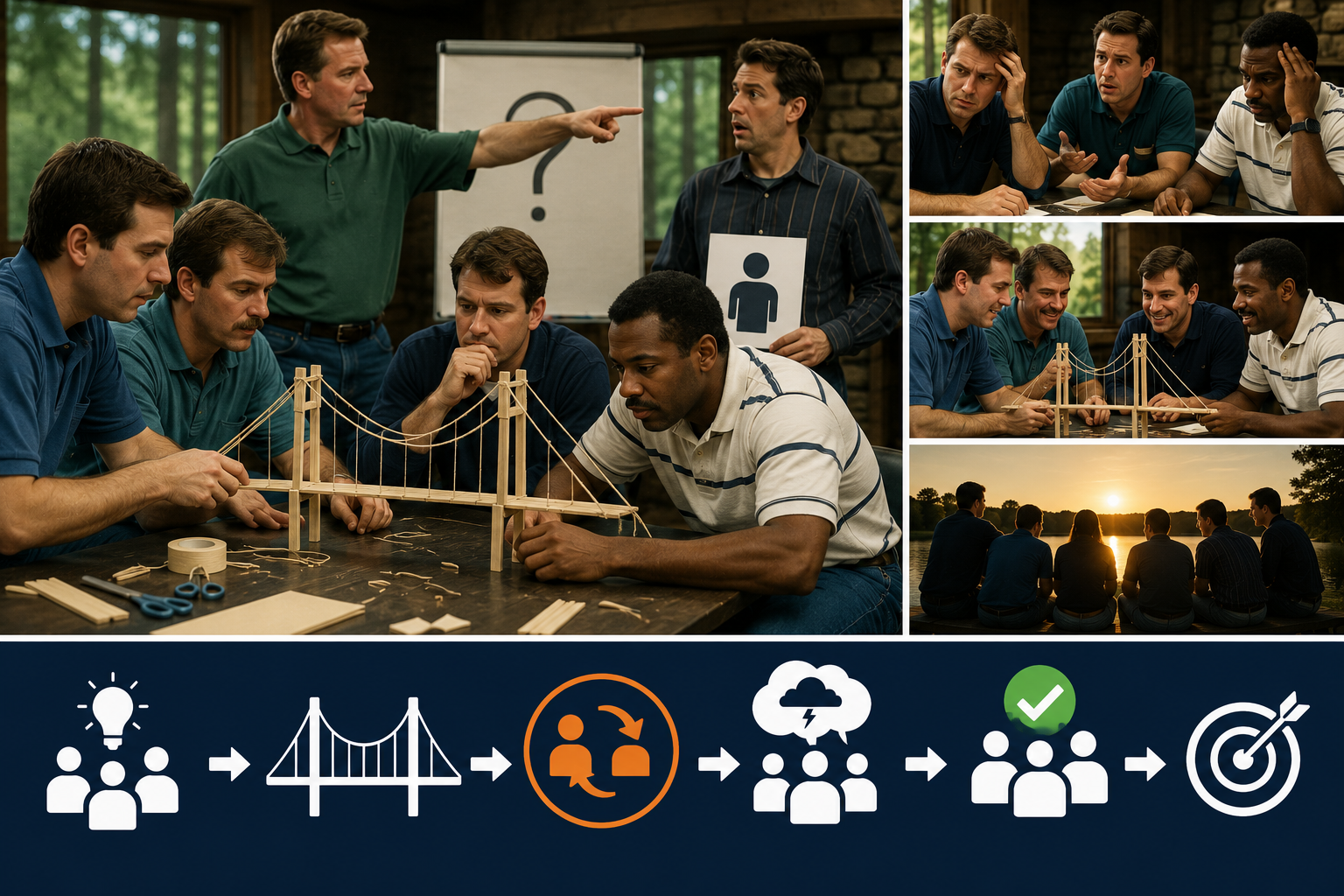
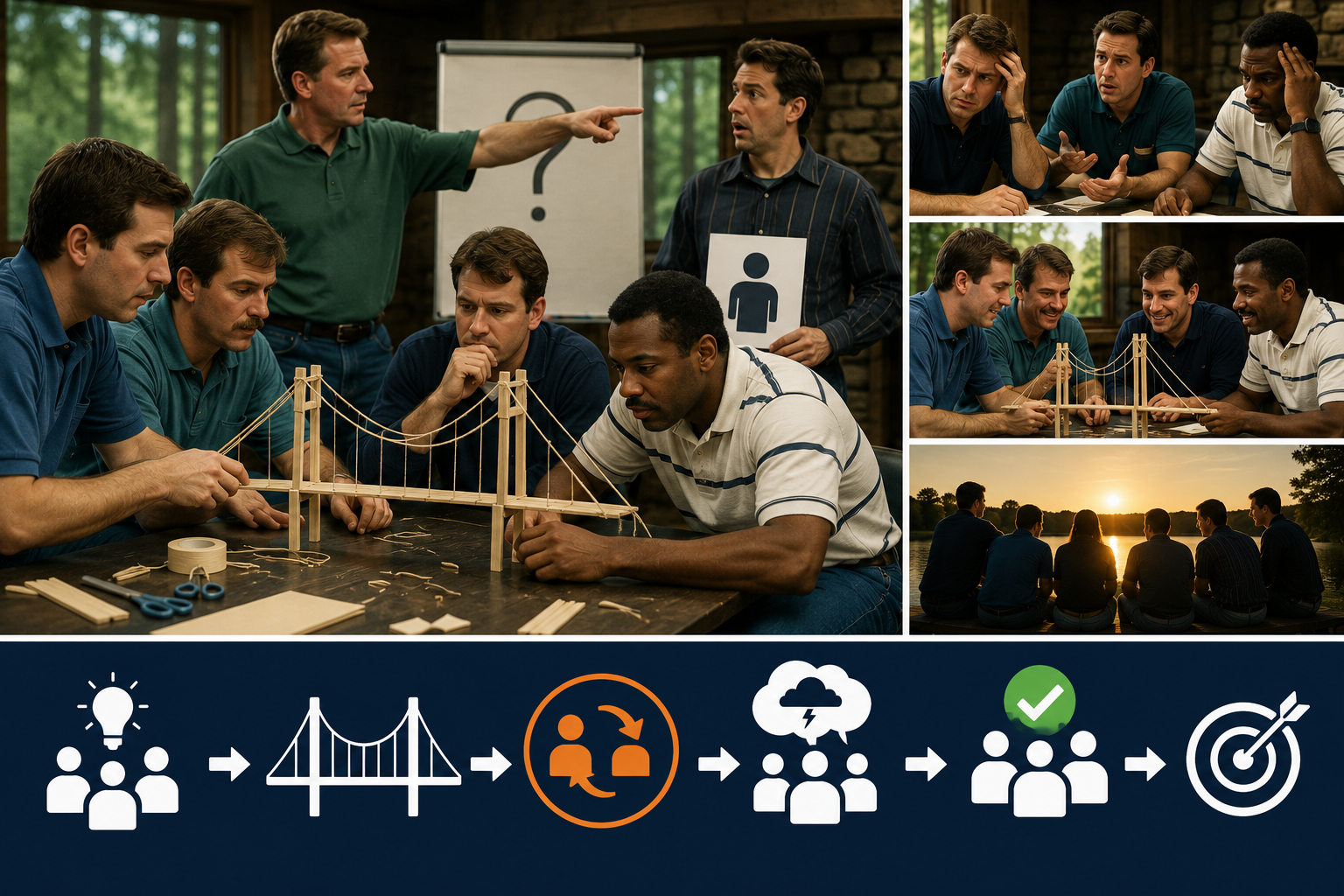
The first exercise seemed straightforward. Our team was asked to design and build the best suspension bridge possible using a limited set of materials. Like any engineering team, we quickly organized ourselves, assigned responsibilities, and developed a plan.
Then everything changed. About fifteen minutes into the exercise, an instructor walked into the room. Without warning, our team leader was removed. Someone we had never met was assigned to replace him. We weren't allowed to start over. We simply had to adapt. At first, it felt frustrating, then confusing, then interesting.
What We Did
As the week continued, the pattern repeated itself. Every time we thought we understood the assignment the rules changed, the team changed, the priorities changed, or the circumstances changed.
Every exercise included an unexpected twist. Eventually, our conversations shifted. Instead of asking, "Why do they keep doing this to us?" we began asking, "What are they trying to teach us this time?"
Without realizing it, we stopped expecting stability. We started expecting change. Something remarkable happened. We became much better at helping one another navigate uncertainty.
The Breakthrough
By the middle of the week, I realized this wasn't management training. It was adaptability training. The instructors weren't evaluating our original plans. They were watching how we responded after those plans stopped working.
Some participants struggled whenever a curveball appeared. Others became frustrated when their carefully constructed plans suddenly unraveled. I found myself naturally stepping into a different role. Helping people regroup, refocus, stay calm, and remember the real objective.
The goal had never been to build the perfect bridge. The goal had been learning how to lead when the unexpected happened.
What Changed
Looking back, that week changed the way I viewed leadership. It taught me something I've carried throughout my career. No matter how well you prepare, something will change. A key leader won't be available. Equipment will fail. Priorities will shift. Weather will interfere. Someone will challenge the plan.
The organizations that succeed aren't the ones that avoid those moments. They're the ones that adapt to them. That lesson has shaped every Kaizen event, workshop, and leadership engagement I've facilitated ever since.
The Takeaway
Today, people sometimes ask why I stay so calm when something unexpected happens during a Kaizen event. The answer goes back to that week in Ohio. I've learned that the plan is never the goal. Learning is the goal. The plan is simply where you begin.
Why This Matters
Organizations spend enormous amounts of time developing detailed plans. Planning is important. But no plan survives unchanged once real people, real equipment, and real business pressures enter the picture.
The strongest teams don't panic when circumstances change. They adjust. They learn. And they keep moving toward the objective together. That's one of the most valuable leadership skills any organization can develop.
Ready to Build Teams That Thrive Through Change?
Transformation rarely follows a perfectly written script. The organizations that consistently improve are the ones that develop leaders who remain calm, keep people aligned, and adapt quickly when the unexpected happens.
Whether through a Breakthrough Assessment, a Kaizen event, or leadership development, building that capability may be one of the greatest competitive advantages your organization can create.
One of my favorite sayings today is: "It's not a great Kaizen unless something goes sideways." I don't say that because I expect failure. I say it because some of the greatest breakthroughs begin the moment the original plan no longer works.

Respect First - Running Kaizen Successfully in a Union Environment
How clarity, respect, and one simple agreement unlocked engagement and protected results.
Kaizen Snapshot
Setting: Unionized distillery in Kentucky
Challenge: Excessive changeover time between bottle sizes
Stakes: Many thousands of additional bottles per year
Approach: Gemba walk, union alignment, Kaizen Waiver
Outcome: Constraints removed, continuity protected, team fully engaged
Key Lesson: Respect builds alignment, even in complex environments
The Situation
I’ve been running Kaizen events for more than 30 years in all kinds of environments, union and non-union alike.
While the rules may differ, one thing never does:
people are people, and everyone deserves to be treated with respect.
During a recent site visit to a distillery in Kentucky, leadership shared their most pressing need: reduce changeover time when switching between bottle sizes.
If we could cut the time in half, the plant would unlock capacity for many thousands of additional bottles each year. The business case was obvious and worth pursuing.
What Was Getting in the Way
The plant was unionized, and two contract constraints surfaced immediately:
Division of labor: Production, maintenance, and management roles were clearly defined. In a Kaizen event, however, everyone needs to test ideas regardless of title.
Overtime by seniority: If overtime was required, a more senior employee could replace a team member mid-event, disrupting continuity and momentum.
I knew from experience that if we didn’t address these issues before the event, the team would be constrained and the results would suffer.
What We Did
In similar environments, I’ve used what I call a Kaizen Waiver, a temporary, transparent agreement that allows:
Any team member to do the work the team needs
Team continuity if overtime is required
My team leader hadn’t used this approach before, so I suggested we take a Gemba walk and meet directly with union leadership.
That’s when we met Sam, the union vice president.
“We’ve tried this before. What are you going to do that other consultants couldn’t?”
I didn’t deflect the question.
I told him exactly what I planned to do:
Listen to the team.
Prioritize improvements that would make the biggest impact on safety, quality, and effort.
Sam’s next concern was one I hear often:
“What happens when you’re gone?”
I explained that if we made the process safer, truly safer, no one would want to go back. And I would rely on both union leadership and plant leadership to hold people accountable to the new standard.
When Sam asked about the contract, I walked him through the Kaizen Waiver and why it was critical to the team’s success.
After thoughtful questions and discussion, he agreed to support the approach.
I asked if he wanted to be on the team. He declined, which was understandable. That would have put him in a difficult position with his membership. But his support was enough.
What Changed
With constraints removed up front, the team was able to:
Fully engage in testing and implementing improvements
Maintain continuity throughout the event
Focus on solving the real problem, not navigating rules
The Kaizen event itself was a success. But more importantly, it was done in a way that respected everyone involved.
The Takeaway
When you explain why you want to work differently, and you do it with respect, alignment is possible.
Union or non-union, Kaizen works best when trust comes first.
Why This Matters
Too many improvement efforts stall because leaders avoid hard conversations or try to work around constraints instead of addressing them directly.
Respect, clarity, and alignment remove friction — and create space for real results.
Ready to Apply This Approach?
If you’re navigating improvement in a complex environment and want results that stick:

When the Work Speaks for You
How years of consistent Kaizen work turned into unexpected recognition and new opportunity.
Kaizen Snapshot
Setting: Global Lean Summit at Indiana University
Challenge: Sustaining Kaizen momentum at scale
Stakes: Culture, credibility, and long-term capability
Approach: Hands-on Kaizen facilitation, leader development, culture building
Outcome: Public CEO endorsement, new relationships, expanded opportunities
Key Lesson: Consistent results build credibility and credibility opens doors
The Situation
At the 2025 Global Lean Summit, I was scheduled to deliver five workshops over two days. That alone made it a memorable event.
What made it even more meaningful was learning that Andrew Koenig, CEO of CITY Furniture, would also be speaking. I had worked closely with Andrew and his team for two years, helping them re-energize their Kaizen culture and build internal capability.
I reached out and let him know I’d be tracking him down when he arrived. He was happy to reconnect.
We finally met early on the final conference day at my booth.
What Happened Next
After catching up and sharing recent adventures, Andrew looked at me and said something I didn’t expect:
“Adam, you’ve done so much for us. What can I do for you?”
Honestly, I hadn’t thought about that. I felt he had already given me plenty through the opportunity to work with his organization.
Still, a few thoughts crossed my mind:
It would be nice to be acknowledged as part of CITY Furniture’s Lean journey
Introductions to leaders he thought I could help would mean a lot
And maybe, just maybe, he’d wear the Kaizen Ninja socks I hand out
He smiled and said he’d do what he could.
The Moment I Didn’t See Coming
When Andrew took the stage later that morning, he began telling the story of CITY Furniture’s Lean journey.
Early in his talk, he shared how we met and how my work helped re-energize their Kaizen culture.
Later, he spoke again about the role I played in building their long-term Kaizen strategy.
Then he asked me to stand.
“Adam became part of how we grew our Kaizen capability not just our events.”
The response from the audience was immediate. After the talk, leaders came up to me wanting to understand my perspective, my approach, and how I supported CITY Furniture’s transformation.
Andrew’s words carried weight. Far more than anything I could have said myself.
What Changed
Later that day, Andrew came over, gave me a hug, and invited me to attend the CITY Furniture vendor conference.
I hadn’t been a vendor for more than two years. But I knew I needed to go, if for no other reason than to reconnect with the Kaizen team members and see how they were doing.
The conference itself was outstanding. But the real impact was something else entirely.
The Takeaway
When you do good work, consistently, respectfully, and with the long view in mind, others will tell your story for you.
Credibility isn’t built through self-promotion. It’s built through results.
Why This Matters
Leaders are flooded with claims and credentials.
What cuts through the noise is proof, especially when it comes from someone they trust.
Sustainable Kaizen cultures grow when results speak louder than words.
Want Results Like This?
If you’re looking to build Kaizen capability that leaders stand behind. Not just events that check a box:
Why Great Kaizen Starts Before the Event
How one frustrated engineer reshaped the way I prepare leaders for successful Kaizen.
Kaizen Snapshot
Setting: Armstrong World Industries Technology Group
Challenge: Poorly defined Kaizen charters wasting time and energy
Stakes: Misaligned priorities, weak engagement, limited business impact
Approach: Clear standards, disciplined gatekeeping, simplified chartering
Outcome: Stronger business cases, better-aligned teams, higher-impact Kaizen
Key Lesson: If the problem isn’t clear, the Kaizen won’t be either
The Situation
During my final six years as Global Lean Champion for Armstrong’s Technology group, I encouraged leaders to sponsor Kaizen events to solve critical business problems.
One requirement never changed: every Kaizen needed a charter.
The charter wasn’t bureaucracy. It was how we ensured:
The right problem was being solved
Leaders were aligned
The work justified pulling people away from their daily jobs
As momentum grew, more leaders reached out for support. As the gatekeeper for Kaizen events, I reviewed every charter before an event was approved.
That’s when I met Stan.
What Was Getting in the Way
Stan was an experienced engineer who wanted to run a Kaizen in his area. We talked through what he hoped to accomplish, and I shared the standard charter template.
I asked him to complete it before our next meeting.
Three days later, he hadn’t.
“I just want to make sure you understand what I’m trying to do.”
I explained why the charter mattered. It forces clarity, alignment, and commitment.
Stan tried again.
And again.
And again.
After more than a dozen iterations, a pattern became clear.
What We Discovered
Stan wasn’t struggling with the template.
He was struggling with the why.
The charter never articulated a compelling business case. It sounded less like a Kaizen event and more like a request for people to do his work for him.
I told him I couldn’t approve the event.
He wasn’t satisfied, so we met with his sponsor to see if we could clarify the value together.
We couldn’t.
The event never happened.
What Changed (for Me)
There’s a risk in being strict about Kaizen charters. But I owed it to the organization to protect people’s time and energy.
More importantly, I realized something uncomfortable:
Chartering wasn’t as easy as I thought it was.
So I changed my approach.
The Improvements I Made
I did two things that changed everything:
Simplified the process
I created a clear, four-step approach called Chartering to Win, with explicit intent and critical questions for each step.Took ownership of the starting point
Instead of asking leaders to start from a blank page, I began drafting a first version of the charter with them.
It’s far easier to edit than to create from scratch.
The Takeaway
Strong Kaizen events don’t fail in the room.
They fail before they ever start when the problem isn’t clear and the purpose isn’t compelling.
Today, I use the same Chartering to Win approach with my clients, and I teach leaders how to do it themselves.
And I owe that lesson to Stan.
Why This Matters
Too many organizations jump into Kaizen because it feels productive, not because it’s focused.
Clear chartering protects people’s time, builds alignment, and dramatically increases the odds that improvement will stick.
Want Better Kaizen Outcomes?
If your Kaizen efforts feel busy but not impactful, the problem may not be execution — it may be chartering.

Don't Go Down the Rabbit Hole
How a tough day on the plant floor reshaped my understanding of leadership, focus, and trust.
Kaizen Snapshot
Setting: Armstrong World Industries – St. Helens, Oregon plant
Challenge: Multiple simultaneous operational issues overwhelming leadership
Stakes: Safety, uptime, morale, and credibility
Approach: Prioritization, delegation, team ownership
Outcome: Clear focus, aligned action, stronger leadership discipline
Key Lesson: You don’t win by fixing everything. You win by fixing the right thing
The Situation
One thing you learn quickly in manufacturing is this:
Even when things are going well, there’s no guarantee they’ll stay that way.
People, processes, equipment, weather, raw materials, any one of them can tip a good day into a bad one.
At the St. Helens ceiling tile plant, we were in the middle of one of those weeks. Equipment downtime was high. Safety concerns were surfacing. People issues were piling up.
As Operations Manager, I felt responsible for all of it.
What Was Getting in the Way
I approached the situation the way many engineers do, by trying to solve every problem at once.
I believed:
Every issue mattered equally
I needed to stay on top of everything
Speed meant touching everything personally
In our morning review meeting, I rattled off dozens of problems.
What I didn’t have was a clear direction.
The Moment That Changed Everything
As I started diving deep into a relatively small issue, one that wasn’t driving major loss, Olivia, our plant manager, stepped in.
“Adam, stop worrying about all the little details.
Let’s focus on the key problem, build the plan, and execute it.
Then we’ll move on to the next.”
It was obvious. And I had completely missed it.
What Changed
Olivia had the team identify the top three problems for the day.
Then she did something even more important. She had them self-assign ownership.
Suddenly:
Focus replaced overwhelm
The team leaned in
Progress accelerated
I took one of the assignments myself and learned more about leadership that day than I had in months.
The Takeaway
Trying to fix everything is a fast way to fix nothing.
Strong leaders create focus, trust their teams, and resist the pull to dive into every detail.
Why This Matters
When leaders chase every problem, teams hesitate.
When leaders create clarity, teams act.
Focus isn’t avoidance, it’s discipline.
Ready to Build Focused Improvement?
If your organization feels overwhelmed by competing priorities, Kaizen may not be the problem, focus might be.

Squarely in the Middle of the Action
How asking a better question and slowing things down unlocked a stubborn reliability problem.
Kaizen Snapshot
Setting: Armstrong World Industries’ Pensacola ceiling tile plant
Challenge: Inconsistent board squareness affecting downstream processes
Stakes: Reliability, quality, and future changeover success
Approach: Observation, cross-functional collaboration, high-speed analysis
Outcome: Root causes identified and eliminated, lasting reliability gains
Key Lesson: Some problems aren’t solvable until you ask the right question
The Situation
During my corporate career at Armstrong, I was known as someone who would do whatever it took to help the team win.
In the late 1990s, we were reconfiguring the Pensacola plant to dramatically expand the range of ceiling tile sizes and shapes we could produce.
That meant one thing: far more changeovers.
Before we could make changeovers fast, we had to make the process reliable.
What Was Getting in the Way
After the dryer, large ceiling boards were cut down to size by a massive panel saw. We called it the Dry Saw.
I noticed something subtle but concerning.
The boards appeared to enter and exit the saw at a slight angle. That small misalignment was enough to create downstream quality problems and it was happening consistently.
Bob, a highly experienced engineer, was scheduled to rebuild the saw. I shared what I was seeing.
At first, he was skeptical. Then he looked and saw it too.
Going Where the Problem Lived
We locked out the saw and climbed onto the table.
We raised the blades and lay directly beneath them, close enough that I could see the teeth inches above my face. Nothing obvious appeared out of square.
Then Bob had an idea.
“What if we use high-speed cameras and slow everything down?”
At the time, this was cutting-edge technology.
We rented the equipment, set up cameras at critical points, and recorded the process.
What We Learned
When we slowed the footage down, three issues became obvious:
The pusher bar feeding the first saw was slightly misaligned
The conveyor chains feeding the second saw weren’t square
The saw shaft slipped slightly with each full rotation
None of this was visible at full speed.
What Changed
All three issues were corrected during the next maintenance downday.
Immediately:
Boards ran square
Downstream processes stabilized
Changeovers became predictable
Bob designed the fixes into the rebuild and added preventative maintenance to keep it that way.
The Takeaway
Until we slowed the process down, we were guessing.
Once we asked a better question, the answer became obvious.
Why This Matters
Many reliability problems persist not because teams lack skill, but because they haven’t found the right way to see the problem.
The right question changes everything.
Want More Predictable Changeovers?
If reliability issues are undermining your improvement efforts, it may be time to look at the problem differently.

My First Kaizen Event as a Consultant
The early lesson that reshaped how I scope, support, and design Kaizen events.
Kaizen Snapshot
Setting: Large consumer brands manufacturing facility
Challenge: Running multiple Value Stream Mapping efforts simultaneously
Stakes: Event effectiveness, team engagement, credibility
Approach: Internal facilitator development, real-time course correction
Outcome: Successful event and a permanent change in approach
Key Lesson: If you can’t properly support the work, it’s been scoped wrong
The Situation
When I left my corporate role, I was fortunate to land a contract facilitating a company’s first Value Stream Mapping event.
The challenge was scale.
Instead of one value stream, the plant had three independent value streams, each operating differently.
In my corporate role, this would have meant multiple experienced facilitators.
As a new consultant, I had one. Me.
The Plan
I proposed a hybrid approach:
I would facilitate one value stream
I would train two internal leaders, Ken and David, to facilitate the others
Ken had some facilitation experience.
David had none but he had curiosity and commitment.
We prepared extensively. I spent weeks coaching them through the Value Stream Mapping process.
I felt ready.
What Actually Happened
The kickoff included more than 50 participants. After alignment and logistics, we split into teams and went to Gemba.
That’s when reality hit.
While all teams were walking the process, I had no visibility into how the other two were doing.
After my team’s walk, I rotated.
One team was stuck.
One team was doing fine.
I helped where I could.
The Wake-Up Call
When I returned to my own team, more than 40 minutes had passed.
They were waiting.
Without guidance, momentum stalled. Not because they lacked capability, but because I wasn’t there.
The event ultimately succeeded. But the lesson was clear.
The Takeaway
If the work can’t be properly supported, it’s been scoped incorrectly.
From that point on, Value Stream Mapping events were run one value stream at a time, whether I was involved or not.
That lesson still shapes how I design Kaizen today.
Why This Matters
Good intentions don’t guarantee good outcomes.
Clear scoping protects teams, credibility, and results.
Want Kaizen That’s Designed to Succeed?
If your improvement efforts feel stretched or diluted, the issue may not be execution, it may be design.
Tearing Down the Monuments of Poor Leadership
How visible discipline and consistency helped reset culture in a struggling manufacturing plant.
Kaizen Snapshot
Setting: Armstrong World Industries’ Lancaster, Pennsylvania vinyl flooring plant
Challenge: Low morale, poor discipline, and eroding trust
Stakes: Productivity, safety, and plant survival
Approach: Visible leadership action, standards reinforcement, symbolic reset
Outcome: Behavior change, improved discipline, productivity lift
Key Lesson: Culture changes when leaders make standards visible and non-negotiable
The Situation
When I became Business Unit Manager at Armstrong’s Lancaster vinyl flooring plant, the history was obvious.
Demand was down. Trust was low. Discipline was inconsistent.
And when people lose confidence in the future, they find ways to disengage.
During a leadership rotation through all shifts, we decided to experience the plant the way every employee did, including nights.
That’s when I found something I didn’t expect.
What Was Getting in the Way
During an overnight walk, I noticed lines running with missing crew members.
Breakrooms were empty. Work areas were quiet.
So I started looking in unused areas of the facility, nine floors of old industrial space.
On the sixth floor, I found stacks of fabric arranged into makeshift “beds.”
The rumors were true.
What We Did
Instead of calling people out, accusing, or lecturing, we took a different approach.
We formed a “bed-hunting” team and searched the facility. Over several days, we found six sleeping areas.
On a Wednesday morning, without announcement, we gathered all the beds and dragged them outside where everyone could see them.
Then we destroyed them in a controlled burn.
No speeches.
No accusations.
Just a clear message: this is not how we work here.
What Changed
Sleeping on the job stopped.
Productivity improved.
The mood lifted.
People saw that leadership was serious about standards.
Sometimes discipline, applied consistently and respectfully, creates stability that people actually crave.
The Takeaway
Culture doesn’t change with posters and speeches.
It changes when leaders remove the monuments to poor behavior.
Why This Matters
When standards are unclear or inconsistently enforced, people fill the gaps.
Visible, consistent leadership resets expectations and restores trust.
Ready to Reset Culture?
If inconsistent standards are holding your organization back, disciplined Kaizen can help reset expectations.

Safety Taken to the Extreme
What a four-day asbestos audit taught me about discipline, resilience, and what safety really means.
Kaizen Snapshot
Setting: Dal-Tile manufacturing plants (Southern U.S.)
Challenge: Asbestos sampling under extreme conditions
Stakes: Worker safety, compliance, personal resilience
Approach: Strict protocols, long-duration sampling, extreme heat exposure
Outcome: Complete audit, deeper respect for safety discipline
Key Lesson: True safety work demands discipline, endurance, and respect for risk
The Situation
During my time at Dal-Tile, I worked as the environmental, safety, and mining liaison for 12 manufacturing plants.
There was little trust between the plants and the corporate safety group, so I was assigned to shadow a corporate environmentalist during asbestos audits.
His name was Richard. He wasn’t exactly customer friendly, but he was meticulous.
What Was Getting in the Way
Asbestos sampling wasn’t done during normal shifts.
We worked nights, weekends, and off-hours, when plants were quiet.
Richard wore a full Tyvek suit in the middle of summer in the South.
I was told to stay at least 30 feet away.
Even from 30 feet, I was uncomfortable.
Going Where the Risk Was
At one plant, Richard climbed on top of a ceramic tile dryer, hundreds of feet long and extremely hot.
I followed him.
The surface temperature was between 120 and 140 degrees. He was sealed in Tyvek. I was not. I have no idea how he tolerated the extreme heat. I was melting.
We worked 14–16 hours per plant. In four days, we slept less than 12 hours total.
What Changed
Richard never slowed down.
He followed every protocol.
He documented everything precisely.
It was one of the most physically demanding and disciplined safety efforts I’ve ever witnessed.
And I learned something important about myself.
The Takeaway
I gained a deep respect for the rigor behind real safety work and clarity that this wasn’t my long-term path.
Safety isn’t a slogan. It’s discipline under pressure.
Why This Matters
Many organizations talk about safety. Few truly understand the rigor required to protect people in high-risk environments.
Discipline saves lives.
Want Safety That Actually Sticks?
If safety feels reactive instead of disciplined, Kaizen can help build systems that protect people consistently.

How I Accidently Became a Paid Speaker
Why stepping outside your comfort zone can open doors you never expected.
Kaizen Snapshot
Setting: EPA Continuous Improvement Conference in San Francisco
Challenge: Transitioning from practitioner to professional speaker
Stakes: Personal credibility, brand growth, new opportunities
Approach: Coaching, preparation, value-driven content
Outcome: Paid keynote, workshops, expanded visibility
Key Lesson: Growth happens when you say yes before you feel ready
The Situation
I’ve spent decades in continuous improvement and nearly eight years as a business owner.
I’m known for Kaizen Ninja Facilitation and the Wheel of Sustainability, not for public speaking.
So when the EPA emailed me about speaking at their conference, I assumed it was a mistake.
What Was Getting in the Way
They found me through Google and the Gemba Academy podcast.
I was skeptical. They thought I spoke on sustainability. I don’t do environmental sustainability.
But curiosity won.
What We Did
I spoke with a professional speaker friend who coached me on pricing, scope, and positioning.
He gave me one piece of advice that stuck:
“Whatever price you set will feel too high to them.”
I proposed a fee. They negotiated. We agreed.
I also offered workshops and they accepted immediately.
The Moment on Stage
I prepared obsessively.
I opened with:
“I just read on the plane that the best speeches are 20 minutes or less—so I’ll be quiet for 70 minutes, then we’ll get started.”
They laughed. I relaxed.
The talk landed. Workshops were full. Conversations flowed.
What Changed
I realized something important:
People valued my perspective enough to pay for it.
And I enjoyed it.
The Takeaway
You don’t have to feel ready to take the next step.
You just have to be willing to step forward.
Why This Matters
Leaders often wait for perfect confidence before acting.
But confidence usually follows action, not the other way around.
Want Me to Speak or Work With Your Team?
If you’re looking for a speaker or facilitator who brings real-world Kaizen stories and practical frameworks:
Technology Doesn't Have to be Scary
For two years, I facilitated monthly Kaizen events at CITY Furniture. These weren’t just about fixing specific problems. They were about strengthening their culture of continuous improvement. By the time we completed six events, people were lining up to be on the next teams.
One memorable event focused on organizing a chaotic repair parts storage area. We removed 75% of the clutter and built ownership that became a model for future teams.
What I didn’t tell you was this: the team also automated the entire inventory tracking system. And the person who made it happen was a 17-year-old hourly employee named Rob.
Rob was the son of one of the supervisors on the team. During our Gemba walk, it was clear the cluttered space wasn’t the only problem. Our area owner was drowning in paperwork and unreliable data.
While most team members focused on the physical mess, Rob saw a deeper issue: fractured information streams, disconnected reports, and no real-time visibility.
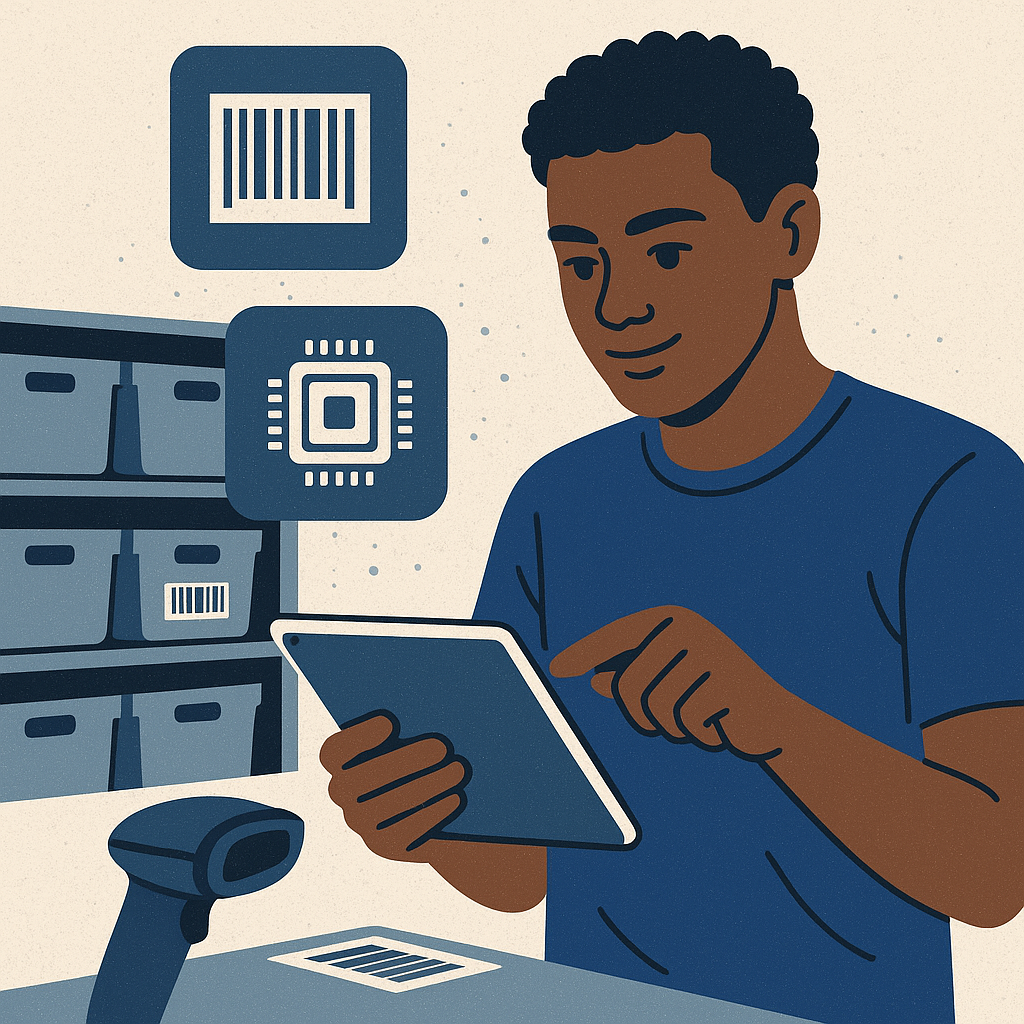
His idea? Consolidate everything into one digital report, accessible on an iPad. Then, take it further by barcoding every bin and tracking inventory in and out with a scan.
The team loved it but had no clue how to make it happen. Rob just smiled and said, “I’ve got this.” And off he went.
By day three, he had a prototype. He coordinated with IT, repurposed a company iPad, and built a working application. By week’s end, barcodes were in place, the app was live, and the team could track every part in real time.
I personally told the CEO about Rob and urged him to nurture this rising star. “Don’t let him get away,” I said.
Today, Rob’s a sales rep for CITY Furniture with a stellar track record and the same customer-first mindset that powered his Kaizen breakthrough.
Innovation doesn’t care about age, title, or tenure. Sometimes, your quietest contributor holds the loudest solution if you’re willing to listen.
A Gemba Walk Like No Other
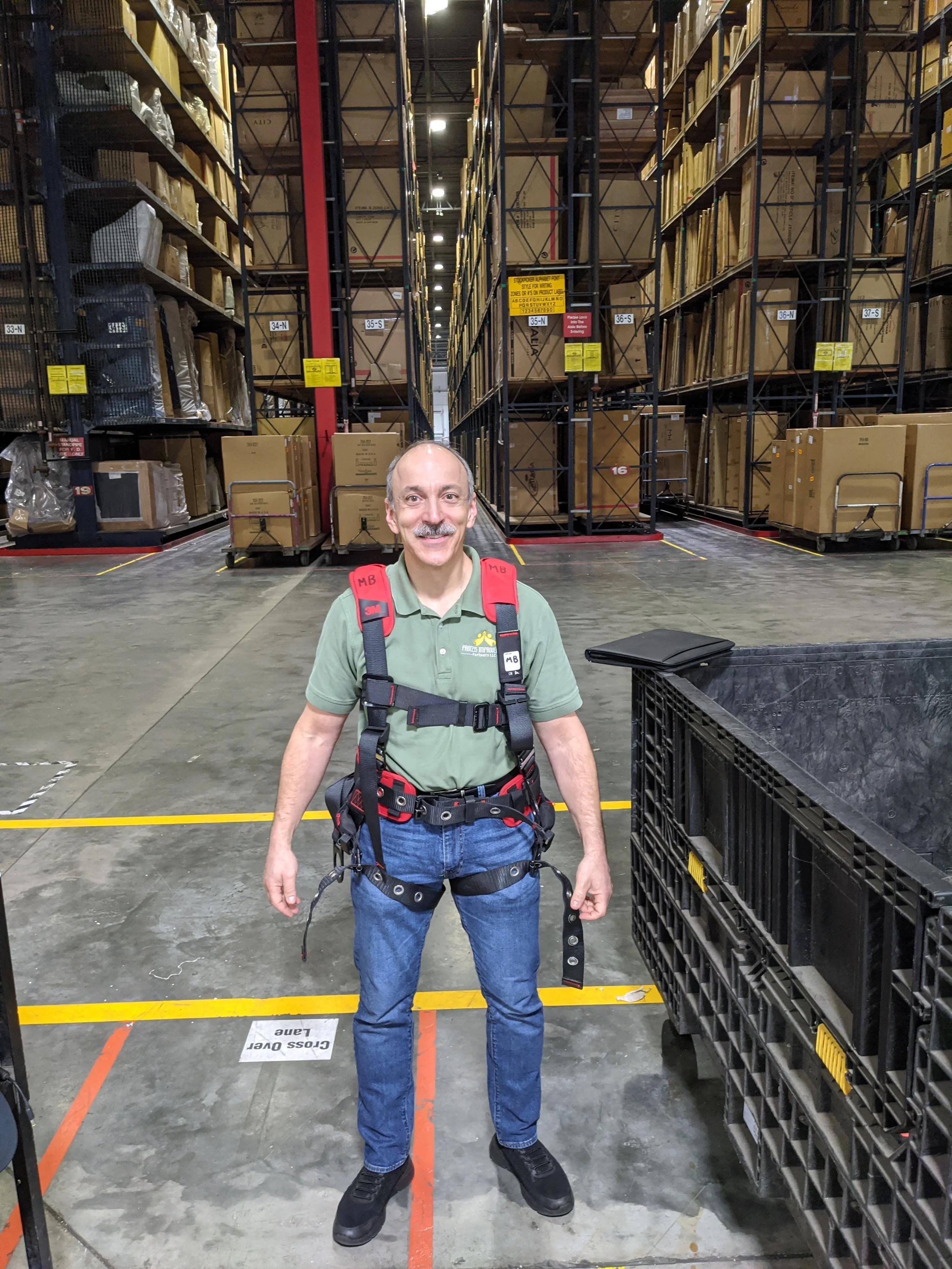
Before I facilitated my first Kaizen event at CITY Furniture, we agreed I should learn the business from the inside. So, I spent a week embedded in their distribution center, shadowing employees and learning the flow.
The culture was strong, engaged, and motivated. But people were frustrated. They hadn’t had a Kaizen in a while, and they were hungry for change. I was there to help reignite that spark.
I spent time in the repair shop, helped planners with order tracking, and eventually got paired up with an order picker named Andy. His job was to locate furniture across a 1.6 million square foot facility and deliver it to the floor for shipment.
Andy showed me how he used barcode scanners and optimized routes to work efficiently. Then he asked, “Want to help me with an order?”
Next thing I knew, I was wearing a harness and vest, clipped into an “order picker,” a lift with a platform designed to retrieve furniture from towering racks.
Up and down we went, pulling product from the sky. At one point, 45 feet in the air, Andy turned to me and said, “I forgot to ask, are you afraid of heights?” I laughed and replied, “You picked a fine time to ask!”
We kept working, and I gained a deep appreciation for the skill, care, and judgment required in that role. It’s easy to underestimate the complexity when you're watching from the ground.
By the time I returned to the office, everyone had heard about the consultant in the air. They also knew I wasn’t there to sit on the sidelines. I was there to understand, serve, and support.
You can’t lead improvement from behind a desk. Real change starts when you walk the floor, get your hands dirty, and show people that their work matters.
Get it Right Early, the Rest will take Care of Itself
I’d been running reliability and center lining events across the country, and it never ceased to amaze me how small adjustments like leveling rollers, aligning equipment, straightening processes, could transform an entire line. We were seeing 90% fewer jams, 20% higher yields, 40% productivity gains, and a massive boost in team ownership. It was life-changing.
I decided to convince another client to try this approach in his composite decking factory. While the product was thicker and more stable than others I’d worked with, I knew the principles would still apply.
When I reviewed the concept with my sponsor, he admitted they were battling jams that caused serious disruption. He immediately invited me to run a reliability Kaizen on a key production line.
At first glance, the line seemed simple: straight path, thick product. But once we dug in, the misalignment was obvious. Early in the process, a set of rollers fed stabilizing sheets into melted vinyl. The roller system was out of level, causing tension and stress at the mixing point. Once corrected, the sheets fed evenly, drastically improving flow.
Next, we tackled the water bath where the decking was formed. The “carrier” that transported product through the bath was tilted. That misalignment made the material rise or fall, throwing off the next equipment in the line and potentially causing jams.
We built custom brackets using materials on hand to support the carrier at the precise height and alignment. Then we created easy-to-use visuals to ensure it could be consistently set up.
Once everything was lined up and squared off, we started up the line. It ran beautifully. From that stable foundation, we aligned every piece of downstream equipment. The results? Significant productivity gains, reduced safety risks, and a team that now applies the method to other lines in the plant.
When you take the time to get it right early in the process, everything becomes easier downstream. In reliability Kaizen, precision builds momentum and momentum builds belief.