
Kaizen Success Stories
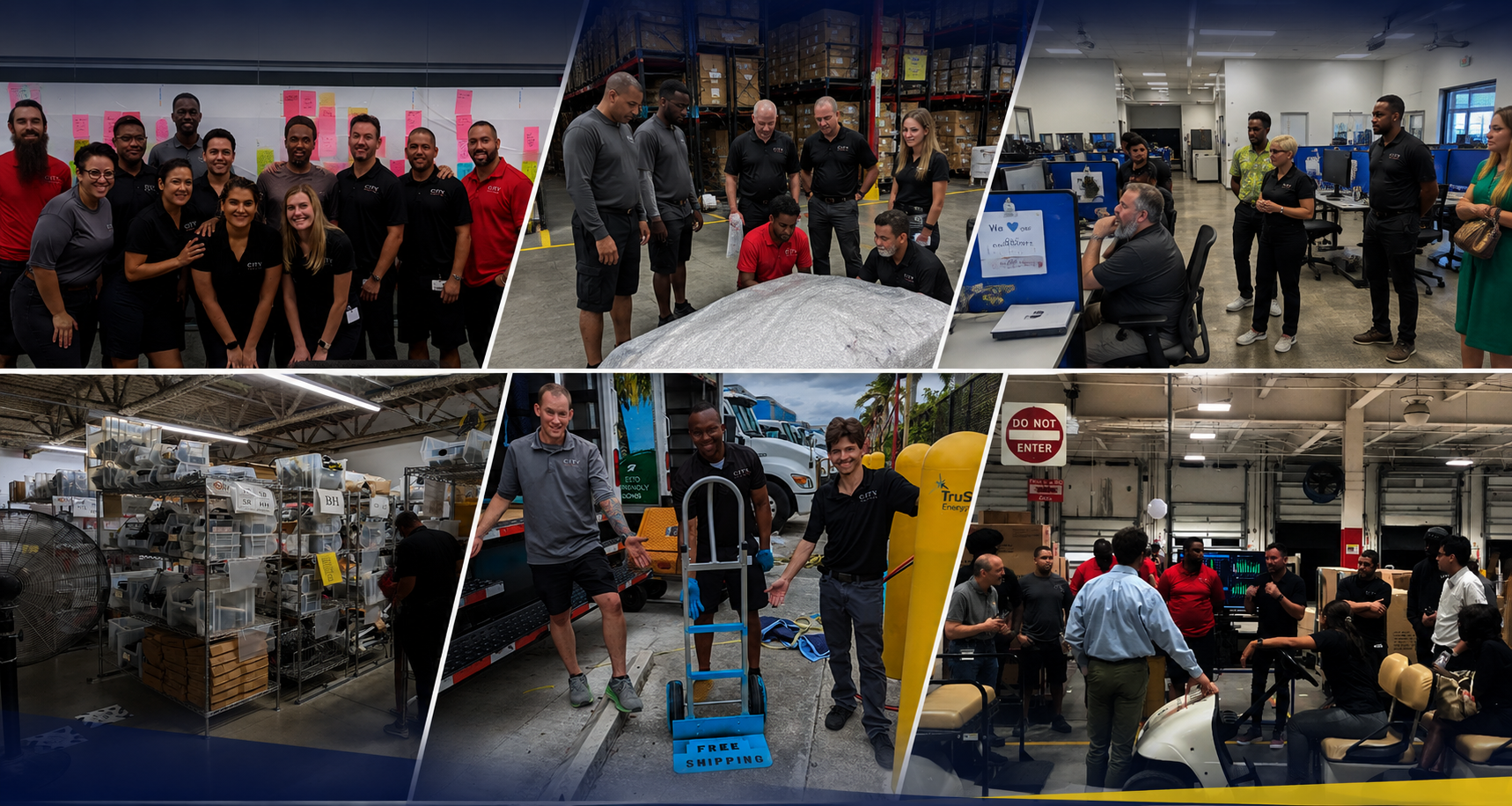
Real Manufacturing Results. One Kaizen at a Time
Explore real-world Kaizen success stories showing how manufacturing teams solved critical problems, improved performance, and created sustainable results.
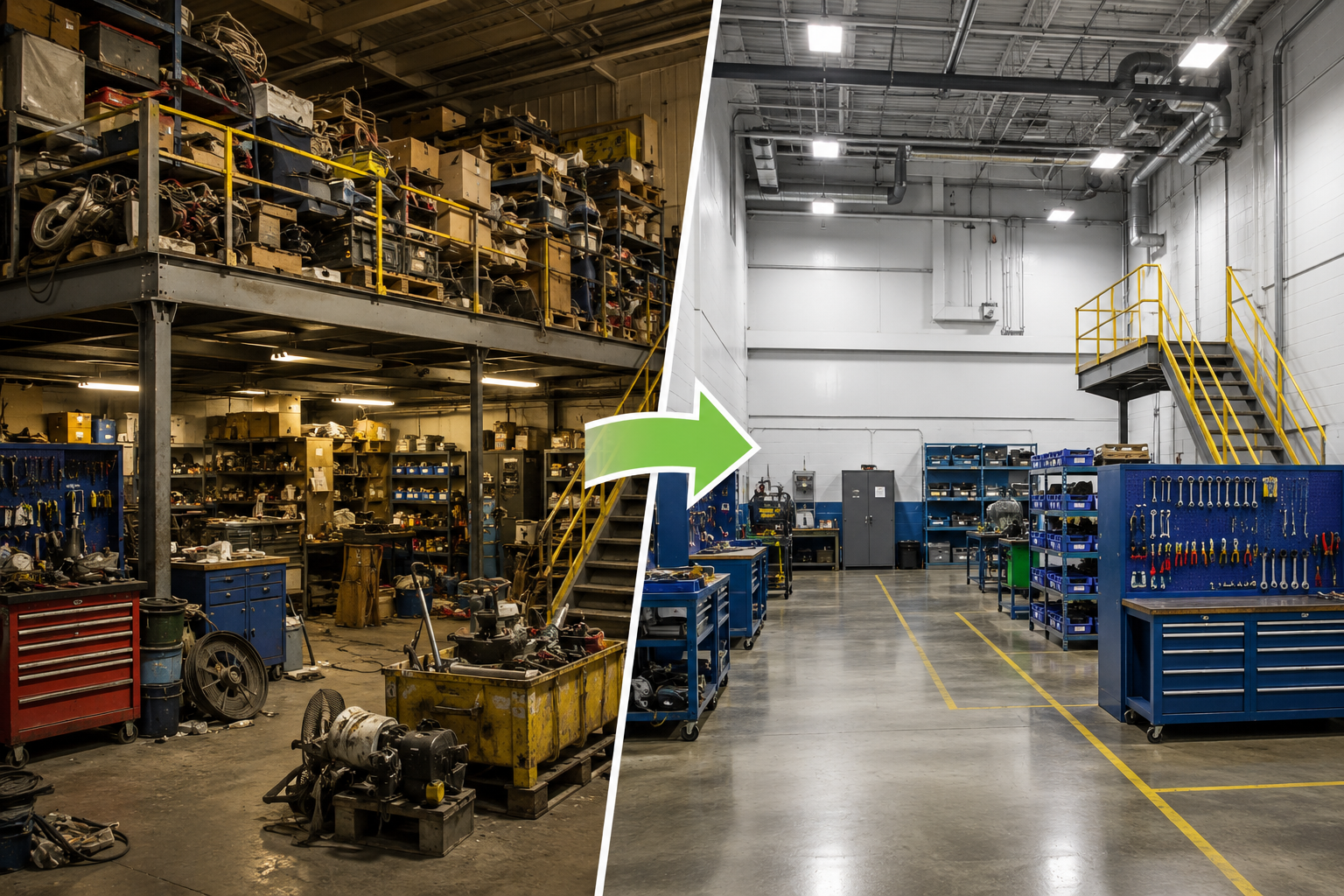
Hidden Capacity Was Sitting Above Their Heads
Sometimes your biggest capacity expansion isn't a new building—it's hiding inside the one you already have. Discover how a 5S Kaizen transformed a cluttered maintenance shop into an organized workplace while creating new manufacturing capacity and inspiring employees to take ownership of the improvements.
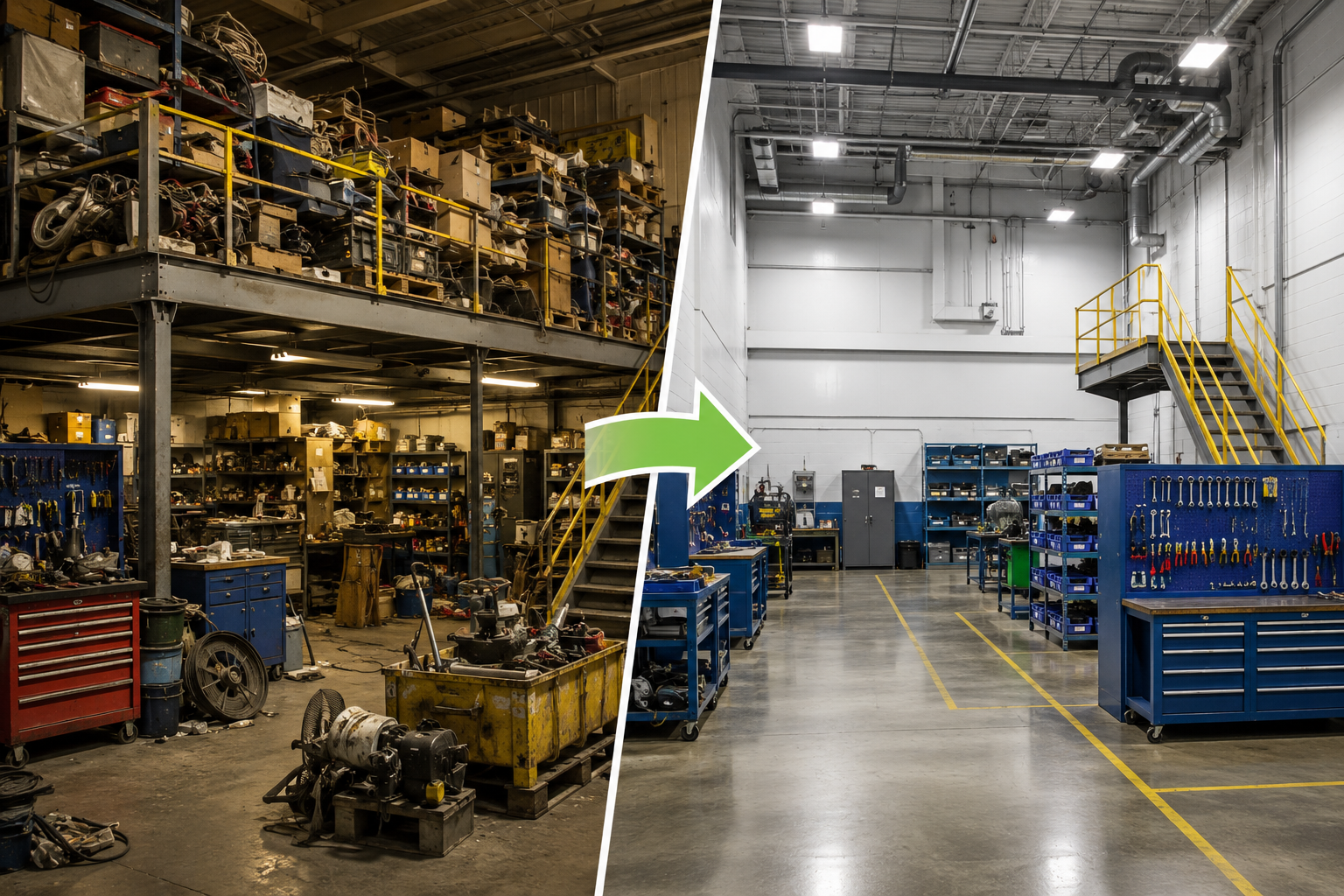
Kaizen Snapshot
Setting: Maintenance shop at a large power generation manufacturer
Challenge: A maintenance shop buried under years of clutter, making work slower, less safe, and consuming valuable production space.
Stakes: Lost productivity, longer search times, reduced safety, and a mezzanine blocking future manufacturing capacity.
Approach: 5S Kaizen, hands-on team engagement, visual management, and assigning area ownership.
Outcome: Search time reduced from 22 minutes to 2.3 minutes (90%), the mezzanine was completely cleared, and the newly available space was later converted into additional production capacity.
Key Lesson: The greatest result wasn’t organizing tools—it was creating ownership.
The Situation
After two successful 5S Kaizen events at another facility, I was invited to facilitate a maintenance shop transformation at a different manufacturing plant.
Before the event even began, the sponsor and team leader shared a hidden objective. Above the maintenance shop sat a large mezzanine packed with years of accumulated material. If the team could completely empty that space, leadership could eventually remove the mezzanine and reclaim valuable production space.
Rather than keeping that goal a secret, we made it the team’s challenge from Day One.
What Was Getting in the Way
Walking the Gemba made the problem obvious. Four different maintenance areas were overflowing with obsolete equipment, excess inventory, forgotten parts, and items nobody could confidently identify.
The clutter affected everything:
Mechanics spent unnecessary time searching for tools and parts.
Valuable floor space disappeared.
Hidden hazards went unnoticed.
Even the maintenance leader admitted he struggled to throw things away.
To establish a baseline, we asked experienced maintenance technicians to locate six randomly selected items throughout the shop before the event began. Even the people who worked there every day needed an average of 22 minutes to find them. Most of the team doubted that one week of 5S could make much difference.
What We Did
The week began with Lean and 5S training before heading to the Gemba. To reinforce credibility, one of the maintenance technicians from the previous successful 5S event joined our team to share firsthand experience.
As the team sorted through years of accumulated material, something interesting happened. People began realizing just how much unnecessary clutter had quietly become “normal.” Instead of asking, “Should we throw this away?” the conversations became, “Why have we been keeping this?” Once they understood that anything truly needed could be replaced if necessary, hesitation disappeared. Momentum accelerated.
By the third day, the entire mezzanine had been emptied. With the clutter gone, maintenance issues that had been hidden for years suddenly became visible—including wiring, lighting, ductwork, and other infrastructure that could finally be repaired. Even employees who weren’t part of the Kaizen volunteered to help.
The Breakthrough
One maintenance technician had been the biggest skeptic on Day One. He had spent the most years in the department and wasn’t convinced 5S would change anything. By midweek, he had completely changed. He wasn’t simply participating anymore. He was protecting the new workplace.
When I introduced the concept of an Area Owner on Day Three, it became immediately obvious who should take the role. Another teammate even volunteered to cover the responsibilities during his upcoming vacation so the improvements wouldn’t slip backward.
By Friday, the former skeptic proudly announced, “Take my picture.” He wanted everyone to know he would be responsible for keeping the area that way. That may have been the most important improvement of the week.
What Changed
At the end of the Kaizen, we wanted to know whether the improvement was real, not just familiar to the team that had spent the week organizing the space. So instead of asking the maintenance technicians to repeat the exercise, we handed slips of paper listing six randomly selected items to people who were not familiar with the maintenance shop. We also intentionally avoided choosing easy items.
Even with those tougher conditions, the average search time dropped from: 22 minutes → 2.3 minutes. A reduction of nearly 90%.
The improvement wasn’t just measurable. It was obvious. The maintenance shop looked completely different. Anyone could walk in, immediately identify what belonged there, and quickly locate what they needed.
Leadership toured the area during the report-out and described the transformation as night and day. A month or two later, the final piece of the story unfolded. The empty mezzanine was removed. The plant gained valuable production space to support future growth.
The Takeaway
5S isn’t about cleaning. It’s about removing everything that prevents people from doing great work. When employees help build the system themselves, they don’t just maintain it, they own it.
Why This Matters
Many organizations think of 5S as housekeeping. The best 5S events do far more:
They improve safety.
They eliminate wasted motion.
They reduce frustration.
They create pride.
And sometimes they even create entirely new manufacturing capacity that was hidden in plain sight.
Ready to Unlock Hidden Capacity?
If your maintenance shop, warehouse, or production area has become harder to navigate, less safe, or filled with years of accumulated clutter, a focused 5S Kaizen can deliver results far beyond better organization. Sometimes the biggest capacity gains aren’t found in new equipment. They’re already sitting inside the space you have today.
Schedule a Breakthrough Assessment to uncover the opportunities hiding in plain sight.
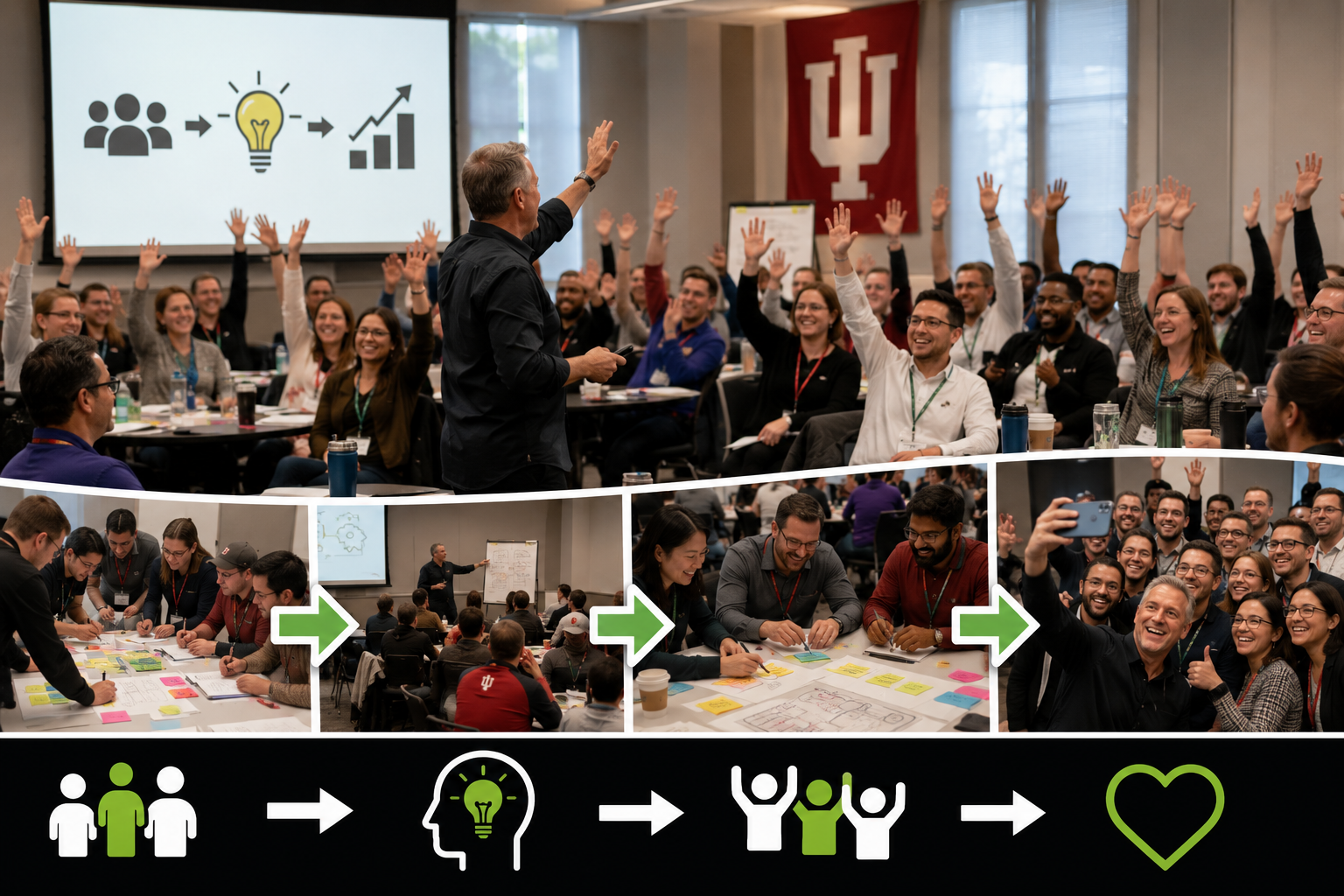
The Audience That Wouldn’t Leave
Conference attendees were free to come and go throughout the day. Instead, most stayed for every workshop. Discover how interactive facilitation transformed a room full of strangers into a learning community that didn't want the day to end.
Kaizen Snapshot
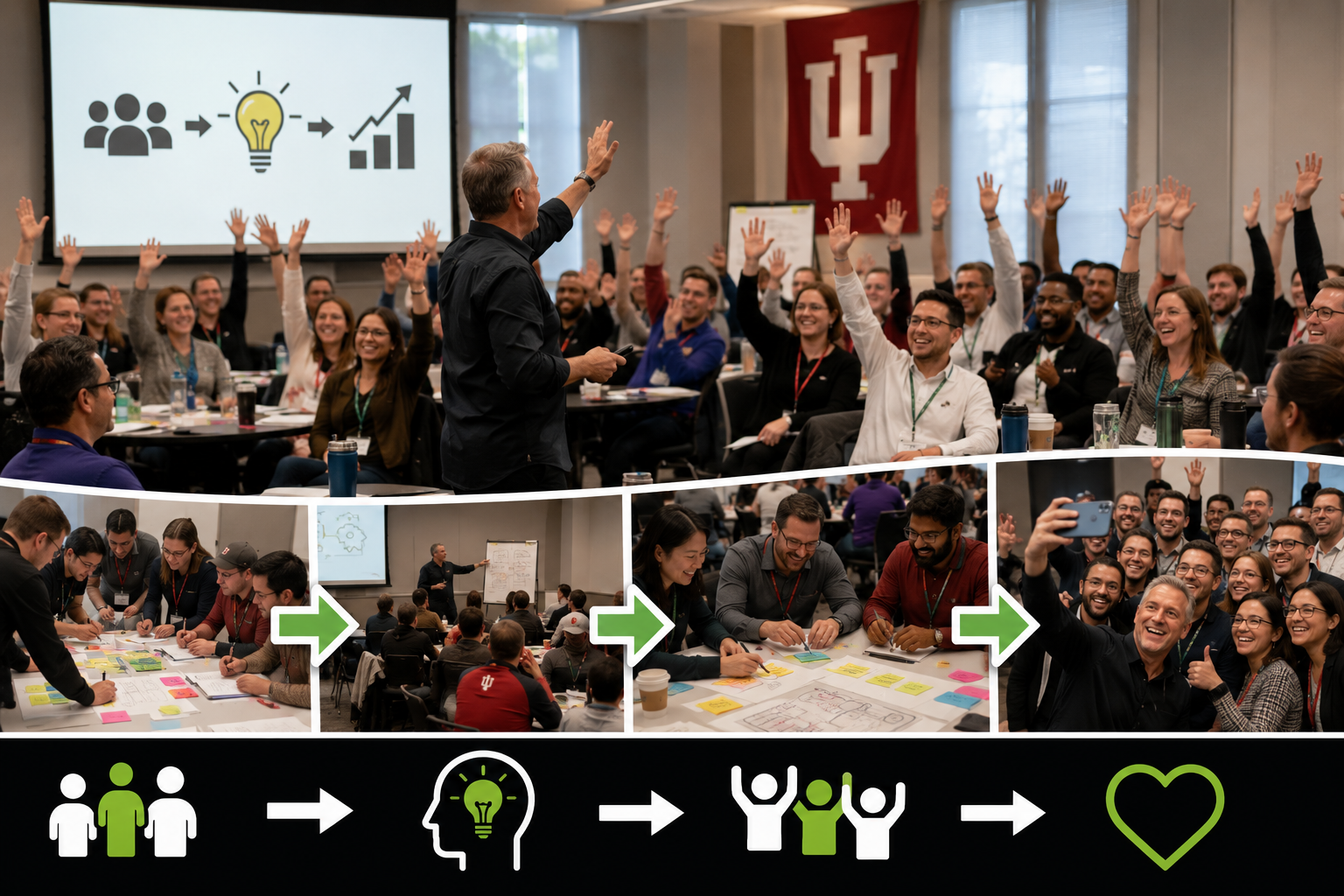
Setting: 2025 Global Lean Summit at Indiana University
Challenge: Deliver five highly interactive Lean workshops to a changing audience while keeping participants engaged throughout an entire day.
Stakes: Create meaningful learning experiences, maintain energy across multiple sessions, and adapt as new attendees joined while others chose to stay.
Approach: Activity-based facilitation, storytelling, experiential learning, and progressively building Lean concepts throughout the day.
Outcome: Most participants stayed for nearly every workshop, engagement increased with each session, lasting relationships were built, and one participating organization later invited me to perform a Breakthrough Assessment with plans for a Value Stream Mapping engagement.
Key Lesson: The best learning experiences don't end when a presentation is over—they inspire people to stay for the next one.
The Audience That Wouldn't Leave
The Situation
For the fifth consecutive year, I was invited to participate in the Global Lean Summit hosted by Jared and Anna Thatcher. The 2025 Summit was held at Indiana University and brought together Lean practitioners, leaders, consultants, and students from across the country for three days of learning and collaboration.
On the second day of the conference, most attendees would travel to Toyota Material Handling for a plant tour. For those remaining on campus, including university students, I was asked to lead four interactive workshops while fellow presenter Karil Sampson delivered a fifth.
It sounded like a full day. I had no idea how memorable it would become.
What Was Getting in the Way
Teaching one workshop is energizing. Teaching five in a single day is a different challenge. Each presentation needed to stand on its own while also building on the ideas from earlier sessions.
Adding another layer of complexity, I expected people to rotate in and out throughout the day. That meant constantly introducing new participants while trying to keep returning attendees engaged. It would require more than simply delivering presentations. It would require creating an experience.
What We Did
The day began with Chartering to Win, exploring how leaders create alignment before launching improvement efforts. Rather than lecturing, I filled the room with activities. People stood up. Worked together. Wrote on flip charts. Shared ideas and laughed. When the session ended, I assumed most people would head off to something else. Instead, many of them stayed.
The next workshop was Facilitate Like a Ninja, where participants practiced techniques for engaging teams, generating ideas, and creating energy during improvement events. Again, I expected the audience to change. Again, they stayed.
After lunch, Karil delivered an outstanding workshop on Root Cause Problem Solving while I recorded his presentation so he could use it in the future. By then, something had changed. The room no longer felt like a collection of conference attendees. It felt like a team. We were taking selfies. Recording videos. Laughing together between sessions. People who had been strangers that morning were now learning from one another.
The Breakthrough
The fourth workshop focused on the Wheel of Sustainability and Sustainable Leadership. As more students joined throughout the day, I found myself repeatedly reviewing introductory concepts to help newcomers catch up. I thought I was helping.
The returning participants taught me something. Their feedback was simple: "You don't have to keep starting over." They already understood the foundations. They were ready to move forward. It was a valuable reminder that great facilitators don't just pay attention to who's arriving. They also recognize when people are ready for the next challenge.
What Changed
The final workshop covered Value Stream Mapping. One of my favorite exercises asks teams to map the process of making a peanut butter and jelly sandwich. It sounds simple. It never is.
By this point, the audience knew the rhythm. They understood the activities. They anticipated the questions. In fact, during portions of the workshop, participants were practically presenting the material alongside me. The conversations became richer. The collaboration became stronger.
The room had transformed from a group of individuals into a genuine learning community. Watching that happen was every bit as rewarding as delivering the presentations themselves.
The Moment That Said It All
When the final workshop ended, I was exhausted. Five workshops in one day. Hundreds of conversations. Dozens of activities.
But what stayed with me wasn't the fatigue. It was the realization that people had chosen to stay session after session.Not because they had to. Because they wanted to. As a facilitator, there may not be a greater compliment.
What Changed After the Summit
One of the participating organizations had sent a large group of employees to the Summit. A few weeks later, they invited me to perform a Breakthrough Assessment at their facility.
Our conversations during the Summit had turned into the beginning of a partnership, with plans to follow that assessment with a Value Stream Mapping engagement.
Sometimes the greatest opportunities begin simply by creating an environment where people want to keep learning.
The Takeaway
Great facilitation isn't about delivering information. It's about creating experiences. When people become active participants instead of passive listeners, something remarkable happens. Learning becomes contagious. Ideas spread. Confidence grows. And strangers become teammates.
Why This Matters
Organizations often invest heavily in technical training while overlooking the importance of engagement. People rarely remember every slide from a presentation. They remember how they felt. They remember contributing. They remember solving problems together.
Those experiences are what create lasting learning and lasting change.
Ready to Build More Engaged Teams?
Whether you're developing internal facilitators, strengthening leadership, or looking for an engaging keynote that combines real-world Kaizen stories with practical Lean tools, the right learning experience can create momentum that lasts long after the event ends.
If you'd like to energize your next conference, leadership retreat, or facilitator development program, let's start the conversation.