
Kaizen Success Stories
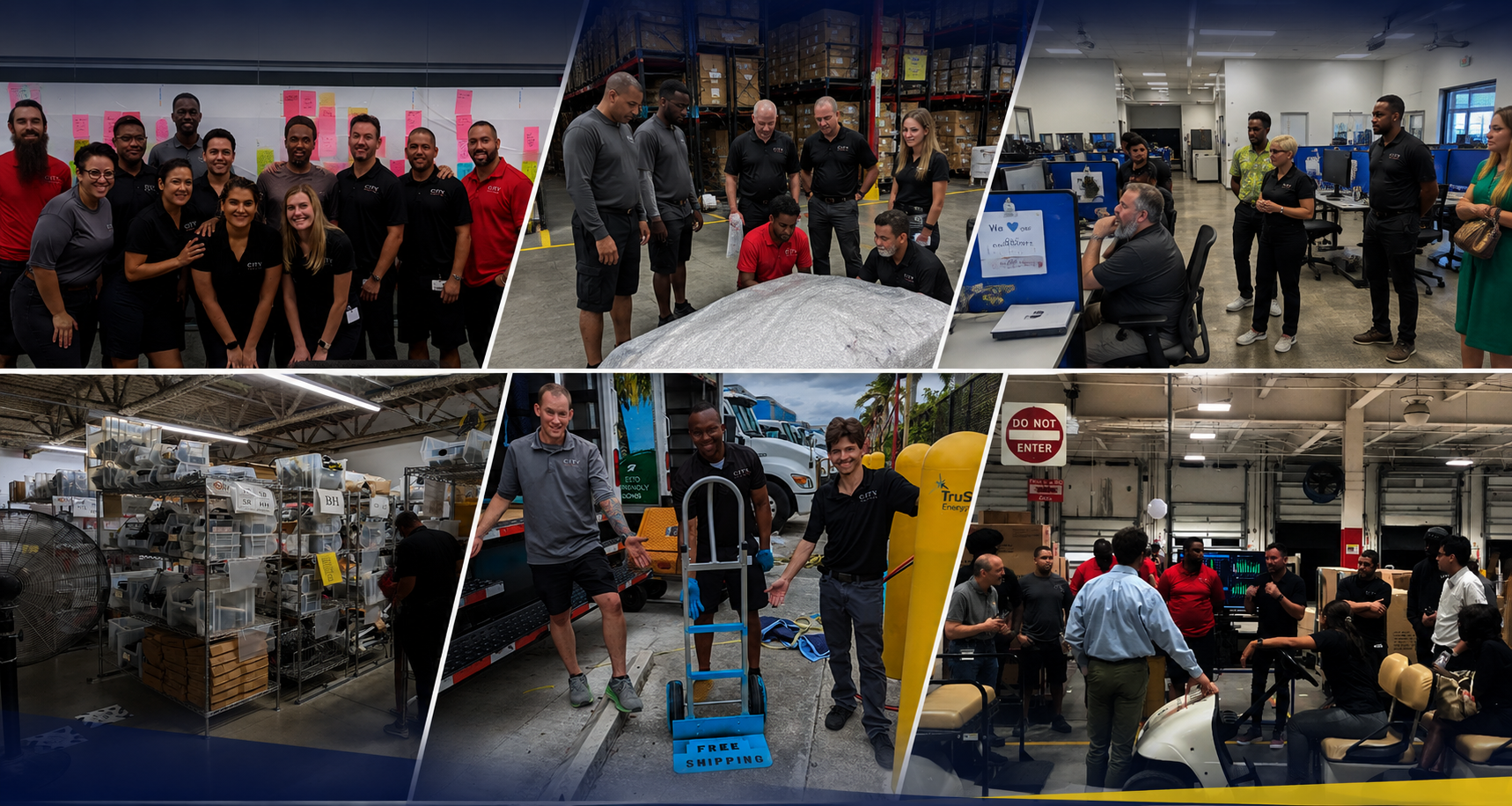
Real Manufacturing Results. One Kaizen at a Time
Explore real-world Kaizen success stories showing how manufacturing teams solved critical problems, improved performance, and created sustainable results.
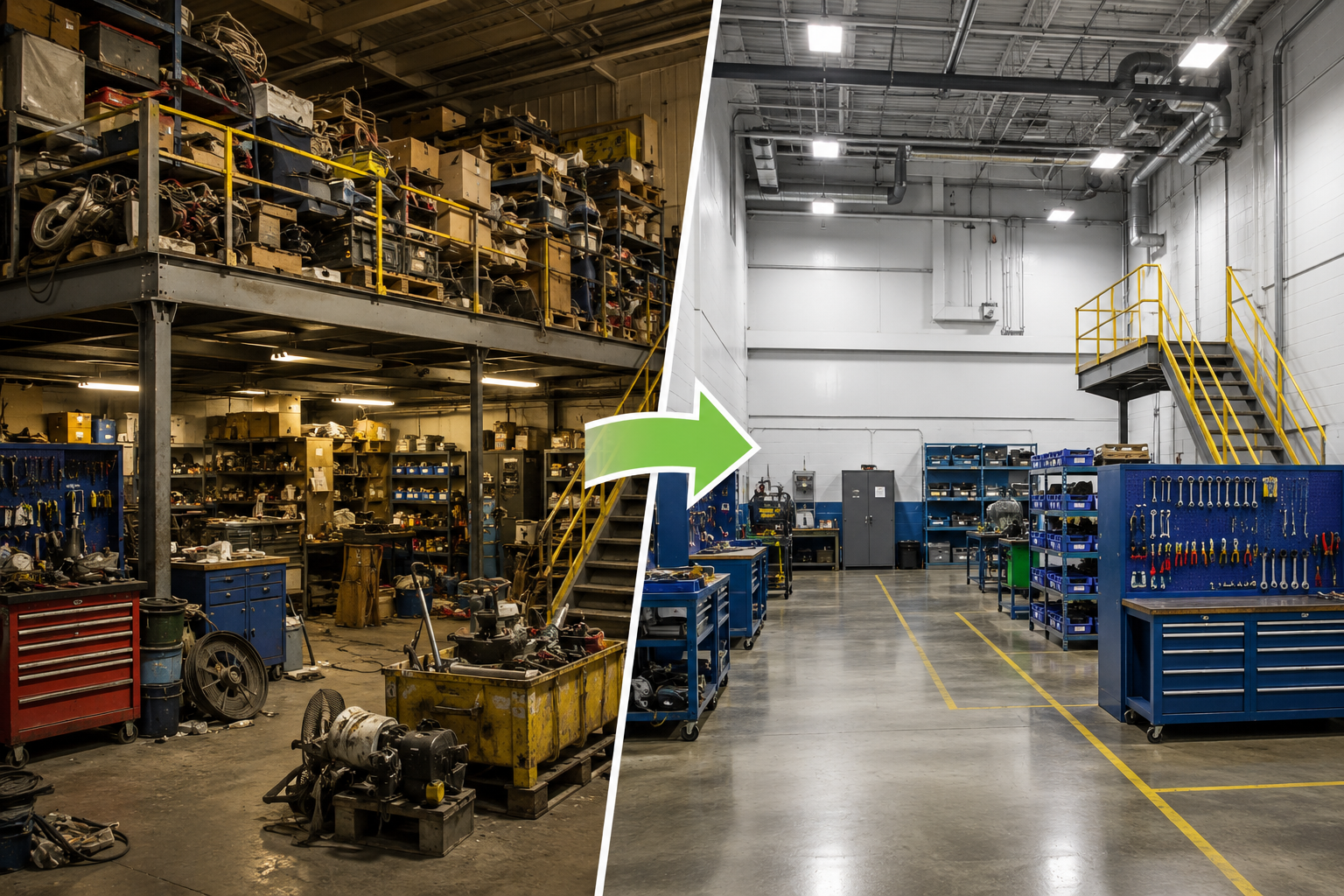
Hidden Capacity Was Sitting Above Their Heads
Sometimes your biggest capacity expansion isn't a new building—it's hiding inside the one you already have. Discover how a 5S Kaizen transformed a cluttered maintenance shop into an organized workplace while creating new manufacturing capacity and inspiring employees to take ownership of the improvements.
Kaizen Snapshot
Setting: Maintenance shop at a large power generation manufacturer
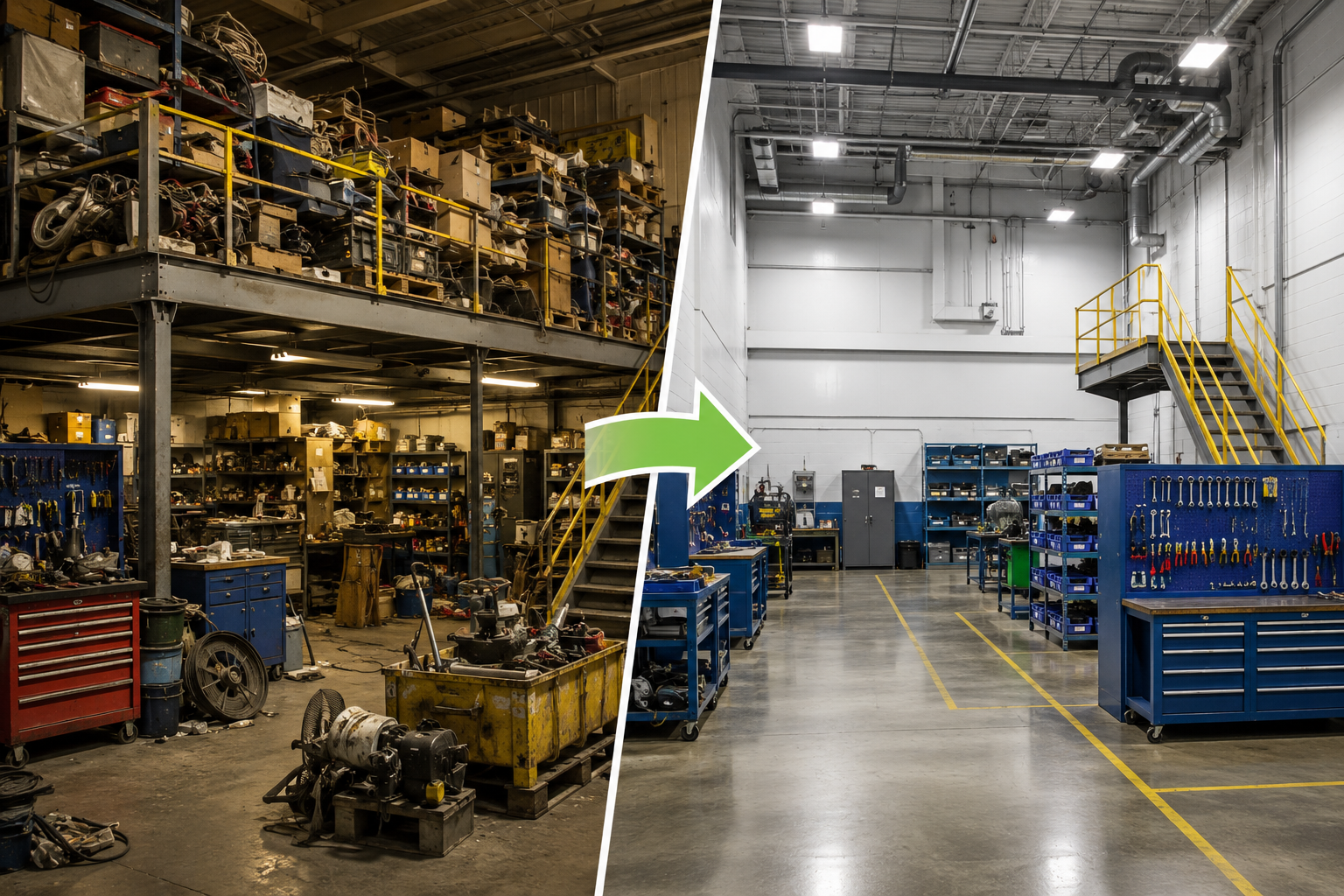
Challenge: A maintenance shop buried under years of clutter, making work slower, less safe, and consuming valuable production space.
Stakes: Lost productivity, longer search times, reduced safety, and a mezzanine blocking future manufacturing capacity.
Approach: 5S Kaizen, hands-on team engagement, visual management, and assigning area ownership.
Outcome: Search time reduced from 22 minutes to 2.3 minutes (90%), the mezzanine was completely cleared, and the newly available space was later converted into additional production capacity.
Key Lesson: The greatest result wasn’t organizing tools—it was creating ownership.
The Situation
After two successful 5S Kaizen events at another facility, I was invited to facilitate a maintenance shop transformation at a different manufacturing plant.
Before the event even began, the sponsor and team leader shared a hidden objective. Above the maintenance shop sat a large mezzanine packed with years of accumulated material. If the team could completely empty that space, leadership could eventually remove the mezzanine and reclaim valuable production space.
Rather than keeping that goal a secret, we made it the team’s challenge from Day One.
What Was Getting in the Way
Walking the Gemba made the problem obvious. Four different maintenance areas were overflowing with obsolete equipment, excess inventory, forgotten parts, and items nobody could confidently identify.
The clutter affected everything:
Mechanics spent unnecessary time searching for tools and parts.
Valuable floor space disappeared.
Hidden hazards went unnoticed.
Even the maintenance leader admitted he struggled to throw things away.
To establish a baseline, we asked experienced maintenance technicians to locate six randomly selected items throughout the shop before the event began. Even the people who worked there every day needed an average of 22 minutes to find them. Most of the team doubted that one week of 5S could make much difference.
What We Did
The week began with Lean and 5S training before heading to the Gemba. To reinforce credibility, one of the maintenance technicians from the previous successful 5S event joined our team to share firsthand experience.
As the team sorted through years of accumulated material, something interesting happened. People began realizing just how much unnecessary clutter had quietly become “normal.” Instead of asking, “Should we throw this away?” the conversations became, “Why have we been keeping this?” Once they understood that anything truly needed could be replaced if necessary, hesitation disappeared. Momentum accelerated.
By the third day, the entire mezzanine had been emptied. With the clutter gone, maintenance issues that had been hidden for years suddenly became visible—including wiring, lighting, ductwork, and other infrastructure that could finally be repaired. Even employees who weren’t part of the Kaizen volunteered to help.
The Breakthrough
One maintenance technician had been the biggest skeptic on Day One. He had spent the most years in the department and wasn’t convinced 5S would change anything. By midweek, he had completely changed. He wasn’t simply participating anymore. He was protecting the new workplace.
When I introduced the concept of an Area Owner on Day Three, it became immediately obvious who should take the role. Another teammate even volunteered to cover the responsibilities during his upcoming vacation so the improvements wouldn’t slip backward.
By Friday, the former skeptic proudly announced, “Take my picture.” He wanted everyone to know he would be responsible for keeping the area that way. That may have been the most important improvement of the week.
What Changed
At the end of the Kaizen, we wanted to know whether the improvement was real, not just familiar to the team that had spent the week organizing the space. So instead of asking the maintenance technicians to repeat the exercise, we handed slips of paper listing six randomly selected items to people who were not familiar with the maintenance shop. We also intentionally avoided choosing easy items.
Even with those tougher conditions, the average search time dropped from: 22 minutes → 2.3 minutes. A reduction of nearly 90%.
The improvement wasn’t just measurable. It was obvious. The maintenance shop looked completely different. Anyone could walk in, immediately identify what belonged there, and quickly locate what they needed.
Leadership toured the area during the report-out and described the transformation as night and day. A month or two later, the final piece of the story unfolded. The empty mezzanine was removed. The plant gained valuable production space to support future growth.
The Takeaway
5S isn’t about cleaning. It’s about removing everything that prevents people from doing great work. When employees help build the system themselves, they don’t just maintain it, they own it.
Why This Matters
Many organizations think of 5S as housekeeping. The best 5S events do far more:
They improve safety.
They eliminate wasted motion.
They reduce frustration.
They create pride.
And sometimes they even create entirely new manufacturing capacity that was hidden in plain sight.
Ready to Unlock Hidden Capacity?
If your maintenance shop, warehouse, or production area has become harder to navigate, less safe, or filled with years of accumulated clutter, a focused 5S Kaizen can deliver results far beyond better organization. Sometimes the biggest capacity gains aren’t found in new equipment. They’re already sitting inside the space you have today.
Schedule a Breakthrough Assessment to uncover the opportunities hiding in plain sight.
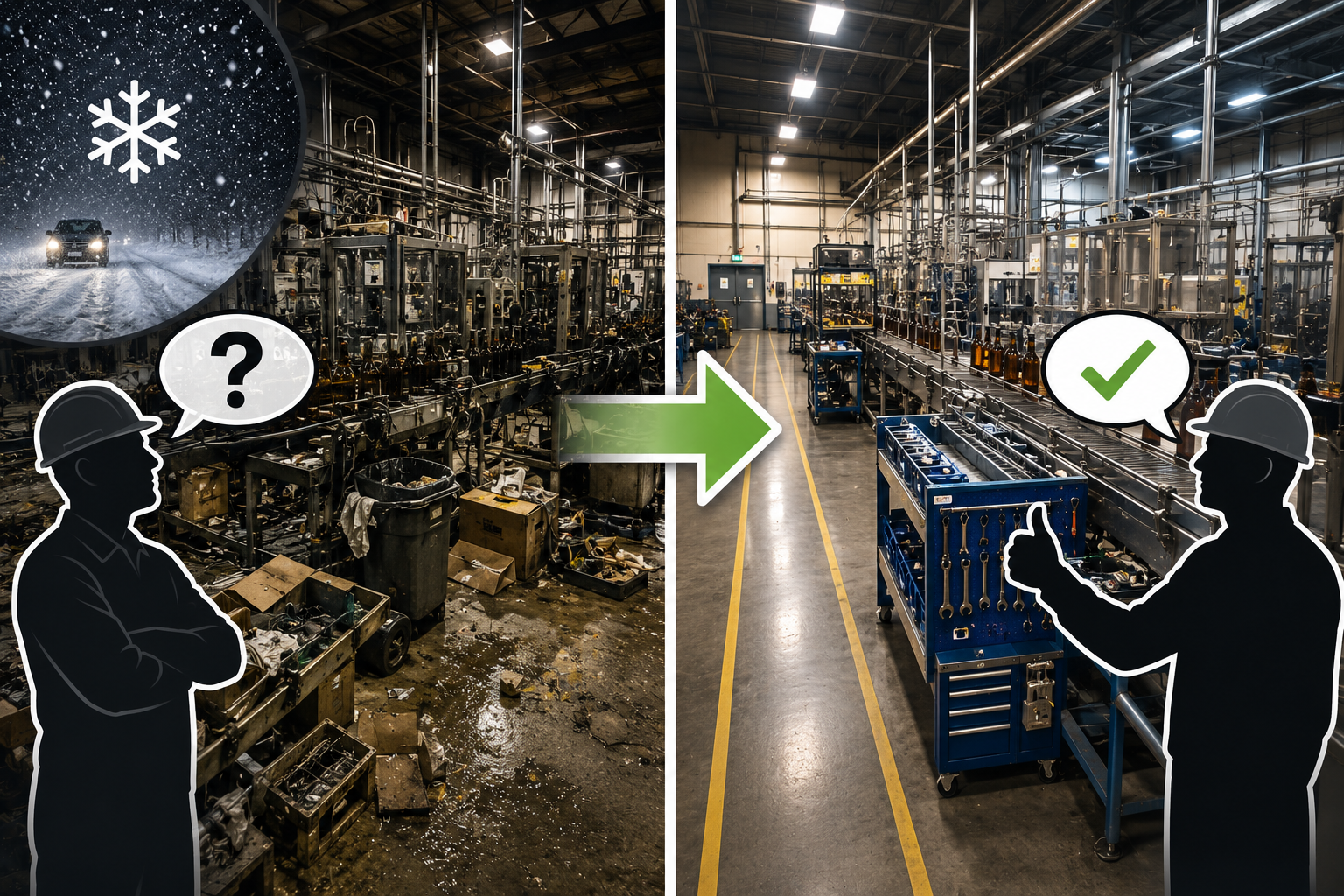
What Are You Going to Screw Up Today?
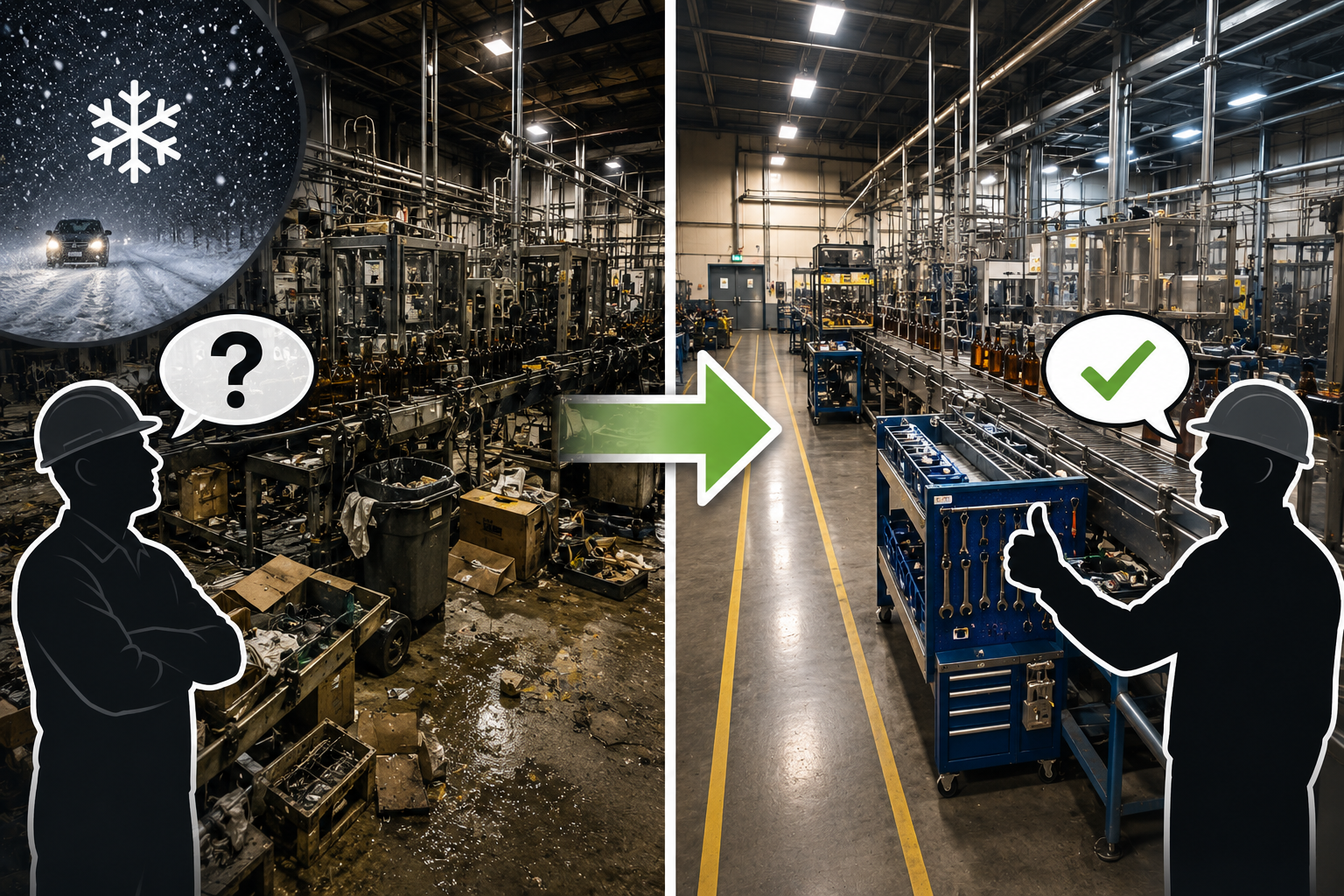
A historic winter storm shut down the plant, stranded team members, and cut a four-and-a-half-day Kaizen nearly in half. Most people would have postponed the event. Instead, the team cut changeover time by nearly 50% and turned one skeptic into one of its biggest supporters.
Kaizen Snapshot
Setting: Bottling line at a major beverage manufacturer
Challenge: Reduce lengthy changeovers despite losing nearly half the planned Kaizen to a historic winter storm.
Stakes: Limited time, missing team members, production pressure, and widespread skepticism about improvement efforts.
Approach: SMED training, operator-led process redesign, hands-on implementation, and coaching the production crew through the new process.
Outcome: Changeover time reduced by nearly 50%, operator travel reduced by an estimated 80–90%, and a skeptical employee became one of the strongest advocates for the improvement effort.
Key Lesson: You don't need perfect conditions to achieve breakthrough results.
What Are You Going to Screw Up Today?
The Situation
I was scheduled to facilitate a SMED (Single-Minute Exchange of Die) Kaizen to reduce changeover time on a bottling line at a major manufacturing facility. Like most changeover events, we had a carefully planned four-and-a-half-day schedule.
Then Mother Nature had other ideas. Weather forecasts predicted a major winter storm, so instead of flying in on Sunday as I normally would, I decided to leave a day early. That decision turned out to be the only reason I made it.
My connecting flight was canceled as snow began falling. After scrambling with the airline, I found a flight to Indianapolis, rented a car, and spent nearly three hours driving through a snowstorm to reach my hotel in Kentucky. When I arrived, the roads were covered with snow and ice. The town was nearly deserted. The plant had already shut down. At one point, we weren't even sure the Kaizen would happen.
What Was Getting in the Way
By Sunday, things had only gotten worse. The entire town was effectively closed. Restaurants were closed. The plant remained shut down. Employees couldn't leave their homes.
Our carefully planned schedule disappeared almost overnight. Eventually, leadership decided they would try to restart the facility late Monday afternoon, allowing us to begin the Kaizen on Tuesday if enough team members could safely make it to work.
Even then, several participants were still snowed in. We would have fewer people. Less time. And somehow, we still needed to deliver meaningful results.
What We Did
Tuesday morning finally arrived. The roads were passable. People slowly began making their way into the plant. Some looked genuinely happy just to have survived the drive. Instead of focusing on what we had lost, we focused on what we could still accomplish.
The team learned the principles of SMED before walking the Gemba to observe the current changeover. Operators mapped their movements using spaghetti diagrams. For many, it was the first time they had ever stepped back and looked at the entire process instead of just their own responsibilities. The waste quickly became obvious:
Long walks.
Poor organization.
Equipment that wasn't properly aligned.
No visual controls.
Little standard work.
The team generated improvement ideas and immediately began putting them into practice.
The Breakthrough
While we were observing the first changeover, a machine operator from the neighboring production line kept watching us. Finally, he walked over and asked, "What are you guys going to screw up today?"
Apparently, previous improvement efforts hadn't left him with much confidence. I smiled and replied, "Hopefully nothing. Our goal is simply to help this team make their work easier, safer, and better." He didn't look convinced. But our team was.
As they tested improvements during their own changeovers, something changed. Every success generated another idea. Every improvement inspired another. Despite losing nearly half the planned week, momentum kept building.
What Changed
By the final day, we made what many facilitators might consider a risky decision. Rather than spending the morning polishing our presentation, we invested those hours implementing a few final improvements. Then we handed the process back to the production crew.
Not to demonstrate it. Not to do it for them. To coach them through it. Each Kaizen team member partnered with a crew member, helping them follow the new process while explaining why each change had been made. The crew wasn't simply following instructions. They were learning the new standard from the people who had designed it. That investment paid off.
The production crew completed the changeover in just under half the original time. Spaghetti diagrams showed operator travel had been reduced by an estimated 80 to 90 percent. The line restarted smoothly. The crew looked confident. The improvements were no longer the Kaizen team's. They belonged to the operators.
The Moment That Said It All
Later that day, the same operator from the neighboring line walked over. This time he wasn't skeptical. He smiled and asked, "When can you help my line?"
That single question said more than any metric ever could. Trust had been earned.
The Report-Out
Despite the shortened week, the team delivered one of the most energetic report-outs I've ever witnessed. The excitement was genuine because every improvement had come from the people doing the work. The team leader later commented that in all his years participating in Lean projects and Kaizen events, he had never seen a team so engaged.
What began as a week threatened by weather had become one of the most successful changeover events they'd experienced. Even better, the improvements created a model that could now be replicated across the facility's other production lines.
The Takeaway
Kaizen isn't about having perfect conditions. It's about helping people solve real problems together. Snowstorms, compressed schedules, and missing team members. Those things make improvement harder. They don't make it impossible.
When people own both the problem and the solution, remarkable things can happen—even when the odds aren't in your favor.
Why This Matters
Many organizations delay improvement because they believe they need more time, more resources, or better circumstances. In reality, the greatest breakthroughs often happen when teams stop waiting for perfect conditions and begin improving with what they have.
The goal isn't perfection. The goal is progress. And when people experience that progress firsthand, skepticism turns into ownership—and ownership creates sustainable results.
Ready to Cut Your Changeovers in Half?
Long changeovers aren't usually caused by one big problem. They're the result of hundreds of small inefficiencies that have quietly become accepted over time.
A focused SMED Kaizen helps your team see those opportunities, eliminate unnecessary motion, create better standards, and dramatically reduce downtime—without sacrificing safety or quality.
Schedule a Breakthrough Assessment to discover how much hidden capacity is waiting inside your current changeover process.
The Audience That Wouldn’t Leave
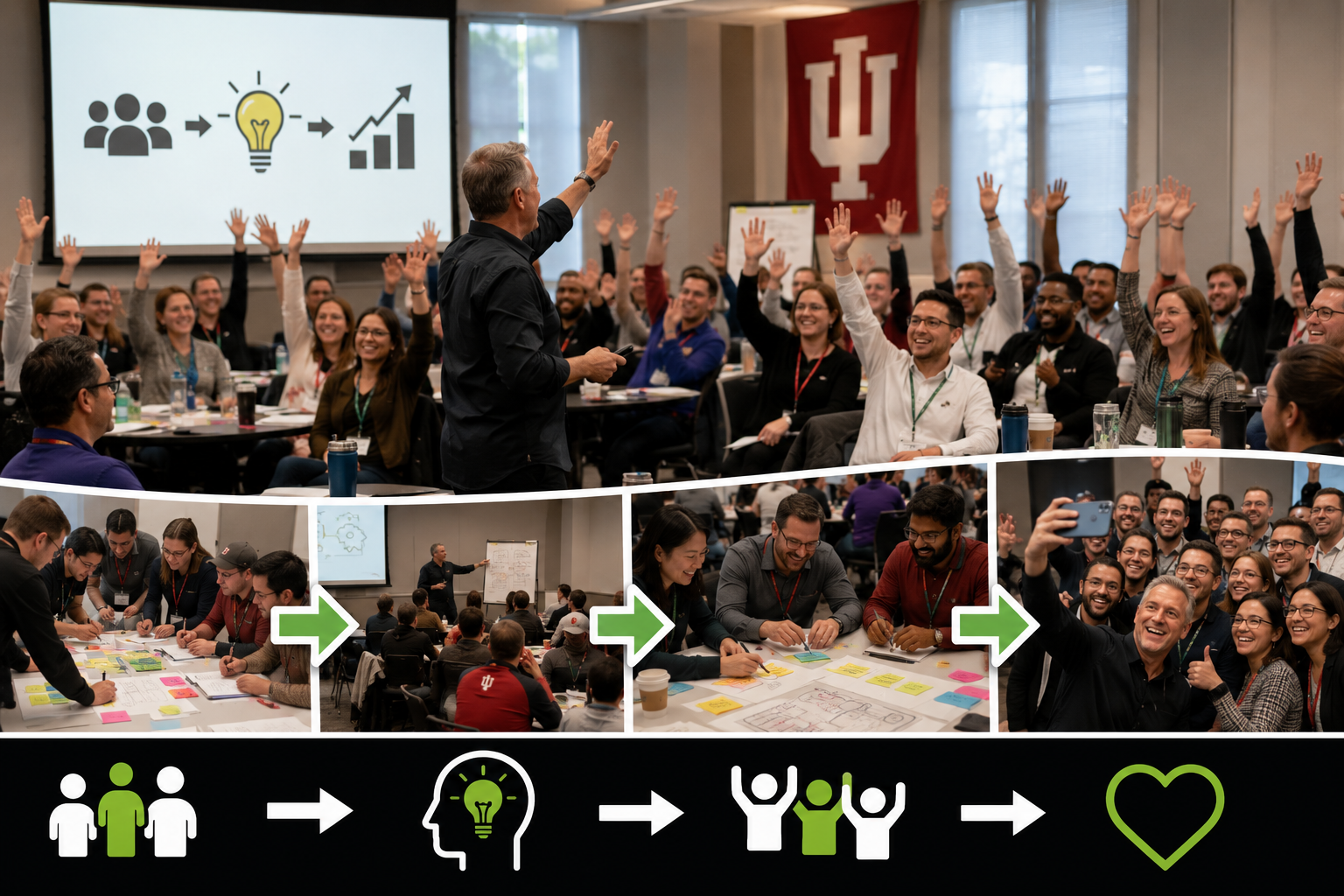
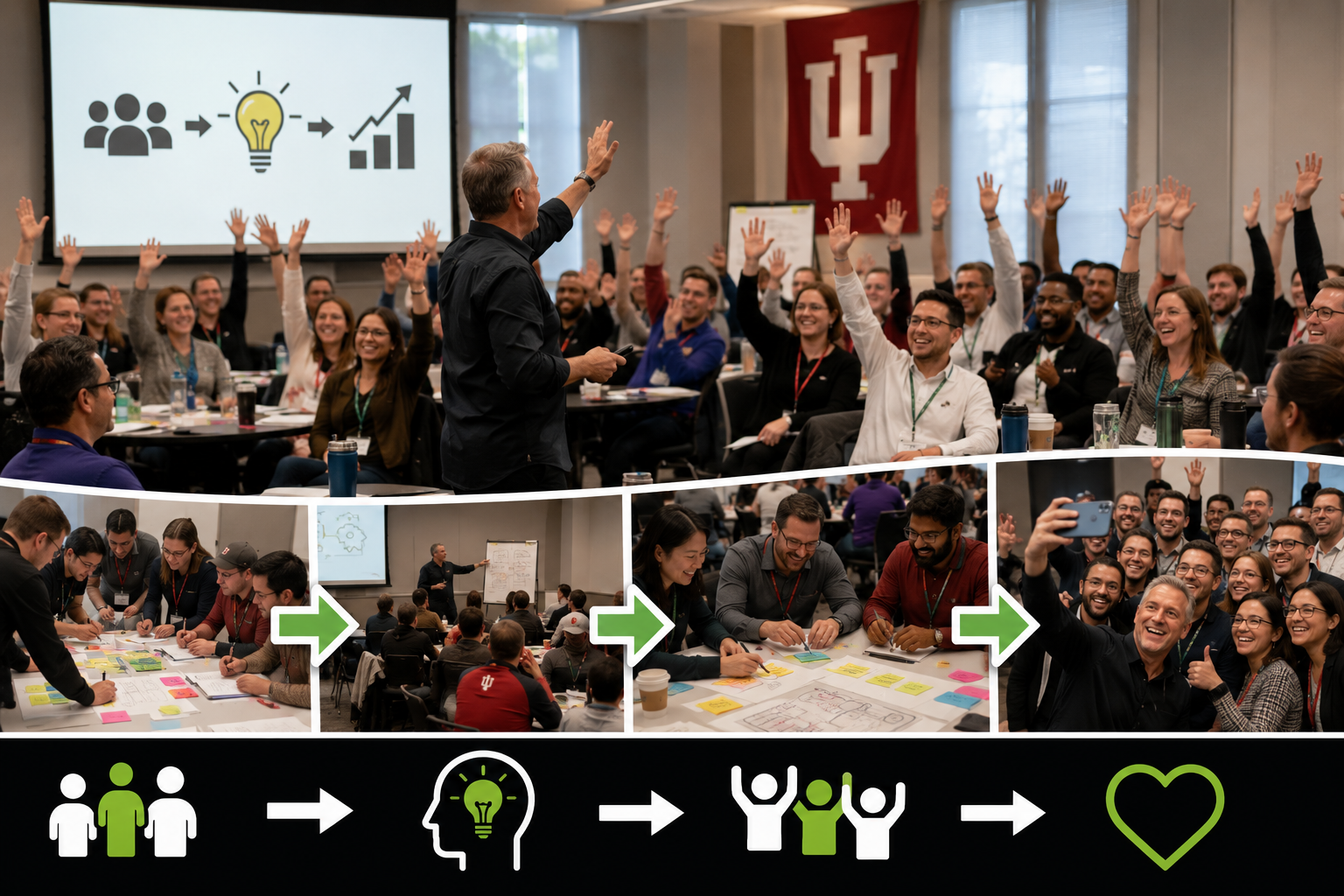
Conference attendees were free to come and go throughout the day. Instead, most stayed for every workshop. Discover how interactive facilitation transformed a room full of strangers into a learning community that didn't want the day to end.
Kaizen Snapshot
Setting: 2025 Global Lean Summit at Indiana University
Challenge: Deliver five highly interactive Lean workshops to a changing audience while keeping participants engaged throughout an entire day.
Stakes: Create meaningful learning experiences, maintain energy across multiple sessions, and adapt as new attendees joined while others chose to stay.
Approach: Activity-based facilitation, storytelling, experiential learning, and progressively building Lean concepts throughout the day.
Outcome: Most participants stayed for nearly every workshop, engagement increased with each session, lasting relationships were built, and one participating organization later invited me to perform a Breakthrough Assessment with plans for a Value Stream Mapping engagement.
Key Lesson: The best learning experiences don't end when a presentation is over—they inspire people to stay for the next one.
The Audience That Wouldn't Leave
The Situation
For the fifth consecutive year, I was invited to participate in the Global Lean Summit hosted by Jared and Anna Thatcher. The 2025 Summit was held at Indiana University and brought together Lean practitioners, leaders, consultants, and students from across the country for three days of learning and collaboration.
On the second day of the conference, most attendees would travel to Toyota Material Handling for a plant tour. For those remaining on campus, including university students, I was asked to lead four interactive workshops while fellow presenter Karil Sampson delivered a fifth.
It sounded like a full day. I had no idea how memorable it would become.
What Was Getting in the Way
Teaching one workshop is energizing. Teaching five in a single day is a different challenge. Each presentation needed to stand on its own while also building on the ideas from earlier sessions.
Adding another layer of complexity, I expected people to rotate in and out throughout the day. That meant constantly introducing new participants while trying to keep returning attendees engaged. It would require more than simply delivering presentations. It would require creating an experience.
What We Did
The day began with Chartering to Win, exploring how leaders create alignment before launching improvement efforts. Rather than lecturing, I filled the room with activities. People stood up. Worked together. Wrote on flip charts. Shared ideas and laughed. When the session ended, I assumed most people would head off to something else. Instead, many of them stayed.
The next workshop was Facilitate Like a Ninja, where participants practiced techniques for engaging teams, generating ideas, and creating energy during improvement events. Again, I expected the audience to change. Again, they stayed.
After lunch, Karil delivered an outstanding workshop on Root Cause Problem Solving while I recorded his presentation so he could use it in the future. By then, something had changed. The room no longer felt like a collection of conference attendees. It felt like a team. We were taking selfies. Recording videos. Laughing together between sessions. People who had been strangers that morning were now learning from one another.
The Breakthrough
The fourth workshop focused on the Wheel of Sustainability and Sustainable Leadership. As more students joined throughout the day, I found myself repeatedly reviewing introductory concepts to help newcomers catch up. I thought I was helping.
The returning participants taught me something. Their feedback was simple: "You don't have to keep starting over." They already understood the foundations. They were ready to move forward. It was a valuable reminder that great facilitators don't just pay attention to who's arriving. They also recognize when people are ready for the next challenge.
What Changed
The final workshop covered Value Stream Mapping. One of my favorite exercises asks teams to map the process of making a peanut butter and jelly sandwich. It sounds simple. It never is.
By this point, the audience knew the rhythm. They understood the activities. They anticipated the questions. In fact, during portions of the workshop, participants were practically presenting the material alongside me. The conversations became richer. The collaboration became stronger.
The room had transformed from a group of individuals into a genuine learning community. Watching that happen was every bit as rewarding as delivering the presentations themselves.
The Moment That Said It All
When the final workshop ended, I was exhausted. Five workshops in one day. Hundreds of conversations. Dozens of activities.
But what stayed with me wasn't the fatigue. It was the realization that people had chosen to stay session after session.Not because they had to. Because they wanted to. As a facilitator, there may not be a greater compliment.
What Changed After the Summit
One of the participating organizations had sent a large group of employees to the Summit. A few weeks later, they invited me to perform a Breakthrough Assessment at their facility.
Our conversations during the Summit had turned into the beginning of a partnership, with plans to follow that assessment with a Value Stream Mapping engagement.
Sometimes the greatest opportunities begin simply by creating an environment where people want to keep learning.
The Takeaway
Great facilitation isn't about delivering information. It's about creating experiences. When people become active participants instead of passive listeners, something remarkable happens. Learning becomes contagious. Ideas spread. Confidence grows. And strangers become teammates.
Why This Matters
Organizations often invest heavily in technical training while overlooking the importance of engagement. People rarely remember every slide from a presentation. They remember how they felt. They remember contributing. They remember solving problems together.
Those experiences are what create lasting learning and lasting change.
Ready to Build More Engaged Teams?
Whether you're developing internal facilitators, strengthening leadership, or looking for an engaging keynote that combines real-world Kaizen stories with practical Lean tools, the right learning experience can create momentum that lasts long after the event ends.
If you'd like to energize your next conference, leadership retreat, or facilitator development program, let's start the conversation.
The Day I Stopped Fixing Barcode Readers
I thought my job was to fix barcode readers. Instead, a warehouse full of employees taught me one of the most important lessons of my career: the best improvements begin by listening to the people doing the work.
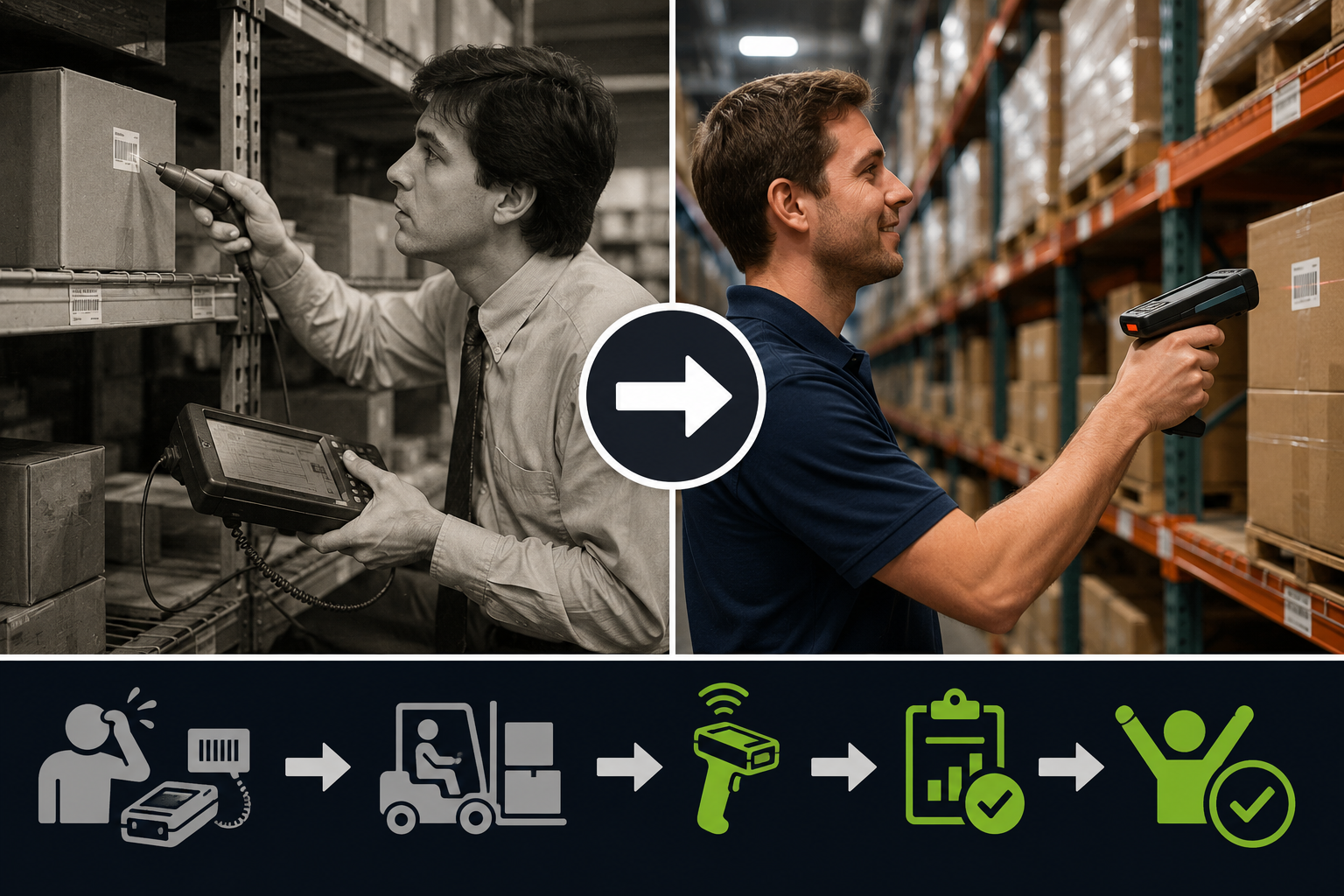
Kaizen Snapshot
Setting: Thomasville Furniture corporate warehouses, late 1980s
Challenge: Support an aging barcode inventory system that was becoming increasingly frustrating and inefficient for warehouse employees.
Stakes: Inventory accuracy, warehouse productivity, employee frustration, and making better use of emerging barcode technology.
Approach: Observe the work firsthand, listen to warehouse employees, understand their daily challenges, and redesign the system around their needs rather than the technology.
Outcome: New scanning barcode readers were implemented throughout the warehouse network, inventory work became faster and easier, accuracy improved, and warehouse managers began viewing Industrial Engineering as a partner in solving operational problems.
Key Lesson: The best improvements don't begin by fixing technology. They begin by listening to the people who use it.
The Day I Stopped Fixing Barcode Readers
The Situation
When I graduated from Virginia Tech with a degree in Industrial Engineering, I accepted a position as a Corporate Industrial Engineer with Thomasville Furniture in North Carolina. One of my first responsibilities was supporting the company's barcode inventory system across multiple warehouses.
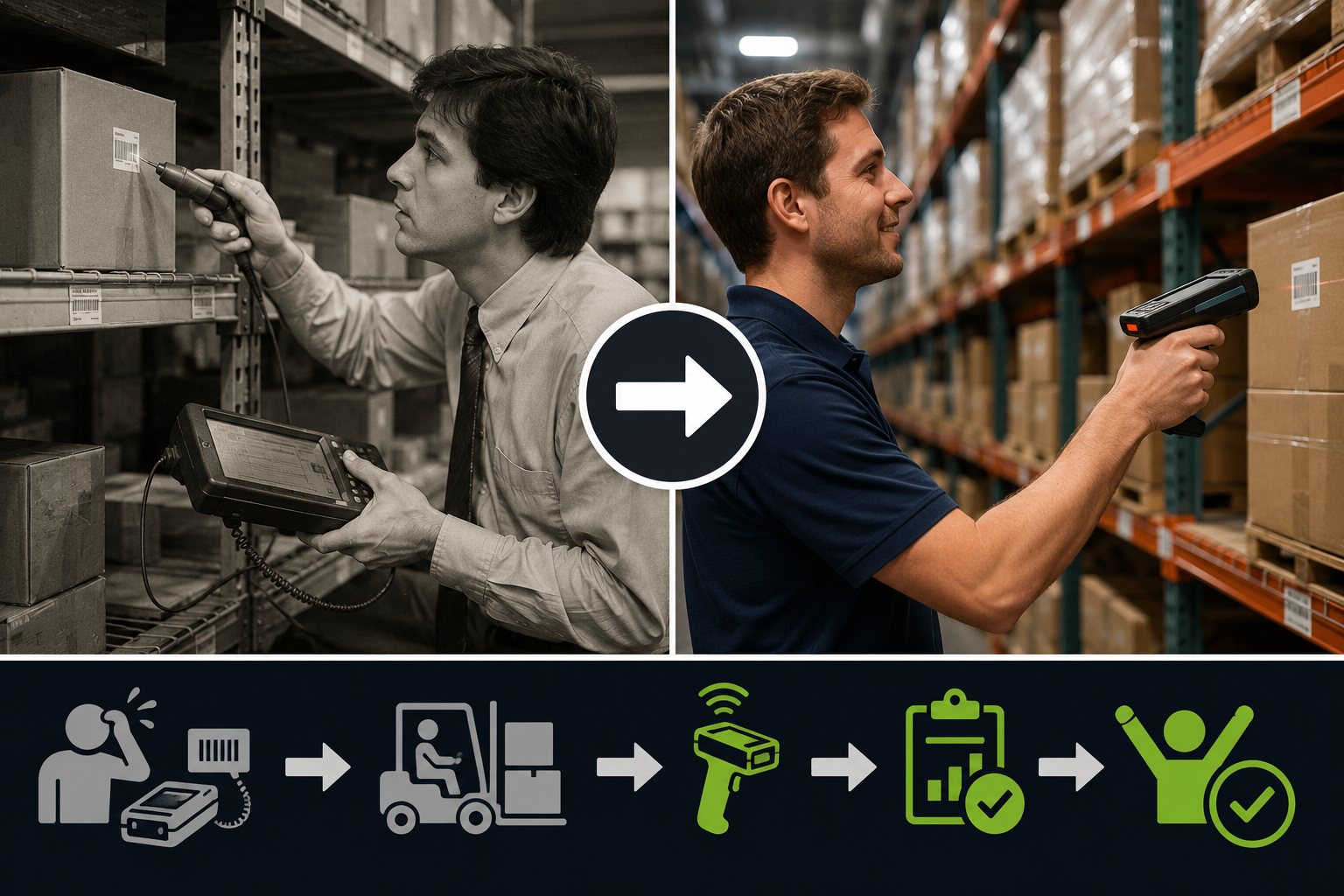
At the time, barcode technology was still in its infancy. There were no wireless scanners. No QR codes. No handheld devices like we know today. Warehouse employees carried readers about the size of a tablet with a cord attached to a lighted wand. To scan a barcode, they had to physically drag the wand across each label.
The engineer before me gave me a quick overview before moving into a leadership role. His advice was practical. "You'll get calls when the readers don't work. Sometimes people don't know how to reboot them or use them correctly. Just help them get back up and running." At first, I thought that was my job. Keep the barcode readers working.
What Was Getting in the Way
Instead of waiting for phone calls, I spent time walking through the warehouses. I watched people receive inventory, move furniture, store products, and retrieve orders. Most importantly, I watched how they actually used the barcode system.
The technology worked, but the work didn't. Employees often had to climb off forklifts or reposition large pieces of furniture simply to touch a barcode with the scanning wand. Sometimes they struggled with the equipment. Other times they struggled with the process itself. One warehouse employee jokingly told me, "This thing is almost like Braille."
He wasn't criticizing the technology. He was describing the experience. That comment stuck with me. The more time I spent in the warehouse, the more I realized I wasn't hearing complaints, I was hearing opportunities.
What We Did
Rather than asking, "How do we fix the barcode readers?" I began asking, "How do we make the inventory process easier?" That simple shift changed everything.
As I researched emerging barcode technology, I discovered a company developing one of the first scanning barcode readers that could read labels from a distance instead of requiring physical contact. Today that sounds ordinary. In the late 1980s, it was anything but. Suddenly, warehouse employees wouldn't have to reposition furniture or climb down from forklifts just to scan a label.
Even better, the new technology opened the door for entirely new capabilities. Instead of simply recording items entering or leaving inventory, we could create additional applications and reports that made warehouse operations more useful and informative. After presenting the opportunity, leadership agreed to invest in the new scanning technology.
The Breakthrough
The scanners solved a problem. Listening solved many more. As employees began using the new equipment, inventory became faster. Accuracy improved. Physical effort decreased. The technology removed frustrations that had quietly become accepted as "just part of the job." But something even more important happened.
Warehouse managers stopped seeing me as the person who fixed barcode readers. They started calling with ideas. "Could we use barcodes to help us do this?" "Would this process work better another way?" Instead of fixing equipment, we were improving systems together.
What Changed
By the time I left Thomasville Furniture, the new scanning barcode readers had been deployed throughout the company's warehouse network. Inventory management had become faster, easier, more accurate, and less physically demanding.
But looking back, those weren't the biggest improvements. The biggest change happened in me. Without realizing it, I had learned one of the most important lessons of my career. The people doing the work usually understand the problems better than anyone else.
If you're willing to spend time where the work happens:
Watch carefully
Ask questions
Truly listen
They'll often tell you exactly where improvement should begin.
The Takeaway
At the time, I thought I was learning about barcode technology. In reality, I was learning something much more valuable. Technology rarely solves the right problem by itself. People do.
The best improvements begin by understanding the work through the eyes of the people doing it every day.
Why This Matters
Organizations often invest in new technology hoping it will solve operational challenges. Sometimes it does. But technology alone rarely creates lasting improvement. Real improvement starts by understanding the frustrations, obstacles, and opportunities experienced by the people closest to the work.
Only then can technology become an accelerator instead of a substitute for good process design. Although I didn't realize it at the time, this early experience became the foundation for how I would approach every Kaizen event, leadership engagement, and improvement effort throughout the rest of my career.
Ready to Discover What Your Team Already Knows?
The people closest to your processes often have the best ideas for improving them. A Breakthrough Assessment helps uncover those opportunities by combining observation, employee engagement, and practical problem solving to reveal improvements that reports and dashboards alone can never find.
Sometimes the answers aren't hiding in the data. They're already being experienced every day by the people doing the work.