
Kaizen Success Stories
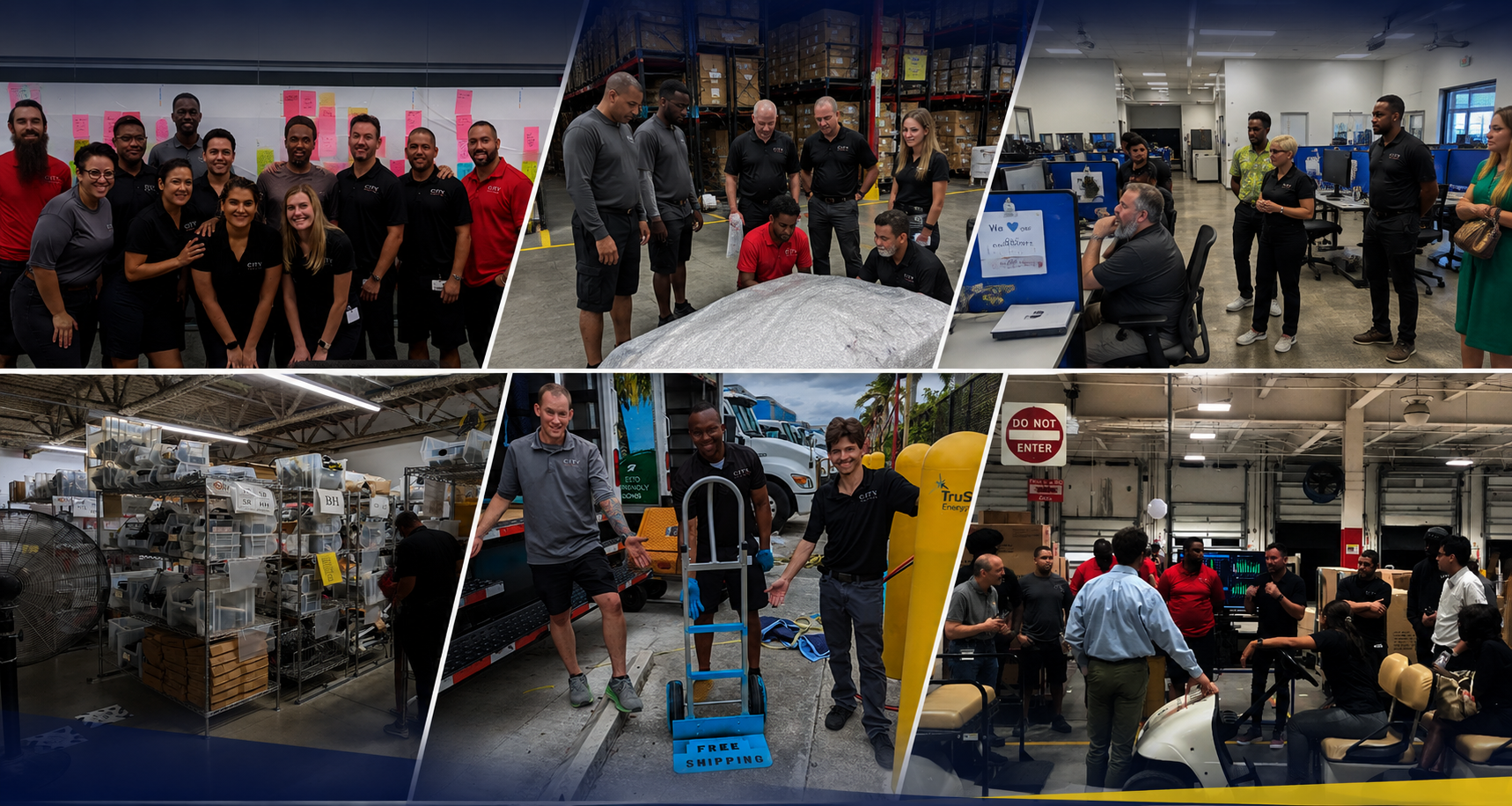
Real Manufacturing Results. One Kaizen at a Time
Explore real-world Kaizen success stories showing how manufacturing teams solved critical problems, improved performance, and created sustainable results.
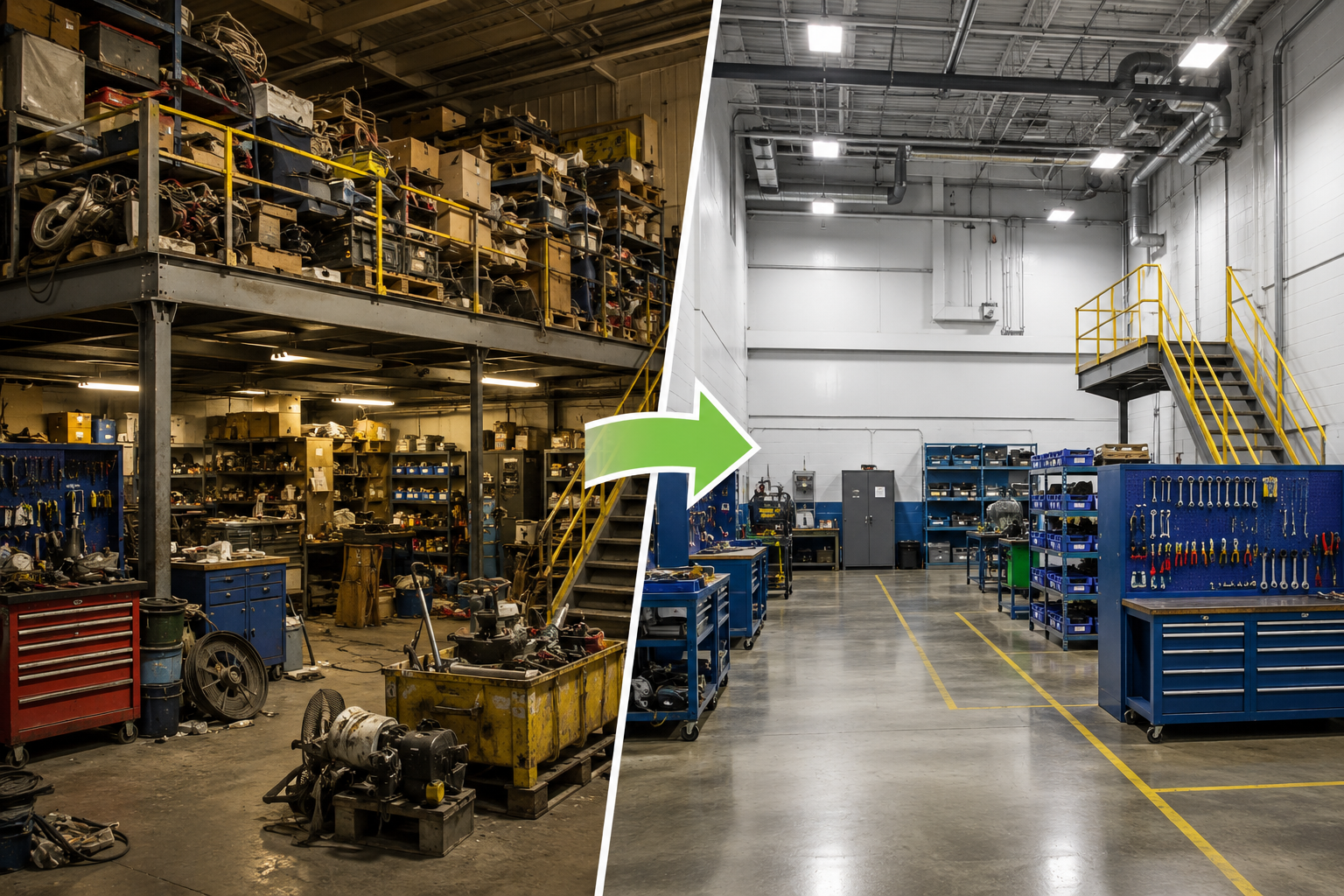
Hidden Capacity Was Sitting Above Their Heads
Sometimes your biggest capacity expansion isn't a new building—it's hiding inside the one you already have. Discover how a 5S Kaizen transformed a cluttered maintenance shop into an organized workplace while creating new manufacturing capacity and inspiring employees to take ownership of the improvements.
Kaizen Snapshot
Setting: Maintenance shop at a large power generation manufacturer
Challenge: A maintenance shop buried under years of clutter, making work slower, less safe, and consuming valuable production space.
Stakes: Lost productivity, longer search times, reduced safety, and a mezzanine blocking future manufacturing capacity.
Approach: 5S Kaizen, hands-on team engagement, visual management, and assigning area ownership.
Outcome: Search time reduced from 22 minutes to 2.3 minutes (90%), the mezzanine was completely cleared, and the newly available space was later converted into additional production capacity.
Key Lesson: The greatest result wasn’t organizing tools—it was creating ownership.
The Situation
After two successful 5S Kaizen events at another facility, I was invited to facilitate a maintenance shop transformation at a different manufacturing plant.
Before the event even began, the sponsor and team leader shared a hidden objective. Above the maintenance shop sat a large mezzanine packed with years of accumulated material. If the team could completely empty that space, leadership could eventually remove the mezzanine and reclaim valuable production space.
Rather than keeping that goal a secret, we made it the team’s challenge from Day One.
What Was Getting in the Way
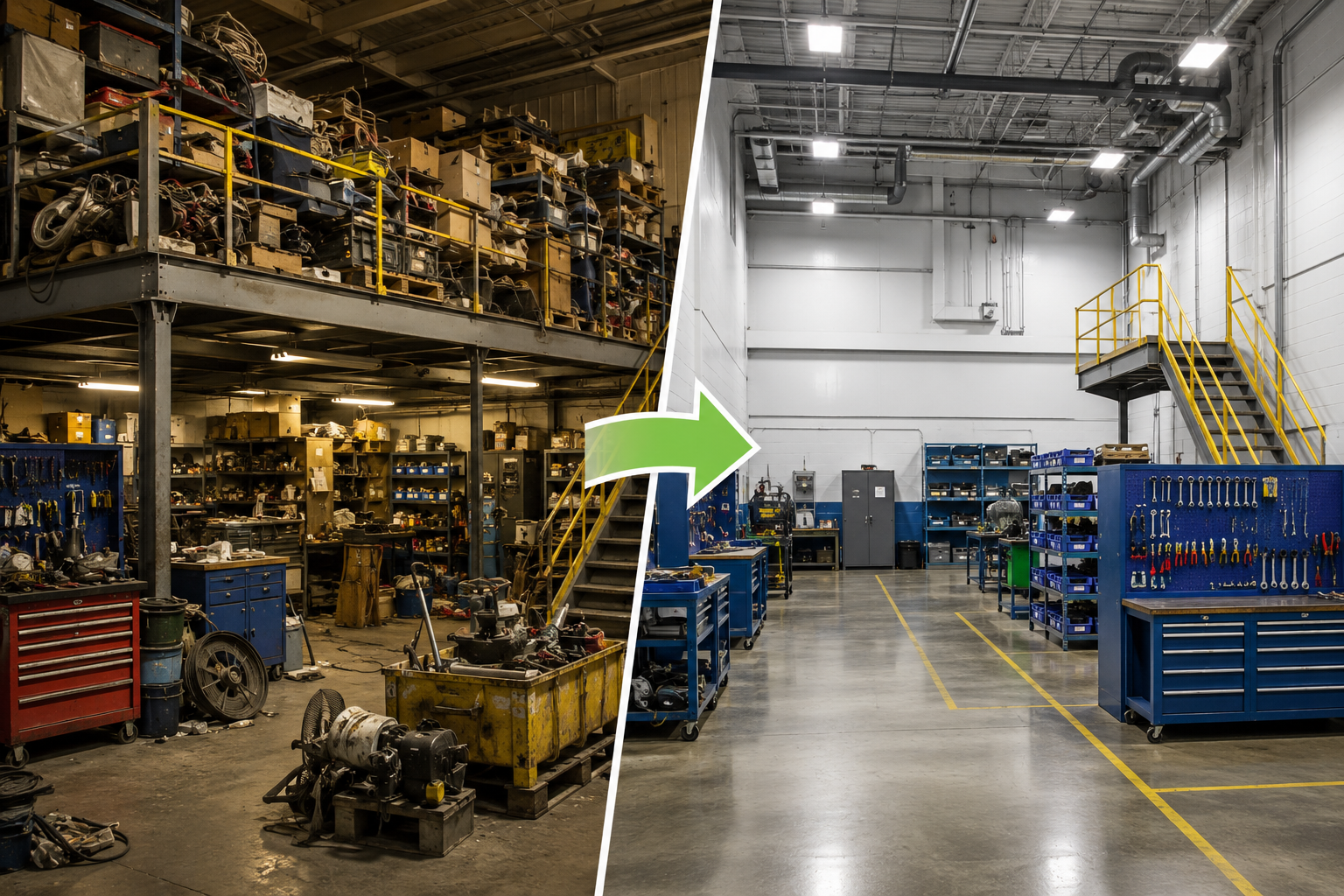
Walking the Gemba made the problem obvious. Four different maintenance areas were overflowing with obsolete equipment, excess inventory, forgotten parts, and items nobody could confidently identify.
The clutter affected everything:
Mechanics spent unnecessary time searching for tools and parts.
Valuable floor space disappeared.
Hidden hazards went unnoticed.
Even the maintenance leader admitted he struggled to throw things away.
To establish a baseline, we asked experienced maintenance technicians to locate six randomly selected items throughout the shop before the event began. Even the people who worked there every day needed an average of 22 minutes to find them. Most of the team doubted that one week of 5S could make much difference.
What We Did
The week began with Lean and 5S training before heading to the Gemba. To reinforce credibility, one of the maintenance technicians from the previous successful 5S event joined our team to share firsthand experience.
As the team sorted through years of accumulated material, something interesting happened. People began realizing just how much unnecessary clutter had quietly become “normal.” Instead of asking, “Should we throw this away?” the conversations became, “Why have we been keeping this?” Once they understood that anything truly needed could be replaced if necessary, hesitation disappeared. Momentum accelerated.
By the third day, the entire mezzanine had been emptied. With the clutter gone, maintenance issues that had been hidden for years suddenly became visible—including wiring, lighting, ductwork, and other infrastructure that could finally be repaired. Even employees who weren’t part of the Kaizen volunteered to help.
The Breakthrough
One maintenance technician had been the biggest skeptic on Day One. He had spent the most years in the department and wasn’t convinced 5S would change anything. By midweek, he had completely changed. He wasn’t simply participating anymore. He was protecting the new workplace.
When I introduced the concept of an Area Owner on Day Three, it became immediately obvious who should take the role. Another teammate even volunteered to cover the responsibilities during his upcoming vacation so the improvements wouldn’t slip backward.
By Friday, the former skeptic proudly announced, “Take my picture.” He wanted everyone to know he would be responsible for keeping the area that way. That may have been the most important improvement of the week.
What Changed
At the end of the Kaizen, we wanted to know whether the improvement was real, not just familiar to the team that had spent the week organizing the space. So instead of asking the maintenance technicians to repeat the exercise, we handed slips of paper listing six randomly selected items to people who were not familiar with the maintenance shop. We also intentionally avoided choosing easy items.
Even with those tougher conditions, the average search time dropped from: 22 minutes → 2.3 minutes. A reduction of nearly 90%.
The improvement wasn’t just measurable. It was obvious. The maintenance shop looked completely different. Anyone could walk in, immediately identify what belonged there, and quickly locate what they needed.
Leadership toured the area during the report-out and described the transformation as night and day. A month or two later, the final piece of the story unfolded. The empty mezzanine was removed. The plant gained valuable production space to support future growth.
The Takeaway
5S isn’t about cleaning. It’s about removing everything that prevents people from doing great work. When employees help build the system themselves, they don’t just maintain it, they own it.
Why This Matters
Many organizations think of 5S as housekeeping. The best 5S events do far more:
They improve safety.
They eliminate wasted motion.
They reduce frustration.
They create pride.
And sometimes they even create entirely new manufacturing capacity that was hidden in plain sight.
Ready to Unlock Hidden Capacity?
If your maintenance shop, warehouse, or production area has become harder to navigate, less safe, or filled with years of accumulated clutter, a focused 5S Kaizen can deliver results far beyond better organization. Sometimes the biggest capacity gains aren’t found in new equipment. They’re already sitting inside the space you have today.
Schedule a Breakthrough Assessment to uncover the opportunities hiding in plain sight.
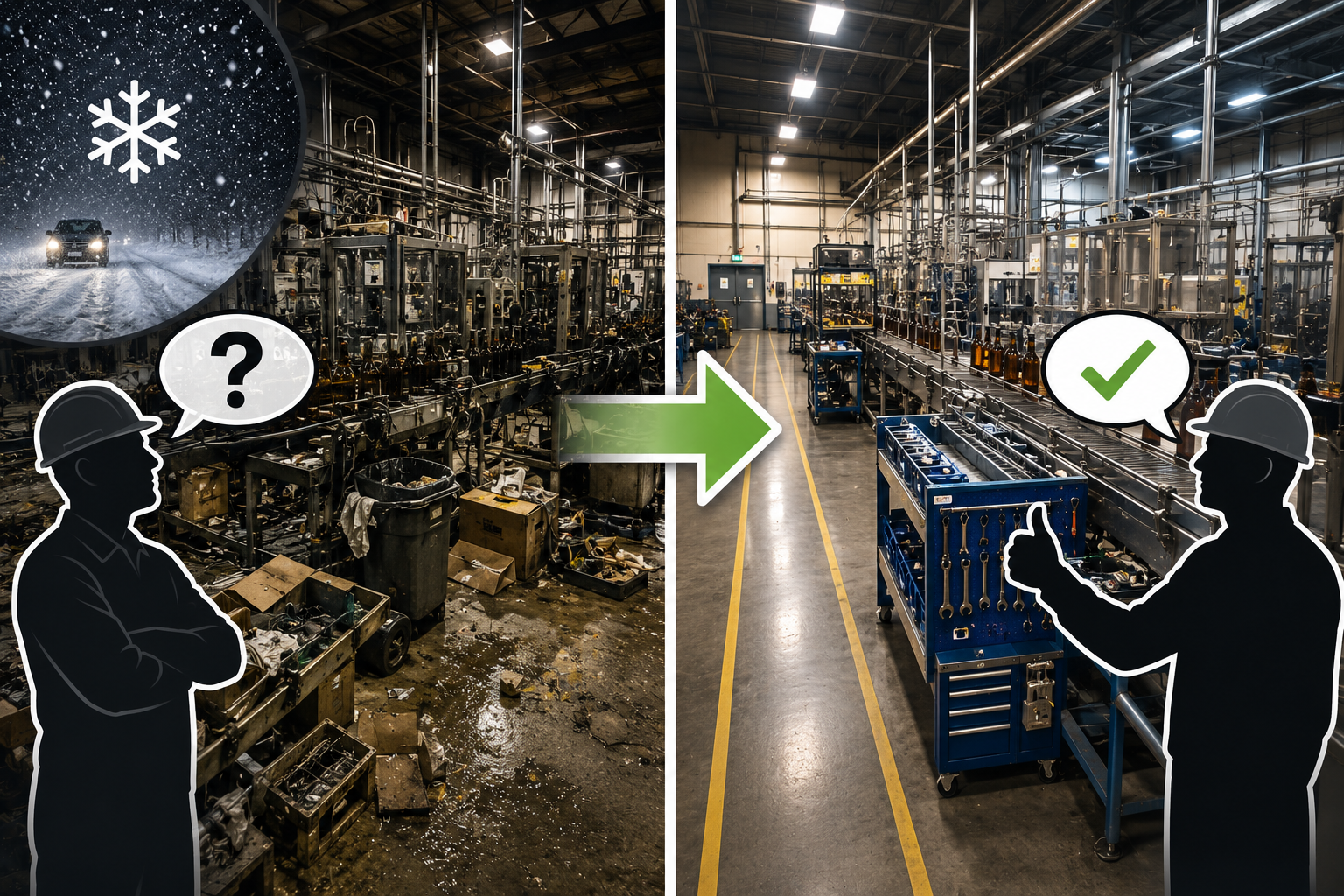
What Are You Going to Screw Up Today?
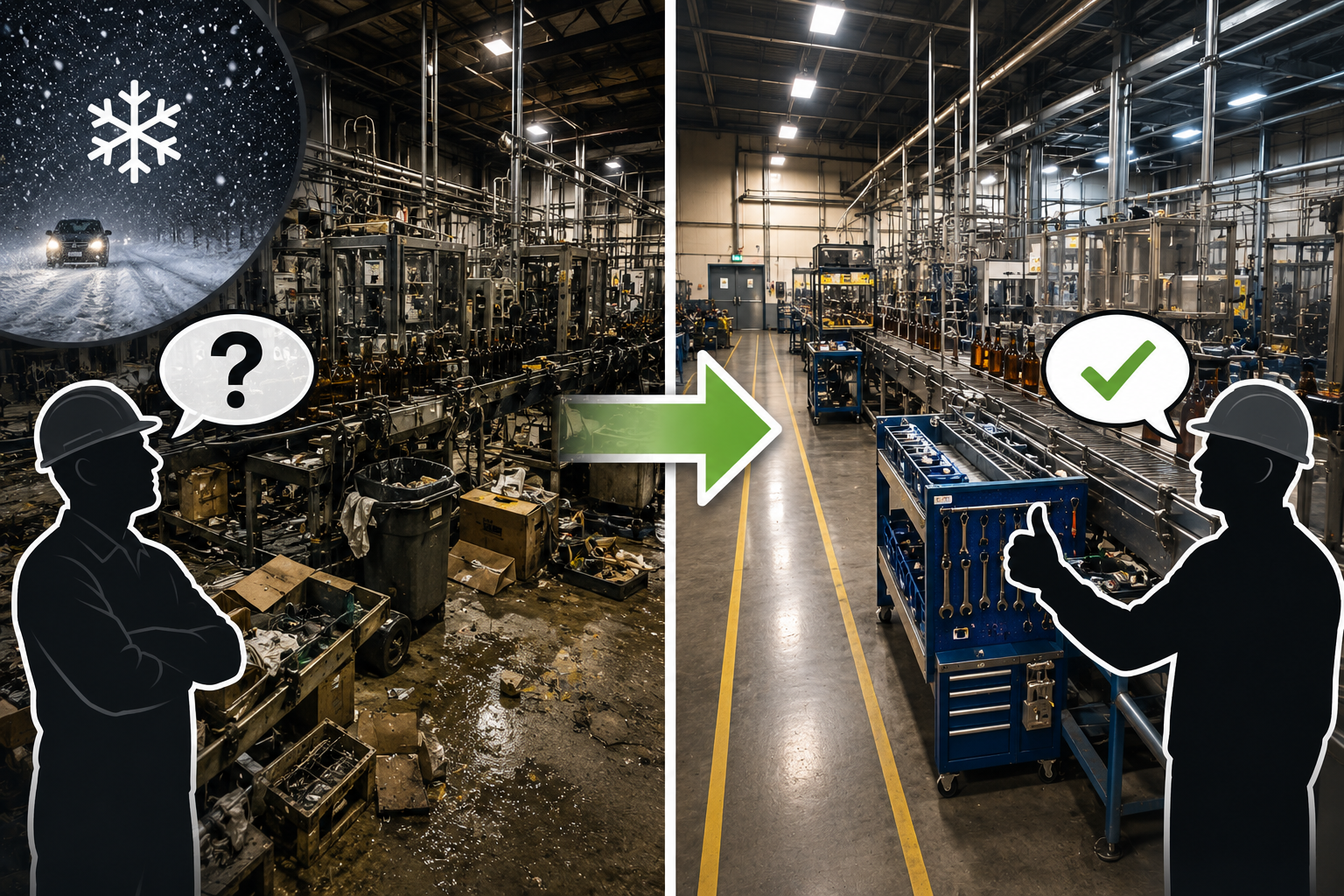
A historic winter storm shut down the plant, stranded team members, and cut a four-and-a-half-day Kaizen nearly in half. Most people would have postponed the event. Instead, the team cut changeover time by nearly 50% and turned one skeptic into one of its biggest supporters.
Kaizen Snapshot
Setting: Bottling line at a major beverage manufacturer
Challenge: Reduce lengthy changeovers despite losing nearly half the planned Kaizen to a historic winter storm.
Stakes: Limited time, missing team members, production pressure, and widespread skepticism about improvement efforts.
Approach: SMED training, operator-led process redesign, hands-on implementation, and coaching the production crew through the new process.
Outcome: Changeover time reduced by nearly 50%, operator travel reduced by an estimated 80–90%, and a skeptical employee became one of the strongest advocates for the improvement effort.
Key Lesson: You don't need perfect conditions to achieve breakthrough results.
What Are You Going to Screw Up Today?
The Situation
I was scheduled to facilitate a SMED (Single-Minute Exchange of Die) Kaizen to reduce changeover time on a bottling line at a major manufacturing facility. Like most changeover events, we had a carefully planned four-and-a-half-day schedule.
Then Mother Nature had other ideas. Weather forecasts predicted a major winter storm, so instead of flying in on Sunday as I normally would, I decided to leave a day early. That decision turned out to be the only reason I made it.
My connecting flight was canceled as snow began falling. After scrambling with the airline, I found a flight to Indianapolis, rented a car, and spent nearly three hours driving through a snowstorm to reach my hotel in Kentucky. When I arrived, the roads were covered with snow and ice. The town was nearly deserted. The plant had already shut down. At one point, we weren't even sure the Kaizen would happen.
What Was Getting in the Way
By Sunday, things had only gotten worse. The entire town was effectively closed. Restaurants were closed. The plant remained shut down. Employees couldn't leave their homes.
Our carefully planned schedule disappeared almost overnight. Eventually, leadership decided they would try to restart the facility late Monday afternoon, allowing us to begin the Kaizen on Tuesday if enough team members could safely make it to work.
Even then, several participants were still snowed in. We would have fewer people. Less time. And somehow, we still needed to deliver meaningful results.
What We Did
Tuesday morning finally arrived. The roads were passable. People slowly began making their way into the plant. Some looked genuinely happy just to have survived the drive. Instead of focusing on what we had lost, we focused on what we could still accomplish.
The team learned the principles of SMED before walking the Gemba to observe the current changeover. Operators mapped their movements using spaghetti diagrams. For many, it was the first time they had ever stepped back and looked at the entire process instead of just their own responsibilities. The waste quickly became obvious:
Long walks.
Poor organization.
Equipment that wasn't properly aligned.
No visual controls.
Little standard work.
The team generated improvement ideas and immediately began putting them into practice.
The Breakthrough
While we were observing the first changeover, a machine operator from the neighboring production line kept watching us. Finally, he walked over and asked, "What are you guys going to screw up today?"
Apparently, previous improvement efforts hadn't left him with much confidence. I smiled and replied, "Hopefully nothing. Our goal is simply to help this team make their work easier, safer, and better." He didn't look convinced. But our team was.
As they tested improvements during their own changeovers, something changed. Every success generated another idea. Every improvement inspired another. Despite losing nearly half the planned week, momentum kept building.
What Changed
By the final day, we made what many facilitators might consider a risky decision. Rather than spending the morning polishing our presentation, we invested those hours implementing a few final improvements. Then we handed the process back to the production crew.
Not to demonstrate it. Not to do it for them. To coach them through it. Each Kaizen team member partnered with a crew member, helping them follow the new process while explaining why each change had been made. The crew wasn't simply following instructions. They were learning the new standard from the people who had designed it. That investment paid off.
The production crew completed the changeover in just under half the original time. Spaghetti diagrams showed operator travel had been reduced by an estimated 80 to 90 percent. The line restarted smoothly. The crew looked confident. The improvements were no longer the Kaizen team's. They belonged to the operators.
The Moment That Said It All
Later that day, the same operator from the neighboring line walked over. This time he wasn't skeptical. He smiled and asked, "When can you help my line?"
That single question said more than any metric ever could. Trust had been earned.
The Report-Out
Despite the shortened week, the team delivered one of the most energetic report-outs I've ever witnessed. The excitement was genuine because every improvement had come from the people doing the work. The team leader later commented that in all his years participating in Lean projects and Kaizen events, he had never seen a team so engaged.
What began as a week threatened by weather had become one of the most successful changeover events they'd experienced. Even better, the improvements created a model that could now be replicated across the facility's other production lines.
The Takeaway
Kaizen isn't about having perfect conditions. It's about helping people solve real problems together. Snowstorms, compressed schedules, and missing team members. Those things make improvement harder. They don't make it impossible.
When people own both the problem and the solution, remarkable things can happen—even when the odds aren't in your favor.
Why This Matters
Many organizations delay improvement because they believe they need more time, more resources, or better circumstances. In reality, the greatest breakthroughs often happen when teams stop waiting for perfect conditions and begin improving with what they have.
The goal isn't perfection. The goal is progress. And when people experience that progress firsthand, skepticism turns into ownership—and ownership creates sustainable results.
Ready to Cut Your Changeovers in Half?
Long changeovers aren't usually caused by one big problem. They're the result of hundreds of small inefficiencies that have quietly become accepted over time.
A focused SMED Kaizen helps your team see those opportunities, eliminate unnecessary motion, create better standards, and dramatically reduce downtime—without sacrificing safety or quality.
Schedule a Breakthrough Assessment to discover how much hidden capacity is waiting inside your current changeover process.
The Day I Stopped Fixing Barcode Readers
I thought my job was to fix barcode readers. Instead, a warehouse full of employees taught me one of the most important lessons of my career: the best improvements begin by listening to the people doing the work.
Kaizen Snapshot
Setting: Thomasville Furniture corporate warehouses, late 1980s
Challenge: Support an aging barcode inventory system that was becoming increasingly frustrating and inefficient for warehouse employees.
Stakes: Inventory accuracy, warehouse productivity, employee frustration, and making better use of emerging barcode technology.
Approach: Observe the work firsthand, listen to warehouse employees, understand their daily challenges, and redesign the system around their needs rather than the technology.
Outcome: New scanning barcode readers were implemented throughout the warehouse network, inventory work became faster and easier, accuracy improved, and warehouse managers began viewing Industrial Engineering as a partner in solving operational problems.
Key Lesson: The best improvements don't begin by fixing technology. They begin by listening to the people who use it.
The Day I Stopped Fixing Barcode Readers
The Situation
When I graduated from Virginia Tech with a degree in Industrial Engineering, I accepted a position as a Corporate Industrial Engineer with Thomasville Furniture in North Carolina. One of my first responsibilities was supporting the company's barcode inventory system across multiple warehouses.
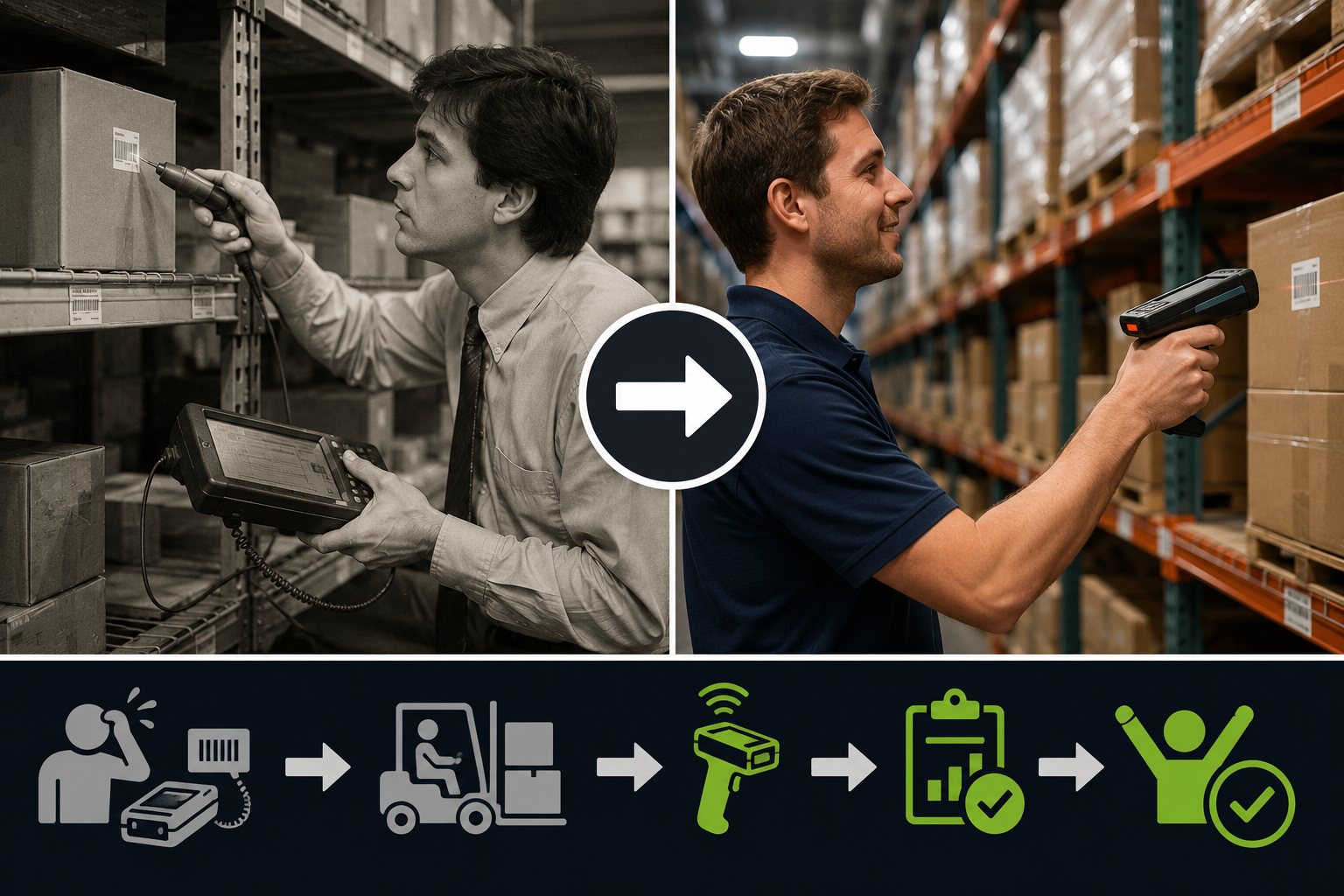
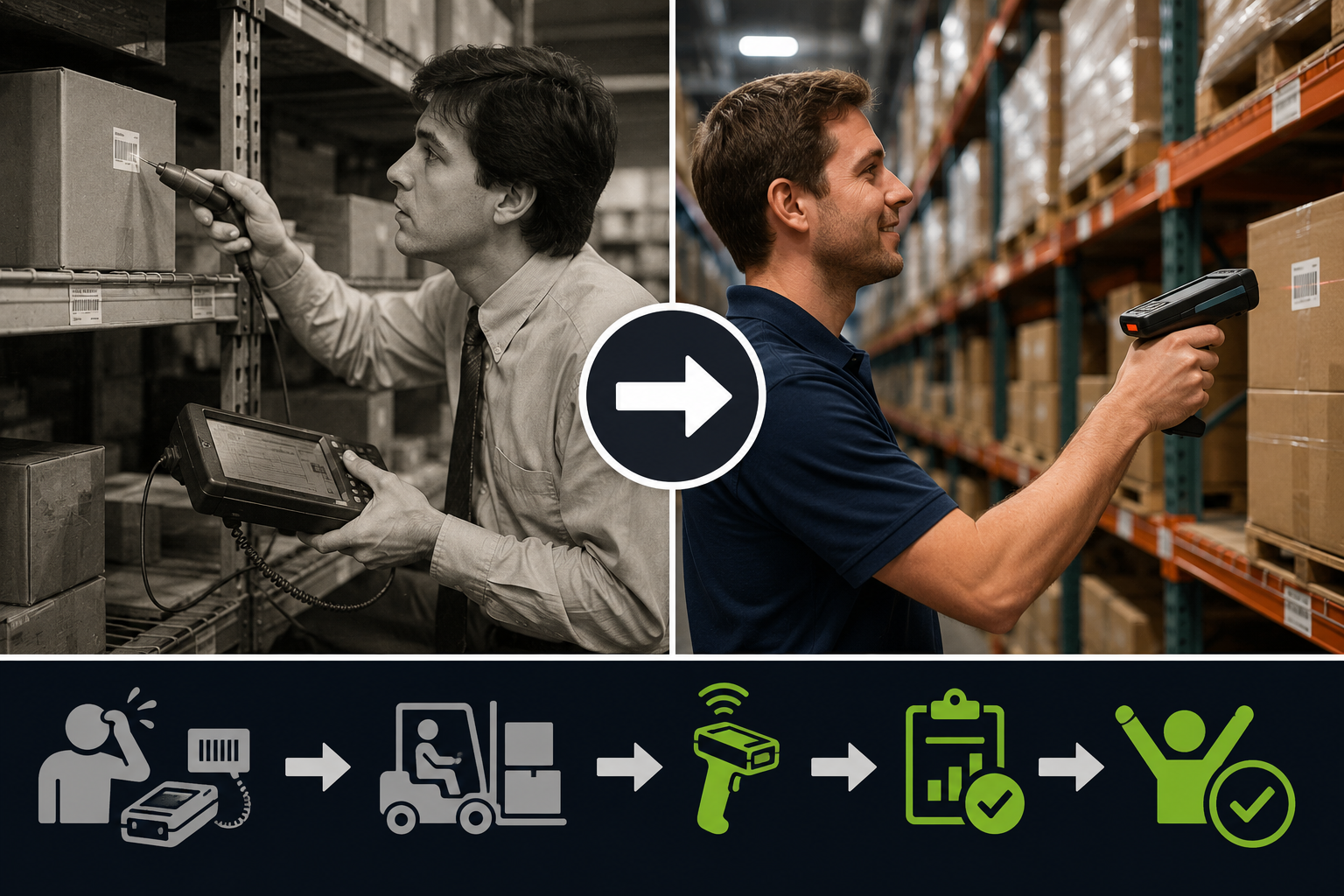
At the time, barcode technology was still in its infancy. There were no wireless scanners. No QR codes. No handheld devices like we know today. Warehouse employees carried readers about the size of a tablet with a cord attached to a lighted wand. To scan a barcode, they had to physically drag the wand across each label.
The engineer before me gave me a quick overview before moving into a leadership role. His advice was practical. "You'll get calls when the readers don't work. Sometimes people don't know how to reboot them or use them correctly. Just help them get back up and running." At first, I thought that was my job. Keep the barcode readers working.
What Was Getting in the Way
Instead of waiting for phone calls, I spent time walking through the warehouses. I watched people receive inventory, move furniture, store products, and retrieve orders. Most importantly, I watched how they actually used the barcode system.
The technology worked, but the work didn't. Employees often had to climb off forklifts or reposition large pieces of furniture simply to touch a barcode with the scanning wand. Sometimes they struggled with the equipment. Other times they struggled with the process itself. One warehouse employee jokingly told me, "This thing is almost like Braille."
He wasn't criticizing the technology. He was describing the experience. That comment stuck with me. The more time I spent in the warehouse, the more I realized I wasn't hearing complaints, I was hearing opportunities.
What We Did
Rather than asking, "How do we fix the barcode readers?" I began asking, "How do we make the inventory process easier?" That simple shift changed everything.
As I researched emerging barcode technology, I discovered a company developing one of the first scanning barcode readers that could read labels from a distance instead of requiring physical contact. Today that sounds ordinary. In the late 1980s, it was anything but. Suddenly, warehouse employees wouldn't have to reposition furniture or climb down from forklifts just to scan a label.
Even better, the new technology opened the door for entirely new capabilities. Instead of simply recording items entering or leaving inventory, we could create additional applications and reports that made warehouse operations more useful and informative. After presenting the opportunity, leadership agreed to invest in the new scanning technology.
The Breakthrough
The scanners solved a problem. Listening solved many more. As employees began using the new equipment, inventory became faster. Accuracy improved. Physical effort decreased. The technology removed frustrations that had quietly become accepted as "just part of the job." But something even more important happened.
Warehouse managers stopped seeing me as the person who fixed barcode readers. They started calling with ideas. "Could we use barcodes to help us do this?" "Would this process work better another way?" Instead of fixing equipment, we were improving systems together.
What Changed
By the time I left Thomasville Furniture, the new scanning barcode readers had been deployed throughout the company's warehouse network. Inventory management had become faster, easier, more accurate, and less physically demanding.
But looking back, those weren't the biggest improvements. The biggest change happened in me. Without realizing it, I had learned one of the most important lessons of my career. The people doing the work usually understand the problems better than anyone else.
If you're willing to spend time where the work happens:
Watch carefully
Ask questions
Truly listen
They'll often tell you exactly where improvement should begin.
The Takeaway
At the time, I thought I was learning about barcode technology. In reality, I was learning something much more valuable. Technology rarely solves the right problem by itself. People do.
The best improvements begin by understanding the work through the eyes of the people doing it every day.
Why This Matters
Organizations often invest in new technology hoping it will solve operational challenges. Sometimes it does. But technology alone rarely creates lasting improvement. Real improvement starts by understanding the frustrations, obstacles, and opportunities experienced by the people closest to the work.
Only then can technology become an accelerator instead of a substitute for good process design. Although I didn't realize it at the time, this early experience became the foundation for how I would approach every Kaizen event, leadership engagement, and improvement effort throughout the rest of my career.
Ready to Discover What Your Team Already Knows?
The people closest to your processes often have the best ideas for improving them. A Breakthrough Assessment helps uncover those opportunities by combining observation, employee engagement, and practical problem solving to reveal improvements that reports and dashboards alone can never find.
Sometimes the answers aren't hiding in the data. They're already being experienced every day by the people doing the work.

When My Design Didn't Win
I believed I had designed a better solution. Leadership chose a different direction. What happened next taught me one of the most valuable leadership lessons of my career: once the decision is made, your job is no longer to be right, it's to help the team succeed.

Kaizen Snapshot
Setting: Armstrong World Industries – Pensacola Integration Project
Challenge: Help redesign and integrate multiple production lines into a single-flow manufacturing system while supporting a design direction I didn't believe was the best option.
Stakes: Millions of dollars in capital investment, worker safety, operational flow, changeover efficiency, and long-term plant performance.
Approach: Challenge the proposed design with a thoughtful alternative, support leadership's final decision, and focus on making the chosen solution as successful as possible.
Outcome: The integrated production system launched successfully, numerous changeover improvements were implemented, and several innovations were later adopted at other Armstrong facilities.
Key Lesson: Great leaders aren't defined by whether their ideas are selected. They're defined by what they do after the decision has been made.
When My Design Didn't Win
The Situation
Early in my career as a Corporate Industrial Engineer for Armstrong World Industries, I was invited to join one of the company's largest manufacturing redesign efforts.
Known as the Pensacola Integration Project, the initiative would connect multiple production lines into a single, continuous flow system at the Pensacola, Florida plant. Instead of moving product in batches between disconnected operations, the new design would allow material to flow much more smoothly through the manufacturing process.
It was an exciting project. It was also one where I quickly developed a different opinion than the rest of the design team.
What Was Getting in the Way
As the engineering team refined the layout, one section of the proposed design concerned me. I believed there was a safer, simpler, and more efficient way to accomplish the same objective. Rather than quietly disagreeing, I shared my concerns with the project manager and the plant's Industrial Engineering manager. To their credit, they listened.
Although the project was already well underway, they encouraged me to develop an alternative layout and present it to the leadership team. Over the next several weeks, I invested significant time refining what I believed would create better flow, improve safety, and reduce the need for elevated platforms throughout that section of the plant.
Eventually, I had the opportunity to present my proposal. Leadership appreciated the effort. They liked portions of the concept. But after careful consideration, they chose to stay with the original design.
The Decision
I'll be honest, I was disappointed. Like many engineers early in their careers, I was passionate about my ideas and believed they would create a better result. But I also recognized something important. Leadership had listened. They had seriously considered my recommendation. They simply made a different decision. At that moment, my responsibility changed.
Until that meeting, my job had been to improve the design. After that meeting, my job became making the chosen design as successful as possible.
What We Did
Once the decision was made, I stopped trying to convince people to revisit the debate. Instead, I redirected all of my energy toward improving the selected design. Working alongside the project team, we simplified work areas, improved changeover methods, and identified ways to make the new production system safer and easier for operators.
I was also given responsibility for designing changeover equipment that would support the new integrated manufacturing process. Rather than dwelling on the design that wasn't selected, I focused on making the design that was selected perform as well as it possibly could.
The Breakthrough
Something unexpected happened. Once I let go of proving my idea was better, I became a stronger contributor to the project. Instead of dividing the team by continuing yesterday's debate, we became united around tomorrow's success. The energy shifted from defending decisions to improving execution. And that's where the real breakthroughs occurred.
Several of the changeover improvements our team developed during the project proved so effective that they were later adopted at other Armstrong manufacturing facilities.
What Changed
When the integrated production system finally started up, the project was successful. The new manufacturing flow performed well. Operators appreciated many of the improvements incorporated into their daily work. The changeover innovations created during the project continued spreading throughout the company's manufacturing network.
Looking back, I'm proud of the design I proposed. But I'm even more proud of the decision I made after it wasn't selected. That lesson has stayed with me throughout my career.
The Takeaway
Every leader will eventually experience the same moment. You present your best idea. Leadership chooses another direction. At that point, you have a choice.
Continue fighting yesterday's decision or become fully committed to making today's decision successful. Alignment often creates more value than proving you were right.
Why This Matters
Many organizations lose momentum because people continue debating decisions that have already been made. Healthy disagreement is valuable. Strong debate produces better thinking.
But once leadership has listened, evaluated the options, and chosen a direction, organizational success depends on everyone pulling together. The strongest leaders aren't the ones whose ideas always win. They're the ones who help the team win even when the final decision isn't their own.
That lesson shaped the way I've approached leadership, Kaizen facilitation, and organizational transformation ever since.
Ready to Build Greater Leadership Alignment?
The biggest obstacles to transformation are rarely technical. More often, they're organizational. When leaders align around a shared direction and commit to making it successful, teams move faster, collaborate better, and sustain improvements longer.
If you're looking to strengthen leadership alignment before your next major initiative, let's start with a Breakthrough Assessment and identify the opportunities that will have the greatest impact.