
Kaizen Success Stories
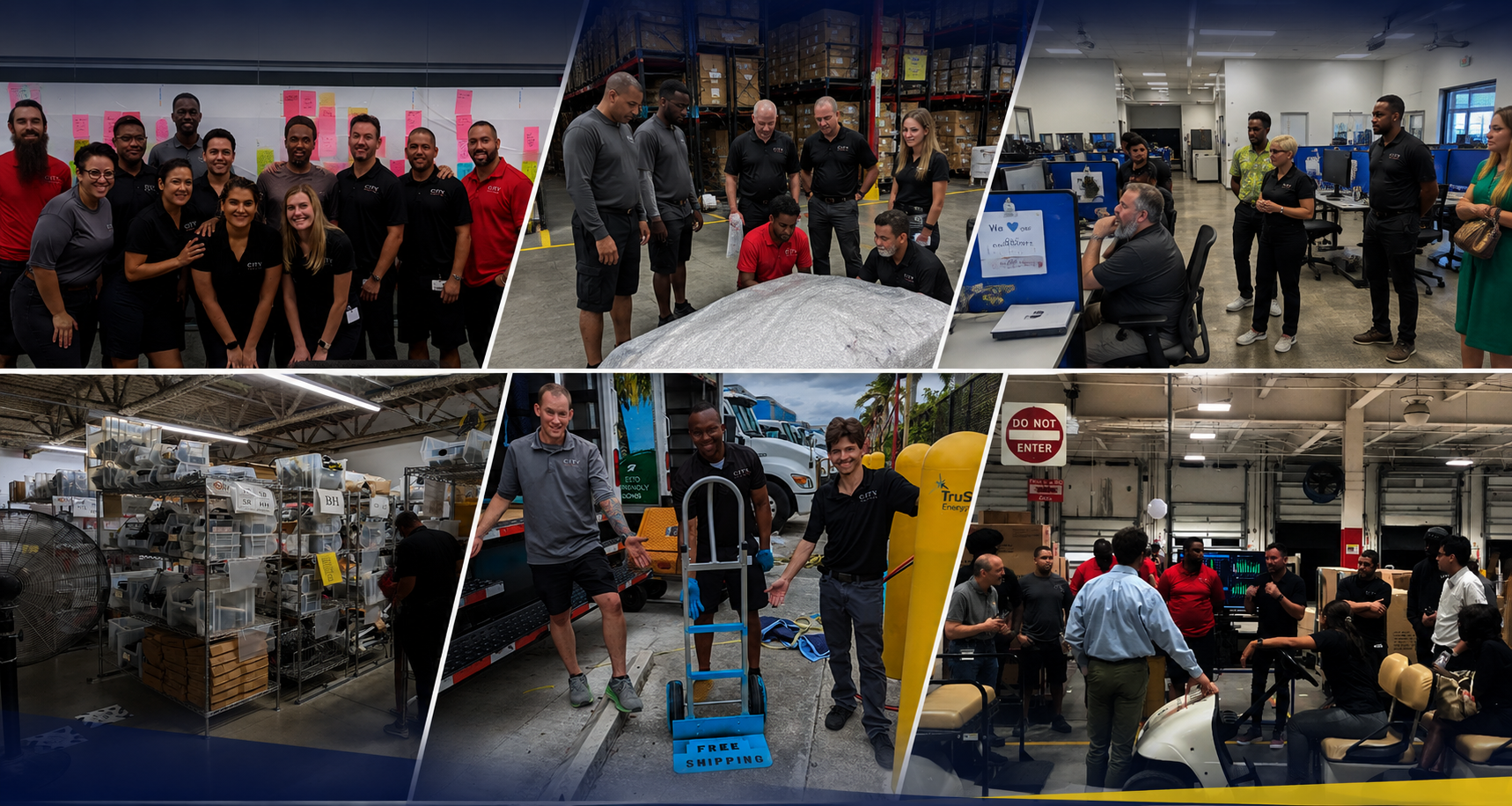
Real Manufacturing Results. One Kaizen at a Time
Explore real-world Kaizen success stories showing how manufacturing teams solved critical problems, improved performance, and created sustainable results.
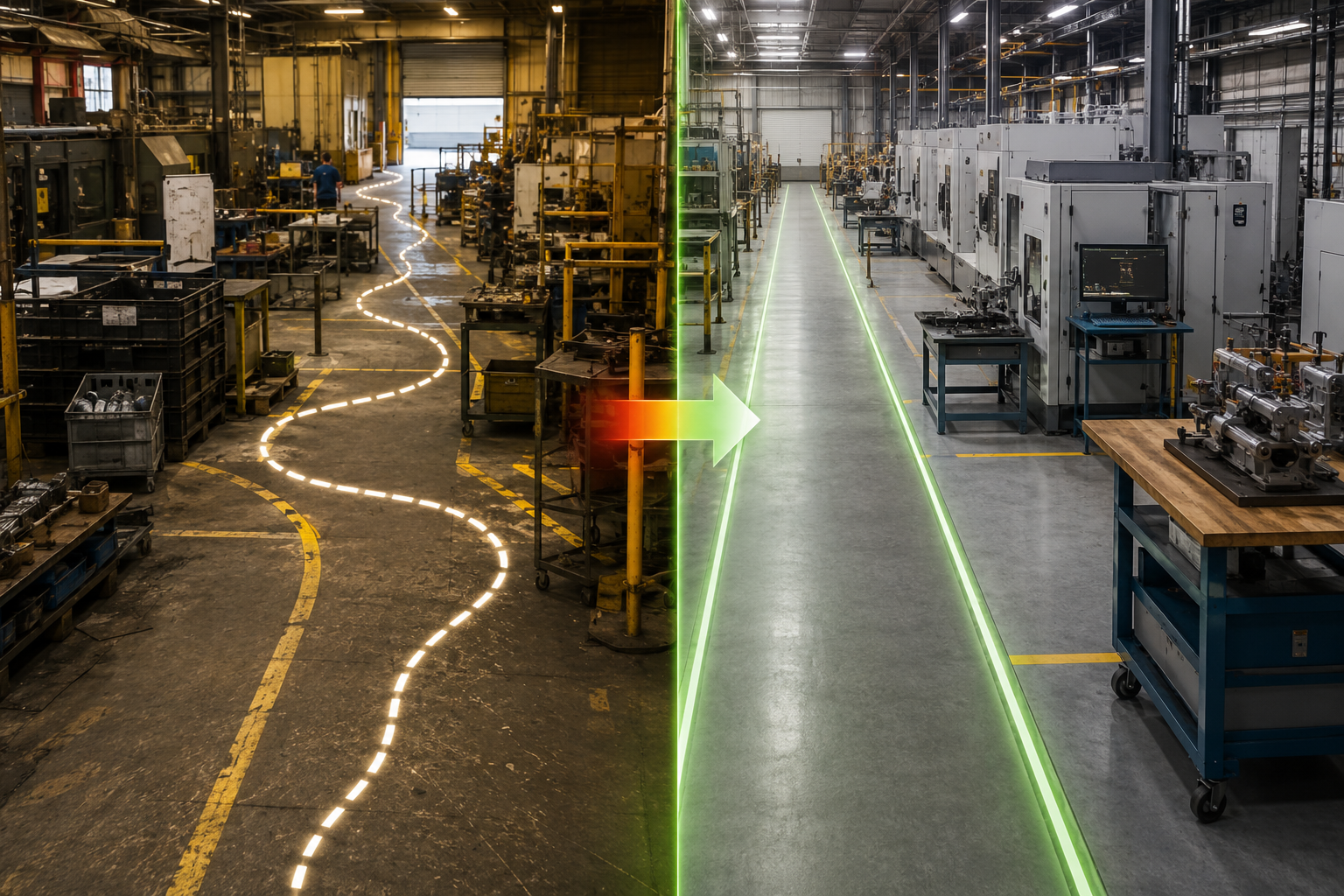
From 330 Feet to 4 Feet in 3 Days
A manufacturing team spent years living with an inefficient quality testing process. In just three days, they reduced travel distance from 330 feet to 4 feet, cut processing time in half, and uncovered a solution worth millions in additional capacity.
Kaizen Snapshot
Industry: Manufacturing
Challenge: Excessive travel, batching, safety risk, and delayed quality feedback
Approach: Kaizen Event Facilitation using rapid experimentation and team-led design
Results:
Distance traveled per part reduced from 330 feet to 4 feet
QC travel reduced from 175 feet to 4 feet
Batch size reduced from 6 pieces to single-piece flow
Processing time cut from 40+ minutes to approximately 20 minutes
Part lifts reduced from 4 to 1
More than 95% reduction in travel
More than 95% reduction in safety risk
Wastewater stream eliminated
Potential to double capacity
The Situation
A manufacturing team had been struggling with the same problem for years.
Every part required a quality test, but the process was designed around batching and distance. Parts were tested away from the production line, which meant multiple additional parts could already be in process before quality issues were identified.
The process had become accepted as "the way we've always done it," even though everyone knew it was inefficient.
The baseline measurements told the story:
330 feet of travel per part
175 feet of travel for QC per batch
Batch size of 6
More than 40 minutes of processing time
Multiple lifts of an 18-pound component
The team knew improvement was possible. They simply had not found a way forward.
What We Did
Rather than spending days discussing solutions, the team focused on building and testing them.
On Day 1, seven team members generated seven ideas each, creating forty-nine potential solutions.
The team quickly narrowed those ideas to seven concepts worth testing and immediately built prototypes using materials already available on-site.
On Day 2, the team established evaluation criteria and test procedures. They ran experiments, challenged assumptions, and narrowed the field to two leading concepts.
On Day 3, they combined the strongest elements of both approaches into a single design and implemented it directly in the production environment.
Equipment was relocated.
Material flow was redesigned.
The new process was tested using an actual production part.
The Results
The impact was immediate.
MeasureBeforeAfterDistance Traveled per Part330 ft4 ftQC Travel175 ft4 ftBatch Size61Processing Time40+ min~20 minPart Lifts41
Additional benefits included:
More than 95% reduction in travel
More than 95% reduction in safety risk
Complete elimination of waste entering the wastewater stream
Potential capacity increase worth millions annually
The Most Important Result
The numbers were impressive.
The people impact was even more powerful.
One operator, who had never participated in a Kaizen event before, looked at the redesigned process and said he couldn't believe how much easier his job had become.
At the final report-out, he stood in front of senior leadership and confidently explained what the team had accomplished.
It was the first time he had ever presented to leadership.
The pride, ownership, and confidence in the room were impossible to miss.
The team didn't just improve a process.
They proved to themselves what they were capable of accomplishing.
Key Lesson
Sustainable improvement happens when people stop talking about solutions and start building them.
In just three days, a team that had struggled with the same problem for years transformed its process, dramatically improved safety and efficiency, and created a solution they were excited to own.
That's the power of a well-facilitated Kaizen event.