
Kaizen Success Stories
Real Manufacturing Results. One Kaizen at a Time
Explore real-world Kaizen success stories showing how manufacturing teams solved critical problems, improved performance, and created sustainable results.
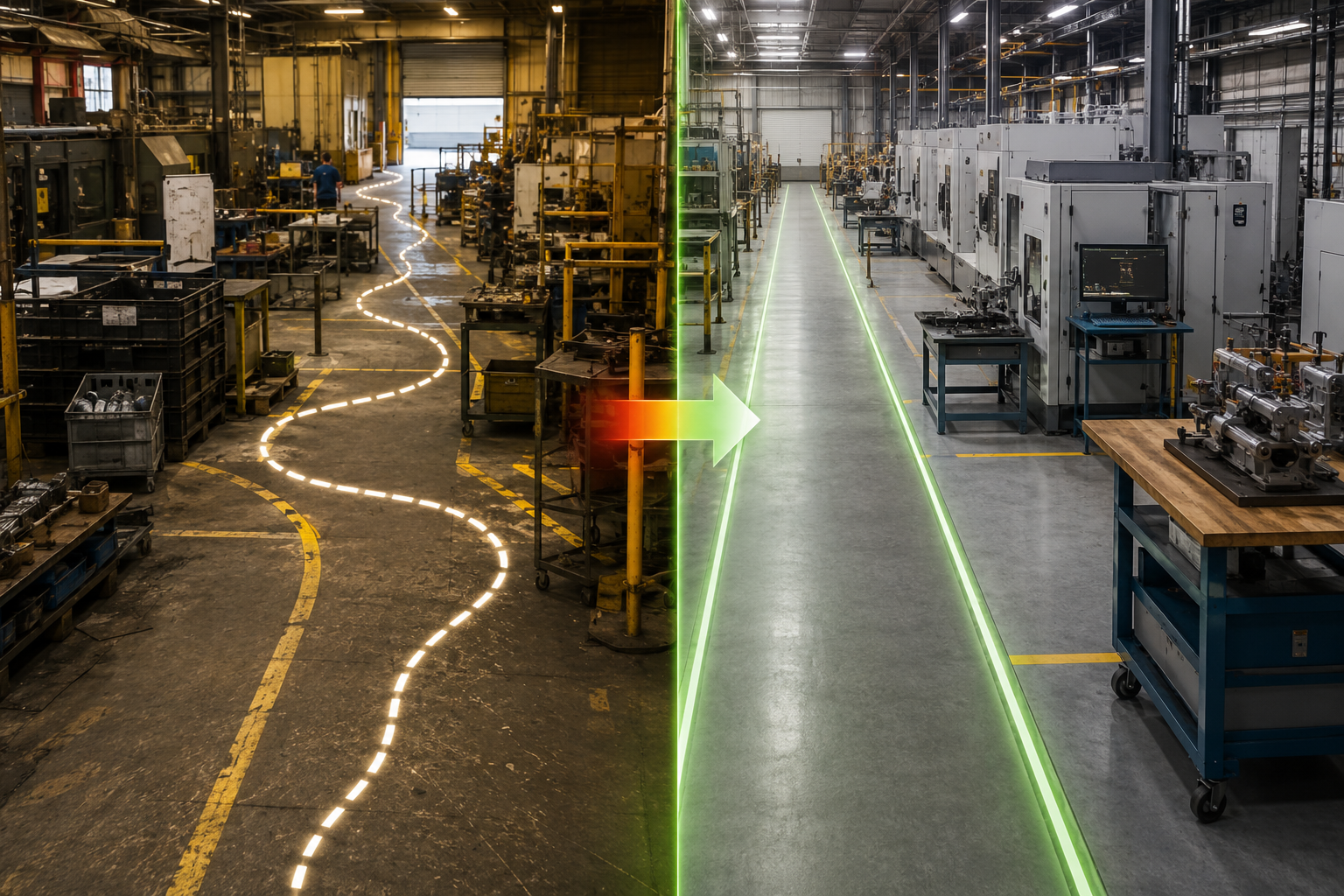
From 330 Feet to 4 Feet in 3 Days
A manufacturing team spent years living with an inefficient quality testing process. In just three days, they reduced travel distance from 330 feet to 4 feet, cut processing time in half, and uncovered a solution worth millions in additional capacity.
Kaizen Snapshot
Industry: Manufacturing
Challenge: Excessive travel, batching, safety risk, and delayed quality feedback
Approach: Kaizen Event Facilitation using rapid experimentation and team-led design
Results:
Distance traveled per part reduced from 330 feet to 4 feet
QC travel reduced from 175 feet to 4 feet
Batch size reduced from 6 pieces to single-piece flow
Processing time cut from 40+ minutes to approximately 20 minutes
Part lifts reduced from 4 to 1
More than 95% reduction in travel
More than 95% reduction in safety risk
Wastewater stream eliminated
Potential to double capacity
The Situation
A manufacturing team had been struggling with the same problem for years.
Every part required a quality test, but the process was designed around batching and distance. Parts were tested away from the production line, which meant multiple additional parts could already be in process before quality issues were identified.
The process had become accepted as "the way we've always done it," even though everyone knew it was inefficient.
The baseline measurements told the story:
330 feet of travel per part
175 feet of travel for QC per batch
Batch size of 6
More than 40 minutes of processing time
Multiple lifts of an 18-pound component
The team knew improvement was possible. They simply had not found a way forward.
What We Did
Rather than spending days discussing solutions, the team focused on building and testing them.
On Day 1, seven team members generated seven ideas each, creating forty-nine potential solutions.
The team quickly narrowed those ideas to seven concepts worth testing and immediately built prototypes using materials already available on-site.
On Day 2, the team established evaluation criteria and test procedures. They ran experiments, challenged assumptions, and narrowed the field to two leading concepts.
On Day 3, they combined the strongest elements of both approaches into a single design and implemented it directly in the production environment.
Equipment was relocated.
Material flow was redesigned.
The new process was tested using an actual production part.
The Results
The impact was immediate.
MeasureBeforeAfterDistance Traveled per Part330 ft4 ftQC Travel175 ft4 ftBatch Size61Processing Time40+ min~20 minPart Lifts41
Additional benefits included:
More than 95% reduction in travel
More than 95% reduction in safety risk
Complete elimination of waste entering the wastewater stream
Potential capacity increase worth millions annually
The Most Important Result
The numbers were impressive.
The people impact was even more powerful.
One operator, who had never participated in a Kaizen event before, looked at the redesigned process and said he couldn't believe how much easier his job had become.
At the final report-out, he stood in front of senior leadership and confidently explained what the team had accomplished.
It was the first time he had ever presented to leadership.
The pride, ownership, and confidence in the room were impossible to miss.
The team didn't just improve a process.
They proved to themselves what they were capable of accomplishing.
Key Lesson
Sustainable improvement happens when people stop talking about solutions and start building them.
In just three days, a team that had struggled with the same problem for years transformed its process, dramatically improved safety and efficiency, and created a solution they were excited to own.
That's the power of a well-facilitated Kaizen event.

Respect First - Running Kaizen Successfully in a Union Environment
How clarity, respect, and one simple agreement unlocked engagement and protected results.
Kaizen Snapshot
Setting: Unionized distillery in Kentucky
Challenge: Excessive changeover time between bottle sizes
Stakes: Many thousands of additional bottles per year
Approach: Gemba walk, union alignment, Kaizen Waiver
Outcome: Constraints removed, continuity protected, team fully engaged
Key Lesson: Respect builds alignment, even in complex environments
The Situation
I’ve been running Kaizen events for more than 30 years in all kinds of environments, union and non-union alike.
While the rules may differ, one thing never does:
people are people, and everyone deserves to be treated with respect.
During a recent site visit to a distillery in Kentucky, leadership shared their most pressing need: reduce changeover time when switching between bottle sizes.
If we could cut the time in half, the plant would unlock capacity for many thousands of additional bottles each year. The business case was obvious and worth pursuing.
What Was Getting in the Way
The plant was unionized, and two contract constraints surfaced immediately:
Division of labor: Production, maintenance, and management roles were clearly defined. In a Kaizen event, however, everyone needs to test ideas regardless of title.
Overtime by seniority: If overtime was required, a more senior employee could replace a team member mid-event, disrupting continuity and momentum.
I knew from experience that if we didn’t address these issues before the event, the team would be constrained and the results would suffer.
What We Did
In similar environments, I’ve used what I call a Kaizen Waiver, a temporary, transparent agreement that allows:
Any team member to do the work the team needs
Team continuity if overtime is required
My team leader hadn’t used this approach before, so I suggested we take a Gemba walk and meet directly with union leadership.
That’s when we met Sam, the union vice president.
“We’ve tried this before. What are you going to do that other consultants couldn’t?”
I didn’t deflect the question.
I told him exactly what I planned to do:
Listen to the team.
Prioritize improvements that would make the biggest impact on safety, quality, and effort.
Sam’s next concern was one I hear often:
“What happens when you’re gone?”
I explained that if we made the process safer, truly safer, no one would want to go back. And I would rely on both union leadership and plant leadership to hold people accountable to the new standard.
When Sam asked about the contract, I walked him through the Kaizen Waiver and why it was critical to the team’s success.
After thoughtful questions and discussion, he agreed to support the approach.
I asked if he wanted to be on the team. He declined, which was understandable. That would have put him in a difficult position with his membership. But his support was enough.
What Changed
With constraints removed up front, the team was able to:
Fully engage in testing and implementing improvements
Maintain continuity throughout the event
Focus on solving the real problem, not navigating rules
The Kaizen event itself was a success. But more importantly, it was done in a way that respected everyone involved.
The Takeaway
When you explain why you want to work differently, and you do it with respect, alignment is possible.
Union or non-union, Kaizen works best when trust comes first.
Why This Matters
Too many improvement efforts stall because leaders avoid hard conversations or try to work around constraints instead of addressing them directly.
Respect, clarity, and alignment remove friction — and create space for real results.
Ready to Apply This Approach?
If you’re navigating improvement in a complex environment and want results that stick:

When the Work Speaks for You
How years of consistent Kaizen work turned into unexpected recognition and new opportunity.
Kaizen Snapshot
Setting: Global Lean Summit at Indiana University
Challenge: Sustaining Kaizen momentum at scale
Stakes: Culture, credibility, and long-term capability
Approach: Hands-on Kaizen facilitation, leader development, culture building
Outcome: Public CEO endorsement, new relationships, expanded opportunities
Key Lesson: Consistent results build credibility and credibility opens doors
The Situation
At the 2025 Global Lean Summit, I was scheduled to deliver five workshops over two days. That alone made it a memorable event.
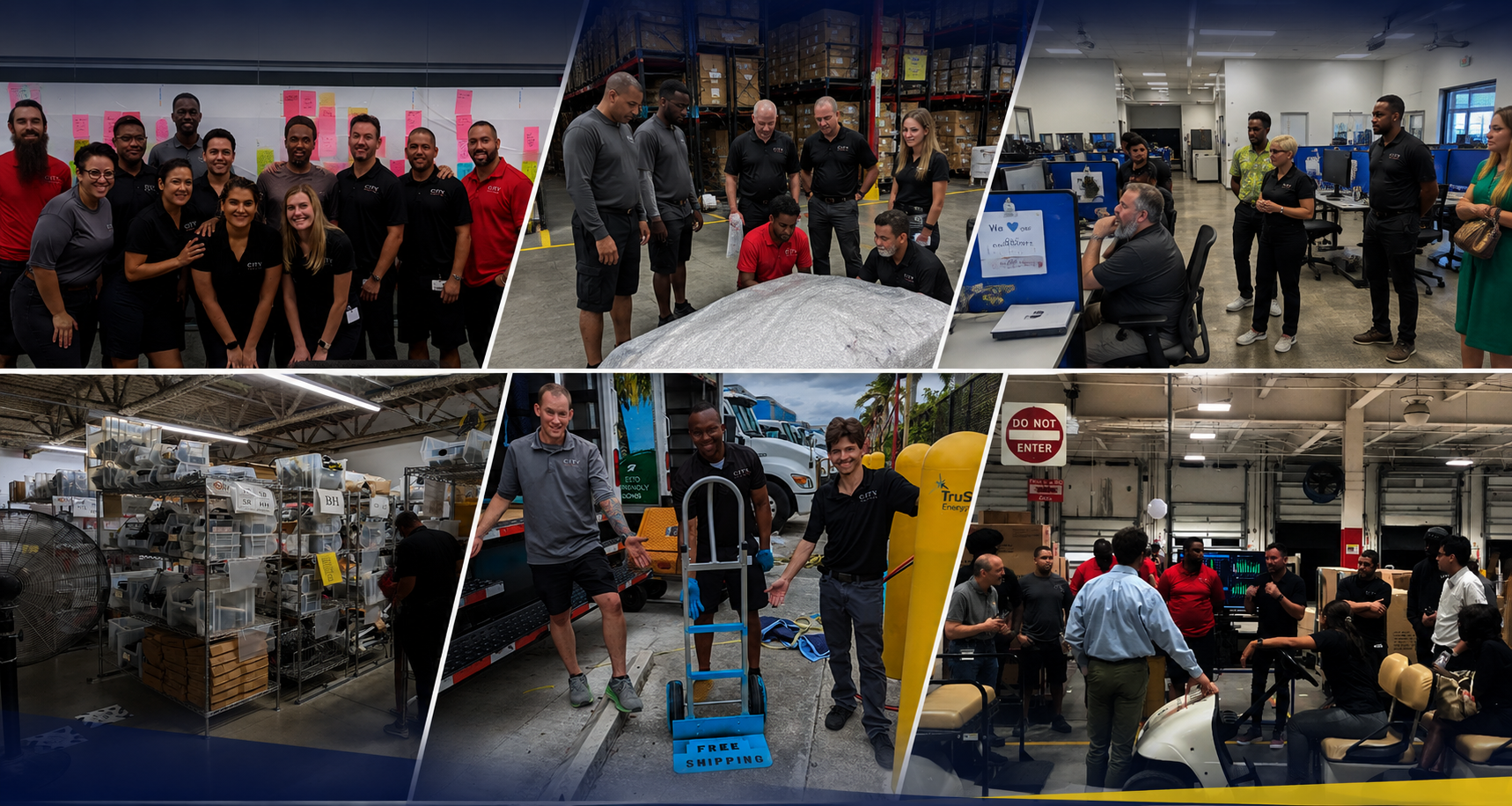
What made it even more meaningful was learning that Andrew Koenig, CEO of CITY Furniture, would also be speaking. I had worked closely with Andrew and his team for two years, helping them re-energize their Kaizen culture and build internal capability.
I reached out and let him know I’d be tracking him down when he arrived. He was happy to reconnect.
We finally met early on the final conference day at my booth.
What Happened Next
After catching up and sharing recent adventures, Andrew looked at me and said something I didn’t expect:
“Adam, you’ve done so much for us. What can I do for you?”
Honestly, I hadn’t thought about that. I felt he had already given me plenty through the opportunity to work with his organization.
Still, a few thoughts crossed my mind:
It would be nice to be acknowledged as part of CITY Furniture’s Lean journey
Introductions to leaders he thought I could help would mean a lot
And maybe, just maybe, he’d wear the Kaizen Ninja socks I hand out
He smiled and said he’d do what he could.
The Moment I Didn’t See Coming
When Andrew took the stage later that morning, he began telling the story of CITY Furniture’s Lean journey.
Early in his talk, he shared how we met and how my work helped re-energize their Kaizen culture.
Later, he spoke again about the role I played in building their long-term Kaizen strategy.
Then he asked me to stand.
“Adam became part of how we grew our Kaizen capability not just our events.”
The response from the audience was immediate. After the talk, leaders came up to me wanting to understand my perspective, my approach, and how I supported CITY Furniture’s transformation.
Andrew’s words carried weight. Far more than anything I could have said myself.
What Changed
Later that day, Andrew came over, gave me a hug, and invited me to attend the CITY Furniture vendor conference.
I hadn’t been a vendor for more than two years. But I knew I needed to go, if for no other reason than to reconnect with the Kaizen team members and see how they were doing.
The conference itself was outstanding. But the real impact was something else entirely.
The Takeaway
When you do good work, consistently, respectfully, and with the long view in mind, others will tell your story for you.
Credibility isn’t built through self-promotion. It’s built through results.
Why This Matters
Leaders are flooded with claims and credentials.
What cuts through the noise is proof, especially when it comes from someone they trust.
Sustainable Kaizen cultures grow when results speak louder than words.
Want Results Like This?
If you’re looking to build Kaizen capability that leaders stand behind. Not just events that check a box:
Why Great Kaizen Starts Before the Event
How one frustrated engineer reshaped the way I prepare leaders for successful Kaizen.
Kaizen Snapshot
Setting: Armstrong World Industries Technology Group
Challenge: Poorly defined Kaizen charters wasting time and energy
Stakes: Misaligned priorities, weak engagement, limited business impact
Approach: Clear standards, disciplined gatekeeping, simplified chartering
Outcome: Stronger business cases, better-aligned teams, higher-impact Kaizen
Key Lesson: If the problem isn’t clear, the Kaizen won’t be either
The Situation
During my final six years as Global Lean Champion for Armstrong’s Technology group, I encouraged leaders to sponsor Kaizen events to solve critical business problems.
One requirement never changed: every Kaizen needed a charter.
The charter wasn’t bureaucracy. It was how we ensured:
The right problem was being solved
Leaders were aligned
The work justified pulling people away from their daily jobs
As momentum grew, more leaders reached out for support. As the gatekeeper for Kaizen events, I reviewed every charter before an event was approved.
That’s when I met Stan.
What Was Getting in the Way
Stan was an experienced engineer who wanted to run a Kaizen in his area. We talked through what he hoped to accomplish, and I shared the standard charter template.
I asked him to complete it before our next meeting.
Three days later, he hadn’t.
“I just want to make sure you understand what I’m trying to do.”
I explained why the charter mattered. It forces clarity, alignment, and commitment.
Stan tried again.
And again.
And again.
After more than a dozen iterations, a pattern became clear.
What We Discovered
Stan wasn’t struggling with the template.
He was struggling with the why.
The charter never articulated a compelling business case. It sounded less like a Kaizen event and more like a request for people to do his work for him.
I told him I couldn’t approve the event.
He wasn’t satisfied, so we met with his sponsor to see if we could clarify the value together.
We couldn’t.
The event never happened.
What Changed (for Me)
There’s a risk in being strict about Kaizen charters. But I owed it to the organization to protect people’s time and energy.
More importantly, I realized something uncomfortable:
Chartering wasn’t as easy as I thought it was.
So I changed my approach.
The Improvements I Made
I did two things that changed everything:
Simplified the process
I created a clear, four-step approach called Chartering to Win, with explicit intent and critical questions for each step.Took ownership of the starting point
Instead of asking leaders to start from a blank page, I began drafting a first version of the charter with them.
It’s far easier to edit than to create from scratch.
The Takeaway
Strong Kaizen events don’t fail in the room.
They fail before they ever start when the problem isn’t clear and the purpose isn’t compelling.
Today, I use the same Chartering to Win approach with my clients, and I teach leaders how to do it themselves.
And I owe that lesson to Stan.
Why This Matters
Too many organizations jump into Kaizen because it feels productive, not because it’s focused.
Clear chartering protects people’s time, builds alignment, and dramatically increases the odds that improvement will stick.
Want Better Kaizen Outcomes?
If your Kaizen efforts feel busy but not impactful, the problem may not be execution — it may be chartering.

Don't Go Down the Rabbit Hole
How a tough day on the plant floor reshaped my understanding of leadership, focus, and trust.
Kaizen Snapshot
Setting: Armstrong World Industries – St. Helens, Oregon plant
Challenge: Multiple simultaneous operational issues overwhelming leadership
Stakes: Safety, uptime, morale, and credibility
Approach: Prioritization, delegation, team ownership
Outcome: Clear focus, aligned action, stronger leadership discipline
Key Lesson: You don’t win by fixing everything. You win by fixing the right thing
The Situation
One thing you learn quickly in manufacturing is this:
Even when things are going well, there’s no guarantee they’ll stay that way.
People, processes, equipment, weather, raw materials, any one of them can tip a good day into a bad one.
At the St. Helens ceiling tile plant, we were in the middle of one of those weeks. Equipment downtime was high. Safety concerns were surfacing. People issues were piling up.
As Operations Manager, I felt responsible for all of it.
What Was Getting in the Way
I approached the situation the way many engineers do, by trying to solve every problem at once.
I believed:
Every issue mattered equally
I needed to stay on top of everything
Speed meant touching everything personally
In our morning review meeting, I rattled off dozens of problems.
What I didn’t have was a clear direction.
The Moment That Changed Everything
As I started diving deep into a relatively small issue, one that wasn’t driving major loss, Olivia, our plant manager, stepped in.
“Adam, stop worrying about all the little details.
Let’s focus on the key problem, build the plan, and execute it.
Then we’ll move on to the next.”
It was obvious. And I had completely missed it.
What Changed
Olivia had the team identify the top three problems for the day.
Then she did something even more important. She had them self-assign ownership.
Suddenly:
Focus replaced overwhelm
The team leaned in
Progress accelerated
I took one of the assignments myself and learned more about leadership that day than I had in months.
The Takeaway
Trying to fix everything is a fast way to fix nothing.
Strong leaders create focus, trust their teams, and resist the pull to dive into every detail.
Why This Matters
When leaders chase every problem, teams hesitate.
When leaders create clarity, teams act.
Focus isn’t avoidance, it’s discipline.
Ready to Build Focused Improvement?
If your organization feels overwhelmed by competing priorities, Kaizen may not be the problem, focus might be.

My First Kaizen Event as a Consultant
The early lesson that reshaped how I scope, support, and design Kaizen events.
Kaizen Snapshot
Setting: Large consumer brands manufacturing facility
Challenge: Running multiple Value Stream Mapping efforts simultaneously
Stakes: Event effectiveness, team engagement, credibility
Approach: Internal facilitator development, real-time course correction
Outcome: Successful event and a permanent change in approach
Key Lesson: If you can’t properly support the work, it’s been scoped wrong
The Situation
When I left my corporate role, I was fortunate to land a contract facilitating a company’s first Value Stream Mapping event.
The challenge was scale.
Instead of one value stream, the plant had three independent value streams, each operating differently.
In my corporate role, this would have meant multiple experienced facilitators.
As a new consultant, I had one. Me.
The Plan
I proposed a hybrid approach:
I would facilitate one value stream
I would train two internal leaders, Ken and David, to facilitate the others
Ken had some facilitation experience.
David had none but he had curiosity and commitment.
We prepared extensively. I spent weeks coaching them through the Value Stream Mapping process.
I felt ready.
What Actually Happened
The kickoff included more than 50 participants. After alignment and logistics, we split into teams and went to Gemba.
That’s when reality hit.
While all teams were walking the process, I had no visibility into how the other two were doing.
After my team’s walk, I rotated.
One team was stuck.
One team was doing fine.
I helped where I could.
The Wake-Up Call
When I returned to my own team, more than 40 minutes had passed.
They were waiting.
Without guidance, momentum stalled. Not because they lacked capability, but because I wasn’t there.
The event ultimately succeeded. But the lesson was clear.
The Takeaway
If the work can’t be properly supported, it’s been scoped incorrectly.
From that point on, Value Stream Mapping events were run one value stream at a time, whether I was involved or not.
That lesson still shapes how I design Kaizen today.
Why This Matters
Good intentions don’t guarantee good outcomes.
Clear scoping protects teams, credibility, and results.
Want Kaizen That’s Designed to Succeed?
If your improvement efforts feel stretched or diluted, the issue may not be execution, it may be design.
Tearing Down the Monuments of Poor Leadership
How visible discipline and consistency helped reset culture in a struggling manufacturing plant.
Kaizen Snapshot
Setting: Armstrong World Industries’ Lancaster, Pennsylvania vinyl flooring plant
Challenge: Low morale, poor discipline, and eroding trust
Stakes: Productivity, safety, and plant survival
Approach: Visible leadership action, standards reinforcement, symbolic reset
Outcome: Behavior change, improved discipline, productivity lift
Key Lesson: Culture changes when leaders make standards visible and non-negotiable
The Situation
When I became Business Unit Manager at Armstrong’s Lancaster vinyl flooring plant, the history was obvious.
Demand was down. Trust was low. Discipline was inconsistent.
And when people lose confidence in the future, they find ways to disengage.
During a leadership rotation through all shifts, we decided to experience the plant the way every employee did, including nights.
That’s when I found something I didn’t expect.
What Was Getting in the Way
During an overnight walk, I noticed lines running with missing crew members.
Breakrooms were empty. Work areas were quiet.
So I started looking in unused areas of the facility, nine floors of old industrial space.
On the sixth floor, I found stacks of fabric arranged into makeshift “beds.”
The rumors were true.
What We Did
Instead of calling people out, accusing, or lecturing, we took a different approach.
We formed a “bed-hunting” team and searched the facility. Over several days, we found six sleeping areas.
On a Wednesday morning, without announcement, we gathered all the beds and dragged them outside where everyone could see them.
Then we destroyed them in a controlled burn.
No speeches.
No accusations.
Just a clear message: this is not how we work here.
What Changed
Sleeping on the job stopped.
Productivity improved.
The mood lifted.
People saw that leadership was serious about standards.
Sometimes discipline, applied consistently and respectfully, creates stability that people actually crave.
The Takeaway
Culture doesn’t change with posters and speeches.
It changes when leaders remove the monuments to poor behavior.
Why This Matters
When standards are unclear or inconsistently enforced, people fill the gaps.
Visible, consistent leadership resets expectations and restores trust.
Ready to Reset Culture?
If inconsistent standards are holding your organization back, disciplined Kaizen can help reset expectations.

How I Accidently Became a Paid Speaker
Why stepping outside your comfort zone can open doors you never expected.
Kaizen Snapshot
Setting: EPA Continuous Improvement Conference in San Francisco
Challenge: Transitioning from practitioner to professional speaker
Stakes: Personal credibility, brand growth, new opportunities
Approach: Coaching, preparation, value-driven content
Outcome: Paid keynote, workshops, expanded visibility
Key Lesson: Growth happens when you say yes before you feel ready
The Situation
I’ve spent decades in continuous improvement and nearly eight years as a business owner.
I’m known for Kaizen Ninja Facilitation and the Wheel of Sustainability, not for public speaking.
So when the EPA emailed me about speaking at their conference, I assumed it was a mistake.
What Was Getting in the Way
They found me through Google and the Gemba Academy podcast.
I was skeptical. They thought I spoke on sustainability. I don’t do environmental sustainability.
But curiosity won.
What We Did
I spoke with a professional speaker friend who coached me on pricing, scope, and positioning.
He gave me one piece of advice that stuck:
“Whatever price you set will feel too high to them.”
I proposed a fee. They negotiated. We agreed.
I also offered workshops and they accepted immediately.
The Moment on Stage
I prepared obsessively.
I opened with:
“I just read on the plane that the best speeches are 20 minutes or less—so I’ll be quiet for 70 minutes, then we’ll get started.”
They laughed. I relaxed.
The talk landed. Workshops were full. Conversations flowed.
What Changed
I realized something important:
People valued my perspective enough to pay for it.
And I enjoyed it.
The Takeaway
You don’t have to feel ready to take the next step.
You just have to be willing to step forward.
Why This Matters
Leaders often wait for perfect confidence before acting.
But confidence usually follows action, not the other way around.
Want Me to Speak or Work With Your Team?
If you’re looking for a speaker or facilitator who brings real-world Kaizen stories and practical frameworks:
A Gemba Walk Like No Other
Before I facilitated my first Kaizen event at CITY Furniture, we agreed I should learn the business from the inside. So, I spent a week embedded in their distribution center, shadowing employees and learning the flow.
The culture was strong, engaged, and motivated. But people were frustrated. They hadn’t had a Kaizen in a while, and they were hungry for change. I was there to help reignite that spark.
I spent time in the repair shop, helped planners with order tracking, and eventually got paired up with an order picker named Andy. His job was to locate furniture across a 1.6 million square foot facility and deliver it to the floor for shipment.
Andy showed me how he used barcode scanners and optimized routes to work efficiently. Then he asked, “Want to help me with an order?”
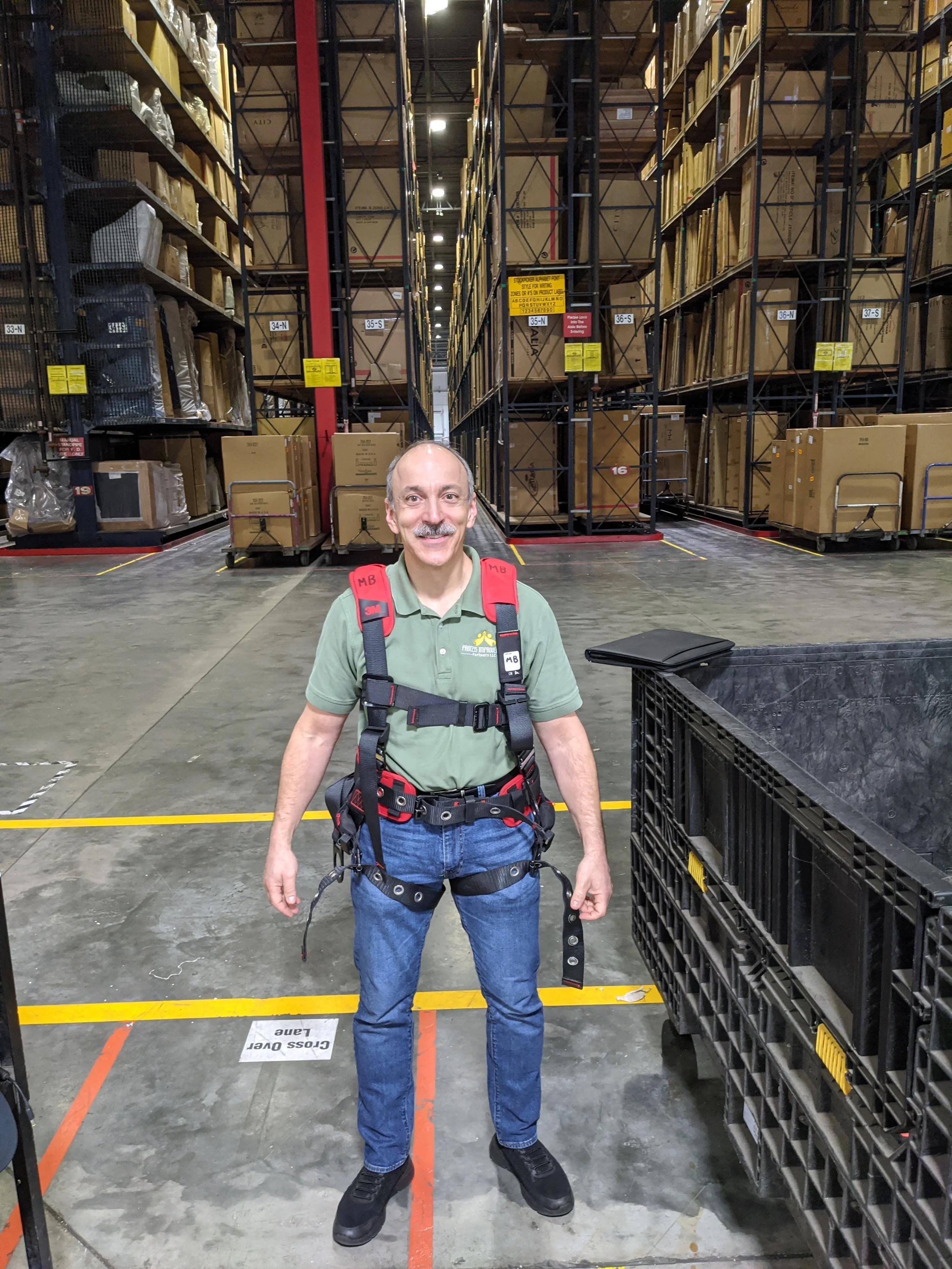
Next thing I knew, I was wearing a harness and vest, clipped into an “order picker,” a lift with a platform designed to retrieve furniture from towering racks.
Up and down we went, pulling product from the sky. At one point, 45 feet in the air, Andy turned to me and said, “I forgot to ask, are you afraid of heights?” I laughed and replied, “You picked a fine time to ask!”
We kept working, and I gained a deep appreciation for the skill, care, and judgment required in that role. It’s easy to underestimate the complexity when you're watching from the ground.
By the time I returned to the office, everyone had heard about the consultant in the air. They also knew I wasn’t there to sit on the sidelines. I was there to understand, serve, and support.
You can’t lead improvement from behind a desk. Real change starts when you walk the floor, get your hands dirty, and show people that their work matters.
The Ultimate Leadership Commitment
When I engage with new clients, I always gauge one thing up front: Do they have true Leadership Commitment? Without it, even the best Kaizen efforts will fizzle. With it, anything is possible and sustainable.
One example I’ll never forget came during a follow-up 5S Kaizen in a New Jersey manufacturing plant. Our first event had reduced tool and supply search time by 90% and lit a fire in the maintenance team.
Not everyone had been part of that first event. Some sat out to keep operations running and were skeptical their voices would be heard. But once they saw the results, they were eager to join round two.
We expanded to new areas: the electrical repair shop, outside storage, a mezzanine, even a pair of old shipping containers in the parking lot. Deep into “Sort” on Day one, we got word of a serious chemical upset in the plant. Our team leader, the Maintenance Manager, had to leave. I assumed the Kaizen would be put on hold.
But the leadership team made a bold decision. They would personally handle the crisis. They donned hazmat suits and tackled the environmental emergency so our team could stay focused on improvement. We got the Maintenance Manager back quickly.
It wasn’t easy for our team leader to stay on the sidelines. Normally, this was his job. But the plant leaders valued the Kaizen event enough to step in themselves.
Yes, we lost a team member here or there for the emergency effort. But by the end of the week, the crisis was under control, and our Kaizen team had cut “find time” by over 70%.
The biggest breakthrough was the clear alignment and support that the team received from their sponsors. They felt like they were working on something important and they were. I have no doubt that their results will live on and more employees will want to engage in similar work. They now know that their leaders have their backs.
Leadership isn’t just about solving problems—it’s about creating space for others to do their best work. When leaders show up for their people, their people show up for the work.
Conference Challenge Accepted
In the early days of my entrepreneurial journey, I ran a lot of experiments. The biggest? Seeing if people would actually pay for my Kaizen Ninja approach. Spoiler alert: they did.
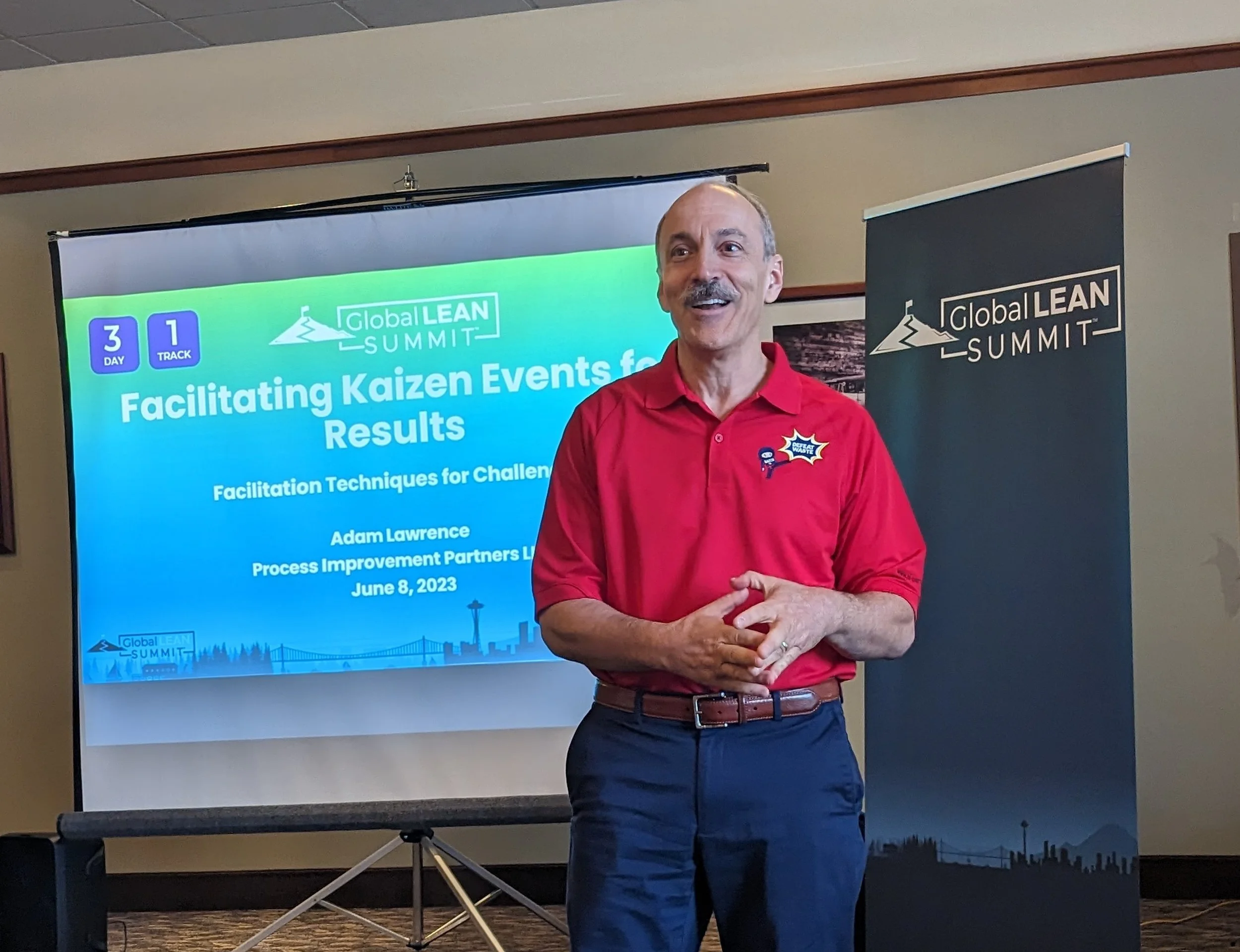
Once I had a small, but loyal client base, I wanted to grow. Then came the offer: speak at the Business Transformation & Operational Excellence Summit (BTOES) in Orlando.
I was skeptical. Why me? Was it legit? And how much would it cost?
I spoke with Jeff, one of the conference reps. He explained the audience, the platform, and the opportunity to sponsor. It came with a booth, a book signing, and two workshops. After some negotiation and soul searching, I signed up.
I talked to my marketing mentor. Her advice: “Don’t expect to get business by speaking. You’ll only be disappointed.” Challenge accepted.
I set three goals:
Have as much fun as possible.
Meet great people.
Land one new client.
I had no idea how to set up a booth, but I figured it out. I even brought dozens of Ninja squeeze toys to draw people in.
At a networking session, I met a guy with great energy. We hit it off instantly. When he asked what I did, I told him: “I get $!&% done!” He laughed and kept finding me throughout the conference.
That man was Ronald, the CEO of a hydrogen startup. By the end of the week, he told everyone I was going to help him. And I did. For the next year, I supported his growing company and built a great friendship along the way.
Opportunities don’t always knock, sometimes they whisper. Be bold enough to say yes, and prepared enough to follow through. That’s how doors open.

Pick Your Winning Team
I’ve told many stories from my time at Armstrong, especially about improving board flow in our Macon plant. This one’s about something less technical but equally vital: choosing the right team.
After years of helping improve various lines at Macon, leadership asked me to focus on their highest-demand line. I agreed on one condition: I wanted to hand-pick my team.
Their first response was, “Why? Can’t you just use a few operators and mechanics like you always do?”
I said, “Sure, but this time I want the best. No training, no convincing. Just execution. And we’ll need less downtime to make it happen.” They immediately said yes.
At the top of my list was Kevin. He was the most creative mechanic I’d ever worked with. He could build or fix just about anything. He wasn’t in that role anymore, but I convinced him to come out of “retirement” for this project.
We added two more top-tier mechanics, three experienced operators, and an operations manager I’d worked with before. That was our team.
Day one was spent reconnecting and joking about how I pulled Kevin back in. Then, we walked the line and laid out our plan: establish fixed “zero points,” align the equipment to those references, and lock everything down so it couldn’t drift.
Each equipment adjustment was done faster than expected. The team didn’t need to be sold. They were already bought in. And because the operations manager was on board, we had no roadblocks getting the downtime we needed.
I was amazed at how smooth it all went. Less oversight. Fewer obstacles. More results.
These days, I still love giving new people Kaizen opportunities. But when the stakes are high, I hand-pick the team. To this day, I encourage my sponsors to pick their winning team to tackle the most critical issues.
The Birth and Quiet Death of Definitions
The research and development team created a product that they thought would change the ceiling grid market. The bad news is that it was hard to produce and no one bought it. The good news is that it lead to future innovations that the market loved.
Early in my career, I was the Quality Assurance Manager at the Sparrows Point, Maryland ceiling grid plant. Grid is the metal framework that supports ceiling tiles, and it’s a product where precision matters. The slightest variation in length—thousandths of an inch—can keep the tiles from fitting correctly, especially in long ceiling runs like you’d find in airports or large office buildings.
Most of the time, ceiling grid is meant to disappear into the background. Our corporate team was working on a product they believed would change that—a grid that would intentionally stand out. The idea was to improve the aesthetics of the ceiling using a three-dimensional face.
The product was called “Definitions.” It was a plastic cap, molded into various profiles, designed to snap onto the face of the ceiling grid to give it a bold, new look. Marketing was confident they could sell millions of feet of it. Our plant was chosen to be the first to bring it to life.
There was a technical challenge. Ceiling grid is made of metal and produced in a continuous process—roll formed, pressed, and finished all in one line. The plastic cap couldn’t be added as part of that process. It would have to be applied in a separate, manual operation.
We cleared out a section of the plant and set it up as the Definitions production area. Because the white plastic cap was highly susceptible to dirt and grime—and our main lines used lubricants—we enclosed the area with plastic curtains to keep it isolated and clean. Finished grid would be brought over, the caps snapped on, with the final product packaged and stored in a dedicated warehouse area.
Our first attempts to attach the plastic caps were unsuccessful. It wouldn’t locate properly and stay on the grid. Eventually, we designed simple fixtures to help guide and secure the cap during the process. Once we figured that out, we developed standard operating procedures and set up a two-person team: one to place the caps in position on the grid, and the other to apply the pressure, using a special piece of equipment.
Even with the process in place, everything had to be almost perfect. The cap had to be placed with pinpoint accuracy, and its width had to match the grid within .002” (less than the width of a human hair) or it would pop off.
Progress was painfully slow. Contamination, inconsistency, tight tolerances, and poor productivity constantly worked against us. Producing Definitions took many times longer than making standard grid.
We produced 250,000 linear feet of the product. By the time we wrapped up the first run, every operator on the line made it clear—they didn’t want to do it again. It was just too tedious, too frustrating, and too slow.
The product sat in our warehouse for years. If anyone ever bought a box, I don’t remember it. Feedback from installers was brutal: the caps were too delicate, required gloves to handle, and slowed them down so much that using it actually lost them money.
While Definitions itself was a failure, it sparked a line of thinking that led to real innovation. The idea of a dimensional grid look lived on—and eventually, we developed new products that achieved a similar aesthetic directly on the main manufacturing lines. Those products were far easier to make, faster to install, and went on to become successful alternatives to standard grid. They’re still sold today.

Working Like a Business Owner
During our benchmarking tour of our European plants, we met hourly operators who were so engaged in their work that they had process understanding that rivaled one of our highest level scientists. And, they wanted to know more!
During my career at Armstrong World Industries, I had the opportunity to travel across the U.S. and to many places around the world. I met impressive people everywhere, but the team I met in Team Valley, UK still stands out as some of the most invested employees I’ve ever encountered.
I was part of a four-person team visiting several of our European manufacturing plants to benchmark best practices and bring ideas back to our local manufacturing plants. The group included the industrial engineering manager, the capital engineering manager, a project engineer, and me.
As we visited plants across Germany and the Netherlands, we saw great examples of things we could adopt back home. We had some fun adventures, met interesting people, and saw some incredible sights.
Our final stop was the ceiling tile plant in Team Valley UK, which had a reputation for best-in-class performance, strong leadership, and a highly engaged workforce.
As we walked the plant floor in the morning, it was immediately obvious why the plant ran so well. Everyone was actively working to keep things running smoothly, following standard work, and using simple, effective tools to maintain operations. Operators and mechanics weren’t just doing their jobs—they were fully involved in improving them.
In the afternoon, we sat in on a technical review by the company’s leading dryer scientist. The room was full, and the discussion dove deep into the science of curing ceiling tiles. I was completely lost in the technical details—and I would’ve dozed if not for the energy in the room.
What kept it alive was the engagement. The most insightful, animated questions were coming from hourly operators. They weren’t there just to listen—they were trying to understand every detail so they could run their lines better. At one point, the scientist even told them, “You all understand this better than I do.” I don’t know if it was true, but it sure felt like it.
It was clear the leadership had built a culture where people truly cared. Not just about doing their jobs, but about understanding why things worked the way they did. Everyone from hourly operators to engineers was fully invested in the success of the plant.
That experience solidified something for me: the way we lead directly shapes the culture and performance of an organization. It’s not a new concept, but seeing it in action left a lasting impression. It still influences how I approach leadership and team engagement today.

Butt Ugly by Friday
Kaizen is messy. It should be so accessible that anyone can do it. So, I use a phrase that I was taught many years ago, to make it okay to try and fail and learn quickly. The phrase? Butt Ugly by Friday!
I’ve collected a lot of sayings over the years I use during Kaizen events. Some are pretty familiar, like “Go to Gemba” or “Don’t let best get in the way of better.” But the one that seems to get the most attention and sticks with teams long after the event is: “Butt Ugly by Friday.”
Let me explain what it means and where it came from.
Kaizen events I facilitate run for a week or less, typically wrapping up on a Friday. By the end of the week, the team reports out to an audience and gets to show off the changes and improvements they’ve made. The challenge of Kaizen is: teams usually have more ideas than time. They want to improve many things, but they can easily get bogged down trying to make each one change perfect.
Years ago, I was facilitating a Kaizen in Pensacola, Florida. One of the teams was stuck on the same problem for two or three days. During a check-in with the local Lean manager, I mentioned the issue. His response changed the way I coach teams to this day.
“Adam,” he said, “you’ve got to tell them to get it Butt Ugly by Friday. That’s what we always say at the plant. It helps shift the mindset from perfection to progress. It doesn’t have to look pretty; it just has to work.”
I took his advice and helped the team move forward, even though their solution wasn’t perfect. It still made things better. Kaizen isn’t about perfection. It’s about improvement.
I use the term “Butt Ugly by Friday” in my introductory training with Kaizen teams on Day 1. It sets the tone right from the beginning. We’re not chasing perfect. We’re chasing better, safer, smarter, and faster. It gives teams permission to try things, test quickly, and learn fast. By the end of the week, team members remind me that they have improved things and made them “Butt Ugly by Friday.”
The phrase is simple, silly, memorable, and effective. People feel comfortable experimenting and are willing to fail quickly. Instead of waiting until the end of the week to find out if something works, they find out now.
Continuous improvement should be so simple and accessible that anyone can do it. More importantly, they actually want to. That’s how to build a culture where improvement can happen anytime, anywhere, from anybody.
An Incorrect Measure of Success
I used to think customer acquisition was the most difficult and challenging aspect of my business. Once I realized customer retention is top priority, it changed my perspective and approach.
As a small business owner, customer acquisition is my biggest challenge. How do I make sure people can find me, understand what I do, and see how my services could help them?
In the early days of running my own business, I was thrilled to have clients who were willing to pay me to help them improve their business processes. I’d meet them at their facility, map out improvement opportunities, and aim to secure a paying engagement.
Sometimes, I’d get the purchase order. Other times, I wouldn’t. It was all on me. If I could paint a clear picture of how I could help, and it resonated with their needs, I’d land the job. If I couldn’t make that connection, the opportunity slipped away.
When I did win the business, I was ecstatic. It felt like a validation. People valued what I brought to the table. And if I did a good job on that first engagement, surely more work would follow. It didn’t always work that way.
I can still remember an engagement with a steel slag producer. Steel slag is the waste product from steel mills, repurposed for things like roadbeds and other construction uses. I facilitated a value stream mapping session to support their strategic planning process.
The team was extremely engaged. My sponsors seemed satisfied with the outcome. Although there were some challenging moments during the week, I thought we’d worked through them together and ended with a great result.
Surely, they’d bring me back. But they didn’t. I followed up multiple times—emails, phone calls, check-ins but got little to no response. The crickets were chirping.
That’s when I realized that acquisition is not the objective. Customer retention is the true measure of success. When you can align your approach to the needs of your client and design to fit their needs and not yours, there is a much better chance for continued collaboration.
Over the years, I’ve had my fair share of “one and done” clients. And while I’m grateful for those opportunities—and I’d like to think I helped them in a meaningful way—they’ve been some of my greatest learning moments.
Fortunately, I’ve also developed a few long-term client relationships. These are the ones where there’s alignment in approach, trust in the process, and a shared belief in the power of continuous improvement. These partnerships are where the real magic happens.
At the end of the day, quality beats quantity. If you focus on alignment, collaboration, and shared outcomes, you won’t just win business, you’ll build something that lasts.

Shining Like a Star
Kaizen events can be life-changing for team members. This is the story of Steve, who grew so much during the week that his co-workers almost didn’t recognize him.
I love facilitating Kaizen events. They can be life-changing. Some team members grow so much over the course of a single week, it’s hard to believe they're the same person by Friday. This is the story of one such transformation, a moment that left people amazed.
Our team was working on a critical issue in the maintenance shop and support areas. It took over 20 minutes to find the parts, tools, or equipment needed for a repair. That might not sound like much, but when a maintenance technician has to go back and forth seven times for different tools or parts, the time adds up fast. It has a direct impact on equipment downtime.
We chartered and scoped the event to cover the inside maintenance shop, an upstairs storage area, a heavy-duty outdoor rack, and a shipping container (about 50 feet long) sitting on the pavement behind another building. Along with improving safety, our goal was to reduce "find time" by at least 75%, with a goal of 5 minutes or less.
The team consisted of four hourly maintenance technicians, their leader, my sponsor, an engineer, a maintenance planner, and the HR leader.
We kicked off bright and early at 6 a.m. Monday, which was the team’s normal shift start. They were quiet, skeptical, and clearly not ready for what was about to happen. I brought the energy, and a few of them perked up a bit during our Lean and 5S overview. We would be utilizing 5S (Sort, Set in Order, Shine, Standardize, Sustain) as the approach to meet our goals.
During our Gemba walk, everyone was jotting down ideas on Post-its. The spaces were packed with clutter. I could already tell we’d hit our goals easily, but the team wasn’t so sure—they were still stuck in their current state mindset.
When we walked out to the shipping container, I noticed Steve, one of the mechanics and a big, strong guy, writing furiously.
Me: “Steve, looks like you’ve got a lot to say about this container. What’s on your mind?”
Steve: “Adam, I’m in here all the time—sometimes at night, in the rain. Look at me—I sweat just walking in during summer. And it’s pitch black at night. I can’t see anything.”
Me: “What are you usually looking for?”
Steve: “PVC parts. There are thousands of them. They’re all mixed up. Sometimes it takes me hours to find what I need.”
He wasn’t exaggerating. Some of these parts were barely an inch long, mixed in boxes with all kinds of unrelated items. I wasn’t sure why they were even stored outside, but I hoped we could fix that.
After our walk, we got together to share improvement ideas. Our first step was Sort. We broke the team into three groups: one for the shop, one for the upstairs storage area, and one for the shipping container.
I volunteered for container duty. Most folks were happy to avoid it. The weather was cold but clear. The engineer joined me, and we got direction from Steve and the maintenance lead on what to toss and what had to be kept.
We filled two dumpsters with obsolete filters. It turns out a vendor handled all filter replacements now with their products. This was an easy win.
Next, we tackled the PVC parts. We loaded them onto carts and brought them inside. It was a job that took the remainder of Day 1 and part of Day 2.
Steve couldn’t believe we were actually following through on this. He started to envision a setup with labeled bins in the upstairs storage area. That night, he volunteered to present our progress update. When he stood up in front of the group, jaws dropped.
Apparently, Steve never spoke in meetings or even said much to his coworkers. He was friendly and hardworking, but mostly kept to himself. No one remembered him speaking in front of a group during his time at the plant.
The rest of the week, the transformation continued. Steve was laughing, cracking jokes, and fully engaged in every discussion. He found his spark.
By Friday, the container had been repurposed for outdoor equipment. Signage was clear and easy to follow. All the PVC parts were inside, organized, and labeled in bins. We did a test with six people who didn’t know the space, and their average "find time" was under three minutes.
During our final report-out, Steve shared what the changes meant to him. “I don’t have to go out in the dark, in bad weather, and dig around. I know exactly where everything is now. We need to do this in other places, too.”
Steve and the rest of his team will never look at clutter or wasted time the same way again. His growth didn’t just help the team, it made a difference for him personally. And that’s what Kaizen should be all about.
Value for the Customer
After many years, I was able to influence my number one client to take their Gemba walk to the next level of performance. When the hourly production operator stood up and gave his perspective, it changed the mind set of the leadership team.
I’ve been helping a leading consumer brand company through their Lean journey since I started my business over six years ago. These days, they’re mostly independent. They don’t call me unless the topic is complex, strategic, or I help them see a major opportunity they hadn’t noticed.
About a year into their journey, they rolled out daily Gemba walks, which they call "Board Walks." These walks got leaders out of their offices, connecting with the people doing the work, surfacing issues, and strengthening engagement and alignment across the organization.
For a few years, these Board Walks looked the same across every location: a group of managers would visit a manufacturing line, listen to an operator or mechanic report on the past 24 hours, ask a few questions, and move on to the next area. It was a start, but something critical seemed to be missing.
I spoke to contacts at several locations about the current state of their Board Walks and what the next level could look like. One local contact told me his plant manager didn’t want to change anything, he was happy with the results and approach.
But another contact, who I’d worked closely with before, called to share his frustration. He knew they had made progress but couldn’t seem to reach the next level of performance.
We talked about the Board Walks and confirmed they hadn’t changed since they started. I suggested we run a Kaizen event focused on making those walks more effective, with the goal of improving safety and productivity.
He was intrigued. I told him I’d seen this work before at an Armstrong plant, where we’d redesigned the Gemba walks to serve our true customers: hourly production operators and mechanics. It resulted in an immediate improvement to safety and productivity.
It took nearly a year of conversations to gain enough momentum and alignment. Eventually, we got support for the Kaizen and invited representatives from four plants, with the intent that they’d take the results back home.
We kicked things off early Tuesday morning. Everyone aligned on the charter and objectives. I had hoped for more hourly participation, but we had one production operator and one maintenance technician on the team. Luckily, they were well chosen.
At 8 a.m., we joined the daily Board Walk and took notes. Everyone was scribbling on Post-its, so I expected a decent mix of observations.
Back in the meeting room, the team shared their ideas. There were plenty of suggestions, but something was missing. It didn’t feel like we had touched the core issue of customer value and engagement. I pivoted and started asking more pointed questions.
I asked, “Who is the Board Walk for?”
The manufacturing manager quickly responded, “It’s for the operators and mechanics, of course.”
Then the operator on our team spoke up. “For us? I always thought it was for management. The Board Walk does nothing for me.” That was the turning point. There were many shocked team members in the room.
We created a Current State Value Stream Map of the Board Walk, identifying every step and evaluating which ones added value from the operator’s perspective. The results were clear and painful. None of the steps provided value for the actual frontline team members.
That created a realization that the Board Walk had to be redesigned to deliver true value to the customers. Now, it became apparent what the improvement priorities would be. Any changes must improve the customer experience.
The team selected three areas to focus on: the agenda, the ground rules, and the follow-up process. During the week, they trialed these changes on one production line.
The biggest shifts in design were:
1. A smaller, dedicated group focused on that area.
2. The discussion shifted to what needed to happen in the next 24 hours, not just rehashing the past.
3. Critical issues that came up would receive rapid follow-up and clear feedback.
The results were immediate. Operators felt heard. Managers were more focused. The Board Walks started to serve their true customer. Alignment and engagement skyrocketed.
Two months later, the new process had been rolled out to every line in the host plant. And at least one of the visiting sites took it back and implemented it with similar success.
This is the kind of transformation that happens when we pause to ask the right question and are willing to listen to the answer.

Does Continuous Improvement Work Have to Be Industry-Specific? You Decide.
I often meet people who are interested in the work I do, and sometimes, these conversations turn into future business opportunities. One statement I hear quite frequently goes something like this: “I see you’ve made great strides working with manufacturers in [insert industry here]. But we’re different, so I want to know what experience you have in my industry.”
I often meet people who are interested in the work I do, and sometimes, these conversations turn into future business opportunities. One statement I hear quite frequently goes something like this: “I see you’ve made great strides working with manufacturers in [insert industry here]. But we’re different, so I want to know what experience you have in my industry.”
Most of the time, I have to tell them that I don’t have direct experience in their industry. I know that’s not the answer they’re hoping for, so I explain that many of the principles I use are applicable across industries and situations.
The first principle I rely on is that people want to win. If there’s a problem affecting them, they want to solve it—they don’t want to be adversely impacted by it. I tap into this natural desire to win and facilitate the team toward success by engaging them and building a team-based approach to problem-solving.
All the work I do before, during, and after Kaizen events is designed to set teams up for success. I create plans tailored to tackle the specific challenges they’re facing. I also design activities and experiences that allow team members to participate, share their ideas, and take ownership of the solutions. To me, that’s the essence of winning.
Another principle I follow is that all industries involve processes that require people. As long as the team can map out the processes they’re working with and identify the waste, they have the potential to make meaningful changes. My job is to help them spot that waste and equip them with the tools and techniques to reduce or eliminate it.
My third principle is that people will always rise to the expectations we set for them. Throughout my Kaizen events, I aim to set the bar as high as possible for the team, and they almost always meet or exceed those expectations. When they do, I raise the bar even higher, and, unsurprisingly, they rise to the occasion once again.
There are many other principles I use, but in my experience, these three are enough to allow me to work effectively in any industry—no matter the complexity or my prior experience with it.
I’ll admit that I’ve missed some opportunities to help prospects just because I haven’t worked in their specific industry. But I also believe they’ve missed out on the chance to work with me and see how I could help their teams solve critical business problems in a sustainable way.
My best advice to anyone considering hiring outside help to solve critical business problems is this: rather than focusing solely on past experience, consider the approach. Make sure it fits with—and enhances—your people engagement goals and leadership style.

Know Your Niche
As a Kaizen Ninja, I like to believe I can help any team solve any problem. Maybe I can, maybe I can’t—but believing it was causing me to dilute my message to my target audience. Let’s face it: no one believes you can be all things to all people.
As a Kaizen Ninja, I like to believe I can help any team solve any problem. Maybe I can, maybe I can’t—but believing it was causing me to dilute my message to my target audience. Let’s face it: no one believes you can be all things to all people.
While I’ve helped businesses across many industries tackle a variety of problems, my message wasn’t resonating with the people I truly wanted to reach. It wasn’t until I came across The One Page Marketing Plan by Allan Dib that I realized the issue. Dib makes a compelling case for knowing your niche and target market. Without that clarity, it’s impossible to craft a message that will attract the right people.
I had to dig deep and figure out who I really wanted to help. It didn’t take long to land on an answer that, in hindsight, should have been obvious: I was built to help manufacturing companies.
But not just any manufacturing companies. Running a Kaizen event requires team members to dedicate 100% of their time and energy to solving a critical business problem in a sustainable way. For smaller companies, pulling key people off their regular jobs for several days can be a dealbreaker. The business might grind to a halt.
The sweet spot? Manufacturing companies with at least 50 employees. These companies typically have enough resources to pull six or more people from their daily roles without shutting everything down. With proper planning, resources can be covered through overtime or other adjustments, making it feasible for the team to focus entirely on the Kaizen process.
This realization was a game-changer. While I’ve facilitated successful Kaizen events in non-manufacturing settings, the immediate, tangible results from manufacturing events are hard to beat. On the factory floor, you can literally see the impact:
Lines run more smoothly.
Tasks require less effort.
Employee feedback is positive and immediate.
There’s something uniquely gratifying about helping people in ways they can see and feel right away. That’s why I’ve honed my focus on manufacturing companies with more than 50 employees. When I visit, I can provide clear, specific examples of where I can help and the results they can expect using my Kaizen approach:
Safety risks reduced by more than 50%.
Changeover times cut by more than 50%.
Productivity increased by at least 5%.
Costs reduced.
Quality and customer satisfaction improved.
Even better, I can share real success stories from other manufacturing teams and show how I use the Wheel of Sustainability to ensure those results last.
From time to time, I still get inquiries from non-manufacturing prospects. I’m happy to help them if there’s a good fit, but they’re no longer my target audience. I don’t actively market to them or invest extra effort trying to get their attention.
This approach has made me more focused and intentional, and for that, I’m incredibly grateful to Allan Dib and his team. Their insights helped me find—and fully embrace—my niche.