
Kaizen Success Stories
Real Manufacturing Results. One Kaizen at a Time
Explore real-world Kaizen success stories showing how manufacturing teams solved critical problems, improved performance, and created sustainable results.

When the Work Speaks for You
How years of consistent Kaizen work turned into unexpected recognition and new opportunity.
Kaizen Snapshot
Setting: Global Lean Summit at Indiana University
Challenge: Sustaining Kaizen momentum at scale
Stakes: Culture, credibility, and long-term capability
Approach: Hands-on Kaizen facilitation, leader development, culture building
Outcome: Public CEO endorsement, new relationships, expanded opportunities
Key Lesson: Consistent results build credibility and credibility opens doors
The Situation
At the 2025 Global Lean Summit, I was scheduled to deliver five workshops over two days. That alone made it a memorable event.
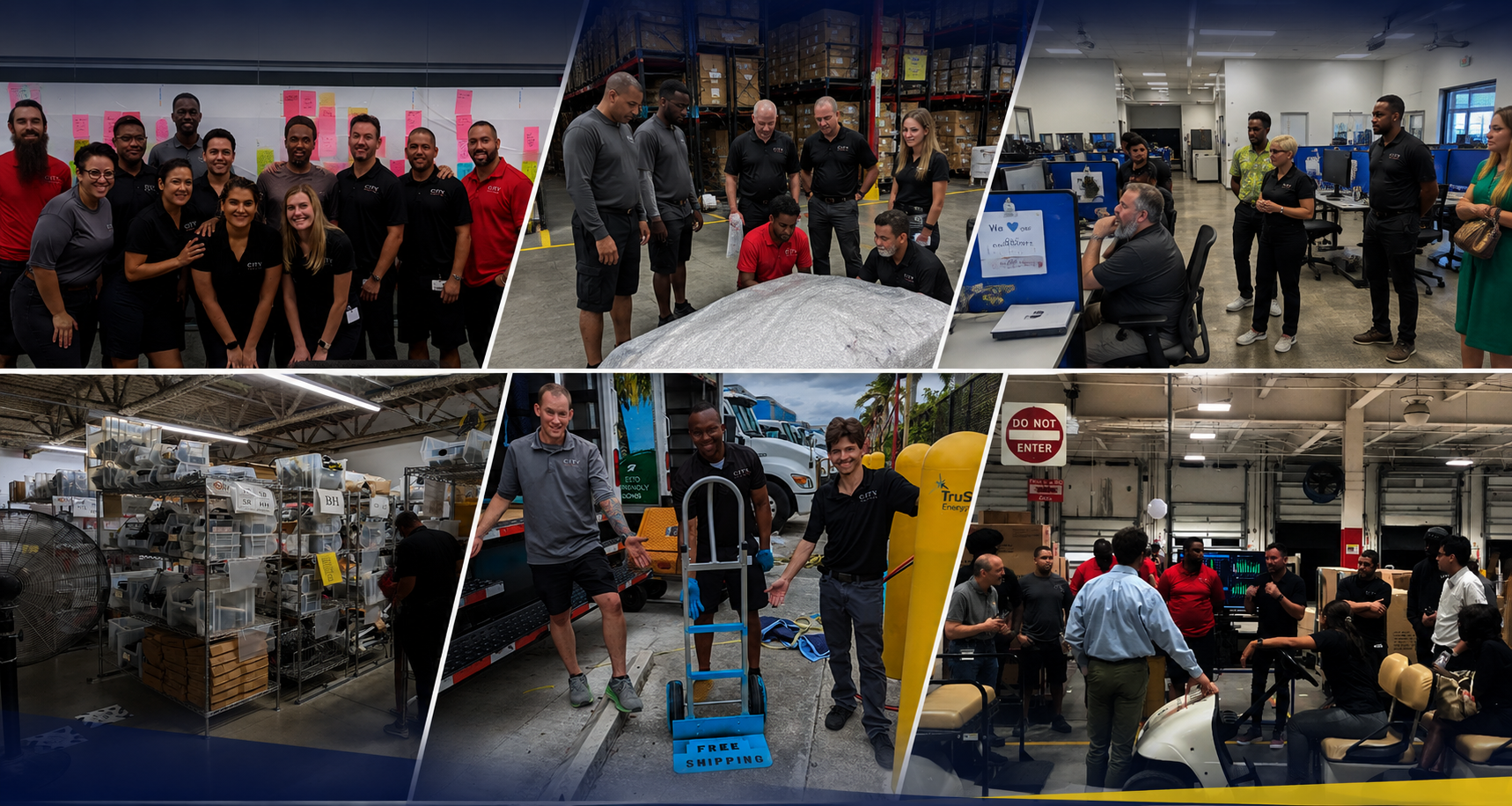
What made it even more meaningful was learning that Andrew Koenig, CEO of CITY Furniture, would also be speaking. I had worked closely with Andrew and his team for two years, helping them re-energize their Kaizen culture and build internal capability.
I reached out and let him know I’d be tracking him down when he arrived. He was happy to reconnect.
We finally met early on the final conference day at my booth.
What Happened Next
After catching up and sharing recent adventures, Andrew looked at me and said something I didn’t expect:
“Adam, you’ve done so much for us. What can I do for you?”
Honestly, I hadn’t thought about that. I felt he had already given me plenty through the opportunity to work with his organization.
Still, a few thoughts crossed my mind:
It would be nice to be acknowledged as part of CITY Furniture’s Lean journey
Introductions to leaders he thought I could help would mean a lot
And maybe, just maybe, he’d wear the Kaizen Ninja socks I hand out
He smiled and said he’d do what he could.
The Moment I Didn’t See Coming
When Andrew took the stage later that morning, he began telling the story of CITY Furniture’s Lean journey.
Early in his talk, he shared how we met and how my work helped re-energize their Kaizen culture.
Later, he spoke again about the role I played in building their long-term Kaizen strategy.
Then he asked me to stand.
“Adam became part of how we grew our Kaizen capability not just our events.”
The response from the audience was immediate. After the talk, leaders came up to me wanting to understand my perspective, my approach, and how I supported CITY Furniture’s transformation.
Andrew’s words carried weight. Far more than anything I could have said myself.
What Changed
Later that day, Andrew came over, gave me a hug, and invited me to attend the CITY Furniture vendor conference.
I hadn’t been a vendor for more than two years. But I knew I needed to go, if for no other reason than to reconnect with the Kaizen team members and see how they were doing.
The conference itself was outstanding. But the real impact was something else entirely.
The Takeaway
When you do good work, consistently, respectfully, and with the long view in mind, others will tell your story for you.
Credibility isn’t built through self-promotion. It’s built through results.
Why This Matters
Leaders are flooded with claims and credentials.
What cuts through the noise is proof, especially when it comes from someone they trust.
Sustainable Kaizen cultures grow when results speak louder than words.
Want Results Like This?
If you’re looking to build Kaizen capability that leaders stand behind. Not just events that check a box:
Why Great Kaizen Starts Before the Event
How one frustrated engineer reshaped the way I prepare leaders for successful Kaizen.
Kaizen Snapshot
Setting: Armstrong World Industries Technology Group
Challenge: Poorly defined Kaizen charters wasting time and energy
Stakes: Misaligned priorities, weak engagement, limited business impact
Approach: Clear standards, disciplined gatekeeping, simplified chartering
Outcome: Stronger business cases, better-aligned teams, higher-impact Kaizen
Key Lesson: If the problem isn’t clear, the Kaizen won’t be either
The Situation
During my final six years as Global Lean Champion for Armstrong’s Technology group, I encouraged leaders to sponsor Kaizen events to solve critical business problems.
One requirement never changed: every Kaizen needed a charter.
The charter wasn’t bureaucracy. It was how we ensured:
The right problem was being solved
Leaders were aligned
The work justified pulling people away from their daily jobs
As momentum grew, more leaders reached out for support. As the gatekeeper for Kaizen events, I reviewed every charter before an event was approved.
That’s when I met Stan.
What Was Getting in the Way
Stan was an experienced engineer who wanted to run a Kaizen in his area. We talked through what he hoped to accomplish, and I shared the standard charter template.
I asked him to complete it before our next meeting.
Three days later, he hadn’t.
“I just want to make sure you understand what I’m trying to do.”
I explained why the charter mattered. It forces clarity, alignment, and commitment.
Stan tried again.
And again.
And again.
After more than a dozen iterations, a pattern became clear.
What We Discovered
Stan wasn’t struggling with the template.
He was struggling with the why.
The charter never articulated a compelling business case. It sounded less like a Kaizen event and more like a request for people to do his work for him.
I told him I couldn’t approve the event.
He wasn’t satisfied, so we met with his sponsor to see if we could clarify the value together.
We couldn’t.
The event never happened.
What Changed (for Me)
There’s a risk in being strict about Kaizen charters. But I owed it to the organization to protect people’s time and energy.
More importantly, I realized something uncomfortable:
Chartering wasn’t as easy as I thought it was.
So I changed my approach.
The Improvements I Made
I did two things that changed everything:
Simplified the process
I created a clear, four-step approach called Chartering to Win, with explicit intent and critical questions for each step.Took ownership of the starting point
Instead of asking leaders to start from a blank page, I began drafting a first version of the charter with them.
It’s far easier to edit than to create from scratch.
The Takeaway
Strong Kaizen events don’t fail in the room.
They fail before they ever start when the problem isn’t clear and the purpose isn’t compelling.
Today, I use the same Chartering to Win approach with my clients, and I teach leaders how to do it themselves.
And I owe that lesson to Stan.
Why This Matters
Too many organizations jump into Kaizen because it feels productive, not because it’s focused.
Clear chartering protects people’s time, builds alignment, and dramatically increases the odds that improvement will stick.
Want Better Kaizen Outcomes?
If your Kaizen efforts feel busy but not impactful, the problem may not be execution — it may be chartering.

My First Kaizen Event as a Consultant
The early lesson that reshaped how I scope, support, and design Kaizen events.
Kaizen Snapshot
Setting: Large consumer brands manufacturing facility
Challenge: Running multiple Value Stream Mapping efforts simultaneously
Stakes: Event effectiveness, team engagement, credibility
Approach: Internal facilitator development, real-time course correction
Outcome: Successful event and a permanent change in approach
Key Lesson: If you can’t properly support the work, it’s been scoped wrong
The Situation
When I left my corporate role, I was fortunate to land a contract facilitating a company’s first Value Stream Mapping event.
The challenge was scale.
Instead of one value stream, the plant had three independent value streams, each operating differently.
In my corporate role, this would have meant multiple experienced facilitators.
As a new consultant, I had one. Me.
The Plan
I proposed a hybrid approach:
I would facilitate one value stream
I would train two internal leaders, Ken and David, to facilitate the others
Ken had some facilitation experience.
David had none but he had curiosity and commitment.
We prepared extensively. I spent weeks coaching them through the Value Stream Mapping process.
I felt ready.
What Actually Happened
The kickoff included more than 50 participants. After alignment and logistics, we split into teams and went to Gemba.
That’s when reality hit.
While all teams were walking the process, I had no visibility into how the other two were doing.
After my team’s walk, I rotated.
One team was stuck.
One team was doing fine.
I helped where I could.
The Wake-Up Call
When I returned to my own team, more than 40 minutes had passed.
They were waiting.
Without guidance, momentum stalled. Not because they lacked capability, but because I wasn’t there.
The event ultimately succeeded. But the lesson was clear.
The Takeaway
If the work can’t be properly supported, it’s been scoped incorrectly.
From that point on, Value Stream Mapping events were run one value stream at a time, whether I was involved or not.
That lesson still shapes how I design Kaizen today.
Why This Matters
Good intentions don’t guarantee good outcomes.
Clear scoping protects teams, credibility, and results.
Want Kaizen That’s Designed to Succeed?
If your improvement efforts feel stretched or diluted, the issue may not be execution, it may be design.