
Kaizen Success Stories
Real Manufacturing Results. One Kaizen at a Time
Explore real-world Kaizen success stories showing how manufacturing teams solved critical problems, improved performance, and created sustainable results.
Why Great Kaizen Starts Before the Event
How one frustrated engineer reshaped the way I prepare leaders for successful Kaizen.
Kaizen Snapshot
Setting: Armstrong World Industries Technology Group
Challenge: Poorly defined Kaizen charters wasting time and energy
Stakes: Misaligned priorities, weak engagement, limited business impact
Approach: Clear standards, disciplined gatekeeping, simplified chartering
Outcome: Stronger business cases, better-aligned teams, higher-impact Kaizen
Key Lesson: If the problem isn’t clear, the Kaizen won’t be either
The Situation
During my final six years as Global Lean Champion for Armstrong’s Technology group, I encouraged leaders to sponsor Kaizen events to solve critical business problems.
One requirement never changed: every Kaizen needed a charter.
The charter wasn’t bureaucracy. It was how we ensured:
The right problem was being solved
Leaders were aligned
The work justified pulling people away from their daily jobs
As momentum grew, more leaders reached out for support. As the gatekeeper for Kaizen events, I reviewed every charter before an event was approved.
That’s when I met Stan.
What Was Getting in the Way
Stan was an experienced engineer who wanted to run a Kaizen in his area. We talked through what he hoped to accomplish, and I shared the standard charter template.
I asked him to complete it before our next meeting.
Three days later, he hadn’t.
“I just want to make sure you understand what I’m trying to do.”
I explained why the charter mattered. It forces clarity, alignment, and commitment.
Stan tried again.
And again.
And again.
After more than a dozen iterations, a pattern became clear.
What We Discovered
Stan wasn’t struggling with the template.
He was struggling with the why.
The charter never articulated a compelling business case. It sounded less like a Kaizen event and more like a request for people to do his work for him.
I told him I couldn’t approve the event.
He wasn’t satisfied, so we met with his sponsor to see if we could clarify the value together.
We couldn’t.
The event never happened.
What Changed (for Me)
There’s a risk in being strict about Kaizen charters. But I owed it to the organization to protect people’s time and energy.
More importantly, I realized something uncomfortable:
Chartering wasn’t as easy as I thought it was.
So I changed my approach.
The Improvements I Made
I did two things that changed everything:
Simplified the process
I created a clear, four-step approach called Chartering to Win, with explicit intent and critical questions for each step.Took ownership of the starting point
Instead of asking leaders to start from a blank page, I began drafting a first version of the charter with them.
It’s far easier to edit than to create from scratch.
The Takeaway
Strong Kaizen events don’t fail in the room.
They fail before they ever start when the problem isn’t clear and the purpose isn’t compelling.
Today, I use the same Chartering to Win approach with my clients, and I teach leaders how to do it themselves.
And I owe that lesson to Stan.
Why This Matters
Too many organizations jump into Kaizen because it feels productive, not because it’s focused.
Clear chartering protects people’s time, builds alignment, and dramatically increases the odds that improvement will stick.
Want Better Kaizen Outcomes?
If your Kaizen efforts feel busy but not impactful, the problem may not be execution — it may be chartering.

Don't Go Down the Rabbit Hole
How a tough day on the plant floor reshaped my understanding of leadership, focus, and trust.
Kaizen Snapshot
Setting: Armstrong World Industries – St. Helens, Oregon plant
Challenge: Multiple simultaneous operational issues overwhelming leadership
Stakes: Safety, uptime, morale, and credibility
Approach: Prioritization, delegation, team ownership
Outcome: Clear focus, aligned action, stronger leadership discipline
Key Lesson: You don’t win by fixing everything. You win by fixing the right thing
The Situation
One thing you learn quickly in manufacturing is this:
Even when things are going well, there’s no guarantee they’ll stay that way.
People, processes, equipment, weather, raw materials, any one of them can tip a good day into a bad one.
At the St. Helens ceiling tile plant, we were in the middle of one of those weeks. Equipment downtime was high. Safety concerns were surfacing. People issues were piling up.
As Operations Manager, I felt responsible for all of it.
What Was Getting in the Way
I approached the situation the way many engineers do, by trying to solve every problem at once.
I believed:
Every issue mattered equally
I needed to stay on top of everything
Speed meant touching everything personally
In our morning review meeting, I rattled off dozens of problems.
What I didn’t have was a clear direction.
The Moment That Changed Everything
As I started diving deep into a relatively small issue, one that wasn’t driving major loss, Olivia, our plant manager, stepped in.
“Adam, stop worrying about all the little details.
Let’s focus on the key problem, build the plan, and execute it.
Then we’ll move on to the next.”
It was obvious. And I had completely missed it.
What Changed
Olivia had the team identify the top three problems for the day.
Then she did something even more important. She had them self-assign ownership.
Suddenly:
Focus replaced overwhelm
The team leaned in
Progress accelerated
I took one of the assignments myself and learned more about leadership that day than I had in months.
The Takeaway
Trying to fix everything is a fast way to fix nothing.
Strong leaders create focus, trust their teams, and resist the pull to dive into every detail.
Why This Matters
When leaders chase every problem, teams hesitate.
When leaders create clarity, teams act.
Focus isn’t avoidance, it’s discipline.
Ready to Build Focused Improvement?
If your organization feels overwhelmed by competing priorities, Kaizen may not be the problem, focus might be.

Squarely in the Middle of the Action
How asking a better question and slowing things down unlocked a stubborn reliability problem.
Kaizen Snapshot
Setting: Armstrong World Industries’ Pensacola ceiling tile plant
Challenge: Inconsistent board squareness affecting downstream processes
Stakes: Reliability, quality, and future changeover success
Approach: Observation, cross-functional collaboration, high-speed analysis
Outcome: Root causes identified and eliminated, lasting reliability gains
Key Lesson: Some problems aren’t solvable until you ask the right question
The Situation
During my corporate career at Armstrong, I was known as someone who would do whatever it took to help the team win.
In the late 1990s, we were reconfiguring the Pensacola plant to dramatically expand the range of ceiling tile sizes and shapes we could produce.
That meant one thing: far more changeovers.
Before we could make changeovers fast, we had to make the process reliable.
What Was Getting in the Way
After the dryer, large ceiling boards were cut down to size by a massive panel saw. We called it the Dry Saw.
I noticed something subtle but concerning.
The boards appeared to enter and exit the saw at a slight angle. That small misalignment was enough to create downstream quality problems and it was happening consistently.
Bob, a highly experienced engineer, was scheduled to rebuild the saw. I shared what I was seeing.
At first, he was skeptical. Then he looked and saw it too.
Going Where the Problem Lived
We locked out the saw and climbed onto the table.
We raised the blades and lay directly beneath them, close enough that I could see the teeth inches above my face. Nothing obvious appeared out of square.
Then Bob had an idea.
“What if we use high-speed cameras and slow everything down?”
At the time, this was cutting-edge technology.
We rented the equipment, set up cameras at critical points, and recorded the process.
What We Learned
When we slowed the footage down, three issues became obvious:
The pusher bar feeding the first saw was slightly misaligned
The conveyor chains feeding the second saw weren’t square
The saw shaft slipped slightly with each full rotation
None of this was visible at full speed.
What Changed
All three issues were corrected during the next maintenance downday.
Immediately:
Boards ran square
Downstream processes stabilized
Changeovers became predictable
Bob designed the fixes into the rebuild and added preventative maintenance to keep it that way.
The Takeaway
Until we slowed the process down, we were guessing.
Once we asked a better question, the answer became obvious.
Why This Matters
Many reliability problems persist not because teams lack skill, but because they haven’t found the right way to see the problem.
The right question changes everything.
Want More Predictable Changeovers?
If reliability issues are undermining your improvement efforts, it may be time to look at the problem differently.

My First Kaizen Event as a Consultant
The early lesson that reshaped how I scope, support, and design Kaizen events.
Kaizen Snapshot
Setting: Large consumer brands manufacturing facility
Challenge: Running multiple Value Stream Mapping efforts simultaneously
Stakes: Event effectiveness, team engagement, credibility
Approach: Internal facilitator development, real-time course correction
Outcome: Successful event and a permanent change in approach
Key Lesson: If you can’t properly support the work, it’s been scoped wrong
The Situation
When I left my corporate role, I was fortunate to land a contract facilitating a company’s first Value Stream Mapping event.
The challenge was scale.
Instead of one value stream, the plant had three independent value streams, each operating differently.
In my corporate role, this would have meant multiple experienced facilitators.
As a new consultant, I had one. Me.
The Plan
I proposed a hybrid approach:
I would facilitate one value stream
I would train two internal leaders, Ken and David, to facilitate the others
Ken had some facilitation experience.
David had none but he had curiosity and commitment.
We prepared extensively. I spent weeks coaching them through the Value Stream Mapping process.
I felt ready.
What Actually Happened
The kickoff included more than 50 participants. After alignment and logistics, we split into teams and went to Gemba.
That’s when reality hit.
While all teams were walking the process, I had no visibility into how the other two were doing.
After my team’s walk, I rotated.
One team was stuck.
One team was doing fine.
I helped where I could.
The Wake-Up Call
When I returned to my own team, more than 40 minutes had passed.
They were waiting.
Without guidance, momentum stalled. Not because they lacked capability, but because I wasn’t there.
The event ultimately succeeded. But the lesson was clear.
The Takeaway
If the work can’t be properly supported, it’s been scoped incorrectly.
From that point on, Value Stream Mapping events were run one value stream at a time, whether I was involved or not.
That lesson still shapes how I design Kaizen today.
Why This Matters
Good intentions don’t guarantee good outcomes.
Clear scoping protects teams, credibility, and results.
Want Kaizen That’s Designed to Succeed?
If your improvement efforts feel stretched or diluted, the issue may not be execution, it may be design.

Safety Taken to the Extreme
What a four-day asbestos audit taught me about discipline, resilience, and what safety really means.
Kaizen Snapshot
Setting: Dal-Tile manufacturing plants (Southern U.S.)
Challenge: Asbestos sampling under extreme conditions
Stakes: Worker safety, compliance, personal resilience
Approach: Strict protocols, long-duration sampling, extreme heat exposure
Outcome: Complete audit, deeper respect for safety discipline
Key Lesson: True safety work demands discipline, endurance, and respect for risk
The Situation
During my time at Dal-Tile, I worked as the environmental, safety, and mining liaison for 12 manufacturing plants.
There was little trust between the plants and the corporate safety group, so I was assigned to shadow a corporate environmentalist during asbestos audits.
His name was Richard. He wasn’t exactly customer friendly, but he was meticulous.
What Was Getting in the Way
Asbestos sampling wasn’t done during normal shifts.
We worked nights, weekends, and off-hours, when plants were quiet.
Richard wore a full Tyvek suit in the middle of summer in the South.
I was told to stay at least 30 feet away.
Even from 30 feet, I was uncomfortable.
Going Where the Risk Was
At one plant, Richard climbed on top of a ceramic tile dryer, hundreds of feet long and extremely hot.
I followed him.
The surface temperature was between 120 and 140 degrees. He was sealed in Tyvek. I was not. I have no idea how he tolerated the extreme heat. I was melting.
We worked 14–16 hours per plant. In four days, we slept less than 12 hours total.
What Changed
Richard never slowed down.
He followed every protocol.
He documented everything precisely.
It was one of the most physically demanding and disciplined safety efforts I’ve ever witnessed.
And I learned something important about myself.
The Takeaway
I gained a deep respect for the rigor behind real safety work and clarity that this wasn’t my long-term path.
Safety isn’t a slogan. It’s discipline under pressure.
Why This Matters
Many organizations talk about safety. Few truly understand the rigor required to protect people in high-risk environments.
Discipline saves lives.
Want Safety That Actually Sticks?
If safety feels reactive instead of disciplined, Kaizen can help build systems that protect people consistently.

How I Accidently Became a Paid Speaker
Why stepping outside your comfort zone can open doors you never expected.
Kaizen Snapshot
Setting: EPA Continuous Improvement Conference in San Francisco
Challenge: Transitioning from practitioner to professional speaker
Stakes: Personal credibility, brand growth, new opportunities
Approach: Coaching, preparation, value-driven content
Outcome: Paid keynote, workshops, expanded visibility
Key Lesson: Growth happens when you say yes before you feel ready
The Situation
I’ve spent decades in continuous improvement and nearly eight years as a business owner.
I’m known for Kaizen Ninja Facilitation and the Wheel of Sustainability, not for public speaking.
So when the EPA emailed me about speaking at their conference, I assumed it was a mistake.
What Was Getting in the Way
They found me through Google and the Gemba Academy podcast.
I was skeptical. They thought I spoke on sustainability. I don’t do environmental sustainability.
But curiosity won.
What We Did
I spoke with a professional speaker friend who coached me on pricing, scope, and positioning.
He gave me one piece of advice that stuck:
“Whatever price you set will feel too high to them.”
I proposed a fee. They negotiated. We agreed.
I also offered workshops and they accepted immediately.
The Moment on Stage
I prepared obsessively.
I opened with:
“I just read on the plane that the best speeches are 20 minutes or less—so I’ll be quiet for 70 minutes, then we’ll get started.”
They laughed. I relaxed.
The talk landed. Workshops were full. Conversations flowed.
What Changed
I realized something important:
People valued my perspective enough to pay for it.
And I enjoyed it.
The Takeaway
You don’t have to feel ready to take the next step.
You just have to be willing to step forward.
Why This Matters
Leaders often wait for perfect confidence before acting.
But confidence usually follows action, not the other way around.
Want Me to Speak or Work With Your Team?
If you’re looking for a speaker or facilitator who brings real-world Kaizen stories and practical frameworks:

Technology Doesn't Have to be Scary
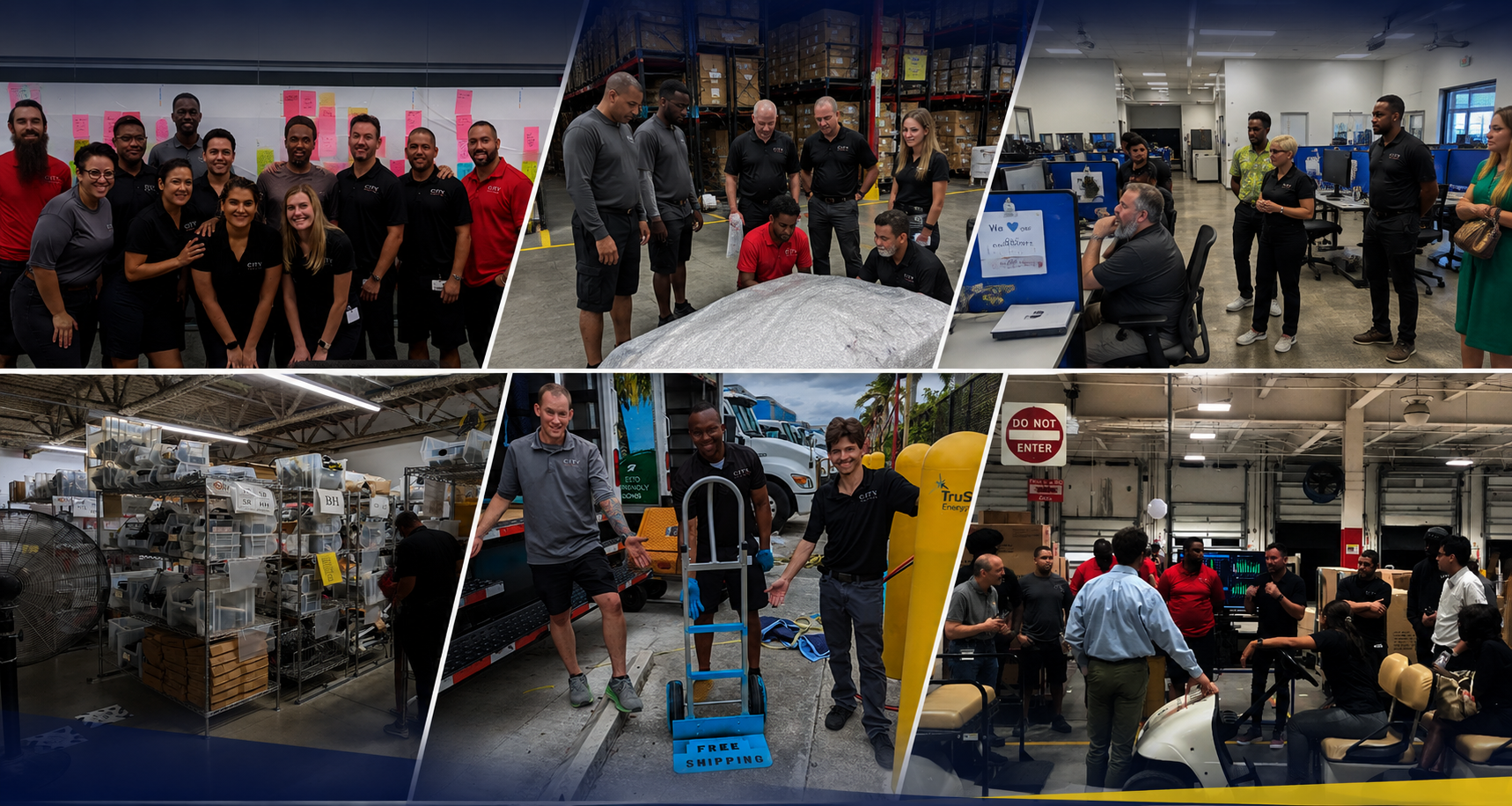
For two years, I facilitated monthly Kaizen events at CITY Furniture. These weren’t just about fixing specific problems. They were about strengthening their culture of continuous improvement. By the time we completed six events, people were lining up to be on the next teams.
One memorable event focused on organizing a chaotic repair parts storage area. We removed 75% of the clutter and built ownership that became a model for future teams.
What I didn’t tell you was this: the team also automated the entire inventory tracking system. And the person who made it happen was a 17-year-old hourly employee named Rob.
Rob was the son of one of the supervisors on the team. During our Gemba walk, it was clear the cluttered space wasn’t the only problem. Our area owner was drowning in paperwork and unreliable data.
While most team members focused on the physical mess, Rob saw a deeper issue: fractured information streams, disconnected reports, and no real-time visibility.
His idea? Consolidate everything into one digital report, accessible on an iPad. Then, take it further by barcoding every bin and tracking inventory in and out with a scan.
The team loved it but had no clue how to make it happen. Rob just smiled and said, “I’ve got this.” And off he went.
By day three, he had a prototype. He coordinated with IT, repurposed a company iPad, and built a working application. By week’s end, barcodes were in place, the app was live, and the team could track every part in real time.
I personally told the CEO about Rob and urged him to nurture this rising star. “Don’t let him get away,” I said.
Today, Rob’s a sales rep for CITY Furniture with a stellar track record and the same customer-first mindset that powered his Kaizen breakthrough.
Innovation doesn’t care about age, title, or tenure. Sometimes, your quietest contributor holds the loudest solution if you’re willing to listen.
A Gemba Walk Like No Other
Before I facilitated my first Kaizen event at CITY Furniture, we agreed I should learn the business from the inside. So, I spent a week embedded in their distribution center, shadowing employees and learning the flow.
The culture was strong, engaged, and motivated. But people were frustrated. They hadn’t had a Kaizen in a while, and they were hungry for change. I was there to help reignite that spark.
I spent time in the repair shop, helped planners with order tracking, and eventually got paired up with an order picker named Andy. His job was to locate furniture across a 1.6 million square foot facility and deliver it to the floor for shipment.
Andy showed me how he used barcode scanners and optimized routes to work efficiently. Then he asked, “Want to help me with an order?”
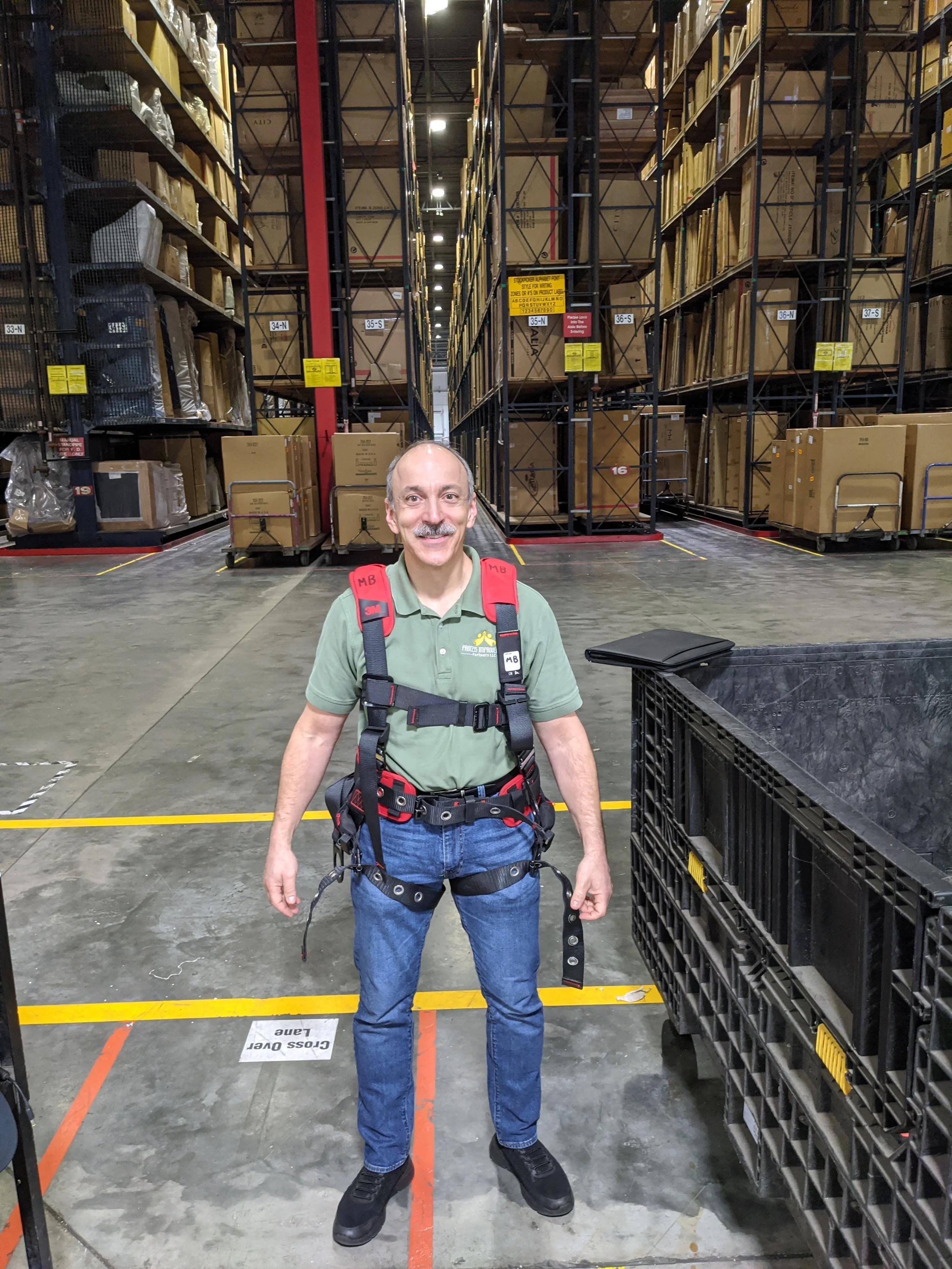
Next thing I knew, I was wearing a harness and vest, clipped into an “order picker,” a lift with a platform designed to retrieve furniture from towering racks.
Up and down we went, pulling product from the sky. At one point, 45 feet in the air, Andy turned to me and said, “I forgot to ask, are you afraid of heights?” I laughed and replied, “You picked a fine time to ask!”
We kept working, and I gained a deep appreciation for the skill, care, and judgment required in that role. It’s easy to underestimate the complexity when you're watching from the ground.
By the time I returned to the office, everyone had heard about the consultant in the air. They also knew I wasn’t there to sit on the sidelines. I was there to understand, serve, and support.
You can’t lead improvement from behind a desk. Real change starts when you walk the floor, get your hands dirty, and show people that their work matters.
Conference Challenge Accepted
In the early days of my entrepreneurial journey, I ran a lot of experiments. The biggest? Seeing if people would actually pay for my Kaizen Ninja approach. Spoiler alert: they did.
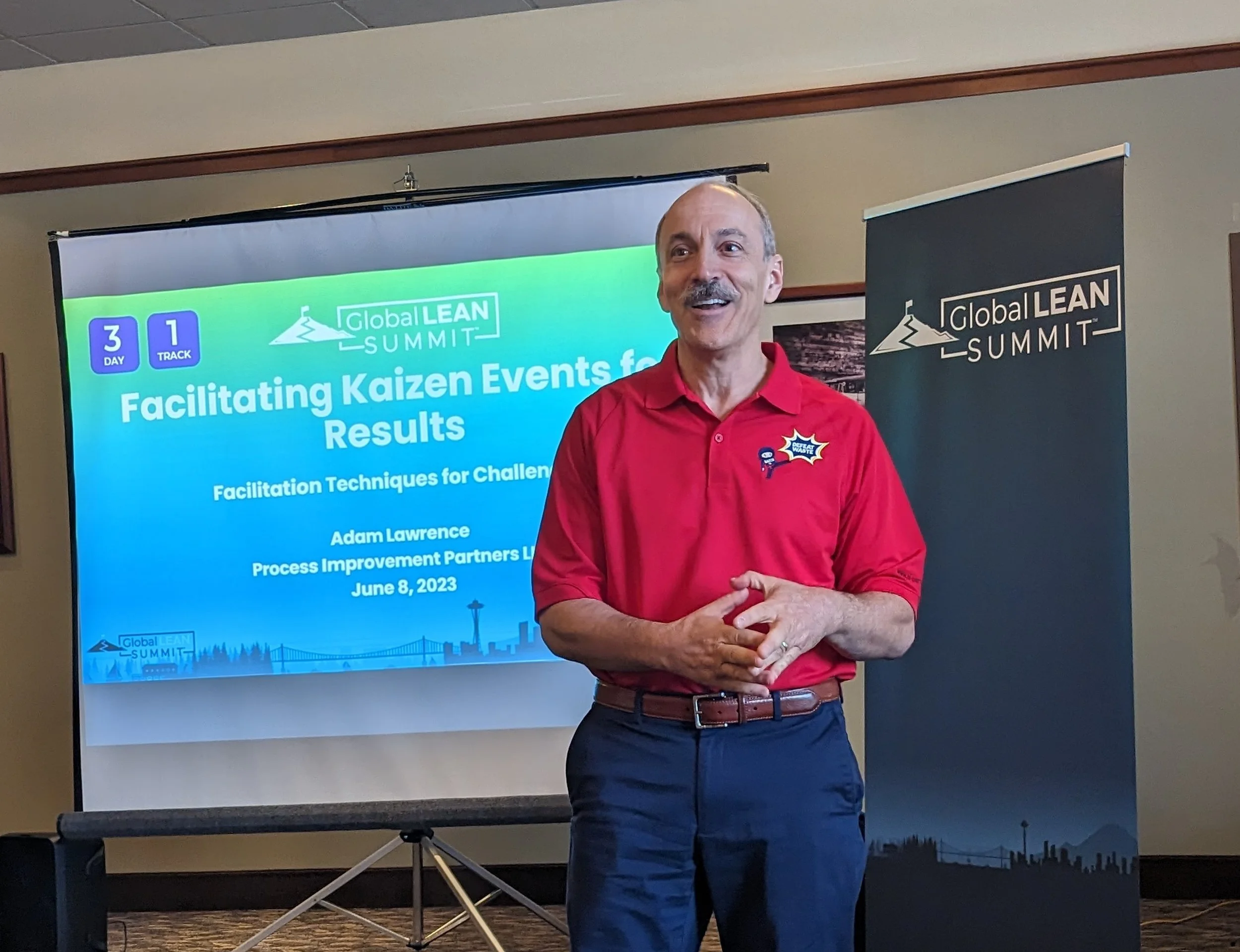
Once I had a small, but loyal client base, I wanted to grow. Then came the offer: speak at the Business Transformation & Operational Excellence Summit (BTOES) in Orlando.
I was skeptical. Why me? Was it legit? And how much would it cost?
I spoke with Jeff, one of the conference reps. He explained the audience, the platform, and the opportunity to sponsor. It came with a booth, a book signing, and two workshops. After some negotiation and soul searching, I signed up.
I talked to my marketing mentor. Her advice: “Don’t expect to get business by speaking. You’ll only be disappointed.” Challenge accepted.
I set three goals:
Have as much fun as possible.
Meet great people.
Land one new client.
I had no idea how to set up a booth, but I figured it out. I even brought dozens of Ninja squeeze toys to draw people in.
At a networking session, I met a guy with great energy. We hit it off instantly. When he asked what I did, I told him: “I get $!&% done!” He laughed and kept finding me throughout the conference.
That man was Ronald, the CEO of a hydrogen startup. By the end of the week, he told everyone I was going to help him. And I did. For the next year, I supported his growing company and built a great friendship along the way.
Opportunities don’t always knock, sometimes they whisper. Be bold enough to say yes, and prepared enough to follow through. That’s how doors open.

Pick Your Winning Team
I’ve told many stories from my time at Armstrong, especially about improving board flow in our Macon plant. This one’s about something less technical but equally vital: choosing the right team.
After years of helping improve various lines at Macon, leadership asked me to focus on their highest-demand line. I agreed on one condition: I wanted to hand-pick my team.
Their first response was, “Why? Can’t you just use a few operators and mechanics like you always do?”
I said, “Sure, but this time I want the best. No training, no convincing. Just execution. And we’ll need less downtime to make it happen.” They immediately said yes.
At the top of my list was Kevin. He was the most creative mechanic I’d ever worked with. He could build or fix just about anything. He wasn’t in that role anymore, but I convinced him to come out of “retirement” for this project.
We added two more top-tier mechanics, three experienced operators, and an operations manager I’d worked with before. That was our team.
Day one was spent reconnecting and joking about how I pulled Kevin back in. Then, we walked the line and laid out our plan: establish fixed “zero points,” align the equipment to those references, and lock everything down so it couldn’t drift.
Each equipment adjustment was done faster than expected. The team didn’t need to be sold. They were already bought in. And because the operations manager was on board, we had no roadblocks getting the downtime we needed.
I was amazed at how smooth it all went. Less oversight. Fewer obstacles. More results.
These days, I still love giving new people Kaizen opportunities. But when the stakes are high, I hand-pick the team. To this day, I encourage my sponsors to pick their winning team to tackle the most critical issues.
The Birth and Quiet Death of Definitions
The research and development team created a product that they thought would change the ceiling grid market. The bad news is that it was hard to produce and no one bought it. The good news is that it lead to future innovations that the market loved.
Early in my career, I was the Quality Assurance Manager at the Sparrows Point, Maryland ceiling grid plant. Grid is the metal framework that supports ceiling tiles, and it’s a product where precision matters. The slightest variation in length—thousandths of an inch—can keep the tiles from fitting correctly, especially in long ceiling runs like you’d find in airports or large office buildings.
Most of the time, ceiling grid is meant to disappear into the background. Our corporate team was working on a product they believed would change that—a grid that would intentionally stand out. The idea was to improve the aesthetics of the ceiling using a three-dimensional face.
The product was called “Definitions.” It was a plastic cap, molded into various profiles, designed to snap onto the face of the ceiling grid to give it a bold, new look. Marketing was confident they could sell millions of feet of it. Our plant was chosen to be the first to bring it to life.
There was a technical challenge. Ceiling grid is made of metal and produced in a continuous process—roll formed, pressed, and finished all in one line. The plastic cap couldn’t be added as part of that process. It would have to be applied in a separate, manual operation.
We cleared out a section of the plant and set it up as the Definitions production area. Because the white plastic cap was highly susceptible to dirt and grime—and our main lines used lubricants—we enclosed the area with plastic curtains to keep it isolated and clean. Finished grid would be brought over, the caps snapped on, with the final product packaged and stored in a dedicated warehouse area.
Our first attempts to attach the plastic caps were unsuccessful. It wouldn’t locate properly and stay on the grid. Eventually, we designed simple fixtures to help guide and secure the cap during the process. Once we figured that out, we developed standard operating procedures and set up a two-person team: one to place the caps in position on the grid, and the other to apply the pressure, using a special piece of equipment.
Even with the process in place, everything had to be almost perfect. The cap had to be placed with pinpoint accuracy, and its width had to match the grid within .002” (less than the width of a human hair) or it would pop off.
Progress was painfully slow. Contamination, inconsistency, tight tolerances, and poor productivity constantly worked against us. Producing Definitions took many times longer than making standard grid.
We produced 250,000 linear feet of the product. By the time we wrapped up the first run, every operator on the line made it clear—they didn’t want to do it again. It was just too tedious, too frustrating, and too slow.
The product sat in our warehouse for years. If anyone ever bought a box, I don’t remember it. Feedback from installers was brutal: the caps were too delicate, required gloves to handle, and slowed them down so much that using it actually lost them money.
While Definitions itself was a failure, it sparked a line of thinking that led to real innovation. The idea of a dimensional grid look lived on—and eventually, we developed new products that achieved a similar aesthetic directly on the main manufacturing lines. Those products were far easier to make, faster to install, and went on to become successful alternatives to standard grid. They’re still sold today.

Know Your Niche
As a Kaizen Ninja, I like to believe I can help any team solve any problem. Maybe I can, maybe I can’t—but believing it was causing me to dilute my message to my target audience. Let’s face it: no one believes you can be all things to all people.
As a Kaizen Ninja, I like to believe I can help any team solve any problem. Maybe I can, maybe I can’t—but believing it was causing me to dilute my message to my target audience. Let’s face it: no one believes you can be all things to all people.
While I’ve helped businesses across many industries tackle a variety of problems, my message wasn’t resonating with the people I truly wanted to reach. It wasn’t until I came across The One Page Marketing Plan by Allan Dib that I realized the issue. Dib makes a compelling case for knowing your niche and target market. Without that clarity, it’s impossible to craft a message that will attract the right people.
I had to dig deep and figure out who I really wanted to help. It didn’t take long to land on an answer that, in hindsight, should have been obvious: I was built to help manufacturing companies.
But not just any manufacturing companies. Running a Kaizen event requires team members to dedicate 100% of their time and energy to solving a critical business problem in a sustainable way. For smaller companies, pulling key people off their regular jobs for several days can be a dealbreaker. The business might grind to a halt.
The sweet spot? Manufacturing companies with at least 50 employees. These companies typically have enough resources to pull six or more people from their daily roles without shutting everything down. With proper planning, resources can be covered through overtime or other adjustments, making it feasible for the team to focus entirely on the Kaizen process.
This realization was a game-changer. While I’ve facilitated successful Kaizen events in non-manufacturing settings, the immediate, tangible results from manufacturing events are hard to beat. On the factory floor, you can literally see the impact:
Lines run more smoothly.
Tasks require less effort.
Employee feedback is positive and immediate.
There’s something uniquely gratifying about helping people in ways they can see and feel right away. That’s why I’ve honed my focus on manufacturing companies with more than 50 employees. When I visit, I can provide clear, specific examples of where I can help and the results they can expect using my Kaizen approach:
Safety risks reduced by more than 50%.
Changeover times cut by more than 50%.
Productivity increased by at least 5%.
Costs reduced.
Quality and customer satisfaction improved.
Even better, I can share real success stories from other manufacturing teams and show how I use the Wheel of Sustainability to ensure those results last.
From time to time, I still get inquiries from non-manufacturing prospects. I’m happy to help them if there’s a good fit, but they’re no longer my target audience. I don’t actively market to them or invest extra effort trying to get their attention.
This approach has made me more focused and intentional, and for that, I’m incredibly grateful to Allan Dib and his team. Their insights helped me find—and fully embrace—my niche.

Creative Problem Solving Happens at Any Age
Problems are everywhere. It’s easy to feel overwhelmed and give up, thinking there are more problems than solutions. While it’s true we can’t solve everything—and some things are simply out of our control—my advice is to focus on the problems you can solve and be willing to experiment until you get the results you’re looking for.
Problems are everywhere. It’s easy to feel overwhelmed and give up, thinking there are more problems than solutions. While it’s true we can’t solve everything—and some things are simply out of our control—my advice is to focus on the problems you can solve and be willing to experiment until you get the results you’re looking for.
If you have small children, once had small children, or were a child yourself, you know they approach problem-solving in their own way. Want to build a fort but lack proper materials? A sofa and a bedsheet—BOOM—instant fort. Scribble wildly with crayons and declare it’s the solar system? Why not?
Growing up, my parents encouraged me to experiment and try things. My father was a patent examiner, and he often shared stories about the inventions he reviewed. He was also an inventor himself. Most of the time, I thought his ideas were silly, but that didn’t stop him from coming up with new ways to solve old problems.
We had a blue 1965 Dodge station wagon (yes, I’m that old). This was before seatbelt laws, and it wasn’t unusual for kids to stand up in the back seat to get a better view of the road. Honestly, it’s amazing we survived. We used the station wagon for family trips, with Mom and Dad in the front seats and my brother and me in the back. Dad had put foam mats back there to “protect” us from the road’s bumps and potholes.
Cars in those days were noisy, and it was hard to communicate from the back to the front. My brother and I, being little boys, spent most of the ride fighting, playing, and constantly needing something: snacks, drinks, bathroom breaks, or help breaking up fights. Mom and Dad couldn’t hear us over the road noise, so Dad decided to invent a solution.
After a few failed attempts, he cut a long vacuum hose down to an eight-foot length and ran it from the back of the wagon to the front seat. If we needed something, we’d speak into the hose, and Mom or Dad could (hopefully) hear us. Amazingly, it worked. For years, we had a cutting-edge communication system that no other car—or wagon—could match.
Eventually, cars got quieter, and the need for the hose disappeared. More likely, we got too big to ride in the back of the wagon, or someone finally realized tossing two boys into the back of a car without restraints wasn’t the best idea.
These days, when I facilitate Kaizen events, I encourage my team members to think like kids: try new things, embrace curiosity, and don’t be discouraged if an idea doesn’t work on the first try. There’s always something to learn, and often, they solve problems no one else has been able to tackle. Who knows? Maybe they’ll even come up with the next advanced communication system.

A Good Story Provides a Good Opportunity
I’ve always been a storyteller. Some people enjoy my stories, while others wish I’d get to the point faster. I get it—my approach isn’t for everyone. But storytelling is how I communicate my ideas. Sometimes, it even helps me get my way or stumble into an interesting adventure. Here’s one of those adventures.
I’ve always been a storyteller. Some people enjoy my stories, while others wish I’d get to the point faster. I get it—my approach isn’t for everyone. But storytelling is how I communicate my ideas. Sometimes, it even helps me get my way or stumble into an interesting adventure. Here’s one of those adventures.
I was working with a team on a project at Armstrong’s St. Helens, Oregon, plant. Our goal was to reduce changeover time across the facility using Lean techniques and some capital investments. Things were going well, but the project required the team to spend many weeks away from home.
When you travel a lot, routines develop—familiar hotels, restaurants, bars, and, of course, the facility you’re helping. But sometimes, you just want to break out of that routine. One trip, we flew into the Seattle airport, arriving midday, and didn’t need to be at the plant until the next morning.
Someone suggested dining at the Space Needle, about 30 minutes away. It seemed like a great idea, even though we didn’t have reservations. Fueled by a spirit of adventure, we decided to drive over and see if we could talk our way into a table.
On the way, we tracked down the phone number and called to see if there were any openings. Unsurprisingly, dinner was fully booked. But we weren’t deterred.
I decided to try my hand at persuasion. I told the host a bit of a half-truth: “We’ve just arrived in Seattle, traveling all the way from Pennsylvania specifically to dine at the Space Needle. Isn’t there any way you could find seating for four people who have always dreamed of dining with you?”
To my surprise, the response was warm and accommodating: “Of course we can. You’ve come all this way; we’d hate for you to be disappointed.” Thrilled, I asked for a contact name so we could personally thank them when we arrived.
Thirty minutes later, we walked into the Space Needle, where it seemed everyone knew about “the four travelers from Pennsylvania.” They were impressed that we had flown 3,000 miles just for dinner.
We stuck to our story the entire evening and soaked in the experience. The dinner was fantastic, the views from 500 feet above Seattle were stunning, and it became a memory we’d treasure for years.
As a bonus, the experience brought our team closer. We worked together more cohesively, and we started seeking out new adventures to share throughout the project.
These days, I encourage my Kaizen teams to create shared experiences during event weeks. Whether it’s through solving problems together, team dinners, or happy hours, I’ve noticed these moments rapidly build engagement and camaraderie.
I wouldn’t necessarily recommend stretching the truth often, but this felt like a victimless crime—unless someone lost their reservation because of “four travelers from Pennsylvania.” If that’s you, this story never happened!
Improving Safety from the Perspective of our Customers
Armstrong World Industries has a strong safety culture and is relentless in driving to zero injuries globally. Early on in the journey to zero, our factories focused on compliance, holding people accountable to wear their safety glasses, safety shoes, and follow various protocols. That took safety to a certain level, but the company performance plateaued. How could we get to the next level of leadership?
Armstrong World Industries has a strong safety culture and is relentless in driving to zero injuries globally. Early on in the journey to zero, our factories focused on compliance, holding people accountable to wear their safety glasses, safety shoes, and follow various protocols. That took safety to a certain level, but the company performance plateaued. How could we get to the next level of leadership?
The St. Helens Oregon ceiling tile plant decided to be the pilot location for behavioral based safety. In this approach, leaders demonstrated their commitment to safety by directly participating in the safety process on a continual basis. They would always talk about and demonstrate their commitment to safety through their words and actions. The plant’s safety performance improved dramatically, and the rest of the company adopted behavioral-based safety at all of the manufacturing and corporate locations.
Over the next few years, the number of global injuries was reduced by a factor of ten. While this sounds like a great improvement (it was), we still weren’t at zero, so the effort could never be reduced. I was offered the opportunity to become the production manager at St. Helens and jumped at the chance. Not only were they known for their safety approach, but also the team-based atmosphere at the plant. I had participated in many teams and projects at St. Helens prior to taking the position, so I knew firsthand what it would be like to work there. I knew I would learn a lot, while bringing my organizational skills and performance focus to the plant.
I spent many hours on the floor, getting to know the people, the processes, their approach to safety, and how I could affect performance in a positive way. One thing I quickly noticed was how everyone seemed to genuinely care about each other’s safety. I felt like a newbie, awkward in my safety conversations. The whole team was lightyears ahead of my safety understanding.
One day, I was talking to Olivia, the plant manager, about my novice level approach to safety. She told me, “Adam, you need to drop any titles and preconceived notions you have about any of your team. When you are coaching them around safety, you are equals, trying to help each other stay safe.”
That made so much sense and I wondered how she knew this was the essence of my problem. I guess they didn’t make her plant manager for nothing! I thought about it and came up with changes to my safety approach I thought would make a real difference for my team members.
I decided to be more purposeful in my interactions while on the factory floor. I wanted to find something to discuss with each team member about safety to help strengthen both our understanding and commitment to safety. I started using “Show me” questions. Here’s an example: “Show me the most critical safety risk you believe you’ll face today.” When the team member presented their issue(s), we could both engage and learn about it and even come up ways to reduce the risk. Sometimes, we could make physical changes to prevent the risk. Other times, it was just the discussion that strengthened our resolve to protect ourselves and others.
This approach to safety has helped me in all my employee interactions. Always be purposeful when working with someone, even if you just want to know about their day or their family. You can always learn something and reinforce critical information to help their efforts and lives.

Firm in our Convictions
I was promoted to business unit manager in a union facility for Armstrong World Industries. The relationship between management and the hourly employees had been strained for many years. It was so bad that on my first day on the job, there was a sign that said, “the plant will be closing in two months.” I wondered why they had so little faith in me. The shop steward told me, “Adam, even if we could trust you, we didn’t trust the person before you and won’t trust the person after you.” It was like they had given up on any form of leadership and stability.
I was promoted to business unit manager in a union facility for Armstrong World Industries. The relationship between management and the hourly employees had been strained for many years. It was so bad that on my first day on the job, there was a sign that said, “the plant will be closing in two months.” I wondered why they had so little faith in me. The shop steward told me, “Adam, even if we could trust you, we didn’t trust the person before you and won’t trust the person after you.” It was like they had given up on any form of leadership and stability.
I spent many hours on the shop floor, getting to know the employees. At least those who were willing to talk with me about something other than how horrible they thought management was. It was a very stressful time in my career. For the first six weeks of my tenure, we didn’t have a plant manager. He was relocating from Mississippi and hadn’t arrived yet.
When Bill arrived, he called his staff into a meeting to get to know each other and share our insights into the current situation. We talked about the strained relationships and non-compliance around safety and work practices. Bill listened to us carefully and asked many probing questions. Then, he told us our first priority must be to protect our employees through a consistent and strong safety program. We would go after this one requirement at a time.
The first safety compliance item we agreed to go after was the wearing of safety glasses. We had many processes that were dusty, dirty, and in some areas there was a risk of chemicals splashing on the people doing the work. So, why weren’t safety glasses already a requirement? The union proudly stated they had ended the requirement ten years ago. How was this even possible? How could management give away their rights to protect the workers, I wondered.
We couldn’t go backwards, but we could move forward. Bill met with union leadership and informed them we would be reimplementing the safety glasses requirement. The union argued vigorously, but Bill stood firm in his convictions that keeping foreign objects out of people’s eyes was more important than the additional burden of wearing the glasses. We held crew meetings to roll out the requirement. There was a two-week grace period, and then anyone who wasn’t wearing the glasses once they arrived at work would be placed in the discipline system.
Our supervisors hadn’t had to enforce this requirement for years and had looked the other way around many other safety violations. The staff agreed to be on the floor for many hours each day to help enforce the requirement and explain the thinking behind it. Early on, I received many comments similar to this one: “I hate wearing safety glasses. We never had an eye injury, and you can’t prove this will help anything.” My answer mirrored others on the staff, “I never want to wish I did something to prevent your eyes from getting injured if the unthinkable were to happen.” This answer wasn’t typically received in a positive manner.
After a few weeks, Bill called another staff meeting. We talked about how things were going. We shared the many complaints we received. Bill said, “Good. At least their talking about safety glasses, even though it’s negative. The more they talk about it, the more it’ll get into their heads.” This was an interesting approach I hadn’t thought of.
After a month and many grievances filed, employees were consistently wearing their safety glasses. Now, we were ready to roll out the next safety compliance requirement, lock-out. This caused a new furor. Lock-out was critical to preventing major injuries. Some of our equipment wasn’t even equipped to be locked out properly, so we invested a lot of money and resources to make the equipment capable of being locked out. The fuss over safety glasses subsided and the new enemy was lock-out.
Bill brought us together again and explained we would continue to roll out critical safety requirements in this manner, until we were truly compliant and protecting our workers properly. He told us the more quickly we brought a new requirement on, the sooner the prior requirement would be accepted (or at least absorbed). He was right. Over the next year, we were able to drive safety compliance while building trust of our true intentions – protecting the safety of our workers.
What do you do when you’re the Industry Leader – you Improve!
Armstrong World Industries is the global leader in suspended ceilings. That might not seem like much to you, but when you sell over a billion square feet of ceiling tile and the grid to suspend it every year, you’re making a big impact in the construction and housing market.
Armstrong World Industries is the global leader in suspended ceilings. That might not seem like much to you, but when you sell over a billion square feet of ceiling tile and the grid to suspend it every year, you’re making a big impact in the construction and housing market.
One of the things that sets Armstrong apart is innovation and forward thinking in all of the things they do. Although other competitors are trying to influence building codes, Armstrong has the strongest presence and is leading the way in making sure office and other spaces are the healthiest, most energy efficient, and quietest they can be.
Paul, the head of codes and standards, was a big fan of my support to other areas of the technology department. We had many conversations on how Lean was helping his colleagues improve their processes and we often wondered how I could support his team’s efforts.
One day, we were talking about codes and standards and how Armstrong’s competitors were making inroads influencing the critical changes for building health and safety. Paul said it seemed Armstrong was losing its leadership position. People were participating on committees and submitting white papers, but weren’t moving the needle in the right direction. He felt we needed a breakthrough to retake our leadership position.
We both realized, almost at the same time, a strategy session could help drive the changes that would maintain our leadership presence. We agreed a Value Stream Mapping (VSM) session was the approach to take.
We plotted and planned. We chartered the event. We invited critical team members, including our internal customers, Sales and Marketing, manufacturing plant representatives, selected engineers and scientists, and members of Paul’s staff.
Our CEO kicked off the event and gave his support to the team. He told us what we were doing would be vital to the successful future for the company. No pressure at all! The team was enthusiastic and energized. But many of them wondered how using Value Stream Mapping would help them create a future that was any different than the path they were on.
There are two critical moments in any VSM event. The first is when you take a Gemba Walk (going to see) through your process. During this walk, the team saw many aspects of the current process that were overly complex and had opportunities for improvement. Many ideas were written down and shared.
The second critical moment happened when the team visibly mapped the current state process on a wall. There were so many steps and delays. There was waste and opportunity beyond anything they had imagined. Now that they could see it, they could do something about it. The ideas flowed even faster. There were so many things within the control of the team, and they prioritized the ideas they thought would make the most difference and could be implemented.
We built plans to attack the most impactful opportunities to drive codes and standards leadership. By the end of the week, we had a roadmap to distance ourselves from our competitors. Everybody won, as the changes would strengthen the health and safety of everyone who inhabits the office, school, and other business spaces. And, because of the alignment of the team and their sponsors, their customers would receive those benefits quickly.

Don’t Judge a Book by its Cover
For part of my career, I worked for Dal-Tile in Dallas Texas. I was the environmental, safety, health, and mining liaison for our twelve manufacturing plants. My job was to help each plant stay compliant and safe, providing training and reporting support. We had a number of factories in Texas, and I visited each one and get to the know the employees and leadership. That way, I could develop a support plan that was mutually beneficial.
For part of my career, I worked for Dal-Tile in Dallas Texas. I was the environmental, safety, health, and mining liaison for our twelve manufacturing plants. My job was to help each plant stay compliant and safe, providing training and reporting support. We had a number of factories in Texas, and I visited each one and get to the know the employees and leadership. That way, I could develop a support plan that was mutually beneficial.
We had a plant in Coleman Texas. If you look on the map, you probably won’t find it. It was kind of like driving into the middle of nowhere, taking a left, and then going another 90 miles to get there. So, that’s what I did. When I got close, I exited the highway and spent the final few miles driving on gravel roads through the middle of the town. I wasn’t optimistic I would find a factory in good shape. As I drove up to the tin building, I was wondering how this could be where they made ceramic tile.
I parked and walked into what I thought would be a nightmare scenario: broken down equipment, unhappy employees, and a poor management/worker relationship. I was wrong. When I entered the facility, it was bright, clean, and people were working safely and efficiently.
The equipment looked brand new. That is, except for one enormous clay mixer. It looked like it had been installed during the Stagecoach era. Turns out, I wasn’t far off. It was installed in 1896. I had never seen equipment that old in use in any of the hundreds of factories I had visited over the years. I had seen new equipment operate as if it was installed in the 1800’s, however.
After meeting the leadership team and touring the plant, I had to ask a question that was gnawing at me. Why was every other piece of equipment new and shiny, except for the mixer? Matt, the plant manager told me, “Adam, this mixer has been in operation for 100 years. It never breaks down, requires very little maintenance, and is easy to use. Newer mixers aren’t built to last and are prone to breakdowns.”
This made sense to me. Instead of looking for something shiny and new, we should support and nurture the things that are precious to us. This mixer was the heartbeat of the facility and as such, it was treated with extra care and respected for the service it provided to the process, employees, and customers of Dal-Tile.
I doubt there are any spare parts for the mixer, but based on what I saw, it’s probably still running to this day.

Building Their Future
A leading global building products company reached out for assistance with a strategy session. When I spoke with Vince, the sponsor/team leader, I listened to his pain points and suggested facilitating a Value Stream Mapping (VSM) session for his team. He told me VSM wasn’t how he wanted to proceed. Even though I thought it would be the best approach, I listened to his concerns and modified my approach for his needs. I’m glad I did.
A leading global building products company reached out for assistance with a strategy session. When I spoke with Vince, the sponsor/team leader, I listened to his pain points and suggested facilitating a Value Stream Mapping (VSM) session for his team. He told me VSM wasn’t how he wanted to proceed. Even though I thought it would be the best approach, I listened to his concerns and modified my approach for his needs. I’m glad I did.
In the weeks leading up to the event, we strengthened our alignment on approach and expected outcomes and Vince engaged his team in preparation for this critical event. You see, they were intending to build their roadmap for the next 3 to 5 years. This could be worth millions of dollars and significant market share growth. We had to do it right.
The session was to begin on Tuesday, so I flew in and met Vince at the airport on Monday morning. We spent the first part of the day touring their local manufacturing facility. During the tour, I identified many improvement opportunities I thought might tie into the strategy session. Vince was intrigued by some of my ideas, including reliability and changeover improvements.
On Monday afternoon, we set up the meeting room and met some team members. We continued to talk about the upcoming session and some of the ideas from the plant tour. In the evening, we continued the conversation and alignment over dinner.
On Tuesday morning, we kicked off the session with a Voice of the Customer review. We then developed aspirational statements for the business. We would use these to help us design our strategy around for critical categories: safety, employee experience, customer experience, and manufacturing cost structure. The statements were impactful and compelling and inspired the team members.
Next, team members identified pain points and gaps in their current process keeping them from achieving their aspirational vision. Afterwards, they brainstormed actions and projects to eliminate those pain points and gaps. Many ideas were generated, including some thoughts around reliability and changeover reduction. We filled the walls with ideas. The room looked like a Post-it tornado had come through.
The team prioritized their many ideas down to the vital few they could develop and implement in the next three to five years. Reliability and changeover reduction made the cut. Following this, they created concept sheets to describe the critical work to achieve their future. After reviewing and aligning around most of them (2 were eliminated), they built a road map for the work on the one remaining wall in the room that wasn’t covered in Post-its.
As with many road mapping exercises, the team saw they had front-loaded the work in the most recent quarter and year, and some people were overloaded. This isn’t unusual and that’s why I like to make this process visual. They rearranged the work, and it looked more manageable.
Satisfied, the team felt they had built a compelling future they could stand behind. Proud of their work, they decided to keep everything on the walls for a corporate leadership review to be held the following week.
During the report out, they talked about their experience and how the visualization helped them align around a future they could be proud of. They also mentioned how they were able to focus and accomplish in one week what typically would take months to do.
Following the session, I was asked to support their reliability and changeover reduction efforts. I am looking forward to helping them achieve their vision.

A Brilliant Invention
In my early corporate days at Thomasville Furniture, I was given the opportunity to try many things to improve the performance and quality of the operation. This story isn’t about me, but another engineer, who came up with something so creative, he saved the company millions of dollars and improved quality of the product for our customers.
In my early corporate days at Thomasville Furniture, I was given the opportunity to try many things to improve the performance and quality of the operation. This story isn’t about me, but another engineer, who came up with something so creative, he saved the company millions of dollars and improved quality of the product for our customers.
We used many types of wood to create the fancy veneer tops of tables, cabinets, drawer fronts, and other parts of the furniture. The most expensive wood we used was burled walnut. It’s wood that has many swirls in it and multiple knots. Because of this, it’s prone to damage easily, and much of it has defects and cracks.
Some of the cracks could be “filled” using tape. This tape, when applied, would add moisture to the wood, causing it to grow and actually join one cracked side with another. After gluing and pressing onto a wooden core, the tape was sanded off and most of the time, the crack would be invisible to the eye.
Some of the defects couldn’t be repaired using tape. Because of this, full sections of the burled walnut veneer would have to be removed, leaving very little usable material. Our yield numbers were quite low, and even though we were making money on furniture with burled walnut veneer, we knew there was huge opportunity to reduce scrap and improve our profitability.
Jack, a mechanical engineer, thought there might be an answer, based on our ability to bring cracks together with tape and moisture. He wondered what would happen if defects could be cut out and replaced with non-defective material, and taped in place before pressing. Some of the operators were using this technique by hand with mixed results.
Jack realized doing this by hand was challenging, as the cut-out defect had to be the same size as the replacement material. Our most experienced operators could get pretty close, but less-experienced operators weren’t successful.
Jack built a small punch press in our maintenance shop and then tried different shaped punches to see if the defects could be hidden with tape and pressing. He started with a few basic shapes: square, rectangle, and circle. These shapes could cut out the defect cleanly and then create the replacement of the same size. When the new material was applied, taped, pressed, and sanded, you could “see” the line between the insert and the original hole. We weren’t sure why, but Jack had an idea. What if he created a random shape the naked eye wasn’t used to?
After a number of experiments, he came up with a shape that looked like a bumpy potato. We had all sorts of funny names for it, some I can repeat, others I can’t. My favorite was the “Doody Punch”! We stopped making fun of his idea when he showed us the results and challenged us to find the original defect. We couldn’t!
After showing his invention to the quality control director and other leadership, he got approval to implement his solution in the veneer plant. He created a variety of sizes for the Doody Punch and from then on, we were able to salvage almost every square inch of burled walnut veneer. Jack went on to invent many more devices and solutions for our manufacturing operations. This is the one that inspired me the most in my early problem-solving efforts.