
Kaizen Success Stories
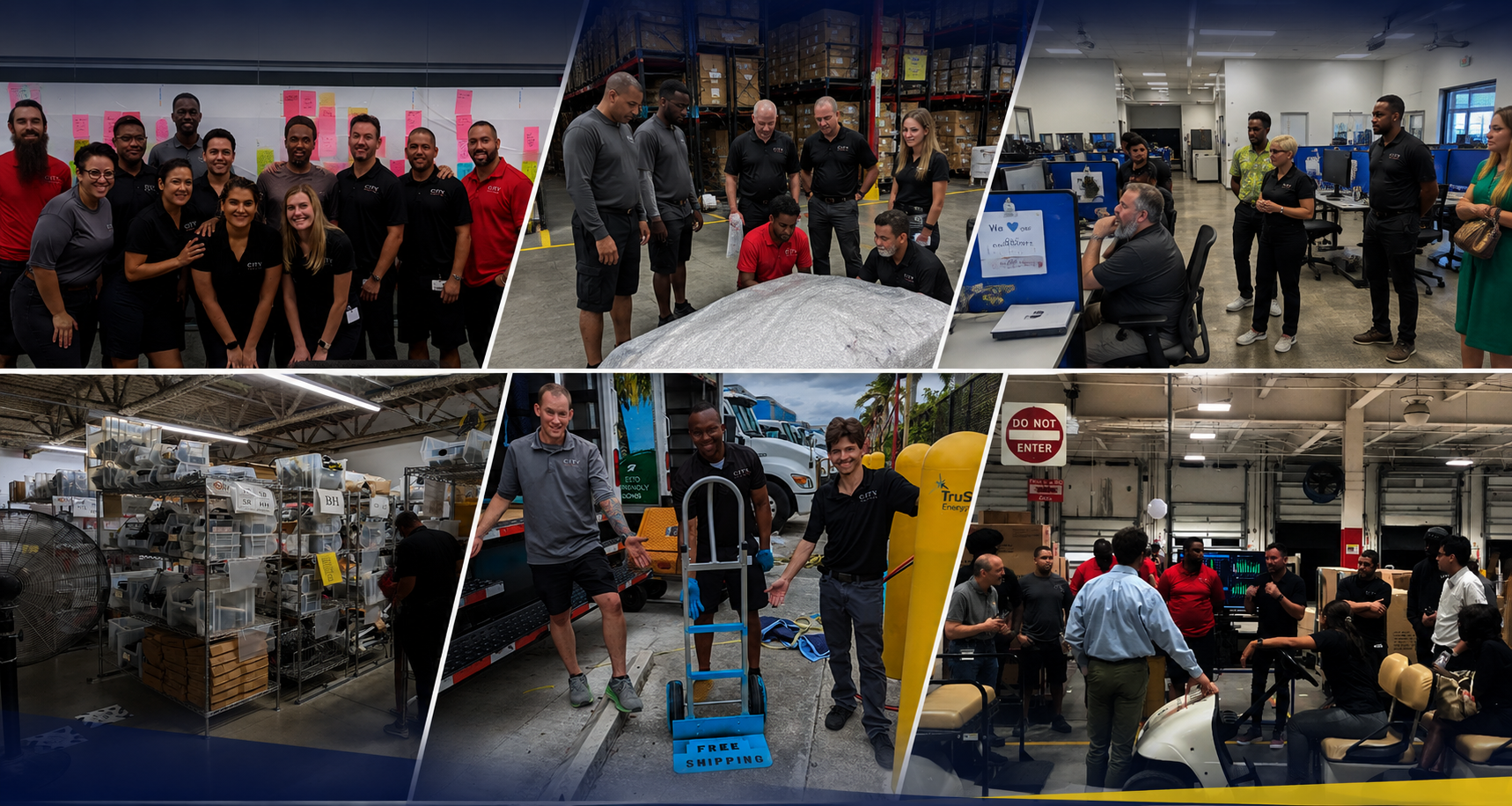
Real Manufacturing Results. One Kaizen at a Time
Explore real-world Kaizen success stories showing how manufacturing teams solved critical problems, improved performance, and created sustainable results.

When the Work Speaks for You
How years of consistent Kaizen work turned into unexpected recognition and new opportunity.
Kaizen Snapshot
Setting: Global Lean Summit at Indiana University
Challenge: Sustaining Kaizen momentum at scale
Stakes: Culture, credibility, and long-term capability
Approach: Hands-on Kaizen facilitation, leader development, culture building
Outcome: Public CEO endorsement, new relationships, expanded opportunities
Key Lesson: Consistent results build credibility and credibility opens doors
The Situation
At the 2025 Global Lean Summit, I was scheduled to deliver five workshops over two days. That alone made it a memorable event.
What made it even more meaningful was learning that Andrew Koenig, CEO of CITY Furniture, would also be speaking. I had worked closely with Andrew and his team for two years, helping them re-energize their Kaizen culture and build internal capability.
I reached out and let him know I’d be tracking him down when he arrived. He was happy to reconnect.
We finally met early on the final conference day at my booth.
What Happened Next
After catching up and sharing recent adventures, Andrew looked at me and said something I didn’t expect:
“Adam, you’ve done so much for us. What can I do for you?”
Honestly, I hadn’t thought about that. I felt he had already given me plenty through the opportunity to work with his organization.
Still, a few thoughts crossed my mind:
It would be nice to be acknowledged as part of CITY Furniture’s Lean journey
Introductions to leaders he thought I could help would mean a lot
And maybe, just maybe, he’d wear the Kaizen Ninja socks I hand out
He smiled and said he’d do what he could.
The Moment I Didn’t See Coming
When Andrew took the stage later that morning, he began telling the story of CITY Furniture’s Lean journey.
Early in his talk, he shared how we met and how my work helped re-energize their Kaizen culture.
Later, he spoke again about the role I played in building their long-term Kaizen strategy.
Then he asked me to stand.
“Adam became part of how we grew our Kaizen capability not just our events.”
The response from the audience was immediate. After the talk, leaders came up to me wanting to understand my perspective, my approach, and how I supported CITY Furniture’s transformation.
Andrew’s words carried weight. Far more than anything I could have said myself.
What Changed
Later that day, Andrew came over, gave me a hug, and invited me to attend the CITY Furniture vendor conference.
I hadn’t been a vendor for more than two years. But I knew I needed to go, if for no other reason than to reconnect with the Kaizen team members and see how they were doing.
The conference itself was outstanding. But the real impact was something else entirely.
The Takeaway
When you do good work, consistently, respectfully, and with the long view in mind, others will tell your story for you.
Credibility isn’t built through self-promotion. It’s built through results.
Why This Matters
Leaders are flooded with claims and credentials.
What cuts through the noise is proof, especially when it comes from someone they trust.
Sustainable Kaizen cultures grow when results speak louder than words.
Want Results Like This?
If you’re looking to build Kaizen capability that leaders stand behind. Not just events that check a box:

Don’t Judge a Book by its Cover
For part of my career, I worked for Dal-Tile in Dallas Texas. I was the environmental, safety, health, and mining liaison for our twelve manufacturing plants. My job was to help each plant stay compliant and safe, providing training and reporting support. We had a number of factories in Texas, and I visited each one and get to the know the employees and leadership. That way, I could develop a support plan that was mutually beneficial.
For part of my career, I worked for Dal-Tile in Dallas Texas. I was the environmental, safety, health, and mining liaison for our twelve manufacturing plants. My job was to help each plant stay compliant and safe, providing training and reporting support. We had a number of factories in Texas, and I visited each one and get to the know the employees and leadership. That way, I could develop a support plan that was mutually beneficial.
We had a plant in Coleman Texas. If you look on the map, you probably won’t find it. It was kind of like driving into the middle of nowhere, taking a left, and then going another 90 miles to get there. So, that’s what I did. When I got close, I exited the highway and spent the final few miles driving on gravel roads through the middle of the town. I wasn’t optimistic I would find a factory in good shape. As I drove up to the tin building, I was wondering how this could be where they made ceramic tile.
I parked and walked into what I thought would be a nightmare scenario: broken down equipment, unhappy employees, and a poor management/worker relationship. I was wrong. When I entered the facility, it was bright, clean, and people were working safely and efficiently.
The equipment looked brand new. That is, except for one enormous clay mixer. It looked like it had been installed during the Stagecoach era. Turns out, I wasn’t far off. It was installed in 1896. I had never seen equipment that old in use in any of the hundreds of factories I had visited over the years. I had seen new equipment operate as if it was installed in the 1800’s, however.
After meeting the leadership team and touring the plant, I had to ask a question that was gnawing at me. Why was every other piece of equipment new and shiny, except for the mixer? Matt, the plant manager told me, “Adam, this mixer has been in operation for 100 years. It never breaks down, requires very little maintenance, and is easy to use. Newer mixers aren’t built to last and are prone to breakdowns.”
This made sense to me. Instead of looking for something shiny and new, we should support and nurture the things that are precious to us. This mixer was the heartbeat of the facility and as such, it was treated with extra care and respected for the service it provided to the process, employees, and customers of Dal-Tile.
I doubt there are any spare parts for the mixer, but based on what I saw, it’s probably still running to this day.

Go to the Source to Get the Correct Information
I was working at the American Olean ceramic tile facility in Olean, New York as the Industrial Engineering manager when we merged with Dal-Tile. I was offered a position as an industrial engineer at the corporate offices in Dallas, Texas. I was very impressed with the manager who I was going to report to, so I took the opportunity and moved my family south.
I was working at the American Olean ceramic tile facility in Olean, New York as the Industrial Engineering manager when we merged with Dal-Tile. I was offered a position as an industrial engineer at the corporate offices in Dallas, Texas. I was very impressed with the manager who I was going to report to, so I took the opportunity and moved my family south.
When I arrived, I learned our mission was to improve factory environmental, health and safety (EHS) compliance across twelve facilities in the United States. Although there was an EHS department, they weren’t hands-on or helpful for the facility managers. My manager and I would function as internal consultants and help improve the approach, relationships, and overall performance.
I had no prior experience in EHS and attended many workshops and training sessions with the EPA, OSHA, and other agencies. We took tours of every plant and identified areas where we could help. Our focus was on annual safety training and environmental and safety reporting.
Over time, we built strong relationships with plant management at all locations, and they came to trust our work and invited us to help frequently. So much so, I got assigned the submission of the annual environmental reports for all facilities.
There were twelve reports that were all due at the same time. There were different requirements based on the state the facility was located in. Reading through all twelve documents, I noticed many similarities and some critical differences. With one month to go, I created a plan to complete all reports properly and on time. I would be signing each report and would be legally bound for completeness and correctness for the next seven years. I wasn’t willing to take any chances.
The first step I identified was to understand each form. Although I thought I knew what most of the questions meant, I decided it would be better to confirm my interpretations. The best way I knew was to call the state agencies and ask for assistance.
I started making calls, and invariably, was not able to reach a live person most of the time. I left many messages at most agencies. I put a sticky note on each report I had a question on and waited (and waited) for my calls to be returned.
When a call finally came, the first thing I did was ask the person what state they were calling from. Then, I pulled out the report for that state. Looking at the sticky note, I knew what I had to confirm. From there, getting the information was simple. Most state workers were happy to help me fill out their form, beyond my first question(s). They had a vested interest in completeness and accuracy and weren’t used to people asking for help. They were more familiar with fixing problems after it was too late.
I learned that these agencies work for us, the public. But some people don’t see it that way and think they’ll get in trouble for asking questions. I’m convinced it’s the best way to get these critical tasks done and avoid errors. I was able to complete all twelve reports on time, to the best of my ability and knowledge, and sign each document. Many years later, I am confident I provided the proper information to every agency. I also feel better knowing that the seven-year statute of limitations has expired.