
Kaizen Success Stories
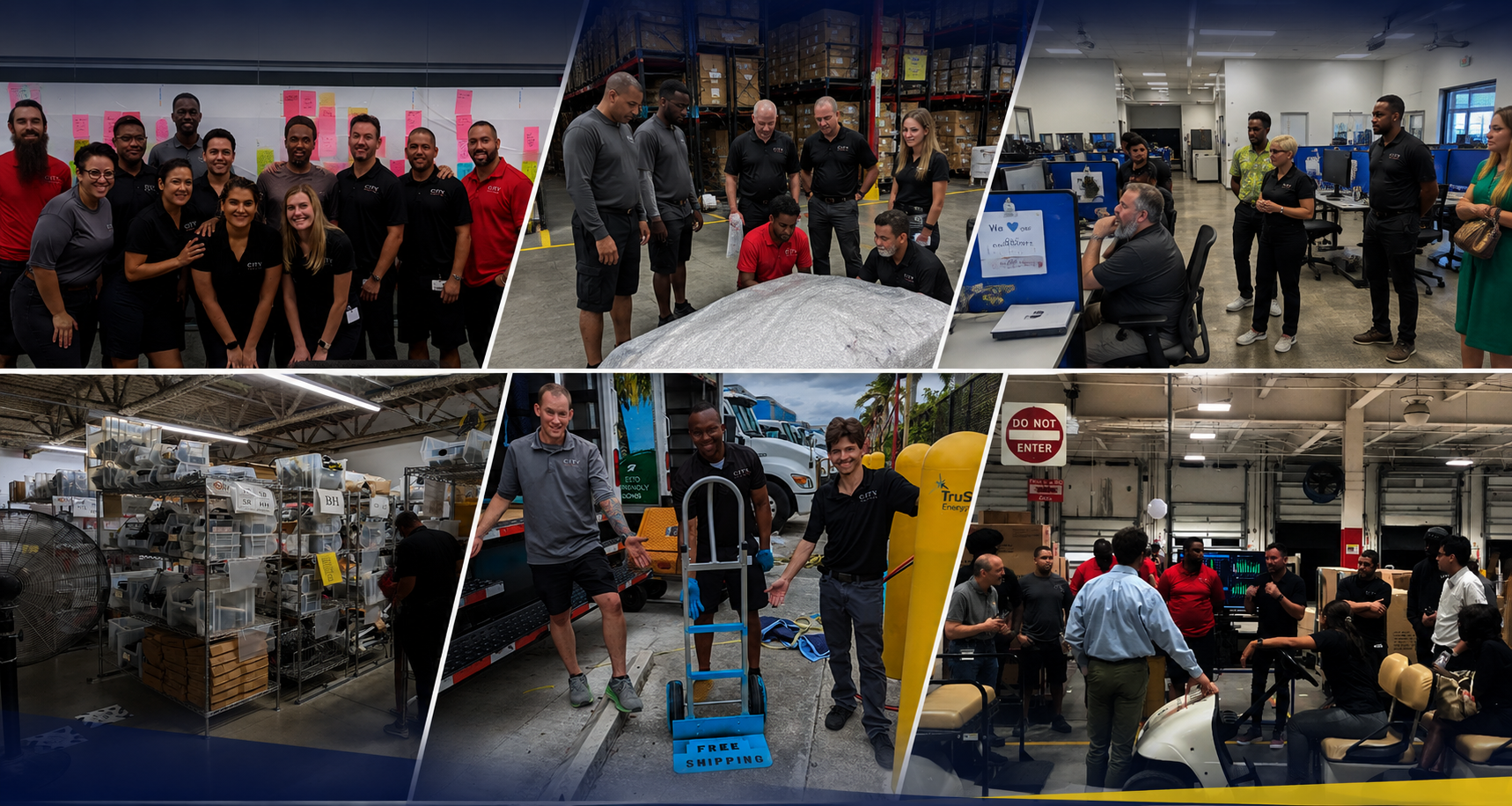
Real Manufacturing Results. One Kaizen at a Time
Explore real-world Kaizen success stories showing how manufacturing teams solved critical problems, improved performance, and created sustainable results.

Change Your Perspective
I moved to Baltimore to be the industrial engineering and quality manager at a ceiling grid factory. We had just consolidated three plants into two, following a joint venture. Early on, changes were happening so fast that my plant manager informed his boss that he wasn’t comfortable with the direction of the new company. He offered to stay as long as necessary to bring his (yet unnamed) replacement up to speed.
I moved to Baltimore to be the industrial engineering and quality manager at a ceiling grid factory. We had just consolidated three plants into two, following a joint venture. Early on, changes were happening so fast that my plant manager informed his boss that he wasn’t comfortable with the direction of the new company. He offered to stay as long as necessary to bring his (yet unnamed) replacement up to speed.
He was informed his services were no longer needed. His replacement was ready to take over operations. So, he packed up and left the same day. Much of this wasn’t told to us immediately. We just watched our leader leave the plant, never to return. We wondered what was going to happen in the interim.
The next day, we met our new plant manager, Jim. He arrived at the plant just before lunchtime and introduced himself to each of us separately. He had been a salesman for the competing company that had merged with ours.
Jim seemed highly motivated and excited to be at the plant with us. He told us he was committed to our success and would help us through the transition of the joint venture. This was reassuring and we were happy to have Jim as part of the team. Until the next day. At 10 am, Jim hadn’t shown up for work. The plant kept running, but we wondered if something had happened. Just before noon, Jim arrived and acted as if there was nothing wrong. For the next few weeks, Jim came to the plant at a time the rest of us considered “late” every day. Sometimes, he would tell us he was in a meeting. Other times, he said he was playing golf with some of his customers.
This was unusual behavior for people who work in operations. Factory staff members tend to arrive early in the morning and stay until the evening. Jim was different, and it was beginning to weigh on the staff and the operations crew. We’d get questions about where Jim was and why he wasn’t with us in the plant. Many times, I’d walk by an office and observe others complaining about Jim’s “lack of commitment.” I was commiserating too. Finally, I decided I should try to do something about it, if no one else was willing to do so.
Our engineering manager wished me luck and said he would “miss me when I was gone.” I told my wife I felt I had to say something to be part of the solution. She told me that she believed in me, but was prepared for the ramifications of the discussion.
The next morning, after Jim arrived, I asked if I could talk to him about something important to me and the plant. As I described my observations to Jim, I told him I realized as a salesman, the hours he put in were likely different from running a factory. We needed his leadership, guidance, and his commitment to be with us during key morning meetings and other critical times during the day. He wasn’t able to do that while on the golf course or whatever errands he was running in the mornings.
I gave my feedback for what felt like hours, but it was probably 10 minutes. Through it all, Jim didn’t say a word, he just listened. After I finished, I thanked him for giving me the opportunity to speak with him and left his office. It felt strange to say all those things without a response, and I told a few of my team members that it might be my last day at the plant, but at least I followed my conscience. I hoped I wouldn’t have to look for another job.
Over the next few weeks, without acknowledging our meeting, something changed. Jim started showing up at the plant earlier in the morning. He got extremely involved in our meetings and critical plant decisions. Soon, he was no longer an outsider; he had become our leader.
Two years later, as I was preparing to move on to my next assignment, Jim called me into his office. He reminded me of the day I brought my concerns to him and how it changed his perspective and approach. Now that we were close friends, I said, “You #%$@, you never said anything that day and never acknowledged it until now. I thought I was about to be fired!”
He said, “I really did appreciate it, but at the time I didn’t know how to respond. Then, as time went on, I just wanted to leave you hanging. Now, I just am happy to get that reaction from you!”

Sometimes You Have to Let Things Go
I was a supervisor at a small ceiling grid plant in Franklin Park Illinois. I could see all the way from one end of the factory to the shipping docks at the other end from my second-floor office.
I was a supervisor at a small ceiling grid plant in Franklin Park Illinois. I could see all the way from one end of the factory to the shipping docks at the other end from my second-floor office.
After less than one year on the job, the company announced a joint venture with a competitor and our factory was scheduled to be shut down in the coming months. I put on a brave face with my crew to keep them safe and productive during the final months of operations.
As we got closer to the end, most orders had been transferred to our other plants. I was always looking for constructive things to keep our employees occupied. I think I was trying to keep myself busy too.
One day, I noticed a large pile of steel tooling sitting on pallets in an unused corner of the plant. The tooling looked like it hadn’t been used in years. It was covered with many inches of dust. Doing some research, I found out that it was for products that hadn’t been produced at the plant in many years. This was one of those things that was easier to avoid than deal with.
I gathered a group of my most willing crew members and we had a disposal “party.” We brought a large scrap metal dumpster over to the tooling, and proceeded to throw, chuck, drop, and sling the tooling into it. “Clang, clang, clang,” went the tooling as it hit the sides of the container. The more we did this, the happier we felt. It was almost as if we were releasing our stress about the factory being closed.
We took a break for lunch and I went into the office, extremely proud of my team of “disposal engineers”. I stopped by to talk with our maintenance and engineering manager and invited him out to review our progress. As we reached the dumpster, he exclaimed, “What have you done? We can’t just throw this away without taking it off our books – they’re going to kill me back in corporate!”
I didn’t know what to say. He was right. We had an obligation to account for everything in the plant before disposing of it. As I attempted to come up with a plan to retrieve the tooling from the dumpster, he said to me, “Oh what the heck. What’s done is done!” And with that, he started throwing the tooling into the dumpster with a “clang, clang, clang!”

Gemba in the Big City
Four years into the Lean Transformation at Armstrong World Industries, we started expanding Lean beyond our manufacturing operations. Forward-thinking leaders came up with an idea to help us better understand the customer experience from the inside. That is, we would conduct a “Customer Experience” Value Stream Mapping event, with the Gemba being the place where the customer interacted with our ceiling products the most – at their job site(s).
Four years into the Lean Transformation at Armstrong World Industries, we started expanding Lean beyond our manufacturing operations. Forward-thinking leaders came up with an idea to help us better understand the customer experience from the inside. That is, we would conduct a “Customer Experience” Value Stream Mapping event, with the Gemba being the place where the customer interacted with our ceiling products the most – at their job site(s).
We built a team at our biggest plant in the Northeast, consisting of manufacturing, marketing, sales, and engineering. We planned to visit installations, distribution centers, and contractors who carried and installed our products. After laying out the plan on the first day of the event, we split into three travelling teams: Philadelphia, New York City, and Washington DC. I was the facilitator for Team NYC.
We drove up after the first day’s meeting and had a nice dinner. Then, as we planned out our day of visits, I was assigned to a team of three that was going to visit with a distributor and contractor on a job site in the middle of the city.
Our day in the Gemba started at 3 am at the receiving dock for the distributor. This was the assigned time for ceiling tile and grid deliveries. The drive from the manufacturing plant was approximately 3 hours, so they needed to leave around midnight. If they got stuck in traffic, the workers would wait on the dock until the materials arrived. We got there early and the shipment arrived late, so it was a tough start to our morning. We quickly realized this was an opportunity for us to improve the customer experience. Hearing about it didn’t make the same impact as seeing it in person, at 3 am!
After watching the materials being unloaded and stored, we noticed the contractor was ignoring the advice of how high the materials could be stacked. The reason? He didn’t have the floor space to store things two levels high, so he had to store things three levels high. This caused greater damage potential and gave us another critical improvement opportunity we could deal with at the factory.
Once we left the distributor’s site, we drove into the heart of New York City to see an installation in progress. In this case, we saw our product being taken off standard 4-foot by 4-foot pallets and restacked on 2-foot by 4-foot pallets, which was a major loss in productivity. The reason? The contractor elevators in the building were too narrow for the standard pallets to fit. Again, this was another opportunity to improve our customer’s experience.
We found many other things we could help with during our visit to New York City and the other teams found similar improvement opportunities in Philadelphia and Washington DC. When we reconvened at the plant, we prioritized all the ideas and then made plans to address the top issues.
Over the years, the company made many of the improvements to the process we identified as issues during our visits to customer sites. In addition, the manufacturing organization had a clearer understanding of how their customer used their products and were able to convey it in a more compelling way to their employees. Armstrong remains the producer of choice for ceiling solutions, due to their continued focus on improving the customer experience. The lesson here is to go see your customers, in their space, in their time, if you want to truly understand what they value the most. Go to Gemba!

Be Careful What You Ask For
I was the plant operations manager at Armstrong’s St. Helens, Oregon ceiling tile plant for three years. During my tenure, I was able to test and refine my management and continuous improvement approach on an operation that employed just under 100 people. I made many mistakes and I’d like to think I learned from each one of them. Sometimes, it took me a few times to learn from the same mistake.
I was the plant operations manager at Armstrong’s St. Helens, Oregon ceiling tile plant for three years. During my tenure, I was able to test and refine my management and continuous improvement approach on an operation that employed just under 100 people. I made many mistakes and I’d like to think I learned from each one of them. Sometimes, it took me a few times to learn from the same mistake.
With around the clock responsibility, I was the one who was called in the middle of the night when there was a significant safety, quality, human resource, or productivity issue. If I couldn’t resolve the issue, I would then escalate it to my boss, the manufacturing manager. I hated waking him up, but sometimes I had to. I was determined to keep those occurrences to a minimum.
It seemed like most critical issues happened around 2 am. If I got one call after going to bed, I usually could get a restful sleep during the night. If I got two or more calls, then it was hard to sleep well. I tried not to be too grumpy when I got to the plant the next morning, realizing my supervisors were fighting the issue far longer and were doing everything they could to avoid calling me.
One evening, the supervisor called me because he had suspicion one of our employees had broken our “no alcohol” policy. Because he was the only manager at the plant at the time, he needed a witness. I came in, saw clear evidence of alcohol use and drove the employee to get tested. He denied it the whole time, saying he had taken some cough syrup before coming to work. When his results came back at 3 times the legal limit, he had to admit his indiscretion. I drove him home and we subsequently terminated him once he was allowed back on the premises.
After a particularly challenging week, with multiple calls in the middle of the night, I remarked to one of my supervisors, “Just once, it would be nice to get a call in the evening saying that everything’s ok.” He agreed with me, and we laughed about all of the situations that forced those late evening calls.
Two months later, the plant was running smoothly. Safety, quality, and productivity were near record levels. The vibe in the plant was positive and there was nothing we couldn’t accomplish. I found myself bragging about our employees to anyone who would listen.
One evening, after having a particularly nice dinner at home, I decided to go to bed at 9 pm, so I could visit with the overnight shift early in the morning. After falling asleep quickly, I woke to the telephone ringing. I had been conditioned to expect the worst. On the other end of the line was my evening shift supervisor, who told me, “Adam, this is Jim. It’s 10 pm and I wanted to let you know that everything’s ok!” I couldn’t help but laugh as my words came back to haunt me.

When You Want Something Done Right – Outsource It
I was asked to create a discrete event simulation program for a planned factory expansion many years ago at Armstrong World Industries. What is that, you may ask? Basically, it’s a computer model of a process as it operates. It tries to mirror the behavior of the process, allowing the user to try various “what if” scenarios, such as adding capacity, downtime, resources, or speed. Having not built any simulations since my college days, I started doing research on options and whether or not I should try to build it myself or hire an outside vendor.
I was asked to create a discrete event simulation program for a planned factory expansion many years ago at Armstrong World Industries. What is that, you may ask? Basically, it’s a computer model of a process as it operates. It tries to mirror the behavior of the process, allowing the user to try various “what if” scenarios, such as adding capacity, downtime, resources, or speed. Having not built any simulations since my college days, I started doing research on options and whether or not I should try to build it myself or hire an outside vendor.
No one at Armstrong had experience with simulation. The last person who did left the company three years before. The software he used was no longer available, and the owner of that company had died. I had to start from scratch.
After a few weeks of research, I found a simulation program called Simul8. It seemed intuitive and relatively inexpensive, so I bought a copy and started playing around with it. It didn’t take long to figure out I was in over my head! Instead of giving up, I found a company in Canada that was a licensed distributor and trainer for the software.
I signed up for a training course and flew up to their headquarters in Toronto. Because I had purchased additional coaching, I was able to get direct assistance on the project I was working on. During the week, I made significant progress on my simulation program and felt confident I would be able to complete the work in a reasonable amount of time.
When I got back to my office at Armstrong, I stayed focused on the simulation and from time to time, I would get stuck. The trainers were available to coach me through my issues for a fee, and eventually I finished the program.
We were able to simulate the plant expansion and try many experiments and “what ifs” related to various plant scenarios. Everything worked, except the program was slow. I knew that it was due to my lack of experience. I wasn’t using the power of the program and taking advantage of the shortcuts an experienced programmer would know.
That’s when I realized I could play a more valuable role for future simulation projects. Now that I knew the ins and outs of the program and what it was capable of, I could help other project managers assess whether or not simulation would help them deliver their projects in an efficient way. Then, if we agreed that it would, I would engage the experienced simulation programmers from Toronto and let them write the code in a much more efficient and logical manner.
It cost more money directly, but because their programs ran many times faster, we saved a lot more money in the long run. And, through the years, our vendor learned so much about our process, it took less time to complete the work for us.
The lesson I learned from all of this is that you can’t be an expert in everything, but if you can find the person who is, you can maximize your return by using their services.

Image is Everything – Understand How Your Reflection May Look to Others
I have been a small business owner for a few years. My company consists of me, my wife, my son, and my dog. I quickly learned I am responsible for everything that goes on. Nowhere is this more critical than customer acquisition.
I have been a small business owner for a few years. My company consists of me, my wife, my son, and my dog. I quickly learned I am responsible for everything that goes on. Nowhere is this more critical than customer acquisition.
In my first year, I was fortunate enough to work with people who had seen what I do and how I do it when we worked together at Armstrong World Industries. Because I had already built strong relationships with them, they trusted me to utilize my approach to their problems in their companies. When it was time for me to expand beyond those I knew, I learned I had to build that trust in other ways, without a prior relationship. Sometimes trust was built easily, other times not so much. Here’s a story about how I didn’t build trust in a way that led to a business relationship.
During a Google search, a local business leader reached out to me to see if I could help his company with a couple of Kaizen events. I was excited for the opportunity and scheduled a visit.
We met in a conference room and I explained my process for the visit. I would get to know their leadership team, take a Gemba walk, and then put together an action plan for the work in which we could engage. They were polite, but seemed skeptical. I was confident, maybe too confident, that I could win them over.
After the initial meeting, we took a walk through their manufacturing process. I met many people and asked a lot of questions and could see many opportunities to apply my skills to help the business improve their safety, productivity, quality, and customer service. I took copious notes and built a plan in my head to create a shared vision for our journey together.
When the Gemba walk was over, three people stayed with me to review my observations and plan: the director of operations, the plant manager, and a young engineer. I thanked them for the opportunity to learn more about their business and then started describing the opportunities I saw and believed I could help them with. Reviewing my Kaizen approach and the Wheel of Sustainability, I said most of these issues could be solved in a week or less, using Kaizen events.
The group looked at me skeptically and I just plowed forward, describing how the Wheel of Sustainability works and how teams engage with it to solve problems in a sustainable way during the Kaizen week. And that’s when the engineer said, “I don’t see it. I don’t think you and a team can do all that you say you can in a week or less.”
I tried to assure him and the rest that we could, but clearly, I hadn’t instilled the confidence in them and built the image of what “good” looks like in a way that was meaningful and real to them. Although they gave me the opportunity to write a proposal for the Kaizen events, I never got the chance to work with them.
This was my fault. Luckily, I realize it now. It is my responsibility to build the image of what is possible in a way that is clear to my audience. It must be in terms that make sense to them, so trust is built, and we can partner to solve their critical problems.
I still have a lot to learn, but I feel that I am on a good path to create the trust that is so critical for lasting business relationships.

Make It Real
I created the Wheel of Sustainability many years ago. It’s been applied to many different industries and problems. On the first day of every Kaizen event I facilitate, I introduce the concept of the Wheel and help teams utilize it to sustain the solutions they create during the week.
I created the Wheel of Sustainability many years ago. It’s been applied to many different industries and problems. On the first day of every Kaizen event I facilitate, I introduce the concept of the Wheel and help teams utilize it to sustain the solutions they create during the week.
Most people haven’t heard about the Wheel and don’t know how to utilize it effectively. As the Kaizen week progresses, I help team members implement elements of the Wheel so they have a better grasp of things and know what to do moving forward. Recently, I noticed my Kaizen team wasn’t taking full advantage of what I was teaching them and decided to try an experiment. I abandoned my facilitator role and demonstrated a specific approach to a problem they were trying to solve.
They were working on strengthening a major equipment installation by creating control plans for different aspects of the project. The control plans were owned by various members of the team. They created twenty-eight plans over a resource pool of nine owners. Some team members had up to five control plans to manage. Others had as few as one. These control plans were intended to reduce the risk of failure for this critical project. Their success was vital.
In a traditional project management approach, each control plan owner would deal with their issues on their own and bring problems to light when it was too late to take preventive action. We had to come up with a system to manage all of the control plans and keep status of them visible to everyone, so help could be deployed before it was too late. That’s where the Wheel of Sustainability came into play.
Using their control plan structure, I helped the team build their “why.” In other words, “Why were these control plans so critical to the success of the project?” This would enable them to explain to others in a meaningful way, so they would be aligned and willing to help, should something go sideways. This enabled Notification and Training and Review. Next, we developed Visible Evidence for the control plans. Each owner installed a whiteboard outside his or her office. On it, the status of each control plan was displayed, along with critical tasks to be completed on the current day, week, and month. Anyone walking by could see what was going on and easily engage with the owner, during their daily Gemba Walk. This was their Layered Audit.
Next, we had to make sure each owner had all the tools needed (All Tools Available) to access the information around the project easily. The team created a shared document and gave access to all control plan owners and the Leadership Team. The Clear Benefits of this work were easily verbalized by all of the team members, and they were enthusiastic about this new approach. We tested our logic with others who weren’t on the team, and they agreed with us.
Accountability for each control plan was obvious, and Leadership accountability was demonstrated by the new daily Gemba Walk through all of the offices with white boards. Finally, stories of risk reduction and prevention created Recognition for this new approach.
Leadership Commitment was demonstrated by support of the new system and leadership engagement in the daily Gemba Walk. The team is confident they have successfully mitigated and managed the risk of their most critical equipment installation
By using the Wheel and applying it to a specific problem, I was able to help the team implement a system to prevent problems from derailing their most critical project.

Sometimes the Right Choice isn’t the Convenient One
I was the operations manager at the St. Helens Oregon ceiling tile plant. I was responsible for the board forming and the fabrication units. It was here that I made a major rookie mistake that would stick with me throughout my career. Here’s the story.
I was the operations manager at the St. Helens Oregon ceiling tile plant. I was responsible for the board forming and the fabrication units. It was here that I made a major rookie mistake that would stick with me throughout my career. Here’s the story.
The board forming unit consisted of a mixing, forming, drying, and board cutting and stacking operation. The fabrication unit consisted of all equipment that converted 4 by 8-foot boards into 2 by 2- foot and 2 by 4-foot painted tiles packaged and ready for shipment.
The board forming unit had an eight-level dryer that was approximately 400 feet long. A slurry would enter the dryer at extremely high moisture levels and exit it fully dried and ready for processing. Boards would travel at slow speeds through the dryer on their way to be cut at a large panel saw, called the Dry Saw. If there was a problem at the Dry Saw, things could be slowed down in the dryer for a short period of time, but eventually all boards in the dryer had to be offloaded, or there could be major damage to product, or worse, a fire.
One day, we were experiencing significant downtime in our fabrication unit. With low maintenance staffing, I requested all mechanical help in fabrication, and they came and deployed to the equipment that was having trouble. They were working beneath a conveyer, deeply involved in repairing a critical problem. It looked like they had about 45 minutes of work left to do when I got the call that we were having a problem at the Dry Saw and that boards were backing up in the dryer.
I told my team manager to monitor the situation, but I decided to have the mechanics continue working on their repairs in the fabrication unit. This was a bad choice. After 20 minutes, things got worse in the board dryer and a major jam occurred. And then, a fire. Everyone in all departments stopped what they were doing and came to contain the fire and dig out smoldering boards in the dryer. Taking a 14-foot rake, I helped pull wet boards out of the dryer while others doused the fire and helped clean up a huge mess. After 16 hours, we had everything cleaned up and were able to safely start operations back up.
It was a huge mistake on my part. I realized I should have responded to the board forming unit issues immediately, even if it would force our fabrication unit to stay down longer. My boss wasn’t happy about my choice, but was understanding. He told me, “All new production managers make this mistake. But, only once! Always pick the board forming unit issues first, then fabrication. Unless there’s a major safety or health incident in fabrication.” I heeded his advice from then on.

Pick It Up and Move It
I was an early Lean practitioner at Armstrong World Industries. I’d spend a week with a production and maintenance team on a production line, helping them implement improvements to safety, quality, productivity, and customer service. At the end of the week, we’d give a tour of our changes. Because of our numerous successes, I was requested to help many of our manufacturing sites around the world.
I was an early Lean practitioner at Armstrong World Industries. I’d spend a week with a production and maintenance team on a production line, helping them implement improvements to safety, quality, productivity, and customer service. At the end of the week, we’d give a tour of our changes. Because of our numerous successes, I was requested to help many of our manufacturing sites around the world.
Macon Georgia was our largest ceiling tile manufacturing plant, with the capability to produce ½ billion square feet of ceiling tile annually. I was invited to help them with a critical production problem. They were experiencing a high rate of jams. When a jam occurs, operators have to clear material off the line as fast as possible, or further downtime and damage will occur. This creates safety and quality risk. The plant manager told me they had an average of 9 jams on the line every day. He wanted my help to reduce them to zero.
I told him I would need a very capable and qualified team of operators, mechanics, and supervisors. I also needed free reign to make any changes we saw fit, without waiting for approval. He agreed and organized a “Dream Team” for me.
On the first day of our Kaizen event, we toured the line, looking for the major locations where jams were occurring. The highest jam location was at the Flipper-Stacker and the conveyer leading up to it. This equipment looked like a Ferris Wheel. It flipped every other tile, to stack them face to face and back-to-back. Then, after being flipped, they traveled to a back stop, which lined up the tile edges and dropped them into a stacking device.
We noticed the tiles were entering the flipper portion on an angle. The conveyers leading up to the flipper were trying to straighten the tiles, but because there wasn’t much room between the flipper and the prior inspection station, the tiles couldn’t straighten out. How were we going to deal with that? Then, I asked, “What would it take to move the inspection station?” The team looked at me as if I had come from another planet. Someone asked, “How can we move the inspection station? There are conveyers, lighting, power, and other critical equipment that would have to be moved.” I said, “If we want to reduce jams to zero, we’ll have to.”
We started planning the mechanical and electrical work that would have to be accomplished to safely move the inspection station the 30 feet away from the flipper. We knew we could move the mechanical portion during the day, but we couldn’t get the overhead lights moved until the following day. The inspectors needed proper lighting to identify defects on the face of the tiles that went by at a rapid rate. While the team started dismantling the inspection station, I went to the store to buy temporary lights.
When I returned, we were ready to remove conveyers and relocate the inspection station. The day shift crew helped us and believed in what we were doing. We set up the temporary lights and reconnected all components of the line. The line started back up and we adjusted the conveyer rollers and guides. The tiles were now entering the flipper more squarely. After a few hours, we had the line running better than it had in the past. But we still didn’t have the permanent lights installed.
After the team went home, I stayed to talk with the evening crew. They had no idea what we had done, so I knew I needed to explain our changes and our thinking. And tell them about the lighting that would be relocated the next day.
We met in a space that was designed for six people. There must have been fourteen crew members in the room and they didn’t look happy. I explained what we had done and why we did it. After a few minutes of discussion, one of the crew said, “You could sell me a car. I truly believe you did what you did for the right reasons.” Then, he smiled and gave me a pat on the back. I thanked everyone for being patient with us and encouraged them to hang in there until the permanent lights were relocated.
The next morning, I arrived at the plant early and was told the line had been running very well overnight. This was great news. Now, we had to get the electricians to move the lights in a way that wouldn’t disrupt the production line. They planned out their work and were able to move everything without causing much downtime. We continued to tweak the line and by the end of the day, we had tiles well-spaced and squarely entering the flipper. This was a major breakthrough, but we weren’t done. Now we had to improve the performance of the stacker. That story could stand on its own, but suffice it to say we fabricated some new brackets and the tiles stopped jamming there too.
At the end of the day, I met with the evening crew again to show them what we had done. The crew member who patted me on the back gave me a bear hug and told me he appreciated I kept my word.
By the end of the week, we made many other improvements and welded everything in place, so the crew wouldn’t have to worry about jams at the flipper and stacker again. We didn’t get to zero jams, but we got pretty close. We also proved it sometimes takes drastic measures to accomplish a goal. But, with proper support and resources, you can accomplish almost anything.

Stop and Smell the Roses
I was the Production Manager at the St. Helens Ceiling Tile plant for just under three years. I had always wanted to apply my continuous improvement mindset to a production organization. The VP of Manufacturing gave me a chance and I was determined to repay his trust and support with excellent results.
I was the Production Manager at the St. Helens Ceiling Tile plant for just under three years. I had always wanted to apply my continuous improvement mindset to a production organization. The VP of Manufacturing gave me a chance and I was determined to repay his trust and support with excellent results.
When I arrived, the plant was running well below budgeted productivity levels. Their OEE (Overall Equipment Effectiveness) was in the high 60’s and they were budgeted to be in the high 70’s. We had a long way to go if we were going to meet our budget.
Through a number of critical actions that included discipline to standard work, scripted changeovers, identification of preventative maintenance activities, and alignment of the supervisory team, we achieved our first 80% OEE in my fourth month on the job.
Six months into my tenure we were on a roll. We were having amazing productivity days, with extremely low downtime and scrap. One day, we had only six minutes of downtime in a 24-hour period. This was unheard of.
As the month wore on, we realized we might actually have a record performance month for the company. Three days before the end of the month, we were a full percentage point above the prior company record. We held daily production meetings at 8:30 am. On this day, there was some tension between the Manufacturing Manager, Brett, (my boss) and the Plant Manager, Ashley (his boss). They had worked together at the plant many years and the running joke was they were like an “old married couple,” sniping at each other all of the time.
Something he said got under her skin. Ashley responded with something even more biting. All of the sudden, it was on! Twelve of us sitting around a central table scattered except our two “combatants.” After three minutes it was over.
I tried to understand what had happened. We were running so well. Why couldn’t we just enjoy it? I felt I had to do something, or else we would send the wrong message to our teams that were working so hard to have a record month.
My first stop was Brett’s office. I asked him what he thought had happened. He told me Ashley was never satisfied with performance, no matter how good it was. I said they must teach that in Plant Manager School. He laughed and we agreed to take a less drastic approach to the end of the month. He said he would try to reconcile with her later that day.
My next visit was to Ashley’s office. She waved me in and I brought up the events of the morning. I asked her if we couldn’t just enjoy the performance, if even for a moment. Did we really need to let the smallest things create a scene? She said to me, “Adam, it’s just not who I am. I don’t want anyone to let their guard down. We’re close to a record. If we don’t keep up our intensity, we could lose this opportunity.”
I said, “We’re not doing right by our teams. They’re doing their best to drive the safety and productivity that’s putting us in this position to win. Give us a chance. Let’s see if we can set the record and then recognize all of the hard work that got us there.”
Ashley listened to my plea, but made no promises. I guess it was a small victory. At least she didn’t throw me out of her office. The next day, she may have wished she had. In the meeting room, I placed a Dilbert and Pointy Haired Boss Doll in the middle of the table on top of a sign that read, “Channel your frustrations through us, not each other!” Only a few of us thought it was funny. I think I made my point.
At the end of the month, we set the company productivity record, had our best quality month, and injured no one. It was a win all around. We celebrated for a very short time because it was time for a new month and new challenges.

Why Would You Treat Your People that Way?
Our fiberglass ceiling tile plant in Ohio got their board stock from another company (let’s call them Vendor X). They had some problems with the quality of some of the boards they received. As Vendor X was a critical partner, they decided to co-host a Kaizen event to eliminate the quality problems.
Our fiberglass ceiling tile plant in Ohio got their board stock from another company (let’s call them Vendor X). They had some problems with the quality of some of the boards they received. As Vendor X was a critical partner, they decided to co-host a Kaizen event to eliminate the quality problems.
The first day, we met at the ceiling tile plant and laid out the issues we were experiencing. Walking through the receiving and production areas, we identified several quality issues that could be rectified from the plant’s internal processes. We then agreed to walk the Vendor X process on the second day.
Walking through Vendor X’s factory, we saw many impressive safety ideas we could emulate back at our factories. One was the painting the bottom stair red, so everyone would know it was the last stair before reaching the ground. This idea was implemented after they learned some of their people were missing the last step and had tripped or fallen. Once implemented, these issues went away.
The process to make fiberglass panels was fascinating and somewhat like the process to make mineral fiber ceiling tiles. We learned how molten fiberglass was spun into fibers and formed into long panels. Then, the panels were cut to finished lengths and stacked at the end of the line. Then, I saw something I wasn’t expecting. Instead of a barrier for the panels to hit and be stacked, they were hitting a worker.
This worker was taking the blow of the panel on his waist or stomach and letting it bounce off and then drop into a stack in front of him. I asked if this was a temporary situation and was informed it was a “normal” job in the factory.
This company, which was known for its focus on safety, was clearly missing a huge opportunity to eliminate a safety risk. They told us they had tried to automate it in the past, but it didn’t work and their employees preferred the current method of stacking. I couldn’t believe it could be okay to put their people at risk like this. It was clear their Leadership Commitment didn’t reach to this area of their process. I can’t imagine people are still treated that way in their factory these many years later. But, when I am having a bad day, I think back to that tour and realize that someone is always having a worse day! The lessons here: 1. No matter how good you think you are, there is always room for improvement; 2. Put yourself in the position of your people; and 3. Even someone who says they’re “OK” with a current process deserves to have it improved, if possible.

Alignment is Vital to a Successful Relationship
During a virtual Lean summit, I met the CEO of a large furniture retailer from Florida. He had implemented Lean in his business for 15 years and was reaping the rewards of it. During our conversation, we talked about Kaizen events. He regretted his company had stopped conducting them a few years earlier and missed the energy, excitement, and engagement they created.
During a virtual Lean summit, I met the CEO of a large furniture retailer from Florida. He had implemented Lean in his business for 15 years and was reaping the rewards of it. During our conversation, we talked about Kaizen events. He regretted his company had stopped conducting them a few years earlier and missed the energy, excitement, and engagement they created.
I told him I knew a “guy” who could help him get his Kaizen “mojo” back – me! After a site visit, we signed an agreement to conduct one Kaizen event per month for the following year. This was the first long-term contract I had ever signed with a client. I wanted to make sure I was doing everything possible to set us both up for continued winning experiences throughout the year.
Meeting with their top CI leader, we reviewed the prior approach to Kaizen events. While they had many successful events in the past, it appeared to me that some of the structure they used limited the ownership and engagement of the Kaizen teams. For example, in my Kaizen events, teams stay focused on the work until the end and then immediately report out their results and findings to an audience. They have minimal homework, implementing improvements during the event, rather than making assignments for after the event. In the furniture company’s events, the report out was conducted at a later time, after the team disbanded. It also appeared that many improvements were implemented after the Kaizen was over.
Although we had differing styles, he agreed to let me run the Kaizen events using my approach. After all, this is what I was hired to do. Now, I had to learn the ins and outs of their company, so that I could properly integrate into their culture.
We set up a 1-week immersion visit, prior to the first Kaizen event. During that time, I learned about their approach to Lean. I also found my way around the offices and the distribution center. I got to do a ride along with an order picker and spend time in the truck loading area. After an executive review of their Hoshin plan (strategy, to non-Lean folks), I knew they were well ahead of most clients I deal with. I also knew I needed to speak their language.
For the first Kaizen event, I changed my training to fit their approach to Lean. When we went out into the distribution center for our Gemba walk, I used my standard process for understanding the current state. We identified many improvement opportunities and mapped them on a Value Stream Map. At the end of the second day, we had a very clear picture of the current state and started working on the highest value improvement opportunities.
After the team had left for the day, the head of CI stopped by the meeting room. He expected a structured discussion about the team’s progress. I hadn’t created one, so we just had a review of what they had accomplished. He was really impressed with the progress, but was concerned we weren’t using a disciplined approach to engage leadership.
He was right, of course. I had to change my approach to fit the culture of leadership and engagement they had worked so hard to achieve. Through the rest of the week, I tried to improve the leadership engagement process. There were some glaring gaps in my approach, however. Even though the team was going to win during their Kaizen event, I knew I had to do better for the second one.
After the Kaizen event was over, leaders joined me for a reflection session. It helped me identify the gaps and corrections for the next event:
1. A daily documented feedback session with the team, identifying the plusses and deltas to help leadership understand how the team was feeling.
2. A live “check/adjust” review with selected leadership team members, to keep them engaged in the process.
3. And a few others.
Under the CI leader’s guidance, I made the necessary changes for the upcoming Kaizen events. I am sure they will make the process more engaging and robust. In the view of the Wheel of Sustainability, we were able to create Clear Benefits for the team and organization. Their needs come first. My job is to assure their needs are met.

Even the Weather Couldn’t Beat the Team
Recently, I facilitated a Changeover Reduction (SMED) Kaizen event for a leading whiskey bottler and distiller at their facility in Indiana. Their goal was to reduce changeover time by 50 percent or more, while improving safety and not negatively impacting quality or customer service.
Recently, I facilitated a Changeover Reduction (SMED) Kaizen event for a leading whiskey bottler and distiller at their facility in Indiana. Their goal was to reduce changeover time by 50 percent or more, while improving safety and not negatively impacting quality or customer service.
As this was the first Kaizen event in the plant’s history, I prepared the team leader and sponsor for what was to come. Essentially, they would have to be flexible enough to perform changeovers when we requested them on Days 1 through 4. The first day, it would be performed by the crew and observed by the team. Days 2 and 3 would be performed by the team. On Day 4, after all improvements were implemented by the team, the crew would execute the changeover using the new procedures and tools we provided to them.
After Lean and Changeover Reduction training on the first day of the Kaizen event, the team walked out to the production line, prepared to observe a changeover. We gathered the crew, explained what we were going to be doing, and reminded them to execute the changeover as they normally would. We wanted them to be safe and tried to stay out of their way as much as possible. For almost seven hours, we watched the crew struggle with the changes required to go from one size bottle to another. It was painful to watch, but we had to understand the current process. Following the changeover, we went back to the meeting room to review our observations and generate ideas to make things better the next day.
After a really long day, I sent the team home. Once everyone was gone, I was told an ice storm was forecasted later in the week. I was hopeful it would be a non-event and not disrupt our plans. I also hoped I would be able to fly home on Friday evening.
Based on six months of data, our baseline for changeovers was just over seven hours. Following each changeover, it took days for the line to get stable. We had to get better. Our goal was to reduce changeovers to just over 3 ½ hours.
On the morning of the second day, the team broke into four sub teams and worked diligently on four key projects:
1. Parts and equipment preparation
2. Visual standard work
3. Resource coordination
4. Specialized equipment changeover programming
By lunchtime, we were ready to try our first improvements. With the crew and part of the team observing, team members executed the changeover in just over 2 ½ hours. This was a big win and we were amazed at how much simpler the changeover was to execute. We identified more improvements to make. Back in the meeting room, the team planned out improvements for the morning of the third day.
The weather forecast was getting worse. The ice storm was now predicted to dump a ½ inches of ice on Thursday. I tried to be optimistic, but I knew we had to plan accordingly. We had a discussion, and the team was so excited by their progress they essentially ignored the weather report. No one wanted to stop the progress.
On Day 3, the team executed the improved changeover process and completed it successfully in just over 2 hours and 20 minutes. They knew they had something repeatable and sustainable. But would the crew be able to repeat our success on Day 4? The team set to work following the changeover to ensure nothing would keep them from winning. The weather report was still predicting Day 4 would be a problem. Team members reaffirmed their commitment to be there on Thursday. This was the day that the crew would perform the changeover. We’d soon find out if the crew was as committed as the team.
Early Thursday morning, the sleet started coming down. The plant manager called a meeting with his staff and developed a plan for the employees’ safety. They would be allowed to leave anytime during the day, without penalty. Only one of our team members left. He had a long distance to travel home. Most of the other employees went home. We wondered if anyone would be left to try our improved changeover.
We worked on improvements until lunchtime and did a survey of people remaining at the plant. Only two from the line we were helping were willing to stay. This wasn’t enough to truly test our changes. We surveyed other lines and got three more to join us. Two of them had never participated in a changeover of any kind on any line. This would be our ultimate test.
We spent an hour pairing up team members with crew members. Team members would give training and coaching on the new procedures to their assigned crew members. They weren’t allowed to do the work for their partner, but they could remind them of the new procedures and tools to help them execute the changeover in the improved way.
Once the training and coaching was completed, we started the changeover. It flowed so smoothly. Even those unfamiliar with the line were able to easily follow the new procedures and use the tools created for their benefit. The coaches made sure the crew followed the procedures as written and kept reminding them of the next steps and how to do them safely and efficiently. Two hours and three minutes later, the changeover was complete, and the line was running.
The team was amazed. All their hard work had paid off. Due to the weather, they got the best test they could have asked for. We reconvened quickly in the meeting room and then sent everyone home, hoping things would clear up enough for them to return for the final day of the Kaizen. I drove through the ice storm to my hotel. Waffle House was the only restaurant open. I was happy to be inside and have a warm meal.
On Friday, the roads were clear and the team reconvened. They were so proud of their results and determination to beat the weather and their goals. They implemented the Wheel of Sustainability to lock in all of the improvements. At the report out, attendees were amazed at the huge amount of time reduction achieved, while improving the safety and simplicity of the changeover. The team proved their new method was easily taught and trained and the rest of the plant could apply what they learned. Their determination to win was stronger than the ice storm.
Blow It Up
Here’s a mining story from my time at Dal-Tile that involves blowing up a hill!
Here’s a mining story from my time at Dal-Tile that involves blowing up a hill!
We were invited to an annual mining training event (required MSHA training) at our talc mine in Van Horn, Texas. To get there, we had to fly to El Paso and then drive 120 miles in the middle of nowhere to our mining operations. Once we got there, we met Junior, the mining operator. He had spent his life out in the hot Texas sun and you could tell it by the condition of his skin. He lived on the mining property with his wife in a trailer and was one of the nicest people I have ever met.
After a day of training, we went out to dinner and spent the evening sharing stories, drinking, and dancing. Wayne, my boss, tried a shot of vodka with tabasco sauce on top and forgot to open his lips wide enough to avoid the burn. We all had a laugh at that.
On the second day, after a few hours of training, we were treated to a mining demonstration. We were going to clear some overgrowth on a hill by blowing it up. The only things I had blown up in the past were fireworks on the Fourth of July, so I was excited to see how it was done.
When we got to the hill, we were told there were 159 sticks of dynamite placed in three rows. They would be used to clear the growth and expose the talc for mining. Wayne and I got the opportunity to string the fuse through some of the sticks, while being assured by the mining operator we were perfectly safe to do so. I strung two sticks. Wayne was having such a good time, he strung around a dozen.
Then we were asked if we wanted to light the fuse to blow up the hill. I knew I did, and Wayne deferred to me. Since I had never blown anything up of this magnitude, I asked the operator what safety precautions we should follow. He pointed out the two vans with the motors running. Each one had enough capacity to take all of us away, should one of the vans fail.
Next, he told me the fuse between the sticks of dynamite took milliseconds to burn, but the main fuse I would be lighting had enough time on it to get us into the vans and approximately ½ mile away, where we would be safe.
I was a bit nervous, but I told myself the mining operator had done this many times before, so I would try to hide my anxiety. My natural inclination was to run as soon as the fuse was lit, but I thought that would make me look silly. So, I decided to do whatever the mining operator did. If he walked, I would walk. If he ran, well then …
He lit a cigarette, took two puffs and handed it to me. I bent down, held the cigarette to the fuse, and watched it light. Time stood still. I cleared my head and saw the mining operator walking slowly to the van. And that’s what I did. Wayne ran like a scared child and jumped into the van.
Once we were all in the van, we drove to the other side of the site and watched as the 159 sticks of dynamite exploded with a precision that took the face of the hill down exactly as planned.
We got back to the training room and poked fun at Wayne and any of the other folks who ran to the van. I would have too, but I had convinced myself to not panic. Was this the right call? I don’t know, but at least I had some fun at my boss’ expense!
These days, I work with teams to develop standard work to keep them safe and productive. To be sustainable, it needs to make sense to them. Although I don’t recommend lighting a fuse with a cigarette, it worked for the mining operator in Van Horn Texas.

Knowing Your Product a Bit Too Well (Story of the Clay Eaters at Dal-Tile)
In 1995, Dal-Tile bought a majority stake in the American Olean Tile Company, who I was working for at the time. I was offered an Industrial Engineering position at their corporate headquarters in Dallas, Texas. Always up for a challenge, I moved my family, for the fourth time in my career, from Olean, New York.
In 1995, Dal-Tile bought a majority stake in the American Olean Tile Company, who I was working for at the time. I was offered an Industrial Engineering position at their corporate headquarters in Dallas, Texas. Always up for a challenge, I moved my family, for the fourth time in my career, from Olean, New York.
When I arrived at the corporate center, I learned I would be helping the company improve its environmental, health, and safety performance across its manufacturing facilities and mining operations.
I knew very little about mining, so I was intrigued by this opportunity. Ceramic tiles are formed using various natural ingredients, such as talc and clay. I took many courses on mining regulations. I realized I would be more helpful if I understood things from the perspective of those doing the work.
We leased some land in Mississippi on which we mined kaolin clay. I arranged a visit with the mining operator. My goal was to learn as much as possible by participating in a mining operation out in the field. I envisioned large pits and explosions. What I found was quite different.
On the first morning of my visit, I met the mining crew at their trailer on a piece of land that didn’t look much different than a field or someone’s backyard. Not sure what I was looking at, they directed me to ride in the back of their pickup truck. They were going to explore the land to find pockets of kaolin clay to mine.
We drove for half a mile to a field that had a number of metal rods sticking up in the ground. I asked what they were and was told that they represented the boundaries of a suspected pocket of clay that was anywhere from on the surface to around ten feet below it.
It all looked the same to me, of course. I asked how they were able to tell where the “good” clay was. One of the workers, Bob, said, “Here, let me show you.” He jumped off the back of the pickup truck and put his hand down in the dirt. “This here’s good clay.” I said, “How do you know?” “Because it tastes like good clay.” And he proceeded to take a bite of it.
I wasn’t sure if he was kidding or serious. Then he told me, “You can tell the sand and clay content by how it chews. This piece is not too sandy and the consistency is just about right for our tiles. Take a bite.”
What could I do? I took a bite! I could tell what he was talking about. There was a little graininess and the rest felt pretty thick and chewy. I didn’t swallow it.
He said this was the screening test. They would send samples back to the lab to verify his suspicions. The mining operator said Bob was rarely wrong and he could sniff out good veins of clay better than anyone. We would start mapping the veins that day and then excavate the clay once we had confirmation from the lab.
The rest of the week was spent finding more veins and securing samples from various areas on the land. I also noticed one of the workers was taking small amounts of the clay and placing them in plastic bags. I asked him if those were also going to the lab. He told me he was getting them for his wife, who was a “Clay Eater.” She had an aluminum deficiency and had cravings for clay of this type. I didn’t question any of this. I was glad I didn’t have a deficiency and wasn’t interested in eating dirt.
It turns out that you don’t need fancy equipment to get the job done, just the willingness to sink your teeth into your work.

One Call is All That Was Needed
I spent the early part of my career working at Thomasville Furniture as an Industrial Engineer. I was responsible for supporting our veneer plant. One of the most valuable lessons I learned from my time in this role was a stark example of never, ever overlooking the simple or the obvious – in this case a single phone call could have saved 18 months of work from being. Here’s the story.
I spent the early part of my career working at Thomasville Furniture as an Industrial Engineer. I was responsible for supporting our veneer plant. One of the most valuable lessons I learned from my time in this role was a stark example of never, ever overlooking the simple or the obvious – in this case a single phone call could have saved 18 months of work from being. Here’s the story.
In furniture, veneer is used to create a unique look on the surface of the furniture, which would be impossible with solid wood. In many cases, veneer panels are stronger and more stable than solid wood. The veneered surface is glued to an inner core to create a “sandwich” of wood plies. This is where the term plywood comes from.
To make patterns, slices of wood are placed side by side with tape applied at the edges to hold them together, prior to gluing to the core board. After gluing, the tape is sanded off. This reduces the thickness of the veneer. Although the surface is thinner, the bond is stronger, as the tape has equalized the moisture in all the types of wood prior to gluing, resulting in a very stable and strong surface.
It always bothered me that we had to sand the expensive veneer surface after the plywood was formed, but I was assured that there was no loss of strength or durability of the veneer surface.
One day, I was invited to a meeting at our corporate offices. An R&D team from our parent company, Armstrong World Industries, had traveled to North Carolina to show us a breakthrough technology that they said was going to revolutionize the veneering process.
Seated around a conference table, we were introduced to three scientists who supported us from Armstrong’s corporate office in Lancaster, Pennsylvania. Most of us had never met them or heard about them, but they had been working on a veneer project for one and a half years.
They worked on an idea to eliminate the need to tape the veneer together prior to gluing to the core board. They used a sonic adhesion technique. They thought that by eliminating the tape, we could eliminate the need to sand the veneer and keep things stronger and more stable. This would also reduce the labor required to produce the finished products.
They gave us a demonstration of the sonic attachment method. Then they asked if we had any questions. Our veneer buyer asked if they understood the benefits of taping and how it equalized the moisture content of the different species of wood as they were spliced together. The R&D team looked puzzled and asked for more information. He told them if the moisture content wasn’t equalized, the different veneer species would grow and shrink at different rates, due to their natural moisture content. This would be most problematic during the gluing process.
The R&D team members looked dejected at this point. Then, one of the other members of the Thomasville team asked them if they had ever called anyone at the furniture company. They hadn’t. At that moment they realized they had wasted 18 months of effort. If they had just placed one phone call, they would have found out a critical detail, which would have changed the course of their project entirely!
They took their equipment and samples and went home. We never heard from them again. The lesson in all of this is to communicate with your customer and learn critical details about their process, rather than assuming you know more than you do.
Not Everyone Thinks the Same
I’m an engineer. Please don’t hold that against me. I’d like to believe I think logically, solving problems in a scientific way. I was taught this way as I was growing up. I assumed everyone else thinks this way. How wrong I was!
I’m an engineer. Please don’t hold that against me. I’d like to believe I think logically, solving problems in a scientific way. I was taught this way as I was growing up. I assumed everyone else thinks this way. How wrong I was!
My first job out of college was as an Industrial Engineer for Thomasville Furniture. After many job changes and promotions within Armstrong, I ended up as a Senior Industrial Engineer at the corporate office in Lancaster PA.
I was having a lot of success helping teams solve critical manufacturing problems all over the world, using my own brand of facilitation techniques. Feedback on my approach was mostly positive, but there were some who thought I was a bit heavy-handed and not listening to team members as much as I should.
Our project managers were all required to attend a problem solving and facilitation course in Buffalo NY. It was highly regarded. My boss thought it would be a good idea for me to attend. I was happy to have the opportunity, and it also sounded like a nice week away from the office.
On the first day of the course, 25 people sat at tables of 4 or 5 and introduced themselves. We were told we would learn dozens of problem-solving and facilitation techniques. Before we did, we had to understand how people think. That seemed reasonable. But didn’t everyone think in a logical, straight-line way, like me?
We were instructed to draw a picture illustrating how we solve a problem. After we had a few minutes to complete our task, we were asked to share our results with others at our table. Being the logical engineer, I drew a series of boxes and arrows showing the steps I took from problem identification to resolution. It was essentially a straight line and made a lot of sense to me.
When I reviewed my process with the group, a few looked at my picture with concern in their eyes. Then, one member of the group showed her drawing. It looked like a dust cloud, with an unhappy face on one side and a sunny day on the other side. She described how when a problem comes to her, she goes to a dark place to think until the answer presents itself on the other side, which made her happy.
This couldn’t be a more opposite approach to mine. But it was hers. It’s how she dealt with problems and it worked for her. I realized for possibly the first time that not everyone thinks like I do. I now knew the purpose of the exercise. We can’t assume everyone thinks in the same way. If we do, we won’t be sensitive to their needs and therefore can’t help them through our facilitation efforts.
I became more open to learning as many different facilitation and problem-solving techniques as I could possibly use. Having a full arsenal allows me to modify my approach to the needs of the people I am working with. This simple exercise opened my eyes to the obvious. I’d like to think it made me a better facilitator and someone who can help anyone solve problems.

My Stuff’s not going to fit in that box
I was the Business Team Manager for a vinyl flooring manufacturer in Lancaster PA. The business I was responsible for had been in a death spiral for many years. Consumer tastes had shifted, investments in the business had shrunk, and new product introductions were rare. The day I arrived at the plant I noticed a hand-made sign declaring the plant would be shut down in the next month or two. This was not very encouraging.
I was the Business Team Manager for a vinyl flooring manufacturer in Lancaster PA. The business I was responsible for had been in a death spiral for many years. Consumer tastes had shifted, investments in the business had shrunk, and new product introductions were rare. The day I arrived at the plant I noticed a hand-made sign declaring the plant would be shut down in the next month or two. This was not very encouraging.
The employee union and management had a combative relationship and the business difficulties didn’t help create alignment or trust. The day I was introduced to the Union President, he told me he couldn’t trust me, because he couldn’t trust the people before me and expected that I wouldn’t be there long.
During my first few months, there was a corporate leadership transition. We were under intense pressure to reduce our costs. Our business and jobs were on the line. The Vice President of Operations threatened people with termination many times during my time at the plant. His face would turn beet red as he yelled at the current person that was in trouble.
We did our best to keep our people safe and focused on making the best possible product for our shrinking customer base. It felt like a losing battle most of the time. Every so often, something good would happen that would keep us moving forward.
In the Fall, we were approached by the corporate New Product Development (NPD) team. They wanted to develop and introduce some new, radically different products. Were we up for the challenge of bringing these new products to life through intensive testing and process modifications? We were and dove into the work with renewed energy and passion.
We asked our Marketing Director what we could do to make a greater impact at the new products’ launch. We collaborated and decided we would invite a select group of customers to the plant and showcase the new products and the people that produced them.
Even though employee/management relations weren’t ideal, everyone understood we had to make the best possible impression on our precious customers. We cleaned up decades of filth and clutter, created tour routes and brochures, and designated hourly employees as tour guides for the hundreds of customers who were coming to the plant.
The plant shined. We heard feedback from many of our guests about how committed our employees were to the products they produced and to their customers. We were very proud of our organization and hoped the goodwill generated would lead to increased customer loyalty and better relations in the plant.
It never happened. The market wasn’t thrilled by our new products and as the months went by, orders continued to shrink. The overall negative feeling in the plant returned, as people realized this was likely our last shot at turning the business around.
Two months later, I was told to be in my office at the end of the day. The Operations VP was coming to the plant and wanted to talk with me in the Plant Manager’s office. I immediately wondered if my resume was up to date.
As I waited in my office for the meeting time, I saw the VP walk past with a box in his hands. My first thought was, “my stuff won’t fit in that box!”
When I got to the Plant Manager’s office, I noticed the entire plant staff and VP were seated around a conference table. Was I was going to be terminated in front of an audience? After some pleasantries, the VP started talking about the customer tour and the many positive comments he received about it. I realized that maybe this wasn’t my last day in the plant. Then, he pulled the box onto the table and took out a football signed by NFL great Dan Marino. He wanted me to have it as recognition of our efforts to make the customer tour such a great experience. I don’t remember exactly what I said, but it was something about our team effort and that I was taking my ball and going home!
It was gratifying to know that our hard efforts to create a positive customer experience were recognized and brought improved support and credibility for our business. I only wish that it translated into a better outcome for the business. At least we give our best effort.

Voice of the COWstomer
In 2014, I attended the Shingo Conference in Ohio. This was my first opportunity to network with and learn from continuous improvement practitioners and leaders from all over the world. I was determined to get as much learning and experience as possible.
In 2014, I attended the Shingo Conference in Ohio. This was my first opportunity to network with and learn from continuous improvement practitioners and leaders from all over the world. I was determined to get as much learning and experience as possible.
Throughout the week, I attended presentations, roundtables, and networking events. By the end of the week, I felt I had acquired as much classroom knowledge as I could handle. I was ready to get away from the conference hall and visit one of three companies that offered benchmarking visits: Goodyear Tire and Rubber, the Cleveland Clinic, and the John Amstutz Dairy. I had heard of the first two. They were world renowned for their application of Lean. But a dairy? I was intrigued. I decided to visit them.
Fifteen other conference-goers boarded a bus for the 1 ½ hour trip to what looked like a typical farm out in the country. At first, it seemed that way. We were met by a farmer in coveralls. He told us how he was applying Lean to his dairy farm, with the help of a consultant. He was initially skeptical that Lean could be applied to his situation and thought all of the automation he had was helping him be as productive as possible.
Through study and observation, they realized that many of the practices on the farm were counter-productive. The automation actually made conditions worse for the cows. In a 24-hour period, they converted the milking parlor (where the cows get milked) to a non-automated system, that was healthier and easier on the cows. The conversion had to be completed quickly, or the cows would get sick from not being milked. It was like a Kaizen event on steroids.
Once the changes were made, production went up, sickness went down, and the cows were able to give milk for a longer period of their lives.
Essentially, they made all changes to optimize the experience for the cows. They found out a number of things from just listening to what their cows had to “say”:
- The straw that the cows were sleeping on was uncomfortable. It was replaced with a softer, recycled material, and the cows got more restful sleep.
- The milking machines were hurting the cows’ udders. When they were attached, the cows would “dance.” This indicated they were in pain.
- Air was being vented poorly and the cows were “complaining” by mooing a lot. The fans were repositioned to move the methane out of the breathing space and the cows calmed down.
Then the farmer said something that I’ll never forget: “Cows don’t lie. They tell you exactly what they think.” That is so true and applies to the customers and people we serve. We should be actively seeking out feedback on the changes we make. If we get the honesty of cows, we’ll design better systems for our customers.

If you can’t stand the heat, get out!
I was the Industrial Engineering manager at a ceramic tile factory in western New York for two years. During that time, I participated in many improvement projects. As a member of staff, I was responsible for various administrative and plant coverage duties. One of the most critical responsibilities I had was holiday coverage for the tile firing and curing process.
I was the Industrial Engineering manager at a ceramic tile factory in western New York for two years. During that time, I participated in many improvement projects. As a member of staff, I was responsible for various administrative and plant coverage duties. One of the most critical responsibilities I had was holiday coverage for the tile firing and curing process.
Our tile was mosaic, meaning the color went all the way through. After the raw materials were combined, they were pressed into 1 x 1-inch or 2 x 2-inch squares and placed into ceramic containers with sand. The containers were loaded onto cars that travelled through a kiln. The kiln cars, which weighed hundreds of pounds, spent 36 hours travelling through extreme heat (>1900 degrees Fahrenheit). At the end of their journey, the tiles were fully cured.
Sometimes, cars jumped off of the tracks and got stuck in the kiln. Someone had to get them back on track, so they could exit the kiln. We had personnel who were able to get the cars back on track before there was a major pile-up or wreck in the kiln. If they weren’t able to, we would have to let the kiln cool down to room temperature, which took days and caused most of the tile to be scrapped.
These pile-ups were rare and unpredictable. As a member of staff, I had a responsibility to assist the team while they were trying to get things back to normal, during times when there was no coverage at the plant, such as a major holiday.
On Thanksgiving I was responsible for kiln coverage. I got a call late in the afternoon that one of the cars had jumped off the tracks in the pre-heat section. Fortunately, that’s where it’s just two hundred degrees, rather than thousands. Still, that’s pretty hot.
I dropped what I was doing at home and drove to the plant. When I got there, I met the team that was going to go into the pre-heat section and put the car back on the track. They were gearing up, putting on Tyvek suits, gathering pry-bars and a cooler of water and Gatorade.
My job was this:
1. Keep them alive
2. Keep them hydrated
3. Limit their exposure to the heat
4. Stay out of their way
The team went into the pre-heat section and started using the pry bars to put the car back on the track. They walked in like it was no big deal. After three minutes of effort, I thought they should take a break. I tried to walk into the pre-heat section to tell them to come out. As soon as I did, the intense heat physically pushed me out of the area. I’d never felt anything so hot in my life. And there was the team: fully inside, wearing Tyvek suits, and using pry bars to move the massive kiln car back onto the tracks. Unbelievable!
I decided it would be better just to yell to get their attention. After two more minutes, I was able to convince them to stop what they were doing and take a break and hydrate. After two more attempts in the pre-heat section, they got the kiln car back on the tracks.
As I think back on this experience, I am amazed at how people are able to adapt to the most challenging conditions and work as a team to solve the most difficult problems.