
Kaizen Success Stories
Real Manufacturing Results. One Kaizen at a Time
Explore real-world Kaizen success stories showing how manufacturing teams solved critical problems, improved performance, and created sustainable results.

Gemba in the Big City
Four years into the Lean Transformation at Armstrong World Industries, we started expanding Lean beyond our manufacturing operations. Forward-thinking leaders came up with an idea to help us better understand the customer experience from the inside. That is, we would conduct a “Customer Experience” Value Stream Mapping event, with the Gemba being the place where the customer interacted with our ceiling products the most – at their job site(s).
Four years into the Lean Transformation at Armstrong World Industries, we started expanding Lean beyond our manufacturing operations. Forward-thinking leaders came up with an idea to help us better understand the customer experience from the inside. That is, we would conduct a “Customer Experience” Value Stream Mapping event, with the Gemba being the place where the customer interacted with our ceiling products the most – at their job site(s).
We built a team at our biggest plant in the Northeast, consisting of manufacturing, marketing, sales, and engineering. We planned to visit installations, distribution centers, and contractors who carried and installed our products. After laying out the plan on the first day of the event, we split into three travelling teams: Philadelphia, New York City, and Washington DC. I was the facilitator for Team NYC.
We drove up after the first day’s meeting and had a nice dinner. Then, as we planned out our day of visits, I was assigned to a team of three that was going to visit with a distributor and contractor on a job site in the middle of the city.
Our day in the Gemba started at 3 am at the receiving dock for the distributor. This was the assigned time for ceiling tile and grid deliveries. The drive from the manufacturing plant was approximately 3 hours, so they needed to leave around midnight. If they got stuck in traffic, the workers would wait on the dock until the materials arrived. We got there early and the shipment arrived late, so it was a tough start to our morning. We quickly realized this was an opportunity for us to improve the customer experience. Hearing about it didn’t make the same impact as seeing it in person, at 3 am!
After watching the materials being unloaded and stored, we noticed the contractor was ignoring the advice of how high the materials could be stacked. The reason? He didn’t have the floor space to store things two levels high, so he had to store things three levels high. This caused greater damage potential and gave us another critical improvement opportunity we could deal with at the factory.
Once we left the distributor’s site, we drove into the heart of New York City to see an installation in progress. In this case, we saw our product being taken off standard 4-foot by 4-foot pallets and restacked on 2-foot by 4-foot pallets, which was a major loss in productivity. The reason? The contractor elevators in the building were too narrow for the standard pallets to fit. Again, this was another opportunity to improve our customer’s experience.
We found many other things we could help with during our visit to New York City and the other teams found similar improvement opportunities in Philadelphia and Washington DC. When we reconvened at the plant, we prioritized all the ideas and then made plans to address the top issues.
Over the years, the company made many of the improvements to the process we identified as issues during our visits to customer sites. In addition, the manufacturing organization had a clearer understanding of how their customer used their products and were able to convey it in a more compelling way to their employees. Armstrong remains the producer of choice for ceiling solutions, due to their continued focus on improving the customer experience. The lesson here is to go see your customers, in their space, in their time, if you want to truly understand what they value the most. Go to Gemba!

Image is Everything – Understand How Your Reflection May Look to Others
I have been a small business owner for a few years. My company consists of me, my wife, my son, and my dog. I quickly learned I am responsible for everything that goes on. Nowhere is this more critical than customer acquisition.
I have been a small business owner for a few years. My company consists of me, my wife, my son, and my dog. I quickly learned I am responsible for everything that goes on. Nowhere is this more critical than customer acquisition.
In my first year, I was fortunate enough to work with people who had seen what I do and how I do it when we worked together at Armstrong World Industries. Because I had already built strong relationships with them, they trusted me to utilize my approach to their problems in their companies. When it was time for me to expand beyond those I knew, I learned I had to build that trust in other ways, without a prior relationship. Sometimes trust was built easily, other times not so much. Here’s a story about how I didn’t build trust in a way that led to a business relationship.
During a Google search, a local business leader reached out to me to see if I could help his company with a couple of Kaizen events. I was excited for the opportunity and scheduled a visit.
We met in a conference room and I explained my process for the visit. I would get to know their leadership team, take a Gemba walk, and then put together an action plan for the work in which we could engage. They were polite, but seemed skeptical. I was confident, maybe too confident, that I could win them over.
After the initial meeting, we took a walk through their manufacturing process. I met many people and asked a lot of questions and could see many opportunities to apply my skills to help the business improve their safety, productivity, quality, and customer service. I took copious notes and built a plan in my head to create a shared vision for our journey together.
When the Gemba walk was over, three people stayed with me to review my observations and plan: the director of operations, the plant manager, and a young engineer. I thanked them for the opportunity to learn more about their business and then started describing the opportunities I saw and believed I could help them with. Reviewing my Kaizen approach and the Wheel of Sustainability, I said most of these issues could be solved in a week or less, using Kaizen events.
The group looked at me skeptically and I just plowed forward, describing how the Wheel of Sustainability works and how teams engage with it to solve problems in a sustainable way during the Kaizen week. And that’s when the engineer said, “I don’t see it. I don’t think you and a team can do all that you say you can in a week or less.”
I tried to assure him and the rest that we could, but clearly, I hadn’t instilled the confidence in them and built the image of what “good” looks like in a way that was meaningful and real to them. Although they gave me the opportunity to write a proposal for the Kaizen events, I never got the chance to work with them.
This was my fault. Luckily, I realize it now. It is my responsibility to build the image of what is possible in a way that is clear to my audience. It must be in terms that make sense to them, so trust is built, and we can partner to solve their critical problems.
I still have a lot to learn, but I feel that I am on a good path to create the trust that is so critical for lasting business relationships.

Make It Real
I created the Wheel of Sustainability many years ago. It’s been applied to many different industries and problems. On the first day of every Kaizen event I facilitate, I introduce the concept of the Wheel and help teams utilize it to sustain the solutions they create during the week.
I created the Wheel of Sustainability many years ago. It’s been applied to many different industries and problems. On the first day of every Kaizen event I facilitate, I introduce the concept of the Wheel and help teams utilize it to sustain the solutions they create during the week.
Most people haven’t heard about the Wheel and don’t know how to utilize it effectively. As the Kaizen week progresses, I help team members implement elements of the Wheel so they have a better grasp of things and know what to do moving forward. Recently, I noticed my Kaizen team wasn’t taking full advantage of what I was teaching them and decided to try an experiment. I abandoned my facilitator role and demonstrated a specific approach to a problem they were trying to solve.
They were working on strengthening a major equipment installation by creating control plans for different aspects of the project. The control plans were owned by various members of the team. They created twenty-eight plans over a resource pool of nine owners. Some team members had up to five control plans to manage. Others had as few as one. These control plans were intended to reduce the risk of failure for this critical project. Their success was vital.
In a traditional project management approach, each control plan owner would deal with their issues on their own and bring problems to light when it was too late to take preventive action. We had to come up with a system to manage all of the control plans and keep status of them visible to everyone, so help could be deployed before it was too late. That’s where the Wheel of Sustainability came into play.
Using their control plan structure, I helped the team build their “why.” In other words, “Why were these control plans so critical to the success of the project?” This would enable them to explain to others in a meaningful way, so they would be aligned and willing to help, should something go sideways. This enabled Notification and Training and Review. Next, we developed Visible Evidence for the control plans. Each owner installed a whiteboard outside his or her office. On it, the status of each control plan was displayed, along with critical tasks to be completed on the current day, week, and month. Anyone walking by could see what was going on and easily engage with the owner, during their daily Gemba Walk. This was their Layered Audit.
Next, we had to make sure each owner had all the tools needed (All Tools Available) to access the information around the project easily. The team created a shared document and gave access to all control plan owners and the Leadership Team. The Clear Benefits of this work were easily verbalized by all of the team members, and they were enthusiastic about this new approach. We tested our logic with others who weren’t on the team, and they agreed with us.
Accountability for each control plan was obvious, and Leadership accountability was demonstrated by the new daily Gemba Walk through all of the offices with white boards. Finally, stories of risk reduction and prevention created Recognition for this new approach.
Leadership Commitment was demonstrated by support of the new system and leadership engagement in the daily Gemba Walk. The team is confident they have successfully mitigated and managed the risk of their most critical equipment installation
By using the Wheel and applying it to a specific problem, I was able to help the team implement a system to prevent problems from derailing their most critical project.

Sometimes the Right Choice isn’t the Convenient One
I was the operations manager at the St. Helens Oregon ceiling tile plant. I was responsible for the board forming and the fabrication units. It was here that I made a major rookie mistake that would stick with me throughout my career. Here’s the story.
I was the operations manager at the St. Helens Oregon ceiling tile plant. I was responsible for the board forming and the fabrication units. It was here that I made a major rookie mistake that would stick with me throughout my career. Here’s the story.
The board forming unit consisted of a mixing, forming, drying, and board cutting and stacking operation. The fabrication unit consisted of all equipment that converted 4 by 8-foot boards into 2 by 2- foot and 2 by 4-foot painted tiles packaged and ready for shipment.
The board forming unit had an eight-level dryer that was approximately 400 feet long. A slurry would enter the dryer at extremely high moisture levels and exit it fully dried and ready for processing. Boards would travel at slow speeds through the dryer on their way to be cut at a large panel saw, called the Dry Saw. If there was a problem at the Dry Saw, things could be slowed down in the dryer for a short period of time, but eventually all boards in the dryer had to be offloaded, or there could be major damage to product, or worse, a fire.
One day, we were experiencing significant downtime in our fabrication unit. With low maintenance staffing, I requested all mechanical help in fabrication, and they came and deployed to the equipment that was having trouble. They were working beneath a conveyer, deeply involved in repairing a critical problem. It looked like they had about 45 minutes of work left to do when I got the call that we were having a problem at the Dry Saw and that boards were backing up in the dryer.
I told my team manager to monitor the situation, but I decided to have the mechanics continue working on their repairs in the fabrication unit. This was a bad choice. After 20 minutes, things got worse in the board dryer and a major jam occurred. And then, a fire. Everyone in all departments stopped what they were doing and came to contain the fire and dig out smoldering boards in the dryer. Taking a 14-foot rake, I helped pull wet boards out of the dryer while others doused the fire and helped clean up a huge mess. After 16 hours, we had everything cleaned up and were able to safely start operations back up.
It was a huge mistake on my part. I realized I should have responded to the board forming unit issues immediately, even if it would force our fabrication unit to stay down longer. My boss wasn’t happy about my choice, but was understanding. He told me, “All new production managers make this mistake. But, only once! Always pick the board forming unit issues first, then fabrication. Unless there’s a major safety or health incident in fabrication.” I heeded his advice from then on.

Pick It Up and Move It
I was an early Lean practitioner at Armstrong World Industries. I’d spend a week with a production and maintenance team on a production line, helping them implement improvements to safety, quality, productivity, and customer service. At the end of the week, we’d give a tour of our changes. Because of our numerous successes, I was requested to help many of our manufacturing sites around the world.
I was an early Lean practitioner at Armstrong World Industries. I’d spend a week with a production and maintenance team on a production line, helping them implement improvements to safety, quality, productivity, and customer service. At the end of the week, we’d give a tour of our changes. Because of our numerous successes, I was requested to help many of our manufacturing sites around the world.
Macon Georgia was our largest ceiling tile manufacturing plant, with the capability to produce ½ billion square feet of ceiling tile annually. I was invited to help them with a critical production problem. They were experiencing a high rate of jams. When a jam occurs, operators have to clear material off the line as fast as possible, or further downtime and damage will occur. This creates safety and quality risk. The plant manager told me they had an average of 9 jams on the line every day. He wanted my help to reduce them to zero.
I told him I would need a very capable and qualified team of operators, mechanics, and supervisors. I also needed free reign to make any changes we saw fit, without waiting for approval. He agreed and organized a “Dream Team” for me.
On the first day of our Kaizen event, we toured the line, looking for the major locations where jams were occurring. The highest jam location was at the Flipper-Stacker and the conveyer leading up to it. This equipment looked like a Ferris Wheel. It flipped every other tile, to stack them face to face and back-to-back. Then, after being flipped, they traveled to a back stop, which lined up the tile edges and dropped them into a stacking device.
We noticed the tiles were entering the flipper portion on an angle. The conveyers leading up to the flipper were trying to straighten the tiles, but because there wasn’t much room between the flipper and the prior inspection station, the tiles couldn’t straighten out. How were we going to deal with that? Then, I asked, “What would it take to move the inspection station?” The team looked at me as if I had come from another planet. Someone asked, “How can we move the inspection station? There are conveyers, lighting, power, and other critical equipment that would have to be moved.” I said, “If we want to reduce jams to zero, we’ll have to.”
We started planning the mechanical and electrical work that would have to be accomplished to safely move the inspection station the 30 feet away from the flipper. We knew we could move the mechanical portion during the day, but we couldn’t get the overhead lights moved until the following day. The inspectors needed proper lighting to identify defects on the face of the tiles that went by at a rapid rate. While the team started dismantling the inspection station, I went to the store to buy temporary lights.
When I returned, we were ready to remove conveyers and relocate the inspection station. The day shift crew helped us and believed in what we were doing. We set up the temporary lights and reconnected all components of the line. The line started back up and we adjusted the conveyer rollers and guides. The tiles were now entering the flipper more squarely. After a few hours, we had the line running better than it had in the past. But we still didn’t have the permanent lights installed.
After the team went home, I stayed to talk with the evening crew. They had no idea what we had done, so I knew I needed to explain our changes and our thinking. And tell them about the lighting that would be relocated the next day.
We met in a space that was designed for six people. There must have been fourteen crew members in the room and they didn’t look happy. I explained what we had done and why we did it. After a few minutes of discussion, one of the crew said, “You could sell me a car. I truly believe you did what you did for the right reasons.” Then, he smiled and gave me a pat on the back. I thanked everyone for being patient with us and encouraged them to hang in there until the permanent lights were relocated.
The next morning, I arrived at the plant early and was told the line had been running very well overnight. This was great news. Now, we had to get the electricians to move the lights in a way that wouldn’t disrupt the production line. They planned out their work and were able to move everything without causing much downtime. We continued to tweak the line and by the end of the day, we had tiles well-spaced and squarely entering the flipper. This was a major breakthrough, but we weren’t done. Now we had to improve the performance of the stacker. That story could stand on its own, but suffice it to say we fabricated some new brackets and the tiles stopped jamming there too.
At the end of the day, I met with the evening crew again to show them what we had done. The crew member who patted me on the back gave me a bear hug and told me he appreciated I kept my word.
By the end of the week, we made many other improvements and welded everything in place, so the crew wouldn’t have to worry about jams at the flipper and stacker again. We didn’t get to zero jams, but we got pretty close. We also proved it sometimes takes drastic measures to accomplish a goal. But, with proper support and resources, you can accomplish almost anything.

Alignment is Vital to a Successful Relationship
During a virtual Lean summit, I met the CEO of a large furniture retailer from Florida. He had implemented Lean in his business for 15 years and was reaping the rewards of it. During our conversation, we talked about Kaizen events. He regretted his company had stopped conducting them a few years earlier and missed the energy, excitement, and engagement they created.
During a virtual Lean summit, I met the CEO of a large furniture retailer from Florida. He had implemented Lean in his business for 15 years and was reaping the rewards of it. During our conversation, we talked about Kaizen events. He regretted his company had stopped conducting them a few years earlier and missed the energy, excitement, and engagement they created.
I told him I knew a “guy” who could help him get his Kaizen “mojo” back – me! After a site visit, we signed an agreement to conduct one Kaizen event per month for the following year. This was the first long-term contract I had ever signed with a client. I wanted to make sure I was doing everything possible to set us both up for continued winning experiences throughout the year.
Meeting with their top CI leader, we reviewed the prior approach to Kaizen events. While they had many successful events in the past, it appeared to me that some of the structure they used limited the ownership and engagement of the Kaizen teams. For example, in my Kaizen events, teams stay focused on the work until the end and then immediately report out their results and findings to an audience. They have minimal homework, implementing improvements during the event, rather than making assignments for after the event. In the furniture company’s events, the report out was conducted at a later time, after the team disbanded. It also appeared that many improvements were implemented after the Kaizen was over.
Although we had differing styles, he agreed to let me run the Kaizen events using my approach. After all, this is what I was hired to do. Now, I had to learn the ins and outs of their company, so that I could properly integrate into their culture.
We set up a 1-week immersion visit, prior to the first Kaizen event. During that time, I learned about their approach to Lean. I also found my way around the offices and the distribution center. I got to do a ride along with an order picker and spend time in the truck loading area. After an executive review of their Hoshin plan (strategy, to non-Lean folks), I knew they were well ahead of most clients I deal with. I also knew I needed to speak their language.
For the first Kaizen event, I changed my training to fit their approach to Lean. When we went out into the distribution center for our Gemba walk, I used my standard process for understanding the current state. We identified many improvement opportunities and mapped them on a Value Stream Map. At the end of the second day, we had a very clear picture of the current state and started working on the highest value improvement opportunities.
After the team had left for the day, the head of CI stopped by the meeting room. He expected a structured discussion about the team’s progress. I hadn’t created one, so we just had a review of what they had accomplished. He was really impressed with the progress, but was concerned we weren’t using a disciplined approach to engage leadership.
He was right, of course. I had to change my approach to fit the culture of leadership and engagement they had worked so hard to achieve. Through the rest of the week, I tried to improve the leadership engagement process. There were some glaring gaps in my approach, however. Even though the team was going to win during their Kaizen event, I knew I had to do better for the second one.
After the Kaizen event was over, leaders joined me for a reflection session. It helped me identify the gaps and corrections for the next event:
1. A daily documented feedback session with the team, identifying the plusses and deltas to help leadership understand how the team was feeling.
2. A live “check/adjust” review with selected leadership team members, to keep them engaged in the process.
3. And a few others.
Under the CI leader’s guidance, I made the necessary changes for the upcoming Kaizen events. I am sure they will make the process more engaging and robust. In the view of the Wheel of Sustainability, we were able to create Clear Benefits for the team and organization. Their needs come first. My job is to assure their needs are met.

Even the Weather Couldn’t Beat the Team
Recently, I facilitated a Changeover Reduction (SMED) Kaizen event for a leading whiskey bottler and distiller at their facility in Indiana. Their goal was to reduce changeover time by 50 percent or more, while improving safety and not negatively impacting quality or customer service.
Recently, I facilitated a Changeover Reduction (SMED) Kaizen event for a leading whiskey bottler and distiller at their facility in Indiana. Their goal was to reduce changeover time by 50 percent or more, while improving safety and not negatively impacting quality or customer service.
As this was the first Kaizen event in the plant’s history, I prepared the team leader and sponsor for what was to come. Essentially, they would have to be flexible enough to perform changeovers when we requested them on Days 1 through 4. The first day, it would be performed by the crew and observed by the team. Days 2 and 3 would be performed by the team. On Day 4, after all improvements were implemented by the team, the crew would execute the changeover using the new procedures and tools we provided to them.
After Lean and Changeover Reduction training on the first day of the Kaizen event, the team walked out to the production line, prepared to observe a changeover. We gathered the crew, explained what we were going to be doing, and reminded them to execute the changeover as they normally would. We wanted them to be safe and tried to stay out of their way as much as possible. For almost seven hours, we watched the crew struggle with the changes required to go from one size bottle to another. It was painful to watch, but we had to understand the current process. Following the changeover, we went back to the meeting room to review our observations and generate ideas to make things better the next day.
After a really long day, I sent the team home. Once everyone was gone, I was told an ice storm was forecasted later in the week. I was hopeful it would be a non-event and not disrupt our plans. I also hoped I would be able to fly home on Friday evening.
Based on six months of data, our baseline for changeovers was just over seven hours. Following each changeover, it took days for the line to get stable. We had to get better. Our goal was to reduce changeovers to just over 3 ½ hours.
On the morning of the second day, the team broke into four sub teams and worked diligently on four key projects:
1. Parts and equipment preparation
2. Visual standard work
3. Resource coordination
4. Specialized equipment changeover programming
By lunchtime, we were ready to try our first improvements. With the crew and part of the team observing, team members executed the changeover in just over 2 ½ hours. This was a big win and we were amazed at how much simpler the changeover was to execute. We identified more improvements to make. Back in the meeting room, the team planned out improvements for the morning of the third day.
The weather forecast was getting worse. The ice storm was now predicted to dump a ½ inches of ice on Thursday. I tried to be optimistic, but I knew we had to plan accordingly. We had a discussion, and the team was so excited by their progress they essentially ignored the weather report. No one wanted to stop the progress.
On Day 3, the team executed the improved changeover process and completed it successfully in just over 2 hours and 20 minutes. They knew they had something repeatable and sustainable. But would the crew be able to repeat our success on Day 4? The team set to work following the changeover to ensure nothing would keep them from winning. The weather report was still predicting Day 4 would be a problem. Team members reaffirmed their commitment to be there on Thursday. This was the day that the crew would perform the changeover. We’d soon find out if the crew was as committed as the team.
Early Thursday morning, the sleet started coming down. The plant manager called a meeting with his staff and developed a plan for the employees’ safety. They would be allowed to leave anytime during the day, without penalty. Only one of our team members left. He had a long distance to travel home. Most of the other employees went home. We wondered if anyone would be left to try our improved changeover.
We worked on improvements until lunchtime and did a survey of people remaining at the plant. Only two from the line we were helping were willing to stay. This wasn’t enough to truly test our changes. We surveyed other lines and got three more to join us. Two of them had never participated in a changeover of any kind on any line. This would be our ultimate test.
We spent an hour pairing up team members with crew members. Team members would give training and coaching on the new procedures to their assigned crew members. They weren’t allowed to do the work for their partner, but they could remind them of the new procedures and tools to help them execute the changeover in the improved way.
Once the training and coaching was completed, we started the changeover. It flowed so smoothly. Even those unfamiliar with the line were able to easily follow the new procedures and use the tools created for their benefit. The coaches made sure the crew followed the procedures as written and kept reminding them of the next steps and how to do them safely and efficiently. Two hours and three minutes later, the changeover was complete, and the line was running.
The team was amazed. All their hard work had paid off. Due to the weather, they got the best test they could have asked for. We reconvened quickly in the meeting room and then sent everyone home, hoping things would clear up enough for them to return for the final day of the Kaizen. I drove through the ice storm to my hotel. Waffle House was the only restaurant open. I was happy to be inside and have a warm meal.
On Friday, the roads were clear and the team reconvened. They were so proud of their results and determination to beat the weather and their goals. They implemented the Wheel of Sustainability to lock in all of the improvements. At the report out, attendees were amazed at the huge amount of time reduction achieved, while improving the safety and simplicity of the changeover. The team proved their new method was easily taught and trained and the rest of the plant could apply what they learned. Their determination to win was stronger than the ice storm.

One Call is All That Was Needed
I spent the early part of my career working at Thomasville Furniture as an Industrial Engineer. I was responsible for supporting our veneer plant. One of the most valuable lessons I learned from my time in this role was a stark example of never, ever overlooking the simple or the obvious – in this case a single phone call could have saved 18 months of work from being. Here’s the story.
I spent the early part of my career working at Thomasville Furniture as an Industrial Engineer. I was responsible for supporting our veneer plant. One of the most valuable lessons I learned from my time in this role was a stark example of never, ever overlooking the simple or the obvious – in this case a single phone call could have saved 18 months of work from being. Here’s the story.
In furniture, veneer is used to create a unique look on the surface of the furniture, which would be impossible with solid wood. In many cases, veneer panels are stronger and more stable than solid wood. The veneered surface is glued to an inner core to create a “sandwich” of wood plies. This is where the term plywood comes from.
To make patterns, slices of wood are placed side by side with tape applied at the edges to hold them together, prior to gluing to the core board. After gluing, the tape is sanded off. This reduces the thickness of the veneer. Although the surface is thinner, the bond is stronger, as the tape has equalized the moisture in all the types of wood prior to gluing, resulting in a very stable and strong surface.
It always bothered me that we had to sand the expensive veneer surface after the plywood was formed, but I was assured that there was no loss of strength or durability of the veneer surface.
One day, I was invited to a meeting at our corporate offices. An R&D team from our parent company, Armstrong World Industries, had traveled to North Carolina to show us a breakthrough technology that they said was going to revolutionize the veneering process.
Seated around a conference table, we were introduced to three scientists who supported us from Armstrong’s corporate office in Lancaster, Pennsylvania. Most of us had never met them or heard about them, but they had been working on a veneer project for one and a half years.
They worked on an idea to eliminate the need to tape the veneer together prior to gluing to the core board. They used a sonic adhesion technique. They thought that by eliminating the tape, we could eliminate the need to sand the veneer and keep things stronger and more stable. This would also reduce the labor required to produce the finished products.
They gave us a demonstration of the sonic attachment method. Then they asked if we had any questions. Our veneer buyer asked if they understood the benefits of taping and how it equalized the moisture content of the different species of wood as they were spliced together. The R&D team looked puzzled and asked for more information. He told them if the moisture content wasn’t equalized, the different veneer species would grow and shrink at different rates, due to their natural moisture content. This would be most problematic during the gluing process.
The R&D team members looked dejected at this point. Then, one of the other members of the Thomasville team asked them if they had ever called anyone at the furniture company. They hadn’t. At that moment they realized they had wasted 18 months of effort. If they had just placed one phone call, they would have found out a critical detail, which would have changed the course of their project entirely!
They took their equipment and samples and went home. We never heard from them again. The lesson in all of this is to communicate with your customer and learn critical details about their process, rather than assuming you know more than you do.

Not Everyone Thinks the Same
I’m an engineer. Please don’t hold that against me. I’d like to believe I think logically, solving problems in a scientific way. I was taught this way as I was growing up. I assumed everyone else thinks this way. How wrong I was!
I’m an engineer. Please don’t hold that against me. I’d like to believe I think logically, solving problems in a scientific way. I was taught this way as I was growing up. I assumed everyone else thinks this way. How wrong I was!
My first job out of college was as an Industrial Engineer for Thomasville Furniture. After many job changes and promotions within Armstrong, I ended up as a Senior Industrial Engineer at the corporate office in Lancaster PA.
I was having a lot of success helping teams solve critical manufacturing problems all over the world, using my own brand of facilitation techniques. Feedback on my approach was mostly positive, but there were some who thought I was a bit heavy-handed and not listening to team members as much as I should.
Our project managers were all required to attend a problem solving and facilitation course in Buffalo NY. It was highly regarded. My boss thought it would be a good idea for me to attend. I was happy to have the opportunity, and it also sounded like a nice week away from the office.
On the first day of the course, 25 people sat at tables of 4 or 5 and introduced themselves. We were told we would learn dozens of problem-solving and facilitation techniques. Before we did, we had to understand how people think. That seemed reasonable. But didn’t everyone think in a logical, straight-line way, like me?
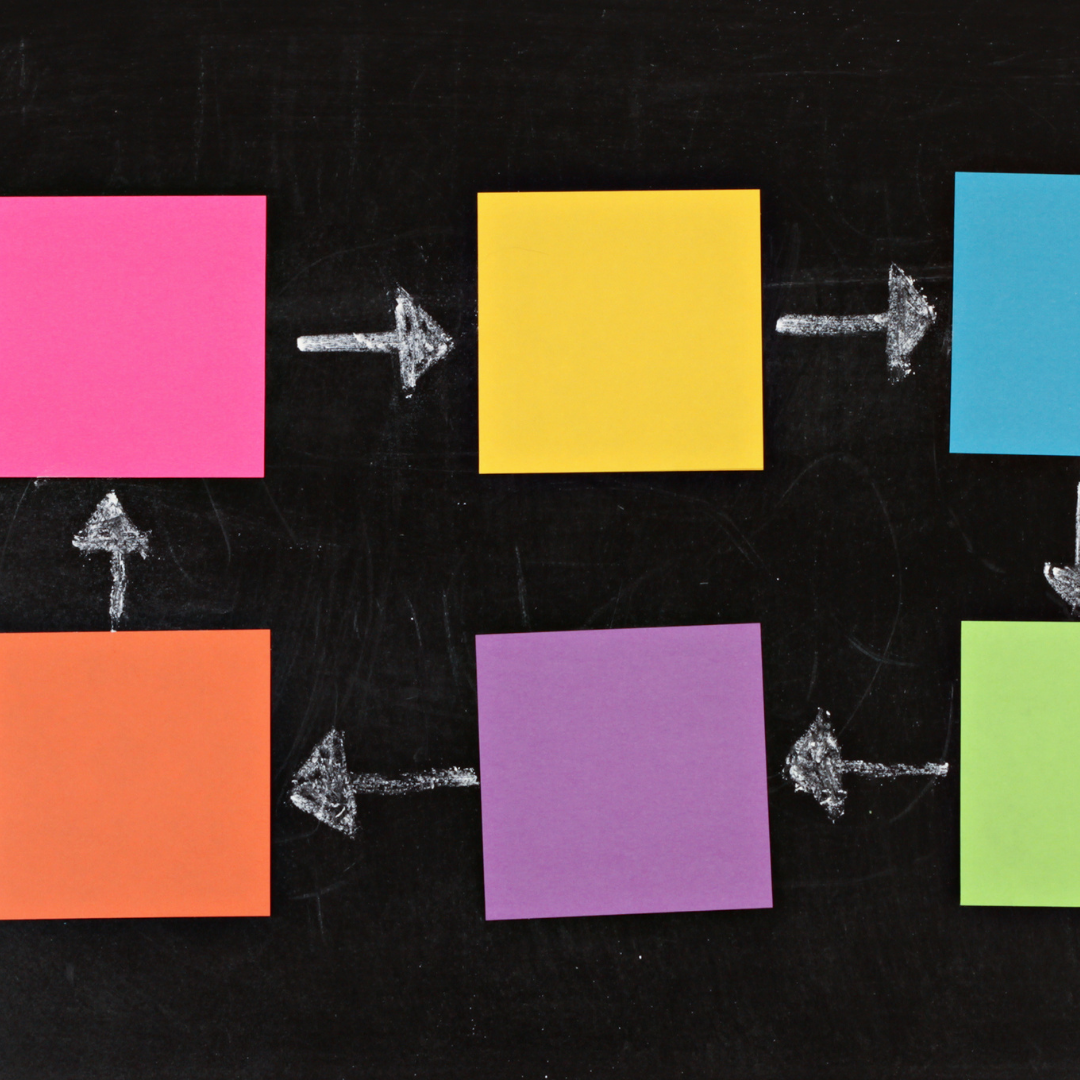
We were instructed to draw a picture illustrating how we solve a problem. After we had a few minutes to complete our task, we were asked to share our results with others at our table. Being the logical engineer, I drew a series of boxes and arrows showing the steps I took from problem identification to resolution. It was essentially a straight line and made a lot of sense to me.
When I reviewed my process with the group, a few looked at my picture with concern in their eyes. Then, one member of the group showed her drawing. It looked like a dust cloud, with an unhappy face on one side and a sunny day on the other side. She described how when a problem comes to her, she goes to a dark place to think until the answer presents itself on the other side, which made her happy.
This couldn’t be a more opposite approach to mine. But it was hers. It’s how she dealt with problems and it worked for her. I realized for possibly the first time that not everyone thinks like I do. I now knew the purpose of the exercise. We can’t assume everyone thinks in the same way. If we do, we won’t be sensitive to their needs and therefore can’t help them through our facilitation efforts.
I became more open to learning as many different facilitation and problem-solving techniques as I could possibly use. Having a full arsenal allows me to modify my approach to the needs of the people I am working with. This simple exercise opened my eyes to the obvious. I’d like to think it made me a better facilitator and someone who can help anyone solve problems.

My Stuff’s not going to fit in that box
I was the Business Team Manager for a vinyl flooring manufacturer in Lancaster PA. The business I was responsible for had been in a death spiral for many years. Consumer tastes had shifted, investments in the business had shrunk, and new product introductions were rare. The day I arrived at the plant I noticed a hand-made sign declaring the plant would be shut down in the next month or two. This was not very encouraging.
I was the Business Team Manager for a vinyl flooring manufacturer in Lancaster PA. The business I was responsible for had been in a death spiral for many years. Consumer tastes had shifted, investments in the business had shrunk, and new product introductions were rare. The day I arrived at the plant I noticed a hand-made sign declaring the plant would be shut down in the next month or two. This was not very encouraging.
The employee union and management had a combative relationship and the business difficulties didn’t help create alignment or trust. The day I was introduced to the Union President, he told me he couldn’t trust me, because he couldn’t trust the people before me and expected that I wouldn’t be there long.
During my first few months, there was a corporate leadership transition. We were under intense pressure to reduce our costs. Our business and jobs were on the line. The Vice President of Operations threatened people with termination many times during my time at the plant. His face would turn beet red as he yelled at the current person that was in trouble.
We did our best to keep our people safe and focused on making the best possible product for our shrinking customer base. It felt like a losing battle most of the time. Every so often, something good would happen that would keep us moving forward.
In the Fall, we were approached by the corporate New Product Development (NPD) team. They wanted to develop and introduce some new, radically different products. Were we up for the challenge of bringing these new products to life through intensive testing and process modifications? We were and dove into the work with renewed energy and passion.
We asked our Marketing Director what we could do to make a greater impact at the new products’ launch. We collaborated and decided we would invite a select group of customers to the plant and showcase the new products and the people that produced them.
Even though employee/management relations weren’t ideal, everyone understood we had to make the best possible impression on our precious customers. We cleaned up decades of filth and clutter, created tour routes and brochures, and designated hourly employees as tour guides for the hundreds of customers who were coming to the plant.
The plant shined. We heard feedback from many of our guests about how committed our employees were to the products they produced and to their customers. We were very proud of our organization and hoped the goodwill generated would lead to increased customer loyalty and better relations in the plant.
It never happened. The market wasn’t thrilled by our new products and as the months went by, orders continued to shrink. The overall negative feeling in the plant returned, as people realized this was likely our last shot at turning the business around.
Two months later, I was told to be in my office at the end of the day. The Operations VP was coming to the plant and wanted to talk with me in the Plant Manager’s office. I immediately wondered if my resume was up to date.
As I waited in my office for the meeting time, I saw the VP walk past with a box in his hands. My first thought was, “my stuff won’t fit in that box!”
When I got to the Plant Manager’s office, I noticed the entire plant staff and VP were seated around a conference table. Was I was going to be terminated in front of an audience? After some pleasantries, the VP started talking about the customer tour and the many positive comments he received about it. I realized that maybe this wasn’t my last day in the plant. Then, he pulled the box onto the table and took out a football signed by NFL great Dan Marino. He wanted me to have it as recognition of our efforts to make the customer tour such a great experience. I don’t remember exactly what I said, but it was something about our team effort and that I was taking my ball and going home!
It was gratifying to know that our hard efforts to create a positive customer experience were recognized and brought improved support and credibility for our business. I only wish that it translated into a better outcome for the business. At least we give our best effort.

If you can’t stand the heat, get out!
I was the Industrial Engineering manager at a ceramic tile factory in western New York for two years. During that time, I participated in many improvement projects. As a member of staff, I was responsible for various administrative and plant coverage duties. One of the most critical responsibilities I had was holiday coverage for the tile firing and curing process.
I was the Industrial Engineering manager at a ceramic tile factory in western New York for two years. During that time, I participated in many improvement projects. As a member of staff, I was responsible for various administrative and plant coverage duties. One of the most critical responsibilities I had was holiday coverage for the tile firing and curing process.
Our tile was mosaic, meaning the color went all the way through. After the raw materials were combined, they were pressed into 1 x 1-inch or 2 x 2-inch squares and placed into ceramic containers with sand. The containers were loaded onto cars that travelled through a kiln. The kiln cars, which weighed hundreds of pounds, spent 36 hours travelling through extreme heat (>1900 degrees Fahrenheit). At the end of their journey, the tiles were fully cured.
Sometimes, cars jumped off of the tracks and got stuck in the kiln. Someone had to get them back on track, so they could exit the kiln. We had personnel who were able to get the cars back on track before there was a major pile-up or wreck in the kiln. If they weren’t able to, we would have to let the kiln cool down to room temperature, which took days and caused most of the tile to be scrapped.
These pile-ups were rare and unpredictable. As a member of staff, I had a responsibility to assist the team while they were trying to get things back to normal, during times when there was no coverage at the plant, such as a major holiday.
On Thanksgiving I was responsible for kiln coverage. I got a call late in the afternoon that one of the cars had jumped off the tracks in the pre-heat section. Fortunately, that’s where it’s just two hundred degrees, rather than thousands. Still, that’s pretty hot.
I dropped what I was doing at home and drove to the plant. When I got there, I met the team that was going to go into the pre-heat section and put the car back on the track. They were gearing up, putting on Tyvek suits, gathering pry-bars and a cooler of water and Gatorade.
My job was this:
1. Keep them alive
2. Keep them hydrated
3. Limit their exposure to the heat
4. Stay out of their way
The team went into the pre-heat section and started using the pry bars to put the car back on the track. They walked in like it was no big deal. After three minutes of effort, I thought they should take a break. I tried to walk into the pre-heat section to tell them to come out. As soon as I did, the intense heat physically pushed me out of the area. I’d never felt anything so hot in my life. And there was the team: fully inside, wearing Tyvek suits, and using pry bars to move the massive kiln car back onto the tracks. Unbelievable!
I decided it would be better just to yell to get their attention. After two more minutes, I was able to convince them to stop what they were doing and take a break and hydrate. After two more attempts in the pre-heat section, they got the kiln car back on the tracks.
As I think back on this experience, I am amazed at how people are able to adapt to the most challenging conditions and work as a team to solve the most difficult problems.

Don’t be afraid to expose your weaknesses
I was the quality control manager for a ceiling grid factory in Maryland. In my first days at the plant, I observed that quality performance was minimally acceptable. There was a lot of room for improvement. I learned from my prior experience as a supervisor in Chicago to involve more people in the process and give them the information they needed to make proper quality decisions.
I was the quality control manager for a ceiling grid factory in Maryland. In my first days at the plant, I observed that quality performance was minimally acceptable. There was a lot of room for improvement. I learned from my prior experience as a supervisor in Chicago to involve more people in the process and give them the information they needed to make proper quality decisions.
People weren’t very involved in the quality process at the Maryland plant. I was determined to do something about it. The first thing I did was review all quality specification drawings for our products. They seemed to be designed for engineers, not operators. The drawings were often ignored and out of spec product was found after it had been produced, even though operators had signed off that everything was in spec. I simplified the drawings to make them easier to use and understand.
The next step I took was to train our employees to install and measure grid properly. Once they understood the mechanics of the grid, they knew they couldn’t let out of specification product end up in the hands of our customers.
One day, early in my tenure, I noticed a visitor from Underwriters Labs (UL) at the plant. He met with Dwayne, the engineering manager. They talked in the break room for thirty minutes. Then, they shook hands and the UL rep left, without going into the plant.
Me: “What was the UL rep doing here?”
Dwayne: “He was auditing our quality certification process.”
Me: “What was he doing in the breakroom?”
Dwayne: “Oh, we had a cup of coffee and talked about fishing.”
Me: “Are you telling me that all he does is visit during his visit?”
Dwayne: “Sure. We don’t want him to come out into the plant.”
Me: “Why not? Don’t we pay Underwriters Labs for their certification? Wouldn’t you want to make sure we’re actually doing what we’re supposed to be doing?”
Dwayne: “We could get in trouble if we’re not doing everything correctly.”
Me: “Not if we take steps to correct our errors.”
Dwayne: “It’s probably best if we keep these visits to the breakroom.”
I wasn’t satisfied and decided to do some research into our UL certification process. Once I was sure we were trying to do the right thing, I spoke with Alan, our plant manager.
Me: “I want to get our house in order in a quality control way and I need your support.”
Alan: “What are you thinking of doing and what are the risks?”
Me: “I want to take the UL inspector on a tour and identify anything that we might be doing wrong. The risk is that we may be doing a lot of things wrong and get cited for any issues.”
Alan: “How are you going to minimize our exposure?”
Me: “I’ve already had conversations with Joanne, our corporate UL expert. She explained what’s supposed to happen during a UL audit and the steps that must be taken if a non-conformance is found. As long as we respond in a timely and proper way, our risk is minimal.”
Alan: “Have you identified anything that we’re doing that may be out of compliance?”
Me: “I have and I think everything is correctable.”
Alan: “If that’s the case, I’ll support you and talk with Dwayne to get his alignment.”
Alan, Dwayne, and I spoke and came to an uneasy agreement. Dwayne was skeptical and worried we might be overwhelmed with issues. I knew we were doing the right thing. If we had issues, it was time to deal with and correct them.
I called the UL inspector, introduced myself, and invited him for an off-cycle review of our process. He was surprised to have someone reach out to him, but was appreciative for the interest.
One month later, he and I took a detailed walk through our quality assurance processes. He found many things that needed to be corrected. Fortunately, they were all simple and minor. For example, a label on a box of grid referenced test method 205. It should have said 205L. Most issues were similar and were corrected within 2 weeks.
Now we were confident that we were producing products that met customer requirements and were properly representing their UL certifications. In the following years, our relationship with Underwriters Labs strengthened and we became partners in the growth of our ceiling grid business.
Go With the Flow
I was engaged to help an electronics manufacturer improve the safety and productivity of a testing lab at their Breinigsville, PA location. The problem they were trying to solve was that it took too long from the time the equipment was received to the time the test report was delivered to the customer.
We took a Gemba walk of the lab. I knew that the lack of organization and visualization of the process were key contributors to the less than acceptable performance. George, the lab owner, had worked for the company for many years and had a system that worked for him, but others had no idea what was going on and how they could help.
I was engaged to help an electronics manufacturer improve the safety and productivity of a testing lab at their Breinigsville, PA location. The problem they were trying to solve was that it took too long from the time the equipment was received to the time the test report was delivered to the customer.
We took a Gemba walk of the lab. I knew that the lack of organization and visualization of the process were key contributors to the less than acceptable performance. George, the lab owner, had worked for the company for many years and had a system that worked for him, but others had no idea what was going on and how they could help.
I proposed conducting a modified 5S Kaizen event, with a focus on improving the safety, productivity, and flow in the lab. Once the charter was approved, we planned a three and a half day workshop.
I arrived the day before the event. Rich, the team leader, informed me that George had cleaned up the lab the week before. Rich was disappointed and thought it would limit what our team could accomplish. I assured him that what George thought was “cleaning” would just give us a bit of a head start on the first day of the Kaizen. It wouldn’t limit the safety, productivity or flow improvements to be made. Rich wasn’t so sure.
What’s Not Part of the Customer Experience is Waste
On the first day of the event, I taught the team Lean principles and helped them understand how to look at processes from the lens of the customer. Anything that didn’t directly impact the experience for the customer was “waste.” Our job was to eliminate as much waste as possible, so the customer could receive their results in the simplest, safest, and most expedient way. I then showed them how 5S (Sort, Set in Order, Shine, Standardize, Sustain) could help us eliminate waste in a simple way.
Next, we took a team Gemba walk of the lab. Team members were feverishly writing ideas on their post-it notes. They were seeing things in a new way. George even admitted he hadn’t realized how much clutter existed in the lab. This initial recognition seemed to assuage Rich’s concerns.
We started removing unnecessary tools, equipment, and supplies on the afternoon of the first day. This continued through the second day. In all, we removed approximately 75% of everything that had been in the lab. Now we could see what was really going on and how we might rearrange things to improve the flow of material through the lab.
There was one critical piece of testing equipment. Before we started our work, it was surrounded by clutter and other equipment. Now, it had much-needed space to work. The team identified the things that would help the testing go through the critical equipment efficiently.
Focusing on Flow
On the third day, it looked like we had a nice arrangement of materials and information in the lab. The team was ready to put up signage and label everything in its optimal position. I knew we were better off than when we started, but there had been no evaluation of the flow. This was my opportunity to teach another technique to evaluate flow: spaghetti diagramming. Team members use a paper layout of the area and trace the movements of people with their pencil or pen as they do their work. When they’re done, the picture looks like spaghetti.
George took us through the fourteen steps of testing, from receipt of the materials to be tested to final report writing. We asked him to move around the lab as he would normally do. When he was done, there was a bunch of spaghetti on the papers. This told us there were many opportunities to reduce the amount of motion and effort in the process. With just a few, simple changes in the positioning of tools and other equipment, we were able to reduce the motion by half, as evidenced by the new spaghetti diagrams. This was a breakthrough.
At the report out, team members noted that by focusing on flow in the lab, they were able to make significant improvements in safety and productivity. Ultimately their customers would see and feel the improvements they implemented. Two weeks later, George was still identifying improvements he could make without any team support. He was now a true believer in the power of Kaizen.

How do you measure knowledge?
If you produce a physical product, it’s easy to see things being created. You can count them, measure them, and identify the cost to produce them. But what happens when you create knowledge or a new product idea. How do you measure your output? More importantly, how do you measure your effectiveness and identify when you need help?
If you produce a physical product, it’s easy to see things being created. You can count them, measure them, and identify the cost to produce them. But what happens when you create knowledge or a new product idea. How do you measure your output? More importantly, how do you measure your effectiveness and identify when you need help?
The technology group of a global ceiling tile manufacturer that I worked for decided it was time to figure this out. For many years, our leaders requested resources and money for projects based on anecdotal evidence and gut feelings. In the business world, you must show a return. If you can’t, somebody else will get the resources and investment.
Resources had become scarce and there wasn’t a clear way to show the return on investment, when requests for money or people were made. We needed to come up with a metric of contribution for our group.
We had four distinct Value Streams: Innovation, New Product Development, Capital Engineering, and Business and Operations Support. Each one worked at different points in the business cycle. Innovation was at the very beginning, when an idea was generated. Business and Operations Support engaged after a project was complete. Was there any way to create a metric that made sense for all four Value Streams?
Developing a New Way to Measure Value
Our plants had a single metric of performance, called Plant Reliability. It measured final output against the maximum output achievable during a defined timeframe. This number, measured as a percentage, could be anywhere from 0 to 100. Each percentage point was worth a defined amount of value to the business, depending on the size and complexity of the plant. When the number went up, cost per unit went down and customer satisfaction rose. It was difficult to “game the system” and each plant could be compared to itself and other locations. Plant Reliability helped the business choose where to invest money and resources to improve performance.
After much discussion, I was able to get alignment of the leadership team to develop a metric based on the concept of Plant Reliability. The twist was that the four value streams would use the same metric to compare performance to themselves and to the other value streams. Then, we would make investments based on the opportunity identified. But only if we could somehow tie the metric into financial results.
Our value stream leaders were talking in terms of Net Present Value (NPV) when they discussed the efforts and results of their teams. In Innovation, for example, they would assign a team to work on a product idea with the expectation that it would generate future revenue. This information could be entered into a spreadsheet and the Net Present Value of the project was determined. These numbers were estimates, but the only way a project could be approved to proceed was using the analysis that determined the NPV.
Measure, Communicate, Adjust, Repeat
We decided to give NPV a try. Each value stream figured out how they would calculate it for their part of the business cycle. Once we approved the calculations, we needed to figure out a way to display it in a meaningful way and determine a target to achieve.
We created an overall NPV display board and each value stream incorporated NPV into their individual team display boards. Once this was done, we educated our teams, customers, and suppliers. Then, we started using NPV as a key discussion point when evaluating work and investment of resources. Instead of gut feel and emotion, we were now using facts and data. The allocation of resources and investment across value streams became a simpler decision to make. The business ultimately got a boost in outcomes from the results-focused behavioral change.

Cream Rises to the Top
I was working with a team in New Jersey to implement Training Within Industry (TWI) on a critical household cleaner line. Plant leadership saw this as a key element in their strategy to improve overall line performance.
I was working with a team in New Jersey to implement Training Within Industry (TWI) on a critical household cleaner line. Plant leadership saw this as a key element in their strategy to improve overall line performance.
In the initial Kaizen event, I trained twelve team members to competently create standard work and train others using the TWI method. Much like my first experience with TWI, the training method wasn’t natural for the team, but by the end of the Kaizen, they had all shown proficiency with it.
One of the hourly team members, Rita, seemed inspired by this “new” method for training. The rest of the team members agreed she had a flair for it and would do quite well training others on her crew.
When I got home at the end of the week, I was confident that TWI would help the plant improve line performance. I hoped the enthusiasm for TWI would continue. Over the weekend, I received a text from Rita, who was excited by what she had learned and had done further research on TWI and other Lean concepts. While this isn’t unheard of, I am always impressed how a winning Kaizen experience can move certain team members to want to learn more.
I sent Rita a congratulatory note and provided a list of my five favorite continuous improvement books for her consideration. She thanked me. I wondered if she would continue to take the initiative to learn more.
Boosting Confidence Through Training
Over the next few weeks, line performance wasn’t improving. I was asked to return to the plant to support the TWI rollout. Other issues had taken priority and the trainers hadn’t been given the opportunity to create standard work or train their coworkers.
I suggested that we have a refresher for the trainers and then practice training their coworkers with the standard work created during the initial Kaizen. Leadership agreed, and I was assigned to four team members, including Rita. I was curious to see what she had done in the weeks between the Kaizen and my visit.
It turned out she had been training some of the people on her crew and getting really good at it. She even gathered feedback at the end of each training session, asking for the level of confidence before and after the training. When her coworkers expressed their level of confidence had risen, it reinforced how important the training was to Rita.
It Takes One Good Leader
Over the next two months I returned to the plant for a few days each week to continue the training rollout. Rita participated every time. It was clear that she had become an amazing trainer. During one session, she taught the plant manager to change over a critical piece of equipment that only the highest skilled workers had previously done. We now knew this was going to work. Other trainers saw what Rita was able to accomplish and it boosted their confidence.
The following month, the line reached its performance objective and has stayed there since. I am convinced that the training process and Rita’s leadership contributed to this success.

If Everyone’s Responsible, Nobody’s Responsible
I visited a consumer goods factory in Pennsylvania. They were profitable, but concerned their ability to service customer orders was deteriorating. I met with plant leadership and took a Gemba walk through the distribution center.
I visited a consumer goods factory in Pennsylvania. They were profitable, but concerned their ability to service customer orders was deteriorating. I met with plant leadership and took a Gemba walk through the distribution center.
They were proud of their efforts to apply 5S. I asked Angela, the Distribution Center Manager, how they used 5S to help them service their customers. She was unsure of my question, so I posed it in a different way:
Me: “What benefits do you get by using 5S?”
Angela: “It’s cleaner in the distribution center than before we used 5S.”
Me: “It does look clean. Well done. How does that help you?”
Angela: “We don’t spend time cleaning up behind each other.”
Me: “How do you ensure it stays clean?”
Angela: “I remind our employees to use 5S and clean up after themselves daily. Sometimes they need additional reminding.”
Me: “Can you show me an example?”
We walked to a tool board. There were spaces for seven different tools. The shape of each was painted on the board. It was apparent where things were to be placed, except all tools weren’t on the board. Only two of the seven were present.
Me: “Where are the other five tools?”
Angela: “I’m not sure. People are probably using them right now.”
Me: “Can we take a look or is there someone we can ask to find out?”
Angela: “We should be able to ask anyone here. Everyone’s responsible for keeping the tool boards filled.”
Me: “I’d like to find out how that’s working.”
We found a distribution center employee and asked him if he knew where the missing tools were. He wasn’t sure. We walked to four other tool boards. Freshly painted, all were missing tools. Without an owner for the boards, there was no Accountability to keep them filled and ready for use. This led to less than effective cleaning.
During the rest of our Gemba walk, we found many more examples of how the lack of Accountability kept performance at low levels. When everyone’s responsible, nobody’s responsible. Once we identified systemic lack of Accountability as the underlying cause of low customer service levels, Angela and I chartered a Kaizen event to resolve the situation.
Lean in Action
I was Lean Champion for the Global Technology group at a ceiling tile manufacturer for six years. During that time, I was responsible to train all new employees in Lean principles and techniques as they joined our group. The goal of this training was to help them understand what we were doing and how we applied Lean to our work. My aim was to generate interest and engagement around Lean. In the early years, things didn’t always go the way I expected.
I was Lean Champion for the Global Technology group at a ceiling tile manufacturer for six years. During that time, I was responsible to train all new employees in Lean principles and techniques as they joined our group. The goal of this training was to help them understand what we were doing and how we applied Lean to our work. My aim was to generate interest and engagement around Lean. In the early years, things didn’t always go the way I expected.
When I first started training new employees, I created eighty PowerPoint slides that described as many Lean concepts as I could squeeze into the two hours allotted for the training. I reviewed the slides, gave participants a chance to ask questions, and then declared them “trained.” I never got many questions during this training and new employee participation in Lean efforts was hit or miss once the training was completed.
I knew I had to do better if I was going to realize my engagement and participation goals. The first thing I did was develop activities to demonstrate the various Lean concepts I was trying to reinforce. From an interactive 5S number search to a triangle peg jumping game, new employees started to draw value from the time they spent with me. I saw a slight increase in engagement and participation. I wasn’t satisfied. What else could I do, I wondered?
My breakthrough came one day when one of the trainees asked, “This is all well and good, but how does it apply to what we do in Global Technology?” I knew what I had to do. Make the training specific to the actual work we did and give demonstrations of Lean in action.
The first thing I did was test my training against the Global Technology Vision and Mission. If parts of the training didn’t support our Vision and Mission, I either removed it or modified it. Now the theoretical became practical. Power Point slides were reduced and made more relevant.
Focusing on the suggestion of Lean in action, I added a Gemba walk to the training. After an hour of classroom training, I led an interactive tour of areas that had applied Lean thinking to their processes. From the Pilot Plant to the Capital Engineering Records Room to the New Product Development Project Board, new employees could observe and interact with people using Lean. They had a more definitive picture of how Lean worked in practical settings.
The training still took two hours, but was much more interactive and engaging. Because I took a different tour route each time, I was more energized by it as well. Most importantly, participation and engagement of the new employees rose to record levels.

Attention to Detail
In 2007, I moved my family across country to take a new role as Production Manager for a ceiling tile plant in Oregon. The plant had a strong team-based culture. People genuinely wanted to help each other work in as safe and productive manner as possible. It wasn’t unusual to see the Plant Manager on the factory floor, assisting the technicians with their work or helping them stay safe.
In 2007, I moved my family across country to take a new role as Production Manager for a ceiling tile plant in Oregon. The plant had a strong team-based culture. People genuinely wanted to help each other work in as safe and productive manner as possible. It wasn’t unusual to see the Plant Manager on the factory floor, assisting the technicians with their work or helping them stay safe.
Plant performance had deteriorated over the years and we were operating at less than budgeted levels. I was determined to identify the reasons and work with the technicians to turn things around.
The first two months of my time at the plant, I spent more time on the factory floor than in meetings or in my office. I came into the plant at any hour of the day or night, trying to assess and understand the reasons for the lowered performance. People had the right attitude. They wanted to win. What was holding them back?
The Team Managers had strong relationships with their people. The equipment was in generally good condition and there was an established preventive maintenance program. Something was missing and I had to find out what it was.
One morning, while taking a walk around the plant, I noticed papers on clipboards at each operating station on the line. They were titled “While Running Tasks.” Taking a closer look, I saw operations checks to be completed and signed off by the technicians on shift. There were many blank spaces on the papers, meaning that checks weren’t completed during the week.
I reviewed these papers and found that less than half of the checks had been completed and signed off. The Team Managers told me the checks were defined as critical to the performance and safety of the line. Teams of technicians had identified and agreed to the tasks. They met every three months to review and update the “While Running Tasks” as new issues arose.
I reviewed the forms to see if there was any correlation between tasks not completed and downtime or scrap events. In a two-month sample, more than one-third of the downtime and scrap events could have been prevented if the checks were completed properly and on time. I now knew what had to be done.
Working with my three Team Managers, we came up with a plan to rapidly improve performance. We would rededicate ourselves to the “While Running Tasks.” Nothing less than a 100% completion rate was acceptable. Technicians would be accountable to complete and sign off on all tasks during their shift. Team Managers would audit the tasks on every shift, and I’d audit randomly every day and do a complete audit at the end of every week.
My Team Managers wanted to conduct crew meetings and share the new requirements with their crews. I told them I wanted to be a part of every meeting, sharing my logic and belief in our new requirement. They agreed and we planned crew meetings for the next day at 6:30 am, 3:30 pm, and 10:30 pm.
I kicked off each meeting. I told the crews how impressed I was by the teamwork I had observed. I also talked about the honesty of people working there. No one ever signed off on anything unless they had actually completed a task. Now, it was time to use our teamwork and honesty to improve performance at the plant.
I reviewed my findings about the “While Running Tasks.” I shared examples of line failures and scrap events directly impacted by the incompletion of the critical work they had identified and agreed to. We owed it to each other to perform the work we agreed to. Next, I laid out the principles and expectations moving forward:
1. Attention to detail will improve performance and keep everyone safe.
2. While Running Tasks are the first line of defense to prevent problems and reduce safety risk.
3. We must achieve 100% compliance to While Running Tasks – anything less increases risk for downtime and injuries.
4. Completing While Running Tasks is a condition of employment.
I then handed the meeting to the Team Manager, who described how he would work with his crew to attain 100% compliance. He described how he would hold himself and each crew member accountable to their “While Running Tasks.” Crews were also encouraged to review their “While Running Tasks” and verify they were practical and designed to prevent problems.
We received many questions. It was easy to answer any concerns. We truly believed this approach was going to keep everyone safer and more productive. People were worried they were going to be fired if they forgot a task once in a while. We understood and put in levels of discipline. We didn’t want to fire anyone. We did believe that 100% compliance was the best strategy to improve performance at the plant. We couldn’t compromise our beliefs.
During the first two weeks, there were a few “forgotten” tasks. There was some discipline recorded. No one was fired. The first month, compliance reached 90%. Plant performance was noticeably improved. The second month, compliance was 98%. The third month, we achieved 100% compliance. Everyone could tell the difference. The plant was running significantly better. For the next year and a half, compliance stayed at 100%. During that time, the plant attained company records for performance. Attention to detail cost us nothing; except time, focus, and commitment.

Let’s See How Things Go
During my tenure as Production Manager at a ceiling tile plant in Oregon, I implemented strict rules around changeovers: No one is allowed in the breakroom during a changeover without Team Manager approval; Everyone is available to help during the changeover; Everyone is at their stations when the line is ready to start up; One Best Way changeover procedures are followed to the letter. No deviations. The procedures were developed by the technicians. There was no reason not to follow them.
During my tenure as Production Manager at a ceiling tile plant in Oregon, I implemented strict rules around changeovers:
· No one is allowed in the breakroom during a changeover without Team Manager approval.
· Everyone is available to help during the changeover.
· Everyone is at their stations when the line is ready to start up.
· One Best Way changeover procedures are followed to the letter. No deviations. The procedures were developed by the technicians. There was no reason not to follow them.
These rules came from my observations the first two months after I arrived at the plant. Those not directly involved in the changeover used that time to go to the break room. We lost vital minutes waiting for technicians to return from break when a changeover was completed. Sometimes help was needed to verify changeover settings prior to starting the line back up. If resources weren’t available, things took longer. Technicians were frustrated when they had to wait for help.
Technicians didn’t like the “no break during changeover” rule. I explained changeovers were the most critical activity during the production run and everyone should be helping to execute the safest, most accurate changeover possible. It couldn’t be done from the breakroom.
Some argued they wouldn’t be able to get their breaks under these new rules. I felt they’d have more flexibility around their breaks once changeover performance improved.
Immediately after the new rules were implemented, employees came to my office to express their displeasure. After listening to their arguments, I explained why I felt the rules were necessary. The plant had a culture of teamwork and help. There was no way to help teammates from the breakroom. Then, I told them, “let’s give it a chance and see how things go.” They didn’t like my answer. I was firm in my convictions and sent them on their way.
At the beginning of every changeover, I took a walk to the break room to ensure people were following the changeover rules. I didn’t want to put all of the burden on my Team Managers. I held myself accountable for rule enforcement. From time to time, I found people in the break room during a changeover. I always asked if their Team Manager had approved the break. Most of the time, they got up and went back to the line, indicating they hadn’t.
After four weeks, changeover time was reduced by 33%. Not only was the time reduced, it was more predictable. Just by having everyone available to help with the changeover and in place when the line was ready to start up. My team noticed the results. Visits to my office by “dissatisfied customers” came down significantly.
Team Managers felt more comfortable enforcing the changeover rules. They knew I had their back and they were seeing results. They were able to explain the rules and the reasons for them. It was no longer “Adam’s rules for changeovers”.
Two weeks later, a technician came to my office. He said, “Adam, I know you’re just going to tell me ‘let’s give it a chance and see how things go.’ I just wanted to tell you how I feel about the changeover rule anyway.” I thanked him for the feedback. He knew what I was going to say. There was no point repeating it.
Changeovers became a source of pride across all of the crews. Teamwork strengthened and performance continued to improve. What was once difficult and frustrating was now safe, simple, and predictable.

Four Value Streams = Four Boards
I reported to the Vice President of Global Technology for a ceiling tile company as Lean Champion. During my tenure, we kicked off our Lean transformation and established four Value Streams: Innovation (R&D), New Product Development, Capital Engineering, and Business and Operations Support. Each Value Stream Director guided efforts to deliver value to the internal and external customers who relied on their critical results.
I reported to the Vice President of Global Technology for a ceiling tile company as Lean Champion. During my tenure, we kicked off our Lean transformation and established four Value Streams: Innovation (R&D), New Product Development, Capital Engineering, and Business and Operations Support. Each Value Stream Director guided efforts to deliver value to the internal and external customers who relied on their critical results.
While the Value Streams had different customers and missions to accomplish, they interacted frequently and shared resources. I supported all Value Streams and had the opportunity to build relationships across all areas of the business. One area we worked on was how to keep critical information in front of us and engage in it at all times.
In the early days of our Lean transformation, we identified the need to create white boards to display the most relevant and urgent information for everyone to see and act on. Using weekly huddles, the boards would be reviewed and decisions were made and documented. Some of the teams took this need for a white board to be a requirement and put together their boards and huddles just because they thought the Global Technology VP and Lean Champion said it must be done.
It quickly became apparent these boards weren’t helping the teams accomplish their work in a manner more productive or safer than they had been before the boards were established. In fact, one of the teams got a bit rebellious and started to make their huddle a grind, rather than a value-adding exercise. Snide remarks and rushing through information replaced deep discussion and problem-solving.
I called a meeting with the Global Technology VP and the four Value Stream Directors. After much discussion, I was able to draw out their resistance to the boards and huddles. Probing further, we identified the issue. They thought the design of the boards was prescriptive, leaving them no room to design for the purpose of their individual Value Streams. Directors thought everything had to look the same and act the same, even if it didn’t work.
Now that we had revealed the problem, we were ready to improve the situation. We quickly agreed that design of the boards and huddles should be left to the Value Stream teams. They’d decide what was most relevant and useful and then design the boards and huddles to highlight only that.
I offered my assistance in helping the teams design their new boards and huddles. Two Value Stream teams took up my offer. Two others decided to do it on their own. We agreed to these design principles:
1. Design the boards and huddles with the tools and information that help your team make decisions in the best possible way.
2. Don’t worry what your board looks like. If it helps you, that’s all that matters.
3. Make it easy to know when help is needed.
4. There’s no standard board layout. We’ll teach our leaders how to read the boards and support your efforts.
Within four weeks, all Value Stream teams redesigned their boards and huddles and started to use them. None of them looked alike. Over the next months and years, Value Stream teams redesigned their boards and huddles many times, based on what they believed was an improvement. The information they shared became more relevant, urgent, and beneficial to their employees, the overall Global Technology group, and their customers.
From time to time, other organizations benchmarked Global Technology due to our impressive results. Most people who visited with us asked why our boards looked different by Value Stream. They thought all boards should be standardized, allowing anyone to read and understand any of the boards without training.
The Value Stream teams came first, I told them. The teams did what was right for the business. We successfully taught our leaders how to read the boards and support the teams. Those who challenged my thinking didn’t always like my answer about standardization. I knew we were giving our employees all the tools they needed to make the best possible decisions for themselves, their customers, and the business.