
Kaizen Success Stories
Real Manufacturing Results. One Kaizen at a Time
Explore real-world Kaizen success stories showing how manufacturing teams solved critical problems, improved performance, and created sustainable results.

A Brilliant Invention
In my early corporate days at Thomasville Furniture, I was given the opportunity to try many things to improve the performance and quality of the operation. This story isn’t about me, but another engineer, who came up with something so creative, he saved the company millions of dollars and improved quality of the product for our customers.

Aligned Area Owners are the glue that holds things together – Part 2
I took a site visit to a new client that runs a paper mill in Oklahoma. After a solid day of meeting the leadership team and touring the site, we agreed on a series of Kaizen events, starting with two 5S events, one on the paper mill side of the plant, and the other one on the converting side. Talk about night and day! In Part I, we saw what happens when the area owner wasn’t aligned. This story is about an aligned area owner.

Macon a productivity improvement
Many of my early projects for Armstrong World Industries were at the Macon Georgia plant. This was and still is the largest ceiling plant in the world, with a capacity of over half a billion square feet of ceiling tiles produced annually.

You can’t help people if you don’t build trust
Right before the pandemic, I was asked to conduct a site assessment by one of my clients. The twist here is that it wasn’t for one of their own plants. Rather, they wanted me to assist one of their key suppliers, who was a co-packer (someone who packages and labels products for its clients and sometimes manufactures products using the clients’ brand). I should have seen the warning signs sooner.

Diving into the Deep End
Armstrong World Industries was forced to open a mineral wool plant, in response to the loss of a critical supplier of this vital raw material for ceiling tile manufacture. Because of this, they relied on more outside vendors to design and build the plant than they were comfortable with. They had never spun molten stone (slag) into fibers before and therefore couldn’t use their experience to reduce the potential for errors and inefficiencies in their process.

My First True Gemba Walk
I started my career as an industrial engineer for Thomasville Furniture in North Carolina. My initial responsibilities included warehouse barcoding support and veneer plant projects. For the warehouse, I had to learn how barcodes were used to inventory, ship, and receive finished furniture from the various plants in the network. In the veneer plant, I was to conduct time and work studies and also identify improvement projects.

The Bottleneck
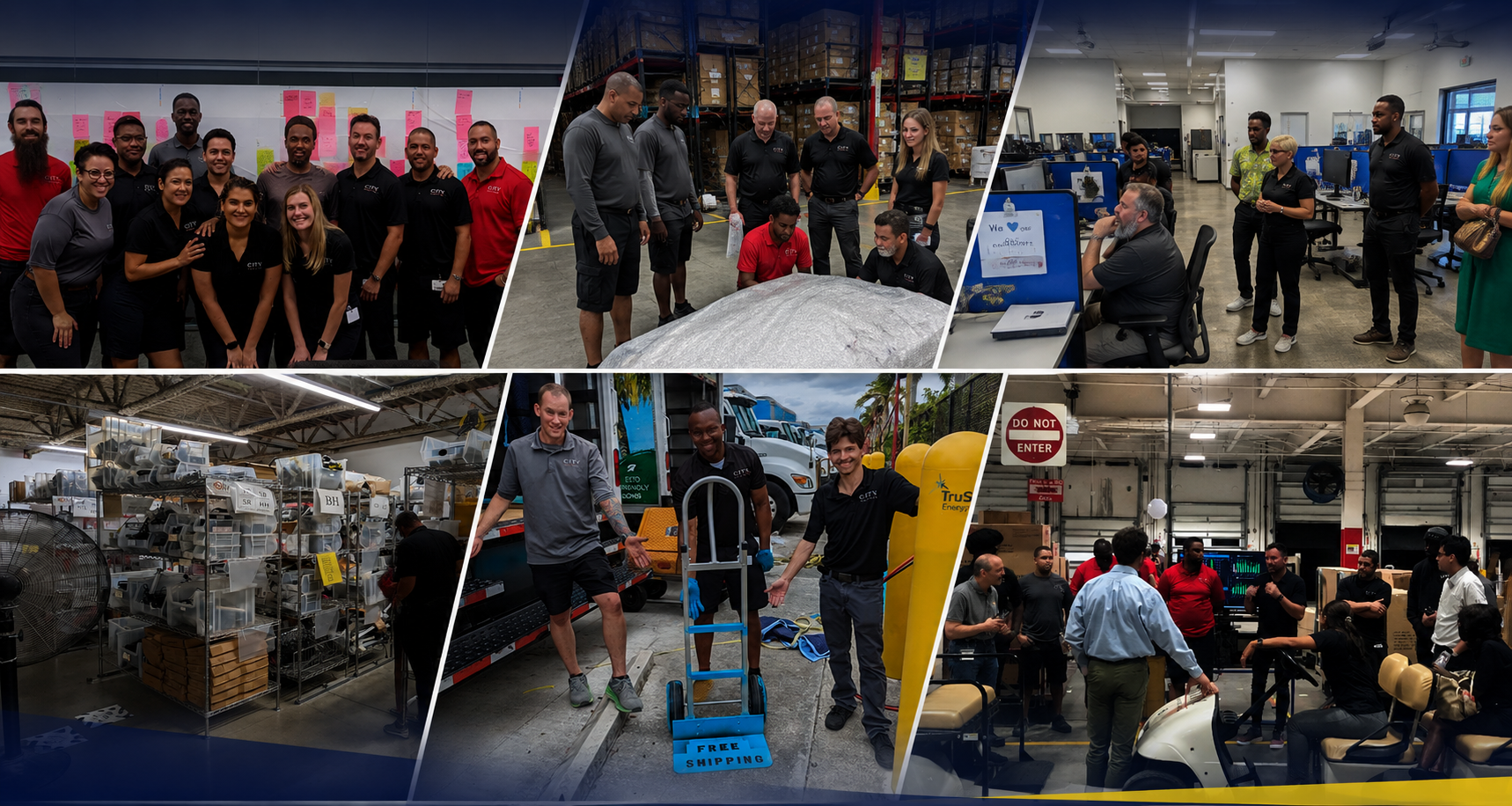
I met Andrew Koenig, the CEO of CITY Furniture, at a virtual Lean conference during the pandemic. We immediately hit it off, and he invited me to help strengthen the Kaizen culture at his company.
For two years, I facilitated Kaizen events on a monthly basis. It never ceased to amaze me at the number of improvements and breakthroughs that could be accomplished in a company that has been living Lean and continuous improvement for many years. More than that, the energy of team members was inspiring and infectious. I was warmly greeted by associates on every trip and many of them proudly showed off prior improvements and how they were sustaining the gains from our Kaizen events.

An Unlucky Break
Critical problems seem to happen over a holiday weekend when there is less coverage. For me, Thanksgiving provided many challenges. Early in my career, I had to come into the ceramic tile factory the day after Thanksgiving to supervise a crew trying to clear a jam in the kiln. Many years later, a water main in St. Helens Oregon broke and shut down the ceiling tile plant. Once again, I was the one covering, and had to respond quickly and deal with a near disaster.

Three Principles for Funding
During my time living on the west coast, I wanted to give back to the community. Many of the staff at the St. Helens, Oregon plant participated in some way or another with the United Way of Columbia County. I was intrigued. I had participated in many United Way Days of Caring during my time in Pennsylvania.

Scripting Changeovers Leads to Consistent Performance
I moved to Armstrong World Industries’ St. Helens Oregon ceiling tile plant and took as Production Manager for three years. During that time, I was able to test many Lean principles and improve my understanding of how to manage an organization to high performance.

Plant Reliability Rollout – the Story of Mobile
I was a corporate industrial engineer at Armstrong World Industries. From time to time, I was given projects that impacted all facilities around the world. John, our manufacturing VP, was hired from an outside company. He was determined to have an accurate measure of performance, to compare facilities, and identify the highest value opportunities for improvement and investment.

When You Want Something Done Right – Outsource It
I was asked to create a discrete event simulation program for a planned factory expansion many years ago at Armstrong World Industries. What is that, you may ask? Basically, it’s a computer model of a process as it operates. It tries to mirror the behavior of the process, allowing the user to try various “what if” scenarios, such as adding capacity, downtime, resources, or speed. Having not built any simulations since my college days, I started doing research on options and whether or not I should try to build it myself or hire an outside vendor.

Pick It Up and Move It
I was an early Lean practitioner at Armstrong World Industries. I’d spend a week with a production and maintenance team on a production line, helping them implement improvements to safety, quality, productivity, and customer service. At the end of the week, we’d give a tour of our changes. Because of our numerous successes, I was requested to help many of our manufacturing sites around the world.

Stop and Smell the Roses
I was the Production Manager at the St. Helens Ceiling Tile plant for just under three years. I had always wanted to apply my continuous improvement mindset to a production organization. The VP of Manufacturing gave me a chance and I was determined to repay his trust and support with excellent results.

If you can’t stand the heat, get out!
I was the Industrial Engineering manager at a ceramic tile factory in western New York for two years. During that time, I participated in many improvement projects. As a member of staff, I was responsible for various administrative and plant coverage duties. One of the most critical responsibilities I had was holiday coverage for the tile firing and curing process.

How do you measure knowledge?
If you produce a physical product, it’s easy to see things being created. You can count them, measure them, and identify the cost to produce them. But what happens when you create knowledge or a new product idea. How do you measure your output? More importantly, how do you measure your effectiveness and identify when you need help?

The Vortex
Sometimes we don’t see what’s right in front of us. We just do what we do and deal with the problems that inevitably arise.
I facilitated a Kaizen event for a non-profit. Contributions were declining significantly. After taking a Gemba walk through the process, we identified the need to improve donor engagement. It was taking up to two months to acknowledge the highest value donations. No wonder donors were leaving in droves. Recognition was slow and not meaningful.

If Everyone’s Responsible, Nobody’s Responsible
I visited a consumer goods factory in Pennsylvania. They were profitable, but concerned their ability to service customer orders was deteriorating. I met with plant leadership and took a Gemba walk through the distribution center.

Saving Is Not Saving
We were building a ceiling tile manufacturing plant in Russia. Like most projects, the engineering team was directed to save money, as long as it didn’t negatively impact safety or productivity. As most were unfamiliar with doing business in Russia, they used their experience with known vendors to acquire equipment for the plant. If there wasn’t enough capacity to fill equipment needs, the project team worked with local consultants to identify the “best” options for equipment purchases.

Status Indicators
During a Kaizen event, teams identify projects to work on and then go off and do the work, hoping to return with a finished product. In my early experience, I allowed team members to work on their own. I hoped they would complete their work in a reasonable amount of time. It didn’t always turn out that way. Hope is not a plan.