
Kaizen Success Stories
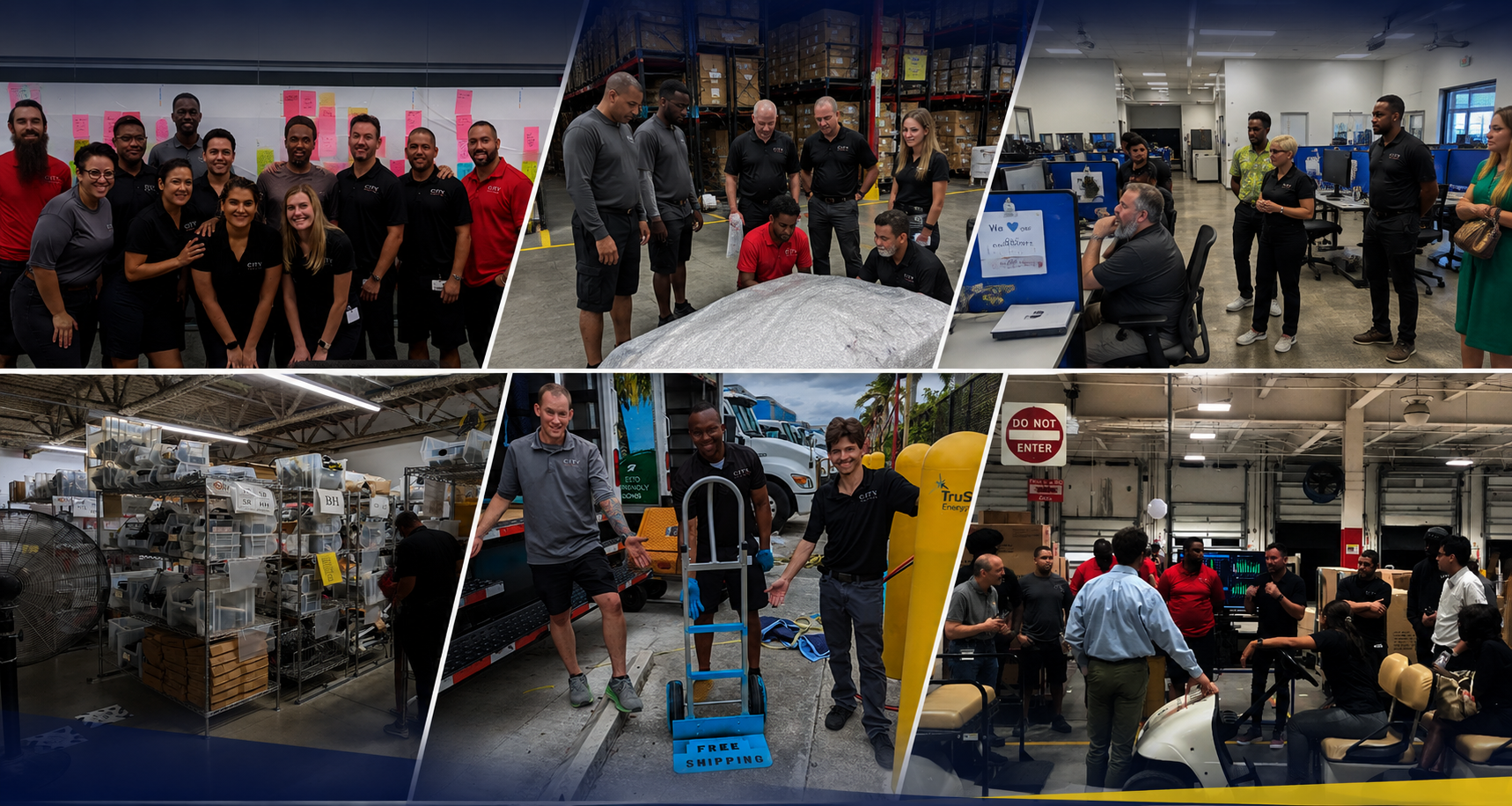
Real Manufacturing Results. One Kaizen at a Time
Explore real-world Kaizen success stories showing how manufacturing teams solved critical problems, improved performance, and created sustainable results.
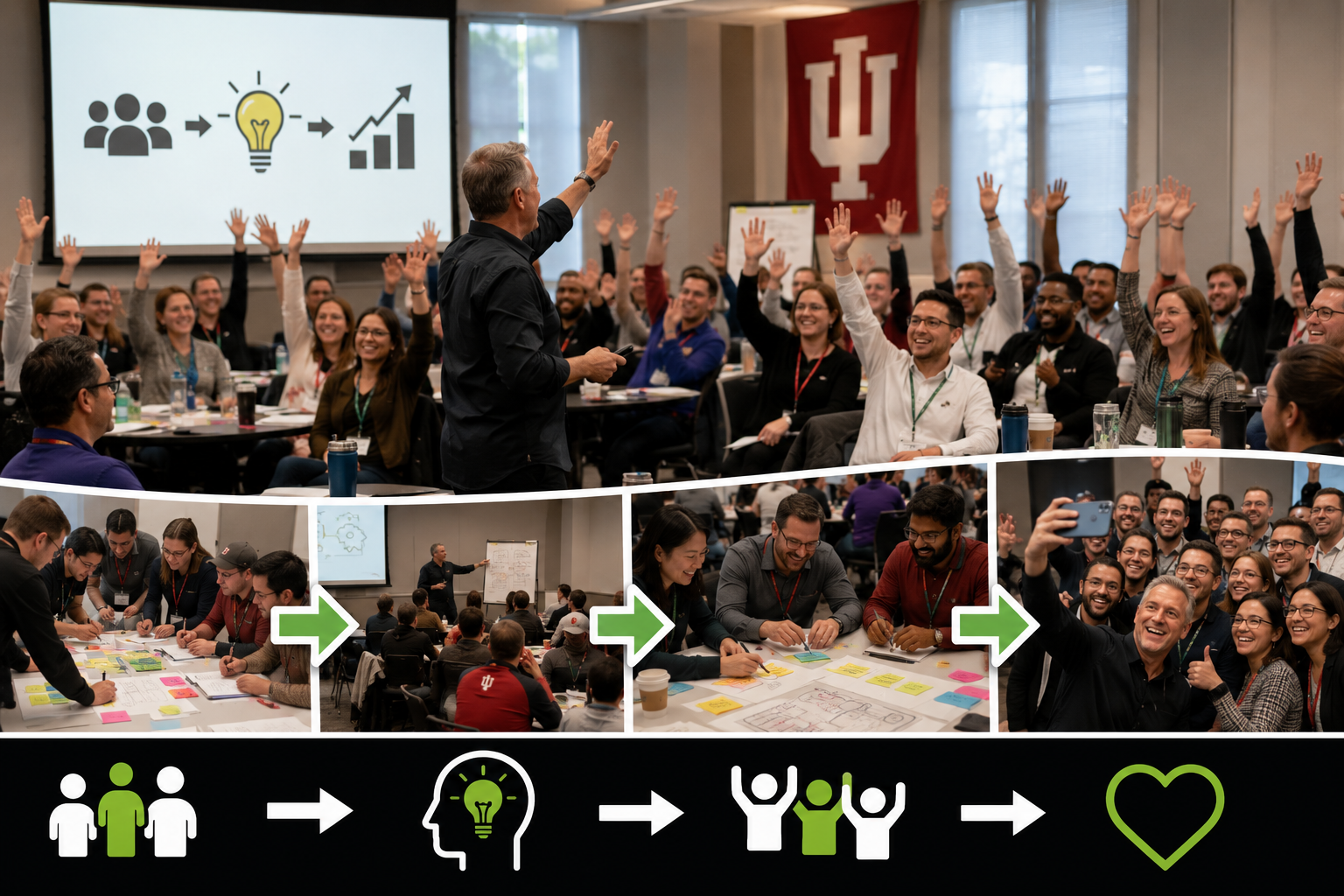
The Audience That Wouldn’t Leave
Conference attendees were free to come and go throughout the day. Instead, most stayed for every workshop. Discover how interactive facilitation transformed a room full of strangers into a learning community that didn't want the day to end.
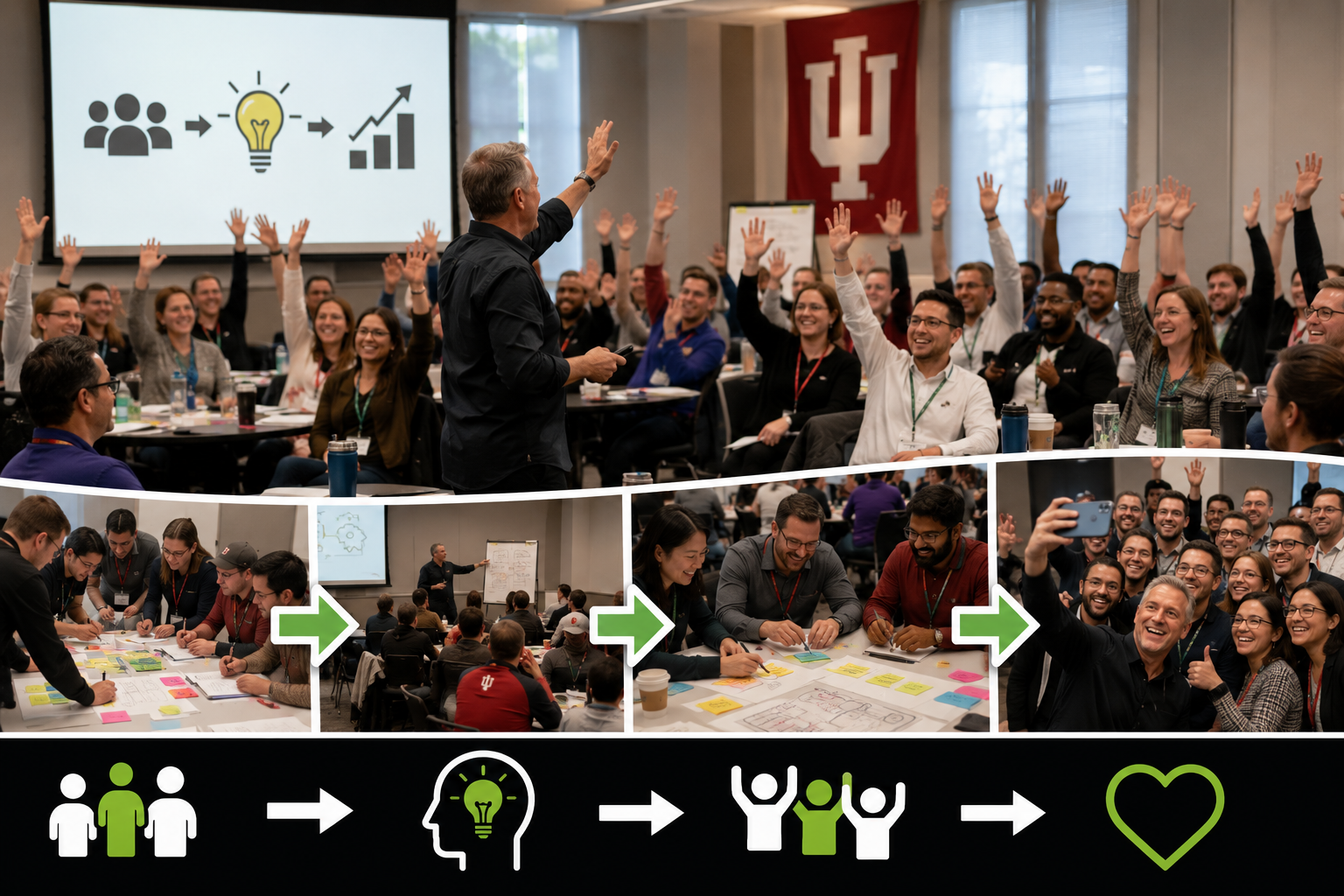
Kaizen Snapshot
Setting: 2025 Global Lean Summit at Indiana University
Challenge: Deliver five highly interactive Lean workshops to a changing audience while keeping participants engaged throughout an entire day.
Stakes: Create meaningful learning experiences, maintain energy across multiple sessions, and adapt as new attendees joined while others chose to stay.
Approach: Activity-based facilitation, storytelling, experiential learning, and progressively building Lean concepts throughout the day.
Outcome: Most participants stayed for nearly every workshop, engagement increased with each session, lasting relationships were built, and one participating organization later invited me to perform a Breakthrough Assessment with plans for a Value Stream Mapping engagement.
Key Lesson: The best learning experiences don't end when a presentation is over—they inspire people to stay for the next one.
The Audience That Wouldn't Leave
The Situation
For the fifth consecutive year, I was invited to participate in the Global Lean Summit hosted by Jared and Anna Thatcher. The 2025 Summit was held at Indiana University and brought together Lean practitioners, leaders, consultants, and students from across the country for three days of learning and collaboration.
On the second day of the conference, most attendees would travel to Toyota Material Handling for a plant tour. For those remaining on campus, including university students, I was asked to lead four interactive workshops while fellow presenter Karil Sampson delivered a fifth.
It sounded like a full day. I had no idea how memorable it would become.
What Was Getting in the Way
Teaching one workshop is energizing. Teaching five in a single day is a different challenge. Each presentation needed to stand on its own while also building on the ideas from earlier sessions.
Adding another layer of complexity, I expected people to rotate in and out throughout the day. That meant constantly introducing new participants while trying to keep returning attendees engaged. It would require more than simply delivering presentations. It would require creating an experience.
What We Did
The day began with Chartering to Win, exploring how leaders create alignment before launching improvement efforts. Rather than lecturing, I filled the room with activities. People stood up. Worked together. Wrote on flip charts. Shared ideas and laughed. When the session ended, I assumed most people would head off to something else. Instead, many of them stayed.
The next workshop was Facilitate Like a Ninja, where participants practiced techniques for engaging teams, generating ideas, and creating energy during improvement events. Again, I expected the audience to change. Again, they stayed.
After lunch, Karil delivered an outstanding workshop on Root Cause Problem Solving while I recorded his presentation so he could use it in the future. By then, something had changed. The room no longer felt like a collection of conference attendees. It felt like a team. We were taking selfies. Recording videos. Laughing together between sessions. People who had been strangers that morning were now learning from one another.
The Breakthrough
The fourth workshop focused on the Wheel of Sustainability and Sustainable Leadership. As more students joined throughout the day, I found myself repeatedly reviewing introductory concepts to help newcomers catch up. I thought I was helping.
The returning participants taught me something. Their feedback was simple: "You don't have to keep starting over." They already understood the foundations. They were ready to move forward. It was a valuable reminder that great facilitators don't just pay attention to who's arriving. They also recognize when people are ready for the next challenge.
What Changed
The final workshop covered Value Stream Mapping. One of my favorite exercises asks teams to map the process of making a peanut butter and jelly sandwich. It sounds simple. It never is.
By this point, the audience knew the rhythm. They understood the activities. They anticipated the questions. In fact, during portions of the workshop, participants were practically presenting the material alongside me. The conversations became richer. The collaboration became stronger.
The room had transformed from a group of individuals into a genuine learning community. Watching that happen was every bit as rewarding as delivering the presentations themselves.
The Moment That Said It All
When the final workshop ended, I was exhausted. Five workshops in one day. Hundreds of conversations. Dozens of activities.
But what stayed with me wasn't the fatigue. It was the realization that people had chosen to stay session after session.Not because they had to. Because they wanted to. As a facilitator, there may not be a greater compliment.
What Changed After the Summit
One of the participating organizations had sent a large group of employees to the Summit. A few weeks later, they invited me to perform a Breakthrough Assessment at their facility.
Our conversations during the Summit had turned into the beginning of a partnership, with plans to follow that assessment with a Value Stream Mapping engagement.
Sometimes the greatest opportunities begin simply by creating an environment where people want to keep learning.
The Takeaway
Great facilitation isn't about delivering information. It's about creating experiences. When people become active participants instead of passive listeners, something remarkable happens. Learning becomes contagious. Ideas spread. Confidence grows. And strangers become teammates.
Why This Matters
Organizations often invest heavily in technical training while overlooking the importance of engagement. People rarely remember every slide from a presentation. They remember how they felt. They remember contributing. They remember solving problems together.
Those experiences are what create lasting learning and lasting change.
Ready to Build More Engaged Teams?
Whether you're developing internal facilitators, strengthening leadership, or looking for an engaging keynote that combines real-world Kaizen stories with practical Lean tools, the right learning experience can create momentum that lasts long after the event ends.
If you'd like to energize your next conference, leadership retreat, or facilitator development program, let's start the conversation.
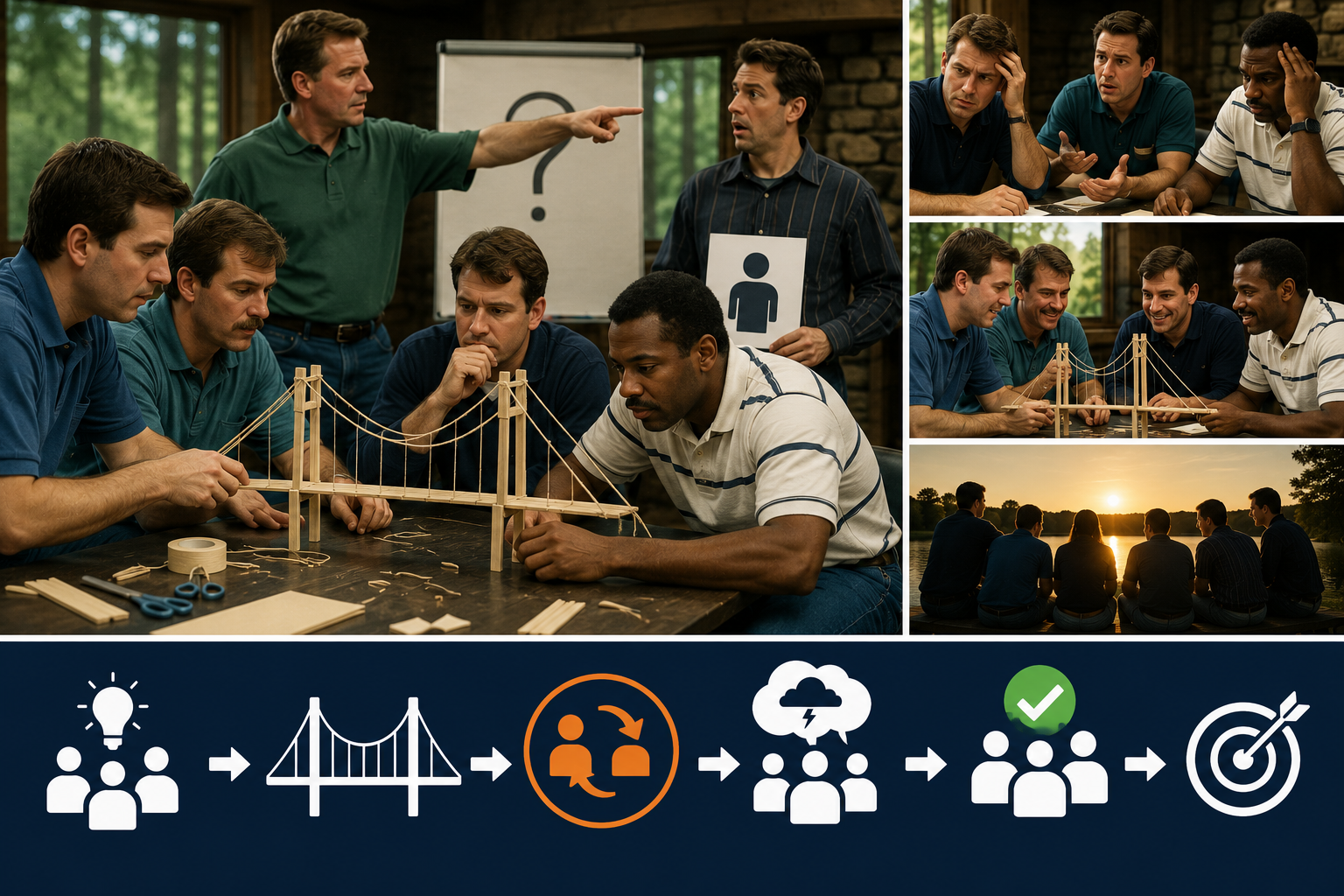
The Week They Kept Moving the Goalposts
I expected a week of management training. Instead, I spent five days having the rules changed, my plans disrupted, and my assumptions challenged. It became one of the most valuable leadership lessons of my career and one that still shapes every Kaizen event I facilitate today.
Kaizen Snapshot
Setting: Worthington Armstrong Venture (WAVE) management development program
Challenge: Learn a new management philosophy through a week of constantly changing, unpredictable team exercises.
Stakes: Develop leadership skills, adapt to a new corporate culture, and learn how to lead effectively when plans don't go as expected.
Approach: Experiential learning, team challenges, unexpected changes, and continuous reflection instead of traditional classroom instruction.
Outcome: A completely different perspective on leadership, teamwork, and facilitation, one that has influenced every Kaizen event and leadership workshop I've led since.
Key Lesson: Great leaders don't avoid uncertainty. They learn to thrive in it.
The Week They Kept Moving the Goalposts
The Situation
A little over a year after becoming a plant supervisor at a small Armstrong World Industries facility near Chicago, my career took an unexpected turn. Armstrong and Worthington Steel formed a joint venture called the Worthington Armstrong Venture (WAVE), and I was transferred to a larger manufacturing facility near Baltimore as the Industrial Engineer and Quality Manager.
As the new organization began adopting Worthington's culture, I was selected to attend the company's management development program. I expected a typical week of management training with classrooms, lectures, overhead transparencies (no Power Point at the time), and a few role-playing exercises.
Instead, I found myself living at a camp in Ohio with managers from across the company. It wouldn't take long to realize this wasn't going to be anything like the management training I had experienced before.
What Was Getting in the Way
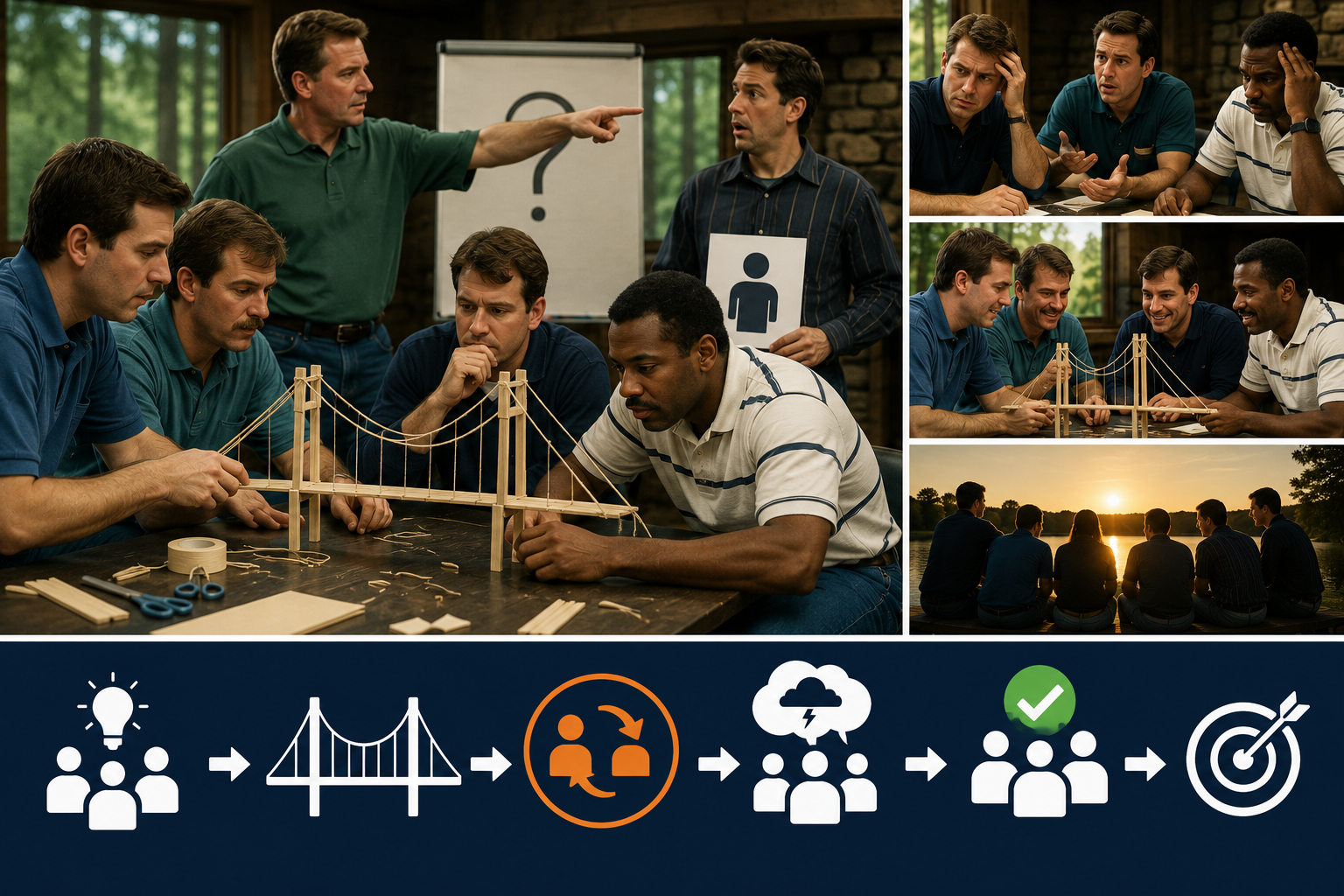
The first exercise seemed straightforward. Our team was asked to design and build the best suspension bridge possible using a limited set of materials. Like any engineering team, we quickly organized ourselves, assigned responsibilities, and developed a plan.
Then everything changed. About fifteen minutes into the exercise, an instructor walked into the room. Without warning, our team leader was removed. Someone we had never met was assigned to replace him. We weren't allowed to start over. We simply had to adapt. At first, it felt frustrating, then confusing, then interesting.
What We Did
As the week continued, the pattern repeated itself. Every time we thought we understood the assignment the rules changed, the team changed, the priorities changed, or the circumstances changed.
Every exercise included an unexpected twist. Eventually, our conversations shifted. Instead of asking, "Why do they keep doing this to us?" we began asking, "What are they trying to teach us this time?"
Without realizing it, we stopped expecting stability. We started expecting change. Something remarkable happened. We became much better at helping one another navigate uncertainty.
The Breakthrough
By the middle of the week, I realized this wasn't management training. It was adaptability training. The instructors weren't evaluating our original plans. They were watching how we responded after those plans stopped working.
Some participants struggled whenever a curveball appeared. Others became frustrated when their carefully constructed plans suddenly unraveled. I found myself naturally stepping into a different role. Helping people regroup, refocus, stay calm, and remember the real objective.
The goal had never been to build the perfect bridge. The goal had been learning how to lead when the unexpected happened.
What Changed
Looking back, that week changed the way I viewed leadership. It taught me something I've carried throughout my career. No matter how well you prepare, something will change. A key leader won't be available. Equipment will fail. Priorities will shift. Weather will interfere. Someone will challenge the plan.
The organizations that succeed aren't the ones that avoid those moments. They're the ones that adapt to them. That lesson has shaped every Kaizen event, workshop, and leadership engagement I've facilitated ever since.
The Takeaway
Today, people sometimes ask why I stay so calm when something unexpected happens during a Kaizen event. The answer goes back to that week in Ohio. I've learned that the plan is never the goal. Learning is the goal. The plan is simply where you begin.
Why This Matters
Organizations spend enormous amounts of time developing detailed plans. Planning is important. But no plan survives unchanged once real people, real equipment, and real business pressures enter the picture.
The strongest teams don't panic when circumstances change. They adjust. They learn. And they keep moving toward the objective together. That's one of the most valuable leadership skills any organization can develop.
Ready to Build Teams That Thrive Through Change?
Transformation rarely follows a perfectly written script. The organizations that consistently improve are the ones that develop leaders who remain calm, keep people aligned, and adapt quickly when the unexpected happens.
Whether through a Breakthrough Assessment, a Kaizen event, or leadership development, building that capability may be one of the greatest competitive advantages your organization can create.
One of my favorite sayings today is: "It's not a great Kaizen unless something goes sideways." I don't say that because I expect failure. I say it because some of the greatest breakthroughs begin the moment the original plan no longer works.

Shining Like a Star
Kaizen events can be life-changing for team members. This is the story of Steve, who grew so much during the week that his co-workers almost didn’t recognize him.
I love facilitating Kaizen events. They can be life-changing. Some team members grow so much over the course of a single week, it’s hard to believe they're the same person by Friday. This is the story of one such transformation, a moment that left people amazed.
Our team was working on a critical issue in the maintenance shop and support areas. It took over 20 minutes to find the parts, tools, or equipment needed for a repair. That might not sound like much, but when a maintenance technician has to go back and forth seven times for different tools or parts, the time adds up fast. It has a direct impact on equipment downtime.
We chartered and scoped the event to cover the inside maintenance shop, an upstairs storage area, a heavy-duty outdoor rack, and a shipping container (about 50 feet long) sitting on the pavement behind another building. Along with improving safety, our goal was to reduce "find time" by at least 75%, with a goal of 5 minutes or less.
The team consisted of four hourly maintenance technicians, their leader, my sponsor, an engineer, a maintenance planner, and the HR leader.
We kicked off bright and early at 6 a.m. Monday, which was the team’s normal shift start. They were quiet, skeptical, and clearly not ready for what was about to happen. I brought the energy, and a few of them perked up a bit during our Lean and 5S overview. We would be utilizing 5S (Sort, Set in Order, Shine, Standardize, Sustain) as the approach to meet our goals.
During our Gemba walk, everyone was jotting down ideas on Post-its. The spaces were packed with clutter. I could already tell we’d hit our goals easily, but the team wasn’t so sure—they were still stuck in their current state mindset.
When we walked out to the shipping container, I noticed Steve, one of the mechanics and a big, strong guy, writing furiously.
Me: “Steve, looks like you’ve got a lot to say about this container. What’s on your mind?”
Steve: “Adam, I’m in here all the time—sometimes at night, in the rain. Look at me—I sweat just walking in during summer. And it’s pitch black at night. I can’t see anything.”
Me: “What are you usually looking for?”
Steve: “PVC parts. There are thousands of them. They’re all mixed up. Sometimes it takes me hours to find what I need.”
He wasn’t exaggerating. Some of these parts were barely an inch long, mixed in boxes with all kinds of unrelated items. I wasn’t sure why they were even stored outside, but I hoped we could fix that.
After our walk, we got together to share improvement ideas. Our first step was Sort. We broke the team into three groups: one for the shop, one for the upstairs storage area, and one for the shipping container.
I volunteered for container duty. Most folks were happy to avoid it. The weather was cold but clear. The engineer joined me, and we got direction from Steve and the maintenance lead on what to toss and what had to be kept.
We filled two dumpsters with obsolete filters. It turns out a vendor handled all filter replacements now with their products. This was an easy win.
Next, we tackled the PVC parts. We loaded them onto carts and brought them inside. It was a job that took the remainder of Day 1 and part of Day 2.
Steve couldn’t believe we were actually following through on this. He started to envision a setup with labeled bins in the upstairs storage area. That night, he volunteered to present our progress update. When he stood up in front of the group, jaws dropped.
Apparently, Steve never spoke in meetings or even said much to his coworkers. He was friendly and hardworking, but mostly kept to himself. No one remembered him speaking in front of a group during his time at the plant.
The rest of the week, the transformation continued. Steve was laughing, cracking jokes, and fully engaged in every discussion. He found his spark.
By Friday, the container had been repurposed for outdoor equipment. Signage was clear and easy to follow. All the PVC parts were inside, organized, and labeled in bins. We did a test with six people who didn’t know the space, and their average "find time" was under three minutes.
During our final report-out, Steve shared what the changes meant to him. “I don’t have to go out in the dark, in bad weather, and dig around. I know exactly where everything is now. We need to do this in other places, too.”
Steve and the rest of his team will never look at clutter or wasted time the same way again. His growth didn’t just help the team, it made a difference for him personally. And that’s what Kaizen should be all about.

Experimenting in Europe
I was asked to co-facilitate a regional cost-reduction session with my Armstrong mentor, Fred, in Europe. He had facilitated many of these sessions over the years with great success. I was excited for the opportunity to work with him and tour around countries I wasn’t familiar with.
I was asked to co-facilitate a regional cost-reduction session with my Armstrong mentor, Fred, in Europe. He had facilitated many of these sessions over the years with great success. I was excited for the opportunity to work with him and tour around countries I wasn’t familiar with.
We planned the session together for a month before we left for Europe. It wasn’t unusual for these sessions to identify tens of millions of dollars of actionable improvement opportunities, so the investment of time was well spent. I was always impressed with Fred’s attention to detail and the way he was able to get strong engagement when he facilitated. I knew I was going to learn more about facilitation and strengthen my skills.
We flew to Europe on the weekend and spent a day looking at some castles and the little town we were staying in. Then, on Monday, we went to the corporate office and set up the conference room for the next day’s session.
Fred shared portions of the agenda with me to facilitate. He wanted me to gain experience leading this important session. He took most of the critical elements, including brainstorming and prioritization, as these were the areas in which he truly shined.
During the brainstorming session, I could tell Fred was getting a little tired and running out of ideas on how to draw more creativity out of the room. I suggested a short break and Fred was open to it. I asked Fred if he would be willing to let me step in for a few minutes, changing the tone of the session, by changing facilitators. He allowed me to do so, and I was able to squeeze a few more ideas out of the group.
Then, we took a lunch break. We were about to get into what Fred thought was going to be a lengthy session: the prioritization of the hundreds of ideas that had been generated. During lunch, Fred and I talked about his approach to prioritization. He was going to compare ideas against all others, generating an “A vs. B vs. C vs. all alternatives” matrix. Basically, the ideas that won the comparisons the most times would be the highest priority ideas to work on for the rest of the session.
I told Fred I thought it could take many hours to accomplish this and I may have a quicker way to complete the prioritization. He told me he’d like to try it his way first, but we could talk about adjusting if necessary.
After lunch, Fred drew a complex matrix on a whiteboard and explained his approach to prioritization. The team understood and was engaged as he took them through the initial stages of comparisons.
About thirty minutes in, I noticed some of the participants looked distracted and tired. I also realized we hadn’t finished the first set of comparisons. There were literally dozens more to be completed. I started thinking about how I could help get all these ideas prioritized in a shorter time. Then, an idea hit me. I asked Fred if we could take a short break and regroup. He accommodated my request.
During the break, I explained what I was noticing, did a quick calculation of how long it would take to finish it the way he had started, and asked if he was willing to try my suggestion. He asked for more details, and I explained I would like to try multi-voting with criteria. Using this process, each team member would pick the top 10 ideas they thought would provide the best cost-savings, be easiest to implement, and do no harm to anyone from a safety or quality perspective. Even though this approach didn’t seem scientific, I believed it was a way to utilize the diverse perspectives in the room and quickly build consensus around the many ideas generated.
Fred gave me the go-ahead, with a caveat. If this concept didn’t generate the results the team needed, from their perspective, we’d go back to his method.
I framed out the approach and explained multi-voting with criteria in detail to the team. They asked a few questions and even added an additional criterion to the list. I knew this approach had a chance because they were owning it!
Thirty minutes later, we had prioritized the many ideas into the top 20 to develop further for the company. We took the temperature of the room and by an overwhelming majority they agreed these 20 ideas were truly the top ones out of the total group. We documented all the other ideas, just in case they might be needed in the future.
Fred agreed this quicker approach likely got to the same conclusion that the “A vs. B v. C vs. all alternatives” comparison approach would have. I don’t think either of us could prove that, but we were relieved we had completed the prioritization in a way the team owned.
Over the years, I have refined my multi-voting with criteria approach to cut the prioritization time in half. I can explain it, facilitate it, and train others to do it. I am convinced I have found something to save precious time, even in the most complex ideation and prioritization sessions.

Zigging and Zagging Along the Way
I developed a Kaizen facilitator training program for CITY Furniture. Once I realized I could train others in facilitation techniques I had developed over many years of experience, I decided to share the program with my network.
I developed a Kaizen facilitator training program for CITY Furniture. Once I realized I could train others in facilitation techniques I had developed over many years of experience, I decided to share the program with my network.
The program contains experiential learning topics covering my top facilitation principles, facilitation practices, Chartering to Win, the Wheel of Sustainability, and other topics I utilize to ensure Kaizen teams have a sustainable, winning experience. I reviewed this with a potential client who was extremely interested.
One month later, with a purchase order in hand, I modified the program to meet some specific needs, as defined in a series of meetings leading up to the training. We even developed a charter for the training, making sure it aligned with the leadership vision of the company.
Although I had previously trained 4 high-potential candidates with CITY Furniture, I was confident I could offer the training to a class of up to 8 participants. In order to give everyone the opportunity to participate in all training exercises, I recommended we expand the course from 2 ½ days to 3 ½ days.
On the first day, I covered critical foundational topics, such as:
· The separate roles of facilitator, team leader, and team sponsor.
· My top 12 facilitation principles
· Top facilitation techniques with exercises for all participants
I was hoping to cover prioritization techniques, but realized things shouldn’t be rushed, so I moved it to the following day. The team was asked to provide feedback on how the day went and while most was positive, there was some discussion about other topics to cover, including a demonstration of a facilitated Gemba Walk.
I reviewed the feedback with my sponsor and he agreed the team needed a Gemba walk demonstration to help them understand the role of the facilitator during this critical Kaizen exercise. I agreed and had to determine which other topics might have to be shortened or removed. Luckily, the extra day built into the training gave me some flexibility.
On day 2, we began by discussing chartering. We had eight real Kaizen events, with sponsors waiting “on-call” for chartering discussions with the trainees. This was to occur between 10:15 and 11:30 am. At 10:30, facilitators met in-person and virtually with their sponsors and worked on charters for upcoming Kaizen events. This made the training real and compelling. All participants learned how critical it was to properly charter their upcoming events and that getting their sponsors to be clear, concise, and aligned wasn’t as easy as it appears to be.
I scheduled the facilitated Gemba walk after lunch. The trainees were given an assignment to identify improvement opportunities on a production line, while I facilitated them to stay on task and engage with the technicians working on the line. After 45 minutes, I brought them back into the meeting room to demonstrate idea gathering and prioritization, which had been delayed from the prior day.
Once this exercise was completed, I had time for one more critical topic, even though the agenda had two in the plan. I chose the one that would be easiest to retain, as it was extremely interactive.
At the end of the day, the feedback was once again mostly positive, with appreciation for the addition of the Gemba walk. There were still thoughts about topics that weren’t included in the agenda. I had to determine how to deal with those. My decision was to utilize any remaining time on the third day for “Bonus Topics” that hadn’t been covered and would be chosen by the trainees.
Day 3 went smoothly and allowed two hours for “Bonus Topics.” I was even able to get the trainees to practice the brainstorming and prioritizing techniques to choose the topics. We covered everything on the list and still had a few minutes to spare. With that, I let the team share their feedback again and then adjourn early. They were exhausted and so was I.
The feedback was very appreciative of the bonus topics and there was still concern about other things we weren’t able to cover. I realized no matter how many topics we covered, there would still be something someone wanted or needed. I had to use my best judgement around what would give them the best foundation for their next steps as Kaizen facilitators.
On day 4, we practiced a panel-discussion report out and when it was delivered to our audience, was extremely well received.
I got so much valuable feedback from the participants and sponsors that I am sure the next version will be even better. But I will also leave some time for adjusting based on the feedback of the next training class. I know it’s more important to meet their specific needs than just cover topics I think are the most important.

How to Drive Teams to Success with Effective Facilitation
The best facilitators look like they’re doing nothing at all. The team is driving toward a solution, being creative, working together, and having fun. What’s the facilitator doing, just taking credit for the team’s hard work? As it turns out, the easier it looks, the harder it is.
The best facilitators look like they’re doing nothing at all. The team is driving toward a solution, being creative, working together, and having fun. What’s the facilitator doing, just taking credit for the team’s hard work? As it turns out, the easier it looks, the harder it is. But, if you use these techniques, you have a chance to look like you’re doing nothing, and doing it really well!
1. Stick to the charter.
This is the reason the team got together in the first place. Make sure all activities are conducted within the scope of the charter. It’s very easy to get off-track, or work on things that aren’t explicitly in the charter. The team should be reminded and guided back to the charter. An easy way to do this is to share a copy of the charter with every team member and have them read and discuss it at the appropriate time(s). They should be able to recognize if they are veering away from the charter.
2. The team solves the problem, the facilitator guides them to the solution.
Keep the roles separate, as the team will sometimes want the facilitator to give them the solution. This is not a good idea, as the team must own the solution and will not if they didn’t come up with it. The facilitator is responsible to come up with a solution path for the team, not the actual solution. There are times when a facilitator may have to provide direct help, but this should be rare, and only used as a last resort.
3. Everyone participates with an equal voice.
It’s very easy for some team members to dominate conversations, but in doing so, other team members may not have an opportunity to share their ideas. When this happens, there is no true consensus or full support for the solutions developed. Great care must be taken to give every team member an equal voice. One technique to do this is to give everyone a pack of sticky notes and let them write their ideas down, one per sticky note. Then, they share one idea at a time, one person at a time. Place each sticky note on a flip chart for everyone to see. Be careful not to let a team member share more than one idea before another team member gets a chance to share.
4. Keep the team moving.
I mean this both mentally and physically. If team members sit in one place too long or spend too much time on one topic, they will get bored, disengaged, and lose momentum. Get the team members out of their chairs, moving around the room, or out of the room. Break up activities into small chunks, so that there isn’t a chance for complacency or boredom. This tests the facilitator’s creativity, but it is vital for positive momentum and progress.
5. Time is precious. Break down barriers to progress.
Sometimes the team is looking for an answer and the expert is not in the room. A good facilitator will challenge the team to get the answer from someone else, in a different way, or by some quick estimate. In extreme cases, the facilitator will encourage the team to interrupt a meeting to get the answer they need. In even more extreme cases, the facilitator will get the answer for the team by interrupting a meeting or going to a higher-level leader for an answer.
6. The more ideas the better.
When a team is thinking up ideas and alternatives, their first ideas are typically things they are most comfortable with or don’t challenge them. Facilitators should drive the team to think of things that haven’t been tried before. The first step this is to ask team members for more ideas. Most people can come with 3 alternatives for almost anything. Ask for 7 in this case. If the team has stopped writing ideas, ask questions in as many different ways as possible, pulling more ideas out of the team. When we challenge ourselves, we are more often able to deliver breakthroughs.
7. Don’t let best get in the way of better.
We want teams to make improvements. Sometimes team members want things to be perfect before trying their solutions. The problem with this is that nothing is perfect and if we wait to have everything perfect, we will never test our improvement(s). So, the facilitator should encourage team members to try their ideas out before they are fully designed. It’s perfectly acceptable to make mistakes, as long as we learn from them and improve upon them. I tell teams to shoot for 60% confidence. It gives them more opportunities to try things quickly.
8. Use frequent check-ins of progress.
Once team members start working on their improvement projects, it’s easy to assume everything is going as planned and issues are addressed when they arise. However, that’s often far from the case. Team members often get stuck and struggle on their own until time runs out, if left to their own devices. Frequently connect with the team to check on their progress and determine any areas needed support. I have found that 1 ½ hours is about the maximum amount of time that team members should work independently before coming back together to share their progress. This is also a way to integrate efforts of different team members and eliminate duplication of efforts.
9. Teams that are having fun will accomplish more.
People like to win, laugh, have fun, and share in success. As a facilitator, you should be looking for ways to help the team win. Find activities that will make their time spent together engaging and fun. You may even need to develop team activities that help them work together better.
10. Less you, more them.
The reason the team was brought together was to solve a problem. If you had the answer to the problem, you wouldn’t need a team in the first place. A good facilitator will encourage as much participation from the team as possible by asking probing questions and creating a participatory atmosphere. Once the questions are asked, you must allow the team answer to them, not you. Often, they will want an answer from the facilitator, but you must resist the temptation. This is their effort, not the facilitator’s, so it’s best to let them struggle through hard questions.
These 10 facilitation techniques take practice, but they will help you get the best out of the teams you are working with. Take pride in knowing your teams solved their problems and it appeared you did nothing at all to help them!