
Kaizen Success Stories
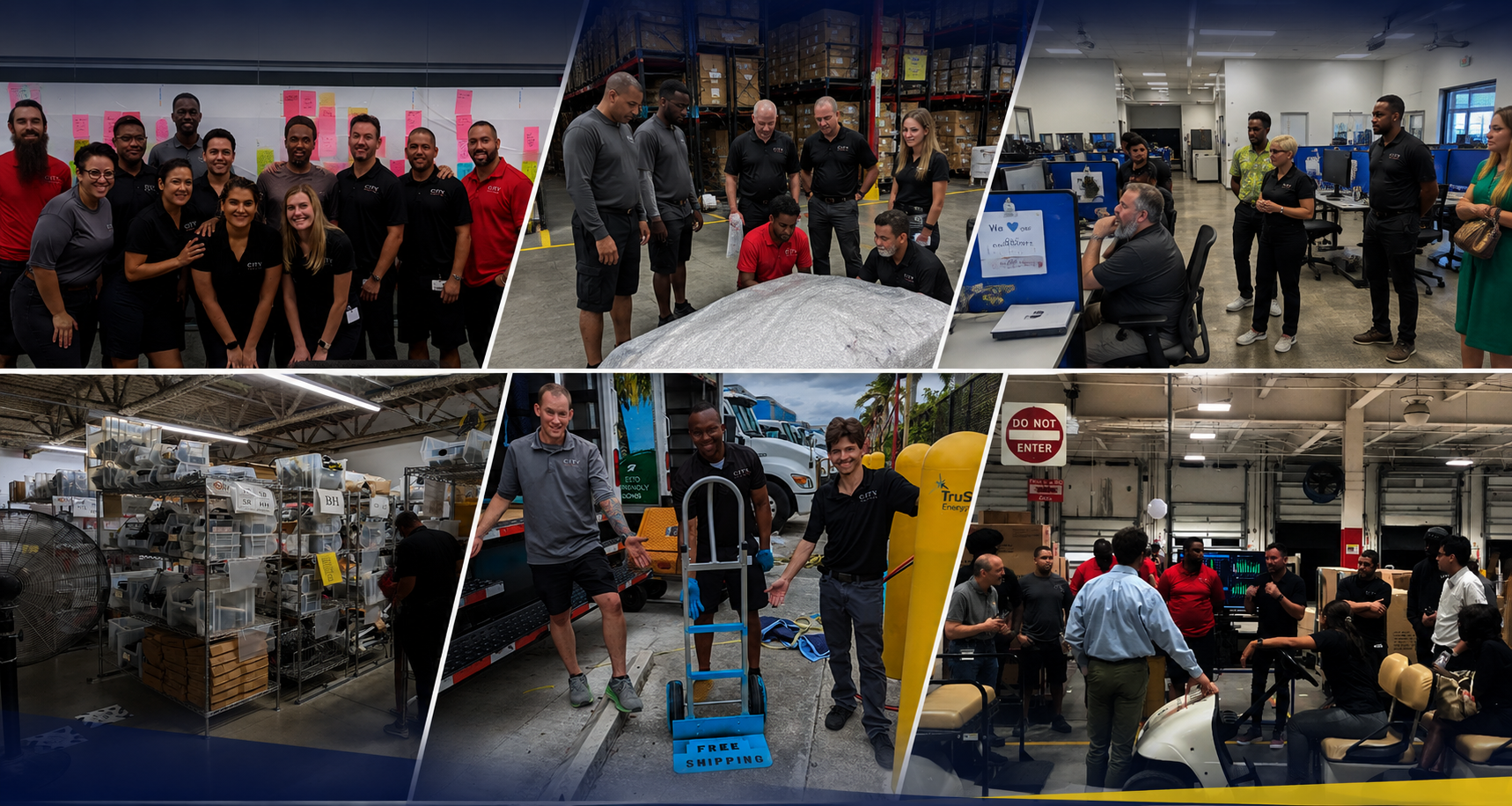
Real Manufacturing Results. One Kaizen at a Time
Explore real-world Kaizen success stories showing how manufacturing teams solved critical problems, improved performance, and created sustainable results.

Does Continuous Improvement Work Have to Be Industry-Specific? You Decide.
I often meet people who are interested in the work I do, and sometimes, these conversations turn into future business opportunities. One statement I hear quite frequently goes something like this: “I see you’ve made great strides working with manufacturers in [insert industry here]. But we’re different, so I want to know what experience you have in my industry.”
I often meet people who are interested in the work I do, and sometimes, these conversations turn into future business opportunities. One statement I hear quite frequently goes something like this: “I see you’ve made great strides working with manufacturers in [insert industry here]. But we’re different, so I want to know what experience you have in my industry.”
Most of the time, I have to tell them that I don’t have direct experience in their industry. I know that’s not the answer they’re hoping for, so I explain that many of the principles I use are applicable across industries and situations.
The first principle I rely on is that people want to win. If there’s a problem affecting them, they want to solve it—they don’t want to be adversely impacted by it. I tap into this natural desire to win and facilitate the team toward success by engaging them and building a team-based approach to problem-solving.
All the work I do before, during, and after Kaizen events is designed to set teams up for success. I create plans tailored to tackle the specific challenges they’re facing. I also design activities and experiences that allow team members to participate, share their ideas, and take ownership of the solutions. To me, that’s the essence of winning.
Another principle I follow is that all industries involve processes that require people. As long as the team can map out the processes they’re working with and identify the waste, they have the potential to make meaningful changes. My job is to help them spot that waste and equip them with the tools and techniques to reduce or eliminate it.
My third principle is that people will always rise to the expectations we set for them. Throughout my Kaizen events, I aim to set the bar as high as possible for the team, and they almost always meet or exceed those expectations. When they do, I raise the bar even higher, and, unsurprisingly, they rise to the occasion once again.
There are many other principles I use, but in my experience, these three are enough to allow me to work effectively in any industry—no matter the complexity or my prior experience with it.
I’ll admit that I’ve missed some opportunities to help prospects just because I haven’t worked in their specific industry. But I also believe they’ve missed out on the chance to work with me and see how I could help their teams solve critical business problems in a sustainable way.
My best advice to anyone considering hiring outside help to solve critical business problems is this: rather than focusing solely on past experience, consider the approach. Make sure it fits with—and enhances—your people engagement goals and leadership style.

Value Stream Mapping: The First Step on Your Continuous Improvement Journey
You can’t reach your destination if you don’t know how to get there. Maps, or in our technology-driven world, GPS systems, are critical resources for guiding you from point A to B. The same is true for your continuous improvement journey. Unlike your GPS, however, you must build your map through learning. The best way to build it is with Value Stream Mapping.
You can’t reach your destination if you don’t know how to get there. Maps, or in our technology-driven world, GPS systems, are critical resources for guiding you from point A to B. The same is true for your continuous improvement journey. Unlike your GPS, however, you must build your map through learning. The best way to build it is with Value Stream Mapping.
Value Stream Mapping views everything from the eyes of the customer. Anything that the customer would not pay for is considered Non-Value Added and is waste. The key to Value Stream Mapping is to see the waste in the current process and then develop strategies to remove as much waste as possible, delivering maximum value for the customer.
There are the 8 key components of Value Stream Mapping:
Identify the Value Stream to Map
What is the family of products or services that the customer is willing to pay for? Often, companies will pick a product or service that represents a significant portion of their overall demand or represents most of the process steps. It is better to pick a simpler process the first time Value Stream Mapping is attempted, increasing the complexity of processes to map as experience grows.
Build the Team
The members of the team are critical, as they will learn together and become supporters of the work going forward. The team should be diverse, comprised of people in the process, people who manage the process, customers of the process, and suppliers to the process. It can be beneficial to add a few team members who have no relationship with the process, as they provide “outsider” thinking and can challenge the team during the session.
Voice of the Customer
What is most important to the customer, from their point of view? Often, companies will engage Sales and/or Marketing to represent the customer, based on interactions they have had while dealing directly with customers. It is more powerful to invite direct customers to these sessions, but it can also be risky, as they will see some of the waste or inefficiencies in the current process. Most customers appreciate the opportunity to participate in these sessions, and the rewards far outweigh the risks.
Walk the Current State Value Stream
This is typically the most “eye-opening” part of Value Stream Mapping. The team should leave the meeting room and physically walk the process from the last step to the first. If they are mapping a physical product transformation, the team starts at the shipping dock, and then works their way back to the receiving dock. Start with the customer and what they are expecting to be delivered, then work your way back to the beginning of the process. All the while, the team is looking for waste and inefficiencies. They should be taking notes, pictures, and engaging with each other and others working in the process to fully understand what is going on and why things are working or not working as expected. If the process is virtual, the team should be demonstrating the steps of the process as they occur. Do not discuss the process in a meeting room. Go see what’s actually happening.
Gather data for the Current State Value Stream
How long does each process take? How many resources are needed for each step? How much inventory or waiting occurs at each step? How is information communicated to each step? How long does it take to change from one product or service to the next? How much space is required by each step? There is so much data that can be gathered, that you have to be careful not to do too much and miss the simplest and most impactful opportunities in the Current State.
Map the Current State Value Stream
Once the team returns to the meeting room, they map out all steps and interactions between steps of the process. This is a team activity, so don’t let just one person do all of the work. Each team member can take a pack of sticky notes and write down steps, placing them in order on a wall or something similar. Next, the team should measure the total time it takes for the product or service to get through the Value Stream, measuring the value-added time, non-value-added time, and lead time. Don’t use a computer, this is a visual activity, and most “A-ha” moments occur while placing steps on a wall and seeing how inefficient the current process is. Don’t be surprised if less than 10% of the time is value-added. In many manufacturing plants, that number drops below 1%. One key point is to map the process as it is, not how you want it to be.
Build the Future State Map
The team develops a vision of what they want the process to be in the future, for the benefit of the customer. By seeing the waste and inefficiencies in the Current State Map, the team imagines what the process would look like if they minimized or eliminated non-value-added steps, inefficiencies, defects, safety issues, and other waste in the current process. After the map is created, the team recalculates the value-added time, non-value-added time, and lead time in the future state. It is not unusual to drop the overall lead time to the customer by 50% or more. It’s also not unusual to identify quick, simple activities to accomplish this lead time reduction.
Create a Plan to Achieve the Future State
The team builds a roadmap of activities and strategies to make the changes required to drive to the Future State. These activities are typically low-cost and quick to implement, but some activities require an entirely new way of leading and managing the process. The team develops the action plan, with owners, due dates, and the managing systems to ensure that the work gets done.
A typical Value Stream mapping session takes between 3 and 4 days. When it’s over, everyone knows their new destination and how they intend to get there. Now, leadership has identified what is necessary to take the journey. Just like any journey, you must take the first step. Value Stream mapping is that first step.