
Kaizen Success Stories
Real Manufacturing Results. One Kaizen at a Time
Explore real-world Kaizen success stories showing how manufacturing teams solved critical problems, improved performance, and created sustainable results.

Call 911
In 2005, a ceilings manufacturing plant on the West Coast was experiencing high downtime rates. I was asked to come to the plant and run a Kaizen event to identify the impact of downtime on the plant.
I was given a small team consisting of four production technicians, two mechanics, one electrician, one engineer, and one supervisor. Our mission wasn’t to solve the specific mechanical or electrical downtime problems, but rather to understand why the response to and recovery from downtime took so long. This was a new concept for the plant and for me, but we felt we were up to the challenge.
In 2005, a ceilings manufacturing plant on the West Coast was experiencing high downtime rates. I was asked to come to the plant and run a Kaizen event to reduce the impact of downtime on the plant.
I was given a small team consisting of four production technicians, two mechanics, one electrician, one engineer, and one supervisor. Our mission wasn’t to solve the specific mechanical or electrical downtime problems, but rather to understand why the response to and recovery from downtime took so long. This was a new concept for the plant and for me, but we felt we were up to the challenge.
On the first day, after getting to know everyone and aligning around our mission for the week, I trained the team in Lean principles. After the training, we decided to walk out to the shop floor and gather feedback from technicians, mechanics, electricians, engineers, and others impacted and frustrated by the downtime in the plant. Almost to a person they told us they felt there was a basic training issue related to the skills of the mechanics and electricians that serviced the lines and didn’t understand why the plant didn’t invest more time and training in their people.
Not satisfied with this and knowing we wouldn’t be able to train all mechanics and electricians during the week; I knew we had to look for other issues we could impact. Back in the meeting room, the team discussed other reasons they thought downtime was so high. After a while, it became apparent we were just finger-pointing and guessing. So, I proposed an experiment. I suggested we stage a downtime event and then observe it from all angles. We would observe the technician making the call for help, the mechanic taking the call for help and others who were involved with the downtime event. Three team members went to the maintenance shop, two went to the supervisor office, and the rest of the team stationed themselves at the point where the downtime would be staged.
One hour later, with everyone in position and the crew aware of our experiment, we staged our downtime event, which was designed to be an electrical fault in one of the paint dryers. After a few minutes of trying to correct things, the production technician made a call to the maintenance shop to tell them about the downtime event. Five minutes later a mechanic and electrician came out to the line. They looked a bit bewildered. The technician that called them wasn’t around, he had gone to the breakroom. It was hard not helping the situation get resolved, but we were observers and had to let things play out naturally.
Ten minutes later, the technician came back and told the mechanic and electrician about the downtime issue. They realized they didn’t have the tools they needed and went back to the shop. Minutes later, they returned and found the technician, who directed them to the location of the downtime. They were on the wrong side of the line, so they carried their tools over a series of steps in order to get to the area to be worked on. They looked annoyed.
About five minutes later, the line was back up and running. The team went back to the meeting room to assess the full downtime event. It turns out that the line was down for more than thirty minutes, of which five minutes was the actual repair and restart of the line. Twenty-five minutes was wasted effort, waiting, and frustration. After a review of Lean principles and much heated discussion, the team came up with a solution to improve the effectiveness of downtime response and recovery. In essence, they crafted three questions to be asked and answered at the time of any downtime incident. They were:
1. Who am I speaking with?
2. What is the downtime issue?
3. What is the exact location of the issue?
The team realized they were essentially creating a script, much like those used by dispatchers during 911 calls. By answering these three questions first, they could reduce the efforts and frustration of the maintenance team by helping them identify the tools and skills they would need, direct location to go to and who their point of contact was. The team also agreed the person making the call shouldn’t leave the area until the maintenance team arrived.
Knowing that they were creating a new way of doing things in the plant, they decided to make it easy for everyone to use. They posted signs at every phone on the manufacturing line in the plant and also in the maintenance shop and engineering offices. They also trained the crews and management and demonstrated how downtime calls should look.
Over the next few weeks, team members were assigned to different locations and helped out any time a downtime event occurred, ensuring the three questions were asked and answered. It took a while, but eventually it became a habit in the plant. Not coincidentally, downtime and general frustration were reduced. The simple communication not only improved productivity but also teamwork between the production and maintenance departments.

Go to Gemba, Even If You Don’t Want To
In 2019, I was asked to facilitate the annual Value Stream Mapping (strategic planning) event for a leading consumer brands manufacturer at their facility in Central Pennsylvania. I had facilitated their event the prior year and it was our intent to build on the prior results and drive their continuous improvement culture forward during the event.
In 2019, I was asked to facilitate the annual Value Stream Mapping (strategic planning) event for a leading consumer brands manufacturer at their facility in Central Pennsylvania. I had facilitated their event the prior year and it was our intent to build on the prior results and drive their continuous improvement culture forward during the event.
The culture of the plant was such that I didn’t get direct feedback from the plant manager, but received it indirectly through the technical manager. There was a strong bond between the two of them, and even though the plant manager appreciated the results I was able to generate and my flexibility to work under challenging circumstances, he generally didn’t directly communicate with me. One reason for this may be that I am a story teller and tend to ramble a bit (surprise), and he liked getting directly to the point.
I was asked to facilitate in a way that would increase the engagement of the production and maintenance technicians and also drive the team to Gemba (the place where the work is done). Working with the technical manager, we identified the team members and activities that would accomplish both requests. On the first day of the Value Stream Mapping event, team members at all levels were engaging in the discussion of issues in the factory and were extremely active during the Gemba walk tour of the factory. Every time an issue was brought up, I made sure we were able to see the actual situation, rather than talking about it. The plant manager even made a point of going to Gemba as much as possible. He spoke about it in his opening remarks and reinforced the idea throughout the day.
On the second day of the event, after mapping the total Value Stream, identifying pain points, and brainstorming improvements, the team prioritized the work they thought would drive the performance and safety to better levels in the coming years. The full team was divided into smaller groups to develop solutions to the highest value problems. The plant manager was assigned to a team consisting of two production technicians and one engineer and they were working on an issue that was causing significant problems on the factory floor.
Sitting at a table in the meeting room, they spent a few minutes talking about the problem they were trying to solve and then got some paper and a pair of scissors and started cutting out various shapes and sizes of paper. I kept an eye on what was going on for a while, but then rotated through other groups to make sure everyone was making progress on their assignments. After fifteen minutes, I returned to the plant manager’s team to see what they were up to. I noticed the plant manager and engineer were moving papers around on the table to simulate the layout of the area in the factory they were concerned with. It appeared the two production technicians weren’t involved in the discussion and they looked distracted by their phones and not engaged in what was happening.
I have never been shy and realized I needed to do something. I said, “What are you all working on at the moment?” The plant manager told me, “Adam, we’re trying to understand the current layout so that we can come up with alternatives to improve the situation.” To that I said, “Have you considered going to Gemba to verify your assumptions? How do you know there’s not a post or another obstruction you may not be aware of in the meeting room?” It looked like the plant manager wanted to say something that wouldn’t have been very nice, but instead he appeared to swallow his pride and took his team out to the factory.
A few minutes later, the technical manager came up to me with a wry smile. He told me, “Adam, you sure got the plant manager’s attention. He took me aside and, in his office, told me, “That darn Adam kicked me out of the meeting room and made me go to Gemba!” I said the first thing that came to my mind, “Am I fired?” “No, of course not,” he told me, “I’m glad you did that! He needs to demonstrate the same behavior he was encouraging in the rest of the team.” After a sigh of relief, I said, “He took it well. I could see he was holding his feelings back. But he did the right thing and went to Gemba.” I still wondered what, if anything their team would learn from the experience.
When the team returned, I noticed all four members were extremely engaged and working at the table with newfound energy. Watching from a few feet away, it was apparent that they found something on the factory floor that they had overlooked in the meeting room and it was helping them develop a better solution they all could support. Eventually the plant manager admitted to me he should have known to go to Gemba first before trying to solve the problem in the meeting room. I was glad to hear it and throughout the rest of the event “Go to Gemba” became the rallying cry for all team members.

Best Event Ever
I was the Lean Champion for Armstrong World Industries for six years. My responsibility was to guide the organization to a continuous improvement mindset in all of their activities. I had no direct reports and reported to the Executive Vice President of Global Technology. When we kicked off our Lean transformation, most in the organization felt we were implementing the “flavor of the week” and weren’t ready to commit to changing their habits.
I was the Lean Champion for Armstrong World Industries for six years. My responsibility was to guide the organization to a continuous improvement mindset in all of their activities. I had no direct reports and reported to the Executive Vice President of Global Technology. When we kicked off our Lean transformation, most in the organization felt we were implementing the “flavor of the week” and weren’t ready to commit to changing their habits.
I knew it would be an uphill climb for me, as my job was one of influence. I had to capture the hearts and minds of my coworkers. It would have to happen one person at a time. With approximately 150 members of our team, I knew it would take a while to get to a point where we could see any indication of changing mindset.
As Lean Champion, I had to be a teacher, mentor, sensei, cheerleader, and pain in the ass at different times. Most people would say I was more of a pain in the ass than anything else. It was just me in the beginning, so I needed to get some allies. Luckily, I already had a few managers and coworkers who had seen my earlier Lean efforts with teams prior to our official Lean transformation. They were there with me, fighting alongside of me and lending credibility to my efforts. I also had the support of my manager, who had seen Lean applied in manufacturing and wanted similar or better results. Our group had taken a few hits over the past few years. A factory start-up didn’t go as well as planned and we had slowed our rate of developing new products for the market. There was a compelling case for change.
At the beginning of our Lean transformation, we strategically planned Kaizen events to target areas of the organization that needed the most help or would create high visibility for the results. Our first official Kaizen event was a Value Stream Mapping event, which is the Lean version of a strategic planning session. For many of the participants, this was their first time in a Kaizen event. I always want to generate energy and enthusiasm in the team, and as a facilitator, I had to put myself out there a lot. After my manager kicked off the event with words of encouragement, he handed control over to me. I decided to try something to get a positive reaction. I said, “I want to welcome you all to our very first Value Stream Mapping event in Technology. It’ll be our Best Event Ever!” Most of the room got the irony of the statement and laughed. Some didn’t know what to think and laughed too. I knew I was on to something.
At different times during the Value Stream Mapping event, I brought up the fact that we were doing work to assure this truly would be a great event, perhaps the best ever. People would poke fun at me every time. At the end of the event, during the report out to our sponsor and customers, my manager made a special point to say the event was truly the best event ever. Again, people laughed, but now they had something to use at my expense from then on.
Over the years, “Best Event Ever” was said many times by many people and the organization made many breakthroughs. An 18-month product development cycle was reduced to 10 months. The new product portfolio of $150 million was increased to $380 million. Over 95% of the total organization had participated in at least one Kaizen event and all new employees were onboarded with Lean principles, taught by the Lean Champion. The overall culture of the organization transformed to one with a continuous improvement mindset and the words of their pain in the ass Lean Champion were well ingrained by the time I left for my next adventure.

Macon Progress
Once upon a time in 1998, I helped a team in Macon Georgia improve the reliability and safety of one of their production lines. The work was exciting, the team was enthusiastic, and we were making breakthroughs beyond what I ever imagined could happen. Something was missing, however. For some reason our sponsor, the Business Unit Manager, never came out to the line to see what we were doing. Although the team didn’t seem to mind, it really bothered me. After all, we were doing things so quickly and effectively, and solving so many problems that others weren’t able to solve, I wondered why he didn’t appear to be interested in our progress. If you know me, you could predict I would do something about it. And, I wouldn’t be subtle about it.
Once upon a time in 1998, I helped a team in Macon Georgia improve the reliability and safety of one of their production lines. The work was exciting, the team was enthusiastic, and we were making breakthroughs beyond what I ever imagined could happen. Something was missing, however. For some reason our sponsor, the Business Unit Manager, never came out to the line to see what we were doing. Although the team didn’t seem to mind, it really bothered me. After all, we were doing things so quickly and effectively, and solving so many problems that others weren’t able to solve, I wondered why he didn’t appear to be interested in our progress. If you know me, you could predict I would do something about it. And, I wouldn’t be subtle about it.
On the evening of the first day, after the team left, I went to the sponsor’s office. I wanted to see if I could convince him to come out to the line the next day while we were doing our work. I thought his visit would reinforce the importance of the team’s work and might also show him what his people were capable of accomplishing when empowered to do so. During our discussion, I shared my observations of the team’s progress and how well they were working together and being open to changes in thinking. Then I asked him if he thought he might have some time the next day to join us for a while, so the team could show off their accomplishments. He informed me he would be tied up in meetings all day and might check things out when he had time. I left his office a bit frustrated, but hoped he’d stop by during a break, even though he made no commitment to do so.
The next day, the team made even more breakthroughs and were extremely proud of their efforts. We were having fun and people from the crew and the maintenance department came by to see what we were doing. It made the team feel good that people were noticing their work. By the end of the day, we still hadn’t been visited by our sponsor or any member of the management team. It didn’t feel right and I was determined to do something about it. I wanted to visit with my sponsor that evening, but I found out he had left the plant early to play golf or watch a high school baseball game, or something else that was a higher priority for him. I was getting really frustrated and probably should have left it alone, but I couldn’t.
On the third day, during a break, I decided to walk to the sponsor’s office and spend some time with him, if possible. Luckily (or unluckily), he was in his office and agreed to spend a few minutes with me. I started off by describing the great effort of the team. He listened to what I had to say, but seemed to be waiting for what I was really there to discuss. I then talked about how the team had been visited by others and how it seemed to drive enthusiasm and pride in the team. Finally, I told him that although it was great to have his sponsorship to do this work, it was disappointing that neither he nor the management team had come out to the line at any time during the week. I understood how busy things were at the plant, but I also felt it would be impactful for him to visit and demonstrate his commitment to the efforts of the team during the week.
I could tell I had struck a nerve. “Adam,” he said, “If you are questioning my commitment, you can do it from Lancaster (corporate headquarters)!” At that point, all I could do was try to dig myself out of a pretty deep hole. I really don’t remember what I said, but I wasn’t fired and I wasn’t sent home, so I guess that’s a win. I tried not to let my disappointment show to the team and the rest of the week we continued to make amazing breakthroughs. At the end of the week, we were able to get some management team members to join us for a tour of the changes. The sponsor showed up too. To this day, I don’t know if he would have showed up without our conversation, but I learned an extremely valuable lesson in that moment. I needed to develop a process to align with leadership and gain their commitment.
Now, many years later, I am able to provide the image of commitment to leadership teams. I illustrate what’s going to happen, how they can support team efforts, and what’s expected of them. Then, I can look the leadership team in the eyes to see if they are willing to commit. There have been times that I have had to walk away from an assignment or a potential client engagement, as it became clear they wouldn’t commit as much as I believed was required. It’s hard to walk away from a paying job, but I feel like my role is to give teams the best chance to win. If I don’t think they have the support to do that, I don’t want to subject them to a frustrating experience.

Gemba Walks
For those unfamiliar with the term, Gemba means “the real place, the place where the work is done.” A Gemba walk therefore means that you are going to walk through the real place and assess the work being done there. I tweak it a bit to mean, “assess the health of the operating system.” This sounds like an audit, and it is. For many companies, the idea of the Gemba walk is to take people out of their offices and walk through the process with their people. It’s not always the most comfortable thing for people to do. If done well, it can be extremely impactful. If not done well, it becomes a big waste of time.
For those unfamiliar with the term, Gemba means “the real place, the place where the work is done.” A Gemba walk therefore means that you are going to walk through the real place and assess the work being done there. I tweak it a bit to mean, “assess the health of the operating system.” This sounds like an audit, and it is. For many companies, the idea of the Gemba walk is to take people out of their offices and walk through the process with their people. It’s not always the most comfortable thing for people to do. If done well, it can be extremely impactful. If not done well, it becomes a big waste of time. The idea is to make it as engaging and impactful as possible. The next story is how I helped a team in St. Helens Oregon develop a Gemba walk that was impactful and drove organizational behavior to higher levels of performance.
I was the Operations Manager at Armstrong World Industries’ ceiling tile plant in St. Helens Oregon for just under three years. During that time, I had the great opportunity to test and apply some of my continuous improvement principles to the manufacturing organization directly and get immediate feedback from my efforts. I am proud to say we had some of the best operating results in the company, and I’d like to think that my efforts contributed to that. There were a bunch of great team behaviors that already existed, and I applied my approach in a way that utilized and enhanced the strong culture of teamwork.
I spent a large percentage of my time on the manufacturing floor, engaging with the technicians and auditing the systems that were keeping us safe and productive. We used many paper documents in our work and everyone was required to sign off when they completed critical tasks. The Team Managers were required to audit their crews on a regular basis and then I would audit their audits on a less frequent basis. At one point, we were 100% compliant for all critical tasks for many months in a row. The plant was operating at peak efficiency.
A Slip in Efficiency
During an economic downturn in 2010, the plant reduced staffing and I was offered a position in the corporate offices in Pennsylvania. I hated to leave my team, but I felt like the plant would continue operating well, using the systems developed during my tenure. Sadly, this was not the case, and efficiency and productivity started to suffer. The plant recognized this and implemented a daily staff-led Gemba walk. After many months, performance wasn’t improving and I was asked to come back out to the plant to see if I could help. I was happy to do so. I missed my team on the west coast.
The first morning of my visit, I attended the daily Gemba walk with the staff and observed their interactions and engagements with the technicians. There were eleven staff members who walked all over the factory, stopping at designated locations to engage with the technician doing a task. During each stop, they would ask these questions: Is everything okay? Do you need any help from us?
Most of the time, the technician would say everything was OK (it wasn’t) and they didn’t need any help (they did). The person asking the question would engage with the technician. The rest of the team didn’t seem to know their role. They weren’t paying much attention to what was going on. Afterwards, we would thank the technician for taking time with us and then walk to another location in the plant.
After we completed the Gemba walk, the staff asked me for my opinion. I told them that their purpose wasn’t being supported by the activity of the walk. If their intention was to show support and help for the technicians, it wasn’t apparent during the walk. The terse answers by the technicians showed they didn’t believe they were being supported or that sincere help was being offered. The lack of engagement by the full staff was troubling and it was apparent to their customers, the technicians.
The good news was, if they were willing, we could easily change the Gemba walk and achieve their purpose. However, they would need to engage their customers in the redesign of the Gemba walk. They were willing and we agreed to bring a small team of technicians, team managers, and staff together in the next day to redesign the Gemba walk.
A New Kind of Walk
The next morning, I reviewed the principles of a Gemba walk with the team. These principles included: Be help to those you interact with, assess the health of the operating system, and engage and support your customers (the technicians). I challenged the team to develop a focused purpose for their Gemba walk. They decided they wanted a Gemba walk that would help them prioritize and take action on the top issues causing safety and productivity risks. They also wanted the Gemba walk team to expose issues the technicians were overlooking in their everyday work. Finally, they only wanted people to attend the Gemba walk if they sincerely wanted to be there and were helpful.
Based on a refocused purpose, the team started designing the new Gemba walk. Their new design improved the questions to be asked, the way the staff would engage, and how issues were to be exposed. The new questions weren’t yes or no anymore, they were more “show me” questions. “Show me the issue that caused you downtime yesterday or concerned you from a safety standpoint.” “Show me how the valve works when you switch from tank A to tank B.”
In order to expose risks and increase engagement of staff with the technicians, the team created seven different responsibilities to be given to different Gemba walk team members. Examples included: safety auditor, standard work auditor, housekeeping auditor, and equipment auditor. These duties were written on cards and given out randomly to members of the staff at the beginning of the Gemba walk. At designated stops staff were to review their findings with the technicians and the team. The team would then prioritize the top issues at the end of the walk and take action on them.
Simple Changes, Large Improvements
The team conducted a Gemba walk using the new process. During the “simulated” walk, we asked various technicians their opinion of the newly designed process. They were extremely positive about it and thought it would be more helpful to them than the prior Gemba walk. With feedback from a number of technicians, the team finalized their new Gemba walk by the end of the day. The next morning, they started the new Gemba walk and uncovered many issues that had been holding back the performance and safety of the plant. Engagement improved, as well as safety and productivity over the next months and years.
I have seen Gemba walks in many stages of effectiveness. Some Gemba walk teams take a specified tour of their offices or facility and then end up at a white board to review performance and make assignments. While this is a vast improvement over staying in your offices and reading reports, it feels as though the person reporting results at a board is in the spotlight, or on trial. It doesn’t feel as engaging and helpful, as most of the participants are firing questions to the person reporting results. Slight improvements would make all the difference, and I encourage those who do things in this way to review and reflect upon their Gemba Walk purpose and make corrections that would better support their purpose, much like the St. Helens team did.

Little Things Mean A Lot – Revisited
A global consumer goods manufacturer was experiencing high levels of downtime, jams, and long changeovers on a critical production line. They invited Process Improvement Partners to their plant to observe and discuss the problem and identify opportunities for improvement. After reviewing performance, we took a walk to the line. The line was running, and after a description of line components, it became apparent there were quick opportunities to improve performance of the line.
A global consumer goods manufacturer was experiencing high levels of downtime, jams, and long changeovers on a critical production line. They invited Process Improvement Partners to their plant to observe and discuss the problem and identify opportunities for improvement. After reviewing performance, we took a walk to the line. The line was running, and after a description of line components, it became apparent there were quick opportunities to improve performance of the line. The techniques we would use were quite basic: leveling, squaring, aligning, and centering of products with the process. It seemed so simple, and the customers were skeptical. We suggested a five-day Kaizen to improve line reliability, scheduled for January 2019.
Leading up to the Kaizen event, we had many discussions with line operators, mechanics, and engineers, and we made several confirming observations on the line. During a discussion with the Plant Manager, it became apparent he didn’t buy-in to the approach. He had used a process called “Center Lining” before, and had mixed results. In addition, it took weeks to accomplish. We assured him centering of the process would be completed on the first day of the Kaizen and then we would optimize all parts of the process around the center in the following days. He was still skeptical, but heard enough and saw our confidence, and gave final approval for the Kaizen to proceed.
Taking a Different Approach
In most Kaizen events, we provide a structured approach to the team charged with solving a problem. We very rarely dictate specific actions to the team. In this case, the entire first day was controlled and team members were asked to follow very specific instructions before implementing their ideas.
After receiving training on the approach, the team walked to the production line. We reviewed safety requirements, shut down the line, and locked it out. The next step was to identify the center of the critical packaging process. This was the part of the line where everything comes together – the product and the package. We told the team everything leading up to the packaging process should be located and optimized to the center of the process. They didn’t think it would be very important, but were willing to learn and find the center of the line.
We located the center of the line at the midpoint of the conveyor frame on the out-feed side of the equipment and wrapped a string around that point. Then, stretching the string through the equipment, we found the center of the conveyors leading up to the equipment. A trained eye can keep the center precise within 1/32”, so we found what we believed to be center along approximately 100 feet of equipment and conveyor and pulled the string taut. Then, we marked the equipment and conveyor every 4 feet along its length to identify center for the process. Once complete, we noticed all product was coming into the equipment off center. The packaging was tracking off-center as well. That was the first time the skeptical team members saw something they weren’t expecting.
Taking Things to the Next Level
Our next step was to check the levelness of all of the conveyors leading up to and through the equipment. Ideally, all conveyors should be no more than 1/32” out of level at every transition (one section of conveyor to the next section) and side to side. Using a torpedo level and some shims, the team documented levelness of every section of conveyor.
In the middle of the leveling effort, I realized the team needed a longer level than was available in the various toolboxes around the line. Having done some work in the weld shop in the same factory, I knew there was a six-foot level that would be helpful in our efforts. I walked to the weld shop and asked the area owner if I could borrow the level. He reminded me of the rules of the tools in the weld shop – “Tools should either be on the board or in use. So, don’t forget to return the level as soon as you’re finished with it!” I reassured him that I was well aware of the rule (I had helped the team develop it, after all). So, sufficiently held accountable, I took the level with me.
Now, you need to know that the level had a label on it that read, “Weld Shop 6 Foot Level.” There was no way to not know where it came from and where it was supposed to go. Using the level, I was able to help the team identify and locate proper location and levelness of the conveyers.
Rule of the Tools
Every so often, I had to put down the level, and I made sure I placed it carefully on a table. Sam, an operator on the line we were working on reminded me that I was responsible to return the level as soon as we were done with it. Then, Ray, a supervisor on another line who happened to be walking by made sure to tell me the same rule. Then the HR manager told me. And finally, the plant manager, who was over at the line checking out our work, felt that he needed to remind me to return the level to the weld shop. Whether or not they were doing this to mess with me, it didn’t matter. What did matter was that the story of the weld shop and the rules of the tools had made it all the way through the plant. Every time I was told the rules, the rules were reinforced. This was exactly what I hoped for.
Over the course of our work, the team found many of the conveyors were out of level by more than ¼” and some were out as much as ½”. The good news was this condition was easily corrected, and by the end of two hours, all conveyors were leveled throughout the process. The team was losing its skepticism as the products ran more consistently once we started the line back up. The first day ended with the team handing the line back over to the production organization. And, yes, I returned the level to the weld shop.
The Strength of Ownership
My focus in continuous improvement has always been to help teams solve problems in a sustainable way. Early on in my career, I learned many facilitation techniques through trial and error, mostly error. One of the biggest errors I ever made during a Kaizen event was to be too directive with a team. When one of the team members said, “Adam wants us to do this…,” I knew I was in trouble.
My focus in continuous improvement has always been to help teams solve problems in a sustainable way. Early on in my career, I learned many facilitation techniques through trial and error, mostly error. One of the biggest errors I ever made during a Kaizen event was to be too directive with a team. When one of the team members said, “Adam wants us to do this…,” I knew I was in trouble.
Another early mistake I made during Kaizen events was to take responsibility for writing team member ideas on a flipchart while they were shouting them out to me. While this seems like a natural thing to do, I was taking ownership for team member ideas by writing them. I also was hindering engagement during the event, as the only person that cared about what I was writing was the person speaking the idea and me, the person writing it. The rest of the team didn’t need to pay attention to what was going on. This approach also allowed for dominant team members to get more attention than less vocal team members.
Post-It™ Notes – The Great Equalizer
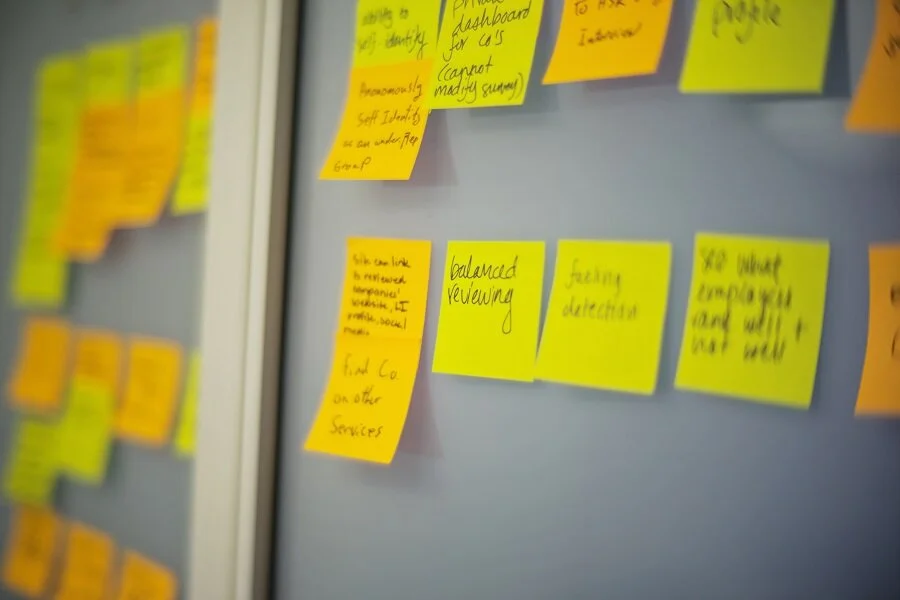
I knew I needed to change my approach to drive engagement and ownership to the team members. My first change was to use Post-It™ notes for gathering ideas from team members. Each team member would write their ideas, one per Post-It™, and then speak them, one at a time. In this way, everyone had an equal opportunity to voice their ideas, and they were written in a way that was meaningful to them.
I started to develop fun ways to share the ideas, with a focus on giving everyone equal opportunity to share their thoughts and minimizing the opportunity to dominate the conversation by stronger team members. I also noticed that Post-It™ Notes were the great equalizer. It didn’t matter what level in the organization a team member was. Their Post-It™ Note looked just like anyone else’s.
Once we uncovered all team ideas, I had to develop ways to prioritize them. There are many ways to do this, but the approach I settled on was multi-voting. Each team member gets an equal number of votes and is asked to pick their favorite ideas and place their vote on the ideas. As an example, there might be 100 unique ideas written on Post-Its™ and 10 team members. Each team member is given a vote to place on their 5 favorite ideas to work on and implement during the Kaizen event. The ideas with the most votes are the ones the team will work on. This technique works fast, but there seemed to be something missing. People told me that it was chaotic and there was something didn’t feel right about how things were prioritized. I knew I had to improve multi-voting.
Adding Process to Chaos
One event, I added criteria to the process of multi-voting to see if it would focus the group and help them feel more comfortable with the approach. I added these criteria to use when voting for a favorite idea:
1. It provides the biggest benefit to the customer and to us (related to the problem to be solved)
2. I actually want to do this (personal interest in the work)
3. We can accomplish and implement this during the Kaizen (fast implementation and low money spent)
Once I developed the criteria, the teams seemed more confident they were choosing the right ideas to work on. The criteria all but guaranteed people were interested in what they were doing, which would maximize the results, and the work would get completed quickly.
Pick Your Passion
Now that we knew the top priority work, we would assign team members to the work. I usually left this to the team leader. I noticed some team members didn’t like their assignments and I knew I had to come up with something better. That’s when inspiration hit me. What if I could help team members connect with the project they truly wanted to work on? One day, I decided to try something new. After prioritizing the top three projects to work on and writing them on a flip chart, I said, “First come, first served, put your name on the project you want to work on.” Immediately, two team members jumped out of their chairs in order to put their names on projects that were most meaningful to them. This was just the reaction I was hoping for. The connection between the team members and the work was strong. But, could I replicate this reaction?
It turns out, I have used the same approach throughout the world and it’s not unusual for some team members to jump out of their chairs to put their names on the projects that matter to them most. Not everyone does that, and it allows us to balance the teams to the projects. I learned to set the safety expectations prior to making my “First come, first served” statement.
I have used these facilitation techniques and many others to strengthen the engagement, empowerment and commitment of teams. In the end, I want them to win. I will continue to refine my approach to help them do that.

Championing Change in Technology
In 2010, a private equity firm took a minority stake in Armstrong World Industries. They brought in many leaders at executive levels and committed to a strategy of Lean transformation. Their initial focus was manufacturing, and then when ready, they would expand efforts to the supporting organizations. From 2010 through 2012 in the manufacturing organization, emphasis was placed on Lean training and conducting hundreds of Kaizen events. In many cases, outside consultants were brought in. But, where there was experience, internal resources worked with teams and facilitated Kaizen events.
In 2010, a private equity firm took a minority stake in Armstrong World Industries. They brought in many leaders at executive levels and committed to a strategy of Lean transformation. Their initial focus was manufacturing, and then when ready, they would expand efforts to the supporting organizations. From 2010 through 2012 in the manufacturing organization, emphasis was placed on Lean training and conducting hundreds of Kaizen events. In many cases, outside consultants were brought in. But, where there was experience, internal resources worked with teams and facilitated Kaizen events.
I had many years of experience facilitating Kaizen events and I was given the opportunity to travel all over the world, helping teams solve complex problems and keep them solved in a sustainable way. Although I wasn’t part of the manufacturing organization at the time, I was often requested to facilitate, especially when there were complex problems to solve.
I enjoyed the work, but I also knew I needed to focus on improving my organization, Global Technology. For years, I tried to convince leadership to utilize Lean to improve their critical processes. While they were interested, they never made the commitment to the continuous improvement effort.
Applying Lean Principles to Global Technology
In January 2012, everything changed. Global Technology named a new Vice President, who had an extensive manufacturing background. He returned from an assignment in Europe, ready to make an impact on his new organization. I worked for him indirectly a few years prior to his return, so we already had a working relationship. After letting him settle into his new job for a few weeks, I requested a meeting to discuss the application of Lean to the Global Technology processes. Luckily, I had two sponsors who had seen what Lean was able to accomplish in some global technology test areas, most notably the Pilot Plant.
Together, my sponsors and I met with the VP in March to promote our idea – apply Lean principles to Global Technology in a way that would improve the results of our projects and grow customer confidence. He was intrigued and wanted to know what we would do first. My suggestion was to run a Global Technology Value Stream Mapping event, identifying the highest value opportunities from our customers’ perspective, developing strategies to make improvements over the coming months and years. He was excited by the idea and invited us to present our recommendation to the Global Technology leadership team at their April meeting.
After reviewing year to date Global Technology results, the VP introduced me to the leadership team and told them about the recommendation for the Value Stream Mapping event. He explained how important and critical this work would be and he wanted everyone to clear their calendars so we could get started quickly. Then, he turned the discussion over to me. Most of what I wanted to cover had already been explained, so I started off by saying, “What he said!” Then, I described the Value Stream Mapping process and how we would apply it to the Global Technology processes. The leadership team seemed skeptical, but willing to give this new approach a try. When the VP said he wanted to start with an event in May, I knew we were on a fast-moving train and I had much work to do to prepare.
Identifying the Customers’ Perspective
Over the next few weeks, we contacted some of our critical customers from the plants, Marketing, and other areas of the organization. We also gained commitment from all Global Technology leadership team members to participate in the entire 3-day event, which would be held at a local hotel. I was able to get a co-facilitator who was not part of the working team and together we built a plan for the Value Stream Mapping session that would be relevant for our non-manufacturing processes.
On the first day of the event, a team of 25 high-level participants were in the same room and they heard the VP describe the importance of the effort. Then, he turned the meeting over to me. For the next few hours, I described Value Stream Mapping and then split the full team into working groups to identify the most critical customer requirements. After reviewing those requirements, we mapped out two critical Global Technology Value Streams: New product development and capital project execution. By the end of the first day, we had a pretty clear picture of the current state and issues that were keeping the team from executing the processes well from their customers’ perspective.
Champion of Lean
The VP sent the team to dinner and asked me to stick around to talk for a few minutes prior to dinner. The first thing he said was, “You’re pretty good at this, how would you like to do this full time?” Immediately I responded, “Absolutely!” He was surprised by my quick answer and told me he hadn’t even made a financial offer. I told him that I trusted him to do the right thing and it was more important for me to do what I love, rather than worry about pay.
The next two days were a blur. Significant progress was made and clear strategies were developed to improve project execution and customer service in the new product development and capital project execution Value Streams.
For the next six years, I was the Lean Champion for Armstrong’s Global Technology organization. During that time, I was able to help teams drive new product development time down from 18 to 10 months, grow the new product portfolio from $150 million to $380 million, and increase customer confidence in the work of the Global Technology organization. More importantly, we were able to create a culture of engagement, empowerment, and improvement in the organization.

An Open Mind Will Lead to the Right Answer
Early this year, Process Improvement Partners was invited to conduct a site assessment for a packaging company in western Pennsylvania. The facility was operating a new technology that wasn’t performing to expectations. They wanted to identify opportunities to improve their situation using the engagement and empowerment of their employees.
Early this year, Process Improvement Partners was invited to conduct a site assessment for a packaging company in western Pennsylvania. The facility was operating a new technology that wasn’t performing to expectations. They wanted to identify opportunities to improve their situation using the engagement and empowerment of their employees.
Arriving the evening before the assessment, I had dinner with a former Armstrong co-worker, who was now working for the packaging company. He had convinced the plant manager to host my visit. He explained the issues with the new technology and some of his preliminary thoughts on what might help things improve. The plant manager wasn’t able to join us for dinner; I would have to wait until the next day to hear his thoughts and determine if we could align around next steps.
The Challenge of Team Engagement
The next morning, I arrived at the plant early and met the plant manager. He invited me to join him and his team at the morning production meeting. During the meeting, I observed the leadership team structure. The plant manager led the meeting, got feedback from his team, and then made final decisions. There was a sense of comradery and a command and control structure. This was my first indication of the potential challenge of team engagement at the facility. I would use the rest of the day to verify this observation.
Following the production meeting, the team took a walk out into the plant. Led by the plant manager, we spoke with many of the technicians at their workstations. They reviewed issues and the plant manager gave instructions to the workers and the leadership team. I got a sense for the connection between the technicians and management, but again, it felt more command and control than engagement and empowerment.
We arrived at the equipment that was the main focus of concern in the plant. A new (to them) technology, the equipment operated at low performance levels and took days to stabilize after product changeovers. There was a huge investment in data collection and monitoring equipment, but I didn’t see things in place to make the technicians’ jobs easier, such as clear and visible settings and simple standard work. One of the lead technicians, let’s call him Mike, spoke about how difficult it was to get initial settings and then how much adjusting was required following any product changeover. He was frustrated with the current situation and was hoping I might be able to help. I was encouraged by his passion to improve the situation.
Reducing Variation Leads to Stabilization
When we completed the tour, it was time for lunch. Some of the leadership team joined and wanted to know what I thought. I told them there were many opportunities to help the new line perform in a more stable way. Mike, the lead technician also joined us and was keen to understand what I thought should be done first.
My recommendation was to run a changeover improvement event, focused on simplifying and streamlining the efforts to make physical equipment changes. Mike estimated this portion of the changeover took between six and ten hours. I stated we could reduce the time by half or more.
The plant manager spoke up and said he wanted the team to focus on the time following the changeover, when the line normally took days to stabilize. This was where the savings would come from and he needed a win. I explained my logic around working on the equipment changeover first: By reducing or eliminating variation in the changeover, the time to stabilize would be greatly reduced. If we worked on the effort to stabilize following the changeover first, we would be trying to simplify things without reducing any of the variation that leads to the long time to stabilize. As I explained my recommendation, I saw Mike nodding in agreement. The plant manager was not convinced.
The plant manager asked Mike directly, “Why wouldn’t you want to work on stabilizing first? That’s where the pain and opportunity are. Don’t you agree?” Mike took a breath and said, “If we don’t reduce the variation in the equipment changeover itself, there won’t be any starting point for the stabilizing effort. I agree with Adam’s assessment, take out the variation first, and the stabilizing will go much quicker.”
Change Starts by Listening to People
Not yet convinced, the plant manager stated, “I have to have a win. Cutting the changeover time in half won’t save us as much money as cutting the stabilizing time. I don’t think I can sell this approach to corporate management. Mike, don’t you think we should go this route, rather than Adam’s suggestion?” Mike stood his ground and stated, “I really think this is the way to go.” Unwilling to yield, the plant manager declared, “I really don’t see how this is the answer.”
I jumped in and said, “You’ve asked Mike three times and he’s clearly telling you something you don’t agree with. He has the experience and knows what he deals with on a daily basis. I doubt he’ll change his mind just because you want him to. If you want to engage your people, you have to be willing to listen to them.”
It was time for me to make my pitch. “Here’s a compromise: Let’s do the equipment changeover event first. We’ll also spend some time on how it will affect stabilizing. We can monitor the time to stabilize for a month or so. If the time isn’t coming down as expected, we can run another event, laser focused on the stabilizing efforts.”
The plant manager took a deep breath. Finally, he said, “You know, this is starting to make sense to me. I think I can sell this approach to our corporate management.” Now I knew there was a chance we would be able to engage the rest of the organization to make a much-needed change. The rest of the day, we built a charter for the event, designed around the equipment changeover.
On my drive home, I reflected on the day. I knew I could work with this new client. I also knew how close I was to not having the opportunity. If we’re unwilling to change our positions and listen to our people, we might miss out on meaningful, sustainable change.

There is One Best Way
In 2019, Process Improvement Partners was asked to run a reliability Kaizen for a factory in Missouri. A month in advance of the event, I conducted a site visit and took a walk to the line to be improved. Cluttered, dirty, and lacking organization, the line was operating at extremely low levels of efficiency. There was an hourly production board and it was filled with red numbers, meaning production output was below target levels most of the time. Working with the sponsor, we aligned around efforts to improve safety and productivity of the operation using reliability and Lean principles.
In 2019, Process Improvement Partners was asked to run a reliability Kaizen for a factory in Missouri. A month in advance of the event, I conducted a site visit and took a walk to the line to be improved. Cluttered, dirty, and lacking organization, the line was operating at extremely low levels of efficiency. There was an hourly production board and it was filled with red numbers, meaning production output was below target levels most of the time. Working with the sponsor, we aligned around efforts to improve safety and productivity of the operation using reliability and Lean principles.
We built the charter for the event together. I coached the team leader around building the best team for the effort. We needed representation from all crews and the team members had to care about making the line better for everyone. I also advised to include some line mechanics and a few “Kaizen Rock Stars”. These were team members from other locations who had demonstrated their passion and willingness to make things better for everyone. Two weeks before the event kick-off, we had commitment from all team members.
On the morning of the first day of the event, I went around the room for team member introductions. We had operators from all four crews, two mechanics, one engineer, two supervisors, one operations manager, and two “Kaizen Rock Stars”. Half of the team had never been in a kaizen event, they weren’t sure what to think, and they were understandably skeptical.
After some initial training, we took a walk to the line to see what was happening and generate some improvement ideas to improve safety and reliability of the line. I directed the team to focus on equipment reliability, using the principles and techniques we had just reviewed. When we returned to the meeting room, we generated more than 100 improvement ideas. A vast majority of the ideas focused in two areas: carton wrapping and container filling. The team agreed carton wrapping was the highest source of stress and downtime, with the container filler a close second. We decided to work on the carton wrapper first. To do this work, we had to shut the line down for a few hours. Knowing that we would be working on the container filler next, we asked the crew on shift to clean it during the downtime.
Shifting Lanes
The conveyer leading to the carton wrapper had three lanes that product could utilize as it traveled to the wrapper. The wrapper had two lanes of products to be wrapped. I asked the operators if they ever utilized the third lane and they told me no and in the many years since the equipment was installed, they had never seen the third lane utilized. This third lane was in the way of their work when they had to interact with the equipment. The next questions I asked were, “Can we remove the third lane? Are we expecting we will need it in the future?” All team members agreed it would be best to remove the lane and we did.
Next, we found the center of the carton wrapper and balanced both lanes around the center. It turns out the equipment was ¾” off-center, which doesn’t sound like much, but helped to explain why products were getting jammed in the carton wrapper. Finally, we realigned the lanes leading into the carton wrapper to match the newly balanced lanes inside the wrapper. When we sent product through this newly balanced portion of the line, it flowed smoother than anyone on the team had ever experienced. I knew they were becoming believers in the methods I was demonstrating.
There were many more improvements to be made on the carton wrapper, and a portion of the team stayed with those efforts, while the rest of the team turned their attention to the container filler. Newly cleaned, we were able to see that some of the parts in the filler didn’t look like they matched the other parts. Some of the parts from one product size were mixed in with parts from a different product size and some of the parts were in a state of disrepair. All of this had been hidden by the coating of dust and dirt. Once we saw this, we knew what we had to do: Put the proper sized parts in the filler and repair the broken parts. Over the next few days, the team made numerous improvements to the carton wrapper, product filler, and other components of the line.
Analysis Over Emotion
On the fourth day, we had to determine the best way to run the line, utilizing all of the improvements and standardizing efforts across all crews. This can be challenging, as most operators think their way is the best way. I took the team leader aside and reviewed the strategy for this next effort. We would take all of the operators and attempt to come to an agreement on how to best run the line. There were so many changes and improvements to the line in the first three days, none of the earlier procedures would be relevant to our newly improved processes.
The operators didn’t see it that way. Two in particular, let’s call them Sue and Jane, thought their way was best. The other two operators didn’t necessarily agree with Sue and Jane, but weren’t willing to argue as passionately as Sue and Jane. After 30 minutes of describing their methods, both Sue and Jane agreed that their methods were essentially the same. We had to commit to one method we could use to train others and hold them accountable to. I asked Sue and Jane to demonstrate their methods separately. The other two operators and team leader would review both approaches using two methods of analysis: spaghetti diagram and timing. The spaghetti diagram measures the distance a person travels when they’re doing their work. Timing tells us the impact of the work as measured in minutes and seconds. We all agreed to let the analysis rather than emotion tell us the best way to proceed.
A Natural Approach
Sue and Jane were advised to work at a comfortable pace, without putting themselves in a safety risk. It was more important to learn the best way and do it in a way that would make it easy to train others. The observers were to identify any further improvements from this analysis. Sue went first, confident she had the best way to accomplish the work. She went in a clockwise fashion around the line, performing all of the required tasks. On a couple of occasions, she overlooked some of the changes. We stopped the clock to remind her of the new method. We restarted the clock when she utilized the new methods. She finished in under 25 minutes, satisfied her way was best.
Jane went next and worked in a counterclockwise fashion around the line. As she did her work, she followed the new steps in an efficient and stress-free manner. She didn’t seem to have to walk very far to accomplish any next steps and also didn’t forget any steps. It looked so simple and natural. Fourteen minutes later she was finished. The team was surprised and excited. They didn’t think there would be so much difference. Sue had to admit Jane’s method was the better one. This was a breakthrough. All four operators would need to represent the new method to their co-workers when they returned to their normal jobs. If not, all of the great work of the team would be wasted.
At the report out the following day, Sue and Jane admitted to the audience they had to be open to thinking differently about how they did their work and there is always a better way to get things done. The team was proud of their accomplishments and the plant had a much more safe and reliable process than before. One month later, I received a text from the team leader. He shared a photo of the hourly production board, filled with green numbers.

Who says you can’t speed up innovation?
After a three-year stint as Operations Manager in a plant in Oregon, I was offered the opportunity to return to the Innovation Group in the global technology group for Armstrong World Industries, a ceiling tile manufacturer. I was to support a group of scientists, technicians, and innovators improve their processes and speed up the time to launch new product ideas.
After a three-year stint as Operations Manager in a plant in Oregon, I was offered the opportunity to return to the Innovation Group for Armstrong World Industries, a ceiling tile manufacturer. I was to support a team of scientists and technicians, and help them improve their processes and speed up the time to launch new product ideas.
In my first few weeks, I spent time observing the processes the team used to come up with new ideas and bring them to fruition. Each scientist, with the help of assigned technicians, would develop their own approved idea, using whatever development technique they chose to use. Every so often, their manager would meet with them to review status and see if there was any help needed to drive progress. More often than not, the scientist would not ask for any additional help. Even less likely was the chance the scientist would go to their manager when they were stuck and needed help. Things took a long time to complete.
I also took a look at the innovation spaces and testing centers that supported the Innovation Team. Disorganized and disconnected, these spaces became available on a first come, first served basis. Scientists often had to wait for testing assistance, as there was no clear way to prioritize or schedule work in the spaces.
Pilot Plants
I knew I could bring some value to this group, as long as I had someone to sponsor me. I was new to this area and had to build credibility. Luckily, I found a manager who was frustrated with the amount of time things took and was open to trying something new.
The first thing we decided to do was pick a target area in the testing spaces (our Pilot Plant) to organize, with the idea of improving productivity and responsiveness for testing. We picked a small team and used a 5S (Sort, Set in Order, Shine, Standardize, Sustain) event to improve the area and named an Area Owner. The owner would reserve the area for the scientists and technicians and ensure work was prioritized properly. This first owner had to have strong leadership backing and the internal fortitude to stand behind her choices. Luckily, our first owner had both.
This first 5S effort brought immediate and visible positive results to the Pilot Plant. Over the next few months (and years), more and more areas became organized using 5S and strong leadership support. Work flowed through the Pilot Plant in a much quicker way. Strong Area Owners ensured the highest priority work would be done before lesser value work. If anyone tried to break the rules, the owners knew they had support for their efforts to control the work flow.
Now that we had simplified and streamlined the testing work, we needed to come up with a way to make the development work more visible. As I stated earlier, scientists liked to do their own thing and then present their inventions and discoveries in their own time. Because of that, there was no clear way to assess progress and provide help or support during the process.
With the support of the manager, we approached the Innovation Director with this idea: Have a weekly meeting of all scientists and technicians to give them the opportunity to discuss their progress and talk about next steps and any help they might need. The Director was intrigued, but was unsure how the group would react to “structure”. He told us, “You can’t schedule invention.” My reply was, “Maybe you can’t, but you can schedule the steps on the way to invention.” If nothing else, the scientists would have an opportunity to share their discoveries with the group. He thought it was worth a try and decided to start the following week.
Accelerating Innovation
The first weekly Innovation Group Huddles were unstructured on purpose. The Innovation Director asked each scientist to talk about what they were working on. Some of the scientists were willing to do so and would take the time to describe the intimate details of their work. Others had little to say, and even with prodding didn’t seem willing to share. Although it was frustrating at the beginning, we realized this was the first time the team had the opportunity to discuss their efforts in this way, and agreed to keep the process going for a while to see what might happen.
About three months after starting the Innovation Huddle, a scientist was talking about his work and admitted he was a bit stuck on how to test one of his ideas. For the first time, another scientist spoke up and said, “I worked on something similar three years ago and I would be happy to share my data and results with you, if you think that would help.” All of the sudden, the entire group opened up and realized why they were there. They could share and learn from each other. Scientists love to share and learn, and now they knew this was their forum to do so.
Over the years, the Innovation Group Huddle became more visible, more engaging, and focused on helping each scientist and technician in their efforts. After four years, the time to market, from initial idea to launch was reduced from eighteen to ten months. The portfolio of new products developed by the Innovation team more than doubled from $150 million to $380 million.
If It Fits It Ships – The Story of the Valenciennes Startup
In 1994, I was responsible for quality control for a ceiling grid joint venture between Armstrong World Industries and Worthington Industries. At the time, we had two domestic plants, but plans were in place to build a new plant in a town in the northern part of France, Valenciennes.
As an Industrial Engineer, I was very interested in the overall design and layout of the plant, and wanted to help maximize the flow of materials throughout the plant. I was invited to participate in the early development of design options.
In 1994, I was responsible for quality control for a ceiling grid joint venture between Armstrong World Industries and Worthington Industries. At the time, we had two domestic plants, but plans were in place to build a new plant in a town in the northern part of France, Valenciennes.
As an Industrial Engineer, I was very interested in the overall design and layout of the plant, and wanted to help maximize the flow of materials throughout the plant. I was invited to participate in the early development of design options.
Working with other staff members at our plant, we came up with what we believed would be the best use of space for the six planned operating lines. We considered where the raw materials would come into the plant, get stored for the lines, and then after production where they would be stored and then later shipped. We also considered where the personnel and mobile equipment would interact with the lines and believed we had designed a safe and productive plant for construction.
Compressed and Stressed
We were invited to present our design at an executive review of the top 4 plant design options. I was excited to be included in this critical process. As the designs were reviewed, it became apparent that the executives liked a design that looked extremely compressed and had conflicting flows of materials and personnel. As the president of the joint venture was speaking about it, he said that the compressed design allowed the plant to start up three months earlier, as only part of the plant would have to be built to house the operating lines and then the warehouse could be built at a later time.
I knew this design would be unsafe and the plant would be stuck with poor flow for many years to come. However, the other executives in the room seemed to be in agreement with the president and they were ready to pick this design to build. I could feel the stress welling up in me and I knew I had to voice my concerns with the decision. Some of my design team knew I was about to speak up and they looked like they thought it might be my last day working with them.
“Are you willing to risk the future of the plant, just to start up three months early?” I asked them. The vice president of engineering looked at me and asked me to elaborate. “If you look at the compressed design, you’ll see that there is no safe way for mobile equipment and personnel to service the lines when they’re all operating.” I then proceeded to show them how products coming off three of the lines would be in the way of products coming off of the other three lines. The engineering VP then chimed in and reinforced my point, saying, “That was bothering me too!” I couldn’t believe that he needed a young engineer to voice this vital concern. Luckily, I don’t know how to keep my mouth shut.
The conversation in the room changed and the executive team took another look at all of the designs and finally chose our design, with a few modifications. As we left the meeting, I felt relieved and satisfied that I spoke up.
Show and Tell Gone Wrong
A number of months later, the plant was getting ready to start production and I was asked to develop quality control drawings and provide training for the technicians who would be checking the products as they were being produced. I had been to France one other time in my life, but relied on my parents to take me around and deal with any issues. Now it would be my turn to figure things out.
I was assigned a bi-lingual college student to work with when I got to the plant. My job was to teach him about how ceiling grid worked, the technical details, and then design a training program for the employees. The first thing I needed to do was to show him how the grid was supposed to work.
Ceiling grid provides a framework for the ceiling tiles, lights, vents, and other accessories to fit into. The dimensions must be accurate, or the parts won’t fit. The company had made some innovations to make the grid stronger, using “stitching”. Stitching joined the metal together in such a way that it would stay straight and wouldn’t flex when it was being installed. The stitch also made the metal act as if it was thicker in a way that didn’t get in the way of installation. There are holes in the grid that allow other grid components to be inserted and connected at ninety-degree angles in order to make the complete framework for a room.
I started at the beginning with my student. I put a twelve-foot bar of grid on the floor of the plant and told him to imagine it was up in the ceiling. Then I showed him how the first four-foot bar of grid was designed to go through the hole in the twelve-foot bar. Next, I told him, “Now, we put the connecting four-foot bar of grid through the hole to meet up with the other four-foot bar like this …. like this …” They were both supposed to fit through the same hole and connect to each other, but they didn’t. What could be wrong?
Fixing a Stitch
I turned one of the four-foot bars around and found that I was able to connect both bars through the hole. I got more grid and found that 33% of the connections weren’t working. 33% is an unacceptable scrap rate, so we had to figure out what was happening. It turns out that if the stitch was in just the right (or wrong) place on the ends of two pieces of grid, it made the metal appear to be thicker than the width of the hole, and the grid wouldn’t fit. We had to figure out how to remove the stitch from the ends of the grid or we wouldn’t be able to sell the grid from our new plant.
It turns out that this was the day the first shipment of grid was to be sent from the facility to their first customer. There was a celebration in the plant with speeches, cheering, and champagne. I took the plant manager aside and informed him of what we had found and that we would need to bring the shipment back to the plant in order to assess the situation and protect the customer and the new plant. He looked unhappy, but understood what he had to do.
The following day, we determined how to remove the stitch from the ends of the grid and the quality problem was solved. We delayed the first shipment by two days and the plant was successful for many years following this initial issue. Being observant and speaking up spared the company from huge losses and damage to its credibility.

Beer is the Answer
In 1991, I was offered a position as a shift supervisor at a ceiling grid plant in Franklin Park Illinois, a suburb of Chicago. I received supervisor training the prior year and this was my first opportunity to use what I learned in the real world. From my second-floor office, I was able to see both ends of the plant, including the eleven operating lines and the warehouse. What immediately struck me was the lack of focus on the quality of the product we were producing.
In 1991, I was offered a position as a shift supervisor at a ceiling grid plant in Franklin Park Illinois, a suburb of Chicago. I received supervisor training the prior year and this was my first opportunity to use what I learned in the real world. From my second-floor office, I was able to see both ends of the plant, including the eleven operating lines and the warehouse. What immediately struck me was the lack of focus on the quality of the product we were producing.
In my early days as a supervisor, I was extremely interested in helping my crew make improvements to their processes. It was challenging, as I had very little experience in their industry and they knew that. I had to find a way to connect with my team and build trust with them. It turns out that beer was an easy way to make this connection.
High Waste, Low Morale
Ceiling grid is made from coil steel, which is roll-formed into shape and cut into bars of varying lengths. These bars were then fed into a punch press, which cut the bars to final length and put holes and end details on them. On some of the lines, it seemed like more bars of grid were going into scrap carts than were going into the boxes to be shipped to our customers. This scrap material would be sent to a metal recycler, who gave us pennies on the dollar for these precious bars. We were losing money and I wanted to help stop our losses.
I met with my crew and discussed our high scrap rate. They said the process was to blame and there was very little they could do about it. When I talked about the high percentage of scrap we were producing, they seemed unimpressed with the number but said they would try to reduce that percentage as best they could.
A few weeks went by and our scrap losses weren’t getting any better. I met with my crew again and they said they were doing their best, but didn’t know what they could do to get the scrap rate down. Frustrated, I took some time to talk with my plant manager to see if he had any ideas I could use.
I found out the scrap rate was quite high during his time there, but in years prior to his arrival the scrap rate was significantly below current levels. What had changed, I wondered? I decided to talk to one of our technical resources, who had been a supervisor in the plant for many years before I arrived.
He told me people used to care about quality more when he was a supervisor. There was stability in the plant for many years, so people worked as a team and were focused on doing their best together. These days, there was a lot of new people managing the plant (including me) and that made it difficult to build a bond with the crews.
Giving Scrap a Real Value
As I thought about this more, I realized I needed to improve the situation, but didn’t have years to do so. I had to come up with something meaningful to make a connection with the crew. One day, as I was shopping with my wife, I noticed the grocery store sold beer along with food. This was something I hadn’t seen growing up in Maryland. As I looked at the prices of the beer, I realized I had an opportunity to make a connection with my crew. I was now ready for my next crew meeting!
I started off the meeting telling my crew I truly didn’t understand why scrap occurs and because of that, I couldn’t help them reduce it. But, through the inspiration of beer, I now knew how to help them. “You see,” I started, “a two-foot bar of ceiling grid has the same value as a can of beer.” They looked at me kind of strange and one of them let out a laugh. “A four-foot bar of grid is worth two cans of beer, and a twelve-foot bar equals a six-pack. If we save enough grid from the scrap carts, we could save the company enough money to have an open bar at the next company party!” The crew loosened up and started talking about ways they could save beer for the company.
The next few days, I reminded the crew how much beer was sitting in the scrap carts on each line. Instead of percentages, we were now talking about something of value and meaning for them. I didn’t realize how much it meant until one day, my top setup technician came to my office to tell me he had saved a keg of beer for the company on his last setup. He was able to get the setup right on the first try. His scrap cart was almost empty!
Over the next few months, our scrap rate came down dramatically, and settled to 75% below the historical average. The experienced technical resource was amazed at how low our scrap rate was and even admitted it hadn’t been that low when he was the supervisor. I told him he had inspired me to come up with something that would get the attention and make a connection with the crew. In a town like Chicago, beer was the answer!
The Path to Consultancy
I worked more than 30 years for a multi-national company. During that time, I had the opportunity to help teams and solve problems all over the world, from the US to Europe to Asia. I worked in five distinct industries and had many roles, from engineering to operations to continuous improvement. I enjoyed most of what I did, but realized something was missing.
I worked more than 30 years for a multi-national company. During that time, I had the opportunity to help teams and solve problems all over the world, from the US to Europe to Asia. I worked in five distinct industries and had many roles, from engineering to operations to continuous improvement. I enjoyed most of what I did, but realized something was missing.
When you work for someone else, you meet their requirements and work on their assignments. You don’t always get the opportunity to pick your projects. Sometimes you have to work on things that have nothing to do with your chosen field or interests. But, that’s life in a big company.
I used to take time off and help friends identify and implement improvements in their own businesses. I would take a day, travel to their location, and walk through their process with them. We would spend time with the people, processes, and equipment, reviewing the issues and problems in their business. At the end of the day, I would help them lay out a plan to improve things, which they were able to use after my visit. I enjoyed doing this, and thought I could become a consultant after I retired from my primary career.
In April 2018, I was visiting a local company, and spent the day doing what I enjoyed, reviewing their processes, people, and issues. Following a wrap-up meeting, I told my contact I wanted honest feedback on my visit. I felt like I could use this feedback for the time in the future when I intended to consult. Maybe in about 3 to 5 years, I said. He said he would let me know what he heard and we left it at that.
One week later, I was downsized. While this was surprising to me, I didn’t feel bad about it, because I felt something better would come of it. I just had to figure out what that was. It didn’t take long, as I realized I had the opportunity to forge my own path as a consultant.
Downsizing with an upside
I placed a call to my friend from the week before and let him know I would now be available 3 – 5 years sooner than I expected to be. He seemed excited to hear that and said he would talk to his plant manager to see if he was interested in letting me help them execute the improvement plan we had developed together. The plant manager was willing to use my help. Now I had to figure out all of the details required to open and run a consulting business.
Luckily for me, and for many others, there are ample resources willing to help and support small business owners. Using those resources, a lot of networking, and tons of phone calls and meetings, I established my consultancy in May 2018. Once done, I was able to start working with my first client. We decided to run a Value Stream Mapping session to lay out a continuous improvement strategy for the plant in June. I had run many such sessions in my prior company. Now, I had to put one together with a group who had little to no experience with this approach. I knew I had to prepare them for what was going to happen and do everything possible to ensure they had a great experience and beat their expectations.
Success is in the details
I spent many days at the plant, preparing them and myself for the Value Stream Mapping event. Every detail was critical, from the layout of the meeting room to the activities each day and the food we would be feeding the attendees. The people at the plant were intrigued by how involved I was in even these details. I kept telling myself and them that it was all for ensuring a winning experience.
The first day of the event, we had over 50 people attend, and we broke them up into three working teams, with facilitators I had trained in advance. Throughout the week, each of these teams identified waste in their processes, ways to reduce the waste, and improvement efforts and projects to implement over the next few years. It was hard work, but the team members seemed to be having a good time and were energized by the opportunity to create their future. I was having a blast, realizing I was helping people do something they had never done before.
By the end of the week, all teams had strategic plans they were committed to implementing. Corporate leadership came to the plant for the report out and was extremely pleased with the results. After the event was over, I reviewed my approach with the leadership team to see what they thought. They were very happy and even suggested I could help them with a number of other improvement efforts over the coming months. This reaffirmed my belief that I had chosen the right path.
The reward for good work is more work
A few months later, I received a call from the corporate supply chain director for the same company. He told me I had been recommended to him by the plant manager and he wanted my help with another improvement project. I was elated and scheduled the work for August.
Since those early days, I have had the good fortune to acquire more improvement efforts for multiple locations of the same company and other companies as well. The more I do, the more I learn, and the more fun it has turned out to be. I have the opportunity to help people and do it in a way that is fun, engaging, and energizing. I am so glad I didn’t wait to get into consulting, even if I needed a nudge to start.

Never Give Up – How we almost lost 4 team members
In June 2019, Process Improvement Partners was asked to help a leading consumer brands company execute its first Kaizen event in the history of its New Jersey factory. I came to the factory for a site assessment and determined there were many good candidates for their first Kaizen. After further discussions, we identified the first area for Kaizen.
In June 2019, Process Improvement Partners was asked to help a leading consumer brands company execute its first Kaizen event in the history of its New Jersey factory. I came to the factory for a site assessment and determined there were many good candidates for their first Kaizen. After further discussions, we identified the first area for Kaizen.
Working with the continuous improvement manager, plant manager, and corporate support, we chartered an event focused on improving the reliability of one of their critical processing areas. We felt it held great opportunity, and positive results in this area would be very visible and help build momentum for the continuous improvement transformation being sought for the plant.
I always ask four key questions when chartering events:
1. What’s the problem you want to solve?
2. What are the measurable objectives of the Kaizen?
3. Who are the team members you believe will be invested in the problem enough to help you solve it?
4. Who owns the output when the Kaizen is over?
The leadership team thoughtfully answered these four questions and we immediately designed the Kaizen event based on the charter. I advised that as this was their first Kaizen event, most people in the plant wouldn’t have much experience with continuous improvement. Therefore, communication of the event and to the team would be critical. They assured me they would take extra care in communicating to the plant and to the team.
The Kaizen kicked off in mid-July. I took extra time to train the 13-person team on Lean principles. After training, we took a walk out into the process to see the current situation and identify opportunities to improve conditions in the area Each team member took sticky notes and pens with them and were instructed to write one idea per sticky note for review after our tour.
We spent more than two hours in the process and team members were writing feverishly, as they were seeing things in a new way and uncovering many issues and wastes associated with the process. As a facilitator, I am always pleased to see team members identifying things as waste they had put up with in their normal job. When we came back to the meeting room, all team members except for one had written ideas on their sticky notes. While this isn’t unheard of, it is a signal something is wrong and needs to be dealt with. In total, the team had written more than 130 ideas for review and prioritization. This story isn’t about those ideas, it’s about each of the four team members who had difficulty in their first Kaizen. The names have all been changed for their privacy
The Story of Roy
Roy’s story is the first one because he didn’t write anything down while out in the process. When we came back into the meeting room, the team shared their ideas one at a time and they were posted on a flipchart. Since Roy hadn’t written anything down, I gave him opportunity to write ideas while others were sharing theirs. He still didn’t write anything, so I gave him the opportunity to contribute in a different way. He was asked to post the flip charts of ideas on the wall as they were filled. He seemed content to do this, and he also appeared to be listening to everyone’s ideas.
After all of the ideas were shared, they were prioritized by the team. Everyone got five votes and picked the things they thought would provide the greatest benefit to the people and the process. Roy voted and, in the end, there were three top projects picked. Following the vote, each team member picked the project they personally wanted to work on, and Roy put his name on one of the projects. Following this, the team was broken into sub-teams of 4 or 5 people. The sub-teams started to work on and conceptualize their solution before the end of the first day. Everything seemed okay with Roy at that point.
On the morning of the second day, Roy wasn’t there when the team reconvened. No one knew where he was. They thought he was in the plant, however. Once the sub-teams got started on their projects, I went to find Roy. It turns out he had gone back to his normal job, thinking it was more important to the plant than the Kaizen event. I spent time explaining how critical his input was to the Kaizen and convinced him to rejoin the team. Once there, he stayed with them for the rest of the week. It turns out that he was in an area that was unfamiliar to him and didn’t realize that his input and perspective were important and valued. At the report out, he was one of the tour guides who proudly showed off the efforts of the team. Other team members remarked they didn’t think Roy would be a presenter, based on the initial issues during the Kaizen week and his quiet nature. Roy shined and everyone was extremely happy for his contributions to the team.
The Story of Hal
Hal is a mechanical supervisor at the New Jersey plant and was picked for the team based on his extensive knowledge, team focus, and ability to get things done in short order. He seemed like a perfect team member for the first Kaizen. On the first day, he had many ideas to share to improve the situation in the process. When the team prioritized their work, however, he seemed unhappy with one of the projects that rose to the top. This project got five out of 13 votes and centered on the air flow in a working space. Although it wasn’t directly associated with the charter objectives, it generated a lot of interest from the production operators who said it impacted their productivity, safety, and the ability to get their work done in an error-free way, which was one of the charter objectives.
At the end of the first day, it became apparent that the production operators couldn’t solve this problem themselves and needed help from Hal, who had the ability to get the air handling system checked out. Hal didn’t agree this was important and worth his time, but was pushed by the team to at least find out if the system could be fixed. At the end of the day, when the team was adjourning, Hal grudgingly got up from the room and said he would have it assessed before the next day. The team thanked him.
On the morning of the second day, the team was asked to reflect individually on their first day of the first Kaizen in the plant’s history. When it was Hal’s turn, he told us he had nothing to say and everything was okay. It was obvious he didn’t really feel that way. When pushed to say more, he put his two thumbs up, but that’s not what a team needed to hear. So, he was pushed a bit more, and the flood gates opened up. He told the team he thought they were working on the wrong thing and that he didn’t sign up for this event, he was “volun-told” to attend. He thought the team should be working on things they could control and not finger pointing at mechanical issues. After he said his piece, the team thanked him for speaking up and helping them refocus on the things that they could improve during the week.
As the week wore on, Hal was visibly happier and more engaged and by the end of the week, he was extremely proud of all the work the team was able to accomplish. He even mentioned he was happy he had decided to speak up at the beginning of day 2 to get everyone back on track.
The Story of Ed
Ed’s story is one of someone who is unfamiliar with the ebb and flow of a Kaizen. On day one, the team is learning how to be a team and picking simple things to work on. On day 2, after getting through the first projects, the team typically takes on harder work and is getting more into the true issues that hold them back from winning. On day 3, breakthroughs are made. Ed wasn’t willing to wait that long. Early on day 2, Ed came to me and said the team was working on the wrong things. He wanted me to tell the team this. Any good facilitator knows the team must own their solutions and should not try to redirect their efforts, unless there is a safety, policy, or rule violation. After discussing this for a while, I suggested that Ed make his pitch to the team to see if he could influence their decision.
Ed decided that he had enough of the conversation and didn’t want to try to influence the team. He still didn’t think they were working on the right things, but agreed to support them and see what was going to happen. About an hour after the conversation, I went to the production floor to see how things were going. Ed seemed very pleased with the progress of his sub-team and the earlier conversation seemed to be behind him.
On the third day, Ed didn’t show up to the plant. He had called out and I was concerned that he was still bothered by the work the team was doing. I didn’t know if he would make it for the fourth and final day, but he did. He was so impressed by the work of the team that he volunteered to present some of the findings to the leadership team. During his presentation, you could hear and feel his pride in the accomplishments of the team. Following the presentation, I had a chance to follow up with Ed, and he was apologetic for his earlier behavior and now was a believer in Kaizen and the power of teamwork.
The Story of James
James story was the most surprising to me, as he seemed aligned with the efforts of the team throughout the week. On the morning of the third day, James arrived ten minutes before the day’s kickoff and told the team leader and me he didn’t want to be on the team anymore. He felt he hadn’t been communicated with properly prior to the event, was forced to attend, and didn’t agree with any of the team’s efforts. Although he had been relatively quiet earlier in the week, he was participating and contributing ideas and efforts up until this revelation. He told us we weren’t listening to his issues and were working on the wrong things. We tried to reason with him and describe how things work in a Kaizen, but he was steadfast in his objections.
When he said, “I don’t want to be here,” we knew that we shouldn’t press the issue any longer. We thanked him for his contribution, told him we were sorry to see him go, and hoped that the efforts of the team would benefit him in his job at the plant. And then, he left to go back to his normal job.
I decided it was time to have a discussion with the plant manager, let’s call her Sue, and talk about these four team members and how things got the way they did. Sue was shocked to hear all four had different reasons to want to quit the team. From her observations, she thought we were heading in the right direction but was also concerned we wouldn’t make the typical Kaizen breakthroughs she had heard about and read about. This was her first Kaizen experience, and she was willing to let the week play out, based on my advice.
Sue was extremely surprised about James and wanted to try to convince him to return. Although I wasn’t sure if this was a good idea, Sue was the plant manager and had every right to try. Just about an hour later, James returned to the team who welcomed him back with kind words and handshakes.
The team leader decided to take James and some of the other team members down to the factory floor and let them show him their issues. He made a commitment to write work orders for any issue that couldn’t be resolved during the Kaizen.
When the afternoon of the third day arrived, James seemed extremely pleased his voice was being heard. Many work orders were written, and some work had already been completed, much to James’ satisfaction and the satisfaction of other team members.
By the fourth and final day, James was complimenting all of us around our support of him and the rest of the team. Although he didn’t present at the end of the Kaizen, he shared positive feedback to all that asked him about his experience.
After the presentation ended, I held a wrap up meeting with plant leadership. We covered many topics, most notably the things we could do to improve the experience for the next Kaizen team members. Now that the plant had a Kaizen experience, they could explain what would happen during the week. They also vowed to be more visible in their preparations and have one on one conversations with all potential team members, allowing them to ask any questions or raise any personal issues they might have.
This Kaizen week was one of the more exhausting ones for me, as I had to focus my energies on the people more than usual. The results and experience of the team members made it all worthwhile.

Communication is Critical
In 2010, I was helping a team in Hilliard Ohio simplify the method they used for changing over a production line from one product to another.
The team came up with many ideas to simplify things and make things safer and more efficient around the line, and it looked like they were well on their way to reducing the changeover time by more than 50 percent, which was one of the key objectives.
In 2010, I was helping a team in Hilliard Ohio simplify the method they used for changing over a production line from one product to another.
The team came up with many ideas to simplify things and make things safer and more efficient around the line, and it looked like they were well on their way to reducing the changeover time by more than 50 percent, which was one of the key objectives.
A Special Job for Steve
On the afternoon of the third day, they identified some work that required the help of an electrician who worked at the plant. Not just any electrician, but a specific electrician, let’s call him Steve, who happened to work on the overnight shift, from 11 pm to 7 am. He had special programming skills and the team wanted to have him do some work that evening, so that they could test out the changes the next morning.
The team leader, let’s call him Tom, wanted to write an email to the electrician, so he would know exactly what was being requested of him the moment he came to work that evening. As Tom wrote the email, it became apparent the request was complex and could be interpreted in many ways. In addition, if the electrician had questions, he would have to wait until the next morning to get them answered. This meant that our work request was at risk.
Never one to be shy, or keep my big mouth shut, I volunteered to stay at the plant until the electrician came to work that evening. Because I was the one traveler on the team, and the hotel was less than 3 miles away, I figured I could sacrifice my evening easier than the rest of the team. Besides, how long could this take? We had the email, which appeared to be pretty well written.
Comprehensive Communication
Steve the electrician came to the plant at around 10:15 pm that evening, and I met with him soon after. I told him all about the team and their request and asked him if he would take a look at the email soon. He agreed and said he would find me if he had any questions. I left him as he prepared for his shift.
In less than 15 minutes, Steve found me in the meeting room. He had many questions. Apparently, the email wasn’t as clear as we thought. We started talking about the note and I realized that just discussing the note wasn’t going to be enough to answer his questions. We took a walk to the production floor and reviewed all of the work the team had done so far and the programming request. We had to call for some downtime so we could lock out the equipment and climb up on top of it to look at some specific details and measurements that had been left off of the request.
We dug deeper and kept finding information that had been left off of the note, but was critical to the changes being requested. We did this all over the line until Steve was satisfied he had all of the information he needed to safely and properly make the changes for the team. I was very happy to hear that and as I left the plant, I realized how long a day it had been for me. It was 1:15 am when I arrived at the hotel. Having started the day at the plant at 6:00 am, this was a new Kaizen record for me.
New Record Set, New Lesson Learned
On the morning of the fourth day, the team came in and I told them the story of my meeting with Steve. They quickly realized their information left much to interpretation, and it was critical that I or someone else should meet with Steve the prior night. Then, we verified all of the changes Steve had made for us. Everything worked as we had hoped.
At the end of the Kaizen week, the team was proud to report that they beat all of their safety and productivity goals. In addition, they learned an important lesson: no matter how clear you think you are in your communication, it’s better to review things in person to make sure the person receiving the information truly understands what you are asking of them.
I am proud to say that I have never beaten my personal record of longest day spent on a job site in the years following this event. I am also proud to say that I learned how critical communication is and I now teach all of my teams that same lesson.
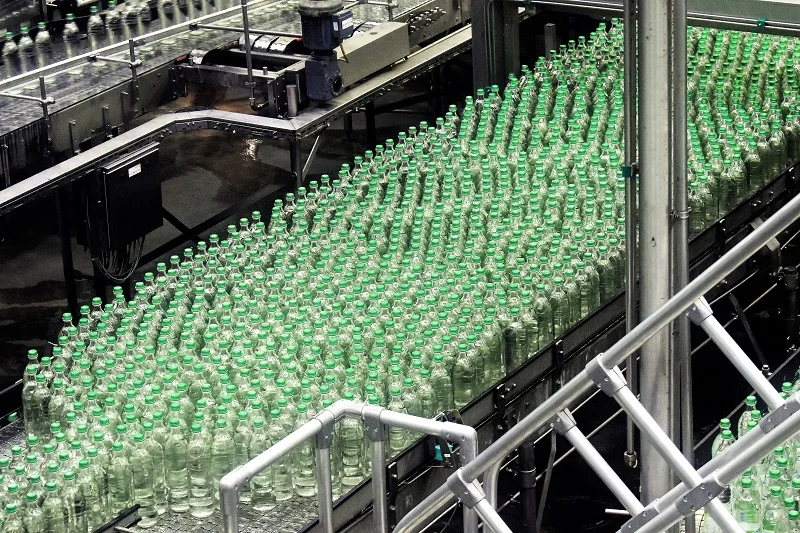
Overcoming Resistance to Change
Process Improvement Partners was brought in to help a consumer goods manufacturer cut their changeover time (the time it takes to switch tooling and equipment over from one product to another) in half. By doing so, they would be able to reduce inventory and improve process performance.
Process Improvement Partners was brought in to help a consumer goods manufacturer cut their changeover time (the time it takes to switch tooling and equipment over from one product to another) in half. By doing so, they would be able to reduce inventory and improve process performance.
The company has five different shifts operating 24 hours a day, 7 days a week. Each crew believed it had the best approach to changeovers, but the results didn’t show it. There was major variation between and within shifts and none of the crews were able to start up their lines consistently and effectively coming out of a changeover.
The Path to Improvement
Process Improvement Partners recommended a 4 ½ day changeover reduction event, or SMED (Single Minute Exchange of Die) Kaizen, using representation from each of the crews. By doing this, we could identify best practices across all of the crews and teach changeover reduction techniques to be shared once the Kaizen was over. The leadership team agreed, and we began preparations for this critical event.
Our leader, the Operations Manager for the production line, picked a team of “All Stars” to participate in the Kaizen. He felt their experience, creativity, and enthusiasm would lead us to a win.
This was the first changeover reduction Kaizen in the history of the plant, and the team was skeptical when we stated our objective: cut the existing changeover time in half, without increasing safety risk to the crew or quality risk to their customers. The team members assumed this meant they would have to rush around, with intense pressure to meet the new target time. The truth was using SMED techniques, we would be able to reduce enough waste in the existing changeover process to take significant time out and reduce safety and quality risk. Then, using the Wheel of Sustainability, we would be able to continue to get great results for years to come.
Turning Skepticism into Excitement
The first day of the Kaizen, we taught the four step SMED methodology (with a little spin from Process Improvement Partners):
1. Assess the current changeover and identify steps that must be done while the line is shut down (internal steps) and steps that are done while the line is still running (external steps)
2. Convert any internal steps to external steps
3. Streamline any remaining internal steps and then any external steps
4. Eliminate any adjustments and put in all aspects of the Wheel of Sustainability
For step one, we videotaped the changeover, did some motion analysis, and made numerous observations of waste. The team was excited to see opportunity they hadn’t realized existed. They never had stepped back and watched what was happening, as they always had to participate in the changeovers.
As we entered step two, the team prioritized the steps they thought could be converted from internal to external. Their creativity helped them invent and build a number of jigs and fixtures that allowed work to be done in preparation for the changeover, while the line was still running. By the morning of the third day, the team tested their efforts and found the time required to change the line over had already been reduced by 50%. They weren’t satisfied, there was much more they felt they could do.
For the rest of the third day and part of the fourth day, the team worked on improvements to streamline remaining internal steps, found ways to eliminate adjustments, and created visuals to help all team members do the changeover the same way every time. Now it was time to give the changes the ultimate test: let another crew try the new changeover procedure.
Working Through Opposition
Each team member was assigned a crew member who wasn’t on the team. They were assigned to review and teach them the new method and answer any questions or concerns. They were sent out onto the factory floor and had approximately 1 ½ hours to teach and discuss the new methods and approach one on one. After a while, one of the team members came into the meeting room and asked for my help. Her assigned crew member was not interested in participating in the test of our new changeover procedure. I came out on the floor to find out if I could help the situation.
The crew member, let’s call him Roy, was visibly upset, so I asked him what was bothering him. He started yelling at me, saying we hadn’t listened to him or anyone else on his crew, didn’t videotape their changeover, and generally didn’t care what they thought. I told him the team had representation from every crew and had done their best to use the best practices from each shift as we worked during the week. He was having none of it. I let him know that we needed to let someone other than the team try out the new method, so we could get feedback and make improvements to it, before locking in all of our changes. His anger grew. I knew I needed to do something extreme, or he would be lost and we wouldn’t learn what was needed to finalize our new procedure.
I asked, “Are you telling me you’re unwilling to try the new procedure?” Roy realized he was being asked if he was being insubordinate, which is a disciplined offense in most companies. He answered he was willing to try the new procedure, but just wanted to voice his protest about the lack on inclusion. I told him I respected his opinion and thanked him for his willingness to try the new approach.
Testing the New System
At 4:30 pm, we gathered all crew members to explain the new procedure, set the expectations for them to follow it to the letter, and would give them the opportunity to provide feedback once the changeover was complete. We would also pair a team member from the Kaizen team with each crew member, so they could be coached during the changeover, just in case they didn’t remember or understand the new steps or approach. All crew members affirmed their commitment to try the new procedure, and we started the new changeover at approximately 4:40 pm.
Three minutes into the changeover something didn’t look right. One of our Kaizen team members, let’s call her Julia, looked extremely uncomfortable. I took her a few feet away from her assigned crew member and asked her if her assigned crew member wasn’t following the new procedure. She nodded and I called the Kaizen team leader over, to talk about what was happening. He wasn’t happy and we agreed to stop the changeover immediately.
We gathered the crew back together, explained what was wrong, why it wasn’t ok to try their own procedure as we wouldn’t learn anything if they did. We then instructed them to put the line back to its original condition before the changeover. After that, we would start the changeover again. There was tension in the air.
At approximately 5:00 pm, we started the changeover for the second time. In two minutes, one of the Kaizen team members, let’s call him Jack, came over and informed me his assigned crew member wasn’t following the new procedure. We stopped the changeover again, gathered the crew, and in an impassioned way, did our best to convince them to try it the right way, or we would do this all night. Would things work out on the third try?
We started out third attempt at 5:10 pm and this time everyone followed the new procedure to the letter. You could see the tension fade away from the Kaizen team members. Now, something else was creeping in. The team had been working since 6:30 am and they were getting tired. 65 minutes later, the changeover was complete. Now it was time to bring the crew into the meeting room and get their feedback and reaction to the new procedure. I was wondering how Roy and his crew mates would respond to the new procedure and the two stoppages we imposed on them when they tried to go “rogue”.
A Surprising Conclusion
In the meeting room, I set up a flip chart and gathered all crew members around a table. I asked each of them to tell us, one at a time, what they thought, identifying out the things they liked and the things we could improve for them. As they spoke, I would write their comments on a flip chart for everyone to see.
Roy started out the feedback session by telling us he “loved” four very specific improvements the team had made. He also offered some constructive feedback on some simple things we could improve. Others had the opportunity to share their feedback, and all of them had positive and constructive things to say. I have to admit I was a bit shocked at the change in the tone in the room. I had figured the crew would save up all of their anger for the meeting room. Instead, they were appreciative for all of the Kaizen team’s efforts. They had realized our Kaizen team was doing their best for everyone in the crew, and the test proved it to them.
We thanked the crew and the Kaizen team, and sent everyone back to the line or home. There were many handshakes and high-fives before they left.
At the report out to leadership, the team remarked how important it was to get everyone’s input and also to test out new ideas with a group that wasn’t involved in the changes. It illustrated how difficult change can be, as most people tend to expect the worst and hope for the best. Since then, the line has been able to sustain the reduced changeover time and has many more believers in changeover reduction and Kaizen.

Don’t Shortcut the Process if You Want Results
Process Improvement Partners was asked to develop and deliver a global cost reduction ideation session for a leading consumer products manufacturer. In early phone conversations with the client, we discovered that prior attempts at this effort had less than desirable results. The next logical step was to visit the client and discuss the approach for the session.
Process Improvement Partners was asked to develop and deliver a global cost reduction ideation session for a leading consumer products manufacturer. In early phone conversations with the client, we discovered that prior attempts at this effort had less than desirable results. The next logical step was to visit the client and discuss the approach for the session.
The company wanted to develop a number of cost reduction concepts to be implemented in the current and following years. In past sessions, teams brainstormed cost reduction ideas and then handed them to project teams who were to turn those ideas into reality. Many ideas weren’t fully detailed, and the project teams became frustrated as they tried to understand the meaning of the ideas.
In order to get the proper amount of detail for the ideas, we suggested a two-day session. The client anticipated a half- day session, and his sponsors were only willing to commit that amount of time. It was clear we’d have to be prepared to make our case before requesting more time from the sponsor.
Our principle for an effective cost reduction session is that there should be no risk to safety, customer service, or productivity resulting from the ideas generated and implemented. To accomplish this, the team must understand what is most important to the customer, the employees, and the overall marketplace. During our sessions, the team receives Voice of the Customer, operational, and business information as the basis for their work. Then, the team is exposed to other ways of thinking around their current processes. Brainstorming and prioritization come next, and the highest priority ideas are developed into detailed concepts with logical thinking and financial calculations applied to them.
Once the team enters into the concept development phase, they continue to work until time runs out in the session, working from the highest priority/highest value projects to the lowest priority/lowest value projects. Most teams need two days to get enough projects detailed to meet the desired session objectives.
Once this approach was reviewed with the team leader, he agreed two full days were needed for the session. Now, we had to convince his sponsors to commit to a two-day session.
Fortunately, there was a leadership team meeting later that morning, and the team leader was able to get a 30-minute agenda commitment from them. The team leader introduced me to the leadership team and told them I would be describing the process for the session and asking for a two-day commitment.
This opening statement got the room buzzing. They didn’t feel like they needed two full days as they hadn’t had to do this in past sessions. One of the members of the leadership team commented that prior efforts hadn’t been successful, so maybe they should listen and consider a different approach.
This was my opportunity to talk about prior cost reduction sessions and the results they were able to achieve. I emphasized that the key to these sessions was to provide concepts to project teams that had the right amount of detail and logic, so the teams would have a solid foundation from which to build on. I explained that rushing through these sessions wouldn’t allow the teams to think through the logic and provide the necessary detail.
This got their attention, but they were still skeptical. They were willing to allow one day (a half-day increase from their prior commitment), but this still wouldn’t be enough. Knowing that these sessions were designed to save companies millions of dollars, I asked if they thought two days was reasonable for such a high return on their investment. One of the leadership team members asked, “Why wouldn’t we set a savings target and lock the team in a room until they reached this target?” I explained the team would be less likely to provide quality effort and more likely try to hit this target with “false” savings, in an effort to go home that evening. He seemed satisfied with my answer.
The leadership team members began challenging each other’s thinking and relived many failed attempts at cost reduction. I knew we were getting somewhere, but hadn’t yet gotten agreement to proceed with a two-day session. Finally, the Director of Finance looked at me and said, “What are you going to do that’s different from what we’ve been doing all of these years?” This was my chance. I fired right back, “I don’t really know what you’ve done in the past, but I can tell you what I would do.” From there, I described the full two-day process that had worked for dozens of teams over the years. The team leader supported me during this discussion and by the end of the review, the leadership team agreed on the approach. The Director of Finance even said, “Don’t be so cheap. Let’s give the team two full days for this important effort.”
This was the alignment and agreement we needed. We thanked the leadership team for their support and time and excused ourselves from the meeting.
A month later, we ran our first cost reduction session and the team beat their savings target by more than $10 million. Two more sessions were held in 2018 with similar results. These sessions will now be held annually, following this approach, with a two-day commitment every time.
Shine a Light on the Problem
The Corporate Quality Manager of a suspended ceiling manufacturer had a problem. When he wanted to check for defects on ceiling tiles, he had them shipped from the manufacturing plant and installed in ceiling grid in the corporate testing facility. This 12’ x 24’ ceiling grid configuration was adjacent to a large bank of windows. He then waited for the weather to cooperate. You see, he wanted the proper angle of sunlight to shine across the face of the tiles, and depending on the time of year and weather conditions, he might have to wait weeks to assess the quality of the tiles. The windows were often obstructed with testing materials, which made access and viewing even more difficult.
The Corporate Quality Manager of a suspended ceiling manufacturer had a problem. When he wanted to check for defects on ceiling tiles, he had them shipped from the manufacturing plant and installed in ceiling grid in the corporate testing facility. This 12’ x 24’ ceiling grid configuration was adjacent to a large bank of windows. He then waited for the weather to cooperate. You see, he wanted the proper angle of sunlight to shine across the face of the tiles, and depending on the time of year and weather conditions, he might have to wait weeks to assess the quality of the tiles. The windows were often obstructed with testing materials, which made access and viewing even more difficult.
The ceiling manufacturer was about to introduce a large quantity of new products and the installation setup would not be sufficient to check all the new products’ quality prior to product launch. A change had to be made. As Lean Champion for the company, my help was enlisted to solve the problem. After some initial discussions and a tour of the area, the Quality Manager and I agreed we needed to think differently about the setup and process of quality testing. We decided to use a Kaizen event to optimize the design of the required testing space.
We assembled a team of testing technicians, quality technicians, scientists, and marketing representatives to think through the testing requirements and systems to install. We also identified a space to use for the new quality testing area. After a few weeks of touring various buildings and negotiating for space, we chose two adjoining 20’ x 50’ spaces on the ground floor of the testing facility. These spaces were filled with equipment and materials from many years of testing and development. We were sure we would be able to remove most of it and re-purpose the space for the benefit of the company. Although these spaces were large, they had no windows to the outside, so we would have to figure out another way to provide proper lighting to the face of the ceiling tiles.
On the first day of the Kaizen, we reviewed Lean principles and spent extra time on 5S. Next, we took the team on a walk of the current testing area and then to the identified spaces. Their first reaction was surprise and disappointment. They thought we should use the existing space by the outside window and reorganize materials and tools.
Our goal was to be able to assess tiles for quality at any time, regardless of the weather. This goal forced us to rule out the current location for testing. In the new space, the clutter got in the way of the team’s vision of what was possible. So, we did the first S, “Sort”. During Sort, the team removed 90 percent of what was in the space. Some equipment, which had been purchased to provide critical data in years past, was no longer useful, and was removed. The team contacted as many of the equipment owners as possible, to ensure we wouldn’t throw out anything critical. Everything would be removed from the space, no matter what.
Once we cleared out the space, we developed our concept for testing. The idea was to create a number of testing spaces, or pods, in which to install and check various types of ceiling tiles. These tiles needed to be at least seven feet off of the floor, so that they could be observed from below as well as from the side, using some form of raking light. The light had to go across the painted face of the tile, so defects and inconsistencies would be readily apparent. The team agreed the size of each pod should be 12’ x 12’. This allowed us to create three pods in each 20’ x 50’ space, for a total of six. We now had three times the capacity of the existing testing space. But, how were we going to create the necessary lighting?
The first thing we had to do was to identify the intensity and angle of light we needed. Fortunately, we were able to do so on the second day of the Kaizen, as the sun came out and provided the necessary lighting required in the existing testing space. Using light meters and the experience of the team, we identified the proper number of lumens (intensity) and optimal angle for the light in the pods.
The next step was to build the ceiling grid configurations in the pods. We put together three installations of ceiling grid in one of the two rooms. Each was squared up and then ceiling tiles were installed. We made sure we had enough space on all sides of the installations, so we could view the tiles from any angle, without obstruction.
Now it was time to go shopping. We purchased enough lights for one of the pods, before committing to all six. We bought a number of different fluorescent lighting configurations (and kept the receipts) to allow us to test and identify the optimal configuration.
On the morning of the third day, we performed our first lighting tests in one of the pods. A technician climbed a scaffold and held one of the lights up to the ceiling tile installation. The team wasn’t pleased. They asked him to move the light a little further away and a little higher. Things started to look better. Then, after a slight adjustment in location and height, they felt they were getting the type of lighting required. Using light meters, they verified a consistent result compared with the natural light measured on day two. The team collected several measurements and developed plans to assemble permanent lighting fixtures for all pods.
Later in the day, the first lighting fixture was installed and the team verified their results. Everything was as expected. Then the team realized an opportunity to provide the same lighting at a 90-degree angle to the original light fixture. They would just need to install an additional fixture and connect it at right angles to the original fixture. This gave them additional inspection capability they never had before.
On the fourth day, the first pod was complete and plans were made to install the same lighting in the other five pods and to hard-wire everything to make it as safe and efficient as possible. Now the team had a new problem. With the extreme increase in productivity and complete elimination of wait time to test, everyone would want to use the pods at the same time.
The solution was to designate an owner for the area and a system to ensure the area was well-managed and organized. To reserve the use of a testing pod, a white board was installed to make reservations visible, by pod. If someone used a pod longer than the requested time, the area owner would follow-up and hold them accountable to honor their commitments.
At the report out, the team proudly reported on their results. They were able to take a process that used to take weeks and reduced it down to minutes. They also increased the capacity of the area by a factor of three. Anyone could now use the pods safely and productively and testing would no longer slow down any new product development or testing project. In the next six weeks, all lights and wiring were installed, and the space has been in continuous use for years.
The team learned how to shine a light on the problem and solve it creatively.

The Little Team That Could and Did
Process Improvement Partners (PIP) recently conducted a free site assessment for a small electronic targeting systems company in Glen Rock, PA.
Process Improvement Partners (PIP) conducted a site assessment for a small electronic targeting systems company in Glen Rock, PA.
The day started with introductions, with each employee sharing their experiences with continuous improvement and their expectations for the day. Some were excited about the process while others weren’t sure what to expect.
Following introductions, PIP demonstrated various continuous improvement tools and techniques. One technique, 5S, got the attention of the Office Manager. She said she thought everyone could use 5S in their personal workspaces and the various production and testing areas around the facility. After about an hour and a half of discussion in the meeting room, it was time to find out if she was right.
We took a walk of the facility and offices. We could easily see from the start, there were many opportunities to improve safety and productivity. Whenever we walked into a space or an office, there was no indication of the health or status of the area. Most areas were cluttered and disorganized. Using the theme, “How do you know …” we discussed our ability to understand what was happening in each space. The only person who knew what was going on at the time was the person who was using the area or office. In some of the offices, even the person using it wasn’t so sure everything was as it should be. It wasn’t easy to see if anyone needed help to get their work done, so they usually had to fend for themselves.
After the walk, the team brainstormed many ideas they thought would improve their productivity and safety. Sorting through more than 60 ideas, a theme emerged – use 5S to improve safety and productivity in all areas of the facility. But, where should they start? Did they need outside help to use these new tools?
It turns out they didn’t. The next week, they jumped right in and began their continuous improvement journey. With the Office Manager as the leader, they picked the first area to work on, the main production area.
Using what they learned about 5S, they brought order to the area and made it a better place to work for everyone. They were proud of what they had accomplished and knew that this was only the beginning of their efforts. Using available time during the following weeks, they began to spread the use of 5S all over the facility.
They now know what they want to do and how to do it. It turns out you don’t need a bunch of trained facilitators and continuous improvement personnel to make positive change. You just need the willingness to learn and apply some simple tools and techniques to improve your situation. And, if something doesn’t work exactly as planned, learn from it and try again.
Process Improvement Partners is in business to help organizations and people help themselves. Sometimes, all they need is a little support, a little nudge, and a few simple tools to get started.