
Kaizen Success Stories
Real Manufacturing Results. One Kaizen at a Time
Explore real-world Kaizen success stories showing how manufacturing teams solved critical problems, improved performance, and created sustainable results.

Virtual Kaizen Events
For many years, I have led, facilitated, or participated in hundreds of Kaizen events. During those events, people worked together in the same location to solve important problems. Sometimes team members travelled to the location of the event. Other times people weren’t able to travel to the event and the team carried on without identified experts. I loved the interaction and energy of those events, but wondered if there might be a way to hold an event that was as effective as putting people in the same room, but would be less difficult from a travel or logistical perspective.
For many years, I have led, facilitated, or participated in hundreds of Kaizen events. During those events, people worked together in the same location to solve important problems. Sometimes team members traveled to the location of the event. Other times people weren’t able to travel to the event and the team carried on without identified experts. I loved the interaction and energy of those events, but wondered if there might be a way to hold an event that was as effective as putting people in the same room, but would be less difficult from a travel or logistical perspective.
This year, out of necessity to work virtually, I challenged myself to develop a virtual version of a Kaizen event, and I am excited to say that I have been able to emulate the elements of my traditional Kaizen events and even believe there are some logistical advantages to the virtual Kaizen event. I now realize that it may be advantageous to consider a virtual Kaizen event and want to give you an image for what that can look like.
First and foremost, the team can come from anywhere, across any time zone. As long as they have an internet connection and some basic video conferencing technology such as Zoom, Microsoft Teams, Google Meet, or the many other options available these days, they can be part of the event. Most of the aforementioned technologies are free or have a minimal cost. Not bad when you consider the cost of travel. There are a number of software platforms that help the Kaizen facilitator (me) integrate with the video conferencing software and allow for and enhance collaboration during the Kaizen event.
Next, the topic of the Kaizen event is not limited to correcting virtual problems. While it might be a stretch to say that a virtual Kaizen event could be held to make equipment modifications or reducing physical effort or reducing changeover time, I am sure with some creativity it could be accomplished. More likely topics could include: strategic planning (VSM), cost reduction ideation, standard work development and improvement, business process improvement, process mapping, and many others. A successful Kaizen event must be chartered, so everyone is aligned around the effort and committed.
The flow of a virtual Kaizen event looks very similar to one done on site, and I have verified that all of these aspects can be accomplished virtually and efficiently. For your reference, here is the typical flow of a Kaizen event:
1. Sponsor kickoff
2. Background of the problem to be solved
3. Charter review
4. Voice of the customer
5. Lean principles overview
6. The Wheel of Sustainability explained
7. Gemba Walk of the Current State
8. Identification of the top pain points in the Current State
9. Brainstorming of opportunities to reduce/eliminate the pain points
10. Prioritization of the opportunities
11. Visualization of what good looks like in the Future State
12. Work on the top opportunities in sub-teams
13. Reviews of progress to achieve synergies across the total team efforts at multiple times during the event
14. Application of the Wheel of Sustainability and Lean principles to the work
15. Finalization of all work – testing against event objectives and the Wheel of Sustainability
16. Road mapping of any outstanding work and implementation planning
17. Report out to sponsor(s) and other stakeholders
18. Team recognition
Just a note or two about how technology can be used during the event. If a physical Gemba walk is needed, assigned team members can take their smart phone or a Go Pro or something else with them that can transmit to the team in real time. Also, they can answer questions during the walk or engage with others doing the work during the walk.
I have also reconsidered how a full day in a virtual Kaizen event might have to be managed, especially for those working from home. Sometimes you have to tend to your family, your pet, or yourself. So, we would have to be quite flexible around how breaks are managed. But, that can all be sorted out prior to the event. If nothing else, the past few months have taught me to be much more open and flexible in my thinking. But isn’t that what continuous improvement is all about?
For those of you who have put off Kaizen events in your business due to the current situation, I encourage you to consider trying a virtual Kaizen. If you wait too long, competition will pass you by. I would love to help you stay ahead.
The Path to Consultancy
I worked more than 30 years for a multi-national company. During that time, I had the opportunity to help teams and solve problems all over the world, from the US to Europe to Asia. I worked in five distinct industries and had many roles, from engineering to operations to continuous improvement. I enjoyed most of what I did, but realized something was missing.
I worked more than 30 years for a multi-national company. During that time, I had the opportunity to help teams and solve problems all over the world, from the US to Europe to Asia. I worked in five distinct industries and had many roles, from engineering to operations to continuous improvement. I enjoyed most of what I did, but realized something was missing.
When you work for someone else, you meet their requirements and work on their assignments. You don’t always get the opportunity to pick your projects. Sometimes you have to work on things that have nothing to do with your chosen field or interests. But, that’s life in a big company.
I used to take time off and help friends identify and implement improvements in their own businesses. I would take a day, travel to their location, and walk through their process with them. We would spend time with the people, processes, and equipment, reviewing the issues and problems in their business. At the end of the day, I would help them lay out a plan to improve things, which they were able to use after my visit. I enjoyed doing this, and thought I could become a consultant after I retired from my primary career.
In April 2018, I was visiting a local company, and spent the day doing what I enjoyed, reviewing their processes, people, and issues. Following a wrap-up meeting, I told my contact I wanted honest feedback on my visit. I felt like I could use this feedback for the time in the future when I intended to consult. Maybe in about 3 to 5 years, I said. He said he would let me know what he heard and we left it at that.
One week later, I was downsized. While this was surprising to me, I didn’t feel bad about it, because I felt something better would come of it. I just had to figure out what that was. It didn’t take long, as I realized I had the opportunity to forge my own path as a consultant.
Downsizing with an upside
I placed a call to my friend from the week before and let him know I would now be available 3 – 5 years sooner than I expected to be. He seemed excited to hear that and said he would talk to his plant manager to see if he was interested in letting me help them execute the improvement plan we had developed together. The plant manager was willing to use my help. Now I had to figure out all of the details required to open and run a consulting business.
Luckily for me, and for many others, there are ample resources willing to help and support small business owners. Using those resources, a lot of networking, and tons of phone calls and meetings, I established my consultancy in May 2018. Once done, I was able to start working with my first client. We decided to run a Value Stream Mapping session to lay out a continuous improvement strategy for the plant in June. I had run many such sessions in my prior company. Now, I had to put one together with a group who had little to no experience with this approach. I knew I had to prepare them for what was going to happen and do everything possible to ensure they had a great experience and beat their expectations.
Success is in the details
I spent many days at the plant, preparing them and myself for the Value Stream Mapping event. Every detail was critical, from the layout of the meeting room to the activities each day and the food we would be feeding the attendees. The people at the plant were intrigued by how involved I was in even these details. I kept telling myself and them that it was all for ensuring a winning experience.
The first day of the event, we had over 50 people attend, and we broke them up into three working teams, with facilitators I had trained in advance. Throughout the week, each of these teams identified waste in their processes, ways to reduce the waste, and improvement efforts and projects to implement over the next few years. It was hard work, but the team members seemed to be having a good time and were energized by the opportunity to create their future. I was having a blast, realizing I was helping people do something they had never done before.
By the end of the week, all teams had strategic plans they were committed to implementing. Corporate leadership came to the plant for the report out and was extremely pleased with the results. After the event was over, I reviewed my approach with the leadership team to see what they thought. They were very happy and even suggested I could help them with a number of other improvement efforts over the coming months. This reaffirmed my belief that I had chosen the right path.
The reward for good work is more work
A few months later, I received a call from the corporate supply chain director for the same company. He told me I had been recommended to him by the plant manager and he wanted my help with another improvement project. I was elated and scheduled the work for August.
Since those early days, I have had the good fortune to acquire more improvement efforts for multiple locations of the same company and other companies as well. The more I do, the more I learn, and the more fun it has turned out to be. I have the opportunity to help people and do it in a way that is fun, engaging, and energizing. I am so glad I didn’t wait to get into consulting, even if I needed a nudge to start.

The Little Team That Could and Did
Process Improvement Partners (PIP) recently conducted a free site assessment for a small electronic targeting systems company in Glen Rock, PA.
Process Improvement Partners (PIP) conducted a site assessment for a small electronic targeting systems company in Glen Rock, PA.
The day started with introductions, with each employee sharing their experiences with continuous improvement and their expectations for the day. Some were excited about the process while others weren’t sure what to expect.
Following introductions, PIP demonstrated various continuous improvement tools and techniques. One technique, 5S, got the attention of the Office Manager. She said she thought everyone could use 5S in their personal workspaces and the various production and testing areas around the facility. After about an hour and a half of discussion in the meeting room, it was time to find out if she was right.
We took a walk of the facility and offices. We could easily see from the start, there were many opportunities to improve safety and productivity. Whenever we walked into a space or an office, there was no indication of the health or status of the area. Most areas were cluttered and disorganized. Using the theme, “How do you know …” we discussed our ability to understand what was happening in each space. The only person who knew what was going on at the time was the person who was using the area or office. In some of the offices, even the person using it wasn’t so sure everything was as it should be. It wasn’t easy to see if anyone needed help to get their work done, so they usually had to fend for themselves.
After the walk, the team brainstormed many ideas they thought would improve their productivity and safety. Sorting through more than 60 ideas, a theme emerged – use 5S to improve safety and productivity in all areas of the facility. But, where should they start? Did they need outside help to use these new tools?
It turns out they didn’t. The next week, they jumped right in and began their continuous improvement journey. With the Office Manager as the leader, they picked the first area to work on, the main production area.
Using what they learned about 5S, they brought order to the area and made it a better place to work for everyone. They were proud of what they had accomplished and knew that this was only the beginning of their efforts. Using available time during the following weeks, they began to spread the use of 5S all over the facility.
They now know what they want to do and how to do it. It turns out you don’t need a bunch of trained facilitators and continuous improvement personnel to make positive change. You just need the willingness to learn and apply some simple tools and techniques to improve your situation. And, if something doesn’t work exactly as planned, learn from it and try again.
Process Improvement Partners is in business to help organizations and people help themselves. Sometimes, all they need is a little support, a little nudge, and a few simple tools to get started.
PIP Visits Dogfish Head Brewery
One of the benefits of being in business for yourself is to decide what’s most important to you and then prioritize your time to let you do what you are most passionate about.
One of the benefits of being in business for yourself is to decide what’s most important to you and then prioritize your time to let you do what you are most passionate about.
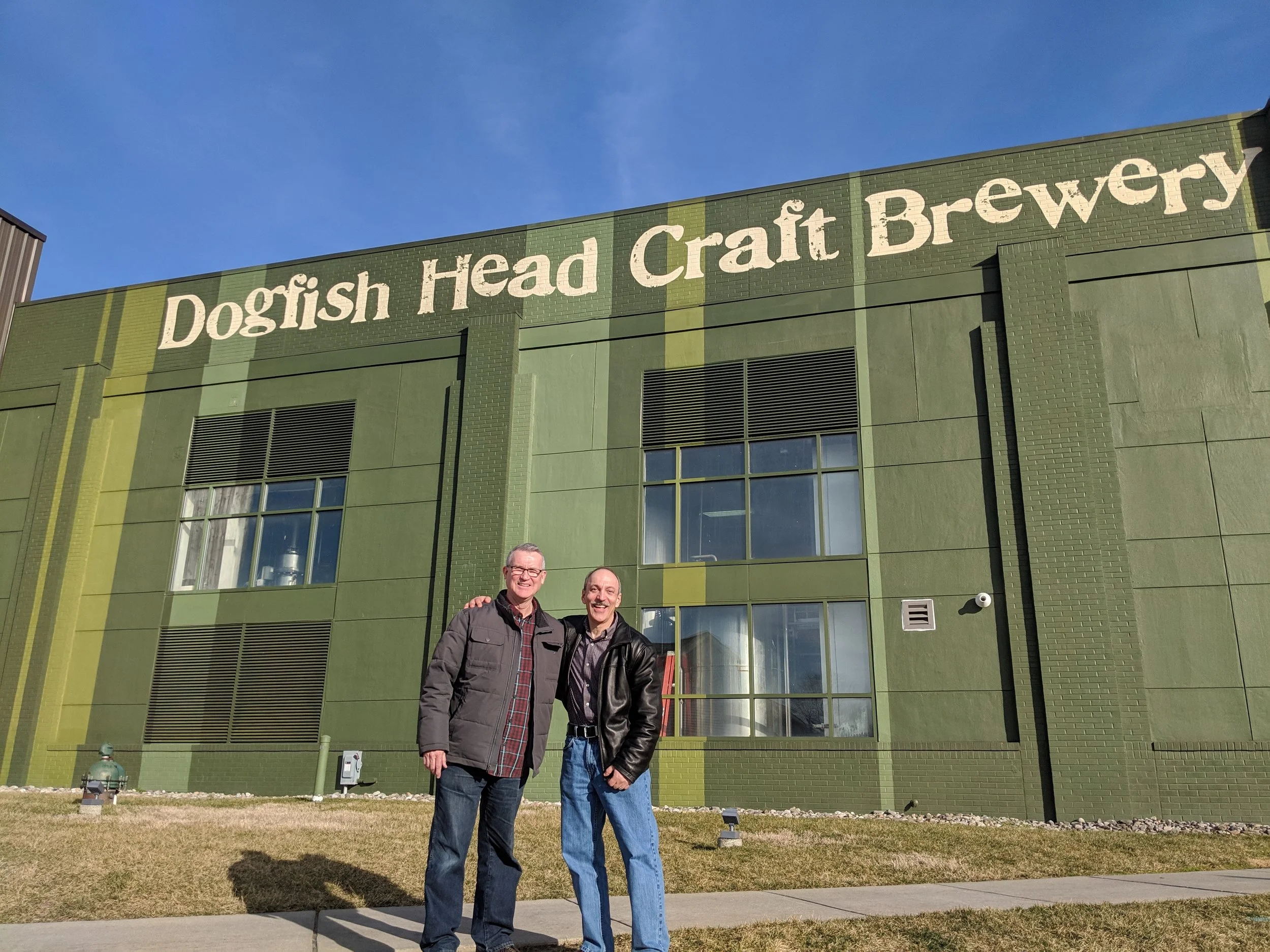
Recently, I had the opportunity to visit with Gordon Zavilla. Gordon and I worked together at Armstrong a few years ago and he was interested in accelerating Dogfish Head Brewery’s continuous improvement journey. Gordon invited his boss, Brian Hollinger to join us during the visit. We took a walk of the processes and shared ideas of ways to immediately improve safety, productivity, and customer service. We also discussed a strategic approach to the improvements they want to make. Their culture of employee engagement and creativity is a great foundation from which to build on.
One of the most creative tool boards I have seen was in their maintenance shop. Notice how there are actually three boards in one. No searching for anything in traditional tool boxes.
Thanks to Gordon and the great folks at Dogfish Head who taught me what it means to be “Dogfishy”.
PIP Helps Team in York, PA Improve Reliability of Critical Operation
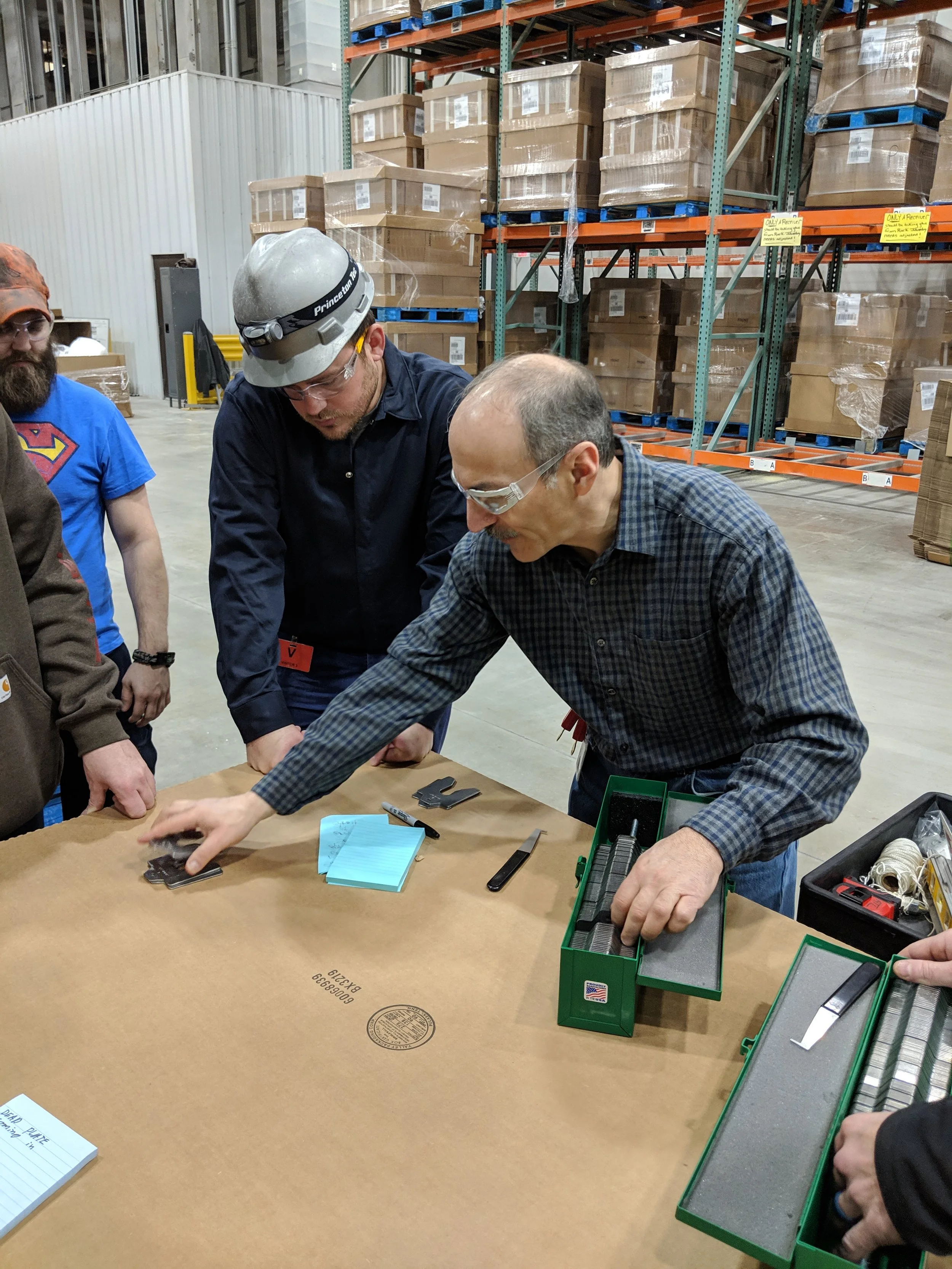
Many consultants train and teach. I like to demonstrate and verify with teams that they truly understand the techniques for improvement that I am sharing with them. Most importantly, I want them to be able to take this work and transfer it to other parts of the factory without my assistance.
Many consultants train and teach. I like to demonstrate and verify with teams that they truly understand the techniques for improvement that I am sharing with them. Most importantly, I want them to be able to take this work and transfer it to other parts of the factory without my assistance.
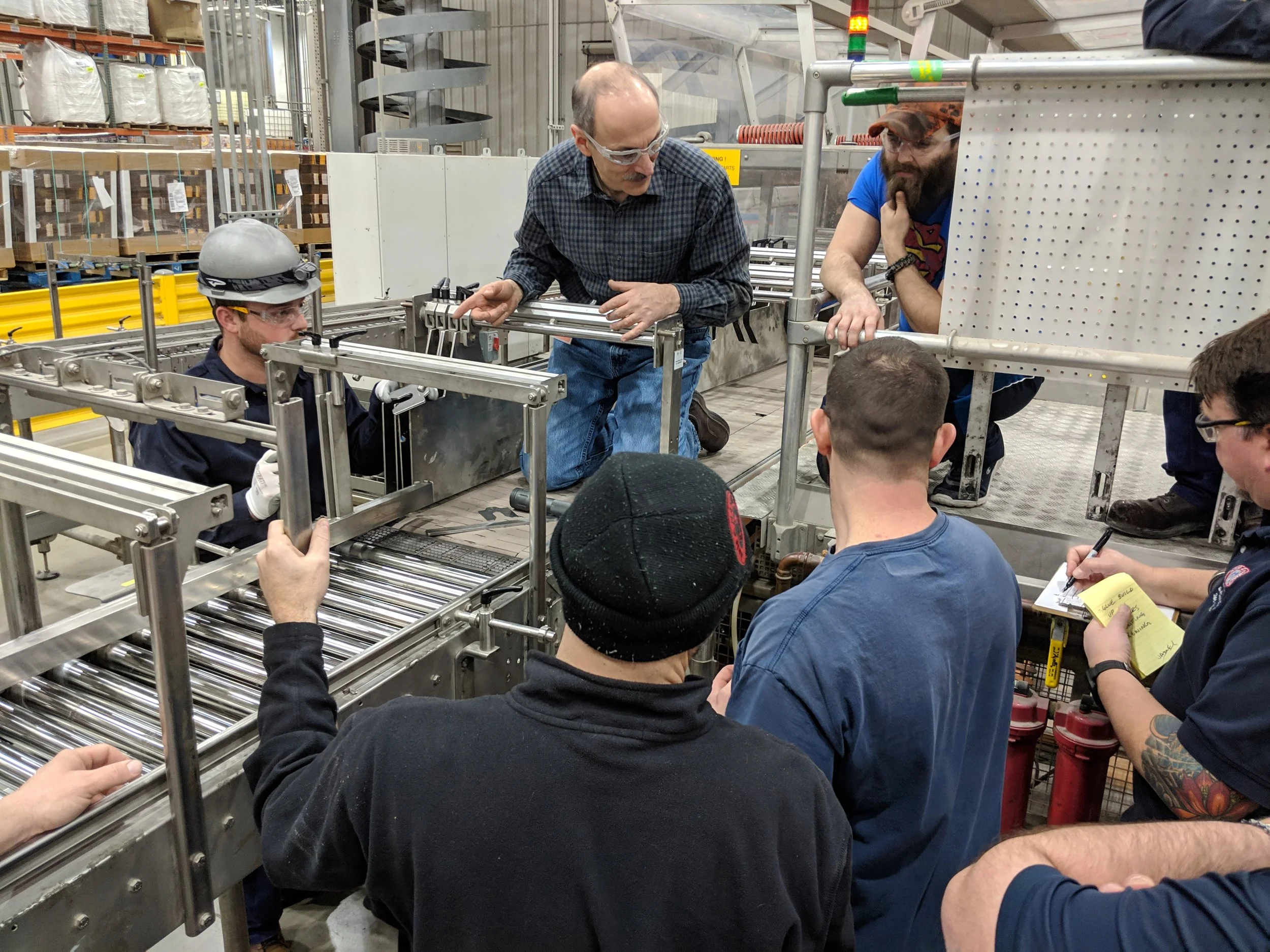
During an event in York, PA, I showed a team of maintenance technicians, engineers, and production operators how to level, square, and centerline equipment during a reliability improvement Kaizen. I demonstrated these techniques to show them how critical even the smallest improvements are. We were able to reduce the out-of-level condition on some conveyers from ½” to less than 1/16”. We also optimized the location of the product that was flowing through the conveyers and equipment. Immediately after doing this work, the production line ran smoother than anyone could remember.
When the team reported their results and findings, the audience was so impressed that they committed to doing this work all over the facility, using their new reliability experts.

What Happens in a Cost Reduction Session?
Most companies want to reduce costs in their operations. There are many ways to do this. Some companies choose to reduce their workforce, others decide to sell off under performing businesses. Companies that use this approach are just avoiding the problems and inefficiencies of their business practices and are not targeting the root cause of their problems.
Most companies want to reduce costs in their operations. There are many ways to do this. Some companies choose to reduce their workforce, others decide to sell off under performing businesses. Companies that use this approach are just avoiding the problems and inefficiencies of their business practices and are not targeting the root cause of their problems.
At Process Improvement Partners LLC, we believe that the best way to reduce cost is to optimize your business to the benefit of your customers. Using that premise, we have developed an approach to leverage your team’s creativity to drive waste and inefficiencies out of your process, thereby reducing cost. In a 2 to 4-day session, teams will identify and build plans to take millions of dollars out of their operating costs, often greatly exceeding their cost reduction targets. The following summarizes how this can be accomplished.
Create Leadership Alignment
The first step in the process is to meet with Operations Leadership to gain their alignment and support for the approach that is being recommended. They have to stand by it, show their support for it, and supply dedicated resources that will participate fully in the cost reduction session(s). They should communicate with all potential participants and their managers well in advance, showing their support for the effort.
Event Preparation
Once Leadership is aligned, the event is scoped out, with a clear problem statement and objectives. When the scope of the event is known, we then plan the amount of time necessary for the team to achieve their cost reduction goal. Critical team members are identified who can help meet the goal, and then the event can be scheduled. All facilities should be reserved well in advance of the event, as meeting rooms come at a premium in most companies. There should be adequate space to move around and enough wall space to display information and ideas on. Typical supplies include flip chart easels, flip chart paper, sticky notes, pens, and a way to project presentations and information.
Session Kickoff
On the first morning of the session, an executive sponsor or key member of the leadership team kicks off the session, reinforcing the importance of the session and the targeted cost reduction that is to be realized. The sponsor should encourage team members to be as creative as possible and not limited by what has or has not worked in the past. It is not unusual for team members to be skeptical that their efforts will not be implemented, so the sponsor should meet that skepticism head on.
Voice of the Customer
Those who will be impacted by any cost reduction efforts must share what is most important to them and their customers. Often, Marketing will represent the customer’s interests, but other areas can do this as well, such as Operations, Research and Development, Sales, and Distribution. Some companies will bring in direct customers and this can be quite powerful. In the end, the team cannot and should not implement any cost reduction ideas that will negatively impact the customer. But, in some sessions that Process Improvement Partners has facilitated, cost reduction ideas created a positive customer experience.
Ideation
This is a free-wheeling exercise. In the early stages of ideation, it is more important to get as many ideas out as possible, regardless of their likelihood of success. Many team members will come to the session with ideas to share, so let’s get them all out on the table. When the team starts running out of ideas to share, facilitators will suggest topics and ask questions to encourage more ideas from the group.
Prioritization
Now that all of the ideas have been shared, the team needs to prioritize the ones that will make the most positive impact on cost, without negatively impacting the customer. There are many ways to do this, but we have used these in most sessions: Group rotation and review of all ideas, grouping of similar ideas, multi-voting with criteria, and a 9-block Impact/Difficulty matrix. The goal is to take literally hundreds of potential cost reduction opportunities and narrow them down to 20 to 30 of the best ones for the team to work on.
Concept Shaping
The team is divided into small groups of 3 or 4 people and asked to build more detail on the top priority cost reduction ideas. A focused, one-page concept sheet template is given to all team members, and they are required to answer all of the questions to the best of their ability. There isn’t a lot of time available, so team members are told that they should take one hour per concept. If they need additional information, they may phone a friend, or make their best educated guess. In all cases, they are encouraged to list their assumptions, so that others will understand their thought process. All concepts are audited for completeness and listing of assumptions, with the view that others who may not have been in the room may be assigned the project later on and must understand the initial thinking behind the cost reduction idea.
Managing System Development
Some teams work on the way that they will manage the cost reduction efforts after the session is over. This can include project communication, resource assignment, project visualization and management, and regular meetings to review status. Other teams just hand off their efforts to the session leader to take the work forward. In all cases, the results of the session should be communicated back to the sponsor and other stakeholders.
Reducing costs in your operation doesn’t have to be difficult or painful. When using people’s creativity and engagement and focusing on ideas that will benefit the customer, opportunities become apparent and a path to realize those opportunities can be identified. Then, everybody wins.

What Process Improvement Partners Can Do for Your Team
Process Improvement Partners LLC offers a variety of services that help teams achieve breakthrough results. Some are narrow in scope, while others are strategic in nature. Some are quite simple, and others are extremely complex. In all cases, we strive to apply the right service to our customer’s needs, providing hands-on assistance, where needed.
Process Improvement Partners LLC offers a variety of services that help teams achieve breakthrough results. Some are narrow in scope, while others are strategic in nature. Some are quite simple, and others are extremely complex. In all cases, we strive to apply the right service to our customer’s needs, providing hands-on assistance, where needed. Here is a summary of our services, and when you might want to consider using them:
Site Assessment
If you want to see what opportunities are available to you, or don’t know where to start, take this 5 to 6-hour test drive with us. Everyone learns something new in this session. Together, we will identify the highest value opportunities and develop the plan to realize those opportunities. Some teams decide to take on the work themselves, others choose to engage us. Either way, it’s time well spent.
Cost Reduction Ideation, Prioritization, and Implementation
If you need to drive out costs in your business without negatively impacting your customers, this session is for you. Team members are challenged to come up with new and more efficient ways to do what they do, focusing on the cost impact to the organization. Once they have heard from their customers, they creatively brainstorm cost reduction opportunities, prioritize those opportunities, and then more fully develop and analyze those opportunities for customer and cost impact. At the end of the session, the team has a roadmap to drive significant costs out of the business.
Strategic Planning (VSM)
The first step in any continuous improvement journey. This session opens the eyes of all participants to the wastes and inefficiencies in their current processes and provides a roadmap to improvement that will be a direct benefit to their customers. Often, the team identifies simple and quick changes (6 – 12 months) that will reduce lead time to their customers by more than 50%, free up space, reduce the need for inventory, and improve quality and safety performance. This session also changes how people manage and lead in their processes moving forward. The benefits are felt immediately by those who work in the process, as well as customers of the process.
Workplace Organization (5S)
This session makes an immediate, visible and measurable impact on safety and productivity in a work space. It’s fun and fast paced, as team members learn how removing clutter, organizing items into optimal locations, maintaining resources in top condition, and implementing audits of the area can improve the lives of the people working in the space. Team members may get emotional at the end of the session, as they are positively impacted by the experience.
Breakthrough Creativity (3P)
Based on the proven 11-step Nakao method, this session is designed to drive teams to places they never dreamed possible in a 4 ½ day session. It is extremely challenging and exciting, as team members find solutions to problems that eluded them previously. This session is not for the faint of heart, as team members will work at a rapid pace and for long hours. When the session is over, it’s not unusual to have reduced project time by 6 months or more.
Changeover Reduction (SMED)
If you find that you are constantly expediting orders due to long product changeover times, this is the session you need. Using Single Minute Exchange of Die (SMED) methodology, teams typically reduce changeover times by half or more by the end of the session. Your customers will see the benefits of this session too, as lead times will be reduced as well. Teams will be trained so that they can apply the approach to other areas of their business in the future.
Process Optimization (Standard Work)
This session brings people together to determine the safest, most productive way to accomplish critical tasks. The team is guided through this session to create the new standard work for the improved process and develop the managing systems to ensure that everyone follows it once implemented.
Failure Prevention (FMEA)
An industry standard approach to stopping problems before they happen through the identification, prioritization, development, and implementation of preventative actions. This session stretches team member thinking as they are challenged to identify all of the ways a process could fail, whether the process has been implemented or not. Through a standard scoring system, these failure modes are prioritized for greatest negative impact to employees and customers. Once the session is over, the team will have a strong plan of action to keep these potential problems from occurring.
Plant Reliability Improvement (OEE)
This ongoing effort to drive to World Class Reliability utilizes Standard Work, Visual Management, Changeover Reduction, Shop Floor participation, Best Practice maintenance, and Continuous Improvement events. The team will build a road map of actions and strategies to improve Plant Reliability, and then they will be given assistance with any or all of their identified actions. We step back when the organization is ready to take full ownership of the improvement efforts.
Cultural Transformation
What does it take to drive an organization to a culture of continuous improvement? This ongoing effort utilizes leadership coaching, mentoring, demonstrations, and implementation of the key drivers of cultural transformation. The team starts with their vision and mission, and then designs all of their actions around them. Assistance is provided until the organization has shown that it owns the change that it seeks.
Visual Management and Shop Floor Participation (Gemba Walks)
The people who work in the process know what’s going on and are just waiting for an opportunity to share their ideas for improvement. This session engages the shop floor work force and improves accountability for daily results. The team builds a plan and leadership actions that will drive shop floor performance to higher levels and improve workforce engagement. Once the team implements visual management, there will be alignment and accountability for the most important results.
Best Practice Facilitation
How is that the best facilitators look like they aren’t doing anything at all, while the teams they are working with are making breakthroughs? This ½ day training session will provide the tools, methods, and hands-on practice to improve skills of the participants. The result will be more productive meetings and events.
If you don’t know which of these services to choose, just contact Process Improvement Partners LLC, and we’ll help you determine your best course of action. We are totally committed to your success. These sessions can drive your operating results to new heights.

Why Request a Site Assessment?
When you call Process Improvement Partners LLC for a site assessment, you are making a choice to invite outside perspective for your organization. While there is a fee for this service, there is also a significant investment of your time and resources, so it is good to understand the value of your investment.
When you call Process Improvement Partners LLC for a site assessment, you are making a choice to invite outside perspective for your organization. While there is a fee for this service, there is also a significant investment of your time and resources, so it is good to understand the value of your investment.
By the end of this 5 to 6-hour visit, you will have a greater understanding of where the highest value safety, quality, customer service, and cost opportunities are and how to leverage them. Here’s a typical site assessment agenda:
9:00 am - Team Introductions
A short review of each participant, their role, the company, and Process Improvement Partners LLC. We get to know one another and start the conversation on a personal and business level. It serves as a quick check of the team’s level of commitment, based on who is participating in the assessment and for how much time during the day.
9:15 am - Safety Review
How will we keep each other safe during the assessment? How important is safety to the site team and how strong is the safety culture of the company? During the visit, we will respect all of the safety requirements and expectations set by the team.
9:30 am - Review the Site Team Focus and Priorities
What are the priorities of the site team? What are the current pain points in their view? What do they want to focus on during the assessment? These discussions keep everyone aligned around the purpose of the assessment and make it more meaningful for all involved.
10:00 am - Plant Walk (Gemba Walk)
We walk the process with the site team, visiting all areas, speaking with people in the process, and looking for waste and inefficiencies. The more engagement we have with people in the process, the better. When waste is spotted, we stop and discuss what we see as a team. All team members are encouraged to take notes, so that they document what they see while on the walk.
11:30 am – Review of Findings
What did we observe on the plant walk? What did we learn from those in the process? Does it validate or invalidate our initial thinking? Did we learn something new, just by the way we engaged with others on the walk? Might this be an approach to incorporate into the way we do business moving forward?
12:00 pm - Lunch
Keeping the team together during lunch is critical. Although this seems like a minor detail, it’s an opportunity to relax and discuss things in a less formal way. It also lets the team get a feel for how an ongoing relationship with Process Improvement Partners LLC might look.
12:45 pm - Evaluate and Prioritize Opportunities
Based on everything we saw and discussed, what are the key things that the team wants to work on now and in the future? Using quick facilitation and prioritization techniques, the list of observations and ideas is narrowed to a top 5 to 10 that the team finds most important and impactful.
1:15 pm - Discuss Approaches to Leverage Top Priority Opportunities
We now discuss the tools and techniques available to drive improvement in the top priority opportunities. This is the time to decide whether the team wants to work on these opportunities without outside assistance, or with the help of Process Improvement Partners LLC. We will charter and write proposals for any work that the team feels it needs help with.
1:45 pm - Plan of Action
What are the next steps? Who is responsible? Does the team want Process Improvement Partners LLC to charter and write a proposal for the work? Is there a contact person for the work? We build an action plan that will be followed once the assessment is complete.
2:15 pm - Wrap Up and Feedback
An opportunity to review how the site assessment went for all participants. This is a learning moment for all involved, as we are applying process improvement in real time to the assessment process.
2:30 pm – Additional Time for Discussion or Adjourn
If the team wants more time to discuss the assessment, we always set aside additional time for them. If there is nothing left to discuss, the assessment is complete.
At the end of the site assessment, the team has a roadmap of activities that will help them improve their performance in safety, quality, customer service, and cost. In addition, they have had an opportunity to see how an ongoing relationship with Process Improvement Partners LLC can help them execute their roadmap.

How to Ensure Standard Operating Procedures Don’t Collect Dust
We have been trying to get others to follow standard operating procedures since the Cavemen painted “Way to Kill Mastodon” on the cave walls!
We have been trying to get others to follow standard operating procedures since the Cavemen painted “Way to Kill Mastodon” on the cave walls!
But, try as we might, people still like to do things “their way”. And why not, most people think their way is best. But it may not be, and it may lead to errors and other problems. So, why aren’t we able to get people to follow standard operating procedures, the way they were meant to be followed?

The reason is that we haven’t really thought through what resources our teams need to properly follow standard operating procedures. This is why Process Improvement Partners LLC has developed The Wheel of Sustainability. With a hub and eight spokes, it all but ensures standard operating procedures will be followed.
Notification
The first and most traditional spoke in The Wheel of Sustainability. People are told there is a procedure and they are expected to follow it.
Training and Review
The second spoke gives people a chance to ask questions about the procedure, gain better understanding of it, and provide their input. If there are any opportunities to improve the procedure, this is a great time to uncover them. Buy-in for the procedure starts here.
Visible Evidence
The third spoke in The Wheel of Sustainability requires us to develop ways to show that the procedure is being followed, without having to interrupt the person doing the work. Is the procedure obvious, and are there visual cues that show things are happening as they should, in the proper sequence?
All Tools Available
The fourth spoke provides the person doing the work everything they need to do the job safely and productively. Are the tools easily accessible and in a logical location, or do they have to search for them? The tools can be physical (hammers, wrenches, screwdrivers, etc.) or virtual (databases, files on the computer, network connections, emails, etc.)
Clear Benefits
The fifth spoke in The Wheel of Sustainability asks if the person following the procedure sees it as being easier, more logical, and/or safer to accomplish. Have they been given a chance to give their input when the procedure was designed? Have they “seen for themselves” that this is a better way than what they did in the past?
Layered Audits
The sixth spoke requires others to engage with people as they follow the procedure, to make sure that they are following it, truly understand it, and can get help if they are unsure of the proper way to follow it. We also want to reinforce how important it is to follow the procedure as written. Audits should be visible and engaging, not hidden from view or disruptive. Many levels in the organization should participate at different times, thus the term “layered”.
Accountability
The seventh spoke in The Wheel of Sustainability asks the question, “What do you do if you observe someone who is not following the procedure as written”? This is the time to jump in and help them, not punish them. We need to understand why the person is not following the procedure and correct their behavior or provide more training. We must also hold ourselves accountable to help those who need our help. Do not turn a blind eye to improper work. Reinforce the proper way to follow the procedure.
Recognition
The eighth and final spoke ensures that people see the connection between the new procedure and improved results. We need to help people make that connection, so that it will lock in their commitment to continue following the procedure, even when no one is watching. It also gives credibility to the improvement efforts that generated the new procedure. Celebrate improved performance, when possible.
Leadership Commitment
The Wheel of Sustainability stays together with a strong hub. Leadership Commitment is that strong hub. Leaders must commit to helping, supporting, auditing, and providing everything necessary to make the procedure important and meaningful. Leaders should be visible. They should understand how the procedure impacts overall performance, and they demonstrate they are committed to the new procedure.
In summary, sustainability can be achieved through strong leadership commitment and investment in the eight spokes of The Wheel of Sustainability. Implementing this approach takes significant effort, so pick critical work first, get some practice implementing all eight spokes, and then add next level work. The more practice you get, the easier it becomes. The results will make the effort worthwhile.