
Kaizen Success Stories
Real Manufacturing Results. One Kaizen at a Time
Explore real-world Kaizen success stories showing how manufacturing teams solved critical problems, improved performance, and created sustainable results.
A Gemba Walk Like No Other
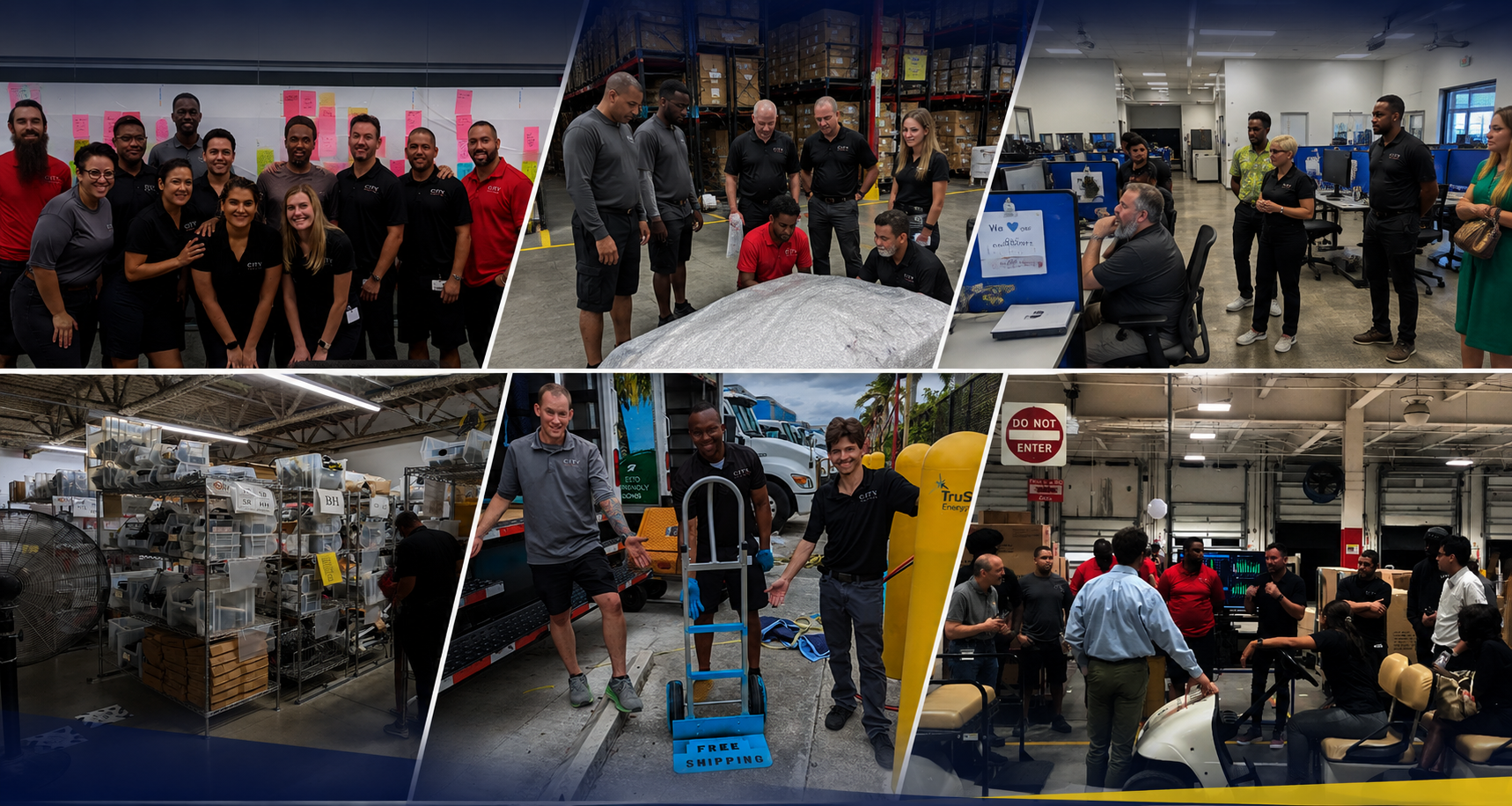
Before I facilitated my first Kaizen event at CITY Furniture, we agreed I should learn the business from the inside. So, I spent a week embedded in their distribution center, shadowing employees and learning the flow.
The culture was strong, engaged, and motivated. But people were frustrated. They hadn’t had a Kaizen in a while, and they were hungry for change. I was there to help reignite that spark.
I spent time in the repair shop, helped planners with order tracking, and eventually got paired up with an order picker named Andy. His job was to locate furniture across a 1.6 million square foot facility and deliver it to the floor for shipment.
Andy showed me how he used barcode scanners and optimized routes to work efficiently. Then he asked, “Want to help me with an order?”
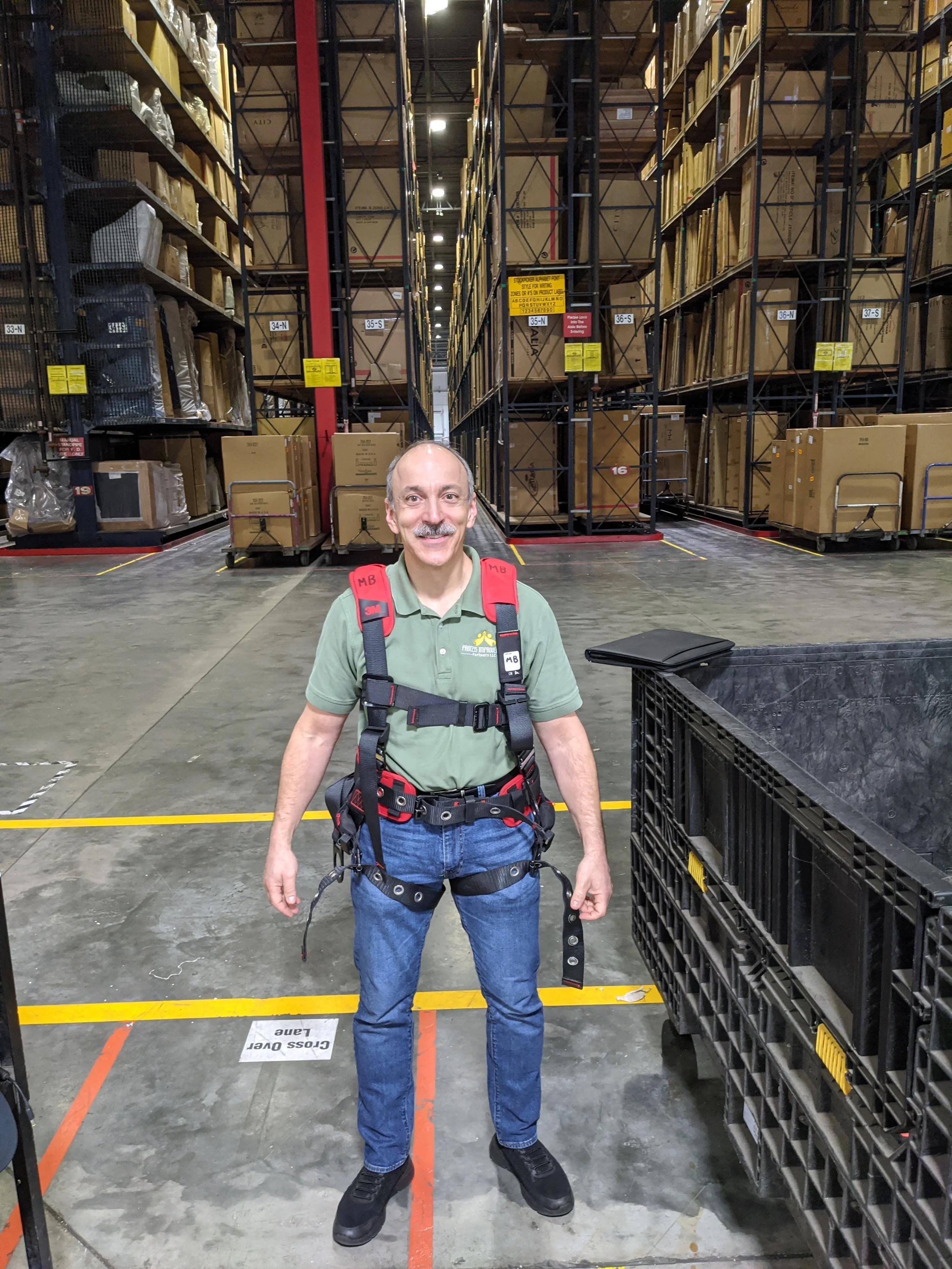
Next thing I knew, I was wearing a harness and vest, clipped into an “order picker,” a lift with a platform designed to retrieve furniture from towering racks.
Up and down we went, pulling product from the sky. At one point, 45 feet in the air, Andy turned to me and said, “I forgot to ask, are you afraid of heights?” I laughed and replied, “You picked a fine time to ask!”
We kept working, and I gained a deep appreciation for the skill, care, and judgment required in that role. It’s easy to underestimate the complexity when you're watching from the ground.
By the time I returned to the office, everyone had heard about the consultant in the air. They also knew I wasn’t there to sit on the sidelines. I was there to understand, serve, and support.
You can’t lead improvement from behind a desk. Real change starts when you walk the floor, get your hands dirty, and show people that their work matters.
Value for the Customer
After many years, I was able to influence my number one client to take their Gemba walk to the next level of performance. When the hourly production operator stood up and gave his perspective, it changed the mind set of the leadership team.
I’ve been helping a leading consumer brand company through their Lean journey since I started my business over six years ago. These days, they’re mostly independent. They don’t call me unless the topic is complex, strategic, or I help them see a major opportunity they hadn’t noticed.
About a year into their journey, they rolled out daily Gemba walks, which they call "Board Walks." These walks got leaders out of their offices, connecting with the people doing the work, surfacing issues, and strengthening engagement and alignment across the organization.
For a few years, these Board Walks looked the same across every location: a group of managers would visit a manufacturing line, listen to an operator or mechanic report on the past 24 hours, ask a few questions, and move on to the next area. It was a start, but something critical seemed to be missing.
I spoke to contacts at several locations about the current state of their Board Walks and what the next level could look like. One local contact told me his plant manager didn’t want to change anything, he was happy with the results and approach.
But another contact, who I’d worked closely with before, called to share his frustration. He knew they had made progress but couldn’t seem to reach the next level of performance.
We talked about the Board Walks and confirmed they hadn’t changed since they started. I suggested we run a Kaizen event focused on making those walks more effective, with the goal of improving safety and productivity.
He was intrigued. I told him I’d seen this work before at an Armstrong plant, where we’d redesigned the Gemba walks to serve our true customers: hourly production operators and mechanics. It resulted in an immediate improvement to safety and productivity.
It took nearly a year of conversations to gain enough momentum and alignment. Eventually, we got support for the Kaizen and invited representatives from four plants, with the intent that they’d take the results back home.
We kicked things off early Tuesday morning. Everyone aligned on the charter and objectives. I had hoped for more hourly participation, but we had one production operator and one maintenance technician on the team. Luckily, they were well chosen.
At 8 a.m., we joined the daily Board Walk and took notes. Everyone was scribbling on Post-its, so I expected a decent mix of observations.
Back in the meeting room, the team shared their ideas. There were plenty of suggestions, but something was missing. It didn’t feel like we had touched the core issue of customer value and engagement. I pivoted and started asking more pointed questions.
I asked, “Who is the Board Walk for?”
The manufacturing manager quickly responded, “It’s for the operators and mechanics, of course.”
Then the operator on our team spoke up. “For us? I always thought it was for management. The Board Walk does nothing for me.” That was the turning point. There were many shocked team members in the room.
We created a Current State Value Stream Map of the Board Walk, identifying every step and evaluating which ones added value from the operator’s perspective. The results were clear and painful. None of the steps provided value for the actual frontline team members.
That created a realization that the Board Walk had to be redesigned to deliver true value to the customers. Now, it became apparent what the improvement priorities would be. Any changes must improve the customer experience.
The team selected three areas to focus on: the agenda, the ground rules, and the follow-up process. During the week, they trialed these changes on one production line.
The biggest shifts in design were:
1. A smaller, dedicated group focused on that area.
2. The discussion shifted to what needed to happen in the next 24 hours, not just rehashing the past.
3. Critical issues that came up would receive rapid follow-up and clear feedback.
The results were immediate. Operators felt heard. Managers were more focused. The Board Walks started to serve their true customer. Alignment and engagement skyrocketed.
Two months later, the new process had been rolled out to every line in the host plant. And at least one of the visiting sites took it back and implemented it with similar success.
This is the kind of transformation that happens when we pause to ask the right question and are willing to listen to the answer.
My First True Gemba Walk
I started my career as an industrial engineer for Thomasville Furniture in North Carolina. My initial responsibilities included warehouse barcoding support and veneer plant projects. For the warehouse, I had to learn how barcodes were used to inventory, ship, and receive finished furniture from the various plants in the network. In the veneer plant, I was to conduct time and work studies and also identify improvement projects.
I started my career as an industrial engineer for Thomasville Furniture in North Carolina. My initial responsibilities included warehouse barcoding support and veneer plant projects. For the warehouse, I had to learn how barcodes were used to inventory, ship, and receive finished furniture from the various plants in the network. In the veneer plant, I was to conduct time and work studies and also identify improvement projects.
Time and work studies consisted of walking around with a stopwatch and a clip board and verifying a number of things: how long it takes to complete a task, how often people were working and how often they were not working. I was told to take a random tour of the plant daily and spend no more than 30 minutes conducting my studies. Holding the clip board and stopwatch can be viewed in a negative light by those you are timing and studying. I was getting some challenging comments when I walked around the plant to do my work.
I realized people at the plant didn’t understand what I was doing, and that it wasn’t designed to hurt them personally. I was helping the company determine capacity and plan appropriately for seasonal changes in demand.
One morning, I asked my manager if I could take more time during my time and work studies to better understand what I was measuring and to get to know the employees better. He agreed and I happily set out to visit the veneer plant.
I started in the matching department. This is where sliced wood with similar wood grain patterns is taped to another piece of sliced wood, to make a desired visual effect. As I started my study , one of the workers made a personal comment about me. I swallowed my pride and walked up to her and introduced myself. This caught her off guard. I then explained to her what I was doing. She told me no one had ever explained time and work studies to her. She assumed I was an “investor” and was trying to decide whether or not to buy the plant and shut it down.
I assured her I was there to do a job just like her and we started talking about why both our jobs mattered. Hers was to ensure the customers got what they paid for and mine was to ensure customers would never have to wait for the furniture they bought.
Now she was sharing her concerns and problems in her department. She also encouraged others to share their issues. I realized I had a great opportunity to learn what was really going on and to identify future critical work opportunities to share with my manager.
I had to balance the fact that my time and work studies were going to take much longer than 30 minutes with the fact that the ideas and improvements coming from the discussions would pay for the extra time. It didn’t take long to find a bunch of ideas and projects from these discussions that more than made up for the additional investment of time.
Even though I didn’t know it at the time, I was conducting a Gemba walk and learning about the processes with the people who do the work. I have used this approach in all of my work to this day and now teach others to take the time to truly understand processes with the people that do the work. Invest the time and the rewards will more than pay for themselves.
Gemba Walks
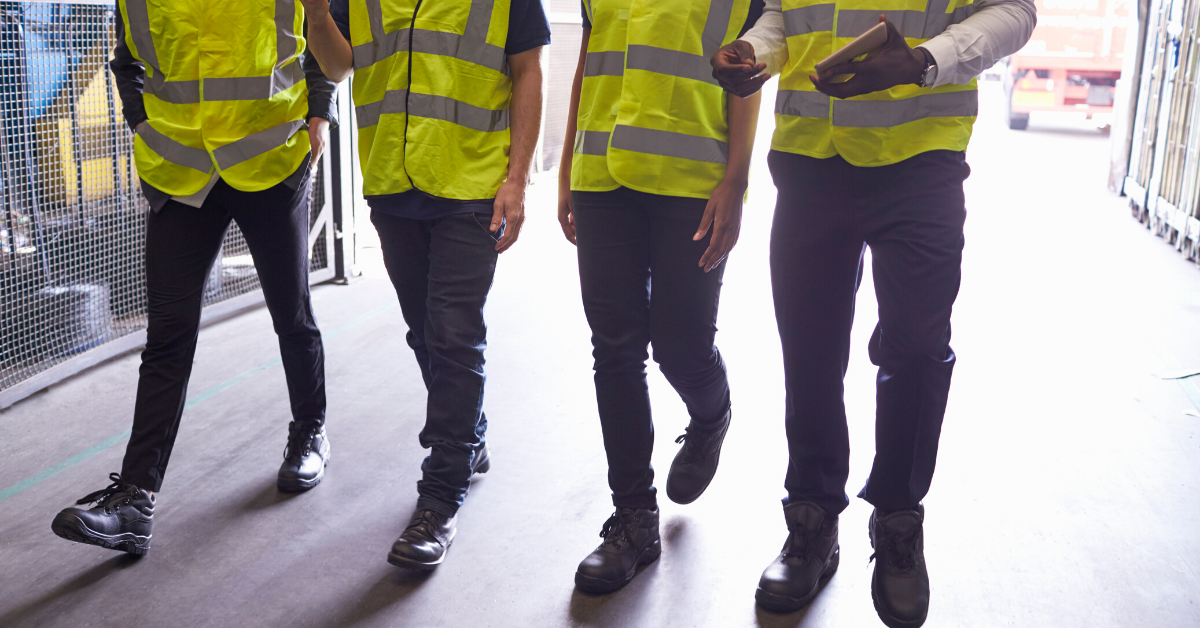
For those unfamiliar with the term, Gemba means “the real place, the place where the work is done.” A Gemba walk therefore means that you are going to walk through the real place and assess the work being done there. I tweak it a bit to mean, “assess the health of the operating system.” This sounds like an audit, and it is. For many companies, the idea of the Gemba walk is to take people out of their offices and walk through the process with their people. It’s not always the most comfortable thing for people to do. If done well, it can be extremely impactful. If not done well, it becomes a big waste of time.
For those unfamiliar with the term, Gemba means “the real place, the place where the work is done.” A Gemba walk therefore means that you are going to walk through the real place and assess the work being done there. I tweak it a bit to mean, “assess the health of the operating system.” This sounds like an audit, and it is. For many companies, the idea of the Gemba walk is to take people out of their offices and walk through the process with their people. It’s not always the most comfortable thing for people to do. If done well, it can be extremely impactful. If not done well, it becomes a big waste of time. The idea is to make it as engaging and impactful as possible. The next story is how I helped a team in St. Helens Oregon develop a Gemba walk that was impactful and drove organizational behavior to higher levels of performance.
I was the Operations Manager at Armstrong World Industries’ ceiling tile plant in St. Helens Oregon for just under three years. During that time, I had the great opportunity to test and apply some of my continuous improvement principles to the manufacturing organization directly and get immediate feedback from my efforts. I am proud to say we had some of the best operating results in the company, and I’d like to think that my efforts contributed to that. There were a bunch of great team behaviors that already existed, and I applied my approach in a way that utilized and enhanced the strong culture of teamwork.
I spent a large percentage of my time on the manufacturing floor, engaging with the technicians and auditing the systems that were keeping us safe and productive. We used many paper documents in our work and everyone was required to sign off when they completed critical tasks. The Team Managers were required to audit their crews on a regular basis and then I would audit their audits on a less frequent basis. At one point, we were 100% compliant for all critical tasks for many months in a row. The plant was operating at peak efficiency.
A Slip in Efficiency
During an economic downturn in 2010, the plant reduced staffing and I was offered a position in the corporate offices in Pennsylvania. I hated to leave my team, but I felt like the plant would continue operating well, using the systems developed during my tenure. Sadly, this was not the case, and efficiency and productivity started to suffer. The plant recognized this and implemented a daily staff-led Gemba walk. After many months, performance wasn’t improving and I was asked to come back out to the plant to see if I could help. I was happy to do so. I missed my team on the west coast.
The first morning of my visit, I attended the daily Gemba walk with the staff and observed their interactions and engagements with the technicians. There were eleven staff members who walked all over the factory, stopping at designated locations to engage with the technician doing a task. During each stop, they would ask these questions: Is everything okay? Do you need any help from us?
Most of the time, the technician would say everything was OK (it wasn’t) and they didn’t need any help (they did). The person asking the question would engage with the technician. The rest of the team didn’t seem to know their role. They weren’t paying much attention to what was going on. Afterwards, we would thank the technician for taking time with us and then walk to another location in the plant.
After we completed the Gemba walk, the staff asked me for my opinion. I told them that their purpose wasn’t being supported by the activity of the walk. If their intention was to show support and help for the technicians, it wasn’t apparent during the walk. The terse answers by the technicians showed they didn’t believe they were being supported or that sincere help was being offered. The lack of engagement by the full staff was troubling and it was apparent to their customers, the technicians.
The good news was, if they were willing, we could easily change the Gemba walk and achieve their purpose. However, they would need to engage their customers in the redesign of the Gemba walk. They were willing and we agreed to bring a small team of technicians, team managers, and staff together in the next day to redesign the Gemba walk.
A New Kind of Walk
The next morning, I reviewed the principles of a Gemba walk with the team. These principles included: Be help to those you interact with, assess the health of the operating system, and engage and support your customers (the technicians). I challenged the team to develop a focused purpose for their Gemba walk. They decided they wanted a Gemba walk that would help them prioritize and take action on the top issues causing safety and productivity risks. They also wanted the Gemba walk team to expose issues the technicians were overlooking in their everyday work. Finally, they only wanted people to attend the Gemba walk if they sincerely wanted to be there and were helpful.
Based on a refocused purpose, the team started designing the new Gemba walk. Their new design improved the questions to be asked, the way the staff would engage, and how issues were to be exposed. The new questions weren’t yes or no anymore, they were more “show me” questions. “Show me the issue that caused you downtime yesterday or concerned you from a safety standpoint.” “Show me how the valve works when you switch from tank A to tank B.”
In order to expose risks and increase engagement of staff with the technicians, the team created seven different responsibilities to be given to different Gemba walk team members. Examples included: safety auditor, standard work auditor, housekeeping auditor, and equipment auditor. These duties were written on cards and given out randomly to members of the staff at the beginning of the Gemba walk. At designated stops staff were to review their findings with the technicians and the team. The team would then prioritize the top issues at the end of the walk and take action on them.
Simple Changes, Large Improvements
The team conducted a Gemba walk using the new process. During the “simulated” walk, we asked various technicians their opinion of the newly designed process. They were extremely positive about it and thought it would be more helpful to them than the prior Gemba walk. With feedback from a number of technicians, the team finalized their new Gemba walk by the end of the day. The next morning, they started the new Gemba walk and uncovered many issues that had been holding back the performance and safety of the plant. Engagement improved, as well as safety and productivity over the next months and years.
I have seen Gemba walks in many stages of effectiveness. Some Gemba walk teams take a specified tour of their offices or facility and then end up at a white board to review performance and make assignments. While this is a vast improvement over staying in your offices and reading reports, it feels as though the person reporting results at a board is in the spotlight, or on trial. It doesn’t feel as engaging and helpful, as most of the participants are firing questions to the person reporting results. Slight improvements would make all the difference, and I encourage those who do things in this way to review and reflect upon their Gemba Walk purpose and make corrections that would better support their purpose, much like the St. Helens team did.