
Kaizen Success Stories
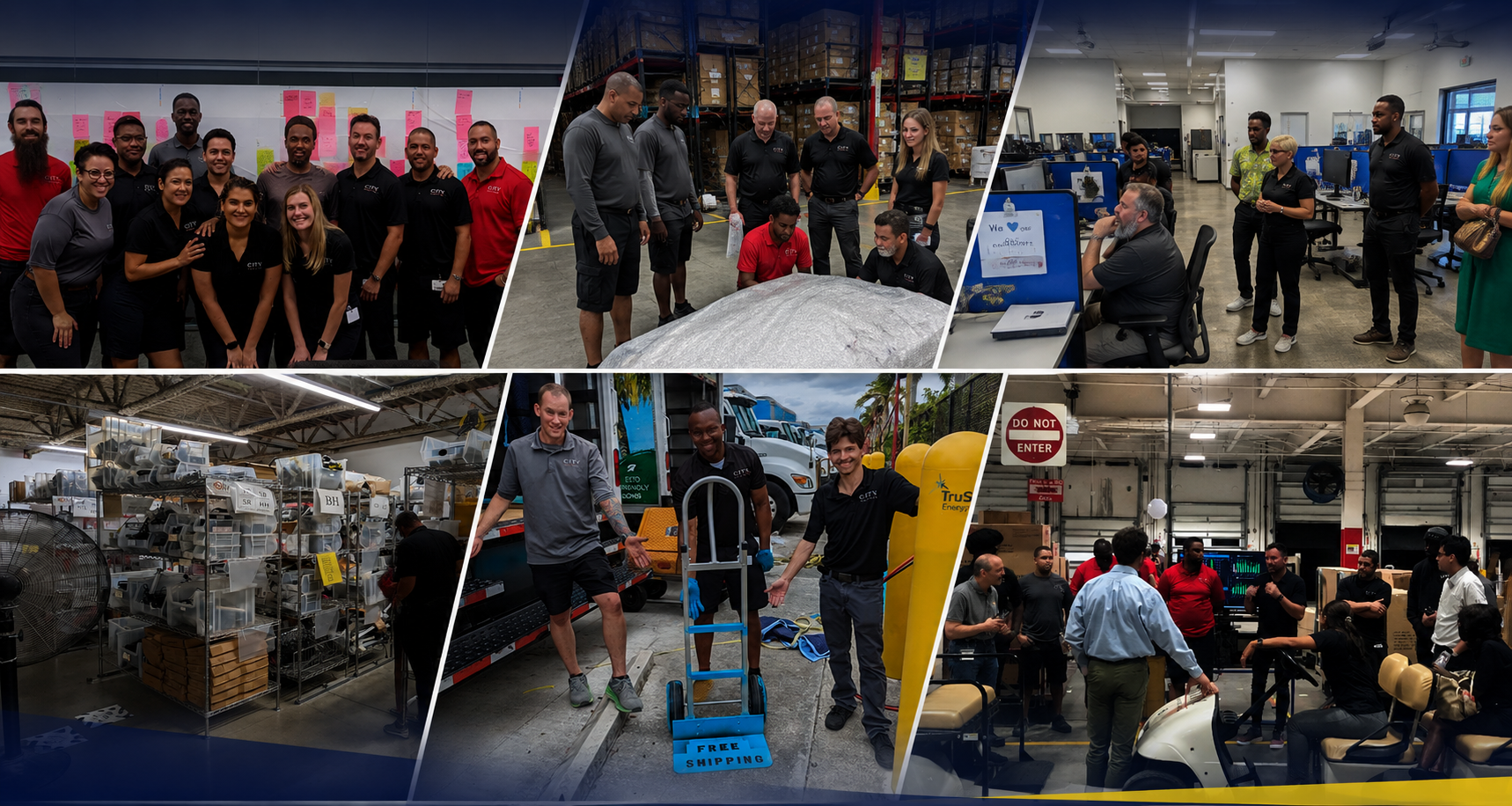
Real Manufacturing Results. One Kaizen at a Time
Explore real-world Kaizen success stories showing how manufacturing teams solved critical problems, improved performance, and created sustainable results.

This Stuff Works
At a gummy vitamin manufacturer in Pennsylvania, I was asked to facilitate a team of mechanics responsible for supporting and maintaining the manufacturing operation. They had difficulty keeping their maintenance area compliant with strict food production regulations. Our goal was to develop a system to guarantee compliance, while improving their ability to service their customers.

You’re Never as Good as You Think You Are
Of all the Kaizen events I have facilitated, there is nothing like 3P. It’s the most exciting, energizing, and exhausting way to create breakthroughs with a team. 3P stands for Production Preparation Process. The idea is to design a new product or process with the least amount of waste possible.

It’s Better to Beg Forgiveness than Ask Permission
In 1998, I was invited to Hoogezand, the Netherlands, to help a team make improvements to their ceiling tile production line. Little did I know it would be the longest Kaizen event in my life. I had been to the plant three months before and identified significant changeover time reduction potential. It was time to put my money where my mouth was. In advance of the trip, we identified members of the team and the need for an interpreter. I didn’t speak Dutch and still don’t. We’d have two weeks to work on the line and were to coordinate with the Production Manager any time we needed to shut the line down to work on or test the equipment.

Let It Go
In 2010, Armstrong World Industries emerged from bankruptcy. A minority stake of the company was bought by a private equity firm. This firm knew there were many improvement opportunities and brought in consultants to help create a culture of continuous improvement across the global organization. Their approach was to hold many Kaizen events on a weekly basis, exposing as many people to the principles of Lean as quickly as possible.

Virtual Kaizen Events
For many years, I have led, facilitated, or participated in hundreds of Kaizen events. During those events, people worked together in the same location to solve important problems. Sometimes team members travelled to the location of the event. Other times people weren’t able to travel to the event and the team carried on without identified experts. I loved the interaction and energy of those events, but wondered if there might be a way to hold an event that was as effective as putting people in the same room, but would be less difficult from a travel or logistical perspective.

Call 911
In 2005, a ceilings manufacturing plant on the West Coast was experiencing high downtime rates. I was asked to come to the plant and run a Kaizen event to identify the impact of downtime on the plant.
I was given a small team consisting of four production technicians, two mechanics, one electrician, one engineer, and one supervisor. Our mission wasn’t to solve the specific mechanical or electrical downtime problems, but rather to understand why the response to and recovery from downtime took so long. This was a new concept for the plant and for me, but we felt we were up to the challenge.

Go to Gemba, Even If You Don’t Want To
In 2019, I was asked to facilitate the annual Value Stream Mapping (strategic planning) event for a leading consumer brands manufacturer at their facility in Central Pennsylvania. I had facilitated their event the prior year and it was our intent to build on the prior results and drive their continuous improvement culture forward during the event.

Best Event Ever
I was the Lean Champion for Armstrong World Industries for six years. My responsibility was to guide the organization to a continuous improvement mindset in all of their activities. I had no direct reports and reported to the Executive Vice President of Global Technology. When we kicked off our Lean transformation, most in the organization felt we were implementing the “flavor of the week” and weren’t ready to commit to changing their habits.

Macon Progress
Once upon a time in 1998, I helped a team in Macon Georgia improve the reliability and safety of one of their production lines. The work was exciting, the team was enthusiastic, and we were making breakthroughs beyond what I ever imagined could happen. Something was missing, however. For some reason our sponsor, the Business Unit Manager, never came out to the line to see what we were doing. Although the team didn’t seem to mind, it really bothered me. After all, we were doing things so quickly and effectively, and solving so many problems that others weren’t able to solve, I wondered why he didn’t appear to be interested in our progress. If you know me, you could predict I would do something about it. And, I wouldn’t be subtle about it.

Gemba Walks
For those unfamiliar with the term, Gemba means “the real place, the place where the work is done.” A Gemba walk therefore means that you are going to walk through the real place and assess the work being done there. I tweak it a bit to mean, “assess the health of the operating system.” This sounds like an audit, and it is. For many companies, the idea of the Gemba walk is to take people out of their offices and walk through the process with their people. It’s not always the most comfortable thing for people to do. If done well, it can be extremely impactful. If not done well, it becomes a big waste of time.

Color Coded Badges
The Pilot Plant at Armstrong World Industries, a global ceiling tile manufacturer, has tons of operating equipment designed to allow technicians, engineers, and scientists to try out their ideas and experiment in their efforts to create new processes and products. One of the areas in the Pilot Plant that gets the most use is the wood shop. Containing over 50 separate pieces of equipment, much of it requiring skills to operate it safely.

Little Things Mean A Lot – Revisited
A global consumer goods manufacturer was experiencing high levels of downtime, jams, and long changeovers on a critical production line. They invited Process Improvement Partners to their plant to observe and discuss the problem and identify opportunities for improvement. After reviewing performance, we took a walk to the line. The line was running, and after a description of line components, it became apparent there were quick opportunities to improve performance of the line.

Recognize the Effort, Not the Results
When teams start working on a problem, they are often given the freedom to choose their own solution path, and it may not be anything like you were anticipating. I learned many years ago every time I tried to predict what a team was going to do; I would be wrong. They typically beat anything I could come up with. So, I decided to stop trying to guess and shifted my focus to helping them accomplish as much as was possible during the short time of the Kaizen event. To do this, I had to come up with creative ways to encourage them. Some ways were silly, some were formal, but they always seemed to remember the recognition. Here are two examples…

Understanding is Critical
In February 2020, Process Improvement Partners was asked to facilitate a strategic planning session in Montreal for a global consumer products company. Having facilitated multiple Kaizen events where English is not the primary language, we set about to design an event that would incorporate additional translation time and resource effort for the event. Normally, this type of session takes three days. Even though we were told that most participants were bi-lingual, we aligned with the sponsor and leader and added four hours to the event plan.

Things Aren’t Always What They Seem
In 2011, Armstrong’s Marietta ceiling plant was utilizing technical resources and replacement workers to run the plant. Management and the labor union were unable to come to an agreement around their contract, and for seven months, the union workers were locked out.

Trust, but Verify
In 2005, I was asked to be part of a team to help Armstrong’s Mobile Alabama ceiling tile plant improve their performance. Production output had steadily declined over the first few months of the year, and they were well behind budget. The team was tasked with identifying and implementing improvements to the operation that would drive performance back to budget for the full year. The team leader called the effort a “Full Court Press”, meaning we would not give up until we accomplished our mission.

The Strength of Ownership
My focus in continuous improvement has always been to help teams solve problems in a sustainable way. Early on in my career, I learned many facilitation techniques through trial and error, mostly error. One of the biggest errors I ever made during a Kaizen event was to be too directive with a team. When one of the team members said, “Adam wants us to do this…,” I knew I was in trouble.

Championing Change in Technology
In 2010, a private equity firm took a minority stake in Armstrong World Industries. They brought in many leaders at executive levels and committed to a strategy of Lean transformation. Their initial focus was manufacturing, and then when ready, they would expand efforts to the supporting organizations. From 2010 through 2012 in the manufacturing organization, emphasis was placed on Lean training and conducting hundreds of Kaizen events. In many cases, outside consultants were brought in. But, where there was experience, internal resources worked with teams and facilitated Kaizen events.

An Open Mind Will Lead to the Right Answer
Early this year, Process Improvement Partners was invited to conduct a site assessment for a packaging company in western Pennsylvania. The facility was operating a new technology that wasn’t performing to expectations. They wanted to identify opportunities to improve their situation using the engagement and empowerment of their employees.

Rally to the Customer
Armstrong World Industries makes billions of square feet of ceiling tiles every year, shipping to locations all around the world. Most of these tiles are white. The remainder are off-white or a few standard colors. If a customer wants non-standard colors, until recently, Armstrong used an outside vendor.