
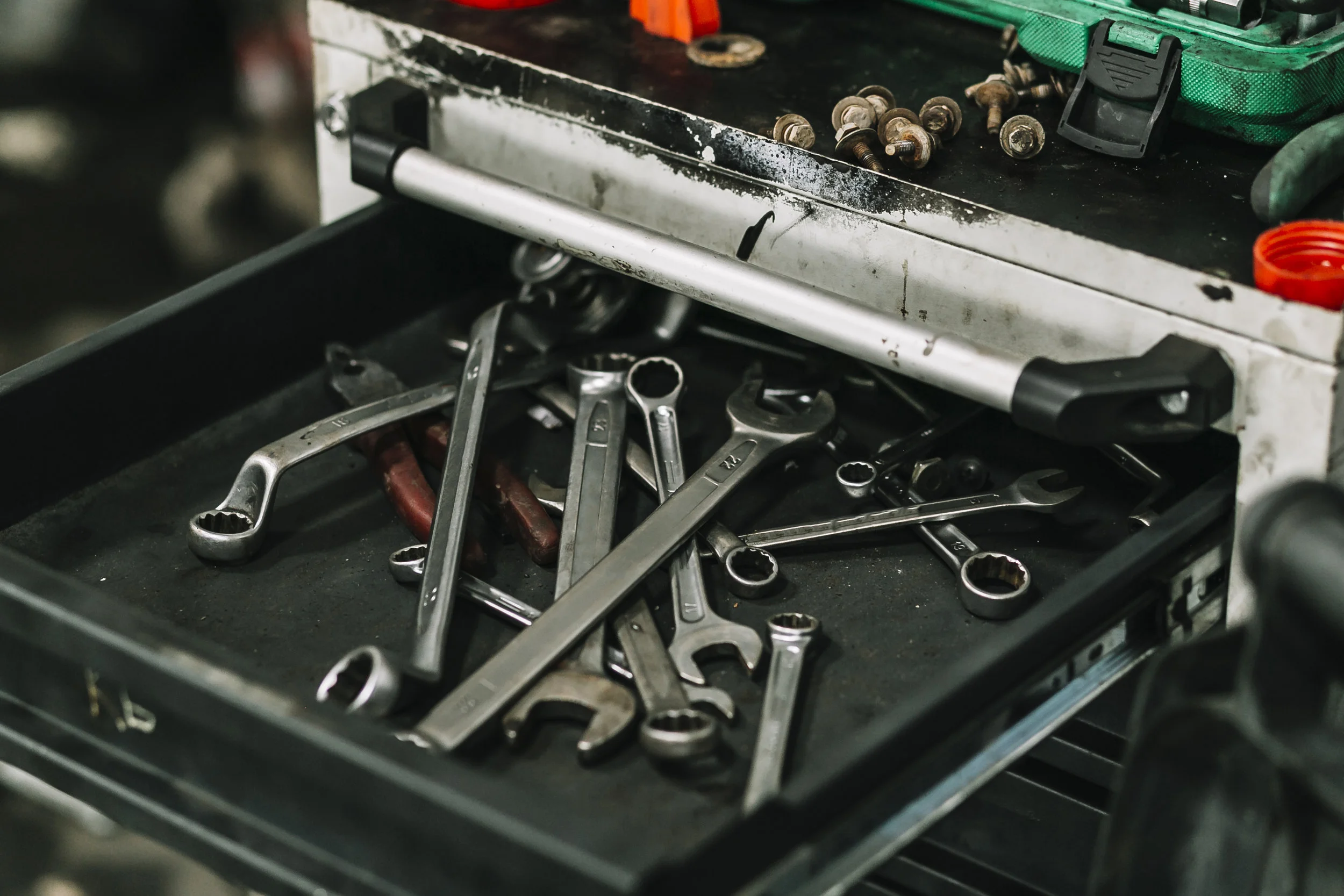
Lead from the Front – The Story of the Pink Tools
A large, multi-national company started their Lean journey in 2010. The company brought in consultants, who facilitated and guided Kaizen events and coached leaders at every manufacturing site around the world. One of their plants, in central Ohio, had a strong culture of employee engagement and was expected to lead the other plants in positive outcomes resulting from the Kaizen events. Early on, they weren’t able to identify an internal leader of their continuous improvement journey, so I was asked to act as the interim “Lean Champion” for the plant.
A large, multi-national company started their Lean journey in 2010. The company brought in consultants, who facilitated and guided Kaizen events and coached leaders at every manufacturing site around the world. One of their plants, in central Ohio, had a strong culture of employee engagement and was expected to lead the other plants in positive outcomes resulting from the Kaizen events. Early on, they weren’t able to identify an internal leader of their continuous improvement journey, so I was asked to act as the interim “Lean Champion” for the plant.
The plant manager, let’s call him Steve, and I had worked together in other roles years before. At one time, I was a direct report of his in the corporate office, so we knew each other very well. Soft spoken and strongly principled, he had the proper mindset to lead a Lean transformation.
Following their initial Value Stream Mapping event, which set the overall Lean strategy for the plant, we agreed the first Kaizen would be a 5S event on their most critical production line. We picked the strongest, most engaged team we could to ensure our first Kaizen would be wildly successful. Top line operators, mechanics, and support staff dedicated five days in order to drive breakthrough safety and productivity of the line.
In the early days of the Lean journey, we were all required to provide a full day of training to the team. Most of the team members weren’t familiar with Lean and the terms used with Lean, so the idea was to make them comfortable by providing extensive training. Most line operators and mechanics don’t have much tolerance for sitting in a classroom all day, so I knew my approach had to be as engaging as possible. Luckily for me, most of the team members had a willingness to learn and a good sense of humor. I infused the training with as much humor as possible, and did my best to entertain them through the long day of training. They hung in there, and when training was complete, we went to the line to see what important improvements we could make.
We walked the line and made many observations. I couldn’t help but notice the extremely dirty condition of the equipment, the floor around it, and the lack of any obvious tools to help the operators and mechanics do their jobs. I asked them what they did when the line went down for repair. The team members took me to their personal toolboxes, which were in various stages of disarray, and explained that if they didn’t have what they needed, they would have to find proper tools elsewhere. They would often lose minutes, if not hours, in search for what they needed. It became apparent having the proper tools was a huge improvement opportunity.
After the tour was over, the team shared their ideas to improve the situation at the line. Many of the ideas had a common theme: having the proper tools where needed, when needed, would greatly improve the safety and productivity of the line. This meant tools would have to be taken out of tool boxes and placed visibly on a board, where anyone could get to them at any time. When the team went to prioritize the ideas to work on, tools availability and visibility became a low priority. I knew there was something they weren’t telling me. Upon further investigation, I discovered trust was the reason tools weren’t picked as a top priority. The team felt their coworkers and contractors working in the plant couldn’t be trusted to return tools when they were finished using them. Even worse, they thought contractors would take tools out of the plant with them intentionally. I knew I had to do something extreme to overcome these trust issues.
“Paint them pink,” I told the team. They looked at me as if I can just come from Mars. “Let me explain,” I said. “If you were to paint all of the tools on the tool board pink, no one would ever wonder where they came from, lose them, or take them out of the plant. Who wants a pink wrench?” Now there was laughter. I wasn’t entirely serious, but I wanted to show them there was an answer and nothing should stand in the way of doing the right thing. Then, I excused myself for a few minutes and let the team mull over my suggestion.
I walked to the plant manager’s office and asked him if he had a few minutes for me. I explained what was going on in the Kaizen event and the mistrust issues the team had. He was aware of tools leaving the plant and wanted to know what he could do to help. This is exactly what is needed from leadership and this was my opportunity to coach Steve. “Steve, we are going to do our best to develop the best system to assure tools never leave the factory and are always available to those who need them. But, we’re new at this, and just like anything else, rules will be broken, so we will need your help. At the report out, we are going to propose this rule: tools are either in use or on the tool board, and no where else ever. We will need you to reinforce this immediately at the end of the report out. Then, the first time someone breaks this rule, you must pound your fist and stomp your feet and make such a fuss that everyone will remember it.” Steve looked at me in a knowing way, but seemed to want a bit more explanation. “How often have you pounded your fist and stomped your feet in front of your employees, Steve? Never! So, do it once and you’ll never have to do it again.” He told me he would consider it. I knew he would do the right thing.
The team sent me to the store to get red paint (not pink) and built a tool board filled with red tools. The rest of the line was cleaner and more organized than it had ever been. During the report out, the team pleaded for everyone to help them maintain the conditions of the line and keep the tools on the new tool board. Steve chimed in to reinforce the importance of this new rule: either in use or on the board, but nothing in between, ever. After much congratulating, the team disbanded, their job well done.
About 2 months later, I was facilitating another Kaizen team in the same plant, when during a process walk, I was called over by an operator, let’s call him Bob, who had been on the original 5S team. Bob showed me the tool board with all the tools in their proper place. I asked him if anyone tried to break the rule. He said it only happened once, and when Steve heard about it, he raised such a fuss it shocked everyone and it never happened again.

Even the Most Organized Person Can Improve
A global ceilings manufacturer wanted to improve the safety and productivity of its testing facility. Over the years, many capabilities had been added to the facility without regard to the needs of the technicians who worked there. Because of this and the lack of a managing system to ensure the organization and productivity of the facility, the technicians took it upon themselves to hold an annual “cleanup week” at the end of the year. All technicians would stop their project work and devote their time to go through equipment, materials, and spaces and clean out any clutter they felt they could get rid of.
A global ceilings manufacturer wanted to improve the safety and productivity of its testing facility. Over the years, many capabilities had been added to the facility without regard to the needs of the technicians who worked there. Because of this and the lack of a managing system to ensure the organization and productivity of the facility, the technicians took it upon themselves to hold an annual “cleanup week” at the end of the year. All technicians would stop their project work and devote their time to go through equipment, materials, and spaces and clean out any clutter they felt they could get rid of.
Three weeks after “cleanup week,” conditions had reverted back and it didn’t look as if any effort had been exerted. This happened annually, and the technicians were extremely frustrated. The lead technician of the testing facility wanted to do something different and sought me out for advice. After walking through the facility with him and listening to his concerns, I suggested we meet with his manager, who was responsible for the testing facility. We took a walk together and discussed the problems created by the clutter and lack of organization in the facility. After about an hour of discussion, we agreed we should use an improvement approach called 5S (Sort, Set in Order, Shine, Standardize, and Sustain) in a targeted area to see if we could make sustainable improvements that could be replicated in other areas of the facility. But, where should we start?
We decided to pick an area known for its organization and strong ownership. We also wanted to pick an area small enough to do proper 5S on in a week or less. We had just the area – the manual paint spraying area. This area was used by many of the scientists, technicians, and project team members. It had a very strong area owner, let’s call her Regina. Regina was known for her tenacity and ability to hold people accountable to follow her rules for the area. This was the area owner we needed. The area was fairly well organized and small enough to demonstrate the value of 5S in a week or less.
We approached Regina and asked her if she would be willing to lead the first 5S team in the testing facility. She agreed, but wasn’t sure what improvements we could make. She was proud of what she had been able to accomplish and had every right to be. She didn’t realize what was possible with 5S and proper sustaining systems. I gave her a quick overview of what I thought might be possible and advised her to pick the team she wanted to help her do the best job possible. Over the next few weeks, she visited with team members to encourage them to participate and share a vision of what was going to happen. She even convinced the manager of the testing facility to participate. He showed his leadership commitment to the effort and raised quite a few eyebrows in his peer group.
The first day of the Kaizen was “Sort” Day. On this day, the team goes through all of the materials, parts, and equipment and makes tough decisions about what to keep and what to remove or throw away. They removed at least 50% of what was in the area. This was shocking to Regina, as she thought he had been diligent to keep unused things out of the area. What she didn’t realize was she was being conservative in her decision making and those using the materials knew some of them would never be used again. We removed so much clutter and materials, the team was able to remove the top shelves in the area, allowing everyone to reach any materials without getting on a step stool or even reaching over their heads. We then added signage to show everyone it was unacceptable to store anything above their heads.
The second day of the Kaizen was “Set in order” Day. On this day, the team took all remaining materials, parts, and equipment and identified the best locations to place them in. After doing so, they labeled the locations, painted outlines, and generally made it impossible to put things in the wrong location. During this effort, I noticed a few of the technicians talking about repair parts for paint guns. Apparently, each one had his or her own repair parts, because they didn’t trust they would be able to find them when they were needed. I asked this question, “If we always knew where the repair parts were and they were immediately available, would you need to squirrel away repair parts?” They all agreed they wouldn’t, but didn’t trust 5S would keep parts from being lost, stolen, or just walking away. I asked them to trust me and with their help, we designed the most visible system possible for the repair parts. I agreed to let them keep their own stash of parts for a few months as a backup plan, but asked them to try the new system first and hold others accountable to do so as well. They grudgingly agreed and were extremely skeptical. Understandable, but I told them we were going to create the new system and rules for it and they could be the ones to help make it work and also enforce them, with the help and support of the leadership team. We would have to teach the leadership team the proper way to support the new system, and we would use our report out to start the process. I would also work separately to coach and teach the leadership team how they should behave.
After “Sort” and “Set in order” days, we worked on Shine, which means to clean and inspect and assure every piece of equipment, tool, and material is in the best condition possible. All of the team enjoyed the day, as they were able to repair and replace things that had been working at less than optimal levels for many years. All repairs and replacements were done on the spot and at very little cost to the company. It helped the team realize they would be empowered to keep things in top operating condition at all times.
On the last days of the Kaizen, we worked on the sustaining systems to ensure all of the team’s efforts would live on. This included responsibilities for those using the area, those maintaining the area, audits of the area, and visits to the area by leadership.
On the final day of the Kaizen, the team presented their results to a packed meeting room. There was a lot of excitement, but nothing like what happened when they gave a tour of the “new” area. People were amazed at what the team had accomplished and the quality of the sustaining systems they had built. They were even more amazed when Regina talked about the difference of having the repair parts out in the open and not squirreled away by each technician. She related a story of how she had lost over 2 hours looking for a specific repair part a technician had locked in his desk. Because she didn’t have the part in her stash, she had to track the technician down, wait for a meeting he was attending to end, and then get the key for the locked desk drawer. This was a typical story, not an exception. Now, because of the team’s efforts, she could get to any repair part in less than 10 seconds. This was an immediate improvement to safety and productivity.
When the tour was over, there was much clapping and recognition for the team. Many in the audience stayed to talk to team members about their perspective on what had happened. They relayed the same thought they had before the Kaizen, “Regina’s area is so organized. What improvement can we make?” Now they knew. In the following months and years, more the two dozen other areas in the testing facility used 5S and installed the same sustaining systems.
These simple tools helped the facility reduce their customer response time by more than 50%, doubled productivity, and greatly reduced safety risks throughout the facility. It also opened their eyes to the idea that no matter how good you think you are, you can always get better.

The Team Has More Power Than It Thinks
A leading consumer products company shipped millions of boxes of goods weekly. Most of the time, large quantities of the same products were shipped on a wooden pallet, and loaded on a truck. The distribution center employees were used to picking full pallets of products out of racks, placing one label on the entire pallet, and then, placing the pallet of goods on a truck. In recent years, Amazon entered into an agreement with the company, and turned their efforts upside down.
A leading consumer products company shipped millions of boxes of goods weekly. Most of the time, large quantities of the same products were shipped on a wooden pallet, and loaded on a truck. The distribution center employees were used to picking full pallets of products out of racks, placing one label on the entire pallet, and then, placing the pallet of goods on a truck. In recent years, Amazon entered into an agreement with the company, and turned their efforts upside down.
Amazon ships any quantity of products, be it one box, or a truckload of boxes to customers. Their customers expect to get the right product quickly and properly labeled. The consumer goods company would now have to label every single box shipped to an Amazon distribution center or an Amazon customer. They would also have to do it more quickly than they had to for any of their other customers.
In the years leading up to and including 2018, Amazon business exploded for the company, much like many others around the world. The company added staff to ship all of the products required, but they weren’t meeting Amazon’s strict delivery requirements and were starting to lose money on the relationship. At this point, they called in Process Improvement Partners to help them solve their problem.
We walked through the existing process together to see what opportunities might present themselves and if a Kaizen event could help solve the problem facing them – develop a system that would meet the growing Amazon business and delivery requirements and do it safely, productively, and profitably. It turns out they were applying their large volume/low product diversity approach to the small volume/high product diversity Amazon orders. We also found out they didn’t always receive Amazon orders in a timely or predictable fashion from their corporate customer order systems, so it caused them to staff the distribution center in ways that made people wait for orders to pick and ship.
We designed a 3-day Kaizen to get them back into compliance and decided to set an aggressive set of goals: 25% productivity increase, 50% cycle time reduction, and 50% reduction in fines relating to late deliveries to Amazon.
In a Kaizen, you should pick team members who will help you solve the problem and want to win. In this case, we picked employees from the distribution center and corporate team members who could provide perspective on the issue and could also initiate identified system changes. We advised all team members this Kaizen was critical to the success of the company and we expected full participation from each one of them during their time together. The team leader made a compelling case and received commitment from all team members.
On Day 1, after team introductions, the team leader explained the problem from his point of view. He thanked everyone for coming and asked them to keep an open mind and be willing to challenge their thinking during the Kaizen. Then, the Amazon customer service manager from corporate presented “Voice of the Customer” information to the team. This was an engaging discussion, and the entire team felt an urgency and need for change and improvement. Following these discussions, we took the team out on a process walk.
We started out in the office, looking at a computer work station. When we asked what was happening at the work station, a team member explained they were waiting for orders to arrive from the corporate system. Until orders arrived, she was stuck and couldn’t provide any assignments for the distribution center employees. We asked her the reason and she explained the orders must have been received by the corporate system after 6 pm. Orders from Amazon were manually entered, and after 6 pm they wouldn’t be entered into the system because everyone had gone home for the day. Orders would wait until at least 8 am the next day to be entered, and by the time they were, the distribution center wouldn’t see them until 10 am or later. The distribution center employees work around the clock. This was a big opportunity for improvement.
We walked around the facility next, looking at the physical and other system issues in the way of safety and productivity for the distribution center. The team members took many notes and after 2 hours, we returned to the meeting room to review what we observed.
After sharing all of the issues as a team, we mapped out the existing process on a wall with sticky notes to identify the biggest pain points and opportunities. There were many issues and we wanted to make sure we would be working on things that would make the biggest impact and also were within the control of the team. We made quick estimates of the time it took to complete each step, including the minimum and maximum times. The idea was to work on the steps that took the longest time, as streamlining them would maximize the customer service improvement.
We identified some steps that could take more than 8 hours and up to 24 hours or more. Those were the steps to work on. The team prioritized those steps and came up with ideas to reduce the time. They avoided the step called, “Wait for orders from corporate”. This step was identified to take anywhere from 1 1/2 hours to 24 hours, so it would be extremely impactful if improved.
I challenged the team to consider improvements to the step. They didn’t feel like they could make any changes without proper approvals. I reminded them they were empowered by the simple fact they were the Kaizen team chosen to solve this critical business problem. If they didn’t feel they could unilaterally make changes, they should “phone a friend” who could approve their changes immediately. One of the team members, I’ll call her Ruth, left the room to make a phone call to the person who could approve the changes. After a few minutes, she came back to the room and informed the team the person she tried to call was out sick and she would try again tomorrow.
I knew we didn’t have time to wait, so I asked Ruth if she was willing to call that person’s manager or go to the person’s house, knock on his door, and gain his approval. She thought I was joking about going to his house (I really wasn’t), and decided to call the next level manager. She wasn’t available either. Finally, she called the Vice President of Logistics and Distribution. After explaining what was going on and the approval she was looking for, she was informed that another team member, let’s call her Alice, had the authority to make the decision. Ruth came back into the room, met with Alice, and secured approval for the change.
It turns out the change was so simple it could be executed by a few lines of programming allowing any orders coming in after 6 pm to be manipulated automatically and delivered to the distribution center immediately. This option was already being used for other critical customers. Adding Amazon to the list took no more than 10 minutes of effort. The team was so motivated by their win, they found many other quick improvements and letting nothing stand in their way, met or beat all of the objectives for the Kaizen. They described how the only thing that was getting their way to improvement was their own way of thinking. Once they realized they were empowered, there was nothing standing in their way of victory.

A Tasty Breakthrough
A North American ceilings manufacturer was closing a plant that produced a product no other plant in the division could manufacture, due to specialized, but obsolete technology. They had a customer who was buying millions of square feet of this product annually. They knew they had to come up with an alternative the customer would approve of and keep buying after the old plant was closed.
A North American ceilings manufacturer was closing a plant that produced a product no other plant in the division could manufacture, due to specialized, but obsolete technology. They had a customer who was buying millions of square feet of this product annually. They knew they had to come up with an alternative the customer would approve of and keep buying after the old plant was closed.
The product had a heavy texture and was extremely durable and tough. None of the remaining plants in the division had the capability to produce this particular visual with the same durability and the project team was at a loss to come up with an alternative. They decided to use a Lean technique called Production Preparation Process (3P). They had very little experience with it, but the stakes were high and they were assured a breakthrough could be achieved by using it.
I was asked to facilitate the Kaizen event with help from a consultant and we would use 3P and its 11-step method to drive the creativity of the team to create, test, and develop the new product in a one-week timeframe. Needless to say, there were a lot of skeptical people in the room, including me.
The first few steps of the 3P are designed to remove all preconceived notions of what the solution should be and force the team to define the true essence of what the customer is asking for. Once done, the team identifies how nature is able to meet those customer requirements. This part of the process usually results in the relaxing of inhibitions and the start of laughter and opening of minds to what might be possible. For some teams, it is a true leap of faith that these steps will lead to something useful.
This team consisted of engineers, designers, scientists, and technicians. We had the use of all of the testing and development facilities for the company and any resource we needed was made available to us. Scientists and engineers are typically more analytical than they are free thinking. Once we got to nature, I saw the team was loosening up and they seemed willing to try something new.
Steps 6 and 7 of a 3P require the team members to come up with 7 ways of solving the problem and then trying them out in real time with available materials. This is called “Moonshining”. During Moonshining, the team members started using available materials in the testing and development facility to come up with new textures and strength properties. Nothing seemed to look like or act like what we wanted. A respected engineer with more than 35 years company experience told us he was going on a shopping trip to find what he needed. We all wondered what he would come back with.
After about an hour, he returned with many different things he bought at a local grocery store, including various cereals, cat litter, salt, and other granular materials. Curious to see what would happen next, we followed him to the testing facility and watched as he poured the various materials, mixed with adhesives, onto boards. Cat litter didn’t look right to him. Then he crushed it, and it still didn’t look right. Next was salt. No good either. Next came cornflakes. He decided to grind them up and poured them on the board. They looked promising. They had the visual texture similar to the customer’s wishes. With the right mixture of adhesives, they might be able to achieve the desired durability. About a dozen trials later, he was able to get a texture and durability the whole team liked.
The team knew it couldn’t use cornflakes in the finished product, but they now knew they could create the proper texture and durability. The rest of the 3P (steps 8 through 11) was spent developing a method to replicate the cornflake texture with materials that could be adhered to the board and painted over in the manufacturing process. At the end of the week, the team was able to provide the overall project team with a concept and method to achieve this new product in an existing manufacturing facility.
Just over a year later, the product was being manufactured in an existing facility, at a reduced cost with better properties than the original product that was manufactured in the closed facility. The customer continues to buy the product to this day, and has no idea that the inspiration for it was found at the grocery store.

From Russia with Love: The Spirit of Kaizen Lives in All of Us
A Russian ceilings manufacturing plant asked me to help them facilitate their strategic road map in 2017. This was an activity they did annually since the plant opened in 2015. I had been to Russia one time before, during construction of the plant, so I had some experience travelling there and working with the people. This time, I would be coaching their continuous improvement leader in how to organize and facilitate this important session.
A Russian ceilings manufacturing plant asked me to help them facilitate their strategic road map in 2017. This was an activity they did annually since the plant opened in 2015. I had been to Russia one time before, during construction of the plant, so I had some experience travelling there and working with the people. This time, I would be coaching their continuous improvement leader in how to organize and facilitate this important session.
I met the continuous improvement leader on Sunday afternoon at the plant. My goal was to prepare him for what was about to happen and give him some tips on engaging the workforce and getting quick results during the session. It turns out that he was somewhat familiar with the techniques I was teaching, but frustrated by the culture of the leadership team. I assured him we would be able to break through and get strong engagement and quick results, but didn’t really know what I would be up against. In Russia, if someone at a higher level is speaking, someone at a lower level did not. Things also took longer to accomplish than what I was used to, so this was going to be a challenge.
We agreed we would use a modified Value Stream Mapping approach to develop the strategic road map. Rather than going into great detail when mapping the process, we would stay at a high level, but still have the team map the current state and identify opportunities for improvement.
On Day 1 of the session, I found myself in a large room of 30 team members and 7 interpreters. Each interpreter was paired with an English-speaking participant. The interpreter spoke into a microphone and the English was relayed to a headset. Amazingly, there was only a 1 – 2 second delay from the time someone spoke in Russian, to the time I heard the English translation in my ear. It was hard to concentrate at first, but in just a few hours I was able to find a comfortable rhythm as I facilitated the team.
After introductions and Voice of the Customer, we took a Gemba walk of the process on the factory floor. I advised all team members to take sticky notes with them, so they could write down their ideas in real time and not have to remember them. These ideas would form the basis of the improvement efforts we would be mapping out later in the session.
When we got back to the meeting room, we mapped the current process on a wall. We used sticky notes, and I encouraged all team members to write process steps and waiting steps on their sticky notes and then place them on the wall where they thought they should go. If there was an error or a better way to write the step, I asked the team members to go up to the wall and replace the original sticky note and place it in the more appropriate place on the wall. When we exhausted all of the steps, I asked the team to review the map and make sure they believed they had the correct steps and sequence. If someone didn’t go up to the wall, I encouraged them to verify things were accurate, or at least close to accurate.
Next, I asked the team members to look at the steps and put a mark on the ones they felt caused the most problems or pain to them. Once we saw the steps with the most marks on them, I encouraged the team to come up with ideas that could solve that problem, writing their ideas on different-colored sticky notes. After all ideas were written, it was time to share the ideas and make sure that everyone on the team, from line operators to the plant manager, had an equal voice. This was accomplished was by going around the room, one person at a time, one idea at a time. When an idea was shared, we put the sticky note on a large sheet of flipchart paper for everyone to see. When we exhausted all of the ideas in the room, I encouraged all team members to look at the many flipchart pages with ideas, find their 5 favorite ideas, and place a mark on each one. The sticky notes with the most marks were the highest priority ideas for the team to pursue.
Once we determined the highest priority ideas to work on, we broke the team into sub-teams of 3 or 4. The sub-teams were tasked to work on each of the high priority ideas and build them out into future work for the plant. One of the sub-teams was assigned a project with $800,000 annual savings. After an hour and a half, I asked each sub-team to report on their progress, and the rest of the team was to provide support and feedback. The sub-team with the $800,000 idea hadn’t made any substantial progress. After all sub-teams reported on their progress, I decided to spend time with the $800,000 team and took the continuous improvement leader with me.
When I asked what was going on, the team members told me they thought their idea was a good one, but it would never be approved by upper management. When I asked why they thought this way, they said that because no one from upper management was in the session, they wouldn’t understand the idea and wouldn’t support their efforts. I asked them if they could phone the appropriate person in upper management to give them a better understanding of the idea. They were uncomfortable with my suggestion.
I stopped by the plant manager’s office and talked with him about the situation. He informed me a high-level executive was at the plant, but not in the session, and she was working on another project for the company at the time. I asked him if he thought we could get a few minutes with the executive. He gave me one of those looks I tend to get from my wife when I say something she doesn’t like. I decided to spring into action anyway.
I asked the sub-team and the continuous improvement leader to come with me. We were going to get an immediate answer to our question. We walked over to the office the visiting executive was using and waited outside the door. She was on the phone. The sub-team wanted to walk away, but I wouldn’t let them. The executive looked up from her call and saw us waiting outside. Instead of waving us in, she looked back down and continued her call. Once again, the sub-team wanted to leave, but I wouldn’t let them. The executive looked up again, saw us still standing there, hesitated, and then motioned for us to come into the office. This was our opportunity!
Being the outsider, I felt it would be easier for me to explain the situation. I apologized for the interruption, thanked her for inviting us into the office, and explained what we were doing. I then asked if she had a few minutes to spend with us to review the $800,000 idea. She said, “I’m really busy right now.” Then, thinking better of it, she said, “I can give you a couple of minutes, then I need to get back to what I am doing.” We thanked her again and I asked one of the sub-team members explain the idea to her. As he explained, I could see the executive getting interested in the idea and even offering advice on how to make the idea better. Fifteen minutes later, she told the team they had her full support and they should pursue this fantastic idea. We thanked her for her time, told her she had the spirit of Kaizen in her, and left so that she could go back to work. Later, she came to visit the sub-team to see how they were progressing on the idea. The enthusiasm of the sub-team spilled over to other team members and before too long, many additional ideas were being developed to make the plant safer and more productive.
By the end of the session, the plant had a strategic roadmap designed to help it meet its goals for the next 3 years. The teams remarked they had never been in a session where everyone was given equal voice and where so much had been accomplished in such a short amount of time. It turns out that the only thing in their way was their thinking. We also discovered that no matter your cultural background, the spirit of Kaizen can live in you!
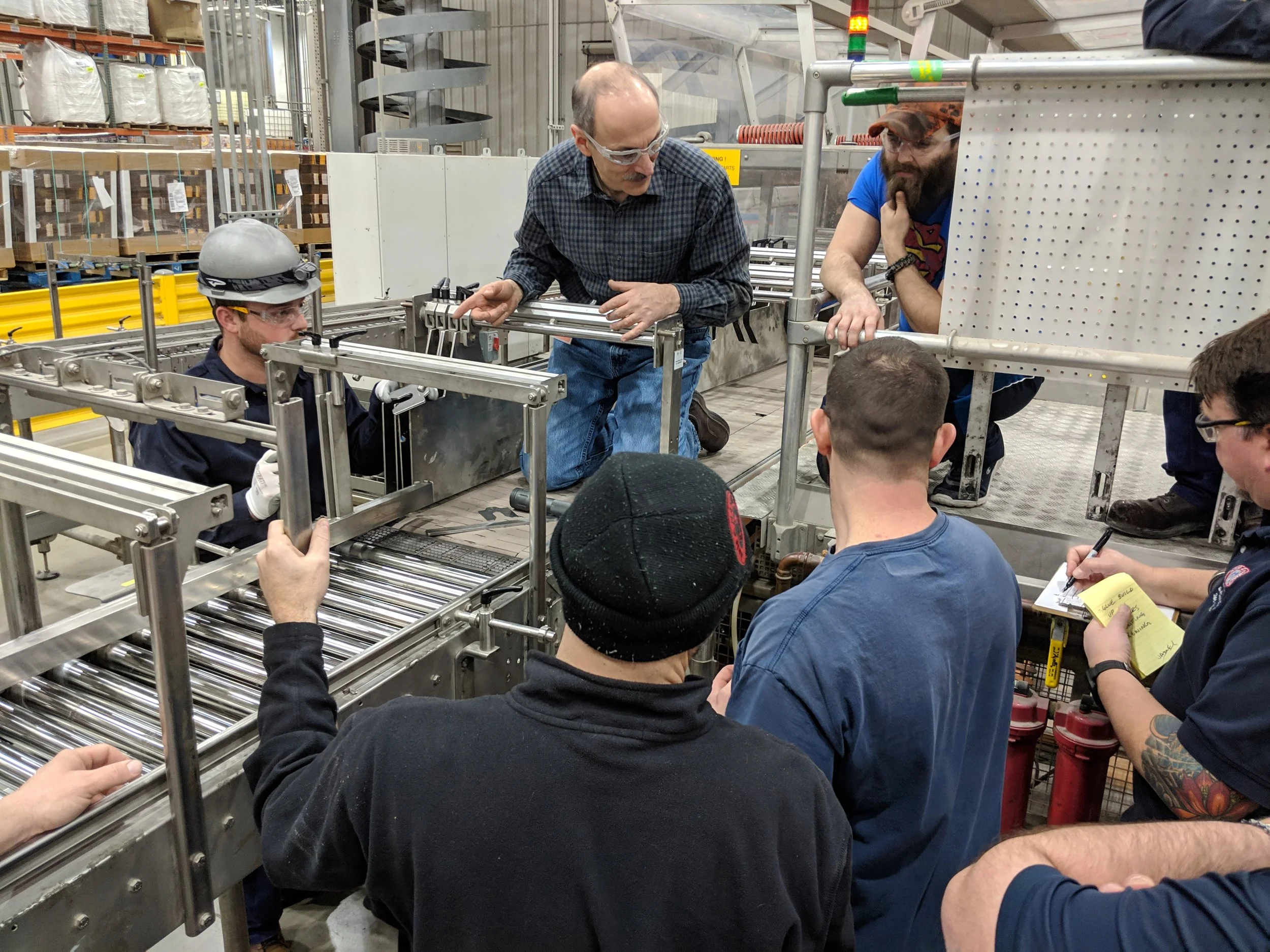
PIP Helps Team in York, PA Improve Reliability of Critical Operation
Many consultants train and teach. I like to demonstrate and verify with teams that they truly understand the techniques for improvement that I am sharing with them. Most importantly, I want them to be able to take this work and transfer it to other parts of the factory without my assistance.
Many consultants train and teach. I like to demonstrate and verify with teams that they truly understand the techniques for improvement that I am sharing with them. Most importantly, I want them to be able to take this work and transfer it to other parts of the factory without my assistance.
During an event in York, PA, I showed a team of maintenance technicians, engineers, and production operators how to level, square, and centerline equipment during a reliability improvement Kaizen. I demonstrated these techniques to show them how critical even the smallest improvements are. We were able to reduce the out-of-level condition on some conveyers from ½” to less than 1/16”. We also optimized the location of the product that was flowing through the conveyers and equipment. Immediately after doing this work, the production line ran smoother than anyone could remember.
When the team reported their results and findings, the audience was so impressed that they committed to doing this work all over the facility, using their new reliability experts.

Listen To Your People, People
A Research and Development team wanted to create a three-year strategic plan. Their goal was to reduce the time it takes from a new product idea to launch of the new product. Many of the team members believed “you can’t schedule invention.” Working with the team leader, the Research and Development Director, we decided to focus on the work leading up to and supporting the invention, even if we couldn’t specify when an invention would occur. We agreed to use Value Stream Mapping as the approach to help the team accomplish their goals.
A Research and Development team wanted to create a three-year strategic plan. Their goal was to reduce the time it takes from a new product idea to launch of the new product. Many of the team members believed “you can’t schedule invention.” Working with the team leader, the Research and Development Director, we decided to focus on the work leading up to and supporting the invention, even if we couldn’t specify when an invention would occur. We agreed to use Value Stream Mapping as the approach to help the team accomplish their goals.
On the first day of a Value Stream Mapping event, the team learned about Lean tools and techniques, and then quickly went to Gemba (the place where the work is done) to see what was actually happening in their current process, the Current State. Most people who haven’t participated in a Value Stream Mapping event don’t appreciate the time and effort put into understanding the Current State of their process. They want to work on the Future State, thinking they already know the issues, pain, and problems in their current process. But, as Lean practitioners know, there are always breakthroughs and “A-Ha” moments that occur during the Current State review that lead to a much stronger plan for the Future State.
The team wondered how they could walk their Current State, as much of their work was on their computers, at their desks, in labs, and other testing facilities located in the building. Ever the optimist, I encouraged the team to walk the process, regardless of where the work got done to uncover something that would help them on their journey to the Future State. Although they were skeptical, they agreed to follow my lead. We walked around the offices first.
We saw different people working at their desks and asked them questions about what they were doing. They did their best to explain things, but I noticed most people weren’t taking notes or asking many questions.
Our next stop on our walk was at a large wall containing a wide variety of graphs, charts, and documents. The R&D Director stopped there and told us proudly about how much information he shared with his people and how much they used the information on the wall. The team seemed satisfied with the explanation, but to me, it looked like a bunch of clutter. There were so many charts and graphs, it was unclear what was important, relevant, and critical to the work of the R&D employees.
I walked over to a Scientist who was working at his desk and asked him if he could join us at the board. I asked him what he thought of all of the information that was posted on the wall. He told the group that he didn’t know, he never looked at it. The team, including the R&D Director was shocked. Was this scientist the only one who didn’t use the information or were there others? As it turned out, there were others working in the area who confirmed they didn’t use the information on the board either. I didn’t want to insult our leader, so we continued our walk through the process, taking note of other issues as we saw them. The team started opening up and asking tougher questions as we went further into the process.
After we completed our walk, the team listed all of the steps in the current process and the issues and problems that existed. One of the biggest problems identified was the lack of communication of relevant information to the scientists. It was just as our brave Scientist had said during the Gemba Walk. Now, the team knew what it had to do in the Future State: Provide visible, relevant, and timely information to the scientists in a way that would help them do their work every day. Over the rest of the three days, the team built a path to the Future State that reduced time from new product idea to launch significantly. Much of the effort centered around providing the proper information to the people who needed it. Instead of assuming what was needed, they included the scientists and technicians in the development of the communication of highest value.
Over time, this communication was developed. In addition, the team created feedback loops to verify the communication was helping R&D employees do their work. Ultimately, the time from new product idea to launch was reduced significantly. More importantly, the team realized how important it is to include people in the design of systems that will be used for their benefit. One properly posed question can save months of effort.

350 Business Owners
An engineered flooring plant in Kentucky was losing money. They knew their product yields were deteriorating and didn’t know what to do about it. Process Improvement Partners was invited for a site visit. After reviewing performance and discussing the issues with plant leaders in a meeting room, we took a Gemba Walk to see what was actually happening.
An engineered flooring plant in Kentucky was losing money. They knew their product yields were deteriorating and didn’t know what to do about it. Process Improvement Partners was invited for a site visit. After reviewing performance and discussing the issues with plant leaders in a meeting room, we took a Gemba Walk to see what was actually happening.
As we walked around the plant, it was obvious that safety was the top priority in the plant. There was signage and effective placement of supporting tools and materials. Most importantly, all leaders in the plant were demonstrating their commitment to safety. It was clear production was the next priority. There were hour by hour production boards, and all kinds of measures of productivity posted around the lines and in the offices. There was no sign of the importance of quality or yield to be found. We searched all over the plant, but there was nothing that showed people what to do to reduce defects or improve yields.
We suggested a three-day Kaizen to develop managing systems to shift the plant from a culture of productivity to one of quality and yield. The Plant Manager was unsure how we would do that, but was open to the possibility of using a Kaizen for such a significant effort. We agreed the team would be made up of all of the members of the plant leadership team, with a few extra guests added to provide outside perspective. We also suggested a few highly trusted production operators be included on the team, as they would provide an unfiltered view of what they would need in support of their efforts to improve yield and quality.
The Plant Manager was not comfortable with the production operators participating in the entire Kaizen, but did agree they should participate in part of the agenda to provide their perspective on efforts to improve yield and quality. Their part would be on the agenda on the first day, representing the Voice of the Customer.
The Kaizen started with a kick-off from the Plant Manager. It was clear most of the team wasn’t sure anything important was going to happen during the three scheduled days and were wondering why they weren’t in the plant running operations. After introductions, we reviewed some Lean managing systems and had a discussion about the current mind-set and culture of the plant. It was apparent all team members valued safety above all and then production. They were not sure quality and yield was well emphasized or even highlighted.
At about 10:30am, a group of six production operators and two production supervisors entered the room. They took their seats with the rest of the team and waited uncomfortably to see what would happen next. It seemed as though nobody had explained to them why they were there and they hadn’t interacted with the leadership team in this type of setting before.
I thanked them for joining us and explained the purpose of the three-day Kaizen and their role in this part of the agenda. They were our Customers. They were not impressed. Next, I told them we wanted to get their honest feedback about how the plant was run. Still not impressed or even believing we would listen to and use their feedback, it seemed likely they wouldn’t offer anything of value unless I could get them to relax and open up.
I asked a series of open-ended questions, such as “What is the message you currently receive about the importance of quality and yield vs. productivity? Is it clear or confusing? How do you decide to prioritize productivity vs. quality and yield vs. safety when you are in the middle of a production run?” A few gave some short, terse answers, and a few of the leadership team members asked follow-up questions to show they were listening. Still, nothing of high value was being shared.
After about 30 minutes of questioning and terse answering, I asked this question, “If you could change one thing about how the plant is run, what would it be?” One of the production operators, let’s call her Sally, blurted out, “If these SUMBICHES would just care enough to come to work every day, things would be better!” Blushing, she put her face in her hands. The room roared and clapped with approval. The Plant Manager thanked her for being so open and honest and said he wanted to know more about what she meant by her statement.
All of the sudden, the Customers opened up and told the team exactly what they thought. They talked about the leadership approach and the message that was being sent to the production operation about the value of quality and yield. People were now sharing their thoughts, feelings, and ideas, and leadership was listening. We were getting somewhere. After another hour or so, we had exhausted all topics and thanked our Customers for joining us. There were handshakes, high fives, and hugs and everyone left feeling like they had contributed to something important. It was clear that the production operators and supervisors truly cared about the company and its impact on their families and the community.
The team now knew they had important work to do, and the next step was to create a vision for the plant emphasizing what their customers needed to do their job in the best possible way. It didn’t take long, and they came up with this vision statement:
“350 business owners with a yield-first mindset making every plank matter. Close is not good enough – stop until the customer will be delighted. Encourage everyone to take the time to make it right the first time.”
The rest of the Kaizen was spent developing strategy and tactics to support and emphasize the new vision. There was energy and excitement, and by the end of the Kaizen, you could see and feel the difference in the plant. The initial results were promising, as quality and yield performance improved. More than that, 350 people were aligned around what’s most important to them, their families, and their community.
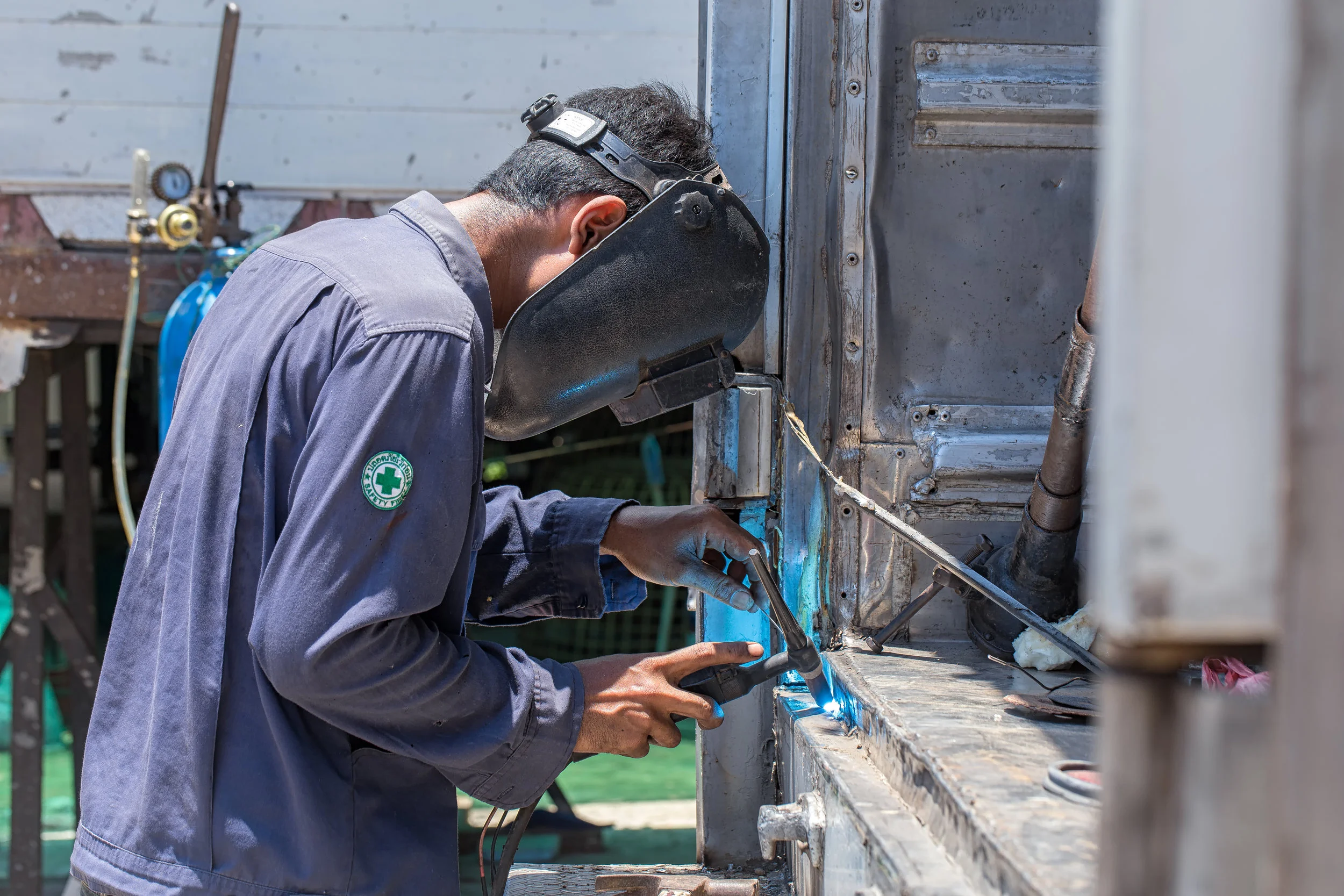
Owning Their Solution in the Weld Shop
I have conducted many workplace organization Kaizens (5S) over the years. The results have always been dramatic. All of the teams were made up of production operators or office workers, with some mechanics assisting the team. The production operators or office workers owned the areas needing organization and the mechanics were able to do some of the more complex tasks needed during the Kaizen. All of the teams, that is, until I met my Weld Shop team. Five mechanics and an engineer, who underestimated what we could accomplish.
I have conducted many workplace organization Kaizens (5S) over the years. The results have always been dramatic. All of the teams were made up of production operators or office workers, with some mechanics assisting the team. The production operators or office workers owned the areas needing organization and the mechanics were able to do some of the more complex tasks needed during the Kaizen. All of the teams, that is, until I met my Weld Shop team. Five mechanics and an engineer, who underestimated what we could accomplish.
Let me tell you about a typical mechanic on a Kaizen team. He or she is there to support the team, but not usually vested in the improvement process. Most of the time, they participate in the Kaizen and do great work, but sometimes they aren’t interested in being there, and would rather be doing their “normal” job. Facilitating a Kaizen with a team where some of the members were this way was not new for me, but having the entire team this way was. The good news was the area we were going to be working on would directly impact their safety and productivity. The better news was they had a supervisor, acting as the team leader, who was extremely excited about the possibility of improving the weld shop. And the best news was I could leverage their pride and competitive nature to turn their existing Weld Shop into a show place for all the world to see. Only if I could get them to own the improvements, of course.
When I run a 5S Kaizen, I do it step by step. On the first day of the Kaizen, after training the team in all of the S’s, we took a walk in the space we were going to organize. I asked the team to identify things we could remove first – the clutter. This is the first S. I asked many questions and they identified the items to be removed while I took photos. Then, after removing all of the clutter, we decided on the best locations for anything remaining in the space. We did this in an organized fashion and I had team members demonstrate how each new location would be safer and more productive than the old location. This is the second S – Set in Order. Following this, we made sure that everything left in the shop was in the best possible shape. We did this by cleaning and inspecting all tools, equipment, materials, and storage spaces. If we found something in disrepair, we either fixed it or replaced it. We relied on everything in the area to work, so we took great care. This is the third S – Shine.
The first three S’s, Sort, Set in Order, and Shine, are the most physical, dramatic, and fun parts of the Kaizen. By the time we got to the fourth and fifth S, the team was extremely energized and the area looked dramatically different from where we started. Here’s an example: Before we started the Kaizen, you had to enter the Weld Shop and walk about 30 feet to turn on the lights. To get to the light switch, you had to navigate in the dark through all of the clutter in the hopes of finding the switch without running into something. In some of the initial “before” photos, you couldn’t tell there was a light switch on the wall at all. During the evening of the second day of the Kaizen, we relocated the light switch to the entrance of the Weld Shop, on an outside wall. Lights could now be turned on before entering the shop, eliminating the safety risk of navigating in the dark to the switch.
The fourth S is Standardize. For this step, the team was tasked to create a managing system to ensure the improvements they made would continue to live on, be supported and requirements followed by everyone using Weld Shop in the future. This was not a physical exercise. It was a mental and paper exercise. Teams typically create checklists, sign-off sheets, signs, and audits that must be followed by anyone using the area. To mechanics, this is “paperwork”, and although it has more than four letters, it might as well be a four-letter word. This is the last thing they wanted to work on, and I knew that. I also knew that this was the most important step, as their improvements would deteriorate back to the “before” condition if not done properly and completely. The real trick would be for the team to own their solution and not just go through the motions. I had a plan, but it was risky. I needed to facilitate an emotional event, so the team would create and own their managing system.
On the morning of the third day of the Kaizen, after congratulating the team on the improvements of the first two days, I explained this would be “Standardize and Sustain Day”. They looked at me with grumpy faces as I showed them examples of checklists and audits other teams had developed. They were not impressed, to say the least. In fact, they didn’t believe simple pieces of paper would keep people from messing up all of their good work. I showed them examples of how teams made these documents visible and established responsibility all the way up to plant leadership. They were still not buying it. I needed to push them further.
I showed a slide of a checklist, going line by line over each requirement. I could see the discomfort and frustration in their faces. I was on line eight of the checklist when one of the mechanics, whose face was beet red said, “Adam, we’ve had enough of your paperwork. We’re going to the smoke shack. You can’t come with us. We’ll figure it out and then we’ll tell you what we’re going to do.” All of the team members stormed off and left me in the meeting room by myself. I had facilitated the significant emotional event. I didn’t really know if they would ever come back, and if they did, what would they come back with?
It felt like two hours, but it was only twenty minutes when all of the team members returned to the meeting room. They looked pretty proud of themselves as one of them declared, “Adam, we’re going to tell you what we’re going to do. We’ll talk and you type.” They listed eleven things they wanted on “their” checklist. They were similar to what I had presented, but it was in their words and it was their ideas, and that’s all that mattered. I thanked them for coming up with such a well-thought out checklist and then challenged them to develop the system to ensure everyone would use it properly and not “pencil-whip” it. This is the fifth S, Sustain. Enthusiastic and full of pride, the team developed a visual Area Owner board, with all of the required documents easy to find and to use. Then they set up daily and weekly requirements for the area users, the Area Owner, and members of the plant leadership team.
On the final day of the Kaizen, the team shared their results with the plant leadership team and some executives visiting from their corporate office. It’s not unusual for mechanics to shy away from presenting in front of an audience. In this case, all team members spoke from their hearts and explained how important it would be to support and sustain all of their good work, which was improving safety and productivity for them and the rest of the plant. They even asked the executives to hold the team and plant leadership accountable to keep this good thing going and spread this effort to other areas of the plant.
After the presentation was over, I spent a few minutes with the team, getting their final thoughts about the Kaizen. Happy with the results and most aspects of the Kaizen, they told me they wished I had been more assertive with them during the week. We laughed as I told them I wasn’t sure they were coming back to the meeting room after storming out on Standardize and Sustain Day. They told me it was just the motivation they needed to get to their solution.

Go See for Yourself – The Best Selling Tool There Is
In 2006, our Kaizen team was working on improving changeover time for a painting operation. After reviewing changeover reduction techniques with the team, we took a walk to the line to observe a changeover. The team watched the paint technician clean the front of the paint booth with water for approximately 10 minutes. After that, he walked behind the booth for a few minutes and then came back to work on the front of the paint booth. None of the team members had followed him to see what he had been doing in the back of the booth.
In 2006, our Kaizen team was working on improving changeover time for a painting operation. After reviewing changeover reduction techniques with the team, we took a walk to the line to observe a changeover.
The team watched the paint technician clean the front of the paint booth with water for approximately 10 minutes. After that, he walked behind the booth for a few minutes and then came back to work on the front of the paint booth. None of the team members had followed him to see what he had been doing in the back of the booth.
After the changeover was complete, we asked the paint technician to demonstrate what he had been doing in the back of the paint booth. To our horror, he had to squeeze his body between a post and a wall, make his way to the paint tanks, stand on a natural gas line, twist his body, and reach above his head to open a valve on a paint tank. He told us, “This is the way it had always been done since the plant was opened [in 1990].”
A change was necessary, but the equipment had been installed this way and our small team would not be able to move equipment or automate valves in the short time we had during the Kaizen. We knew we had to sell the idea to the leadership team and identify safety and financial reasons for the change.
Luckily for us, each of the paint booths had some automation built in, so we wouldn’t have to install control systems from scratch. As a team, we decided that if we could automate the opening and closing of the valves on three paint tanks, we could eliminate the need for paint technicians to put themselves at risk while opening and closing the valves. We had an electrical engineer on the team, so while we worked on other aspects of the changeover time reduction, we asked him to develop engineering estimates for the valve automation.
Normally, engineers want to do research and build estimates with high levels of accuracy when they present their findings. But, in the spirit of Kaizen, he was willing to put together a cost estimate with an error of +/- 25% in a day. He came back with the cost estimate and we decided how we would sell our idea to the leadership team.
During the Kaizen, we worked on simplifying procedures, accessibility of tools, and the overall coordination of work by all technicians during the changeover. None of these things cost money, but they reduced the overall changeover time by more than 50 percent. We had accomplished our Kaizen objective.
On the day of the report out, we gave a tour of the new changeover procedure to the attendees. Our hope was to highlight the success of the team and the need for the automation. Eight leadership team members joined us for the report out. We began by thanking them for joining us and then explained the changes we had made. We then invited them to see the new changeover procedure.
We started in the front of the paint booth and demonstrated the simpler procedure. Then, it was time to take them to the back of the booth to see what was actually happening. One by one, they ascended and descended the stairs that crossed over the line to get to the back of the booth. They squeezed past the post and wall one by one. One of the team members showed what was necessary to open and close valves. From the looks on the faces of the leadership team, they were unaware of what was happening in the back of the booth during changeovers. The operations manager said, “we need to automate these valves as our top priority.” Right on cue, our electrical engineer presented the cost estimate and got immediate approval.
Within three months of the Kaizen, the automated valves were installed and a 16-year problem was corrected. If someone had walked the line with the paint technicians when the plant was being built, this issue would have been avoided. The best way to understand what’s going on is to go see for yourself.

Sometimes It’s a Financial Question
A global ceilings manufacturer was building a plant in China. Things were going pretty well until they realized they were going to be two months late starting up. The team wasn’t sure what they could do to get back on schedule, so I was invited to join them and use Lean thinking to help solve the problem.
A global ceilings manufacturer was building a plant in China. Things were going pretty well until they realized they were going to be two months late starting up. The team wasn’t sure what they could do to get back on schedule, so I was invited to join them and use Lean thinking to help solve the problem.
I had been to China before, helping the team with Kaizens during different stages of plant development. These Kaizens were more challenging than most, as they required an interpreter, so the team and I would understand each other. As a result, I had to communicate more slowly than I was used to, making sure I didn’t use any slang or other terms unfamiliar to Chinese team members.
As I boarded my flight to meet them, I wondered what I could do to help the team. After all, they had been working and solving problems as they came up all along the way. They had their best engineers and scientists on the team who had come up with many breakthroughs. Why couldn’t they solve this problem? Why was this problem stumping them to the point they required my help? I always sleep well on airplanes, but during this 15-hour flight to China, I was more restless than usual.
I met my interpreter on Monday and we reviewed the approach for the Kaizen. I would help the team look at their problem from many angles, trying to uncover opportunities they hadn’t thought of and brainstorm as many potential solutions as possible. My interpreter reminded me in the Chinese culture, people don’t like to make a suggestion or offer an idea unless they are completely sure it is correct. In a Kaizen we want people to bring out ideas that aren’t fully formed or guaranteed to work, so others can build from them. I knew I had to make the team comfortable to say anything at any time. To do that, I would use sticky notes and pens and ask all team members to write their ideas down and share them, one person at a time, one idea at a time. This technique tends to make people comfortable saying whatever they are thinking, regardless of the country or culture.
The goal of our Kaizen was to have the plant start up on time. Our objective was to develop contingency plans to take two months out of the schedule and meet the initial commitments to the Board of Directors and the customers in China. I knew very little about why the plant wasn’t on schedule, so I had the team brainstorm possible reasons why they were behind schedule. Using the sticky note technique, more than 100 ideas were written down, some in Chinese, some in English. Knowing we couldn’t solve all 100, I asked the team to prioritize the most critical reasons for the delay. I used a technique called “multi-voting”. Each team member placed a dot or a mark on the sticky notes that contained the top five ideas or reasons for the delay from their perspective. The sticky note with the most dots was the idea the team felt was the most likely reason for the delay.
There were 15 team members and 14 dots on a sticky note that said, “Two month wait for government testing.” Intrigued, I asked for an explanation. They told me the Chinese government must qualify and approve the first ceiling tile produced by the plant before they were allowed to produce more and sell to customers. It took two months from the time a test was requested to the time a tile could be submitted for testing, and then another week to get results. The team wouldn’t produce tiles that weren’t officially approved, so they were going to wait those two months for approval before starting full production. The plant had scheduled production of the first acceptable tile around April 1st, 15 days before the original start-up date commitment, and then would have to wait two more months before gaining approval to produce tiles for sale, thus creating a two-month delay. It was then I knew there was an answer, but the team had to come to the right conclusion. It was time to ask some questions and facilitate them to an answer.
Question one was, “How much does it cost to submit a tile for a test with the Chinese government?” The answer was $10,000.
Question two was, “How long does it take from the time a test is requested until test results or approval is given?” The answer was two months.
Question three was, “When do you believe you will be able to produce tiles?” The answer was around April 1st.
Question four was, “What is the cost of the plant starting up after April 15?” The answer was $60,000 per day, as defined in the original project investment request.
Question five was, “Do you currently believe that the tiles you will produce on or about April 1st will meet the Chinese government requirements?” The answer through internal testing and quality control was “highly probable”.
Question six was, “Are you willing to risk $10,000 by submitting a test request to the government two months in advance of producing your first production tile, in order to save $60,000 per day for the next two months?”
At that point, the team knew what it had to do. The rest of the Kaizen was spent developing plans to ensure a successful test by the Chinese government on April 1, two weeks ahead of schedule. In the end, the plant started up on March 28, and the team saved over $2.5 million for the company. The lesson here is that when you frame a problem on a financial or factual level, rather than an emotional level, the answer becomes obvious.
Breaking Through - The Edge
In 2005, I was asked to help a team reduce the changeover time of a painting operation at a ceiling tile manufacturing plant in Oregon. The approach I used was SMED – Single Minute Exchange of Die. The goal was to reduce the existing changeover time by 50% or more, while improving the safety of the work.
In 2005, I was asked to help a team reduce the changeover time of a painting operation at a ceiling tile manufacturing plant in Oregon. The approach I used was SMED – Single Minute Exchange of Die. The goal was to reduce the existing changeover time by 50% or more, while improving the safety of the work.
After training the team, we took a walk on the factory floor to observe a changeover in progress and see if we could generate any improvement ideas. As with most SMED events, we saw a ton of improvement opportunities related to the existing changeover and the team was excited they would be able to help everyone in the process.
Towards the end of the walk, we stopped at the quality testing station and saw something that didn’t look right to us. The Quality Technician was using a box knife to cut four 2-foot edges of the ceiling tile off by hand. It looked difficult, unsafe, and extremely inefficient. When we asked her more about it, she told us she was required to measure the color of the face and edges of the ceiling tiles. The only way to get the colorimeter to read the edge of the ceiling tile was to make these cuts, allowing the tester to be placed directly on the edges. She also told us it made her wrists hurt. On a break, I verified with plant leadership they were also very concerned about this requirement. It was their number one safety concern in the facility and a number of engineers had studied the issue with no practical solution.
Following the walk, the team went back to their meeting room and listed all of the improvement ideas they had. They then prioritized the ones they wanted to work on to reduce changeover time. During the next two days, many of the highest priority ideas were implemented and the team was extremely excited about the improvements they were able to make.
At a break, a mechanic on the team came up to me and asked if it would be ok for him to work on something outside of the prioritized list of improvements the team had identified. I could tell something was bothering him, so I asked him to tell me more about what he was thinking. “Adam, I can’t get that edge cutting process out of my mind. It’s not right that we are putting our people at risk. I think I have a solution, and if you give me an hour to work on it, I can come right back to the team to help out with the other efforts.”
Kaizen is a team sport, and the team needs to be aligned around what everyone is doing. I asked the team what they thought. They enthusiastically supported the mechanic’s efforts. So much so that one of the operators volunteered to help him work on his idea. We couldn’t wait to see what they would come up with.
About an hour and half later, both team members came back with grins a mile wide. They brought a contraption that looked like a standard vise with a two-foot wide angle iron attached to each jaw. Curious, we stopped our other work to watch a demonstration of their invention. They put a 2-foot ceiling tile into the vise vertically, with the edge of the tile in the jaws and closed the vise carefully. Then, with a swift tap, the ceiling tile broke off cleanly at the edge, across the entire 2-foot length. We were stunned. One of our team members stepped up and tried the next of the four edges, and it broke off just as cleanly. One by one, we all tried it and saw how quick and easy it was to break off the edges. Now, we gave it the ultimate test – we brought it to the Quality Technician and showed her how to use it. She easily broke off the edge and immediately gave the mechanic a hug in a show of gratitude. It was probably the only hug the mechanic ever got at the plant!
We were so proud, but knew we had to finish our other work and gain alignment from plant leadership that our new method would meet the quality testing requirements. During the rest of the Kaizen, we implemented as many of our improvement ideas as possible, then created an overall changeover procedure that we verified, practiced, and used to train the rest of the operators on the line. The changeover time had been reduced significantly, but we wouldn’t feel like we had won until we implemented the new edge breaking process. So, we decided to build a final report to win over the plant leadership.
We invited plant leadership to see the new changeover procedure, which the team demonstrated for them. Some of the leadership team even participated, to see for themselves how much easier and safer it had become. They were extremely pleased, but we had saved the best for last.
Our creative mechanic invited the Quality Technician to join him in front of the group of plant leaders. Then, another team member brought out the vise and handed a ceiling tile to the Quality Technician. She put it in the vise, gave it a tap, and the edge broke right off, as clean as could be. In my life, I have never seen a collective group of people’s jaws drop at the same time, but it happened right then. After they got over their initial shock, the Operations Manager said, “Let me try that.” He did, and got the same result.
Everyone wanted a turn, and when it was over, the Safety Manager said, “This has been our number one safety risk. We have spent over 6 months trying to solve it the conventional way and haven’t been able to do so. Your team worked together and solved it so quickly. We need more teams to help us solve our problems in this way. Thank you!” Then, she gave the mechanic the second hug he had ever received in the plant. After blushing, he admitted to the group that in all of his years working at the plant, he had never done anything as impactful as this. He also reminded everyone that this was a prototype, so there may be an improved way of doing the work. Many years later, the original vise was being used in the plant without a complaint.

Improving Changeover Time in 4 Simple Steps
Have you ever watched an auto race? If so, you probably noticed what happens when a car enters Pit Row and is tended to by a whole team of people trying to get it back on the track as fast as possible. If you wondered how they knew what to do and how they didn’t get in each other’s way, the answer is SMED.
Have you ever watched an auto race? If so, you probably noticed what happens when a car enters Pit Row and is tended to by a whole team of people trying to get it back on the track as fast as possible. If you wondered how they knew what to do and how they didn’t get in each other’s way, the answer is SMED.
SMED stands for Single Minute Exchange of Die. It was developed by Dr. Shigeo Shingo in the 1960’s and 1970’s on behalf of Toyota. Dr. Shingo was interested in reducing the time and effort that it took to change a production line from one product to the next. By intense study and trial and error, he developed a 4-step method to drive all changeovers down to less than 10 minutes, thus coining the term single minute exchange of die. For auto racers, they use SMED to improve their auto changeover times and have achieved times below 15 seconds.
Changeover reduction is a team sport, just like in NASCAR, so picking the right team is critical. Bring people together who have had experience with the changeover being studied, use their differing opinions and techniques and encourage sharing and learning. By doing this and applying SMED, you should be able to reduce changeover time by more than 50%. You should also be able to improve the safety of the changeover for everyone.
STEP 1 – Identify All Elements of the Existing Changeover
The first step in SMED is to identify all elements of the existing changeover. This is done by observing the changeover as it occurs. Use a changeover that is typical for the process. Teams use tools such as a stop watch, video, and spaghetti diagram to truly understand everything that is happening during the changeover. Rather than just discussing things, they observe the changeover and then discuss it to better understand the current situation. It is also not unusual for team members to mimic the steps of the changeover so they can see the impact and difficulty of the changeover for themselves.
The spaghetti diagram is a paper exercise that shows everywhere a person travels during the changeover, whether it is to get tools, information, or do work on equipment. To use it, you should have a general layout of the area being worked on, then place a pen or pencil on the layout, moving it to the places that the worker moves during the changeover. Don’t lift the pen or pencil. If there is more than one worker performing the changeover, there should be more people creating the spaghetti diagram. At the end of that exercise, the lines on the page tend to look like spaghetti and people are amazed at the amount of travel required to complete the changeover.
STEP 2 – Separate All Elements into External and Internal
The next step in SMED is to identify what steps or elements can be performed while the line is running (External elements) and what steps must be performed while the line is down and waiting (Internal elements). Process Improvement Partners saw an example of this in one of our sessions. After a production run was completed, the press was shut off, a die was removed, the die was returned to storage, and the new die was brought back to the press from the storage area. At that point, every step was Internal, meaning that the line was not running while each step was completed. However, the team soon realized that the retrieving of the new die could have been done in advance of the changeover and the storage of the other die could be done after the line was back up and running. The team identified all of the elements that were external, and this step saved more than 25% of the changeover time.
STEP 3 – Convert Internal Elements to External Elements
The third step challenges the team’s creativity and they start to devise ways of doing some of the changeover steps that originally had to be done while the line is down and finding ways of completing them while the line is still running. A team we worked with created a fixture that allowed parts to be positioned for installation prior to the line stopping. This saved a significant amount of time and the fixture was built with existing materials, so no money was spent. Another example is to connect a tool to the equipment, so that it is immediately accessible to do the work once the line has been stopped. There are so many examples of this that teams can do research through the internet to get ideas, or they can visit other manufacturers to see the ideas in action.
STEP 4 – Streamline All Elements
In this step, the team thinks of ways of shortening time and effort required to do any remaining elements. They prioritize and work on the internal elements first, and then work on any of the external elements that have opportunity for improvement. This is a great time to look at the video and the spaghetti diagram again and see if the amount of travel can be reduced by the repositioning of tools, materials, and equipment, or if another sequence would be more efficient. Trial the new procedure, redraw the spaghetti diagram, and get the input of all team members to ensure that the new steps are truly better for them.
Once all steps of SMED have been completed, the team should observe the new changeover procedure and verify that it is truly an improvement. Time is one measurement, but effort, travel, and the anecdotal input of those performing the new changeover procedure are also important. People need to feel that the new way is better than what they had been doing personally. Because change is difficult, the team needs to develop methods to sustain the improvements that they created. Once they do so, they will realize the benefits of their efforts.

The Pursuit of Creativity
In my years of running Kaizen events, I never saw anything as powerful as a creativity approach called 3P – Production Preparation Process. The goal is to eliminate waste in the design of a new or existing process or product in the maximum way possible, unlocking the creativity of the team in ways most of them have not experienced. In 2016 I was fortunate enough to experience this approach through the eyes of the man who invented it, Chihiro Nakao.
In my years of running Kaizen events, I never saw anything as powerful as a creativity approach called 3P – Production Preparation Process. The goal is to eliminate waste in the design of a new or existing process or product in the maximum way possible, unlocking the creativity of the team in ways most of them have not experienced. In 2016 I was fortunate enough to experience this approach through the eyes of the man who invented it, Chihiro Nakao. Sensei Nakao was a former Toyota employee who was sent out to help other companies at the behest of the originator of the Toyota Production System, Taiichi Ohno.
There are eleven steps to the approach, and although they may seem simple or counterintuitive on the surface, they are truly deep and complex and can lead to amazing breakthroughs. A short article will not do this justice, but perhaps it will motivate you to learn more about 3P.
A typical 3P Kaizen event takes 4 ½ days. They are long days, extremely engaging and exhausting, but at the end, the team will have a solution to an important problem that they are seeking. They will also have simulated their solution at a scale that will tell them whether or not it is truly viable.
Background – The team needs to understand certain key Lean principles and terms, such as Takt time, just in time, right sized equipment, and 5 whys prior to initiating the 11 steps of 3P. They also need to know how to use certain tools, such as the Standard Work Combination Sheet and the Fishbone Diagram.
Voice of the Customer – The team needs to hear directly from the customer to understand what is expected from them. There should be a direct exchange with the customer, so there can be no doubt about what is needed. Criteria for the solution is shared, so the team can measure their efforts against the criteria during the 3P.
Step 1 – Determine the Function of the Product or Transformational Step. As a first step, the team must identify what the customer would like them to accomplish in the simplest of terms. They will be challenged to describe this in two words, using a noun and a verb only. For example, a lightbulb does many things, but at its essence, it either “gives light” or “provides heat”. What is the product or process that the customer is most interested in? The team must avoid thinking about what is currently happening, but rather the bare essence of what the customer is willing to pay for, no more, no less.
Step 2 – Define the Essence of the Function Using Keywords. What words are the simplest way to describe what the customer is asking for? The team should generate as many key words as possible and then sketch them out on paper or sticky notes for everyone to see. The act of identifying the key words and sketching them is a way to drive the creativity of the participants forward. Some examples of key words are: drill, shear, guide, roll, and fasten.
Step 3 – Look for Examples of Keywords in Nature. In this step, team members do research and find examples in nature of the keywords. No examples should be man-made. Nature has used millions of years to perfect the simplest ways to accomplish tasks. Again, it is better to draw the examples than just list them. For example, if a key word is grip, then an example in nature could be an eagle’s talon gripping its prey. This step takes time and most team members will initially resist putting great effort into it, but with perseverance, they will make important discoveries about simple ways to perform complex tasks. Each team member should draw at least three examples, so that they expand their thinking beyond what they already know.
Step 4 – Sketch Examples and Examine “What is Happening” to Enable the Function. This next step is to examine in greater detail what allows nature to accomplish the keywords. What causes an eagle’s talon to grip its prey? Team members attempt to attain a greater understanding of the mechanism that is being utilized by nature through research and drawing. More examples are encouraged, as team members dig deep into their understanding and creativity.
Step 5 – Sketch Background and Conditions of the Function. This step takes a deeper dive at the function and the surrounding conditions that allow the function to occur in nature. More than just the eagle’s talon gripping the prey, what is happening with the muscles and nerves in the talon that allow it to grip? What interactions are occurring, and how are they able to do so?
Step 6 – Combine Ideas from Nature and Create Sketches. Each team member is challenged to come up with at least seven ways of solving the original problem using what they have learned from nature and other ideas that they may have. People generally have three alternatives in mind, so getting to seven causes them to think beyond their normal approach and have a bit of fun. It is not unusual to hear laughter during this step as people start to relax their creative minds and let go of their paradigms of what is possible.
Step 7 – Rapid Prototyping (Moonshine). This is the step that brings everything together and turns the ideas into reality. By reviewing, grouping, and prioritizing all of the many ideas shared across the team, the team picks two or three ideas to build. The team should break up into sub-teams so that each idea can be worked on simultaneously. The team is encouraged to use any materials available to them to demonstrate their concepts. The team assesses their prototypes against customer criteria and the
Seven Flows: Flow of People, Flow of Material, Flow of Parts, Flow of Products, Flow of Equipment, Flow of Information, and Flow of Engineering. They learn and improve as they go and are expected to make multiple iterations as they build. This build should be in three dimensions, so it is critical to have enough space and materials for team members to work. The term “Moonshine” refers to the historical practice of building stills in the woods by the light of the moon during Prohibition and using any available materials.
Step 8 – Conduct Trials and Gather Real Data. After building prototypes, they must be tested. Data is collected and compared to the customer criteria. As the comparisons are made, improvements are identified but not yet implemented. Often, the team identifies a better way to approach the problem and plans out the improvements for the next round of prototyping and moonshining.
Step 9 – Select the Three Best Designs Based on Criteria. During all of the prototyping and moonshining, it is not unusual to create variations on the original ideas and have many options to choose from. In this step, the team uses the original customer criteria to score all options and narrow down to three best designs to continue working on.
Step 10 – Continue Simulating and Gather and Evaluate Data on the Top Three Proposals. The team continues to do work on their proposals, learning about them, simulating them, and improving them. Any problems that occur are fixed on the spot, with as little discussion as possible. The act of building rather than discussing expands the creative process. At some point in this step, time will run out, so the team should set a target time to get all information and simulate how their idea will work.
Step 11 – Presentation of Solutions. The team demonstrates to the customer how each option works and shares the data and criteria evaluation. It is similar to a high school science fair, in that the customer acts like the judge and delivers constructive criticism and asks deep questions to the team. Rather than a Power Point presentation, this is a demonstration in 3D, with physical activity, so it’s easier to understand what the team is presenting.
The 3P approach is a highly engaging way to drive breakthrough creativity in teams that have the opportunity to participate. It has been shown to save precious project time and drive cost out of the finished product or process. Some teams saved 6 months in their Innovation cycle time by using 3P. Other teams have said that using 3P revealed viable options that they would never have pursued otherwise. I encourage you to consider this approach and learn more about it.

Use Standardized Work to Unleash Creativity
Most people don’t like being told what to do. They definitely don’t want to be told how to do it. But, with proper standardized work, we can show people the right way to do things and free their minds to work on more complex problems that they face.
Most people don’t like being told what to do. They definitely don’t want to be told how to do it. But, with proper standardized work, we can show people the right way to do things and free their minds to work on more complex problems that they face. The key is to develop standardized work that engages people, speaks to them at the appropriate level, and captures the routine aspects of a task in a way that ensures everyone follows it properly and easily. Once that occurs, they can concentrate on solving problems that aren’t covered by the standardized work.
When I was very young, I was told, “Don’t touch the stove top. It’s hot!” Naturally, that sparked my curiosity. I wanted to know how hot, so I had to touch it. Unfortunately, I got burned and learned a lesson. I should have asked “How hot?” or, “What happens if I touch it?” If I understood what and why and the implications, I may not have received a boo-boo. This was a valuable personal lesson, but it also provides a good structure for standardized work. Now that I didn’t have to touch the stove anymore, I was freed up to use my creativity to create other mischief.
How to Engage Your People to Develop Standardized Work
People tend to do things the way they are taught, the way they observe, or the way that feels right to them. Unfortunately, they may be doing things improperly, unsafely, or inefficiently. So, it is incumbent on you to help them see the better way to do their work. The best way is to engage them in the development of the work. I have found that you should engage at least three people who are currently doing the work so they can share experiences, approaches, and break the tie, if a final decision on how to proceed is needed. You should set the expectations that work must be accomplished safely and productively, but give them the freedom to use their experiences to guide them in the process.
What To Do
The first part of standardized work is to define what to do and the order in which the work must be done. Once you have engaged people who do the work to participate in this effort, have each one of them demonstrate their approach to the work. Those who are watching should provide feedback and ideas that would make the work safer and more efficient. Once all ideas are shared, help bring the group to consensus around the final procedure. Once they have done this, they should practice the new procedure and see if they have missed any vital elements. Following that, document the procedures with pictures, videos, and/or written process steps. The more visual the better, as you want to be able to explain the procedure to anyone in a short amount of time, and you want them to be able to demonstrate their understanding without much effort. Once they have reached consensus, you must gain agreement that the procedure will be followed the same way by everyone who does the work.
Why To Do It
You can’t guarantee people will follow the new procedure, just because it is safer and more efficient. They may not realize this is the case. Most people are willing to try something different than what they are used to if they understand why it will be a benefit to them. Therefore, the group that develops the new procedure should incorporate the “why” or benefits behind the steps in the new procedure. If they’re unable to do so, it probably means there aren’t real benefits and the procedure needs improvement. Keep working and improving the procedure until you have something that delivers a benefit. Once you have done that, it will be easier to sell the new procedure to others.
The Implications of the Work
The best standardized work results in safety and efficiency gains. These should be clear and measurable. After all, how do you know you’re winning if you’re not keeping score. So, the team should be able to identify and incorporate clear measures of the standardized work. For example, the procedure now takes six steps and 30 minutes, while in the past it took 12 steps and 48 minutes. Another example is the new procedure results in a higher yield rate than the old procedure. It is not uncommon to reduce the time required to accomplish a task by 30% to 50%, just by gaining alignment and simplifying process steps.
Using these three elements – what to do, why to do it, and the implications of the work should convince people to try this new way of operating. Once they are convinced, they should also see that by following this new process, their minds are freed-up to work on more complex problems, thus unleashing their creativity.
Here’s a real-world example: A production line was shutting down erratically. In the past, people would be blamed for not following procedures. With clear standardized work, the time to troubleshoot was reduced dramatically, as the human variables were eliminated. The team could focus on other reasons and quickly found the root cause of the problem, which was a switch that was shorting out.
We want people to be creative and improve things and solve complex problems. By creating clear standardized work that is consistently followed, we give people the opportunity to use their creative minds and drive positive results.
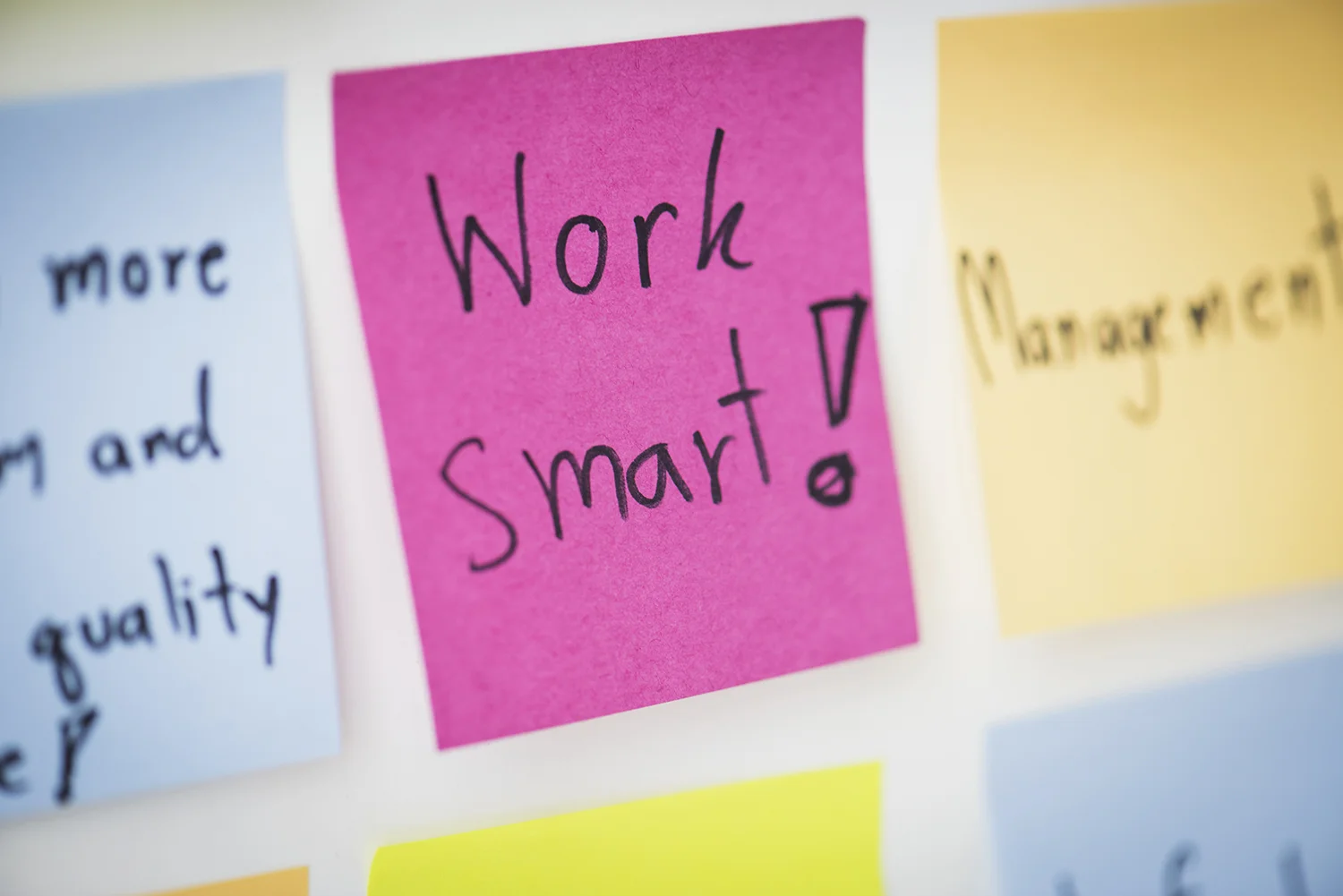
How to Use Kaizen to Ensure Teams are Invested in Process Improvements
In 2005, I was helping a team improve the safety and productivity of their operating line. During a 4-day span, each of the team members was able to try and implement many different ideas that arose from their creativity.
In 2005, I was helping a team improve the safety and productivity of their operating line. During a 4-day span, each of the team members was able to try and implement many different ideas that arose from their creativity. At first, they didn’t believe that they would be allowed to make changes to the operating line, but after each successive attempt, they grew more and more confident, and the energy, enthusiasm and momentum grew. At the end of the 4 days, each of the team members reflected on their experience. One of the team members was a gruff mechanic who had been skeptical at the beginning of the session. He stood up with tears in his eyes and stated that this had been the most meaningful and impactful experience of his working life. I knew right then that I wanted to bring this joy to as many people as possible.
Kaizen brings people together to solve problems in their area of concern. They have the most understanding, experience, and vested interest in the effort. They also reap the benefits of the improvements moving forward. Kaizen asks us to make things better, not perfect, and go rapidly, without investing anything but the time and energy of the people making the changes. There may be some minimal cost, but because things are going so fast, a significant financial investment isn’t likely. Using the speed of Kaizen and the creativity of the team, I developed 3 approaches to drive the deep and emotional connection to improvement that I was seeking.
1. Idea Gathering and Sharing with Sticky Notes
Each team member takes a pad of sticky notes with them as they tour the area of concern. With guided questioning, the team members write down their personal observations or ideas that come to mind while touring. It is quick, personal, and drives ownership and accountability to come up with ideas for the benefit of the team and the people in the area. I ask each team member to write down one idea per sticky note, so that nothing gets missed and it’s easier to organize ideas as a team once we have reconvened. In the meeting room, I have the team members share all of their ideas, one person at a time, one idea at a time. Each idea is placed on a flip chart or on a wall for everyone to see. If there are 15 team members, I have each person share one idea until the team has heard 15 separate ideas. Then I give them a chance to share their second idea, third idea, and so on, until the team has run out of ideas. This creates an atmosphere where everyone has equal voice, regardless of position, experience, or pay grade.
2. Prioritization with Criteria
Once the ideas have all been shared and posted, the team may choose to group similar ideas together. This gives them the chance to see all of the ideas and remove any redundancy. Following this, each team member is asked to pick his or her top ideas using these criteria:
a. Provides the biggest benefit to our team and our customers
b. I personally want to do this
c. We can do this during the allotted time of the event
Everyone is given an equal number of votes (usually between 3 and 5), so no team member can dominate the conversation or the voting. These criteria are interpreted differently by each team member, but in the end, this approach creates a list of the team’s top priorities. This approach generally takes no more than 10 – 15 minutes.
3. Pick Your Project
We now have a list of things to work on, prioritized by the amount of votes the team has placed on them. I then list the top 3 or 4 projects on a flip chart, depending on the size of the team. Now it becomes personal, as I tell the team, “First come, first served. Place your name on the project you want to work on.” More than a few times, team members rush to the flip chart to put their names on a project. They want to ensure they get the project that matters to them the most. This may sound risky, as a project may not get claimed. I have never seen this happen. Team members have different interests and you can’t always guess what they are, so I have stopped doing that. Also, if there aren’t enough team members on a project, I ask if there’s anyone willing to swap projects. Often, there are a few team members who don’t have a real preference, so they are happy to change projects.
Now that we have personally observed and shared issues, picked our projects, and assigned the work to the people who want to do it the most, we have the foundation for the deep personal connection to the improvements that we seek. Sometimes a team member will find it moving enough to convince others to get involved in future efforts and find the same joy that they did.

How to Organize Your Work Space With 5S
In the world of Lean Manufacturing, 5S is used to organize workplaces to make them safer and more productive. Although many great manufacturing organizations and others have been credited with inventing or popularizing 5S, I’m pretty sure my mom invented it.
In the world of Lean Manufacturing, 5S is used to organize workplaces to make them safer and more productive. Although many great manufacturing organizations and others have been credited with inventing or popularizing 5S, I’m pretty sure my mom invented it.
When I was young, I wasn’t very organized. My mother told me, “pick up your clothes,” “put your toys away,” “make your bed,” and most importantly, “there’s a place for everything and everything in its place.” Not only did she tell me to do these things, she showed me how to do them, nagged me about them, and checked my work quite often. I couldn’t get away with anything!
Although I really didn’t heed my mother’s advice as a child, as I grew older, I came to realize how powerful these statements were. When I entered the working world, I started applying 5S to many different situations and was amazed at the immediate positive impact that I was able to make. I also saw how deeply it moved those that were able to participate in 5S efforts. They became disciples of the effort and wouldn’t allow others to erode any of the benefits of the change.
As simple and powerful as 5S is, there are many who don’t understand what it is and how it should work and use it to just “clean things up.” I would like to share my understanding and approach to 5S and try to clear up some of the confusion.
The first thing to understand is the purpose of using 5S. I believe 5S should be used to improve the safety and productivity of an area or work space. Once agreement and alignment around this purpose has been established, the team will make choices that will benefit the users of the area.
The first S, Sort, tells us to remove anything that is not immediately needed or useful in the area. Duplication, clutter, and non-working things are to be removed, discarded, donated, or sold. Three hammers turn into one, broken things are repaired or replaced. Things that were saved, “just in case,” are no longer allowed in the area. It’s not unusual to take away more than 70% of the tools, materials, documents, and other things that were just getting in the way. Productivity is improved by reducing the time and effort required to find what’s needed. Safety is improved, as you no longer have to move clutter out of the way to get to what is needed.
Set in Order, the second S, says to create visible, easy to find locations for all remaining materials, tools, and equipment in the area. Define proper inventory levels, place things within reach, make it impossible to lose anything or put it away improperly. As Mom said, “A place for everything and everything in its place.” Trip and bump hazards are eliminated in this step, greatly improving safety. Productivity continues to improve as it becomes difficult for anyone to be non-compliant to the system requirements.
The next S, Shine, tells us to clean and inspect everything that remains in the area, to ensure that it is in optimal condition. We are trying to prevent problems before they happen by identifying any issues, cracks, leaks, or poor performance that may occur with our tools, equipment, documents, and other things that help us do our work. Some think that Shine means “clean things up.” I believe Shine is much more powerful than that, as this effort can reduce risk of failure, greatly improving productivity. Safety is enhanced because we can rely on everything to work properly when called upon, creating no surprises.
The fourth S, Standardize, tells us to create expectations and audits to involve everyone in keeping things as they should be. No longer is it the responsibility of just one person, but the greater community. When I work in an area, I may not realize that things are shifting to their prior condition, things are starting to return to the area that were previously removed, or people aren’t putting things away properly. With a series of audits and auditors, there is a better chance to catch issues quickly and hold each other accountable to follow the rules of the area. In context of my childhood, I thought my room was OK every day, but Mom didn’t always see it that way, and often pointed out the error of my thinking. The safety and productivity gains are maintained through the commitment of the community and its auditors.
The fifth and final S, Sustain, challenges us to continually improve the performance of the area. By scoring the performance of the area and tracking it for everyone to see, we can identify further improvements that would enhance the safety and productivity of the area. Once an area has seen the benefit of implementing 5S, it is not unusual for people to see other things in the area that could become part of the overall 5S system.
I think we can all agree that being organized is beneficial. I think we also can agree that we should listen to our mothers more often. Because I don’t like my vegetables, I can’t guarantee that I will do everything that mom tells me, but I will definitely do my best to listen more.

How to Ensure Standard Operating Procedures Don’t Collect Dust
We have been trying to get others to follow standard operating procedures since the Cavemen painted “Way to Kill Mastodon” on the cave walls!
We have been trying to get others to follow standard operating procedures since the Cavemen painted “Way to Kill Mastodon” on the cave walls!
But, try as we might, people still like to do things “their way”. And why not, most people think their way is best. But it may not be, and it may lead to errors and other problems. So, why aren’t we able to get people to follow standard operating procedures, the way they were meant to be followed?

The reason is that we haven’t really thought through what resources our teams need to properly follow standard operating procedures. This is why Process Improvement Partners LLC has developed The Wheel of Sustainability. With a hub and eight spokes, it all but ensures standard operating procedures will be followed.
Notification
The first and most traditional spoke in The Wheel of Sustainability. People are told there is a procedure and they are expected to follow it.
Training and Review
The second spoke gives people a chance to ask questions about the procedure, gain better understanding of it, and provide their input. If there are any opportunities to improve the procedure, this is a great time to uncover them. Buy-in for the procedure starts here.
Visible Evidence
The third spoke in The Wheel of Sustainability requires us to develop ways to show that the procedure is being followed, without having to interrupt the person doing the work. Is the procedure obvious, and are there visual cues that show things are happening as they should, in the proper sequence?
All Tools Available
The fourth spoke provides the person doing the work everything they need to do the job safely and productively. Are the tools easily accessible and in a logical location, or do they have to search for them? The tools can be physical (hammers, wrenches, screwdrivers, etc.) or virtual (databases, files on the computer, network connections, emails, etc.)
Clear Benefits
The fifth spoke in The Wheel of Sustainability asks if the person following the procedure sees it as being easier, more logical, and/or safer to accomplish. Have they been given a chance to give their input when the procedure was designed? Have they “seen for themselves” that this is a better way than what they did in the past?
Layered Audits
The sixth spoke requires others to engage with people as they follow the procedure, to make sure that they are following it, truly understand it, and can get help if they are unsure of the proper way to follow it. We also want to reinforce how important it is to follow the procedure as written. Audits should be visible and engaging, not hidden from view or disruptive. Many levels in the organization should participate at different times, thus the term “layered”.
Accountability
The seventh spoke in The Wheel of Sustainability asks the question, “What do you do if you observe someone who is not following the procedure as written”? This is the time to jump in and help them, not punish them. We need to understand why the person is not following the procedure and correct their behavior or provide more training. We must also hold ourselves accountable to help those who need our help. Do not turn a blind eye to improper work. Reinforce the proper way to follow the procedure.
Recognition
The eighth and final spoke ensures that people see the connection between the new procedure and improved results. We need to help people make that connection, so that it will lock in their commitment to continue following the procedure, even when no one is watching. It also gives credibility to the improvement efforts that generated the new procedure. Celebrate improved performance, when possible.
Leadership Commitment
The Wheel of Sustainability stays together with a strong hub. Leadership Commitment is that strong hub. Leaders must commit to helping, supporting, auditing, and providing everything necessary to make the procedure important and meaningful. Leaders should be visible. They should understand how the procedure impacts overall performance, and they demonstrate they are committed to the new procedure.
In summary, sustainability can be achieved through strong leadership commitment and investment in the eight spokes of The Wheel of Sustainability. Implementing this approach takes significant effort, so pick critical work first, get some practice implementing all eight spokes, and then add next level work. The more practice you get, the easier it becomes. The results will make the effort worthwhile.