

Why Request a Site Assessment?
When you call Process Improvement Partners LLC for a site assessment, you are making a choice to invite outside perspective for your organization. While there is a fee for this service, there is also a significant investment of your time and resources, so it is good to understand the value of your investment.
When you call Process Improvement Partners LLC for a site assessment, you are making a choice to invite outside perspective for your organization. While there is a fee for this service, there is also a significant investment of your time and resources, so it is good to understand the value of your investment.
By the end of this 5 to 6-hour visit, you will have a greater understanding of where the highest value safety, quality, customer service, and cost opportunities are and how to leverage them. Here’s a typical site assessment agenda:
9:00 am - Team Introductions
A short review of each participant, their role, the company, and Process Improvement Partners LLC. We get to know one another and start the conversation on a personal and business level. It serves as a quick check of the team’s level of commitment, based on who is participating in the assessment and for how much time during the day.
9:15 am - Safety Review
How will we keep each other safe during the assessment? How important is safety to the site team and how strong is the safety culture of the company? During the visit, we will respect all of the safety requirements and expectations set by the team.
9:30 am - Review the Site Team Focus and Priorities
What are the priorities of the site team? What are the current pain points in their view? What do they want to focus on during the assessment? These discussions keep everyone aligned around the purpose of the assessment and make it more meaningful for all involved.
10:00 am - Plant Walk (Gemba Walk)
We walk the process with the site team, visiting all areas, speaking with people in the process, and looking for waste and inefficiencies. The more engagement we have with people in the process, the better. When waste is spotted, we stop and discuss what we see as a team. All team members are encouraged to take notes, so that they document what they see while on the walk.
11:30 am – Review of Findings
What did we observe on the plant walk? What did we learn from those in the process? Does it validate or invalidate our initial thinking? Did we learn something new, just by the way we engaged with others on the walk? Might this be an approach to incorporate into the way we do business moving forward?
12:00 pm - Lunch
Keeping the team together during lunch is critical. Although this seems like a minor detail, it’s an opportunity to relax and discuss things in a less formal way. It also lets the team get a feel for how an ongoing relationship with Process Improvement Partners LLC might look.
12:45 pm - Evaluate and Prioritize Opportunities
Based on everything we saw and discussed, what are the key things that the team wants to work on now and in the future? Using quick facilitation and prioritization techniques, the list of observations and ideas is narrowed to a top 5 to 10 that the team finds most important and impactful.
1:15 pm - Discuss Approaches to Leverage Top Priority Opportunities
We now discuss the tools and techniques available to drive improvement in the top priority opportunities. This is the time to decide whether the team wants to work on these opportunities without outside assistance, or with the help of Process Improvement Partners LLC. We will charter and write proposals for any work that the team feels it needs help with.
1:45 pm - Plan of Action
What are the next steps? Who is responsible? Does the team want Process Improvement Partners LLC to charter and write a proposal for the work? Is there a contact person for the work? We build an action plan that will be followed once the assessment is complete.
2:15 pm - Wrap Up and Feedback
An opportunity to review how the site assessment went for all participants. This is a learning moment for all involved, as we are applying process improvement in real time to the assessment process.
2:30 pm – Additional Time for Discussion or Adjourn
If the team wants more time to discuss the assessment, we always set aside additional time for them. If there is nothing left to discuss, the assessment is complete.
At the end of the site assessment, the team has a roadmap of activities that will help them improve their performance in safety, quality, customer service, and cost. In addition, they have had an opportunity to see how an ongoing relationship with Process Improvement Partners LLC can help them execute their roadmap.

How to Drive Teams to Success with Effective Facilitation
The best facilitators look like they’re doing nothing at all. The team is driving toward a solution, being creative, working together, and having fun. What’s the facilitator doing, just taking credit for the team’s hard work? As it turns out, the easier it looks, the harder it is.
The best facilitators look like they’re doing nothing at all. The team is driving toward a solution, being creative, working together, and having fun. What’s the facilitator doing, just taking credit for the team’s hard work? As it turns out, the easier it looks, the harder it is. But, if you use these techniques, you have a chance to look like you’re doing nothing, and doing it really well!
1. Stick to the charter.
This is the reason the team got together in the first place. Make sure all activities are conducted within the scope of the charter. It’s very easy to get off-track, or work on things that aren’t explicitly in the charter. The team should be reminded and guided back to the charter. An easy way to do this is to share a copy of the charter with every team member and have them read and discuss it at the appropriate time(s). They should be able to recognize if they are veering away from the charter.
2. The team solves the problem, the facilitator guides them to the solution.
Keep the roles separate, as the team will sometimes want the facilitator to give them the solution. This is not a good idea, as the team must own the solution and will not if they didn’t come up with it. The facilitator is responsible to come up with a solution path for the team, not the actual solution. There are times when a facilitator may have to provide direct help, but this should be rare, and only used as a last resort.
3. Everyone participates with an equal voice.
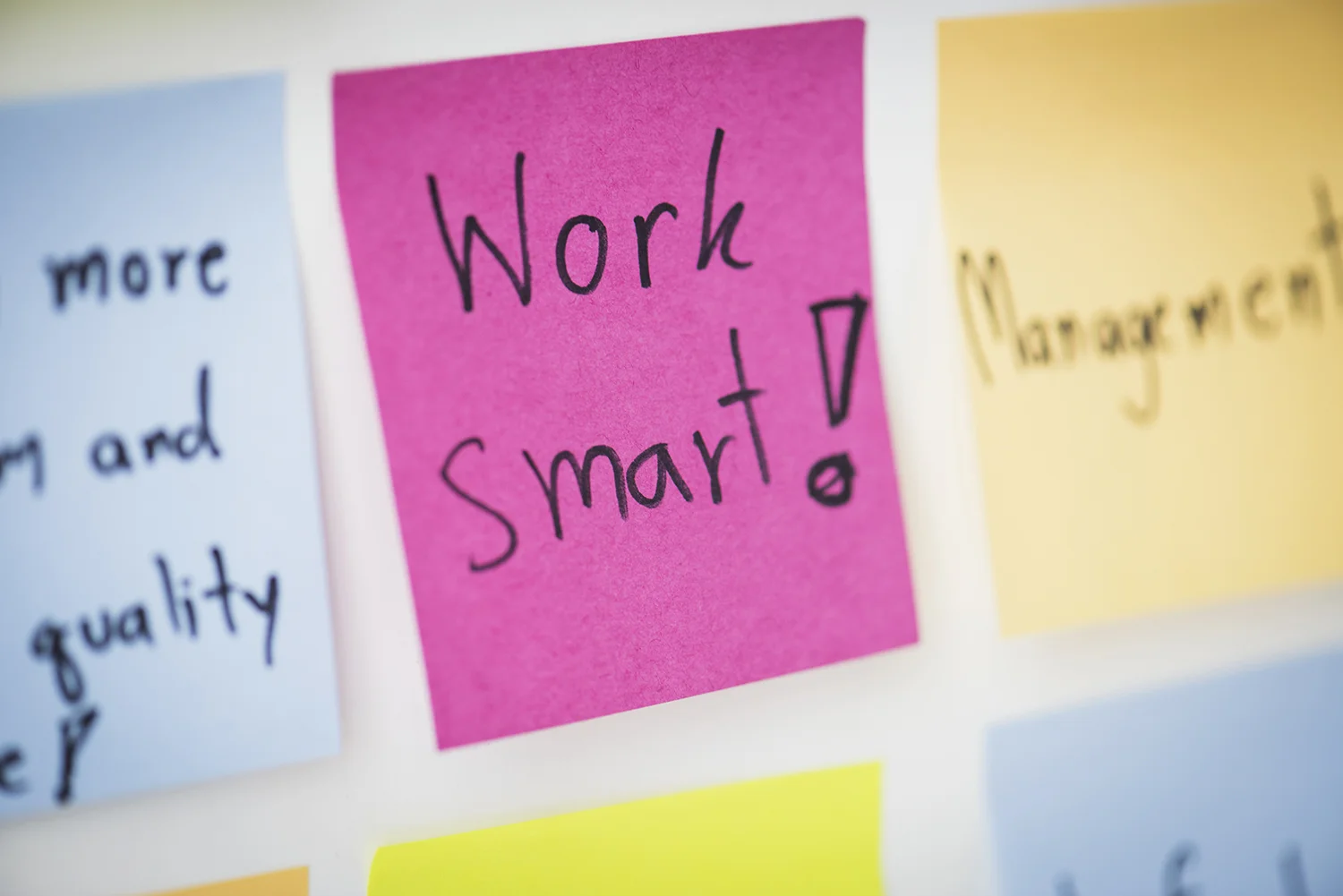
It’s very easy for some team members to dominate conversations, but in doing so, other team members may not have an opportunity to share their ideas. When this happens, there is no true consensus or full support for the solutions developed. Great care must be taken to give every team member an equal voice. One technique to do this is to give everyone a pack of sticky notes and let them write their ideas down, one per sticky note. Then, they share one idea at a time, one person at a time. Place each sticky note on a flip chart for everyone to see. Be careful not to let a team member share more than one idea before another team member gets a chance to share.
4. Keep the team moving.
I mean this both mentally and physically. If team members sit in one place too long or spend too much time on one topic, they will get bored, disengaged, and lose momentum. Get the team members out of their chairs, moving around the room, or out of the room. Break up activities into small chunks, so that there isn’t a chance for complacency or boredom. This tests the facilitator’s creativity, but it is vital for positive momentum and progress.
5. Time is precious. Break down barriers to progress.
Sometimes the team is looking for an answer and the expert is not in the room. A good facilitator will challenge the team to get the answer from someone else, in a different way, or by some quick estimate. In extreme cases, the facilitator will encourage the team to interrupt a meeting to get the answer they need. In even more extreme cases, the facilitator will get the answer for the team by interrupting a meeting or going to a higher-level leader for an answer.
6. The more ideas the better.
When a team is thinking up ideas and alternatives, their first ideas are typically things they are most comfortable with or don’t challenge them. Facilitators should drive the team to think of things that haven’t been tried before. The first step this is to ask team members for more ideas. Most people can come with 3 alternatives for almost anything. Ask for 7 in this case. If the team has stopped writing ideas, ask questions in as many different ways as possible, pulling more ideas out of the team. When we challenge ourselves, we are more often able to deliver breakthroughs.
7. Don’t let best get in the way of better.
We want teams to make improvements. Sometimes team members want things to be perfect before trying their solutions. The problem with this is that nothing is perfect and if we wait to have everything perfect, we will never test our improvement(s). So, the facilitator should encourage team members to try their ideas out before they are fully designed. It’s perfectly acceptable to make mistakes, as long as we learn from them and improve upon them. I tell teams to shoot for 60% confidence. It gives them more opportunities to try things quickly.
8. Use frequent check-ins of progress.
Once team members start working on their improvement projects, it’s easy to assume everything is going as planned and issues are addressed when they arise. However, that’s often far from the case. Team members often get stuck and struggle on their own until time runs out, if left to their own devices. Frequently connect with the team to check on their progress and determine any areas needed support. I have found that 1 ½ hours is about the maximum amount of time that team members should work independently before coming back together to share their progress. This is also a way to integrate efforts of different team members and eliminate duplication of efforts.
9. Teams that are having fun will accomplish more.
People like to win, laugh, have fun, and share in success. As a facilitator, you should be looking for ways to help the team win. Find activities that will make their time spent together engaging and fun. You may even need to develop team activities that help them work together better.
10. Less you, more them.
The reason the team was brought together was to solve a problem. If you had the answer to the problem, you wouldn’t need a team in the first place. A good facilitator will encourage as much participation from the team as possible by asking probing questions and creating a participatory atmosphere. Once the questions are asked, you must allow the team answer to them, not you. Often, they will want an answer from the facilitator, but you must resist the temptation. This is their effort, not the facilitator’s, so it’s best to let them struggle through hard questions.
These 10 facilitation techniques take practice, but they will help you get the best out of the teams you are working with. Take pride in knowing your teams solved their problems and it appeared you did nothing at all to help them!
How to Use Kaizen to Ensure Teams are Invested in Process Improvements
In 2005, I was helping a team improve the safety and productivity of their operating line. During a 4-day span, each of the team members was able to try and implement many different ideas that arose from their creativity.
In 2005, I was helping a team improve the safety and productivity of their operating line. During a 4-day span, each of the team members was able to try and implement many different ideas that arose from their creativity. At first, they didn’t believe that they would be allowed to make changes to the operating line, but after each successive attempt, they grew more and more confident, and the energy, enthusiasm and momentum grew. At the end of the 4 days, each of the team members reflected on their experience. One of the team members was a gruff mechanic who had been skeptical at the beginning of the session. He stood up with tears in his eyes and stated that this had been the most meaningful and impactful experience of his working life. I knew right then that I wanted to bring this joy to as many people as possible.
Kaizen brings people together to solve problems in their area of concern. They have the most understanding, experience, and vested interest in the effort. They also reap the benefits of the improvements moving forward. Kaizen asks us to make things better, not perfect, and go rapidly, without investing anything but the time and energy of the people making the changes. There may be some minimal cost, but because things are going so fast, a significant financial investment isn’t likely. Using the speed of Kaizen and the creativity of the team, I developed 3 approaches to drive the deep and emotional connection to improvement that I was seeking.
1. Idea Gathering and Sharing with Sticky Notes
Each team member takes a pad of sticky notes with them as they tour the area of concern. With guided questioning, the team members write down their personal observations or ideas that come to mind while touring. It is quick, personal, and drives ownership and accountability to come up with ideas for the benefit of the team and the people in the area. I ask each team member to write down one idea per sticky note, so that nothing gets missed and it’s easier to organize ideas as a team once we have reconvened. In the meeting room, I have the team members share all of their ideas, one person at a time, one idea at a time. Each idea is placed on a flip chart or on a wall for everyone to see. If there are 15 team members, I have each person share one idea until the team has heard 15 separate ideas. Then I give them a chance to share their second idea, third idea, and so on, until the team has run out of ideas. This creates an atmosphere where everyone has equal voice, regardless of position, experience, or pay grade.
2. Prioritization with Criteria
Once the ideas have all been shared and posted, the team may choose to group similar ideas together. This gives them the chance to see all of the ideas and remove any redundancy. Following this, each team member is asked to pick his or her top ideas using these criteria:
a. Provides the biggest benefit to our team and our customers
b. I personally want to do this
c. We can do this during the allotted time of the event
Everyone is given an equal number of votes (usually between 3 and 5), so no team member can dominate the conversation or the voting. These criteria are interpreted differently by each team member, but in the end, this approach creates a list of the team’s top priorities. This approach generally takes no more than 10 – 15 minutes.
3. Pick Your Project
We now have a list of things to work on, prioritized by the amount of votes the team has placed on them. I then list the top 3 or 4 projects on a flip chart, depending on the size of the team. Now it becomes personal, as I tell the team, “First come, first served. Place your name on the project you want to work on.” More than a few times, team members rush to the flip chart to put their names on a project. They want to ensure they get the project that matters to them the most. This may sound risky, as a project may not get claimed. I have never seen this happen. Team members have different interests and you can’t always guess what they are, so I have stopped doing that. Also, if there aren’t enough team members on a project, I ask if there’s anyone willing to swap projects. Often, there are a few team members who don’t have a real preference, so they are happy to change projects.
Now that we have personally observed and shared issues, picked our projects, and assigned the work to the people who want to do it the most, we have the foundation for the deep personal connection to the improvements that we seek. Sometimes a team member will find it moving enough to convince others to get involved in future efforts and find the same joy that they did.

How to Organize Your Work Space With 5S
In the world of Lean Manufacturing, 5S is used to organize workplaces to make them safer and more productive. Although many great manufacturing organizations and others have been credited with inventing or popularizing 5S, I’m pretty sure my mom invented it.
In the world of Lean Manufacturing, 5S is used to organize workplaces to make them safer and more productive. Although many great manufacturing organizations and others have been credited with inventing or popularizing 5S, I’m pretty sure my mom invented it.
When I was young, I wasn’t very organized. My mother told me, “pick up your clothes,” “put your toys away,” “make your bed,” and most importantly, “there’s a place for everything and everything in its place.” Not only did she tell me to do these things, she showed me how to do them, nagged me about them, and checked my work quite often. I couldn’t get away with anything!
Although I really didn’t heed my mother’s advice as a child, as I grew older, I came to realize how powerful these statements were. When I entered the working world, I started applying 5S to many different situations and was amazed at the immediate positive impact that I was able to make. I also saw how deeply it moved those that were able to participate in 5S efforts. They became disciples of the effort and wouldn’t allow others to erode any of the benefits of the change.
As simple and powerful as 5S is, there are many who don’t understand what it is and how it should work and use it to just “clean things up.” I would like to share my understanding and approach to 5S and try to clear up some of the confusion.
The first thing to understand is the purpose of using 5S. I believe 5S should be used to improve the safety and productivity of an area or work space. Once agreement and alignment around this purpose has been established, the team will make choices that will benefit the users of the area.
The first S, Sort, tells us to remove anything that is not immediately needed or useful in the area. Duplication, clutter, and non-working things are to be removed, discarded, donated, or sold. Three hammers turn into one, broken things are repaired or replaced. Things that were saved, “just in case,” are no longer allowed in the area. It’s not unusual to take away more than 70% of the tools, materials, documents, and other things that were just getting in the way. Productivity is improved by reducing the time and effort required to find what’s needed. Safety is improved, as you no longer have to move clutter out of the way to get to what is needed.
Set in Order, the second S, says to create visible, easy to find locations for all remaining materials, tools, and equipment in the area. Define proper inventory levels, place things within reach, make it impossible to lose anything or put it away improperly. As Mom said, “A place for everything and everything in its place.” Trip and bump hazards are eliminated in this step, greatly improving safety. Productivity continues to improve as it becomes difficult for anyone to be non-compliant to the system requirements.
The next S, Shine, tells us to clean and inspect everything that remains in the area, to ensure that it is in optimal condition. We are trying to prevent problems before they happen by identifying any issues, cracks, leaks, or poor performance that may occur with our tools, equipment, documents, and other things that help us do our work. Some think that Shine means “clean things up.” I believe Shine is much more powerful than that, as this effort can reduce risk of failure, greatly improving productivity. Safety is enhanced because we can rely on everything to work properly when called upon, creating no surprises.
The fourth S, Standardize, tells us to create expectations and audits to involve everyone in keeping things as they should be. No longer is it the responsibility of just one person, but the greater community. When I work in an area, I may not realize that things are shifting to their prior condition, things are starting to return to the area that were previously removed, or people aren’t putting things away properly. With a series of audits and auditors, there is a better chance to catch issues quickly and hold each other accountable to follow the rules of the area. In context of my childhood, I thought my room was OK every day, but Mom didn’t always see it that way, and often pointed out the error of my thinking. The safety and productivity gains are maintained through the commitment of the community and its auditors.
The fifth and final S, Sustain, challenges us to continually improve the performance of the area. By scoring the performance of the area and tracking it for everyone to see, we can identify further improvements that would enhance the safety and productivity of the area. Once an area has seen the benefit of implementing 5S, it is not unusual for people to see other things in the area that could become part of the overall 5S system.
I think we can all agree that being organized is beneficial. I think we also can agree that we should listen to our mothers more often. Because I don’t like my vegetables, I can’t guarantee that I will do everything that mom tells me, but I will definitely do my best to listen more.

Three Tips in Preparation for a Successful Improvement Event
Improvement Events are used to bring teams together to solve critical problems in a fast, engaging, and sustainable way.
Process Improvement Partners LLC was founded to help teams achieve breakthrough improvements in safety, quality, customer service, and productivity. Improvement Events are used to bring teams together to solve critical problems in a fast, engaging, and sustainable way. These Improvement Events, also known as Kaizen Events, can vanquish problems forever when they are done well. Preparation is a key component for success. In the spirit of helping teams achieve the best possible results, here are three tips to help you successfully prepare for an Improvement Event:
1. Develop a Strong Charter for the Event
At least 4 weeks before the Improvement Event, the Leader, Sponsor, and Facilitator of the event should come together and align around a charter for the event, which asks these four questions:
Problem - What is the problem that the team is being asked to solve? Why is it a problem, what is the impact of the problem on the business or the customer(s), and what would happen if the team could solve the problem?
Objectives - What are the objectives of the Improvement Event? What are the measurable results to be achieved? What would be the tangible evidence be that would show that the problem has been solved?
Team – Who are the people who can help solve the problem during the Improvement Event? Who has the interest, enthusiasm, and creativity to come up with potential solutions in a short period of time? Who can facilitate this event, to help the team on its way to a solution? Who will lead the team?
Output Owner – When the Improvement Event is over, who is responsible to implement the solutions developed by the team? Who will make sure that changes are properly communicated? This Output Owner should ideally be the Team Leader, as they will only agree to solutions that can implement and support.
Once the charter has been agreed to by the Leader, Sponsor, and Facilitator, the team is empowered to develop and implement their solutions to the problem that they are asked to solve. There is no need to gain approval for their solution after the Improvement Event. They are encouraged to get input and feedback during the event, to ensure that they have considered all aspects of the problem and potential solutions.
2. Create Leadership Alignment and Support for the Event
There should be an Executive Sponsor for the Improvement Event. This is the person that believes in the value of the event, supports the efforts of the team during the event, will remove roadblocks during the event, and will deal with resourcing issues that come up because the team members are being asked to fully dedicate their time to the event. The Executive Sponsor should communicate directly with the managers of each team member to gain their support and commitment to clear the calendars for their direct reports. Each team member should give their full focus and attention to the Improvement Event.
3. Plan Proper Facilities and Food
An Improvement Event is special. We are asking people to set aside their normal work and focus on a critical business problem. As such, we need to provide the proper food and facilities that will help them stay focused and engaged. Bring in morning and afternoon snacks, and feed the team lunch in their working space. If they stay together, they are more likely to stay focused on the problem at hand. If they disperse during lunch, they may get distracted, lose focus, or get drawn in to other business issues.The meeting space(s) should provide adequate space and privacy from outside distractions. There should be enough floor space and wall space to allow the team to try out and display their ideas and solutions. Improvement Events are interactive, visual, and energetic. People need to be able to move around freely and safely. If they need to use computers, there should be adequate power outlets available in the meeting space(s). Finally, they should have access to any resources necessary to solve the problem. Don’t move the team off-site if they need access to others in the company who may have vital information to share.
As you plan your next Improvement Event, keep these three tips in mind to give your team the best chance for success. The investment of time and effort will paid back many times over.

How to Ensure Standard Operating Procedures Don’t Collect Dust
We have been trying to get others to follow standard operating procedures since the Cavemen painted “Way to Kill Mastodon” on the cave walls!
We have been trying to get others to follow standard operating procedures since the Cavemen painted “Way to Kill Mastodon” on the cave walls!
But, try as we might, people still like to do things “their way”. And why not, most people think their way is best. But it may not be, and it may lead to errors and other problems. So, why aren’t we able to get people to follow standard operating procedures, the way they were meant to be followed?

The reason is that we haven’t really thought through what resources our teams need to properly follow standard operating procedures. This is why Process Improvement Partners LLC has developed The Wheel of Sustainability. With a hub and eight spokes, it all but ensures standard operating procedures will be followed.
Notification
The first and most traditional spoke in The Wheel of Sustainability. People are told there is a procedure and they are expected to follow it.
Training and Review
The second spoke gives people a chance to ask questions about the procedure, gain better understanding of it, and provide their input. If there are any opportunities to improve the procedure, this is a great time to uncover them. Buy-in for the procedure starts here.
Visible Evidence
The third spoke in The Wheel of Sustainability requires us to develop ways to show that the procedure is being followed, without having to interrupt the person doing the work. Is the procedure obvious, and are there visual cues that show things are happening as they should, in the proper sequence?
All Tools Available
The fourth spoke provides the person doing the work everything they need to do the job safely and productively. Are the tools easily accessible and in a logical location, or do they have to search for them? The tools can be physical (hammers, wrenches, screwdrivers, etc.) or virtual (databases, files on the computer, network connections, emails, etc.)
Clear Benefits
The fifth spoke in The Wheel of Sustainability asks if the person following the procedure sees it as being easier, more logical, and/or safer to accomplish. Have they been given a chance to give their input when the procedure was designed? Have they “seen for themselves” that this is a better way than what they did in the past?
Layered Audits
The sixth spoke requires others to engage with people as they follow the procedure, to make sure that they are following it, truly understand it, and can get help if they are unsure of the proper way to follow it. We also want to reinforce how important it is to follow the procedure as written. Audits should be visible and engaging, not hidden from view or disruptive. Many levels in the organization should participate at different times, thus the term “layered”.
Accountability
The seventh spoke in The Wheel of Sustainability asks the question, “What do you do if you observe someone who is not following the procedure as written”? This is the time to jump in and help them, not punish them. We need to understand why the person is not following the procedure and correct their behavior or provide more training. We must also hold ourselves accountable to help those who need our help. Do not turn a blind eye to improper work. Reinforce the proper way to follow the procedure.
Recognition
The eighth and final spoke ensures that people see the connection between the new procedure and improved results. We need to help people make that connection, so that it will lock in their commitment to continue following the procedure, even when no one is watching. It also gives credibility to the improvement efforts that generated the new procedure. Celebrate improved performance, when possible.
Leadership Commitment
The Wheel of Sustainability stays together with a strong hub. Leadership Commitment is that strong hub. Leaders must commit to helping, supporting, auditing, and providing everything necessary to make the procedure important and meaningful. Leaders should be visible. They should understand how the procedure impacts overall performance, and they demonstrate they are committed to the new procedure.
In summary, sustainability can be achieved through strong leadership commitment and investment in the eight spokes of The Wheel of Sustainability. Implementing this approach takes significant effort, so pick critical work first, get some practice implementing all eight spokes, and then add next level work. The more practice you get, the easier it becomes. The results will make the effort worthwhile.

It's Better To Be Red Than Green
We have been taught that Red means stop and Green means go. In the context of Process Improvement, Red means that something isn’t performing as expected, and Green means everything is OK. But is it?
We have been taught that Red means stop and Green means go. In the context of Process Improvement, Red means that something isn’t performing as expected, and Green means everything is OK. But is it?
Most people don’t want to admit their process is Red, and will typically report things are Green. The problem is that they are missing an opportunity to get help before a small problem becomes a big problem. So, they go along thinking “I got this, it’s going to be OK” and report as Green, until “uh oh, it’s not going to be OK” and they need help to get things back on track. At this point, it is either too late, or extremely costly to get things back on track.
We should encourage people to report Red. We should make it simple and non-threatening to ask for help. I heard one company say, “We rally to the Red”. I believe that this is a great approach. It means that they see Red as a call to action, a call for help. It doesn’t feel like a personal failure if someone reports that their project is Red. It’s everyone’s priority to help get things back to Green. Imagine how much wasted effort and cost could be avoided if people were able to expose issues sooner and get help to resolve those issues.
Before founding Process Improvement Partners LLC, I worked with a testing facility that was required to achieve a number of monthly goals. Working with the leader of the facility, we established owners for each of the approximately 25 distinct operating and storage areas in the facility. The Area Owners were responsible for the monthly goals in their area and were required to report the status of the compliance of their area. Area status was Red until all monthly goals were met. The aim was to achieve Green status before the end of the month. If the goal wasn’t met by the end of the month, the status would stay Red. More importantly, the facility was not fully compliant and it affected the performance and safety of those who worked there.
When we first implemented this new approach, the Area Owners were frustrated. They didn’t want to be Red. So, we incentivized the process. If we got all areas Green by the end of the month, we would buy everyone lunch. Once we did that, they began helping each other with each area, making sure that all requirements were met. They even challenged their peers, who would wait until the end of the month to complete the requirements. They wanted to be compliant earlier in the month. The process became fun, everyone pitched in, and the testing facility was the safest and most productive it had ever been.
The moral of the story? When we encourage our team to be honest about areas needing improvement, ask for help, and create solutions, the sooner we move our productivity and effectiveness to Green.