
Kaizen Success Stories
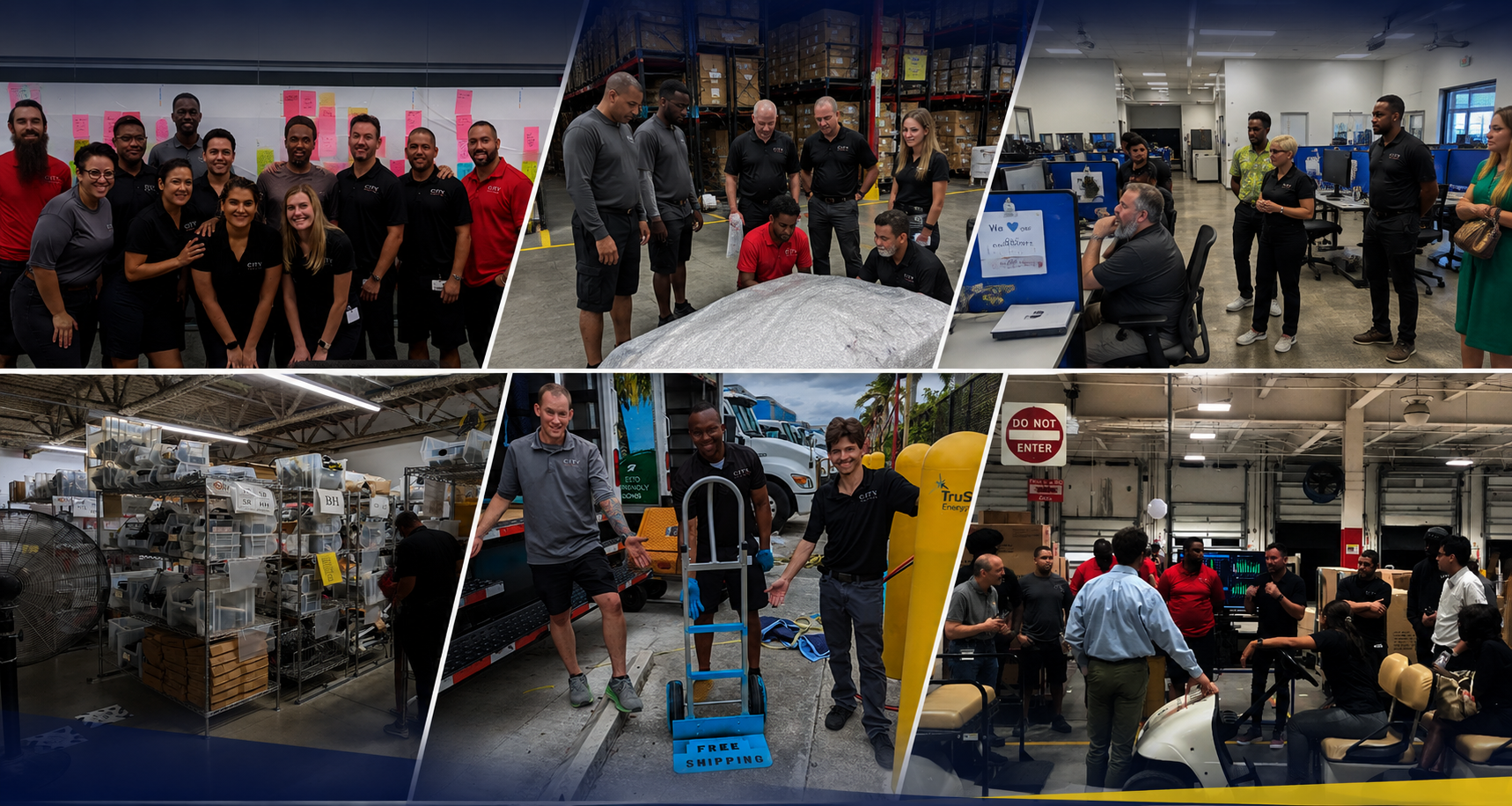
Real Manufacturing Results. One Kaizen at a Time
Explore real-world Kaizen success stories showing how manufacturing teams solved critical problems, improved performance, and created sustainable results.

Scripting Changeovers Leads to Consistent Performance
I moved to Armstrong World Industries’ St. Helens Oregon ceiling tile plant and took as Production Manager for three years. During that time, I was able to test many Lean principles and improve my understanding of how to manage an organization to high performance.
I moved to Armstrong World Industries’ St. Helens Oregon ceiling tile plant as Production Manager for three years. During that time, I was able to test many Lean principles and improve my understanding of how to manage an organization to high performance.
John, the Vice President of Operations, offered me the job with one stipulation. I had to complete the “15-minute changeover” project I had been working on as a team member. I agreed and knew I could influence the organization’s performance as an insider, rather than as a corporate resource.
We had already made capital improvements to the line and developed most of our “One Best Way” changeover procedures through a series of Kaizen events over the life of the project. Now, it was up to me to come up with the operating principles and approach to strengthen the improvements and sustain the gains from the teams’ hard work.
In an earlier story, I talked about how I created alignment around everyone helping during the changeover and not sitting in the breakroom if their part of the line wasn’t changing over. That reduced average changeover time by 3 minutes or more. Now, we needed to come up with a way to communicate and coordinate everyone’s efforts to get the line up as safely and effectively as possible.
We placed lights at seven different stations around the line. We called them the “Towers of Light” and the idea was if the light was yellow, you were in the middle of making your changeover adjustments. If it was red, you needed help, and if it was green, you were ready. We thought the use of the lights would indicate status to everyone and the line would start up immediately when all 7 lights were green.
It didn’t happen as planned. People were so focused on what they were doing and what light to light, that they didn’t pay attention to anyone else’s status. We needed to add an extra layer of communication to our process.
Working with a small team of technicians, we developed a “script” to be followed before, during, and after the changeover. We used the plant public address (PA) system and it went like this:
Before the changeover, the Changeover Coordinator would announce the changeover to be completed from what product to the next product, the target time for the changeover, and a reminder to light the Tower of Light to show status at every station.
During the changeover, each of the technicians at the seven stations would announce their status over the PA system as they became ready or needed help.
After the changeover, the changeover coordinator would announce the results of the changeover and congratulate the team if they met or beat the changeover time target.
For the first month, people didn’t want to follow the script and often made fun of it as they were doing it. Then we started to see improved changeover results. All of a sudden the script became critical to our technicians. Instead of making fun of it they had fun with it. They started competing to see who could announce that they were “READY” before all others. They would encourage each other and hoot and holler when they met or beat the target time. Our results continued to improve, and the changeover script became part of the culture of the plant for the rest of my time there and beyond.

Guiding Principles – Let Your Conscience Be Your Guide
During my career at Armstrong World Industries, I honed my kaizen approach and spent more travel time at the Macon, Georgia plant than at any other location. That’s why I have so many stories to share about my time there.
During my career at Armstrong World Industries, I honed my kaizen approach and spent more travel time at the Macon, Georgia plant than at any other location. That’s why I have so many stories to share about my time there.
In another story, I talked about being called the “Conveyer Whisperer.” I was always looking at board flow around the miles of conveyers that snaked through our factories and trying to figure out how to improve flow and reduce jams.
I was invited to the Macon plant to try my hand on the busiest line at the world’s largest ceiling tile plant. I met David, the Business Unit Manager, and he showed me the areas he thought were causing the most downtime and jams on his line.
As I watched boards go around the line, I noticed many conveyer guides “pinching” the boards and sending them in places and at angles that were the root cause of the downtime and jams in my opinion. I shared my thoughts and improvement ideas with David. He didn’t agree. He bet me that my suggested changes to the guides and conveyers would make things worse.
Challenge accepted! I took his bet and proposed an experiment. I would take a small section of the line and make various changes to the guides and squareness of the conveyer. If my methods didn’t work, he could send me home to corporate on the next available flight. If my method worked, he had to let me continue and use necessary downtime to make changes to the rest of the line. He agreed.
David gave assigned a team of operators and mechanics to me. They were interested in what I thought I could do and my approach to the work. They were a bit skeptical that straightening out guides, removing guides, and leveling conveyers would make a difference in the flow around the line, but they were willing. I had to win the bet – I wasn’t ready to go home yet!
We picked our first target area. It was a small section of conveyer, leading to a stacking mechanism. Boards were flowing into guides that looked like “funnels.” Some were getting stuck, and operators were stopping the line to correct the situation and adjusting the guides.
We built a plan to shut the line down for two hours to find the center of the stacking mechanism, make one of the guides parallel to the direction of travel, and remove the guide on the opposite side of the conveyer. We would skew rolls to drive the ceiling tiles to the remaining guide and then allow them to straighten out as they approached the stacker.
We communicated our plans and then shut down and locked out the line for safety. The team got to work and made all the changes. David came out to see what we were doing and poke some fun at me regarding our bet. He told me that my jet to corporate was waiting!
We finished and took our locks off the line. When the line started up, we noticed a significant improvement in the flow of the boards into the stacker. The team was convinced our work helped and started cheering. David came out of his office to see what was going on. His eyes widened. He couldn’t believe what a difference our small changes made. And, we had removed excess equipment from the line, which got in the way of his employees.
David told me that my flight would have to wait. We had to do this work all over the line. For the rest of the week, we did similar work around the line. By week’s end, we had removed more than a dozen guides from the line and everything was flowing better than anyone remembered.
David told me he was disappointed that I didn’t remove more guides from the line and he was willing to have me come back in the future to complete my work. He’d even make my travel arrangements for me.

Be Careful What You Ask For
I was the plant operations manager at Armstrong’s St. Helens, Oregon ceiling tile plant for three years. During my tenure, I was able to test and refine my management and continuous improvement approach on an operation that employed just under 100 people. I made many mistakes and I’d like to think I learned from each one of them. Sometimes, it took me a few times to learn from the same mistake.
I was the plant operations manager at Armstrong’s St. Helens, Oregon ceiling tile plant for three years. During my tenure, I was able to test and refine my management and continuous improvement approach on an operation that employed just under 100 people. I made many mistakes and I’d like to think I learned from each one of them. Sometimes, it took me a few times to learn from the same mistake.
With around the clock responsibility, I was the one who was called in the middle of the night when there was a significant safety, quality, human resource, or productivity issue. If I couldn’t resolve the issue, I would then escalate it to my boss, the manufacturing manager. I hated waking him up, but sometimes I had to. I was determined to keep those occurrences to a minimum.
It seemed like most critical issues happened around 2 am. If I got one call after going to bed, I usually could get a restful sleep during the night. If I got two or more calls, then it was hard to sleep well. I tried not to be too grumpy when I got to the plant the next morning, realizing my supervisors were fighting the issue far longer and were doing everything they could to avoid calling me.
One evening, the supervisor called me because he had suspicion one of our employees had broken our “no alcohol” policy. Because he was the only manager at the plant at the time, he needed a witness. I came in, saw clear evidence of alcohol use and drove the employee to get tested. He denied it the whole time, saying he had taken some cough syrup before coming to work. When his results came back at 3 times the legal limit, he had to admit his indiscretion. I drove him home and we subsequently terminated him once he was allowed back on the premises.
After a particularly challenging week, with multiple calls in the middle of the night, I remarked to one of my supervisors, “Just once, it would be nice to get a call in the evening saying that everything’s ok.” He agreed with me, and we laughed about all of the situations that forced those late evening calls.
Two months later, the plant was running smoothly. Safety, quality, and productivity were near record levels. The vibe in the plant was positive and there was nothing we couldn’t accomplish. I found myself bragging about our employees to anyone who would listen.
One evening, after having a particularly nice dinner at home, I decided to go to bed at 9 pm, so I could visit with the overnight shift early in the morning. After falling asleep quickly, I woke to the telephone ringing. I had been conditioned to expect the worst. On the other end of the line was my evening shift supervisor, who told me, “Adam, this is Jim. It’s 10 pm and I wanted to let you know that everything’s ok!” I couldn’t help but laugh as my words came back to haunt me.