
Kaizen Success Stories
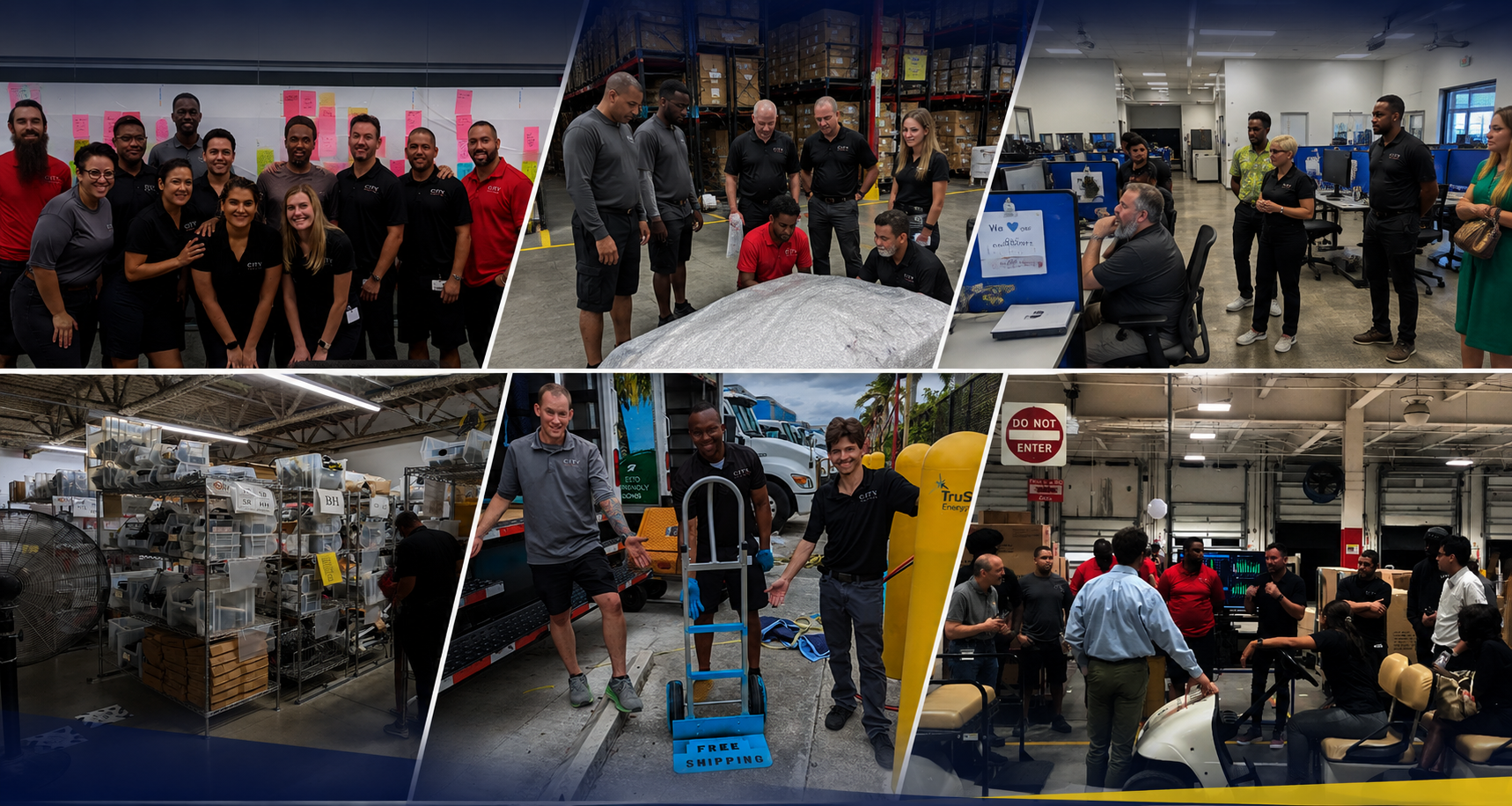
Real Manufacturing Results. One Kaizen at a Time
Explore real-world Kaizen success stories showing how manufacturing teams solved critical problems, improved performance, and created sustainable results.
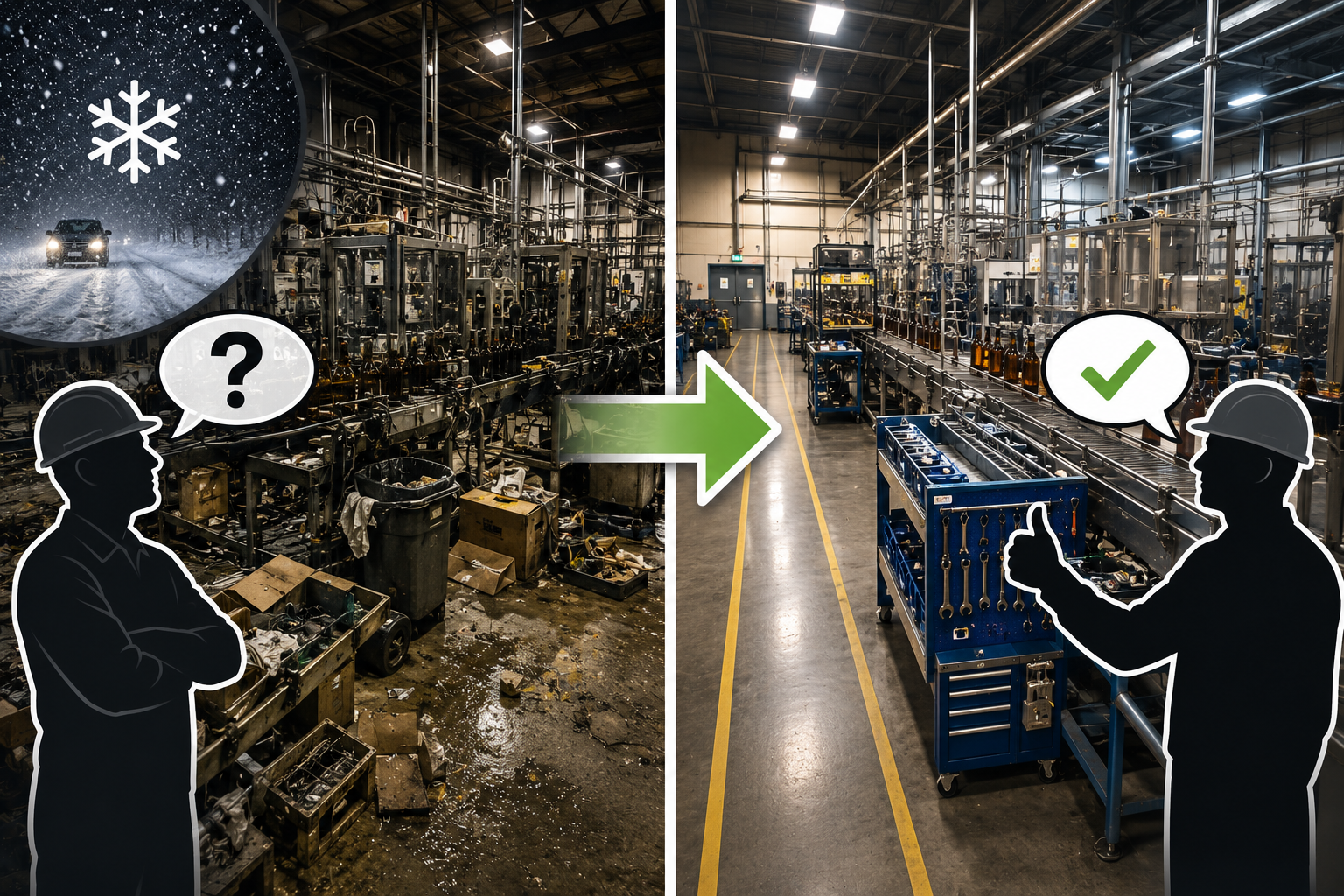
What Are You Going to Screw Up Today?
A historic winter storm shut down the plant, stranded team members, and cut a four-and-a-half-day Kaizen nearly in half. Most people would have postponed the event. Instead, the team cut changeover time by nearly 50% and turned one skeptic into one of its biggest supporters.
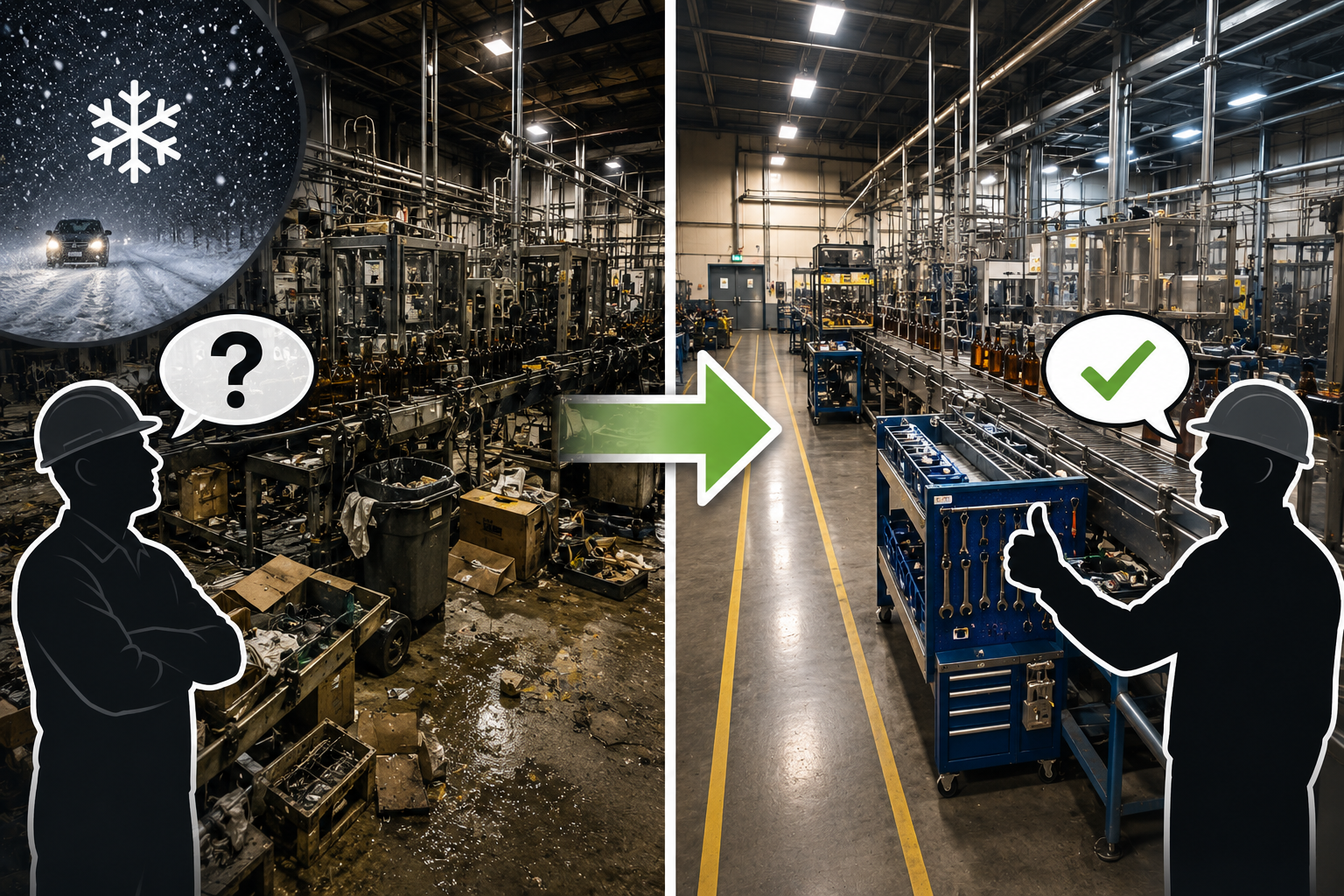
Kaizen Snapshot
Setting: Bottling line at a major beverage manufacturer
Challenge: Reduce lengthy changeovers despite losing nearly half the planned Kaizen to a historic winter storm.
Stakes: Limited time, missing team members, production pressure, and widespread skepticism about improvement efforts.
Approach: SMED training, operator-led process redesign, hands-on implementation, and coaching the production crew through the new process.
Outcome: Changeover time reduced by nearly 50%, operator travel reduced by an estimated 80–90%, and a skeptical employee became one of the strongest advocates for the improvement effort.
Key Lesson: You don't need perfect conditions to achieve breakthrough results.
What Are You Going to Screw Up Today?
The Situation
I was scheduled to facilitate a SMED (Single-Minute Exchange of Die) Kaizen to reduce changeover time on a bottling line at a major manufacturing facility. Like most changeover events, we had a carefully planned four-and-a-half-day schedule.
Then Mother Nature had other ideas. Weather forecasts predicted a major winter storm, so instead of flying in on Sunday as I normally would, I decided to leave a day early. That decision turned out to be the only reason I made it.
My connecting flight was canceled as snow began falling. After scrambling with the airline, I found a flight to Indianapolis, rented a car, and spent nearly three hours driving through a snowstorm to reach my hotel in Kentucky. When I arrived, the roads were covered with snow and ice. The town was nearly deserted. The plant had already shut down. At one point, we weren't even sure the Kaizen would happen.
What Was Getting in the Way
By Sunday, things had only gotten worse. The entire town was effectively closed. Restaurants were closed. The plant remained shut down. Employees couldn't leave their homes.
Our carefully planned schedule disappeared almost overnight. Eventually, leadership decided they would try to restart the facility late Monday afternoon, allowing us to begin the Kaizen on Tuesday if enough team members could safely make it to work.
Even then, several participants were still snowed in. We would have fewer people. Less time. And somehow, we still needed to deliver meaningful results.
What We Did
Tuesday morning finally arrived. The roads were passable. People slowly began making their way into the plant. Some looked genuinely happy just to have survived the drive. Instead of focusing on what we had lost, we focused on what we could still accomplish.
The team learned the principles of SMED before walking the Gemba to observe the current changeover. Operators mapped their movements using spaghetti diagrams. For many, it was the first time they had ever stepped back and looked at the entire process instead of just their own responsibilities. The waste quickly became obvious:
Long walks.
Poor organization.
Equipment that wasn't properly aligned.
No visual controls.
Little standard work.
The team generated improvement ideas and immediately began putting them into practice.
The Breakthrough
While we were observing the first changeover, a machine operator from the neighboring production line kept watching us. Finally, he walked over and asked, "What are you guys going to screw up today?"
Apparently, previous improvement efforts hadn't left him with much confidence. I smiled and replied, "Hopefully nothing. Our goal is simply to help this team make their work easier, safer, and better." He didn't look convinced. But our team was.
As they tested improvements during their own changeovers, something changed. Every success generated another idea. Every improvement inspired another. Despite losing nearly half the planned week, momentum kept building.
What Changed
By the final day, we made what many facilitators might consider a risky decision. Rather than spending the morning polishing our presentation, we invested those hours implementing a few final improvements. Then we handed the process back to the production crew.
Not to demonstrate it. Not to do it for them. To coach them through it. Each Kaizen team member partnered with a crew member, helping them follow the new process while explaining why each change had been made. The crew wasn't simply following instructions. They were learning the new standard from the people who had designed it. That investment paid off.
The production crew completed the changeover in just under half the original time. Spaghetti diagrams showed operator travel had been reduced by an estimated 80 to 90 percent. The line restarted smoothly. The crew looked confident. The improvements were no longer the Kaizen team's. They belonged to the operators.
The Moment That Said It All
Later that day, the same operator from the neighboring line walked over. This time he wasn't skeptical. He smiled and asked, "When can you help my line?"
That single question said more than any metric ever could. Trust had been earned.
The Report-Out
Despite the shortened week, the team delivered one of the most energetic report-outs I've ever witnessed. The excitement was genuine because every improvement had come from the people doing the work. The team leader later commented that in all his years participating in Lean projects and Kaizen events, he had never seen a team so engaged.
What began as a week threatened by weather had become one of the most successful changeover events they'd experienced. Even better, the improvements created a model that could now be replicated across the facility's other production lines.
The Takeaway
Kaizen isn't about having perfect conditions. It's about helping people solve real problems together. Snowstorms, compressed schedules, and missing team members. Those things make improvement harder. They don't make it impossible.
When people own both the problem and the solution, remarkable things can happen—even when the odds aren't in your favor.
Why This Matters
Many organizations delay improvement because they believe they need more time, more resources, or better circumstances. In reality, the greatest breakthroughs often happen when teams stop waiting for perfect conditions and begin improving with what they have.
The goal isn't perfection. The goal is progress. And when people experience that progress firsthand, skepticism turns into ownership—and ownership creates sustainable results.
Ready to Cut Your Changeovers in Half?
Long changeovers aren't usually caused by one big problem. They're the result of hundreds of small inefficiencies that have quietly become accepted over time.
A focused SMED Kaizen helps your team see those opportunities, eliminate unnecessary motion, create better standards, and dramatically reduce downtime—without sacrificing safety or quality.
Schedule a Breakthrough Assessment to discover how much hidden capacity is waiting inside your current changeover process.
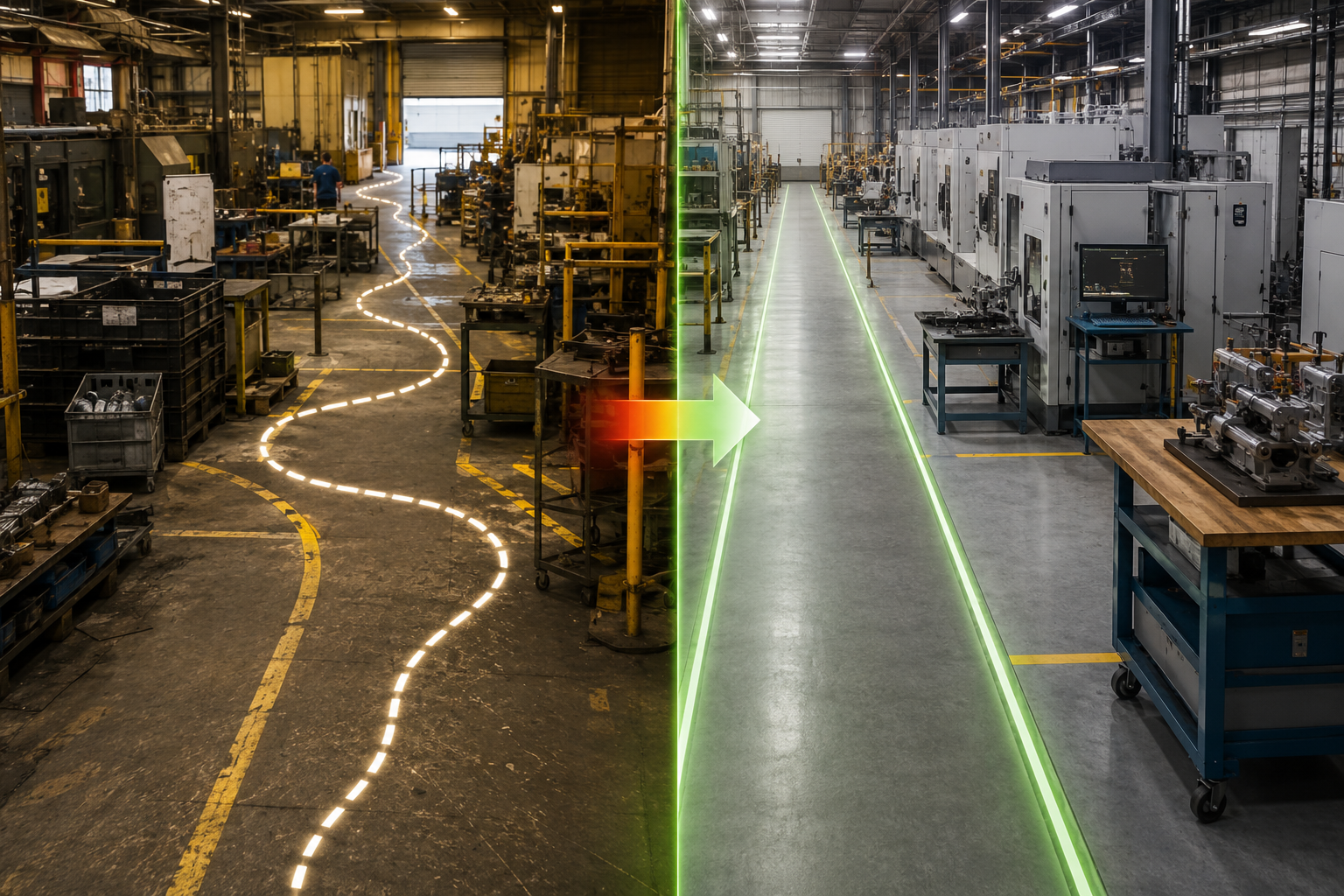
From 330 Feet to 4 Feet in 3 Days
A manufacturing team spent years living with an inefficient quality testing process. In just three days, they reduced travel distance from 330 feet to 4 feet, cut processing time in half, and uncovered a solution worth millions in additional capacity.
Kaizen Snapshot
Industry: Manufacturing
Challenge: Excessive travel, batching, safety risk, and delayed quality feedback
Approach: Kaizen Event Facilitation using rapid experimentation and team-led design
Results:
Distance traveled per part reduced from 330 feet to 4 feet
QC travel reduced from 175 feet to 4 feet
Batch size reduced from 6 pieces to single-piece flow
Processing time cut from 40+ minutes to approximately 20 minutes
Part lifts reduced from 4 to 1
More than 95% reduction in travel
More than 95% reduction in safety risk
Wastewater stream eliminated
Potential to double capacity
The Situation
A manufacturing team had been struggling with the same problem for years.
Every part required a quality test, but the process was designed around batching and distance. Parts were tested away from the production line, which meant multiple additional parts could already be in process before quality issues were identified.
The process had become accepted as "the way we've always done it," even though everyone knew it was inefficient.
The baseline measurements told the story:
330 feet of travel per part
175 feet of travel for QC per batch
Batch size of 6
More than 40 minutes of processing time
Multiple lifts of an 18-pound component
The team knew improvement was possible. They simply had not found a way forward.
What We Did
Rather than spending days discussing solutions, the team focused on building and testing them.
On Day 1, seven team members generated seven ideas each, creating forty-nine potential solutions.
The team quickly narrowed those ideas to seven concepts worth testing and immediately built prototypes using materials already available on-site.
On Day 2, the team established evaluation criteria and test procedures. They ran experiments, challenged assumptions, and narrowed the field to two leading concepts.
On Day 3, they combined the strongest elements of both approaches into a single design and implemented it directly in the production environment.
Equipment was relocated.
Material flow was redesigned.
The new process was tested using an actual production part.
The Results
The impact was immediate.
MeasureBeforeAfterDistance Traveled per Part330 ft4 ftQC Travel175 ft4 ftBatch Size61Processing Time40+ min~20 minPart Lifts41
Additional benefits included:
More than 95% reduction in travel
More than 95% reduction in safety risk
Complete elimination of waste entering the wastewater stream
Potential capacity increase worth millions annually
The Most Important Result
The numbers were impressive.
The people impact was even more powerful.
One operator, who had never participated in a Kaizen event before, looked at the redesigned process and said he couldn't believe how much easier his job had become.
At the final report-out, he stood in front of senior leadership and confidently explained what the team had accomplished.
It was the first time he had ever presented to leadership.
The pride, ownership, and confidence in the room were impossible to miss.
The team didn't just improve a process.
They proved to themselves what they were capable of accomplishing.
Key Lesson
Sustainable improvement happens when people stop talking about solutions and start building them.
In just three days, a team that had struggled with the same problem for years transformed its process, dramatically improved safety and efficiency, and created a solution they were excited to own.
That's the power of a well-facilitated Kaizen event.
From Compliance to Confidence
How a paper mill eliminated critical safety risks and created a sustainable confined-space system in one week
Kaizen Snapshot
Industry: Paper Manufacturing
Challenge: Confined Space Entry and Rescue Compliance
Approach: Kaizen Event Facilitation focused on standardization, risk reduction, and rapid implementation
Results:
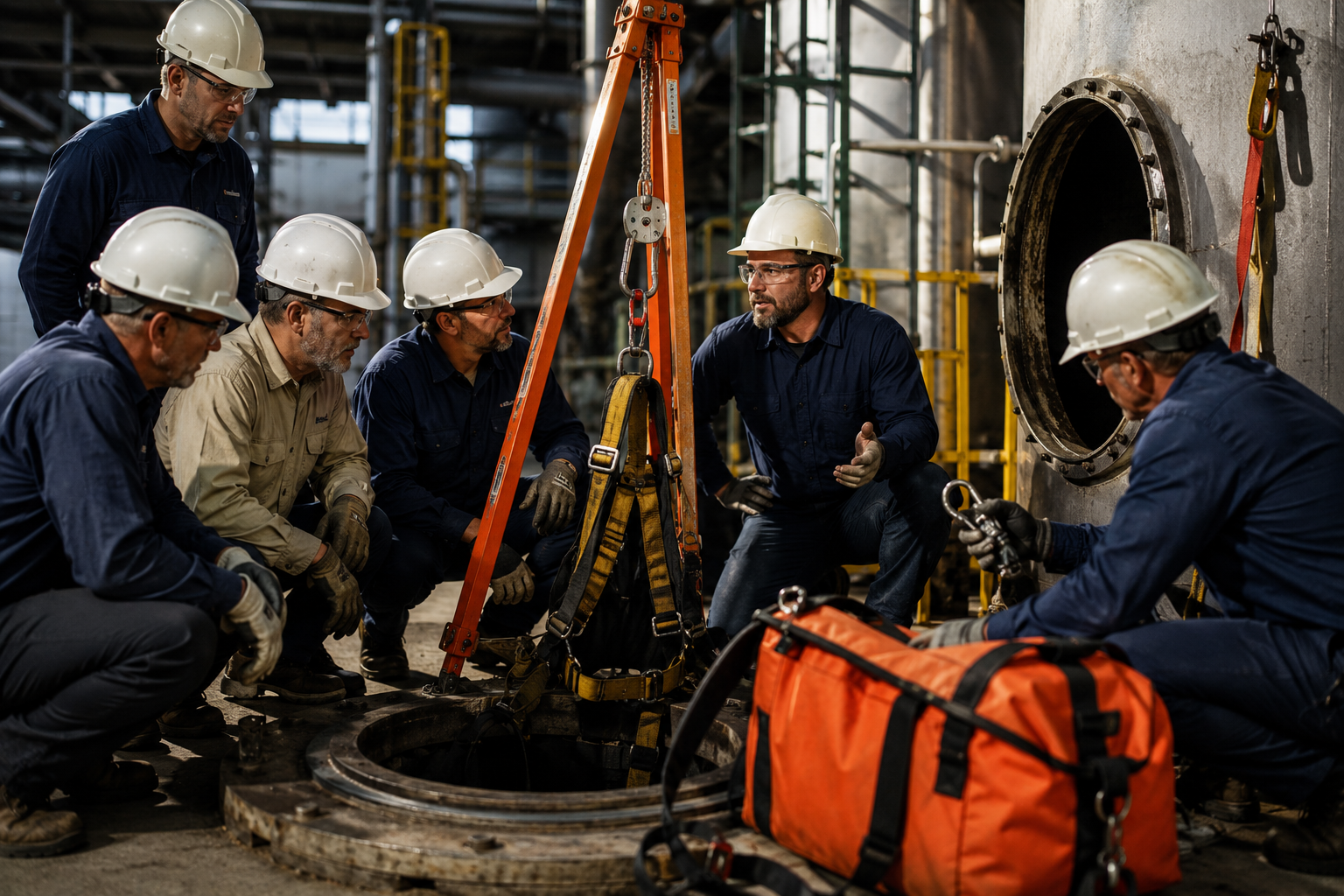
90 confined spaces identified and brought into compliance
Approximately 15 previously unidentified confined spaces discovered
Standardized signage developed and installed
Training requirements defined and implemented
Hazard identification standards created for every confined space
Rescue capability improved for all employees, including specialized equipment for a 300+ pound team member
Rescue equipment organized using 5S for rapid access
The Situation
A paper mill in Oklahoma faced a significant safety challenge.
The facility needed to ensure that every confined space met entry and rescue requirements.
Before the Kaizen event began, the team believed they had identified between 75 and 80 confined spaces throughout the mill.
The goal seemed straightforward: verify compliance and close any gaps.
What the team discovered was something very different.
What We Found at the Gemba
After learning the fundamentals of Lean thinking and waste identification, the ten-person Kaizen team headed to the floor.
The facility consisted of two major operations:
The paper mill
The converting operation that produced tissue, paper towels, and toilet paper
The Oklahoma summer heat was relentless.
Temperatures exceeded 90 degrees as the team spent nearly four hours walking the entire facility.
They inspected every area, questioned assumptions, and challenged the existing inventory.
By the end of the walk, they realized the actual number of confined spaces wasn't 75 or 80.
It was 90.
Approximately 15 confined spaces had never been included in the official inventory.
The challenge had just become much larger.
What We Did
The team quickly identified three elements that were essential for compliance:
Signage
Every confined space needed clear, consistent visual identification and entry requirements.
Training
Employees needed a standardized understanding of confined space entry procedures and rescue expectations.
Hazard Identification
Each confined space required a clear understanding of the risks associated with entry.
The team divided into three focused sub-teams and developed standards for each area simultaneously.
Rather than tackling one confined space at a time, they built systems that could be applied across the entire facility.
The Hidden Safety Risk
As the team worked through compliance requirements, another issue surfaced.
One employee regularly worked in confined spaces and weighed more than 300 pounds.
The existing rescue equipment could not safely recover him in the event of an emergency.
Fortunately, a rescue had never been required.
But everyone recognized that hoping nothing would happen was not an acceptable safety strategy.
The team immediately addressed the issue.
They identified rescue equipment with a 500-pound capacity, secured approval, and purchased the equipment during the Kaizen event.
Before the week ended, the equipment had arrived on-site and was stored in a location where it could be accessed quickly if ever needed.
The team also applied 5S principles to organize all rescue equipment, making emergency response faster and more reliable.
The Results
By the end of the week:
MeasureResultConfined Spaces Identified90Previously Unidentified Spaces Found~15Confined Spaces Brought into Compliance90Standardized Signage Implemented100%Training Standards DevelopedCompleteHazard Identification Standards CreatedCompleteRescue Equipment UpgradedCompleteRescue Equipment Organized Using 5SComplete
What appeared to be an overwhelming challenge on Monday became a completed mission by Friday.
The Most Important Result
The biggest accomplishment wasn't compliance.
It was confidence.
At the beginning of the week, the team viewed the challenge as nearly impossible.
The scope was unclear.
The inventory was incomplete.
Critical rescue gaps existed.
Yet by working together, dividing responsibility, and focusing on solutions instead of obstacles, the team achieved something that initially seemed out of reach.
They didn't just identify problems.
They solved them.
And they left behind systems that would protect employees long after the event was over.
Key Lesson
Safety improvement doesn't happen because organizations care about safety.
It happens when teams translate good intentions into clear standards, proper equipment, and disciplined execution.
In one week, a team of ten people transformed an overwhelming compliance challenge into a sustainable safety system.
That's what becomes possible when the right people are empowered to solve the right problem.

When My Design Didn't Win
I believed I had designed a better solution. Leadership chose a different direction. What happened next taught me one of the most valuable leadership lessons of my career: once the decision is made, your job is no longer to be right, it's to help the team succeed.

Kaizen Snapshot
Setting: Armstrong World Industries – Pensacola Integration Project
Challenge: Help redesign and integrate multiple production lines into a single-flow manufacturing system while supporting a design direction I didn't believe was the best option.
Stakes: Millions of dollars in capital investment, worker safety, operational flow, changeover efficiency, and long-term plant performance.
Approach: Challenge the proposed design with a thoughtful alternative, support leadership's final decision, and focus on making the chosen solution as successful as possible.
Outcome: The integrated production system launched successfully, numerous changeover improvements were implemented, and several innovations were later adopted at other Armstrong facilities.
Key Lesson: Great leaders aren't defined by whether their ideas are selected. They're defined by what they do after the decision has been made.
When My Design Didn't Win
The Situation
Early in my career as a Corporate Industrial Engineer for Armstrong World Industries, I was invited to join one of the company's largest manufacturing redesign efforts.
Known as the Pensacola Integration Project, the initiative would connect multiple production lines into a single, continuous flow system at the Pensacola, Florida plant. Instead of moving product in batches between disconnected operations, the new design would allow material to flow much more smoothly through the manufacturing process.
It was an exciting project. It was also one where I quickly developed a different opinion than the rest of the design team.
What Was Getting in the Way
As the engineering team refined the layout, one section of the proposed design concerned me. I believed there was a safer, simpler, and more efficient way to accomplish the same objective. Rather than quietly disagreeing, I shared my concerns with the project manager and the plant's Industrial Engineering manager. To their credit, they listened.
Although the project was already well underway, they encouraged me to develop an alternative layout and present it to the leadership team. Over the next several weeks, I invested significant time refining what I believed would create better flow, improve safety, and reduce the need for elevated platforms throughout that section of the plant.
Eventually, I had the opportunity to present my proposal. Leadership appreciated the effort. They liked portions of the concept. But after careful consideration, they chose to stay with the original design.
The Decision
I'll be honest, I was disappointed. Like many engineers early in their careers, I was passionate about my ideas and believed they would create a better result. But I also recognized something important. Leadership had listened. They had seriously considered my recommendation. They simply made a different decision. At that moment, my responsibility changed.
Until that meeting, my job had been to improve the design. After that meeting, my job became making the chosen design as successful as possible.
What We Did
Once the decision was made, I stopped trying to convince people to revisit the debate. Instead, I redirected all of my energy toward improving the selected design. Working alongside the project team, we simplified work areas, improved changeover methods, and identified ways to make the new production system safer and easier for operators.
I was also given responsibility for designing changeover equipment that would support the new integrated manufacturing process. Rather than dwelling on the design that wasn't selected, I focused on making the design that was selected perform as well as it possibly could.
The Breakthrough
Something unexpected happened. Once I let go of proving my idea was better, I became a stronger contributor to the project. Instead of dividing the team by continuing yesterday's debate, we became united around tomorrow's success. The energy shifted from defending decisions to improving execution. And that's where the real breakthroughs occurred.
Several of the changeover improvements our team developed during the project proved so effective that they were later adopted at other Armstrong manufacturing facilities.
What Changed
When the integrated production system finally started up, the project was successful. The new manufacturing flow performed well. Operators appreciated many of the improvements incorporated into their daily work. The changeover innovations created during the project continued spreading throughout the company's manufacturing network.
Looking back, I'm proud of the design I proposed. But I'm even more proud of the decision I made after it wasn't selected. That lesson has stayed with me throughout my career.
The Takeaway
Every leader will eventually experience the same moment. You present your best idea. Leadership chooses another direction. At that point, you have a choice.
Continue fighting yesterday's decision or become fully committed to making today's decision successful. Alignment often creates more value than proving you were right.
Why This Matters
Many organizations lose momentum because people continue debating decisions that have already been made. Healthy disagreement is valuable. Strong debate produces better thinking.
But once leadership has listened, evaluated the options, and chosen a direction, organizational success depends on everyone pulling together. The strongest leaders aren't the ones whose ideas always win. They're the ones who help the team win even when the final decision isn't their own.
That lesson shaped the way I've approached leadership, Kaizen facilitation, and organizational transformation ever since.
Ready to Build Greater Leadership Alignment?
The biggest obstacles to transformation are rarely technical. More often, they're organizational. When leaders align around a shared direction and commit to making it successful, teams move faster, collaborate better, and sustain improvements longer.
If you're looking to strengthen leadership alignment before your next major initiative, let's start with a Breakthrough Assessment and identify the opportunities that will have the greatest impact.
The Ultimate Leadership Commitment
When I engage with new clients, I always gauge one thing up front: Do they have true Leadership Commitment? Without it, even the best Kaizen efforts will fizzle. With it, anything is possible and sustainable.
One example I’ll never forget came during a follow-up 5S Kaizen in a New Jersey manufacturing plant. Our first event had reduced tool and supply search time by 90% and lit a fire in the maintenance team.
Not everyone had been part of that first event. Some sat out to keep operations running and were skeptical their voices would be heard. But once they saw the results, they were eager to join round two.
We expanded to new areas: the electrical repair shop, outside storage, a mezzanine, even a pair of old shipping containers in the parking lot. Deep into “Sort” on Day one, we got word of a serious chemical upset in the plant. Our team leader, the Maintenance Manager, had to leave. I assumed the Kaizen would be put on hold.
But the leadership team made a bold decision. They would personally handle the crisis. They donned hazmat suits and tackled the environmental emergency so our team could stay focused on improvement. We got the Maintenance Manager back quickly.
It wasn’t easy for our team leader to stay on the sidelines. Normally, this was his job. But the plant leaders valued the Kaizen event enough to step in themselves.
Yes, we lost a team member here or there for the emergency effort. But by the end of the week, the crisis was under control, and our Kaizen team had cut “find time” by over 70%.
The biggest breakthrough was the clear alignment and support that the team received from their sponsors. They felt like they were working on something important and they were. I have no doubt that their results will live on and more employees will want to engage in similar work. They now know that their leaders have their backs.
Leadership isn’t just about solving problems—it’s about creating space for others to do their best work. When leaders show up for their people, their people show up for the work.

Working Like a Business Owner
During our benchmarking tour of our European plants, we met hourly operators who were so engaged in their work that they had process understanding that rivaled one of our highest level scientists. And, they wanted to know more!
During my career at Armstrong World Industries, I had the opportunity to travel across the U.S. and to many places around the world. I met impressive people everywhere, but the team I met in Team Valley, UK still stands out as some of the most invested employees I’ve ever encountered.
I was part of a four-person team visiting several of our European manufacturing plants to benchmark best practices and bring ideas back to our local manufacturing plants. The group included the industrial engineering manager, the capital engineering manager, a project engineer, and me.
As we visited plants across Germany and the Netherlands, we saw great examples of things we could adopt back home. We had some fun adventures, met interesting people, and saw some incredible sights.
Our final stop was the ceiling tile plant in Team Valley UK, which had a reputation for best-in-class performance, strong leadership, and a highly engaged workforce.
As we walked the plant floor in the morning, it was immediately obvious why the plant ran so well. Everyone was actively working to keep things running smoothly, following standard work, and using simple, effective tools to maintain operations. Operators and mechanics weren’t just doing their jobs—they were fully involved in improving them.
In the afternoon, we sat in on a technical review by the company’s leading dryer scientist. The room was full, and the discussion dove deep into the science of curing ceiling tiles. I was completely lost in the technical details—and I would’ve dozed if not for the energy in the room.
What kept it alive was the engagement. The most insightful, animated questions were coming from hourly operators. They weren’t there just to listen—they were trying to understand every detail so they could run their lines better. At one point, the scientist even told them, “You all understand this better than I do.” I don’t know if it was true, but it sure felt like it.
It was clear the leadership had built a culture where people truly cared. Not just about doing their jobs, but about understanding why things worked the way they did. Everyone from hourly operators to engineers was fully invested in the success of the plant.
That experience solidified something for me: the way we lead directly shapes the culture and performance of an organization. It’s not a new concept, but seeing it in action left a lasting impression. It still influences how I approach leadership and team engagement today.

Butt Ugly by Friday
Kaizen is messy. It should be so accessible that anyone can do it. So, I use a phrase that I was taught many years ago, to make it okay to try and fail and learn quickly. The phrase? Butt Ugly by Friday!
I’ve collected a lot of sayings over the years I use during Kaizen events. Some are pretty familiar, like “Go to Gemba” or “Don’t let best get in the way of better.” But the one that seems to get the most attention and sticks with teams long after the event is: “Butt Ugly by Friday.”
Let me explain what it means and where it came from.
Kaizen events I facilitate run for a week or less, typically wrapping up on a Friday. By the end of the week, the team reports out to an audience and gets to show off the changes and improvements they’ve made. The challenge of Kaizen is: teams usually have more ideas than time. They want to improve many things, but they can easily get bogged down trying to make each one change perfect.
Years ago, I was facilitating a Kaizen in Pensacola, Florida. One of the teams was stuck on the same problem for two or three days. During a check-in with the local Lean manager, I mentioned the issue. His response changed the way I coach teams to this day.
“Adam,” he said, “you’ve got to tell them to get it Butt Ugly by Friday. That’s what we always say at the plant. It helps shift the mindset from perfection to progress. It doesn’t have to look pretty; it just has to work.”
I took his advice and helped the team move forward, even though their solution wasn’t perfect. It still made things better. Kaizen isn’t about perfection. It’s about improvement.
I use the term “Butt Ugly by Friday” in my introductory training with Kaizen teams on Day 1. It sets the tone right from the beginning. We’re not chasing perfect. We’re chasing better, safer, smarter, and faster. It gives teams permission to try things, test quickly, and learn fast. By the end of the week, team members remind me that they have improved things and made them “Butt Ugly by Friday.”
The phrase is simple, silly, memorable, and effective. People feel comfortable experimenting and are willing to fail quickly. Instead of waiting until the end of the week to find out if something works, they find out now.
Continuous improvement should be so simple and accessible that anyone can do it. More importantly, they actually want to. That’s how to build a culture where improvement can happen anytime, anywhere, from anybody.

Shining Like a Star
Kaizen events can be life-changing for team members. This is the story of Steve, who grew so much during the week that his co-workers almost didn’t recognize him.
I love facilitating Kaizen events. They can be life-changing. Some team members grow so much over the course of a single week, it’s hard to believe they're the same person by Friday. This is the story of one such transformation, a moment that left people amazed.
Our team was working on a critical issue in the maintenance shop and support areas. It took over 20 minutes to find the parts, tools, or equipment needed for a repair. That might not sound like much, but when a maintenance technician has to go back and forth seven times for different tools or parts, the time adds up fast. It has a direct impact on equipment downtime.
We chartered and scoped the event to cover the inside maintenance shop, an upstairs storage area, a heavy-duty outdoor rack, and a shipping container (about 50 feet long) sitting on the pavement behind another building. Along with improving safety, our goal was to reduce "find time" by at least 75%, with a goal of 5 minutes or less.
The team consisted of four hourly maintenance technicians, their leader, my sponsor, an engineer, a maintenance planner, and the HR leader.
We kicked off bright and early at 6 a.m. Monday, which was the team’s normal shift start. They were quiet, skeptical, and clearly not ready for what was about to happen. I brought the energy, and a few of them perked up a bit during our Lean and 5S overview. We would be utilizing 5S (Sort, Set in Order, Shine, Standardize, Sustain) as the approach to meet our goals.
During our Gemba walk, everyone was jotting down ideas on Post-its. The spaces were packed with clutter. I could already tell we’d hit our goals easily, but the team wasn’t so sure—they were still stuck in their current state mindset.
When we walked out to the shipping container, I noticed Steve, one of the mechanics and a big, strong guy, writing furiously.
Me: “Steve, looks like you’ve got a lot to say about this container. What’s on your mind?”
Steve: “Adam, I’m in here all the time—sometimes at night, in the rain. Look at me—I sweat just walking in during summer. And it’s pitch black at night. I can’t see anything.”
Me: “What are you usually looking for?”
Steve: “PVC parts. There are thousands of them. They’re all mixed up. Sometimes it takes me hours to find what I need.”
He wasn’t exaggerating. Some of these parts were barely an inch long, mixed in boxes with all kinds of unrelated items. I wasn’t sure why they were even stored outside, but I hoped we could fix that.
After our walk, we got together to share improvement ideas. Our first step was Sort. We broke the team into three groups: one for the shop, one for the upstairs storage area, and one for the shipping container.
I volunteered for container duty. Most folks were happy to avoid it. The weather was cold but clear. The engineer joined me, and we got direction from Steve and the maintenance lead on what to toss and what had to be kept.
We filled two dumpsters with obsolete filters. It turns out a vendor handled all filter replacements now with their products. This was an easy win.
Next, we tackled the PVC parts. We loaded them onto carts and brought them inside. It was a job that took the remainder of Day 1 and part of Day 2.
Steve couldn’t believe we were actually following through on this. He started to envision a setup with labeled bins in the upstairs storage area. That night, he volunteered to present our progress update. When he stood up in front of the group, jaws dropped.
Apparently, Steve never spoke in meetings or even said much to his coworkers. He was friendly and hardworking, but mostly kept to himself. No one remembered him speaking in front of a group during his time at the plant.
The rest of the week, the transformation continued. Steve was laughing, cracking jokes, and fully engaged in every discussion. He found his spark.
By Friday, the container had been repurposed for outdoor equipment. Signage was clear and easy to follow. All the PVC parts were inside, organized, and labeled in bins. We did a test with six people who didn’t know the space, and their average "find time" was under three minutes.
During our final report-out, Steve shared what the changes meant to him. “I don’t have to go out in the dark, in bad weather, and dig around. I know exactly where everything is now. We need to do this in other places, too.”
Steve and the rest of his team will never look at clutter or wasted time the same way again. His growth didn’t just help the team, it made a difference for him personally. And that’s what Kaizen should be all about.
Hope is a Precious Commodity
I’m passionate about helping teams improve the reliability of their processes, using basic yet effective techniques to immediately boost the performance of their manufacturing lines. The best part is that the team can see and feel the results, and the techniques I teach are easy to learn and transferable to other lines and processes within the facility.
In a previous story, I described how a strategy session for a building products company led to several reliability improvement Kaizen events. This story focuses on one of those events in Mississippi.
I’m passionate about helping teams improve the reliability of their processes, using basic yet effective techniques to immediately boost the performance of their manufacturing lines. The best part is that the team can see and feel the results, and the techniques I teach are easy to learn and transferable to other lines and processes within the facility.
I flew into Memphis early on a Sunday morning, with no plant commitments until the afternoon, so I decided to tour Graceland and learn more about Elvis Presley. Although I wasn’t a fan before the visit, I gained a lot of respect for the man, his philanthropic efforts, and his impressive cars and eccentric outfits. It was quite the experience.
Afterwards, I met my contact at the plant, and we set up the meeting room for the upcoming week. He mentioned that many of the team members were hourly operators and mechanics who were skeptical about what could be achieved, and whether their voices would truly be heard. We walked through the plant, and he showed me the line we would be working on. Based on what I saw, I was confident we could make a real difference and engage the team in a way that would be meaningful to them.
On Monday morning, we kicked off the session with safety expectations, introductions, a charter review, and an overview of Lean and reliability principles. I quickly learned that most of the team members had no prior experience with Lean or Kaizen, so I had to start with the basics. This typically takes about 2 to 3 hours, and I present it using PowerPoint and activities. I know that people aren’t always excited about slides, but in my experience, some foundational understanding is necessary before we take our Gemba Walk. It used to take a full day, so I think I’ve gotten more efficient at it.
During the Gemba Walk, the team members were able to connect the reliability concepts I was teaching them to the issues on the line. If they were unsure about something, I could point out specific opportunities for improvement.
Back in the meeting room, we identified and prioritized the areas we would focus on. We broke into three sub-teams, and I worked with two mechanics and an operator to begin with the most basic tasks: centerlining and leveling the equipment.
They were shocked to see how much of the equipment was misaligned and out of level. The good news is that by the second morning, everything had been leveled and centered. The better news was that when we restarted the line, it ran better than anyone could remember.
Excitement began to fill the team, and improvements were happening across the board. By Wednesday, Jake, a mechanic who had been with the plant for over 20 years and was initially skeptical, came up to me, tapped me on the shoulder, and said, “Adam, you messed up (not exactly what he said, but you get the idea)! You gave me hope!”
I told him, “I’d like to say I’m sorry, but I’m not! Now that you know what’s possible, your job is to share it with your coworkers on the other lines!”
The rest of the week flew by, and by Friday, we had achieved something we were all proud of. The difference between this line and the others in the plant was striking. Now, the only thing shutting the line down was planned maintenance.
Jake took on the role of Area Owner, proudly holding himself and others accountable for following all of the reliability and safety requirements on the line. During a recent visit to the plant, he even demonstrated the principles of reliability to my original sponsor, the vice president of manufacturing.
Skepticism had been replaced by optimism, and the plant has already begun transferring what they learned to other lines. Before long, they should have all of their lines operating at higher reliability levels.

Simpler is Safer, Lighter, and Better
I was in Florida, working with a residential building products manufacturer on our second Kaizen event together. This time, we focused on improving materials delivery to the production lines. The tasks were challenging, physically demanding, and slow, leading to high turnover in the material handling position.
I was in Florida, working with a residential building products manufacturer on our second Kaizen event together. This time, we focused on improving materials delivery to the production lines. The tasks were challenging, physically demanding, and slow, leading to high turnover in the material handling position.
Our ultimate goal was to make the job safer and easier, reducing turnover and its associated costs while boosting employee satisfaction across the organization.
We started the week with a Lean Principles workshop, followed by a Gemba Walk to observe the current processes. The good news? There were plenty of opportunities for improvement. The better news? Together, we’d brainstorm and implement solutions to reduce waste and achieve our goals.
The team divided into three sub-teams, each focusing on a specific area:
Delivery and loading of granular materials to the line
Organization of raw materials
Delivery and loading of rolled materials to the line
Granular Materials Team
This team observed workers shoveling materials into buckets, carrying them up a ladder, and pouring them into bins for processing—a labor-intensive and risky process. Could it be automated?
With creativity, quick thinking, and the repurposing of existing equipment, they modified a shop vacuum to draw materials directly from containers into the bins. They added a simple sensor to stop the vacuum when the bin was full and another to alert the operator when it was time to restart.
Organization Team
Using spaghetti diagrams, they mapped operator movements during daily tasks. The diagrams revealed a chaotic system: materials were stored wherever space was available, with no clear organization.
By rearranging the workspace, they created a visual and logical storage system, reducing unnecessary movement by over 75%.
Rolled Materials Team
This group tackled three main issues:
Placing rolls on a carrier
Placing the carrier on the production line’s framework
Moving and removing rolls when empty
To address the first issue, they replaced the heavy, cumbersome threaded rod and collar system with a smooth rod and spring clamps, similar to those used in weightlifting. This eliminated the time-consuming process of centering the roll and screwing collars into place. It also removed the need for heavy end plates, reducing the roll’s weight by over 10 pounds.
For the second and third issues, eliminating the end plates allowed them to redesign the system. They replaced the cradles on the framework with pinned locations, enabling rolls to slide directly into place and be securely pinned. This made centering effortless and eliminated the need to lift rolls over cradle points.
The Results
By the end of the event, every team had developed solutions that made the work safer, simpler, and more efficient. Even better, the changes were cost-effective and could be easily replicated across other lines in the facility.
Early feedback has been overwhelmingly positive. Employees report higher satisfaction and engagement, and we anticipate this will lead to significantly lower turnover in the material handling role.
Sometimes, the simplest solutions really are the best.

Creative Problem Solving Happens at Any Age
Problems are everywhere. It’s easy to feel overwhelmed and give up, thinking there are more problems than solutions. While it’s true we can’t solve everything—and some things are simply out of our control—my advice is to focus on the problems you can solve and be willing to experiment until you get the results you’re looking for.
Problems are everywhere. It’s easy to feel overwhelmed and give up, thinking there are more problems than solutions. While it’s true we can’t solve everything—and some things are simply out of our control—my advice is to focus on the problems you can solve and be willing to experiment until you get the results you’re looking for.
If you have small children, once had small children, or were a child yourself, you know they approach problem-solving in their own way. Want to build a fort but lack proper materials? A sofa and a bedsheet—BOOM—instant fort. Scribble wildly with crayons and declare it’s the solar system? Why not?
Growing up, my parents encouraged me to experiment and try things. My father was a patent examiner, and he often shared stories about the inventions he reviewed. He was also an inventor himself. Most of the time, I thought his ideas were silly, but that didn’t stop him from coming up with new ways to solve old problems.
We had a blue 1965 Dodge station wagon (yes, I’m that old). This was before seatbelt laws, and it wasn’t unusual for kids to stand up in the back seat to get a better view of the road. Honestly, it’s amazing we survived. We used the station wagon for family trips, with Mom and Dad in the front seats and my brother and me in the back. Dad had put foam mats back there to “protect” us from the road’s bumps and potholes.
Cars in those days were noisy, and it was hard to communicate from the back to the front. My brother and I, being little boys, spent most of the ride fighting, playing, and constantly needing something: snacks, drinks, bathroom breaks, or help breaking up fights. Mom and Dad couldn’t hear us over the road noise, so Dad decided to invent a solution.
After a few failed attempts, he cut a long vacuum hose down to an eight-foot length and ran it from the back of the wagon to the front seat. If we needed something, we’d speak into the hose, and Mom or Dad could (hopefully) hear us. Amazingly, it worked. For years, we had a cutting-edge communication system that no other car—or wagon—could match.
Eventually, cars got quieter, and the need for the hose disappeared. More likely, we got too big to ride in the back of the wagon, or someone finally realized tossing two boys into the back of a car without restraints wasn’t the best idea.
These days, when I facilitate Kaizen events, I encourage my team members to think like kids: try new things, embrace curiosity, and don’t be discouraged if an idea doesn’t work on the first try. There’s always something to learn, and often, they solve problems no one else has been able to tackle. Who knows? Maybe they’ll even come up with the next advanced communication system.

A Good Story Provides a Good Opportunity
I’ve always been a storyteller. Some people enjoy my stories, while others wish I’d get to the point faster. I get it—my approach isn’t for everyone. But storytelling is how I communicate my ideas. Sometimes, it even helps me get my way or stumble into an interesting adventure. Here’s one of those adventures.
I’ve always been a storyteller. Some people enjoy my stories, while others wish I’d get to the point faster. I get it—my approach isn’t for everyone. But storytelling is how I communicate my ideas. Sometimes, it even helps me get my way or stumble into an interesting adventure. Here’s one of those adventures.
I was working with a team on a project at Armstrong’s St. Helens, Oregon, plant. Our goal was to reduce changeover time across the facility using Lean techniques and some capital investments. Things were going well, but the project required the team to spend many weeks away from home.
When you travel a lot, routines develop—familiar hotels, restaurants, bars, and, of course, the facility you’re helping. But sometimes, you just want to break out of that routine. One trip, we flew into the Seattle airport, arriving midday, and didn’t need to be at the plant until the next morning.
Someone suggested dining at the Space Needle, about 30 minutes away. It seemed like a great idea, even though we didn’t have reservations. Fueled by a spirit of adventure, we decided to drive over and see if we could talk our way into a table.
On the way, we tracked down the phone number and called to see if there were any openings. Unsurprisingly, dinner was fully booked. But we weren’t deterred.
I decided to try my hand at persuasion. I told the host a bit of a half-truth: “We’ve just arrived in Seattle, traveling all the way from Pennsylvania specifically to dine at the Space Needle. Isn’t there any way you could find seating for four people who have always dreamed of dining with you?”
To my surprise, the response was warm and accommodating: “Of course we can. You’ve come all this way; we’d hate for you to be disappointed.” Thrilled, I asked for a contact name so we could personally thank them when we arrived.
Thirty minutes later, we walked into the Space Needle, where it seemed everyone knew about “the four travelers from Pennsylvania.” They were impressed that we had flown 3,000 miles just for dinner.
We stuck to our story the entire evening and soaked in the experience. The dinner was fantastic, the views from 500 feet above Seattle were stunning, and it became a memory we’d treasure for years.
As a bonus, the experience brought our team closer. We worked together more cohesively, and we started seeking out new adventures to share throughout the project.
These days, I encourage my Kaizen teams to create shared experiences during event weeks. Whether it’s through solving problems together, team dinners, or happy hours, I’ve noticed these moments rapidly build engagement and camaraderie.
I wouldn’t necessarily recommend stretching the truth often, but this felt like a victimless crime—unless someone lost their reservation because of “four travelers from Pennsylvania.” If that’s you, this story never happened!

The Unexpected Benefit
It was my first Kaizen event with a new client in Florida. They make building products for the residential market. On my first visit with Brian, my sponsor, I saw many opportunities to apply Kaizen to and made my recommendations. He picked his current pain point, which was labor utilization at the end point of a multi-line operation. The goal of the Kaizen event would be to balance work across all lines and require less labor to support the operation. The people wouldn’t be sent home, they would be redeployed to other parts of the plant where overtime was being used to keep things running.
It was my first Kaizen event with a new client in Florida. They make building products for the residential market. On my first visit with Brian, my sponsor, I saw many opportunities to apply Kaizen to and made my recommendations. He picked his current pain point, which was labor utilization at the end point of a multi-line operation. The goal of the Kaizen event would be to balance work across all lines and require less labor to support the operation. The people wouldn’t be sent home, they would be redeployed to other parts of the plant where overtime was being used to keep things running.
Brian was the plant manager and Jeff, our team leader, was the operations manager. We built the team with top players, as this first Kaizen event would set the tone for future efforts. We wanted a strong win. Our goals were challenging. Besides improving safety, we needed to reduce labor required by 30 percent.
Messaging to the team had to be supportive and reassuring. No one would lose their jobs by reducing labor required. I worked with Brian and Jeff to write the charter and communicate to the team in ways to strengthen their message and not make them fearful they would be blamed for labor reductions.
Our first day included a Gemba walk to a very hot production floor. It must have been 100 degrees. We watched team members do a lot of waiting and a few quality and cleaning tasks, except at one critical moment: When the pallet was full, it had to be wrapped, strapped, labeled, and removed. All while the next products were coming through the line (albeit at a very slow rate).
There were a few other tasks that took time away from the line, including a quality check every 30 minutes. This required the operator(s) to take a long part from the line, bring it to a saw, cut it to a specified length, and verify density of the product through a weighing process. Operators didn’t like this task for many reasons, including the transport of the product, time away from the line (which could happen at the moment packaging had to occur), and the use of the saw in the hot environment.
When we finished our Gemba walk, the team returned to the meeting room to brainstorm ways to improve things and simplify tasks. They prioritized three activities they thought could reduce effort and labor required: housekeeping, palletization, and product sampling and quality checks.
The housekeeping team created a cart with everything operators needed to maintain and keep the lines clean. All supplies were provided that typically would be searched for during the day, reducing time and effort for all operations.
The palletization team created locations for supplies, developed simpler palletizing methods, and created standard work that greatly reduced the time it took to wrap and palletize the product. This not only simplified things, but also reduced the stress the operators felt when finalizing each pallet of material.
The product sampling and quality check team wanted to reduce the time and effort it took to cut and weigh parts of the finished product. They experimented with relocating the saw, possibly buying a new saw or two, and buying another scale or two. All of those ideas would have helped. But then, someone asked, “Why do we need to cut the product at all?” The light bulb came on. What if they didn’t, and could weigh the finished product, without losing the critical quality information necessary for certification?
Inspired, they found an extra scale and weighed dozens of products, verifying the correlation between their results and the prior method. They met with the quality manager to align around their approach. He helped them build a plan to ensure their method could work. With the statistics confirming their method, the team had to come up with a simple way for operators to do the sampling without having to leave the line.
They mounted a scale to a cart that had height adjustments. Once they configured it properly, the cart could be brought up to the stack of products and one piece (up to 30 feet long) was slid onto the scale to get a quick reading. If too heavy for one person (identified in the standard work), they would get assistance from another operator or the section lead.
This new method turned a messy, hot, heavy, and minutes-long process into mere seconds. It was a huge win. But, even more than that, the need to destroy finished product had been eliminated, saving many hundreds of thousands of dollars annually.
Why didn’t they come up with this solution before the Kaizen, you may ask? We only know what we know. For the many years of the prior approach, no one had ever questioned it. People just did what they had been trained to do. Kaizen opened our eyes to possibilities and gave us the latitude to try new things. And because of this, we won.

Macon a productivity improvement
Many of my early projects for Armstrong World Industries were at the Macon Georgia plant. This was and still is the largest ceiling plant in the world, with a capacity of over half a billion square feet of ceiling tiles produced annually.
Many of my early projects for Armstrong World Industries were at the Macon Georgia plant. This was and still is the largest ceiling plant in the world, with a capacity of over half a billion square feet of ceiling tiles produced annually.
I was asked to join a team that was going to help the Macon plant return to budget performance by the middle of the year. At the time, I was known and requested for my product flow and team improvement experience. A group of a dozen engineers, scientists, and project managers traveled to the plant for the week to identify the work we could quickly accomplish to improve plant performance and achieve the required budget attainment by the end of the current operating quarter.
The plant is separated into two operating units: board forming and fabrication. My expertise and experience are in fabrication, so that’s where I was assigned.
When we arrived, I told the team I would take a Gemba walk of the total fabrication business unit and share my recommendations by the end of the day. Hunter, an experienced project manager, and Jason, an electrical engineer asked to join me. I was happy to have help.
As we walked the department, we saw and identified many areas of opportunity that would incrementally improve performance, but to get back to budget performance, we needed a bigger win. And then, we found it. There was a line feeding another major line. As it turns out, it was starving the following line, because it couldn’t supply boards fast enough.
We took a deeper look to see what was causing things to run so slowly. I climbed all over the line to get a visual perspective on what was happening. What I saw shocked me. Large rectangular boards were going around at angles and bumping into guides and equipment and causing jams and shutdowns. It shouldn’t be this difficult to run, I thought.
We measured the operating speed of the line and determined 18 boards could get through the line per minute, when the line was actually running, which wasn’t very often, due to jams. The line was capable of running faster, but the technicians had slowed everything down because they couldn’t trust the boards to flow through the line smoothly.
This was our opportunity. We needed to solve the problems on the line to improve the flow and allow the operating speed to be increased to match the line being fed upstream. This was the project we presented to the rest of the team. I believed we could easily gain ten percent productivity on the line, if not more, which would allow the upstream line to produce closer to its budget with the same labor and energy costs. This improvement would be worth a significant percentage of the overall losses we were trying to recoup.
We were assigned some maintenance support for the rest of the week. Using my reliability and board flow approach, we were able to get boards to flow through the line at 22 boards per minute, which was a twenty percent productivity improvement. We locked all settings in, so that we could sustain the performance and not worry about others adjusting things back to the previous conditions.
This project and many others helped the plant beat its budget commitments and continued to build my reputation as a quick problem-solver and board flow expert. Many years later, I still teach board flow and reliability techniques to clients around the world and the results have been extremely positive and satisfying.

Never tell someone their baby’s ugly
I have been influenced by many pop-culture references over the years. During my Kaizen events, words or phrases come out of my mouth that are my attempt to make the situation relatable to the team and make them feel better about the situation they’re in and the problem they’re facing. I want them to realize it’s not the first time something bad happened in business and their problems aren’t insurmountable. I wasn’t always this way – maybe you can learn from my mistakes!
I have been influenced by many pop-culture references over the years. During my Kaizen events, words or phrases come out of my mouth that are my attempt to make the situation relatable to the team and make them feel better about the situation they’re in and the problem they’re facing. I want them to realize it’s not the first time something bad happened in business and their problems aren’t insurmountable. I wasn’t always this way – maybe you can learn from my mistakes!
Many years ago, I was taking a Gemba walk with a team from Armstrong’s Pensacola plant. During the walk, I saw build-up, dirt, and clutter on and around the production equipment. It really bothered me and I said out loud, “we should be ashamed of the way we are maintaining and operating our equipment.” I was immediately taken off to the side by the plant Lean manager and told I shouldn’t say these things out loud. I, of course, got respectfully defensive. Not really. I said, “Look at the state of the equipment. What does it say about how we feel about our employees, by setting such a bad example of leadership expectations?”
That didn’t sit well, and he walked me to the Plant Manager’s office. We had a mostly one-sided conversation. I was told I needed to watch my words and not make people feel bad about their working conditions. It wasn’t productive and brought down the mood of the team.
To this day, I still feel the same way about difficult working conditions, but I don’t speak my feelings out loudin front of the team. Instead, I think about how to get them to see their situation as unacceptable and motivate them to do something about it.
I am reminded of one of my favorite Seinfeld episodes, “The Hamptons.” The gang (Jerry, George, Kramer, and Elaine) goes to the Hamptons to see the new baby of their mutual friends, Carol and Michael. The baby is so ugly that upon seeing him, Kramer does an exaggerated double-take and says the little girl looks like Lyndon Johnson, who wasn’t attractive. The rest of the episode is about the gang trying to not make the parents feel bad about their baby. Hilarious, but it shares a parallel with my approach to improvement teams.
I want my team to see their baby, their process, as ugly, and then do something to it to make it beautiful. The way I do it now is to show an outrageous photo from the internet (there are so many of them) of a group of people doing something obviously unsafe. When I show the photo, I have the team members describe the safety risks they see. There are obvious ones, such as don’t put a ladder on top of another ladder on the forks of a forklift, in order to change a light bulb thirty feet in the air.
After they laugh at the absurdity of the photo (many of these are real situations), I point out the people doing the work think what they’re doing is ok and if we were to tell them we think it’s unsafe, they would probably run us off or worse. Then I tell the story of the Seinfeld episode and make the analogy that we can’t call the baby “ugly.” Once we make that connection, I tell them by the end of the Kaizen event, we will see our original process as the “ugly baby” and our job is to turn it into something beautiful we can be proud of.
This approach has improved the alignment and engagement of the team and has kept me from making my team members feel bad about their processes. By the end of the week, they’re talking about how they made their baby a beauty to behold and they own the changes that made that transformation.

When Someone Knows You Better than you Know Yourself
I met Cody at a conference in December. We got along so well he invited me to visit his new company in Florida. Before the conference was over, he asked for six copies of my book, “The Wheel of Sustainability.” He wanted a copy for every member of his leadership team. Cody told me he was going to require them to read it before my visit. I was happy to share my books, as no one had shown so much interest in them before. I never could have imagined the level of interest and enthusiasm of one person in particular.
I met Cody at a conference in December. We got along so well he invited me to visit his new company in Florida. Before the conference was over, he asked for six copies of my book, “The Wheel of Sustainability.” He wanted a copy for every member of his leadership team. Cody told me he was going to require them to read it before my visit. I was happy to share my books, as no one had shown so much interest in them before. I never could have imagined the level of interest and enthusiasm of one person in particular.
In January, I flew to Florida to visit Cody and his team for the day. I was met outside their new corporate building with a bear hug. Cody led me into a conference room and introduced me to his leadership team. I sat down and noticed 4 skeptical looking, “grumpy old men” sitting across the table. Cody sat on my side of the table, and in front of him was my book, with many pages dog-eared.
I introduced myself and shared my interest in the work they were doing in their new company. After a few minutes, one of the men across the table asked me a terse question. I interpreted it to mean, “Who are you and why are you here? We have more important things to do today.” I answered I might be able to help them on their journey as a start-up.
After a few more minutes of shallow questioning, the COO talked about a specific problem they were having. The CIO entered the conversation and after a few minutes, I shared a view of how I might go about solving the problem with a team. Cody then said, “That’s from page 144 of your book, isn’t it Adam?” I was shocked he knew the book well enough to cite the page number. He proceeded to show me it was indeed on page 144. Was this a coincidence?
The conversation started to get more engaging and now it was clear the leadership team was warming up to me and my approach. We started talking about another critical issue they were facing, and I shared my experience in helping other teams in similar circumstances. Cody interjected, “That’s right off page 198, isn’t it Adam?” I said, “I’m not really sure, but I think it’s in my book somewhere.” Cody showed me it was on page 198 and said, “Don’t you know what pages you put your wisdom in?” I replied, “Cody, I was so happy to finish the book I haven’t opened it since. You know my book better than I do!”
Now the room was on my side, we were talking about issues and I was demonstrating ways to help them they could use immediately. After about two hours, the meeting concluded and Cody walked me around the rest of the corporate facility, sharing his vision of what he hoped the company could become. I was inspired.
At dinner, Cody and his team agreed we should figure out a way I could be a part of their start-up journey. I was fortunate enough to be able to assist them for a while and now have the additional opportunity to work with Cody as a partner in my business. It turns out that no matter the circumstances, you should treasure those in your network who are there to support you and understand you better than you might understand yourself.

Five Tips for Effective Meetings
Have you ever had a meeting where it seems like nothing was accomplished? Is every meeting this way for you? Do your meetings start late? I have facilitated hundreds of meetings and Kaizen events and have learned over the years these five key tips to an effective meeting.
Have you ever had a meeting where it seems like nothing was accomplished? Is every meeting this way for you? Do your meetings start late? I have facilitated hundreds of meetings and Kaizen events and have learned over the years these five key tips to an effective meeting.
1. Define the purpose.
2. Create a clear agenda.
3. Facilitate the meeting.
4. Set expectations.
5. Hold accountability for actions.
Define the purpose of the meeting.
Why are we meeting in the first place? What are the expectations for the team members in the meeting? Why are they there? If everyone knows why they’re there and what’s expected of them, they will more likely prepare and engage in the meeting. It also makes it easier to choose team members for the meeting. Simply put, if someone is not aligned with the purpose, they shouldn’t be invited.
Create a clear agenda.
The path from the beginning of the meeting to the end should be mapped out. How do we get to a decision as a team? What information will be shared? Who is expected to share it? What preparation should happen prior to the meeting? Does the agenda lead us to our purpose? Taking the time to create an agenda helps to remove any of the excess or unnecessary parts of the meeting, resulting in shorter, more focused meetings.
Facilitate the meeting.
Don’t leave things to chance. Someone should run and manage the meeting. This person can help the team stay on track, not wandering “into the weeds.” It’s best to use a facilitator who isn’t deeply invested in the topic being covered, but that may not be practical. Facilitation is a skill that’s highly valued, so rotating this responsibility will help team development.
Set expectations.
Start and end on time – that’s the first expectation of any effective meeting. It seems so simple, but we let things get in the way of being punctual. Other expectations should be shared as ground rules for the team. Examples include: One voice at time, be open to others’ views, work collaboratively, no calls or texting during the meeting, and others the team may develop. If anyone breaks a ground rule, the facilitator should call them out immediately and correct their behavior. The sooner this is done, the more serious the rest of the team will take these expectations. Following ground rules is a sign of respect for the team and the topic being discussed.
Hold accountability for actions.
Every meeting should have an outcome. Sometimes it’s the sharing of critical information. Other times, there are action items that must be completed. Team members should know what they’re accountable for and be responsible to meet their obligations. Therefore, assignments should be listed visually, with owners and due dates. Updates should be a part of the meeting agenda. Don’t wait until an assignment is due. You want to make sure the assignment owner has a chance to complete his/her task(s). If they’re on track, thank them. If not on track, provide help.
These tips work. It takes a while for the team members to get used to them. But once they do, your meetings will be more productive, effective, and engaging.

Leadership Commitment in a Most Challenging Situation
Last year, Dave, a network connection, reached out to me to see if I could help him in his continuous improvement journey. His wife had worked with me at Armstrong, and one evening he was talking with her about some of his frustrations at work. She said, “If you want to get the right help, call Adam. He is tenacious and won’t let you or your team fail.”
Last year, Dave, a network connection, reached out to me to see if I could help him in his continuous improvement journey. His wife had worked with me at Armstrong, and one evening he was talking with her about some of his frustrations at work. She said, “If you want to get the right help, call Adam. He is tenacious and won’t let you or your team fail.”
Dave invited me to his factory, which was quite large and had several furnaces that smelted and poured molten metal into ingots for high value customers. They had a problem with tools and equipment going missing, which led to significant productivity losses. He wanted to reinitiate and strengthen their 5S program. I knew I could help, and wrote a proposal for the work, which was approved quickly.
We scheduled the Kaizen event for eight weeks from my initial visit. This would allow Dave to prepare leadership and gather the proper team for the Kaizen. We had already chartered and scoped the event to cover one of the furnaces. Our idea was that our improvements could be replicated to the other furnaces in the facility.
In the meantime, I spent a day at the facility getting required safety training and preparing Dave for the event. We picked a conference room and identified the supplies necessary during the week.
Three days before the Kaizen event, Dave called to tell me he had contracted COVID. I asked him if he wanted to postpone the Kaizen. He told me no and if I could pick up the supplies from his home (in his driveway), one of the team members would fill in as team leader until he could participate at the facility. He would use Zoom to attend and participate on the first day of the Kaizen. His five-day isolation period would then end, and he could attend in person on the second day, but would have to wear a mask.
I wasn’t sure what to make of this. All my Kaizen events (up to that time) were in-person, and I didn’t really know how engaged Dave could be attending virtually. But I was willing to give it a try and make the best of it.
On the Sunday before kick-off, I met Lisa, who was going to fill in for Dave as team leader. She helped me prepare the meeting room. We talked about how we could engage all team members, including Dave on the first day of the Kaizen. We set up a laptop for Dave that we could point toward the team and the screen, so that he could engage with the team and keep up with the discussions. Luckily, he and I had spent time in the workspace, so he had a list of ideas to share during that portion of the Kaizen.
At kick-off on Monday, we introduced everyone and shared Dave’s story and said we were going to make the best of a difficult situation. For Dave’s part, he stayed on Zoom the entire time, engaging and speaking with the group at appropriate moments. When we went out to the facility floor, Dave waited for us to text him that we were returning to the meeting room. The team had many ideas and Dave was able to share his as well. When we prioritized the many ideas into a vital few, Dave was able to participate as if he were in the room. We took the laptop over to the list of ideas and Lisa voted on Dave’s behalf.
Now it was time to work on the high priority projects. Dave couldn’t really do that, so he signed off until we met to wrap up for the day. He listened intently to the team’s progress and gave them encouragement and told them he couldn’t wait to come in the next day and help them in their work.
The second day, Dave showed up with a facemask and kept his distance from the team members. He jumped on one of the project teams and was able to participate in the improvement work. Throughout the week, the team felt more comfortable letting Dave engage in the work and by the end of the week, he was able to help complete many critical tasks.
At the end of the week, the team had made significant improvements to their furnace area. We did a quick estimate on the impact on productivity and changeovers and felt we had made a huge impact on both. Time would tell, of course. For his part, Dave earned the respect of the team and had his first true win in his position as Continuous Improvement Manager. I was impressed by his dedication and commitment and was thankful we didn’t have to postpone or cancel this Kaizen event. I also learned it was possible to engage remote team members in Kaizen events.
Go With Your Gut
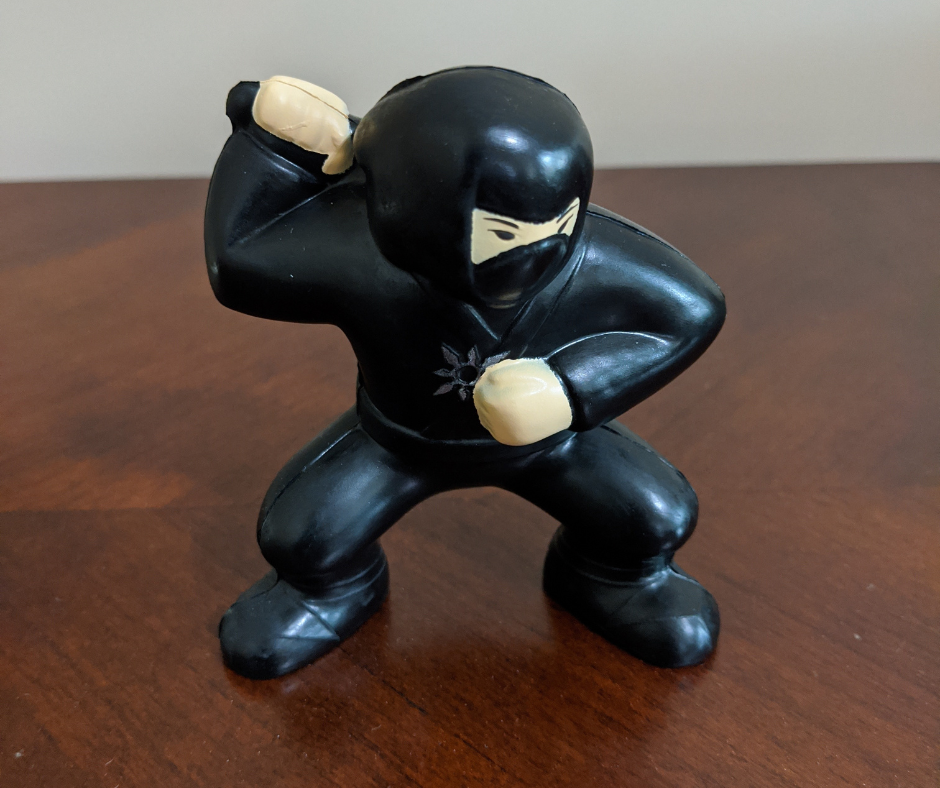
I love giving out little trinkets. It’s fun to see people’s reactions to the things I hand out – coins, ninjas, books. This story is about ninjas.
I love giving out little trinkets. It’s fun to see people’s reactions to the things I hand out – coins, ninjas, books. This story is about ninjas.
I consider myself a Kaizen Ninja. Many years ago in Japan, Ninjas came out of the shadows to deal with a situation (usually violently), and then return to their home base, unseen. I’m not violent, but when I facilitate, I want the team to solve their problem and own their solution. It can’t be my idea. Don’t get me wrong, with over 350 Kaizen events under my belt over these many years, I have seen so many problem-solving techniques and ideas it’s almost impossible not to have a solution to offer to my team members.
Instead of telling, I influence team members to come up with ideas and solutions that may elude them otherwise. Sometimes, I must be direct, but most times, I can guide them from the side to a solution. Thus, I am a Kaizen Ninja.
I signed up to be a sponsor for the BTOES2021 (Business Transformation and Operational Excellence Summit) conference in Orlando, Florida. As part of my sponsorship, I was scheduled to run several workshops and was given a small booth on the conference floor. I had to decide what to bring with me. I was going to be doing a book signing, so that was an obvious choice – bring a bunch of books. Others had books, so what else could I bring? Working with a local promotional item company, we came up with a ninja stress-reliever. I ordered 200 and planned on bringing all of them to the conference.
Two months later, during a meeting with my marketing mentor, a retired marketing executive with Armstrong World Industries, I reviewed my plans for the conference. After talking about how to maximize the value of my time at the conference, I showed her a ninja. She wasn’t impressed. She told me, “Adam, people don’t really use the swag they pick up at conferences. They take it to be nice, and then they get back to their hotel rooms and throw everything away.” She liked some of my other ideas – sticky notes with ninjas imprinted on them, and my books too.
I was floored. I had just spent hundreds of dollars on my ninjas. I was committed to the idea. I knew she was probably right, but I was determined to make the best of my decision. I decided to go with a ninja theme and see if I could attract attention and make many connections during the conference.
I arrived at the conference and found my booth. There was a lot more space than I realized to place items. After putting books on the table, I started lining up ninjas. Sixty of them were set up like a little army of process improvers. I also had ninja-themed signage for my book signing, workshops, and roundtables I would be hosting.
Once the conference opened, people started milling around the booths. The first few asked me sheepishly about my ninjas and I told them about my talents as a “Kaizen Ninja.” They seemed amused. By the middle of the conference, ninjas were being shared with almost every attendee. They were a hit! I almost ran out. I realized it wasn’t the item attracting people, it was the backstory and the energy I was bringing to it. While most booths were very dry and professional, I was having fun and people seemed to appreciate my approach.
After the conference, with newfound confidence, I started bringing ninjas to all my Kaizen events. I would make team members earn them. By the end of the week, every team member had received at least one. Walking around offices, I found about half of all ninjas given out were displayed on desks. This continues to validate my choice of giveaways.
I reviewed the “ninja-effect” with my marketing mentor, and she said she was happy to be wrong about my ninjas. I was just happy that my investment didn’t go to waste and that people enjoyed having a “ninja-moment” with me.

Carrying a Heavy Weight on My Shoulders
When you are in the heat of battle, you don’t realize the toll it’s taking on your health. I was the business unit manager for a vinyl flooring operation for Armstrong World Industries for two years. During that time, we were in a continual state of downsizing. This didn’t help the relationship with our union. It seemed like everything we tried to do to improve safety, cost, quality, or customer service was met with resistance.
When you are in the heat of battle, you don’t realize the toll it’s taking on your health. I was the business unit manager for a vinyl flooring operation for Armstrong World Industries for two years. During that time, we were in a continual state of downsizing. This didn’t help the relationship with our union. It seemed like everything we tried to do to improve safety, cost, quality, or customer service was met with resistance.
Because our business was shrinking, we were under constant pressure to reduce costs. It wasn’t unusual for upper management to threaten your job or to be told if you couldn’t get it done, someone else would be happy to take your place.
I decided the best course of action was to open a dialogue with our shop steward, lay out the situation, and work together to make the best decisions for our employees. For the first few months, he spoke with me, but little changed in our relationship. I was as transparent with him as possible, explaining the business environment and the reasons for the changes we were making. He didn’t trust me. Apparently, prior managers had burned him a few times and he wasn’t willing to forgive and forget what had happened.
We got to a point where traditional operating schedules weren’t practical for the amount of production we were required to make. We needed to make sure everyone had equal opportunity to work full-time, but providing a 40-hour workweek required us to rotate some of our established crews and revise our overtime policies.
I knew I couldn’t do this on my own. It was going to be complicated and if anyone made errors in assigning overtime, we’d be open to employee grievances and back pay. We couldn’t afford that. I called a meeting with the shop steward and my staff. I laid out the situation and my desire to be equitable for all remaining employees (we had to lay off some of our employees, which didn’t improve people’s moods).
In the past, when everyone worked a traditional schedule, overtime was offered by seniority. If the most senior employee didn’t want overtime, the next most-senior employee was offered the opportunity. This continued until someone accepted the overtime assignment. In our new schedule, it wasn’t going to be obvious who should be offered the overtime.
The group argued for a while, and I realized it would be too easy to make a mistake offering overtime unless we came up with a set of rules we all agreed to. I said I’d take a crack at it, and we could meet again to review my efforts.
After much deliberation and advice from others, I developed a table showing the various schedules and twelve situations where overtime might be required. The idea was to check each situation in order and once you found the correct situation, it told you how to assign overtime.
It was complicated, but the team only found a few flaws that would leave us open to grievances. Once corrected, everyone agreed that if we followed it, it would be a fair approach to assigning overtime. Besides, it was so complicated most people wouldn’t understand it well enough to file grievances.
Once our shop steward saw I was fully including him in our processes and wasn’t trying to take advantage of anyone, our relationship changed. Not outwardly to the rest of the employees, as he still had to play the role of “management buster.” But we collaborated often on critical issues.
Five days after I transferred back to a corporate role, I was cutting my lawn. My neighbor came over and stopped me to say, “You look different.” I never realized that all the stress of my job was easily seen by everyone but me.