
Kaizen Success Stories
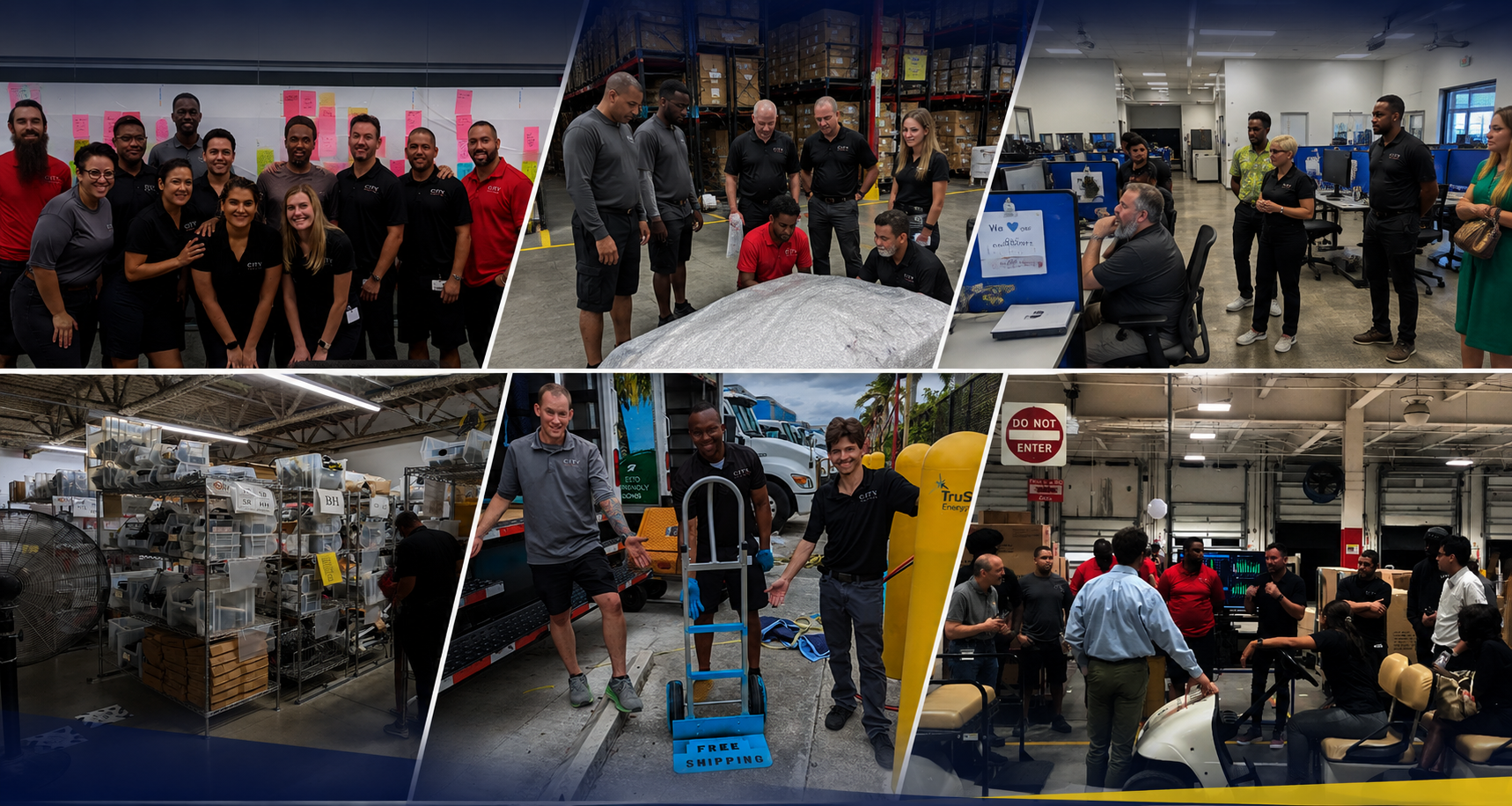
Real Manufacturing Results. One Kaizen at a Time
Explore real-world Kaizen success stories showing how manufacturing teams solved critical problems, improved performance, and created sustainable results.
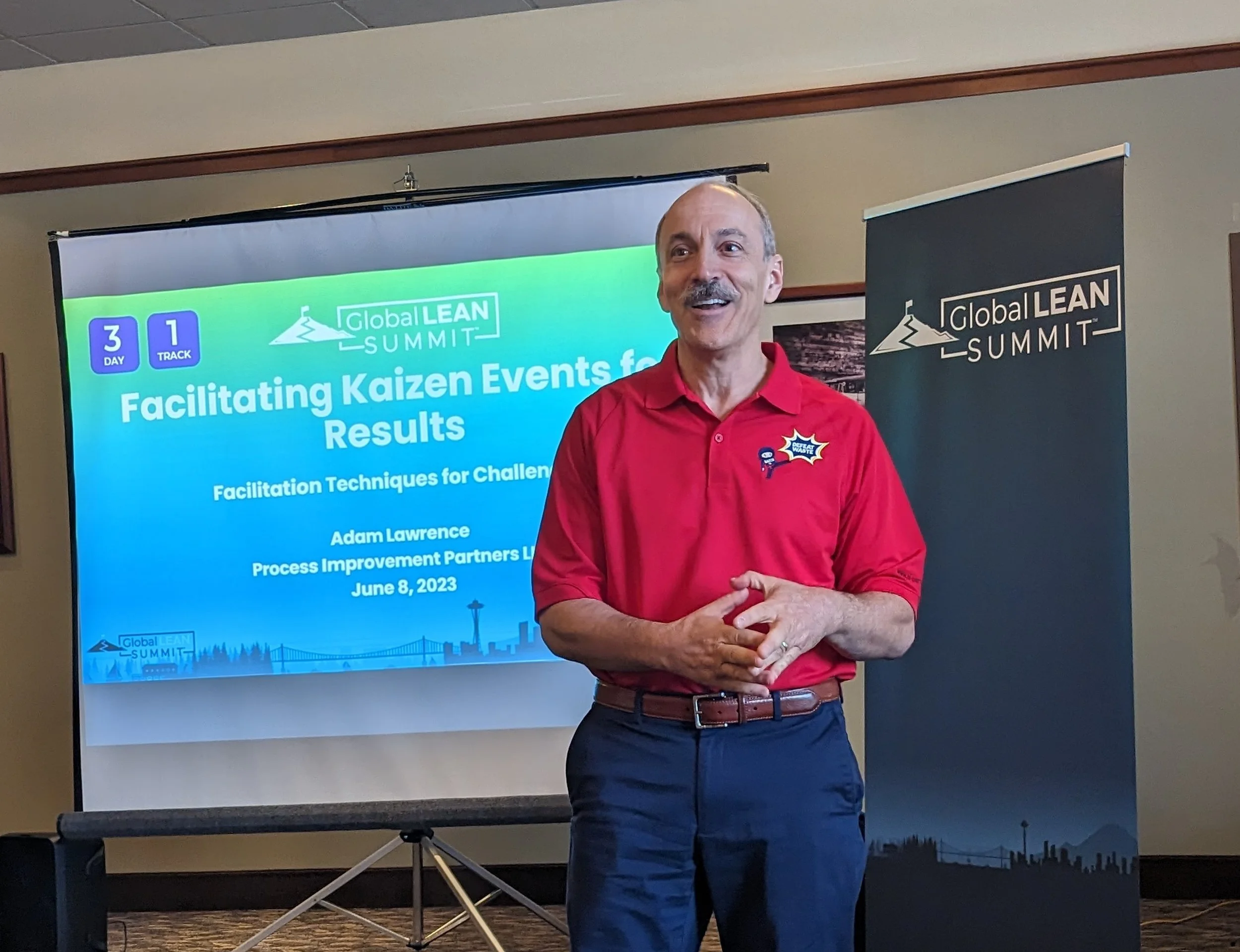
Conference Challenge Accepted
In the early days of my entrepreneurial journey, I ran a lot of experiments. The biggest? Seeing if people would actually pay for my Kaizen Ninja approach. Spoiler alert: they did.
Once I had a small, but loyal client base, I wanted to grow. Then came the offer: speak at the Business Transformation & Operational Excellence Summit (BTOES) in Orlando.
I was skeptical. Why me? Was it legit? And how much would it cost?
I spoke with Jeff, one of the conference reps. He explained the audience, the platform, and the opportunity to sponsor. It came with a booth, a book signing, and two workshops. After some negotiation and soul searching, I signed up.
I talked to my marketing mentor. Her advice: “Don’t expect to get business by speaking. You’ll only be disappointed.” Challenge accepted.
I set three goals:
Have as much fun as possible.
Meet great people.
Land one new client.
I had no idea how to set up a booth, but I figured it out. I even brought dozens of Ninja squeeze toys to draw people in.
At a networking session, I met a guy with great energy. We hit it off instantly. When he asked what I did, I told him: “I get $!&% done!” He laughed and kept finding me throughout the conference.
That man was Ronald, the CEO of a hydrogen startup. By the end of the week, he told everyone I was going to help him. And I did. For the next year, I supported his growing company and built a great friendship along the way.
Opportunities don’t always knock, sometimes they whisper. Be bold enough to say yes, and prepared enough to follow through. That’s how doors open.

Working Like a Business Owner
During our benchmarking tour of our European plants, we met hourly operators who were so engaged in their work that they had process understanding that rivaled one of our highest level scientists. And, they wanted to know more!
During my career at Armstrong World Industries, I had the opportunity to travel across the U.S. and to many places around the world. I met impressive people everywhere, but the team I met in Team Valley, UK still stands out as some of the most invested employees I’ve ever encountered.
I was part of a four-person team visiting several of our European manufacturing plants to benchmark best practices and bring ideas back to our local manufacturing plants. The group included the industrial engineering manager, the capital engineering manager, a project engineer, and me.
As we visited plants across Germany and the Netherlands, we saw great examples of things we could adopt back home. We had some fun adventures, met interesting people, and saw some incredible sights.
Our final stop was the ceiling tile plant in Team Valley UK, which had a reputation for best-in-class performance, strong leadership, and a highly engaged workforce.
As we walked the plant floor in the morning, it was immediately obvious why the plant ran so well. Everyone was actively working to keep things running smoothly, following standard work, and using simple, effective tools to maintain operations. Operators and mechanics weren’t just doing their jobs—they were fully involved in improving them.
In the afternoon, we sat in on a technical review by the company’s leading dryer scientist. The room was full, and the discussion dove deep into the science of curing ceiling tiles. I was completely lost in the technical details—and I would’ve dozed if not for the energy in the room.
What kept it alive was the engagement. The most insightful, animated questions were coming from hourly operators. They weren’t there just to listen—they were trying to understand every detail so they could run their lines better. At one point, the scientist even told them, “You all understand this better than I do.” I don’t know if it was true, but it sure felt like it.
It was clear the leadership had built a culture where people truly cared. Not just about doing their jobs, but about understanding why things worked the way they did. Everyone from hourly operators to engineers was fully invested in the success of the plant.
That experience solidified something for me: the way we lead directly shapes the culture and performance of an organization. It’s not a new concept, but seeing it in action left a lasting impression. It still influences how I approach leadership and team engagement today.

Butt Ugly by Friday
Kaizen is messy. It should be so accessible that anyone can do it. So, I use a phrase that I was taught many years ago, to make it okay to try and fail and learn quickly. The phrase? Butt Ugly by Friday!
I’ve collected a lot of sayings over the years I use during Kaizen events. Some are pretty familiar, like “Go to Gemba” or “Don’t let best get in the way of better.” But the one that seems to get the most attention and sticks with teams long after the event is: “Butt Ugly by Friday.”
Let me explain what it means and where it came from.
Kaizen events I facilitate run for a week or less, typically wrapping up on a Friday. By the end of the week, the team reports out to an audience and gets to show off the changes and improvements they’ve made. The challenge of Kaizen is: teams usually have more ideas than time. They want to improve many things, but they can easily get bogged down trying to make each one change perfect.
Years ago, I was facilitating a Kaizen in Pensacola, Florida. One of the teams was stuck on the same problem for two or three days. During a check-in with the local Lean manager, I mentioned the issue. His response changed the way I coach teams to this day.
“Adam,” he said, “you’ve got to tell them to get it Butt Ugly by Friday. That’s what we always say at the plant. It helps shift the mindset from perfection to progress. It doesn’t have to look pretty; it just has to work.”
I took his advice and helped the team move forward, even though their solution wasn’t perfect. It still made things better. Kaizen isn’t about perfection. It’s about improvement.
I use the term “Butt Ugly by Friday” in my introductory training with Kaizen teams on Day 1. It sets the tone right from the beginning. We’re not chasing perfect. We’re chasing better, safer, smarter, and faster. It gives teams permission to try things, test quickly, and learn fast. By the end of the week, team members remind me that they have improved things and made them “Butt Ugly by Friday.”
The phrase is simple, silly, memorable, and effective. People feel comfortable experimenting and are willing to fail quickly. Instead of waiting until the end of the week to find out if something works, they find out now.
Continuous improvement should be so simple and accessible that anyone can do it. More importantly, they actually want to. That’s how to build a culture where improvement can happen anytime, anywhere, from anybody.

Know Your Niche
As a Kaizen Ninja, I like to believe I can help any team solve any problem. Maybe I can, maybe I can’t—but believing it was causing me to dilute my message to my target audience. Let’s face it: no one believes you can be all things to all people.
As a Kaizen Ninja, I like to believe I can help any team solve any problem. Maybe I can, maybe I can’t—but believing it was causing me to dilute my message to my target audience. Let’s face it: no one believes you can be all things to all people.
While I’ve helped businesses across many industries tackle a variety of problems, my message wasn’t resonating with the people I truly wanted to reach. It wasn’t until I came across The One Page Marketing Plan by Allan Dib that I realized the issue. Dib makes a compelling case for knowing your niche and target market. Without that clarity, it’s impossible to craft a message that will attract the right people.
I had to dig deep and figure out who I really wanted to help. It didn’t take long to land on an answer that, in hindsight, should have been obvious: I was built to help manufacturing companies.
But not just any manufacturing companies. Running a Kaizen event requires team members to dedicate 100% of their time and energy to solving a critical business problem in a sustainable way. For smaller companies, pulling key people off their regular jobs for several days can be a dealbreaker. The business might grind to a halt.
The sweet spot? Manufacturing companies with at least 50 employees. These companies typically have enough resources to pull six or more people from their daily roles without shutting everything down. With proper planning, resources can be covered through overtime or other adjustments, making it feasible for the team to focus entirely on the Kaizen process.
This realization was a game-changer. While I’ve facilitated successful Kaizen events in non-manufacturing settings, the immediate, tangible results from manufacturing events are hard to beat. On the factory floor, you can literally see the impact:
Lines run more smoothly.
Tasks require less effort.
Employee feedback is positive and immediate.
There’s something uniquely gratifying about helping people in ways they can see and feel right away. That’s why I’ve honed my focus on manufacturing companies with more than 50 employees. When I visit, I can provide clear, specific examples of where I can help and the results they can expect using my Kaizen approach:
Safety risks reduced by more than 50%.
Changeover times cut by more than 50%.
Productivity increased by at least 5%.
Costs reduced.
Quality and customer satisfaction improved.
Even better, I can share real success stories from other manufacturing teams and show how I use the Wheel of Sustainability to ensure those results last.
From time to time, I still get inquiries from non-manufacturing prospects. I’m happy to help them if there’s a good fit, but they’re no longer my target audience. I don’t actively market to them or invest extra effort trying to get their attention.
This approach has made me more focused and intentional, and for that, I’m incredibly grateful to Allan Dib and his team. Their insights helped me find—and fully embrace—my niche.

Building Their Future
A leading global building products company reached out for assistance with a strategy session. When I spoke with Vince, the sponsor/team leader, I listened to his pain points and suggested facilitating a Value Stream Mapping (VSM) session for his team. He told me VSM wasn’t how he wanted to proceed. Even though I thought it would be the best approach, I listened to his concerns and modified my approach for his needs. I’m glad I did.
A leading global building products company reached out for assistance with a strategy session. When I spoke with Vince, the sponsor/team leader, I listened to his pain points and suggested facilitating a Value Stream Mapping (VSM) session for his team. He told me VSM wasn’t how he wanted to proceed. Even though I thought it would be the best approach, I listened to his concerns and modified my approach for his needs. I’m glad I did.
In the weeks leading up to the event, we strengthened our alignment on approach and expected outcomes and Vince engaged his team in preparation for this critical event. You see, they were intending to build their roadmap for the next 3 to 5 years. This could be worth millions of dollars and significant market share growth. We had to do it right.
The session was to begin on Tuesday, so I flew in and met Vince at the airport on Monday morning. We spent the first part of the day touring their local manufacturing facility. During the tour, I identified many improvement opportunities I thought might tie into the strategy session. Vince was intrigued by some of my ideas, including reliability and changeover improvements.
On Monday afternoon, we set up the meeting room and met some team members. We continued to talk about the upcoming session and some of the ideas from the plant tour. In the evening, we continued the conversation and alignment over dinner.
On Tuesday morning, we kicked off the session with a Voice of the Customer review. We then developed aspirational statements for the business. We would use these to help us design our strategy around for critical categories: safety, employee experience, customer experience, and manufacturing cost structure. The statements were impactful and compelling and inspired the team members.
Next, team members identified pain points and gaps in their current process keeping them from achieving their aspirational vision. Afterwards, they brainstormed actions and projects to eliminate those pain points and gaps. Many ideas were generated, including some thoughts around reliability and changeover reduction. We filled the walls with ideas. The room looked like a Post-it tornado had come through.
The team prioritized their many ideas down to the vital few they could develop and implement in the next three to five years. Reliability and changeover reduction made the cut. Following this, they created concept sheets to describe the critical work to achieve their future. After reviewing and aligning around most of them (2 were eliminated), they built a road map for the work on the one remaining wall in the room that wasn’t covered in Post-its.
As with many road mapping exercises, the team saw they had front-loaded the work in the most recent quarter and year, and some people were overloaded. This isn’t unusual and that’s why I like to make this process visual. They rearranged the work, and it looked more manageable.
Satisfied, the team felt they had built a compelling future they could stand behind. Proud of their work, they decided to keep everything on the walls for a corporate leadership review to be held the following week.
During the report out, they talked about their experience and how the visualization helped them align around a future they could be proud of. They also mentioned how they were able to focus and accomplish in one week what typically would take months to do.
Following the session, I was asked to support their reliability and changeover reduction efforts. I am looking forward to helping them achieve their vision.

My first VSM for a non-manufacturing process
I applied Lean thinking exclusively to manufacturing processes for many years of my career. I wasn’t able to stretch my thinking beyond what I could see – the production of a physical product and how it impacts the customer, business, and employees. I conducted Value Stream Mapping (VSM – a strategic planning approach based on the view of the customer) sessions for many manufacturing facilities and we were able to identify countless opportunities to significantly improve safety, productivity, quality, and customer service. I developed a reputation for my ability to engage teams and facilitate complex sessions.
I applied Lean thinking exclusively to manufacturing processes for many years of my career. I wasn’t able to stretch my thinking beyond what I could see – the production of a physical product and how it impacts the customer, business, and employees. I conducted Value Stream Mapping (VSM – a strategic planning approach based on the view of the customer) sessions for many manufacturing facilities and we were able to identify countless opportunities to significantly improve safety, productivity, quality, and customer service. I developed a reputation for my ability to engage teams and facilitate complex sessions.
I was approached by Henry, a coworker, to see if I would be willing to use my VSM approach and apply it to his marketing department. This was an intriguing request and a risky one. He had a strong Lean background and the vision to take what he learned beyond the manufacturing arena. I told him that if he was willing to take a chance, then so was I.
I took a session plan for a manufacturing VSM session and started tinkering with it to make it apply to a non-manufacturing process. It didn’t take long to realize the approach didn’t have to change much. The challenge was to help the team visualize their process in a way that would expose the waste, pain, and opportunities for improvement.
During a typical VSM, we take a Gemba walk of the process, to go and see what’s happening and what gets in the way of delivering for the customer. For the marketing department, the process wasn’t something we could easily see. How would I deal with that, I wondered. I talked it through with Henry and we bounced many ideas back and forth.
Then one of us (I’d like to say it was me, but I really don’t remember) suggested we didn’t have to physically see the process in order to visualize it. We had the experts in the room who knew what role they played in the overall process. We could have them talk us through their part, map it on a wall, and then visualize the entire process once all the experts had their say. As long as we started with the customer and worked our way back to the beginning, we could find the waste, pain points, and opportunities.
This was a brilliant revelation. Now the true test was to try it out in a real situation. And that’s what we did. The team engaged and gave their all. We visualized the current state of the marketing process and identified many wastes, pain points, and opportunities to provide an improved customer experience.
My mind opened to the possibilities. I could now apply Lean principles and Kaizen events to any process, not just manufacturing. Through the years, I learned the benefits in non-manufacturing settings can be multiples of manufacturing processes, as most groups haven’t pursued Lean thinking in these settings. There is so much opportunity it’s almost too easy to provide a winning experience for the teams I support.
I now apply VSM visualization to any process teams are trying to improve. It generates many “a-ha” moments and I often get comments like, “I didn’t realize our process was so complex. Now, by seeing it, I know what to do about it.” I recommend using Lean and VSM when you’re improving a process. You’ll be glad you did.

Diving into the Deep End
Armstrong World Industries was forced to open a mineral wool plant, in response to the loss of a critical supplier of this vital raw material for ceiling tile manufacture. Because of this, they relied on more outside vendors to design and build the plant than they were comfortable with. They had never spun molten stone (slag) into fibers before and therefore couldn’t use their experience to reduce the potential for errors and inefficiencies in their process.
Armstrong World Industries was forced to open a mineral wool plant, in response to the loss of a critical supplier of this vital raw material for ceiling tile manufacture. Because of this, they relied on more outside vendors to design and build the plant than they were comfortable with. They had never spun molten stone (slag) into fibers before and therefore couldn’t use their experience to reduce the potential for errors and inefficiencies in their process.
The plant started up late, over the capital budget, and at greatly lower performance than required to meet the demand of the ceiling tile plants in the network. Things got so bad that management was shuffled, project team members were removed, and highest-level management was getting involved on a daily basis.
I was “asked” to help the plant achieve budget performance. Knowing this was a politically charged situation and that people who were involved were under intense scrutiny, I convinced my manager to let me visit the facility before committing to the work.
I spent three days at the plant, getting to know the workers, managers, and the process. What I saw was a very concerned and engaged workforce, committed managers, and a process that was absolutely horrible to run. How did we get here, I wondered. I knew I couldn’t fix the past. All I could do was try to improve the future.
There were so many problems, but we identified the biggest one that was causing significant safety, quality, and productivity risk. The molten slag (rock with metal components in it) was designed to fall into a pit and then be scooped up and delivered into a bin. If the slag hit any moisture, it would superheat the water and cause small explosions within the confines of the building. And, the pit was exposed to the outside elements, which naturally allowed moisture in. Another issue was that the front-end loader used to scoop up the molten slag barely fit between the walls of the pit. I saw evidence of damage to the walls of the plant that was less than one-year old. Someday, someone was going to hit a wall with such force that the entire structure would come down.
I spoke with my sponsors and told them incremental improvement wasn’t going to help. We had to figure out a way to keep the slag from falling into the pit in the first place, eliminating the moisture and equipment issue. They looked at me in a way that felt like, “Well, duh, but how the heck can we do that?” I suggested we run a Production Preparation Process (3P) Kaizen in order to tease out and develop breakthroughsolutions to this problem. 3P is the most challenging kaizen event I facilitate. It forces structured minds to get unstructured, go to their childhood mindset (an 8-year-old can solve any problem) and use nature’s influence for ideas. Many engineers and scientists find this difficult to participate in, but their input is essential.
A month later, we assembled a team of operators, managers, engineers, and outside vendors to take the 11-step creativity journey that happens during a one-week 3P Kaizen. We framed the problem in this way: Deliver the molten slag directly to the process without any outside intervention by equipment or the environment. Initial skepticism gave way to creativity, and by the second day, everyone was in it to win it.
By the end of the week, there were two practical solutions for the business to choose from. Both looked promising and reasonably priced, and in the months that followed, one was implemented. From then on, molten slag never hit moisture and the building walls were spared further damage.
More impressive was the feeling of engagement, teamwork, and pride permeating the workforce. They solved the problem, participated fullyand even identified other possible Kaizen events to run in the future.
The plant is still operating and is now the benchmark in the mineral wool industry. Armstrong was able to produce more mineral wool than internally necessary and then sell the wool to other companies. The workforce is highly engaged and continues to drive improvement on a daily basis.
I was amazed by the feedback of the team, who took on a monumental task and slayed their dragon. To a person, they were positively inspired by the effort and ready to take on the next challenges.

When Someone Knows You Better than you Know Yourself
I met Cody at a conference in December. We got along so well he invited me to visit his new company in Florida. Before the conference was over, he asked for six copies of my book, “The Wheel of Sustainability.” He wanted a copy for every member of his leadership team. Cody told me he was going to require them to read it before my visit. I was happy to share my books, as no one had shown so much interest in them before. I never could have imagined the level of interest and enthusiasm of one person in particular.
I met Cody at a conference in December. We got along so well he invited me to visit his new company in Florida. Before the conference was over, he asked for six copies of my book, “The Wheel of Sustainability.” He wanted a copy for every member of his leadership team. Cody told me he was going to require them to read it before my visit. I was happy to share my books, as no one had shown so much interest in them before. I never could have imagined the level of interest and enthusiasm of one person in particular.
In January, I flew to Florida to visit Cody and his team for the day. I was met outside their new corporate building with a bear hug. Cody led me into a conference room and introduced me to his leadership team. I sat down and noticed 4 skeptical looking, “grumpy old men” sitting across the table. Cody sat on my side of the table, and in front of him was my book, with many pages dog-eared.
I introduced myself and shared my interest in the work they were doing in their new company. After a few minutes, one of the men across the table asked me a terse question. I interpreted it to mean, “Who are you and why are you here? We have more important things to do today.” I answered I might be able to help them on their journey as a start-up.
After a few more minutes of shallow questioning, the COO talked about a specific problem they were having. The CIO entered the conversation and after a few minutes, I shared a view of how I might go about solving the problem with a team. Cody then said, “That’s from page 144 of your book, isn’t it Adam?” I was shocked he knew the book well enough to cite the page number. He proceeded to show me it was indeed on page 144. Was this a coincidence?
The conversation started to get more engaging and now it was clear the leadership team was warming up to me and my approach. We started talking about another critical issue they were facing, and I shared my experience in helping other teams in similar circumstances. Cody interjected, “That’s right off page 198, isn’t it Adam?” I said, “I’m not really sure, but I think it’s in my book somewhere.” Cody showed me it was on page 198 and said, “Don’t you know what pages you put your wisdom in?” I replied, “Cody, I was so happy to finish the book I haven’t opened it since. You know my book better than I do!”
Now the room was on my side, we were talking about issues and I was demonstrating ways to help them they could use immediately. After about two hours, the meeting concluded and Cody walked me around the rest of the corporate facility, sharing his vision of what he hoped the company could become. I was inspired.
At dinner, Cody and his team agreed we should figure out a way I could be a part of their start-up journey. I was fortunate enough to be able to assist them for a while and now have the additional opportunity to work with Cody as a partner in my business. It turns out that no matter the circumstances, you should treasure those in your network who are there to support you and understand you better than you might understand yourself.
Go With Your Gut
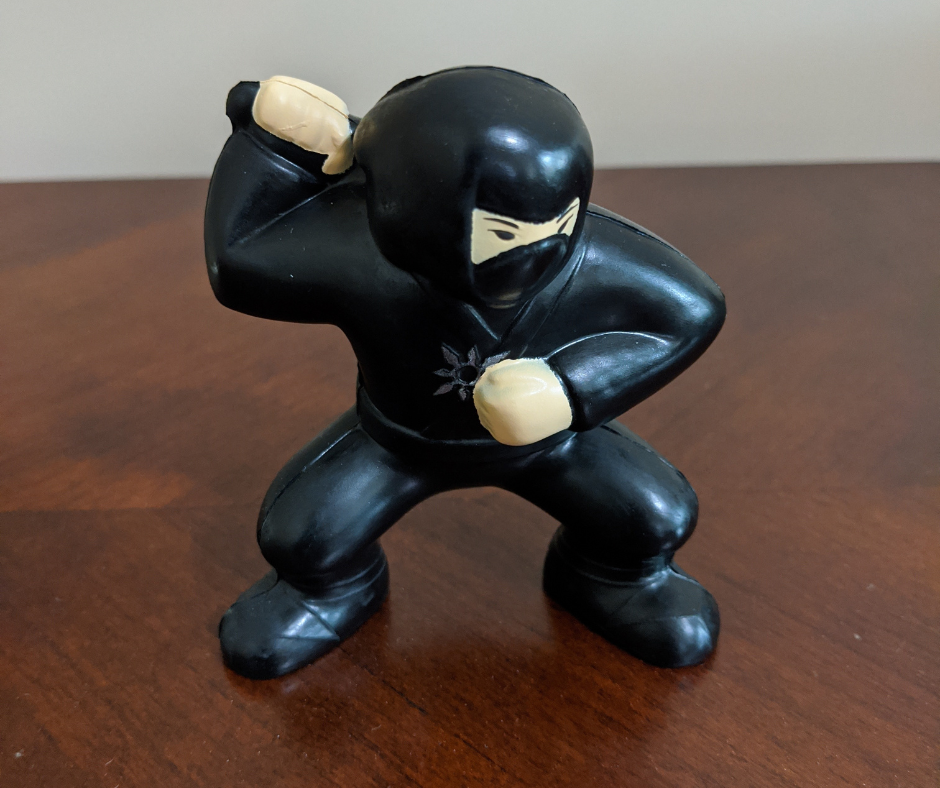
I love giving out little trinkets. It’s fun to see people’s reactions to the things I hand out – coins, ninjas, books. This story is about ninjas.
I love giving out little trinkets. It’s fun to see people’s reactions to the things I hand out – coins, ninjas, books. This story is about ninjas.
I consider myself a Kaizen Ninja. Many years ago in Japan, Ninjas came out of the shadows to deal with a situation (usually violently), and then return to their home base, unseen. I’m not violent, but when I facilitate, I want the team to solve their problem and own their solution. It can’t be my idea. Don’t get me wrong, with over 350 Kaizen events under my belt over these many years, I have seen so many problem-solving techniques and ideas it’s almost impossible not to have a solution to offer to my team members.
Instead of telling, I influence team members to come up with ideas and solutions that may elude them otherwise. Sometimes, I must be direct, but most times, I can guide them from the side to a solution. Thus, I am a Kaizen Ninja.
I signed up to be a sponsor for the BTOES2021 (Business Transformation and Operational Excellence Summit) conference in Orlando, Florida. As part of my sponsorship, I was scheduled to run several workshops and was given a small booth on the conference floor. I had to decide what to bring with me. I was going to be doing a book signing, so that was an obvious choice – bring a bunch of books. Others had books, so what else could I bring? Working with a local promotional item company, we came up with a ninja stress-reliever. I ordered 200 and planned on bringing all of them to the conference.
Two months later, during a meeting with my marketing mentor, a retired marketing executive with Armstrong World Industries, I reviewed my plans for the conference. After talking about how to maximize the value of my time at the conference, I showed her a ninja. She wasn’t impressed. She told me, “Adam, people don’t really use the swag they pick up at conferences. They take it to be nice, and then they get back to their hotel rooms and throw everything away.” She liked some of my other ideas – sticky notes with ninjas imprinted on them, and my books too.
I was floored. I had just spent hundreds of dollars on my ninjas. I was committed to the idea. I knew she was probably right, but I was determined to make the best of my decision. I decided to go with a ninja theme and see if I could attract attention and make many connections during the conference.
I arrived at the conference and found my booth. There was a lot more space than I realized to place items. After putting books on the table, I started lining up ninjas. Sixty of them were set up like a little army of process improvers. I also had ninja-themed signage for my book signing, workshops, and roundtables I would be hosting.
Once the conference opened, people started milling around the booths. The first few asked me sheepishly about my ninjas and I told them about my talents as a “Kaizen Ninja.” They seemed amused. By the middle of the conference, ninjas were being shared with almost every attendee. They were a hit! I almost ran out. I realized it wasn’t the item attracting people, it was the backstory and the energy I was bringing to it. While most booths were very dry and professional, I was having fun and people seemed to appreciate my approach.
After the conference, with newfound confidence, I started bringing ninjas to all my Kaizen events. I would make team members earn them. By the end of the week, every team member had received at least one. Walking around offices, I found about half of all ninjas given out were displayed on desks. This continues to validate my choice of giveaways.
I reviewed the “ninja-effect” with my marketing mentor, and she said she was happy to be wrong about my ninjas. I was just happy that my investment didn’t go to waste and that people enjoyed having a “ninja-moment” with me.

Like a Pro
For the early part of their Lean journey, I was the interim Lean Leader for Armstrong World Industries’ Hilliard Ohio plant. I was returning to the corporate office in Lancaster Pennsylvania from my assignment as Operations Manager at the St. Helens Oregon plant. I spent two out of every three weeks at the plant, until my family moved from the West coast to join me.
For the early part of their Lean journey, I was the interim Lean Leader for Armstrong World Industries’ Hilliard Ohio plant. I was returning to the corporate office in Lancaster Pennsylvania from my assignment as Operations Manager at the St. Helens Oregon plant. I spent two out of every three weeks at the plant, until my family moved from the West coast to join me.
During my time at the plant, we ran many Kaizen events and made impressive improvements to safety, productivity, quality, and customer service. We involved everyone, from hourly technicians to the highest plant management positions.
One week, we focused on changeovers at the main fabrication line. This line was responsible to reduce 4-foot by 8-foot boards to 2-foot by 2-foot tiles and many other sizes. After the proper size was achieved, panels received a finish coating of paint. The bottleneck of the changeover was the equalizer (table saw) that had to be changed precisely to the finished size of the tiles. Over the years, operators had marked the equipment with lines for the many different tiles that were cut on it. Unfortunately, these marks were interpreted differently by the personnel, and it caused extra scrap and time to get things into specification.
Our team was comprised of several production, maintenance, and supervisory personnel. One team member was Henry, the acknowledged equalizer “expert.” He was soft-spoken and meticulous. He liked to take extra time to dial the equipment in to the appropriate size, as it was critical to the customer’s expectations.
During the week, Henry made sure we didn’t sacrifice the integrity and repeatability of the equalizer. We realized we could make more consistent cuts if we precisely measured and pinned the top 10 sizes cut by the equalizer. Once the pin was in the appropriate hole, it guaranteed our tiles would be cut within specification without additional adjustments and testing. This was going to save tremendous amounts of changeover time. We labeled all pin holes, so even the most inexperienced technicians could easily and quickly find them, guaranteeing a consistent, quality ceiling tile. All changes reduced changeover time by more than half and reduced changeover scrap by more than ninety percent.
On the day of the report out, Henry said he didn’t want to speak in front of an audience. He didn’t know what to say and told us he was shy. This wasn’t surprising, but it was a requirement for everyone on the team to say something during the report out.
I encouraged Henry to tell the audience about holding the team accountable to protect our customers’ interests through cutting quality tiles. He said he would try to say something, but he couldn’t guarantee anything.
The report out started, and team members spoke proudly of their Kaizen event experience and how they had reduced changeover time, while improving quality, safety, and consistency. Then it was Henry’s turn. He started quietly. Yhen his voice rose as he shared his pride and ownership of the changes we had made during the week. Then he was lecturing the audience about the benefits of Lean and changeover reduction. It was as if he was the professor and we were the students. Five minutes later, he was done. We were in awe! No one had ever heard Henry speak so passionately. The experience had moved him, and it showed. I knew I wanted all my future team members to have a similar experience. I have honed my approach to create the same level of ownership and passion that I saw in Henry that day.

My First Process Improvement Project
I graduated from Virginia Tech and went to work as a corporate industrial engineer for Thomasville Furniture in North Carolina. Harriet was my first mentor. She was working on a project to improve the productivity of one of our bedroom furniture manufacturing facilities.
I graduated from Virginia Tech and went to work as a corporate industrial engineer for Thomasville Furniture in North Carolina. Harriet was my first mentor. She was working on a project to improve the productivity of one of our bedroom furniture manufacturing facilities.
I was totally inexperienced supporting manufacturing operations, but Harriet could tell I was curious and interested in helping her in any way she needed support. After a few trips to the plant, she decided to use my help organizing a wood drying and storage facility that supplied the vital materials to the plant. The wood was received from an outside source and had to be dried for a few days before the plant could process it into bed rails, canopies, dresser drawers, and other furniture components.
It must have been over 100 degrees when we took our first walk through the Butler Building (the storage facility). Inside was a massive amount of wood stacked up all over the dirt floor. There didn’t seem to be any organization to it. Two workers were sitting on a stack of wood talking about the latest NASCAR race.
I told Harriet I wanted to spend time in the building and convinced her to let me go “solo” for the rest of the week. The next morning, I showed up at 7 am. The two workers, Sam and Joe, were surprised to see me. I was an engineer who was willing to hang out with them. More than that, I was a “Damn Yankee” from up North (their words, not mine).
I got to know Sam and Joe and followed them around as they did their jobs. Whenever they got a call on their walkie-talkie, they’d jump on their forklifts and dig out requested loads of wood and bring them to the main plant. They dealt with two key problems:
1. The forklifts would dig ruts into the dirt floor, making it difficult and dangerous to maneuver through the building.
2. Different species of wood were stored in the same aisles of the building, forcing the workers to move big stacks of wood to get to what they needed. Oftentimes, it would take many minutes to find the stack of wood they were looking for. Sometimes, the stack would fall over and they’d have to pick everything up and restack it.
At the end of the week, I reviewed my findings with Sam, Joe, and Harriet. They confirmed these two issues were hampering their work and reducing their productivity. Together, we came up with a plan to pave the floor and organize the wood by species.
Within a month, we reorganized the building and paved it. We put up signs on the walls indicating storage locations. I visited the building many times to verify it was helping Joe and Sam do their job more safely and productively.
A month after we paved the floor, I stopped by and asked Joe and Sam if things were still working the way they wanted. They were proud to show me they had made a few improvements of their own that made things even easier. It was a win. Then, they told me that even though I was a “Yankee,” I wasn’t a “Damn Yankee” anymore. Now I was a “Good Yankee.”

Charting a Course of Critical Information
I was asked to facilitate a 5S Kaizen at an electronics manufacturer. The specific area of interest was in a testing lab that was used to analyze components that failed in the field. There were an amazing number of parts and supplies in the lab. On first glance, the lab owner felt he needed everything in the lab to accurately perform testing. We must have removed 80% of everything in the space to improve the safety and productivity of the area.
I was asked to facilitate a 5S Kaizen at an electronics manufacturer. The specific area of interest was in a testing lab that was used to analyze components that failed in the field. There were an amazing number of parts and supplies in the lab. On first glance, the lab owner felt he needed everything in the lab to accurately perform testing. We must have removed 80% of everything in the space to improve the safety and productivity of the area.
When we were done, we assessed the critical elements of the process to see what we could improve on and optimize for the total system. We prioritized the fume hood area as the most critical part of the process. Essentially, every component that came back from the field had to have all internal gasses purged before it could be assessed and repaired. This was a critical safety requirement.
Different components had different gasses internally and some of those gasses were hazardous. They had to go through a full purging cycle before any other work could begin. Paul, the lab owner, had worked there for many years. When he wasn’t sure which gas was present, he would contact Jeff, an engineer. Jeff could help Paul identify the gasses present and the proper purging cycle.
Customers were anxious to get their equipment back in a timely fashion. The lab couldn’t rush the purging cycle and the testing that came afterwards. Many times, Jeff wasn’t available when Paul needed the critical purging information and the equipment waited days or weeks before purging could start.
It just so happens that Paul and Jeff were on the Kaizen team. When this critical issue was raised, Jeff told us that he had an idea and would need some time to work on it.
An hour later, Jeff came back to the lab and showed us his idea. It was a chart of the top components. They comprised more than 98% of the total possible items that could come through the lab. He identified the gasses and the purging requirements for each one. Now, Paul could start his work without having to track down Jeff. Customers would get their results much sooner.
In the end, it worked out even better than we could imagine. Paul retired shortly after the Kaizen and his replacement was quickly trained to perform to the standards Paul had set for the lab. The customer never waited too long for their results due to the contributions of Paul, Jeff, and the rest of the Kaizen team.

Strengthening a Kaizen Culture
A good friend of mine asked me to speak at his Virtual Lean Summit. I was scheduled to present on the Wheel of Sustainability on Thursday. When I looked at the agenda for the week, I found several presentations I wanted to attend. One stood out to me as a must – the Tuesday presentation by the President of a large furniture retailer in South Central Florida.
A good friend of mine asked me to speak at his Virtual Lean Summit. I was scheduled to present on the Wheel of Sustainability on Thursday. When I looked at the agenda for the week, I found several presentations I wanted to attend. One stood out to me as a must – the Tuesday presentation by the President of a large furniture retailer in South Central Florida.
He was going to speak about the 15-year Lean journey at his company. Even more interesting to me was that he was the impetus for it. I looked forward to hearing the top leader in the company talk about building a continuous improvement culture from the ground up. Support all the way to the top of the organization is the ideal situation. I had never had the opportunity to see what it looked like.
The presentation was inspiring and I learned so much from it. When it was over, I wanted to know more. That evening, I sent a LinkedIn connection request to the President of the company and told how much I enjoyed his presentation. I mentioned I was an “old furniture guy” with many years of Lean experience and that it would be fun to share some furniture “war stories” with him.
Within an hour, he responded, and we set up a Zoom meeting for the next day. We talked for a few minutes, and I shared stories about the adventures I was having with my Kaizen teams. He remarked that they had held many Kaizen events in the past. They hadn’t done any in a few years and he missed the energy and excitement of Kaizen events. I said, “It turns out I know a guy who can help you with that.” He asked who that was. Of course, the answer was me! He said I should come for a visit to see if there were any synergies that we could both benefit from.
Two months later, I traveled to their corporate offices. I had the opportunity to meet with many staff members to see their continuous improvement culture. I shared my approach to Kaizen and continuous improvement. At the end of the day, I went to dinner with the President and he told me that pending a few more discussions, he wanted to know if I could support and facilitate 12 Kaizen events over the next year. What could I say? I said yes!
The following month, I signed my first contract to facilitate one Kaizen event per month. The President, who had now become company CEO, told me that beyond results, he wanted to focus on strengthening the Kaizen culture of his company. I was asked to focus on what I enjoy the most: engagement, empowerment, and sustainability.
The first year of working with the company was a true pleasure and a joy. The culture of continuous improvement is already strong and the leadership does what it takes to support every Kaizen team I facilitate. We have experienced breakthroughs and setbacks during our Kaizen weeks together, and the response has been extremely positive throughout. They value learning and culture more than pure results. Make no mistake, results do matter.
Things went so well, they signed up for a second year of facilitated Kaizen events. I am looking forward to a bright future with my client.

Visibility Equals Accountability
Do all your meetings happen in a room? Mine did, until I realized we needed to do something to shock the system and change our performance quickly.
I was the Business Unit Manager at Armstrong’s vinyl flooring plant in Pennsylvania. Our performance and profitability had been in a downward spiral for many years prior to my arrival and things weren’t getting any better while I was in charge.
Do all your meetings happen in a room? Mine did, until I realized we needed to do something to shock the system and change our performance quickly.
I was the Business Unit Manager at Armstrong’s vinyl flooring plant in Pennsylvania. Our performance and profitability had been in a downward spiral for many years prior to my arrival and things weren’t getting any better while I was in charge.
One day, the vice president of manufacturing told us we needed to significantly improve our scrap and productivity performance or he’d find somebody who could. It didn’t take a lot of soul searching to know this was an ultimatum. I took a close look at everything we were doing from a management standpoint. We were complacent in our approach and our performance mirrored that fact.
After sitting through another meeting hidden from view from our associates, I realized what I had to do. I needed to get the entire organization aligned around our most critical priorities: safety, quality, customer service, and productivity. Every time we had a meeting in a closed room, it was hard to tell what was agreed to and if any progress was being made.
With the help of my staff, we reorganized an area around the time clock. This was the location every hourly member of our staff utilized twice per day. They had to use it or they wouldn’t be paid.
We put the agenda for our production meeting to the left of the timeclock and action items resulting from the meeting to the right. It was a tight space and we typically had 12 people in attendance. The only way to accommodate everyone was to stand in a semicircle around the timeclock as we worked through the agenda. We had to stand in the main aisle in the plant. Every so often, we’d have to stop what we were meeting about and move out of the aisle to allow a forklift to bring supplies to one of our production lines.
It seemed like these supply runs happened more often than necessary, just to break up our meeting. But we persevered. It was loud, so everyone had to stand close to hear each other. This forced us to be concise and to the point. Whenever we had an action item, we’d write it on the large sheet of paper next to the timeclock. We put the item, owner, and due date on it.
In the meeting room, it would take many days or weeks to complete action items. Out in the open, things were getting completed more quickly than before. We observed our hourly workers reviewing the action items on the sheet. It looked like they were interested in what was going on.
One day, I got a question from an hourly worker about one of the action items – what did it mean and what could they do to help it get completed? This was a breakthrough! All of a sudden, people were paying attention to our efforts and trust was growing as progress was being made.
No one wanted their name on the action item sheet for too long. They were getting pressured to complete their responsibilities. Soon, our performance improved, the business was stronger, and we weren’t under the threat of replacement as much as we had been.

Raise Your Standards and Take Ownership
I was the industrial engineering manager at a ceramic tile plant in New York. We made mosaic tiles. The color went all the way through the tile. Mosaic is also a word used to describe the artistic patterns we made as special orders from our customers.
I was the industrial engineering manager at a ceramic tile plant in New York. We made mosaic tiles. The color went all the way through the tile. Mosaic is also a word used to describe the artistic patterns we made as special orders from our customers.
For years, we had a department that had the task to take any requested design and turn it into reality through manual assembly of the many different colored tiles we made. Sometimes this required tiles to be cut, an extremely slow and difficult process to accomplish. These special orders took many weeks to complete and were very expensive.
We heard about a technology called “water-jet” cutting that was being used at a few locations in our parent company, Armstrong World Industries. Using high pressure water, you could cut into almost any material (metal, plastics, etc.) and get a clean and precise cut. We were intrigued and felt there might be an application for this technology at our plant.
We arranged a visit to two of our plants, one, a ceiling tile plant in Beaver Falls Pennsylvania, and the other, a vinyl flooring plant in Lancaster Pennsylvania. We took the company van and I was joined by two operators, a programmer, and an engineer.
When we got to the vinyl flooring plant, we were met by a project engineer, who oversaw the samples department. They were using their water-jet to cut small pieces of vinyl flooring out of the larger rolls, so that they could send samples of different colors and patterns to customers. The shapes being cut were rectangles, so although this saved a lot of labor, we weren’t convinced it would help us cut complex shapes into our ceramic tiles.
Our team was convinced that in order to program and cut complex shapes and designs, we’d need someone specially trained and highly compensated for this new skill we were seeking. As an industrial engineer, I knew it wasn’t a good idea to have such a highly specialized job very few would be able to master. It limited flexibility and raised operating costs.
At the ceiling tile plant, we were met by a production operator. She showed us how she programmed and cut complex designs into the face of ceiling tiles using the water-jet. We were intrigued and impressed by the variety of shapes and designs she was able to cut. When we asked her how difficult it was to learn to program the equipment, she told us it was extremely simple and intuitive. You could either import a CAD (computer aided design) drawing or scan an existing design and the machine would figure out the cuts to make.
Our team members weren’t convinced that anyone could do it. They were ready to leave for home when I asked the operator if she’d provide some basic training and let our operators try it for themselves. She said yes, and I was able to convince my team to take the extra time to decide about the skills needed.
They picked out a couple of designs and after an hour of training, they were cutting ceiling tiles exactly as programmed. Now they knew they could do it and easily apply the water-jet to our ceramic tiles. On the way back to our plant, there was excitement about how easy this new technology was to master.
A few months later, we purchased and installed the new equipment. The plant was able to make beautiful mosaic patterns for many years thereafter and had the flexibility to use almost any operator to do it. Although seeing is part of believing, it wasn’t until the team actually tried their hand at the process that they were convinced it was a good idea. The lesson: open your mind to fully experience your options before counting out a solution.

Change Your Perspective
I moved to Baltimore to be the industrial engineering and quality manager at a ceiling grid factory. We had just consolidated three plants into two, following a joint venture. Early on, changes were happening so fast that my plant manager informed his boss that he wasn’t comfortable with the direction of the new company. He offered to stay as long as necessary to bring his (yet unnamed) replacement up to speed.
I moved to Baltimore to be the industrial engineering and quality manager at a ceiling grid factory. We had just consolidated three plants into two, following a joint venture. Early on, changes were happening so fast that my plant manager informed his boss that he wasn’t comfortable with the direction of the new company. He offered to stay as long as necessary to bring his (yet unnamed) replacement up to speed.
He was informed his services were no longer needed. His replacement was ready to take over operations. So, he packed up and left the same day. Much of this wasn’t told to us immediately. We just watched our leader leave the plant, never to return. We wondered what was going to happen in the interim.
The next day, we met our new plant manager, Jim. He arrived at the plant just before lunchtime and introduced himself to each of us separately. He had been a salesman for the competing company that had merged with ours.
Jim seemed highly motivated and excited to be at the plant with us. He told us he was committed to our success and would help us through the transition of the joint venture. This was reassuring and we were happy to have Jim as part of the team. Until the next day. At 10 am, Jim hadn’t shown up for work. The plant kept running, but we wondered if something had happened. Just before noon, Jim arrived and acted as if there was nothing wrong. For the next few weeks, Jim came to the plant at a time the rest of us considered “late” every day. Sometimes, he would tell us he was in a meeting. Other times, he said he was playing golf with some of his customers.
This was unusual behavior for people who work in operations. Factory staff members tend to arrive early in the morning and stay until the evening. Jim was different, and it was beginning to weigh on the staff and the operations crew. We’d get questions about where Jim was and why he wasn’t with us in the plant. Many times, I’d walk by an office and observe others complaining about Jim’s “lack of commitment.” I was commiserating too. Finally, I decided I should try to do something about it, if no one else was willing to do so.
Our engineering manager wished me luck and said he would “miss me when I was gone.” I told my wife I felt I had to say something to be part of the solution. She told me that she believed in me, but was prepared for the ramifications of the discussion.
The next morning, after Jim arrived, I asked if I could talk to him about something important to me and the plant. As I described my observations to Jim, I told him I realized as a salesman, the hours he put in were likely different from running a factory. We needed his leadership, guidance, and his commitment to be with us during key morning meetings and other critical times during the day. He wasn’t able to do that while on the golf course or whatever errands he was running in the mornings.
I gave my feedback for what felt like hours, but it was probably 10 minutes. Through it all, Jim didn’t say a word, he just listened. After I finished, I thanked him for giving me the opportunity to speak with him and left his office. It felt strange to say all those things without a response, and I told a few of my team members that it might be my last day at the plant, but at least I followed my conscience. I hoped I wouldn’t have to look for another job.
Over the next few weeks, without acknowledging our meeting, something changed. Jim started showing up at the plant earlier in the morning. He got extremely involved in our meetings and critical plant decisions. Soon, he was no longer an outsider; he had become our leader.
Two years later, as I was preparing to move on to my next assignment, Jim called me into his office. He reminded me of the day I brought my concerns to him and how it changed his perspective and approach. Now that we were close friends, I said, “You #%$@, you never said anything that day and never acknowledged it until now. I thought I was about to be fired!”
He said, “I really did appreciate it, but at the time I didn’t know how to respond. Then, as time went on, I just wanted to leave you hanging. Now, I just am happy to get that reaction from you!”

Sometimes You Have to Let Things Go
I was a supervisor at a small ceiling grid plant in Franklin Park Illinois. I could see all the way from one end of the factory to the shipping docks at the other end from my second-floor office.
I was a supervisor at a small ceiling grid plant in Franklin Park Illinois. I could see all the way from one end of the factory to the shipping docks at the other end from my second-floor office.
After less than one year on the job, the company announced a joint venture with a competitor and our factory was scheduled to be shut down in the coming months. I put on a brave face with my crew to keep them safe and productive during the final months of operations.
As we got closer to the end, most orders had been transferred to our other plants. I was always looking for constructive things to keep our employees occupied. I think I was trying to keep myself busy too.
One day, I noticed a large pile of steel tooling sitting on pallets in an unused corner of the plant. The tooling looked like it hadn’t been used in years. It was covered with many inches of dust. Doing some research, I found out that it was for products that hadn’t been produced at the plant in many years. This was one of those things that was easier to avoid than deal with.
I gathered a group of my most willing crew members and we had a disposal “party.” We brought a large scrap metal dumpster over to the tooling, and proceeded to throw, chuck, drop, and sling the tooling into it. “Clang, clang, clang,” went the tooling as it hit the sides of the container. The more we did this, the happier we felt. It was almost as if we were releasing our stress about the factory being closed.
We took a break for lunch and I went into the office, extremely proud of my team of “disposal engineers”. I stopped by to talk with our maintenance and engineering manager and invited him out to review our progress. As we reached the dumpster, he exclaimed, “What have you done? We can’t just throw this away without taking it off our books – they’re going to kill me back in corporate!”
I didn’t know what to say. He was right. We had an obligation to account for everything in the plant before disposing of it. As I attempted to come up with a plan to retrieve the tooling from the dumpster, he said to me, “Oh what the heck. What’s done is done!” And with that, he started throwing the tooling into the dumpster with a “clang, clang, clang!”

Be Careful What You Ask For
I was the plant operations manager at Armstrong’s St. Helens, Oregon ceiling tile plant for three years. During my tenure, I was able to test and refine my management and continuous improvement approach on an operation that employed just under 100 people. I made many mistakes and I’d like to think I learned from each one of them. Sometimes, it took me a few times to learn from the same mistake.
I was the plant operations manager at Armstrong’s St. Helens, Oregon ceiling tile plant for three years. During my tenure, I was able to test and refine my management and continuous improvement approach on an operation that employed just under 100 people. I made many mistakes and I’d like to think I learned from each one of them. Sometimes, it took me a few times to learn from the same mistake.
With around the clock responsibility, I was the one who was called in the middle of the night when there was a significant safety, quality, human resource, or productivity issue. If I couldn’t resolve the issue, I would then escalate it to my boss, the manufacturing manager. I hated waking him up, but sometimes I had to. I was determined to keep those occurrences to a minimum.
It seemed like most critical issues happened around 2 am. If I got one call after going to bed, I usually could get a restful sleep during the night. If I got two or more calls, then it was hard to sleep well. I tried not to be too grumpy when I got to the plant the next morning, realizing my supervisors were fighting the issue far longer and were doing everything they could to avoid calling me.
One evening, the supervisor called me because he had suspicion one of our employees had broken our “no alcohol” policy. Because he was the only manager at the plant at the time, he needed a witness. I came in, saw clear evidence of alcohol use and drove the employee to get tested. He denied it the whole time, saying he had taken some cough syrup before coming to work. When his results came back at 3 times the legal limit, he had to admit his indiscretion. I drove him home and we subsequently terminated him once he was allowed back on the premises.
After a particularly challenging week, with multiple calls in the middle of the night, I remarked to one of my supervisors, “Just once, it would be nice to get a call in the evening saying that everything’s ok.” He agreed with me, and we laughed about all of the situations that forced those late evening calls.
Two months later, the plant was running smoothly. Safety, quality, and productivity were near record levels. The vibe in the plant was positive and there was nothing we couldn’t accomplish. I found myself bragging about our employees to anyone who would listen.
One evening, after having a particularly nice dinner at home, I decided to go to bed at 9 pm, so I could visit with the overnight shift early in the morning. After falling asleep quickly, I woke to the telephone ringing. I had been conditioned to expect the worst. On the other end of the line was my evening shift supervisor, who told me, “Adam, this is Jim. It’s 10 pm and I wanted to let you know that everything’s ok!” I couldn’t help but laugh as my words came back to haunt me.

Make It Real
I created the Wheel of Sustainability many years ago. It’s been applied to many different industries and problems. On the first day of every Kaizen event I facilitate, I introduce the concept of the Wheel and help teams utilize it to sustain the solutions they create during the week.
I created the Wheel of Sustainability many years ago. It’s been applied to many different industries and problems. On the first day of every Kaizen event I facilitate, I introduce the concept of the Wheel and help teams utilize it to sustain the solutions they create during the week.
Most people haven’t heard about the Wheel and don’t know how to utilize it effectively. As the Kaizen week progresses, I help team members implement elements of the Wheel so they have a better grasp of things and know what to do moving forward. Recently, I noticed my Kaizen team wasn’t taking full advantage of what I was teaching them and decided to try an experiment. I abandoned my facilitator role and demonstrated a specific approach to a problem they were trying to solve.
They were working on strengthening a major equipment installation by creating control plans for different aspects of the project. The control plans were owned by various members of the team. They created twenty-eight plans over a resource pool of nine owners. Some team members had up to five control plans to manage. Others had as few as one. These control plans were intended to reduce the risk of failure for this critical project. Their success was vital.
In a traditional project management approach, each control plan owner would deal with their issues on their own and bring problems to light when it was too late to take preventive action. We had to come up with a system to manage all of the control plans and keep status of them visible to everyone, so help could be deployed before it was too late. That’s where the Wheel of Sustainability came into play.
Using their control plan structure, I helped the team build their “why.” In other words, “Why were these control plans so critical to the success of the project?” This would enable them to explain to others in a meaningful way, so they would be aligned and willing to help, should something go sideways. This enabled Notification and Training and Review. Next, we developed Visible Evidence for the control plans. Each owner installed a whiteboard outside his or her office. On it, the status of each control plan was displayed, along with critical tasks to be completed on the current day, week, and month. Anyone walking by could see what was going on and easily engage with the owner, during their daily Gemba Walk. This was their Layered Audit.
Next, we had to make sure each owner had all the tools needed (All Tools Available) to access the information around the project easily. The team created a shared document and gave access to all control plan owners and the Leadership Team. The Clear Benefits of this work were easily verbalized by all of the team members, and they were enthusiastic about this new approach. We tested our logic with others who weren’t on the team, and they agreed with us.
Accountability for each control plan was obvious, and Leadership accountability was demonstrated by the new daily Gemba Walk through all of the offices with white boards. Finally, stories of risk reduction and prevention created Recognition for this new approach.
Leadership Commitment was demonstrated by support of the new system and leadership engagement in the daily Gemba Walk. The team is confident they have successfully mitigated and managed the risk of their most critical equipment installation
By using the Wheel and applying it to a specific problem, I was able to help the team implement a system to prevent problems from derailing their most critical project.

Stop and Smell the Roses
I was the Production Manager at the St. Helens Ceiling Tile plant for just under three years. I had always wanted to apply my continuous improvement mindset to a production organization. The VP of Manufacturing gave me a chance and I was determined to repay his trust and support with excellent results.
I was the Production Manager at the St. Helens Ceiling Tile plant for just under three years. I had always wanted to apply my continuous improvement mindset to a production organization. The VP of Manufacturing gave me a chance and I was determined to repay his trust and support with excellent results.
When I arrived, the plant was running well below budgeted productivity levels. Their OEE (Overall Equipment Effectiveness) was in the high 60’s and they were budgeted to be in the high 70’s. We had a long way to go if we were going to meet our budget.
Through a number of critical actions that included discipline to standard work, scripted changeovers, identification of preventative maintenance activities, and alignment of the supervisory team, we achieved our first 80% OEE in my fourth month on the job.
Six months into my tenure we were on a roll. We were having amazing productivity days, with extremely low downtime and scrap. One day, we had only six minutes of downtime in a 24-hour period. This was unheard of.
As the month wore on, we realized we might actually have a record performance month for the company. Three days before the end of the month, we were a full percentage point above the prior company record. We held daily production meetings at 8:30 am. On this day, there was some tension between the Manufacturing Manager, Brett, (my boss) and the Plant Manager, Ashley (his boss). They had worked together at the plant many years and the running joke was they were like an “old married couple,” sniping at each other all of the time.
Something he said got under her skin. Ashley responded with something even more biting. All of the sudden, it was on! Twelve of us sitting around a central table scattered except our two “combatants.” After three minutes it was over.
I tried to understand what had happened. We were running so well. Why couldn’t we just enjoy it? I felt I had to do something, or else we would send the wrong message to our teams that were working so hard to have a record month.
My first stop was Brett’s office. I asked him what he thought had happened. He told me Ashley was never satisfied with performance, no matter how good it was. I said they must teach that in Plant Manager School. He laughed and we agreed to take a less drastic approach to the end of the month. He said he would try to reconcile with her later that day.
My next visit was to Ashley’s office. She waved me in and I brought up the events of the morning. I asked her if we couldn’t just enjoy the performance, if even for a moment. Did we really need to let the smallest things create a scene? She said to me, “Adam, it’s just not who I am. I don’t want anyone to let their guard down. We’re close to a record. If we don’t keep up our intensity, we could lose this opportunity.”
I said, “We’re not doing right by our teams. They’re doing their best to drive the safety and productivity that’s putting us in this position to win. Give us a chance. Let’s see if we can set the record and then recognize all of the hard work that got us there.”
Ashley listened to my plea, but made no promises. I guess it was a small victory. At least she didn’t throw me out of her office. The next day, she may have wished she had. In the meeting room, I placed a Dilbert and Pointy Haired Boss Doll in the middle of the table on top of a sign that read, “Channel your frustrations through us, not each other!” Only a few of us thought it was funny. I think I made my point.
At the end of the month, we set the company productivity record, had our best quality month, and injured no one. It was a win all around. We celebrated for a very short time because it was time for a new month and new challenges.