
Kaizen Success Stories
Real Manufacturing Results. One Kaizen at a Time
Explore real-world Kaizen success stories showing how manufacturing teams solved critical problems, improved performance, and created sustainable results.
Technology Doesn't Have to be Scary
For two years, I facilitated monthly Kaizen events at CITY Furniture. These weren’t just about fixing specific problems. They were about strengthening their culture of continuous improvement. By the time we completed six events, people were lining up to be on the next teams.
One memorable event focused on organizing a chaotic repair parts storage area. We removed 75% of the clutter and built ownership that became a model for future teams.
What I didn’t tell you was this: the team also automated the entire inventory tracking system. And the person who made it happen was a 17-year-old hourly employee named Rob.
Rob was the son of one of the supervisors on the team. During our Gemba walk, it was clear the cluttered space wasn’t the only problem. Our area owner was drowning in paperwork and unreliable data.
While most team members focused on the physical mess, Rob saw a deeper issue: fractured information streams, disconnected reports, and no real-time visibility.
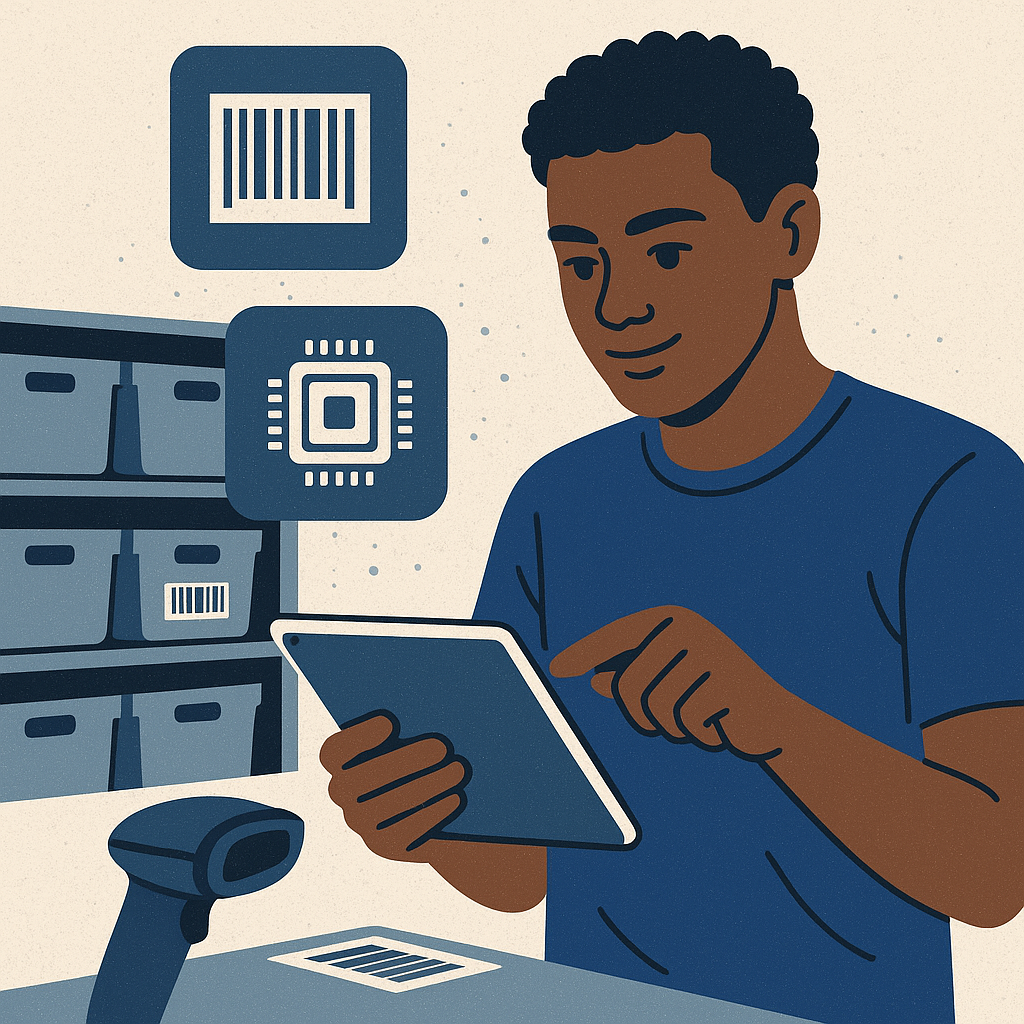
His idea? Consolidate everything into one digital report, accessible on an iPad. Then, take it further by barcoding every bin and tracking inventory in and out with a scan.
The team loved it but had no clue how to make it happen. Rob just smiled and said, “I’ve got this.” And off he went.
By day three, he had a prototype. He coordinated with IT, repurposed a company iPad, and built a working application. By week’s end, barcodes were in place, the app was live, and the team could track every part in real time.
I personally told the CEO about Rob and urged him to nurture this rising star. “Don’t let him get away,” I said.
Today, Rob’s a sales rep for CITY Furniture with a stellar track record and the same customer-first mindset that powered his Kaizen breakthrough.
Innovation doesn’t care about age, title, or tenure. Sometimes, your quietest contributor holds the loudest solution if you’re willing to listen.
Get it Right Early, the Rest will take Care of Itself
I’d been running reliability and center lining events across the country, and it never ceased to amaze me how small adjustments like leveling rollers, aligning equipment, straightening processes, could transform an entire line. We were seeing 90% fewer jams, 20% higher yields, 40% productivity gains, and a massive boost in team ownership. It was life-changing.
I decided to convince another client to try this approach in his composite decking factory. While the product was thicker and more stable than others I’d worked with, I knew the principles would still apply.
When I reviewed the concept with my sponsor, he admitted they were battling jams that caused serious disruption. He immediately invited me to run a reliability Kaizen on a key production line.
At first glance, the line seemed simple: straight path, thick product. But once we dug in, the misalignment was obvious. Early in the process, a set of rollers fed stabilizing sheets into melted vinyl. The roller system was out of level, causing tension and stress at the mixing point. Once corrected, the sheets fed evenly, drastically improving flow.
Next, we tackled the water bath where the decking was formed. The “carrier” that transported product through the bath was tilted. That misalignment made the material rise or fall, throwing off the next equipment in the line and potentially causing jams.
We built custom brackets using materials on hand to support the carrier at the precise height and alignment. Then we created easy-to-use visuals to ensure it could be consistently set up.
Once everything was lined up and squared off, we started up the line. It ran beautifully. From that stable foundation, we aligned every piece of downstream equipment. The results? Significant productivity gains, reduced safety risks, and a team that now applies the method to other lines in the plant.
When you take the time to get it right early in the process, everything becomes easier downstream. In reliability Kaizen, precision builds momentum and momentum builds belief.
No Barrier Too Big for the Team
We were running a reliability and center lining Kaizen for a vinyl siding plant in Maryland. These events often unlock 5% gains in yield and productivity and drastically reduce safety risks by 90% or more.
It was cold, so cold you could see your breath on the shop floor. Still, the team stayed focused. We spent the first two days teaching principles and establishing a center line for the process, leveling equipment, and planning the rest of the week.
Then, on day three, disaster struck. A critical water line broke, shutting down the fire suppression system. The plant was evacuated. We couldn’t even grab our tools. The event was abruptly canceled.
I left wondering: What would happen to the half-done work? Would the changes help or hurt? Would the team lose momentum?
One week later, the plant was operational again. Two months after the shutdown, we were back. Not only to finish the first line but to tackle a second. We had mostly the same team, plus a few new faces. We did a quick refresher on reliability principles and techniques and then went to Gemba. I was amazed. During the downtime, the team had already improved results using what they’d learned. They were fired up and ready to go.
We deployed most of the team to the new line, which had many of the same reliability issues. A smaller group returned to the first line to finish what we started. Over the next few days, we aligned, leveled, and pinned every critical element on both lines.
By day three, both lines were running better than anyone could remember. We locked in improvements and implemented the Wheel of Sustainability to ensure long-term results.
The approach has now been replicated throughout the plant and across their entire network of four additional sites. Better yet, they’ve built a workforce that believes in improvement and is hungry for more.
Even when the plan falls apart, a committed team can rise to the challenge. Reliability work is about precision and attention to detail. Culture is about perseverance and the drive to get things done.
Turning the Factory Upside Down
When a packaging company reached out to me about facilitating a 3P (Production Preparation Process), I was intrigued. It’s the most advanced Kaizen approach I offer. They wanted this to be their very first experience.
Fortunately, I had an ally. Brett, a longtime colleague from my Armstrong days, had joined the company and believed 3P was the only way to address the plant’s design and operational constraints. The plant was bursting at the seams, and their lease made change feel impossible. But Brett believed they could break through.
Our goal: Develop 1–3 bold options to get the plant back on budget and positioned for growth, without relocating, if possible.
As expected, day one brought skepticism. In 3P, we ask people to suspend their constraints and imagine possibilities no one has yet seen. That’s a tall order.
The team followed the process, even when it didn’t fully make sense to them. At one point, I had to give tough love to a company veteran who wanted to skip a step and revert to his usual methods. He didn’t talk to me for a few hours, but by day three, everything changed.
The energy flipped. They saw it. They believed it. They were building something new and it could work.
By week’s end, we had two viable plans. One that reconfigured the current space and one that required a new building. Both met the business goals and sparked new thinking across the team.
At the report-out, the excitement was contagious. Brett strengthened his credibility and standing in the company. The team felt empowered. Some have since moved on, but they still reach out to say how much that 3P experience shaped them.
Breakthroughs don’t come from doing what you’ve always done. When you trust the process and your people new possibilities come into view.

Pick Your Winning Team
I’ve told many stories from my time at Armstrong, especially about improving board flow in our Macon plant. This one’s about something less technical but equally vital: choosing the right team.
After years of helping improve various lines at Macon, leadership asked me to focus on their highest-demand line. I agreed on one condition: I wanted to hand-pick my team.
Their first response was, “Why? Can’t you just use a few operators and mechanics like you always do?”
I said, “Sure, but this time I want the best. No training, no convincing. Just execution. And we’ll need less downtime to make it happen.” They immediately said yes.
At the top of my list was Kevin. He was the most creative mechanic I’d ever worked with. He could build or fix just about anything. He wasn’t in that role anymore, but I convinced him to come out of “retirement” for this project.
We added two more top-tier mechanics, three experienced operators, and an operations manager I’d worked with before. That was our team.
Day one was spent reconnecting and joking about how I pulled Kevin back in. Then, we walked the line and laid out our plan: establish fixed “zero points,” align the equipment to those references, and lock everything down so it couldn’t drift.
Each equipment adjustment was done faster than expected. The team didn’t need to be sold. They were already bought in. And because the operations manager was on board, we had no roadblocks getting the downtime we needed.
I was amazed at how smooth it all went. Less oversight. Fewer obstacles. More results.
These days, I still love giving new people Kaizen opportunities. But when the stakes are high, I hand-pick the team. To this day, I encourage my sponsors to pick their winning team to tackle the most critical issues.
Firm in our Convictions
I was promoted to business unit manager in a union facility for Armstrong World Industries. The relationship between management and the hourly employees had been strained for many years. It was so bad that on my first day on the job, there was a sign that said, “the plant will be closing in two months.” I wondered why they had so little faith in me. The shop steward told me, “Adam, even if we could trust you, we didn’t trust the person before you and won’t trust the person after you.” It was like they had given up on any form of leadership and stability.
I was promoted to business unit manager in a union facility for Armstrong World Industries. The relationship between management and the hourly employees had been strained for many years. It was so bad that on my first day on the job, there was a sign that said, “the plant will be closing in two months.” I wondered why they had so little faith in me. The shop steward told me, “Adam, even if we could trust you, we didn’t trust the person before you and won’t trust the person after you.” It was like they had given up on any form of leadership and stability.
I spent many hours on the shop floor, getting to know the employees. At least those who were willing to talk with me about something other than how horrible they thought management was. It was a very stressful time in my career. For the first six weeks of my tenure, we didn’t have a plant manager. He was relocating from Mississippi and hadn’t arrived yet.
When Bill arrived, he called his staff into a meeting to get to know each other and share our insights into the current situation. We talked about the strained relationships and non-compliance around safety and work practices. Bill listened to us carefully and asked many probing questions. Then, he told us our first priority must be to protect our employees through a consistent and strong safety program. We would go after this one requirement at a time.
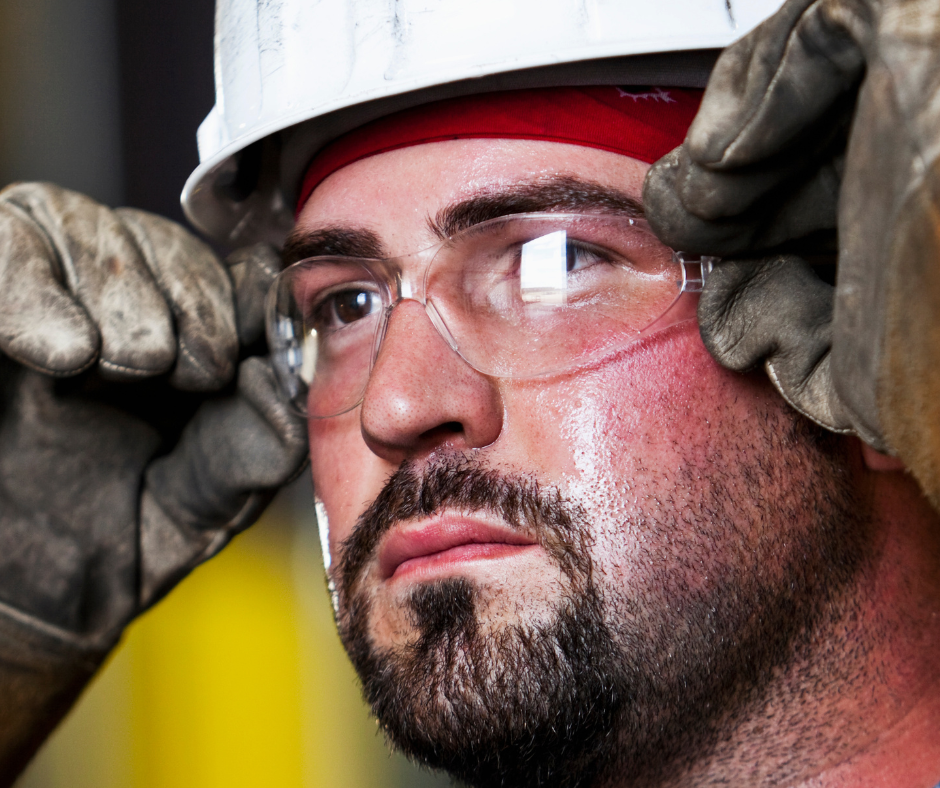
The first safety compliance item we agreed to go after was the wearing of safety glasses. We had many processes that were dusty, dirty, and in some areas there was a risk of chemicals splashing on the people doing the work. So, why weren’t safety glasses already a requirement? The union proudly stated they had ended the requirement ten years ago. How was this even possible? How could management give away their rights to protect the workers, I wondered.
We couldn’t go backwards, but we could move forward. Bill met with union leadership and informed them we would be reimplementing the safety glasses requirement. The union argued vigorously, but Bill stood firm in his convictions that keeping foreign objects out of people’s eyes was more important than the additional burden of wearing the glasses. We held crew meetings to roll out the requirement. There was a two-week grace period, and then anyone who wasn’t wearing the glasses once they arrived at work would be placed in the discipline system.
Our supervisors hadn’t had to enforce this requirement for years and had looked the other way around many other safety violations. The staff agreed to be on the floor for many hours each day to help enforce the requirement and explain the thinking behind it. Early on, I received many comments similar to this one: “I hate wearing safety glasses. We never had an eye injury, and you can’t prove this will help anything.” My answer mirrored others on the staff, “I never want to wish I did something to prevent your eyes from getting injured if the unthinkable were to happen.” This answer wasn’t typically received in a positive manner.
After a few weeks, Bill called another staff meeting. We talked about how things were going. We shared the many complaints we received. Bill said, “Good. At least their talking about safety glasses, even though it’s negative. The more they talk about it, the more it’ll get into their heads.” This was an interesting approach I hadn’t thought of.
After a month and many grievances filed, employees were consistently wearing their safety glasses. Now, we were ready to roll out the next safety compliance requirement, lock-out. This caused a new furor. Lock-out was critical to preventing major injuries. Some of our equipment wasn’t even equipped to be locked out properly, so we invested a lot of money and resources to make the equipment capable of being locked out. The fuss over safety glasses subsided and the new enemy was lock-out.
Bill brought us together again and explained we would continue to roll out critical safety requirements in this manner, until we were truly compliant and protecting our workers properly. He told us the more quickly we brought a new requirement on, the sooner the prior requirement would be accepted (or at least absorbed). He was right. Over the next year, we were able to drive safety compliance while building trust of our true intentions – protecting the safety of our workers.

Do Your Due Diligence
Midway through my corporate career, I was a senior industrial engineer at Armstrong World Industries. I spent most of my time providing support to our many manufacturing facilities all over the world. I have always been fascinated by manufacturing and it never ceases to amaze me how good (and bad) decisions can immediately impact performance.
Midway through my corporate career, I was a senior industrial engineer at Armstrong World Industries. I spent most of my time providing support to our many manufacturing facilities all over the world. I have always been fascinated by manufacturing and it never ceases to amaze me how good (and bad) decisions can immediately impact performance.
I thought I would someday be a plant manager and told my manager I wanted the opportunity to take the next step to get me there, as a business unit manager. I thought all my continuous improvement experience would serve me well and I would make more good decisions than bad ones.
One day, the week before Easter, my manager informed me that the plant manager at the Lancaster flooring plant wanted to talk to me about a position in his plant. I was excited for two reasons. One was my opportunity to learn manufacturing from the inside. The other was it would be a two-grade promotion. More money was never a bad thing, or so I thought!
I met Rob, the plant manager, on the Friday before Easter weekend. The plant wasn’t running, but he gave me a short tour of the areas I would be responsible for. All of the hourly workers were gone and I never met anyone on the staff. I thought it was odd, but I was enamored with the idea of the next step towards plant manager.
At the end of the tour, Rob offered me the job and told me that he wanted my answer by the end of the weekend. Even though I knew my answer, I told him I would talk things over with my family and get back with him on Monday morning.
I really didn’t think too much about it. I knew I was going to take the job. My wife was supportive and knew this new role would keep me home more. But the hours were going to be long. It was a tradeoff, but it seemed like the right choice to make. I did mention it was odd that I hadn’t met anyone during the tour, but tried not to read too much into it.
On Monday, I called Rob and told him I would take the job. My manager and I agreed on a transition plan, as I had some projects to wrap up or hand over to others. For the next four weeks, I tried to do both jobs, spending half of my time at my new factory, watching the staff conduct business.
One week before I started my new job full-time, Rob was promoted and left the plant. His replacement wouldn’t arrive for six more weeks. In addition, my counterpart in the factory who ran a different business had a three-week National Guard deployment. I would essentially be on my own, learning as I went.
I had a staff, but they didn’t know me. I also had the vice president of manufacturing to discuss issues with, should things get out of hand. I really didn’t want to have to use his support, but there were a few times that I had to. There were some union/management issues to be resolved and I didn’t have the historical perspective to help me out. So, I swallowed my pride and met with the VP. He was very helpful and supportive. He understood my lack of experience.
For the next few weeks, I barely survived. Finally, my counterpart came back and helped me deal with some issues and then our new plant manager arrived. Things got better, but they were tough. This plant had been in decline for many years and the management and union relationship was strained, to say the least. I did my best to improve things throughout my two years as business unit manager.
Would I have chosen a different path if I had known what was in front of me? Maybe. More likely, I would have tried to gain perspective on what I was agreeing to well before accepting the job. It would have eliminated some of my early bad decisions. It was an amazing learning experience. I like to think I gained twenty years of experience during my time on the job.
Living in the Moment
During my career, I have been fortunate to have worked all over the world. I was brought up as a “tourist.” Whenever I traveled with my family, we would do everything possible to see the sights and learn the history of the region we were visiting. Because of this, I naturally enjoyed my business travel and did my best to explore and experience the culture of any location I visited.
During my career, I have been fortunate to have worked all over the world. I was brought up as a “tourist.” Whenever I traveled with my family, we would do everything possible to see the sights and learn the history of the region we were visiting. Because of this, I naturally enjoyed my business travel and did my best to explore and experience the culture of any location I visited.
I was scheduled to assist Tim, a project manager on a critical project in Munster, Germany. We were evaluating the ramifications of expanding the plant and I was asked to utilize discrete event simulation modeling (explaining that is another story) to evaluate the capacity gain and future bottlenecks in the process.
I scheduled a two-week visit to the plant and had the weekend to explore the region. On my own, this would have been interesting, but with Tim, it turned into an all-out adventure. On Saturday, we took a cruise down the river and learned about the historical battles between the German and French armies. Castles would be destroyed, rebuilt, taken over, and then destroyed again.
On Sunday, we traveled to Belgium. Using the GPS (this was many years ago), we set out to find a museum to learn about the Battle of the Bulge. After being redirected into a few fields, we finally found the museum and learned history from a different perspective than what we had been taught in the United States.
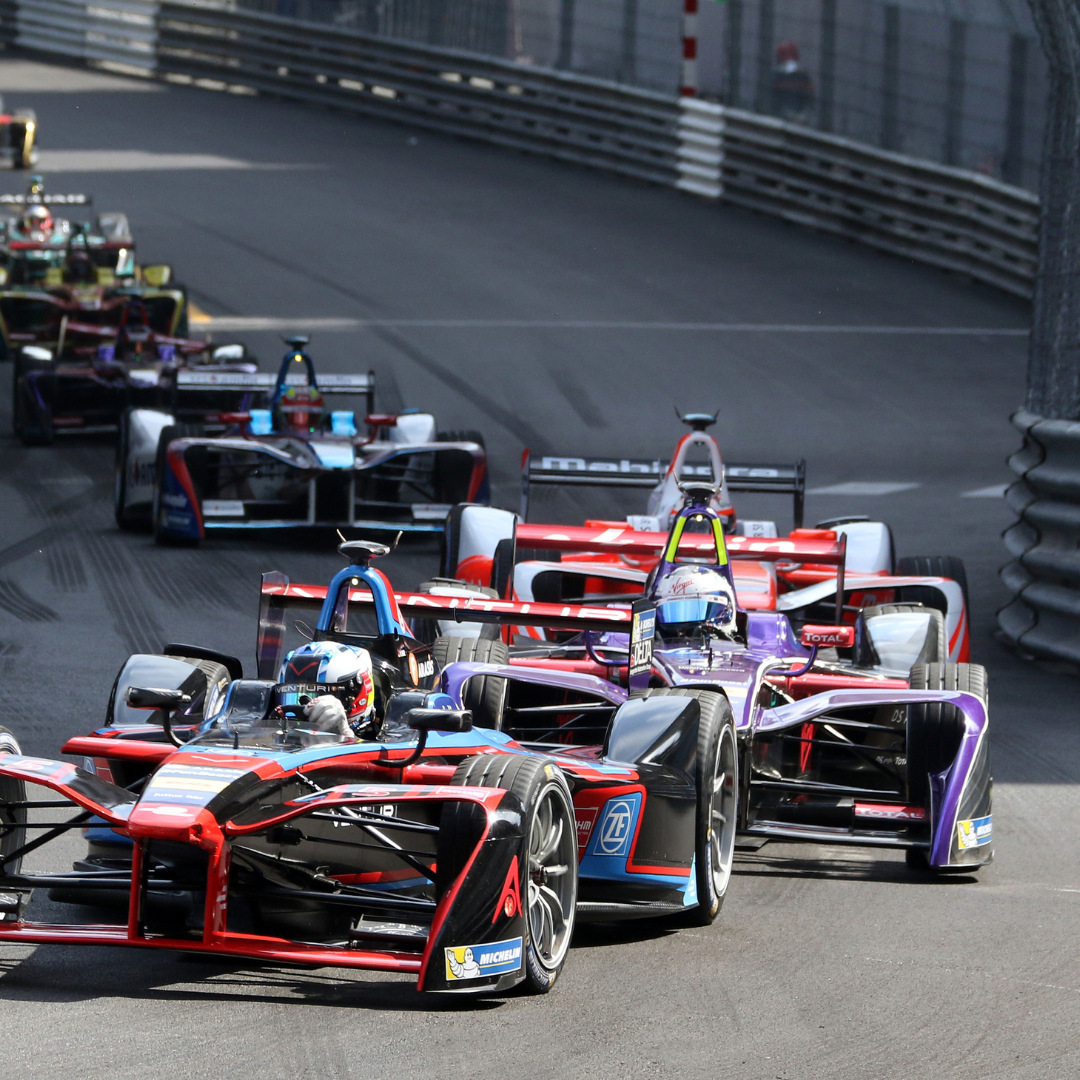
After touring the museum, Tim mentioned that Nürburgring, a famous Formula 1 track, was in the vicinity. I knew he was a big Formula 1 fan, so I quickly agreed to go with him to the track. We got to the track and parked the rental car. Since we didn’t have tickets, Tim was happy to just look at it from the outside.
I saw people walking in and suggested we join them inside. If we acted as if we belonged there, what was the worst that could happen? We joined the crowd and since no one was checking tickets, we made our way in. We climbed into the stands and watched as cars were “practicing” on the track.
Tim was in heaven. You could see he had ticked off a “bucket list” item. I enjoyed watching him as he was deep in his element. The sounds, smells, and experience filled him with joy. There was an infield section where cars were being maintained and tested. Tim looked longingly at the action, and I suddenly knew what I had to do.
I got up and said, “Follow me.” I started down the stands and Tim came along, saying, "There’s no way they’re going to let us go there.” I said, “What are they going to do, kick us out of the country?” Seemed unlikely, so we headed down and walked onto the infield, looking like we belonged there.
We spent the next two hours looking at cars and talking with drivers and mechanics. It was an amazing experience for Tim and me. I just enjoyed seeing Tim in his element, talking about cars, racing, and any other topics that I probably didn’t understand.
There’s a lot of similarities to what I do today as a consultant and my adventure with Tim. I venture out into the unknown, acting like I belong. I definitely enjoy living in the moment with my Kaizen teams and feeling pride when they win.

Getting More Than They Bargained For
My first Kaizen event with a new client in Oregon came as result of my site visit the month before. We were going to apply 5S to an area of their plant that was well behind budget. During my visit, I noticed that although prior efforts had been made to improve organization, they hadn’t stuck. With the appropriate use of Lean principles and the Wheel of Sustainability, I felt I could help them get back on track.
My first Kaizen event with a new client in Oregon came as result of my site visit the month before. We were going to apply 5S to an area of their plant that was well behind budget. During my visit, I noticed that although prior efforts had been made to improve organization, they hadn’t stuck. With the appropriate use of Lean principles and the Wheel of Sustainability, I felt I could help them get back on track.
After a few hours of training on Day 1, we took a Gemba walk into the space we were going to work on. There were several workstations with their own tools, tooling, and instructions. They were cluttered and disorganized. There was no indication of what was necessary and what was obsolete. There was a large central storage area, filled with heavy tooling for all the presses used at the workstations. One of our team members was responsible for the area and he admitted many items were no longer in use and were in the way of tooling that was current and needed.
Other areas were similar. Whenever someone needed tooling, materials, or supplies, they would have to wade through obsolete items to find them. That’s when it struck me – our 5S efforts could be used to make a direct impact on the productivity of the area. I proposed an experiment – perform a changeover on one of the presses and find out how much time, energy, and searching was required. Then, once we completed our major 5S work, we could compare “before and after” results.
I taught the team how to use spaghetti diagrams to follow the travel of the person doing the work. It would show the back-and-forth motions we could try to eliminate later. One of our team members volunteered to do the changeover. She had to search for materials, move things out of the way, and dig through clutter to do her work. Forty-five minutes later, she was finished. She looked frustrated. I asked if it was always this way. She said this was normal. Team members held up their diagrams and sure enough, they looked like spaghetti. We could make it much easier to do this work once we eliminated most of the “spaghetti” by applying 5S to the area.
I asked the team to write down their ideas to remove clutter (sort), optimize placement and create visuals (set in order), and to repair and clean equipment (shine). With almost 100 ideas on post-its, we prioritized our work. The team broke up into 3 sub-teams and worked on their critical projects.
After Day 3, there was an amazing transformation. All areas looked organized, well-labeled, and less cluttered. Over 30% of the tooling in the central storage area was identified as obsolete and was inventoried and relocated off-site.
On the morning of fourth day, we conducted another changeover with our original volunteer. She was able to complete the work in less than half the original time. She actually was able to slow down and take her time to do the work in a confident way. She didn’t have to move anything out of her way, sort through obsolete items, or search for what she needed. She took far fewer trips between her workstation and the central storage area. Our spaghetti diagrams looked much cleaner than on the first day.
My team was elated. But we were far from done. Now it was time to implement the Wheel of Sustainability to ensure their great results lived on. We named two Area Owners and built a board to post expectations, audits, and results.
We practiced the audits and checklists, and everyone agreed they could handle the tasks on a daily and weekly basis. They also felt that by doing these tasks, it would make work easier for everyone throughout the day and sustain the high performance we had demonstrated.
Following up with the team months later, they admitted they had a slow start, but after a few weeks, performance had reached budget levels. They are fully committed to continuing their great work in other areas.
Weld It in Place to Sustain It
Before I developed the Wheel of Sustainability, I had to find other methods to sustain the gains my teams worked so hard to develop during weeklong events. Here’s a story of the extreme lengths one team went to make sure no one could ever make a change to their improvements.
Before I developed the Wheel of Sustainability, I had to find other methods to sustain the gains my teams worked so hard to develop during weeklong events. Here’s a story of the extreme lengths one team went to make sure no one could ever make a change to their improvements.
I was requested to help a team in Armstrong’s Macon Georgia ceiling tile plant. They were experiencing jams at the end of the production line. These jams caused significant safety risk and high levels of downtime that affected the productivity of the operation. I was known for my efforts to improve flow on production lines and this was an extremely high value project.
I took a tour of the line and saw many opportunities to improve flow and reduce jams. I discussed my observations with the plant manager, and he agreed to assign a high skill team of line operators, mechanics, and the day shift supervisor to assist me.
We spent the first day of our event observing the flow of ceiling tiles as they traveled around the line over various conveyers. One area stood out above the rest: the twenty foot conveyer leading up to the flipper. Tiles were turning and entering the flipper in a skewed fashion. Every so often, they would get stuck and not flip correctly, causing the tiles behind them to back up and jam. People on the line had to rush around and clear the tiles off the line. Many times, they shut the line down and threw out a lot of damaged tiles.
We adjusted the conveyers and guides and tested our changes. The tiles were now going straight into the flipper. None of the other tiles were backing up and jamming. We had our solution. Our new challenge was to keep things in this optimal situation.
We brainstormed ways to sustain our improvements. We came up with ways to mark the conveyer rollers and guides. We considered drilling holes in the guides and pinning them in location. Then, one of our mechanics asked the question, “Now that we have the best location, why would let anyone make a change to it?” We looked at him and wondered what his idea was. He said, “Weld everything in place. Nobody can ever change it without a torch!”
He was right, of course. But were we willing to take such a leap and make our changes permanent? We decided to make further observations for the next two days, doing everything we could to make sure no one changed our settings during that time. To our relief, no changes were made, and more importantly, there were no jams.
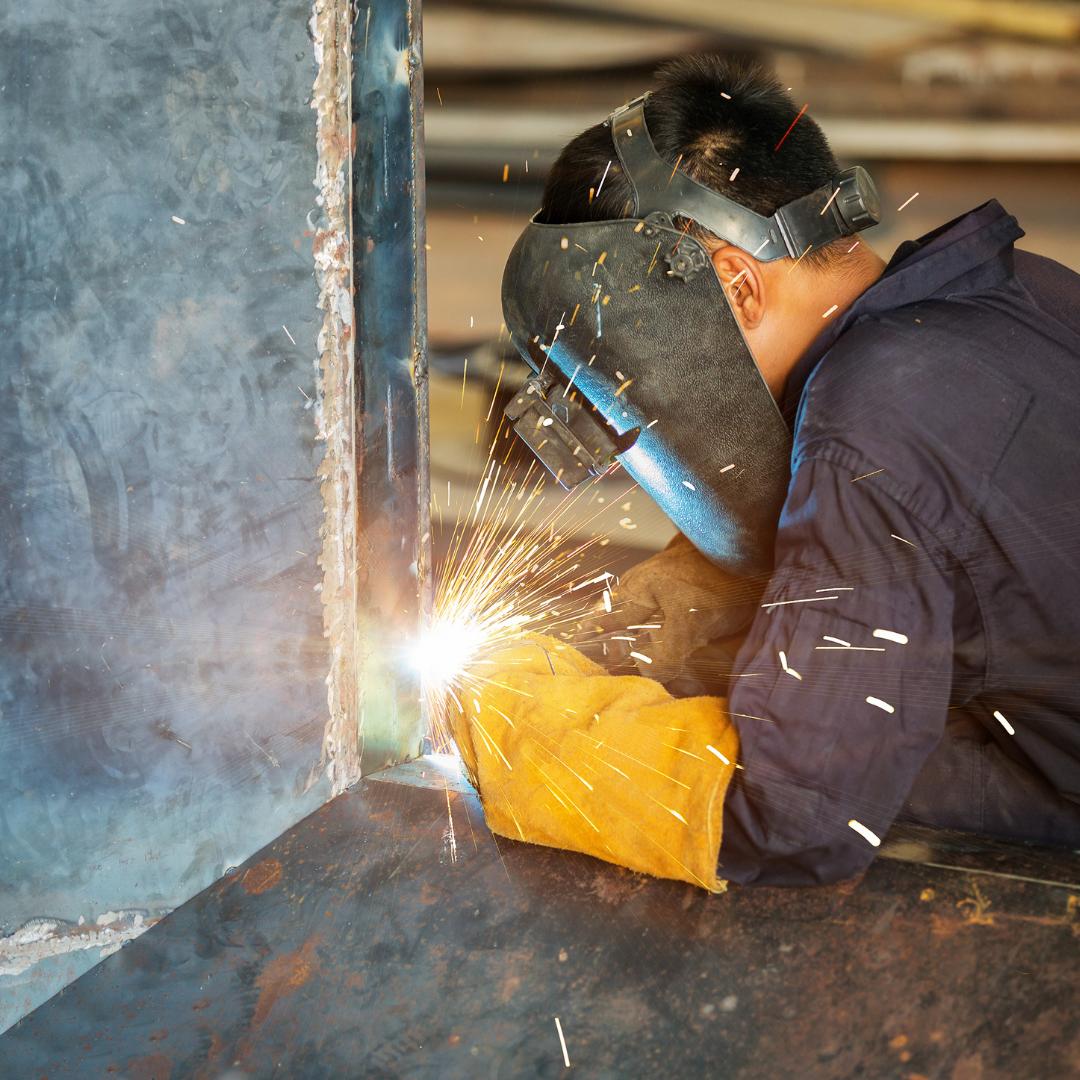
The next day, we took a leap of faith and shut the line down. Two of our mechanics welded all guides in place. Once everything had cooled down and was cleaned up, we started the line back up. The tiles entered the flipper squarely and without incident. Even though we knew this should work, we were all relieved.
We gave a tour of this and other changes we made to the line and our sponsors were impressed and pleased. Team members remarked how important it was to keep our changes in place from now on. We joked about keeping the “red wrench” (torch) out of the hands of our maintenance department, so that they wouldn’t take our welds out.
From time to time, on subsequent visits to the Macon plant, I would go to the production line and verify that the guides were still welded in place. Ten years later, everything was as we left it and the line continued its improved performance.

Raise Your Standards and Take Ownership
I was the industrial engineering manager at a ceramic tile plant in New York. We made mosaic tiles. The color went all the way through the tile. Mosaic is also a word used to describe the artistic patterns we made as special orders from our customers.
I was the industrial engineering manager at a ceramic tile plant in New York. We made mosaic tiles. The color went all the way through the tile. Mosaic is also a word used to describe the artistic patterns we made as special orders from our customers.
For years, we had a department that had the task to take any requested design and turn it into reality through manual assembly of the many different colored tiles we made. Sometimes this required tiles to be cut, an extremely slow and difficult process to accomplish. These special orders took many weeks to complete and were very expensive.
We heard about a technology called “water-jet” cutting that was being used at a few locations in our parent company, Armstrong World Industries. Using high pressure water, you could cut into almost any material (metal, plastics, etc.) and get a clean and precise cut. We were intrigued and felt there might be an application for this technology at our plant.
We arranged a visit to two of our plants, one, a ceiling tile plant in Beaver Falls Pennsylvania, and the other, a vinyl flooring plant in Lancaster Pennsylvania. We took the company van and I was joined by two operators, a programmer, and an engineer.
When we got to the vinyl flooring plant, we were met by a project engineer, who oversaw the samples department. They were using their water-jet to cut small pieces of vinyl flooring out of the larger rolls, so that they could send samples of different colors and patterns to customers. The shapes being cut were rectangles, so although this saved a lot of labor, we weren’t convinced it would help us cut complex shapes into our ceramic tiles.
Our team was convinced that in order to program and cut complex shapes and designs, we’d need someone specially trained and highly compensated for this new skill we were seeking. As an industrial engineer, I knew it wasn’t a good idea to have such a highly specialized job very few would be able to master. It limited flexibility and raised operating costs.
At the ceiling tile plant, we were met by a production operator. She showed us how she programmed and cut complex designs into the face of ceiling tiles using the water-jet. We were intrigued and impressed by the variety of shapes and designs she was able to cut. When we asked her how difficult it was to learn to program the equipment, she told us it was extremely simple and intuitive. You could either import a CAD (computer aided design) drawing or scan an existing design and the machine would figure out the cuts to make.
Our team members weren’t convinced that anyone could do it. They were ready to leave for home when I asked the operator if she’d provide some basic training and let our operators try it for themselves. She said yes, and I was able to convince my team to take the extra time to decide about the skills needed.
They picked out a couple of designs and after an hour of training, they were cutting ceiling tiles exactly as programmed. Now they knew they could do it and easily apply the water-jet to our ceramic tiles. On the way back to our plant, there was excitement about how easy this new technology was to master.
A few months later, we purchased and installed the new equipment. The plant was able to make beautiful mosaic patterns for many years thereafter and had the flexibility to use almost any operator to do it. Although seeing is part of believing, it wasn’t until the team actually tried their hand at the process that they were convinced it was a good idea. The lesson: open your mind to fully experience your options before counting out a solution.

Be Careful What You Ask For
I was the plant operations manager at Armstrong’s St. Helens, Oregon ceiling tile plant for three years. During my tenure, I was able to test and refine my management and continuous improvement approach on an operation that employed just under 100 people. I made many mistakes and I’d like to think I learned from each one of them. Sometimes, it took me a few times to learn from the same mistake.
I was the plant operations manager at Armstrong’s St. Helens, Oregon ceiling tile plant for three years. During my tenure, I was able to test and refine my management and continuous improvement approach on an operation that employed just under 100 people. I made many mistakes and I’d like to think I learned from each one of them. Sometimes, it took me a few times to learn from the same mistake.
With around the clock responsibility, I was the one who was called in the middle of the night when there was a significant safety, quality, human resource, or productivity issue. If I couldn’t resolve the issue, I would then escalate it to my boss, the manufacturing manager. I hated waking him up, but sometimes I had to. I was determined to keep those occurrences to a minimum.
It seemed like most critical issues happened around 2 am. If I got one call after going to bed, I usually could get a restful sleep during the night. If I got two or more calls, then it was hard to sleep well. I tried not to be too grumpy when I got to the plant the next morning, realizing my supervisors were fighting the issue far longer and were doing everything they could to avoid calling me.
One evening, the supervisor called me because he had suspicion one of our employees had broken our “no alcohol” policy. Because he was the only manager at the plant at the time, he needed a witness. I came in, saw clear evidence of alcohol use and drove the employee to get tested. He denied it the whole time, saying he had taken some cough syrup before coming to work. When his results came back at 3 times the legal limit, he had to admit his indiscretion. I drove him home and we subsequently terminated him once he was allowed back on the premises.
After a particularly challenging week, with multiple calls in the middle of the night, I remarked to one of my supervisors, “Just once, it would be nice to get a call in the evening saying that everything’s ok.” He agreed with me, and we laughed about all of the situations that forced those late evening calls.
Two months later, the plant was running smoothly. Safety, quality, and productivity were near record levels. The vibe in the plant was positive and there was nothing we couldn’t accomplish. I found myself bragging about our employees to anyone who would listen.
One evening, after having a particularly nice dinner at home, I decided to go to bed at 9 pm, so I could visit with the overnight shift early in the morning. After falling asleep quickly, I woke to the telephone ringing. I had been conditioned to expect the worst. On the other end of the line was my evening shift supervisor, who told me, “Adam, this is Jim. It’s 10 pm and I wanted to let you know that everything’s ok!” I couldn’t help but laugh as my words came back to haunt me.
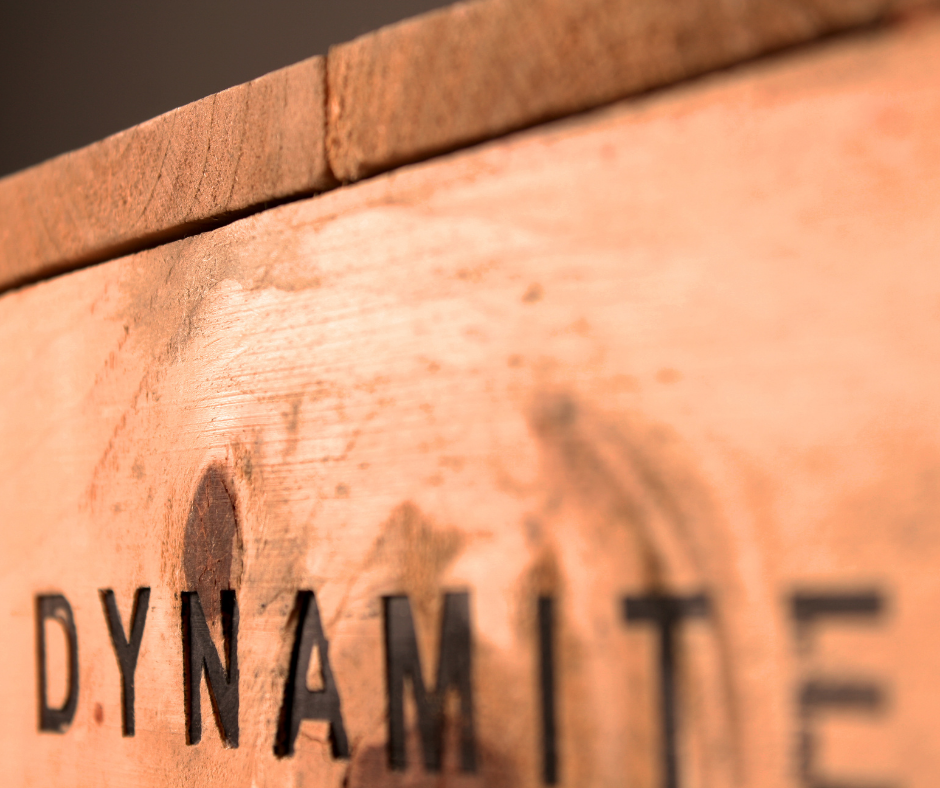
Blow It Up
Here’s a mining story from my time at Dal-Tile that involves blowing up a hill!
Here’s a mining story from my time at Dal-Tile that involves blowing up a hill!
We were invited to an annual mining training event (required MSHA training) at our talc mine in Van Horn, Texas. To get there, we had to fly to El Paso and then drive 120 miles in the middle of nowhere to our mining operations. Once we got there, we met Junior, the mining operator. He had spent his life out in the hot Texas sun and you could tell it by the condition of his skin. He lived on the mining property with his wife in a trailer and was one of the nicest people I have ever met.
After a day of training, we went out to dinner and spent the evening sharing stories, drinking, and dancing. Wayne, my boss, tried a shot of vodka with tabasco sauce on top and forgot to open his lips wide enough to avoid the burn. We all had a laugh at that.
On the second day, after a few hours of training, we were treated to a mining demonstration. We were going to clear some overgrowth on a hill by blowing it up. The only things I had blown up in the past were fireworks on the Fourth of July, so I was excited to see how it was done.
When we got to the hill, we were told there were 159 sticks of dynamite placed in three rows. They would be used to clear the growth and expose the talc for mining. Wayne and I got the opportunity to string the fuse through some of the sticks, while being assured by the mining operator we were perfectly safe to do so. I strung two sticks. Wayne was having such a good time, he strung around a dozen.
Then we were asked if we wanted to light the fuse to blow up the hill. I knew I did, and Wayne deferred to me. Since I had never blown anything up of this magnitude, I asked the operator what safety precautions we should follow. He pointed out the two vans with the motors running. Each one had enough capacity to take all of us away, should one of the vans fail.
Next, he told me the fuse between the sticks of dynamite took milliseconds to burn, but the main fuse I would be lighting had enough time on it to get us into the vans and approximately ½ mile away, where we would be safe.
I was a bit nervous, but I told myself the mining operator had done this many times before, so I would try to hide my anxiety. My natural inclination was to run as soon as the fuse was lit, but I thought that would make me look silly. So, I decided to do whatever the mining operator did. If he walked, I would walk. If he ran, well then …
He lit a cigarette, took two puffs and handed it to me. I bent down, held the cigarette to the fuse, and watched it light. Time stood still. I cleared my head and saw the mining operator walking slowly to the van. And that’s what I did. Wayne ran like a scared child and jumped into the van.
Once we were all in the van, we drove to the other side of the site and watched as the 159 sticks of dynamite exploded with a precision that took the face of the hill down exactly as planned.
We got back to the training room and poked fun at Wayne and any of the other folks who ran to the van. I would have too, but I had convinced myself to not panic. Was this the right call? I don’t know, but at least I had some fun at my boss’ expense!
These days, I work with teams to develop standard work to keep them safe and productive. To be sustainable, it needs to make sense to them. Although I don’t recommend lighting a fuse with a cigarette, it worked for the mining operator in Van Horn Texas.

Not Everyone Thinks the Same
I’m an engineer. Please don’t hold that against me. I’d like to believe I think logically, solving problems in a scientific way. I was taught this way as I was growing up. I assumed everyone else thinks this way. How wrong I was!
I’m an engineer. Please don’t hold that against me. I’d like to believe I think logically, solving problems in a scientific way. I was taught this way as I was growing up. I assumed everyone else thinks this way. How wrong I was!
My first job out of college was as an Industrial Engineer for Thomasville Furniture. After many job changes and promotions within Armstrong, I ended up as a Senior Industrial Engineer at the corporate office in Lancaster PA.
I was having a lot of success helping teams solve critical manufacturing problems all over the world, using my own brand of facilitation techniques. Feedback on my approach was mostly positive, but there were some who thought I was a bit heavy-handed and not listening to team members as much as I should.
Our project managers were all required to attend a problem solving and facilitation course in Buffalo NY. It was highly regarded. My boss thought it would be a good idea for me to attend. I was happy to have the opportunity, and it also sounded like a nice week away from the office.
On the first day of the course, 25 people sat at tables of 4 or 5 and introduced themselves. We were told we would learn dozens of problem-solving and facilitation techniques. Before we did, we had to understand how people think. That seemed reasonable. But didn’t everyone think in a logical, straight-line way, like me?
We were instructed to draw a picture illustrating how we solve a problem. After we had a few minutes to complete our task, we were asked to share our results with others at our table. Being the logical engineer, I drew a series of boxes and arrows showing the steps I took from problem identification to resolution. It was essentially a straight line and made a lot of sense to me.
When I reviewed my process with the group, a few looked at my picture with concern in their eyes. Then, one member of the group showed her drawing. It looked like a dust cloud, with an unhappy face on one side and a sunny day on the other side. She described how when a problem comes to her, she goes to a dark place to think until the answer presents itself on the other side, which made her happy.
This couldn’t be a more opposite approach to mine. But it was hers. It’s how she dealt with problems and it worked for her. I realized for possibly the first time that not everyone thinks like I do. I now knew the purpose of the exercise. We can’t assume everyone thinks in the same way. If we do, we won’t be sensitive to their needs and therefore can’t help them through our facilitation efforts.
I became more open to learning as many different facilitation and problem-solving techniques as I could possibly use. Having a full arsenal allows me to modify my approach to the needs of the people I am working with. This simple exercise opened my eyes to the obvious. I’d like to think it made me a better facilitator and someone who can help anyone solve problems.

Good Things Can Come from a Tough Situation
My first supervisory assignment was at a ceiling grid factory in Franklin Park Illinois. We had eleven operating lines at one end of the plant and a distribution center at the other end. It wasn’t unusual to produce grid in the morning and ship it out the same day. Sometimes, due to inefficiencies, we produced finished goods for customers whose trucks were waiting to be loaded on our shipping docks.
My first supervisory assignment was at a ceiling grid factory in Franklin Park Illinois. We had eleven operating lines at one end of the plant and a distribution center at the other end. It wasn’t unusual to produce grid in the morning and ship it out the same day. Sometimes, due to inefficiencies, we produced finished goods for customers whose trucks were waiting to be loaded on our shipping docks.
In early December, people in suits came to our plant and took a tour. They spent time on the factory floor and in the offices with our plant management. I was told they were “investors.” I didn’t know enough to question this, and went about my business, trying to produce grid as safely and productively as possible.
Our Vice President of Operations came to the plant in the middle of December and took the staff and their dates out to a nice dinner. He told us how impressed he was with us and that he was committed to the long-term viability of the plant.
Our performance was improving and the team was feeling good about their future. Early in the spring, we planned a recognition luncheon and invited employees from all three shifts to join in the celebration.
As we sat down to the meal, our Plant Manager summarized the performance improvements made over the past year. He congratulated many by name and shared how proud he was of what we had accomplished. Then, he introduced the “investors.” Everyone clapped. We had no idea what was about to happen.
One of the investors got up and added his congratulations. Then, he told us that even though we had made such great progress, our company had entered into a joint venture with his. Our plant had become redundant. We would be shut down in the next three months.
I was stunned. Good thing too. The moment the announcement was made, employees looked at me to see if I knew about the plant closure ahead of time. The look on my face told them I didn’t.
Over the next three months, we did everything possible to keep everyone safe and productive while we were preparing the plant to shut down. We lost many good crew members who found jobs in the area. But something happened that surprised me (in addition to the shock of the announcement). Performance improved beyond the levels it had reached prior to the luncheon. I think most people wanted to stay busy, rather than focusing on the eventual plant closure.
The remaining team members became closer and seemed to appreciate me more than they had before. I’m almost certain my ignorance of what was coming made them feel like I was in the same situation as them and that I hadn’t hidden anything from them.
As we shut off the lights and locked the doors on the final operating day at the plant, employees hugged each other and said their heartfelt good-byes. Our team rallied in the face of adversity and stayed strong until the end.

Cream Rises to the Top
I was working with a team in New Jersey to implement Training Within Industry (TWI) on a critical household cleaner line. Plant leadership saw this as a key element in their strategy to improve overall line performance.
I was working with a team in New Jersey to implement Training Within Industry (TWI) on a critical household cleaner line. Plant leadership saw this as a key element in their strategy to improve overall line performance.
In the initial Kaizen event, I trained twelve team members to competently create standard work and train others using the TWI method. Much like my first experience with TWI, the training method wasn’t natural for the team, but by the end of the Kaizen, they had all shown proficiency with it.
One of the hourly team members, Rita, seemed inspired by this “new” method for training. The rest of the team members agreed she had a flair for it and would do quite well training others on her crew.
When I got home at the end of the week, I was confident that TWI would help the plant improve line performance. I hoped the enthusiasm for TWI would continue. Over the weekend, I received a text from Rita, who was excited by what she had learned and had done further research on TWI and other Lean concepts. While this isn’t unheard of, I am always impressed how a winning Kaizen experience can move certain team members to want to learn more.
I sent Rita a congratulatory note and provided a list of my five favorite continuous improvement books for her consideration. She thanked me. I wondered if she would continue to take the initiative to learn more.
Boosting Confidence Through Training
Over the next few weeks, line performance wasn’t improving. I was asked to return to the plant to support the TWI rollout. Other issues had taken priority and the trainers hadn’t been given the opportunity to create standard work or train their coworkers.
I suggested that we have a refresher for the trainers and then practice training their coworkers with the standard work created during the initial Kaizen. Leadership agreed, and I was assigned to four team members, including Rita. I was curious to see what she had done in the weeks between the Kaizen and my visit.
It turned out she had been training some of the people on her crew and getting really good at it. She even gathered feedback at the end of each training session, asking for the level of confidence before and after the training. When her coworkers expressed their level of confidence had risen, it reinforced how important the training was to Rita.
It Takes One Good Leader
Over the next two months I returned to the plant for a few days each week to continue the training rollout. Rita participated every time. It was clear that she had become an amazing trainer. During one session, she taught the plant manager to change over a critical piece of equipment that only the highest skilled workers had previously done. We now knew this was going to work. Other trainers saw what Rita was able to accomplish and it boosted their confidence.
The following month, the line reached its performance objective and has stayed there since. I am convinced that the training process and Rita’s leadership contributed to this success.

Words Matter
Training and Review is the second spoke on the Wheel of Sustainability. The basis for Training and Review is Training Within Industry, which was developed at the onset of World War II to quickly train inexperienced workers to produce all the necessary armaments and supplies in support of the war effort. It’s one of the reasons the US and its allies won the war.
Training and Review is the second spoke on the Wheel of Sustainability. The basis for Training and Review is Training Within Industry, which was developed at the onset of World War II to quickly train inexperienced workers to produce all the necessary armaments and supplies in support of the war effort. It’s one of the reasons the US and its allies won the war.
Training Within Industry (TWI) is an extremely disciplined approach to ensure that the person doing a job learns it in the safest and productive way and never forgets the right way to do things. Recently, I had the opportunity to help a team apply TWI to a new laundry detergent line that was being installed in their factory in Ohio. The goal was to use this training approach to ensure the line started up at high-performance rates.
I had limited experience with TWI, so I did research and found a book and other materials to prepare me to deliver a winning experience for the team and the company. After reading the book about a dozen times and practicing the exercises to reinforce TWI, I was ready to facilitate my first TWI Kaizen event. The team leader and I agreed that we would follow TWI exactly as designed and not take any shortcuts.
We had 24 team members, mostly from the production floor, with a few support staff sprinkled in. On the first day, I taught the TWI approach and its key principles, including:
· Focus must be on the learner to maximize their experience
· Words matter
· All training is presented from the perspective of the person doing the work, not the equipment
· The simpler the instruction, the easier it is to follow
The Value of Different Perspectives
We practiced building standard work by making paper airplanes. This exercise illustrated how much we take for granted when we’re trying to explain what to do. From time to time, I had to correct errors in approach, as team members were getting different elements of TWI confused.
After the team successfully completed the exercise, we took a Gemba walk to identify real-life plant activities to build TWI standard workaround. As the TWI method was time-intensive, the team was directed to pick work elements that took one minute or less to accomplish.
We created six four-person sub-teams. I rotated through and coached them as they built their standard work. Because TWI was brand new to everyone on the team, each team member needed personal attention to properly build the standard work. Some caught on faster than others, and by the end of the first day, I was mentally exhausted from the coaching. I know many of the team members were tired too.
After the standard work was completed on day two, sub-teams were instructed to practice training each other using the TWI method. I planned to rotate through each sub-team to coach them through the training process. With four members on each of the six teams, they were instructed to conduct four rotations, where each team member would be able to participate as one of the four positions:
1. Trainer – responsible to use the TWI method exactly as designed
2. Learner – fully focused on the Trainer’s instructions and coaching
3. Auditor – responsible to ensure the training process was followed properly
4. Improver – responsible to look for improvements to the standard work
On my first team rotation, it was apparent that TWI wasn’t as natural as it appeared, and it took more than 40 minutes to get through one round of training (for one minute of work content). I had to step in and coach many times, as the Auditor wasn’t catching the nuances of the training process. After I completed my time with the first sub-team, I was then able to coach the second and third sub-teams before the end of the afternoon.
Knowing that I couldn’t complete all rotations before the end of the day, I brought the full team back to the meeting space and gathered their feedback. Many team members noted that it would have been nice to be corrected immediately around the TWI method, rather than waiting for me to rotate to them when available. I apologized and said I hoped that they were learning what “right” and “wrong” felt like, especially from the perspective of the Learner.
Do you really understand?
On the morning of the third day, I met with the fourth sub-team. I was in for a wake-up call, and so were they. Matt was the Trainer and Roy was the Learner. Just like the Trainers on the other three sub-teams, Matt had difficulty with the structure of the TWI. I stepped in and corrected him, and asked him if he understood my instructions. He said he did, but then made the exact same mistake in the next attempt. This went on for forty minutes. I must have corrected Matt half a dozen times. Each time, he said he understood my instructions. But he truly didn’t. I knew I had to do something, but what? Then it dawned on me.
Me: “Time out. Let’s move away from the equipment.”
Matt: “Sure thing, what’s up?”
Me: “Look, you keep telling me that you understand what I’m asking you to do.”
Matt: “Sure, I get it.”
Me: “Clearly you don’t. We need to get this right and we’re going to stay here until we do this right, even if it takes the rest of the day.”
They all looked at me as though a light had turned on – this was serious! Once I gained agreement from all four members to follow the method exactly, we started the training process again.
Focused Practice Makes Perfect
Matt was now focused. He followed the TWI method to the letter, and the training proceeded without any issues. Roy was able to concentrate on the training and demonstrated his knowledge very well. The rest of the team was able to see the value of the approach and why the words mattered. I could finally move on to the fifth and sixth sub-teams.
The rest of the event proceeded without major issues and by the end, we had not only created twenty-four TWI believers, but also developed a strategy for TWI implementation that could be supported and audited by the team and plant leadership.
When it came time to get feedback from all team members, I was pleased to hear that they appreciated the personal coaching that I provided and that my “tough love” wasn’t so tough! More than that, they realized that words really do matter, and by being focused and disciplined, they would be able to efficiently and safely train the rest of the workforce.

Saving Is Not Saving
We were building a ceiling tile manufacturing plant in Russia. Like most projects, the engineering team was directed to save money, as long as it didn’t negatively impact safety or productivity. As most were unfamiliar with doing business in Russia, they used their experience with known vendors to acquire equipment for the plant. If there wasn’t enough capacity to fill equipment needs, the project team worked with local consultants to identify the “best” options for equipment purchases.
We were building a ceiling tile manufacturing plant in Russia. Like most projects, the engineering team was directed to save money, as long as it didn’t negatively impact safety or productivity. As most were unfamiliar with doing business in Russia, they used their experience with known vendors to acquire equipment for the plant. If there wasn’t enough capacity to fill equipment needs, the project team worked with local consultants to identify the “best” options for equipment purchases.
A few years earlier we had shuttered a plant in Alabama. Equipment was stored in the hopes it might be used for future projects. The project team identified equipment they thought they could use and had it shipped to a contractor, who was responsible to inspect it and bring it up to optimal operating condition. This was done to save more than $1 million for the project.
Two weeks before plant start-up, I traveled to Russia to assess and optimize the flow of ceiling tiles through the new production line. I had done this work many times in other manufacturing plants and was known as the flow “expert”.
When I arrived, I was assigned a team of two mechanics and one production operator. We were going to send ceiling tiles through various parts of the line and make adjustments and corrections where necessary to improve the flow.
Very few tools were available for our use. I packed string, levels, and flat steel bars to help us with the work. Our initial assessment and work through the line went smoothly. We identified conveyers that were out of level, causing the ceiling tiles to skew and jam. Fixing these problems was simple enough. Soon we had tiles flowing smoothly through the first half of the line. Until we reached the equalizer.
The equalizer is a large panel saw. Its purpose is to cut ceiling boards into finished ceiling tiles. The board goes through a first set of saws, strikes a transfer, and then is driven through a second set of saws positioned at a right angle.
Boards were going through the saws at an angle. Instead of tiles looking like rectangles, they looked like trapezoids. They weren’t going to fit into ceiling grid that way.
There were many possible reasons for the angled cuts. After resolving many issues, the tiles still weren’t correct. What was going on? Normally, fixes happen independently of the saw assemblies. Saws are typically located in a level and square way on a frame. Everything else controls how the boards come to the saws in a square or angled fashion.
In this case, the problem was in the saw assembly. We locked out and climbed up on the equipment to take a closer look. The equalizer was freshly painted and made to look as if it was new. But it was far from new. There were many missing or broken parts. Because of that, we couldn’t control the boards as they were being cut. Broken motor mounts caused the saw blades to rotate in an elliptical fashion. How did the contractor miss this critical detail? How did we miss this during equipment inspection?
We spent the rest of our time repairing or replacing broken parts. Some things couldn’t be fixed immediately. We ordered parts and equipment from other locations. Some had to be air-freighted from the United States at considerable cost. All fixes were completed prior to the official plant start-up, but took valuable resources away from other critical work. All of this could have been avoided had the project team recognized the critical influence of the equalizer and chosen to invest in the right tools for the new plant. Expected savings disappeared due to the lack of All Tools Available.

Let’s See How Things Go
During my tenure as Production Manager at a ceiling tile plant in Oregon, I implemented strict rules around changeovers: No one is allowed in the breakroom during a changeover without Team Manager approval; Everyone is available to help during the changeover; Everyone is at their stations when the line is ready to start up; One Best Way changeover procedures are followed to the letter. No deviations. The procedures were developed by the technicians. There was no reason not to follow them.
During my tenure as Production Manager at a ceiling tile plant in Oregon, I implemented strict rules around changeovers:
· No one is allowed in the breakroom during a changeover without Team Manager approval.
· Everyone is available to help during the changeover.
· Everyone is at their stations when the line is ready to start up.
· One Best Way changeover procedures are followed to the letter. No deviations. The procedures were developed by the technicians. There was no reason not to follow them.
These rules came from my observations the first two months after I arrived at the plant. Those not directly involved in the changeover used that time to go to the break room. We lost vital minutes waiting for technicians to return from break when a changeover was completed. Sometimes help was needed to verify changeover settings prior to starting the line back up. If resources weren’t available, things took longer. Technicians were frustrated when they had to wait for help.
Technicians didn’t like the “no break during changeover” rule. I explained changeovers were the most critical activity during the production run and everyone should be helping to execute the safest, most accurate changeover possible. It couldn’t be done from the breakroom.
Some argued they wouldn’t be able to get their breaks under these new rules. I felt they’d have more flexibility around their breaks once changeover performance improved.
Immediately after the new rules were implemented, employees came to my office to express their displeasure. After listening to their arguments, I explained why I felt the rules were necessary. The plant had a culture of teamwork and help. There was no way to help teammates from the breakroom. Then, I told them, “let’s give it a chance and see how things go.” They didn’t like my answer. I was firm in my convictions and sent them on their way.
At the beginning of every changeover, I took a walk to the break room to ensure people were following the changeover rules. I didn’t want to put all of the burden on my Team Managers. I held myself accountable for rule enforcement. From time to time, I found people in the break room during a changeover. I always asked if their Team Manager had approved the break. Most of the time, they got up and went back to the line, indicating they hadn’t.
After four weeks, changeover time was reduced by 33%. Not only was the time reduced, it was more predictable. Just by having everyone available to help with the changeover and in place when the line was ready to start up. My team noticed the results. Visits to my office by “dissatisfied customers” came down significantly.
Team Managers felt more comfortable enforcing the changeover rules. They knew I had their back and they were seeing results. They were able to explain the rules and the reasons for them. It was no longer “Adam’s rules for changeovers”.
Two weeks later, a technician came to my office. He said, “Adam, I know you’re just going to tell me ‘let’s give it a chance and see how things go.’ I just wanted to tell you how I feel about the changeover rule anyway.” I thanked him for the feedback. He knew what I was going to say. There was no point repeating it.
Changeovers became a source of pride across all of the crews. Teamwork strengthened and performance continued to improve. What was once difficult and frustrating was now safe, simple, and predictable.

Four Value Streams = Four Boards
I reported to the Vice President of Global Technology for a ceiling tile company as Lean Champion. During my tenure, we kicked off our Lean transformation and established four Value Streams: Innovation (R&D), New Product Development, Capital Engineering, and Business and Operations Support. Each Value Stream Director guided efforts to deliver value to the internal and external customers who relied on their critical results.
I reported to the Vice President of Global Technology for a ceiling tile company as Lean Champion. During my tenure, we kicked off our Lean transformation and established four Value Streams: Innovation (R&D), New Product Development, Capital Engineering, and Business and Operations Support. Each Value Stream Director guided efforts to deliver value to the internal and external customers who relied on their critical results.
While the Value Streams had different customers and missions to accomplish, they interacted frequently and shared resources. I supported all Value Streams and had the opportunity to build relationships across all areas of the business. One area we worked on was how to keep critical information in front of us and engage in it at all times.
In the early days of our Lean transformation, we identified the need to create white boards to display the most relevant and urgent information for everyone to see and act on. Using weekly huddles, the boards would be reviewed and decisions were made and documented. Some of the teams took this need for a white board to be a requirement and put together their boards and huddles just because they thought the Global Technology VP and Lean Champion said it must be done.
It quickly became apparent these boards weren’t helping the teams accomplish their work in a manner more productive or safer than they had been before the boards were established. In fact, one of the teams got a bit rebellious and started to make their huddle a grind, rather than a value-adding exercise. Snide remarks and rushing through information replaced deep discussion and problem-solving.
I called a meeting with the Global Technology VP and the four Value Stream Directors. After much discussion, I was able to draw out their resistance to the boards and huddles. Probing further, we identified the issue. They thought the design of the boards was prescriptive, leaving them no room to design for the purpose of their individual Value Streams. Directors thought everything had to look the same and act the same, even if it didn’t work.
Now that we had revealed the problem, we were ready to improve the situation. We quickly agreed that design of the boards and huddles should be left to the Value Stream teams. They’d decide what was most relevant and useful and then design the boards and huddles to highlight only that.
I offered my assistance in helping the teams design their new boards and huddles. Two Value Stream teams took up my offer. Two others decided to do it on their own. We agreed to these design principles:
1. Design the boards and huddles with the tools and information that help your team make decisions in the best possible way.
2. Don’t worry what your board looks like. If it helps you, that’s all that matters.
3. Make it easy to know when help is needed.
4. There’s no standard board layout. We’ll teach our leaders how to read the boards and support your efforts.
Within four weeks, all Value Stream teams redesigned their boards and huddles and started to use them. None of them looked alike. Over the next months and years, Value Stream teams redesigned their boards and huddles many times, based on what they believed was an improvement. The information they shared became more relevant, urgent, and beneficial to their employees, the overall Global Technology group, and their customers.
From time to time, other organizations benchmarked Global Technology due to our impressive results. Most people who visited with us asked why our boards looked different by Value Stream. They thought all boards should be standardized, allowing anyone to read and understand any of the boards without training.
The Value Stream teams came first, I told them. The teams did what was right for the business. We successfully taught our leaders how to read the boards and support the teams. Those who challenged my thinking didn’t always like my answer about standardization. I knew we were giving our employees all the tools they needed to make the best possible decisions for themselves, their customers, and the business.