
Kaizen Success Stories
Real Manufacturing Results. One Kaizen at a Time
Explore real-world Kaizen success stories showing how manufacturing teams solved critical problems, improved performance, and created sustainable results.
The Day I Stopped Fixing Barcode Readers
I thought my job was to fix barcode readers. Instead, a warehouse full of employees taught me one of the most important lessons of my career: the best improvements begin by listening to the people doing the work.
Kaizen Snapshot
Setting: Thomasville Furniture corporate warehouses, late 1980s
Challenge: Support an aging barcode inventory system that was becoming increasingly frustrating and inefficient for warehouse employees.
Stakes: Inventory accuracy, warehouse productivity, employee frustration, and making better use of emerging barcode technology.
Approach: Observe the work firsthand, listen to warehouse employees, understand their daily challenges, and redesign the system around their needs rather than the technology.
Outcome: New scanning barcode readers were implemented throughout the warehouse network, inventory work became faster and easier, accuracy improved, and warehouse managers began viewing Industrial Engineering as a partner in solving operational problems.
Key Lesson: The best improvements don't begin by fixing technology. They begin by listening to the people who use it.
The Day I Stopped Fixing Barcode Readers
The Situation
When I graduated from Virginia Tech with a degree in Industrial Engineering, I accepted a position as a Corporate Industrial Engineer with Thomasville Furniture in North Carolina. One of my first responsibilities was supporting the company's barcode inventory system across multiple warehouses.
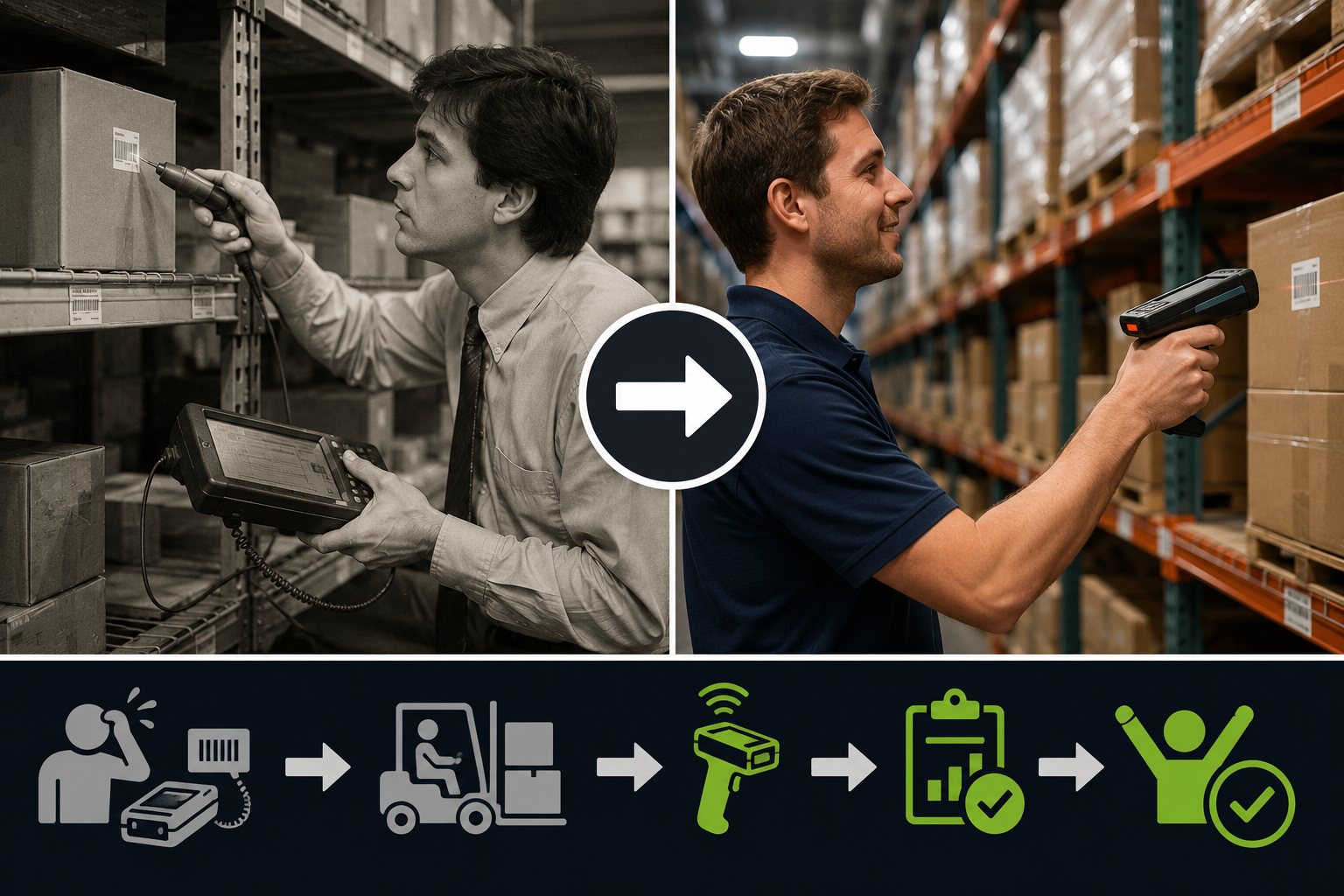
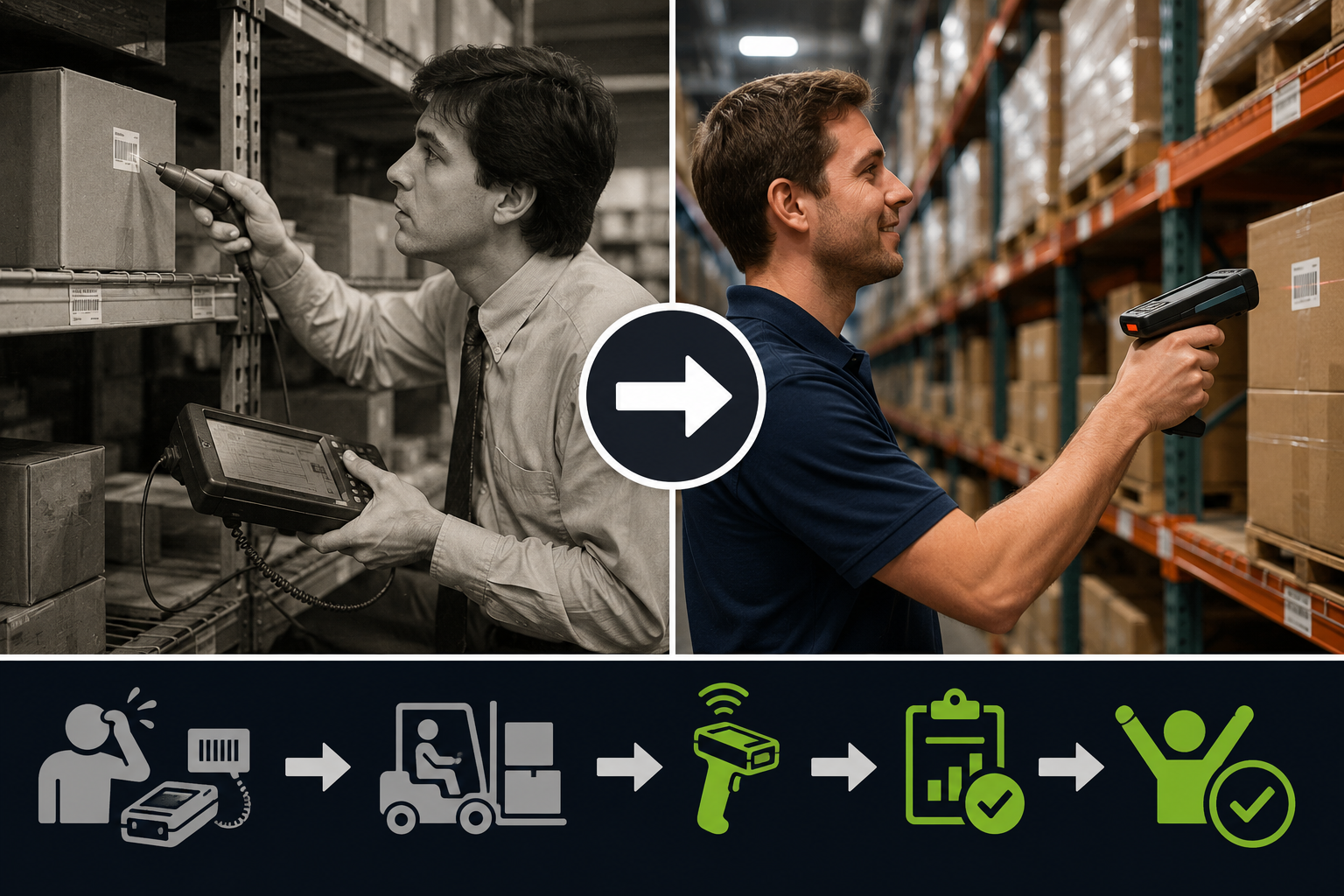
At the time, barcode technology was still in its infancy. There were no wireless scanners. No QR codes. No handheld devices like we know today. Warehouse employees carried readers about the size of a tablet with a cord attached to a lighted wand. To scan a barcode, they had to physically drag the wand across each label.
The engineer before me gave me a quick overview before moving into a leadership role. His advice was practical. "You'll get calls when the readers don't work. Sometimes people don't know how to reboot them or use them correctly. Just help them get back up and running." At first, I thought that was my job. Keep the barcode readers working.
What Was Getting in the Way
Instead of waiting for phone calls, I spent time walking through the warehouses. I watched people receive inventory, move furniture, store products, and retrieve orders. Most importantly, I watched how they actually used the barcode system.
The technology worked, but the work didn't. Employees often had to climb off forklifts or reposition large pieces of furniture simply to touch a barcode with the scanning wand. Sometimes they struggled with the equipment. Other times they struggled with the process itself. One warehouse employee jokingly told me, "This thing is almost like Braille."
He wasn't criticizing the technology. He was describing the experience. That comment stuck with me. The more time I spent in the warehouse, the more I realized I wasn't hearing complaints, I was hearing opportunities.
What We Did
Rather than asking, "How do we fix the barcode readers?" I began asking, "How do we make the inventory process easier?" That simple shift changed everything.
As I researched emerging barcode technology, I discovered a company developing one of the first scanning barcode readers that could read labels from a distance instead of requiring physical contact. Today that sounds ordinary. In the late 1980s, it was anything but. Suddenly, warehouse employees wouldn't have to reposition furniture or climb down from forklifts just to scan a label.
Even better, the new technology opened the door for entirely new capabilities. Instead of simply recording items entering or leaving inventory, we could create additional applications and reports that made warehouse operations more useful and informative. After presenting the opportunity, leadership agreed to invest in the new scanning technology.
The Breakthrough
The scanners solved a problem. Listening solved many more. As employees began using the new equipment, inventory became faster. Accuracy improved. Physical effort decreased. The technology removed frustrations that had quietly become accepted as "just part of the job." But something even more important happened.
Warehouse managers stopped seeing me as the person who fixed barcode readers. They started calling with ideas. "Could we use barcodes to help us do this?" "Would this process work better another way?" Instead of fixing equipment, we were improving systems together.
What Changed
By the time I left Thomasville Furniture, the new scanning barcode readers had been deployed throughout the company's warehouse network. Inventory management had become faster, easier, more accurate, and less physically demanding.
But looking back, those weren't the biggest improvements. The biggest change happened in me. Without realizing it, I had learned one of the most important lessons of my career. The people doing the work usually understand the problems better than anyone else.
If you're willing to spend time where the work happens:
Watch carefully
Ask questions
Truly listen
They'll often tell you exactly where improvement should begin.
The Takeaway
At the time, I thought I was learning about barcode technology. In reality, I was learning something much more valuable. Technology rarely solves the right problem by itself. People do.
The best improvements begin by understanding the work through the eyes of the people doing it every day.
Why This Matters
Organizations often invest in new technology hoping it will solve operational challenges. Sometimes it does. But technology alone rarely creates lasting improvement. Real improvement starts by understanding the frustrations, obstacles, and opportunities experienced by the people closest to the work.
Only then can technology become an accelerator instead of a substitute for good process design. Although I didn't realize it at the time, this early experience became the foundation for how I would approach every Kaizen event, leadership engagement, and improvement effort throughout the rest of my career.
Ready to Discover What Your Team Already Knows?
The people closest to your processes often have the best ideas for improving them. A Breakthrough Assessment helps uncover those opportunities by combining observation, employee engagement, and practical problem solving to reveal improvements that reports and dashboards alone can never find.
Sometimes the answers aren't hiding in the data. They're already being experienced every day by the people doing the work.

When My Design Didn't Win
I believed I had designed a better solution. Leadership chose a different direction. What happened next taught me one of the most valuable leadership lessons of my career: once the decision is made, your job is no longer to be right, it's to help the team succeed.

Kaizen Snapshot
Setting: Armstrong World Industries – Pensacola Integration Project
Challenge: Help redesign and integrate multiple production lines into a single-flow manufacturing system while supporting a design direction I didn't believe was the best option.
Stakes: Millions of dollars in capital investment, worker safety, operational flow, changeover efficiency, and long-term plant performance.
Approach: Challenge the proposed design with a thoughtful alternative, support leadership's final decision, and focus on making the chosen solution as successful as possible.
Outcome: The integrated production system launched successfully, numerous changeover improvements were implemented, and several innovations were later adopted at other Armstrong facilities.
Key Lesson: Great leaders aren't defined by whether their ideas are selected. They're defined by what they do after the decision has been made.
When My Design Didn't Win
The Situation
Early in my career as a Corporate Industrial Engineer for Armstrong World Industries, I was invited to join one of the company's largest manufacturing redesign efforts.
Known as the Pensacola Integration Project, the initiative would connect multiple production lines into a single, continuous flow system at the Pensacola, Florida plant. Instead of moving product in batches between disconnected operations, the new design would allow material to flow much more smoothly through the manufacturing process.
It was an exciting project. It was also one where I quickly developed a different opinion than the rest of the design team.
What Was Getting in the Way
As the engineering team refined the layout, one section of the proposed design concerned me. I believed there was a safer, simpler, and more efficient way to accomplish the same objective. Rather than quietly disagreeing, I shared my concerns with the project manager and the plant's Industrial Engineering manager. To their credit, they listened.
Although the project was already well underway, they encouraged me to develop an alternative layout and present it to the leadership team. Over the next several weeks, I invested significant time refining what I believed would create better flow, improve safety, and reduce the need for elevated platforms throughout that section of the plant.
Eventually, I had the opportunity to present my proposal. Leadership appreciated the effort. They liked portions of the concept. But after careful consideration, they chose to stay with the original design.
The Decision
I'll be honest, I was disappointed. Like many engineers early in their careers, I was passionate about my ideas and believed they would create a better result. But I also recognized something important. Leadership had listened. They had seriously considered my recommendation. They simply made a different decision. At that moment, my responsibility changed.
Until that meeting, my job had been to improve the design. After that meeting, my job became making the chosen design as successful as possible.
What We Did
Once the decision was made, I stopped trying to convince people to revisit the debate. Instead, I redirected all of my energy toward improving the selected design. Working alongside the project team, we simplified work areas, improved changeover methods, and identified ways to make the new production system safer and easier for operators.
I was also given responsibility for designing changeover equipment that would support the new integrated manufacturing process. Rather than dwelling on the design that wasn't selected, I focused on making the design that was selected perform as well as it possibly could.
The Breakthrough
Something unexpected happened. Once I let go of proving my idea was better, I became a stronger contributor to the project. Instead of dividing the team by continuing yesterday's debate, we became united around tomorrow's success. The energy shifted from defending decisions to improving execution. And that's where the real breakthroughs occurred.
Several of the changeover improvements our team developed during the project proved so effective that they were later adopted at other Armstrong manufacturing facilities.
What Changed
When the integrated production system finally started up, the project was successful. The new manufacturing flow performed well. Operators appreciated many of the improvements incorporated into their daily work. The changeover innovations created during the project continued spreading throughout the company's manufacturing network.
Looking back, I'm proud of the design I proposed. But I'm even more proud of the decision I made after it wasn't selected. That lesson has stayed with me throughout my career.
The Takeaway
Every leader will eventually experience the same moment. You present your best idea. Leadership chooses another direction. At that point, you have a choice.
Continue fighting yesterday's decision or become fully committed to making today's decision successful. Alignment often creates more value than proving you were right.
Why This Matters
Many organizations lose momentum because people continue debating decisions that have already been made. Healthy disagreement is valuable. Strong debate produces better thinking.
But once leadership has listened, evaluated the options, and chosen a direction, organizational success depends on everyone pulling together. The strongest leaders aren't the ones whose ideas always win. They're the ones who help the team win even when the final decision isn't their own.
That lesson shaped the way I've approached leadership, Kaizen facilitation, and organizational transformation ever since.
Ready to Build Greater Leadership Alignment?
The biggest obstacles to transformation are rarely technical. More often, they're organizational. When leaders align around a shared direction and commit to making it successful, teams move faster, collaborate better, and sustain improvements longer.
If you're looking to strengthen leadership alignment before your next major initiative, let's start with a Breakthrough Assessment and identify the opportunities that will have the greatest impact.

Five Tips for Effective Meetings
Have you ever had a meeting where it seems like nothing was accomplished? Is every meeting this way for you? Do your meetings start late? I have facilitated hundreds of meetings and Kaizen events and have learned over the years these five key tips to an effective meeting.
Have you ever had a meeting where it seems like nothing was accomplished? Is every meeting this way for you? Do your meetings start late? I have facilitated hundreds of meetings and Kaizen events and have learned over the years these five key tips to an effective meeting.
1. Define the purpose.
2. Create a clear agenda.
3. Facilitate the meeting.
4. Set expectations.
5. Hold accountability for actions.
Define the purpose of the meeting.
Why are we meeting in the first place? What are the expectations for the team members in the meeting? Why are they there? If everyone knows why they’re there and what’s expected of them, they will more likely prepare and engage in the meeting. It also makes it easier to choose team members for the meeting. Simply put, if someone is not aligned with the purpose, they shouldn’t be invited.
Create a clear agenda.
The path from the beginning of the meeting to the end should be mapped out. How do we get to a decision as a team? What information will be shared? Who is expected to share it? What preparation should happen prior to the meeting? Does the agenda lead us to our purpose? Taking the time to create an agenda helps to remove any of the excess or unnecessary parts of the meeting, resulting in shorter, more focused meetings.
Facilitate the meeting.
Don’t leave things to chance. Someone should run and manage the meeting. This person can help the team stay on track, not wandering “into the weeds.” It’s best to use a facilitator who isn’t deeply invested in the topic being covered, but that may not be practical. Facilitation is a skill that’s highly valued, so rotating this responsibility will help team development.
Set expectations.
Start and end on time – that’s the first expectation of any effective meeting. It seems so simple, but we let things get in the way of being punctual. Other expectations should be shared as ground rules for the team. Examples include: One voice at time, be open to others’ views, work collaboratively, no calls or texting during the meeting, and others the team may develop. If anyone breaks a ground rule, the facilitator should call them out immediately and correct their behavior. The sooner this is done, the more serious the rest of the team will take these expectations. Following ground rules is a sign of respect for the team and the topic being discussed.
Hold accountability for actions.
Every meeting should have an outcome. Sometimes it’s the sharing of critical information. Other times, there are action items that must be completed. Team members should know what they’re accountable for and be responsible to meet their obligations. Therefore, assignments should be listed visually, with owners and due dates. Updates should be a part of the meeting agenda. Don’t wait until an assignment is due. You want to make sure the assignment owner has a chance to complete his/her task(s). If they’re on track, thank them. If not on track, provide help.
These tips work. It takes a while for the team members to get used to them. But once they do, your meetings will be more productive, effective, and engaging.

A Picture is Worth More than a Thousand Words – It’s Priceless
Earlier this year, I received an email from someone I never met, asking about my approach to 5S – organizing a workspace to improve safety and productivity. He heard about me from another location in his company, who I helped six months earlier. Later that week, we were in a Zoom meeting, and he invited me to his factory in Oregon to see if I could help jump-start their 5S efforts.
Earlier this year, I received an email from someone I never met, asking about my approach to 5S – organizing a workspace to improve safety and productivity. He heard about me from another location in his company, who I helped six months earlier. Later that week, we were in a Zoom meeting, and he invited me to his factory in Oregon to see if I could help jump-start their 5S efforts.
Three weeks later, I was on a plane, heading to the west coast. I arrived early in the afternoon and met with Ben, my sponsor. We took a tour of the factory and strategized about my approach with the leadership team the next day. I saw many places where 5S and other Lean tools could help them out. People in the factory were engaged and appeared ready to take a first step on their continuous improvement journey.
That evening at dinner, Ben told me about past continuous improvement efforts. There weren’t many success stories shared. I was told one consultant had visited and said he couldn’t help them. I couldn’t understand how that was possible.
The next morning, Ben and I walked around the factory again. It helped ground me and remind me of the complexity of their processes. A little later, I attended the morning leadership walk around the factory. Although there were a dozen staff members attending, only one or two were engaged at any time. I took a risk and gave Roy, the facility manager, some feedback about how he might engage his staff more effectively. He took my feedback in stride (he didn’t kick me out of the plant, so that was a good sign).
After the leadership walk, Ben and I talked about what I had seen, and we prepared for the leadership review at lunch. We created a list of the top three areas that could use my help. There were unlimited opportunities for improvement at the facility.
At lunch, we crammed into a small conference room. There may have been a dozen people seated around a table designed for six. I introduced myself and thanked them for giving me the opportunity to visit and learn about their processes. I spoke about what I saw and where I thought I could help. I wasn’t getting much engagement from the leadership team and realized my words weren’t connecting with them. With a less than successful history of continuous improvement efforts at their factory, they were naturally skeptical.
That’s when it hit me – talk about the successful Kaizen event from their sister facility. I started describing the work I did with the team. We were able to reduce a critical changeover by many hours, leading to substantial savings for the company. The leadership team started asking some questions. Then, I asked Ben if he had the report out from the Kaizen. He projected it on the screen. Now the questions were flowing. People were amazed at the “before” and “after” photos. How did we do this? Is it still working? How might we apply a similar approach locally?
Next, Roy asked where I would start. I reviewed the three areas Ben and I had prioritized. Roy said those were good choices, but he preferred to start at the beginning of the process, where quality would be most affected. I was happy to oblige, as it was much more important to gain alignment than to worry about where to start. Ben agreed and now we were talking about when we could kick-off the first Kaizen event.
I said I would charter the event with Ben, and then we could review it for approval. From there, I would write a proposal and then, once receiving a purchase order, the work could begin. I normally like to think for 24 hours before writing my proposal. But speed was critical. After chartering with Ben, I found a quiet office to write my proposal for the Kaizen. Then, Ben and I met with Roy and we were met with enthusiastic approval. I left the facility with a purchase order. The following month, I ran their first “successful” Kaizen event. But that’s another story for another day.

The Journey of 100 Google Business Reviews
When I opened my business, I tried many ways to attract clients. After spending money on advertising that didn’t lead to business, I focused on delivering a great customer experience and then let my business grow organically through word of mouth and referrals. This is a slower path, but it fits my principles of how I want to conduct my business.
When I opened my business, I tried many ways to attract clients. After spending money on advertising that didn’t lead to business, I focused on delivering a great customer experience and then let my business grow organically through word of mouth and referrals. This is a slower path, but it fits my principles of how I want to conduct my business.
I set up my website, LinkedIn business page, and Google Business page, with the hope of acquiring clients through these (mostly) free resources. I noticed most businesses that had a Google Business page had reviews posted by their customers. I wanted reviews too. How would I ever get someone to share their thoughts, I wondered? After all, I was asked many times to leave a review for other businesses, but I rarely did.
The first thing I did was ask members of my Kaizen teams for Google Business reviews. Most people don’t naturally leave reviews of businesses. When I got my first one, I was excited to see it. Now, I wanted more.
For a while, I asked people to leave reviews. I wasn’t receiving many. Eventually, I got an idea. After I completed a Kaizen event, I sent an email to team members with a link to my Google Business page. Using this strategy, I’d get one or two reviews per event. My numbers were slowly creeping up. Eventually, I crossed the “10 review” threshold. Then 20. I wanted more!
It took over three years to get to fifty reviews. Next, I set a goal to get to 100. I needed a more compelling way to ask for reviews, without being too “salesy.” One day, at a happy hour following our Kaizen report-out, I was discussing my goal of receiving 100 Google Business reviews, when one team member suggested I get a QR code for reviews and post it on the screen at the end of the next Kaizen event. Team members could scan the code with their phones and be directed to my Google business page and the review section. I did some research and found a service that generated a QR code for free.
During the next few Kaizen events, I posted my QR code on the screen. I was able to get 2 or 3 reviews using that approach. It was progress, but still very slow. Then, I got an inspiration. I printed out a slide with the QR code on it and handed it to team members, so that they could scan it from their seat. By handing it to them, it put a little unspoken pressure on them to leave and immediate review. By waiting, most people forgot to leave a review. But, if they could do it in the moment, and I was there to see it, most team members would leave a review.
I was now getting 5 to 7 reviews at each Kaizen event. I broke through the 100-review goal earlier this year. It’s gratifying to see what all of those people have to say and that they believe I have positively impacted their work lives.
The next challenge? I need to reset my goals for this year. I’m very competitive and want to see how I can improve my process even more!

When You Want Something Done Right – Outsource It
I was asked to create a discrete event simulation program for a planned factory expansion many years ago at Armstrong World Industries. What is that, you may ask? Basically, it’s a computer model of a process as it operates. It tries to mirror the behavior of the process, allowing the user to try various “what if” scenarios, such as adding capacity, downtime, resources, or speed. Having not built any simulations since my college days, I started doing research on options and whether or not I should try to build it myself or hire an outside vendor.
I was asked to create a discrete event simulation program for a planned factory expansion many years ago at Armstrong World Industries. What is that, you may ask? Basically, it’s a computer model of a process as it operates. It tries to mirror the behavior of the process, allowing the user to try various “what if” scenarios, such as adding capacity, downtime, resources, or speed. Having not built any simulations since my college days, I started doing research on options and whether or not I should try to build it myself or hire an outside vendor.
No one at Armstrong had experience with simulation. The last person who did left the company three years before. The software he used was no longer available, and the owner of that company had died. I had to start from scratch.
After a few weeks of research, I found a simulation program called Simul8. It seemed intuitive and relatively inexpensive, so I bought a copy and started playing around with it. It didn’t take long to figure out I was in over my head! Instead of giving up, I found a company in Canada that was a licensed distributor and trainer for the software.
I signed up for a training course and flew up to their headquarters in Toronto. Because I had purchased additional coaching, I was able to get direct assistance on the project I was working on. During the week, I made significant progress on my simulation program and felt confident I would be able to complete the work in a reasonable amount of time.
When I got back to my office at Armstrong, I stayed focused on the simulation and from time to time, I would get stuck. The trainers were available to coach me through my issues for a fee, and eventually I finished the program.
We were able to simulate the plant expansion and try many experiments and “what ifs” related to various plant scenarios. Everything worked, except the program was slow. I knew that it was due to my lack of experience. I wasn’t using the power of the program and taking advantage of the shortcuts an experienced programmer would know.
That’s when I realized I could play a more valuable role for future simulation projects. Now that I knew the ins and outs of the program and what it was capable of, I could help other project managers assess whether or not simulation would help them deliver their projects in an efficient way. Then, if we agreed that it would, I would engage the experienced simulation programmers from Toronto and let them write the code in a much more efficient and logical manner.
It cost more money directly, but because their programs ran many times faster, we saved a lot more money in the long run. And, through the years, our vendor learned so much about our process, it took less time to complete the work for us.
The lesson I learned from all of this is that you can’t be an expert in everything, but if you can find the person who is, you can maximize your return by using their services.