
Kaizen Success Stories
Real Manufacturing Results. One Kaizen at a Time
Explore real-world Kaizen success stories showing how manufacturing teams solved critical problems, improved performance, and created sustainable results.

Perfection Isn’t Always a Good Idea
In the 1980’s, Thomasville Furniture was the market leader in high-end furniture. They were extremely focused on process improvement in all areas of the business. I worked on a staff of industrial engineers. Each of us supported one or more of the many manufacturing facilities. We were tasked with finding ways to improve safety, quality, productivity, and customer service.
In the 1980’s, Thomasville Furniture was the market leader in high-end furniture. They were extremely focused on process improvement in all areas of the business. I worked on a staff of industrial engineers. Each of us supported one or more of the many manufacturing facilities. We were tasked with finding ways to improve safety, quality, productivity, and customer service.
One of my colleagues worked at the plant that made tables and chairs. They took great pride in the finish of their tabletops. To achieve the desired look, many workers used powered sanding and rubbing devices. It was an extremely labor-intensive process. We had many muscle strains as a result from all the hand sanding and rubbing to get the desired look.
We heard about companies using robots to reduce labor intensity and safety risk. It seemed like an opportunity for us. If we could figure out how to get robots to sand and rub each tabletop, we could realize significant labor cost reduction and eliminate one of our top safety risks.
My colleague, Frank, connected with a robot supplier who brought in some of his robots for a 30-day “test drive.” The first few weeks were spent teaching the robots how to find the surface and perimeter of the table, apply the proper pressure, and cover the entire surface of the table consistently.
Eventually, they were able to achieve their objectives. The robot was able to sand and achieve a rubbed finish on the tabletops, without human intervention. The tabletops looked great. We were ready to roll out robots to take over the sanding and rubbing process.
Before fully committing to the robots, they decided to show the results to a focus group, to get their reactions to the results. The feedback was surprising. Initially, the group loved the finish and look of the tables. In fact, they said the finish was better than anything they had ever seen. But, after more review and conversation, there was something that bothered them. A series of questions drew out the issue: the tops were too perfect. There was no variation across the surface. We had lost the “handmade” look and feel of the furniture. Instead, the lack of variation made the tables look mechanically made, plastic, or unreal.
We couldn’t give up the thing that made Thomasville Furniture a market leader. Frank and his team went back to the robot vendor to see if he could program variability into the process. After many attempts, they gave up. The technology at the time wouldn’t allow the robots to randomize the pressures applied across the tabletops.
The team removed the robots and returned to the time-tested approach to hand sand and finish tables. Over time, robot technology improved, but it was never given another chance at Thomasville Furniture. Instead, we worked on ways to simplify and reduce the safety risk of hand finishing tables.

The Journey of 100 Google Business Reviews
When I opened my business, I tried many ways to attract clients. After spending money on advertising that didn’t lead to business, I focused on delivering a great customer experience and then let my business grow organically through word of mouth and referrals. This is a slower path, but it fits my principles of how I want to conduct my business.
When I opened my business, I tried many ways to attract clients. After spending money on advertising that didn’t lead to business, I focused on delivering a great customer experience and then let my business grow organically through word of mouth and referrals. This is a slower path, but it fits my principles of how I want to conduct my business.
I set up my website, LinkedIn business page, and Google Business page, with the hope of acquiring clients through these (mostly) free resources. I noticed most businesses that had a Google Business page had reviews posted by their customers. I wanted reviews too. How would I ever get someone to share their thoughts, I wondered? After all, I was asked many times to leave a review for other businesses, but I rarely did.
The first thing I did was ask members of my Kaizen teams for Google Business reviews. Most people don’t naturally leave reviews of businesses. When I got my first one, I was excited to see it. Now, I wanted more.
For a while, I asked people to leave reviews. I wasn’t receiving many. Eventually, I got an idea. After I completed a Kaizen event, I sent an email to team members with a link to my Google Business page. Using this strategy, I’d get one or two reviews per event. My numbers were slowly creeping up. Eventually, I crossed the “10 review” threshold. Then 20. I wanted more!
It took over three years to get to fifty reviews. Next, I set a goal to get to 100. I needed a more compelling way to ask for reviews, without being too “salesy.” One day, at a happy hour following our Kaizen report-out, I was discussing my goal of receiving 100 Google Business reviews, when one team member suggested I get a QR code for reviews and post it on the screen at the end of the next Kaizen event. Team members could scan the code with their phones and be directed to my Google business page and the review section. I did some research and found a service that generated a QR code for free.
During the next few Kaizen events, I posted my QR code on the screen. I was able to get 2 or 3 reviews using that approach. It was progress, but still very slow. Then, I got an inspiration. I printed out a slide with the QR code on it and handed it to team members, so that they could scan it from their seat. By handing it to them, it put a little unspoken pressure on them to leave and immediate review. By waiting, most people forgot to leave a review. But, if they could do it in the moment, and I was there to see it, most team members would leave a review.
I was now getting 5 to 7 reviews at each Kaizen event. I broke through the 100-review goal earlier this year. It’s gratifying to see what all of those people have to say and that they believe I have positively impacted their work lives.
The next challenge? I need to reset my goals for this year. I’m very competitive and want to see how I can improve my process even more!

The First Area Owner at the Furniture Company – the Story of Abraham
I was facilitating a Kaizen event for a large furniture retailer in Florida. They offer many services that set them apart from their competitors. They have a nice sales and service advantage and impressive customer loyalty. The Kaizen topic we were working on was the use of replacement parts in their process. Our goal was to reduce the amount of replacement parts needed.
I was facilitating a Kaizen event for a large furniture retailer in Florida. They offer many services that set them apart from their competitors. They have a nice sales and service advantage and impressive customer loyalty. The Kaizen topic we were working on was the use of replacement parts in their process. Our goal was to reduce the amount of replacement parts needed.
After Lean training on Day 1, we went out into the Gemba (a Japanese term, meaning the place where the work is done) and saw many areas where parts could be misplaced or lost. There was an area where parts were stored for the entire distribution center. It looked as if it had been hit by a tornado. There was so much clutter that the team knew it would be a high priority project for the Kaizen week. The number of parts and clutter was overwhelming. Would they be willing to put in the effort and time it would take to get things organized?
Three very ambitious team members picked the parts storage area as their project. Abraham, who normally worked in the area, said that they had been working on it for years. He didn’t think they’d be able to do anything to correct the situation, especially in a week. As facilitator, I had to rely on my team. They decided it was so important that they would go for it.
The three team members got help from people outside of the team. By the end of the week, the parts storage area looked like it was brand new. Everything was organized, clutter was removed (at least 75% of what had been stored there), and there were barcode labels on every bin to help manage the parts inventory. They worked many hours beyond the scheduled team hours and refused to stop until they were done.
On the morning of the third day, when we realized that it might be possible to organize the parts storage area, I reviewed “area ownership” with the team. I told them that at my prior company we had area owners who managed things and held people accountable to always do the right thing. Leadership “had their backs” and it made things safer and more productive. I also told them that it took a while to train leadership to behave that way, but once they saw the value of area ownership, they got on board.
Abraham raised his hand and said, “I want to be our first Area Owner.” I was stunned. Here was someone who had been skeptical on the first day and now he was courageous enough to step up and try something new. We were excited for him. The rest of the week we did everything possible to get the area into the best possible shape and designed our system to sustain it, using the Wheel of Sustainability.
The report out at the end of the week was well attended. When we took the leadership team into the parts storage area, you could hear a pin drop – they were blown away. Then, something magical happened. Abraham told them that he was the Area Owner and he needed their help and support to keep the area in its optimal condition. He shared his expectations for himself and for leadership. He showed them how he wanted to be audited on a weekly basis. I was proud of him and the rest of the team.
The area has been working as well as or better than the Kaizen team left it.I now use it as an example of what can be achieved in a short period of time and how well it can be sustained. Many newer Kaizen team members take a tour through the space and when Abraham is there (which is most of the time) he shares his story and tells them how important it is to meet his expectations. He is a model for what’s possible when you take ownership and care about your customers.

Charting a Course of Critical Information
I was asked to facilitate a 5S Kaizen at an electronics manufacturer. The specific area of interest was in a testing lab that was used to analyze components that failed in the field. There were an amazing number of parts and supplies in the lab. On first glance, the lab owner felt he needed everything in the lab to accurately perform testing. We must have removed 80% of everything in the space to improve the safety and productivity of the area.
I was asked to facilitate a 5S Kaizen at an electronics manufacturer. The specific area of interest was in a testing lab that was used to analyze components that failed in the field. There were an amazing number of parts and supplies in the lab. On first glance, the lab owner felt he needed everything in the lab to accurately perform testing. We must have removed 80% of everything in the space to improve the safety and productivity of the area.
When we were done, we assessed the critical elements of the process to see what we could improve on and optimize for the total system. We prioritized the fume hood area as the most critical part of the process. Essentially, every component that came back from the field had to have all internal gasses purged before it could be assessed and repaired. This was a critical safety requirement.
Different components had different gasses internally and some of those gasses were hazardous. They had to go through a full purging cycle before any other work could begin. Paul, the lab owner, had worked there for many years. When he wasn’t sure which gas was present, he would contact Jeff, an engineer. Jeff could help Paul identify the gasses present and the proper purging cycle.
Customers were anxious to get their equipment back in a timely fashion. The lab couldn’t rush the purging cycle and the testing that came afterwards. Many times, Jeff wasn’t available when Paul needed the critical purging information and the equipment waited days or weeks before purging could start.
It just so happens that Paul and Jeff were on the Kaizen team. When this critical issue was raised, Jeff told us that he had an idea and would need some time to work on it.
An hour later, Jeff came back to the lab and showed us his idea. It was a chart of the top components. They comprised more than 98% of the total possible items that could come through the lab. He identified the gasses and the purging requirements for each one. Now, Paul could start his work without having to track down Jeff. Customers would get their results much sooner.
In the end, it worked out even better than we could imagine. Paul retired shortly after the Kaizen and his replacement was quickly trained to perform to the standards Paul had set for the lab. The customer never waited too long for their results due to the contributions of Paul, Jeff, and the rest of the Kaizen team.

Strengthening a Kaizen Culture
A good friend of mine asked me to speak at his Virtual Lean Summit. I was scheduled to present on the Wheel of Sustainability on Thursday. When I looked at the agenda for the week, I found several presentations I wanted to attend. One stood out to me as a must – the Tuesday presentation by the President of a large furniture retailer in South Central Florida.
A good friend of mine asked me to speak at his Virtual Lean Summit. I was scheduled to present on the Wheel of Sustainability on Thursday. When I looked at the agenda for the week, I found several presentations I wanted to attend. One stood out to me as a must – the Tuesday presentation by the President of a large furniture retailer in South Central Florida.
He was going to speak about the 15-year Lean journey at his company. Even more interesting to me was that he was the impetus for it. I looked forward to hearing the top leader in the company talk about building a continuous improvement culture from the ground up. Support all the way to the top of the organization is the ideal situation. I had never had the opportunity to see what it looked like.
The presentation was inspiring and I learned so much from it. When it was over, I wanted to know more. That evening, I sent a LinkedIn connection request to the President of the company and told how much I enjoyed his presentation. I mentioned I was an “old furniture guy” with many years of Lean experience and that it would be fun to share some furniture “war stories” with him.
Within an hour, he responded, and we set up a Zoom meeting for the next day. We talked for a few minutes, and I shared stories about the adventures I was having with my Kaizen teams. He remarked that they had held many Kaizen events in the past. They hadn’t done any in a few years and he missed the energy and excitement of Kaizen events. I said, “It turns out I know a guy who can help you with that.” He asked who that was. Of course, the answer was me! He said I should come for a visit to see if there were any synergies that we could both benefit from.
Two months later, I traveled to their corporate offices. I had the opportunity to meet with many staff members to see their continuous improvement culture. I shared my approach to Kaizen and continuous improvement. At the end of the day, I went to dinner with the President and he told me that pending a few more discussions, he wanted to know if I could support and facilitate 12 Kaizen events over the next year. What could I say? I said yes!
The following month, I signed my first contract to facilitate one Kaizen event per month. The President, who had now become company CEO, told me that beyond results, he wanted to focus on strengthening the Kaizen culture of his company. I was asked to focus on what I enjoy the most: engagement, empowerment, and sustainability.
The first year of working with the company was a true pleasure and a joy. The culture of continuous improvement is already strong and the leadership does what it takes to support every Kaizen team I facilitate. We have experienced breakthroughs and setbacks during our Kaizen weeks together, and the response has been extremely positive throughout. They value learning and culture more than pure results. Make no mistake, results do matter.
Things went so well, they signed up for a second year of facilitated Kaizen events. I am looking forward to a bright future with my client.

Make It Real
I created the Wheel of Sustainability many years ago. It’s been applied to many different industries and problems. On the first day of every Kaizen event I facilitate, I introduce the concept of the Wheel and help teams utilize it to sustain the solutions they create during the week.
I created the Wheel of Sustainability many years ago. It’s been applied to many different industries and problems. On the first day of every Kaizen event I facilitate, I introduce the concept of the Wheel and help teams utilize it to sustain the solutions they create during the week.
Most people haven’t heard about the Wheel and don’t know how to utilize it effectively. As the Kaizen week progresses, I help team members implement elements of the Wheel so they have a better grasp of things and know what to do moving forward. Recently, I noticed my Kaizen team wasn’t taking full advantage of what I was teaching them and decided to try an experiment. I abandoned my facilitator role and demonstrated a specific approach to a problem they were trying to solve.
They were working on strengthening a major equipment installation by creating control plans for different aspects of the project. The control plans were owned by various members of the team. They created twenty-eight plans over a resource pool of nine owners. Some team members had up to five control plans to manage. Others had as few as one. These control plans were intended to reduce the risk of failure for this critical project. Their success was vital.
In a traditional project management approach, each control plan owner would deal with their issues on their own and bring problems to light when it was too late to take preventive action. We had to come up with a system to manage all of the control plans and keep status of them visible to everyone, so help could be deployed before it was too late. That’s where the Wheel of Sustainability came into play.
Using their control plan structure, I helped the team build their “why.” In other words, “Why were these control plans so critical to the success of the project?” This would enable them to explain to others in a meaningful way, so they would be aligned and willing to help, should something go sideways. This enabled Notification and Training and Review. Next, we developed Visible Evidence for the control plans. Each owner installed a whiteboard outside his or her office. On it, the status of each control plan was displayed, along with critical tasks to be completed on the current day, week, and month. Anyone walking by could see what was going on and easily engage with the owner, during their daily Gemba Walk. This was their Layered Audit.
Next, we had to make sure each owner had all the tools needed (All Tools Available) to access the information around the project easily. The team created a shared document and gave access to all control plan owners and the Leadership Team. The Clear Benefits of this work were easily verbalized by all of the team members, and they were enthusiastic about this new approach. We tested our logic with others who weren’t on the team, and they agreed with us.
Accountability for each control plan was obvious, and Leadership accountability was demonstrated by the new daily Gemba Walk through all of the offices with white boards. Finally, stories of risk reduction and prevention created Recognition for this new approach.
Leadership Commitment was demonstrated by support of the new system and leadership engagement in the daily Gemba Walk. The team is confident they have successfully mitigated and managed the risk of their most critical equipment installation
By using the Wheel and applying it to a specific problem, I was able to help the team implement a system to prevent problems from derailing their most critical project.

Saving Is Not Saving
We were building a ceiling tile manufacturing plant in Russia. Like most projects, the engineering team was directed to save money, as long as it didn’t negatively impact safety or productivity. As most were unfamiliar with doing business in Russia, they used their experience with known vendors to acquire equipment for the plant. If there wasn’t enough capacity to fill equipment needs, the project team worked with local consultants to identify the “best” options for equipment purchases.
We were building a ceiling tile manufacturing plant in Russia. Like most projects, the engineering team was directed to save money, as long as it didn’t negatively impact safety or productivity. As most were unfamiliar with doing business in Russia, they used their experience with known vendors to acquire equipment for the plant. If there wasn’t enough capacity to fill equipment needs, the project team worked with local consultants to identify the “best” options for equipment purchases.
A few years earlier we had shuttered a plant in Alabama. Equipment was stored in the hopes it might be used for future projects. The project team identified equipment they thought they could use and had it shipped to a contractor, who was responsible to inspect it and bring it up to optimal operating condition. This was done to save more than $1 million for the project.
Two weeks before plant start-up, I traveled to Russia to assess and optimize the flow of ceiling tiles through the new production line. I had done this work many times in other manufacturing plants and was known as the flow “expert”.
When I arrived, I was assigned a team of two mechanics and one production operator. We were going to send ceiling tiles through various parts of the line and make adjustments and corrections where necessary to improve the flow.
Very few tools were available for our use. I packed string, levels, and flat steel bars to help us with the work. Our initial assessment and work through the line went smoothly. We identified conveyers that were out of level, causing the ceiling tiles to skew and jam. Fixing these problems was simple enough. Soon we had tiles flowing smoothly through the first half of the line. Until we reached the equalizer.
The equalizer is a large panel saw. Its purpose is to cut ceiling boards into finished ceiling tiles. The board goes through a first set of saws, strikes a transfer, and then is driven through a second set of saws positioned at a right angle.
Boards were going through the saws at an angle. Instead of tiles looking like rectangles, they looked like trapezoids. They weren’t going to fit into ceiling grid that way.
There were many possible reasons for the angled cuts. After resolving many issues, the tiles still weren’t correct. What was going on? Normally, fixes happen independently of the saw assemblies. Saws are typically located in a level and square way on a frame. Everything else controls how the boards come to the saws in a square or angled fashion.
In this case, the problem was in the saw assembly. We locked out and climbed up on the equipment to take a closer look. The equalizer was freshly painted and made to look as if it was new. But it was far from new. There were many missing or broken parts. Because of that, we couldn’t control the boards as they were being cut. Broken motor mounts caused the saw blades to rotate in an elliptical fashion. How did the contractor miss this critical detail? How did we miss this during equipment inspection?
We spent the rest of our time repairing or replacing broken parts. Some things couldn’t be fixed immediately. We ordered parts and equipment from other locations. Some had to be air-freighted from the United States at considerable cost. All fixes were completed prior to the official plant start-up, but took valuable resources away from other critical work. All of this could have been avoided had the project team recognized the critical influence of the equalizer and chosen to invest in the right tools for the new plant. Expected savings disappeared due to the lack of All Tools Available.
Color Coded Badges
The Pilot Plant at Armstrong World Industries, a global ceiling tile manufacturer, has tons of operating equipment designed to allow technicians, engineers, and scientists to try out their ideas and experiment in their efforts to create new processes and products. One of the areas in the Pilot Plant that gets the most use is the wood shop. Containing over 50 separate pieces of equipment, much of it requiring skills to operate it safely.
The Pilot Plant at Armstrong World Industries, a global ceiling tile manufacturer, has tons of operating equipment designed to allow technicians, engineers, and scientists to try out their ideas and experiment in their efforts to create new processes and products. One of the areas in the Pilot Plant that gets the most use is the wood shop. Containing over 50 separate pieces of equipment, much of it requiring skills to operate it safely.
Each area in the Pilot Plant has an owner, and the wood shop is no exception. Troy is his name (made up to protect the guilty), and he manages a tight ship. As much of the equipment in the wood shop had cutting and grinding capabilities, there was a need to train people to use the equipment safely and properly. Troy takes his responsibilities very seriously and has trained all of the people who wanted to use the equipment himself, on an annual basis. If someone wanted to use the equipment but wasn’t trained or qualified, Troy wouldn’t let them. That is, if he was aware of it.
It turns out that some of the employees used the equipment without training or qualification from Troy, when he wasn’t there. Word got back to Troy and he was not happy about it. This was his area and he was responsible for it. He knew he needed to do something to keep people safe and doing the right thing, but his earlier efforts confronting those who were breaking the rules didn’t get the desired results. He even spoke with the managers of those who were breaking the rules and that didn’t work either. More and more frustrated, he looked like he was about to blow a gasket one day and I decided to see if how I could help.
Shifting Responsibility
When we first started discussing the problem, Troy told me people should respect the rules and equipment and act responsibly. If they weren’t willing to follow the rules and keep themselves safe, “we should fire the lot of them.” Knowing that terminating employees isn’t the ideal solution, I wondered if he was willing to try a different approach. As I had worked with Troy for many years and we got along pretty well, he humored me and listened to what I had to say.
I acknowledged the problem and how critical it was for people to do the right thing. I also acknowledged Troy’s tremendous energy and effort that he had put into the training and expectations in the wood shop. He had trained more than fifty employees annually and kept careful records. He did the follow-up and communication and tracked compliance. Quite a task, as it was in addition to his normal duties in the Pilot Plant. I asked Troy if he thought there was a way to make it easier to enforce compliance that wouldn’t be totally reliant on him. If I saw Joe using a band saw, I had no way of knowing whether Joe had been trained and qualified to use the band saw. I could ask Joe, but that wasn’t an efficient way to create accountability.
Troy looked at me kind of funny. I get that look often. I could tell he was processing my question. Then I pointed out the area in his wood shop where everyone can assess compliance, the tool board. Anyone could tell whether all the right tools were on the board and when they were missing. It was easy to step in and hold people accountable to do the right thing. The visual nature of the board made it easy for anyone to help. Now the light bulb went on for Troy. I was ready to help some more, but I could see that he wanted to figure things out for himself.
Earn Your Badge
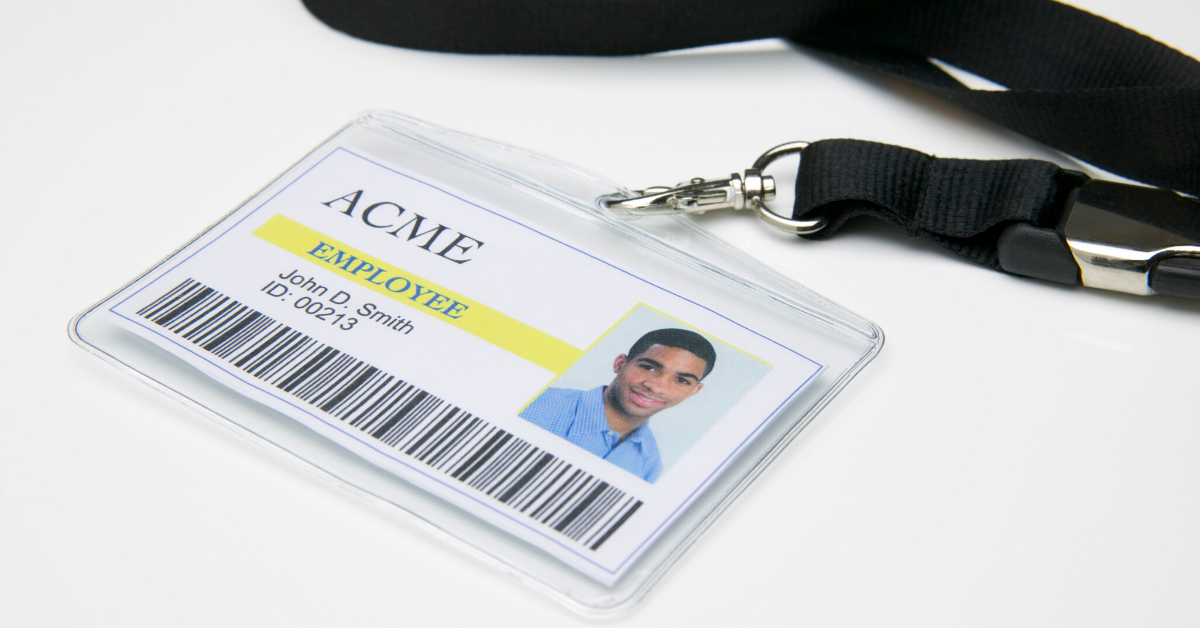
Three weeks later, Troy was ready to share his solution for training and accountability in the wood shop. He created a badge system with three colors, red, blue, and yellow. Yellow was the lowest safety risk level, blue was next, and red was the top safety risk level. He identified the safety risk of each of the over 50 pieces of equipment used in the wood shop, assigned them a risk color, and attached the appropriate badge to each piece of equipment. Next, he communicated the new badging system to the organization. Finally, he would personally assign a badge to each person based on their training and Troy’s qualification rules. Only Troy could issue the badge and only someone wearing a badge was authorized to use the equipment with the corresponding risk level as the badge being worn. If you wanted a higher-level badge, you had to be personally trained and qualified by Troy. Nobody got a colored badge unless Troy authorized it.
The rest of the organization was now able to assess compliance within seconds and help Troy keep everyone safe and doing the right thing. Troy put in all of the preparation and effort. But the rest of the organization could help him maintain compliance. It didn’t take long before we stopped hearing stories of people trying to go around the system. And for good reason, our leaders were holding themselves accountable to help Troy keep the area safe and compliant. The rest of the organization saw how important it was and stayed compliant. It stayed that way through my last days at Armstrong. If I know the organization and Troy, it still is that way to this day.

Championing Change in Technology
In 2010, a private equity firm took a minority stake in Armstrong World Industries. They brought in many leaders at executive levels and committed to a strategy of Lean transformation. Their initial focus was manufacturing, and then when ready, they would expand efforts to the supporting organizations. From 2010 through 2012 in the manufacturing organization, emphasis was placed on Lean training and conducting hundreds of Kaizen events. In many cases, outside consultants were brought in. But, where there was experience, internal resources worked with teams and facilitated Kaizen events.
In 2010, a private equity firm took a minority stake in Armstrong World Industries. They brought in many leaders at executive levels and committed to a strategy of Lean transformation. Their initial focus was manufacturing, and then when ready, they would expand efforts to the supporting organizations. From 2010 through 2012 in the manufacturing organization, emphasis was placed on Lean training and conducting hundreds of Kaizen events. In many cases, outside consultants were brought in. But, where there was experience, internal resources worked with teams and facilitated Kaizen events.
I had many years of experience facilitating Kaizen events and I was given the opportunity to travel all over the world, helping teams solve complex problems and keep them solved in a sustainable way. Although I wasn’t part of the manufacturing organization at the time, I was often requested to facilitate, especially when there were complex problems to solve.
I enjoyed the work, but I also knew I needed to focus on improving my organization, Global Technology. For years, I tried to convince leadership to utilize Lean to improve their critical processes. While they were interested, they never made the commitment to the continuous improvement effort.
Applying Lean Principles to Global Technology
In January 2012, everything changed. Global Technology named a new Vice President, who had an extensive manufacturing background. He returned from an assignment in Europe, ready to make an impact on his new organization. I worked for him indirectly a few years prior to his return, so we already had a working relationship. After letting him settle into his new job for a few weeks, I requested a meeting to discuss the application of Lean to the Global Technology processes. Luckily, I had two sponsors who had seen what Lean was able to accomplish in some global technology test areas, most notably the Pilot Plant.
Together, my sponsors and I met with the VP in March to promote our idea – apply Lean principles to Global Technology in a way that would improve the results of our projects and grow customer confidence. He was intrigued and wanted to know what we would do first. My suggestion was to run a Global Technology Value Stream Mapping event, identifying the highest value opportunities from our customers’ perspective, developing strategies to make improvements over the coming months and years. He was excited by the idea and invited us to present our recommendation to the Global Technology leadership team at their April meeting.
After reviewing year to date Global Technology results, the VP introduced me to the leadership team and told them about the recommendation for the Value Stream Mapping event. He explained how important and critical this work would be and he wanted everyone to clear their calendars so we could get started quickly. Then, he turned the discussion over to me. Most of what I wanted to cover had already been explained, so I started off by saying, “What he said!” Then, I described the Value Stream Mapping process and how we would apply it to the Global Technology processes. The leadership team seemed skeptical, but willing to give this new approach a try. When the VP said he wanted to start with an event in May, I knew we were on a fast-moving train and I had much work to do to prepare.
Identifying the Customers’ Perspective
Over the next few weeks, we contacted some of our critical customers from the plants, Marketing, and other areas of the organization. We also gained commitment from all Global Technology leadership team members to participate in the entire 3-day event, which would be held at a local hotel. I was able to get a co-facilitator who was not part of the working team and together we built a plan for the Value Stream Mapping session that would be relevant for our non-manufacturing processes.
On the first day of the event, a team of 25 high-level participants were in the same room and they heard the VP describe the importance of the effort. Then, he turned the meeting over to me. For the next few hours, I described Value Stream Mapping and then split the full team into working groups to identify the most critical customer requirements. After reviewing those requirements, we mapped out two critical Global Technology Value Streams: New product development and capital project execution. By the end of the first day, we had a pretty clear picture of the current state and issues that were keeping the team from executing the processes well from their customers’ perspective.
Champion of Lean
The VP sent the team to dinner and asked me to stick around to talk for a few minutes prior to dinner. The first thing he said was, “You’re pretty good at this, how would you like to do this full time?” Immediately I responded, “Absolutely!” He was surprised by my quick answer and told me he hadn’t even made a financial offer. I told him that I trusted him to do the right thing and it was more important for me to do what I love, rather than worry about pay.
The next two days were a blur. Significant progress was made and clear strategies were developed to improve project execution and customer service in the new product development and capital project execution Value Streams.
For the next six years, I was the Lean Champion for Armstrong’s Global Technology organization. During that time, I was able to help teams drive new product development time down from 18 to 10 months, grow the new product portfolio from $150 million to $380 million, and increase customer confidence in the work of the Global Technology organization. More importantly, we were able to create a culture of engagement, empowerment, and improvement in the organization.

There is One Best Way
In 2019, Process Improvement Partners was asked to run a reliability Kaizen for a factory in Missouri. A month in advance of the event, I conducted a site visit and took a walk to the line to be improved. Cluttered, dirty, and lacking organization, the line was operating at extremely low levels of efficiency. There was an hourly production board and it was filled with red numbers, meaning production output was below target levels most of the time. Working with the sponsor, we aligned around efforts to improve safety and productivity of the operation using reliability and Lean principles.
In 2019, Process Improvement Partners was asked to run a reliability Kaizen for a factory in Missouri. A month in advance of the event, I conducted a site visit and took a walk to the line to be improved. Cluttered, dirty, and lacking organization, the line was operating at extremely low levels of efficiency. There was an hourly production board and it was filled with red numbers, meaning production output was below target levels most of the time. Working with the sponsor, we aligned around efforts to improve safety and productivity of the operation using reliability and Lean principles.
We built the charter for the event together. I coached the team leader around building the best team for the effort. We needed representation from all crews and the team members had to care about making the line better for everyone. I also advised to include some line mechanics and a few “Kaizen Rock Stars”. These were team members from other locations who had demonstrated their passion and willingness to make things better for everyone. Two weeks before the event kick-off, we had commitment from all team members.
On the morning of the first day of the event, I went around the room for team member introductions. We had operators from all four crews, two mechanics, one engineer, two supervisors, one operations manager, and two “Kaizen Rock Stars”. Half of the team had never been in a kaizen event, they weren’t sure what to think, and they were understandably skeptical.
After some initial training, we took a walk to the line to see what was happening and generate some improvement ideas to improve safety and reliability of the line. I directed the team to focus on equipment reliability, using the principles and techniques we had just reviewed. When we returned to the meeting room, we generated more than 100 improvement ideas. A vast majority of the ideas focused in two areas: carton wrapping and container filling. The team agreed carton wrapping was the highest source of stress and downtime, with the container filler a close second. We decided to work on the carton wrapper first. To do this work, we had to shut the line down for a few hours. Knowing that we would be working on the container filler next, we asked the crew on shift to clean it during the downtime.
Shifting Lanes
The conveyer leading to the carton wrapper had three lanes that product could utilize as it traveled to the wrapper. The wrapper had two lanes of products to be wrapped. I asked the operators if they ever utilized the third lane and they told me no and in the many years since the equipment was installed, they had never seen the third lane utilized. This third lane was in the way of their work when they had to interact with the equipment. The next questions I asked were, “Can we remove the third lane? Are we expecting we will need it in the future?” All team members agreed it would be best to remove the lane and we did.
Next, we found the center of the carton wrapper and balanced both lanes around the center. It turns out the equipment was ¾” off-center, which doesn’t sound like much, but helped to explain why products were getting jammed in the carton wrapper. Finally, we realigned the lanes leading into the carton wrapper to match the newly balanced lanes inside the wrapper. When we sent product through this newly balanced portion of the line, it flowed smoother than anyone on the team had ever experienced. I knew they were becoming believers in the methods I was demonstrating.
There were many more improvements to be made on the carton wrapper, and a portion of the team stayed with those efforts, while the rest of the team turned their attention to the container filler. Newly cleaned, we were able to see that some of the parts in the filler didn’t look like they matched the other parts. Some of the parts from one product size were mixed in with parts from a different product size and some of the parts were in a state of disrepair. All of this had been hidden by the coating of dust and dirt. Once we saw this, we knew what we had to do: Put the proper sized parts in the filler and repair the broken parts. Over the next few days, the team made numerous improvements to the carton wrapper, product filler, and other components of the line.
Analysis Over Emotion
On the fourth day, we had to determine the best way to run the line, utilizing all of the improvements and standardizing efforts across all crews. This can be challenging, as most operators think their way is the best way. I took the team leader aside and reviewed the strategy for this next effort. We would take all of the operators and attempt to come to an agreement on how to best run the line. There were so many changes and improvements to the line in the first three days, none of the earlier procedures would be relevant to our newly improved processes.
The operators didn’t see it that way. Two in particular, let’s call them Sue and Jane, thought their way was best. The other two operators didn’t necessarily agree with Sue and Jane, but weren’t willing to argue as passionately as Sue and Jane. After 30 minutes of describing their methods, both Sue and Jane agreed that their methods were essentially the same. We had to commit to one method we could use to train others and hold them accountable to. I asked Sue and Jane to demonstrate their methods separately. The other two operators and team leader would review both approaches using two methods of analysis: spaghetti diagram and timing. The spaghetti diagram measures the distance a person travels when they’re doing their work. Timing tells us the impact of the work as measured in minutes and seconds. We all agreed to let the analysis rather than emotion tell us the best way to proceed.
A Natural Approach
Sue and Jane were advised to work at a comfortable pace, without putting themselves in a safety risk. It was more important to learn the best way and do it in a way that would make it easy to train others. The observers were to identify any further improvements from this analysis. Sue went first, confident she had the best way to accomplish the work. She went in a clockwise fashion around the line, performing all of the required tasks. On a couple of occasions, she overlooked some of the changes. We stopped the clock to remind her of the new method. We restarted the clock when she utilized the new methods. She finished in under 25 minutes, satisfied her way was best.
Jane went next and worked in a counterclockwise fashion around the line. As she did her work, she followed the new steps in an efficient and stress-free manner. She didn’t seem to have to walk very far to accomplish any next steps and also didn’t forget any steps. It looked so simple and natural. Fourteen minutes later she was finished. The team was surprised and excited. They didn’t think there would be so much difference. Sue had to admit Jane’s method was the better one. This was a breakthrough. All four operators would need to represent the new method to their co-workers when they returned to their normal jobs. If not, all of the great work of the team would be wasted.
At the report out the following day, Sue and Jane admitted to the audience they had to be open to thinking differently about how they did their work and there is always a better way to get things done. The team was proud of their accomplishments and the plant had a much more safe and reliable process than before. One month later, I received a text from the team leader. He shared a photo of the hourly production board, filled with green numbers.
Ownership at the Right Level
I was Lean Champion for the global technology team at Armstrong World Industries for many years. During that time, I supported teams of technicians, scientists, engineers, project managers, and the leadership team across four different departments. I had the good fortune to assist teams in their efforts to develop and launch new products, deploy capital equipment, and build factories all over the world. All departments had access to the Pilot Plant to support their efforts when necessary.
I was Lean Champion for the global technology team at Armstrong World Industries for many years. During that time, I supported teams of technicians, scientists, engineers, project managers, and the leadership team across four different departments. I had the good fortune to assist teams in their efforts to develop and launch new products, deploy capital equipment, and build factories all over the world. All departments had access to the Pilot Plant to support their efforts when necessary.
The Pilot Plant was a series of disconnected processes which had the resources and capabilities to test new materials, products, processes, and other ideas in a controlled way. Information gleaned from tests and trials was utilized in the effective delivery of projects and other development efforts. Each of the processes in the Pilot Plant had an owner, who was responsible for the care and safety of the process. The owner would also try to schedule the process to allow it to be utilized effectively and to keep wait times to a minimum. All process owners were the technicians who were most familiar with the operation of their process. Although they were at the lowest level of the group, they were very proud of their equipment and took ownership to keep things safe for their customers.
As Lean Champion, I spent many hours in the Pilot Plant, learning about its capabilities and trying to understand how I might be able to help the technicians in their efforts to support the rest of the organization. It was during my early days in the Pilot Plant that I met a gentleman, we’ll call him Roy, who was lead technician. He had just taken on the leadership role for the Pilot Plant, responsible for the overall effectiveness and operations. Having worked in one of Armstrong’s factories prior to his arrival at the corporate center, he had vast equipment knowledge and some leadership experience.
A Source of Frustration
Before taking over as lead technician, Roy worked in the Pilot Plant as a process owner and participated in the annual Pilot Plant clean-up. This was a multi-day effort by all technicians at the end of the year. They would go through all of the materials, supplies, and equipment throughout the plant and clean out the clutter and reorganize things in as safe and productive manner as possible. All development and testing in the Pilot Plant would be delayed during this time, as all technicians were busy cleaning things up and trying to make sense of what they had.
None of the technicians liked the annual clean-up process because they knew it wouldn’t take long for things to go back to the way they were prior to the clean-up. Roy expressed his frustration to me more than a few times. Once he became lead technician, he was even more frustrated and wanted to do something about it. My first suggestion to Roy was that he should discuss his frustration with his manager and gauge his support for Roy’s efforts. Roy did this, but seemed just as frustrated. Upon further discussion with Roy, I found out his manager was supportive of his efforts, but didn’t offer solutions Roy thought he could implement without direct assistance from his manager. He really wanted his manager to tell everyone to clean up after themselves.
Over the next few months, I facilitated 5S (Sort, Set in Order, Shine, Standardize, Sustain) events in the Pilot Plant to support Roy’s efforts to make areas safer and more productive for everyone. The few area owners who had completed 5S events had a strong managing system to keep their areas in top shape. The other 30 or so areas did not, so clutter and disorganization was prevalent everywhere else in the Pilot Plant. Roy was getting more and more frustrated.
Turning the Corner
One Monday morning, following the weekly technician meeting in the Pilot Plant, Roy stopped me on my way back to my office. “Adam, I’m really frustrated,” he said. “My manager won’t hold everyone accountable to keep the Pilot Plant organized and safe. He tells them it’s their responsibility, but doesn’t do anything about it when they’re not compliant. What can I do?” “Roy,” I said, “Who’s the leader of the Pilot Plant?” “I am,” he said. “Well, as leader, you have every right to set expectations and hold accountability. You are the operations manager; your boss is the plant manager. The plant manager needs you to get your operations in order. Let me help you do that.”
Over the next few weeks we built our strategy for putting the Pilot Plant in order. Our strategy included: setting clear expectations for all areas of the Pilot Plant, redefining responsibilities for all area owners (not just the areas that had been 5S’d), developing a weekly leadership walk (Gemba walk), and creating visual management to hold all area owners accountable. We mounted a large white board in the main meeting room and put lines and names on it, ready to explain it to the technicians at the next technician meeting.
The next Monday morning, we introduced the new strategy for making the Pilot Plant the safest, most productive place possible. The technicians listened with keen interest and asked many questions as Roy described the changes. They were skeptical that there would be any change in behavior of the scientists, engineers, or managers when they used the spaces in the Pilot Plant. Then Roy explained the white board, which he called the “Area Owner” board. On it were over 30 Pilot Plant locations with the corresponding name of the area owner and a space for a date to be written. At the first of every month, a red magnet would be placed for each location, signaling the owner hadn’t yet met certain monthly requirements. Once those requirements were met, the Area owner would replace the red magnet with a green magnet. The Area Owner would write in the date the requirements were met. At the beginning of the next month, all magnets were set back to red.
The technicians were furious. They thought those red magnets made them look like they weren’t doing a good job and didn’t want any part of the new system. I jumped in and explained it was a very visual and urgent way to show what areas weren’t yet compliant and who might need help. The system wasn’t a reflection of the specific area owner, unless he or she hadn’t made the effort to meet the requirements or ask for help. We felt if we could get all areas to green every month, we wouldn’t need the annual cleanup, which everyone hated.
A Delicious Incentive
At this point, the technicians started to buy-in and support the idea, but they were still skeptical that some of the area owners would be motivated to get to green every month. I knew I needed to provide incentive. I said, “The first month we get all areas to 100%, I’ll buy every area owner lunch and we’ll celebrate!” That got their attention. I then described the design of the management walk: We would take a selection of managers of the scientists and others who used the Pilot Plant and tour all areas, looking for areas where we could reinforce the need for compliance to the requirements. We would do this every week and sign off to show we had and we were just as accountable as the technicians.
For the next few months, I attended every Monday morning technician huddle, and reinforced the new systems and encouraged the area owners to get their areas to green before the end of the month. One Monday, late in the third month of the “Area Owner Challenge”, there was only one technician whose area was still red. Almost to a person, the technicians pressured him to get his requirements done and make sure Adam would buy them lunch! They did it in a fun way, but I knew they were serious. I knew our system was working at last.
Over the next months, the technicians hit 100% compliance almost every month, and by the end of the year there was no need for the annual cleanup. Pride in the Pilot Plant grew. In the following years, the Pilot Plant was bench-marked many times. Not because of the technology, but because of the strong ownership and pride and systems that allowed new products and projects to be delivered in the safest and most productive way possible.

Use Standardized Work to Unleash Creativity
Most people don’t like being told what to do. They definitely don’t want to be told how to do it. But, with proper standardized work, we can show people the right way to do things and free their minds to work on more complex problems that they face.
Most people don’t like being told what to do. They definitely don’t want to be told how to do it. But, with proper standardized work, we can show people the right way to do things and free their minds to work on more complex problems that they face. The key is to develop standardized work that engages people, speaks to them at the appropriate level, and captures the routine aspects of a task in a way that ensures everyone follows it properly and easily. Once that occurs, they can concentrate on solving problems that aren’t covered by the standardized work.
When I was very young, I was told, “Don’t touch the stove top. It’s hot!” Naturally, that sparked my curiosity. I wanted to know how hot, so I had to touch it. Unfortunately, I got burned and learned a lesson. I should have asked “How hot?” or, “What happens if I touch it?” If I understood what and why and the implications, I may not have received a boo-boo. This was a valuable personal lesson, but it also provides a good structure for standardized work. Now that I didn’t have to touch the stove anymore, I was freed up to use my creativity to create other mischief.
How to Engage Your People to Develop Standardized Work
People tend to do things the way they are taught, the way they observe, or the way that feels right to them. Unfortunately, they may be doing things improperly, unsafely, or inefficiently. So, it is incumbent on you to help them see the better way to do their work. The best way is to engage them in the development of the work. I have found that you should engage at least three people who are currently doing the work so they can share experiences, approaches, and break the tie, if a final decision on how to proceed is needed. You should set the expectations that work must be accomplished safely and productively, but give them the freedom to use their experiences to guide them in the process.
What To Do
The first part of standardized work is to define what to do and the order in which the work must be done. Once you have engaged people who do the work to participate in this effort, have each one of them demonstrate their approach to the work. Those who are watching should provide feedback and ideas that would make the work safer and more efficient. Once all ideas are shared, help bring the group to consensus around the final procedure. Once they have done this, they should practice the new procedure and see if they have missed any vital elements. Following that, document the procedures with pictures, videos, and/or written process steps. The more visual the better, as you want to be able to explain the procedure to anyone in a short amount of time, and you want them to be able to demonstrate their understanding without much effort. Once they have reached consensus, you must gain agreement that the procedure will be followed the same way by everyone who does the work.
Why To Do It
You can’t guarantee people will follow the new procedure, just because it is safer and more efficient. They may not realize this is the case. Most people are willing to try something different than what they are used to if they understand why it will be a benefit to them. Therefore, the group that develops the new procedure should incorporate the “why” or benefits behind the steps in the new procedure. If they’re unable to do so, it probably means there aren’t real benefits and the procedure needs improvement. Keep working and improving the procedure until you have something that delivers a benefit. Once you have done that, it will be easier to sell the new procedure to others.
The Implications of the Work
The best standardized work results in safety and efficiency gains. These should be clear and measurable. After all, how do you know you’re winning if you’re not keeping score. So, the team should be able to identify and incorporate clear measures of the standardized work. For example, the procedure now takes six steps and 30 minutes, while in the past it took 12 steps and 48 minutes. Another example is the new procedure results in a higher yield rate than the old procedure. It is not uncommon to reduce the time required to accomplish a task by 30% to 50%, just by gaining alignment and simplifying process steps.
Using these three elements – what to do, why to do it, and the implications of the work should convince people to try this new way of operating. Once they are convinced, they should also see that by following this new process, their minds are freed-up to work on more complex problems, thus unleashing their creativity.
Here’s a real-world example: A production line was shutting down erratically. In the past, people would be blamed for not following procedures. With clear standardized work, the time to troubleshoot was reduced dramatically, as the human variables were eliminated. The team could focus on other reasons and quickly found the root cause of the problem, which was a switch that was shorting out.
We want people to be creative and improve things and solve complex problems. By creating clear standardized work that is consistently followed, we give people the opportunity to use their creative minds and drive positive results.