
Kaizen Success Stories
Real Manufacturing Results. One Kaizen at a Time
Explore real-world Kaizen success stories showing how manufacturing teams solved critical problems, improved performance, and created sustainable results.

An Unlucky Break
Critical problems seem to happen over a holiday weekend when there is less coverage. For me, Thanksgiving provided many challenges. Early in my career, I had to come into the ceramic tile factory the day after Thanksgiving to supervise a crew trying to clear a jam in the kiln. Many years later, a water main in St. Helens Oregon broke and shut down the ceiling tile plant. Once again, I was the one covering, and had to respond quickly and deal with a near disaster.
Critical problems seem to happen over a holiday weekend when there is less coverage. For me, Thanksgiving provided many challenges. Early in my career, I had to come into the ceramic tile factory the day after Thanksgiving to supervise a crew trying to clear a jam in the kiln. Many years later, a water main in St. Helens Oregon broke and shut down the ceiling tile plant. Once again, I was the one covering, and had to respond quickly and deal with a near disaster.
I got a call late on Thanksgiving night. The plant had been running very well, and then water stopped flowing. In ceiling tile manufacturing, water is the main ingredient. Ceiling board starts out as 98% water, then as it passes over vacuum and then through a 400-foot dryer, the water is removed. If too much water is removed prior to the dryer, the crew must dump all materials into a pit located prior to the dryer and hope the water comes back on before the pit fills up. It can be messy and difficult to recover from.
The water didn’t come back on. The pit filled up. The crew shut the plant down and was cleaning up a big mess. Some of the material had entered the dryer and they were using 14-foot-long rakes to clear the jammed material out of the dryer.
I arrived at 10 pm and joined the crew. Nobody knew what caused the water to shut off. The EHS (environmental, health, and safety) manager was out of town. I had to figure out who to contact with the city. There was a Rolodex on her desk (I had no access to her computer). In it, I found the number of the city manager. To my surprise, he answered his phone immediately.
He told me the main water line had burst and water had to be shut off for all residences and businesses. He was trying to use back-up systems to get water on for the residents first. I reminded him we employed almost 200 people at our plant and without water we couldn’t operate. I asked him to keep me updated as they brought their back-up water system on line. He said he would and considered us a priority, as we were the number one employer in the area.
I stayed most of the night and helped the crew clean up the mess. We developed a plan for what to do when the water situation was resolved. It wasn’t just the water that we worried about, but also the pressure with which it was delivered. At too high a pressure, it could damage sensitive equipment in our process. I had several calls with the city manager and he assured me he’d let us know when the water was scheduled to be turned back on.
Except he didn’t. All of the sudden, water pressure went up and we thought we were in business again. We started up and began making ceiling board. And then the water was shut off again with no warning. I placed a call and asked the city manager to give us a warning when the next attempt to start the water system would occur. He assured me he would this time. But again, he didn’t. We devised our own plan. We watched our water meters and sent a crew member to monitor the valves in the basement of the process.
For the next 2 days, we played the “start and stop” game with the water. This kept the damage to the process and product at a minimum. In the middle of the third day, the water stayed on, and we could operate as normal.
We learned a valuable lesson about contingency planning: the more you can control in an “uncontrollable” situation, the better.

All Night Long
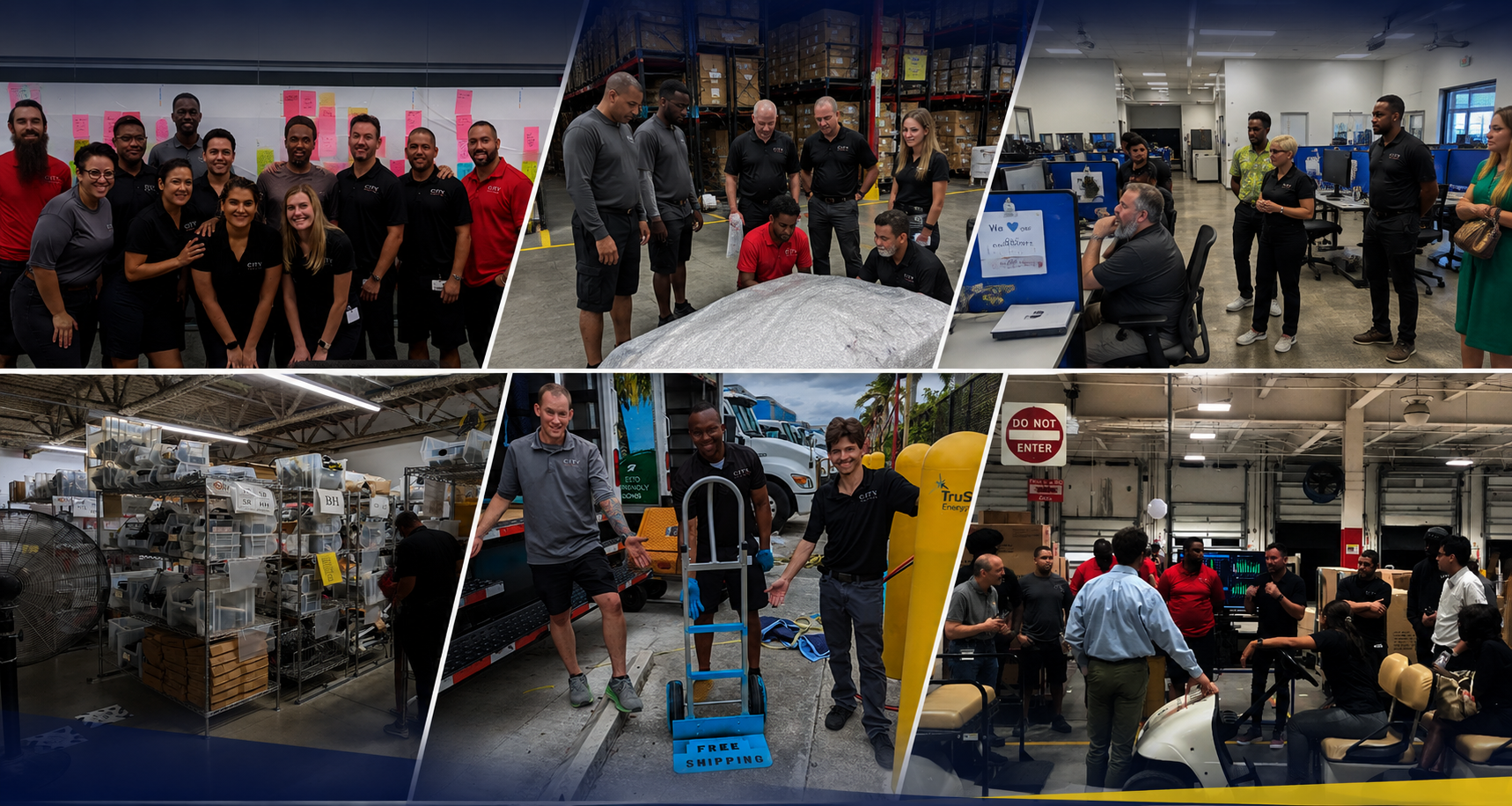
Admit it. After reading the title of this story, some of you are hearing the famous Lionel Richie song in your head. This story isn’t about that, but rather it concerns a challenging Kaizen event I recently facilitated for CITY Furniture. The business problem we were trying to solve was a series of computer programs that ran after all showrooms closed each evening. There was a period of time where no revenue could be generated through their e-commerce website, until all programs completed their reconciliations. Our goal was to cut the time by 75%, so that we could free up overnight revenue generation.
Admit it. After reading the title of this story, some of you are hearing the famous Lionel Richie song in your head. This story isn’t about that, but rather it concerns a challenging Kaizen event I recently facilitated for CITY Furniture. The business problem we were trying to solve was a series of computer programs that ran after all showrooms closed each evening. There was a period of time where no revenue could be generated through their e-commerce website, until all programs completed their reconciliations. Our goal was to cut the time by 75%, so that we could free up overnight revenue generation.
I’m an early riser and am typically in bed by 10 pm each evening. My wife says I take my “pre-sleep” nap from 8 pm to 10 pm. This Kaizen event would be held overnight, as our Gemba (the work that we needed to see) happened between 9 pm and 1:30 am. I wasn’t sure how I’d be able to make it through the night.
I met with the team leader to prepare weeks before the kick-off. We agreed to start the Kaizen event at 7 pm Sunday and work through the night for four out of five days. Then, we’d take one day off to adjust our sleep schedule and rotate to day shift. Report out was scheduled for 3 pm on Friday.
I normally fly in to Ft. Lauderdale on the Sunday before the Kaizen starts. Due to starting on Sunday, I knew I couldn’t take any chances and had to figure out how to get proper sleep prior to the event. I flew in on Saturday, got some dinner, and went directly to sleep. I woke up in the middle of the night. Somehow, I was able to go back to sleep.
After Sunday breakfast, I did some work, and took a short nap. At 5 pm, I met my team leader. We set up the meeting room and discussed the Kaizen plan. She was excited to tackle this critical business problem and had assembled a diverse team of highly skilled programmers and managers. They arrived at 6:30 pm for dinner. Afterwards, we kicked off the Kaizen. Our sponsor, the chief information officer (CIO), demonstrated his leadership commitment by staying overnight with the team and participating as a full team member.
After getting to know each other and reviewing Lean topics, we walked downstairs to watch a showroom close. We saw so much waiting and paperwork being generated. We knew there was opportunity for improvement. Then, we walked back upstairs to the meeting room and proceeded to watch the computer programs do their thing. It may have been the longest four and a half hours of my life.
The team was enthralled by what they saw and wrote many ideas on Post-its™. It looked like a lot of gibberish to me. I kept telling myself all that mattered was team members seeing waste and opportunities. I had to stay awake at all costs. It would look bad for the facilitator to fall asleep during the Kaizen!
Mercifully, the Gemba walk through the computer programs ended and I stayed awake. Ninety-two minutes became our baseline for the program reconciliations that kept the e-commerce revenue from being generated. Now it was time to Value Stream map the process, identify pain points, waste, and finally, the ideas to reduce the time it took to complete the reconciliations.
The team generated many ideas and picked three they believed would drive the time down significantly and could be completed during the week. We adjourned at 4:30 am Monday morning and agreed to reconvene at 8:30 pm Monday evening.
I went back to the hotel, surprised I didn’t feel sleepy, but that was due to adrenaline. Four hours later, I woke up. I decided to exercise and work on other projects. Then, I took an afternoon nap. Returning on Monday evening, team members were excited to work on their projects. They broke out into three sub-teams and got to their work, which was all on the computer. I felt useless, but they were fully engaged. From time to time, we’d reconvene and share project status and problem solve. On Tuesday morning, the team decided they didn’t need to work through the night anymore and that we’d take a 27-hour break, reconvening at 8 am on Wednesday morning.
Now it was time to reestablish my normal sleep pattern at the hotel. I slept almost as soon as my head hit the pillow at 6 am. I woke up at 10 am. Now what was I going to do? I got up, showered, exercised, and ate lunch. Then, I worked on other things for a few hours. I decided I should stay awake until at least 9 pm. Time went by slowly, but I made it. I went to bed, and woke up around 4 am. That had to be good enough.
Everyone seemed happier to be working in the daytime. Team members felt they were making programming changes that could be implemented by the end of the day. They installed the changes to see how the system would react on Wednesday night. On Thursday morning, we learned the program ran faster than ever previously recorded. Our 92-minute process was now taking 57 minutes, a significant impact to the system. They had more changes in mind that would reduce time, but those would have to wait for the weeks following the Kaizen event.
The report out was well attended, and our sponsor remarked the initial results had saved the company considerable money. The team has implemented a follow-up process, with meetings every two weeks. The time continues to come down and our sponsor is now ready to tackle another critical business problem in his department.

The Sexiest Man in Pensacola
Armstrong World Industries kicked off their Lean journey in 2010. They put a lot of effort into building a culture of Kaizen across their 22 manufacturing locations worldwide. I was sent to many facilities to assist.
Armstrong World Industries kicked off their Lean journey in 2010. They put a lot of effort into building a culture of Kaizen across their 22 manufacturing locations worldwide. I was sent to many facilities to assist.
In 2011, I facilitated a Kaizen event in Pensacola Florida. I don’t recall the topic but I definitely remember the team and the feeling of camaraderie. I followed standard work to guide the team through the week, culminating in a report out to management on Friday afternoon.
Armstrong required every team member to present at the report out. Our teams were comprised of a diverse group of individuals, including hourly production, maintenance, and management personnel. Some team members had never presented to a group, so we practiced our presentations prior to the final report out. We wanted to make things as comfortable as possible.
Most people tend to “fumble” through what their presentation on the first practice run. Then, on the second run, things get easier. By the third practice, they sound confident in telling their story. I was about to find out how their confidence would manifest itself.
During our first practice run, the third presenter said, “my name is Tyler Dare and I’m the sexiest man in Pensacola!” The rest of the team roared with laughter. Everyone else practiced what they were going to say without funny comments. I figured that Tyler was trying to loosen up the team. I felt sure he wouldn’t actually say that in the final presentation.
On our second practice, Tyler reiterated how sexy he was. Then, another presenter said, “I’m Kevin Jones, and I don’t care what Tyler thinks, I’m the sexiest man in Pensacola.” By the third round, everyone was cutting up. I didn’t know what to expect for the final report out. I was just hoping I wouldn’t be fired for having an “out of control” team.
We entered the main conference room. There were at least 25 people waiting for our presentation. In those days, representatives from Armstrong locations around the world called in to hear the presentation. This was before video conferencing was a standard form of communication.
The report out started, and sure enough, Tyler stepped up and said, “My name is Tyler Dare, and I’m the sexiest man in Pensacola.” The audience laughed and clapped. What could I do? Nothing; just enjoy the show! The rest of the team presented their results. They were met with applause. After asking for questions from the audience, a voice on the phone said, “My name is Paul Meyers, and I’m the CEO of Armstrong World Industries. I just have one question. Is Tyler Dare really the sexiest man in Pensacola?”
I almost passed out. There was more laughter, clapping, and congratulations. The team owned their results and had a blast presenting it to their sponsors. From then on, I made sure any team I facilitated had fun presenting their results. If they were nervous, I’d share the story of Tyler Dare, the sexiest man in Pensacola.

The First Area Owner at the Furniture Company – the Story of Abraham
I was facilitating a Kaizen event for a large furniture retailer in Florida. They offer many services that set them apart from their competitors. They have a nice sales and service advantage and impressive customer loyalty. The Kaizen topic we were working on was the use of replacement parts in their process. Our goal was to reduce the amount of replacement parts needed.
I was facilitating a Kaizen event for a large furniture retailer in Florida. They offer many services that set them apart from their competitors. They have a nice sales and service advantage and impressive customer loyalty. The Kaizen topic we were working on was the use of replacement parts in their process. Our goal was to reduce the amount of replacement parts needed.
After Lean training on Day 1, we went out into the Gemba (a Japanese term, meaning the place where the work is done) and saw many areas where parts could be misplaced or lost. There was an area where parts were stored for the entire distribution center. It looked as if it had been hit by a tornado. There was so much clutter that the team knew it would be a high priority project for the Kaizen week. The number of parts and clutter was overwhelming. Would they be willing to put in the effort and time it would take to get things organized?
Three very ambitious team members picked the parts storage area as their project. Abraham, who normally worked in the area, said that they had been working on it for years. He didn’t think they’d be able to do anything to correct the situation, especially in a week. As facilitator, I had to rely on my team. They decided it was so important that they would go for it.
The three team members got help from people outside of the team. By the end of the week, the parts storage area looked like it was brand new. Everything was organized, clutter was removed (at least 75% of what had been stored there), and there were barcode labels on every bin to help manage the parts inventory. They worked many hours beyond the scheduled team hours and refused to stop until they were done.
On the morning of the third day, when we realized that it might be possible to organize the parts storage area, I reviewed “area ownership” with the team. I told them that at my prior company we had area owners who managed things and held people accountable to always do the right thing. Leadership “had their backs” and it made things safer and more productive. I also told them that it took a while to train leadership to behave that way, but once they saw the value of area ownership, they got on board.
Abraham raised his hand and said, “I want to be our first Area Owner.” I was stunned. Here was someone who had been skeptical on the first day and now he was courageous enough to step up and try something new. We were excited for him. The rest of the week we did everything possible to get the area into the best possible shape and designed our system to sustain it, using the Wheel of Sustainability.
The report out at the end of the week was well attended. When we took the leadership team into the parts storage area, you could hear a pin drop – they were blown away. Then, something magical happened. Abraham told them that he was the Area Owner and he needed their help and support to keep the area in its optimal condition. He shared his expectations for himself and for leadership. He showed them how he wanted to be audited on a weekly basis. I was proud of him and the rest of the team.
The area has been working as well as or better than the Kaizen team left it.I now use it as an example of what can be achieved in a short period of time and how well it can be sustained. Many newer Kaizen team members take a tour through the space and when Abraham is there (which is most of the time) he shares his story and tells them how important it is to meet his expectations. He is a model for what’s possible when you take ownership and care about your customers.