
The Path to Consultancy
I worked more than 30 years for a multi-national company. During that time, I had the opportunity to help teams and solve problems all over the world, from the US to Europe to Asia. I worked in five distinct industries and had many roles, from engineering to operations to continuous improvement. I enjoyed most of what I did, but realized something was missing.
I worked more than 30 years for a multi-national company. During that time, I had the opportunity to help teams and solve problems all over the world, from the US to Europe to Asia. I worked in five distinct industries and had many roles, from engineering to operations to continuous improvement. I enjoyed most of what I did, but realized something was missing.
When you work for someone else, you meet their requirements and work on their assignments. You don’t always get the opportunity to pick your projects. Sometimes you have to work on things that have nothing to do with your chosen field or interests. But, that’s life in a big company.
I used to take time off and help friends identify and implement improvements in their own businesses. I would take a day, travel to their location, and walk through their process with them. We would spend time with the people, processes, and equipment, reviewing the issues and problems in their business. At the end of the day, I would help them lay out a plan to improve things, which they were able to use after my visit. I enjoyed doing this, and thought I could become a consultant after I retired from my primary career.
In April 2018, I was visiting a local company, and spent the day doing what I enjoyed, reviewing their processes, people, and issues. Following a wrap-up meeting, I told my contact I wanted honest feedback on my visit. I felt like I could use this feedback for the time in the future when I intended to consult. Maybe in about 3 to 5 years, I said. He said he would let me know what he heard and we left it at that.
One week later, I was downsized. While this was surprising to me, I didn’t feel bad about it, because I felt something better would come of it. I just had to figure out what that was. It didn’t take long, as I realized I had the opportunity to forge my own path as a consultant.
Downsizing with an upside
I placed a call to my friend from the week before and let him know I would now be available 3 – 5 years sooner than I expected to be. He seemed excited to hear that and said he would talk to his plant manager to see if he was interested in letting me help them execute the improvement plan we had developed together. The plant manager was willing to use my help. Now I had to figure out all of the details required to open and run a consulting business.
Luckily for me, and for many others, there are ample resources willing to help and support small business owners. Using those resources, a lot of networking, and tons of phone calls and meetings, I established my consultancy in May 2018. Once done, I was able to start working with my first client. We decided to run a Value Stream Mapping session to lay out a continuous improvement strategy for the plant in June. I had run many such sessions in my prior company. Now, I had to put one together with a group who had little to no experience with this approach. I knew I had to prepare them for what was going to happen and do everything possible to ensure they had a great experience and beat their expectations.
Success is in the details
I spent many days at the plant, preparing them and myself for the Value Stream Mapping event. Every detail was critical, from the layout of the meeting room to the activities each day and the food we would be feeding the attendees. The people at the plant were intrigued by how involved I was in even these details. I kept telling myself and them that it was all for ensuring a winning experience.
The first day of the event, we had over 50 people attend, and we broke them up into three working teams, with facilitators I had trained in advance. Throughout the week, each of these teams identified waste in their processes, ways to reduce the waste, and improvement efforts and projects to implement over the next few years. It was hard work, but the team members seemed to be having a good time and were energized by the opportunity to create their future. I was having a blast, realizing I was helping people do something they had never done before.
By the end of the week, all teams had strategic plans they were committed to implementing. Corporate leadership came to the plant for the report out and was extremely pleased with the results. After the event was over, I reviewed my approach with the leadership team to see what they thought. They were very happy and even suggested I could help them with a number of other improvement efforts over the coming months. This reaffirmed my belief that I had chosen the right path.
The reward for good work is more work
A few months later, I received a call from the corporate supply chain director for the same company. He told me I had been recommended to him by the plant manager and he wanted my help with another improvement project. I was elated and scheduled the work for August.
Since those early days, I have had the good fortune to acquire more improvement efforts for multiple locations of the same company and other companies as well. The more I do, the more I learn, and the more fun it has turned out to be. I have the opportunity to help people and do it in a way that is fun, engaging, and energizing. I am so glad I didn’t wait to get into consulting, even if I needed a nudge to start.

Fix It and Make a Difference
In 2005, I was working in the central engineering group for Armstrong in Lancaster PA. One day, while I was sitting in my cubicle, the CEO of our division came up to me and told me that he needed my help at our newly acquired cabinet plant in Auburn Nebraska. I asked him what help I could provide. He looked at me and said, “Fix it – you’ll know what I mean when you get there.”
In 2005, I was working in the central engineering group for Armstrong in Lancaster PA. One day, while I was sitting in my cubicle, the CEO of our division came up to me and told me that he needed my help at our newly acquired cabinet plant in Auburn Nebraska. I asked him what help I could provide. He looked at me and said, “Fix it – you’ll know what I mean when you get there.” I was told I would have a small team travelling with me and our first visit to the plant would be for 2 weeks. During that time, we were to evaluate the things we could improve, make quick improvements, and develop plans for future efforts.
I have been to hundreds of factories in my career, and have seen some well-run factories and some poorly run ones. When we arrived, I saw what was clearly the poorest run facility in my experience. There was no organization or order. Equipment was in disrepair. People looked like they had been beaten down. Many had evidence of prior injuries. It was hard to find a safe walkway in the entire plant. It made me immediately angry that people had to work in these conditions. In fact, one of my team members was so angry, we had to take him outside to calm him down.
“What the hell are they thinking?” he asked, “How can they get away with this?” We talked for a while and eventually came to the conclusion that we couldn’t fix the past, but we could damn sure improve the future for these folks. Luckily, the company had hired a new plant manager, who had arrived at the plant about a week before we did.
We spent some time with him on our first days at the plant and believed he wanted to improve conditions for his people as much as we did. We felt he would support our efforts to make real positive change for the employees at the plant. We knew we needed his support to get critical work done.
Thousands of opportunities
Everywhere we looked, we saw things that could and should be improved. Early on, we reorganized a panel cutting area and made it easier and safer to get the materials needed to be cut. We also created some signage for the area, so finished parts could be easily found. We were also able to get much needed repairs for the equipment that was being used daily. We realized we couldn’t fix everything, even though we wanted to. We had to prioritize and decided to work on things we could immediately fix in order to give the employees hope for a better place to work.
Miles to go
One day I was watching the flow of material to different parts of the factory. I saw a large man take a pallet jack and transport cabinet parts from one area of the plant to another. He had to physically pull the material, which probably weighed 250 pounds, over a quarter of a mile. I followed him to his destination and then watched him pick up another pallet of parts, and manually pull it to another part of the plant. This looked really difficult to me, and I wanted to know more.
I introduced myself to him and he told me his name was Roy and that he had been doing this type of work for more than 5 years. I asked him if he knew how far he moved material in a day. He told me he was given a pedometer by the health and safety manager and found out he was pulling materials more than 17 miles in a day on average! Seeing how physically difficult this work was, I asked him, “What do you do when you go home at night?” His response was, “Adam, I sit down in my recliner, fall asleep, get up the next morning, and go back to work.” This was no way to live. I knew we had to help him.
I assembled my small team and we talked about what we could do to help Roy. In my mind, if we didn’t help him, he would soon be injured, and probably had been in the past. We did our research and found out there was a battery-operated pallet jack that would allow the operator to ride on when moving materials. We found a used one in the area that cost less than $5000. It was time to convince the plant manager to buy this unit immediately.
Sealing the deal
We asked the plant manager for an opportunity to review our findings and share our plan for further improvements. We had 12 improvement projects we wanted to implement before we left at the end of our 2-week assignment. We told him we thought there was nothing more important than buying the battery powered pallet jack for Roy. When we explained our reasoning, he realized how critical this would be for the health and well-being of one of his employees and also how much it mattered to us. He immediately gave us approval and called in his purchasing manager to help us buy it.
In 3 days, we had our new battery powered pallet jack and gave it to Roy to test out. He did and was so happy, he gave rides to some of his co-workers. The next day, I followed up with Roy and he told me he had some of the best sleep he had in months. We made a real difference for one person, and that made all of our efforts a resounding success!
Simpler is Better
Sometimes we make things more complicated than they have to be. When we remove the complexity, things seem to get better. I have learned this lesson many times, but my trip to Macon Georgia proved it to me and my team.
Sometimes we make things more complicated than they have to be. When we remove the complexity, things seem to get better. I have learned this lesson many times, but my trip to Macon Georgia proved it to me and my team.
In the late 1990’s, I was often asked to help factories solve productivity issues. As I was new to the manufacture of ceiling tiles, I had much to learn. One of my ways to learn was to spend as much time as possible on the factory floor, observing and talking with the operators and mechanics.
I was visiting the largest ceiling plant in the world in Macon Georgia and asked the plant manager if I could spend a day on the line, observing operations and talking with his people. He seemed surprised by my request, but was open to it and gave me the green light.
I started at the beginning of the fabrication line, where the formed 4-foot by 8-foot panels were loaded, and introduced myself to Joe, who was “feeding” the line. He asked me what I was doing there. I explained I was trying to learn how the line operated and the issues he was dealing with. He seemed amused by this and showed me how he operated the line. After about an hour of observation and discussion, Joe had given me a thorough overview of his area of the line and the problems from his perspective. I thanked him for taking the time with me and then left him to go visit with the next operator on the line, Ruth.
Ruth was intrigued by an engineer (a Yankee, no less) who wanted to know what issues she had to deal with as well. She showed me what happened when boards traveled through her paint booth. She was making constant adjustments to the line and I asked her why. She explained the equipment that measured viscosity of the paint was broken, so she was doing her best to get a consistent paint coating, using her experience and observations. Ruth let me try my hand at adjusting viscosity of the paint, and I realized how difficult it was. After some time, I thanked Ruth for her insight and moved on to the remaining operators on the line.
After a full day of visiting, observing, and discussing the issues on the line, I believed I had a plan to make some improvements. I returned to the main office and reviewed my findings with the plant manager. I asked him if he was willing to assemble a small team of operators, mechanics, and a supervisor to work on the problems I had observed. He was extremely willing and said he would have them ready to work with me the next day and for the rest of the week (4 days). Now, I had to determine what to do with my new team.
At 7 am the next morning, I met my team: 3 operators, two mechanics, and a supervisor. We had a meeting room in the middle of the factory. After getting to know each other, I reviewed my observations from the prior day. Luckily for me, two of the operators on the team were Ruth and Joe, so they had some experience with me and felt comfortable talking with me and the rest of the team members. After talking about what I had seen and reviewing their ideas, we came up with two areas to work on: Cutting boards squarely and applying paint consistently. We decided to work on each issue as a full team, one issue at a time. Our first issue was cutting boards squarely.
It’s Hip to be Square
We walked out to the line and went to the equalizer station to see what was going on. The equalizer was a large table saw that cut the 4-foot by 8-foot boards into 2-foot by 4-foot ceiling tiles. The board travels into the equalizer, gets cut into 2-foot by 8-foot strips, then gets transferred at 90 degrees to the next series of saw blades. They then cut the 8-foot strips into 4-foot tiles.
As we watched, we saw the boards go through the saw blades at an angle. Why was this happening? It turns out there were three upper “hold down” rolls driving the boards through the first pass of blades. These rolls were adjustable for on either side of the conveyor. Operators would make pressure adjustments to the rolls to help drive the boards through the saws. There was no way to tell if they were applying equal pressure to the rolls. The unequal pressure on the boards was forcing them through the saws at an angle. Sometimes, this would cause the boards to be cut to the incorrect size, causing scrap.
There were two hold down rolls at the entrance to the saws and one on the exit of the saws. It seemed the two rolls at the entrance were fighting each other, so we decided to raise one of the rolls. To our amazement, the boards ran more squarely through the saws.
Now, we had to figure out how to apply equal pressure to each side of the boards as they entered and exited the saw blades. After many ideas, we realized that by giving the operator the ability to adjust each side of the rolls, they were almost guaranteed to force the boards through with unequal pressure, unless they knew the exact pressure on each side of the board. Since we didn’t have any gauges to measure this, we had to come up with a simpler solution to ensure equal pressure.
Gravity was the solution to our problem. If we could just use the mass of the roll (approximately 55 lbs.) to roll over the board as it entered and exited the saws, the roll would put equal pressure across the board. There was only one way to test this. We disconnected the adjusting screws on the rolls and allowed the rolls to “float” over the board as it traveled below them and into and out of the saws. Now the board was going through in a perfectly square manner. We decided to remove the adjusting screws completely, so operators wouldn’t have the opportunity to reverse this improvement. We also made sure we communicated our changes to all shifts, so people would understand what we did and why we did it. We were proud of ourselves. Now it was time to figure out how we could help the painting process.
It all depends on your point of view
Paint viscosity is critical on a ceiling tile. If the paint is too viscous (too thick), it will cover up the holes on the surface of the tile and reduce its acoustical absorption. If the paint is not viscous enough (too thin), it won’t achieve the proper coverage and required color. The instrument that was broken, a Brookfield viscometer, is a mechanical device that measures the resistance of the liquid as a rod or disc rotates through the liquid. It wasn’t working, so the paint technicians were using a Zahn cup to measure viscosity. This cup looks like a cylindrical ladle with a hole in the center. It is dipped into the liquid and the time it takes for the liquid to totally exit is measured in seconds. The longer the time it takes, the thicker the liquid.
The technicians were taught to observe the bottom of the Zahn cup from the outside. When paint was no longer flowing out of the cup, they recorded the time and then compared it to a chart to assess viscosity. The problem was that as the last bit of paint came out, there were drips, and each operator measured the time differently, leading to variations in viscosity measurements and adjustments. This was leading to problems in the paint booth. We had to find a way to consistently measure the time.
After much trial and error, we realized that we were all looking at the cup incorrectly. If we looked inside the cup, we saw the paint exit in the same way. The moment paint had fully exited the cup, there was a hole that appeared in the center of the cup. Using this method, we were able to consistently measure the time from person to person. It was extremely easy to teach, and we could come up with the ideal time to achieve the desired viscosity. From then on, paint coverage was more consistent from operator to operator.
The team had just solved two major problems and was excited to do more, but these changes took most of the week. We decided to focus the rest of our time on training the other shifts and crews, to ensure they understood and properly utilized the changes.
At the end of the week we showcased our efforts to the plant leadership team. They were impressed with the improvements, enthusiasm, and creativity of the team. These changes led to reduced downtime and scrap for the line. I was invited to the plant many times over the next few years to work with teams using the same approach. I am proud to say that we were able to simplify many other processes and improve performance all over the plant.

Never Give Up – How we almost lost 4 team members
In June 2019, Process Improvement Partners was asked to help a leading consumer brands company execute its first Kaizen event in the history of its New Jersey factory. I came to the factory for a site assessment and determined there were many good candidates for their first Kaizen. After further discussions, we identified the first area for Kaizen.
In June 2019, Process Improvement Partners was asked to help a leading consumer brands company execute its first Kaizen event in the history of its New Jersey factory. I came to the factory for a site assessment and determined there were many good candidates for their first Kaizen. After further discussions, we identified the first area for Kaizen.
Working with the continuous improvement manager, plant manager, and corporate support, we chartered an event focused on improving the reliability of one of their critical processing areas. We felt it held great opportunity, and positive results in this area would be very visible and help build momentum for the continuous improvement transformation being sought for the plant.
I always ask four key questions when chartering events:
1. What’s the problem you want to solve?
2. What are the measurable objectives of the Kaizen?
3. Who are the team members you believe will be invested in the problem enough to help you solve it?
4. Who owns the output when the Kaizen is over?
The leadership team thoughtfully answered these four questions and we immediately designed the Kaizen event based on the charter. I advised that as this was their first Kaizen event, most people in the plant wouldn’t have much experience with continuous improvement. Therefore, communication of the event and to the team would be critical. They assured me they would take extra care in communicating to the plant and to the team.
The Kaizen kicked off in mid-July. I took extra time to train the 13-person team on Lean principles. After training, we took a walk out into the process to see the current situation and identify opportunities to improve conditions in the area Each team member took sticky notes and pens with them and were instructed to write one idea per sticky note for review after our tour.
We spent more than two hours in the process and team members were writing feverishly, as they were seeing things in a new way and uncovering many issues and wastes associated with the process. As a facilitator, I am always pleased to see team members identifying things as waste they had put up with in their normal job. When we came back to the meeting room, all team members except for one had written ideas on their sticky notes. While this isn’t unheard of, it is a signal something is wrong and needs to be dealt with. In total, the team had written more than 130 ideas for review and prioritization. This story isn’t about those ideas, it’s about each of the four team members who had difficulty in their first Kaizen. The names have all been changed for their privacy
The Story of Roy
Roy’s story is the first one because he didn’t write anything down while out in the process. When we came back into the meeting room, the team shared their ideas one at a time and they were posted on a flipchart. Since Roy hadn’t written anything down, I gave him opportunity to write ideas while others were sharing theirs. He still didn’t write anything, so I gave him the opportunity to contribute in a different way. He was asked to post the flip charts of ideas on the wall as they were filled. He seemed content to do this, and he also appeared to be listening to everyone’s ideas.
After all of the ideas were shared, they were prioritized by the team. Everyone got five votes and picked the things they thought would provide the greatest benefit to the people and the process. Roy voted and, in the end, there were three top projects picked. Following the vote, each team member picked the project they personally wanted to work on, and Roy put his name on one of the projects. Following this, the team was broken into sub-teams of 4 or 5 people. The sub-teams started to work on and conceptualize their solution before the end of the first day. Everything seemed okay with Roy at that point.
On the morning of the second day, Roy wasn’t there when the team reconvened. No one knew where he was. They thought he was in the plant, however. Once the sub-teams got started on their projects, I went to find Roy. It turns out he had gone back to his normal job, thinking it was more important to the plant than the Kaizen event. I spent time explaining how critical his input was to the Kaizen and convinced him to rejoin the team. Once there, he stayed with them for the rest of the week. It turns out that he was in an area that was unfamiliar to him and didn’t realize that his input and perspective were important and valued. At the report out, he was one of the tour guides who proudly showed off the efforts of the team. Other team members remarked they didn’t think Roy would be a presenter, based on the initial issues during the Kaizen week and his quiet nature. Roy shined and everyone was extremely happy for his contributions to the team.
The Story of Hal
Hal is a mechanical supervisor at the New Jersey plant and was picked for the team based on his extensive knowledge, team focus, and ability to get things done in short order. He seemed like a perfect team member for the first Kaizen. On the first day, he had many ideas to share to improve the situation in the process. When the team prioritized their work, however, he seemed unhappy with one of the projects that rose to the top. This project got five out of 13 votes and centered on the air flow in a working space. Although it wasn’t directly associated with the charter objectives, it generated a lot of interest from the production operators who said it impacted their productivity, safety, and the ability to get their work done in an error-free way, which was one of the charter objectives.
At the end of the first day, it became apparent that the production operators couldn’t solve this problem themselves and needed help from Hal, who had the ability to get the air handling system checked out. Hal didn’t agree this was important and worth his time, but was pushed by the team to at least find out if the system could be fixed. At the end of the day, when the team was adjourning, Hal grudgingly got up from the room and said he would have it assessed before the next day. The team thanked him.
On the morning of the second day, the team was asked to reflect individually on their first day of the first Kaizen in the plant’s history. When it was Hal’s turn, he told us he had nothing to say and everything was okay. It was obvious he didn’t really feel that way. When pushed to say more, he put his two thumbs up, but that’s not what a team needed to hear. So, he was pushed a bit more, and the flood gates opened up. He told the team he thought they were working on the wrong thing and that he didn’t sign up for this event, he was “volun-told” to attend. He thought the team should be working on things they could control and not finger pointing at mechanical issues. After he said his piece, the team thanked him for speaking up and helping them refocus on the things that they could improve during the week.
As the week wore on, Hal was visibly happier and more engaged and by the end of the week, he was extremely proud of all the work the team was able to accomplish. He even mentioned he was happy he had decided to speak up at the beginning of day 2 to get everyone back on track.
The Story of Ed
Ed’s story is one of someone who is unfamiliar with the ebb and flow of a Kaizen. On day one, the team is learning how to be a team and picking simple things to work on. On day 2, after getting through the first projects, the team typically takes on harder work and is getting more into the true issues that hold them back from winning. On day 3, breakthroughs are made. Ed wasn’t willing to wait that long. Early on day 2, Ed came to me and said the team was working on the wrong things. He wanted me to tell the team this. Any good facilitator knows the team must own their solutions and should not try to redirect their efforts, unless there is a safety, policy, or rule violation. After discussing this for a while, I suggested that Ed make his pitch to the team to see if he could influence their decision.
Ed decided that he had enough of the conversation and didn’t want to try to influence the team. He still didn’t think they were working on the right things, but agreed to support them and see what was going to happen. About an hour after the conversation, I went to the production floor to see how things were going. Ed seemed very pleased with the progress of his sub-team and the earlier conversation seemed to be behind him.
On the third day, Ed didn’t show up to the plant. He had called out and I was concerned that he was still bothered by the work the team was doing. I didn’t know if he would make it for the fourth and final day, but he did. He was so impressed by the work of the team that he volunteered to present some of the findings to the leadership team. During his presentation, you could hear and feel his pride in the accomplishments of the team. Following the presentation, I had a chance to follow up with Ed, and he was apologetic for his earlier behavior and now was a believer in Kaizen and the power of teamwork.
The Story of James
James story was the most surprising to me, as he seemed aligned with the efforts of the team throughout the week. On the morning of the third day, James arrived ten minutes before the day’s kickoff and told the team leader and me he didn’t want to be on the team anymore. He felt he hadn’t been communicated with properly prior to the event, was forced to attend, and didn’t agree with any of the team’s efforts. Although he had been relatively quiet earlier in the week, he was participating and contributing ideas and efforts up until this revelation. He told us we weren’t listening to his issues and were working on the wrong things. We tried to reason with him and describe how things work in a Kaizen, but he was steadfast in his objections.
When he said, “I don’t want to be here,” we knew that we shouldn’t press the issue any longer. We thanked him for his contribution, told him we were sorry to see him go, and hoped that the efforts of the team would benefit him in his job at the plant. And then, he left to go back to his normal job.
I decided it was time to have a discussion with the plant manager, let’s call her Sue, and talk about these four team members and how things got the way they did. Sue was shocked to hear all four had different reasons to want to quit the team. From her observations, she thought we were heading in the right direction but was also concerned we wouldn’t make the typical Kaizen breakthroughs she had heard about and read about. This was her first Kaizen experience, and she was willing to let the week play out, based on my advice.
Sue was extremely surprised about James and wanted to try to convince him to return. Although I wasn’t sure if this was a good idea, Sue was the plant manager and had every right to try. Just about an hour later, James returned to the team who welcomed him back with kind words and handshakes.
The team leader decided to take James and some of the other team members down to the factory floor and let them show him their issues. He made a commitment to write work orders for any issue that couldn’t be resolved during the Kaizen.
When the afternoon of the third day arrived, James seemed extremely pleased his voice was being heard. Many work orders were written, and some work had already been completed, much to James’ satisfaction and the satisfaction of other team members.
By the fourth and final day, James was complimenting all of us around our support of him and the rest of the team. Although he didn’t present at the end of the Kaizen, he shared positive feedback to all that asked him about his experience.
After the presentation ended, I held a wrap up meeting with plant leadership. We covered many topics, most notably the things we could do to improve the experience for the next Kaizen team members. Now that the plant had a Kaizen experience, they could explain what would happen during the week. They also vowed to be more visible in their preparations and have one on one conversations with all potential team members, allowing them to ask any questions or raise any personal issues they might have.
This Kaizen week was one of the more exhausting ones for me, as I had to focus my energies on the people more than usual. The results and experience of the team members made it all worthwhile.

Communication is Critical
In 2010, I was helping a team in Hilliard Ohio simplify the method they used for changing over a production line from one product to another.
The team came up with many ideas to simplify things and make things safer and more efficient around the line, and it looked like they were well on their way to reducing the changeover time by more than 50 percent, which was one of the key objectives.
In 2010, I was helping a team in Hilliard Ohio simplify the method they used for changing over a production line from one product to another.
The team came up with many ideas to simplify things and make things safer and more efficient around the line, and it looked like they were well on their way to reducing the changeover time by more than 50 percent, which was one of the key objectives.
A Special Job for Steve
On the afternoon of the third day, they identified some work that required the help of an electrician who worked at the plant. Not just any electrician, but a specific electrician, let’s call him Steve, who happened to work on the overnight shift, from 11 pm to 7 am. He had special programming skills and the team wanted to have him do some work that evening, so that they could test out the changes the next morning.
The team leader, let’s call him Tom, wanted to write an email to the electrician, so he would know exactly what was being requested of him the moment he came to work that evening. As Tom wrote the email, it became apparent the request was complex and could be interpreted in many ways. In addition, if the electrician had questions, he would have to wait until the next morning to get them answered. This meant that our work request was at risk.
Never one to be shy, or keep my big mouth shut, I volunteered to stay at the plant until the electrician came to work that evening. Because I was the one traveler on the team, and the hotel was less than 3 miles away, I figured I could sacrifice my evening easier than the rest of the team. Besides, how long could this take? We had the email, which appeared to be pretty well written.
Comprehensive Communication
Steve the electrician came to the plant at around 10:15 pm that evening, and I met with him soon after. I told him all about the team and their request and asked him if he would take a look at the email soon. He agreed and said he would find me if he had any questions. I left him as he prepared for his shift.
In less than 15 minutes, Steve found me in the meeting room. He had many questions. Apparently, the email wasn’t as clear as we thought. We started talking about the note and I realized that just discussing the note wasn’t going to be enough to answer his questions. We took a walk to the production floor and reviewed all of the work the team had done so far and the programming request. We had to call for some downtime so we could lock out the equipment and climb up on top of it to look at some specific details and measurements that had been left off of the request.
We dug deeper and kept finding information that had been left off of the note, but was critical to the changes being requested. We did this all over the line until Steve was satisfied he had all of the information he needed to safely and properly make the changes for the team. I was very happy to hear that and as I left the plant, I realized how long a day it had been for me. It was 1:15 am when I arrived at the hotel. Having started the day at the plant at 6:00 am, this was a new Kaizen record for me.
New Record Set, New Lesson Learned
On the morning of the fourth day, the team came in and I told them the story of my meeting with Steve. They quickly realized their information left much to interpretation, and it was critical that I or someone else should meet with Steve the prior night. Then, we verified all of the changes Steve had made for us. Everything worked as we had hoped.
At the end of the Kaizen week, the team was proud to report that they beat all of their safety and productivity goals. In addition, they learned an important lesson: no matter how clear you think you are in your communication, it’s better to review things in person to make sure the person receiving the information truly understands what you are asking of them.
I am proud to say that I have never beaten my personal record of longest day spent on a job site in the years following this event. I am also proud to say that I learned how critical communication is and I now teach all of my teams that same lesson.
Line Up and Do the Right Thing
In 2011, I was asked to facilitate a Kaizen in Pensacola Florida. The problem to be solved was to improve material flow through the plant. Specifically, there were millions of square feet of goods in process, and items were getting lost, damaged, and generally causing confusion and chaos in the plant.
In 2011, I was asked to facilitate a Kaizen in Pensacola Florida. The problem to be solved was to improve material flow through the plant. Specifically, there were millions of square feet of goods in process, and items were getting lost, damaged, and generally causing confusion and chaos in the plant.
Building 37
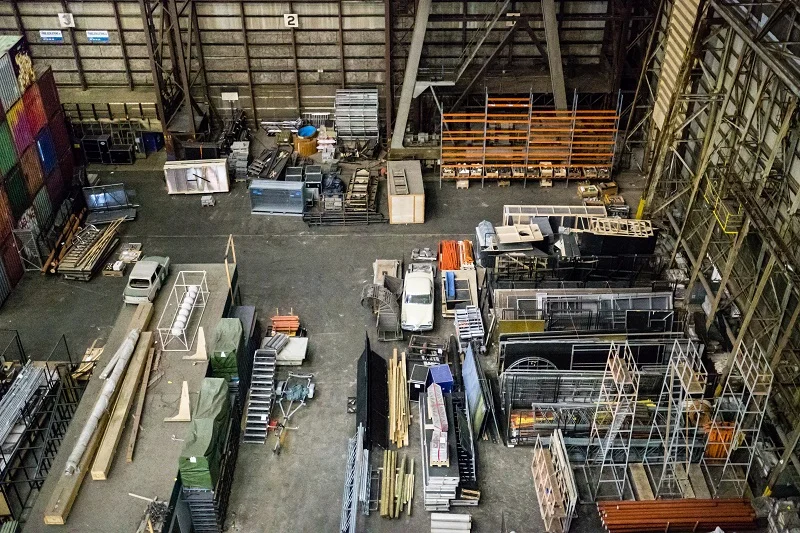
After training the team in Lean concepts, we took a walk out into the process to see what was happening. These Gemba walks can be quite eye-opening, and in this case, it made the problem very real to all team members. There were literally hundreds of pallets of material all over the plant, with much of it stored in a building they called 37.
In Building 37, there was no rhyme or reason to the way materials were stored. These materials were stored for various processing lines, but there was no way to know what was being stored and where to find it. It was obvious something drastic had to be done.
The team developed a concept early in the week that made storage and retrieval of the materials more manageable and thought they could organize and store everything in one location, rather than all over the plant. They determined that they could use Building 37 for this purpose, but would need to make the building more visual and create some rules around storage of materials.
Creating Visual Organization
After many different layout suggestions, we came up with a scheme we thought would work. We decided we needed to move everything out of Building 37, in order to reorganize and line out the space in accordance with our new recommendations. We also realized that we would have to clean the floor and paint it to make it as visual as possible and easy for everyone to use and manage. Painting the concrete floor was something the team didn’t want to do. In the past, forklifts tore up the paint and the lines would be lost quickly. Instead, they did some research and found a company out of southern Georgia with a technology to stain concrete, rather than paint it. It seemed like this was a good option, so we placed a call with them to see if they could come and help us.
To our good fortune, they were willing to drop what they were doing and drive more than 4 hours to meet with us and do the work during the Kaizen week. We told them what we intended to do and the size of the building to be stained. They estimated 28 gallons of yellow concrete stain would do the trick.
All Hands on Deck
We spent many hours moving over 1100 pallets (2.3 million square feet) of ceiling tile out of Building 37 into the open air. We crossed our fingers that it wouldn’t rain overnight. After we moved all of the material out, we swept and scrubbed the floors. The whole team pitched in and we were almost finished before the concrete staining company showed up in the late afternoon. They helped us finish up and started going about their work.
Most of the team members had to leave by 6 pm that evening, so I volunteered to stay with the concrete staining company, who was busy doing their work. In the middle of it, they realized that 28 gallons of stain wouldn’t be enough. They placed a call and sent a runner down to the plant with more stain. The runner happened to be the wife of the owner, who had just put dinner on the table. She dropped what she was doing to help us.
Grievance to File
Around 7 pm, I was approached by a very tall and unhappy Pensacola employee, who happened to be in their workers’ union. He wanted to know what was going on. I explained that our Kaizen team was transforming Building 37 in a way that it would be safer and easier to find and retrieve materials for the production lines. He wasn’t happy with my answer. What he really wanted to know was why the union employees weren’t doing this work. I explained that our team decided concrete stain was the best way to line the floors, given the issues with forklift traffic, and since this technology and equipment wasn’t available in the plant, we had to utilize outside contractors. We wanted to keep this work in-house, but that option wasn’t available to us.
Again, he wasn’t happy with my answer, but really didn’t have a valid argument as to how the work could have been completed with existing Pensacola employees. So, he angrily stormed off, vowing to file a grievance. Around 10:30 pm, all the lines were stained into the floor, and the contractors were finished. I was happy to see them leave, as I needed my rest for the next day of the Kaizen.
Good Intentions, Great Results
We lucked out, there was no rain overnight, and we spent the morning putting everything back into Building 37, this time in a logical sequence and order for the materials to be easily found. The lines really helped, and to this day, the plant uses this system to keep materials organized for all of their production lines.
I never found out if the union employee filed a grievance, but even if he did, we had done the right thing for the plant with the best of intentions.

Thomasville’s Frame Nailers – Taking a good idea and expanding its reach
As a young engineer at Thomasville Furniture, I was given project assignments at the discretion of my manager. He gave me ample opportunities to try out different ideas and supported my efforts. I spent many hours in our manufacturing facilities and was fascinated by the complexity of the manufacturing processes. Many of these processes were extremely labor-intensive and required great skill to accomplish. One such task was the assembly of the base frames of case goods, such as night stands, dressers, and other cabinet style products. These frames were the support structure of the furniture and had to be strong and sturdy to hold up to the years of abuse that furniture sees in its lifetime.
As a young engineer at Thomasville Furniture, I was given project assignments at the discretion of my manager. He gave me ample opportunities to try out different ideas and supported my efforts. I spent many hours in our manufacturing facilities and was fascinated by the complexity of the manufacturing processes. Many of these processes were extremely labor-intensive and required great skill to accomplish. One such task was the assembly of the base frames of case goods, such as night stands, dressers, and other cabinet style products. These frames were the support structure of the furniture and had to be strong and sturdy to hold up to the years of abuse that furniture sees in its lifetime.
The process to put together a base frame starts with the cutting of the four individual frame components to the appropriate length. Then, each end of the component is cut with a miter saw at a very specific angle, 44.5 degrees. I asked a skilled saw operator why he wasn’t cutting a standard 45-degree miter. He informed me that the extra half degree allowed for the special nail, glue, and growth that typically occurs in wood when exposed to moisture.
After cutting the miter, a notch was cut at a perpendicular angle to the miter in the center of the ends of the wood. This allowed for a special joining nail to be applied to both ends of the wood. The placement of this notch was critical as well, as any deviation from the center would make the nail noticeable to the customer. Once these cuts were made, the components were brought to the assembly department. Once there, employees would apply glue to the mitered ends, nail the components together, and remove any excess glue. Then, after all components were dry, they were transferred to another department whose responsibility was to put wood putty into any gaps that might be visible in the joined mitered ends. In all, this process took 6 days from original cuts to final putty and cleanup of the frames. As many as 6 people touched the components during this process. The more I watched this process, the more I thought, “There has to be a better way to do this.”
A Simple, But Powerful Discovery
A few months later, all of the engineers at Thomasville Furniture traveled to the International Woodworking Show in Atlanta. This was my first time travelling for the company and I welcomed the opportunity to see all of the interesting machines at the show and tour Atlanta a bit. Each engineer was to look for equipment at the show that might help the plant to which he or she was assigned. The exhibition hall was gigantic and the three days we were there wasn’t enough to properly see everything. Most people liked to look at the biggest, shiniest, most complicated machines that were being displayed. I, however, was fascinated by something I saw at a little booth in an out of the way spot in the exhibition hall.
In the booth was a series of small picture frame nailing machines. They were simple little machines that seemed to be quite efficient at their task. The representative showed me how they worked. Basically, you bring two mitered ends of picture frames together in a jig that positioned them precisely, push a foot pedal, and a pressure plate came down to hold the mitered ends tightly together. Then, a corrugated nail came up from a coil below the machine and was driven into the mitered ends. He handed the assembly to me and told me to try to pull it apart. I couldn’t. Then I noticed how tight the joint was on the assembly. There was no gap, which meant that no wood putty would need to be applied.
I asked the representative if he had a machine that was designed for larger mitered components. He didn’t, but said that he thought he could modify and strengthen one of the machines to drive nails into larger pieces of wood. I asked him how soon he could have a prototype machine. He thought he could have one ready in 4 to 6 weeks. That was all the time I needed to convince one of our plants to try out this new approach. Although I saw many other interesting machines, nothing intrigued me as much as these frame nailers, as most Thomasville plants would have a use for a heavier duty model.
Being Open to a New Process
When I returned from Atlanta, I asked my supervisor which plant he recommended we test the prototype frame nailer. My thought was that if we could convince a plant to try it out, they would get an opportunity to provide input to the design and functionality of the new machine. They would also have the fastest opportunity to streamline their operation. We agreed that the case goods plant 3 miles from the corporate center was the best place to start. We called a meeting with the plant management and gained their support for this work.
Approximately 6 weeks later, a larger version of the picture frame nailer that I had seen in Atlanta arrived at the plant. Two days later, the sales technician joined to show us how to use the prototype equipment. Plant management joined us and watched as the technician joined two large mitered parts with little difficulty. It happened so fast that they wanted to see another demonstration. This time the parts didn’t go together as well as expected. It turns out that there wasn’t enough air pressure applied, and when it was quickly corrected, every part came together precisely and tightly. Everyone was amazed how easy it was and also how tight the mitered joint appeared.
A Solution With Many Applications
Soon, they realized the best benefit of all. There would be no need for applying putty to the mitered joints, as they held together so well, with no gap apparent. This was a breakthrough. But, it was also just the beginning. Then, the technician was asked if this equipment could also create a “Butt Joint.” This is an assembly of two pieces of wood that are joined at perpendicular angles, rather than at a 45 degree angle. These “Butt Joints” we used as intermediate assemblies in case goods and were also quite labor intensive. The technician thought it would be possible, but it would probably need a special jig to hold the pieces in place while the nail was delivered.
Because we were in a furniture factory, we were able to quickly create a prototype jig to try it out. Lo and behold, the two pieces of wood were joined together just as tightly as the mitered pieces. This would save more effort, labor, and time. After identifying a few more modifications, we realized that we had something that we could use in the multiple plants at Thomasville Furniture. We quickly ordered a first unit and set about determining how many others we would potentially need.
For the next six months or so, I was able to replace the old-style miter cutting and joining processes all over the company with the new frame nailing technology. I even was able to find a few more uses for the equipment, which led to more sales for the technician.
I learned a valuable lesson from this work. Sometimes you have a problem that needs a solution, other times you have a solution to a problem you don’t realize you have. You just have to be willing to look for that problem and apply the solution.

A Little Dab Will Do Ya
In 1991, I was offered a line supervisor position at Armstrong’s ceiling grid factory in Franklin Park Illinois. I had been working as a staff Industrial Engineer at Thomasville Furniture in Thomasville North Carolina, so the position would be my first operations supervisory role.
In 1991, I was offered a line supervisor position at Armstrong’s ceiling grid factory in Franklin Park Illinois. I had been working as a staff Industrial Engineer at Thomasville Furniture in Thomasville North Carolina, so the position would be my first operations supervisory role.
I spent my first few months at the plant learning everything I could about the manufacture of ceiling grid and the approach I would take to supervising my small crew of factory workers. The only way I knew to learn was to spend as much time as possible on the factory floor, observing, asking questions, and trying to help where I could.
The factory had eleven separate operating lines and each of them made a variety of products. Each line consisted of an unwind station for coils of steel, roll-formers that bent the coil of steel into the shape of the ceiling grid, and a punch press which stamped out the holes and end details for each piece of grid. Finally, there was a packaging station that assisted the operators as they put the finished pieces in a box.
The lines operated fairly well, with limited downtime, until it was time to change over from one product type to the next. If the shape of the grid was changing, rolls on the roll-former would be switched out. If the size or shape of the product were changing, dies in the press would need to be moved or switched out. The process of changing over was long and drawn out and we never started right up after the changeover. I wanted to know more about this, but typically the highest skilled employees did the changeover and didn’t want to be bothered by my questions.
An Observation In Need of a Solution
After a few months of observing things, I decided that I needed to help somehow. I really wasn’t sure what I could do to help. I decided I would first try to better understand press die setup, as it looked more straight-forward than roll former setup. Spending many hours observing what was happening, I noticed that once the dies were placed in the proper location, they were then tightened using bolts. Then, a bar of grid would be stamped and checked for proper placement of holes, end details, and overall length. Tolerances were tight, so the dies would have to be placed accurately.
Every time this was done, the measurements required that the setup operator make adjustments to the location of the dies. I didn’t understand why this was. Why couldn’t he just find the optimal position, tighten the dies, and be ready to run on the first try? He told me that the dies always moved a bit when tightened and he had to tap them to their final position with a mallet. If things went well, he could do this on one additional attempt. If things went poorly, it could take many attempts which added up to many hours of downtime. I thought to myself, “There must be a way to get the dies set properly on the first try.” I didn’t know what to do. Luckily for me, I was about to take a trip that would change the way I thought about this problem.
I was asked to travel to the new headquarters of our joint venture with Worthington Steel in Malvern Pennsylvania. I like to read bit on airplanes so I looked at the bookshelf in the supervisor’s office and saw a book called, “A Revolution in Manufacturing: The SMED System,” written by Shigeo Shingo. I asked the other supervisor if he had read it and if I could borrow it. He told me that Armstrong bought the book for all of their manufacturing sites in the late 1980’s, but he had never read it. He told me I could take it and keep it if I wanted. So, I took this book with me on the airplane and started reading it.
New Way of Thinking Inspired by Socks
It was like a whole new world had opened up to me. Shigeo Shingo developed a changeover reduction process that is used by companies the world over and even is used during pit-stops at auto races. This was just what I needed. But, where to begin? A story in the book about golf told me what to try first. In the story, Mr. Shingo talks about playing golf and getting blisters on his feet at the end of the day. He loved golf, but didn’t love the blisters that came as a result and decided he must reason out how to eliminate them. He used his problem-solving skills and figured out that the blisters came from the rubbing of his socks on his feet when he was swinging the golf clubs. Why were the socks rubbing on his feet? Because there was less friction between the socks and his sweaty feet than there was between the socks and his shoes, which he had put on quite tightly. How would he resolve this? He figured out that by adding another pair of socks on his feet, he could keep the least friction between the two socks and therefore they would rub against each other, rather than rubbing on his feet. Problem solved; blisters eliminated!
So how does this apply to changeover reduction, you may ask? Now that he saw how reducing friction was beneficial, he decided to apply the same idea to press die setup. He also had a problem with dies moving once they were tightened down. He originally had a bolt and one washer that he used to tighten down dies on a smooth press surface. He noticed that the die would move on the smooth press surface when the bolt was tightened securely. Much like the socks, he decided to add an extra washer to the bolt and put a dab of oil between the two washers, guaranteeing that they would have the least friction of any component in the setup. He tried his idea out and it worked. And now, I had something I could try back at the plant when I returned.
Results Even Skeptics Could Not Ignore
When I got back to my plant, I was excited to share what I had learned with my setup operators. I explained what I had read and they were not impressed. “How do sweaty socks help improve changeover time?” they asked. I said I thought we should try an experiment to see if what I read really did work. One of the operators grudgingly agreed to give it a try. I wanted to make sure that we had real data for our experiment, so I asked him to set up a die in position as he normally would. In this case, we set up dial indicators on two corners of the die. They would be used to show us how much the die moved when tightened to the press. We zeroed out the dial indicators just before he made the final tightening of the bolts on the die. One corner mover .007” and the other moved 010”. That might not seem like a lot of movement, but it is more than we could tolerate and would require him to move the die with a mallet, just as he always had to do.
Now it was time to try the new way. We added a washer to each bolt on the die and put a dab of oil between the two washers on each bolt. We zeroed out the dial indicators just before making the final tightening of the bolts on each die. To our amazement, at the final tightening of each bolt, the washers moved, but the readouts on the dial indicators both read 0! There was no movement of the die. “Let me try that again,” he said, and he did. Once again, there was zero movement of the die. This was a breakthrough. Now the other setup operators wanted to try it for themselves. They couldn’t believe it as one by one each of them saw the dial indicators stay at zero, no matter how hard they tightened the bolts on the dies.
We immediately added washers and oil to the dies waiting to be used on the other lines. Then, we modified the other dies on the production lines after we took them out of the presses following production runs. From then on, every die that was set up in our presses maintained its location, saving valuable time, effort, and reducing frustration. I like to think that I would have figured this out on my own, but I realize that we all get set in our ways and sometimes need a story or two to change our thinking. I don’t play golf, but I now have much greater respect for the game and what can be learned from it.

Kaizen Every Day – The Armstrong Lockout
In all my years doing continuous improvement work, I worked with teams during Kaizen events of short duration, or influencing continuous improvement behavior daily. Never did I think I would be doing 6 months straight of Kaizen. That is, until the Armstrong Lockout.
In all my years doing continuous improvement work, I worked with teams during Kaizen events of short duration, or influencing continuous improvement behavior daily. Never did I think I would be doing 6 months straight of Kaizen. That is, until the Armstrong Lockout.
Supporting Operations During a Lockout
In 2011, Armstrong World Industries and their Marietta PA ceiling plant workers were unable to reach a contract agreement by the time the contract expired. Historically, Armstrong would allow the employees to continue working without a contract, until negotiations were completed. There was always a risk that the employees would walk out any time without notice, but that had never happened. New management decided that it wasn’t worth the risk and decided to send a message to the union by locking out the hourly production and maintenance employees until an agreement would be reached.
Armstrong was ready for this contingency and had made an arrangement with a company that supplied replacement workers and security to companies in similar situations. These workers would move to the site and fill in for the employees until a resolution was reached. Many of the Armstrong engineers, retirees, and other technically skilled corporate employees were asked to train and supervise the replacement workers and also run the complex equipment. Some non-union workers came from other plants in the Armstrong system to help too.
I had been helping a project team building a plant in China. When I returned to the United States in July, I was asked to help support the Marietta plant in an operations role, alternating between equipment operations, training, and supervision.
Armstrong employees were required to meet at an off-site parking lot, and then board a blue bus with blacked-out windows that would take us to the plant. We were to work 12-hour shifts, 6 days a week (we could work 7 days a week if we wanted to) and weren’t allowed to leave the plant property unless we had a personal emergency to attend to. Some of us, including me, had pre-shift supervisor meetings, that extended our days to 13 ½ hours. Needless to say, we all wanted the lockout to end quickly. We also wanted to make sure that no customers would feel the impact of reduced service levels due to the lockout, so we were committed to keeping the plant running, 24/7/365.
A Plan to Reduce Downtime
In my first weeks at the plant, I spent much of my time helping to solve downtime issues and coordinate efforts of workers who were unfamiliar with the equipment. It was apparent that the plant wasn’t left in the best of shape by the Armstrong union employees and they were using their experience to compensate for low performing equipment. We didn’t have the experience, so it was clear that something would have to be done to make the equipment more reliable.
I started to assess the factors impacting equipment performance and realized that many of the downtime issues could be solved with some basic line maintenance – conveyer guiding, leveling, and squaring. Lucky for me, this was and is an area of experience and expertise. On a Saturday in August, I was talking with the plant manager, and suggested that I could provide more value at the plant if I were to work with maintenance to solve some of the basic conveying issues I saw in my time at the plant. He was intrigued and asked me to show him what I meant. I took him on a tour of various parts of the line and pointed out the issues I was seeing. Then, I described my plan to solve those issues, one part of the line at a time. More intrigued, he called the maintenance manager and asked him to join us for a tour.
The maintenance manager met us at the line and took a tour with us. He was a bit skeptical, but after about 30 minutes, he was convinced that I might be on to something beneficial. He asked me what I needed to start the work. I told him I could work with a skilled mechanic to start making line improvements. He asked me when I would be ready to start. I was ready any time.
A Team on a Mission
On the following Monday morning, I was assigned a mechanic named Joe. Joe and I took a tour of the lines and I shared my vision of the work we could do to improve performance. He was enthusiastic. We decided we would tackle one line at a time and prioritized the first line to work on. We agreed that we would do work in 1 to 2-hour blocks and try to utilize downtime to get our work done. We also agreed that since the lines were running so poorly, we could make our own downtime blocks, as long as the crew and supervision was aware and agreed to our plan.
At first, no one wanted to give us any downtime to do the work, so we were frustrated and couldn’t plan well for the work. The only way we could make a real difference would be to convince one of the acting supervisors to take a chance and let us shut a line down in a planned way. I was persistent and convincing and finally had the approval of a line supervisor to try out our plan on his line.
Joe and I got to work, leveling, squaring, and improving the guiding on the first line. We worked one section at a time, and after about a week, the line was running noticeably better. After three weeks, we were setting production records and others were noticing. All of the sudden, Joe and I were getting more calls for help than we could manage. So, we asked for more mechanics to help. We started expanding our work and touching all of the lines in the plant. We also taught the techniques to others so that they could solve problems too.
From time to time, I would get calls on the radio from mechanics who wanted my advice and help and they would meet me and take me by maintenance cart to the site of the issue for review. Now we were making a huge difference in the plant performance and the problems of the past were being solved in a sustainable way. Some areas of the plant looked nothing like they had prior to the lockout, as much of the equipment had been stripped of the problems that kept it from running reliably. Although tiring, this work was also exhilarating, and made working long hours fun. We could see improvement happening every day.
The Lockout Ends, But Improvements Remain
In January 2012, the union agreed to contract terms and was scheduled to return in the middle of the month. I was asked to stay on for a while to show the changes we had made to the plant. Many of the lines looked markedly different and were unfamiliar to the union employees. I gave tours of the line and fielded questions from the employees. For the most part they were appreciative of the changes, as they could see how the improvements would help them do their job in a safer, less stressful way.
The union president asked me specifically why I made the changes the way I did. I told him that due to our lack of experience and skills, we had to make the lines easier to run or we would disappoint our customers. We really missed our experts and were extremely glad they were returning. He liked my answer and ended up doing more of this improvement work with my assistance in the following years.
I am very proud of the work I was able to complete for Marietta during the lockout. I was also extremely grateful the lockout ended when it did. I was ready to go back to riding in something other than a blue bus with blacked out windows.

With Persistence and Desire, Anything is Possible
I started working for Thomasville Furniture out of college as an Industrial Engineer. Born and raised in Maryland and working in North Carolina, I was called “Yankee,” and I had to prove myself worthy every day. I felt like I was up for the challenge. My mother reminded me I was born south of the Mason Dixon line, but it didn’t seem to matter to North Carolina natives.
I started working for Thomasville Furniture out of college as an Industrial Engineer. Born and raised in Maryland and working in North Carolina, I was called “Yankee,” and I had to prove myself worthy every day. I felt like I was up for the challenge. My mother reminded me I was born south of the Mason Dixon line, but it didn’t seem to matter to North Carolina natives.
My first assignment was in Thomasville’s veneer plant. At this plant, many types of veneers were brought together to make beautiful panels used in expensive furniture, more expensive than I could afford. I was fascinated by the labor-intensive process of veneer making, and spent many hours in the plant observing what was going on and asking lots of questions of the workers. They seemed amused by the Yankee who was willing to listen to them.
An Expensive and Inefficient Process
One afternoon, I was in the basement of the plant and watched workers put materials into and out of a hot press. This press was a large, multi-opening machine used to cure and remove moisture from some of the most expensive veneers bought by Thomasville. The machine looked like a large pizza-oven, and had eight openings, one above the other.
I watched a crew of six workers place a large metal plate on a table. After that, they took a “book” of burl veneer – 14 slices from the same log that look generally the same, and spread out each slice on the metal plate. Then, they put another metal plate on top of all of the slices, creating a metal and veneer sandwich. This sandwich fit into an opening of the press. When all eight press openings were filled, a button was pushed, and the press closed on all of the sandwiches. 36 hours later, the sandwiches were removed, all extremely hot, by the same six workers. Now, the workers had to remove the metal plates without burning themselves or damaging the veneer. Heat and pressure had created a vacuum inside the veneer sandwiches, so when the plates were removed, the veneer would fly around and break, as it had become drier and more brittle.
This was the most expensive material used in the furniture and the plant was losing much of it in the course of the curing process. It really bothered me, so one afternoon I decided to talk with the plant manager to see if there was something that could be done.
Avis Tobin worked for Thomasville for many years. He was short, very round, kept a cigar in his mouth at all times, and had the type of loud, gravelly voice that would frighten small children away. I asked him if the “books” of burl veneer could be cured without separating them into single pieces. He responded, “Son, you just don’t know anything about the veneer business. It can’t be done. The veneer would stick together and we’d lose everything.” I wasn’t satisfied with his answer, but it was the most he had ever said to me during my time in the plant.
Opportunity for Change
Six months later, Avis retired and was replaced by a younger plant manager named Bob Ashley. Bob and I developed a strong working relationship over the next few months, as I was able to complete many projects he requested of me. One day, while sitting in his office, I brought up my idea of curing the burl veneer in stacks, rather than pieces. I thought there might be a better way to do it. Bob thought a minute or two, looked intrigued, and placed a call to the veneer buyer at the plant. “Do you have any contacts who cure veneer in the general area?” he asked. The buyer had one in Beaufort North Carolina, which was about four hours from the plant in Thomasville, on the East coast of the state.
Two weeks later, four of us, the plant manager, veneer buyer, truck driver, and me took a truck load of burl veneer to Beaufort to see if we could cure it without de-stacking it. When we arrived at the plant, we saw a piece of equipment we had never seen before: a combination hot press and cold press. The Beaufort plant cured straight grain veneer in this combination press with two people, one loading a conveyer in front of the hot press, the other unloading a conveyer at the back end of the cold press. The stacks of grain veneer would be conveyed into the hot press, pressed for a few minutes, conveyed out of the hot press to the cold press, pressed for a few more minutes, and then conveyed out of the press to the operator.
The stacks of straight grain veneer came out of the end fully cured, with no pieces sticking to each other. Would our burl veneer do the same? We were invited to put a few stacks of burl veneer into the combination press and try it out. We did, and when the stacks came out the other end, most of the pieces of veneer were stuck to each other. We were disappointed. The operations manager for the plant said, “Oh, I forgot to change the heat and dwell time for the burl veneer. It has more moisture in it, so I need to adjust the settings for that.” After he made the change, we tried a few more stacks of burl. Lo and behold, most of the veneer was cured and hadn’t stuck to any other pieces. Approximately 20 percent was still stuck.
A Valuable Lesson
We decided that was all we needed to see. We felt like we would be able to identify the settings required to eliminate the sticking completely. We drove the four hours back to Thomasville with grand plans to change the way we would cure veneer forever. I wrote an appropriation request for approximately $250,000 and bought Thomasville’s first combination cold and hot press. Six months later, it was fully operational. Manned by two operators, we found the proper settings cured burl veneer in one tenth the time of the prior process, with much less scrap and zero risk of being burned. After that, I realized the only limitation to solving difficult problems was preconceived notions of what was possible. If you are willing to take a risk, you may get a breakthrough. I still use this thinking today, as I help Kaizen teams of all sizes and structures worldwide.
Overcoming Resistance to Change
Process Improvement Partners was brought in to help a consumer goods manufacturer cut their changeover time (the time it takes to switch tooling and equipment over from one product to another) in half. By doing so, they would be able to reduce inventory and improve process performance.
Process Improvement Partners was brought in to help a consumer goods manufacturer cut their changeover time (the time it takes to switch tooling and equipment over from one product to another) in half. By doing so, they would be able to reduce inventory and improve process performance.
The company has five different shifts operating 24 hours a day, 7 days a week. Each crew believed it had the best approach to changeovers, but the results didn’t show it. There was major variation between and within shifts and none of the crews were able to start up their lines consistently and effectively coming out of a changeover.
The Path to Improvement
Process Improvement Partners recommended a 4 ½ day changeover reduction event, or SMED (Single Minute Exchange of Die) Kaizen, using representation from each of the crews. By doing this, we could identify best practices across all of the crews and teach changeover reduction techniques to be shared once the Kaizen was over. The leadership team agreed, and we began preparations for this critical event.
Our leader, the Operations Manager for the production line, picked a team of “All Stars” to participate in the Kaizen. He felt their experience, creativity, and enthusiasm would lead us to a win.
This was the first changeover reduction Kaizen in the history of the plant, and the team was skeptical when we stated our objective: cut the existing changeover time in half, without increasing safety risk to the crew or quality risk to their customers. The team members assumed this meant they would have to rush around, with intense pressure to meet the new target time. The truth was using SMED techniques, we would be able to reduce enough waste in the existing changeover process to take significant time out and reduce safety and quality risk. Then, using the Wheel of Sustainability, we would be able to continue to get great results for years to come.
Turning Skepticism into Excitement
The first day of the Kaizen, we taught the four step SMED methodology (with a little spin from Process Improvement Partners):
1. Assess the current changeover and identify steps that must be done while the line is shut down (internal steps) and steps that are done while the line is still running (external steps)
2. Convert any internal steps to external steps
3. Streamline any remaining internal steps and then any external steps
4. Eliminate any adjustments and put in all aspects of the Wheel of Sustainability
For step one, we videotaped the changeover, did some motion analysis, and made numerous observations of waste. The team was excited to see opportunity they hadn’t realized existed. They never had stepped back and watched what was happening, as they always had to participate in the changeovers.
As we entered step two, the team prioritized the steps they thought could be converted from internal to external. Their creativity helped them invent and build a number of jigs and fixtures that allowed work to be done in preparation for the changeover, while the line was still running. By the morning of the third day, the team tested their efforts and found the time required to change the line over had already been reduced by 50%. They weren’t satisfied, there was much more they felt they could do.
For the rest of the third day and part of the fourth day, the team worked on improvements to streamline remaining internal steps, found ways to eliminate adjustments, and created visuals to help all team members do the changeover the same way every time. Now it was time to give the changes the ultimate test: let another crew try the new changeover procedure.
Working Through Opposition
Each team member was assigned a crew member who wasn’t on the team. They were assigned to review and teach them the new method and answer any questions or concerns. They were sent out onto the factory floor and had approximately 1 ½ hours to teach and discuss the new methods and approach one on one. After a while, one of the team members came into the meeting room and asked for my help. Her assigned crew member was not interested in participating in the test of our new changeover procedure. I came out on the floor to find out if I could help the situation.
The crew member, let’s call him Roy, was visibly upset, so I asked him what was bothering him. He started yelling at me, saying we hadn’t listened to him or anyone else on his crew, didn’t videotape their changeover, and generally didn’t care what they thought. I told him the team had representation from every crew and had done their best to use the best practices from each shift as we worked during the week. He was having none of it. I let him know that we needed to let someone other than the team try out the new method, so we could get feedback and make improvements to it, before locking in all of our changes. His anger grew. I knew I needed to do something extreme, or he would be lost and we wouldn’t learn what was needed to finalize our new procedure.
I asked, “Are you telling me you’re unwilling to try the new procedure?” Roy realized he was being asked if he was being insubordinate, which is a disciplined offense in most companies. He answered he was willing to try the new procedure, but just wanted to voice his protest about the lack on inclusion. I told him I respected his opinion and thanked him for his willingness to try the new approach.
Testing the New System
At 4:30 pm, we gathered all crew members to explain the new procedure, set the expectations for them to follow it to the letter, and would give them the opportunity to provide feedback once the changeover was complete. We would also pair a team member from the Kaizen team with each crew member, so they could be coached during the changeover, just in case they didn’t remember or understand the new steps or approach. All crew members affirmed their commitment to try the new procedure, and we started the new changeover at approximately 4:40 pm.
Three minutes into the changeover something didn’t look right. One of our Kaizen team members, let’s call her Julia, looked extremely uncomfortable. I took her a few feet away from her assigned crew member and asked her if her assigned crew member wasn’t following the new procedure. She nodded and I called the Kaizen team leader over, to talk about what was happening. He wasn’t happy and we agreed to stop the changeover immediately.
We gathered the crew back together, explained what was wrong, why it wasn’t ok to try their own procedure as we wouldn’t learn anything if they did. We then instructed them to put the line back to its original condition before the changeover. After that, we would start the changeover again. There was tension in the air.
At approximately 5:00 pm, we started the changeover for the second time. In two minutes, one of the Kaizen team members, let’s call him Jack, came over and informed me his assigned crew member wasn’t following the new procedure. We stopped the changeover again, gathered the crew, and in an impassioned way, did our best to convince them to try it the right way, or we would do this all night. Would things work out on the third try?
We started out third attempt at 5:10 pm and this time everyone followed the new procedure to the letter. You could see the tension fade away from the Kaizen team members. Now, something else was creeping in. The team had been working since 6:30 am and they were getting tired. 65 minutes later, the changeover was complete. Now it was time to bring the crew into the meeting room and get their feedback and reaction to the new procedure. I was wondering how Roy and his crew mates would respond to the new procedure and the two stoppages we imposed on them when they tried to go “rogue”.
A Surprising Conclusion
In the meeting room, I set up a flip chart and gathered all crew members around a table. I asked each of them to tell us, one at a time, what they thought, identifying out the things they liked and the things we could improve for them. As they spoke, I would write their comments on a flip chart for everyone to see.
Roy started out the feedback session by telling us he “loved” four very specific improvements the team had made. He also offered some constructive feedback on some simple things we could improve. Others had the opportunity to share their feedback, and all of them had positive and constructive things to say. I have to admit I was a bit shocked at the change in the tone in the room. I had figured the crew would save up all of their anger for the meeting room. Instead, they were appreciative for all of the Kaizen team’s efforts. They had realized our Kaizen team was doing their best for everyone in the crew, and the test proved it to them.
We thanked the crew and the Kaizen team, and sent everyone back to the line or home. There were many handshakes and high-fives before they left.
At the report out to leadership, the team remarked how important it was to get everyone’s input and also to test out new ideas with a group that wasn’t involved in the changes. It illustrated how difficult change can be, as most people tend to expect the worst and hope for the best. Since then, the line has been able to sustain the reduced changeover time and has many more believers in changeover reduction and Kaizen.

Don’t Shortcut the Process if You Want Results
Process Improvement Partners was asked to develop and deliver a global cost reduction ideation session for a leading consumer products manufacturer. In early phone conversations with the client, we discovered that prior attempts at this effort had less than desirable results. The next logical step was to visit the client and discuss the approach for the session.
Process Improvement Partners was asked to develop and deliver a global cost reduction ideation session for a leading consumer products manufacturer. In early phone conversations with the client, we discovered that prior attempts at this effort had less than desirable results. The next logical step was to visit the client and discuss the approach for the session.
The company wanted to develop a number of cost reduction concepts to be implemented in the current and following years. In past sessions, teams brainstormed cost reduction ideas and then handed them to project teams who were to turn those ideas into reality. Many ideas weren’t fully detailed, and the project teams became frustrated as they tried to understand the meaning of the ideas.
In order to get the proper amount of detail for the ideas, we suggested a two-day session. The client anticipated a half- day session, and his sponsors were only willing to commit that amount of time. It was clear we’d have to be prepared to make our case before requesting more time from the sponsor.
Our principle for an effective cost reduction session is that there should be no risk to safety, customer service, or productivity resulting from the ideas generated and implemented. To accomplish this, the team must understand what is most important to the customer, the employees, and the overall marketplace. During our sessions, the team receives Voice of the Customer, operational, and business information as the basis for their work. Then, the team is exposed to other ways of thinking around their current processes. Brainstorming and prioritization come next, and the highest priority ideas are developed into detailed concepts with logical thinking and financial calculations applied to them.
Once the team enters into the concept development phase, they continue to work until time runs out in the session, working from the highest priority/highest value projects to the lowest priority/lowest value projects. Most teams need two days to get enough projects detailed to meet the desired session objectives.
Once this approach was reviewed with the team leader, he agreed two full days were needed for the session. Now, we had to convince his sponsors to commit to a two-day session.
Fortunately, there was a leadership team meeting later that morning, and the team leader was able to get a 30-minute agenda commitment from them. The team leader introduced me to the leadership team and told them I would be describing the process for the session and asking for a two-day commitment.
This opening statement got the room buzzing. They didn’t feel like they needed two full days as they hadn’t had to do this in past sessions. One of the members of the leadership team commented that prior efforts hadn’t been successful, so maybe they should listen and consider a different approach.
This was my opportunity to talk about prior cost reduction sessions and the results they were able to achieve. I emphasized that the key to these sessions was to provide concepts to project teams that had the right amount of detail and logic, so the teams would have a solid foundation from which to build on. I explained that rushing through these sessions wouldn’t allow the teams to think through the logic and provide the necessary detail.
This got their attention, but they were still skeptical. They were willing to allow one day (a half-day increase from their prior commitment), but this still wouldn’t be enough. Knowing that these sessions were designed to save companies millions of dollars, I asked if they thought two days was reasonable for such a high return on their investment. One of the leadership team members asked, “Why wouldn’t we set a savings target and lock the team in a room until they reached this target?” I explained the team would be less likely to provide quality effort and more likely try to hit this target with “false” savings, in an effort to go home that evening. He seemed satisfied with my answer.
The leadership team members began challenging each other’s thinking and relived many failed attempts at cost reduction. I knew we were getting somewhere, but hadn’t yet gotten agreement to proceed with a two-day session. Finally, the Director of Finance looked at me and said, “What are you going to do that’s different from what we’ve been doing all of these years?” This was my chance. I fired right back, “I don’t really know what you’ve done in the past, but I can tell you what I would do.” From there, I described the full two-day process that had worked for dozens of teams over the years. The team leader supported me during this discussion and by the end of the review, the leadership team agreed on the approach. The Director of Finance even said, “Don’t be so cheap. Let’s give the team two full days for this important effort.”
This was the alignment and agreement we needed. We thanked the leadership team for their support and time and excused ourselves from the meeting.
A month later, we ran our first cost reduction session and the team beat their savings target by more than $10 million. Two more sessions were held in 2018 with similar results. These sessions will now be held annually, following this approach, with a two-day commitment every time.

Shine a Light on the Problem
The Corporate Quality Manager of a suspended ceiling manufacturer had a problem. When he wanted to check for defects on ceiling tiles, he had them shipped from the manufacturing plant and installed in ceiling grid in the corporate testing facility. This 12’ x 24’ ceiling grid configuration was adjacent to a large bank of windows. He then waited for the weather to cooperate. You see, he wanted the proper angle of sunlight to shine across the face of the tiles, and depending on the time of year and weather conditions, he might have to wait weeks to assess the quality of the tiles. The windows were often obstructed with testing materials, which made access and viewing even more difficult.
The Corporate Quality Manager of a suspended ceiling manufacturer had a problem. When he wanted to check for defects on ceiling tiles, he had them shipped from the manufacturing plant and installed in ceiling grid in the corporate testing facility. This 12’ x 24’ ceiling grid configuration was adjacent to a large bank of windows. He then waited for the weather to cooperate. You see, he wanted the proper angle of sunlight to shine across the face of the tiles, and depending on the time of year and weather conditions, he might have to wait weeks to assess the quality of the tiles. The windows were often obstructed with testing materials, which made access and viewing even more difficult.
The ceiling manufacturer was about to introduce a large quantity of new products and the installation setup would not be sufficient to check all the new products’ quality prior to product launch. A change had to be made. As Lean Champion for the company, my help was enlisted to solve the problem. After some initial discussions and a tour of the area, the Quality Manager and I agreed we needed to think differently about the setup and process of quality testing. We decided to use a Kaizen event to optimize the design of the required testing space.
We assembled a team of testing technicians, quality technicians, scientists, and marketing representatives to think through the testing requirements and systems to install. We also identified a space to use for the new quality testing area. After a few weeks of touring various buildings and negotiating for space, we chose two adjoining 20’ x 50’ spaces on the ground floor of the testing facility. These spaces were filled with equipment and materials from many years of testing and development. We were sure we would be able to remove most of it and re-purpose the space for the benefit of the company. Although these spaces were large, they had no windows to the outside, so we would have to figure out another way to provide proper lighting to the face of the ceiling tiles.
On the first day of the Kaizen, we reviewed Lean principles and spent extra time on 5S. Next, we took the team on a walk of the current testing area and then to the identified spaces. Their first reaction was surprise and disappointment. They thought we should use the existing space by the outside window and reorganize materials and tools.
Our goal was to be able to assess tiles for quality at any time, regardless of the weather. This goal forced us to rule out the current location for testing. In the new space, the clutter got in the way of the team’s vision of what was possible. So, we did the first S, “Sort”. During Sort, the team removed 90 percent of what was in the space. Some equipment, which had been purchased to provide critical data in years past, was no longer useful, and was removed. The team contacted as many of the equipment owners as possible, to ensure we wouldn’t throw out anything critical. Everything would be removed from the space, no matter what.
Once we cleared out the space, we developed our concept for testing. The idea was to create a number of testing spaces, or pods, in which to install and check various types of ceiling tiles. These tiles needed to be at least seven feet off of the floor, so that they could be observed from below as well as from the side, using some form of raking light. The light had to go across the painted face of the tile, so defects and inconsistencies would be readily apparent. The team agreed the size of each pod should be 12’ x 12’. This allowed us to create three pods in each 20’ x 50’ space, for a total of six. We now had three times the capacity of the existing testing space. But, how were we going to create the necessary lighting?
The first thing we had to do was to identify the intensity and angle of light we needed. Fortunately, we were able to do so on the second day of the Kaizen, as the sun came out and provided the necessary lighting required in the existing testing space. Using light meters and the experience of the team, we identified the proper number of lumens (intensity) and optimal angle for the light in the pods.
The next step was to build the ceiling grid configurations in the pods. We put together three installations of ceiling grid in one of the two rooms. Each was squared up and then ceiling tiles were installed. We made sure we had enough space on all sides of the installations, so we could view the tiles from any angle, without obstruction.
Now it was time to go shopping. We purchased enough lights for one of the pods, before committing to all six. We bought a number of different fluorescent lighting configurations (and kept the receipts) to allow us to test and identify the optimal configuration.
On the morning of the third day, we performed our first lighting tests in one of the pods. A technician climbed a scaffold and held one of the lights up to the ceiling tile installation. The team wasn’t pleased. They asked him to move the light a little further away and a little higher. Things started to look better. Then, after a slight adjustment in location and height, they felt they were getting the type of lighting required. Using light meters, they verified a consistent result compared with the natural light measured on day two. The team collected several measurements and developed plans to assemble permanent lighting fixtures for all pods.
Later in the day, the first lighting fixture was installed and the team verified their results. Everything was as expected. Then the team realized an opportunity to provide the same lighting at a 90-degree angle to the original light fixture. They would just need to install an additional fixture and connect it at right angles to the original fixture. This gave them additional inspection capability they never had before.
On the fourth day, the first pod was complete and plans were made to install the same lighting in the other five pods and to hard-wire everything to make it as safe and efficient as possible. Now the team had a new problem. With the extreme increase in productivity and complete elimination of wait time to test, everyone would want to use the pods at the same time.
The solution was to designate an owner for the area and a system to ensure the area was well-managed and organized. To reserve the use of a testing pod, a white board was installed to make reservations visible, by pod. If someone used a pod longer than the requested time, the area owner would follow-up and hold them accountable to honor their commitments.
At the report out, the team proudly reported on their results. They were able to take a process that used to take weeks and reduced it down to minutes. They also increased the capacity of the area by a factor of three. Anyone could now use the pods safely and productively and testing would no longer slow down any new product development or testing project. In the next six weeks, all lights and wiring were installed, and the space has been in continuous use for years.
The team learned how to shine a light on the problem and solve it creatively.

The Little Team That Could and Did
Process Improvement Partners (PIP) recently conducted a free site assessment for a small electronic targeting systems company in Glen Rock, PA.
Process Improvement Partners (PIP) conducted a site assessment for a small electronic targeting systems company in Glen Rock, PA.
The day started with introductions, with each employee sharing their experiences with continuous improvement and their expectations for the day. Some were excited about the process while others weren’t sure what to expect.
Following introductions, PIP demonstrated various continuous improvement tools and techniques. One technique, 5S, got the attention of the Office Manager. She said she thought everyone could use 5S in their personal workspaces and the various production and testing areas around the facility. After about an hour and a half of discussion in the meeting room, it was time to find out if she was right.
We took a walk of the facility and offices. We could easily see from the start, there were many opportunities to improve safety and productivity. Whenever we walked into a space or an office, there was no indication of the health or status of the area. Most areas were cluttered and disorganized. Using the theme, “How do you know …” we discussed our ability to understand what was happening in each space. The only person who knew what was going on at the time was the person who was using the area or office. In some of the offices, even the person using it wasn’t so sure everything was as it should be. It wasn’t easy to see if anyone needed help to get their work done, so they usually had to fend for themselves.
After the walk, the team brainstormed many ideas they thought would improve their productivity and safety. Sorting through more than 60 ideas, a theme emerged – use 5S to improve safety and productivity in all areas of the facility. But, where should they start? Did they need outside help to use these new tools?
It turns out they didn’t. The next week, they jumped right in and began their continuous improvement journey. With the Office Manager as the leader, they picked the first area to work on, the main production area.
Using what they learned about 5S, they brought order to the area and made it a better place to work for everyone. They were proud of what they had accomplished and knew that this was only the beginning of their efforts. Using available time during the following weeks, they began to spread the use of 5S all over the facility.
They now know what they want to do and how to do it. It turns out you don’t need a bunch of trained facilitators and continuous improvement personnel to make positive change. You just need the willingness to learn and apply some simple tools and techniques to improve your situation. And, if something doesn’t work exactly as planned, learn from it and try again.
Process Improvement Partners is in business to help organizations and people help themselves. Sometimes, all they need is a little support, a little nudge, and a few simple tools to get started.

Speaking Up Takes Courage
In 2011, I was asked to assist a team in Pensacola, FL who wanted to improve processes in their distribution center. We were given four days to accomplish our task – reduce shipping damage by 50%. This was a tall order, but the team was up for the challenge.
In 2011, I was asked to assist a team in Pensacola, Florida who wanted to improve processes in their distribution center. We were given four days to accomplish our task – reduce shipping damage by 50%. This was a tall order, but the team was up for the challenge.
After a half-day of training on Lean tools and techniques, the team took a walk in the distribution center and supplying processes and identified many ideas they thought would improve the situation for everyone who worked there.
All of the ideas were shared and the team prioritized the ideas they wanted to implement first. Breaking the team into smaller sub-teams, we picked the top three projects to work on. Each sub-team developed their solutions and began to implement them. At times during the day, we would come back as a full team and review each sub-team’s progress. Things were getting done, but it wasn’t clear that any of the projects would significantly reduce shipping damage.
On the morning of the third day, I asked the team if they had any feedback or ideas to help us make better progress against our goals. The room was silent. One of the team members, let’s call her Ruth, had an uncomfortable look on her face. I didn’t want to put her on the spot, so I asked each team member, one at a time, to give one suggestion they thought would make the day better for everyone. Most people said things like, “Let’s work better as a team,” or “We should try to get more done.”
When I got to Ruth, she blurted out, “I don’t think we’re working on the right things.” This took me by surprise. I wanted to know more. She then explained we weren’t focusing on the root cause of the shipping damage. She thought we were just working on things that were easy to implement, not directly impacting the causes of shipping damage.
I felt a sense of panic – we were in the third day and would be reporting our results at the end of the fourth day. There was little time to spare, but we had to resolve this issue or else we would fail. We were a team and the members started to share their thoughts with Ruth about the problem we were trying to solve. They realized Ruth was right. We were avoiding the real issues causing shipping damage. We brainstormed again and prioritized efforts based on the right things to do, not the easiest things to do. Relief started to wash over me as I realized the team was determined not to fail.
Once we finished prioritization, the team split into four sub-teams. Each sub-team had a sense of urgency and purpose and worked on their projects with energy and a “refuse to lose” spirit. If they had a question, or got stuck, they went to find help. Nothing got in their way. Almost all team members stayed late and everyone agreed to come in two hours early the next day to ensure their work would be done.
We decided to abandon the standard Power Point presentation of our findings and changes and worked right up to the time of the report out. When the leadership team came to see what we had done, we gave a tour of the changes we implemented to reduce shipping damage. They were impressed and believed we had accomplished our goal of 50% reduction.
I learned a valuable lesson from Ruth, and it’s one I share with all of the teams I work with. Understand the problem you are trying to solve. Once understood, focus on the thing(s) that will solve the problem, no matter how difficult they may seem. If you’re veering off course, have the courage of your conviction to steer people back on course. Never be afraid to speak up.
I now give all of my teams many opportunities to speak up and share their concerns. I also do it as soon as possible in every Kaizen event I lead or facilitate. It’s better to change course than end up in the wrong destination. Thanks to Ruth for being brave enough to steer us back on course.

Little Things Mean A Lot
A global consumer goods manufacturer was experiencing high levels of downtime, jams, and long changeovers on a critical production line. They invited Process Improvement Partners to their plant to observe and discuss the problem and identify opportunities for improvement. After reviewing performance, we took a walk to the line. The line was running, and after a description of line components, it became apparent there were quick opportunities to improve performance of the line. The techniques we would use were quite basic: leveling, squaring, aligning, and centering of products with the process. It seemed so simple, and the customers were skeptical. We suggested a five-day Kaizen to improve line reliability, scheduled for January 2019.
A global consumer goods manufacturer was experiencing high levels of downtime, jams, and long changeovers on a critical production line. They invited Process Improvement Partners to their plant to observe and discuss the problem and identify opportunities for improvement. After reviewing performance, we took a walk to the line. The line was running, and after a description of line components, it became apparent there were quick opportunities to improve performance of the line. The techniques we would use were quite basic: leveling, squaring, aligning, and centering of products with the process. It seemed so simple, and the customers were skeptical. We suggested a five-day Kaizen to improve line reliability, scheduled for January 2019.
Leading up to the Kaizen event, we had many discussions with line operators, mechanics, and engineers, and we made several confirming observations on the line. During a discussion with the Plant Manager, it became apparent he didn’t buy-in to the approach. He had used a process called “Center Lining” before, and had mixed results. In addition, it took weeks to accomplish. We assured him centering of the process would be completed on the first day of the Kaizen and then we would optimize all parts of the process around the center in the following days. He was still skeptical, but heard enough and saw our confidence, and gave final approval for the Kaizen to proceed.
In most Kaizen events, we provide a structure and approach to the team charged with solving a problem. We very rarely dictate specific actions to the team. In this case, the entire first day was controlled and team members were asked to follow very specific instructions before implementing their ideas.
After receiving training on the approach, the team walked to the production line. We reviewed safety requirements, shut down the line, and locked it out. The next step was to identify the center of the critical packaging process. This was the part of the line where everything comes together – the product and the package. We told the team everything leading up to the packaging process should be located and optimized to the center of the process. They didn’t think it would be very important, but were willing to learn and find the center of the line.
We located the center of the line at the midpoint of the conveyor frame on the out-feed side of the equipment and wrapped a string around that point. Then, stretching the string through the equipment, we found the center of the conveyors leading up to the equipment. A trained eye can keep the center precise within 1/32”, so we found what we believed to be center along approximately 100 feet of equipment and conveyor and pulled the string taut. Then, we marked the equipment and conveyor every 4 feet along its length to identify center for the process. Once complete, we noticed all product was coming into the equipment off center. The packaging was tracking off-center as well. That was the first time the skeptical team members saw something they weren’t expecting.
Our next step was to check the levelness of all of the conveyors leading up to and through the equipment. Ideally, all conveyors should be no more than 1/32” out of level at every transition (one section of conveyor to the next section) and side to side. Using a torpedo level and some shims, the team documented levelness of every section of conveyor. They found many of the conveyors were out of level by more than ¼” and some were out as much as ½”. The good news was this condition was easily corrected, and by the end of two hours, all conveyors were leveled throughout the process. The team was losing its skepticism as the products ran more consistently once we started the line back up. The first day ended with the team handing the line back over to the production organization.
The next morning, the team came in energized. They heard from the afternoon shift and overnight shift that the line had run smoothly overnight - much better than anyone had expected. We had four more days to improve things before the end of the Kaizen.
The next step was to optimize the location of the product with reference to the center of the process. Now that we had identified the center and leveled the line, this was easy. The challenge was to determine ways to ensure that our new settings would not change as soon as the Kaizen was over. The team was given the freedom to come up with ways to create and sustain the new settings. Using collars, pins, and labels, the team came up with ways to identify the proper locations for all of the different products running on the line. They also identified the product changeover steps (in the order to be followed) and labeled each part of the line with changeover steps that would need to be accomplished in proper sequence. These labels were made with large, bright green stock, so people wouldn’t miss them and forget a changeover step.
One problem the team identified was that the packaging wasn’t wrapping the product in a consistent manner. Upon further investigation, it was determined a top guiding roller was applying unequal pressure to the corrugated wrapper and the wrapper was shifting from side to side. One of the team members came up with a simple solution - tie all parts of the top guiding roller together to guarantee equal pressure across the wrapper. By doing this, the wrapper consistently met the product every time.
Improvements came fast and furious over the final days of the Kaizen, and by the last day, everyone noticed a significant improvement in line performance. The operators on the line thanked the team for correcting years of problems and even offered suggestions to make things better, which the team was able to incorporate into their work.
At the report out, team members remarked they were surprised how extremely small improvements impacted performance. They also realized these techniques could be taken to any other line in the factory. Once skeptics, they become zealots.

Where Is It?
In 2010, the company I used to work for decided to go Lean. They brought in consultants, who taught tools and techniques to employees all over the world. One tool I learned from them was 3P - Production Preparation Process. This technique maximizes creativity of a team by driving their thinking way beyond their comfort level.
In 2010, the company I used to work for decided to go Lean. They brought in consultants, who taught tools and techniques to employees all over the world. One tool I learned from them was 3P - Production Preparation Process. This technique maximizes creativity of a team by driving their thinking way beyond their comfort level.
Because I had extensive experience with Lean and had applied it for many years in my work, the consultants recognized my capability to facilitate and lead Kaizen events that were broad in scope and of high complexity. One consultant, who asked me to co-facilitate a 3P Kaizen, explained each step to me before and during the Kaizen. The team accomplished breakthrough results, but I didn’t fully understand how they got there. A few months later, I was asked to facilitate another 3P Kaizen, with a consultant as my co-facilitator. Once again, using the 11-step method of 3P, we were able to attain another breakthrough. Over the next two years, I used 3P a few more times and facilitated teams to breakthrough results. Something was bothering me, however. I still didn’t fully understand the meaning of the steps and why they were so powerful. I wanted to know more.
After some research, I discovered the inventor of the methodology was Chihiro Nakao, who ran a company called Shingijutsu. I also learned Shingijutsu was hosting a 3P seminar in 2013 and knew I had to go. Knowing it wouldn’t be an easy sell (costing over $6,000), I asked a higher-level manager to join me and convince our company there was immense value in attending. We were successful and made plans to attend the seminar in Muscatine, Iowa.
Shingijutsu’s World-wide 3P/Moonshine competition was a real-world problem-solving seminar hosted by Allsteel, a leading manufacturer of office furniture. Three teams of six were challenged to design, develop, and demonstrate a new chair and the process to produce it - all in one week. Each team had Allsteel members, as well as participants from outside companies. At the end of the week, our work would be judged by our “customers” and a winning chair design and manufacturing process would be selected. The prior year’s winning chair was being manufactured for the first time the week of the competition. This was going to be intense!
All of our movements before, during, and after each day’s efforts were controlled by Shingijutsu. We were picked up at the airport by them, taken to the hotel, met for breakfast, taken to the factory, and taken to dinner and back to the hotel at the end of each day. This kept us laser-focused and also provided the opportunity to get to know them during downtime each day.
On the morning of the first day of the competition, we were given an introduction to 3P and our mission for the week. We listened to expectations of the plant and our customers next. After that, we were split into three competing teams. Each team was assigned a Sensei to guide them through the process and a space to do their work. My team, made up of my co-worker, four workers from the plant, and me, was given a space above the factory floor, on a mezzanine. Our Sensei, Mike, was a retired Boeing employee, who had come out of retirement to join Shingijutsu at the behest of their founder, Sensei Nakao.
Mike quickly started the team on Steps 1 and 2 of the 11-step Nakao method, named after the inventor of 3P. In these steps, team members were challenged to understand the requirements of the customer at the deepest level. In my prior experience with 3P, I typically rushed through these steps, as they were difficult to explain to team members. Now, I realized these steps were foundational and there could be no shortcuts. The idea of 3P is to design the most waste-free product and process possible. If you don’t understand the essence of what the customer is asking for, you will design waste into the product and process. I was starting to understand – the struggle is important and teams should not be shortchanged of the experience. The day ended with my team finishing Step 2.
The next morning, we started on Steps 3 through 6. In these steps, we were challenged to think in new ways about how to solve the problem for the customer. Using nature as the model of efficiency, all of us had to come up with multiple ways nature does what we are being asked to do. Then, we were asked to sketch. This activates another part of the mind and brings out creativity. Next, we were asked to go even deeper into ways to solve the problem.
At this point, team members were engaged, enthusiastic, and excited. My team went to a meeting table to discuss how we would solve the problem. We got a bit loud and the discussion went back and forth. In less than 1 ½ minutes, Mike came over to our table and asked us what we were doing. We told him we were discussing the problem. He immediately stopped us and said to go out and find the solution, not discuss it at the table. I had never been shut down like that before, and I didn’t like it. I stood up and said, “We don’t even know what it is!” Mike said to go find it on Gemba (the real place, the place where the work is done). So, I did what any respectful student would do - I stormed off!
I went downstairs to the factory floor and started walking around the production lines. I was not happy. I didn’t know what I was looking for, but if that’s what Mike wanted, that’s what I was going to do. My mind was racing, I wasn’t focused, so I kept walking around without purpose. After about 20 minutes of walking aimlessly around the factory, I stopped at a production cell and decided to watch what they were doing. In three minutes, my mind started to relax and I was able to focus on what was going on. Ten minutes later, the activity in the work cell got me thinking about possible solutions to the problem we were trying to solve. Now I knew what Mike was trying to teach. The answer is not at a meeting table, it’s in Gemba. Open your mind and you will find the answer. Could it be that simple? The answer is yes!
I came back to the mezzanine, rejoined the other team members and was ready to solve the problem with them. My experience in Gemba reinforced how important it was to follow the 3P process fully, and not take shortcuts. The rest of the week took us through all 11 steps of the Nakao method and by the end of the week we had a new chair design and the manufacturing process to produce it at the required rate of customer demand.
Our team didn’t win the competition, but we all felt like winners. For me, it was mission accomplished. I learned 3P from the masters. I now had a better understanding of the meaning and purpose of all 11 steps. I also knew I shouldn’t shortcut any steps, they were all vital to the success of the process. But, most importantly, I learned the value of going to Gemba. All the answers are in Gemba. You just need to be willing to look for them.
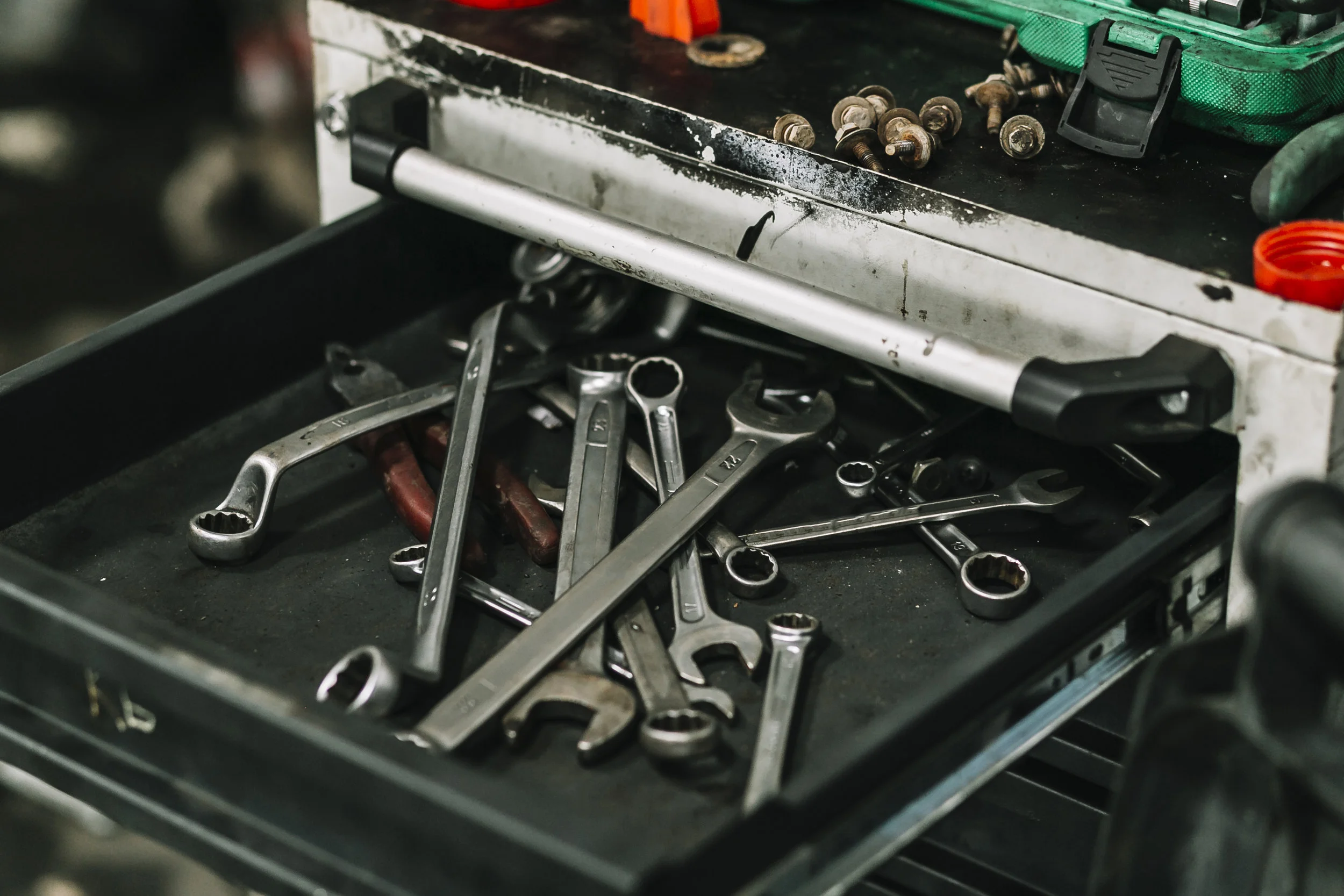
Lead from the Front – The Story of the Pink Tools
A large, multi-national company started their Lean journey in 2010. The company brought in consultants, who facilitated and guided Kaizen events and coached leaders at every manufacturing site around the world. One of their plants, in central Ohio, had a strong culture of employee engagement and was expected to lead the other plants in positive outcomes resulting from the Kaizen events. Early on, they weren’t able to identify an internal leader of their continuous improvement journey, so I was asked to act as the interim “Lean Champion” for the plant.
A large, multi-national company started their Lean journey in 2010. The company brought in consultants, who facilitated and guided Kaizen events and coached leaders at every manufacturing site around the world. One of their plants, in central Ohio, had a strong culture of employee engagement and was expected to lead the other plants in positive outcomes resulting from the Kaizen events. Early on, they weren’t able to identify an internal leader of their continuous improvement journey, so I was asked to act as the interim “Lean Champion” for the plant.
The plant manager, let’s call him Steve, and I had worked together in other roles years before. At one time, I was a direct report of his in the corporate office, so we knew each other very well. Soft spoken and strongly principled, he had the proper mindset to lead a Lean transformation.
Following their initial Value Stream Mapping event, which set the overall Lean strategy for the plant, we agreed the first Kaizen would be a 5S event on their most critical production line. We picked the strongest, most engaged team we could to ensure our first Kaizen would be wildly successful. Top line operators, mechanics, and support staff dedicated five days in order to drive breakthrough safety and productivity of the line.
In the early days of the Lean journey, we were all required to provide a full day of training to the team. Most of the team members weren’t familiar with Lean and the terms used with Lean, so the idea was to make them comfortable by providing extensive training. Most line operators and mechanics don’t have much tolerance for sitting in a classroom all day, so I knew my approach had to be as engaging as possible. Luckily for me, most of the team members had a willingness to learn and a good sense of humor. I infused the training with as much humor as possible, and did my best to entertain them through the long day of training. They hung in there, and when training was complete, we went to the line to see what important improvements we could make.
We walked the line and made many observations. I couldn’t help but notice the extremely dirty condition of the equipment, the floor around it, and the lack of any obvious tools to help the operators and mechanics do their jobs. I asked them what they did when the line went down for repair. The team members took me to their personal toolboxes, which were in various stages of disarray, and explained that if they didn’t have what they needed, they would have to find proper tools elsewhere. They would often lose minutes, if not hours, in search for what they needed. It became apparent having the proper tools was a huge improvement opportunity.
After the tour was over, the team shared their ideas to improve the situation at the line. Many of the ideas had a common theme: having the proper tools where needed, when needed, would greatly improve the safety and productivity of the line. This meant tools would have to be taken out of tool boxes and placed visibly on a board, where anyone could get to them at any time. When the team went to prioritize the ideas to work on, tools availability and visibility became a low priority. I knew there was something they weren’t telling me. Upon further investigation, I discovered trust was the reason tools weren’t picked as a top priority. The team felt their coworkers and contractors working in the plant couldn’t be trusted to return tools when they were finished using them. Even worse, they thought contractors would take tools out of the plant with them intentionally. I knew I had to do something extreme to overcome these trust issues.
“Paint them pink,” I told the team. They looked at me as if I can just come from Mars. “Let me explain,” I said. “If you were to paint all of the tools on the tool board pink, no one would ever wonder where they came from, lose them, or take them out of the plant. Who wants a pink wrench?” Now there was laughter. I wasn’t entirely serious, but I wanted to show them there was an answer and nothing should stand in the way of doing the right thing. Then, I excused myself for a few minutes and let the team mull over my suggestion.
I walked to the plant manager’s office and asked him if he had a few minutes for me. I explained what was going on in the Kaizen event and the mistrust issues the team had. He was aware of tools leaving the plant and wanted to know what he could do to help. This is exactly what is needed from leadership and this was my opportunity to coach Steve. “Steve, we are going to do our best to develop the best system to assure tools never leave the factory and are always available to those who need them. But, we’re new at this, and just like anything else, rules will be broken, so we will need your help. At the report out, we are going to propose this rule: tools are either in use or on the tool board, and no where else ever. We will need you to reinforce this immediately at the end of the report out. Then, the first time someone breaks this rule, you must pound your fist and stomp your feet and make such a fuss that everyone will remember it.” Steve looked at me in a knowing way, but seemed to want a bit more explanation. “How often have you pounded your fist and stomped your feet in front of your employees, Steve? Never! So, do it once and you’ll never have to do it again.” He told me he would consider it. I knew he would do the right thing.
The team sent me to the store to get red paint (not pink) and built a tool board filled with red tools. The rest of the line was cleaner and more organized than it had ever been. During the report out, the team pleaded for everyone to help them maintain the conditions of the line and keep the tools on the new tool board. Steve chimed in to reinforce the importance of this new rule: either in use or on the board, but nothing in between, ever. After much congratulating, the team disbanded, their job well done.
About 2 months later, I was facilitating another Kaizen team in the same plant, when during a process walk, I was called over by an operator, let’s call him Bob, who had been on the original 5S team. Bob showed me the tool board with all the tools in their proper place. I asked him if anyone tried to break the rule. He said it only happened once, and when Steve heard about it, he raised such a fuss it shocked everyone and it never happened again.

Even the Most Organized Person Can Improve
A global ceilings manufacturer wanted to improve the safety and productivity of its testing facility. Over the years, many capabilities had been added to the facility without regard to the needs of the technicians who worked there. Because of this and the lack of a managing system to ensure the organization and productivity of the facility, the technicians took it upon themselves to hold an annual “cleanup week” at the end of the year. All technicians would stop their project work and devote their time to go through equipment, materials, and spaces and clean out any clutter they felt they could get rid of.
A global ceilings manufacturer wanted to improve the safety and productivity of its testing facility. Over the years, many capabilities had been added to the facility without regard to the needs of the technicians who worked there. Because of this and the lack of a managing system to ensure the organization and productivity of the facility, the technicians took it upon themselves to hold an annual “cleanup week” at the end of the year. All technicians would stop their project work and devote their time to go through equipment, materials, and spaces and clean out any clutter they felt they could get rid of.
Three weeks after “cleanup week,” conditions had reverted back and it didn’t look as if any effort had been exerted. This happened annually, and the technicians were extremely frustrated. The lead technician of the testing facility wanted to do something different and sought me out for advice. After walking through the facility with him and listening to his concerns, I suggested we meet with his manager, who was responsible for the testing facility. We took a walk together and discussed the problems created by the clutter and lack of organization in the facility. After about an hour of discussion, we agreed we should use an improvement approach called 5S (Sort, Set in Order, Shine, Standardize, and Sustain) in a targeted area to see if we could make sustainable improvements that could be replicated in other areas of the facility. But, where should we start?
We decided to pick an area known for its organization and strong ownership. We also wanted to pick an area small enough to do proper 5S on in a week or less. We had just the area – the manual paint spraying area. This area was used by many of the scientists, technicians, and project team members. It had a very strong area owner, let’s call her Regina. Regina was known for her tenacity and ability to hold people accountable to follow her rules for the area. This was the area owner we needed. The area was fairly well organized and small enough to demonstrate the value of 5S in a week or less.
We approached Regina and asked her if she would be willing to lead the first 5S team in the testing facility. She agreed, but wasn’t sure what improvements we could make. She was proud of what she had been able to accomplish and had every right to be. She didn’t realize what was possible with 5S and proper sustaining systems. I gave her a quick overview of what I thought might be possible and advised her to pick the team she wanted to help her do the best job possible. Over the next few weeks, she visited with team members to encourage them to participate and share a vision of what was going to happen. She even convinced the manager of the testing facility to participate. He showed his leadership commitment to the effort and raised quite a few eyebrows in his peer group.
The first day of the Kaizen was “Sort” Day. On this day, the team goes through all of the materials, parts, and equipment and makes tough decisions about what to keep and what to remove or throw away. They removed at least 50% of what was in the area. This was shocking to Regina, as she thought he had been diligent to keep unused things out of the area. What she didn’t realize was she was being conservative in her decision making and those using the materials knew some of them would never be used again. We removed so much clutter and materials, the team was able to remove the top shelves in the area, allowing everyone to reach any materials without getting on a step stool or even reaching over their heads. We then added signage to show everyone it was unacceptable to store anything above their heads.
The second day of the Kaizen was “Set in order” Day. On this day, the team took all remaining materials, parts, and equipment and identified the best locations to place them in. After doing so, they labeled the locations, painted outlines, and generally made it impossible to put things in the wrong location. During this effort, I noticed a few of the technicians talking about repair parts for paint guns. Apparently, each one had his or her own repair parts, because they didn’t trust they would be able to find them when they were needed. I asked this question, “If we always knew where the repair parts were and they were immediately available, would you need to squirrel away repair parts?” They all agreed they wouldn’t, but didn’t trust 5S would keep parts from being lost, stolen, or just walking away. I asked them to trust me and with their help, we designed the most visible system possible for the repair parts. I agreed to let them keep their own stash of parts for a few months as a backup plan, but asked them to try the new system first and hold others accountable to do so as well. They grudgingly agreed and were extremely skeptical. Understandable, but I told them we were going to create the new system and rules for it and they could be the ones to help make it work and also enforce them, with the help and support of the leadership team. We would have to teach the leadership team the proper way to support the new system, and we would use our report out to start the process. I would also work separately to coach and teach the leadership team how they should behave.
After “Sort” and “Set in order” days, we worked on Shine, which means to clean and inspect and assure every piece of equipment, tool, and material is in the best condition possible. All of the team enjoyed the day, as they were able to repair and replace things that had been working at less than optimal levels for many years. All repairs and replacements were done on the spot and at very little cost to the company. It helped the team realize they would be empowered to keep things in top operating condition at all times.
On the last days of the Kaizen, we worked on the sustaining systems to ensure all of the team’s efforts would live on. This included responsibilities for those using the area, those maintaining the area, audits of the area, and visits to the area by leadership.
On the final day of the Kaizen, the team presented their results to a packed meeting room. There was a lot of excitement, but nothing like what happened when they gave a tour of the “new” area. People were amazed at what the team had accomplished and the quality of the sustaining systems they had built. They were even more amazed when Regina talked about the difference of having the repair parts out in the open and not squirreled away by each technician. She related a story of how she had lost over 2 hours looking for a specific repair part a technician had locked in his desk. Because she didn’t have the part in her stash, she had to track the technician down, wait for a meeting he was attending to end, and then get the key for the locked desk drawer. This was a typical story, not an exception. Now, because of the team’s efforts, she could get to any repair part in less than 10 seconds. This was an immediate improvement to safety and productivity.
When the tour was over, there was much clapping and recognition for the team. Many in the audience stayed to talk to team members about their perspective on what had happened. They relayed the same thought they had before the Kaizen, “Regina’s area is so organized. What improvement can we make?” Now they knew. In the following months and years, more the two dozen other areas in the testing facility used 5S and installed the same sustaining systems.
These simple tools helped the facility reduce their customer response time by more than 50%, doubled productivity, and greatly reduced safety risks throughout the facility. It also opened their eyes to the idea that no matter how good you think you are, you can always get better.

The Team Has More Power Than It Thinks
A leading consumer products company shipped millions of boxes of goods weekly. Most of the time, large quantities of the same products were shipped on a wooden pallet, and loaded on a truck. The distribution center employees were used to picking full pallets of products out of racks, placing one label on the entire pallet, and then, placing the pallet of goods on a truck. In recent years, Amazon entered into an agreement with the company, and turned their efforts upside down.
A leading consumer products company shipped millions of boxes of goods weekly. Most of the time, large quantities of the same products were shipped on a wooden pallet, and loaded on a truck. The distribution center employees were used to picking full pallets of products out of racks, placing one label on the entire pallet, and then, placing the pallet of goods on a truck. In recent years, Amazon entered into an agreement with the company, and turned their efforts upside down.
Amazon ships any quantity of products, be it one box, or a truckload of boxes to customers. Their customers expect to get the right product quickly and properly labeled. The consumer goods company would now have to label every single box shipped to an Amazon distribution center or an Amazon customer. They would also have to do it more quickly than they had to for any of their other customers.
In the years leading up to and including 2018, Amazon business exploded for the company, much like many others around the world. The company added staff to ship all of the products required, but they weren’t meeting Amazon’s strict delivery requirements and were starting to lose money on the relationship. At this point, they called in Process Improvement Partners to help them solve their problem.
We walked through the existing process together to see what opportunities might present themselves and if a Kaizen event could help solve the problem facing them – develop a system that would meet the growing Amazon business and delivery requirements and do it safely, productively, and profitably. It turns out they were applying their large volume/low product diversity approach to the small volume/high product diversity Amazon orders. We also found out they didn’t always receive Amazon orders in a timely or predictable fashion from their corporate customer order systems, so it caused them to staff the distribution center in ways that made people wait for orders to pick and ship.
We designed a 3-day Kaizen to get them back into compliance and decided to set an aggressive set of goals: 25% productivity increase, 50% cycle time reduction, and 50% reduction in fines relating to late deliveries to Amazon.
In a Kaizen, you should pick team members who will help you solve the problem and want to win. In this case, we picked employees from the distribution center and corporate team members who could provide perspective on the issue and could also initiate identified system changes. We advised all team members this Kaizen was critical to the success of the company and we expected full participation from each one of them during their time together. The team leader made a compelling case and received commitment from all team members.
On Day 1, after team introductions, the team leader explained the problem from his point of view. He thanked everyone for coming and asked them to keep an open mind and be willing to challenge their thinking during the Kaizen. Then, the Amazon customer service manager from corporate presented “Voice of the Customer” information to the team. This was an engaging discussion, and the entire team felt an urgency and need for change and improvement. Following these discussions, we took the team out on a process walk.
We started out in the office, looking at a computer work station. When we asked what was happening at the work station, a team member explained they were waiting for orders to arrive from the corporate system. Until orders arrived, she was stuck and couldn’t provide any assignments for the distribution center employees. We asked her the reason and she explained the orders must have been received by the corporate system after 6 pm. Orders from Amazon were manually entered, and after 6 pm they wouldn’t be entered into the system because everyone had gone home for the day. Orders would wait until at least 8 am the next day to be entered, and by the time they were, the distribution center wouldn’t see them until 10 am or later. The distribution center employees work around the clock. This was a big opportunity for improvement.
We walked around the facility next, looking at the physical and other system issues in the way of safety and productivity for the distribution center. The team members took many notes and after 2 hours, we returned to the meeting room to review what we observed.
After sharing all of the issues as a team, we mapped out the existing process on a wall with sticky notes to identify the biggest pain points and opportunities. There were many issues and we wanted to make sure we would be working on things that would make the biggest impact and also were within the control of the team. We made quick estimates of the time it took to complete each step, including the minimum and maximum times. The idea was to work on the steps that took the longest time, as streamlining them would maximize the customer service improvement.
We identified some steps that could take more than 8 hours and up to 24 hours or more. Those were the steps to work on. The team prioritized those steps and came up with ideas to reduce the time. They avoided the step called, “Wait for orders from corporate”. This step was identified to take anywhere from 1 1/2 hours to 24 hours, so it would be extremely impactful if improved.
I challenged the team to consider improvements to the step. They didn’t feel like they could make any changes without proper approvals. I reminded them they were empowered by the simple fact they were the Kaizen team chosen to solve this critical business problem. If they didn’t feel they could unilaterally make changes, they should “phone a friend” who could approve their changes immediately. One of the team members, I’ll call her Ruth, left the room to make a phone call to the person who could approve the changes. After a few minutes, she came back to the room and informed the team the person she tried to call was out sick and she would try again tomorrow.
I knew we didn’t have time to wait, so I asked Ruth if she was willing to call that person’s manager or go to the person’s house, knock on his door, and gain his approval. She thought I was joking about going to his house (I really wasn’t), and decided to call the next level manager. She wasn’t available either. Finally, she called the Vice President of Logistics and Distribution. After explaining what was going on and the approval she was looking for, she was informed that another team member, let’s call her Alice, had the authority to make the decision. Ruth came back into the room, met with Alice, and secured approval for the change.
It turns out the change was so simple it could be executed by a few lines of programming allowing any orders coming in after 6 pm to be manipulated automatically and delivered to the distribution center immediately. This option was already being used for other critical customers. Adding Amazon to the list took no more than 10 minutes of effort. The team was so motivated by their win, they found many other quick improvements and letting nothing stand in their way, met or beat all of the objectives for the Kaizen. They described how the only thing that was getting their way to improvement was their own way of thinking. Once they realized they were empowered, there was nothing standing in their way of victory.