
Kaizen Success Stories
Real Manufacturing Results. One Kaizen at a Time
Explore real-world Kaizen success stories showing how manufacturing teams solved critical problems, improved performance, and created sustainable results.

Surviving a Brutal Work Environment
I have experienced two mergers/joint ventures in my corporate career at Armstrong. The first one was a ceiling grid venture between Worthington Industries and Armstrong. It was extremely positive and productive and is still doing well to this day. The second one was a ceramic tile venture between Armstrong’s American Olean Tile and Dal-Tile, based out of Dallas Texas. This one didn’t go nearly as well. I learned many lessons from the Dal-Tile experience, mainly about my ability to survive.
I have experienced two mergers/joint ventures in my corporate career at Armstrong. The first one was a ceiling grid venture between Worthington Industries and Armstrong. It was extremely positive and productive and is still doing well to this day. The second one was a ceramic tile venture between Armstrong’s American Olean Tile and Dal-Tile, based out of Dallas Texas. This one didn’t go nearly as well. I learned many lessons from the Dal-Tile experience, mainly about my ability to survive.
When the “merger” was announced, I investigated other opportunities for my career, including a chance to go back to Thomasville Furniture as an assistant plant manager in Winston Salem, and an offer to do work at Armstrong’s corporate center. My recent experience with the Worthington and Armstrong joint venture was positive and I learned a lot at the beginning of the venture, so I thought I would see a similar approach to this combination of companies. Boy was I wrong.
Our Plant manager left us without saying a word. We only found out a week or so later he had gone to the Dal-Tile headquarters to prepare for the merger through a mysterious sounding voicemail. On the official first day of the merger, executives came to our plant and told the acting plant manager he had to fire five staff members by the end of the day.
I was the industrial engineering manager at the plant, and the only way I survived was that I was named as a supervisor. Dal-Tile only staffed their plants with plant managers, supervisors, and ceramics engineers. Any other staff was excess in their view.
I took the supervisory role because I was promised a job at the corporate headquarters in Dallas Texas. My favorite manager from American Olean would be my manager in Dal-Tile corporate. Even though things were challenging at the plant, I had something exciting to look forward to.
When I got to Dallas Texas, I found out we were in charge of assuring environmental, health, safety, and mining compliance across the entire company. There was a department responsible for this already. But they weren’t very helpful to the manufacturing and mining sites. The VP of operations put us in the middle of the plants and them.
We tried to work with the existing EHS and mining group, but they went to great lengths to avoid us. One time, my manager and I walked over to their offices to meet with them impromptu. Instead of meeting with us, they locked their offices and refused to talk with us. What a culture!
Another thing Dal-Tile was proud of was their firing practices. The employee manual started off with a paragraph explaining that Texas was an “at-will” state, which meant they could fire you at any moment, with or without justification. This was on the first page of the manual! I met many people who had been fired and then re-hired and then fired again. Amazing.
I knew the only way I was going to survive this brutal culture was to make myself as valuable and helpful as possible. I took every assignment, put in outrageous hours, and traveled at the drop of a hat, to support any of our twelve manufacturing facilities and multiple mining sites.
I had good relationships with the plant staff. Once they got to know me, they trusted me. They didn’t trust the EHS and mining group, that was for sure. They knew when I arrived, I would be there to help. Nothing more and nothing less.
I had many amazing experiences I would never have had in a more positive working environment. But, after 18 months, I was free to return to Armstrong (there was an agreement that we were off limits for that period of time). I made a few calls and was able to join the corporate group in Lancaster, working for the same manager I followed to Texas. He had left a month or so earlier and was able to convince his manager to hire me.
When I returned to Armstrong, I realized most people wouldn’t believe how we were treated at Dal-Tile. They never experienced a brutal corporate culture. So, I kept the stories to myself or commiserated with those few who survived their time in Dallas Texas and returned to Armstrong like me. Very few made it through unscathed. Those that did had some scars from the battles we fought but were also proud that we made it.
To this day, Dal-Tile is my example of “if you think your job is bad, check this out.” No one should be treated the way we were. Because of this, I really appreciate what I have and my determination to survive.

You’re Not in Kansas Anymore
I worked as a supervisor in a small ceiling grid plant for Armstrong in Franklin Park Illinois. In my first year there, Armstrong and Worthington Industries created a joint venture to leverage each other’s strengths and grow the business. I was offered the role of industrial engineering manager at the plant in Sparrows Point Maryland. The plant in Franklin Park was going to be closed.
I worked as a supervisor in a small ceiling grid plant for Armstrong in Franklin Park Illinois. In my first year there, Armstrong and Worthington Industries created a joint venture to leverage each other’s strengths and grow the business. I was offered the role of industrial engineering manager at the plant in Sparrows Point Maryland. The plant in Franklin Park was going to be closed.
After helping to shut down the plant, I moved my family to Baltimore and started my new role. I quickly realized how much more Worthington understood grid manufacturing. They provided the steel and the science of roll-forming was clearly followed by them. They were quickly helping us improve performance.
I was invited to the corporate headquarters in Malvern Pennsylvania, to meet with various executives in the new venture. Malvern was a manufacturing site for Worthington, and they oversaw the day-to-day operations.
I always thought Armstrong was a conservative company with very simple and powerful values. Mostly guided by the Golden Rule, people were treated with respect and all rules were followed, to the letter. I even joked we were run by the Amish, who have a very simple, but hard-working life. Great people with an amazing work ethic. We were so strict and inflexible at Armstrong. It seemed like fun was missing. Or if not missing, it was well-hidden.
I arrived early in the morning and met with the president of the new venture. He was very passionate about the possibilities for the business and had laid out an agenda for my day. First up was the VP of manufacturing, quality, and then the VP of engineering.
When I met Bill, the VP of engineering, he told me a little about himself. He didn’t have a degree in engineering but had a lot of experience. This would never have been allowed at Armstrong. He also told me he’d rather go to lunch to get to know me. How could I say no?
We went to a local pizza joint, and he ordered a pitcher of beer. I told him I don’t drink during the workday and he told me, “That’s alright, it’s not for you!” I was surprised because I had never seen anyone at Armstrong drink during work hours. But I was also intrigued by the looser approach to work. I drank my Coke and Bill proceeded to finish the pitcher. I definitely got to know him better and we shared many stories and laughed a lot.
The rest of the day was a blur, but I got the same positive vibe from others I met as I did from Bill. Over the next two years, I got the opportunity to participate in many fun activities with other colleagues from the venture. They had the best parties and gatherings. We played hard and worked hard, and the venture became the number one grid manufacturer in the world.

Do Your Due Diligence
Midway through my corporate career, I was a senior industrial engineer at Armstrong World Industries. I spent most of my time providing support to our many manufacturing facilities all over the world. I have always been fascinated by manufacturing and it never ceases to amaze me how good (and bad) decisions can immediately impact performance.
Midway through my corporate career, I was a senior industrial engineer at Armstrong World Industries. I spent most of my time providing support to our many manufacturing facilities all over the world. I have always been fascinated by manufacturing and it never ceases to amaze me how good (and bad) decisions can immediately impact performance.
I thought I would someday be a plant manager and told my manager I wanted the opportunity to take the next step to get me there, as a business unit manager. I thought all my continuous improvement experience would serve me well and I would make more good decisions than bad ones.
One day, the week before Easter, my manager informed me that the plant manager at the Lancaster flooring plant wanted to talk to me about a position in his plant. I was excited for two reasons. One was my opportunity to learn manufacturing from the inside. The other was it would be a two-grade promotion. More money was never a bad thing, or so I thought!
I met Rob, the plant manager, on the Friday before Easter weekend. The plant wasn’t running, but he gave me a short tour of the areas I would be responsible for. All of the hourly workers were gone and I never met anyone on the staff. I thought it was odd, but I was enamored with the idea of the next step towards plant manager.
At the end of the tour, Rob offered me the job and told me that he wanted my answer by the end of the weekend. Even though I knew my answer, I told him I would talk things over with my family and get back with him on Monday morning.
I really didn’t think too much about it. I knew I was going to take the job. My wife was supportive and knew this new role would keep me home more. But the hours were going to be long. It was a tradeoff, but it seemed like the right choice to make. I did mention it was odd that I hadn’t met anyone during the tour, but tried not to read too much into it.
On Monday, I called Rob and told him I would take the job. My manager and I agreed on a transition plan, as I had some projects to wrap up or hand over to others. For the next four weeks, I tried to do both jobs, spending half of my time at my new factory, watching the staff conduct business.
One week before I started my new job full-time, Rob was promoted and left the plant. His replacement wouldn’t arrive for six more weeks. In addition, my counterpart in the factory who ran a different business had a three-week National Guard deployment. I would essentially be on my own, learning as I went.
I had a staff, but they didn’t know me. I also had the vice president of manufacturing to discuss issues with, should things get out of hand. I really didn’t want to have to use his support, but there were a few times that I had to. There were some union/management issues to be resolved and I didn’t have the historical perspective to help me out. So, I swallowed my pride and met with the VP. He was very helpful and supportive. He understood my lack of experience.
For the next few weeks, I barely survived. Finally, my counterpart came back and helped me deal with some issues and then our new plant manager arrived. Things got better, but they were tough. This plant had been in decline for many years and the management and union relationship was strained, to say the least. I did my best to improve things throughout my two years as business unit manager.
Would I have chosen a different path if I had known what was in front of me? Maybe. More likely, I would have tried to gain perspective on what I was agreeing to well before accepting the job. It would have eliminated some of my early bad decisions. It was an amazing learning experience. I like to think I gained twenty years of experience during my time on the job.

Living in the Moment
During my career, I have been fortunate to have worked all over the world. I was brought up as a “tourist.” Whenever I traveled with my family, we would do everything possible to see the sights and learn the history of the region we were visiting. Because of this, I naturally enjoyed my business travel and did my best to explore and experience the culture of any location I visited.
During my career, I have been fortunate to have worked all over the world. I was brought up as a “tourist.” Whenever I traveled with my family, we would do everything possible to see the sights and learn the history of the region we were visiting. Because of this, I naturally enjoyed my business travel and did my best to explore and experience the culture of any location I visited.
I was scheduled to assist Tim, a project manager on a critical project in Munster, Germany. We were evaluating the ramifications of expanding the plant and I was asked to utilize discrete event simulation modeling (explaining that is another story) to evaluate the capacity gain and future bottlenecks in the process.
I scheduled a two-week visit to the plant and had the weekend to explore the region. On my own, this would have been interesting, but with Tim, it turned into an all-out adventure. On Saturday, we took a cruise down the river and learned about the historical battles between the German and French armies. Castles would be destroyed, rebuilt, taken over, and then destroyed again.
On Sunday, we traveled to Belgium. Using the GPS (this was many years ago), we set out to find a museum to learn about the Battle of the Bulge. After being redirected into a few fields, we finally found the museum and learned history from a different perspective than what we had been taught in the United States.
After touring the museum, Tim mentioned that Nürburgring, a famous Formula 1 track, was in the vicinity. I knew he was a big Formula 1 fan, so I quickly agreed to go with him to the track. We got to the track and parked the rental car. Since we didn’t have tickets, Tim was happy to just look at it from the outside.
I saw people walking in and suggested we join them inside. If we acted as if we belonged there, what was the worst that could happen? We joined the crowd and since no one was checking tickets, we made our way in. We climbed into the stands and watched as cars were “practicing” on the track.
Tim was in heaven. You could see he had ticked off a “bucket list” item. I enjoyed watching him as he was deep in his element. The sounds, smells, and experience filled him with joy. There was an infield section where cars were being maintained and tested. Tim looked longingly at the action, and I suddenly knew what I had to do.
I got up and said, “Follow me.” I started down the stands and Tim came along, saying, "There’s no way they’re going to let us go there.” I said, “What are they going to do, kick us out of the country?” Seemed unlikely, so we headed down and walked onto the infield, looking like we belonged there.
We spent the next two hours looking at cars and talking with drivers and mechanics. It was an amazing experience for Tim and me. I just enjoyed seeing Tim in his element, talking about cars, racing, and any other topics that I probably didn’t understand.
There’s a lot of similarities to what I do today as a consultant and my adventure with Tim. I venture out into the unknown, acting like I belong. I definitely enjoy living in the moment with my Kaizen teams and feeling pride when they win.

Getting More Than They Bargained For
My first Kaizen event with a new client in Oregon came as result of my site visit the month before. We were going to apply 5S to an area of their plant that was well behind budget. During my visit, I noticed that although prior efforts had been made to improve organization, they hadn’t stuck. With the appropriate use of Lean principles and the Wheel of Sustainability, I felt I could help them get back on track.
My first Kaizen event with a new client in Oregon came as result of my site visit the month before. We were going to apply 5S to an area of their plant that was well behind budget. During my visit, I noticed that although prior efforts had been made to improve organization, they hadn’t stuck. With the appropriate use of Lean principles and the Wheel of Sustainability, I felt I could help them get back on track.
After a few hours of training on Day 1, we took a Gemba walk into the space we were going to work on. There were several workstations with their own tools, tooling, and instructions. They were cluttered and disorganized. There was no indication of what was necessary and what was obsolete. There was a large central storage area, filled with heavy tooling for all the presses used at the workstations. One of our team members was responsible for the area and he admitted many items were no longer in use and were in the way of tooling that was current and needed.
Other areas were similar. Whenever someone needed tooling, materials, or supplies, they would have to wade through obsolete items to find them. That’s when it struck me – our 5S efforts could be used to make a direct impact on the productivity of the area. I proposed an experiment – perform a changeover on one of the presses and find out how much time, energy, and searching was required. Then, once we completed our major 5S work, we could compare “before and after” results.
I taught the team how to use spaghetti diagrams to follow the travel of the person doing the work. It would show the back-and-forth motions we could try to eliminate later. One of our team members volunteered to do the changeover. She had to search for materials, move things out of the way, and dig through clutter to do her work. Forty-five minutes later, she was finished. She looked frustrated. I asked if it was always this way. She said this was normal. Team members held up their diagrams and sure enough, they looked like spaghetti. We could make it much easier to do this work once we eliminated most of the “spaghetti” by applying 5S to the area.
I asked the team to write down their ideas to remove clutter (sort), optimize placement and create visuals (set in order), and to repair and clean equipment (shine). With almost 100 ideas on post-its, we prioritized our work. The team broke up into 3 sub-teams and worked on their critical projects.
After Day 3, there was an amazing transformation. All areas looked organized, well-labeled, and less cluttered. Over 30% of the tooling in the central storage area was identified as obsolete and was inventoried and relocated off-site.
On the morning of fourth day, we conducted another changeover with our original volunteer. She was able to complete the work in less than half the original time. She actually was able to slow down and take her time to do the work in a confident way. She didn’t have to move anything out of her way, sort through obsolete items, or search for what she needed. She took far fewer trips between her workstation and the central storage area. Our spaghetti diagrams looked much cleaner than on the first day.
My team was elated. But we were far from done. Now it was time to implement the Wheel of Sustainability to ensure their great results lived on. We named two Area Owners and built a board to post expectations, audits, and results.
We practiced the audits and checklists, and everyone agreed they could handle the tasks on a daily and weekly basis. They also felt that by doing these tasks, it would make work easier for everyone throughout the day and sustain the high performance we had demonstrated.
Following up with the team months later, they admitted they had a slow start, but after a few weeks, performance had reached budget levels. They are fully committed to continuing their great work in other areas.

Five Tips for Effective Meetings
Have you ever had a meeting where it seems like nothing was accomplished? Is every meeting this way for you? Do your meetings start late? I have facilitated hundreds of meetings and Kaizen events and have learned over the years these five key tips to an effective meeting.
Have you ever had a meeting where it seems like nothing was accomplished? Is every meeting this way for you? Do your meetings start late? I have facilitated hundreds of meetings and Kaizen events and have learned over the years these five key tips to an effective meeting.
1. Define the purpose.
2. Create a clear agenda.
3. Facilitate the meeting.
4. Set expectations.
5. Hold accountability for actions.
Define the purpose of the meeting.
Why are we meeting in the first place? What are the expectations for the team members in the meeting? Why are they there? If everyone knows why they’re there and what’s expected of them, they will more likely prepare and engage in the meeting. It also makes it easier to choose team members for the meeting. Simply put, if someone is not aligned with the purpose, they shouldn’t be invited.
Create a clear agenda.
The path from the beginning of the meeting to the end should be mapped out. How do we get to a decision as a team? What information will be shared? Who is expected to share it? What preparation should happen prior to the meeting? Does the agenda lead us to our purpose? Taking the time to create an agenda helps to remove any of the excess or unnecessary parts of the meeting, resulting in shorter, more focused meetings.
Facilitate the meeting.
Don’t leave things to chance. Someone should run and manage the meeting. This person can help the team stay on track, not wandering “into the weeds.” It’s best to use a facilitator who isn’t deeply invested in the topic being covered, but that may not be practical. Facilitation is a skill that’s highly valued, so rotating this responsibility will help team development.
Set expectations.
Start and end on time – that’s the first expectation of any effective meeting. It seems so simple, but we let things get in the way of being punctual. Other expectations should be shared as ground rules for the team. Examples include: One voice at time, be open to others’ views, work collaboratively, no calls or texting during the meeting, and others the team may develop. If anyone breaks a ground rule, the facilitator should call them out immediately and correct their behavior. The sooner this is done, the more serious the rest of the team will take these expectations. Following ground rules is a sign of respect for the team and the topic being discussed.
Hold accountability for actions.
Every meeting should have an outcome. Sometimes it’s the sharing of critical information. Other times, there are action items that must be completed. Team members should know what they’re accountable for and be responsible to meet their obligations. Therefore, assignments should be listed visually, with owners and due dates. Updates should be a part of the meeting agenda. Don’t wait until an assignment is due. You want to make sure the assignment owner has a chance to complete his/her task(s). If they’re on track, thank them. If not on track, provide help.
These tips work. It takes a while for the team members to get used to them. But once they do, your meetings will be more productive, effective, and engaging.

Leadership Commitment in a Most Challenging Situation
Last year, Dave, a network connection, reached out to me to see if I could help him in his continuous improvement journey. His wife had worked with me at Armstrong, and one evening he was talking with her about some of his frustrations at work. She said, “If you want to get the right help, call Adam. He is tenacious and won’t let you or your team fail.”
Last year, Dave, a network connection, reached out to me to see if I could help him in his continuous improvement journey. His wife had worked with me at Armstrong, and one evening he was talking with her about some of his frustrations at work. She said, “If you want to get the right help, call Adam. He is tenacious and won’t let you or your team fail.”
Dave invited me to his factory, which was quite large and had several furnaces that smelted and poured molten metal into ingots for high value customers. They had a problem with tools and equipment going missing, which led to significant productivity losses. He wanted to reinitiate and strengthen their 5S program. I knew I could help, and wrote a proposal for the work, which was approved quickly.
We scheduled the Kaizen event for eight weeks from my initial visit. This would allow Dave to prepare leadership and gather the proper team for the Kaizen. We had already chartered and scoped the event to cover one of the furnaces. Our idea was that our improvements could be replicated to the other furnaces in the facility.
In the meantime, I spent a day at the facility getting required safety training and preparing Dave for the event. We picked a conference room and identified the supplies necessary during the week.
Three days before the Kaizen event, Dave called to tell me he had contracted COVID. I asked him if he wanted to postpone the Kaizen. He told me no and if I could pick up the supplies from his home (in his driveway), one of the team members would fill in as team leader until he could participate at the facility. He would use Zoom to attend and participate on the first day of the Kaizen. His five-day isolation period would then end, and he could attend in person on the second day, but would have to wear a mask.
I wasn’t sure what to make of this. All my Kaizen events (up to that time) were in-person, and I didn’t really know how engaged Dave could be attending virtually. But I was willing to give it a try and make the best of it.
On the Sunday before kick-off, I met Lisa, who was going to fill in for Dave as team leader. She helped me prepare the meeting room. We talked about how we could engage all team members, including Dave on the first day of the Kaizen. We set up a laptop for Dave that we could point toward the team and the screen, so that he could engage with the team and keep up with the discussions. Luckily, he and I had spent time in the workspace, so he had a list of ideas to share during that portion of the Kaizen.
At kick-off on Monday, we introduced everyone and shared Dave’s story and said we were going to make the best of a difficult situation. For Dave’s part, he stayed on Zoom the entire time, engaging and speaking with the group at appropriate moments. When we went out to the facility floor, Dave waited for us to text him that we were returning to the meeting room. The team had many ideas and Dave was able to share his as well. When we prioritized the many ideas into a vital few, Dave was able to participate as if he were in the room. We took the laptop over to the list of ideas and Lisa voted on Dave’s behalf.
Now it was time to work on the high priority projects. Dave couldn’t really do that, so he signed off until we met to wrap up for the day. He listened intently to the team’s progress and gave them encouragement and told them he couldn’t wait to come in the next day and help them in their work.
The second day, Dave showed up with a facemask and kept his distance from the team members. He jumped on one of the project teams and was able to participate in the improvement work. Throughout the week, the team felt more comfortable letting Dave engage in the work and by the end of the week, he was able to help complete many critical tasks.
At the end of the week, the team had made significant improvements to their furnace area. We did a quick estimate on the impact on productivity and changeovers and felt we had made a huge impact on both. Time would tell, of course. For his part, Dave earned the respect of the team and had his first true win in his position as Continuous Improvement Manager. I was impressed by his dedication and commitment and was thankful we didn’t have to postpone or cancel this Kaizen event. I also learned it was possible to engage remote team members in Kaizen events.

A Picture is Worth More than a Thousand Words – It’s Priceless
Earlier this year, I received an email from someone I never met, asking about my approach to 5S – organizing a workspace to improve safety and productivity. He heard about me from another location in his company, who I helped six months earlier. Later that week, we were in a Zoom meeting, and he invited me to his factory in Oregon to see if I could help jump-start their 5S efforts.
Earlier this year, I received an email from someone I never met, asking about my approach to 5S – organizing a workspace to improve safety and productivity. He heard about me from another location in his company, who I helped six months earlier. Later that week, we were in a Zoom meeting, and he invited me to his factory in Oregon to see if I could help jump-start their 5S efforts.
Three weeks later, I was on a plane, heading to the west coast. I arrived early in the afternoon and met with Ben, my sponsor. We took a tour of the factory and strategized about my approach with the leadership team the next day. I saw many places where 5S and other Lean tools could help them out. People in the factory were engaged and appeared ready to take a first step on their continuous improvement journey.
That evening at dinner, Ben told me about past continuous improvement efforts. There weren’t many success stories shared. I was told one consultant had visited and said he couldn’t help them. I couldn’t understand how that was possible.
The next morning, Ben and I walked around the factory again. It helped ground me and remind me of the complexity of their processes. A little later, I attended the morning leadership walk around the factory. Although there were a dozen staff members attending, only one or two were engaged at any time. I took a risk and gave Roy, the facility manager, some feedback about how he might engage his staff more effectively. He took my feedback in stride (he didn’t kick me out of the plant, so that was a good sign).
After the leadership walk, Ben and I talked about what I had seen, and we prepared for the leadership review at lunch. We created a list of the top three areas that could use my help. There were unlimited opportunities for improvement at the facility.
At lunch, we crammed into a small conference room. There may have been a dozen people seated around a table designed for six. I introduced myself and thanked them for giving me the opportunity to visit and learn about their processes. I spoke about what I saw and where I thought I could help. I wasn’t getting much engagement from the leadership team and realized my words weren’t connecting with them. With a less than successful history of continuous improvement efforts at their factory, they were naturally skeptical.
That’s when it hit me – talk about the successful Kaizen event from their sister facility. I started describing the work I did with the team. We were able to reduce a critical changeover by many hours, leading to substantial savings for the company. The leadership team started asking some questions. Then, I asked Ben if he had the report out from the Kaizen. He projected it on the screen. Now the questions were flowing. People were amazed at the “before” and “after” photos. How did we do this? Is it still working? How might we apply a similar approach locally?
Next, Roy asked where I would start. I reviewed the three areas Ben and I had prioritized. Roy said those were good choices, but he preferred to start at the beginning of the process, where quality would be most affected. I was happy to oblige, as it was much more important to gain alignment than to worry about where to start. Ben agreed and now we were talking about when we could kick-off the first Kaizen event.
I said I would charter the event with Ben, and then we could review it for approval. From there, I would write a proposal and then, once receiving a purchase order, the work could begin. I normally like to think for 24 hours before writing my proposal. But speed was critical. After chartering with Ben, I found a quiet office to write my proposal for the Kaizen. Then, Ben and I met with Roy and we were met with enthusiastic approval. I left the facility with a purchase order. The following month, I ran their first “successful” Kaizen event. But that’s another story for another day.
Go With Your Gut
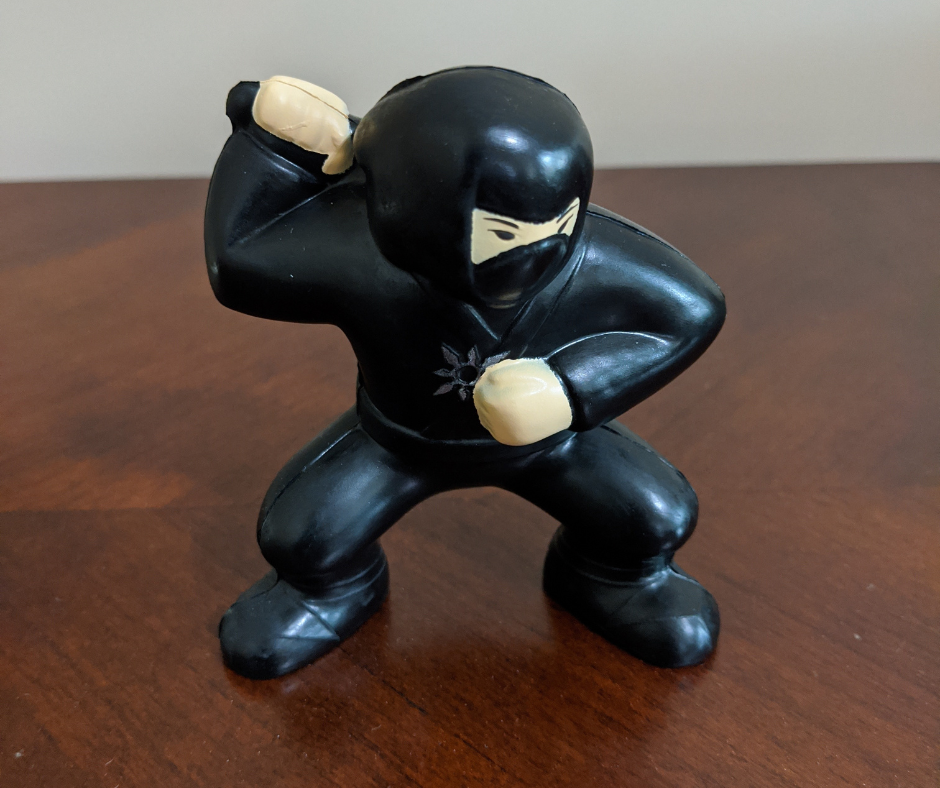
I love giving out little trinkets. It’s fun to see people’s reactions to the things I hand out – coins, ninjas, books. This story is about ninjas.
I love giving out little trinkets. It’s fun to see people’s reactions to the things I hand out – coins, ninjas, books. This story is about ninjas.
I consider myself a Kaizen Ninja. Many years ago in Japan, Ninjas came out of the shadows to deal with a situation (usually violently), and then return to their home base, unseen. I’m not violent, but when I facilitate, I want the team to solve their problem and own their solution. It can’t be my idea. Don’t get me wrong, with over 350 Kaizen events under my belt over these many years, I have seen so many problem-solving techniques and ideas it’s almost impossible not to have a solution to offer to my team members.
Instead of telling, I influence team members to come up with ideas and solutions that may elude them otherwise. Sometimes, I must be direct, but most times, I can guide them from the side to a solution. Thus, I am a Kaizen Ninja.
I signed up to be a sponsor for the BTOES2021 (Business Transformation and Operational Excellence Summit) conference in Orlando, Florida. As part of my sponsorship, I was scheduled to run several workshops and was given a small booth on the conference floor. I had to decide what to bring with me. I was going to be doing a book signing, so that was an obvious choice – bring a bunch of books. Others had books, so what else could I bring? Working with a local promotional item company, we came up with a ninja stress-reliever. I ordered 200 and planned on bringing all of them to the conference.
Two months later, during a meeting with my marketing mentor, a retired marketing executive with Armstrong World Industries, I reviewed my plans for the conference. After talking about how to maximize the value of my time at the conference, I showed her a ninja. She wasn’t impressed. She told me, “Adam, people don’t really use the swag they pick up at conferences. They take it to be nice, and then they get back to their hotel rooms and throw everything away.” She liked some of my other ideas – sticky notes with ninjas imprinted on them, and my books too.
I was floored. I had just spent hundreds of dollars on my ninjas. I was committed to the idea. I knew she was probably right, but I was determined to make the best of my decision. I decided to go with a ninja theme and see if I could attract attention and make many connections during the conference.
I arrived at the conference and found my booth. There was a lot more space than I realized to place items. After putting books on the table, I started lining up ninjas. Sixty of them were set up like a little army of process improvers. I also had ninja-themed signage for my book signing, workshops, and roundtables I would be hosting.
Once the conference opened, people started milling around the booths. The first few asked me sheepishly about my ninjas and I told them about my talents as a “Kaizen Ninja.” They seemed amused. By the middle of the conference, ninjas were being shared with almost every attendee. They were a hit! I almost ran out. I realized it wasn’t the item attracting people, it was the backstory and the energy I was bringing to it. While most booths were very dry and professional, I was having fun and people seemed to appreciate my approach.
After the conference, with newfound confidence, I started bringing ninjas to all my Kaizen events. I would make team members earn them. By the end of the week, every team member had received at least one. Walking around offices, I found about half of all ninjas given out were displayed on desks. This continues to validate my choice of giveaways.
I reviewed the “ninja-effect” with my marketing mentor, and she said she was happy to be wrong about my ninjas. I was just happy that my investment didn’t go to waste and that people enjoyed having a “ninja-moment” with me.

Carrying a Heavy Weight on My Shoulders
When you are in the heat of battle, you don’t realize the toll it’s taking on your health. I was the business unit manager for a vinyl flooring operation for Armstrong World Industries for two years. During that time, we were in a continual state of downsizing. This didn’t help the relationship with our union. It seemed like everything we tried to do to improve safety, cost, quality, or customer service was met with resistance.
When you are in the heat of battle, you don’t realize the toll it’s taking on your health. I was the business unit manager for a vinyl flooring operation for Armstrong World Industries for two years. During that time, we were in a continual state of downsizing. This didn’t help the relationship with our union. It seemed like everything we tried to do to improve safety, cost, quality, or customer service was met with resistance.
Because our business was shrinking, we were under constant pressure to reduce costs. It wasn’t unusual for upper management to threaten your job or to be told if you couldn’t get it done, someone else would be happy to take your place.
I decided the best course of action was to open a dialogue with our shop steward, lay out the situation, and work together to make the best decisions for our employees. For the first few months, he spoke with me, but little changed in our relationship. I was as transparent with him as possible, explaining the business environment and the reasons for the changes we were making. He didn’t trust me. Apparently, prior managers had burned him a few times and he wasn’t willing to forgive and forget what had happened.
We got to a point where traditional operating schedules weren’t practical for the amount of production we were required to make. We needed to make sure everyone had equal opportunity to work full-time, but providing a 40-hour workweek required us to rotate some of our established crews and revise our overtime policies.
I knew I couldn’t do this on my own. It was going to be complicated and if anyone made errors in assigning overtime, we’d be open to employee grievances and back pay. We couldn’t afford that. I called a meeting with the shop steward and my staff. I laid out the situation and my desire to be equitable for all remaining employees (we had to lay off some of our employees, which didn’t improve people’s moods).
In the past, when everyone worked a traditional schedule, overtime was offered by seniority. If the most senior employee didn’t want overtime, the next most-senior employee was offered the opportunity. This continued until someone accepted the overtime assignment. In our new schedule, it wasn’t going to be obvious who should be offered the overtime.
The group argued for a while, and I realized it would be too easy to make a mistake offering overtime unless we came up with a set of rules we all agreed to. I said I’d take a crack at it, and we could meet again to review my efforts.
After much deliberation and advice from others, I developed a table showing the various schedules and twelve situations where overtime might be required. The idea was to check each situation in order and once you found the correct situation, it told you how to assign overtime.
It was complicated, but the team only found a few flaws that would leave us open to grievances. Once corrected, everyone agreed that if we followed it, it would be a fair approach to assigning overtime. Besides, it was so complicated most people wouldn’t understand it well enough to file grievances.
Once our shop steward saw I was fully including him in our processes and wasn’t trying to take advantage of anyone, our relationship changed. Not outwardly to the rest of the employees, as he still had to play the role of “management buster.” But we collaborated often on critical issues.
Five days after I transferred back to a corporate role, I was cutting my lawn. My neighbor came over and stopped me to say, “You look different.” I never realized that all the stress of my job was easily seen by everyone but me.

The Littlest Negotiator
There is always a compromise that can be made. You just must know what you want and figure out how it will benefit both parties. I have been negotiating since as far back as I remember. Sometimes it was bedtime, eating my dinner, or putting off homework to go outside and play. Parents don’t typically cherish those negotiations and kids rarely win (at least I didn’t most of the time).
There is always a compromise that can be made. You just must know what you want and figure out how it will benefit both parties. I have been negotiating since as far back as I remember. Sometimes it was bedtime, eating my dinner, or putting off homework to go outside and play. Parents don’t typically cherish those negotiations and kids rarely win (at least I didn’t most of the time).
I started collecting coins and baseball cards when I was three years old. Early on, I was able to convince other collectors (kids) that what I was offering was more enticing (or valuable) for them than what I was asking for in return. I don’t think it was always true, but it seemed to me both sides were getting what they wanted (or at least thought they wanted).
My uncle Morrie ran Zerns Farmers’ Market in eastern Pennsylvania. We used to visit him and my Aunt Adeline on their “gentleman’s farm” every summer. Uncle Morrie was a shrewd businessman, and he loved to tell stories of the amazing deals he made throughout his career. I was intrigued, and by the time I was eight, I was asking him questions that led him to think that there might be a little entrepreneur he could develop.
He was particularly interested in my love of coins. He didn’t think there was money to be made in baseball cards. This was the 1970s, after all. He told me there were three coin dealers at the farmers’ market and suggested I try to get something I wanted from them at a reduced price. “Never pay full price,” he told me.
He took me to the market and walked with me to the first coin dealer. I had ten dollars to spend. Uncle Morrie asked, “Do you see anything you like?” I told him I did, but I couldn’t afford it. It was priced at fifteen dollars. He said to the dealer, “My name is Morris Lipton, and I run this farmers’ market. I’d like to introduce you to my nephew, Adam.”
The coin dealer told me I could have the coin I coveted for ten dollars. I couldn’t believe it – he took five dollars off of the price. On subsequent trips, Uncle Morrie would walk with me to the coin dealers and encourage me to ask for a better price. I didn’t always get my price, but more often than not, I did. This built my confidence, and I learned how to determine a price that suited me, ask respectfully for it, be willing to hear the word “no,” and know when to walk away from a deal that didn’t suit me.
Eventually, I went to the various coin and baseball card dealers without Uncle Morrie by my side. I think some of them recognized me. But others were willing to negotiate with a child who was confident, respectful, and informed.
To this day, I use the same principles in all my dealings with vendors, suppliers, and customers. I understand when somebody wants to negotiate with me on my services as well. These principles have served me well and I believe they can help you too. Be willing to ask. You are more likely to get what you want if you do.

Go to the Source to Get the Correct Information
I was working at the American Olean ceramic tile facility in Olean, New York as the Industrial Engineering manager when we merged with Dal-Tile. I was offered a position as an industrial engineer at the corporate offices in Dallas, Texas. I was very impressed with the manager who I was going to report to, so I took the opportunity and moved my family south.
I was working at the American Olean ceramic tile facility in Olean, New York as the Industrial Engineering manager when we merged with Dal-Tile. I was offered a position as an industrial engineer at the corporate offices in Dallas, Texas. I was very impressed with the manager who I was going to report to, so I took the opportunity and moved my family south.
When I arrived, I learned our mission was to improve factory environmental, health and safety (EHS) compliance across twelve facilities in the United States. Although there was an EHS department, they weren’t hands-on or helpful for the facility managers. My manager and I would function as internal consultants and help improve the approach, relationships, and overall performance.
I had no prior experience in EHS and attended many workshops and training sessions with the EPA, OSHA, and other agencies. We took tours of every plant and identified areas where we could help. Our focus was on annual safety training and environmental and safety reporting.
Over time, we built strong relationships with plant management at all locations, and they came to trust our work and invited us to help frequently. So much so, I got assigned the submission of the annual environmental reports for all facilities.
There were twelve reports that were all due at the same time. There were different requirements based on the state the facility was located in. Reading through all twelve documents, I noticed many similarities and some critical differences. With one month to go, I created a plan to complete all reports properly and on time. I would be signing each report and would be legally bound for completeness and correctness for the next seven years. I wasn’t willing to take any chances.
The first step I identified was to understand each form. Although I thought I knew what most of the questions meant, I decided it would be better to confirm my interpretations. The best way I knew was to call the state agencies and ask for assistance.
I started making calls, and invariably, was not able to reach a live person most of the time. I left many messages at most agencies. I put a sticky note on each report I had a question on and waited (and waited) for my calls to be returned.
When a call finally came, the first thing I did was ask the person what state they were calling from. Then, I pulled out the report for that state. Looking at the sticky note, I knew what I had to confirm. From there, getting the information was simple. Most state workers were happy to help me fill out their form, beyond my first question(s). They had a vested interest in completeness and accuracy and weren’t used to people asking for help. They were more familiar with fixing problems after it was too late.
I learned that these agencies work for us, the public. But some people don’t see it that way and think they’ll get in trouble for asking questions. I’m convinced it’s the best way to get these critical tasks done and avoid errors. I was able to complete all twelve reports on time, to the best of my ability and knowledge, and sign each document. Many years later, I am confident I provided the proper information to every agency. I also feel better knowing that the seven-year statute of limitations has expired.

Perfection Isn’t Always a Good Idea
In the 1980’s, Thomasville Furniture was the market leader in high-end furniture. They were extremely focused on process improvement in all areas of the business. I worked on a staff of industrial engineers. Each of us supported one or more of the many manufacturing facilities. We were tasked with finding ways to improve safety, quality, productivity, and customer service.
In the 1980’s, Thomasville Furniture was the market leader in high-end furniture. They were extremely focused on process improvement in all areas of the business. I worked on a staff of industrial engineers. Each of us supported one or more of the many manufacturing facilities. We were tasked with finding ways to improve safety, quality, productivity, and customer service.
One of my colleagues worked at the plant that made tables and chairs. They took great pride in the finish of their tabletops. To achieve the desired look, many workers used powered sanding and rubbing devices. It was an extremely labor-intensive process. We had many muscle strains as a result from all the hand sanding and rubbing to get the desired look.
We heard about companies using robots to reduce labor intensity and safety risk. It seemed like an opportunity for us. If we could figure out how to get robots to sand and rub each tabletop, we could realize significant labor cost reduction and eliminate one of our top safety risks.
My colleague, Frank, connected with a robot supplier who brought in some of his robots for a 30-day “test drive.” The first few weeks were spent teaching the robots how to find the surface and perimeter of the table, apply the proper pressure, and cover the entire surface of the table consistently.
Eventually, they were able to achieve their objectives. The robot was able to sand and achieve a rubbed finish on the tabletops, without human intervention. The tabletops looked great. We were ready to roll out robots to take over the sanding and rubbing process.
Before fully committing to the robots, they decided to show the results to a focus group, to get their reactions to the results. The feedback was surprising. Initially, the group loved the finish and look of the tables. In fact, they said the finish was better than anything they had ever seen. But, after more review and conversation, there was something that bothered them. A series of questions drew out the issue: the tops were too perfect. There was no variation across the surface. We had lost the “handmade” look and feel of the furniture. Instead, the lack of variation made the tables look mechanically made, plastic, or unreal.
We couldn’t give up the thing that made Thomasville Furniture a market leader. Frank and his team went back to the robot vendor to see if he could program variability into the process. After many attempts, they gave up. The technology at the time wouldn’t allow the robots to randomize the pressures applied across the tabletops.
The team removed the robots and returned to the time-tested approach to hand sand and finish tables. Over time, robot technology improved, but it was never given another chance at Thomasville Furniture. Instead, we worked on ways to simplify and reduce the safety risk of hand finishing tables.

An Unlucky Break
Critical problems seem to happen over a holiday weekend when there is less coverage. For me, Thanksgiving provided many challenges. Early in my career, I had to come into the ceramic tile factory the day after Thanksgiving to supervise a crew trying to clear a jam in the kiln. Many years later, a water main in St. Helens Oregon broke and shut down the ceiling tile plant. Once again, I was the one covering, and had to respond quickly and deal with a near disaster.
Critical problems seem to happen over a holiday weekend when there is less coverage. For me, Thanksgiving provided many challenges. Early in my career, I had to come into the ceramic tile factory the day after Thanksgiving to supervise a crew trying to clear a jam in the kiln. Many years later, a water main in St. Helens Oregon broke and shut down the ceiling tile plant. Once again, I was the one covering, and had to respond quickly and deal with a near disaster.
I got a call late on Thanksgiving night. The plant had been running very well, and then water stopped flowing. In ceiling tile manufacturing, water is the main ingredient. Ceiling board starts out as 98% water, then as it passes over vacuum and then through a 400-foot dryer, the water is removed. If too much water is removed prior to the dryer, the crew must dump all materials into a pit located prior to the dryer and hope the water comes back on before the pit fills up. It can be messy and difficult to recover from.
The water didn’t come back on. The pit filled up. The crew shut the plant down and was cleaning up a big mess. Some of the material had entered the dryer and they were using 14-foot-long rakes to clear the jammed material out of the dryer.
I arrived at 10 pm and joined the crew. Nobody knew what caused the water to shut off. The EHS (environmental, health, and safety) manager was out of town. I had to figure out who to contact with the city. There was a Rolodex on her desk (I had no access to her computer). In it, I found the number of the city manager. To my surprise, he answered his phone immediately.
He told me the main water line had burst and water had to be shut off for all residences and businesses. He was trying to use back-up systems to get water on for the residents first. I reminded him we employed almost 200 people at our plant and without water we couldn’t operate. I asked him to keep me updated as they brought their back-up water system on line. He said he would and considered us a priority, as we were the number one employer in the area.
I stayed most of the night and helped the crew clean up the mess. We developed a plan for what to do when the water situation was resolved. It wasn’t just the water that we worried about, but also the pressure with which it was delivered. At too high a pressure, it could damage sensitive equipment in our process. I had several calls with the city manager and he assured me he’d let us know when the water was scheduled to be turned back on.
Except he didn’t. All of the sudden, water pressure went up and we thought we were in business again. We started up and began making ceiling board. And then the water was shut off again with no warning. I placed a call and asked the city manager to give us a warning when the next attempt to start the water system would occur. He assured me he would this time. But again, he didn’t. We devised our own plan. We watched our water meters and sent a crew member to monitor the valves in the basement of the process.
For the next 2 days, we played the “start and stop” game with the water. This kept the damage to the process and product at a minimum. In the middle of the third day, the water stayed on, and we could operate as normal.
We learned a valuable lesson about contingency planning: the more you can control in an “uncontrollable” situation, the better.

A Challenging Place to Work
During Armstrong’s Lean transformation, we took many benchmarking trips to learn from companies that were further along in their Lean journeys. One memorable trip included visits to Boeing and Nucor Steel in South Carolina on an extremely hot day in July.
During Armstrong’s Lean transformation, we took many benchmarking trips to learn from companies that were further along in their Lean journeys. One memorable trip included visits to Boeing and Nucor Steel in South Carolina on an extremely hot day in July.
At the Boeing plant, we were amazed by the one million square feet of air-conditioned space where the newest Dreamliners were being assembled. These amazing aircraft were filled with the latest technologies and miles of wiring. Using Lean principles, everything came together in a choreographed way. The area was bright, everyone wore clean clothes, and no one looked like they didn’t know what to do. At the end of the tour, we were escorted through a gift shop and many of our attendees bought souvenirs to take home with them.
Our next stop was Nucor Steel. As we walked into the facility, the environmental contrast with Boeing was stark. It was dark, dirty, and hot. No air conditioning to be found. The Lean approach was almost the same as at Boeing. People were clearly aligned around critical metrics. They were following standard work, and everyone knew what was most important during their workdays.
We entered the furnace control room (which was air-conditioned) and were shown many cameras and monitoring devices that assured the steel wouldn’t have any contaminants. Everyone’s pay and bonus was dependent on the amount of quality tons of steel produced during the day. This aligning metric kept everyone focused on the most important thing their customer valued.
From the control room, I watched a worker on the deck of the furnace wearing a Tyvek suit. He was using a ladle to take a sample of molten steel to test its purity. As hot as it was in the plant, wearing a Tyvek suit had to add to the discomfort of his task. To make matters worse, there was a hole where the molten steel was sampled from. The heat coming off it almost pushed me back when I walked by.
I had to believe this task was one where workers rotated throughout the day, as no one could take the heat for extended periods of time. When I asked our tour guide about the job, he told me it was a high paying position. People in the plant coveted it. They would work anywhere from 8 to 12 hours a day.
I couldn’t believe it was humanly possible to survive a full day doing that job! I would’ve passed out in the first hour. Surely this was a mistake. I was told I could speak with the technician in-between the samples he was taking. My curiosity was strong, and I asked him about his experience. He told me it was his favorite job in the plant. He was assuring their customers were getting the highest quality steel possible. He did admit it was extremely hot, but he was used to it, having worked there for three years. I thanked him and rejoined the tour group, my mind blown.
As we walked out of the plant to our cars, I was struck by the cooling wind outside. It wasn’t until I saw the car register 103 degrees that I realized just how hot it was in the plant and the extreme lengths people go through to do their jobs.

Like a Pro
For the early part of their Lean journey, I was the interim Lean Leader for Armstrong World Industries’ Hilliard Ohio plant. I was returning to the corporate office in Lancaster Pennsylvania from my assignment as Operations Manager at the St. Helens Oregon plant. I spent two out of every three weeks at the plant, until my family moved from the West coast to join me.
For the early part of their Lean journey, I was the interim Lean Leader for Armstrong World Industries’ Hilliard Ohio plant. I was returning to the corporate office in Lancaster Pennsylvania from my assignment as Operations Manager at the St. Helens Oregon plant. I spent two out of every three weeks at the plant, until my family moved from the West coast to join me.
During my time at the plant, we ran many Kaizen events and made impressive improvements to safety, productivity, quality, and customer service. We involved everyone, from hourly technicians to the highest plant management positions.
One week, we focused on changeovers at the main fabrication line. This line was responsible to reduce 4-foot by 8-foot boards to 2-foot by 2-foot tiles and many other sizes. After the proper size was achieved, panels received a finish coating of paint. The bottleneck of the changeover was the equalizer (table saw) that had to be changed precisely to the finished size of the tiles. Over the years, operators had marked the equipment with lines for the many different tiles that were cut on it. Unfortunately, these marks were interpreted differently by the personnel, and it caused extra scrap and time to get things into specification.
Our team was comprised of several production, maintenance, and supervisory personnel. One team member was Henry, the acknowledged equalizer “expert.” He was soft-spoken and meticulous. He liked to take extra time to dial the equipment in to the appropriate size, as it was critical to the customer’s expectations.
During the week, Henry made sure we didn’t sacrifice the integrity and repeatability of the equalizer. We realized we could make more consistent cuts if we precisely measured and pinned the top 10 sizes cut by the equalizer. Once the pin was in the appropriate hole, it guaranteed our tiles would be cut within specification without additional adjustments and testing. This was going to save tremendous amounts of changeover time. We labeled all pin holes, so even the most inexperienced technicians could easily and quickly find them, guaranteeing a consistent, quality ceiling tile. All changes reduced changeover time by more than half and reduced changeover scrap by more than ninety percent.
On the day of the report out, Henry said he didn’t want to speak in front of an audience. He didn’t know what to say and told us he was shy. This wasn’t surprising, but it was a requirement for everyone on the team to say something during the report out.
I encouraged Henry to tell the audience about holding the team accountable to protect our customers’ interests through cutting quality tiles. He said he would try to say something, but he couldn’t guarantee anything.
The report out started, and team members spoke proudly of their Kaizen event experience and how they had reduced changeover time, while improving quality, safety, and consistency. Then it was Henry’s turn. He started quietly. Yhen his voice rose as he shared his pride and ownership of the changes we had made during the week. Then he was lecturing the audience about the benefits of Lean and changeover reduction. It was as if he was the professor and we were the students. Five minutes later, he was done. We were in awe! No one had ever heard Henry speak so passionately. The experience had moved him, and it showed. I knew I wanted all my future team members to have a similar experience. I have honed my approach to create the same level of ownership and passion that I saw in Henry that day.

The Journey of 100 Google Business Reviews
When I opened my business, I tried many ways to attract clients. After spending money on advertising that didn’t lead to business, I focused on delivering a great customer experience and then let my business grow organically through word of mouth and referrals. This is a slower path, but it fits my principles of how I want to conduct my business.
When I opened my business, I tried many ways to attract clients. After spending money on advertising that didn’t lead to business, I focused on delivering a great customer experience and then let my business grow organically through word of mouth and referrals. This is a slower path, but it fits my principles of how I want to conduct my business.
I set up my website, LinkedIn business page, and Google Business page, with the hope of acquiring clients through these (mostly) free resources. I noticed most businesses that had a Google Business page had reviews posted by their customers. I wanted reviews too. How would I ever get someone to share their thoughts, I wondered? After all, I was asked many times to leave a review for other businesses, but I rarely did.
The first thing I did was ask members of my Kaizen teams for Google Business reviews. Most people don’t naturally leave reviews of businesses. When I got my first one, I was excited to see it. Now, I wanted more.
For a while, I asked people to leave reviews. I wasn’t receiving many. Eventually, I got an idea. After I completed a Kaizen event, I sent an email to team members with a link to my Google Business page. Using this strategy, I’d get one or two reviews per event. My numbers were slowly creeping up. Eventually, I crossed the “10 review” threshold. Then 20. I wanted more!
It took over three years to get to fifty reviews. Next, I set a goal to get to 100. I needed a more compelling way to ask for reviews, without being too “salesy.” One day, at a happy hour following our Kaizen report-out, I was discussing my goal of receiving 100 Google Business reviews, when one team member suggested I get a QR code for reviews and post it on the screen at the end of the next Kaizen event. Team members could scan the code with their phones and be directed to my Google business page and the review section. I did some research and found a service that generated a QR code for free.
During the next few Kaizen events, I posted my QR code on the screen. I was able to get 2 or 3 reviews using that approach. It was progress, but still very slow. Then, I got an inspiration. I printed out a slide with the QR code on it and handed it to team members, so that they could scan it from their seat. By handing it to them, it put a little unspoken pressure on them to leave and immediate review. By waiting, most people forgot to leave a review. But, if they could do it in the moment, and I was there to see it, most team members would leave a review.
I was now getting 5 to 7 reviews at each Kaizen event. I broke through the 100-review goal earlier this year. It’s gratifying to see what all of those people have to say and that they believe I have positively impacted their work lives.
The next challenge? I need to reset my goals for this year. I’m very competitive and want to see how I can improve my process even more!

All Night Long
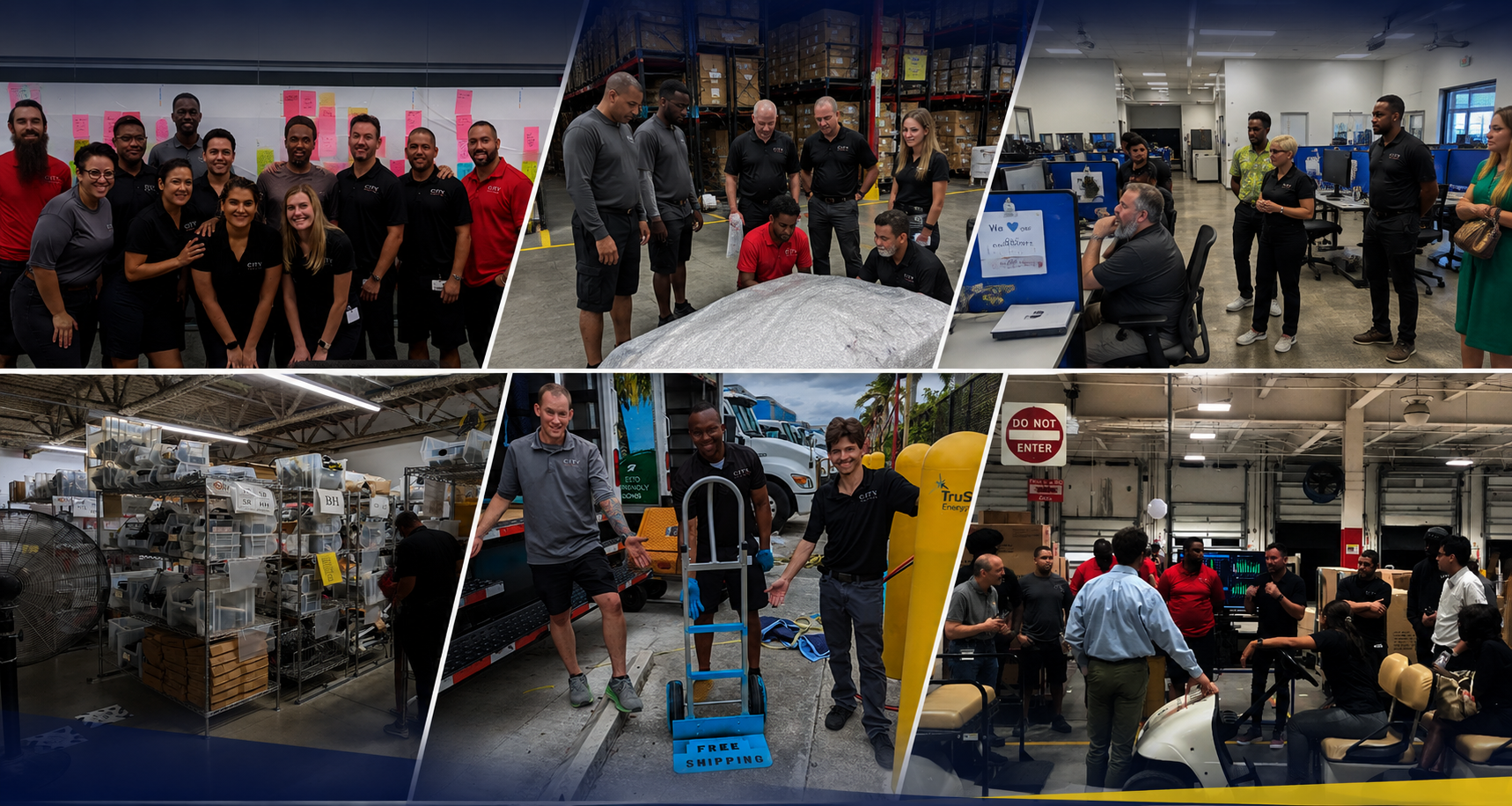
Admit it. After reading the title of this story, some of you are hearing the famous Lionel Richie song in your head. This story isn’t about that, but rather it concerns a challenging Kaizen event I recently facilitated for CITY Furniture. The business problem we were trying to solve was a series of computer programs that ran after all showrooms closed each evening. There was a period of time where no revenue could be generated through their e-commerce website, until all programs completed their reconciliations. Our goal was to cut the time by 75%, so that we could free up overnight revenue generation.
Admit it. After reading the title of this story, some of you are hearing the famous Lionel Richie song in your head. This story isn’t about that, but rather it concerns a challenging Kaizen event I recently facilitated for CITY Furniture. The business problem we were trying to solve was a series of computer programs that ran after all showrooms closed each evening. There was a period of time where no revenue could be generated through their e-commerce website, until all programs completed their reconciliations. Our goal was to cut the time by 75%, so that we could free up overnight revenue generation.
I’m an early riser and am typically in bed by 10 pm each evening. My wife says I take my “pre-sleep” nap from 8 pm to 10 pm. This Kaizen event would be held overnight, as our Gemba (the work that we needed to see) happened between 9 pm and 1:30 am. I wasn’t sure how I’d be able to make it through the night.
I met with the team leader to prepare weeks before the kick-off. We agreed to start the Kaizen event at 7 pm Sunday and work through the night for four out of five days. Then, we’d take one day off to adjust our sleep schedule and rotate to day shift. Report out was scheduled for 3 pm on Friday.
I normally fly in to Ft. Lauderdale on the Sunday before the Kaizen starts. Due to starting on Sunday, I knew I couldn’t take any chances and had to figure out how to get proper sleep prior to the event. I flew in on Saturday, got some dinner, and went directly to sleep. I woke up in the middle of the night. Somehow, I was able to go back to sleep.
After Sunday breakfast, I did some work, and took a short nap. At 5 pm, I met my team leader. We set up the meeting room and discussed the Kaizen plan. She was excited to tackle this critical business problem and had assembled a diverse team of highly skilled programmers and managers. They arrived at 6:30 pm for dinner. Afterwards, we kicked off the Kaizen. Our sponsor, the chief information officer (CIO), demonstrated his leadership commitment by staying overnight with the team and participating as a full team member.
After getting to know each other and reviewing Lean topics, we walked downstairs to watch a showroom close. We saw so much waiting and paperwork being generated. We knew there was opportunity for improvement. Then, we walked back upstairs to the meeting room and proceeded to watch the computer programs do their thing. It may have been the longest four and a half hours of my life.
The team was enthralled by what they saw and wrote many ideas on Post-its™. It looked like a lot of gibberish to me. I kept telling myself all that mattered was team members seeing waste and opportunities. I had to stay awake at all costs. It would look bad for the facilitator to fall asleep during the Kaizen!
Mercifully, the Gemba walk through the computer programs ended and I stayed awake. Ninety-two minutes became our baseline for the program reconciliations that kept the e-commerce revenue from being generated. Now it was time to Value Stream map the process, identify pain points, waste, and finally, the ideas to reduce the time it took to complete the reconciliations.
The team generated many ideas and picked three they believed would drive the time down significantly and could be completed during the week. We adjourned at 4:30 am Monday morning and agreed to reconvene at 8:30 pm Monday evening.
I went back to the hotel, surprised I didn’t feel sleepy, but that was due to adrenaline. Four hours later, I woke up. I decided to exercise and work on other projects. Then, I took an afternoon nap. Returning on Monday evening, team members were excited to work on their projects. They broke out into three sub-teams and got to their work, which was all on the computer. I felt useless, but they were fully engaged. From time to time, we’d reconvene and share project status and problem solve. On Tuesday morning, the team decided they didn’t need to work through the night anymore and that we’d take a 27-hour break, reconvening at 8 am on Wednesday morning.
Now it was time to reestablish my normal sleep pattern at the hotel. I slept almost as soon as my head hit the pillow at 6 am. I woke up at 10 am. Now what was I going to do? I got up, showered, exercised, and ate lunch. Then, I worked on other things for a few hours. I decided I should stay awake until at least 9 pm. Time went by slowly, but I made it. I went to bed, and woke up around 4 am. That had to be good enough.
Everyone seemed happier to be working in the daytime. Team members felt they were making programming changes that could be implemented by the end of the day. They installed the changes to see how the system would react on Wednesday night. On Thursday morning, we learned the program ran faster than ever previously recorded. Our 92-minute process was now taking 57 minutes, a significant impact to the system. They had more changes in mind that would reduce time, but those would have to wait for the weeks following the Kaizen event.
The report out was well attended, and our sponsor remarked the initial results had saved the company considerable money. The team has implemented a follow-up process, with meetings every two weeks. The time continues to come down and our sponsor is now ready to tackle another critical business problem in his department.

The Sexiest Man in Pensacola
Armstrong World Industries kicked off their Lean journey in 2010. They put a lot of effort into building a culture of Kaizen across their 22 manufacturing locations worldwide. I was sent to many facilities to assist.
Armstrong World Industries kicked off their Lean journey in 2010. They put a lot of effort into building a culture of Kaizen across their 22 manufacturing locations worldwide. I was sent to many facilities to assist.
In 2011, I facilitated a Kaizen event in Pensacola Florida. I don’t recall the topic but I definitely remember the team and the feeling of camaraderie. I followed standard work to guide the team through the week, culminating in a report out to management on Friday afternoon.
Armstrong required every team member to present at the report out. Our teams were comprised of a diverse group of individuals, including hourly production, maintenance, and management personnel. Some team members had never presented to a group, so we practiced our presentations prior to the final report out. We wanted to make things as comfortable as possible.
Most people tend to “fumble” through what their presentation on the first practice run. Then, on the second run, things get easier. By the third practice, they sound confident in telling their story. I was about to find out how their confidence would manifest itself.
During our first practice run, the third presenter said, “my name is Tyler Dare and I’m the sexiest man in Pensacola!” The rest of the team roared with laughter. Everyone else practiced what they were going to say without funny comments. I figured that Tyler was trying to loosen up the team. I felt sure he wouldn’t actually say that in the final presentation.
On our second practice, Tyler reiterated how sexy he was. Then, another presenter said, “I’m Kevin Jones, and I don’t care what Tyler thinks, I’m the sexiest man in Pensacola.” By the third round, everyone was cutting up. I didn’t know what to expect for the final report out. I was just hoping I wouldn’t be fired for having an “out of control” team.
We entered the main conference room. There were at least 25 people waiting for our presentation. In those days, representatives from Armstrong locations around the world called in to hear the presentation. This was before video conferencing was a standard form of communication.
The report out started, and sure enough, Tyler stepped up and said, “My name is Tyler Dare, and I’m the sexiest man in Pensacola.” The audience laughed and clapped. What could I do? Nothing; just enjoy the show! The rest of the team presented their results. They were met with applause. After asking for questions from the audience, a voice on the phone said, “My name is Paul Meyers, and I’m the CEO of Armstrong World Industries. I just have one question. Is Tyler Dare really the sexiest man in Pensacola?”
I almost passed out. There was more laughter, clapping, and congratulations. The team owned their results and had a blast presenting it to their sponsors. From then on, I made sure any team I facilitated had fun presenting their results. If they were nervous, I’d share the story of Tyler Dare, the sexiest man in Pensacola.

Five Lessons from My First Five Years in Business
On May 15, 2018, I registered Process Improvement Partners LLC as an official business. Since then, I have had so many adventures, made lots of mistakes, and hopefully learned from many of them!
On May 15, 2018, I registered Process Improvement Partners LLC as an official business. Since then, I have had so many adventures, made lots of mistakes, and hopefully learned from many of them!
As the saying goes, hindsight is 20/20. In the spirit of continuous improvement, I have been challenged by a peer to share my top five lessons from my first five years in business (thanks Stephanie!)
ONE: Focus on meaningful relationships, not vanity metrics.
Truly valuing and connecting with the people in your network is way more important than how many followers, views, likes, and comments. Be sure to focus on what really “moves the needle” for you, and this will look different for everyone. Bottomline: you can't fake caring. If you can help even one person, you are doing important work.
TWO: This is a marathon, not a sprint.
It takes time to build up a following that values what you do and how you can help. I used to think the next activity or post would get someone to do business with me. Now, I realize people want to feel comfortable with you and the value you bring. It takes time, but once it happens, meaningful engagements follow.
THREE: Alignment is vital to a great working relationship.
The work I do is narrowly focused and isn't for everybody. I want to and should work with clients that value my approach and are ready for it. I stopped chasing money and started looking for people I can help and want me to help the way I provide value. If you like fast, sustainable results, I'm your guy!
FOUR: Experiment, experiment, and experiment some more.
I have tried writing (a book, no less), podcast interviews, speaking engagements, paid advertising, and many other things. I always learn from those experiences and know there are many more in my future. I am pretty sure that I won't write another book (never say never), but I'm glad I did. If it helps just one person, it was worth it. And I learned I can do it!
FIVE: Pay close attention, or you might miss an important opportunity.
It's easy to gloss over the last "like" on a post and just chalk it up to someone just being kind. But that person might need my help, so reaching out to someone who is engaging with my content is never a bad idea. In fact, one time it led to a meaningful business relationship. I don't follow up on every post engagement, but I definitely should!
I read that most businesses fail in the first five years, and I can believe it. Having your own business is challenging work and it's not for the faint of heart. Luckily, I have an incredible and supportive family and network. I thank you all for giving me the opportunity to serve you and look forward to many more years of doing so.