
Kaizen Success Stories
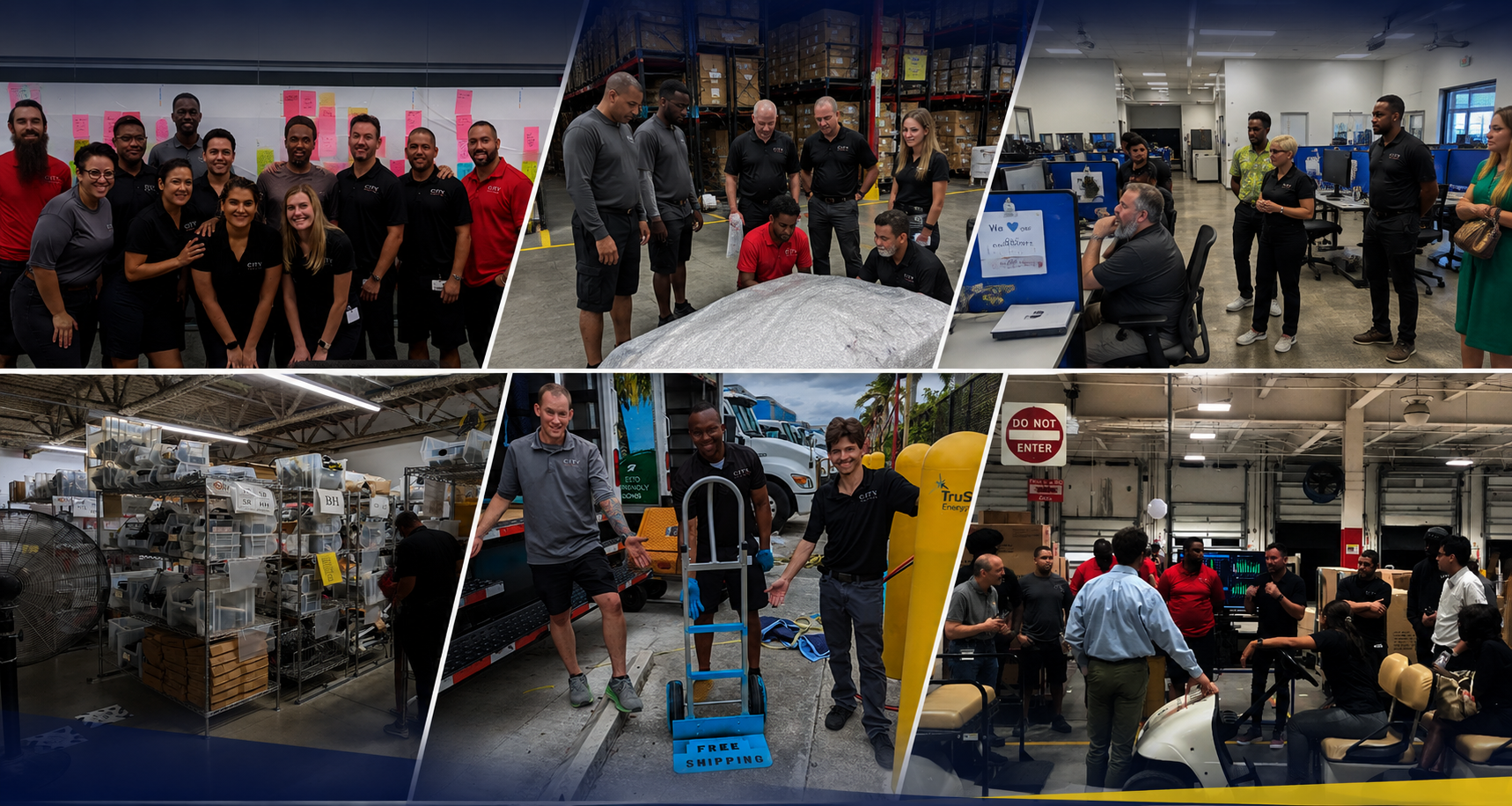
Real Manufacturing Results. One Kaizen at a Time
Explore real-world Kaizen success stories showing how manufacturing teams solved critical problems, improved performance, and created sustainable results.

You can’t help people if you don’t build trust
Right before the pandemic, I was asked to conduct a site assessment by one of my clients. The twist here is that it wasn’t for one of their own plants. Rather, they wanted me to assist one of their key suppliers, who was a co-packer (someone who packages and labels products for its clients and sometimes manufactures products using the clients’ brand). I should have seen the warning signs sooner.
Right before the pandemic, I was asked to conduct a site assessment by one of my clients. The twist here is that it wasn’t for one of their own plants. Rather, they wanted me to assist one of their key suppliers, who was a co-packer (someone who packages and labels products for its clients and sometimes manufactures products using the clients’ brand). I should have seen the warning signs sooner.
The evening before the assessment, I attended dinner with a team from my client’s company. We had a good discussion about how the next day would go, but I got a vibe that they were skeptical of my ability to assist their vendor. My sponsor hadn’t traveled with the rest of the team.
The next morning, we met with the vendor in their conference room. I waited for my client to start the meeting, but they decided I should do it. I jumped right in, made introductions, and described my site assessment process. We would talk about any current or critical issues they were experiencing, then take a Gemba walk to see the process and the issues as they were occurring. Finally, I would share my findings and explain how I could help resolve any of the issues.
The vendor team didn’t look thrilled to have visitor(s) they didn’t know, and spoke about their issues in a vague way. Then, they reluctantly assigned two team members to walk around the plant with me: the plant manager and an engineer. One of the client’s team members joined us for most of the tour.
As we walked around the plant, I tried to point out helpful improvements that could be implemented without outside assistance. For example, there was a production line where the technician would grab completed packages and stack them on a pallet on the floor. This forced him to bend over every time and put his back at risk. I shared images of a spring-loaded pallet-lift, that could be installed for under $10,000 and would eliminate the need to bend over, as the lift would come up to a safe height for stacking and then lower naturally as the stacks got bigger.
After a few more examples, my tour guides opened up and showed me the most critical issues they were facing. I felt I could help with many of those issues, and they seemed to like my approach. We built a nice rapport and even traded business cards.
When the tour was over, we reconvened in the conference room and shared a light lunch. I was asked about my findings and described the top three issues where I could help. The team was more engaged than earlier in the morning, but still seemed skeptical I would be able to do what I said I could do.
I realized they had no experience with me and were just going from my word and possibly the word of my sponsor, who hadn’t attended. Without him there to add credibility to the discussion, I felt like I didn’t have a chance to help this vendor.
I was right. Although they were appreciative and gracious, I never heard another word from them. I don’t think it was due to the pandemic. I do think it was due to the fact that I was “forced” on them, and it wasn’t their idea to bring in outside help.
Although I continue to learn this lesson at each engagement, I’ll still state it here: If you haven’t built trust through shared experiences, the odds of securing commitment to work together are very low.

The Journey is Long
After five years as Lean Champion, my voice wasn’t being heard so well. Sure, I was able to promote and facilitate Kaizen events and help people solve problems, but I was unable to move the leadership team to take the next steps in our Lean journey. Any time I spoke to our leaders about strategy, they were too busy to consider anything that deviated from their current operating approach.
After five years as Lean Champion, my voice wasn’t being heard so well. Sure, I was able to promote and facilitate Kaizen events and help people solve problems, but I was unable to move the leadership team to take the next steps in our Lean journey. Any time I spoke to our leaders about strategy, they were too busy to consider anything that deviated from their current operating approach.
I realized that I needed to engage an outside voice. Someone with credibility, who could say the difficult things I was saying with different words. Someone who could influence our leadership team to change their behavior in a way that would support our Lean transformation.
You’re Never Too Good for Growth
Two years into our Lean transformation we had undertaken a Lean assessment to see where we were and where the opportunities existed. Looking back, it was more tactical than strategic, but was appropriate for our maturity.
Now, I had an idea. What if we tried another Lean assessment, this time focusing on the leadership and strategic aspect of our efforts? When presented to our four Value Stream Directors, they seemed satisfied with their efforts and indicated they had this “Lean thing” down. I knew right then we were in trouble!
I met with my manager, the Executive VP of Technology, and convinced him that we needed something to open our eyes to the possibilities for the next steps in our transformation. But, if we used our internal resources to conduct the assessment, we would rate ourselves too highly. We had become complacent and overconfident. Our results were impressive. The product portfolio had doubled and time to market had been reduced from eighteen to ten months.
After receiving approval, I reached out to Mike, a consultant from Shingijutsu, who I had met four years before. He taught me that no matter how good you think you are, there are always ways to improve and grow. He agreed to join us at no cost. He was interested in how we were doing and had the freedom to do what he wanted. He flew in from Seattle and I joined him for breakfast on the first day of his visit. We talked about the current situation. He assured me that he had seen this many times before. He knew he could help.
Our first meeting was with the Leadership team. As they introduced themselves, most of them talked proudly about their team’s accomplishments and how they incorporated Lean into their processes. Each time, Mike asked them probing questions about their progress and approach. He exposed gaps in their efforts and understanding of Lean in a way that was respectful, but eye-opening. Team members took many notes during the discussion.
The Beginning of Breakthrough Thinking
For the rest of the week, Mike and the assessment team participated in many meetings and activities and identified huge opportunities in our Lean journey. Mostly aligned with my prior efforts, Mike had a way of communicating to the organization that had credibility beyond any internal resource.
At the review of findings, we presented four recommendations:
1. Learning starts at the top – leaders must demonstrate the behaviors of the change they want to make
2. Linkage – become in lockstep with customers and suppliers to ensure that everyone gets only what they need, when they need it
3. Stability – level the flow of work to drive the production system stress level down
4. Cycle time and quality – deliver only what the customer wants, when they want it, at the appropriate level of quality
Although these were not new ideas, the leadership team saw them as breakthrough thinking and instantly committed to them. One Director admitted that prior to the assessment he thought he knew Lean very well. Now, he was sure that he had much learning to do to become competent.
Following the assessment, there was a renewed commitment to Lean in the organization and many breakthroughs were made over the next year. For my part, I was extremely appreciative of the time Mike gave us and the renewed interest that was generated by his visit.

The Little Team That Could and Did
Process Improvement Partners (PIP) recently conducted a free site assessment for a small electronic targeting systems company in Glen Rock, PA.
Process Improvement Partners (PIP) conducted a site assessment for a small electronic targeting systems company in Glen Rock, PA.
The day started with introductions, with each employee sharing their experiences with continuous improvement and their expectations for the day. Some were excited about the process while others weren’t sure what to expect.
Following introductions, PIP demonstrated various continuous improvement tools and techniques. One technique, 5S, got the attention of the Office Manager. She said she thought everyone could use 5S in their personal workspaces and the various production and testing areas around the facility. After about an hour and a half of discussion in the meeting room, it was time to find out if she was right.
We took a walk of the facility and offices. We could easily see from the start, there were many opportunities to improve safety and productivity. Whenever we walked into a space or an office, there was no indication of the health or status of the area. Most areas were cluttered and disorganized. Using the theme, “How do you know …” we discussed our ability to understand what was happening in each space. The only person who knew what was going on at the time was the person who was using the area or office. In some of the offices, even the person using it wasn’t so sure everything was as it should be. It wasn’t easy to see if anyone needed help to get their work done, so they usually had to fend for themselves.
After the walk, the team brainstormed many ideas they thought would improve their productivity and safety. Sorting through more than 60 ideas, a theme emerged – use 5S to improve safety and productivity in all areas of the facility. But, where should they start? Did they need outside help to use these new tools?
It turns out they didn’t. The next week, they jumped right in and began their continuous improvement journey. With the Office Manager as the leader, they picked the first area to work on, the main production area.
Using what they learned about 5S, they brought order to the area and made it a better place to work for everyone. They were proud of what they had accomplished and knew that this was only the beginning of their efforts. Using available time during the following weeks, they began to spread the use of 5S all over the facility.
They now know what they want to do and how to do it. It turns out you don’t need a bunch of trained facilitators and continuous improvement personnel to make positive change. You just need the willingness to learn and apply some simple tools and techniques to improve your situation. And, if something doesn’t work exactly as planned, learn from it and try again.
Process Improvement Partners is in business to help organizations and people help themselves. Sometimes, all they need is a little support, a little nudge, and a few simple tools to get started.

Why Request a Site Assessment?
When you call Process Improvement Partners LLC for a site assessment, you are making a choice to invite outside perspective for your organization. While there is a fee for this service, there is also a significant investment of your time and resources, so it is good to understand the value of your investment.
When you call Process Improvement Partners LLC for a site assessment, you are making a choice to invite outside perspective for your organization. While there is a fee for this service, there is also a significant investment of your time and resources, so it is good to understand the value of your investment.
By the end of this 5 to 6-hour visit, you will have a greater understanding of where the highest value safety, quality, customer service, and cost opportunities are and how to leverage them. Here’s a typical site assessment agenda:
9:00 am - Team Introductions
A short review of each participant, their role, the company, and Process Improvement Partners LLC. We get to know one another and start the conversation on a personal and business level. It serves as a quick check of the team’s level of commitment, based on who is participating in the assessment and for how much time during the day.
9:15 am - Safety Review
How will we keep each other safe during the assessment? How important is safety to the site team and how strong is the safety culture of the company? During the visit, we will respect all of the safety requirements and expectations set by the team.
9:30 am - Review the Site Team Focus and Priorities
What are the priorities of the site team? What are the current pain points in their view? What do they want to focus on during the assessment? These discussions keep everyone aligned around the purpose of the assessment and make it more meaningful for all involved.
10:00 am - Plant Walk (Gemba Walk)
We walk the process with the site team, visiting all areas, speaking with people in the process, and looking for waste and inefficiencies. The more engagement we have with people in the process, the better. When waste is spotted, we stop and discuss what we see as a team. All team members are encouraged to take notes, so that they document what they see while on the walk.
11:30 am – Review of Findings
What did we observe on the plant walk? What did we learn from those in the process? Does it validate or invalidate our initial thinking? Did we learn something new, just by the way we engaged with others on the walk? Might this be an approach to incorporate into the way we do business moving forward?
12:00 pm - Lunch
Keeping the team together during lunch is critical. Although this seems like a minor detail, it’s an opportunity to relax and discuss things in a less formal way. It also lets the team get a feel for how an ongoing relationship with Process Improvement Partners LLC might look.
12:45 pm - Evaluate and Prioritize Opportunities
Based on everything we saw and discussed, what are the key things that the team wants to work on now and in the future? Using quick facilitation and prioritization techniques, the list of observations and ideas is narrowed to a top 5 to 10 that the team finds most important and impactful.
1:15 pm - Discuss Approaches to Leverage Top Priority Opportunities
We now discuss the tools and techniques available to drive improvement in the top priority opportunities. This is the time to decide whether the team wants to work on these opportunities without outside assistance, or with the help of Process Improvement Partners LLC. We will charter and write proposals for any work that the team feels it needs help with.
1:45 pm - Plan of Action
What are the next steps? Who is responsible? Does the team want Process Improvement Partners LLC to charter and write a proposal for the work? Is there a contact person for the work? We build an action plan that will be followed once the assessment is complete.
2:15 pm - Wrap Up and Feedback
An opportunity to review how the site assessment went for all participants. This is a learning moment for all involved, as we are applying process improvement in real time to the assessment process.
2:30 pm – Additional Time for Discussion or Adjourn
If the team wants more time to discuss the assessment, we always set aside additional time for them. If there is nothing left to discuss, the assessment is complete.
At the end of the site assessment, the team has a roadmap of activities that will help them improve their performance in safety, quality, customer service, and cost. In addition, they have had an opportunity to see how an ongoing relationship with Process Improvement Partners LLC can help them execute their roadmap.