
Kaizen Success Stories
Real Manufacturing Results. One Kaizen at a Time
Explore real-world Kaizen success stories showing how manufacturing teams solved critical problems, improved performance, and created sustainable results.
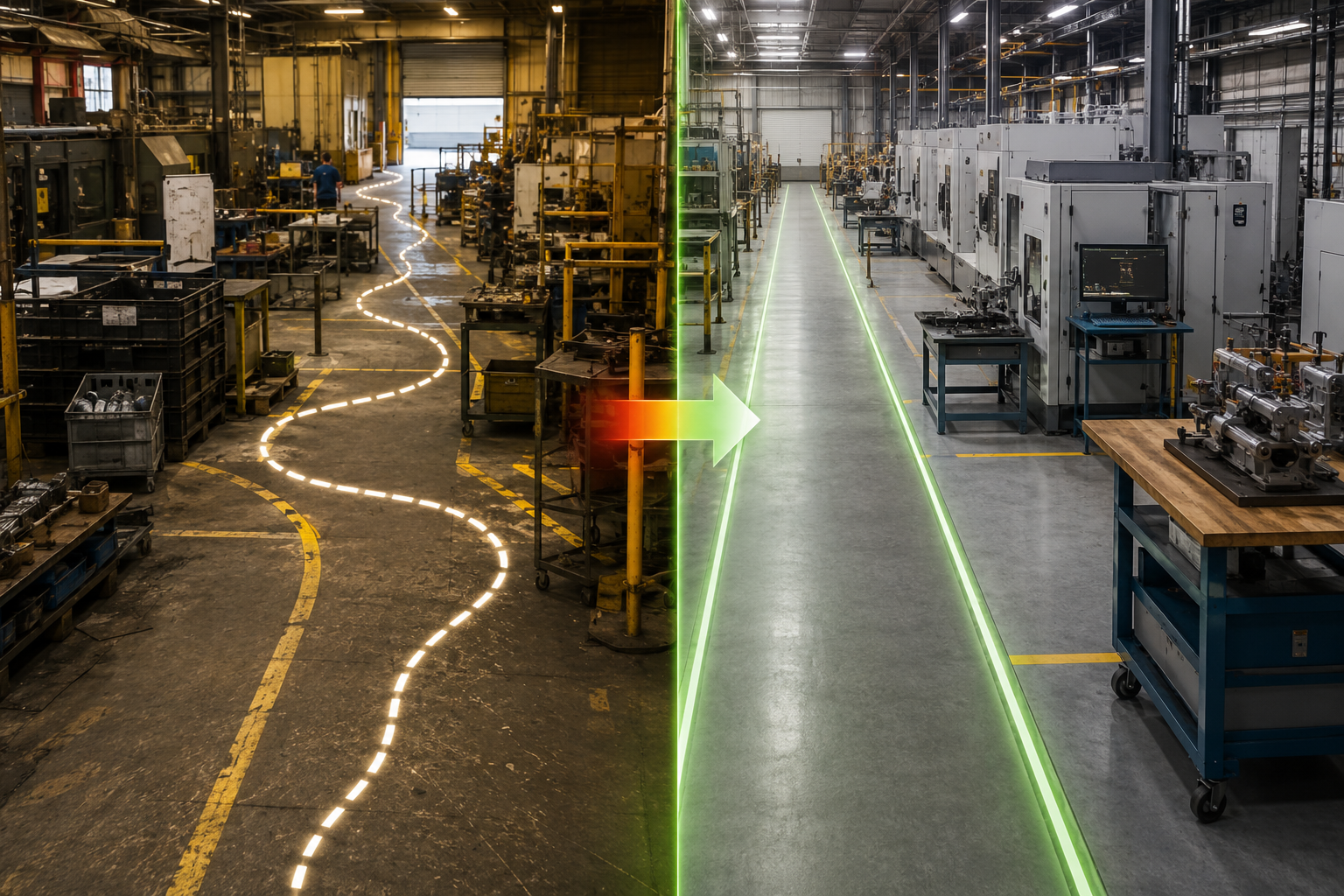
From 330 Feet to 4 Feet in 3 Days
A manufacturing team spent years living with an inefficient quality testing process. In just three days, they reduced travel distance from 330 feet to 4 feet, cut processing time in half, and uncovered a solution worth millions in additional capacity.
Kaizen Snapshot
Industry: Manufacturing
Challenge: Excessive travel, batching, safety risk, and delayed quality feedback
Approach: Kaizen Event Facilitation using rapid experimentation and team-led design
Results:
Distance traveled per part reduced from 330 feet to 4 feet
QC travel reduced from 175 feet to 4 feet
Batch size reduced from 6 pieces to single-piece flow
Processing time cut from 40+ minutes to approximately 20 minutes
Part lifts reduced from 4 to 1
More than 95% reduction in travel
More than 95% reduction in safety risk
Wastewater stream eliminated
Potential to double capacity
The Situation
A manufacturing team had been struggling with the same problem for years.
Every part required a quality test, but the process was designed around batching and distance. Parts were tested away from the production line, which meant multiple additional parts could already be in process before quality issues were identified.
The process had become accepted as "the way we've always done it," even though everyone knew it was inefficient.
The baseline measurements told the story:
330 feet of travel per part
175 feet of travel for QC per batch
Batch size of 6
More than 40 minutes of processing time
Multiple lifts of an 18-pound component
The team knew improvement was possible. They simply had not found a way forward.
What We Did
Rather than spending days discussing solutions, the team focused on building and testing them.
On Day 1, seven team members generated seven ideas each, creating forty-nine potential solutions.
The team quickly narrowed those ideas to seven concepts worth testing and immediately built prototypes using materials already available on-site.
On Day 2, the team established evaluation criteria and test procedures. They ran experiments, challenged assumptions, and narrowed the field to two leading concepts.
On Day 3, they combined the strongest elements of both approaches into a single design and implemented it directly in the production environment.
Equipment was relocated.
Material flow was redesigned.
The new process was tested using an actual production part.
The Results
The impact was immediate.
MeasureBeforeAfterDistance Traveled per Part330 ft4 ftQC Travel175 ft4 ftBatch Size61Processing Time40+ min~20 minPart Lifts41
Additional benefits included:
More than 95% reduction in travel
More than 95% reduction in safety risk
Complete elimination of waste entering the wastewater stream
Potential capacity increase worth millions annually
The Most Important Result
The numbers were impressive.
The people impact was even more powerful.
One operator, who had never participated in a Kaizen event before, looked at the redesigned process and said he couldn't believe how much easier his job had become.
At the final report-out, he stood in front of senior leadership and confidently explained what the team had accomplished.
It was the first time he had ever presented to leadership.
The pride, ownership, and confidence in the room were impossible to miss.
The team didn't just improve a process.
They proved to themselves what they were capable of accomplishing.
Key Lesson
Sustainable improvement happens when people stop talking about solutions and start building them.
In just three days, a team that had struggled with the same problem for years transformed its process, dramatically improved safety and efficiency, and created a solution they were excited to own.
That's the power of a well-facilitated Kaizen event.
From Compliance to Confidence
How a paper mill eliminated critical safety risks and created a sustainable confined-space system in one week
Kaizen Snapshot
Industry: Paper Manufacturing
Challenge: Confined Space Entry and Rescue Compliance
Approach: Kaizen Event Facilitation focused on standardization, risk reduction, and rapid implementation
Results:
90 confined spaces identified and brought into compliance
Approximately 15 previously unidentified confined spaces discovered
Standardized signage developed and installed
Training requirements defined and implemented
Hazard identification standards created for every confined space
Rescue capability improved for all employees, including specialized equipment for a 300+ pound team member
Rescue equipment organized using 5S for rapid access
The Situation
A paper mill in Oklahoma faced a significant safety challenge.
The facility needed to ensure that every confined space met entry and rescue requirements.
Before the Kaizen event began, the team believed they had identified between 75 and 80 confined spaces throughout the mill.
The goal seemed straightforward: verify compliance and close any gaps.
What the team discovered was something very different.
What We Found at the Gemba
After learning the fundamentals of Lean thinking and waste identification, the ten-person Kaizen team headed to the floor.
The facility consisted of two major operations:
The paper mill
The converting operation that produced tissue, paper towels, and toilet paper
The Oklahoma summer heat was relentless.
Temperatures exceeded 90 degrees as the team spent nearly four hours walking the entire facility.
They inspected every area, questioned assumptions, and challenged the existing inventory.
By the end of the walk, they realized the actual number of confined spaces wasn't 75 or 80.
It was 90.
Approximately 15 confined spaces had never been included in the official inventory.
The challenge had just become much larger.
What We Did
The team quickly identified three elements that were essential for compliance:
Signage
Every confined space needed clear, consistent visual identification and entry requirements.
Training
Employees needed a standardized understanding of confined space entry procedures and rescue expectations.
Hazard Identification
Each confined space required a clear understanding of the risks associated with entry.
The team divided into three focused sub-teams and developed standards for each area simultaneously.
Rather than tackling one confined space at a time, they built systems that could be applied across the entire facility.
The Hidden Safety Risk
As the team worked through compliance requirements, another issue surfaced.
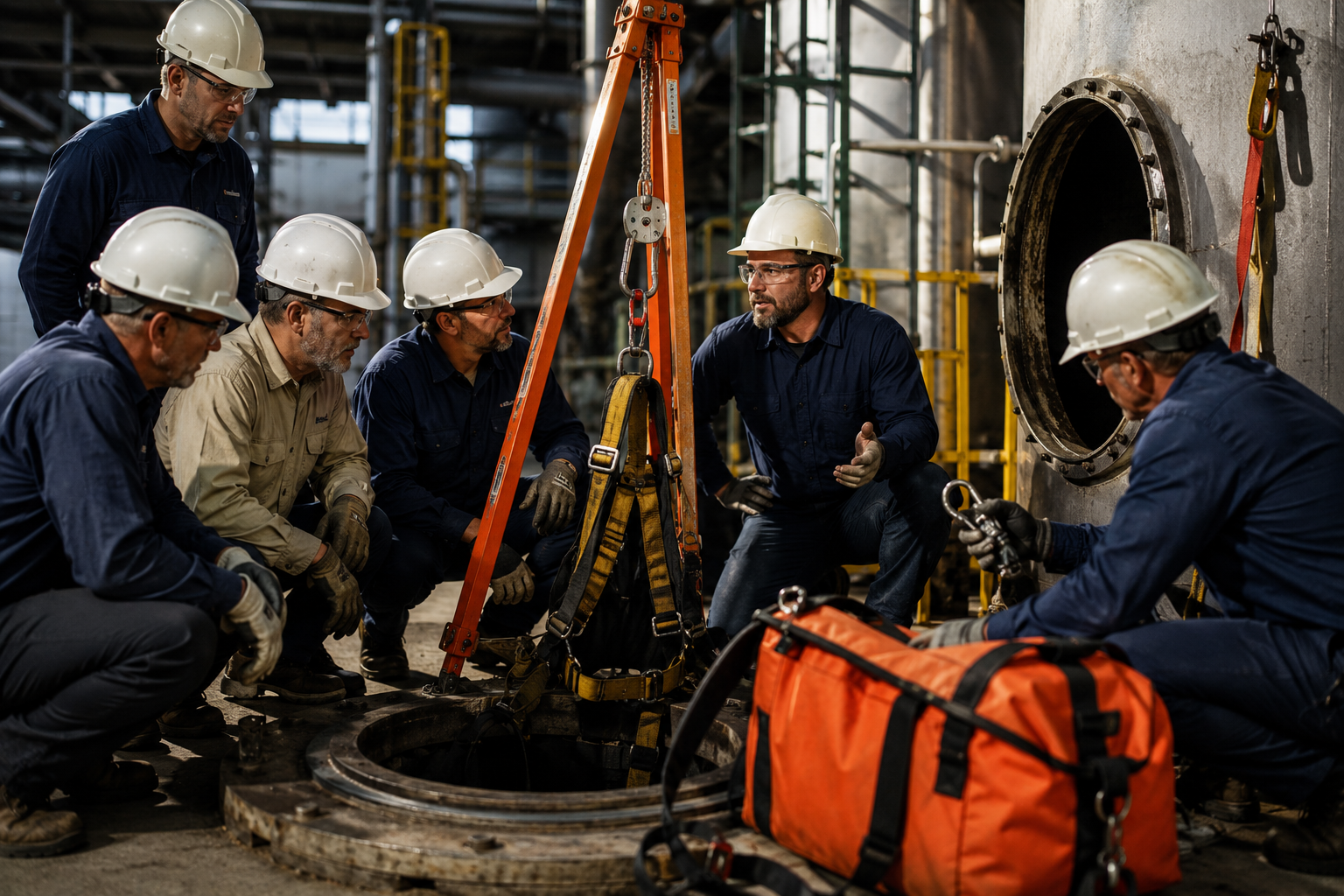
One employee regularly worked in confined spaces and weighed more than 300 pounds.
The existing rescue equipment could not safely recover him in the event of an emergency.
Fortunately, a rescue had never been required.
But everyone recognized that hoping nothing would happen was not an acceptable safety strategy.
The team immediately addressed the issue.
They identified rescue equipment with a 500-pound capacity, secured approval, and purchased the equipment during the Kaizen event.
Before the week ended, the equipment had arrived on-site and was stored in a location where it could be accessed quickly if ever needed.
The team also applied 5S principles to organize all rescue equipment, making emergency response faster and more reliable.
The Results
By the end of the week:
MeasureResultConfined Spaces Identified90Previously Unidentified Spaces Found~15Confined Spaces Brought into Compliance90Standardized Signage Implemented100%Training Standards DevelopedCompleteHazard Identification Standards CreatedCompleteRescue Equipment UpgradedCompleteRescue Equipment Organized Using 5SComplete
What appeared to be an overwhelming challenge on Monday became a completed mission by Friday.
The Most Important Result
The biggest accomplishment wasn't compliance.
It was confidence.
At the beginning of the week, the team viewed the challenge as nearly impossible.
The scope was unclear.
The inventory was incomplete.
Critical rescue gaps existed.
Yet by working together, dividing responsibility, and focusing on solutions instead of obstacles, the team achieved something that initially seemed out of reach.
They didn't just identify problems.
They solved them.
And they left behind systems that would protect employees long after the event was over.
Key Lesson
Safety improvement doesn't happen because organizations care about safety.
It happens when teams translate good intentions into clear standards, proper equipment, and disciplined execution.
In one week, a team of ten people transformed an overwhelming compliance challenge into a sustainable safety system.
That's what becomes possible when the right people are empowered to solve the right problem.
Technology Doesn't Have to be Scary
For two years, I facilitated monthly Kaizen events at CITY Furniture. These weren’t just about fixing specific problems. They were about strengthening their culture of continuous improvement. By the time we completed six events, people were lining up to be on the next teams.
One memorable event focused on organizing a chaotic repair parts storage area. We removed 75% of the clutter and built ownership that became a model for future teams.
What I didn’t tell you was this: the team also automated the entire inventory tracking system. And the person who made it happen was a 17-year-old hourly employee named Rob.
Rob was the son of one of the supervisors on the team. During our Gemba walk, it was clear the cluttered space wasn’t the only problem. Our area owner was drowning in paperwork and unreliable data.
While most team members focused on the physical mess, Rob saw a deeper issue: fractured information streams, disconnected reports, and no real-time visibility.
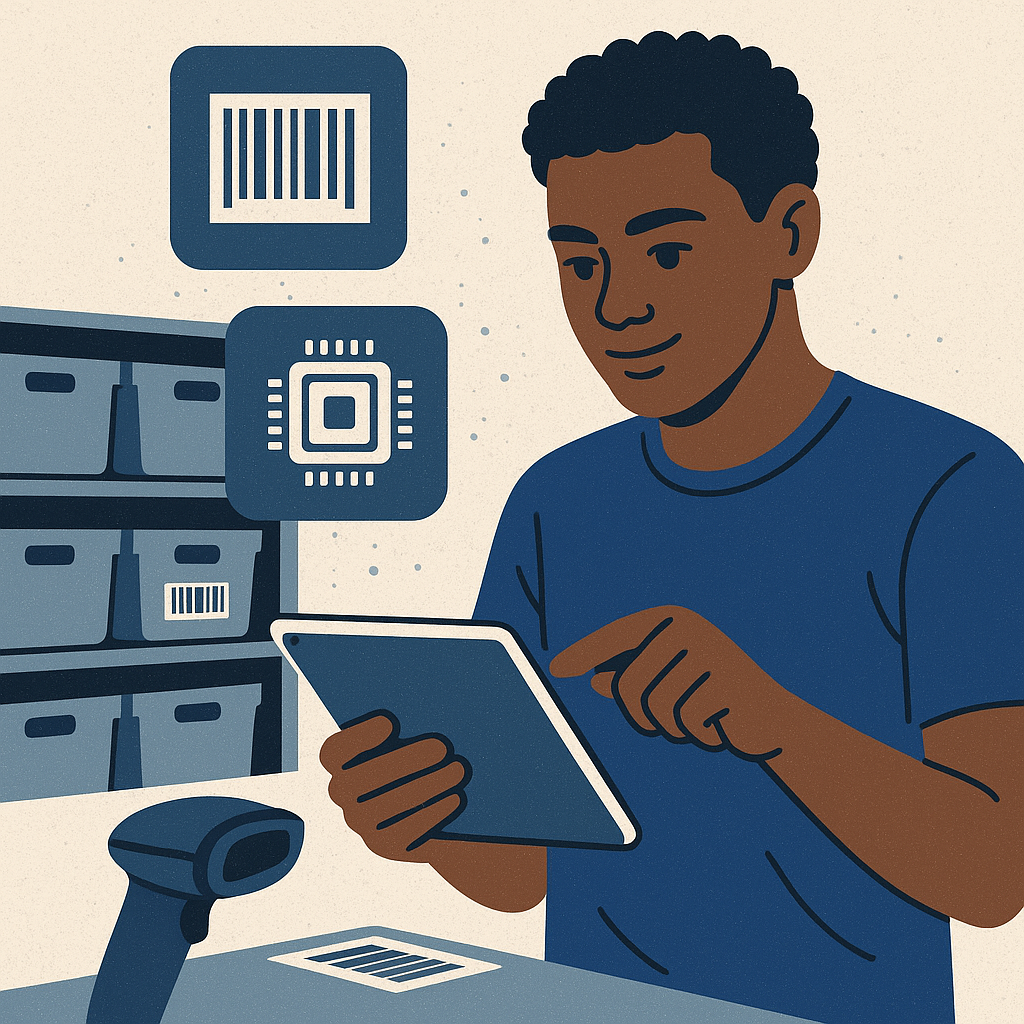
His idea? Consolidate everything into one digital report, accessible on an iPad. Then, take it further by barcoding every bin and tracking inventory in and out with a scan.
The team loved it but had no clue how to make it happen. Rob just smiled and said, “I’ve got this.” And off he went.
By day three, he had a prototype. He coordinated with IT, repurposed a company iPad, and built a working application. By week’s end, barcodes were in place, the app was live, and the team could track every part in real time.
I personally told the CEO about Rob and urged him to nurture this rising star. “Don’t let him get away,” I said.
Today, Rob’s a sales rep for CITY Furniture with a stellar track record and the same customer-first mindset that powered his Kaizen breakthrough.
Innovation doesn’t care about age, title, or tenure. Sometimes, your quietest contributor holds the loudest solution if you’re willing to listen.
A Gemba Walk Like No Other
Before I facilitated my first Kaizen event at CITY Furniture, we agreed I should learn the business from the inside. So, I spent a week embedded in their distribution center, shadowing employees and learning the flow.
The culture was strong, engaged, and motivated. But people were frustrated. They hadn’t had a Kaizen in a while, and they were hungry for change. I was there to help reignite that spark.
I spent time in the repair shop, helped planners with order tracking, and eventually got paired up with an order picker named Andy. His job was to locate furniture across a 1.6 million square foot facility and deliver it to the floor for shipment.
Andy showed me how he used barcode scanners and optimized routes to work efficiently. Then he asked, “Want to help me with an order?”
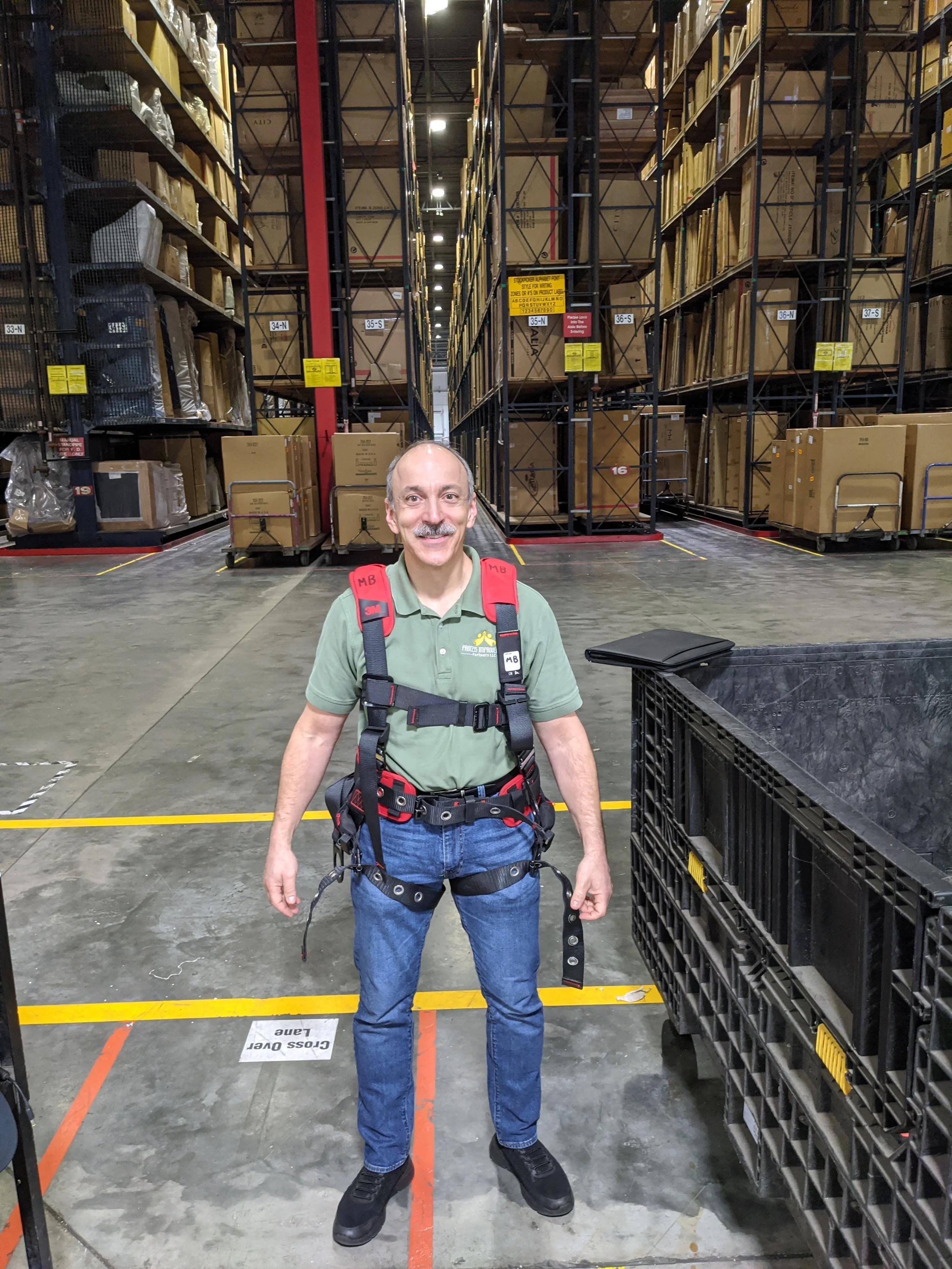
Next thing I knew, I was wearing a harness and vest, clipped into an “order picker,” a lift with a platform designed to retrieve furniture from towering racks.
Up and down we went, pulling product from the sky. At one point, 45 feet in the air, Andy turned to me and said, “I forgot to ask, are you afraid of heights?” I laughed and replied, “You picked a fine time to ask!”
We kept working, and I gained a deep appreciation for the skill, care, and judgment required in that role. It’s easy to underestimate the complexity when you're watching from the ground.
By the time I returned to the office, everyone had heard about the consultant in the air. They also knew I wasn’t there to sit on the sidelines. I was there to understand, serve, and support.
You can’t lead improvement from behind a desk. Real change starts when you walk the floor, get your hands dirty, and show people that their work matters.

Our Quest for the Holy Grail
This might sound dramatic, but in the world of suspended ceilings, we had a Holy Grail: a ceiling that looked like drywall but performed like an acoustical system. No visible grid. Total sound control. Full accessibility.
For decades, teams tried and failed. The problem? Suspended ceilings require grid for structure and access. Drywall doesn’t offer that and it also lacks acoustic performance.
Then our innovation manager had a bold idea: use the 3P Kaizen (Production Preparation Process) to tackle the problem. He knew we might not solve it in one go, but believed 3P could reveal the path forward.
I was asked to facilitate. The first sessions focused on hiding the visible grid. After many sketches and prototypes, the team landed on a clever idea: use overlapping fabric between tiles. It wasn’t perfect, but it disguised the seams better than anything we’d seen.
Some were disappointed it didn’t fully solve the challenge. But that first step revealed the next: develop a coating that could bind tiles together and create a seamless look without destroying acoustical performance.
The next 3P sessions pushed us farther. Dozens of experiments later, the team found a spray coating that did the trick. We brought in drywall contractors to test it. With their feedback, the final system was born.
After decades of struggle, we had invented a seamless, acoustical, accessible ceiling system. Within months, it hit the market. Today, that innovation drives a growing product category and is a cornerstone of the company’s success.
Breakthroughs rarely come in one giant leap. They’re built through persistence, process, and problem-solving. Sometimes the “Holy Grail” is one prototype away.
Value for the Customer
After many years, I was able to influence my number one client to take their Gemba walk to the next level of performance. When the hourly production operator stood up and gave his perspective, it changed the mind set of the leadership team.
I’ve been helping a leading consumer brand company through their Lean journey since I started my business over six years ago. These days, they’re mostly independent. They don’t call me unless the topic is complex, strategic, or I help them see a major opportunity they hadn’t noticed.
About a year into their journey, they rolled out daily Gemba walks, which they call "Board Walks." These walks got leaders out of their offices, connecting with the people doing the work, surfacing issues, and strengthening engagement and alignment across the organization.
For a few years, these Board Walks looked the same across every location: a group of managers would visit a manufacturing line, listen to an operator or mechanic report on the past 24 hours, ask a few questions, and move on to the next area. It was a start, but something critical seemed to be missing.
I spoke to contacts at several locations about the current state of their Board Walks and what the next level could look like. One local contact told me his plant manager didn’t want to change anything, he was happy with the results and approach.
But another contact, who I’d worked closely with before, called to share his frustration. He knew they had made progress but couldn’t seem to reach the next level of performance.
We talked about the Board Walks and confirmed they hadn’t changed since they started. I suggested we run a Kaizen event focused on making those walks more effective, with the goal of improving safety and productivity.
He was intrigued. I told him I’d seen this work before at an Armstrong plant, where we’d redesigned the Gemba walks to serve our true customers: hourly production operators and mechanics. It resulted in an immediate improvement to safety and productivity.
It took nearly a year of conversations to gain enough momentum and alignment. Eventually, we got support for the Kaizen and invited representatives from four plants, with the intent that they’d take the results back home.
We kicked things off early Tuesday morning. Everyone aligned on the charter and objectives. I had hoped for more hourly participation, but we had one production operator and one maintenance technician on the team. Luckily, they were well chosen.
At 8 a.m., we joined the daily Board Walk and took notes. Everyone was scribbling on Post-its, so I expected a decent mix of observations.
Back in the meeting room, the team shared their ideas. There were plenty of suggestions, but something was missing. It didn’t feel like we had touched the core issue of customer value and engagement. I pivoted and started asking more pointed questions.
I asked, “Who is the Board Walk for?”
The manufacturing manager quickly responded, “It’s for the operators and mechanics, of course.”
Then the operator on our team spoke up. “For us? I always thought it was for management. The Board Walk does nothing for me.” That was the turning point. There were many shocked team members in the room.
We created a Current State Value Stream Map of the Board Walk, identifying every step and evaluating which ones added value from the operator’s perspective. The results were clear and painful. None of the steps provided value for the actual frontline team members.
That created a realization that the Board Walk had to be redesigned to deliver true value to the customers. Now, it became apparent what the improvement priorities would be. Any changes must improve the customer experience.
The team selected three areas to focus on: the agenda, the ground rules, and the follow-up process. During the week, they trialed these changes on one production line.
The biggest shifts in design were:
1. A smaller, dedicated group focused on that area.
2. The discussion shifted to what needed to happen in the next 24 hours, not just rehashing the past.
3. Critical issues that came up would receive rapid follow-up and clear feedback.
The results were immediate. Operators felt heard. Managers were more focused. The Board Walks started to serve their true customer. Alignment and engagement skyrocketed.
Two months later, the new process had been rolled out to every line in the host plant. And at least one of the visiting sites took it back and implemented it with similar success.
This is the kind of transformation that happens when we pause to ask the right question and are willing to listen to the answer.
Hope is a Precious Commodity
I’m passionate about helping teams improve the reliability of their processes, using basic yet effective techniques to immediately boost the performance of their manufacturing lines. The best part is that the team can see and feel the results, and the techniques I teach are easy to learn and transferable to other lines and processes within the facility.
In a previous story, I described how a strategy session for a building products company led to several reliability improvement Kaizen events. This story focuses on one of those events in Mississippi.
I’m passionate about helping teams improve the reliability of their processes, using basic yet effective techniques to immediately boost the performance of their manufacturing lines. The best part is that the team can see and feel the results, and the techniques I teach are easy to learn and transferable to other lines and processes within the facility.
I flew into Memphis early on a Sunday morning, with no plant commitments until the afternoon, so I decided to tour Graceland and learn more about Elvis Presley. Although I wasn’t a fan before the visit, I gained a lot of respect for the man, his philanthropic efforts, and his impressive cars and eccentric outfits. It was quite the experience.
Afterwards, I met my contact at the plant, and we set up the meeting room for the upcoming week. He mentioned that many of the team members were hourly operators and mechanics who were skeptical about what could be achieved, and whether their voices would truly be heard. We walked through the plant, and he showed me the line we would be working on. Based on what I saw, I was confident we could make a real difference and engage the team in a way that would be meaningful to them.
On Monday morning, we kicked off the session with safety expectations, introductions, a charter review, and an overview of Lean and reliability principles. I quickly learned that most of the team members had no prior experience with Lean or Kaizen, so I had to start with the basics. This typically takes about 2 to 3 hours, and I present it using PowerPoint and activities. I know that people aren’t always excited about slides, but in my experience, some foundational understanding is necessary before we take our Gemba Walk. It used to take a full day, so I think I’ve gotten more efficient at it.
During the Gemba Walk, the team members were able to connect the reliability concepts I was teaching them to the issues on the line. If they were unsure about something, I could point out specific opportunities for improvement.
Back in the meeting room, we identified and prioritized the areas we would focus on. We broke into three sub-teams, and I worked with two mechanics and an operator to begin with the most basic tasks: centerlining and leveling the equipment.
They were shocked to see how much of the equipment was misaligned and out of level. The good news is that by the second morning, everything had been leveled and centered. The better news was that when we restarted the line, it ran better than anyone could remember.
Excitement began to fill the team, and improvements were happening across the board. By Wednesday, Jake, a mechanic who had been with the plant for over 20 years and was initially skeptical, came up to me, tapped me on the shoulder, and said, “Adam, you messed up (not exactly what he said, but you get the idea)! You gave me hope!”
I told him, “I’d like to say I’m sorry, but I’m not! Now that you know what’s possible, your job is to share it with your coworkers on the other lines!”
The rest of the week flew by, and by Friday, we had achieved something we were all proud of. The difference between this line and the others in the plant was striking. Now, the only thing shutting the line down was planned maintenance.
Jake took on the role of Area Owner, proudly holding himself and others accountable for following all of the reliability and safety requirements on the line. During a recent visit to the plant, he even demonstrated the principles of reliability to my original sponsor, the vice president of manufacturing.
Skepticism had been replaced by optimism, and the plant has already begun transferring what they learned to other lines. Before long, they should have all of their lines operating at higher reliability levels.