
Kaizen Success Stories
Real Manufacturing Results. One Kaizen at a Time
Explore real-world Kaizen success stories showing how manufacturing teams solved critical problems, improved performance, and created sustainable results.

The Bottleneck
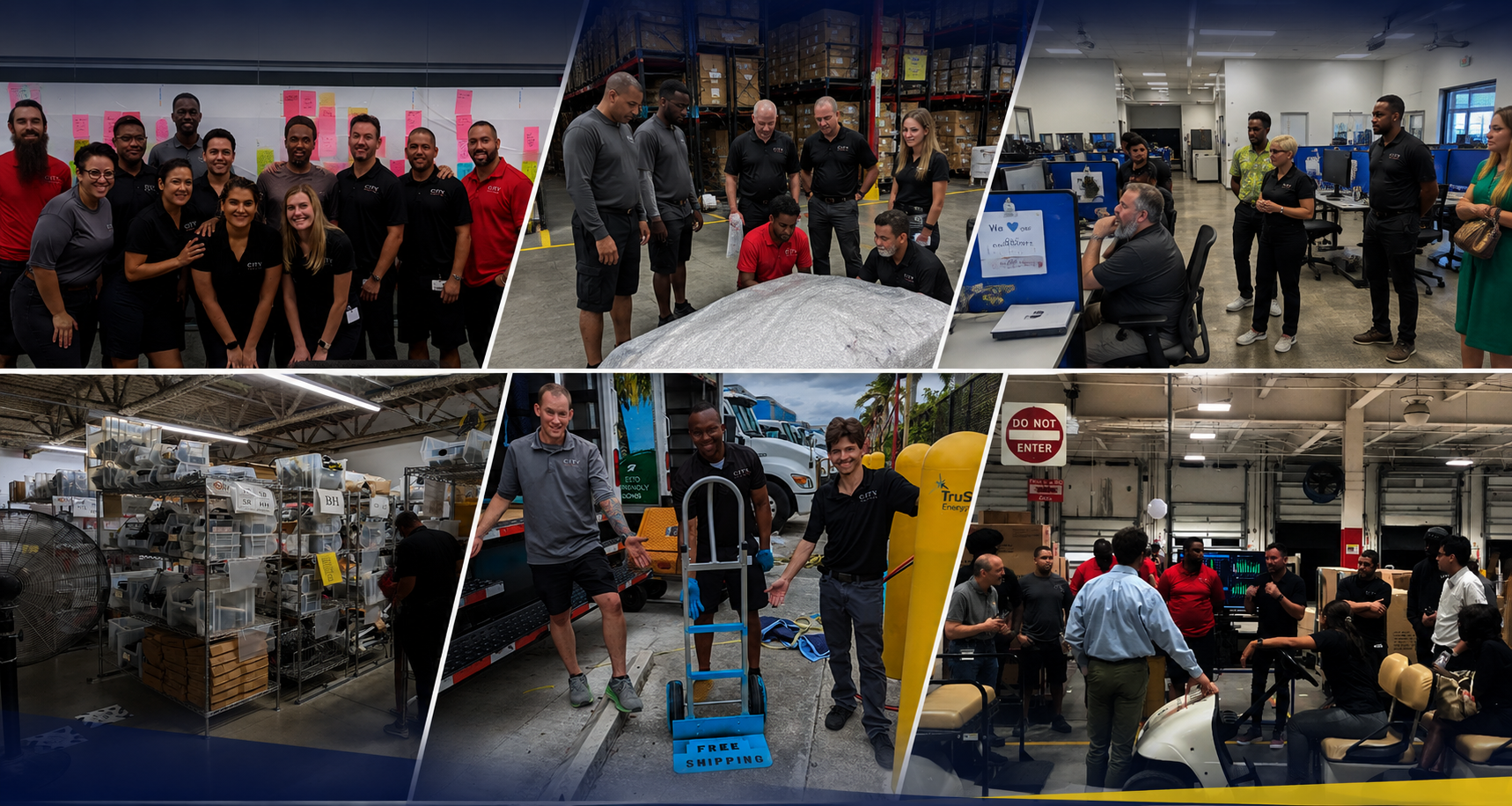
I met Andrew Koenig, the CEO of CITY Furniture, at a virtual Lean conference during the pandemic. We immediately hit it off, and he invited me to help strengthen the Kaizen culture at his company.
For two years, I facilitated Kaizen events on a monthly basis. It never ceased to amaze me at the number of improvements and breakthroughs that could be accomplished in a company that has been living Lean and continuous improvement for many years. More than that, the energy of team members was inspiring and infectious. I was warmly greeted by associates on every trip and many of them proudly showed off prior improvements and how they were sustaining the gains from our Kaizen events.
I met Andrew Koenig, the CEO of CITY Furniture, at a virtual Lean conference during the pandemic. We immediately hit it off, and he invited me to help strengthen the Kaizen culture at his company.
For two years, I facilitated Kaizen events on a monthly basis. It never ceased to amaze me at the number of improvements and breakthroughs that could be accomplished in a company that has been living Lean and continuous improvement for many years. More than that, the energy of team members was inspiring and infectious. I was warmly greeted by associates on every trip and many of them proudly showed off prior improvements and how they were sustaining the gains from our Kaizen events.
Late in the first year of my support, I met with the COO, Will Conway, during our monthly review. He always told me I was too expensive, but what he told me next stopped me in my tracks.
“Adam,” he said, “I love the results your teams have been getting. The engagement and excitement is amazing. We want more of this, but we can’t afford to bring you here more often. You’re the bottleneck. Can you help us figure out a way to expand this work?”
This would be a challenge. I had more than 30 years of experience facilitating teams. I honed my craft through many experiments and mistakes. I get feedback about how my teams accomplish results more quickly than many of the other consultants I have followed. Somehow, I would have to put together all of my experience into a training program.
I said, “Will, this is quite a task you’re asking of me. But I feel it’s something I must take on. I owe it to you, your teams, and quite frankly to me. If I can somehow figure out how to upskill other facilitators, I will have something I can transfer to others so my approach can live on after I have stopped working. Challenge accepted!”
Over the next few weeks, I developed my Kaizen Facilitator Certification Program. It consists of these elements:
- Kaizen Facilitation Prep Course
- Participate as a Kaizen team member
- Participate as a Kaizen team leader
- Co-facilitate a Kaizen with me as the Lead Facilitator
- Lead facilitate a Kaizen with me as the co-facilitator
I developed reviews for the candidates, to ensure that they were ready to move on to the next (or final) step. The ultimate goal would be to solo-facilitate a Kaizen event. I knew no matter how much training and support I gave, the candidates would still make mistakes. As long as they showed the desire and drive to learn from them and demonstrated the principles of facilitation, I was willing to move them to the next phase. I knew I couldn’t “rubber-stamp” anyone’s certification. This would damage their results and my reputation.
Will chose four high-potential candidates from across the company. All except one had been at least team members in prior Kaizens with me. The other candidate had facilitated Kaizen events prior to joining CITY Furniture, so everyone agreed she could skip the Kaizen team member and team leader steps.
During the three-day Kaizen Facilitation Prep Course, I demonstrated the principles and techniques of facilitation. I had each candidate practice everything I taught. Then, I sent them out to meet with sponsors to develop charters for upcoming Kaizens. Following this, they developed Kaizen event plans and learned specific tools to utilize, such as Value Stream Mapping and The Wheel of Sustainability. At the end of the course, we celebrated, and I was hopeful they were all prepared for their next steps.
Over the next eight months, I facilitated Kaizen events with each of the candidates separately and was impressed by how much they learned and incorporated into their approach to facilitation. I was thrilled when some of the candidates went “off-script” and created their own approach to what I taught them. Their confidence was growing and at the end of each review, we talked through what they learned and what they thought they could do better next time. Every one of them was ready to take the next step.
I held separate reviews with Will, so that he could ask me the more challenging questions about each candidate. He agreed all of them were ready to solo facilitate.
And that’s what they’ve been doing. I don’t get to facilitate any more CITY Furniture events. I have eliminated the “bottleneck” and worked myself out of a job, which also frees up my capacity to pursue new challenges. From time to time, I get a text or an email showing me some of the breakthroughs they have made since I have left. It makes me feel good that I have been able to help them grow their capability and capacity. I feel even better knowing the program I developed can be used to help others and that things are no longer dependent on me.

Do Your Due Diligence
Midway through my corporate career, I was a senior industrial engineer at Armstrong World Industries. I spent most of my time providing support to our many manufacturing facilities all over the world. I have always been fascinated by manufacturing and it never ceases to amaze me how good (and bad) decisions can immediately impact performance.
Midway through my corporate career, I was a senior industrial engineer at Armstrong World Industries. I spent most of my time providing support to our many manufacturing facilities all over the world. I have always been fascinated by manufacturing and it never ceases to amaze me how good (and bad) decisions can immediately impact performance.
I thought I would someday be a plant manager and told my manager I wanted the opportunity to take the next step to get me there, as a business unit manager. I thought all my continuous improvement experience would serve me well and I would make more good decisions than bad ones.
One day, the week before Easter, my manager informed me that the plant manager at the Lancaster flooring plant wanted to talk to me about a position in his plant. I was excited for two reasons. One was my opportunity to learn manufacturing from the inside. The other was it would be a two-grade promotion. More money was never a bad thing, or so I thought!
I met Rob, the plant manager, on the Friday before Easter weekend. The plant wasn’t running, but he gave me a short tour of the areas I would be responsible for. All of the hourly workers were gone and I never met anyone on the staff. I thought it was odd, but I was enamored with the idea of the next step towards plant manager.
At the end of the tour, Rob offered me the job and told me that he wanted my answer by the end of the weekend. Even though I knew my answer, I told him I would talk things over with my family and get back with him on Monday morning.
I really didn’t think too much about it. I knew I was going to take the job. My wife was supportive and knew this new role would keep me home more. But the hours were going to be long. It was a tradeoff, but it seemed like the right choice to make. I did mention it was odd that I hadn’t met anyone during the tour, but tried not to read too much into it.
On Monday, I called Rob and told him I would take the job. My manager and I agreed on a transition plan, as I had some projects to wrap up or hand over to others. For the next four weeks, I tried to do both jobs, spending half of my time at my new factory, watching the staff conduct business.
One week before I started my new job full-time, Rob was promoted and left the plant. His replacement wouldn’t arrive for six more weeks. In addition, my counterpart in the factory who ran a different business had a three-week National Guard deployment. I would essentially be on my own, learning as I went.
I had a staff, but they didn’t know me. I also had the vice president of manufacturing to discuss issues with, should things get out of hand. I really didn’t want to have to use his support, but there were a few times that I had to. There were some union/management issues to be resolved and I didn’t have the historical perspective to help me out. So, I swallowed my pride and met with the VP. He was very helpful and supportive. He understood my lack of experience.
For the next few weeks, I barely survived. Finally, my counterpart came back and helped me deal with some issues and then our new plant manager arrived. Things got better, but they were tough. This plant had been in decline for many years and the management and union relationship was strained, to say the least. I did my best to improve things throughout my two years as business unit manager.
Would I have chosen a different path if I had known what was in front of me? Maybe. More likely, I would have tried to gain perspective on what I was agreeing to well before accepting the job. It would have eliminated some of my early bad decisions. It was an amazing learning experience. I like to think I gained twenty years of experience during my time on the job.
Living in the Moment
During my career, I have been fortunate to have worked all over the world. I was brought up as a “tourist.” Whenever I traveled with my family, we would do everything possible to see the sights and learn the history of the region we were visiting. Because of this, I naturally enjoyed my business travel and did my best to explore and experience the culture of any location I visited.
During my career, I have been fortunate to have worked all over the world. I was brought up as a “tourist.” Whenever I traveled with my family, we would do everything possible to see the sights and learn the history of the region we were visiting. Because of this, I naturally enjoyed my business travel and did my best to explore and experience the culture of any location I visited.
I was scheduled to assist Tim, a project manager on a critical project in Munster, Germany. We were evaluating the ramifications of expanding the plant and I was asked to utilize discrete event simulation modeling (explaining that is another story) to evaluate the capacity gain and future bottlenecks in the process.
I scheduled a two-week visit to the plant and had the weekend to explore the region. On my own, this would have been interesting, but with Tim, it turned into an all-out adventure. On Saturday, we took a cruise down the river and learned about the historical battles between the German and French armies. Castles would be destroyed, rebuilt, taken over, and then destroyed again.
On Sunday, we traveled to Belgium. Using the GPS (this was many years ago), we set out to find a museum to learn about the Battle of the Bulge. After being redirected into a few fields, we finally found the museum and learned history from a different perspective than what we had been taught in the United States.
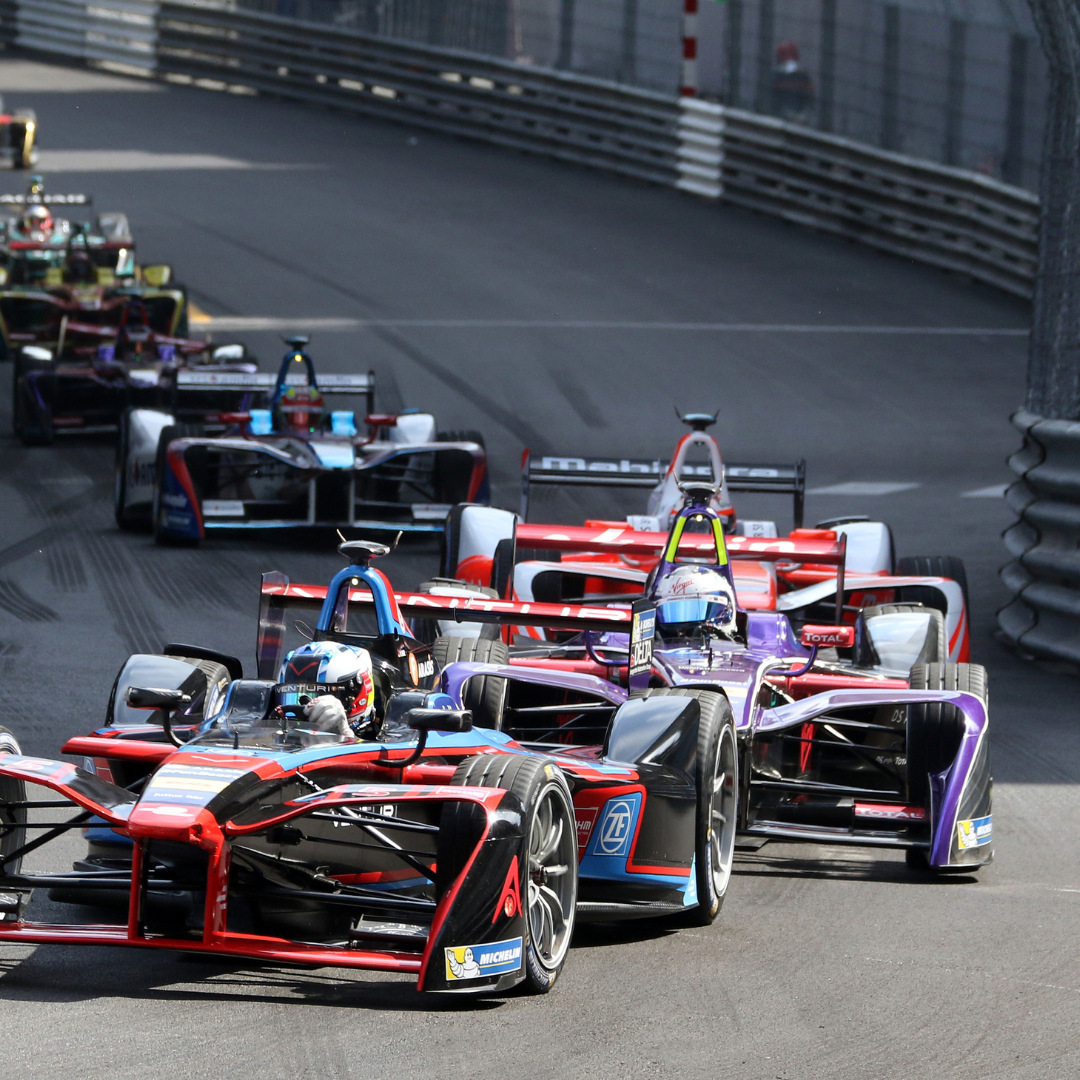
After touring the museum, Tim mentioned that Nürburgring, a famous Formula 1 track, was in the vicinity. I knew he was a big Formula 1 fan, so I quickly agreed to go with him to the track. We got to the track and parked the rental car. Since we didn’t have tickets, Tim was happy to just look at it from the outside.
I saw people walking in and suggested we join them inside. If we acted as if we belonged there, what was the worst that could happen? We joined the crowd and since no one was checking tickets, we made our way in. We climbed into the stands and watched as cars were “practicing” on the track.
Tim was in heaven. You could see he had ticked off a “bucket list” item. I enjoyed watching him as he was deep in his element. The sounds, smells, and experience filled him with joy. There was an infield section where cars were being maintained and tested. Tim looked longingly at the action, and I suddenly knew what I had to do.
I got up and said, “Follow me.” I started down the stands and Tim came along, saying, "There’s no way they’re going to let us go there.” I said, “What are they going to do, kick us out of the country?” Seemed unlikely, so we headed down and walked onto the infield, looking like we belonged there.
We spent the next two hours looking at cars and talking with drivers and mechanics. It was an amazing experience for Tim and me. I just enjoyed seeing Tim in his element, talking about cars, racing, and any other topics that I probably didn’t understand.
There’s a lot of similarities to what I do today as a consultant and my adventure with Tim. I venture out into the unknown, acting like I belong. I definitely enjoy living in the moment with my Kaizen teams and feeling pride when they win.

Getting More Than They Bargained For
My first Kaizen event with a new client in Oregon came as result of my site visit the month before. We were going to apply 5S to an area of their plant that was well behind budget. During my visit, I noticed that although prior efforts had been made to improve organization, they hadn’t stuck. With the appropriate use of Lean principles and the Wheel of Sustainability, I felt I could help them get back on track.
My first Kaizen event with a new client in Oregon came as result of my site visit the month before. We were going to apply 5S to an area of their plant that was well behind budget. During my visit, I noticed that although prior efforts had been made to improve organization, they hadn’t stuck. With the appropriate use of Lean principles and the Wheel of Sustainability, I felt I could help them get back on track.
After a few hours of training on Day 1, we took a Gemba walk into the space we were going to work on. There were several workstations with their own tools, tooling, and instructions. They were cluttered and disorganized. There was no indication of what was necessary and what was obsolete. There was a large central storage area, filled with heavy tooling for all the presses used at the workstations. One of our team members was responsible for the area and he admitted many items were no longer in use and were in the way of tooling that was current and needed.
Other areas were similar. Whenever someone needed tooling, materials, or supplies, they would have to wade through obsolete items to find them. That’s when it struck me – our 5S efforts could be used to make a direct impact on the productivity of the area. I proposed an experiment – perform a changeover on one of the presses and find out how much time, energy, and searching was required. Then, once we completed our major 5S work, we could compare “before and after” results.
I taught the team how to use spaghetti diagrams to follow the travel of the person doing the work. It would show the back-and-forth motions we could try to eliminate later. One of our team members volunteered to do the changeover. She had to search for materials, move things out of the way, and dig through clutter to do her work. Forty-five minutes later, she was finished. She looked frustrated. I asked if it was always this way. She said this was normal. Team members held up their diagrams and sure enough, they looked like spaghetti. We could make it much easier to do this work once we eliminated most of the “spaghetti” by applying 5S to the area.
I asked the team to write down their ideas to remove clutter (sort), optimize placement and create visuals (set in order), and to repair and clean equipment (shine). With almost 100 ideas on post-its, we prioritized our work. The team broke up into 3 sub-teams and worked on their critical projects.
After Day 3, there was an amazing transformation. All areas looked organized, well-labeled, and less cluttered. Over 30% of the tooling in the central storage area was identified as obsolete and was inventoried and relocated off-site.
On the morning of fourth day, we conducted another changeover with our original volunteer. She was able to complete the work in less than half the original time. She actually was able to slow down and take her time to do the work in a confident way. She didn’t have to move anything out of her way, sort through obsolete items, or search for what she needed. She took far fewer trips between her workstation and the central storage area. Our spaghetti diagrams looked much cleaner than on the first day.
My team was elated. But we were far from done. Now it was time to implement the Wheel of Sustainability to ensure their great results lived on. We named two Area Owners and built a board to post expectations, audits, and results.
We practiced the audits and checklists, and everyone agreed they could handle the tasks on a daily and weekly basis. They also felt that by doing these tasks, it would make work easier for everyone throughout the day and sustain the high performance we had demonstrated.
Following up with the team months later, they admitted they had a slow start, but after a few weeks, performance had reached budget levels. They are fully committed to continuing their great work in other areas.
Lean in Action
I was Lean Champion for the Global Technology group at a ceiling tile manufacturer for six years. During that time, I was responsible to train all new employees in Lean principles and techniques as they joined our group. The goal of this training was to help them understand what we were doing and how we applied Lean to our work. My aim was to generate interest and engagement around Lean. In the early years, things didn’t always go the way I expected.
I was Lean Champion for the Global Technology group at a ceiling tile manufacturer for six years. During that time, I was responsible to train all new employees in Lean principles and techniques as they joined our group. The goal of this training was to help them understand what we were doing and how we applied Lean to our work. My aim was to generate interest and engagement around Lean. In the early years, things didn’t always go the way I expected.
When I first started training new employees, I created eighty PowerPoint slides that described as many Lean concepts as I could squeeze into the two hours allotted for the training. I reviewed the slides, gave participants a chance to ask questions, and then declared them “trained.” I never got many questions during this training and new employee participation in Lean efforts was hit or miss once the training was completed.
I knew I had to do better if I was going to realize my engagement and participation goals. The first thing I did was develop activities to demonstrate the various Lean concepts I was trying to reinforce. From an interactive 5S number search to a triangle peg jumping game, new employees started to draw value from the time they spent with me. I saw a slight increase in engagement and participation. I wasn’t satisfied. What else could I do, I wondered?
My breakthrough came one day when one of the trainees asked, “This is all well and good, but how does it apply to what we do in Global Technology?” I knew what I had to do. Make the training specific to the actual work we did and give demonstrations of Lean in action.
The first thing I did was test my training against the Global Technology Vision and Mission. If parts of the training didn’t support our Vision and Mission, I either removed it or modified it. Now the theoretical became practical. Power Point slides were reduced and made more relevant.
Focusing on the suggestion of Lean in action, I added a Gemba walk to the training. After an hour of classroom training, I led an interactive tour of areas that had applied Lean thinking to their processes. From the Pilot Plant to the Capital Engineering Records Room to the New Product Development Project Board, new employees could observe and interact with people using Lean. They had a more definitive picture of how Lean worked in practical settings.
The training still took two hours, but was much more interactive and engaging. Because I took a different tour route each time, I was more energized by it as well. Most importantly, participation and engagement of the new employees rose to record levels.

Understanding is Critical
In February 2020, Process Improvement Partners was asked to facilitate a strategic planning session in Montreal for a global consumer products company. Having facilitated multiple Kaizen events where English is not the primary language, we set about to design an event that would incorporate additional translation time and resource effort for the event. Normally, this type of session takes three days. Even though we were told that most participants were bi-lingual, we aligned with the sponsor and leader and added four hours to the event plan.
In February 2020, Process Improvement Partners was asked to facilitate a strategic planning session in Montreal for a global consumer products company. Having facilitated multiple Kaizen events where English is not the primary language, we set about to design an event that would incorporate additional translation time and resource effort for the event. Normally, this type of session takes three days. Even though we were told that most participants were bi-lingual, we aligned with the sponsor and leader and added four hours to the event plan.
In the weeks leading up to the event, presentation slides were developed and sent to the team leader to be modified to show English and French terms. I knew that the first day of the session would be the most challenging, as most participants had no Kaizen event or Lean experience. With much training, demonstration, and direction, we had to ensure important elements were clearly and correctly understood.
On the first day of the event, every time anyone spoke, there was translation into French or English. Every time someone asked a question in French, it was translated into English. Any English discussion was translated into French. Things were going slower than anticipated. By lunchtime, we were two hours behind. People were getting concerned. I knew we were going to be fine as the week wore on. The first day is more focused on discussion than teamwork and it feels longer and is more challenging to first-timers.
Aligning and Adjusting
At the end of the first day, we were exactly four hours behind. Those four extra hours planned for in the overall event were already used up. Additionally, in a feedback session at the end of the day, most team members said we were translating more than necessary. After most of the team left, we regrouped with the team leader and sponsors to build a plan to get us back on track. On a positive note, all team members were speaking freely and engaging extremely well. This was most critical for the overall success of the event. In preparations for the event, the leader and sponsors weren’t expecting so much engagement. Their initial skepticism led to the translation requirement.
We agreed we would reduce the translation to an “as needed” basis. This meant that we would ask our engaged team members to speak up when they needed translation or further explanation. It was risky, but we would pay attention to the room and draw out requests for translation if we saw engagement declining. We then joined the team at dinner and watched the team strengthen during the evening.
On the morning of Day 2, we explained our new strategy to the team, in English and French, and told them it would be the last translation they received until they requested it. We also agreed not to translate anything into English. When a question was asked in French, it would be answered in French. The facilitators didn’t need to understand the conversation, unless they were asked something they had to specifically answer. The team liked the new approach.
Less Translation, More Engagement
Once we got the hang of the reduced translation and started watching the team for their understanding, progress happened faster and the team seemed more engaged and satisfied. At the end of the second day, the team reflected their appreciation for the change in approach and showed an optimism for the day’s work and the work to come.
The next two days flew by and the team built a strategic plan of which they could be proud. Their plan improved productivity, safety, quality, and customer service. They also learned many new tools and techniques they could use to solve problems in their day to day work. On the final day, ten different presenters told the story of the week and the strategic plan to an audience attending by video conference all over the world. Those in the audience said they could feel the enthusiasm and alignment and were amazed by how professional the presenters were, regardless of their position. They voiced their support to the team and encouraged them to implement their plan. Some even wanted them to implement it sooner than planned.
The week reinforced how critical communication and understanding is for the team to win. Even though we reviewed progress and issues with translation at the end of the first day, we now know we need to do it sooner if we find ourselves in a similar situation in the future. For the team’s part, we can only thank them for hanging in there while we were learning this valuable lesson.

A Little Dab Will Do Ya
In 1991, I was offered a line supervisor position at Armstrong’s ceiling grid factory in Franklin Park Illinois. I had been working as a staff Industrial Engineer at Thomasville Furniture in Thomasville North Carolina, so the position would be my first operations supervisory role.
In 1991, I was offered a line supervisor position at Armstrong’s ceiling grid factory in Franklin Park Illinois. I had been working as a staff Industrial Engineer at Thomasville Furniture in Thomasville North Carolina, so the position would be my first operations supervisory role.
I spent my first few months at the plant learning everything I could about the manufacture of ceiling grid and the approach I would take to supervising my small crew of factory workers. The only way I knew to learn was to spend as much time as possible on the factory floor, observing, asking questions, and trying to help where I could.
The factory had eleven separate operating lines and each of them made a variety of products. Each line consisted of an unwind station for coils of steel, roll-formers that bent the coil of steel into the shape of the ceiling grid, and a punch press which stamped out the holes and end details for each piece of grid. Finally, there was a packaging station that assisted the operators as they put the finished pieces in a box.
The lines operated fairly well, with limited downtime, until it was time to change over from one product type to the next. If the shape of the grid was changing, rolls on the roll-former would be switched out. If the size or shape of the product were changing, dies in the press would need to be moved or switched out. The process of changing over was long and drawn out and we never started right up after the changeover. I wanted to know more about this, but typically the highest skilled employees did the changeover and didn’t want to be bothered by my questions.
An Observation In Need of a Solution
After a few months of observing things, I decided that I needed to help somehow. I really wasn’t sure what I could do to help. I decided I would first try to better understand press die setup, as it looked more straight-forward than roll former setup. Spending many hours observing what was happening, I noticed that once the dies were placed in the proper location, they were then tightened using bolts. Then, a bar of grid would be stamped and checked for proper placement of holes, end details, and overall length. Tolerances were tight, so the dies would have to be placed accurately.
Every time this was done, the measurements required that the setup operator make adjustments to the location of the dies. I didn’t understand why this was. Why couldn’t he just find the optimal position, tighten the dies, and be ready to run on the first try? He told me that the dies always moved a bit when tightened and he had to tap them to their final position with a mallet. If things went well, he could do this on one additional attempt. If things went poorly, it could take many attempts which added up to many hours of downtime. I thought to myself, “There must be a way to get the dies set properly on the first try.” I didn’t know what to do. Luckily for me, I was about to take a trip that would change the way I thought about this problem.
I was asked to travel to the new headquarters of our joint venture with Worthington Steel in Malvern Pennsylvania. I like to read bit on airplanes so I looked at the bookshelf in the supervisor’s office and saw a book called, “A Revolution in Manufacturing: The SMED System,” written by Shigeo Shingo. I asked the other supervisor if he had read it and if I could borrow it. He told me that Armstrong bought the book for all of their manufacturing sites in the late 1980’s, but he had never read it. He told me I could take it and keep it if I wanted. So, I took this book with me on the airplane and started reading it.
New Way of Thinking Inspired by Socks
It was like a whole new world had opened up to me. Shigeo Shingo developed a changeover reduction process that is used by companies the world over and even is used during pit-stops at auto races. This was just what I needed. But, where to begin? A story in the book about golf told me what to try first. In the story, Mr. Shingo talks about playing golf and getting blisters on his feet at the end of the day. He loved golf, but didn’t love the blisters that came as a result and decided he must reason out how to eliminate them. He used his problem-solving skills and figured out that the blisters came from the rubbing of his socks on his feet when he was swinging the golf clubs. Why were the socks rubbing on his feet? Because there was less friction between the socks and his sweaty feet than there was between the socks and his shoes, which he had put on quite tightly. How would he resolve this? He figured out that by adding another pair of socks on his feet, he could keep the least friction between the two socks and therefore they would rub against each other, rather than rubbing on his feet. Problem solved; blisters eliminated!
So how does this apply to changeover reduction, you may ask? Now that he saw how reducing friction was beneficial, he decided to apply the same idea to press die setup. He also had a problem with dies moving once they were tightened down. He originally had a bolt and one washer that he used to tighten down dies on a smooth press surface. He noticed that the die would move on the smooth press surface when the bolt was tightened securely. Much like the socks, he decided to add an extra washer to the bolt and put a dab of oil between the two washers, guaranteeing that they would have the least friction of any component in the setup. He tried his idea out and it worked. And now, I had something I could try back at the plant when I returned.
Results Even Skeptics Could Not Ignore
When I got back to my plant, I was excited to share what I had learned with my setup operators. I explained what I had read and they were not impressed. “How do sweaty socks help improve changeover time?” they asked. I said I thought we should try an experiment to see if what I read really did work. One of the operators grudgingly agreed to give it a try. I wanted to make sure that we had real data for our experiment, so I asked him to set up a die in position as he normally would. In this case, we set up dial indicators on two corners of the die. They would be used to show us how much the die moved when tightened to the press. We zeroed out the dial indicators just before he made the final tightening of the bolts on the die. One corner mover .007” and the other moved 010”. That might not seem like a lot of movement, but it is more than we could tolerate and would require him to move the die with a mallet, just as he always had to do.
Now it was time to try the new way. We added a washer to each bolt on the die and put a dab of oil between the two washers on each bolt. We zeroed out the dial indicators just before making the final tightening of the bolts on each die. To our amazement, at the final tightening of each bolt, the washers moved, but the readouts on the dial indicators both read 0! There was no movement of the die. “Let me try that again,” he said, and he did. Once again, there was zero movement of the die. This was a breakthrough. Now the other setup operators wanted to try it for themselves. They couldn’t believe it as one by one each of them saw the dial indicators stay at zero, no matter how hard they tightened the bolts on the dies.
We immediately added washers and oil to the dies waiting to be used on the other lines. Then, we modified the other dies on the production lines after we took them out of the presses following production runs. From then on, every die that was set up in our presses maintained its location, saving valuable time, effort, and reducing frustration. I like to think that I would have figured this out on my own, but I realize that we all get set in our ways and sometimes need a story or two to change our thinking. I don’t play golf, but I now have much greater respect for the game and what can be learned from it.