
Kaizen Success Stories
Real Manufacturing Results. One Kaizen at a Time
Explore real-world Kaizen success stories showing how manufacturing teams solved critical problems, improved performance, and created sustainable results.

The Bottleneck
I met Andrew Koenig, the CEO of CITY Furniture, at a virtual Lean conference during the pandemic. We immediately hit it off, and he invited me to help strengthen the Kaizen culture at his company.
For two years, I facilitated Kaizen events on a monthly basis. It never ceased to amaze me at the number of improvements and breakthroughs that could be accomplished in a company that has been living Lean and continuous improvement for many years. More than that, the energy of team members was inspiring and infectious. I was warmly greeted by associates on every trip and many of them proudly showed off prior improvements and how they were sustaining the gains from our Kaizen events.
I met Andrew Koenig, the CEO of CITY Furniture, at a virtual Lean conference during the pandemic. We immediately hit it off, and he invited me to help strengthen the Kaizen culture at his company.
For two years, I facilitated Kaizen events on a monthly basis. It never ceased to amaze me at the number of improvements and breakthroughs that could be accomplished in a company that has been living Lean and continuous improvement for many years. More than that, the energy of team members was inspiring and infectious. I was warmly greeted by associates on every trip and many of them proudly showed off prior improvements and how they were sustaining the gains from our Kaizen events.
Late in the first year of my support, I met with the COO, Will Conway, during our monthly review. He always told me I was too expensive, but what he told me next stopped me in my tracks.
“Adam,” he said, “I love the results your teams have been getting. The engagement and excitement is amazing. We want more of this, but we can’t afford to bring you here more often. You’re the bottleneck. Can you help us figure out a way to expand this work?”
This would be a challenge. I had more than 30 years of experience facilitating teams. I honed my craft through many experiments and mistakes. I get feedback about how my teams accomplish results more quickly than many of the other consultants I have followed. Somehow, I would have to put together all of my experience into a training program.
I said, “Will, this is quite a task you’re asking of me. But I feel it’s something I must take on. I owe it to you, your teams, and quite frankly to me. If I can somehow figure out how to upskill other facilitators, I will have something I can transfer to others so my approach can live on after I have stopped working. Challenge accepted!”
Over the next few weeks, I developed my Kaizen Facilitator Certification Program. It consists of these elements:
- Kaizen Facilitation Prep Course
- Participate as a Kaizen team member
- Participate as a Kaizen team leader
- Co-facilitate a Kaizen with me as the Lead Facilitator
- Lead facilitate a Kaizen with me as the co-facilitator
I developed reviews for the candidates, to ensure that they were ready to move on to the next (or final) step. The ultimate goal would be to solo-facilitate a Kaizen event. I knew no matter how much training and support I gave, the candidates would still make mistakes. As long as they showed the desire and drive to learn from them and demonstrated the principles of facilitation, I was willing to move them to the next phase. I knew I couldn’t “rubber-stamp” anyone’s certification. This would damage their results and my reputation.
Will chose four high-potential candidates from across the company. All except one had been at least team members in prior Kaizens with me. The other candidate had facilitated Kaizen events prior to joining CITY Furniture, so everyone agreed she could skip the Kaizen team member and team leader steps.
During the three-day Kaizen Facilitation Prep Course, I demonstrated the principles and techniques of facilitation. I had each candidate practice everything I taught. Then, I sent them out to meet with sponsors to develop charters for upcoming Kaizens. Following this, they developed Kaizen event plans and learned specific tools to utilize, such as Value Stream Mapping and The Wheel of Sustainability. At the end of the course, we celebrated, and I was hopeful they were all prepared for their next steps.
Over the next eight months, I facilitated Kaizen events with each of the candidates separately and was impressed by how much they learned and incorporated into their approach to facilitation. I was thrilled when some of the candidates went “off-script” and created their own approach to what I taught them. Their confidence was growing and at the end of each review, we talked through what they learned and what they thought they could do better next time. Every one of them was ready to take the next step.
I held separate reviews with Will, so that he could ask me the more challenging questions about each candidate. He agreed all of them were ready to solo facilitate.
And that’s what they’ve been doing. I don’t get to facilitate any more CITY Furniture events. I have eliminated the “bottleneck” and worked myself out of a job, which also frees up my capacity to pursue new challenges. From time to time, I get a text or an email showing me some of the breakthroughs they have made since I have left. It makes me feel good that I have been able to help them grow their capability and capacity. I feel even better knowing the program I developed can be used to help others and that things are no longer dependent on me.

Getting More Than They Bargained For
My first Kaizen event with a new client in Oregon came as result of my site visit the month before. We were going to apply 5S to an area of their plant that was well behind budget. During my visit, I noticed that although prior efforts had been made to improve organization, they hadn’t stuck. With the appropriate use of Lean principles and the Wheel of Sustainability, I felt I could help them get back on track.
My first Kaizen event with a new client in Oregon came as result of my site visit the month before. We were going to apply 5S to an area of their plant that was well behind budget. During my visit, I noticed that although prior efforts had been made to improve organization, they hadn’t stuck. With the appropriate use of Lean principles and the Wheel of Sustainability, I felt I could help them get back on track.
After a few hours of training on Day 1, we took a Gemba walk into the space we were going to work on. There were several workstations with their own tools, tooling, and instructions. They were cluttered and disorganized. There was no indication of what was necessary and what was obsolete. There was a large central storage area, filled with heavy tooling for all the presses used at the workstations. One of our team members was responsible for the area and he admitted many items were no longer in use and were in the way of tooling that was current and needed.
Other areas were similar. Whenever someone needed tooling, materials, or supplies, they would have to wade through obsolete items to find them. That’s when it struck me – our 5S efforts could be used to make a direct impact on the productivity of the area. I proposed an experiment – perform a changeover on one of the presses and find out how much time, energy, and searching was required. Then, once we completed our major 5S work, we could compare “before and after” results.
I taught the team how to use spaghetti diagrams to follow the travel of the person doing the work. It would show the back-and-forth motions we could try to eliminate later. One of our team members volunteered to do the changeover. She had to search for materials, move things out of the way, and dig through clutter to do her work. Forty-five minutes later, she was finished. She looked frustrated. I asked if it was always this way. She said this was normal. Team members held up their diagrams and sure enough, they looked like spaghetti. We could make it much easier to do this work once we eliminated most of the “spaghetti” by applying 5S to the area.
I asked the team to write down their ideas to remove clutter (sort), optimize placement and create visuals (set in order), and to repair and clean equipment (shine). With almost 100 ideas on post-its, we prioritized our work. The team broke up into 3 sub-teams and worked on their critical projects.
After Day 3, there was an amazing transformation. All areas looked organized, well-labeled, and less cluttered. Over 30% of the tooling in the central storage area was identified as obsolete and was inventoried and relocated off-site.
On the morning of fourth day, we conducted another changeover with our original volunteer. She was able to complete the work in less than half the original time. She actually was able to slow down and take her time to do the work in a confident way. She didn’t have to move anything out of her way, sort through obsolete items, or search for what she needed. She took far fewer trips between her workstation and the central storage area. Our spaghetti diagrams looked much cleaner than on the first day.
My team was elated. But we were far from done. Now it was time to implement the Wheel of Sustainability to ensure their great results lived on. We named two Area Owners and built a board to post expectations, audits, and results.
We practiced the audits and checklists, and everyone agreed they could handle the tasks on a daily and weekly basis. They also felt that by doing these tasks, it would make work easier for everyone throughout the day and sustain the high performance we had demonstrated.
Following up with the team months later, they admitted they had a slow start, but after a few weeks, performance had reached budget levels. They are fully committed to continuing their great work in other areas.

Go to Gemba, Even If You Don’t Want To
In 2019, I was asked to facilitate the annual Value Stream Mapping (strategic planning) event for a leading consumer brands manufacturer at their facility in Central Pennsylvania. I had facilitated their event the prior year and it was our intent to build on the prior results and drive their continuous improvement culture forward during the event.
In 2019, I was asked to facilitate the annual Value Stream Mapping (strategic planning) event for a leading consumer brands manufacturer at their facility in Central Pennsylvania. I had facilitated their event the prior year and it was our intent to build on the prior results and drive their continuous improvement culture forward during the event.
The culture of the plant was such that I didn’t get direct feedback from the plant manager, but received it indirectly through the technical manager. There was a strong bond between the two of them, and even though the plant manager appreciated the results I was able to generate and my flexibility to work under challenging circumstances, he generally didn’t directly communicate with me. One reason for this may be that I am a story teller and tend to ramble a bit (surprise), and he liked getting directly to the point.
I was asked to facilitate in a way that would increase the engagement of the production and maintenance technicians and also drive the team to Gemba (the place where the work is done). Working with the technical manager, we identified the team members and activities that would accomplish both requests. On the first day of the Value Stream Mapping event, team members at all levels were engaging in the discussion of issues in the factory and were extremely active during the Gemba walk tour of the factory. Every time an issue was brought up, I made sure we were able to see the actual situation, rather than talking about it. The plant manager even made a point of going to Gemba as much as possible. He spoke about it in his opening remarks and reinforced the idea throughout the day.
On the second day of the event, after mapping the total Value Stream, identifying pain points, and brainstorming improvements, the team prioritized the work they thought would drive the performance and safety to better levels in the coming years. The full team was divided into smaller groups to develop solutions to the highest value problems. The plant manager was assigned to a team consisting of two production technicians and one engineer and they were working on an issue that was causing significant problems on the factory floor.
Sitting at a table in the meeting room, they spent a few minutes talking about the problem they were trying to solve and then got some paper and a pair of scissors and started cutting out various shapes and sizes of paper. I kept an eye on what was going on for a while, but then rotated through other groups to make sure everyone was making progress on their assignments. After fifteen minutes, I returned to the plant manager’s team to see what they were up to. I noticed the plant manager and engineer were moving papers around on the table to simulate the layout of the area in the factory they were concerned with. It appeared the two production technicians weren’t involved in the discussion and they looked distracted by their phones and not engaged in what was happening.
I have never been shy and realized I needed to do something. I said, “What are you all working on at the moment?” The plant manager told me, “Adam, we’re trying to understand the current layout so that we can come up with alternatives to improve the situation.” To that I said, “Have you considered going to Gemba to verify your assumptions? How do you know there’s not a post or another obstruction you may not be aware of in the meeting room?” It looked like the plant manager wanted to say something that wouldn’t have been very nice, but instead he appeared to swallow his pride and took his team out to the factory.
A few minutes later, the technical manager came up to me with a wry smile. He told me, “Adam, you sure got the plant manager’s attention. He took me aside and, in his office, told me, “That darn Adam kicked me out of the meeting room and made me go to Gemba!” I said the first thing that came to my mind, “Am I fired?” “No, of course not,” he told me, “I’m glad you did that! He needs to demonstrate the same behavior he was encouraging in the rest of the team.” After a sigh of relief, I said, “He took it well. I could see he was holding his feelings back. But he did the right thing and went to Gemba.” I still wondered what, if anything their team would learn from the experience.
When the team returned, I noticed all four members were extremely engaged and working at the table with newfound energy. Watching from a few feet away, it was apparent that they found something on the factory floor that they had overlooked in the meeting room and it was helping them develop a better solution they all could support. Eventually the plant manager admitted to me he should have known to go to Gemba first before trying to solve the problem in the meeting room. I was glad to hear it and throughout the rest of the event “Go to Gemba” became the rallying cry for all team members.

Macon Progress
Once upon a time in 1998, I helped a team in Macon Georgia improve the reliability and safety of one of their production lines. The work was exciting, the team was enthusiastic, and we were making breakthroughs beyond what I ever imagined could happen. Something was missing, however. For some reason our sponsor, the Business Unit Manager, never came out to the line to see what we were doing. Although the team didn’t seem to mind, it really bothered me. After all, we were doing things so quickly and effectively, and solving so many problems that others weren’t able to solve, I wondered why he didn’t appear to be interested in our progress. If you know me, you could predict I would do something about it. And, I wouldn’t be subtle about it.
Once upon a time in 1998, I helped a team in Macon Georgia improve the reliability and safety of one of their production lines. The work was exciting, the team was enthusiastic, and we were making breakthroughs beyond what I ever imagined could happen. Something was missing, however. For some reason our sponsor, the Business Unit Manager, never came out to the line to see what we were doing. Although the team didn’t seem to mind, it really bothered me. After all, we were doing things so quickly and effectively, and solving so many problems that others weren’t able to solve, I wondered why he didn’t appear to be interested in our progress. If you know me, you could predict I would do something about it. And, I wouldn’t be subtle about it.
On the evening of the first day, after the team left, I went to the sponsor’s office. I wanted to see if I could convince him to come out to the line the next day while we were doing our work. I thought his visit would reinforce the importance of the team’s work and might also show him what his people were capable of accomplishing when empowered to do so. During our discussion, I shared my observations of the team’s progress and how well they were working together and being open to changes in thinking. Then I asked him if he thought he might have some time the next day to join us for a while, so the team could show off their accomplishments. He informed me he would be tied up in meetings all day and might check things out when he had time. I left his office a bit frustrated, but hoped he’d stop by during a break, even though he made no commitment to do so.
The next day, the team made even more breakthroughs and were extremely proud of their efforts. We were having fun and people from the crew and the maintenance department came by to see what we were doing. It made the team feel good that people were noticing their work. By the end of the day, we still hadn’t been visited by our sponsor or any member of the management team. It didn’t feel right and I was determined to do something about it. I wanted to visit with my sponsor that evening, but I found out he had left the plant early to play golf or watch a high school baseball game, or something else that was a higher priority for him. I was getting really frustrated and probably should have left it alone, but I couldn’t.
On the third day, during a break, I decided to walk to the sponsor’s office and spend some time with him, if possible. Luckily (or unluckily), he was in his office and agreed to spend a few minutes with me. I started off by describing the great effort of the team. He listened to what I had to say, but seemed to be waiting for what I was really there to discuss. I then talked about how the team had been visited by others and how it seemed to drive enthusiasm and pride in the team. Finally, I told him that although it was great to have his sponsorship to do this work, it was disappointing that neither he nor the management team had come out to the line at any time during the week. I understood how busy things were at the plant, but I also felt it would be impactful for him to visit and demonstrate his commitment to the efforts of the team during the week.
I could tell I had struck a nerve. “Adam,” he said, “If you are questioning my commitment, you can do it from Lancaster (corporate headquarters)!” At that point, all I could do was try to dig myself out of a pretty deep hole. I really don’t remember what I said, but I wasn’t fired and I wasn’t sent home, so I guess that’s a win. I tried not to let my disappointment show to the team and the rest of the week we continued to make amazing breakthroughs. At the end of the week, we were able to get some management team members to join us for a tour of the changes. The sponsor showed up too. To this day, I don’t know if he would have showed up without our conversation, but I learned an extremely valuable lesson in that moment. I needed to develop a process to align with leadership and gain their commitment.
Now, many years later, I am able to provide the image of commitment to leadership teams. I illustrate what’s going to happen, how they can support team efforts, and what’s expected of them. Then, I can look the leadership team in the eyes to see if they are willing to commit. There have been times that I have had to walk away from an assignment or a potential client engagement, as it became clear they wouldn’t commit as much as I believed was required. It’s hard to walk away from a paying job, but I feel like my role is to give teams the best chance to win. If I don’t think they have the support to do that, I don’t want to subject them to a frustrating experience.
The Strength of Ownership
My focus in continuous improvement has always been to help teams solve problems in a sustainable way. Early on in my career, I learned many facilitation techniques through trial and error, mostly error. One of the biggest errors I ever made during a Kaizen event was to be too directive with a team. When one of the team members said, “Adam wants us to do this…,” I knew I was in trouble.
My focus in continuous improvement has always been to help teams solve problems in a sustainable way. Early on in my career, I learned many facilitation techniques through trial and error, mostly error. One of the biggest errors I ever made during a Kaizen event was to be too directive with a team. When one of the team members said, “Adam wants us to do this…,” I knew I was in trouble.
Another early mistake I made during Kaizen events was to take responsibility for writing team member ideas on a flipchart while they were shouting them out to me. While this seems like a natural thing to do, I was taking ownership for team member ideas by writing them. I also was hindering engagement during the event, as the only person that cared about what I was writing was the person speaking the idea and me, the person writing it. The rest of the team didn’t need to pay attention to what was going on. This approach also allowed for dominant team members to get more attention than less vocal team members.
Post-It™ Notes – The Great Equalizer
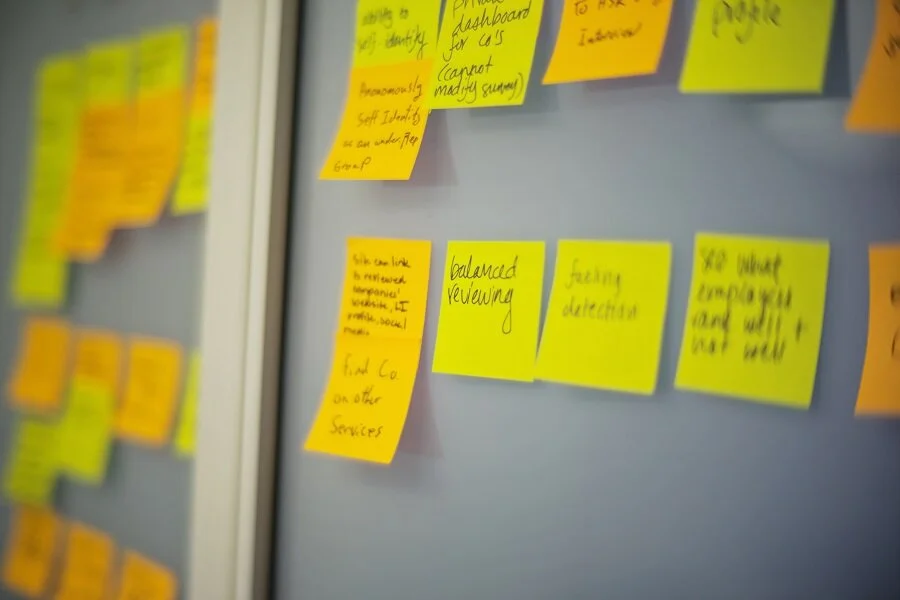
I knew I needed to change my approach to drive engagement and ownership to the team members. My first change was to use Post-It™ notes for gathering ideas from team members. Each team member would write their ideas, one per Post-It™, and then speak them, one at a time. In this way, everyone had an equal opportunity to voice their ideas, and they were written in a way that was meaningful to them.
I started to develop fun ways to share the ideas, with a focus on giving everyone equal opportunity to share their thoughts and minimizing the opportunity to dominate the conversation by stronger team members. I also noticed that Post-It™ Notes were the great equalizer. It didn’t matter what level in the organization a team member was. Their Post-It™ Note looked just like anyone else’s.
Once we uncovered all team ideas, I had to develop ways to prioritize them. There are many ways to do this, but the approach I settled on was multi-voting. Each team member gets an equal number of votes and is asked to pick their favorite ideas and place their vote on the ideas. As an example, there might be 100 unique ideas written on Post-Its™ and 10 team members. Each team member is given a vote to place on their 5 favorite ideas to work on and implement during the Kaizen event. The ideas with the most votes are the ones the team will work on. This technique works fast, but there seemed to be something missing. People told me that it was chaotic and there was something didn’t feel right about how things were prioritized. I knew I had to improve multi-voting.
Adding Process to Chaos
One event, I added criteria to the process of multi-voting to see if it would focus the group and help them feel more comfortable with the approach. I added these criteria to use when voting for a favorite idea:
1. It provides the biggest benefit to the customer and to us (related to the problem to be solved)
2. I actually want to do this (personal interest in the work)
3. We can accomplish and implement this during the Kaizen (fast implementation and low money spent)
Once I developed the criteria, the teams seemed more confident they were choosing the right ideas to work on. The criteria all but guaranteed people were interested in what they were doing, which would maximize the results, and the work would get completed quickly.
Pick Your Passion
Now that we knew the top priority work, we would assign team members to the work. I usually left this to the team leader. I noticed some team members didn’t like their assignments and I knew I had to come up with something better. That’s when inspiration hit me. What if I could help team members connect with the project they truly wanted to work on? One day, I decided to try something new. After prioritizing the top three projects to work on and writing them on a flip chart, I said, “First come, first served, put your name on the project you want to work on.” Immediately, two team members jumped out of their chairs in order to put their names on projects that were most meaningful to them. This was just the reaction I was hoping for. The connection between the team members and the work was strong. But, could I replicate this reaction?
It turns out, I have used the same approach throughout the world and it’s not unusual for some team members to jump out of their chairs to put their names on the projects that matter to them most. Not everyone does that, and it allows us to balance the teams to the projects. I learned to set the safety expectations prior to making my “First come, first served” statement.
I have used these facilitation techniques and many others to strengthen the engagement, empowerment and commitment of teams. In the end, I want them to win. I will continue to refine my approach to help them do that.
Overcoming Resistance to Change
Process Improvement Partners was brought in to help a consumer goods manufacturer cut their changeover time (the time it takes to switch tooling and equipment over from one product to another) in half. By doing so, they would be able to reduce inventory and improve process performance.
Process Improvement Partners was brought in to help a consumer goods manufacturer cut their changeover time (the time it takes to switch tooling and equipment over from one product to another) in half. By doing so, they would be able to reduce inventory and improve process performance.
The company has five different shifts operating 24 hours a day, 7 days a week. Each crew believed it had the best approach to changeovers, but the results didn’t show it. There was major variation between and within shifts and none of the crews were able to start up their lines consistently and effectively coming out of a changeover.
The Path to Improvement
Process Improvement Partners recommended a 4 ½ day changeover reduction event, or SMED (Single Minute Exchange of Die) Kaizen, using representation from each of the crews. By doing this, we could identify best practices across all of the crews and teach changeover reduction techniques to be shared once the Kaizen was over. The leadership team agreed, and we began preparations for this critical event.
Our leader, the Operations Manager for the production line, picked a team of “All Stars” to participate in the Kaizen. He felt their experience, creativity, and enthusiasm would lead us to a win.
This was the first changeover reduction Kaizen in the history of the plant, and the team was skeptical when we stated our objective: cut the existing changeover time in half, without increasing safety risk to the crew or quality risk to their customers. The team members assumed this meant they would have to rush around, with intense pressure to meet the new target time. The truth was using SMED techniques, we would be able to reduce enough waste in the existing changeover process to take significant time out and reduce safety and quality risk. Then, using the Wheel of Sustainability, we would be able to continue to get great results for years to come.
Turning Skepticism into Excitement
The first day of the Kaizen, we taught the four step SMED methodology (with a little spin from Process Improvement Partners):
1. Assess the current changeover and identify steps that must be done while the line is shut down (internal steps) and steps that are done while the line is still running (external steps)
2. Convert any internal steps to external steps
3. Streamline any remaining internal steps and then any external steps
4. Eliminate any adjustments and put in all aspects of the Wheel of Sustainability
For step one, we videotaped the changeover, did some motion analysis, and made numerous observations of waste. The team was excited to see opportunity they hadn’t realized existed. They never had stepped back and watched what was happening, as they always had to participate in the changeovers.
As we entered step two, the team prioritized the steps they thought could be converted from internal to external. Their creativity helped them invent and build a number of jigs and fixtures that allowed work to be done in preparation for the changeover, while the line was still running. By the morning of the third day, the team tested their efforts and found the time required to change the line over had already been reduced by 50%. They weren’t satisfied, there was much more they felt they could do.
For the rest of the third day and part of the fourth day, the team worked on improvements to streamline remaining internal steps, found ways to eliminate adjustments, and created visuals to help all team members do the changeover the same way every time. Now it was time to give the changes the ultimate test: let another crew try the new changeover procedure.
Working Through Opposition
Each team member was assigned a crew member who wasn’t on the team. They were assigned to review and teach them the new method and answer any questions or concerns. They were sent out onto the factory floor and had approximately 1 ½ hours to teach and discuss the new methods and approach one on one. After a while, one of the team members came into the meeting room and asked for my help. Her assigned crew member was not interested in participating in the test of our new changeover procedure. I came out on the floor to find out if I could help the situation.
The crew member, let’s call him Roy, was visibly upset, so I asked him what was bothering him. He started yelling at me, saying we hadn’t listened to him or anyone else on his crew, didn’t videotape their changeover, and generally didn’t care what they thought. I told him the team had representation from every crew and had done their best to use the best practices from each shift as we worked during the week. He was having none of it. I let him know that we needed to let someone other than the team try out the new method, so we could get feedback and make improvements to it, before locking in all of our changes. His anger grew. I knew I needed to do something extreme, or he would be lost and we wouldn’t learn what was needed to finalize our new procedure.
I asked, “Are you telling me you’re unwilling to try the new procedure?” Roy realized he was being asked if he was being insubordinate, which is a disciplined offense in most companies. He answered he was willing to try the new procedure, but just wanted to voice his protest about the lack on inclusion. I told him I respected his opinion and thanked him for his willingness to try the new approach.
Testing the New System
At 4:30 pm, we gathered all crew members to explain the new procedure, set the expectations for them to follow it to the letter, and would give them the opportunity to provide feedback once the changeover was complete. We would also pair a team member from the Kaizen team with each crew member, so they could be coached during the changeover, just in case they didn’t remember or understand the new steps or approach. All crew members affirmed their commitment to try the new procedure, and we started the new changeover at approximately 4:40 pm.
Three minutes into the changeover something didn’t look right. One of our Kaizen team members, let’s call her Julia, looked extremely uncomfortable. I took her a few feet away from her assigned crew member and asked her if her assigned crew member wasn’t following the new procedure. She nodded and I called the Kaizen team leader over, to talk about what was happening. He wasn’t happy and we agreed to stop the changeover immediately.
We gathered the crew back together, explained what was wrong, why it wasn’t ok to try their own procedure as we wouldn’t learn anything if they did. We then instructed them to put the line back to its original condition before the changeover. After that, we would start the changeover again. There was tension in the air.
At approximately 5:00 pm, we started the changeover for the second time. In two minutes, one of the Kaizen team members, let’s call him Jack, came over and informed me his assigned crew member wasn’t following the new procedure. We stopped the changeover again, gathered the crew, and in an impassioned way, did our best to convince them to try it the right way, or we would do this all night. Would things work out on the third try?
We started out third attempt at 5:10 pm and this time everyone followed the new procedure to the letter. You could see the tension fade away from the Kaizen team members. Now, something else was creeping in. The team had been working since 6:30 am and they were getting tired. 65 minutes later, the changeover was complete. Now it was time to bring the crew into the meeting room and get their feedback and reaction to the new procedure. I was wondering how Roy and his crew mates would respond to the new procedure and the two stoppages we imposed on them when they tried to go “rogue”.
A Surprising Conclusion
In the meeting room, I set up a flip chart and gathered all crew members around a table. I asked each of them to tell us, one at a time, what they thought, identifying out the things they liked and the things we could improve for them. As they spoke, I would write their comments on a flip chart for everyone to see.
Roy started out the feedback session by telling us he “loved” four very specific improvements the team had made. He also offered some constructive feedback on some simple things we could improve. Others had the opportunity to share their feedback, and all of them had positive and constructive things to say. I have to admit I was a bit shocked at the change in the tone in the room. I had figured the crew would save up all of their anger for the meeting room. Instead, they were appreciative for all of the Kaizen team’s efforts. They had realized our Kaizen team was doing their best for everyone in the crew, and the test proved it to them.
We thanked the crew and the Kaizen team, and sent everyone back to the line or home. There were many handshakes and high-fives before they left.
At the report out to leadership, the team remarked how important it was to get everyone’s input and also to test out new ideas with a group that wasn’t involved in the changes. It illustrated how difficult change can be, as most people tend to expect the worst and hope for the best. Since then, the line has been able to sustain the reduced changeover time and has many more believers in changeover reduction and Kaizen.
Owning Their Solution in the Weld Shop
I have conducted many workplace organization Kaizens (5S) over the years. The results have always been dramatic. All of the teams were made up of production operators or office workers, with some mechanics assisting the team. The production operators or office workers owned the areas needing organization and the mechanics were able to do some of the more complex tasks needed during the Kaizen. All of the teams, that is, until I met my Weld Shop team. Five mechanics and an engineer, who underestimated what we could accomplish.
I have conducted many workplace organization Kaizens (5S) over the years. The results have always been dramatic. All of the teams were made up of production operators or office workers, with some mechanics assisting the team. The production operators or office workers owned the areas needing organization and the mechanics were able to do some of the more complex tasks needed during the Kaizen. All of the teams, that is, until I met my Weld Shop team. Five mechanics and an engineer, who underestimated what we could accomplish.
Let me tell you about a typical mechanic on a Kaizen team. He or she is there to support the team, but not usually vested in the improvement process. Most of the time, they participate in the Kaizen and do great work, but sometimes they aren’t interested in being there, and would rather be doing their “normal” job. Facilitating a Kaizen with a team where some of the members were this way was not new for me, but having the entire team this way was. The good news was the area we were going to be working on would directly impact their safety and productivity. The better news was they had a supervisor, acting as the team leader, who was extremely excited about the possibility of improving the weld shop. And the best news was I could leverage their pride and competitive nature to turn their existing Weld Shop into a show place for all the world to see. Only if I could get them to own the improvements, of course.
When I run a 5S Kaizen, I do it step by step. On the first day of the Kaizen, after training the team in all of the S’s, we took a walk in the space we were going to organize. I asked the team to identify things we could remove first – the clutter. This is the first S. I asked many questions and they identified the items to be removed while I took photos. Then, after removing all of the clutter, we decided on the best locations for anything remaining in the space. We did this in an organized fashion and I had team members demonstrate how each new location would be safer and more productive than the old location. This is the second S – Set in Order. Following this, we made sure that everything left in the shop was in the best possible shape. We did this by cleaning and inspecting all tools, equipment, materials, and storage spaces. If we found something in disrepair, we either fixed it or replaced it. We relied on everything in the area to work, so we took great care. This is the third S – Shine.
The first three S’s, Sort, Set in Order, and Shine, are the most physical, dramatic, and fun parts of the Kaizen. By the time we got to the fourth and fifth S, the team was extremely energized and the area looked dramatically different from where we started. Here’s an example: Before we started the Kaizen, you had to enter the Weld Shop and walk about 30 feet to turn on the lights. To get to the light switch, you had to navigate in the dark through all of the clutter in the hopes of finding the switch without running into something. In some of the initial “before” photos, you couldn’t tell there was a light switch on the wall at all. During the evening of the second day of the Kaizen, we relocated the light switch to the entrance of the Weld Shop, on an outside wall. Lights could now be turned on before entering the shop, eliminating the safety risk of navigating in the dark to the switch.
The fourth S is Standardize. For this step, the team was tasked to create a managing system to ensure the improvements they made would continue to live on, be supported and requirements followed by everyone using Weld Shop in the future. This was not a physical exercise. It was a mental and paper exercise. Teams typically create checklists, sign-off sheets, signs, and audits that must be followed by anyone using the area. To mechanics, this is “paperwork”, and although it has more than four letters, it might as well be a four-letter word. This is the last thing they wanted to work on, and I knew that. I also knew that this was the most important step, as their improvements would deteriorate back to the “before” condition if not done properly and completely. The real trick would be for the team to own their solution and not just go through the motions. I had a plan, but it was risky. I needed to facilitate an emotional event, so the team would create and own their managing system.
On the morning of the third day of the Kaizen, after congratulating the team on the improvements of the first two days, I explained this would be “Standardize and Sustain Day”. They looked at me with grumpy faces as I showed them examples of checklists and audits other teams had developed. They were not impressed, to say the least. In fact, they didn’t believe simple pieces of paper would keep people from messing up all of their good work. I showed them examples of how teams made these documents visible and established responsibility all the way up to plant leadership. They were still not buying it. I needed to push them further.
I showed a slide of a checklist, going line by line over each requirement. I could see the discomfort and frustration in their faces. I was on line eight of the checklist when one of the mechanics, whose face was beet red said, “Adam, we’ve had enough of your paperwork. We’re going to the smoke shack. You can’t come with us. We’ll figure it out and then we’ll tell you what we’re going to do.” All of the team members stormed off and left me in the meeting room by myself. I had facilitated the significant emotional event. I didn’t really know if they would ever come back, and if they did, what would they come back with?
It felt like two hours, but it was only twenty minutes when all of the team members returned to the meeting room. They looked pretty proud of themselves as one of them declared, “Adam, we’re going to tell you what we’re going to do. We’ll talk and you type.” They listed eleven things they wanted on “their” checklist. They were similar to what I had presented, but it was in their words and it was their ideas, and that’s all that mattered. I thanked them for coming up with such a well-thought out checklist and then challenged them to develop the system to ensure everyone would use it properly and not “pencil-whip” it. This is the fifth S, Sustain. Enthusiastic and full of pride, the team developed a visual Area Owner board, with all of the required documents easy to find and to use. Then they set up daily and weekly requirements for the area users, the Area Owner, and members of the plant leadership team.
On the final day of the Kaizen, the team shared their results with the plant leadership team and some executives visiting from their corporate office. It’s not unusual for mechanics to shy away from presenting in front of an audience. In this case, all team members spoke from their hearts and explained how important it would be to support and sustain all of their good work, which was improving safety and productivity for them and the rest of the plant. They even asked the executives to hold the team and plant leadership accountable to keep this good thing going and spread this effort to other areas of the plant.
After the presentation was over, I spent a few minutes with the team, getting their final thoughts about the Kaizen. Happy with the results and most aspects of the Kaizen, they told me they wished I had been more assertive with them during the week. We laughed as I told them I wasn’t sure they were coming back to the meeting room after storming out on Standardize and Sustain Day. They told me it was just the motivation they needed to get to their solution.

Sometimes It’s a Financial Question
A global ceilings manufacturer was building a plant in China. Things were going pretty well until they realized they were going to be two months late starting up. The team wasn’t sure what they could do to get back on schedule, so I was invited to join them and use Lean thinking to help solve the problem.
A global ceilings manufacturer was building a plant in China. Things were going pretty well until they realized they were going to be two months late starting up. The team wasn’t sure what they could do to get back on schedule, so I was invited to join them and use Lean thinking to help solve the problem.
I had been to China before, helping the team with Kaizens during different stages of plant development. These Kaizens were more challenging than most, as they required an interpreter, so the team and I would understand each other. As a result, I had to communicate more slowly than I was used to, making sure I didn’t use any slang or other terms unfamiliar to Chinese team members.
As I boarded my flight to meet them, I wondered what I could do to help the team. After all, they had been working and solving problems as they came up all along the way. They had their best engineers and scientists on the team who had come up with many breakthroughs. Why couldn’t they solve this problem? Why was this problem stumping them to the point they required my help? I always sleep well on airplanes, but during this 15-hour flight to China, I was more restless than usual.
I met my interpreter on Monday and we reviewed the approach for the Kaizen. I would help the team look at their problem from many angles, trying to uncover opportunities they hadn’t thought of and brainstorm as many potential solutions as possible. My interpreter reminded me in the Chinese culture, people don’t like to make a suggestion or offer an idea unless they are completely sure it is correct. In a Kaizen we want people to bring out ideas that aren’t fully formed or guaranteed to work, so others can build from them. I knew I had to make the team comfortable to say anything at any time. To do that, I would use sticky notes and pens and ask all team members to write their ideas down and share them, one person at a time, one idea at a time. This technique tends to make people comfortable saying whatever they are thinking, regardless of the country or culture.
The goal of our Kaizen was to have the plant start up on time. Our objective was to develop contingency plans to take two months out of the schedule and meet the initial commitments to the Board of Directors and the customers in China. I knew very little about why the plant wasn’t on schedule, so I had the team brainstorm possible reasons why they were behind schedule. Using the sticky note technique, more than 100 ideas were written down, some in Chinese, some in English. Knowing we couldn’t solve all 100, I asked the team to prioritize the most critical reasons for the delay. I used a technique called “multi-voting”. Each team member placed a dot or a mark on the sticky notes that contained the top five ideas or reasons for the delay from their perspective. The sticky note with the most dots was the idea the team felt was the most likely reason for the delay.
There were 15 team members and 14 dots on a sticky note that said, “Two month wait for government testing.” Intrigued, I asked for an explanation. They told me the Chinese government must qualify and approve the first ceiling tile produced by the plant before they were allowed to produce more and sell to customers. It took two months from the time a test was requested to the time a tile could be submitted for testing, and then another week to get results. The team wouldn’t produce tiles that weren’t officially approved, so they were going to wait those two months for approval before starting full production. The plant had scheduled production of the first acceptable tile around April 1st, 15 days before the original start-up date commitment, and then would have to wait two more months before gaining approval to produce tiles for sale, thus creating a two-month delay. It was then I knew there was an answer, but the team had to come to the right conclusion. It was time to ask some questions and facilitate them to an answer.
Question one was, “How much does it cost to submit a tile for a test with the Chinese government?” The answer was $10,000.
Question two was, “How long does it take from the time a test is requested until test results or approval is given?” The answer was two months.
Question three was, “When do you believe you will be able to produce tiles?” The answer was around April 1st.
Question four was, “What is the cost of the plant starting up after April 15?” The answer was $60,000 per day, as defined in the original project investment request.
Question five was, “Do you currently believe that the tiles you will produce on or about April 1st will meet the Chinese government requirements?” The answer through internal testing and quality control was “highly probable”.
Question six was, “Are you willing to risk $10,000 by submitting a test request to the government two months in advance of producing your first production tile, in order to save $60,000 per day for the next two months?”
At that point, the team knew what it had to do. The rest of the Kaizen was spent developing plans to ensure a successful test by the Chinese government on April 1, two weeks ahead of schedule. In the end, the plant started up on March 28, and the team saved over $2.5 million for the company. The lesson here is that when you frame a problem on a financial or factual level, rather than an emotional level, the answer becomes obvious.
Breaking Through - The Edge
In 2005, I was asked to help a team reduce the changeover time of a painting operation at a ceiling tile manufacturing plant in Oregon. The approach I used was SMED – Single Minute Exchange of Die. The goal was to reduce the existing changeover time by 50% or more, while improving the safety of the work.
In 2005, I was asked to help a team reduce the changeover time of a painting operation at a ceiling tile manufacturing plant in Oregon. The approach I used was SMED – Single Minute Exchange of Die. The goal was to reduce the existing changeover time by 50% or more, while improving the safety of the work.
After training the team, we took a walk on the factory floor to observe a changeover in progress and see if we could generate any improvement ideas. As with most SMED events, we saw a ton of improvement opportunities related to the existing changeover and the team was excited they would be able to help everyone in the process.
Towards the end of the walk, we stopped at the quality testing station and saw something that didn’t look right to us. The Quality Technician was using a box knife to cut four 2-foot edges of the ceiling tile off by hand. It looked difficult, unsafe, and extremely inefficient. When we asked her more about it, she told us she was required to measure the color of the face and edges of the ceiling tiles. The only way to get the colorimeter to read the edge of the ceiling tile was to make these cuts, allowing the tester to be placed directly on the edges. She also told us it made her wrists hurt. On a break, I verified with plant leadership they were also very concerned about this requirement. It was their number one safety concern in the facility and a number of engineers had studied the issue with no practical solution.
Following the walk, the team went back to their meeting room and listed all of the improvement ideas they had. They then prioritized the ones they wanted to work on to reduce changeover time. During the next two days, many of the highest priority ideas were implemented and the team was extremely excited about the improvements they were able to make.
At a break, a mechanic on the team came up to me and asked if it would be ok for him to work on something outside of the prioritized list of improvements the team had identified. I could tell something was bothering him, so I asked him to tell me more about what he was thinking. “Adam, I can’t get that edge cutting process out of my mind. It’s not right that we are putting our people at risk. I think I have a solution, and if you give me an hour to work on it, I can come right back to the team to help out with the other efforts.”
Kaizen is a team sport, and the team needs to be aligned around what everyone is doing. I asked the team what they thought. They enthusiastically supported the mechanic’s efforts. So much so that one of the operators volunteered to help him work on his idea. We couldn’t wait to see what they would come up with.
About an hour and half later, both team members came back with grins a mile wide. They brought a contraption that looked like a standard vise with a two-foot wide angle iron attached to each jaw. Curious, we stopped our other work to watch a demonstration of their invention. They put a 2-foot ceiling tile into the vise vertically, with the edge of the tile in the jaws and closed the vise carefully. Then, with a swift tap, the ceiling tile broke off cleanly at the edge, across the entire 2-foot length. We were stunned. One of our team members stepped up and tried the next of the four edges, and it broke off just as cleanly. One by one, we all tried it and saw how quick and easy it was to break off the edges. Now, we gave it the ultimate test – we brought it to the Quality Technician and showed her how to use it. She easily broke off the edge and immediately gave the mechanic a hug in a show of gratitude. It was probably the only hug the mechanic ever got at the plant!
We were so proud, but knew we had to finish our other work and gain alignment from plant leadership that our new method would meet the quality testing requirements. During the rest of the Kaizen, we implemented as many of our improvement ideas as possible, then created an overall changeover procedure that we verified, practiced, and used to train the rest of the operators on the line. The changeover time had been reduced significantly, but we wouldn’t feel like we had won until we implemented the new edge breaking process. So, we decided to build a final report to win over the plant leadership.
We invited plant leadership to see the new changeover procedure, which the team demonstrated for them. Some of the leadership team even participated, to see for themselves how much easier and safer it had become. They were extremely pleased, but we had saved the best for last.
Our creative mechanic invited the Quality Technician to join him in front of the group of plant leaders. Then, another team member brought out the vise and handed a ceiling tile to the Quality Technician. She put it in the vise, gave it a tap, and the edge broke right off, as clean as could be. In my life, I have never seen a collective group of people’s jaws drop at the same time, but it happened right then. After they got over their initial shock, the Operations Manager said, “Let me try that.” He did, and got the same result.
Everyone wanted a turn, and when it was over, the Safety Manager said, “This has been our number one safety risk. We have spent over 6 months trying to solve it the conventional way and haven’t been able to do so. Your team worked together and solved it so quickly. We need more teams to help us solve our problems in this way. Thank you!” Then, she gave the mechanic the second hug he had ever received in the plant. After blushing, he admitted to the group that in all of his years working at the plant, he had never done anything as impactful as this. He also reminded everyone that this was a prototype, so there may be an improved way of doing the work. Many years later, the original vise was being used in the plant without a complaint.

How to Use Kaizen to Ensure Teams are Invested in Process Improvements
In 2005, I was helping a team improve the safety and productivity of their operating line. During a 4-day span, each of the team members was able to try and implement many different ideas that arose from their creativity.
In 2005, I was helping a team improve the safety and productivity of their operating line. During a 4-day span, each of the team members was able to try and implement many different ideas that arose from their creativity. At first, they didn’t believe that they would be allowed to make changes to the operating line, but after each successive attempt, they grew more and more confident, and the energy, enthusiasm and momentum grew. At the end of the 4 days, each of the team members reflected on their experience. One of the team members was a gruff mechanic who had been skeptical at the beginning of the session. He stood up with tears in his eyes and stated that this had been the most meaningful and impactful experience of his working life. I knew right then that I wanted to bring this joy to as many people as possible.
Kaizen brings people together to solve problems in their area of concern. They have the most understanding, experience, and vested interest in the effort. They also reap the benefits of the improvements moving forward. Kaizen asks us to make things better, not perfect, and go rapidly, without investing anything but the time and energy of the people making the changes. There may be some minimal cost, but because things are going so fast, a significant financial investment isn’t likely. Using the speed of Kaizen and the creativity of the team, I developed 3 approaches to drive the deep and emotional connection to improvement that I was seeking.
1. Idea Gathering and Sharing with Sticky Notes
Each team member takes a pad of sticky notes with them as they tour the area of concern. With guided questioning, the team members write down their personal observations or ideas that come to mind while touring. It is quick, personal, and drives ownership and accountability to come up with ideas for the benefit of the team and the people in the area. I ask each team member to write down one idea per sticky note, so that nothing gets missed and it’s easier to organize ideas as a team once we have reconvened. In the meeting room, I have the team members share all of their ideas, one person at a time, one idea at a time. Each idea is placed on a flip chart or on a wall for everyone to see. If there are 15 team members, I have each person share one idea until the team has heard 15 separate ideas. Then I give them a chance to share their second idea, third idea, and so on, until the team has run out of ideas. This creates an atmosphere where everyone has equal voice, regardless of position, experience, or pay grade.
2. Prioritization with Criteria
Once the ideas have all been shared and posted, the team may choose to group similar ideas together. This gives them the chance to see all of the ideas and remove any redundancy. Following this, each team member is asked to pick his or her top ideas using these criteria:
a. Provides the biggest benefit to our team and our customers
b. I personally want to do this
c. We can do this during the allotted time of the event
Everyone is given an equal number of votes (usually between 3 and 5), so no team member can dominate the conversation or the voting. These criteria are interpreted differently by each team member, but in the end, this approach creates a list of the team’s top priorities. This approach generally takes no more than 10 – 15 minutes.
3. Pick Your Project
We now have a list of things to work on, prioritized by the amount of votes the team has placed on them. I then list the top 3 or 4 projects on a flip chart, depending on the size of the team. Now it becomes personal, as I tell the team, “First come, first served. Place your name on the project you want to work on.” More than a few times, team members rush to the flip chart to put their names on a project. They want to ensure they get the project that matters to them the most. This may sound risky, as a project may not get claimed. I have never seen this happen. Team members have different interests and you can’t always guess what they are, so I have stopped doing that. Also, if there aren’t enough team members on a project, I ask if there’s anyone willing to swap projects. Often, there are a few team members who don’t have a real preference, so they are happy to change projects.
Now that we have personally observed and shared issues, picked our projects, and assigned the work to the people who want to do it the most, we have the foundation for the deep personal connection to the improvements that we seek. Sometimes a team member will find it moving enough to convince others to get involved in future efforts and find the same joy that they did.