
Kaizen Success Stories
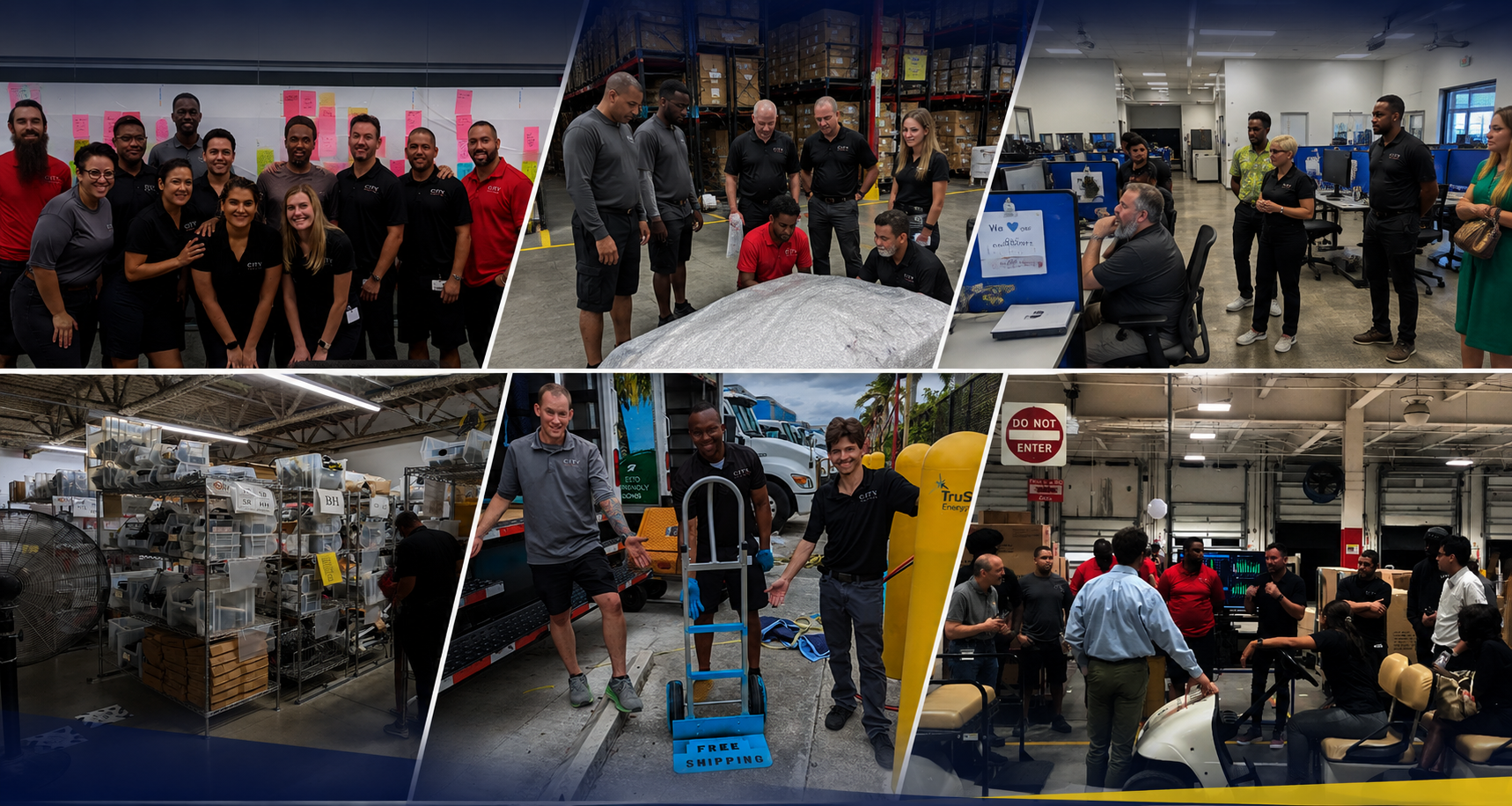
Real Manufacturing Results. One Kaizen at a Time
Explore real-world Kaizen success stories showing how manufacturing teams solved critical problems, improved performance, and created sustainable results.
Improving Safety from the Perspective of our Customers
Armstrong World Industries has a strong safety culture and is relentless in driving to zero injuries globally. Early on in the journey to zero, our factories focused on compliance, holding people accountable to wear their safety glasses, safety shoes, and follow various protocols. That took safety to a certain level, but the company performance plateaued. How could we get to the next level of leadership?
Armstrong World Industries has a strong safety culture and is relentless in driving to zero injuries globally. Early on in the journey to zero, our factories focused on compliance, holding people accountable to wear their safety glasses, safety shoes, and follow various protocols. That took safety to a certain level, but the company performance plateaued. How could we get to the next level of leadership?
The St. Helens Oregon ceiling tile plant decided to be the pilot location for behavioral based safety. In this approach, leaders demonstrated their commitment to safety by directly participating in the safety process on a continual basis. They would always talk about and demonstrate their commitment to safety through their words and actions. The plant’s safety performance improved dramatically, and the rest of the company adopted behavioral-based safety at all of the manufacturing and corporate locations.
Over the next few years, the number of global injuries was reduced by a factor of ten. While this sounds like a great improvement (it was), we still weren’t at zero, so the effort could never be reduced. I was offered the opportunity to become the production manager at St. Helens and jumped at the chance. Not only were they known for their safety approach, but also the team-based atmosphere at the plant. I had participated in many teams and projects at St. Helens prior to taking the position, so I knew firsthand what it would be like to work there. I knew I would learn a lot, while bringing my organizational skills and performance focus to the plant.
I spent many hours on the floor, getting to know the people, the processes, their approach to safety, and how I could affect performance in a positive way. One thing I quickly noticed was how everyone seemed to genuinely care about each other’s safety. I felt like a newbie, awkward in my safety conversations. The whole team was lightyears ahead of my safety understanding.
One day, I was talking to Olivia, the plant manager, about my novice level approach to safety. She told me, “Adam, you need to drop any titles and preconceived notions you have about any of your team. When you are coaching them around safety, you are equals, trying to help each other stay safe.”
That made so much sense and I wondered how she knew this was the essence of my problem. I guess they didn’t make her plant manager for nothing! I thought about it and came up with changes to my safety approach I thought would make a real difference for my team members.
I decided to be more purposeful in my interactions while on the factory floor. I wanted to find something to discuss with each team member about safety to help strengthen both our understanding and commitment to safety. I started using “Show me” questions. Here’s an example: “Show me the most critical safety risk you believe you’ll face today.” When the team member presented their issue(s), we could both engage and learn about it and even come up ways to reduce the risk. Sometimes, we could make physical changes to prevent the risk. Other times, it was just the discussion that strengthened our resolve to protect ourselves and others.
This approach to safety has helped me in all my employee interactions. Always be purposeful when working with someone, even if you just want to know about their day or their family. You can always learn something and reinforce critical information to help their efforts and lives.

Building Their Future
A leading global building products company reached out for assistance with a strategy session. When I spoke with Vince, the sponsor/team leader, I listened to his pain points and suggested facilitating a Value Stream Mapping (VSM) session for his team. He told me VSM wasn’t how he wanted to proceed. Even though I thought it would be the best approach, I listened to his concerns and modified my approach for his needs. I’m glad I did.
A leading global building products company reached out for assistance with a strategy session. When I spoke with Vince, the sponsor/team leader, I listened to his pain points and suggested facilitating a Value Stream Mapping (VSM) session for his team. He told me VSM wasn’t how he wanted to proceed. Even though I thought it would be the best approach, I listened to his concerns and modified my approach for his needs. I’m glad I did.
In the weeks leading up to the event, we strengthened our alignment on approach and expected outcomes and Vince engaged his team in preparation for this critical event. You see, they were intending to build their roadmap for the next 3 to 5 years. This could be worth millions of dollars and significant market share growth. We had to do it right.
The session was to begin on Tuesday, so I flew in and met Vince at the airport on Monday morning. We spent the first part of the day touring their local manufacturing facility. During the tour, I identified many improvement opportunities I thought might tie into the strategy session. Vince was intrigued by some of my ideas, including reliability and changeover improvements.
On Monday afternoon, we set up the meeting room and met some team members. We continued to talk about the upcoming session and some of the ideas from the plant tour. In the evening, we continued the conversation and alignment over dinner.
On Tuesday morning, we kicked off the session with a Voice of the Customer review. We then developed aspirational statements for the business. We would use these to help us design our strategy around for critical categories: safety, employee experience, customer experience, and manufacturing cost structure. The statements were impactful and compelling and inspired the team members.
Next, team members identified pain points and gaps in their current process keeping them from achieving their aspirational vision. Afterwards, they brainstormed actions and projects to eliminate those pain points and gaps. Many ideas were generated, including some thoughts around reliability and changeover reduction. We filled the walls with ideas. The room looked like a Post-it tornado had come through.
The team prioritized their many ideas down to the vital few they could develop and implement in the next three to five years. Reliability and changeover reduction made the cut. Following this, they created concept sheets to describe the critical work to achieve their future. After reviewing and aligning around most of them (2 were eliminated), they built a road map for the work on the one remaining wall in the room that wasn’t covered in Post-its.
As with many road mapping exercises, the team saw they had front-loaded the work in the most recent quarter and year, and some people were overloaded. This isn’t unusual and that’s why I like to make this process visual. They rearranged the work, and it looked more manageable.
Satisfied, the team felt they had built a compelling future they could stand behind. Proud of their work, they decided to keep everything on the walls for a corporate leadership review to be held the following week.
During the report out, they talked about their experience and how the visualization helped them align around a future they could be proud of. They also mentioned how they were able to focus and accomplish in one week what typically would take months to do.
Following the session, I was asked to support their reliability and changeover reduction efforts. I am looking forward to helping them achieve their vision.

A Brilliant Invention
In my early corporate days at Thomasville Furniture, I was given the opportunity to try many things to improve the performance and quality of the operation. This story isn’t about me, but another engineer, who came up with something so creative, he saved the company millions of dollars and improved quality of the product for our customers.
In my early corporate days at Thomasville Furniture, I was given the opportunity to try many things to improve the performance and quality of the operation. This story isn’t about me, but another engineer, who came up with something so creative, he saved the company millions of dollars and improved quality of the product for our customers.
We used many types of wood to create the fancy veneer tops of tables, cabinets, drawer fronts, and other parts of the furniture. The most expensive wood we used was burled walnut. It’s wood that has many swirls in it and multiple knots. Because of this, it’s prone to damage easily, and much of it has defects and cracks.
Some of the cracks could be “filled” using tape. This tape, when applied, would add moisture to the wood, causing it to grow and actually join one cracked side with another. After gluing and pressing onto a wooden core, the tape was sanded off and most of the time, the crack would be invisible to the eye.
Some of the defects couldn’t be repaired using tape. Because of this, full sections of the burled walnut veneer would have to be removed, leaving very little usable material. Our yield numbers were quite low, and even though we were making money on furniture with burled walnut veneer, we knew there was huge opportunity to reduce scrap and improve our profitability.
Jack, a mechanical engineer, thought there might be an answer, based on our ability to bring cracks together with tape and moisture. He wondered what would happen if defects could be cut out and replaced with non-defective material, and taped in place before pressing. Some of the operators were using this technique by hand with mixed results.
Jack realized doing this by hand was challenging, as the cut-out defect had to be the same size as the replacement material. Our most experienced operators could get pretty close, but less-experienced operators weren’t successful.
Jack built a small punch press in our maintenance shop and then tried different shaped punches to see if the defects could be hidden with tape and pressing. He started with a few basic shapes: square, rectangle, and circle. These shapes could cut out the defect cleanly and then create the replacement of the same size. When the new material was applied, taped, pressed, and sanded, you could “see” the line between the insert and the original hole. We weren’t sure why, but Jack had an idea. What if he created a random shape the naked eye wasn’t used to?
After a number of experiments, he came up with a shape that looked like a bumpy potato. We had all sorts of funny names for it, some I can repeat, others I can’t. My favorite was the “Doody Punch”! We stopped making fun of his idea when he showed us the results and challenged us to find the original defect. We couldn’t!
After showing his invention to the quality control director and other leadership, he got approval to implement his solution in the veneer plant. He created a variety of sizes for the Doody Punch and from then on, we were able to salvage almost every square inch of burled walnut veneer. Jack went on to invent many more devices and solutions for our manufacturing operations. This is the one that inspired me the most in my early problem-solving efforts.

Aligned Area Owners are the glue that holds things together – Part 1
I took a site visit to a new client that runs a paper mill in Oklahoma. After a full day of meeting the leadership team and touring the factory, we agreed to a series of Kaizen events, starting with two 5S events, one in the paper mill building, and the other one in the converting building. Talk about night and day! Here’s the first story about what happens when the area owner wasn’t aligned. (And to learn about the experience when the area owner is aligned, be sure to read Part II.)
I took a site visit to a new client that runs a paper mill in Oklahoma. After a full day of meeting the leadership team and touring the factory, we agreed to a series of Kaizen events, starting with two 5S events, one in the paper mill building, and the other one in the converting building. Talk about night and day! Here’s the first story about what happens when the area owner wasn’t aligned. (And to learn about the experience when the area owner is aligned, be sure to read Part II.)
I should have seen the warning signs. In the weeks leading up to the first Kaizen event, Joe, my team leader, and Frank, my sponsor, spoke about how they originally wanted Julie, responsible for the area, to be team leader. She wasn’t on board with the idea of leading the event, or even working to improve the productivity and safety of her storage and supply areas. She was going to be on the team, but it didn’t sound like something she wanted to do. I advised Joe to try to bring her on board willingly, as this event would directly impact the work she did in a positive way. We had two team members from the other side of the plant who would be involved in the following month’s Kaizen event.
On the first day, it was immediately apparent Julie didn’t want to be there. She was the resource the maintenance technicians relied on to acquire supplies for their work orders. Julie was very guarded when she spoke and said little, unless called on directly (which happened a few times). When we took our Gemba walk, every space looked like a tornado hit, including Julie’s office. Our measure for success was equipment find and retrieval time. Our goal was to cut it by 75% or more. I knew it should be an easy win. Except for Julie’s continued negative comments and lack of enthusiasm for the work. Her toxic attitude was impacting other team members. I spoke with Joe at an early break, just to stay aligned. Julie worked for him, so he was aware of her general attitude at work.
Once we started sorting through tons of equipment and supplies, the team became engaged and was having fun. We removed more than 50% of large and small items throughout three critical spaces. Now it became easy to organize things in a way that made finding items quick and safe. We were able to take everything off of the floor, so access to shelves didn’t require the movement of items out of the way to get to what was needed.
At the afternoon break on the first day, Julie made a negative comment about the work we were doing. I talked with Joe and asked him to speak with her to understand what was behind her comment. He rolled his eyes, but agreed to talk with her. When he returned from the conversation, he tried to shake off her comment as if she was concerned our efforts wouldn’t be sustained.
As the week progressed, Julie’s negative comments were more frequent, and other team members were affected by her negative vibe. On the evening of the second day, I spoke with our overall sponsor, the plant manager, to make him aware and also to understand what could be going on with Julie. After all, the space now looked fantastic and the rest of the team was excited about the changes they made. He said he’d keep an eye on things and speak with her directly, if needed. He even spent a few hours helping the team out cleaning up the areas. This was true leadership commitment.
On the third day, something set Julie off, and she stormed out of the meeting room. She felt the need to speak with the plant manager. He reminded her of how critical it was for her to participate and support the work of the team. It was directly beneficial for her job and the jobs of those she supported. She came back to the team in a slightly better frame of mind.
The rest of the week went well, but things went sideways when it came time to put the Area Owner board together. Julie didn’t want to be the official owner, but we didn’t let that stop us. Joe knew it had to be her, in order for our work to be sustained. So, we mounted the board, daily audit, weekly audit and tracking, and Julie’s photo and contact details on the board and did an initial assessment of the space. We also timed six random individuals to find and retrieve materials and supplies in the space. We easily beat our Kaizen objectives and the team was excited. Everyone, that is, except Julie.
At the report out, it wasn’t surprising that Julie didn’t participate by presenting part of the team’s story. She sat in the audience quietly and didn’t even make eye contact with any of the presenters, who were telling a very positive, winning story.
At the wrap up with Joe and Frank, we reviewed the great efforts and results by the team, in spite of Julie’s toxic behavior. We were hopeful she’dcome around, once she realized this effort was directly going to help her daily work. But we also knew there would be extra effort to support this first 5S space and keep things moving forward.
I left the plant feeling conflicted. On one hand, we had a strong win and team members were inspired to take this work forward to other locations. On the other hand, we had an owner who didn’t demonstrate the leadership behavior required.
I believe Julie felt exposed. In the past, she was the “go-to” person for any needs from the maintenance organization. Now, they would be more self-sufficient and not need her as much. Continuing to act and feel the way she did and does (2 months later), the system won’t be sustained without intervention or the introduction of a new Area Owner.

Zigging and Zagging Along the Way
I developed a Kaizen facilitator training program for CITY Furniture. Once I realized I could train others in facilitation techniques I had developed over many years of experience, I decided to share the program with my network.
I developed a Kaizen facilitator training program for CITY Furniture. Once I realized I could train others in facilitation techniques I had developed over many years of experience, I decided to share the program with my network.
The program contains experiential learning topics covering my top facilitation principles, facilitation practices, Chartering to Win, the Wheel of Sustainability, and other topics I utilize to ensure Kaizen teams have a sustainable, winning experience. I reviewed this with a potential client who was extremely interested.
One month later, with a purchase order in hand, I modified the program to meet some specific needs, as defined in a series of meetings leading up to the training. We even developed a charter for the training, making sure it aligned with the leadership vision of the company.
Although I had previously trained 4 high-potential candidates with CITY Furniture, I was confident I could offer the training to a class of up to 8 participants. In order to give everyone the opportunity to participate in all training exercises, I recommended we expand the course from 2 ½ days to 3 ½ days.
On the first day, I covered critical foundational topics, such as:
· The separate roles of facilitator, team leader, and team sponsor.
· My top 12 facilitation principles
· Top facilitation techniques with exercises for all participants
I was hoping to cover prioritization techniques, but realized things shouldn’t be rushed, so I moved it to the following day. The team was asked to provide feedback on how the day went and while most was positive, there was some discussion about other topics to cover, including a demonstration of a facilitated Gemba Walk.
I reviewed the feedback with my sponsor and he agreed the team needed a Gemba walk demonstration to help them understand the role of the facilitator during this critical Kaizen exercise. I agreed and had to determine which other topics might have to be shortened or removed. Luckily, the extra day built into the training gave me some flexibility.
On day 2, we began by discussing chartering. We had eight real Kaizen events, with sponsors waiting “on-call” for chartering discussions with the trainees. This was to occur between 10:15 and 11:30 am. At 10:30, facilitators met in-person and virtually with their sponsors and worked on charters for upcoming Kaizen events. This made the training real and compelling. All participants learned how critical it was to properly charter their upcoming events and that getting their sponsors to be clear, concise, and aligned wasn’t as easy as it appears to be.
I scheduled the facilitated Gemba walk after lunch. The trainees were given an assignment to identify improvement opportunities on a production line, while I facilitated them to stay on task and engage with the technicians working on the line. After 45 minutes, I brought them back into the meeting room to demonstrate idea gathering and prioritization, which had been delayed from the prior day.
Once this exercise was completed, I had time for one more critical topic, even though the agenda had two in the plan. I chose the one that would be easiest to retain, as it was extremely interactive.
At the end of the day, the feedback was once again mostly positive, with appreciation for the addition of the Gemba walk. There were still thoughts about topics that weren’t included in the agenda. I had to determine how to deal with those. My decision was to utilize any remaining time on the third day for “Bonus Topics” that hadn’t been covered and would be chosen by the trainees.
Day 3 went smoothly and allowed two hours for “Bonus Topics.” I was even able to get the trainees to practice the brainstorming and prioritizing techniques to choose the topics. We covered everything on the list and still had a few minutes to spare. With that, I let the team share their feedback again and then adjourn early. They were exhausted and so was I.
The feedback was very appreciative of the bonus topics and there was still concern about other things we weren’t able to cover. I realized no matter how many topics we covered, there would still be something someone wanted or needed. I had to use my best judgement around what would give them the best foundation for their next steps as Kaizen facilitators.
On day 4, we practiced a panel-discussion report out and when it was delivered to our audience, was extremely well received.
I got so much valuable feedback from the participants and sponsors that I am sure the next version will be even better. But I will also leave some time for adjusting based on the feedback of the next training class. I know it’s more important to meet their specific needs than just cover topics I think are the most important.

My First True Gemba Walk
I started my career as an industrial engineer for Thomasville Furniture in North Carolina. My initial responsibilities included warehouse barcoding support and veneer plant projects. For the warehouse, I had to learn how barcodes were used to inventory, ship, and receive finished furniture from the various plants in the network. In the veneer plant, I was to conduct time and work studies and also identify improvement projects.
I started my career as an industrial engineer for Thomasville Furniture in North Carolina. My initial responsibilities included warehouse barcoding support and veneer plant projects. For the warehouse, I had to learn how barcodes were used to inventory, ship, and receive finished furniture from the various plants in the network. In the veneer plant, I was to conduct time and work studies and also identify improvement projects.
Time and work studies consisted of walking around with a stopwatch and a clip board and verifying a number of things: how long it takes to complete a task, how often people were working and how often they were not working. I was told to take a random tour of the plant daily and spend no more than 30 minutes conducting my studies. Holding the clip board and stopwatch can be viewed in a negative light by those you are timing and studying. I was getting some challenging comments when I walked around the plant to do my work.
I realized people at the plant didn’t understand what I was doing, and that it wasn’t designed to hurt them personally. I was helping the company determine capacity and plan appropriately for seasonal changes in demand.
One morning, I asked my manager if I could take more time during my time and work studies to better understand what I was measuring and to get to know the employees better. He agreed and I happily set out to visit the veneer plant.
I started in the matching department. This is where sliced wood with similar wood grain patterns is taped to another piece of sliced wood, to make a desired visual effect. As I started my study , one of the workers made a personal comment about me. I swallowed my pride and walked up to her and introduced myself. This caught her off guard. I then explained to her what I was doing. She told me no one had ever explained time and work studies to her. She assumed I was an “investor” and was trying to decide whether or not to buy the plant and shut it down.
I assured her I was there to do a job just like her and we started talking about why both our jobs mattered. Hers was to ensure the customers got what they paid for and mine was to ensure customers would never have to wait for the furniture they bought.
Now she was sharing her concerns and problems in her department. She also encouraged others to share their issues. I realized I had a great opportunity to learn what was really going on and to identify future critical work opportunities to share with my manager.
I had to balance the fact that my time and work studies were going to take much longer than 30 minutes with the fact that the ideas and improvements coming from the discussions would pay for the extra time. It didn’t take long to find a bunch of ideas and projects from these discussions that more than made up for the additional investment of time.
Even though I didn’t know it at the time, I was conducting a Gemba walk and learning about the processes with the people who do the work. I have used this approach in all of my work to this day and now teach others to take the time to truly understand processes with the people that do the work. Invest the time and the rewards will more than pay for themselves.

A Random Birthday Message Leads to a Strategic Planning Session
We hear so much about lead generation, Search Engine Optimization, and other marketing methods. I don’t know much about marketing, but I do know strong relationships can lead to business partnerships.
Many years ago, I was Business Team Manager for one of Armstrong World Industries’ flooring business units. I had a co-worker named Jonah, who was the Business Team Manager for another business unit at the same site. He helped me in my early days on the job. He was promoted soon after I got there. Eventually he left the company to go on to bigger and better things.
We hear so much about lead generation, Search Engine Optimization, and other marketing methods. I don’t know much about marketing, but I do know strong relationships can lead to business partnerships.
Many years ago, I was Business Team Manager for one of Armstrong World Industries’ flooring business units. I had a co-worker named Jonah, who was the Business Team Manager for another business unit at the same site. He helped me in my early days on the job. He was promoted soon after I got there. Eventually he left the company to go on to bigger and better things.
Many years later, I connected with Jonah on LinkedIn. After that, I would send him birthday greetings and messages related to his career changes that were highlighted on the platform. Recently, I sent him a message that said, “Happy birthday my old friend, I still remember and appreciate all of your help and support during our days together at the Floor Plant.”
To my surprise, he responded, saying, “Thanks Adam, have you ever done capacity analysis?” I had, and when I asked him for more information, it led to a call and eventually a visit to his custom door facility in Florida.
We spent the day together and realized we could accomplish his capacity analysis request and build a strategic plan for business growth using a Value Stream Mapping event.
Two months later, I was facilitating Jonah’s team through their first ever Kaizen event. They were eager to be a part of the change and were engaged throughout the week. It went so well, they were able to achieve all of their objectives and create a vision of the future the rest of the facility and leadership could align around and support.
I understand why others may think they need to use expensive marketing methods to attract clients. I prefer to think strong relationships produce greater dividends, if you truly care about the people you work

True Voice of the Customer
I have been fortunate to help strengthen the Kaizen culture of one of the largest furniture retailers in South Central Florida. They have been using Lean and Kaizen for more than 15 years and I have been facilitating many Kaizen events focused on improving operations performance and internal operations experience. A recent event focused directly on the end use customer.
I have been fortunate to help strengthen the Kaizen culture of one of the largest furniture retailers in South Central Florida. They have been using Lean and Kaizen for more than 15 years and I have been facilitating many Kaizen events focused on improving operations performance and internal operations experience. A recent event focused directly on the end use customer.
The goal of the Kaizen event was to reduce “Day of Delivery” damage. This is the damage that occurs to either the furniture as it is being delivered to the customers’ home or to the customer’s home during delivery. This is a very critical topic. Anything that creates damage during delivery will be a negative experience for everyone involved: The customer, delivery technician, customer service representative, dispatch, and operations. Our goal was to reduce damage by 50% or more. A challenging goal, but attainable.
On day one, after training the team around Lean principles and aligning around our Kaizen goals, we took the first virtual Gemba walk I have ever participated in. We watched videos of customer deliveries and saw many instances where damage could occur, most notably in these areas: taking the furniture off the truck, getting it through the doorway, and over the home’s threshold.
The team got to work, designing the simplest, most effective way to solve the three critical problems. They came up with these three improvements:
Place a mat on the ground to protect the furniture from the street, driveway, or any other damaging surface.
Place a blanket on the door jamb, to keep the furniture and doorway from being scraped as it goes through the doorway.
Place a mat on the threshold of the house, to protect the bottom of the furniture and the threshold.
It seemed so simple. Now we were determined to develop standard work in a way that could be easily replicated across the hundreds of delivery drivers. We practiced our new ideas at the distribution center and received a lot of feedback. Most of the feedback was negative until the person tried the procedure. Then, they were convinced it would be easy and benefit the customer experience.
We were convinced we had something impactful. Now it was time to take our ideas on the road. We planned some local deliveries to allow team members to try out the new procedures at customer homes. I stayed at the corporate office and waited impatiently to hear what happened.
The first team came back after 3 hours. They tested out the mat idea at two customer homes. They said that without asking, both customers remarked how much the delivery technicians cared for the furniture they were delivering and about made sure that their home wasn’t damaged during delivery. A success!
The next team had more trouble – in delivery. Their delivery truck broke down on the way to the first home. The truck had to return to the distribution center. The team didn’t give up. They got another truck and made two deliveries themselves. When they placed the blanket over the door jamb, the first customer asked them what they were doing, as they had never seen anyone else take such great care for their home before. The second customer mirrored the comments of the first. The team came back with grins a mile wide. They got confirmation their efforts would pay off with direct customer feedback.
The rest of the Kaizen was spent strengthening the standard work and training plan so it could be rolled out to every delivery technician in the entire network within a month. The report out to management was very well attended. I am sure that the positive customer impact will be felt in the organization for many years to come.

Treat People with Respect
I worked for an amazing manager during my time at Dal-Tile in Texas. Wayne treated people with respect, cared for them personally, and was true to his word.
I worked for an amazing manager during my time at Dal-Tile in Texas. Wayne treated people with respect, cared for them personally, and was true to his word.
We were working in an extremely difficult situation. Our responsibility was to ensure our manufacturing and mining sites were compliant and safe in all of their activities. Historically, they were minimally compliant. We had an environmental, safety, and health department that was difficult to work with, to say the least. They made our work challenging and we had to establish trust with our manufacturing and mining facilities.
One of our responsibilities was to manage our mining resources and deal with issues as they arose. We mined clay and talc in various properties all over the country. One such property was located in Mississippi and was adjacent to a property owned by an elderly lady named Miss Anna Belle. We needed to negotiate a right of way with her, so that our equipment could go through her property to get to the mining site.
My boss was told there was no way that Miss Anna Belle was going to let us have the rights to drive on her property. Many had tried, but there was a “Hatfield vs. McCoys” vibe going on in the area. This meant she viewed any outsider as the enemy and didn’t get along with her neighbors. Those neighbors were willing to let us establish a right of way, but at a much more significant cost than what would be reasonable.
So, Wayne decided to try his hand at getting to know Miss Anna Belle. He took a trip to the site and decided to spend time with her and understand the situation from her perspective. His approach worked and it wasn’t long before she signed the contract for the right of way. From time to time, he would visit her to make sure she was doing well and that our equipment stayed on the correct part of the property.
We joked with Wayne that Miss Anna Belle was his girlfriend and that his southern charm was what won the contract with her. He seemed to genuinely care about her. I was about to find out just how much.
Wayne took me with him on a trip to a number of our mining sites around Mississippi. One day, he said he wanted to stop in and see Miss Anna Belle. I couldn’t wait to meet his “girlfriend.” We knocked on the door, and after about two minutes, a lady, probably in her 80’s met us at the door. When she saw Wayne, her eyes lit up. He was glad to see her too. She wasn’t in the best of health and looked quite frail.
Wayne introduced me, and Miss Anna Belle offered to get us some lemonade. How could we say no? Wayne asked her about her son, a long-haul truck driver, and knew a lot about her family and her situation. She shared many stories and told me how much she appreciated Wayne and that he always kept his word. Everyone used her right of way as agreed and she had no complaints. When we got up to leave, she gave Wayne a hug and thanked him for being such a gentleman.
I learned a lot working for Wayne. He taught me to treat people with respect and never go back on your word. When you genuinely care for people, good things happen.

Image is Everything – Understand How Your Reflection May Look to Others
I have been a small business owner for a few years. My company consists of me, my wife, my son, and my dog. I quickly learned I am responsible for everything that goes on. Nowhere is this more critical than customer acquisition.
I have been a small business owner for a few years. My company consists of me, my wife, my son, and my dog. I quickly learned I am responsible for everything that goes on. Nowhere is this more critical than customer acquisition.
In my first year, I was fortunate enough to work with people who had seen what I do and how I do it when we worked together at Armstrong World Industries. Because I had already built strong relationships with them, they trusted me to utilize my approach to their problems in their companies. When it was time for me to expand beyond those I knew, I learned I had to build that trust in other ways, without a prior relationship. Sometimes trust was built easily, other times not so much. Here’s a story about how I didn’t build trust in a way that led to a business relationship.
During a Google search, a local business leader reached out to me to see if I could help his company with a couple of Kaizen events. I was excited for the opportunity and scheduled a visit.
We met in a conference room and I explained my process for the visit. I would get to know their leadership team, take a Gemba walk, and then put together an action plan for the work in which we could engage. They were polite, but seemed skeptical. I was confident, maybe too confident, that I could win them over.
After the initial meeting, we took a walk through their manufacturing process. I met many people and asked a lot of questions and could see many opportunities to apply my skills to help the business improve their safety, productivity, quality, and customer service. I took copious notes and built a plan in my head to create a shared vision for our journey together.
When the Gemba walk was over, three people stayed with me to review my observations and plan: the director of operations, the plant manager, and a young engineer. I thanked them for the opportunity to learn more about their business and then started describing the opportunities I saw and believed I could help them with. Reviewing my Kaizen approach and the Wheel of Sustainability, I said most of these issues could be solved in a week or less, using Kaizen events.
The group looked at me skeptically and I just plowed forward, describing how the Wheel of Sustainability works and how teams engage with it to solve problems in a sustainable way during the Kaizen week. And that’s when the engineer said, “I don’t see it. I don’t think you and a team can do all that you say you can in a week or less.”
I tried to assure him and the rest that we could, but clearly, I hadn’t instilled the confidence in them and built the image of what “good” looks like in a way that was meaningful and real to them. Although they gave me the opportunity to write a proposal for the Kaizen events, I never got the chance to work with them.
This was my fault. Luckily, I realize it now. It is my responsibility to build the image of what is possible in a way that is clear to my audience. It must be in terms that make sense to them, so trust is built, and we can partner to solve their critical problems.
I still have a lot to learn, but I feel that I am on a good path to create the trust that is so critical for lasting business relationships.

Alignment is Vital to a Successful Relationship
During a virtual Lean summit, I met the CEO of a large furniture retailer from Florida. He had implemented Lean in his business for 15 years and was reaping the rewards of it. During our conversation, we talked about Kaizen events. He regretted his company had stopped conducting them a few years earlier and missed the energy, excitement, and engagement they created.
During a virtual Lean summit, I met the CEO of a large furniture retailer from Florida. He had implemented Lean in his business for 15 years and was reaping the rewards of it. During our conversation, we talked about Kaizen events. He regretted his company had stopped conducting them a few years earlier and missed the energy, excitement, and engagement they created.
I told him I knew a “guy” who could help him get his Kaizen “mojo” back – me! After a site visit, we signed an agreement to conduct one Kaizen event per month for the following year. This was the first long-term contract I had ever signed with a client. I wanted to make sure I was doing everything possible to set us both up for continued winning experiences throughout the year.
Meeting with their top CI leader, we reviewed the prior approach to Kaizen events. While they had many successful events in the past, it appeared to me that some of the structure they used limited the ownership and engagement of the Kaizen teams. For example, in my Kaizen events, teams stay focused on the work until the end and then immediately report out their results and findings to an audience. They have minimal homework, implementing improvements during the event, rather than making assignments for after the event. In the furniture company’s events, the report out was conducted at a later time, after the team disbanded. It also appeared that many improvements were implemented after the Kaizen was over.
Although we had differing styles, he agreed to let me run the Kaizen events using my approach. After all, this is what I was hired to do. Now, I had to learn the ins and outs of their company, so that I could properly integrate into their culture.
We set up a 1-week immersion visit, prior to the first Kaizen event. During that time, I learned about their approach to Lean. I also found my way around the offices and the distribution center. I got to do a ride along with an order picker and spend time in the truck loading area. After an executive review of their Hoshin plan (strategy, to non-Lean folks), I knew they were well ahead of most clients I deal with. I also knew I needed to speak their language.
For the first Kaizen event, I changed my training to fit their approach to Lean. When we went out into the distribution center for our Gemba walk, I used my standard process for understanding the current state. We identified many improvement opportunities and mapped them on a Value Stream Map. At the end of the second day, we had a very clear picture of the current state and started working on the highest value improvement opportunities.
After the team had left for the day, the head of CI stopped by the meeting room. He expected a structured discussion about the team’s progress. I hadn’t created one, so we just had a review of what they had accomplished. He was really impressed with the progress, but was concerned we weren’t using a disciplined approach to engage leadership.
He was right, of course. I had to change my approach to fit the culture of leadership and engagement they had worked so hard to achieve. Through the rest of the week, I tried to improve the leadership engagement process. There were some glaring gaps in my approach, however. Even though the team was going to win during their Kaizen event, I knew I had to do better for the second one.
After the Kaizen event was over, leaders joined me for a reflection session. It helped me identify the gaps and corrections for the next event:
1. A daily documented feedback session with the team, identifying the plusses and deltas to help leadership understand how the team was feeling.
2. A live “check/adjust” review with selected leadership team members, to keep them engaged in the process.
3. And a few others.
Under the CI leader’s guidance, I made the necessary changes for the upcoming Kaizen events. I am sure they will make the process more engaging and robust. In the view of the Wheel of Sustainability, we were able to create Clear Benefits for the team and organization. Their needs come first. My job is to assure their needs are met.

Knowing Your Product a Bit Too Well (Story of the Clay Eaters at Dal-Tile)
In 1995, Dal-Tile bought a majority stake in the American Olean Tile Company, who I was working for at the time. I was offered an Industrial Engineering position at their corporate headquarters in Dallas, Texas. Always up for a challenge, I moved my family, for the fourth time in my career, from Olean, New York.
In 1995, Dal-Tile bought a majority stake in the American Olean Tile Company, who I was working for at the time. I was offered an Industrial Engineering position at their corporate headquarters in Dallas, Texas. Always up for a challenge, I moved my family, for the fourth time in my career, from Olean, New York.
When I arrived at the corporate center, I learned I would be helping the company improve its environmental, health, and safety performance across its manufacturing facilities and mining operations.
I knew very little about mining, so I was intrigued by this opportunity. Ceramic tiles are formed using various natural ingredients, such as talc and clay. I took many courses on mining regulations. I realized I would be more helpful if I understood things from the perspective of those doing the work.
We leased some land in Mississippi on which we mined kaolin clay. I arranged a visit with the mining operator. My goal was to learn as much as possible by participating in a mining operation out in the field. I envisioned large pits and explosions. What I found was quite different.
On the first morning of my visit, I met the mining crew at their trailer on a piece of land that didn’t look much different than a field or someone’s backyard. Not sure what I was looking at, they directed me to ride in the back of their pickup truck. They were going to explore the land to find pockets of kaolin clay to mine.
We drove for half a mile to a field that had a number of metal rods sticking up in the ground. I asked what they were and was told that they represented the boundaries of a suspected pocket of clay that was anywhere from on the surface to around ten feet below it.
It all looked the same to me, of course. I asked how they were able to tell where the “good” clay was. One of the workers, Bob, said, “Here, let me show you.” He jumped off the back of the pickup truck and put his hand down in the dirt. “This here’s good clay.” I said, “How do you know?” “Because it tastes like good clay.” And he proceeded to take a bite of it.
I wasn’t sure if he was kidding or serious. Then he told me, “You can tell the sand and clay content by how it chews. This piece is not too sandy and the consistency is just about right for our tiles. Take a bite.”
What could I do? I took a bite! I could tell what he was talking about. There was a little graininess and the rest felt pretty thick and chewy. I didn’t swallow it.
He said this was the screening test. They would send samples back to the lab to verify his suspicions. The mining operator said Bob was rarely wrong and he could sniff out good veins of clay better than anyone. We would start mapping the veins that day and then excavate the clay once we had confirmation from the lab.
The rest of the week was spent finding more veins and securing samples from various areas on the land. I also noticed one of the workers was taking small amounts of the clay and placing them in plastic bags. I asked him if those were also going to the lab. He told me he was getting them for his wife, who was a “Clay Eater.” She had an aluminum deficiency and had cravings for clay of this type. I didn’t question any of this. I was glad I didn’t have a deficiency and wasn’t interested in eating dirt.
It turns out that you don’t need fancy equipment to get the job done, just the willingness to sink your teeth into your work.
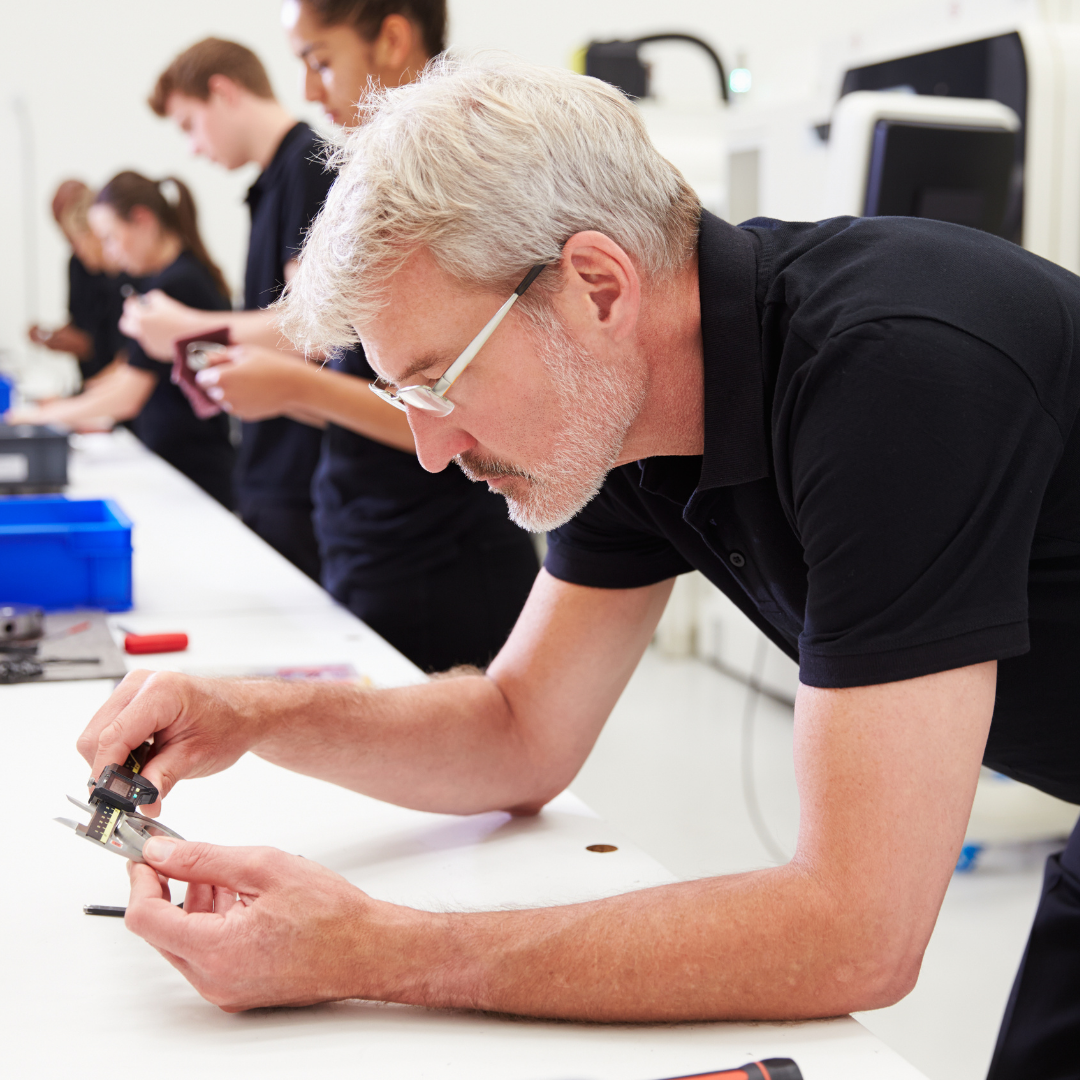
Lean in Action
I was Lean Champion for the Global Technology group at a ceiling tile manufacturer for six years. During that time, I was responsible to train all new employees in Lean principles and techniques as they joined our group. The goal of this training was to help them understand what we were doing and how we applied Lean to our work. My aim was to generate interest and engagement around Lean. In the early years, things didn’t always go the way I expected.
I was Lean Champion for the Global Technology group at a ceiling tile manufacturer for six years. During that time, I was responsible to train all new employees in Lean principles and techniques as they joined our group. The goal of this training was to help them understand what we were doing and how we applied Lean to our work. My aim was to generate interest and engagement around Lean. In the early years, things didn’t always go the way I expected.
When I first started training new employees, I created eighty PowerPoint slides that described as many Lean concepts as I could squeeze into the two hours allotted for the training. I reviewed the slides, gave participants a chance to ask questions, and then declared them “trained.” I never got many questions during this training and new employee participation in Lean efforts was hit or miss once the training was completed.
I knew I had to do better if I was going to realize my engagement and participation goals. The first thing I did was develop activities to demonstrate the various Lean concepts I was trying to reinforce. From an interactive 5S number search to a triangle peg jumping game, new employees started to draw value from the time they spent with me. I saw a slight increase in engagement and participation. I wasn’t satisfied. What else could I do, I wondered?
My breakthrough came one day when one of the trainees asked, “This is all well and good, but how does it apply to what we do in Global Technology?” I knew what I had to do. Make the training specific to the actual work we did and give demonstrations of Lean in action.
The first thing I did was test my training against the Global Technology Vision and Mission. If parts of the training didn’t support our Vision and Mission, I either removed it or modified it. Now the theoretical became practical. Power Point slides were reduced and made more relevant.
Focusing on the suggestion of Lean in action, I added a Gemba walk to the training. After an hour of classroom training, I led an interactive tour of areas that had applied Lean thinking to their processes. From the Pilot Plant to the Capital Engineering Records Room to the New Product Development Project Board, new employees could observe and interact with people using Lean. They had a more definitive picture of how Lean worked in practical settings.
The training still took two hours, but was much more interactive and engaging. Because I took a different tour route each time, I was more energized by it as well. Most importantly, participation and engagement of the new employees rose to record levels.

Understanding is Critical
In February 2020, Process Improvement Partners was asked to facilitate a strategic planning session in Montreal for a global consumer products company. Having facilitated multiple Kaizen events where English is not the primary language, we set about to design an event that would incorporate additional translation time and resource effort for the event. Normally, this type of session takes three days. Even though we were told that most participants were bi-lingual, we aligned with the sponsor and leader and added four hours to the event plan.
In February 2020, Process Improvement Partners was asked to facilitate a strategic planning session in Montreal for a global consumer products company. Having facilitated multiple Kaizen events where English is not the primary language, we set about to design an event that would incorporate additional translation time and resource effort for the event. Normally, this type of session takes three days. Even though we were told that most participants were bi-lingual, we aligned with the sponsor and leader and added four hours to the event plan.
In the weeks leading up to the event, presentation slides were developed and sent to the team leader to be modified to show English and French terms. I knew that the first day of the session would be the most challenging, as most participants had no Kaizen event or Lean experience. With much training, demonstration, and direction, we had to ensure important elements were clearly and correctly understood.
On the first day of the event, every time anyone spoke, there was translation into French or English. Every time someone asked a question in French, it was translated into English. Any English discussion was translated into French. Things were going slower than anticipated. By lunchtime, we were two hours behind. People were getting concerned. I knew we were going to be fine as the week wore on. The first day is more focused on discussion than teamwork and it feels longer and is more challenging to first-timers.
Aligning and Adjusting
At the end of the first day, we were exactly four hours behind. Those four extra hours planned for in the overall event were already used up. Additionally, in a feedback session at the end of the day, most team members said we were translating more than necessary. After most of the team left, we regrouped with the team leader and sponsors to build a plan to get us back on track. On a positive note, all team members were speaking freely and engaging extremely well. This was most critical for the overall success of the event. In preparations for the event, the leader and sponsors weren’t expecting so much engagement. Their initial skepticism led to the translation requirement.
We agreed we would reduce the translation to an “as needed” basis. This meant that we would ask our engaged team members to speak up when they needed translation or further explanation. It was risky, but we would pay attention to the room and draw out requests for translation if we saw engagement declining. We then joined the team at dinner and watched the team strengthen during the evening.
On the morning of Day 2, we explained our new strategy to the team, in English and French, and told them it would be the last translation they received until they requested it. We also agreed not to translate anything into English. When a question was asked in French, it would be answered in French. The facilitators didn’t need to understand the conversation, unless they were asked something they had to specifically answer. The team liked the new approach.
Less Translation, More Engagement
Once we got the hang of the reduced translation and started watching the team for their understanding, progress happened faster and the team seemed more engaged and satisfied. At the end of the second day, the team reflected their appreciation for the change in approach and showed an optimism for the day’s work and the work to come.
The next two days flew by and the team built a strategic plan of which they could be proud. Their plan improved productivity, safety, quality, and customer service. They also learned many new tools and techniques they could use to solve problems in their day to day work. On the final day, ten different presenters told the story of the week and the strategic plan to an audience attending by video conference all over the world. Those in the audience said they could feel the enthusiasm and alignment and were amazed by how professional the presenters were, regardless of their position. They voiced their support to the team and encouraged them to implement their plan. Some even wanted them to implement it sooner than planned.
The week reinforced how critical communication and understanding is for the team to win. Even though we reviewed progress and issues with translation at the end of the first day, we now know we need to do it sooner if we find ourselves in a similar situation in the future. For the team’s part, we can only thank them for hanging in there while we were learning this valuable lesson.

An Open Mind Will Lead to the Right Answer
Early this year, Process Improvement Partners was invited to conduct a site assessment for a packaging company in western Pennsylvania. The facility was operating a new technology that wasn’t performing to expectations. They wanted to identify opportunities to improve their situation using the engagement and empowerment of their employees.
Early this year, Process Improvement Partners was invited to conduct a site assessment for a packaging company in western Pennsylvania. The facility was operating a new technology that wasn’t performing to expectations. They wanted to identify opportunities to improve their situation using the engagement and empowerment of their employees.
Arriving the evening before the assessment, I had dinner with a former Armstrong co-worker, who was now working for the packaging company. He had convinced the plant manager to host my visit. He explained the issues with the new technology and some of his preliminary thoughts on what might help things improve. The plant manager wasn’t able to join us for dinner; I would have to wait until the next day to hear his thoughts and determine if we could align around next steps.
The Challenge of Team Engagement
The next morning, I arrived at the plant early and met the plant manager. He invited me to join him and his team at the morning production meeting. During the meeting, I observed the leadership team structure. The plant manager led the meeting, got feedback from his team, and then made final decisions. There was a sense of comradery and a command and control structure. This was my first indication of the potential challenge of team engagement at the facility. I would use the rest of the day to verify this observation.
Following the production meeting, the team took a walk out into the plant. Led by the plant manager, we spoke with many of the technicians at their workstations. They reviewed issues and the plant manager gave instructions to the workers and the leadership team. I got a sense for the connection between the technicians and management, but again, it felt more command and control than engagement and empowerment.
We arrived at the equipment that was the main focus of concern in the plant. A new (to them) technology, the equipment operated at low performance levels and took days to stabilize after product changeovers. There was a huge investment in data collection and monitoring equipment, but I didn’t see things in place to make the technicians’ jobs easier, such as clear and visible settings and simple standard work. One of the lead technicians, let’s call him Mike, spoke about how difficult it was to get initial settings and then how much adjusting was required following any product changeover. He was frustrated with the current situation and was hoping I might be able to help. I was encouraged by his passion to improve the situation.
Reducing Variation Leads to Stabilization
When we completed the tour, it was time for lunch. Some of the leadership team joined and wanted to know what I thought. I told them there were many opportunities to help the new line perform in a more stable way. Mike, the lead technician also joined us and was keen to understand what I thought should be done first.
My recommendation was to run a changeover improvement event, focused on simplifying and streamlining the efforts to make physical equipment changes. Mike estimated this portion of the changeover took between six and ten hours. I stated we could reduce the time by half or more.
The plant manager spoke up and said he wanted the team to focus on the time following the changeover, when the line normally took days to stabilize. This was where the savings would come from and he needed a win. I explained my logic around working on the equipment changeover first: By reducing or eliminating variation in the changeover, the time to stabilize would be greatly reduced. If we worked on the effort to stabilize following the changeover first, we would be trying to simplify things without reducing any of the variation that leads to the long time to stabilize. As I explained my recommendation, I saw Mike nodding in agreement. The plant manager was not convinced.
The plant manager asked Mike directly, “Why wouldn’t you want to work on stabilizing first? That’s where the pain and opportunity are. Don’t you agree?” Mike took a breath and said, “If we don’t reduce the variation in the equipment changeover itself, there won’t be any starting point for the stabilizing effort. I agree with Adam’s assessment, take out the variation first, and the stabilizing will go much quicker.”
Change Starts by Listening to People
Not yet convinced, the plant manager stated, “I have to have a win. Cutting the changeover time in half won’t save us as much money as cutting the stabilizing time. I don’t think I can sell this approach to corporate management. Mike, don’t you think we should go this route, rather than Adam’s suggestion?” Mike stood his ground and stated, “I really think this is the way to go.” Unwilling to yield, the plant manager declared, “I really don’t see how this is the answer.”
I jumped in and said, “You’ve asked Mike three times and he’s clearly telling you something you don’t agree with. He has the experience and knows what he deals with on a daily basis. I doubt he’ll change his mind just because you want him to. If you want to engage your people, you have to be willing to listen to them.”
It was time for me to make my pitch. “Here’s a compromise: Let’s do the equipment changeover event first. We’ll also spend some time on how it will affect stabilizing. We can monitor the time to stabilize for a month or so. If the time isn’t coming down as expected, we can run another event, laser focused on the stabilizing efforts.”
The plant manager took a deep breath. Finally, he said, “You know, this is starting to make sense to me. I think I can sell this approach to our corporate management.” Now I knew there was a chance we would be able to engage the rest of the organization to make a much-needed change. The rest of the day, we built a charter for the event, designed around the equipment changeover.
On my drive home, I reflected on the day. I knew I could work with this new client. I also knew how close I was to not having the opportunity. If we’re unwilling to change our positions and listen to our people, we might miss out on meaningful, sustainable change.

Fix It and Make a Difference
In 2005, I was working in the central engineering group for Armstrong in Lancaster PA. One day, while I was sitting in my cubicle, the CEO of our division came up to me and told me that he needed my help at our newly acquired cabinet plant in Auburn Nebraska. I asked him what help I could provide. He looked at me and said, “Fix it – you’ll know what I mean when you get there.”
In 2005, I was working in the central engineering group for Armstrong in Lancaster PA. One day, while I was sitting in my cubicle, the CEO of our division came up to me and told me that he needed my help at our newly acquired cabinet plant in Auburn Nebraska. I asked him what help I could provide. He looked at me and said, “Fix it – you’ll know what I mean when you get there.” I was told I would have a small team travelling with me and our first visit to the plant would be for 2 weeks. During that time, we were to evaluate the things we could improve, make quick improvements, and develop plans for future efforts.
I have been to hundreds of factories in my career, and have seen some well-run factories and some poorly run ones. When we arrived, I saw what was clearly the poorest run facility in my experience. There was no organization or order. Equipment was in disrepair. People looked like they had been beaten down. Many had evidence of prior injuries. It was hard to find a safe walkway in the entire plant. It made me immediately angry that people had to work in these conditions. In fact, one of my team members was so angry, we had to take him outside to calm him down.
“What the hell are they thinking?” he asked, “How can they get away with this?” We talked for a while and eventually came to the conclusion that we couldn’t fix the past, but we could damn sure improve the future for these folks. Luckily, the company had hired a new plant manager, who had arrived at the plant about a week before we did.
We spent some time with him on our first days at the plant and believed he wanted to improve conditions for his people as much as we did. We felt he would support our efforts to make real positive change for the employees at the plant. We knew we needed his support to get critical work done.
Thousands of opportunities
Everywhere we looked, we saw things that could and should be improved. Early on, we reorganized a panel cutting area and made it easier and safer to get the materials needed to be cut. We also created some signage for the area, so finished parts could be easily found. We were also able to get much needed repairs for the equipment that was being used daily. We realized we couldn’t fix everything, even though we wanted to. We had to prioritize and decided to work on things we could immediately fix in order to give the employees hope for a better place to work.
Miles to go
One day I was watching the flow of material to different parts of the factory. I saw a large man take a pallet jack and transport cabinet parts from one area of the plant to another. He had to physically pull the material, which probably weighed 250 pounds, over a quarter of a mile. I followed him to his destination and then watched him pick up another pallet of parts, and manually pull it to another part of the plant. This looked really difficult to me, and I wanted to know more.
I introduced myself to him and he told me his name was Roy and that he had been doing this type of work for more than 5 years. I asked him if he knew how far he moved material in a day. He told me he was given a pedometer by the health and safety manager and found out he was pulling materials more than 17 miles in a day on average! Seeing how physically difficult this work was, I asked him, “What do you do when you go home at night?” His response was, “Adam, I sit down in my recliner, fall asleep, get up the next morning, and go back to work.” This was no way to live. I knew we had to help him.
I assembled my small team and we talked about what we could do to help Roy. In my mind, if we didn’t help him, he would soon be injured, and probably had been in the past. We did our research and found out there was a battery-operated pallet jack that would allow the operator to ride on when moving materials. We found a used one in the area that cost less than $5000. It was time to convince the plant manager to buy this unit immediately.
Sealing the deal
We asked the plant manager for an opportunity to review our findings and share our plan for further improvements. We had 12 improvement projects we wanted to implement before we left at the end of our 2-week assignment. We told him we thought there was nothing more important than buying the battery powered pallet jack for Roy. When we explained our reasoning, he realized how critical this would be for the health and well-being of one of his employees and also how much it mattered to us. He immediately gave us approval and called in his purchasing manager to help us buy it.
In 3 days, we had our new battery powered pallet jack and gave it to Roy to test out. He did and was so happy, he gave rides to some of his co-workers. The next day, I followed up with Roy and he told me he had some of the best sleep he had in months. We made a real difference for one person, and that made all of our efforts a resounding success!

The Team Has More Power Than It Thinks
A leading consumer products company shipped millions of boxes of goods weekly. Most of the time, large quantities of the same products were shipped on a wooden pallet, and loaded on a truck. The distribution center employees were used to picking full pallets of products out of racks, placing one label on the entire pallet, and then, placing the pallet of goods on a truck. In recent years, Amazon entered into an agreement with the company, and turned their efforts upside down.
A leading consumer products company shipped millions of boxes of goods weekly. Most of the time, large quantities of the same products were shipped on a wooden pallet, and loaded on a truck. The distribution center employees were used to picking full pallets of products out of racks, placing one label on the entire pallet, and then, placing the pallet of goods on a truck. In recent years, Amazon entered into an agreement with the company, and turned their efforts upside down.
Amazon ships any quantity of products, be it one box, or a truckload of boxes to customers. Their customers expect to get the right product quickly and properly labeled. The consumer goods company would now have to label every single box shipped to an Amazon distribution center or an Amazon customer. They would also have to do it more quickly than they had to for any of their other customers.
In the years leading up to and including 2018, Amazon business exploded for the company, much like many others around the world. The company added staff to ship all of the products required, but they weren’t meeting Amazon’s strict delivery requirements and were starting to lose money on the relationship. At this point, they called in Process Improvement Partners to help them solve their problem.
We walked through the existing process together to see what opportunities might present themselves and if a Kaizen event could help solve the problem facing them – develop a system that would meet the growing Amazon business and delivery requirements and do it safely, productively, and profitably. It turns out they were applying their large volume/low product diversity approach to the small volume/high product diversity Amazon orders. We also found out they didn’t always receive Amazon orders in a timely or predictable fashion from their corporate customer order systems, so it caused them to staff the distribution center in ways that made people wait for orders to pick and ship.
We designed a 3-day Kaizen to get them back into compliance and decided to set an aggressive set of goals: 25% productivity increase, 50% cycle time reduction, and 50% reduction in fines relating to late deliveries to Amazon.
In a Kaizen, you should pick team members who will help you solve the problem and want to win. In this case, we picked employees from the distribution center and corporate team members who could provide perspective on the issue and could also initiate identified system changes. We advised all team members this Kaizen was critical to the success of the company and we expected full participation from each one of them during their time together. The team leader made a compelling case and received commitment from all team members.
On Day 1, after team introductions, the team leader explained the problem from his point of view. He thanked everyone for coming and asked them to keep an open mind and be willing to challenge their thinking during the Kaizen. Then, the Amazon customer service manager from corporate presented “Voice of the Customer” information to the team. This was an engaging discussion, and the entire team felt an urgency and need for change and improvement. Following these discussions, we took the team out on a process walk.
We started out in the office, looking at a computer work station. When we asked what was happening at the work station, a team member explained they were waiting for orders to arrive from the corporate system. Until orders arrived, she was stuck and couldn’t provide any assignments for the distribution center employees. We asked her the reason and she explained the orders must have been received by the corporate system after 6 pm. Orders from Amazon were manually entered, and after 6 pm they wouldn’t be entered into the system because everyone had gone home for the day. Orders would wait until at least 8 am the next day to be entered, and by the time they were, the distribution center wouldn’t see them until 10 am or later. The distribution center employees work around the clock. This was a big opportunity for improvement.
We walked around the facility next, looking at the physical and other system issues in the way of safety and productivity for the distribution center. The team members took many notes and after 2 hours, we returned to the meeting room to review what we observed.
After sharing all of the issues as a team, we mapped out the existing process on a wall with sticky notes to identify the biggest pain points and opportunities. There were many issues and we wanted to make sure we would be working on things that would make the biggest impact and also were within the control of the team. We made quick estimates of the time it took to complete each step, including the minimum and maximum times. The idea was to work on the steps that took the longest time, as streamlining them would maximize the customer service improvement.
We identified some steps that could take more than 8 hours and up to 24 hours or more. Those were the steps to work on. The team prioritized those steps and came up with ideas to reduce the time. They avoided the step called, “Wait for orders from corporate”. This step was identified to take anywhere from 1 1/2 hours to 24 hours, so it would be extremely impactful if improved.
I challenged the team to consider improvements to the step. They didn’t feel like they could make any changes without proper approvals. I reminded them they were empowered by the simple fact they were the Kaizen team chosen to solve this critical business problem. If they didn’t feel they could unilaterally make changes, they should “phone a friend” who could approve their changes immediately. One of the team members, I’ll call her Ruth, left the room to make a phone call to the person who could approve the changes. After a few minutes, she came back to the room and informed the team the person she tried to call was out sick and she would try again tomorrow.
I knew we didn’t have time to wait, so I asked Ruth if she was willing to call that person’s manager or go to the person’s house, knock on his door, and gain his approval. She thought I was joking about going to his house (I really wasn’t), and decided to call the next level manager. She wasn’t available either. Finally, she called the Vice President of Logistics and Distribution. After explaining what was going on and the approval she was looking for, she was informed that another team member, let’s call her Alice, had the authority to make the decision. Ruth came back into the room, met with Alice, and secured approval for the change.
It turns out the change was so simple it could be executed by a few lines of programming allowing any orders coming in after 6 pm to be manipulated automatically and delivered to the distribution center immediately. This option was already being used for other critical customers. Adding Amazon to the list took no more than 10 minutes of effort. The team was so motivated by their win, they found many other quick improvements and letting nothing stand in their way, met or beat all of the objectives for the Kaizen. They described how the only thing that was getting their way to improvement was their own way of thinking. Once they realized they were empowered, there was nothing standing in their way of victory.

Listen To Your People, People
A Research and Development team wanted to create a three-year strategic plan. Their goal was to reduce the time it takes from a new product idea to launch of the new product. Many of the team members believed “you can’t schedule invention.” Working with the team leader, the Research and Development Director, we decided to focus on the work leading up to and supporting the invention, even if we couldn’t specify when an invention would occur. We agreed to use Value Stream Mapping as the approach to help the team accomplish their goals.
A Research and Development team wanted to create a three-year strategic plan. Their goal was to reduce the time it takes from a new product idea to launch of the new product. Many of the team members believed “you can’t schedule invention.” Working with the team leader, the Research and Development Director, we decided to focus on the work leading up to and supporting the invention, even if we couldn’t specify when an invention would occur. We agreed to use Value Stream Mapping as the approach to help the team accomplish their goals.
On the first day of a Value Stream Mapping event, the team learned about Lean tools and techniques, and then quickly went to Gemba (the place where the work is done) to see what was actually happening in their current process, the Current State. Most people who haven’t participated in a Value Stream Mapping event don’t appreciate the time and effort put into understanding the Current State of their process. They want to work on the Future State, thinking they already know the issues, pain, and problems in their current process. But, as Lean practitioners know, there are always breakthroughs and “A-Ha” moments that occur during the Current State review that lead to a much stronger plan for the Future State.
The team wondered how they could walk their Current State, as much of their work was on their computers, at their desks, in labs, and other testing facilities located in the building. Ever the optimist, I encouraged the team to walk the process, regardless of where the work got done to uncover something that would help them on their journey to the Future State. Although they were skeptical, they agreed to follow my lead. We walked around the offices first.
We saw different people working at their desks and asked them questions about what they were doing. They did their best to explain things, but I noticed most people weren’t taking notes or asking many questions.
Our next stop on our walk was at a large wall containing a wide variety of graphs, charts, and documents. The R&D Director stopped there and told us proudly about how much information he shared with his people and how much they used the information on the wall. The team seemed satisfied with the explanation, but to me, it looked like a bunch of clutter. There were so many charts and graphs, it was unclear what was important, relevant, and critical to the work of the R&D employees.
I walked over to a Scientist who was working at his desk and asked him if he could join us at the board. I asked him what he thought of all of the information that was posted on the wall. He told the group that he didn’t know, he never looked at it. The team, including the R&D Director was shocked. Was this scientist the only one who didn’t use the information or were there others? As it turned out, there were others working in the area who confirmed they didn’t use the information on the board either. I didn’t want to insult our leader, so we continued our walk through the process, taking note of other issues as we saw them. The team started opening up and asking tougher questions as we went further into the process.
After we completed our walk, the team listed all of the steps in the current process and the issues and problems that existed. One of the biggest problems identified was the lack of communication of relevant information to the scientists. It was just as our brave Scientist had said during the Gemba Walk. Now, the team knew what it had to do in the Future State: Provide visible, relevant, and timely information to the scientists in a way that would help them do their work every day. Over the rest of the three days, the team built a path to the Future State that reduced time from new product idea to launch significantly. Much of the effort centered around providing the proper information to the people who needed it. Instead of assuming what was needed, they included the scientists and technicians in the development of the communication of highest value.
Over time, this communication was developed. In addition, the team created feedback loops to verify the communication was helping R&D employees do their work. Ultimately, the time from new product idea to launch was reduced significantly. More importantly, the team realized how important it is to include people in the design of systems that will be used for their benefit. One properly posed question can save months of effort.