
Kaizen Success Stories
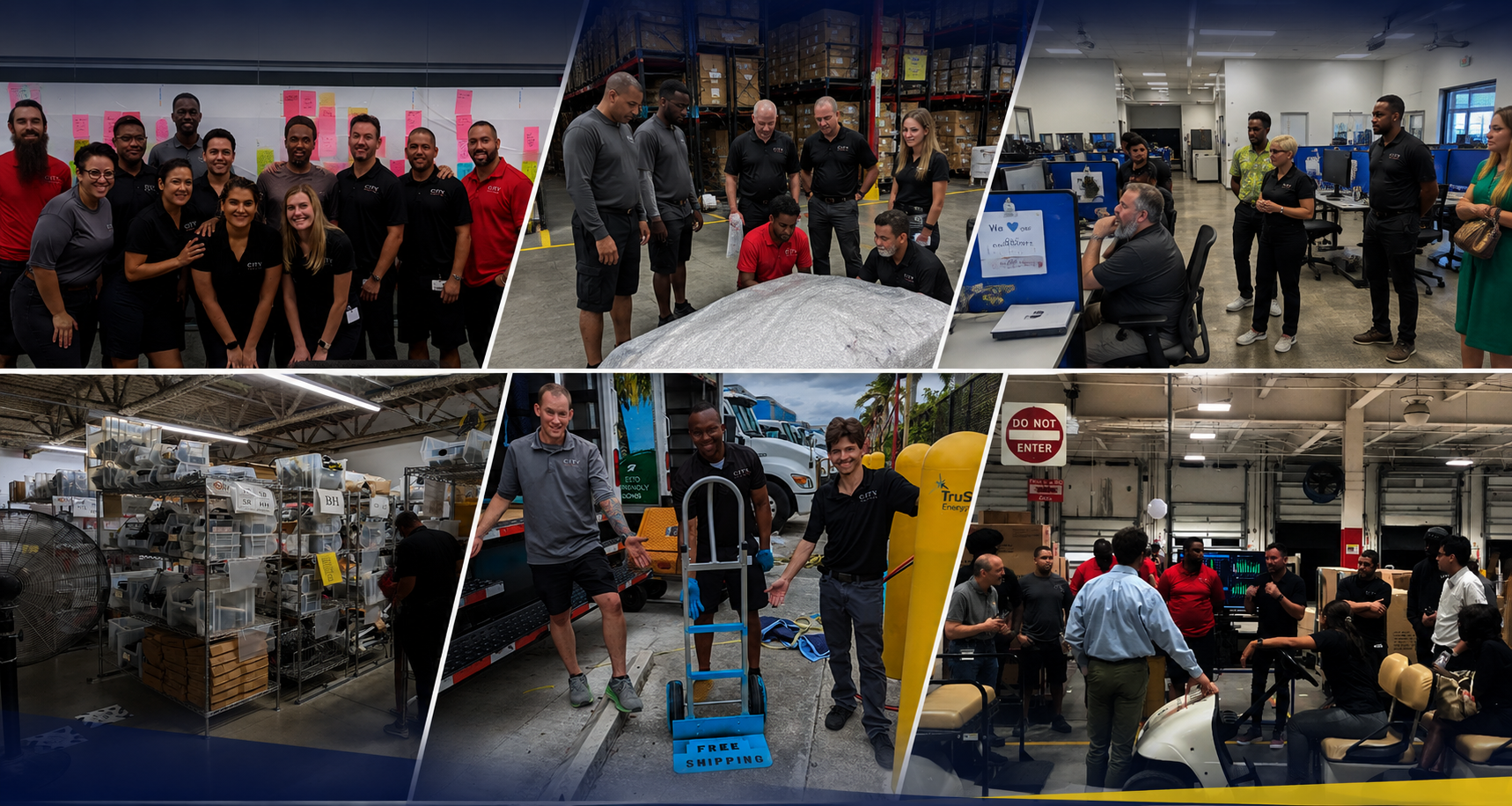
Real Manufacturing Results. One Kaizen at a Time
Explore real-world Kaizen success stories showing how manufacturing teams solved critical problems, improved performance, and created sustainable results.

Like a Pro
For the early part of their Lean journey, I was the interim Lean Leader for Armstrong World Industries’ Hilliard Ohio plant. I was returning to the corporate office in Lancaster Pennsylvania from my assignment as Operations Manager at the St. Helens Oregon plant. I spent two out of every three weeks at the plant, until my family moved from the West coast to join me.
For the early part of their Lean journey, I was the interim Lean Leader for Armstrong World Industries’ Hilliard Ohio plant. I was returning to the corporate office in Lancaster Pennsylvania from my assignment as Operations Manager at the St. Helens Oregon plant. I spent two out of every three weeks at the plant, until my family moved from the West coast to join me.
During my time at the plant, we ran many Kaizen events and made impressive improvements to safety, productivity, quality, and customer service. We involved everyone, from hourly technicians to the highest plant management positions.
One week, we focused on changeovers at the main fabrication line. This line was responsible to reduce 4-foot by 8-foot boards to 2-foot by 2-foot tiles and many other sizes. After the proper size was achieved, panels received a finish coating of paint. The bottleneck of the changeover was the equalizer (table saw) that had to be changed precisely to the finished size of the tiles. Over the years, operators had marked the equipment with lines for the many different tiles that were cut on it. Unfortunately, these marks were interpreted differently by the personnel, and it caused extra scrap and time to get things into specification.
Our team was comprised of several production, maintenance, and supervisory personnel. One team member was Henry, the acknowledged equalizer “expert.” He was soft-spoken and meticulous. He liked to take extra time to dial the equipment in to the appropriate size, as it was critical to the customer’s expectations.
During the week, Henry made sure we didn’t sacrifice the integrity and repeatability of the equalizer. We realized we could make more consistent cuts if we precisely measured and pinned the top 10 sizes cut by the equalizer. Once the pin was in the appropriate hole, it guaranteed our tiles would be cut within specification without additional adjustments and testing. This was going to save tremendous amounts of changeover time. We labeled all pin holes, so even the most inexperienced technicians could easily and quickly find them, guaranteeing a consistent, quality ceiling tile. All changes reduced changeover time by more than half and reduced changeover scrap by more than ninety percent.
On the day of the report out, Henry said he didn’t want to speak in front of an audience. He didn’t know what to say and told us he was shy. This wasn’t surprising, but it was a requirement for everyone on the team to say something during the report out.
I encouraged Henry to tell the audience about holding the team accountable to protect our customers’ interests through cutting quality tiles. He said he would try to say something, but he couldn’t guarantee anything.
The report out started, and team members spoke proudly of their Kaizen event experience and how they had reduced changeover time, while improving quality, safety, and consistency. Then it was Henry’s turn. He started quietly. Yhen his voice rose as he shared his pride and ownership of the changes we had made during the week. Then he was lecturing the audience about the benefits of Lean and changeover reduction. It was as if he was the professor and we were the students. Five minutes later, he was done. We were in awe! No one had ever heard Henry speak so passionately. The experience had moved him, and it showed. I knew I wanted all my future team members to have a similar experience. I have honed my approach to create the same level of ownership and passion that I saw in Henry that day.

The Journey of 100 Google Business Reviews
When I opened my business, I tried many ways to attract clients. After spending money on advertising that didn’t lead to business, I focused on delivering a great customer experience and then let my business grow organically through word of mouth and referrals. This is a slower path, but it fits my principles of how I want to conduct my business.
When I opened my business, I tried many ways to attract clients. After spending money on advertising that didn’t lead to business, I focused on delivering a great customer experience and then let my business grow organically through word of mouth and referrals. This is a slower path, but it fits my principles of how I want to conduct my business.
I set up my website, LinkedIn business page, and Google Business page, with the hope of acquiring clients through these (mostly) free resources. I noticed most businesses that had a Google Business page had reviews posted by their customers. I wanted reviews too. How would I ever get someone to share their thoughts, I wondered? After all, I was asked many times to leave a review for other businesses, but I rarely did.
The first thing I did was ask members of my Kaizen teams for Google Business reviews. Most people don’t naturally leave reviews of businesses. When I got my first one, I was excited to see it. Now, I wanted more.
For a while, I asked people to leave reviews. I wasn’t receiving many. Eventually, I got an idea. After I completed a Kaizen event, I sent an email to team members with a link to my Google Business page. Using this strategy, I’d get one or two reviews per event. My numbers were slowly creeping up. Eventually, I crossed the “10 review” threshold. Then 20. I wanted more!
It took over three years to get to fifty reviews. Next, I set a goal to get to 100. I needed a more compelling way to ask for reviews, without being too “salesy.” One day, at a happy hour following our Kaizen report-out, I was discussing my goal of receiving 100 Google Business reviews, when one team member suggested I get a QR code for reviews and post it on the screen at the end of the next Kaizen event. Team members could scan the code with their phones and be directed to my Google business page and the review section. I did some research and found a service that generated a QR code for free.
During the next few Kaizen events, I posted my QR code on the screen. I was able to get 2 or 3 reviews using that approach. It was progress, but still very slow. Then, I got an inspiration. I printed out a slide with the QR code on it and handed it to team members, so that they could scan it from their seat. By handing it to them, it put a little unspoken pressure on them to leave and immediate review. By waiting, most people forgot to leave a review. But, if they could do it in the moment, and I was there to see it, most team members would leave a review.
I was now getting 5 to 7 reviews at each Kaizen event. I broke through the 100-review goal earlier this year. It’s gratifying to see what all of those people have to say and that they believe I have positively impacted their work lives.
The next challenge? I need to reset my goals for this year. I’m very competitive and want to see how I can improve my process even more!

All Night Long
Admit it. After reading the title of this story, some of you are hearing the famous Lionel Richie song in your head. This story isn’t about that, but rather it concerns a challenging Kaizen event I recently facilitated for CITY Furniture. The business problem we were trying to solve was a series of computer programs that ran after all showrooms closed each evening. There was a period of time where no revenue could be generated through their e-commerce website, until all programs completed their reconciliations. Our goal was to cut the time by 75%, so that we could free up overnight revenue generation.
Admit it. After reading the title of this story, some of you are hearing the famous Lionel Richie song in your head. This story isn’t about that, but rather it concerns a challenging Kaizen event I recently facilitated for CITY Furniture. The business problem we were trying to solve was a series of computer programs that ran after all showrooms closed each evening. There was a period of time where no revenue could be generated through their e-commerce website, until all programs completed their reconciliations. Our goal was to cut the time by 75%, so that we could free up overnight revenue generation.
I’m an early riser and am typically in bed by 10 pm each evening. My wife says I take my “pre-sleep” nap from 8 pm to 10 pm. This Kaizen event would be held overnight, as our Gemba (the work that we needed to see) happened between 9 pm and 1:30 am. I wasn’t sure how I’d be able to make it through the night.
I met with the team leader to prepare weeks before the kick-off. We agreed to start the Kaizen event at 7 pm Sunday and work through the night for four out of five days. Then, we’d take one day off to adjust our sleep schedule and rotate to day shift. Report out was scheduled for 3 pm on Friday.
I normally fly in to Ft. Lauderdale on the Sunday before the Kaizen starts. Due to starting on Sunday, I knew I couldn’t take any chances and had to figure out how to get proper sleep prior to the event. I flew in on Saturday, got some dinner, and went directly to sleep. I woke up in the middle of the night. Somehow, I was able to go back to sleep.
After Sunday breakfast, I did some work, and took a short nap. At 5 pm, I met my team leader. We set up the meeting room and discussed the Kaizen plan. She was excited to tackle this critical business problem and had assembled a diverse team of highly skilled programmers and managers. They arrived at 6:30 pm for dinner. Afterwards, we kicked off the Kaizen. Our sponsor, the chief information officer (CIO), demonstrated his leadership commitment by staying overnight with the team and participating as a full team member.
After getting to know each other and reviewing Lean topics, we walked downstairs to watch a showroom close. We saw so much waiting and paperwork being generated. We knew there was opportunity for improvement. Then, we walked back upstairs to the meeting room and proceeded to watch the computer programs do their thing. It may have been the longest four and a half hours of my life.
The team was enthralled by what they saw and wrote many ideas on Post-its™. It looked like a lot of gibberish to me. I kept telling myself all that mattered was team members seeing waste and opportunities. I had to stay awake at all costs. It would look bad for the facilitator to fall asleep during the Kaizen!
Mercifully, the Gemba walk through the computer programs ended and I stayed awake. Ninety-two minutes became our baseline for the program reconciliations that kept the e-commerce revenue from being generated. Now it was time to Value Stream map the process, identify pain points, waste, and finally, the ideas to reduce the time it took to complete the reconciliations.
The team generated many ideas and picked three they believed would drive the time down significantly and could be completed during the week. We adjourned at 4:30 am Monday morning and agreed to reconvene at 8:30 pm Monday evening.
I went back to the hotel, surprised I didn’t feel sleepy, but that was due to adrenaline. Four hours later, I woke up. I decided to exercise and work on other projects. Then, I took an afternoon nap. Returning on Monday evening, team members were excited to work on their projects. They broke out into three sub-teams and got to their work, which was all on the computer. I felt useless, but they were fully engaged. From time to time, we’d reconvene and share project status and problem solve. On Tuesday morning, the team decided they didn’t need to work through the night anymore and that we’d take a 27-hour break, reconvening at 8 am on Wednesday morning.
Now it was time to reestablish my normal sleep pattern at the hotel. I slept almost as soon as my head hit the pillow at 6 am. I woke up at 10 am. Now what was I going to do? I got up, showered, exercised, and ate lunch. Then, I worked on other things for a few hours. I decided I should stay awake until at least 9 pm. Time went by slowly, but I made it. I went to bed, and woke up around 4 am. That had to be good enough.
Everyone seemed happier to be working in the daytime. Team members felt they were making programming changes that could be implemented by the end of the day. They installed the changes to see how the system would react on Wednesday night. On Thursday morning, we learned the program ran faster than ever previously recorded. Our 92-minute process was now taking 57 minutes, a significant impact to the system. They had more changes in mind that would reduce time, but those would have to wait for the weeks following the Kaizen event.
The report out was well attended, and our sponsor remarked the initial results had saved the company considerable money. The team has implemented a follow-up process, with meetings every two weeks. The time continues to come down and our sponsor is now ready to tackle another critical business problem in his department.

Five Lessons from My First Five Years in Business
On May 15, 2018, I registered Process Improvement Partners LLC as an official business. Since then, I have had so many adventures, made lots of mistakes, and hopefully learned from many of them!
On May 15, 2018, I registered Process Improvement Partners LLC as an official business. Since then, I have had so many adventures, made lots of mistakes, and hopefully learned from many of them!
As the saying goes, hindsight is 20/20. In the spirit of continuous improvement, I have been challenged by a peer to share my top five lessons from my first five years in business (thanks Stephanie!)
ONE: Focus on meaningful relationships, not vanity metrics.
Truly valuing and connecting with the people in your network is way more important than how many followers, views, likes, and comments. Be sure to focus on what really “moves the needle” for you, and this will look different for everyone. Bottomline: you can't fake caring. If you can help even one person, you are doing important work.
TWO: This is a marathon, not a sprint.
It takes time to build up a following that values what you do and how you can help. I used to think the next activity or post would get someone to do business with me. Now, I realize people want to feel comfortable with you and the value you bring. It takes time, but once it happens, meaningful engagements follow.
THREE: Alignment is vital to a great working relationship.
The work I do is narrowly focused and isn't for everybody. I want to and should work with clients that value my approach and are ready for it. I stopped chasing money and started looking for people I can help and want me to help the way I provide value. If you like fast, sustainable results, I'm your guy!
FOUR: Experiment, experiment, and experiment some more.
I have tried writing (a book, no less), podcast interviews, speaking engagements, paid advertising, and many other things. I always learn from those experiences and know there are many more in my future. I am pretty sure that I won't write another book (never say never), but I'm glad I did. If it helps just one person, it was worth it. And I learned I can do it!
FIVE: Pay close attention, or you might miss an important opportunity.
It's easy to gloss over the last "like" on a post and just chalk it up to someone just being kind. But that person might need my help, so reaching out to someone who is engaging with my content is never a bad idea. In fact, one time it led to a meaningful business relationship. I don't follow up on every post engagement, but I definitely should!
I read that most businesses fail in the first five years, and I can believe it. Having your own business is challenging work and it's not for the faint of heart. Luckily, I have an incredible and supportive family and network. I thank you all for giving me the opportunity to serve you and look forward to many more years of doing so.

My First Process Improvement Project
I graduated from Virginia Tech and went to work as a corporate industrial engineer for Thomasville Furniture in North Carolina. Harriet was my first mentor. She was working on a project to improve the productivity of one of our bedroom furniture manufacturing facilities.
I graduated from Virginia Tech and went to work as a corporate industrial engineer for Thomasville Furniture in North Carolina. Harriet was my first mentor. She was working on a project to improve the productivity of one of our bedroom furniture manufacturing facilities.
I was totally inexperienced supporting manufacturing operations, but Harriet could tell I was curious and interested in helping her in any way she needed support. After a few trips to the plant, she decided to use my help organizing a wood drying and storage facility that supplied the vital materials to the plant. The wood was received from an outside source and had to be dried for a few days before the plant could process it into bed rails, canopies, dresser drawers, and other furniture components.
It must have been over 100 degrees when we took our first walk through the Butler Building (the storage facility). Inside was a massive amount of wood stacked up all over the dirt floor. There didn’t seem to be any organization to it. Two workers were sitting on a stack of wood talking about the latest NASCAR race.
I told Harriet I wanted to spend time in the building and convinced her to let me go “solo” for the rest of the week. The next morning, I showed up at 7 am. The two workers, Sam and Joe, were surprised to see me. I was an engineer who was willing to hang out with them. More than that, I was a “Damn Yankee” from up North (their words, not mine).
I got to know Sam and Joe and followed them around as they did their jobs. Whenever they got a call on their walkie-talkie, they’d jump on their forklifts and dig out requested loads of wood and bring them to the main plant. They dealt with two key problems:
1. The forklifts would dig ruts into the dirt floor, making it difficult and dangerous to maneuver through the building.
2. Different species of wood were stored in the same aisles of the building, forcing the workers to move big stacks of wood to get to what they needed. Oftentimes, it would take many minutes to find the stack of wood they were looking for. Sometimes, the stack would fall over and they’d have to pick everything up and restack it.
At the end of the week, I reviewed my findings with Sam, Joe, and Harriet. They confirmed these two issues were hampering their work and reducing their productivity. Together, we came up with a plan to pave the floor and organize the wood by species.
Within a month, we reorganized the building and paved it. We put up signs on the walls indicating storage locations. I visited the building many times to verify it was helping Joe and Sam do their job more safely and productively.
A month after we paved the floor, I stopped by and asked Joe and Sam if things were still working the way they wanted. They were proud to show me they had made a few improvements of their own that made things even easier. It was a win. Then, they told me that even though I was a “Yankee,” I wasn’t a “Damn Yankee” anymore. Now I was a “Good Yankee.”

The First Area Owner at the Furniture Company – the Story of Abraham
I was facilitating a Kaizen event for a large furniture retailer in Florida. They offer many services that set them apart from their competitors. They have a nice sales and service advantage and impressive customer loyalty. The Kaizen topic we were working on was the use of replacement parts in their process. Our goal was to reduce the amount of replacement parts needed.
I was facilitating a Kaizen event for a large furniture retailer in Florida. They offer many services that set them apart from their competitors. They have a nice sales and service advantage and impressive customer loyalty. The Kaizen topic we were working on was the use of replacement parts in their process. Our goal was to reduce the amount of replacement parts needed.
After Lean training on Day 1, we went out into the Gemba (a Japanese term, meaning the place where the work is done) and saw many areas where parts could be misplaced or lost. There was an area where parts were stored for the entire distribution center. It looked as if it had been hit by a tornado. There was so much clutter that the team knew it would be a high priority project for the Kaizen week. The number of parts and clutter was overwhelming. Would they be willing to put in the effort and time it would take to get things organized?
Three very ambitious team members picked the parts storage area as their project. Abraham, who normally worked in the area, said that they had been working on it for years. He didn’t think they’d be able to do anything to correct the situation, especially in a week. As facilitator, I had to rely on my team. They decided it was so important that they would go for it.
The three team members got help from people outside of the team. By the end of the week, the parts storage area looked like it was brand new. Everything was organized, clutter was removed (at least 75% of what had been stored there), and there were barcode labels on every bin to help manage the parts inventory. They worked many hours beyond the scheduled team hours and refused to stop until they were done.
On the morning of the third day, when we realized that it might be possible to organize the parts storage area, I reviewed “area ownership” with the team. I told them that at my prior company we had area owners who managed things and held people accountable to always do the right thing. Leadership “had their backs” and it made things safer and more productive. I also told them that it took a while to train leadership to behave that way, but once they saw the value of area ownership, they got on board.
Abraham raised his hand and said, “I want to be our first Area Owner.” I was stunned. Here was someone who had been skeptical on the first day and now he was courageous enough to step up and try something new. We were excited for him. The rest of the week we did everything possible to get the area into the best possible shape and designed our system to sustain it, using the Wheel of Sustainability.
The report out at the end of the week was well attended. When we took the leadership team into the parts storage area, you could hear a pin drop – they were blown away. Then, something magical happened. Abraham told them that he was the Area Owner and he needed their help and support to keep the area in its optimal condition. He shared his expectations for himself and for leadership. He showed them how he wanted to be audited on a weekly basis. I was proud of him and the rest of the team.
The area has been working as well as or better than the Kaizen team left it.I now use it as an example of what can be achieved in a short period of time and how well it can be sustained. Many newer Kaizen team members take a tour through the space and when Abraham is there (which is most of the time) he shares his story and tells them how important it is to meet his expectations. He is a model for what’s possible when you take ownership and care about your customers.

Charting a Course of Critical Information
I was asked to facilitate a 5S Kaizen at an electronics manufacturer. The specific area of interest was in a testing lab that was used to analyze components that failed in the field. There were an amazing number of parts and supplies in the lab. On first glance, the lab owner felt he needed everything in the lab to accurately perform testing. We must have removed 80% of everything in the space to improve the safety and productivity of the area.
I was asked to facilitate a 5S Kaizen at an electronics manufacturer. The specific area of interest was in a testing lab that was used to analyze components that failed in the field. There were an amazing number of parts and supplies in the lab. On first glance, the lab owner felt he needed everything in the lab to accurately perform testing. We must have removed 80% of everything in the space to improve the safety and productivity of the area.
When we were done, we assessed the critical elements of the process to see what we could improve on and optimize for the total system. We prioritized the fume hood area as the most critical part of the process. Essentially, every component that came back from the field had to have all internal gasses purged before it could be assessed and repaired. This was a critical safety requirement.
Different components had different gasses internally and some of those gasses were hazardous. They had to go through a full purging cycle before any other work could begin. Paul, the lab owner, had worked there for many years. When he wasn’t sure which gas was present, he would contact Jeff, an engineer. Jeff could help Paul identify the gasses present and the proper purging cycle.
Customers were anxious to get their equipment back in a timely fashion. The lab couldn’t rush the purging cycle and the testing that came afterwards. Many times, Jeff wasn’t available when Paul needed the critical purging information and the equipment waited days or weeks before purging could start.
It just so happens that Paul and Jeff were on the Kaizen team. When this critical issue was raised, Jeff told us that he had an idea and would need some time to work on it.
An hour later, Jeff came back to the lab and showed us his idea. It was a chart of the top components. They comprised more than 98% of the total possible items that could come through the lab. He identified the gasses and the purging requirements for each one. Now, Paul could start his work without having to track down Jeff. Customers would get their results much sooner.
In the end, it worked out even better than we could imagine. Paul retired shortly after the Kaizen and his replacement was quickly trained to perform to the standards Paul had set for the lab. The customer never waited too long for their results due to the contributions of Paul, Jeff, and the rest of the Kaizen team.

Strengthening a Kaizen Culture
A good friend of mine asked me to speak at his Virtual Lean Summit. I was scheduled to present on the Wheel of Sustainability on Thursday. When I looked at the agenda for the week, I found several presentations I wanted to attend. One stood out to me as a must – the Tuesday presentation by the President of a large furniture retailer in South Central Florida.
A good friend of mine asked me to speak at his Virtual Lean Summit. I was scheduled to present on the Wheel of Sustainability on Thursday. When I looked at the agenda for the week, I found several presentations I wanted to attend. One stood out to me as a must – the Tuesday presentation by the President of a large furniture retailer in South Central Florida.
He was going to speak about the 15-year Lean journey at his company. Even more interesting to me was that he was the impetus for it. I looked forward to hearing the top leader in the company talk about building a continuous improvement culture from the ground up. Support all the way to the top of the organization is the ideal situation. I had never had the opportunity to see what it looked like.
The presentation was inspiring and I learned so much from it. When it was over, I wanted to know more. That evening, I sent a LinkedIn connection request to the President of the company and told how much I enjoyed his presentation. I mentioned I was an “old furniture guy” with many years of Lean experience and that it would be fun to share some furniture “war stories” with him.
Within an hour, he responded, and we set up a Zoom meeting for the next day. We talked for a few minutes, and I shared stories about the adventures I was having with my Kaizen teams. He remarked that they had held many Kaizen events in the past. They hadn’t done any in a few years and he missed the energy and excitement of Kaizen events. I said, “It turns out I know a guy who can help you with that.” He asked who that was. Of course, the answer was me! He said I should come for a visit to see if there were any synergies that we could both benefit from.
Two months later, I traveled to their corporate offices. I had the opportunity to meet with many staff members to see their continuous improvement culture. I shared my approach to Kaizen and continuous improvement. At the end of the day, I went to dinner with the President and he told me that pending a few more discussions, he wanted to know if I could support and facilitate 12 Kaizen events over the next year. What could I say? I said yes!
The following month, I signed my first contract to facilitate one Kaizen event per month. The President, who had now become company CEO, told me that beyond results, he wanted to focus on strengthening the Kaizen culture of his company. I was asked to focus on what I enjoy the most: engagement, empowerment, and sustainability.
The first year of working with the company was a true pleasure and a joy. The culture of continuous improvement is already strong and the leadership does what it takes to support every Kaizen team I facilitate. We have experienced breakthroughs and setbacks during our Kaizen weeks together, and the response has been extremely positive throughout. They value learning and culture more than pure results. Make no mistake, results do matter.
Things went so well, they signed up for a second year of facilitated Kaizen events. I am looking forward to a bright future with my client.

Three Principles for Funding
During my time living on the west coast, I wanted to give back to the community. Many of the staff at the St. Helens, Oregon plant participated in some way or another with the United Way of Columbia County. I was intrigued. I had participated in many United Way Days of Caring during my time in Pennsylvania.
During my time living on the west coast, I wanted to give back to the community. Many of the staff at the St. Helens, Oregon plant participated in some way or another with the United Way of Columbia County. I was intrigued. I had participated in many United Way Days of Caring during my time in Pennsylvania.
The plant manager had been the Chairman of the Board of Directors for the local chapter, and she suggested that I volunteer on their Board in some way. I liked the idea and once I met the people in charge of the United Way, I knew I had found my place.
There were three ladies who did most of the work. They were working out an old school building that had been donated for their use and other community activities. They had a very limited budget, but they were able to get many things donated so they could touch many areas of the community without spending huge sums of money.
They accepted me onto the Board of Directors, and I had to figure out how I could best help them. I went out on many outreach efforts and noticed that no matter how much money or time we had, it was never enough.
During our annual preparation for the upcoming budget year, I noticed there were more requests for funding than the United Way could handle. It was apparent every request had merit and the board members wanted to fund everything. That would be impossible, of course. We had to come up with a way to narrow the requests for funding down to the highest priority for the allocation of resources. Now I knew how I could help.
I offered to facilitate the annual budgeting meeting and created an agenda to help make the tough decisions on what to fund and what to deny. I got each board member to name their top focus for funding and then using a prioritization technique called “multi-voting” I was able to help align everyone around the three top priorities for United Way funding:
Early childhood education – starting kids out on the right foot early sets them up for success in later years.
Food security – provide meals to those who cannot provide for themselves.
Home security – giving everyone a roof over their heads every day.
Once we identified these priorities, we could allocate funding to those requests that were aligned with them. Anything that didn’t fit the top three would have to be funded in another way. It made a difficult message easier to support and share. We were clear in our principles and the reasoning behind them.
For the next few years, we checked back in our priorities and adjusted where necessary. As we did our work in the community, we could verify our priorities truly aligned with the needs of the people we served.

Guiding Principles – Let Your Conscience Be Your Guide
During my career at Armstrong World Industries, I honed my kaizen approach and spent more travel time at the Macon, Georgia plant than at any other location. That’s why I have so many stories to share about my time there.
During my career at Armstrong World Industries, I honed my kaizen approach and spent more travel time at the Macon, Georgia plant than at any other location. That’s why I have so many stories to share about my time there.
In another story, I talked about being called the “Conveyer Whisperer.” I was always looking at board flow around the miles of conveyers that snaked through our factories and trying to figure out how to improve flow and reduce jams.
I was invited to the Macon plant to try my hand on the busiest line at the world’s largest ceiling tile plant. I met David, the Business Unit Manager, and he showed me the areas he thought were causing the most downtime and jams on his line.
As I watched boards go around the line, I noticed many conveyer guides “pinching” the boards and sending them in places and at angles that were the root cause of the downtime and jams in my opinion. I shared my thoughts and improvement ideas with David. He didn’t agree. He bet me that my suggested changes to the guides and conveyers would make things worse.
Challenge accepted! I took his bet and proposed an experiment. I would take a small section of the line and make various changes to the guides and squareness of the conveyer. If my methods didn’t work, he could send me home to corporate on the next available flight. If my method worked, he had to let me continue and use necessary downtime to make changes to the rest of the line. He agreed.
David gave assigned a team of operators and mechanics to me. They were interested in what I thought I could do and my approach to the work. They were a bit skeptical that straightening out guides, removing guides, and leveling conveyers would make a difference in the flow around the line, but they were willing. I had to win the bet – I wasn’t ready to go home yet!
We picked our first target area. It was a small section of conveyer, leading to a stacking mechanism. Boards were flowing into guides that looked like “funnels.” Some were getting stuck, and operators were stopping the line to correct the situation and adjusting the guides.
We built a plan to shut the line down for two hours to find the center of the stacking mechanism, make one of the guides parallel to the direction of travel, and remove the guide on the opposite side of the conveyer. We would skew rolls to drive the ceiling tiles to the remaining guide and then allow them to straighten out as they approached the stacker.
We communicated our plans and then shut down and locked out the line for safety. The team got to work and made all the changes. David came out to see what we were doing and poke some fun at me regarding our bet. He told me that my jet to corporate was waiting!
We finished and took our locks off the line. When the line started up, we noticed a significant improvement in the flow of the boards into the stacker. The team was convinced our work helped and started cheering. David came out of his office to see what was going on. His eyes widened. He couldn’t believe what a difference our small changes made. And, we had removed excess equipment from the line, which got in the way of his employees.
David told me that my flight would have to wait. We had to do this work all over the line. For the rest of the week, we did similar work around the line. By week’s end, we had removed more than a dozen guides from the line and everything was flowing better than anyone remembered.
David told me he was disappointed that I didn’t remove more guides from the line and he was willing to have me come back in the future to complete my work. He’d even make my travel arrangements for me.

True Voice of the Customer
I have been fortunate to help strengthen the Kaizen culture of one of the largest furniture retailers in South Central Florida. They have been using Lean and Kaizen for more than 15 years and I have been facilitating many Kaizen events focused on improving operations performance and internal operations experience. A recent event focused directly on the end use customer.
I have been fortunate to help strengthen the Kaizen culture of one of the largest furniture retailers in South Central Florida. They have been using Lean and Kaizen for more than 15 years and I have been facilitating many Kaizen events focused on improving operations performance and internal operations experience. A recent event focused directly on the end use customer.
The goal of the Kaizen event was to reduce “Day of Delivery” damage. This is the damage that occurs to either the furniture as it is being delivered to the customers’ home or to the customer’s home during delivery. This is a very critical topic. Anything that creates damage during delivery will be a negative experience for everyone involved: The customer, delivery technician, customer service representative, dispatch, and operations. Our goal was to reduce damage by 50% or more. A challenging goal, but attainable.
On day one, after training the team around Lean principles and aligning around our Kaizen goals, we took the first virtual Gemba walk I have ever participated in. We watched videos of customer deliveries and saw many instances where damage could occur, most notably in these areas: taking the furniture off the truck, getting it through the doorway, and over the home’s threshold.
The team got to work, designing the simplest, most effective way to solve the three critical problems. They came up with these three improvements:
Place a mat on the ground to protect the furniture from the street, driveway, or any other damaging surface.
Place a blanket on the door jamb, to keep the furniture and doorway from being scraped as it goes through the doorway.
Place a mat on the threshold of the house, to protect the bottom of the furniture and the threshold.
It seemed so simple. Now we were determined to develop standard work in a way that could be easily replicated across the hundreds of delivery drivers. We practiced our new ideas at the distribution center and received a lot of feedback. Most of the feedback was negative until the person tried the procedure. Then, they were convinced it would be easy and benefit the customer experience.
We were convinced we had something impactful. Now it was time to take our ideas on the road. We planned some local deliveries to allow team members to try out the new procedures at customer homes. I stayed at the corporate office and waited impatiently to hear what happened.
The first team came back after 3 hours. They tested out the mat idea at two customer homes. They said that without asking, both customers remarked how much the delivery technicians cared for the furniture they were delivering and about made sure that their home wasn’t damaged during delivery. A success!
The next team had more trouble – in delivery. Their delivery truck broke down on the way to the first home. The truck had to return to the distribution center. The team didn’t give up. They got another truck and made two deliveries themselves. When they placed the blanket over the door jamb, the first customer asked them what they were doing, as they had never seen anyone else take such great care for their home before. The second customer mirrored the comments of the first. The team came back with grins a mile wide. They got confirmation their efforts would pay off with direct customer feedback.
The rest of the Kaizen was spent strengthening the standard work and training plan so it could be rolled out to every delivery technician in the entire network within a month. The report out to management was very well attended. I am sure that the positive customer impact will be felt in the organization for many years to come.

Raise Your Standards and Take Ownership
I was the industrial engineering manager at a ceramic tile plant in New York. We made mosaic tiles. The color went all the way through the tile. Mosaic is also a word used to describe the artistic patterns we made as special orders from our customers.
I was the industrial engineering manager at a ceramic tile plant in New York. We made mosaic tiles. The color went all the way through the tile. Mosaic is also a word used to describe the artistic patterns we made as special orders from our customers.
For years, we had a department that had the task to take any requested design and turn it into reality through manual assembly of the many different colored tiles we made. Sometimes this required tiles to be cut, an extremely slow and difficult process to accomplish. These special orders took many weeks to complete and were very expensive.
We heard about a technology called “water-jet” cutting that was being used at a few locations in our parent company, Armstrong World Industries. Using high pressure water, you could cut into almost any material (metal, plastics, etc.) and get a clean and precise cut. We were intrigued and felt there might be an application for this technology at our plant.
We arranged a visit to two of our plants, one, a ceiling tile plant in Beaver Falls Pennsylvania, and the other, a vinyl flooring plant in Lancaster Pennsylvania. We took the company van and I was joined by two operators, a programmer, and an engineer.
When we got to the vinyl flooring plant, we were met by a project engineer, who oversaw the samples department. They were using their water-jet to cut small pieces of vinyl flooring out of the larger rolls, so that they could send samples of different colors and patterns to customers. The shapes being cut were rectangles, so although this saved a lot of labor, we weren’t convinced it would help us cut complex shapes into our ceramic tiles.
Our team was convinced that in order to program and cut complex shapes and designs, we’d need someone specially trained and highly compensated for this new skill we were seeking. As an industrial engineer, I knew it wasn’t a good idea to have such a highly specialized job very few would be able to master. It limited flexibility and raised operating costs.
At the ceiling tile plant, we were met by a production operator. She showed us how she programmed and cut complex designs into the face of ceiling tiles using the water-jet. We were intrigued and impressed by the variety of shapes and designs she was able to cut. When we asked her how difficult it was to learn to program the equipment, she told us it was extremely simple and intuitive. You could either import a CAD (computer aided design) drawing or scan an existing design and the machine would figure out the cuts to make.
Our team members weren’t convinced that anyone could do it. They were ready to leave for home when I asked the operator if she’d provide some basic training and let our operators try it for themselves. She said yes, and I was able to convince my team to take the extra time to decide about the skills needed.
They picked out a couple of designs and after an hour of training, they were cutting ceiling tiles exactly as programmed. Now they knew they could do it and easily apply the water-jet to our ceramic tiles. On the way back to our plant, there was excitement about how easy this new technology was to master.
A few months later, we purchased and installed the new equipment. The plant was able to make beautiful mosaic patterns for many years thereafter and had the flexibility to use almost any operator to do it. Although seeing is part of believing, it wasn’t until the team actually tried their hand at the process that they were convinced it was a good idea. The lesson: open your mind to fully experience your options before counting out a solution.

Sometimes You Have to Let Things Go
I was a supervisor at a small ceiling grid plant in Franklin Park Illinois. I could see all the way from one end of the factory to the shipping docks at the other end from my second-floor office.
I was a supervisor at a small ceiling grid plant in Franklin Park Illinois. I could see all the way from one end of the factory to the shipping docks at the other end from my second-floor office.
After less than one year on the job, the company announced a joint venture with a competitor and our factory was scheduled to be shut down in the coming months. I put on a brave face with my crew to keep them safe and productive during the final months of operations.
As we got closer to the end, most orders had been transferred to our other plants. I was always looking for constructive things to keep our employees occupied. I think I was trying to keep myself busy too.
One day, I noticed a large pile of steel tooling sitting on pallets in an unused corner of the plant. The tooling looked like it hadn’t been used in years. It was covered with many inches of dust. Doing some research, I found out that it was for products that hadn’t been produced at the plant in many years. This was one of those things that was easier to avoid than deal with.
I gathered a group of my most willing crew members and we had a disposal “party.” We brought a large scrap metal dumpster over to the tooling, and proceeded to throw, chuck, drop, and sling the tooling into it. “Clang, clang, clang,” went the tooling as it hit the sides of the container. The more we did this, the happier we felt. It was almost as if we were releasing our stress about the factory being closed.
We took a break for lunch and I went into the office, extremely proud of my team of “disposal engineers”. I stopped by to talk with our maintenance and engineering manager and invited him out to review our progress. As we reached the dumpster, he exclaimed, “What have you done? We can’t just throw this away without taking it off our books – they’re going to kill me back in corporate!”
I didn’t know what to say. He was right. We had an obligation to account for everything in the plant before disposing of it. As I attempted to come up with a plan to retrieve the tooling from the dumpster, he said to me, “Oh what the heck. What’s done is done!” And with that, he started throwing the tooling into the dumpster with a “clang, clang, clang!”

Image is Everything – Understand How Your Reflection May Look to Others
I have been a small business owner for a few years. My company consists of me, my wife, my son, and my dog. I quickly learned I am responsible for everything that goes on. Nowhere is this more critical than customer acquisition.
I have been a small business owner for a few years. My company consists of me, my wife, my son, and my dog. I quickly learned I am responsible for everything that goes on. Nowhere is this more critical than customer acquisition.
In my first year, I was fortunate enough to work with people who had seen what I do and how I do it when we worked together at Armstrong World Industries. Because I had already built strong relationships with them, they trusted me to utilize my approach to their problems in their companies. When it was time for me to expand beyond those I knew, I learned I had to build that trust in other ways, without a prior relationship. Sometimes trust was built easily, other times not so much. Here’s a story about how I didn’t build trust in a way that led to a business relationship.
During a Google search, a local business leader reached out to me to see if I could help his company with a couple of Kaizen events. I was excited for the opportunity and scheduled a visit.
We met in a conference room and I explained my process for the visit. I would get to know their leadership team, take a Gemba walk, and then put together an action plan for the work in which we could engage. They were polite, but seemed skeptical. I was confident, maybe too confident, that I could win them over.
After the initial meeting, we took a walk through their manufacturing process. I met many people and asked a lot of questions and could see many opportunities to apply my skills to help the business improve their safety, productivity, quality, and customer service. I took copious notes and built a plan in my head to create a shared vision for our journey together.
When the Gemba walk was over, three people stayed with me to review my observations and plan: the director of operations, the plant manager, and a young engineer. I thanked them for the opportunity to learn more about their business and then started describing the opportunities I saw and believed I could help them with. Reviewing my Kaizen approach and the Wheel of Sustainability, I said most of these issues could be solved in a week or less, using Kaizen events.
The group looked at me skeptically and I just plowed forward, describing how the Wheel of Sustainability works and how teams engage with it to solve problems in a sustainable way during the Kaizen week. And that’s when the engineer said, “I don’t see it. I don’t think you and a team can do all that you say you can in a week or less.”
I tried to assure him and the rest that we could, but clearly, I hadn’t instilled the confidence in them and built the image of what “good” looks like in a way that was meaningful and real to them. Although they gave me the opportunity to write a proposal for the Kaizen events, I never got the chance to work with them.
This was my fault. Luckily, I realize it now. It is my responsibility to build the image of what is possible in a way that is clear to my audience. It must be in terms that make sense to them, so trust is built, and we can partner to solve their critical problems.
I still have a lot to learn, but I feel that I am on a good path to create the trust that is so critical for lasting business relationships.

Make It Real
I created the Wheel of Sustainability many years ago. It’s been applied to many different industries and problems. On the first day of every Kaizen event I facilitate, I introduce the concept of the Wheel and help teams utilize it to sustain the solutions they create during the week.
I created the Wheel of Sustainability many years ago. It’s been applied to many different industries and problems. On the first day of every Kaizen event I facilitate, I introduce the concept of the Wheel and help teams utilize it to sustain the solutions they create during the week.
Most people haven’t heard about the Wheel and don’t know how to utilize it effectively. As the Kaizen week progresses, I help team members implement elements of the Wheel so they have a better grasp of things and know what to do moving forward. Recently, I noticed my Kaizen team wasn’t taking full advantage of what I was teaching them and decided to try an experiment. I abandoned my facilitator role and demonstrated a specific approach to a problem they were trying to solve.
They were working on strengthening a major equipment installation by creating control plans for different aspects of the project. The control plans were owned by various members of the team. They created twenty-eight plans over a resource pool of nine owners. Some team members had up to five control plans to manage. Others had as few as one. These control plans were intended to reduce the risk of failure for this critical project. Their success was vital.
In a traditional project management approach, each control plan owner would deal with their issues on their own and bring problems to light when it was too late to take preventive action. We had to come up with a system to manage all of the control plans and keep status of them visible to everyone, so help could be deployed before it was too late. That’s where the Wheel of Sustainability came into play.
Using their control plan structure, I helped the team build their “why.” In other words, “Why were these control plans so critical to the success of the project?” This would enable them to explain to others in a meaningful way, so they would be aligned and willing to help, should something go sideways. This enabled Notification and Training and Review. Next, we developed Visible Evidence for the control plans. Each owner installed a whiteboard outside his or her office. On it, the status of each control plan was displayed, along with critical tasks to be completed on the current day, week, and month. Anyone walking by could see what was going on and easily engage with the owner, during their daily Gemba Walk. This was their Layered Audit.
Next, we had to make sure each owner had all the tools needed (All Tools Available) to access the information around the project easily. The team created a shared document and gave access to all control plan owners and the Leadership Team. The Clear Benefits of this work were easily verbalized by all of the team members, and they were enthusiastic about this new approach. We tested our logic with others who weren’t on the team, and they agreed with us.
Accountability for each control plan was obvious, and Leadership accountability was demonstrated by the new daily Gemba Walk through all of the offices with white boards. Finally, stories of risk reduction and prevention created Recognition for this new approach.
Leadership Commitment was demonstrated by support of the new system and leadership engagement in the daily Gemba Walk. The team is confident they have successfully mitigated and managed the risk of their most critical equipment installation
By using the Wheel and applying it to a specific problem, I was able to help the team implement a system to prevent problems from derailing their most critical project.

Sometimes the Right Choice isn’t the Convenient One
I was the operations manager at the St. Helens Oregon ceiling tile plant. I was responsible for the board forming and the fabrication units. It was here that I made a major rookie mistake that would stick with me throughout my career. Here’s the story.
I was the operations manager at the St. Helens Oregon ceiling tile plant. I was responsible for the board forming and the fabrication units. It was here that I made a major rookie mistake that would stick with me throughout my career. Here’s the story.
The board forming unit consisted of a mixing, forming, drying, and board cutting and stacking operation. The fabrication unit consisted of all equipment that converted 4 by 8-foot boards into 2 by 2- foot and 2 by 4-foot painted tiles packaged and ready for shipment.
The board forming unit had an eight-level dryer that was approximately 400 feet long. A slurry would enter the dryer at extremely high moisture levels and exit it fully dried and ready for processing. Boards would travel at slow speeds through the dryer on their way to be cut at a large panel saw, called the Dry Saw. If there was a problem at the Dry Saw, things could be slowed down in the dryer for a short period of time, but eventually all boards in the dryer had to be offloaded, or there could be major damage to product, or worse, a fire.
One day, we were experiencing significant downtime in our fabrication unit. With low maintenance staffing, I requested all mechanical help in fabrication, and they came and deployed to the equipment that was having trouble. They were working beneath a conveyer, deeply involved in repairing a critical problem. It looked like they had about 45 minutes of work left to do when I got the call that we were having a problem at the Dry Saw and that boards were backing up in the dryer.
I told my team manager to monitor the situation, but I decided to have the mechanics continue working on their repairs in the fabrication unit. This was a bad choice. After 20 minutes, things got worse in the board dryer and a major jam occurred. And then, a fire. Everyone in all departments stopped what they were doing and came to contain the fire and dig out smoldering boards in the dryer. Taking a 14-foot rake, I helped pull wet boards out of the dryer while others doused the fire and helped clean up a huge mess. After 16 hours, we had everything cleaned up and were able to safely start operations back up.
It was a huge mistake on my part. I realized I should have responded to the board forming unit issues immediately, even if it would force our fabrication unit to stay down longer. My boss wasn’t happy about my choice, but was understanding. He told me, “All new production managers make this mistake. But, only once! Always pick the board forming unit issues first, then fabrication. Unless there’s a major safety or health incident in fabrication.” I heeded his advice from then on.

Pick It Up and Move It
I was an early Lean practitioner at Armstrong World Industries. I’d spend a week with a production and maintenance team on a production line, helping them implement improvements to safety, quality, productivity, and customer service. At the end of the week, we’d give a tour of our changes. Because of our numerous successes, I was requested to help many of our manufacturing sites around the world.
I was an early Lean practitioner at Armstrong World Industries. I’d spend a week with a production and maintenance team on a production line, helping them implement improvements to safety, quality, productivity, and customer service. At the end of the week, we’d give a tour of our changes. Because of our numerous successes, I was requested to help many of our manufacturing sites around the world.
Macon Georgia was our largest ceiling tile manufacturing plant, with the capability to produce ½ billion square feet of ceiling tile annually. I was invited to help them with a critical production problem. They were experiencing a high rate of jams. When a jam occurs, operators have to clear material off the line as fast as possible, or further downtime and damage will occur. This creates safety and quality risk. The plant manager told me they had an average of 9 jams on the line every day. He wanted my help to reduce them to zero.
I told him I would need a very capable and qualified team of operators, mechanics, and supervisors. I also needed free reign to make any changes we saw fit, without waiting for approval. He agreed and organized a “Dream Team” for me.
On the first day of our Kaizen event, we toured the line, looking for the major locations where jams were occurring. The highest jam location was at the Flipper-Stacker and the conveyer leading up to it. This equipment looked like a Ferris Wheel. It flipped every other tile, to stack them face to face and back-to-back. Then, after being flipped, they traveled to a back stop, which lined up the tile edges and dropped them into a stacking device.
We noticed the tiles were entering the flipper portion on an angle. The conveyers leading up to the flipper were trying to straighten the tiles, but because there wasn’t much room between the flipper and the prior inspection station, the tiles couldn’t straighten out. How were we going to deal with that? Then, I asked, “What would it take to move the inspection station?” The team looked at me as if I had come from another planet. Someone asked, “How can we move the inspection station? There are conveyers, lighting, power, and other critical equipment that would have to be moved.” I said, “If we want to reduce jams to zero, we’ll have to.”
We started planning the mechanical and electrical work that would have to be accomplished to safely move the inspection station the 30 feet away from the flipper. We knew we could move the mechanical portion during the day, but we couldn’t get the overhead lights moved until the following day. The inspectors needed proper lighting to identify defects on the face of the tiles that went by at a rapid rate. While the team started dismantling the inspection station, I went to the store to buy temporary lights.
When I returned, we were ready to remove conveyers and relocate the inspection station. The day shift crew helped us and believed in what we were doing. We set up the temporary lights and reconnected all components of the line. The line started back up and we adjusted the conveyer rollers and guides. The tiles were now entering the flipper more squarely. After a few hours, we had the line running better than it had in the past. But we still didn’t have the permanent lights installed.
After the team went home, I stayed to talk with the evening crew. They had no idea what we had done, so I knew I needed to explain our changes and our thinking. And tell them about the lighting that would be relocated the next day.
We met in a space that was designed for six people. There must have been fourteen crew members in the room and they didn’t look happy. I explained what we had done and why we did it. After a few minutes of discussion, one of the crew said, “You could sell me a car. I truly believe you did what you did for the right reasons.” Then, he smiled and gave me a pat on the back. I thanked everyone for being patient with us and encouraged them to hang in there until the permanent lights were relocated.
The next morning, I arrived at the plant early and was told the line had been running very well overnight. This was great news. Now, we had to get the electricians to move the lights in a way that wouldn’t disrupt the production line. They planned out their work and were able to move everything without causing much downtime. We continued to tweak the line and by the end of the day, we had tiles well-spaced and squarely entering the flipper. This was a major breakthrough, but we weren’t done. Now we had to improve the performance of the stacker. That story could stand on its own, but suffice it to say we fabricated some new brackets and the tiles stopped jamming there too.
At the end of the day, I met with the evening crew again to show them what we had done. The crew member who patted me on the back gave me a bear hug and told me he appreciated I kept my word.
By the end of the week, we made many other improvements and welded everything in place, so the crew wouldn’t have to worry about jams at the flipper and stacker again. We didn’t get to zero jams, but we got pretty close. We also proved it sometimes takes drastic measures to accomplish a goal. But, with proper support and resources, you can accomplish almost anything.

Stop and Smell the Roses
I was the Production Manager at the St. Helens Ceiling Tile plant for just under three years. I had always wanted to apply my continuous improvement mindset to a production organization. The VP of Manufacturing gave me a chance and I was determined to repay his trust and support with excellent results.
I was the Production Manager at the St. Helens Ceiling Tile plant for just under three years. I had always wanted to apply my continuous improvement mindset to a production organization. The VP of Manufacturing gave me a chance and I was determined to repay his trust and support with excellent results.
When I arrived, the plant was running well below budgeted productivity levels. Their OEE (Overall Equipment Effectiveness) was in the high 60’s and they were budgeted to be in the high 70’s. We had a long way to go if we were going to meet our budget.
Through a number of critical actions that included discipline to standard work, scripted changeovers, identification of preventative maintenance activities, and alignment of the supervisory team, we achieved our first 80% OEE in my fourth month on the job.
Six months into my tenure we were on a roll. We were having amazing productivity days, with extremely low downtime and scrap. One day, we had only six minutes of downtime in a 24-hour period. This was unheard of.
As the month wore on, we realized we might actually have a record performance month for the company. Three days before the end of the month, we were a full percentage point above the prior company record. We held daily production meetings at 8:30 am. On this day, there was some tension between the Manufacturing Manager, Brett, (my boss) and the Plant Manager, Ashley (his boss). They had worked together at the plant many years and the running joke was they were like an “old married couple,” sniping at each other all of the time.
Something he said got under her skin. Ashley responded with something even more biting. All of the sudden, it was on! Twelve of us sitting around a central table scattered except our two “combatants.” After three minutes it was over.
I tried to understand what had happened. We were running so well. Why couldn’t we just enjoy it? I felt I had to do something, or else we would send the wrong message to our teams that were working so hard to have a record month.
My first stop was Brett’s office. I asked him what he thought had happened. He told me Ashley was never satisfied with performance, no matter how good it was. I said they must teach that in Plant Manager School. He laughed and we agreed to take a less drastic approach to the end of the month. He said he would try to reconcile with her later that day.
My next visit was to Ashley’s office. She waved me in and I brought up the events of the morning. I asked her if we couldn’t just enjoy the performance, if even for a moment. Did we really need to let the smallest things create a scene? She said to me, “Adam, it’s just not who I am. I don’t want anyone to let their guard down. We’re close to a record. If we don’t keep up our intensity, we could lose this opportunity.”
I said, “We’re not doing right by our teams. They’re doing their best to drive the safety and productivity that’s putting us in this position to win. Give us a chance. Let’s see if we can set the record and then recognize all of the hard work that got us there.”
Ashley listened to my plea, but made no promises. I guess it was a small victory. At least she didn’t throw me out of her office. The next day, she may have wished she had. In the meeting room, I placed a Dilbert and Pointy Haired Boss Doll in the middle of the table on top of a sign that read, “Channel your frustrations through us, not each other!” Only a few of us thought it was funny. I think I made my point.
At the end of the month, we set the company productivity record, had our best quality month, and injured no one. It was a win all around. We celebrated for a very short time because it was time for a new month and new challenges.

Why Would You Treat Your People that Way?
Our fiberglass ceiling tile plant in Ohio got their board stock from another company (let’s call them Vendor X). They had some problems with the quality of some of the boards they received. As Vendor X was a critical partner, they decided to co-host a Kaizen event to eliminate the quality problems.
Our fiberglass ceiling tile plant in Ohio got their board stock from another company (let’s call them Vendor X). They had some problems with the quality of some of the boards they received. As Vendor X was a critical partner, they decided to co-host a Kaizen event to eliminate the quality problems.
The first day, we met at the ceiling tile plant and laid out the issues we were experiencing. Walking through the receiving and production areas, we identified several quality issues that could be rectified from the plant’s internal processes. We then agreed to walk the Vendor X process on the second day.
Walking through Vendor X’s factory, we saw many impressive safety ideas we could emulate back at our factories. One was the painting the bottom stair red, so everyone would know it was the last stair before reaching the ground. This idea was implemented after they learned some of their people were missing the last step and had tripped or fallen. Once implemented, these issues went away.
The process to make fiberglass panels was fascinating and somewhat like the process to make mineral fiber ceiling tiles. We learned how molten fiberglass was spun into fibers and formed into long panels. Then, the panels were cut to finished lengths and stacked at the end of the line. Then, I saw something I wasn’t expecting. Instead of a barrier for the panels to hit and be stacked, they were hitting a worker.
This worker was taking the blow of the panel on his waist or stomach and letting it bounce off and then drop into a stack in front of him. I asked if this was a temporary situation and was informed it was a “normal” job in the factory.
This company, which was known for its focus on safety, was clearly missing a huge opportunity to eliminate a safety risk. They told us they had tried to automate it in the past, but it didn’t work and their employees preferred the current method of stacking. I couldn’t believe it could be okay to put their people at risk like this. It was clear their Leadership Commitment didn’t reach to this area of their process. I can’t imagine people are still treated that way in their factory these many years later. But, when I am having a bad day, I think back to that tour and realize that someone is always having a worse day! The lessons here: 1. No matter how good you think you are, there is always room for improvement; 2. Put yourself in the position of your people; and 3. Even someone who says they’re “OK” with a current process deserves to have it improved, if possible.

One Call is All That Was Needed
I spent the early part of my career working at Thomasville Furniture as an Industrial Engineer. I was responsible for supporting our veneer plant. One of the most valuable lessons I learned from my time in this role was a stark example of never, ever overlooking the simple or the obvious – in this case a single phone call could have saved 18 months of work from being. Here’s the story.
I spent the early part of my career working at Thomasville Furniture as an Industrial Engineer. I was responsible for supporting our veneer plant. One of the most valuable lessons I learned from my time in this role was a stark example of never, ever overlooking the simple or the obvious – in this case a single phone call could have saved 18 months of work from being. Here’s the story.
In furniture, veneer is used to create a unique look on the surface of the furniture, which would be impossible with solid wood. In many cases, veneer panels are stronger and more stable than solid wood. The veneered surface is glued to an inner core to create a “sandwich” of wood plies. This is where the term plywood comes from.
To make patterns, slices of wood are placed side by side with tape applied at the edges to hold them together, prior to gluing to the core board. After gluing, the tape is sanded off. This reduces the thickness of the veneer. Although the surface is thinner, the bond is stronger, as the tape has equalized the moisture in all the types of wood prior to gluing, resulting in a very stable and strong surface.
It always bothered me that we had to sand the expensive veneer surface after the plywood was formed, but I was assured that there was no loss of strength or durability of the veneer surface.
One day, I was invited to a meeting at our corporate offices. An R&D team from our parent company, Armstrong World Industries, had traveled to North Carolina to show us a breakthrough technology that they said was going to revolutionize the veneering process.
Seated around a conference table, we were introduced to three scientists who supported us from Armstrong’s corporate office in Lancaster, Pennsylvania. Most of us had never met them or heard about them, but they had been working on a veneer project for one and a half years.
They worked on an idea to eliminate the need to tape the veneer together prior to gluing to the core board. They used a sonic adhesion technique. They thought that by eliminating the tape, we could eliminate the need to sand the veneer and keep things stronger and more stable. This would also reduce the labor required to produce the finished products.
They gave us a demonstration of the sonic attachment method. Then they asked if we had any questions. Our veneer buyer asked if they understood the benefits of taping and how it equalized the moisture content of the different species of wood as they were spliced together. The R&D team looked puzzled and asked for more information. He told them if the moisture content wasn’t equalized, the different veneer species would grow and shrink at different rates, due to their natural moisture content. This would be most problematic during the gluing process.
The R&D team members looked dejected at this point. Then, one of the other members of the Thomasville team asked them if they had ever called anyone at the furniture company. They hadn’t. At that moment they realized they had wasted 18 months of effort. If they had just placed one phone call, they would have found out a critical detail, which would have changed the course of their project entirely!
They took their equipment and samples and went home. We never heard from them again. The lesson in all of this is to communicate with your customer and learn critical details about their process, rather than assuming you know more than you do.