
Kaizen Success Stories
Real Manufacturing Results. One Kaizen at a Time
Explore real-world Kaizen success stories showing how manufacturing teams solved critical problems, improved performance, and created sustainable results.

Recognize the Effort, Not the Results
When teams start working on a problem, they are often given the freedom to choose their own solution path, and it may not be anything like you were anticipating. I learned many years ago every time I tried to predict what a team was going to do; I would be wrong. They typically beat anything I could come up with. So, I decided to stop trying to guess and shifted my focus to helping them accomplish as much as was possible during the short time of the Kaizen event. To do this, I had to come up with creative ways to encourage them. Some ways were silly, some were formal, but they always seemed to remember the recognition. Here are two examples…
When teams start working on a problem, they are often given the freedom to choose their own solution path, and it may not be anything like you were anticipating. I learned many years ago every time I tried to predict what a team was going to do; I would be wrong. They typically beat anything I could come up with. So, I decided to stop trying to guess and shifted my focus to helping them accomplish as much as was possible during the short time of the Kaizen event. To do this, I had to come up with creative ways to encourage them. Some ways were silly, some were formal, but they always seemed to remember the recognition. Here are two examples:
Clapping helps, believe it or not
I set milestones during Kaizen events. When the team reached them, I encouraged the rest of the team members to clap in recognition for their efforts. A team would come back with their plan for the next steps of their work. They’d review it with the rest of the team and then get feedback on their approach. At the end of the review, I’d say, “Let’s show them how we feel about their efforts so far.” I’d start clapping for them and the rest of the team would join in. Those who were reviewing their plans started clapping, and you could see the pride in their faces for their efforts. As we did this more, the team would naturally clap for each other’s efforts. Sometimes we’d make fun of ourselves, but we didn’t stop clapping. It’s infectious! We came up with any number of reasons to clap for each other.
Little trinkets seem to matter
When awards are given, the money gets spent, but the symbol lives on and reminds us of what we did and how we felt. Here’s a little story about that:
As a consultant, I was always getting something – shirts, cups, paperweights, and other trinkets from my clients for the event. It was usually my suggestion to the sponsor to give the team something to remember the event by and make sure it wasn’t money. So, invariably, I’d receive a trinket too. Plus, I was paid for what I was doing, and was well fed. Not a bad deal. But I felt like I should do something for my team members too. I wanted to show my appreciation for their efforts. After a while, I came up with the idea of creating a special coin, which I call my “token of appreciation.” It’s gold colored and is given to team members who make it through the entire Kaizen event. On the last day of the Kaizen event, I greet each team member as they enter the room and hand them a coin and thank them personally for their efforts.
When I first started handing out coins, I was a little uncomfortable doing it, as it was new to me and to them. But I got all sorts of positive reactions to it. Some thanked me, some asked me if they were chocolate or real gold (they weren’t), but everyone seemed to appreciate my thinking of them. Then, one of my team members said, “This is my new lucky coin!” I thought he was just being kind. A few months later, I was walking through the factory and heard a forklift coming down an aisle in my direction. Stopping about 20 feet from me, the forklift driver called to me, “Adam, check it out, I still have my lucky coin!” I couldn’t believe it. He was holding up the coin proudly. It really mattered to him. It made my day, and over a year later, it still makes me smile when I think about it.
But wait, the story isn’t over. Over 9 months later, I was walking through the same plant, ran into the same team member, and he proudly showed me how much his lucky coin had worn down. I have been carrying a coin in my pocket since the first time I started handing them out, so my coin was pretty worn down too. We compared our two coins and he was proud that his coin was more worn than mine was. So simple, but so meaningful. I was going to find a new trinket to hand out for the future, but now I realize there’s no reason to. People like the idea of the coin, so why change? It’s the thought that counts.

Understanding is Critical
In February 2020, Process Improvement Partners was asked to facilitate a strategic planning session in Montreal for a global consumer products company. Having facilitated multiple Kaizen events where English is not the primary language, we set about to design an event that would incorporate additional translation time and resource effort for the event. Normally, this type of session takes three days. Even though we were told that most participants were bi-lingual, we aligned with the sponsor and leader and added four hours to the event plan.
In February 2020, Process Improvement Partners was asked to facilitate a strategic planning session in Montreal for a global consumer products company. Having facilitated multiple Kaizen events where English is not the primary language, we set about to design an event that would incorporate additional translation time and resource effort for the event. Normally, this type of session takes three days. Even though we were told that most participants were bi-lingual, we aligned with the sponsor and leader and added four hours to the event plan.
In the weeks leading up to the event, presentation slides were developed and sent to the team leader to be modified to show English and French terms. I knew that the first day of the session would be the most challenging, as most participants had no Kaizen event or Lean experience. With much training, demonstration, and direction, we had to ensure important elements were clearly and correctly understood.
On the first day of the event, every time anyone spoke, there was translation into French or English. Every time someone asked a question in French, it was translated into English. Any English discussion was translated into French. Things were going slower than anticipated. By lunchtime, we were two hours behind. People were getting concerned. I knew we were going to be fine as the week wore on. The first day is more focused on discussion than teamwork and it feels longer and is more challenging to first-timers.
Aligning and Adjusting
At the end of the first day, we were exactly four hours behind. Those four extra hours planned for in the overall event were already used up. Additionally, in a feedback session at the end of the day, most team members said we were translating more than necessary. After most of the team left, we regrouped with the team leader and sponsors to build a plan to get us back on track. On a positive note, all team members were speaking freely and engaging extremely well. This was most critical for the overall success of the event. In preparations for the event, the leader and sponsors weren’t expecting so much engagement. Their initial skepticism led to the translation requirement.
We agreed we would reduce the translation to an “as needed” basis. This meant that we would ask our engaged team members to speak up when they needed translation or further explanation. It was risky, but we would pay attention to the room and draw out requests for translation if we saw engagement declining. We then joined the team at dinner and watched the team strengthen during the evening.
On the morning of Day 2, we explained our new strategy to the team, in English and French, and told them it would be the last translation they received until they requested it. We also agreed not to translate anything into English. When a question was asked in French, it would be answered in French. The facilitators didn’t need to understand the conversation, unless they were asked something they had to specifically answer. The team liked the new approach.
Less Translation, More Engagement
Once we got the hang of the reduced translation and started watching the team for their understanding, progress happened faster and the team seemed more engaged and satisfied. At the end of the second day, the team reflected their appreciation for the change in approach and showed an optimism for the day’s work and the work to come.
The next two days flew by and the team built a strategic plan of which they could be proud. Their plan improved productivity, safety, quality, and customer service. They also learned many new tools and techniques they could use to solve problems in their day to day work. On the final day, ten different presenters told the story of the week and the strategic plan to an audience attending by video conference all over the world. Those in the audience said they could feel the enthusiasm and alignment and were amazed by how professional the presenters were, regardless of their position. They voiced their support to the team and encouraged them to implement their plan. Some even wanted them to implement it sooner than planned.
The week reinforced how critical communication and understanding is for the team to win. Even though we reviewed progress and issues with translation at the end of the first day, we now know we need to do it sooner if we find ourselves in a similar situation in the future. For the team’s part, we can only thank them for hanging in there while we were learning this valuable lesson.
Things Aren’t Always What They Seem
In 2011, Armstrong’s Marietta ceiling plant was utilizing technical resources and replacement workers to run the plant. Management and the labor union were unable to come to an agreement around their contract, and for seven months, the union workers were locked out.
In 2011, Armstrong’s Marietta ceiling plant was utilizing technical resources and replacement workers to run the plant. Management and the labor union were unable to come to an agreement around their contract, and for seven months, the union workers were locked out.
During that time, I assisted with day to day production operations, maintenance activities, and many process improvements. I worked all over the plant, identifying and implementing as many improvement projects as possible. I was extremely motivated, as the projects improved safety, quality, and productivity for the rest of the plant. The work helped me through the long days, energizing me as I could see instant results from my efforts. Others were mostly happy with my work. I say mostly, because not everything worked as planned or as expected. This one of those stories.
The Lamination Line
One of the most critical lines in the plant was the lamination line. It put a top layer on the ceiling tiles. Customers were willing to pay a premium for these tiles. The lamination line was producing at a lower than budgeted rate and had a large amount of downtime. I decided to see if I could help reduce the downtime and increase the production rate.
When I arrived at the line, I met with Wayne, an innovation scientist who was running the line and teaching others to operate it efficiently. We discussed the issues causing line downtime and reduced output rate, then he gave me a tour of the line. On the tour, it became apparent that the position of the board as it enters the laminating process was most critical. I noticed boards were entering the process at an angle. Wayne told me most of the time the angled board could be cut into usable pieces and when it appeared to be too much of an angle, he would stop the line and make adjustments.
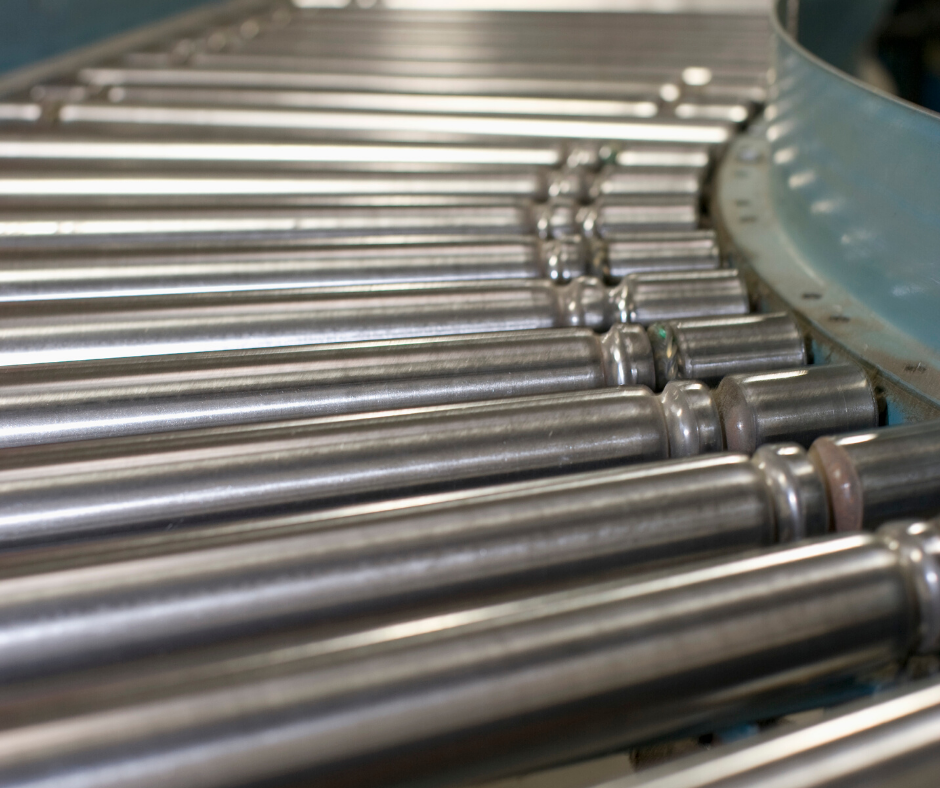
I took a look at the conveyer before the laminating process and noticed a series of angled rolls. These rolls were angled to move the board over to one side of the conveyer and keep it against a guiding rail. There were 36 total rolls along the conveyer, and of those, 28 were angled. I believed there were too many angled rolls. They were driving the board at an angle past the guide rail, keeping the board from entering the laminating process squarely.
A New Way to Roll
I asked Wayne if he was willing to try an experiment. I wanted to straighten out most of the rolls, leaving just a few angled rolls. The board would be driven to the guide rail using the angled rolls and then the straight rolls would keep it straight as it entered the laminating process. Wayne asked me how long it would take. I estimated four hours of effort with his help and the help of a mechanic. The line was scheduled to be down for maintenance the next day. If we could do the work then, he would be happy to help.
The next day we started the work with the help of a mechanic. We identified the center of the laminating process and positioned the guide rail parallel to the direction of travel of the board into the process. Next, we moved the guide rail to the optimal position to guarantee the board would be centered entering the process. We marked the original position and current position, just in case we had any issues. Next, we started straightening the rolls.
An engineer came by to see what we were doing. When I explained, he told me he had installed the laminator a few years back and was responsible for all of the angled rolls. He didn’t agree with what we were doing and tried to convince us to stop our work and put everything back. I assured him we were experimenting and were willing to put everything back to its original position if necessary. Although he didn’t seem satisfied, he decided to go elsewhere while we did our work.
Sometimes Less is More
After just under four hours, we were done. Before starting up the line, I called the engineer to see if he wanted to see the results of our experiment. He said he would come over later that day. We didn’t want to wait, so we started up the line and sent some test boards down the line. The first time, we had a jam. When we looked at the cause, we realized the new position of the rolls and the guide rail had an adverse effect on equipment on the other side of the line. We shut down the line and made some adjustments to take into account the new arrangement.
On our next attempt, the test boards entered the laminating process in a straight and square fashion. We were excited, but weren’t ready to declare victory. We started up the line and put it into production. We were amazed, the boards were not only going in exactly as we hoped, but they were spaced out more evenly as they came down the line. Wayne was excited and now wanted to speed up the line. He made small changes to speed until the line was running 20% faster than it had ever run. Right in the middle of this, the engineer came by to see what had happened. He was surprised things were going so well, but admitted he had angled so many rolls without considering the impact on the overall process. He then said, “Maybe less is more - too much of a good thing may be a bad thing.”
Over the next few months, we made additional improvements to the laminating process and the plant had a much more productive and safe operation than before we started.
Trust, but Verify
In 2005, I was asked to be part of a team to help Armstrong’s Mobile Alabama ceiling tile plant improve their performance. Production output had steadily declined over the first few months of the year, and they were well behind budget. The team was tasked with identifying and implementing improvements to the operation that would drive performance back to budget for the full year. The team leader called the effort a “Full Court Press”, meaning we would not give up until we accomplished our mission.
In 2005, I was asked to be part of a team to help Armstrong’s Mobile Alabama ceiling tile plant improve their performance. Production output had steadily declined over the first few months of the year, and they were well behind budget. The team was tasked with identifying and implementing improvements to the operation that would drive performance back to budget for the full year. The team leader called the effort a “Full Court Press”, meaning we would not give up until we accomplished our mission.
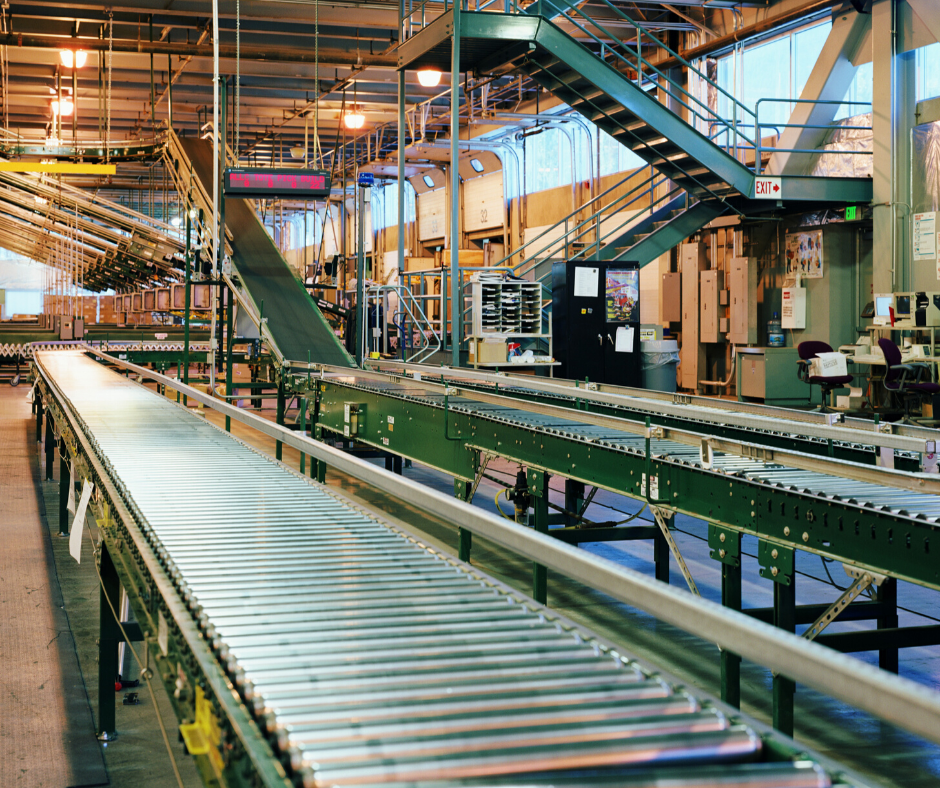
The Mobile plant had one board forming line and two fabrication and packaging lines. The board forming line was clearly not the problem, as the quality, productivity, and safety were well above budgeted performance. The fabrication and packaging lines were where the losses were occurring, so we agreed to focus our efforts there.
On our first day at Mobile, we attended the morning production meeting. We introduced the team to the staff and reviewed performance. The plant staff members were open to our help, but weren’t sure what we would be able to deliver in a short time. We assured the staff we would do our best and coordinate any efforts through them. Once the meeting ended, we took a tour of the fabrication department. During this tour, we observed many problems and spoke with operators, mechanics, and other staff to get feedback and ideas. Many were disappointed with the performance and hoped we would be able to help them turn things around.
Each of our team members had a specialty. One was interested in the programming used to control the equipment, another was fascinated by the coordination of materials and resources. My area of expertise was flow of materials through the production line. During the tour, I noticed many line-stops and jams. I knew I could provide help.
With the agreement of our team leader, another team member and I took a detailed look at one of the main fabrication lines. This line was led by a technician named Walter. Walter was extremely interested in what we were doing, and asked if he could tour the line with us. We were happy to have him along, as he introduced us to all of the crew members and lent credibility to our efforts. He also appreciated our approach of watching the line carefully to identify the causes of the line-stops and jams.
Something Isn’t Hitting Right
On our tour, we stopped at the punch press to watch its operation. Something didn’t look right to me. The press creates holes in the ceiling tiles which allow air and sound to enter the tile. It’s critical for the ceiling tile to enter and exit the press squarely and centered. Following the press, there’s a gate that stops the tile while the press completes its work. If the tile is angled, the edge of the tile gets damaged when it hits the gate. As I watched the tiles enter and exit the press, I noticed they weren’t exiting the press squarely and hitting the stop-gate at an angle.
I asked the press operator if he was concerned about the tiles hitting the stop gate at an angle. He told us he thought any damage would be cut out later down the line. It looked to me as though the amount of damage wouldn’t cut out completely, but the operator was convinced otherwise. I made notes of what I had seen, and we continued our tour.
Following the press, tiles were being painted and then cut to final size. After the cutting station, tiles went through an inspection station, where two operators were visually checking the quality of each and every one. While we were there, the inspectors were rejecting one-third of the tiles they were inspecting. There was so much scrap being generated they were having a hard time keeping up and had to stop the line many times.
During one line-stop we asked the inspectors what they were seeing. They showed us the broken edges of the tiles. The edges had cracks down the length of the tiles at an angle. They looked just like the angle of the press stop-gate we had seen earlier. I asked the inspectors for a few samples, which they were more than happy to share.
A New Angle on the Situation
We took a walk back to the press with Walter. We showed the press operator the sample ceiling tiles. He was shocked. He didn’t realize the stop-gate was causing so much scrap. He immediately shut the line down to make adjustments.
While the line was down, I asked if I could take a look inside the press to see if there might be a reason the tiles were hitting the gate at an angle. After locking out the press, I took a closer look and was amazed at what I saw. The guide rails in the press were not straight as designed, but curved. These rails were causing the tiles to turn at an angle when they entered the press. All plants had scheduled maintenance to replace press guide rails every six months. When I asked the press operator when the last time the rails had been changed, he didn’t remember, but thought it had been years. I then asked if they had backup press guide rails in their storeroom. Luckily, they did. Even luckier, they were straight.
Setting Things Straight
We replaced the curvy press guide rails with straight ones, and started up the press. Immediately we stopped the press. We were still damaging the edges of the tiles, this time at a different angle. We quickly identified the problem. The stop-gate was angled for the curvy guide rails and had not been adjusted for straight press guide rails. Once we straightened the stop-gate, the edge damage disappeared. After a few handshakes and high fives, we created a monthly press guide rail inspection and a six-month replacement program for this critical component.
During the week, the team made many other quick improvements and planned out other work that helped the Mobile plant return to budgeted performance for the year. If there’s a lesson to be learned from Armstrong’s Mobile plant, it’s to trust your processes, but verify them on a regular basis. Trust alone cannot eliminate inefficiencies or waste from creeping in, but consistent verification can identify these issues quickly so that they can be corrected.
The Strength of Ownership
My focus in continuous improvement has always been to help teams solve problems in a sustainable way. Early on in my career, I learned many facilitation techniques through trial and error, mostly error. One of the biggest errors I ever made during a Kaizen event was to be too directive with a team. When one of the team members said, “Adam wants us to do this…,” I knew I was in trouble.
My focus in continuous improvement has always been to help teams solve problems in a sustainable way. Early on in my career, I learned many facilitation techniques through trial and error, mostly error. One of the biggest errors I ever made during a Kaizen event was to be too directive with a team. When one of the team members said, “Adam wants us to do this…,” I knew I was in trouble.
Another early mistake I made during Kaizen events was to take responsibility for writing team member ideas on a flipchart while they were shouting them out to me. While this seems like a natural thing to do, I was taking ownership for team member ideas by writing them. I also was hindering engagement during the event, as the only person that cared about what I was writing was the person speaking the idea and me, the person writing it. The rest of the team didn’t need to pay attention to what was going on. This approach also allowed for dominant team members to get more attention than less vocal team members.
Post-It™ Notes – The Great Equalizer
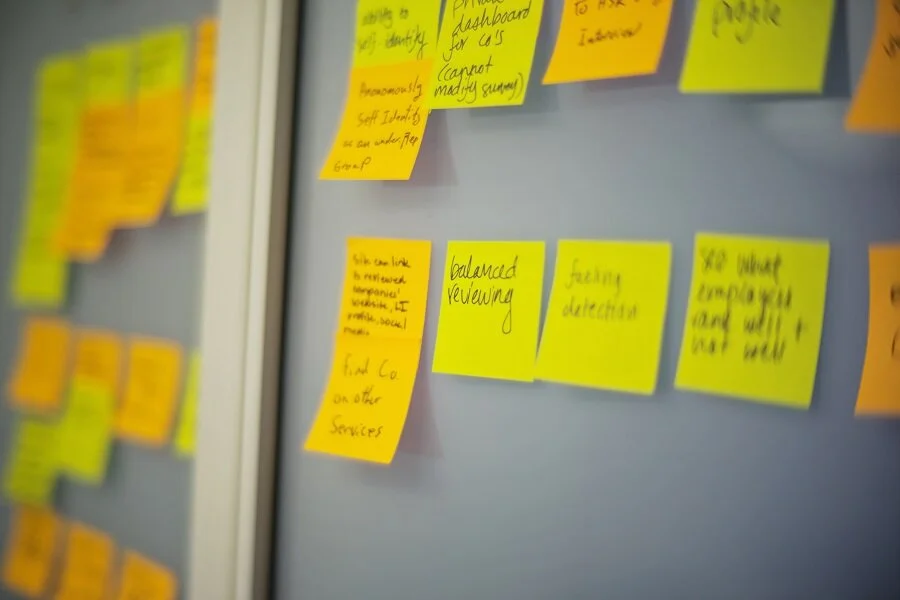
I knew I needed to change my approach to drive engagement and ownership to the team members. My first change was to use Post-It™ notes for gathering ideas from team members. Each team member would write their ideas, one per Post-It™, and then speak them, one at a time. In this way, everyone had an equal opportunity to voice their ideas, and they were written in a way that was meaningful to them.
I started to develop fun ways to share the ideas, with a focus on giving everyone equal opportunity to share their thoughts and minimizing the opportunity to dominate the conversation by stronger team members. I also noticed that Post-It™ Notes were the great equalizer. It didn’t matter what level in the organization a team member was. Their Post-It™ Note looked just like anyone else’s.
Once we uncovered all team ideas, I had to develop ways to prioritize them. There are many ways to do this, but the approach I settled on was multi-voting. Each team member gets an equal number of votes and is asked to pick their favorite ideas and place their vote on the ideas. As an example, there might be 100 unique ideas written on Post-Its™ and 10 team members. Each team member is given a vote to place on their 5 favorite ideas to work on and implement during the Kaizen event. The ideas with the most votes are the ones the team will work on. This technique works fast, but there seemed to be something missing. People told me that it was chaotic and there was something didn’t feel right about how things were prioritized. I knew I had to improve multi-voting.
Adding Process to Chaos
One event, I added criteria to the process of multi-voting to see if it would focus the group and help them feel more comfortable with the approach. I added these criteria to use when voting for a favorite idea:
1. It provides the biggest benefit to the customer and to us (related to the problem to be solved)
2. I actually want to do this (personal interest in the work)
3. We can accomplish and implement this during the Kaizen (fast implementation and low money spent)
Once I developed the criteria, the teams seemed more confident they were choosing the right ideas to work on. The criteria all but guaranteed people were interested in what they were doing, which would maximize the results, and the work would get completed quickly.
Pick Your Passion
Now that we knew the top priority work, we would assign team members to the work. I usually left this to the team leader. I noticed some team members didn’t like their assignments and I knew I had to come up with something better. That’s when inspiration hit me. What if I could help team members connect with the project they truly wanted to work on? One day, I decided to try something new. After prioritizing the top three projects to work on and writing them on a flip chart, I said, “First come, first served, put your name on the project you want to work on.” Immediately, two team members jumped out of their chairs in order to put their names on projects that were most meaningful to them. This was just the reaction I was hoping for. The connection between the team members and the work was strong. But, could I replicate this reaction?
It turns out, I have used the same approach throughout the world and it’s not unusual for some team members to jump out of their chairs to put their names on the projects that matter to them most. Not everyone does that, and it allows us to balance the teams to the projects. I learned to set the safety expectations prior to making my “First come, first served” statement.
I have used these facilitation techniques and many others to strengthen the engagement, empowerment and commitment of teams. In the end, I want them to win. I will continue to refine my approach to help them do that.
Ownership at the Right Level
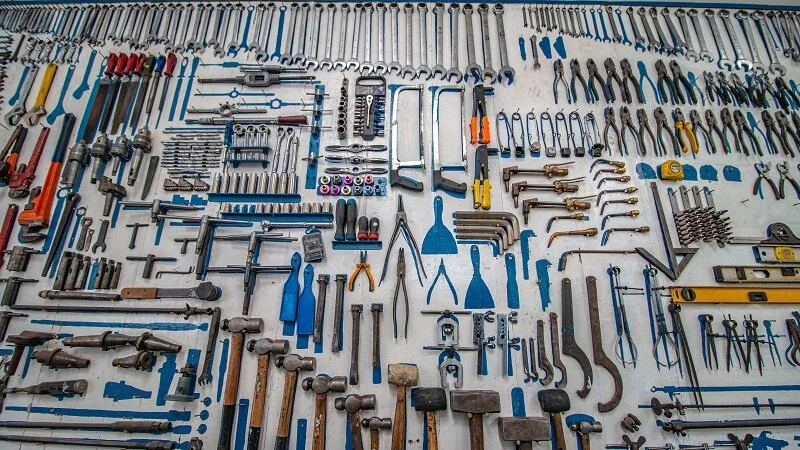
I was Lean Champion for the global technology team at Armstrong World Industries for many years. During that time, I supported teams of technicians, scientists, engineers, project managers, and the leadership team across four different departments. I had the good fortune to assist teams in their efforts to develop and launch new products, deploy capital equipment, and build factories all over the world. All departments had access to the Pilot Plant to support their efforts when necessary.
I was Lean Champion for the global technology team at Armstrong World Industries for many years. During that time, I supported teams of technicians, scientists, engineers, project managers, and the leadership team across four different departments. I had the good fortune to assist teams in their efforts to develop and launch new products, deploy capital equipment, and build factories all over the world. All departments had access to the Pilot Plant to support their efforts when necessary.
The Pilot Plant was a series of disconnected processes which had the resources and capabilities to test new materials, products, processes, and other ideas in a controlled way. Information gleaned from tests and trials was utilized in the effective delivery of projects and other development efforts. Each of the processes in the Pilot Plant had an owner, who was responsible for the care and safety of the process. The owner would also try to schedule the process to allow it to be utilized effectively and to keep wait times to a minimum. All process owners were the technicians who were most familiar with the operation of their process. Although they were at the lowest level of the group, they were very proud of their equipment and took ownership to keep things safe for their customers.
As Lean Champion, I spent many hours in the Pilot Plant, learning about its capabilities and trying to understand how I might be able to help the technicians in their efforts to support the rest of the organization. It was during my early days in the Pilot Plant that I met a gentleman, we’ll call him Roy, who was lead technician. He had just taken on the leadership role for the Pilot Plant, responsible for the overall effectiveness and operations. Having worked in one of Armstrong’s factories prior to his arrival at the corporate center, he had vast equipment knowledge and some leadership experience.
A Source of Frustration
Before taking over as lead technician, Roy worked in the Pilot Plant as a process owner and participated in the annual Pilot Plant clean-up. This was a multi-day effort by all technicians at the end of the year. They would go through all of the materials, supplies, and equipment throughout the plant and clean out the clutter and reorganize things in as safe and productive manner as possible. All development and testing in the Pilot Plant would be delayed during this time, as all technicians were busy cleaning things up and trying to make sense of what they had.
None of the technicians liked the annual clean-up process because they knew it wouldn’t take long for things to go back to the way they were prior to the clean-up. Roy expressed his frustration to me more than a few times. Once he became lead technician, he was even more frustrated and wanted to do something about it. My first suggestion to Roy was that he should discuss his frustration with his manager and gauge his support for Roy’s efforts. Roy did this, but seemed just as frustrated. Upon further discussion with Roy, I found out his manager was supportive of his efforts, but didn’t offer solutions Roy thought he could implement without direct assistance from his manager. He really wanted his manager to tell everyone to clean up after themselves.
Over the next few months, I facilitated 5S (Sort, Set in Order, Shine, Standardize, Sustain) events in the Pilot Plant to support Roy’s efforts to make areas safer and more productive for everyone. The few area owners who had completed 5S events had a strong managing system to keep their areas in top shape. The other 30 or so areas did not, so clutter and disorganization was prevalent everywhere else in the Pilot Plant. Roy was getting more and more frustrated.
Turning the Corner
One Monday morning, following the weekly technician meeting in the Pilot Plant, Roy stopped me on my way back to my office. “Adam, I’m really frustrated,” he said. “My manager won’t hold everyone accountable to keep the Pilot Plant organized and safe. He tells them it’s their responsibility, but doesn’t do anything about it when they’re not compliant. What can I do?” “Roy,” I said, “Who’s the leader of the Pilot Plant?” “I am,” he said. “Well, as leader, you have every right to set expectations and hold accountability. You are the operations manager; your boss is the plant manager. The plant manager needs you to get your operations in order. Let me help you do that.”
Over the next few weeks we built our strategy for putting the Pilot Plant in order. Our strategy included: setting clear expectations for all areas of the Pilot Plant, redefining responsibilities for all area owners (not just the areas that had been 5S’d), developing a weekly leadership walk (Gemba walk), and creating visual management to hold all area owners accountable. We mounted a large white board in the main meeting room and put lines and names on it, ready to explain it to the technicians at the next technician meeting.
The next Monday morning, we introduced the new strategy for making the Pilot Plant the safest, most productive place possible. The technicians listened with keen interest and asked many questions as Roy described the changes. They were skeptical that there would be any change in behavior of the scientists, engineers, or managers when they used the spaces in the Pilot Plant. Then Roy explained the white board, which he called the “Area Owner” board. On it were over 30 Pilot Plant locations with the corresponding name of the area owner and a space for a date to be written. At the first of every month, a red magnet would be placed for each location, signaling the owner hadn’t yet met certain monthly requirements. Once those requirements were met, the Area owner would replace the red magnet with a green magnet. The Area Owner would write in the date the requirements were met. At the beginning of the next month, all magnets were set back to red.
The technicians were furious. They thought those red magnets made them look like they weren’t doing a good job and didn’t want any part of the new system. I jumped in and explained it was a very visual and urgent way to show what areas weren’t yet compliant and who might need help. The system wasn’t a reflection of the specific area owner, unless he or she hadn’t made the effort to meet the requirements or ask for help. We felt if we could get all areas to green every month, we wouldn’t need the annual cleanup, which everyone hated.
A Delicious Incentive
At this point, the technicians started to buy-in and support the idea, but they were still skeptical that some of the area owners would be motivated to get to green every month. I knew I needed to provide incentive. I said, “The first month we get all areas to 100%, I’ll buy every area owner lunch and we’ll celebrate!” That got their attention. I then described the design of the management walk: We would take a selection of managers of the scientists and others who used the Pilot Plant and tour all areas, looking for areas where we could reinforce the need for compliance to the requirements. We would do this every week and sign off to show we had and we were just as accountable as the technicians.
For the next few months, I attended every Monday morning technician huddle, and reinforced the new systems and encouraged the area owners to get their areas to green before the end of the month. One Monday, late in the third month of the “Area Owner Challenge”, there was only one technician whose area was still red. Almost to a person, the technicians pressured him to get his requirements done and make sure Adam would buy them lunch! They did it in a fun way, but I knew they were serious. I knew our system was working at last.
Over the next months, the technicians hit 100% compliance almost every month, and by the end of the year there was no need for the annual cleanup. Pride in the Pilot Plant grew. In the following years, the Pilot Plant was bench-marked many times. Not because of the technology, but because of the strong ownership and pride and systems that allowed new products and projects to be delivered in the safest and most productive way possible.
Training in the Moment
Process Improvement Partners was invited to help a gummy vitamin manufacturer reduce their changeover time. Walking through the process with the sponsor, we felt that we could attain a sustainable 50% reduction in time, while improving the safety of the process and engaging the team with a winning attitude.
Process Improvement Partners was invited to help a gummy vitamin manufacturer reduce their changeover time. Walking through the process with the sponsor, we felt that we could attain a sustainable 50% reduction in time, while improving the safety of the process and engaging the team with a winning attitude.
After the charter was developed, we identified the winning team of participants. This included people who work in the process, those who manage the process, and others who were quite interested in helping the team win.
First Day Skepticism
On the first day of the Kaizen, the team was joined by a group of others from management and support groups, who were very interested in what was about to happen. After some introductions, those in the room voiced their concerns about the ability of the team to reduce time in half without substantial capital investment or significant training. As I had been through many of these sessions before with continued success, I assured them we wouldn’t have to spend much money and we would be able to train everyone properly by the end of the week. After all, we only had a week to accomplish our goals. I told the team that every team before them was able to achieve the 50% goal and I knew they would too. Most in the room looked like they thought it wouldn’t be possible, but they were supportive of our efforts.
The average changeover time for the past year was 4 ½ hours, so our goal would be to safely complete the same type of changeover in 2 ¼ hours. After some training in Lean concepts, we walked out to the factory floor and observed the crew on shift complete a changeover. This changeover took 5 hours and 32 minutes, a full hour longer than our baseline. After the changeover was complete, I brought the team into the meeting room to share their observations and ideas for improvement to the changeover. At the end of a very long first day, the team had four prioritized improvement efforts to work on during the morning of the next day. We went out to dinner to unwind and continue the discussion. Even though it was a very long day, everyone seemed excited about what might be possible.
On the morning of day 2, the team started to make changes, based on their observations and ideas. The plan for day 2 was to implement as much as possible in the morning, and then the team would conduct the changeover in the afternoon. This time, the crew on shift would observe the team, rather than the other way around. Some basic organization, visualization, and minor equipment improvements were made before lunchtime. We were now ready to see what would happen.
The plan was to conduct the changeover after lunch and then review our results and ideas following the changeover. I knew this might make the day even longer than the first, but this was critical for team learning and new improvement ideas.
The team completed the day 2 changeover in 5 hours and 1 minute and looked really tired and uninterested in reviewing things in the meeting room. Undeterred, I brought them together and got their immediate feedback. One of the team members pointed out that while the individual team members had simpler and safer methods to do their work, there was no real coordination of effort between the six team members doing the work. This was a revelation, and he was energized to build something that we could try out the next day. The team was spent and went home to rest and hopefully relax a bit.
The next morning, there was a flurry of activity, as the team came together to develop ways to coordinate efforts across all people doing the work. A large white board was developed to track the activities of the team members and show status before the changeover was to start as well as during the changeover. It wasn’t completed before our next test, but we decided to start using it in the afternoon.
Using the new ideas from the morning, the team completed the changeover in 3 hours and 17 minutes. Even though they were still an hour away from their goal, they were extremely excited about what might be possible. None of them remembered completing a changeover of this complexity in less than 3 hours and 30 minutes. I told them that on day 4, we would be asking the crew, not the team, to try the new changeover procedure. This meant that we not only had to complete the improvements, but also have to train others in our new approach. Now the team was nervous. How would they train people who had never seen our new procedure in such a short amount of time? I assured them that we would be just fine. They all went home a bit skeptical, but energized.
Training in an Hour
The team came into the meeting room on day 4, wondering how they would be able to transfer all the changes to the crew to use that afternoon. I told them we would do it in a very simple process: “Tell, Show, Do.” This means each team member would be paired up with a crew member one hour before the changeover preparation was to begin. They would first tell their partner about the new procedure. Next, they would show how to do the procedure. Finally, they would have their partner demonstrate their understanding of the procedure. This technique would bring out questions and full understanding in a short amount of time. By describing the process early in the morning, the team could think about it as they were working on their improvements.
By lunchtime, all the major improvement work was complete. The board was upgraded to show status of each task for each of the six crew members in “swim lanes”. There was a timeline from two hours before the changeover was to start (preparation steps) to three hours from the changeover start, in 30-minute segments. The idea was to complete every preparation task before the line stopped running and every changeover task assigned in less than three hours across all six swim lanes. Every task had a red magnet on it, and when complete, it was to be switched with a green magnet. If one of the crew members was still red in their swim lane while another crew member was green, he or she could be asked to help the crew member who was behind.
We brought the team and the crew together just before the training was about to begin. We thanked them and told them the team was doing their best to make this the safest, easiest changeover possible, and they would be pairing up and showing them all of the new changes. We asked them to try everything in the new way, in as safe a manner as possible, and we would get their feedback following the changeover. If they thought anything was unsafe, they should determine a safe way to complete the task and we would make the appropriate changes afterwards.
The one-hour training started and everyone paired up and walked around discussing and trying the changes. The white board was placed prominently in front of the supervisor office, and everyone could see what was happening.
It’s OK to Ask for Help
After the training was complete, the two-hour changeover preparation began. This preparation was being done while the line was still running. Crew members had to watch the line as well as complete their preparation steps. Team members shadowed the crew members and coached them in the new procedure, but they were not allowed to do the work for them.
Back at the board, the team leader and shift coordinator were turning some of the red magnets green, as preparation tasks were completed. I walked up to the board and asked them what they were seeing. They weren’t really sure what I meant. I pointed out one of the swim lanes had many green magnets, meaning one of the crew members was an hour ahead of everyone else. One of the other swim lanes had all red magnets and was falling behind. I asked them what they thought they should do. They were unsure, so I pointed out that Green could help Red catch up. I left them, hoping they would take the initiative to get help for Red. Three minutes later, I noticed they hadn’t left the board to get help, and Green was getting further ahead of Red. I returned to the board and asked them if they were going to get help for Green. This time, they said they would. I left them but didn’t go far. I noticed they weren’t making any moves or approaching crew members to get help for Red. I went back to the board and said, “let’s go see Green and ask her to help Red.”
They grudgingly walked with me up to the mezzanine, where Green was working. I introduced myself to Green and told her she was doing great and was way ahead of schedule. Then I asked her if she would be willing to help Red, who was getting pretty far behind. She said she would be happy to, and walked with us to Red, who was appreciative to get help. The light bulb went off for the team leader and shift coordinator and they started to make more moves to drive Red tasks to Green.
Back at the board, every time a red magnet was switched to green, the team leader and shift coordinator would high-five each other. There was no way the team would fail now. One of our other team members found a large monitor and placed it in the window of the supervisor office and started a timer for everyone to see how long the changeover was taking.
As we approached the two-hour mark, it became apparent we might meet our goal. People started to get really excited and the shift coordinator was making all of the moves he could to ensure a win for the team. At two hours and five minutes there was a bunch of cheering and clapping. Everyone thought they were done. It was a false alarm, however, as the Quality Department had not yet signed off on the new product being produced. One of the team members went to the Quality Office to get a representative to look at the product and do the appropriate tests required. At two hours and ten minutes, all of the approvals were received. There was a roar of applause and a bunch of hugging all over the place. I doubt that has ever happened before in the plant.
We brought the team and the crew back into the meeting room to get their feedback. To a person, they didn’t think what we had done was possible, but now realized it was. They realized the importance of coordination, help, and coaching. The team decided they would train all of the other crews in this way, to ensure full understanding and buy-in.
On the day of the report-out, each team member admitted they didn’t think we would be able to reach our goals. It was hard for me not to say, “I told you so!” If I were to pick the most important changes they made, it would be the coordination and visualization of effort. Everyone knew who needed help and what they had to do to win.
The Path to Consultancy
I worked more than 30 years for a multi-national company. During that time, I had the opportunity to help teams and solve problems all over the world, from the US to Europe to Asia. I worked in five distinct industries and had many roles, from engineering to operations to continuous improvement. I enjoyed most of what I did, but realized something was missing.
I worked more than 30 years for a multi-national company. During that time, I had the opportunity to help teams and solve problems all over the world, from the US to Europe to Asia. I worked in five distinct industries and had many roles, from engineering to operations to continuous improvement. I enjoyed most of what I did, but realized something was missing.
When you work for someone else, you meet their requirements and work on their assignments. You don’t always get the opportunity to pick your projects. Sometimes you have to work on things that have nothing to do with your chosen field or interests. But, that’s life in a big company.
I used to take time off and help friends identify and implement improvements in their own businesses. I would take a day, travel to their location, and walk through their process with them. We would spend time with the people, processes, and equipment, reviewing the issues and problems in their business. At the end of the day, I would help them lay out a plan to improve things, which they were able to use after my visit. I enjoyed doing this, and thought I could become a consultant after I retired from my primary career.
In April 2018, I was visiting a local company, and spent the day doing what I enjoyed, reviewing their processes, people, and issues. Following a wrap-up meeting, I told my contact I wanted honest feedback on my visit. I felt like I could use this feedback for the time in the future when I intended to consult. Maybe in about 3 to 5 years, I said. He said he would let me know what he heard and we left it at that.
One week later, I was downsized. While this was surprising to me, I didn’t feel bad about it, because I felt something better would come of it. I just had to figure out what that was. It didn’t take long, as I realized I had the opportunity to forge my own path as a consultant.
Downsizing with an upside
I placed a call to my friend from the week before and let him know I would now be available 3 – 5 years sooner than I expected to be. He seemed excited to hear that and said he would talk to his plant manager to see if he was interested in letting me help them execute the improvement plan we had developed together. The plant manager was willing to use my help. Now I had to figure out all of the details required to open and run a consulting business.
Luckily for me, and for many others, there are ample resources willing to help and support small business owners. Using those resources, a lot of networking, and tons of phone calls and meetings, I established my consultancy in May 2018. Once done, I was able to start working with my first client. We decided to run a Value Stream Mapping session to lay out a continuous improvement strategy for the plant in June. I had run many such sessions in my prior company. Now, I had to put one together with a group who had little to no experience with this approach. I knew I had to prepare them for what was going to happen and do everything possible to ensure they had a great experience and beat their expectations.
Success is in the details
I spent many days at the plant, preparing them and myself for the Value Stream Mapping event. Every detail was critical, from the layout of the meeting room to the activities each day and the food we would be feeding the attendees. The people at the plant were intrigued by how involved I was in even these details. I kept telling myself and them that it was all for ensuring a winning experience.
The first day of the event, we had over 50 people attend, and we broke them up into three working teams, with facilitators I had trained in advance. Throughout the week, each of these teams identified waste in their processes, ways to reduce the waste, and improvement efforts and projects to implement over the next few years. It was hard work, but the team members seemed to be having a good time and were energized by the opportunity to create their future. I was having a blast, realizing I was helping people do something they had never done before.
By the end of the week, all teams had strategic plans they were committed to implementing. Corporate leadership came to the plant for the report out and was extremely pleased with the results. After the event was over, I reviewed my approach with the leadership team to see what they thought. They were very happy and even suggested I could help them with a number of other improvement efforts over the coming months. This reaffirmed my belief that I had chosen the right path.
The reward for good work is more work
A few months later, I received a call from the corporate supply chain director for the same company. He told me I had been recommended to him by the plant manager and he wanted my help with another improvement project. I was elated and scheduled the work for August.
Since those early days, I have had the good fortune to acquire more improvement efforts for multiple locations of the same company and other companies as well. The more I do, the more I learn, and the more fun it has turned out to be. I have the opportunity to help people and do it in a way that is fun, engaging, and energizing. I am so glad I didn’t wait to get into consulting, even if I needed a nudge to start.

Communication is Critical
In 2010, I was helping a team in Hilliard Ohio simplify the method they used for changing over a production line from one product to another.
The team came up with many ideas to simplify things and make things safer and more efficient around the line, and it looked like they were well on their way to reducing the changeover time by more than 50 percent, which was one of the key objectives.
In 2010, I was helping a team in Hilliard Ohio simplify the method they used for changing over a production line from one product to another.
The team came up with many ideas to simplify things and make things safer and more efficient around the line, and it looked like they were well on their way to reducing the changeover time by more than 50 percent, which was one of the key objectives.
A Special Job for Steve
On the afternoon of the third day, they identified some work that required the help of an electrician who worked at the plant. Not just any electrician, but a specific electrician, let’s call him Steve, who happened to work on the overnight shift, from 11 pm to 7 am. He had special programming skills and the team wanted to have him do some work that evening, so that they could test out the changes the next morning.
The team leader, let’s call him Tom, wanted to write an email to the electrician, so he would know exactly what was being requested of him the moment he came to work that evening. As Tom wrote the email, it became apparent the request was complex and could be interpreted in many ways. In addition, if the electrician had questions, he would have to wait until the next morning to get them answered. This meant that our work request was at risk.
Never one to be shy, or keep my big mouth shut, I volunteered to stay at the plant until the electrician came to work that evening. Because I was the one traveler on the team, and the hotel was less than 3 miles away, I figured I could sacrifice my evening easier than the rest of the team. Besides, how long could this take? We had the email, which appeared to be pretty well written.
Comprehensive Communication
Steve the electrician came to the plant at around 10:15 pm that evening, and I met with him soon after. I told him all about the team and their request and asked him if he would take a look at the email soon. He agreed and said he would find me if he had any questions. I left him as he prepared for his shift.
In less than 15 minutes, Steve found me in the meeting room. He had many questions. Apparently, the email wasn’t as clear as we thought. We started talking about the note and I realized that just discussing the note wasn’t going to be enough to answer his questions. We took a walk to the production floor and reviewed all of the work the team had done so far and the programming request. We had to call for some downtime so we could lock out the equipment and climb up on top of it to look at some specific details and measurements that had been left off of the request.
We dug deeper and kept finding information that had been left off of the note, but was critical to the changes being requested. We did this all over the line until Steve was satisfied he had all of the information he needed to safely and properly make the changes for the team. I was very happy to hear that and as I left the plant, I realized how long a day it had been for me. It was 1:15 am when I arrived at the hotel. Having started the day at the plant at 6:00 am, this was a new Kaizen record for me.
New Record Set, New Lesson Learned
On the morning of the fourth day, the team came in and I told them the story of my meeting with Steve. They quickly realized their information left much to interpretation, and it was critical that I or someone else should meet with Steve the prior night. Then, we verified all of the changes Steve had made for us. Everything worked as we had hoped.
At the end of the Kaizen week, the team was proud to report that they beat all of their safety and productivity goals. In addition, they learned an important lesson: no matter how clear you think you are in your communication, it’s better to review things in person to make sure the person receiving the information truly understands what you are asking of them.
I am proud to say that I have never beaten my personal record of longest day spent on a job site in the years following this event. I am also proud to say that I learned how critical communication is and I now teach all of my teams that same lesson.
Line Up and Do the Right Thing
In 2011, I was asked to facilitate a Kaizen in Pensacola Florida. The problem to be solved was to improve material flow through the plant. Specifically, there were millions of square feet of goods in process, and items were getting lost, damaged, and generally causing confusion and chaos in the plant.
In 2011, I was asked to facilitate a Kaizen in Pensacola Florida. The problem to be solved was to improve material flow through the plant. Specifically, there were millions of square feet of goods in process, and items were getting lost, damaged, and generally causing confusion and chaos in the plant.
Building 37
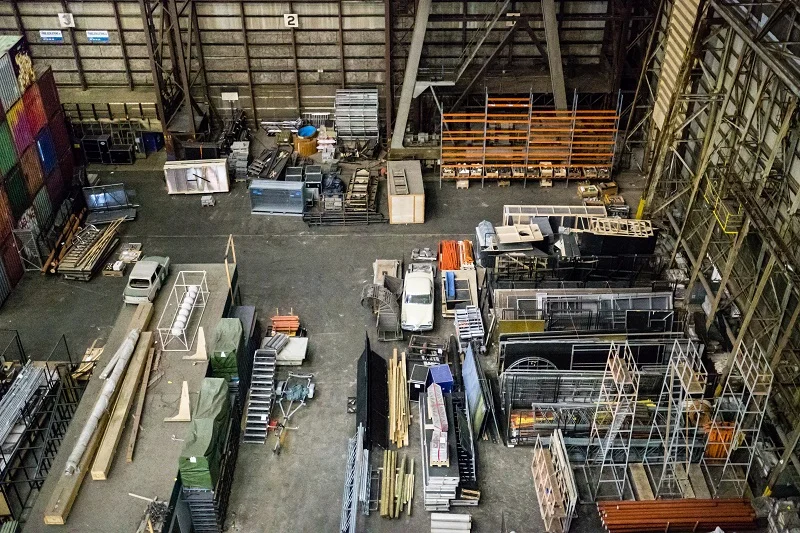
After training the team in Lean concepts, we took a walk out into the process to see what was happening. These Gemba walks can be quite eye-opening, and in this case, it made the problem very real to all team members. There were literally hundreds of pallets of material all over the plant, with much of it stored in a building they called 37.
In Building 37, there was no rhyme or reason to the way materials were stored. These materials were stored for various processing lines, but there was no way to know what was being stored and where to find it. It was obvious something drastic had to be done.
The team developed a concept early in the week that made storage and retrieval of the materials more manageable and thought they could organize and store everything in one location, rather than all over the plant. They determined that they could use Building 37 for this purpose, but would need to make the building more visual and create some rules around storage of materials.
Creating Visual Organization
After many different layout suggestions, we came up with a scheme we thought would work. We decided we needed to move everything out of Building 37, in order to reorganize and line out the space in accordance with our new recommendations. We also realized that we would have to clean the floor and paint it to make it as visual as possible and easy for everyone to use and manage. Painting the concrete floor was something the team didn’t want to do. In the past, forklifts tore up the paint and the lines would be lost quickly. Instead, they did some research and found a company out of southern Georgia with a technology to stain concrete, rather than paint it. It seemed like this was a good option, so we placed a call with them to see if they could come and help us.
To our good fortune, they were willing to drop what they were doing and drive more than 4 hours to meet with us and do the work during the Kaizen week. We told them what we intended to do and the size of the building to be stained. They estimated 28 gallons of yellow concrete stain would do the trick.
All Hands on Deck
We spent many hours moving over 1100 pallets (2.3 million square feet) of ceiling tile out of Building 37 into the open air. We crossed our fingers that it wouldn’t rain overnight. After we moved all of the material out, we swept and scrubbed the floors. The whole team pitched in and we were almost finished before the concrete staining company showed up in the late afternoon. They helped us finish up and started going about their work.
Most of the team members had to leave by 6 pm that evening, so I volunteered to stay with the concrete staining company, who was busy doing their work. In the middle of it, they realized that 28 gallons of stain wouldn’t be enough. They placed a call and sent a runner down to the plant with more stain. The runner happened to be the wife of the owner, who had just put dinner on the table. She dropped what she was doing to help us.
Grievance to File
Around 7 pm, I was approached by a very tall and unhappy Pensacola employee, who happened to be in their workers’ union. He wanted to know what was going on. I explained that our Kaizen team was transforming Building 37 in a way that it would be safer and easier to find and retrieve materials for the production lines. He wasn’t happy with my answer. What he really wanted to know was why the union employees weren’t doing this work. I explained that our team decided concrete stain was the best way to line the floors, given the issues with forklift traffic, and since this technology and equipment wasn’t available in the plant, we had to utilize outside contractors. We wanted to keep this work in-house, but that option wasn’t available to us.
Again, he wasn’t happy with my answer, but really didn’t have a valid argument as to how the work could have been completed with existing Pensacola employees. So, he angrily stormed off, vowing to file a grievance. Around 10:30 pm, all the lines were stained into the floor, and the contractors were finished. I was happy to see them leave, as I needed my rest for the next day of the Kaizen.
Good Intentions, Great Results
We lucked out, there was no rain overnight, and we spent the morning putting everything back into Building 37, this time in a logical sequence and order for the materials to be easily found. The lines really helped, and to this day, the plant uses this system to keep materials organized for all of their production lines.
I never found out if the union employee filed a grievance, but even if he did, we had done the right thing for the plant with the best of intentions.

Kaizen Every Day – The Armstrong Lockout
In all my years doing continuous improvement work, I worked with teams during Kaizen events of short duration, or influencing continuous improvement behavior daily. Never did I think I would be doing 6 months straight of Kaizen. That is, until the Armstrong Lockout.
In all my years doing continuous improvement work, I worked with teams during Kaizen events of short duration, or influencing continuous improvement behavior daily. Never did I think I would be doing 6 months straight of Kaizen. That is, until the Armstrong Lockout.
Supporting Operations During a Lockout
In 2011, Armstrong World Industries and their Marietta PA ceiling plant workers were unable to reach a contract agreement by the time the contract expired. Historically, Armstrong would allow the employees to continue working without a contract, until negotiations were completed. There was always a risk that the employees would walk out any time without notice, but that had never happened. New management decided that it wasn’t worth the risk and decided to send a message to the union by locking out the hourly production and maintenance employees until an agreement would be reached.
Armstrong was ready for this contingency and had made an arrangement with a company that supplied replacement workers and security to companies in similar situations. These workers would move to the site and fill in for the employees until a resolution was reached. Many of the Armstrong engineers, retirees, and other technically skilled corporate employees were asked to train and supervise the replacement workers and also run the complex equipment. Some non-union workers came from other plants in the Armstrong system to help too.
I had been helping a project team building a plant in China. When I returned to the United States in July, I was asked to help support the Marietta plant in an operations role, alternating between equipment operations, training, and supervision.
Armstrong employees were required to meet at an off-site parking lot, and then board a blue bus with blacked-out windows that would take us to the plant. We were to work 12-hour shifts, 6 days a week (we could work 7 days a week if we wanted to) and weren’t allowed to leave the plant property unless we had a personal emergency to attend to. Some of us, including me, had pre-shift supervisor meetings, that extended our days to 13 ½ hours. Needless to say, we all wanted the lockout to end quickly. We also wanted to make sure that no customers would feel the impact of reduced service levels due to the lockout, so we were committed to keeping the plant running, 24/7/365.
A Plan to Reduce Downtime
In my first weeks at the plant, I spent much of my time helping to solve downtime issues and coordinate efforts of workers who were unfamiliar with the equipment. It was apparent that the plant wasn’t left in the best of shape by the Armstrong union employees and they were using their experience to compensate for low performing equipment. We didn’t have the experience, so it was clear that something would have to be done to make the equipment more reliable.
I started to assess the factors impacting equipment performance and realized that many of the downtime issues could be solved with some basic line maintenance – conveyer guiding, leveling, and squaring. Lucky for me, this was and is an area of experience and expertise. On a Saturday in August, I was talking with the plant manager, and suggested that I could provide more value at the plant if I were to work with maintenance to solve some of the basic conveying issues I saw in my time at the plant. He was intrigued and asked me to show him what I meant. I took him on a tour of various parts of the line and pointed out the issues I was seeing. Then, I described my plan to solve those issues, one part of the line at a time. More intrigued, he called the maintenance manager and asked him to join us for a tour.
The maintenance manager met us at the line and took a tour with us. He was a bit skeptical, but after about 30 minutes, he was convinced that I might be on to something beneficial. He asked me what I needed to start the work. I told him I could work with a skilled mechanic to start making line improvements. He asked me when I would be ready to start. I was ready any time.
A Team on a Mission
On the following Monday morning, I was assigned a mechanic named Joe. Joe and I took a tour of the lines and I shared my vision of the work we could do to improve performance. He was enthusiastic. We decided we would tackle one line at a time and prioritized the first line to work on. We agreed that we would do work in 1 to 2-hour blocks and try to utilize downtime to get our work done. We also agreed that since the lines were running so poorly, we could make our own downtime blocks, as long as the crew and supervision was aware and agreed to our plan.
At first, no one wanted to give us any downtime to do the work, so we were frustrated and couldn’t plan well for the work. The only way we could make a real difference would be to convince one of the acting supervisors to take a chance and let us shut a line down in a planned way. I was persistent and convincing and finally had the approval of a line supervisor to try out our plan on his line.
Joe and I got to work, leveling, squaring, and improving the guiding on the first line. We worked one section at a time, and after about a week, the line was running noticeably better. After three weeks, we were setting production records and others were noticing. All of the sudden, Joe and I were getting more calls for help than we could manage. So, we asked for more mechanics to help. We started expanding our work and touching all of the lines in the plant. We also taught the techniques to others so that they could solve problems too.
From time to time, I would get calls on the radio from mechanics who wanted my advice and help and they would meet me and take me by maintenance cart to the site of the issue for review. Now we were making a huge difference in the plant performance and the problems of the past were being solved in a sustainable way. Some areas of the plant looked nothing like they had prior to the lockout, as much of the equipment had been stripped of the problems that kept it from running reliably. Although tiring, this work was also exhilarating, and made working long hours fun. We could see improvement happening every day.
The Lockout Ends, But Improvements Remain
In January 2012, the union agreed to contract terms and was scheduled to return in the middle of the month. I was asked to stay on for a while to show the changes we had made to the plant. Many of the lines looked markedly different and were unfamiliar to the union employees. I gave tours of the line and fielded questions from the employees. For the most part they were appreciative of the changes, as they could see how the improvements would help them do their job in a safer, less stressful way.
The union president asked me specifically why I made the changes the way I did. I told him that due to our lack of experience and skills, we had to make the lines easier to run or we would disappoint our customers. We really missed our experts and were extremely glad they were returning. He liked my answer and ended up doing more of this improvement work with my assistance in the following years.
I am very proud of the work I was able to complete for Marietta during the lockout. I was also extremely grateful the lockout ended when it did. I was ready to go back to riding in something other than a blue bus with blacked out windows.

With Persistence and Desire, Anything is Possible
I started working for Thomasville Furniture out of college as an Industrial Engineer. Born and raised in Maryland and working in North Carolina, I was called “Yankee,” and I had to prove myself worthy every day. I felt like I was up for the challenge. My mother reminded me I was born south of the Mason Dixon line, but it didn’t seem to matter to North Carolina natives.
I started working for Thomasville Furniture out of college as an Industrial Engineer. Born and raised in Maryland and working in North Carolina, I was called “Yankee,” and I had to prove myself worthy every day. I felt like I was up for the challenge. My mother reminded me I was born south of the Mason Dixon line, but it didn’t seem to matter to North Carolina natives.
My first assignment was in Thomasville’s veneer plant. At this plant, many types of veneers were brought together to make beautiful panels used in expensive furniture, more expensive than I could afford. I was fascinated by the labor-intensive process of veneer making, and spent many hours in the plant observing what was going on and asking lots of questions of the workers. They seemed amused by the Yankee who was willing to listen to them.
An Expensive and Inefficient Process
One afternoon, I was in the basement of the plant and watched workers put materials into and out of a hot press. This press was a large, multi-opening machine used to cure and remove moisture from some of the most expensive veneers bought by Thomasville. The machine looked like a large pizza-oven, and had eight openings, one above the other.
I watched a crew of six workers place a large metal plate on a table. After that, they took a “book” of burl veneer – 14 slices from the same log that look generally the same, and spread out each slice on the metal plate. Then, they put another metal plate on top of all of the slices, creating a metal and veneer sandwich. This sandwich fit into an opening of the press. When all eight press openings were filled, a button was pushed, and the press closed on all of the sandwiches. 36 hours later, the sandwiches were removed, all extremely hot, by the same six workers. Now, the workers had to remove the metal plates without burning themselves or damaging the veneer. Heat and pressure had created a vacuum inside the veneer sandwiches, so when the plates were removed, the veneer would fly around and break, as it had become drier and more brittle.
This was the most expensive material used in the furniture and the plant was losing much of it in the course of the curing process. It really bothered me, so one afternoon I decided to talk with the plant manager to see if there was something that could be done.
Avis Tobin worked for Thomasville for many years. He was short, very round, kept a cigar in his mouth at all times, and had the type of loud, gravelly voice that would frighten small children away. I asked him if the “books” of burl veneer could be cured without separating them into single pieces. He responded, “Son, you just don’t know anything about the veneer business. It can’t be done. The veneer would stick together and we’d lose everything.” I wasn’t satisfied with his answer, but it was the most he had ever said to me during my time in the plant.
Opportunity for Change
Six months later, Avis retired and was replaced by a younger plant manager named Bob Ashley. Bob and I developed a strong working relationship over the next few months, as I was able to complete many projects he requested of me. One day, while sitting in his office, I brought up my idea of curing the burl veneer in stacks, rather than pieces. I thought there might be a better way to do it. Bob thought a minute or two, looked intrigued, and placed a call to the veneer buyer at the plant. “Do you have any contacts who cure veneer in the general area?” he asked. The buyer had one in Beaufort North Carolina, which was about four hours from the plant in Thomasville, on the East coast of the state.
Two weeks later, four of us, the plant manager, veneer buyer, truck driver, and me took a truck load of burl veneer to Beaufort to see if we could cure it without de-stacking it. When we arrived at the plant, we saw a piece of equipment we had never seen before: a combination hot press and cold press. The Beaufort plant cured straight grain veneer in this combination press with two people, one loading a conveyer in front of the hot press, the other unloading a conveyer at the back end of the cold press. The stacks of grain veneer would be conveyed into the hot press, pressed for a few minutes, conveyed out of the hot press to the cold press, pressed for a few more minutes, and then conveyed out of the press to the operator.
The stacks of straight grain veneer came out of the end fully cured, with no pieces sticking to each other. Would our burl veneer do the same? We were invited to put a few stacks of burl veneer into the combination press and try it out. We did, and when the stacks came out the other end, most of the pieces of veneer were stuck to each other. We were disappointed. The operations manager for the plant said, “Oh, I forgot to change the heat and dwell time for the burl veneer. It has more moisture in it, so I need to adjust the settings for that.” After he made the change, we tried a few more stacks of burl. Lo and behold, most of the veneer was cured and hadn’t stuck to any other pieces. Approximately 20 percent was still stuck.
A Valuable Lesson
We decided that was all we needed to see. We felt like we would be able to identify the settings required to eliminate the sticking completely. We drove the four hours back to Thomasville with grand plans to change the way we would cure veneer forever. I wrote an appropriation request for approximately $250,000 and bought Thomasville’s first combination cold and hot press. Six months later, it was fully operational. Manned by two operators, we found the proper settings cured burl veneer in one tenth the time of the prior process, with much less scrap and zero risk of being burned. After that, I realized the only limitation to solving difficult problems was preconceived notions of what was possible. If you are willing to take a risk, you may get a breakthrough. I still use this thinking today, as I help Kaizen teams of all sizes and structures worldwide.
Overcoming Resistance to Change
Process Improvement Partners was brought in to help a consumer goods manufacturer cut their changeover time (the time it takes to switch tooling and equipment over from one product to another) in half. By doing so, they would be able to reduce inventory and improve process performance.
Process Improvement Partners was brought in to help a consumer goods manufacturer cut their changeover time (the time it takes to switch tooling and equipment over from one product to another) in half. By doing so, they would be able to reduce inventory and improve process performance.
The company has five different shifts operating 24 hours a day, 7 days a week. Each crew believed it had the best approach to changeovers, but the results didn’t show it. There was major variation between and within shifts and none of the crews were able to start up their lines consistently and effectively coming out of a changeover.
The Path to Improvement
Process Improvement Partners recommended a 4 ½ day changeover reduction event, or SMED (Single Minute Exchange of Die) Kaizen, using representation from each of the crews. By doing this, we could identify best practices across all of the crews and teach changeover reduction techniques to be shared once the Kaizen was over. The leadership team agreed, and we began preparations for this critical event.
Our leader, the Operations Manager for the production line, picked a team of “All Stars” to participate in the Kaizen. He felt their experience, creativity, and enthusiasm would lead us to a win.
This was the first changeover reduction Kaizen in the history of the plant, and the team was skeptical when we stated our objective: cut the existing changeover time in half, without increasing safety risk to the crew or quality risk to their customers. The team members assumed this meant they would have to rush around, with intense pressure to meet the new target time. The truth was using SMED techniques, we would be able to reduce enough waste in the existing changeover process to take significant time out and reduce safety and quality risk. Then, using the Wheel of Sustainability, we would be able to continue to get great results for years to come.
Turning Skepticism into Excitement
The first day of the Kaizen, we taught the four step SMED methodology (with a little spin from Process Improvement Partners):
1. Assess the current changeover and identify steps that must be done while the line is shut down (internal steps) and steps that are done while the line is still running (external steps)
2. Convert any internal steps to external steps
3. Streamline any remaining internal steps and then any external steps
4. Eliminate any adjustments and put in all aspects of the Wheel of Sustainability
For step one, we videotaped the changeover, did some motion analysis, and made numerous observations of waste. The team was excited to see opportunity they hadn’t realized existed. They never had stepped back and watched what was happening, as they always had to participate in the changeovers.
As we entered step two, the team prioritized the steps they thought could be converted from internal to external. Their creativity helped them invent and build a number of jigs and fixtures that allowed work to be done in preparation for the changeover, while the line was still running. By the morning of the third day, the team tested their efforts and found the time required to change the line over had already been reduced by 50%. They weren’t satisfied, there was much more they felt they could do.
For the rest of the third day and part of the fourth day, the team worked on improvements to streamline remaining internal steps, found ways to eliminate adjustments, and created visuals to help all team members do the changeover the same way every time. Now it was time to give the changes the ultimate test: let another crew try the new changeover procedure.
Working Through Opposition
Each team member was assigned a crew member who wasn’t on the team. They were assigned to review and teach them the new method and answer any questions or concerns. They were sent out onto the factory floor and had approximately 1 ½ hours to teach and discuss the new methods and approach one on one. After a while, one of the team members came into the meeting room and asked for my help. Her assigned crew member was not interested in participating in the test of our new changeover procedure. I came out on the floor to find out if I could help the situation.
The crew member, let’s call him Roy, was visibly upset, so I asked him what was bothering him. He started yelling at me, saying we hadn’t listened to him or anyone else on his crew, didn’t videotape their changeover, and generally didn’t care what they thought. I told him the team had representation from every crew and had done their best to use the best practices from each shift as we worked during the week. He was having none of it. I let him know that we needed to let someone other than the team try out the new method, so we could get feedback and make improvements to it, before locking in all of our changes. His anger grew. I knew I needed to do something extreme, or he would be lost and we wouldn’t learn what was needed to finalize our new procedure.
I asked, “Are you telling me you’re unwilling to try the new procedure?” Roy realized he was being asked if he was being insubordinate, which is a disciplined offense in most companies. He answered he was willing to try the new procedure, but just wanted to voice his protest about the lack on inclusion. I told him I respected his opinion and thanked him for his willingness to try the new approach.
Testing the New System
At 4:30 pm, we gathered all crew members to explain the new procedure, set the expectations for them to follow it to the letter, and would give them the opportunity to provide feedback once the changeover was complete. We would also pair a team member from the Kaizen team with each crew member, so they could be coached during the changeover, just in case they didn’t remember or understand the new steps or approach. All crew members affirmed their commitment to try the new procedure, and we started the new changeover at approximately 4:40 pm.
Three minutes into the changeover something didn’t look right. One of our Kaizen team members, let’s call her Julia, looked extremely uncomfortable. I took her a few feet away from her assigned crew member and asked her if her assigned crew member wasn’t following the new procedure. She nodded and I called the Kaizen team leader over, to talk about what was happening. He wasn’t happy and we agreed to stop the changeover immediately.
We gathered the crew back together, explained what was wrong, why it wasn’t ok to try their own procedure as we wouldn’t learn anything if they did. We then instructed them to put the line back to its original condition before the changeover. After that, we would start the changeover again. There was tension in the air.
At approximately 5:00 pm, we started the changeover for the second time. In two minutes, one of the Kaizen team members, let’s call him Jack, came over and informed me his assigned crew member wasn’t following the new procedure. We stopped the changeover again, gathered the crew, and in an impassioned way, did our best to convince them to try it the right way, or we would do this all night. Would things work out on the third try?
We started out third attempt at 5:10 pm and this time everyone followed the new procedure to the letter. You could see the tension fade away from the Kaizen team members. Now, something else was creeping in. The team had been working since 6:30 am and they were getting tired. 65 minutes later, the changeover was complete. Now it was time to bring the crew into the meeting room and get their feedback and reaction to the new procedure. I was wondering how Roy and his crew mates would respond to the new procedure and the two stoppages we imposed on them when they tried to go “rogue”.
A Surprising Conclusion
In the meeting room, I set up a flip chart and gathered all crew members around a table. I asked each of them to tell us, one at a time, what they thought, identifying out the things they liked and the things we could improve for them. As they spoke, I would write their comments on a flip chart for everyone to see.
Roy started out the feedback session by telling us he “loved” four very specific improvements the team had made. He also offered some constructive feedback on some simple things we could improve. Others had the opportunity to share their feedback, and all of them had positive and constructive things to say. I have to admit I was a bit shocked at the change in the tone in the room. I had figured the crew would save up all of their anger for the meeting room. Instead, they were appreciative for all of the Kaizen team’s efforts. They had realized our Kaizen team was doing their best for everyone in the crew, and the test proved it to them.
We thanked the crew and the Kaizen team, and sent everyone back to the line or home. There were many handshakes and high-fives before they left.
At the report out to leadership, the team remarked how important it was to get everyone’s input and also to test out new ideas with a group that wasn’t involved in the changes. It illustrated how difficult change can be, as most people tend to expect the worst and hope for the best. Since then, the line has been able to sustain the reduced changeover time and has many more believers in changeover reduction and Kaizen.

Speaking Up Takes Courage
In 2011, I was asked to assist a team in Pensacola, FL who wanted to improve processes in their distribution center. We were given four days to accomplish our task – reduce shipping damage by 50%. This was a tall order, but the team was up for the challenge.
In 2011, I was asked to assist a team in Pensacola, Florida who wanted to improve processes in their distribution center. We were given four days to accomplish our task – reduce shipping damage by 50%. This was a tall order, but the team was up for the challenge.
After a half-day of training on Lean tools and techniques, the team took a walk in the distribution center and supplying processes and identified many ideas they thought would improve the situation for everyone who worked there.
All of the ideas were shared and the team prioritized the ideas they wanted to implement first. Breaking the team into smaller sub-teams, we picked the top three projects to work on. Each sub-team developed their solutions and began to implement them. At times during the day, we would come back as a full team and review each sub-team’s progress. Things were getting done, but it wasn’t clear that any of the projects would significantly reduce shipping damage.
On the morning of the third day, I asked the team if they had any feedback or ideas to help us make better progress against our goals. The room was silent. One of the team members, let’s call her Ruth, had an uncomfortable look on her face. I didn’t want to put her on the spot, so I asked each team member, one at a time, to give one suggestion they thought would make the day better for everyone. Most people said things like, “Let’s work better as a team,” or “We should try to get more done.”
When I got to Ruth, she blurted out, “I don’t think we’re working on the right things.” This took me by surprise. I wanted to know more. She then explained we weren’t focusing on the root cause of the shipping damage. She thought we were just working on things that were easy to implement, not directly impacting the causes of shipping damage.
I felt a sense of panic – we were in the third day and would be reporting our results at the end of the fourth day. There was little time to spare, but we had to resolve this issue or else we would fail. We were a team and the members started to share their thoughts with Ruth about the problem we were trying to solve. They realized Ruth was right. We were avoiding the real issues causing shipping damage. We brainstormed again and prioritized efforts based on the right things to do, not the easiest things to do. Relief started to wash over me as I realized the team was determined not to fail.
Once we finished prioritization, the team split into four sub-teams. Each sub-team had a sense of urgency and purpose and worked on their projects with energy and a “refuse to lose” spirit. If they had a question, or got stuck, they went to find help. Nothing got in their way. Almost all team members stayed late and everyone agreed to come in two hours early the next day to ensure their work would be done.
We decided to abandon the standard Power Point presentation of our findings and changes and worked right up to the time of the report out. When the leadership team came to see what we had done, we gave a tour of the changes we implemented to reduce shipping damage. They were impressed and believed we had accomplished our goal of 50% reduction.
I learned a valuable lesson from Ruth, and it’s one I share with all of the teams I work with. Understand the problem you are trying to solve. Once understood, focus on the thing(s) that will solve the problem, no matter how difficult they may seem. If you’re veering off course, have the courage of your conviction to steer people back on course. Never be afraid to speak up.
I now give all of my teams many opportunities to speak up and share their concerns. I also do it as soon as possible in every Kaizen event I lead or facilitate. It’s better to change course than end up in the wrong destination. Thanks to Ruth for being brave enough to steer us back on course.

Even the Most Organized Person Can Improve
A global ceilings manufacturer wanted to improve the safety and productivity of its testing facility. Over the years, many capabilities had been added to the facility without regard to the needs of the technicians who worked there. Because of this and the lack of a managing system to ensure the organization and productivity of the facility, the technicians took it upon themselves to hold an annual “cleanup week” at the end of the year. All technicians would stop their project work and devote their time to go through equipment, materials, and spaces and clean out any clutter they felt they could get rid of.
A global ceilings manufacturer wanted to improve the safety and productivity of its testing facility. Over the years, many capabilities had been added to the facility without regard to the needs of the technicians who worked there. Because of this and the lack of a managing system to ensure the organization and productivity of the facility, the technicians took it upon themselves to hold an annual “cleanup week” at the end of the year. All technicians would stop their project work and devote their time to go through equipment, materials, and spaces and clean out any clutter they felt they could get rid of.
Three weeks after “cleanup week,” conditions had reverted back and it didn’t look as if any effort had been exerted. This happened annually, and the technicians were extremely frustrated. The lead technician of the testing facility wanted to do something different and sought me out for advice. After walking through the facility with him and listening to his concerns, I suggested we meet with his manager, who was responsible for the testing facility. We took a walk together and discussed the problems created by the clutter and lack of organization in the facility. After about an hour of discussion, we agreed we should use an improvement approach called 5S (Sort, Set in Order, Shine, Standardize, and Sustain) in a targeted area to see if we could make sustainable improvements that could be replicated in other areas of the facility. But, where should we start?
We decided to pick an area known for its organization and strong ownership. We also wanted to pick an area small enough to do proper 5S on in a week or less. We had just the area – the manual paint spraying area. This area was used by many of the scientists, technicians, and project team members. It had a very strong area owner, let’s call her Regina. Regina was known for her tenacity and ability to hold people accountable to follow her rules for the area. This was the area owner we needed. The area was fairly well organized and small enough to demonstrate the value of 5S in a week or less.
We approached Regina and asked her if she would be willing to lead the first 5S team in the testing facility. She agreed, but wasn’t sure what improvements we could make. She was proud of what she had been able to accomplish and had every right to be. She didn’t realize what was possible with 5S and proper sustaining systems. I gave her a quick overview of what I thought might be possible and advised her to pick the team she wanted to help her do the best job possible. Over the next few weeks, she visited with team members to encourage them to participate and share a vision of what was going to happen. She even convinced the manager of the testing facility to participate. He showed his leadership commitment to the effort and raised quite a few eyebrows in his peer group.
The first day of the Kaizen was “Sort” Day. On this day, the team goes through all of the materials, parts, and equipment and makes tough decisions about what to keep and what to remove or throw away. They removed at least 50% of what was in the area. This was shocking to Regina, as she thought he had been diligent to keep unused things out of the area. What she didn’t realize was she was being conservative in her decision making and those using the materials knew some of them would never be used again. We removed so much clutter and materials, the team was able to remove the top shelves in the area, allowing everyone to reach any materials without getting on a step stool or even reaching over their heads. We then added signage to show everyone it was unacceptable to store anything above their heads.
The second day of the Kaizen was “Set in order” Day. On this day, the team took all remaining materials, parts, and equipment and identified the best locations to place them in. After doing so, they labeled the locations, painted outlines, and generally made it impossible to put things in the wrong location. During this effort, I noticed a few of the technicians talking about repair parts for paint guns. Apparently, each one had his or her own repair parts, because they didn’t trust they would be able to find them when they were needed. I asked this question, “If we always knew where the repair parts were and they were immediately available, would you need to squirrel away repair parts?” They all agreed they wouldn’t, but didn’t trust 5S would keep parts from being lost, stolen, or just walking away. I asked them to trust me and with their help, we designed the most visible system possible for the repair parts. I agreed to let them keep their own stash of parts for a few months as a backup plan, but asked them to try the new system first and hold others accountable to do so as well. They grudgingly agreed and were extremely skeptical. Understandable, but I told them we were going to create the new system and rules for it and they could be the ones to help make it work and also enforce them, with the help and support of the leadership team. We would have to teach the leadership team the proper way to support the new system, and we would use our report out to start the process. I would also work separately to coach and teach the leadership team how they should behave.
After “Sort” and “Set in order” days, we worked on Shine, which means to clean and inspect and assure every piece of equipment, tool, and material is in the best condition possible. All of the team enjoyed the day, as they were able to repair and replace things that had been working at less than optimal levels for many years. All repairs and replacements were done on the spot and at very little cost to the company. It helped the team realize they would be empowered to keep things in top operating condition at all times.
On the last days of the Kaizen, we worked on the sustaining systems to ensure all of the team’s efforts would live on. This included responsibilities for those using the area, those maintaining the area, audits of the area, and visits to the area by leadership.
On the final day of the Kaizen, the team presented their results to a packed meeting room. There was a lot of excitement, but nothing like what happened when they gave a tour of the “new” area. People were amazed at what the team had accomplished and the quality of the sustaining systems they had built. They were even more amazed when Regina talked about the difference of having the repair parts out in the open and not squirreled away by each technician. She related a story of how she had lost over 2 hours looking for a specific repair part a technician had locked in his desk. Because she didn’t have the part in her stash, she had to track the technician down, wait for a meeting he was attending to end, and then get the key for the locked desk drawer. This was a typical story, not an exception. Now, because of the team’s efforts, she could get to any repair part in less than 10 seconds. This was an immediate improvement to safety and productivity.
When the tour was over, there was much clapping and recognition for the team. Many in the audience stayed to talk to team members about their perspective on what had happened. They relayed the same thought they had before the Kaizen, “Regina’s area is so organized. What improvement can we make?” Now they knew. In the following months and years, more the two dozen other areas in the testing facility used 5S and installed the same sustaining systems.
These simple tools helped the facility reduce their customer response time by more than 50%, doubled productivity, and greatly reduced safety risks throughout the facility. It also opened their eyes to the idea that no matter how good you think you are, you can always get better.

Top 5 Continuous Improvement Books
I have read many books on Lean, Six Sigma, and other Continuous Improvement methods over the years. Some inspired me, some frustrated me, and all made me think. The following 5 (and two honorable mentions) are my all-time favorites.
I have read many books on Lean, Six Sigma, and other Continuous Improvement methods over the years. Some inspired me, some frustrated me, and all made me think. The following 5 (and two honorable mentions) are my all-time favorites.
Number 5: The Toyota Way – Jeffrey Liker
This is an easy read and talks about the principles behind the Toyota Production System. It is the first book that I recommend to anyone who wants to know what “Lean” is.
Number 4: The Goal – Eliyahu Goldratt
All about the Theory of Constraints, this book reads like a novel. I wanted to see if they save the factory and live happily ever after. There’s a great story in it about a camping trip that really brings manufacturing issues to life. I have shared this book with others to give them insight into the world of manufacturing.
Number 3: Key Strategies for Plant Improvement – Shigeo Shingo
Written by the all-time greatest Industrial Engineer (my opinion, of course), this book provides quick ideas and ways of thinking that opened my eyes to possibilities. Many of the ideas can be implemented immediately, without any investment.
Number 2: A Revolution in Manufacturing: The SMED System – Shigeo Shingo
The first continuous improvement book I ever read. It probably influenced me more than any other. I was able to immediately implement SMED in the little factory I worked in and saw amazing results. I found it on the bookshelf of another supervisor, who gave it to me without reading it! There’s a great explanation of how Shingo’s feet blistered while playing golf and how it led him to a breakthrough in changeover reduction.
Number 1: Toyota Production System – Taiichi Ohno
Written by the man who was essentially responsible for Toyota’s vast success over many decades. This book explains what Toyota did, why they did it, and the results they were able to achieve. All the other “Lean” books just interpret what Ohno did and why he did it. He didn’t want to write a book, but thank goodness he did!
Honorable mention 1: The Innovator’s Dilemma – Clayton Christiansen
This book explains the impact of disruptive technologies on the world. It not only gives many case studies, but also explains what companies should do to become disruptive in their industries.
Honorable mention 2: Today and Tomorrow – Henry Ford
Written almost 100 years ago, the very elements of Lean are described by the man who put a car in everyone’s driveway. Taiichi Ohno was inspired by Henry Ford and so was I.
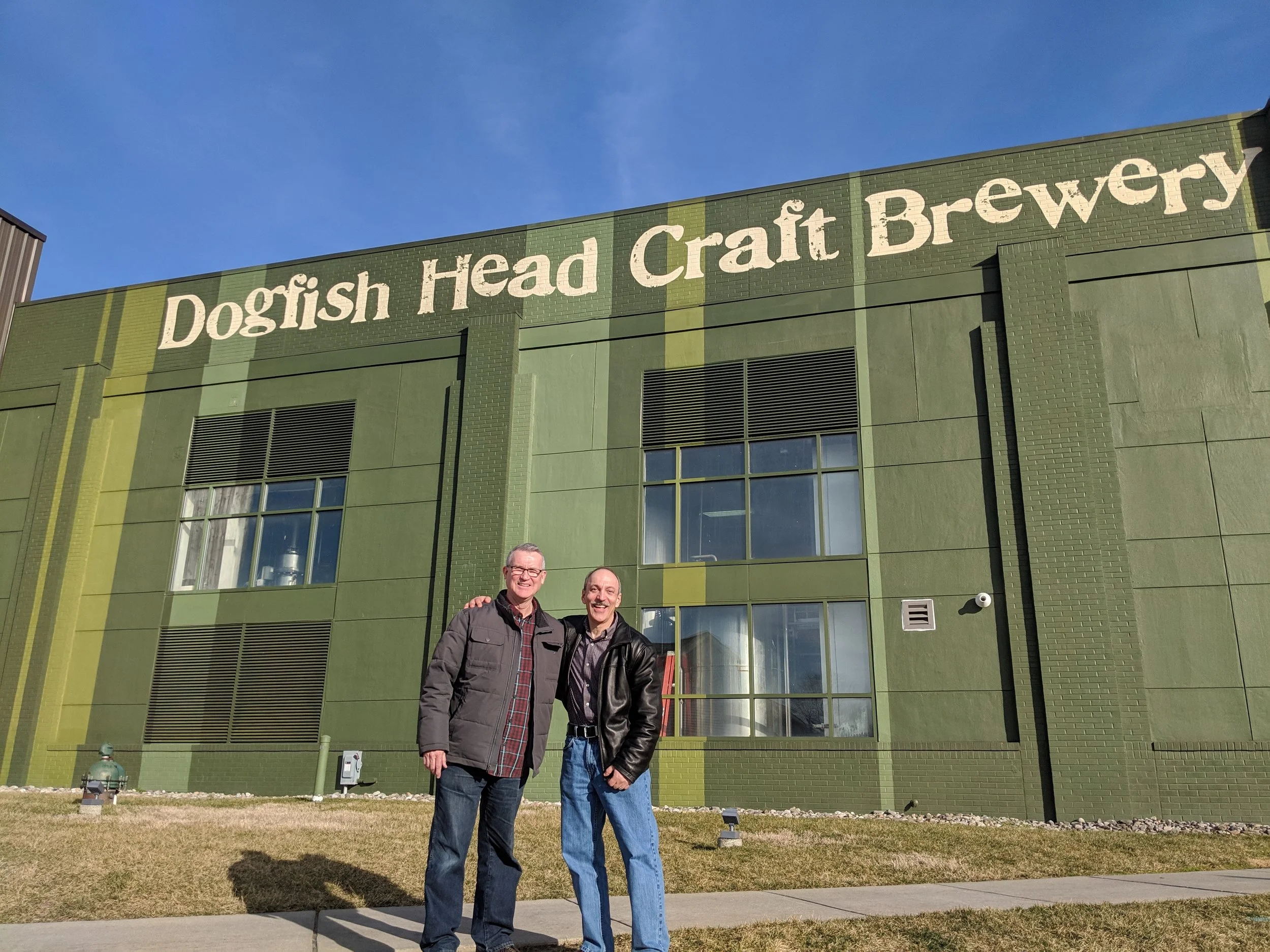
PIP Visits Dogfish Head Brewery
One of the benefits of being in business for yourself is to decide what’s most important to you and then prioritize your time to let you do what you are most passionate about.
One of the benefits of being in business for yourself is to decide what’s most important to you and then prioritize your time to let you do what you are most passionate about.
Recently, I had the opportunity to visit with Gordon Zavilla. Gordon and I worked together at Armstrong a few years ago and he was interested in accelerating Dogfish Head Brewery’s continuous improvement journey. Gordon invited his boss, Brian Hollinger to join us during the visit. We took a walk of the processes and shared ideas of ways to immediately improve safety, productivity, and customer service. We also discussed a strategic approach to the improvements they want to make. Their culture of employee engagement and creativity is a great foundation from which to build on.
One of the most creative tool boards I have seen was in their maintenance shop. Notice how there are actually three boards in one. No searching for anything in traditional tool boxes.
Thanks to Gordon and the great folks at Dogfish Head who taught me what it means to be “Dogfishy”.

Listen To Your People, People
A Research and Development team wanted to create a three-year strategic plan. Their goal was to reduce the time it takes from a new product idea to launch of the new product. Many of the team members believed “you can’t schedule invention.” Working with the team leader, the Research and Development Director, we decided to focus on the work leading up to and supporting the invention, even if we couldn’t specify when an invention would occur. We agreed to use Value Stream Mapping as the approach to help the team accomplish their goals.
A Research and Development team wanted to create a three-year strategic plan. Their goal was to reduce the time it takes from a new product idea to launch of the new product. Many of the team members believed “you can’t schedule invention.” Working with the team leader, the Research and Development Director, we decided to focus on the work leading up to and supporting the invention, even if we couldn’t specify when an invention would occur. We agreed to use Value Stream Mapping as the approach to help the team accomplish their goals.
On the first day of a Value Stream Mapping event, the team learned about Lean tools and techniques, and then quickly went to Gemba (the place where the work is done) to see what was actually happening in their current process, the Current State. Most people who haven’t participated in a Value Stream Mapping event don’t appreciate the time and effort put into understanding the Current State of their process. They want to work on the Future State, thinking they already know the issues, pain, and problems in their current process. But, as Lean practitioners know, there are always breakthroughs and “A-Ha” moments that occur during the Current State review that lead to a much stronger plan for the Future State.
The team wondered how they could walk their Current State, as much of their work was on their computers, at their desks, in labs, and other testing facilities located in the building. Ever the optimist, I encouraged the team to walk the process, regardless of where the work got done to uncover something that would help them on their journey to the Future State. Although they were skeptical, they agreed to follow my lead. We walked around the offices first.
We saw different people working at their desks and asked them questions about what they were doing. They did their best to explain things, but I noticed most people weren’t taking notes or asking many questions.
Our next stop on our walk was at a large wall containing a wide variety of graphs, charts, and documents. The R&D Director stopped there and told us proudly about how much information he shared with his people and how much they used the information on the wall. The team seemed satisfied with the explanation, but to me, it looked like a bunch of clutter. There were so many charts and graphs, it was unclear what was important, relevant, and critical to the work of the R&D employees.
I walked over to a Scientist who was working at his desk and asked him if he could join us at the board. I asked him what he thought of all of the information that was posted on the wall. He told the group that he didn’t know, he never looked at it. The team, including the R&D Director was shocked. Was this scientist the only one who didn’t use the information or were there others? As it turned out, there were others working in the area who confirmed they didn’t use the information on the board either. I didn’t want to insult our leader, so we continued our walk through the process, taking note of other issues as we saw them. The team started opening up and asking tougher questions as we went further into the process.
After we completed our walk, the team listed all of the steps in the current process and the issues and problems that existed. One of the biggest problems identified was the lack of communication of relevant information to the scientists. It was just as our brave Scientist had said during the Gemba Walk. Now, the team knew what it had to do in the Future State: Provide visible, relevant, and timely information to the scientists in a way that would help them do their work every day. Over the rest of the three days, the team built a path to the Future State that reduced time from new product idea to launch significantly. Much of the effort centered around providing the proper information to the people who needed it. Instead of assuming what was needed, they included the scientists and technicians in the development of the communication of highest value.
Over time, this communication was developed. In addition, the team created feedback loops to verify the communication was helping R&D employees do their work. Ultimately, the time from new product idea to launch was reduced significantly. More importantly, the team realized how important it is to include people in the design of systems that will be used for their benefit. One properly posed question can save months of effort.

350 Business Owners
An engineered flooring plant in Kentucky was losing money. They knew their product yields were deteriorating and didn’t know what to do about it. Process Improvement Partners was invited for a site visit. After reviewing performance and discussing the issues with plant leaders in a meeting room, we took a Gemba Walk to see what was actually happening.
An engineered flooring plant in Kentucky was losing money. They knew their product yields were deteriorating and didn’t know what to do about it. Process Improvement Partners was invited for a site visit. After reviewing performance and discussing the issues with plant leaders in a meeting room, we took a Gemba Walk to see what was actually happening.
As we walked around the plant, it was obvious that safety was the top priority in the plant. There was signage and effective placement of supporting tools and materials. Most importantly, all leaders in the plant were demonstrating their commitment to safety. It was clear production was the next priority. There were hour by hour production boards, and all kinds of measures of productivity posted around the lines and in the offices. There was no sign of the importance of quality or yield to be found. We searched all over the plant, but there was nothing that showed people what to do to reduce defects or improve yields.
We suggested a three-day Kaizen to develop managing systems to shift the plant from a culture of productivity to one of quality and yield. The Plant Manager was unsure how we would do that, but was open to the possibility of using a Kaizen for such a significant effort. We agreed the team would be made up of all of the members of the plant leadership team, with a few extra guests added to provide outside perspective. We also suggested a few highly trusted production operators be included on the team, as they would provide an unfiltered view of what they would need in support of their efforts to improve yield and quality.
The Plant Manager was not comfortable with the production operators participating in the entire Kaizen, but did agree they should participate in part of the agenda to provide their perspective on efforts to improve yield and quality. Their part would be on the agenda on the first day, representing the Voice of the Customer.
The Kaizen started with a kick-off from the Plant Manager. It was clear most of the team wasn’t sure anything important was going to happen during the three scheduled days and were wondering why they weren’t in the plant running operations. After introductions, we reviewed some Lean managing systems and had a discussion about the current mind-set and culture of the plant. It was apparent all team members valued safety above all and then production. They were not sure quality and yield was well emphasized or even highlighted.
At about 10:30am, a group of six production operators and two production supervisors entered the room. They took their seats with the rest of the team and waited uncomfortably to see what would happen next. It seemed as though nobody had explained to them why they were there and they hadn’t interacted with the leadership team in this type of setting before.
I thanked them for joining us and explained the purpose of the three-day Kaizen and their role in this part of the agenda. They were our Customers. They were not impressed. Next, I told them we wanted to get their honest feedback about how the plant was run. Still not impressed or even believing we would listen to and use their feedback, it seemed likely they wouldn’t offer anything of value unless I could get them to relax and open up.
I asked a series of open-ended questions, such as “What is the message you currently receive about the importance of quality and yield vs. productivity? Is it clear or confusing? How do you decide to prioritize productivity vs. quality and yield vs. safety when you are in the middle of a production run?” A few gave some short, terse answers, and a few of the leadership team members asked follow-up questions to show they were listening. Still, nothing of high value was being shared.
After about 30 minutes of questioning and terse answering, I asked this question, “If you could change one thing about how the plant is run, what would it be?” One of the production operators, let’s call her Sally, blurted out, “If these SUMBICHES would just care enough to come to work every day, things would be better!” Blushing, she put her face in her hands. The room roared and clapped with approval. The Plant Manager thanked her for being so open and honest and said he wanted to know more about what she meant by her statement.
All of the sudden, the Customers opened up and told the team exactly what they thought. They talked about the leadership approach and the message that was being sent to the production operation about the value of quality and yield. People were now sharing their thoughts, feelings, and ideas, and leadership was listening. We were getting somewhere. After another hour or so, we had exhausted all topics and thanked our Customers for joining us. There were handshakes, high fives, and hugs and everyone left feeling like they had contributed to something important. It was clear that the production operators and supervisors truly cared about the company and its impact on their families and the community.
The team now knew they had important work to do, and the next step was to create a vision for the plant emphasizing what their customers needed to do their job in the best possible way. It didn’t take long, and they came up with this vision statement:
“350 business owners with a yield-first mindset making every plank matter. Close is not good enough – stop until the customer will be delighted. Encourage everyone to take the time to make it right the first time.”
The rest of the Kaizen was spent developing strategy and tactics to support and emphasize the new vision. There was energy and excitement, and by the end of the Kaizen, you could see and feel the difference in the plant. The initial results were promising, as quality and yield performance improved. More than that, 350 people were aligned around what’s most important to them, their families, and their community.
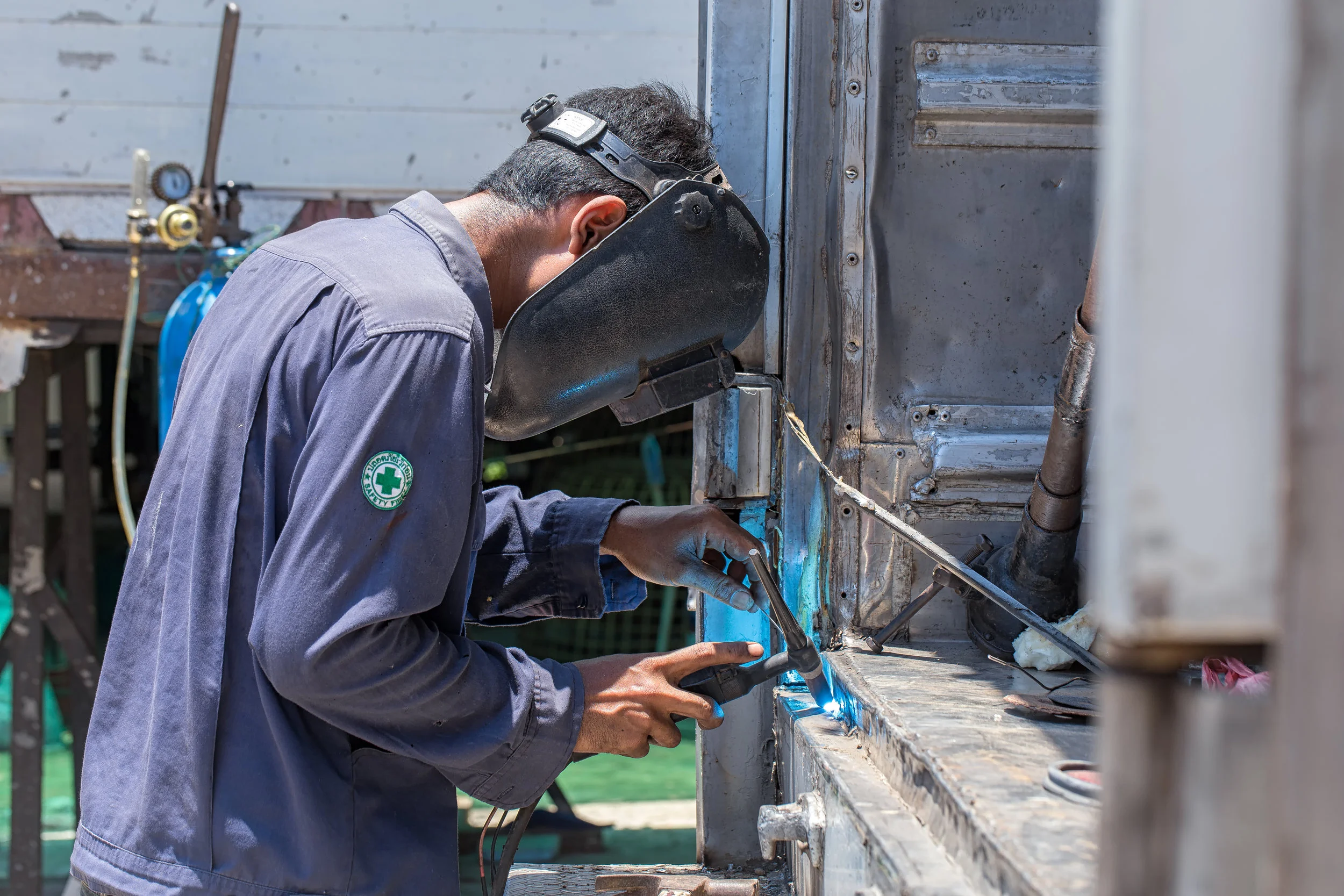
Owning Their Solution in the Weld Shop
I have conducted many workplace organization Kaizens (5S) over the years. The results have always been dramatic. All of the teams were made up of production operators or office workers, with some mechanics assisting the team. The production operators or office workers owned the areas needing organization and the mechanics were able to do some of the more complex tasks needed during the Kaizen. All of the teams, that is, until I met my Weld Shop team. Five mechanics and an engineer, who underestimated what we could accomplish.
I have conducted many workplace organization Kaizens (5S) over the years. The results have always been dramatic. All of the teams were made up of production operators or office workers, with some mechanics assisting the team. The production operators or office workers owned the areas needing organization and the mechanics were able to do some of the more complex tasks needed during the Kaizen. All of the teams, that is, until I met my Weld Shop team. Five mechanics and an engineer, who underestimated what we could accomplish.
Let me tell you about a typical mechanic on a Kaizen team. He or she is there to support the team, but not usually vested in the improvement process. Most of the time, they participate in the Kaizen and do great work, but sometimes they aren’t interested in being there, and would rather be doing their “normal” job. Facilitating a Kaizen with a team where some of the members were this way was not new for me, but having the entire team this way was. The good news was the area we were going to be working on would directly impact their safety and productivity. The better news was they had a supervisor, acting as the team leader, who was extremely excited about the possibility of improving the weld shop. And the best news was I could leverage their pride and competitive nature to turn their existing Weld Shop into a show place for all the world to see. Only if I could get them to own the improvements, of course.
When I run a 5S Kaizen, I do it step by step. On the first day of the Kaizen, after training the team in all of the S’s, we took a walk in the space we were going to organize. I asked the team to identify things we could remove first – the clutter. This is the first S. I asked many questions and they identified the items to be removed while I took photos. Then, after removing all of the clutter, we decided on the best locations for anything remaining in the space. We did this in an organized fashion and I had team members demonstrate how each new location would be safer and more productive than the old location. This is the second S – Set in Order. Following this, we made sure that everything left in the shop was in the best possible shape. We did this by cleaning and inspecting all tools, equipment, materials, and storage spaces. If we found something in disrepair, we either fixed it or replaced it. We relied on everything in the area to work, so we took great care. This is the third S – Shine.
The first three S’s, Sort, Set in Order, and Shine, are the most physical, dramatic, and fun parts of the Kaizen. By the time we got to the fourth and fifth S, the team was extremely energized and the area looked dramatically different from where we started. Here’s an example: Before we started the Kaizen, you had to enter the Weld Shop and walk about 30 feet to turn on the lights. To get to the light switch, you had to navigate in the dark through all of the clutter in the hopes of finding the switch without running into something. In some of the initial “before” photos, you couldn’t tell there was a light switch on the wall at all. During the evening of the second day of the Kaizen, we relocated the light switch to the entrance of the Weld Shop, on an outside wall. Lights could now be turned on before entering the shop, eliminating the safety risk of navigating in the dark to the switch.
The fourth S is Standardize. For this step, the team was tasked to create a managing system to ensure the improvements they made would continue to live on, be supported and requirements followed by everyone using Weld Shop in the future. This was not a physical exercise. It was a mental and paper exercise. Teams typically create checklists, sign-off sheets, signs, and audits that must be followed by anyone using the area. To mechanics, this is “paperwork”, and although it has more than four letters, it might as well be a four-letter word. This is the last thing they wanted to work on, and I knew that. I also knew that this was the most important step, as their improvements would deteriorate back to the “before” condition if not done properly and completely. The real trick would be for the team to own their solution and not just go through the motions. I had a plan, but it was risky. I needed to facilitate an emotional event, so the team would create and own their managing system.
On the morning of the third day of the Kaizen, after congratulating the team on the improvements of the first two days, I explained this would be “Standardize and Sustain Day”. They looked at me with grumpy faces as I showed them examples of checklists and audits other teams had developed. They were not impressed, to say the least. In fact, they didn’t believe simple pieces of paper would keep people from messing up all of their good work. I showed them examples of how teams made these documents visible and established responsibility all the way up to plant leadership. They were still not buying it. I needed to push them further.
I showed a slide of a checklist, going line by line over each requirement. I could see the discomfort and frustration in their faces. I was on line eight of the checklist when one of the mechanics, whose face was beet red said, “Adam, we’ve had enough of your paperwork. We’re going to the smoke shack. You can’t come with us. We’ll figure it out and then we’ll tell you what we’re going to do.” All of the team members stormed off and left me in the meeting room by myself. I had facilitated the significant emotional event. I didn’t really know if they would ever come back, and if they did, what would they come back with?
It felt like two hours, but it was only twenty minutes when all of the team members returned to the meeting room. They looked pretty proud of themselves as one of them declared, “Adam, we’re going to tell you what we’re going to do. We’ll talk and you type.” They listed eleven things they wanted on “their” checklist. They were similar to what I had presented, but it was in their words and it was their ideas, and that’s all that mattered. I thanked them for coming up with such a well-thought out checklist and then challenged them to develop the system to ensure everyone would use it properly and not “pencil-whip” it. This is the fifth S, Sustain. Enthusiastic and full of pride, the team developed a visual Area Owner board, with all of the required documents easy to find and to use. Then they set up daily and weekly requirements for the area users, the Area Owner, and members of the plant leadership team.
On the final day of the Kaizen, the team shared their results with the plant leadership team and some executives visiting from their corporate office. It’s not unusual for mechanics to shy away from presenting in front of an audience. In this case, all team members spoke from their hearts and explained how important it would be to support and sustain all of their good work, which was improving safety and productivity for them and the rest of the plant. They even asked the executives to hold the team and plant leadership accountable to keep this good thing going and spread this effort to other areas of the plant.
After the presentation was over, I spent a few minutes with the team, getting their final thoughts about the Kaizen. Happy with the results and most aspects of the Kaizen, they told me they wished I had been more assertive with them during the week. We laughed as I told them I wasn’t sure they were coming back to the meeting room after storming out on Standardize and Sustain Day. They told me it was just the motivation they needed to get to their solution.