
Kaizen Success Stories
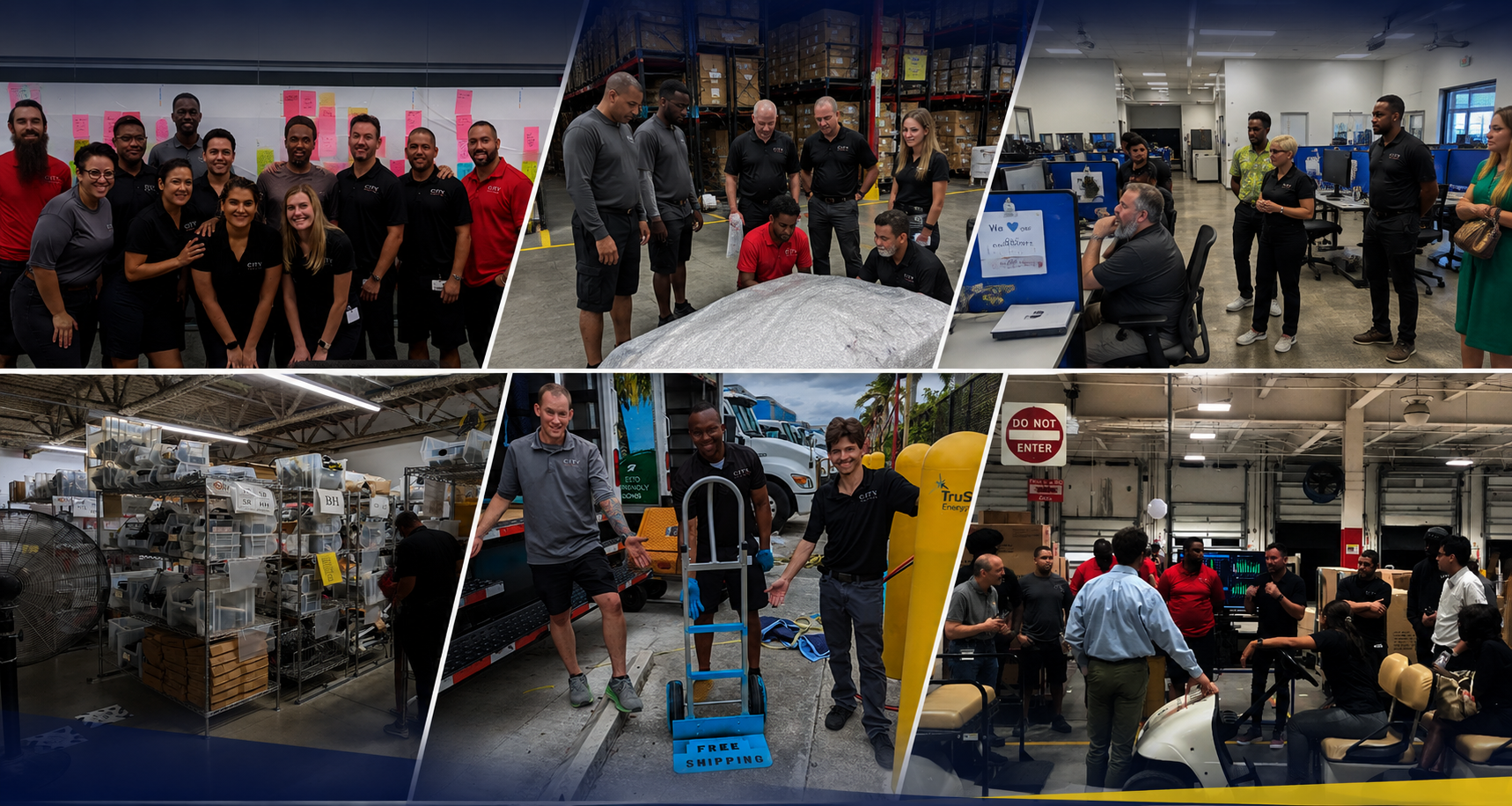
Real Manufacturing Results. One Kaizen at a Time
Explore real-world Kaizen success stories showing how manufacturing teams solved critical problems, improved performance, and created sustainable results.

The Unexpected Benefit
It was my first Kaizen event with a new client in Florida. They make building products for the residential market. On my first visit with Brian, my sponsor, I saw many opportunities to apply Kaizen to and made my recommendations. He picked his current pain point, which was labor utilization at the end point of a multi-line operation. The goal of the Kaizen event would be to balance work across all lines and require less labor to support the operation. The people wouldn’t be sent home, they would be redeployed to other parts of the plant where overtime was being used to keep things running.
It was my first Kaizen event with a new client in Florida. They make building products for the residential market. On my first visit with Brian, my sponsor, I saw many opportunities to apply Kaizen to and made my recommendations. He picked his current pain point, which was labor utilization at the end point of a multi-line operation. The goal of the Kaizen event would be to balance work across all lines and require less labor to support the operation. The people wouldn’t be sent home, they would be redeployed to other parts of the plant where overtime was being used to keep things running.
Brian was the plant manager and Jeff, our team leader, was the operations manager. We built the team with top players, as this first Kaizen event would set the tone for future efforts. We wanted a strong win. Our goals were challenging. Besides improving safety, we needed to reduce labor required by 30 percent.
Messaging to the team had to be supportive and reassuring. No one would lose their jobs by reducing labor required. I worked with Brian and Jeff to write the charter and communicate to the team in ways to strengthen their message and not make them fearful they would be blamed for labor reductions.
Our first day included a Gemba walk to a very hot production floor. It must have been 100 degrees. We watched team members do a lot of waiting and a few quality and cleaning tasks, except at one critical moment: When the pallet was full, it had to be wrapped, strapped, labeled, and removed. All while the next products were coming through the line (albeit at a very slow rate).
There were a few other tasks that took time away from the line, including a quality check every 30 minutes. This required the operator(s) to take a long part from the line, bring it to a saw, cut it to a specified length, and verify density of the product through a weighing process. Operators didn’t like this task for many reasons, including the transport of the product, time away from the line (which could happen at the moment packaging had to occur), and the use of the saw in the hot environment.
When we finished our Gemba walk, the team returned to the meeting room to brainstorm ways to improve things and simplify tasks. They prioritized three activities they thought could reduce effort and labor required: housekeeping, palletization, and product sampling and quality checks.
The housekeeping team created a cart with everything operators needed to maintain and keep the lines clean. All supplies were provided that typically would be searched for during the day, reducing time and effort for all operations.
The palletization team created locations for supplies, developed simpler palletizing methods, and created standard work that greatly reduced the time it took to wrap and palletize the product. This not only simplified things, but also reduced the stress the operators felt when finalizing each pallet of material.
The product sampling and quality check team wanted to reduce the time and effort it took to cut and weigh parts of the finished product. They experimented with relocating the saw, possibly buying a new saw or two, and buying another scale or two. All of those ideas would have helped. But then, someone asked, “Why do we need to cut the product at all?” The light bulb came on. What if they didn’t, and could weigh the finished product, without losing the critical quality information necessary for certification?
Inspired, they found an extra scale and weighed dozens of products, verifying the correlation between their results and the prior method. They met with the quality manager to align around their approach. He helped them build a plan to ensure their method could work. With the statistics confirming their method, the team had to come up with a simple way for operators to do the sampling without having to leave the line.
They mounted a scale to a cart that had height adjustments. Once they configured it properly, the cart could be brought up to the stack of products and one piece (up to 30 feet long) was slid onto the scale to get a quick reading. If too heavy for one person (identified in the standard work), they would get assistance from another operator or the section lead.
This new method turned a messy, hot, heavy, and minutes-long process into mere seconds. It was a huge win. But, even more than that, the need to destroy finished product had been eliminated, saving many hundreds of thousands of dollars annually.
Why didn’t they come up with this solution before the Kaizen, you may ask? We only know what we know. For the many years of the prior approach, no one had ever questioned it. People just did what they had been trained to do. Kaizen opened our eyes to possibilities and gave us the latitude to try new things. And because of this, we won.

Aligned Area Owners are the glue that holds things together – Part 2
I took a site visit to a new client that runs a paper mill in Oklahoma. After a solid day of meeting the leadership team and touring the site, we agreed on a series of Kaizen events, starting with two 5S events, one on the paper mill side of the plant, and the other one on the converting side. Talk about night and day! In Part I, we saw what happens when the area owner wasn’t aligned. This story is about an aligned area owner.
I took a site visit to a new client that runs a paper mill in Oklahoma. After a solid day of meeting the leadership team and touring the site, we agreed on a series of Kaizen events, starting with two 5S events, one on the paper mill side of the plant, and the other one on the converting side. Talk about night and day! In Part I, we saw what happens when the area owner wasn’t aligned. This story is about an aligned area owner.
After the first Kaizen event, I made sure Mike, my team leader, and Steve, our sponsor, were aligned about the approach and how we would need a strong Area Owner. They assured me it wouldn’t be a problem, as two of the participants from the first Kaizen were from their area and they were excited about what happened and what would be possible for their team.
From the moment we kicked off on Monday morning, the atmosphere was positive. Our two team members from the first Kaizen event had shared their stories of success with the new team members. Although there was skepticism, everyone seemed willing to help and try anything. The spaces were huge and the clutter seemed overwhelming. Our challenge was to reduce find and retrieval time by 75% or more. This might be a stretch to achieve.
The team immediately got to work and gave their all. By the middle of the second day, there was a remarkable change in the spaces. You could actually see the floor. Major safety issues had been eliminated and the clutter wasn’t overwhelming anymore. We could see a path to the finish and were inspired to beat the results of the first team.
During the week, we had many challenges, including finding and removing a kitty “graveyard” behind one of the storage racks (it was pretty disgusting), and going beyond our scope to rearrange some personal toolboxes in the area (I typically try to stay away from telling people how to arrange their personal stuff). The team pressed on, with an amazing breakthrough in their sights.
By the end of the fourth day, the transformation was stunning. Now, it was time to test “find and retrieval time,” We took six random items and assigned them to team members to find. The goal was to get below 2 minutes (from our baseline average of 8+ minutes). Each team member found their item and returned it to us in less than a minute. But, just to show we weren’t stacking the deck in our favor, we found two “volunteers.” Our first test subject was Steve, our sponsor. He found his item in less time than the team member who had been assigned the item in the first trial. Good thing he had a sense of humor about it!
Next, we assigned someone who had never been in the area to find a part. He took the information and walked into the wrong room. Team members wanted to help him. I told them to be patient and see how things played out. Our test subject entered the correct room after about 30 seconds of searching and went to the correct cabinet and returned the item to us in just over a minute. The team was ecstatic – they had won!
Afterwards, we went back to the meeting room and two team members volunteered to be the Area Owners, one for each room. They happily built their boards, created their audits, and took pride of ownership. What a difference from the first Kaizen event.
The vibe at the report-out was bursting with energy and excitement. All who attended were astonished at the transformation of the space and the full engagement and ownership of all of our team members. They all understood what we had done would positively benefit all of the maintenance employees, their managers, and the plant customers they served. The area owners were going to see to it things stayed that way.

Aligned Area Owners are the glue that holds things together – Part 1
I took a site visit to a new client that runs a paper mill in Oklahoma. After a full day of meeting the leadership team and touring the factory, we agreed to a series of Kaizen events, starting with two 5S events, one in the paper mill building, and the other one in the converting building. Talk about night and day! Here’s the first story about what happens when the area owner wasn’t aligned. (And to learn about the experience when the area owner is aligned, be sure to read Part II.)
I took a site visit to a new client that runs a paper mill in Oklahoma. After a full day of meeting the leadership team and touring the factory, we agreed to a series of Kaizen events, starting with two 5S events, one in the paper mill building, and the other one in the converting building. Talk about night and day! Here’s the first story about what happens when the area owner wasn’t aligned. (And to learn about the experience when the area owner is aligned, be sure to read Part II.)
I should have seen the warning signs. In the weeks leading up to the first Kaizen event, Joe, my team leader, and Frank, my sponsor, spoke about how they originally wanted Julie, responsible for the area, to be team leader. She wasn’t on board with the idea of leading the event, or even working to improve the productivity and safety of her storage and supply areas. She was going to be on the team, but it didn’t sound like something she wanted to do. I advised Joe to try to bring her on board willingly, as this event would directly impact the work she did in a positive way. We had two team members from the other side of the plant who would be involved in the following month’s Kaizen event.
On the first day, it was immediately apparent Julie didn’t want to be there. She was the resource the maintenance technicians relied on to acquire supplies for their work orders. Julie was very guarded when she spoke and said little, unless called on directly (which happened a few times). When we took our Gemba walk, every space looked like a tornado hit, including Julie’s office. Our measure for success was equipment find and retrieval time. Our goal was to cut it by 75% or more. I knew it should be an easy win. Except for Julie’s continued negative comments and lack of enthusiasm for the work. Her toxic attitude was impacting other team members. I spoke with Joe at an early break, just to stay aligned. Julie worked for him, so he was aware of her general attitude at work.
Once we started sorting through tons of equipment and supplies, the team became engaged and was having fun. We removed more than 50% of large and small items throughout three critical spaces. Now it became easy to organize things in a way that made finding items quick and safe. We were able to take everything off of the floor, so access to shelves didn’t require the movement of items out of the way to get to what was needed.
At the afternoon break on the first day, Julie made a negative comment about the work we were doing. I talked with Joe and asked him to speak with her to understand what was behind her comment. He rolled his eyes, but agreed to talk with her. When he returned from the conversation, he tried to shake off her comment as if she was concerned our efforts wouldn’t be sustained.
As the week progressed, Julie’s negative comments were more frequent, and other team members were affected by her negative vibe. On the evening of the second day, I spoke with our overall sponsor, the plant manager, to make him aware and also to understand what could be going on with Julie. After all, the space now looked fantastic and the rest of the team was excited about the changes they made. He said he’d keep an eye on things and speak with her directly, if needed. He even spent a few hours helping the team out cleaning up the areas. This was true leadership commitment.
On the third day, something set Julie off, and she stormed out of the meeting room. She felt the need to speak with the plant manager. He reminded her of how critical it was for her to participate and support the work of the team. It was directly beneficial for her job and the jobs of those she supported. She came back to the team in a slightly better frame of mind.
The rest of the week went well, but things went sideways when it came time to put the Area Owner board together. Julie didn’t want to be the official owner, but we didn’t let that stop us. Joe knew it had to be her, in order for our work to be sustained. So, we mounted the board, daily audit, weekly audit and tracking, and Julie’s photo and contact details on the board and did an initial assessment of the space. We also timed six random individuals to find and retrieve materials and supplies in the space. We easily beat our Kaizen objectives and the team was excited. Everyone, that is, except Julie.
At the report out, it wasn’t surprising that Julie didn’t participate by presenting part of the team’s story. She sat in the audience quietly and didn’t even make eye contact with any of the presenters, who were telling a very positive, winning story.
At the wrap up with Joe and Frank, we reviewed the great efforts and results by the team, in spite of Julie’s toxic behavior. We were hopeful she’dcome around, once she realized this effort was directly going to help her daily work. But we also knew there would be extra effort to support this first 5S space and keep things moving forward.
I left the plant feeling conflicted. On one hand, we had a strong win and team members were inspired to take this work forward to other locations. On the other hand, we had an owner who didn’t demonstrate the leadership behavior required.
I believe Julie felt exposed. In the past, she was the “go-to” person for any needs from the maintenance organization. Now, they would be more self-sufficient and not need her as much. Continuing to act and feel the way she did and does (2 months later), the system won’t be sustained without intervention or the introduction of a new Area Owner.

My first VSM for a non-manufacturing process
I applied Lean thinking exclusively to manufacturing processes for many years of my career. I wasn’t able to stretch my thinking beyond what I could see – the production of a physical product and how it impacts the customer, business, and employees. I conducted Value Stream Mapping (VSM – a strategic planning approach based on the view of the customer) sessions for many manufacturing facilities and we were able to identify countless opportunities to significantly improve safety, productivity, quality, and customer service. I developed a reputation for my ability to engage teams and facilitate complex sessions.
I applied Lean thinking exclusively to manufacturing processes for many years of my career. I wasn’t able to stretch my thinking beyond what I could see – the production of a physical product and how it impacts the customer, business, and employees. I conducted Value Stream Mapping (VSM – a strategic planning approach based on the view of the customer) sessions for many manufacturing facilities and we were able to identify countless opportunities to significantly improve safety, productivity, quality, and customer service. I developed a reputation for my ability to engage teams and facilitate complex sessions.
I was approached by Henry, a coworker, to see if I would be willing to use my VSM approach and apply it to his marketing department. This was an intriguing request and a risky one. He had a strong Lean background and the vision to take what he learned beyond the manufacturing arena. I told him that if he was willing to take a chance, then so was I.
I took a session plan for a manufacturing VSM session and started tinkering with it to make it apply to a non-manufacturing process. It didn’t take long to realize the approach didn’t have to change much. The challenge was to help the team visualize their process in a way that would expose the waste, pain, and opportunities for improvement.
During a typical VSM, we take a Gemba walk of the process, to go and see what’s happening and what gets in the way of delivering for the customer. For the marketing department, the process wasn’t something we could easily see. How would I deal with that, I wondered. I talked it through with Henry and we bounced many ideas back and forth.
Then one of us (I’d like to say it was me, but I really don’t remember) suggested we didn’t have to physically see the process in order to visualize it. We had the experts in the room who knew what role they played in the overall process. We could have them talk us through their part, map it on a wall, and then visualize the entire process once all the experts had their say. As long as we started with the customer and worked our way back to the beginning, we could find the waste, pain points, and opportunities.
This was a brilliant revelation. Now the true test was to try it out in a real situation. And that’s what we did. The team engaged and gave their all. We visualized the current state of the marketing process and identified many wastes, pain points, and opportunities to provide an improved customer experience.
My mind opened to the possibilities. I could now apply Lean principles and Kaizen events to any process, not just manufacturing. Through the years, I learned the benefits in non-manufacturing settings can be multiples of manufacturing processes, as most groups haven’t pursued Lean thinking in these settings. There is so much opportunity it’s almost too easy to provide a winning experience for the teams I support.
I now apply VSM visualization to any process teams are trying to improve. It generates many “a-ha” moments and I often get comments like, “I didn’t realize our process was so complex. Now, by seeing it, I know what to do about it.” I recommend using Lean and VSM when you’re improving a process. You’ll be glad you did.

Don’t be afraid to ask for help
I had many stops in my corporate career. I worked in furniture, ceiling grid, ceiling tile, ceramic tile, and vinyl flooring all over the world. My most challenging assignment was working for Dal-Tile in Dallas Texas. I was the environmental, health, safety, mining, and industrial engineering liaison for the twelve manufacturing locations around the country.
I had many stops in my corporate career. I worked in furniture, ceiling grid, ceiling tile, ceramic tile, and vinyl flooring all over the world. My most challenging assignment was working for Dal-Tile in Dallas Texas. I was the environmental, health, safety, mining, and industrial engineering liaison for the twelve manufacturing locations around the country.
It was challenging for many reasons, not the least of which was the negative environmental history Dal-Tile had in the state of Texas. In the 1980’s, they were given the highest environmental fine in the history of the state. The next reason was I had no background in environmental, health, and safety (EHS). The final reason was that the corporate EHS department didn’t want to help me, my boss, or the facilities with compliance. It was an extremely difficult situation to navigate.
My boss and I decided to tour all of the plants, establish relationships with their staff, and identify areas where we could help. Most of our visits started out the same way. Plant leadership would be wary of us, having been “burned” by the corporate EHS staff in the past. Once we showed we were genuinely interested in helping them stay compliant, they warmed to us and let us see the critical issues they were facing. Wayne, my boss, was exceptionally adept at getting people to warm to us. He was a true gentleman who cared about the people he served.
We realized we needed to understand the various rules and regulations governing the plants, especially in Texas. Instead of reading many books, we decided to travel to seminars hosted by OSHA and the EPA. I was in Austin Texas at an EPA seminar when the presenter asked each of us our names and who we worked for. When I introduced myself from Dal-Tile, the room fell silent. I felt a bit embarrassed, so I blurted out, “but we’re trying to get better!”
At a break, another participant introduced himself to me and told me he used to work for Dal-Tile many years before. He said, “don’t feel bad, when I used to go to seminars, they used to hold up the front page of the Dallas Morning News that showed the headline, ‘Dal-Tile fined millions for environmental transgressions.’ Then, they’d say, ‘don’t let this happen to you.’ They’d go around the room with introductions and I’d get booed!” I felt bad for him and me too, but I was resolute in my belief we could do better and improve the company’s reputation, even with all of the obstacles from the past.
After many more seminars, research, and building relationships with plant leadership, I started to get pulled in to help plants resolve environmental issues and even prevent them. This was a breakthrough.
One day, Al, the Dallas plant manager, called me and asked for my help. I went to the plant to find out what was going on. He showed me a letter saying they were being fined for too much zinc in the wastewater. We walked the inside process to see where the zinc could be coming from. In raw material form, there was less zinc in the product than they were being fined for.
We walked outside to look at the water that was being treated before going into the drains. It looked clear and had no debris in it. The EPA testing point was about 100 yards from the outflow point and the treatment process. Somehow zinc had to be entering the water between the treatment process and the testing point. Where could it be coming from, I wondered?
Then, I saw it. The fence separating our property from the factory next door was shiny for most of its surface, except for a 50-yard length that was a dark brown. It was a drastic difference. Al told me that the neighbor was an electroplating company and they always turned off their smokestacks whenever they were being inspected by the EPA.
I knew what I had to do. I would invite the EPA to visit the plant and help us solve our “zinc problem.” When I shared my idea, Al looked worried. I said, “Al, do you trust me?” He said, “you haven’t let me down yet. Don’t let me down this time!”
I scheduled a visit from the EPA for two weeks from our conversation and they seemed surprised that someone from Dal-Tile would invite them to the plant to help resolve an issue. I guess they were used to defensiveness, rather than cooperation. This gave us time to get everything in the plant in the best possible condition and find all of the materials information that might be requested during the visit.
Edward, the EPA inspector, joined me and met the leadership team early in the morning. I took him on an inside plant tour, showing him all of the possible locations where zinc could be coming from. He agreed with me it was highly unlikely our materials were causing the unusually high zinc levels in the wastewater.
Taking his cue, I took him outside to the wastewater treatment process and showed him how clear the water was. He agreed it didn’t make sense to have high zinc in the water. I then asked him if he could help me clear up a mystery. He seemed intrigued. I showed him the fence, with the shiny and brown areas and asked him what could be causing it? He looked at the fence, then saw the neighboring factory. Once the realization of what was happening hit him, he told me, “Adam, the zinc isn’t coming from your plant. I’ll rescind the fine and the EPA will deal with the real cause of the problem.”
Relieved, I thanked him for his help. I found Al and told him what had happened. Al responded, “Adam, you had me worried, but I was hopeful you would pull it off.” Al then invited me to have a beer with him and it was the coldest and tastiest one I ever had.

Raising the bar for quality
Amstrong World Industries and Worthington Steel combined forces to create the number one ceiling grid manufacturer in the world. It didn’t start out that way, as employees of both companies were feeling their way through the combination of cultures.
Armstrong World Industries and Worthington Steel combined forces to create the number one ceiling grid manufacturer in the world. It didn’t start out that way, as employees of both companies were feeling their way through the combination of cultures.
I had been a team manager (shift supervisor) at our plant near Chicago. We shut down the plant and I moved to the Baltimore facility as the Industrial Engineering and Quality manager. It was a critical moment for our new company and my career. We had to establish ourselves as a quality leader, in order to build consumer confidence.
I spent many hours on the factory floor, understanding where we stood in regard to production reliability and quality control. We had each line leader measuring the grid that was being produced and comparing it to product standard drawings. My early observations were that each person was interpreting the drawings differently and also measured based on their “feel” for the product. This meant somebody might think a product was within tolerance limits, even though the customer didn’t agree. This was reflected in a higher than industry standard return rate. We were at risk of losing customers unless we corrected our quality problems quickly.
I reviewed the product quality drawings and realized they were confusing and written for engineers, not production workers. Also, depending on how hard the measuring device was handled, people could make their measurements vary by up to .020” (twenty thousandths of an inch). This was a huge problem for ceiling grid, as tolerances could be as small as .010”.
I reviewed my plan with the plant manager. I would reformat the product quality drawings so they would be easy to understand and interpret as intended. At the same time, I would develop a measurement training program to help all employees measure the same way, with the same “feel.” I got approval for new measuring equipment, that was more repeatable and accurate than what we currently had at the plant. I was off and running.
I did an informal survey of many of the production technicians to help me understand how to format the product quality drawings to be easily understood by them. Specifically, I wanted them to understand the tolerance limits for any critical measurement. Previously, an example measurement would say 24.025” +/- 0.15”. This forced employees to add and subtract and sometimes make errors. Through their feedback, I changed all measurements to look like this (for the prior example): 24.010” – 24.040”. Now there was no confusion. As long as the measurement was within the range shown, it was a good product.
There were literally dozens, if not hundreds of drawings to correct, so I prioritized my work by the products that ran the most frequently first. Then, time permitting, I would correct the lower frequency products. Sometimes, I would have to change my process, as a rare product would be ordered, and we didn’t want to take the chance it would be measured incorrectly.
Now it was time to improve measurement reliability. Some people had a “hard” hand, meaning they would squeeze the measuring device against the bar of grid with much force. Others had a “soft” touch, meaning they barely touched the bar with the measuring device. I had to come up with another way to consistently find the correct measurement and then verify the variation between operators would be acceptable.
After many tests and trials, I developed the 2-step touch technique. Basically, the technician would squeeze the measuring device to find the bar, then back it off, and then bring it back to just “touch.”
No matter how hard or soft a hand people had, they were very consistent when it came to the second touch. In fact, the variation between operators was reduced from .020” to .003”. I instituted an audit and follow-up process to ensure we sustained our consistent measuring technique.
Over time our returns rate was reduced drastically, and we became the number one grid producer in the world. I learned that systems must be designed for the people who use them, rather than the people who create them.

Never tell someone their baby’s ugly
I have been influenced by many pop-culture references over the years. During my Kaizen events, words or phrases come out of my mouth that are my attempt to make the situation relatable to the team and make them feel better about the situation they’re in and the problem they’re facing. I want them to realize it’s not the first time something bad happened in business and their problems aren’t insurmountable. I wasn’t always this way – maybe you can learn from my mistakes!
I have been influenced by many pop-culture references over the years. During my Kaizen events, words or phrases come out of my mouth that are my attempt to make the situation relatable to the team and make them feel better about the situation they’re in and the problem they’re facing. I want them to realize it’s not the first time something bad happened in business and their problems aren’t insurmountable. I wasn’t always this way – maybe you can learn from my mistakes!
Many years ago, I was taking a Gemba walk with a team from Armstrong’s Pensacola plant. During the walk, I saw build-up, dirt, and clutter on and around the production equipment. It really bothered me and I said out loud, “we should be ashamed of the way we are maintaining and operating our equipment.” I was immediately taken off to the side by the plant Lean manager and told I shouldn’t say these things out loud. I, of course, got respectfully defensive. Not really. I said, “Look at the state of the equipment. What does it say about how we feel about our employees, by setting such a bad example of leadership expectations?”
That didn’t sit well, and he walked me to the Plant Manager’s office. We had a mostly one-sided conversation. I was told I needed to watch my words and not make people feel bad about their working conditions. It wasn’t productive and brought down the mood of the team.
To this day, I still feel the same way about difficult working conditions, but I don’t speak my feelings out loudin front of the team. Instead, I think about how to get them to see their situation as unacceptable and motivate them to do something about it.
I am reminded of one of my favorite Seinfeld episodes, “The Hamptons.” The gang (Jerry, George, Kramer, and Elaine) goes to the Hamptons to see the new baby of their mutual friends, Carol and Michael. The baby is so ugly that upon seeing him, Kramer does an exaggerated double-take and says the little girl looks like Lyndon Johnson, who wasn’t attractive. The rest of the episode is about the gang trying to not make the parents feel bad about their baby. Hilarious, but it shares a parallel with my approach to improvement teams.
I want my team to see their baby, their process, as ugly, and then do something to it to make it beautiful. The way I do it now is to show an outrageous photo from the internet (there are so many of them) of a group of people doing something obviously unsafe. When I show the photo, I have the team members describe the safety risks they see. There are obvious ones, such as don’t put a ladder on top of another ladder on the forks of a forklift, in order to change a light bulb thirty feet in the air.
After they laugh at the absurdity of the photo (many of these are real situations), I point out the people doing the work think what they’re doing is ok and if we were to tell them we think it’s unsafe, they would probably run us off or worse. Then I tell the story of the Seinfeld episode and make the analogy that we can’t call the baby “ugly.” Once we make that connection, I tell them by the end of the Kaizen event, we will see our original process as the “ugly baby” and our job is to turn it into something beautiful we can be proud of.
This approach has improved the alignment and engagement of the team and has kept me from making my team members feel bad about their processes. By the end of the week, they’re talking about how they made their baby a beauty to behold and they own the changes that made that transformation.

You can’t help people if you don’t build trust
Right before the pandemic, I was asked to conduct a site assessment by one of my clients. The twist here is that it wasn’t for one of their own plants. Rather, they wanted me to assist one of their key suppliers, who was a co-packer (someone who packages and labels products for its clients and sometimes manufactures products using the clients’ brand). I should have seen the warning signs sooner.
Right before the pandemic, I was asked to conduct a site assessment by one of my clients. The twist here is that it wasn’t for one of their own plants. Rather, they wanted me to assist one of their key suppliers, who was a co-packer (someone who packages and labels products for its clients and sometimes manufactures products using the clients’ brand). I should have seen the warning signs sooner.
The evening before the assessment, I attended dinner with a team from my client’s company. We had a good discussion about how the next day would go, but I got a vibe that they were skeptical of my ability to assist their vendor. My sponsor hadn’t traveled with the rest of the team.
The next morning, we met with the vendor in their conference room. I waited for my client to start the meeting, but they decided I should do it. I jumped right in, made introductions, and described my site assessment process. We would talk about any current or critical issues they were experiencing, then take a Gemba walk to see the process and the issues as they were occurring. Finally, I would share my findings and explain how I could help resolve any of the issues.
The vendor team didn’t look thrilled to have visitor(s) they didn’t know, and spoke about their issues in a vague way. Then, they reluctantly assigned two team members to walk around the plant with me: the plant manager and an engineer. One of the client’s team members joined us for most of the tour.
As we walked around the plant, I tried to point out helpful improvements that could be implemented without outside assistance. For example, there was a production line where the technician would grab completed packages and stack them on a pallet on the floor. This forced him to bend over every time and put his back at risk. I shared images of a spring-loaded pallet-lift, that could be installed for under $10,000 and would eliminate the need to bend over, as the lift would come up to a safe height for stacking and then lower naturally as the stacks got bigger.
After a few more examples, my tour guides opened up and showed me the most critical issues they were facing. I felt I could help with many of those issues, and they seemed to like my approach. We built a nice rapport and even traded business cards.
When the tour was over, we reconvened in the conference room and shared a light lunch. I was asked about my findings and described the top three issues where I could help. The team was more engaged than earlier in the morning, but still seemed skeptical I would be able to do what I said I could do.
I realized they had no experience with me and were just going from my word and possibly the word of my sponsor, who hadn’t attended. Without him there to add credibility to the discussion, I felt like I didn’t have a chance to help this vendor.
I was right. Although they were appreciative and gracious, I never heard another word from them. I don’t think it was due to the pandemic. I do think it was due to the fact that I was “forced” on them, and it wasn’t their idea to bring in outside help.
Although I continue to learn this lesson at each engagement, I’ll still state it here: If you haven’t built trust through shared experiences, the odds of securing commitment to work together are very low.

The Ship that Didn’t Sail
Sometimes, even though you know you could help a prospect, they don’t feel the same way. This is one of those stories about my inability to create alignment with a business leader.
Sometimes, even though you know you could help a prospect, they don’t feel the same way. This is one of those stories about my inability to create alignment with a business leader.
I was referred to a yacht brokerage by the CEO of CITY Furniture and after a few months was able to set up a meeting with their CEO. We seemed aligned around my approach and soon he invited me to visit him at his business during one of my upcoming trips to Florida.
We met for dinner the evening before the official visit. He brought his second in command along and we quickly found common ground and shared stories about past work and personal adventures. When dinner was over, we parted ways and I was excited at the possibilities of helping a company who was focused on something I had zero experience with: yacht sales brokering. My only experience with yachting is the old Looney Tunes cartoon, where Bugs Bunny convinces Elmer Fudd that he’s “Elmer J. Fudd, millionaire, who owns a mansion and a yacht.”
The next morning, I met the CEO at his office, and he introduced me to his staff. Throughout the day, I had meaningful conversations with many of the people who worked there and learned about the biggest pain points they were facing. These included:
The lack of overall aligning metrics across the business – how did they know if they were winning?
The complexity and length of time it took to close a yacht sale – many of these transactions included more than one country, which multiplied the effort immensely.
Utilizing the in-house resources to identify and solve problems – this business was family operated and run by a few trusted executives. Others did their work to the best of their ability but didn’t get to make empowered decisions or changes.
I knew I could help, if only I could convince the CEO he could cede control of some critical decisions and let his employees be part of the improvement efforts.
He seemed interested and by the end of the day showed what I thought was a desire to operate his business differently in the future. We left with a plan to reconnect and develop a path forward.
Except that it never happened. I stayed in touch with the CEO for a while, but then realized my approach wasn’t aligned with his vision of how work should get accomplished. Even though he never told me directly, I knew he wouldn’t pursue further meetings with me. It would have been a huge leap of faith for him, and my image of continuous improvement couldn’t overcome years of management-engrained behaviors.
My approach isn’t for everyone. I have to understand that even though I know I can help many of the prospects I visit, they don’t always see it the same way as I do. Maybe I’ll get on a yacht one of these days. It would be fun to pretend to be “Elmer J. Fudd, millionaire.” Until then, I’ll continue to navigate the seas of change for clients, steering them in new and unchartered directions, knowing that if they’re willing, I can help bring them to a great destination.

Zigging and Zagging Along the Way
I developed a Kaizen facilitator training program for CITY Furniture. Once I realized I could train others in facilitation techniques I had developed over many years of experience, I decided to share the program with my network.
I developed a Kaizen facilitator training program for CITY Furniture. Once I realized I could train others in facilitation techniques I had developed over many years of experience, I decided to share the program with my network.
The program contains experiential learning topics covering my top facilitation principles, facilitation practices, Chartering to Win, the Wheel of Sustainability, and other topics I utilize to ensure Kaizen teams have a sustainable, winning experience. I reviewed this with a potential client who was extremely interested.
One month later, with a purchase order in hand, I modified the program to meet some specific needs, as defined in a series of meetings leading up to the training. We even developed a charter for the training, making sure it aligned with the leadership vision of the company.
Although I had previously trained 4 high-potential candidates with CITY Furniture, I was confident I could offer the training to a class of up to 8 participants. In order to give everyone the opportunity to participate in all training exercises, I recommended we expand the course from 2 ½ days to 3 ½ days.
On the first day, I covered critical foundational topics, such as:
· The separate roles of facilitator, team leader, and team sponsor.
· My top 12 facilitation principles
· Top facilitation techniques with exercises for all participants
I was hoping to cover prioritization techniques, but realized things shouldn’t be rushed, so I moved it to the following day. The team was asked to provide feedback on how the day went and while most was positive, there was some discussion about other topics to cover, including a demonstration of a facilitated Gemba Walk.
I reviewed the feedback with my sponsor and he agreed the team needed a Gemba walk demonstration to help them understand the role of the facilitator during this critical Kaizen exercise. I agreed and had to determine which other topics might have to be shortened or removed. Luckily, the extra day built into the training gave me some flexibility.
On day 2, we began by discussing chartering. We had eight real Kaizen events, with sponsors waiting “on-call” for chartering discussions with the trainees. This was to occur between 10:15 and 11:30 am. At 10:30, facilitators met in-person and virtually with their sponsors and worked on charters for upcoming Kaizen events. This made the training real and compelling. All participants learned how critical it was to properly charter their upcoming events and that getting their sponsors to be clear, concise, and aligned wasn’t as easy as it appears to be.
I scheduled the facilitated Gemba walk after lunch. The trainees were given an assignment to identify improvement opportunities on a production line, while I facilitated them to stay on task and engage with the technicians working on the line. After 45 minutes, I brought them back into the meeting room to demonstrate idea gathering and prioritization, which had been delayed from the prior day.
Once this exercise was completed, I had time for one more critical topic, even though the agenda had two in the plan. I chose the one that would be easiest to retain, as it was extremely interactive.
At the end of the day, the feedback was once again mostly positive, with appreciation for the addition of the Gemba walk. There were still thoughts about topics that weren’t included in the agenda. I had to determine how to deal with those. My decision was to utilize any remaining time on the third day for “Bonus Topics” that hadn’t been covered and would be chosen by the trainees.
Day 3 went smoothly and allowed two hours for “Bonus Topics.” I was even able to get the trainees to practice the brainstorming and prioritizing techniques to choose the topics. We covered everything on the list and still had a few minutes to spare. With that, I let the team share their feedback again and then adjourn early. They were exhausted and so was I.
The feedback was very appreciative of the bonus topics and there was still concern about other things we weren’t able to cover. I realized no matter how many topics we covered, there would still be something someone wanted or needed. I had to use my best judgement around what would give them the best foundation for their next steps as Kaizen facilitators.
On day 4, we practiced a panel-discussion report out and when it was delivered to our audience, was extremely well received.
I got so much valuable feedback from the participants and sponsors that I am sure the next version will be even better. But I will also leave some time for adjusting based on the feedback of the next training class. I know it’s more important to meet their specific needs than just cover topics I think are the most important.
My First True Gemba Walk
I started my career as an industrial engineer for Thomasville Furniture in North Carolina. My initial responsibilities included warehouse barcoding support and veneer plant projects. For the warehouse, I had to learn how barcodes were used to inventory, ship, and receive finished furniture from the various plants in the network. In the veneer plant, I was to conduct time and work studies and also identify improvement projects.
I started my career as an industrial engineer for Thomasville Furniture in North Carolina. My initial responsibilities included warehouse barcoding support and veneer plant projects. For the warehouse, I had to learn how barcodes were used to inventory, ship, and receive finished furniture from the various plants in the network. In the veneer plant, I was to conduct time and work studies and also identify improvement projects.
Time and work studies consisted of walking around with a stopwatch and a clip board and verifying a number of things: how long it takes to complete a task, how often people were working and how often they were not working. I was told to take a random tour of the plant daily and spend no more than 30 minutes conducting my studies. Holding the clip board and stopwatch can be viewed in a negative light by those you are timing and studying. I was getting some challenging comments when I walked around the plant to do my work.
I realized people at the plant didn’t understand what I was doing, and that it wasn’t designed to hurt them personally. I was helping the company determine capacity and plan appropriately for seasonal changes in demand.
One morning, I asked my manager if I could take more time during my time and work studies to better understand what I was measuring and to get to know the employees better. He agreed and I happily set out to visit the veneer plant.
I started in the matching department. This is where sliced wood with similar wood grain patterns is taped to another piece of sliced wood, to make a desired visual effect. As I started my study , one of the workers made a personal comment about me. I swallowed my pride and walked up to her and introduced myself. This caught her off guard. I then explained to her what I was doing. She told me no one had ever explained time and work studies to her. She assumed I was an “investor” and was trying to decide whether or not to buy the plant and shut it down.
I assured her I was there to do a job just like her and we started talking about why both our jobs mattered. Hers was to ensure the customers got what they paid for and mine was to ensure customers would never have to wait for the furniture they bought.
Now she was sharing her concerns and problems in her department. She also encouraged others to share their issues. I realized I had a great opportunity to learn what was really going on and to identify future critical work opportunities to share with my manager.
I had to balance the fact that my time and work studies were going to take much longer than 30 minutes with the fact that the ideas and improvements coming from the discussions would pay for the extra time. It didn’t take long to find a bunch of ideas and projects from these discussions that more than made up for the additional investment of time.
Even though I didn’t know it at the time, I was conducting a Gemba walk and learning about the processes with the people who do the work. I have used this approach in all of my work to this day and now teach others to take the time to truly understand processes with the people that do the work. Invest the time and the rewards will more than pay for themselves.

Getting More Than They Bargained For
My first Kaizen event with a new client in Oregon came as result of my site visit the month before. We were going to apply 5S to an area of their plant that was well behind budget. During my visit, I noticed that although prior efforts had been made to improve organization, they hadn’t stuck. With the appropriate use of Lean principles and the Wheel of Sustainability, I felt I could help them get back on track.
My first Kaizen event with a new client in Oregon came as result of my site visit the month before. We were going to apply 5S to an area of their plant that was well behind budget. During my visit, I noticed that although prior efforts had been made to improve organization, they hadn’t stuck. With the appropriate use of Lean principles and the Wheel of Sustainability, I felt I could help them get back on track.
After a few hours of training on Day 1, we took a Gemba walk into the space we were going to work on. There were several workstations with their own tools, tooling, and instructions. They were cluttered and disorganized. There was no indication of what was necessary and what was obsolete. There was a large central storage area, filled with heavy tooling for all the presses used at the workstations. One of our team members was responsible for the area and he admitted many items were no longer in use and were in the way of tooling that was current and needed.
Other areas were similar. Whenever someone needed tooling, materials, or supplies, they would have to wade through obsolete items to find them. That’s when it struck me – our 5S efforts could be used to make a direct impact on the productivity of the area. I proposed an experiment – perform a changeover on one of the presses and find out how much time, energy, and searching was required. Then, once we completed our major 5S work, we could compare “before and after” results.
I taught the team how to use spaghetti diagrams to follow the travel of the person doing the work. It would show the back-and-forth motions we could try to eliminate later. One of our team members volunteered to do the changeover. She had to search for materials, move things out of the way, and dig through clutter to do her work. Forty-five minutes later, she was finished. She looked frustrated. I asked if it was always this way. She said this was normal. Team members held up their diagrams and sure enough, they looked like spaghetti. We could make it much easier to do this work once we eliminated most of the “spaghetti” by applying 5S to the area.
I asked the team to write down their ideas to remove clutter (sort), optimize placement and create visuals (set in order), and to repair and clean equipment (shine). With almost 100 ideas on post-its, we prioritized our work. The team broke up into 3 sub-teams and worked on their critical projects.
After Day 3, there was an amazing transformation. All areas looked organized, well-labeled, and less cluttered. Over 30% of the tooling in the central storage area was identified as obsolete and was inventoried and relocated off-site.
On the morning of fourth day, we conducted another changeover with our original volunteer. She was able to complete the work in less than half the original time. She actually was able to slow down and take her time to do the work in a confident way. She didn’t have to move anything out of her way, sort through obsolete items, or search for what she needed. She took far fewer trips between her workstation and the central storage area. Our spaghetti diagrams looked much cleaner than on the first day.
My team was elated. But we were far from done. Now it was time to implement the Wheel of Sustainability to ensure their great results lived on. We named two Area Owners and built a board to post expectations, audits, and results.
We practiced the audits and checklists, and everyone agreed they could handle the tasks on a daily and weekly basis. They also felt that by doing these tasks, it would make work easier for everyone throughout the day and sustain the high performance we had demonstrated.
Following up with the team months later, they admitted they had a slow start, but after a few weeks, performance had reached budget levels. They are fully committed to continuing their great work in other areas.

Five Tips for Effective Meetings
Have you ever had a meeting where it seems like nothing was accomplished? Is every meeting this way for you? Do your meetings start late? I have facilitated hundreds of meetings and Kaizen events and have learned over the years these five key tips to an effective meeting.
Have you ever had a meeting where it seems like nothing was accomplished? Is every meeting this way for you? Do your meetings start late? I have facilitated hundreds of meetings and Kaizen events and have learned over the years these five key tips to an effective meeting.
1. Define the purpose.
2. Create a clear agenda.
3. Facilitate the meeting.
4. Set expectations.
5. Hold accountability for actions.
Define the purpose of the meeting.
Why are we meeting in the first place? What are the expectations for the team members in the meeting? Why are they there? If everyone knows why they’re there and what’s expected of them, they will more likely prepare and engage in the meeting. It also makes it easier to choose team members for the meeting. Simply put, if someone is not aligned with the purpose, they shouldn’t be invited.
Create a clear agenda.
The path from the beginning of the meeting to the end should be mapped out. How do we get to a decision as a team? What information will be shared? Who is expected to share it? What preparation should happen prior to the meeting? Does the agenda lead us to our purpose? Taking the time to create an agenda helps to remove any of the excess or unnecessary parts of the meeting, resulting in shorter, more focused meetings.
Facilitate the meeting.
Don’t leave things to chance. Someone should run and manage the meeting. This person can help the team stay on track, not wandering “into the weeds.” It’s best to use a facilitator who isn’t deeply invested in the topic being covered, but that may not be practical. Facilitation is a skill that’s highly valued, so rotating this responsibility will help team development.
Set expectations.
Start and end on time – that’s the first expectation of any effective meeting. It seems so simple, but we let things get in the way of being punctual. Other expectations should be shared as ground rules for the team. Examples include: One voice at time, be open to others’ views, work collaboratively, no calls or texting during the meeting, and others the team may develop. If anyone breaks a ground rule, the facilitator should call them out immediately and correct their behavior. The sooner this is done, the more serious the rest of the team will take these expectations. Following ground rules is a sign of respect for the team and the topic being discussed.
Hold accountability for actions.
Every meeting should have an outcome. Sometimes it’s the sharing of critical information. Other times, there are action items that must be completed. Team members should know what they’re accountable for and be responsible to meet their obligations. Therefore, assignments should be listed visually, with owners and due dates. Updates should be a part of the meeting agenda. Don’t wait until an assignment is due. You want to make sure the assignment owner has a chance to complete his/her task(s). If they’re on track, thank them. If not on track, provide help.
These tips work. It takes a while for the team members to get used to them. But once they do, your meetings will be more productive, effective, and engaging.

Leadership Commitment in a Most Challenging Situation
Last year, Dave, a network connection, reached out to me to see if I could help him in his continuous improvement journey. His wife had worked with me at Armstrong, and one evening he was talking with her about some of his frustrations at work. She said, “If you want to get the right help, call Adam. He is tenacious and won’t let you or your team fail.”
Last year, Dave, a network connection, reached out to me to see if I could help him in his continuous improvement journey. His wife had worked with me at Armstrong, and one evening he was talking with her about some of his frustrations at work. She said, “If you want to get the right help, call Adam. He is tenacious and won’t let you or your team fail.”
Dave invited me to his factory, which was quite large and had several furnaces that smelted and poured molten metal into ingots for high value customers. They had a problem with tools and equipment going missing, which led to significant productivity losses. He wanted to reinitiate and strengthen their 5S program. I knew I could help, and wrote a proposal for the work, which was approved quickly.
We scheduled the Kaizen event for eight weeks from my initial visit. This would allow Dave to prepare leadership and gather the proper team for the Kaizen. We had already chartered and scoped the event to cover one of the furnaces. Our idea was that our improvements could be replicated to the other furnaces in the facility.
In the meantime, I spent a day at the facility getting required safety training and preparing Dave for the event. We picked a conference room and identified the supplies necessary during the week.
Three days before the Kaizen event, Dave called to tell me he had contracted COVID. I asked him if he wanted to postpone the Kaizen. He told me no and if I could pick up the supplies from his home (in his driveway), one of the team members would fill in as team leader until he could participate at the facility. He would use Zoom to attend and participate on the first day of the Kaizen. His five-day isolation period would then end, and he could attend in person on the second day, but would have to wear a mask.
I wasn’t sure what to make of this. All my Kaizen events (up to that time) were in-person, and I didn’t really know how engaged Dave could be attending virtually. But I was willing to give it a try and make the best of it.
On the Sunday before kick-off, I met Lisa, who was going to fill in for Dave as team leader. She helped me prepare the meeting room. We talked about how we could engage all team members, including Dave on the first day of the Kaizen. We set up a laptop for Dave that we could point toward the team and the screen, so that he could engage with the team and keep up with the discussions. Luckily, he and I had spent time in the workspace, so he had a list of ideas to share during that portion of the Kaizen.
At kick-off on Monday, we introduced everyone and shared Dave’s story and said we were going to make the best of a difficult situation. For Dave’s part, he stayed on Zoom the entire time, engaging and speaking with the group at appropriate moments. When we went out to the facility floor, Dave waited for us to text him that we were returning to the meeting room. The team had many ideas and Dave was able to share his as well. When we prioritized the many ideas into a vital few, Dave was able to participate as if he were in the room. We took the laptop over to the list of ideas and Lisa voted on Dave’s behalf.
Now it was time to work on the high priority projects. Dave couldn’t really do that, so he signed off until we met to wrap up for the day. He listened intently to the team’s progress and gave them encouragement and told them he couldn’t wait to come in the next day and help them in their work.
The second day, Dave showed up with a facemask and kept his distance from the team members. He jumped on one of the project teams and was able to participate in the improvement work. Throughout the week, the team felt more comfortable letting Dave engage in the work and by the end of the week, he was able to help complete many critical tasks.
At the end of the week, the team had made significant improvements to their furnace area. We did a quick estimate on the impact on productivity and changeovers and felt we had made a huge impact on both. Time would tell, of course. For his part, Dave earned the respect of the team and had his first true win in his position as Continuous Improvement Manager. I was impressed by his dedication and commitment and was thankful we didn’t have to postpone or cancel this Kaizen event. I also learned it was possible to engage remote team members in Kaizen events.

A Picture is Worth More than a Thousand Words – It’s Priceless
Earlier this year, I received an email from someone I never met, asking about my approach to 5S – organizing a workspace to improve safety and productivity. He heard about me from another location in his company, who I helped six months earlier. Later that week, we were in a Zoom meeting, and he invited me to his factory in Oregon to see if I could help jump-start their 5S efforts.
Earlier this year, I received an email from someone I never met, asking about my approach to 5S – organizing a workspace to improve safety and productivity. He heard about me from another location in his company, who I helped six months earlier. Later that week, we were in a Zoom meeting, and he invited me to his factory in Oregon to see if I could help jump-start their 5S efforts.
Three weeks later, I was on a plane, heading to the west coast. I arrived early in the afternoon and met with Ben, my sponsor. We took a tour of the factory and strategized about my approach with the leadership team the next day. I saw many places where 5S and other Lean tools could help them out. People in the factory were engaged and appeared ready to take a first step on their continuous improvement journey.
That evening at dinner, Ben told me about past continuous improvement efforts. There weren’t many success stories shared. I was told one consultant had visited and said he couldn’t help them. I couldn’t understand how that was possible.
The next morning, Ben and I walked around the factory again. It helped ground me and remind me of the complexity of their processes. A little later, I attended the morning leadership walk around the factory. Although there were a dozen staff members attending, only one or two were engaged at any time. I took a risk and gave Roy, the facility manager, some feedback about how he might engage his staff more effectively. He took my feedback in stride (he didn’t kick me out of the plant, so that was a good sign).
After the leadership walk, Ben and I talked about what I had seen, and we prepared for the leadership review at lunch. We created a list of the top three areas that could use my help. There were unlimited opportunities for improvement at the facility.
At lunch, we crammed into a small conference room. There may have been a dozen people seated around a table designed for six. I introduced myself and thanked them for giving me the opportunity to visit and learn about their processes. I spoke about what I saw and where I thought I could help. I wasn’t getting much engagement from the leadership team and realized my words weren’t connecting with them. With a less than successful history of continuous improvement efforts at their factory, they were naturally skeptical.
That’s when it hit me – talk about the successful Kaizen event from their sister facility. I started describing the work I did with the team. We were able to reduce a critical changeover by many hours, leading to substantial savings for the company. The leadership team started asking some questions. Then, I asked Ben if he had the report out from the Kaizen. He projected it on the screen. Now the questions were flowing. People were amazed at the “before” and “after” photos. How did we do this? Is it still working? How might we apply a similar approach locally?
Next, Roy asked where I would start. I reviewed the three areas Ben and I had prioritized. Roy said those were good choices, but he preferred to start at the beginning of the process, where quality would be most affected. I was happy to oblige, as it was much more important to gain alignment than to worry about where to start. Ben agreed and now we were talking about when we could kick-off the first Kaizen event.
I said I would charter the event with Ben, and then we could review it for approval. From there, I would write a proposal and then, once receiving a purchase order, the work could begin. I normally like to think for 24 hours before writing my proposal. But speed was critical. After chartering with Ben, I found a quiet office to write my proposal for the Kaizen. Then, Ben and I met with Roy and we were met with enthusiastic approval. I left the facility with a purchase order. The following month, I ran their first “successful” Kaizen event. But that’s another story for another day.

Carrying a Heavy Weight on My Shoulders
When you are in the heat of battle, you don’t realize the toll it’s taking on your health. I was the business unit manager for a vinyl flooring operation for Armstrong World Industries for two years. During that time, we were in a continual state of downsizing. This didn’t help the relationship with our union. It seemed like everything we tried to do to improve safety, cost, quality, or customer service was met with resistance.
When you are in the heat of battle, you don’t realize the toll it’s taking on your health. I was the business unit manager for a vinyl flooring operation for Armstrong World Industries for two years. During that time, we were in a continual state of downsizing. This didn’t help the relationship with our union. It seemed like everything we tried to do to improve safety, cost, quality, or customer service was met with resistance.
Because our business was shrinking, we were under constant pressure to reduce costs. It wasn’t unusual for upper management to threaten your job or to be told if you couldn’t get it done, someone else would be happy to take your place.
I decided the best course of action was to open a dialogue with our shop steward, lay out the situation, and work together to make the best decisions for our employees. For the first few months, he spoke with me, but little changed in our relationship. I was as transparent with him as possible, explaining the business environment and the reasons for the changes we were making. He didn’t trust me. Apparently, prior managers had burned him a few times and he wasn’t willing to forgive and forget what had happened.
We got to a point where traditional operating schedules weren’t practical for the amount of production we were required to make. We needed to make sure everyone had equal opportunity to work full-time, but providing a 40-hour workweek required us to rotate some of our established crews and revise our overtime policies.
I knew I couldn’t do this on my own. It was going to be complicated and if anyone made errors in assigning overtime, we’d be open to employee grievances and back pay. We couldn’t afford that. I called a meeting with the shop steward and my staff. I laid out the situation and my desire to be equitable for all remaining employees (we had to lay off some of our employees, which didn’t improve people’s moods).
In the past, when everyone worked a traditional schedule, overtime was offered by seniority. If the most senior employee didn’t want overtime, the next most-senior employee was offered the opportunity. This continued until someone accepted the overtime assignment. In our new schedule, it wasn’t going to be obvious who should be offered the overtime.
The group argued for a while, and I realized it would be too easy to make a mistake offering overtime unless we came up with a set of rules we all agreed to. I said I’d take a crack at it, and we could meet again to review my efforts.
After much deliberation and advice from others, I developed a table showing the various schedules and twelve situations where overtime might be required. The idea was to check each situation in order and once you found the correct situation, it told you how to assign overtime.
It was complicated, but the team only found a few flaws that would leave us open to grievances. Once corrected, everyone agreed that if we followed it, it would be a fair approach to assigning overtime. Besides, it was so complicated most people wouldn’t understand it well enough to file grievances.
Once our shop steward saw I was fully including him in our processes and wasn’t trying to take advantage of anyone, our relationship changed. Not outwardly to the rest of the employees, as he still had to play the role of “management buster.” But we collaborated often on critical issues.
Five days after I transferred back to a corporate role, I was cutting my lawn. My neighbor came over and stopped me to say, “You look different.” I never realized that all the stress of my job was easily seen by everyone but me.

The Littlest Negotiator
There is always a compromise that can be made. You just must know what you want and figure out how it will benefit both parties. I have been negotiating since as far back as I remember. Sometimes it was bedtime, eating my dinner, or putting off homework to go outside and play. Parents don’t typically cherish those negotiations and kids rarely win (at least I didn’t most of the time).
There is always a compromise that can be made. You just must know what you want and figure out how it will benefit both parties. I have been negotiating since as far back as I remember. Sometimes it was bedtime, eating my dinner, or putting off homework to go outside and play. Parents don’t typically cherish those negotiations and kids rarely win (at least I didn’t most of the time).
I started collecting coins and baseball cards when I was three years old. Early on, I was able to convince other collectors (kids) that what I was offering was more enticing (or valuable) for them than what I was asking for in return. I don’t think it was always true, but it seemed to me both sides were getting what they wanted (or at least thought they wanted).
My uncle Morrie ran Zerns Farmers’ Market in eastern Pennsylvania. We used to visit him and my Aunt Adeline on their “gentleman’s farm” every summer. Uncle Morrie was a shrewd businessman, and he loved to tell stories of the amazing deals he made throughout his career. I was intrigued, and by the time I was eight, I was asking him questions that led him to think that there might be a little entrepreneur he could develop.
He was particularly interested in my love of coins. He didn’t think there was money to be made in baseball cards. This was the 1970s, after all. He told me there were three coin dealers at the farmers’ market and suggested I try to get something I wanted from them at a reduced price. “Never pay full price,” he told me.
He took me to the market and walked with me to the first coin dealer. I had ten dollars to spend. Uncle Morrie asked, “Do you see anything you like?” I told him I did, but I couldn’t afford it. It was priced at fifteen dollars. He said to the dealer, “My name is Morris Lipton, and I run this farmers’ market. I’d like to introduce you to my nephew, Adam.”
The coin dealer told me I could have the coin I coveted for ten dollars. I couldn’t believe it – he took five dollars off of the price. On subsequent trips, Uncle Morrie would walk with me to the coin dealers and encourage me to ask for a better price. I didn’t always get my price, but more often than not, I did. This built my confidence, and I learned how to determine a price that suited me, ask respectfully for it, be willing to hear the word “no,” and know when to walk away from a deal that didn’t suit me.
Eventually, I went to the various coin and baseball card dealers without Uncle Morrie by my side. I think some of them recognized me. But others were willing to negotiate with a child who was confident, respectful, and informed.
To this day, I use the same principles in all my dealings with vendors, suppliers, and customers. I understand when somebody wants to negotiate with me on my services as well. These principles have served me well and I believe they can help you too. Be willing to ask. You are more likely to get what you want if you do.

Go to the Source to Get the Correct Information
I was working at the American Olean ceramic tile facility in Olean, New York as the Industrial Engineering manager when we merged with Dal-Tile. I was offered a position as an industrial engineer at the corporate offices in Dallas, Texas. I was very impressed with the manager who I was going to report to, so I took the opportunity and moved my family south.
I was working at the American Olean ceramic tile facility in Olean, New York as the Industrial Engineering manager when we merged with Dal-Tile. I was offered a position as an industrial engineer at the corporate offices in Dallas, Texas. I was very impressed with the manager who I was going to report to, so I took the opportunity and moved my family south.
When I arrived, I learned our mission was to improve factory environmental, health and safety (EHS) compliance across twelve facilities in the United States. Although there was an EHS department, they weren’t hands-on or helpful for the facility managers. My manager and I would function as internal consultants and help improve the approach, relationships, and overall performance.
I had no prior experience in EHS and attended many workshops and training sessions with the EPA, OSHA, and other agencies. We took tours of every plant and identified areas where we could help. Our focus was on annual safety training and environmental and safety reporting.
Over time, we built strong relationships with plant management at all locations, and they came to trust our work and invited us to help frequently. So much so, I got assigned the submission of the annual environmental reports for all facilities.
There were twelve reports that were all due at the same time. There were different requirements based on the state the facility was located in. Reading through all twelve documents, I noticed many similarities and some critical differences. With one month to go, I created a plan to complete all reports properly and on time. I would be signing each report and would be legally bound for completeness and correctness for the next seven years. I wasn’t willing to take any chances.
The first step I identified was to understand each form. Although I thought I knew what most of the questions meant, I decided it would be better to confirm my interpretations. The best way I knew was to call the state agencies and ask for assistance.
I started making calls, and invariably, was not able to reach a live person most of the time. I left many messages at most agencies. I put a sticky note on each report I had a question on and waited (and waited) for my calls to be returned.
When a call finally came, the first thing I did was ask the person what state they were calling from. Then, I pulled out the report for that state. Looking at the sticky note, I knew what I had to confirm. From there, getting the information was simple. Most state workers were happy to help me fill out their form, beyond my first question(s). They had a vested interest in completeness and accuracy and weren’t used to people asking for help. They were more familiar with fixing problems after it was too late.
I learned that these agencies work for us, the public. But some people don’t see it that way and think they’ll get in trouble for asking questions. I’m convinced it’s the best way to get these critical tasks done and avoid errors. I was able to complete all twelve reports on time, to the best of my ability and knowledge, and sign each document. Many years later, I am confident I provided the proper information to every agency. I also feel better knowing that the seven-year statute of limitations has expired.

An Unlucky Break
Critical problems seem to happen over a holiday weekend when there is less coverage. For me, Thanksgiving provided many challenges. Early in my career, I had to come into the ceramic tile factory the day after Thanksgiving to supervise a crew trying to clear a jam in the kiln. Many years later, a water main in St. Helens Oregon broke and shut down the ceiling tile plant. Once again, I was the one covering, and had to respond quickly and deal with a near disaster.
Critical problems seem to happen over a holiday weekend when there is less coverage. For me, Thanksgiving provided many challenges. Early in my career, I had to come into the ceramic tile factory the day after Thanksgiving to supervise a crew trying to clear a jam in the kiln. Many years later, a water main in St. Helens Oregon broke and shut down the ceiling tile plant. Once again, I was the one covering, and had to respond quickly and deal with a near disaster.
I got a call late on Thanksgiving night. The plant had been running very well, and then water stopped flowing. In ceiling tile manufacturing, water is the main ingredient. Ceiling board starts out as 98% water, then as it passes over vacuum and then through a 400-foot dryer, the water is removed. If too much water is removed prior to the dryer, the crew must dump all materials into a pit located prior to the dryer and hope the water comes back on before the pit fills up. It can be messy and difficult to recover from.
The water didn’t come back on. The pit filled up. The crew shut the plant down and was cleaning up a big mess. Some of the material had entered the dryer and they were using 14-foot-long rakes to clear the jammed material out of the dryer.
I arrived at 10 pm and joined the crew. Nobody knew what caused the water to shut off. The EHS (environmental, health, and safety) manager was out of town. I had to figure out who to contact with the city. There was a Rolodex on her desk (I had no access to her computer). In it, I found the number of the city manager. To my surprise, he answered his phone immediately.
He told me the main water line had burst and water had to be shut off for all residences and businesses. He was trying to use back-up systems to get water on for the residents first. I reminded him we employed almost 200 people at our plant and without water we couldn’t operate. I asked him to keep me updated as they brought their back-up water system on line. He said he would and considered us a priority, as we were the number one employer in the area.
I stayed most of the night and helped the crew clean up the mess. We developed a plan for what to do when the water situation was resolved. It wasn’t just the water that we worried about, but also the pressure with which it was delivered. At too high a pressure, it could damage sensitive equipment in our process. I had several calls with the city manager and he assured me he’d let us know when the water was scheduled to be turned back on.
Except he didn’t. All of the sudden, water pressure went up and we thought we were in business again. We started up and began making ceiling board. And then the water was shut off again with no warning. I placed a call and asked the city manager to give us a warning when the next attempt to start the water system would occur. He assured me he would this time. But again, he didn’t. We devised our own plan. We watched our water meters and sent a crew member to monitor the valves in the basement of the process.
For the next 2 days, we played the “start and stop” game with the water. This kept the damage to the process and product at a minimum. In the middle of the third day, the water stayed on, and we could operate as normal.
We learned a valuable lesson about contingency planning: the more you can control in an “uncontrollable” situation, the better.

A Challenging Place to Work
During Armstrong’s Lean transformation, we took many benchmarking trips to learn from companies that were further along in their Lean journeys. One memorable trip included visits to Boeing and Nucor Steel in South Carolina on an extremely hot day in July.
During Armstrong’s Lean transformation, we took many benchmarking trips to learn from companies that were further along in their Lean journeys. One memorable trip included visits to Boeing and Nucor Steel in South Carolina on an extremely hot day in July.
At the Boeing plant, we were amazed by the one million square feet of air-conditioned space where the newest Dreamliners were being assembled. These amazing aircraft were filled with the latest technologies and miles of wiring. Using Lean principles, everything came together in a choreographed way. The area was bright, everyone wore clean clothes, and no one looked like they didn’t know what to do. At the end of the tour, we were escorted through a gift shop and many of our attendees bought souvenirs to take home with them.
Our next stop was Nucor Steel. As we walked into the facility, the environmental contrast with Boeing was stark. It was dark, dirty, and hot. No air conditioning to be found. The Lean approach was almost the same as at Boeing. People were clearly aligned around critical metrics. They were following standard work, and everyone knew what was most important during their workdays.
We entered the furnace control room (which was air-conditioned) and were shown many cameras and monitoring devices that assured the steel wouldn’t have any contaminants. Everyone’s pay and bonus was dependent on the amount of quality tons of steel produced during the day. This aligning metric kept everyone focused on the most important thing their customer valued.
From the control room, I watched a worker on the deck of the furnace wearing a Tyvek suit. He was using a ladle to take a sample of molten steel to test its purity. As hot as it was in the plant, wearing a Tyvek suit had to add to the discomfort of his task. To make matters worse, there was a hole where the molten steel was sampled from. The heat coming off it almost pushed me back when I walked by.
I had to believe this task was one where workers rotated throughout the day, as no one could take the heat for extended periods of time. When I asked our tour guide about the job, he told me it was a high paying position. People in the plant coveted it. They would work anywhere from 8 to 12 hours a day.
I couldn’t believe it was humanly possible to survive a full day doing that job! I would’ve passed out in the first hour. Surely this was a mistake. I was told I could speak with the technician in-between the samples he was taking. My curiosity was strong, and I asked him about his experience. He told me it was his favorite job in the plant. He was assuring their customers were getting the highest quality steel possible. He did admit it was extremely hot, but he was used to it, having worked there for three years. I thanked him and rejoined the tour group, my mind blown.
As we walked out of the plant to our cars, I was struck by the cooling wind outside. It wasn’t until I saw the car register 103 degrees that I realized just how hot it was in the plant and the extreme lengths people go through to do their jobs.