

Aligned Area Owners are the glue that holds things together – Part 1
I took a site visit to a new client that runs a paper mill in Oklahoma. After a full day of meeting the leadership team and touring the factory, we agreed to a series of Kaizen events, starting with two 5S events, one in the paper mill building, and the other one in the converting building. Talk about night and day! Here’s the first story about what happens when the area owner wasn’t aligned. (And to learn about the experience when the area owner is aligned, be sure to read Part II.)
I took a site visit to a new client that runs a paper mill in Oklahoma. After a full day of meeting the leadership team and touring the factory, we agreed to a series of Kaizen events, starting with two 5S events, one in the paper mill building, and the other one in the converting building. Talk about night and day! Here’s the first story about what happens when the area owner wasn’t aligned. (And to learn about the experience when the area owner is aligned, be sure to read Part II.)
I should have seen the warning signs. In the weeks leading up to the first Kaizen event, Joe, my team leader, and Frank, my sponsor, spoke about how they originally wanted Julie, responsible for the area, to be team leader. She wasn’t on board with the idea of leading the event, or even working to improve the productivity and safety of her storage and supply areas. She was going to be on the team, but it didn’t sound like something she wanted to do. I advised Joe to try to bring her on board willingly, as this event would directly impact the work she did in a positive way. We had two team members from the other side of the plant who would be involved in the following month’s Kaizen event.
On the first day, it was immediately apparent Julie didn’t want to be there. She was the resource the maintenance technicians relied on to acquire supplies for their work orders. Julie was very guarded when she spoke and said little, unless called on directly (which happened a few times). When we took our Gemba walk, every space looked like a tornado hit, including Julie’s office. Our measure for success was equipment find and retrieval time. Our goal was to cut it by 75% or more. I knew it should be an easy win. Except for Julie’s continued negative comments and lack of enthusiasm for the work. Her toxic attitude was impacting other team members. I spoke with Joe at an early break, just to stay aligned. Julie worked for him, so he was aware of her general attitude at work.
Once we started sorting through tons of equipment and supplies, the team became engaged and was having fun. We removed more than 50% of large and small items throughout three critical spaces. Now it became easy to organize things in a way that made finding items quick and safe. We were able to take everything off of the floor, so access to shelves didn’t require the movement of items out of the way to get to what was needed.
At the afternoon break on the first day, Julie made a negative comment about the work we were doing. I talked with Joe and asked him to speak with her to understand what was behind her comment. He rolled his eyes, but agreed to talk with her. When he returned from the conversation, he tried to shake off her comment as if she was concerned our efforts wouldn’t be sustained.
As the week progressed, Julie’s negative comments were more frequent, and other team members were affected by her negative vibe. On the evening of the second day, I spoke with our overall sponsor, the plant manager, to make him aware and also to understand what could be going on with Julie. After all, the space now looked fantastic and the rest of the team was excited about the changes they made. He said he’d keep an eye on things and speak with her directly, if needed. He even spent a few hours helping the team out cleaning up the areas. This was true leadership commitment.
On the third day, something set Julie off, and she stormed out of the meeting room. She felt the need to speak with the plant manager. He reminded her of how critical it was for her to participate and support the work of the team. It was directly beneficial for her job and the jobs of those she supported. She came back to the team in a slightly better frame of mind.
The rest of the week went well, but things went sideways when it came time to put the Area Owner board together. Julie didn’t want to be the official owner, but we didn’t let that stop us. Joe knew it had to be her, in order for our work to be sustained. So, we mounted the board, daily audit, weekly audit and tracking, and Julie’s photo and contact details on the board and did an initial assessment of the space. We also timed six random individuals to find and retrieve materials and supplies in the space. We easily beat our Kaizen objectives and the team was excited. Everyone, that is, except Julie.
At the report out, it wasn’t surprising that Julie didn’t participate by presenting part of the team’s story. She sat in the audience quietly and didn’t even make eye contact with any of the presenters, who were telling a very positive, winning story.
At the wrap up with Joe and Frank, we reviewed the great efforts and results by the team, in spite of Julie’s toxic behavior. We were hopeful she’dcome around, once she realized this effort was directly going to help her daily work. But we also knew there would be extra effort to support this first 5S space and keep things moving forward.
I left the plant feeling conflicted. On one hand, we had a strong win and team members were inspired to take this work forward to other locations. On the other hand, we had an owner who didn’t demonstrate the leadership behavior required.
I believe Julie felt exposed. In the past, she was the “go-to” person for any needs from the maintenance organization. Now, they would be more self-sufficient and not need her as much. Continuing to act and feel the way she did and does (2 months later), the system won’t be sustained without intervention or the introduction of a new Area Owner.

My first VSM for a non-manufacturing process
I applied Lean thinking exclusively to manufacturing processes for many years of my career. I wasn’t able to stretch my thinking beyond what I could see – the production of a physical product and how it impacts the customer, business, and employees. I conducted Value Stream Mapping (VSM – a strategic planning approach based on the view of the customer) sessions for many manufacturing facilities and we were able to identify countless opportunities to significantly improve safety, productivity, quality, and customer service. I developed a reputation for my ability to engage teams and facilitate complex sessions.
I applied Lean thinking exclusively to manufacturing processes for many years of my career. I wasn’t able to stretch my thinking beyond what I could see – the production of a physical product and how it impacts the customer, business, and employees. I conducted Value Stream Mapping (VSM – a strategic planning approach based on the view of the customer) sessions for many manufacturing facilities and we were able to identify countless opportunities to significantly improve safety, productivity, quality, and customer service. I developed a reputation for my ability to engage teams and facilitate complex sessions.
I was approached by Henry, a coworker, to see if I would be willing to use my VSM approach and apply it to his marketing department. This was an intriguing request and a risky one. He had a strong Lean background and the vision to take what he learned beyond the manufacturing arena. I told him that if he was willing to take a chance, then so was I.
I took a session plan for a manufacturing VSM session and started tinkering with it to make it apply to a non-manufacturing process. It didn’t take long to realize the approach didn’t have to change much. The challenge was to help the team visualize their process in a way that would expose the waste, pain, and opportunities for improvement.
During a typical VSM, we take a Gemba walk of the process, to go and see what’s happening and what gets in the way of delivering for the customer. For the marketing department, the process wasn’t something we could easily see. How would I deal with that, I wondered. I talked it through with Henry and we bounced many ideas back and forth.
Then one of us (I’d like to say it was me, but I really don’t remember) suggested we didn’t have to physically see the process in order to visualize it. We had the experts in the room who knew what role they played in the overall process. We could have them talk us through their part, map it on a wall, and then visualize the entire process once all the experts had their say. As long as we started with the customer and worked our way back to the beginning, we could find the waste, pain points, and opportunities.
This was a brilliant revelation. Now the true test was to try it out in a real situation. And that’s what we did. The team engaged and gave their all. We visualized the current state of the marketing process and identified many wastes, pain points, and opportunities to provide an improved customer experience.
My mind opened to the possibilities. I could now apply Lean principles and Kaizen events to any process, not just manufacturing. Through the years, I learned the benefits in non-manufacturing settings can be multiples of manufacturing processes, as most groups haven’t pursued Lean thinking in these settings. There is so much opportunity it’s almost too easy to provide a winning experience for the teams I support.
I now apply VSM visualization to any process teams are trying to improve. It generates many “a-ha” moments and I often get comments like, “I didn’t realize our process was so complex. Now, by seeing it, I know what to do about it.” I recommend using Lean and VSM when you’re improving a process. You’ll be glad you did.

Don’t be afraid to ask for help
I had many stops in my corporate career. I worked in furniture, ceiling grid, ceiling tile, ceramic tile, and vinyl flooring all over the world. My most challenging assignment was working for Dal-Tile in Dallas Texas. I was the environmental, health, safety, mining, and industrial engineering liaison for the twelve manufacturing locations around the country.
I had many stops in my corporate career. I worked in furniture, ceiling grid, ceiling tile, ceramic tile, and vinyl flooring all over the world. My most challenging assignment was working for Dal-Tile in Dallas Texas. I was the environmental, health, safety, mining, and industrial engineering liaison for the twelve manufacturing locations around the country.
It was challenging for many reasons, not the least of which was the negative environmental history Dal-Tile had in the state of Texas. In the 1980’s, they were given the highest environmental fine in the history of the state. The next reason was I had no background in environmental, health, and safety (EHS). The final reason was that the corporate EHS department didn’t want to help me, my boss, or the facilities with compliance. It was an extremely difficult situation to navigate.
My boss and I decided to tour all of the plants, establish relationships with their staff, and identify areas where we could help. Most of our visits started out the same way. Plant leadership would be wary of us, having been “burned” by the corporate EHS staff in the past. Once we showed we were genuinely interested in helping them stay compliant, they warmed to us and let us see the critical issues they were facing. Wayne, my boss, was exceptionally adept at getting people to warm to us. He was a true gentleman who cared about the people he served.
We realized we needed to understand the various rules and regulations governing the plants, especially in Texas. Instead of reading many books, we decided to travel to seminars hosted by OSHA and the EPA. I was in Austin Texas at an EPA seminar when the presenter asked each of us our names and who we worked for. When I introduced myself from Dal-Tile, the room fell silent. I felt a bit embarrassed, so I blurted out, “but we’re trying to get better!”
At a break, another participant introduced himself to me and told me he used to work for Dal-Tile many years before. He said, “don’t feel bad, when I used to go to seminars, they used to hold up the front page of the Dallas Morning News that showed the headline, ‘Dal-Tile fined millions for environmental transgressions.’ Then, they’d say, ‘don’t let this happen to you.’ They’d go around the room with introductions and I’d get booed!” I felt bad for him and me too, but I was resolute in my belief we could do better and improve the company’s reputation, even with all of the obstacles from the past.
After many more seminars, research, and building relationships with plant leadership, I started to get pulled in to help plants resolve environmental issues and even prevent them. This was a breakthrough.
One day, Al, the Dallas plant manager, called me and asked for my help. I went to the plant to find out what was going on. He showed me a letter saying they were being fined for too much zinc in the wastewater. We walked the inside process to see where the zinc could be coming from. In raw material form, there was less zinc in the product than they were being fined for.
We walked outside to look at the water that was being treated before going into the drains. It looked clear and had no debris in it. The EPA testing point was about 100 yards from the outflow point and the treatment process. Somehow zinc had to be entering the water between the treatment process and the testing point. Where could it be coming from, I wondered?
Then, I saw it. The fence separating our property from the factory next door was shiny for most of its surface, except for a 50-yard length that was a dark brown. It was a drastic difference. Al told me that the neighbor was an electroplating company and they always turned off their smokestacks whenever they were being inspected by the EPA.
I knew what I had to do. I would invite the EPA to visit the plant and help us solve our “zinc problem.” When I shared my idea, Al looked worried. I said, “Al, do you trust me?” He said, “you haven’t let me down yet. Don’t let me down this time!”
I scheduled a visit from the EPA for two weeks from our conversation and they seemed surprised that someone from Dal-Tile would invite them to the plant to help resolve an issue. I guess they were used to defensiveness, rather than cooperation. This gave us time to get everything in the plant in the best possible condition and find all of the materials information that might be requested during the visit.
Edward, the EPA inspector, joined me and met the leadership team early in the morning. I took him on an inside plant tour, showing him all of the possible locations where zinc could be coming from. He agreed with me it was highly unlikely our materials were causing the unusually high zinc levels in the wastewater.
Taking his cue, I took him outside to the wastewater treatment process and showed him how clear the water was. He agreed it didn’t make sense to have high zinc in the water. I then asked him if he could help me clear up a mystery. He seemed intrigued. I showed him the fence, with the shiny and brown areas and asked him what could be causing it? He looked at the fence, then saw the neighboring factory. Once the realization of what was happening hit him, he told me, “Adam, the zinc isn’t coming from your plant. I’ll rescind the fine and the EPA will deal with the real cause of the problem.”
Relieved, I thanked him for his help. I found Al and told him what had happened. Al responded, “Adam, you had me worried, but I was hopeful you would pull it off.” Al then invited me to have a beer with him and it was the coldest and tastiest one I ever had.

Raising the bar for quality
Amstrong World Industries and Worthington Steel combined forces to create the number one ceiling grid manufacturer in the world. It didn’t start out that way, as employees of both companies were feeling their way through the combination of cultures.
Armstrong World Industries and Worthington Steel combined forces to create the number one ceiling grid manufacturer in the world. It didn’t start out that way, as employees of both companies were feeling their way through the combination of cultures.
I had been a team manager (shift supervisor) at our plant near Chicago. We shut down the plant and I moved to the Baltimore facility as the Industrial Engineering and Quality manager. It was a critical moment for our new company and my career. We had to establish ourselves as a quality leader, in order to build consumer confidence.
I spent many hours on the factory floor, understanding where we stood in regard to production reliability and quality control. We had each line leader measuring the grid that was being produced and comparing it to product standard drawings. My early observations were that each person was interpreting the drawings differently and also measured based on their “feel” for the product. This meant somebody might think a product was within tolerance limits, even though the customer didn’t agree. This was reflected in a higher than industry standard return rate. We were at risk of losing customers unless we corrected our quality problems quickly.
I reviewed the product quality drawings and realized they were confusing and written for engineers, not production workers. Also, depending on how hard the measuring device was handled, people could make their measurements vary by up to .020” (twenty thousandths of an inch). This was a huge problem for ceiling grid, as tolerances could be as small as .010”.
I reviewed my plan with the plant manager. I would reformat the product quality drawings so they would be easy to understand and interpret as intended. At the same time, I would develop a measurement training program to help all employees measure the same way, with the same “feel.” I got approval for new measuring equipment, that was more repeatable and accurate than what we currently had at the plant. I was off and running.
I did an informal survey of many of the production technicians to help me understand how to format the product quality drawings to be easily understood by them. Specifically, I wanted them to understand the tolerance limits for any critical measurement. Previously, an example measurement would say 24.025” +/- 0.15”. This forced employees to add and subtract and sometimes make errors. Through their feedback, I changed all measurements to look like this (for the prior example): 24.010” – 24.040”. Now there was no confusion. As long as the measurement was within the range shown, it was a good product.
There were literally dozens, if not hundreds of drawings to correct, so I prioritized my work by the products that ran the most frequently first. Then, time permitting, I would correct the lower frequency products. Sometimes, I would have to change my process, as a rare product would be ordered, and we didn’t want to take the chance it would be measured incorrectly.
Now it was time to improve measurement reliability. Some people had a “hard” hand, meaning they would squeeze the measuring device against the bar of grid with much force. Others had a “soft” touch, meaning they barely touched the bar with the measuring device. I had to come up with another way to consistently find the correct measurement and then verify the variation between operators would be acceptable.
After many tests and trials, I developed the 2-step touch technique. Basically, the technician would squeeze the measuring device to find the bar, then back it off, and then bring it back to just “touch.”
No matter how hard or soft a hand people had, they were very consistent when it came to the second touch. In fact, the variation between operators was reduced from .020” to .003”. I instituted an audit and follow-up process to ensure we sustained our consistent measuring technique.
Over time our returns rate was reduced drastically, and we became the number one grid producer in the world. I learned that systems must be designed for the people who use them, rather than the people who create them.

Macon a productivity improvement
Many of my early projects for Armstrong World Industries were at the Macon Georgia plant. This was and still is the largest ceiling plant in the world, with a capacity of over half a billion square feet of ceiling tiles produced annually.
Many of my early projects for Armstrong World Industries were at the Macon Georgia plant. This was and still is the largest ceiling plant in the world, with a capacity of over half a billion square feet of ceiling tiles produced annually.
I was asked to join a team that was going to help the Macon plant return to budget performance by the middle of the year. At the time, I was known and requested for my product flow and team improvement experience. A group of a dozen engineers, scientists, and project managers traveled to the plant for the week to identify the work we could quickly accomplish to improve plant performance and achieve the required budget attainment by the end of the current operating quarter.
The plant is separated into two operating units: board forming and fabrication. My expertise and experience are in fabrication, so that’s where I was assigned.
When we arrived, I told the team I would take a Gemba walk of the total fabrication business unit and share my recommendations by the end of the day. Hunter, an experienced project manager, and Jason, an electrical engineer asked to join me. I was happy to have help.
As we walked the department, we saw and identified many areas of opportunity that would incrementally improve performance, but to get back to budget performance, we needed a bigger win. And then, we found it. There was a line feeding another major line. As it turns out, it was starving the following line, because it couldn’t supply boards fast enough.
We took a deeper look to see what was causing things to run so slowly. I climbed all over the line to get a visual perspective on what was happening. What I saw shocked me. Large rectangular boards were going around at angles and bumping into guides and equipment and causing jams and shutdowns. It shouldn’t be this difficult to run, I thought.
We measured the operating speed of the line and determined 18 boards could get through the line per minute, when the line was actually running, which wasn’t very often, due to jams. The line was capable of running faster, but the technicians had slowed everything down because they couldn’t trust the boards to flow through the line smoothly.
This was our opportunity. We needed to solve the problems on the line to improve the flow and allow the operating speed to be increased to match the line being fed upstream. This was the project we presented to the rest of the team. I believed we could easily gain ten percent productivity on the line, if not more, which would allow the upstream line to produce closer to its budget with the same labor and energy costs. This improvement would be worth a significant percentage of the overall losses we were trying to recoup.
We were assigned some maintenance support for the rest of the week. Using my reliability and board flow approach, we were able to get boards to flow through the line at 22 boards per minute, which was a twenty percent productivity improvement. We locked all settings in, so that we could sustain the performance and not worry about others adjusting things back to the previous conditions.
This project and many others helped the plant beat its budget commitments and continued to build my reputation as a quick problem-solver and board flow expert. Many years later, I still teach board flow and reliability techniques to clients around the world and the results have been extremely positive and satisfying.

Never tell someone their baby’s ugly
I have been influenced by many pop-culture references over the years. During my Kaizen events, words or phrases come out of my mouth that are my attempt to make the situation relatable to the team and make them feel better about the situation they’re in and the problem they’re facing. I want them to realize it’s not the first time something bad happened in business and their problems aren’t insurmountable. I wasn’t always this way – maybe you can learn from my mistakes!
I have been influenced by many pop-culture references over the years. During my Kaizen events, words or phrases come out of my mouth that are my attempt to make the situation relatable to the team and make them feel better about the situation they’re in and the problem they’re facing. I want them to realize it’s not the first time something bad happened in business and their problems aren’t insurmountable. I wasn’t always this way – maybe you can learn from my mistakes!
Many years ago, I was taking a Gemba walk with a team from Armstrong’s Pensacola plant. During the walk, I saw build-up, dirt, and clutter on and around the production equipment. It really bothered me and I said out loud, “we should be ashamed of the way we are maintaining and operating our equipment.” I was immediately taken off to the side by the plant Lean manager and told I shouldn’t say these things out loud. I, of course, got respectfully defensive. Not really. I said, “Look at the state of the equipment. What does it say about how we feel about our employees, by setting such a bad example of leadership expectations?”
That didn’t sit well, and he walked me to the Plant Manager’s office. We had a mostly one-sided conversation. I was told I needed to watch my words and not make people feel bad about their working conditions. It wasn’t productive and brought down the mood of the team.
To this day, I still feel the same way about difficult working conditions, but I don’t speak my feelings out loudin front of the team. Instead, I think about how to get them to see their situation as unacceptable and motivate them to do something about it.
I am reminded of one of my favorite Seinfeld episodes, “The Hamptons.” The gang (Jerry, George, Kramer, and Elaine) goes to the Hamptons to see the new baby of their mutual friends, Carol and Michael. The baby is so ugly that upon seeing him, Kramer does an exaggerated double-take and says the little girl looks like Lyndon Johnson, who wasn’t attractive. The rest of the episode is about the gang trying to not make the parents feel bad about their baby. Hilarious, but it shares a parallel with my approach to improvement teams.
I want my team to see their baby, their process, as ugly, and then do something to it to make it beautiful. The way I do it now is to show an outrageous photo from the internet (there are so many of them) of a group of people doing something obviously unsafe. When I show the photo, I have the team members describe the safety risks they see. There are obvious ones, such as don’t put a ladder on top of another ladder on the forks of a forklift, in order to change a light bulb thirty feet in the air.
After they laugh at the absurdity of the photo (many of these are real situations), I point out the people doing the work think what they’re doing is ok and if we were to tell them we think it’s unsafe, they would probably run us off or worse. Then I tell the story of the Seinfeld episode and make the analogy that we can’t call the baby “ugly.” Once we make that connection, I tell them by the end of the Kaizen event, we will see our original process as the “ugly baby” and our job is to turn it into something beautiful we can be proud of.
This approach has improved the alignment and engagement of the team and has kept me from making my team members feel bad about their processes. By the end of the week, they’re talking about how they made their baby a beauty to behold and they own the changes that made that transformation.

You can’t help people if you don’t build trust
Right before the pandemic, I was asked to conduct a site assessment by one of my clients. The twist here is that it wasn’t for one of their own plants. Rather, they wanted me to assist one of their key suppliers, who was a co-packer (someone who packages and labels products for its clients and sometimes manufactures products using the clients’ brand). I should have seen the warning signs sooner.
Right before the pandemic, I was asked to conduct a site assessment by one of my clients. The twist here is that it wasn’t for one of their own plants. Rather, they wanted me to assist one of their key suppliers, who was a co-packer (someone who packages and labels products for its clients and sometimes manufactures products using the clients’ brand). I should have seen the warning signs sooner.
The evening before the assessment, I attended dinner with a team from my client’s company. We had a good discussion about how the next day would go, but I got a vibe that they were skeptical of my ability to assist their vendor. My sponsor hadn’t traveled with the rest of the team.
The next morning, we met with the vendor in their conference room. I waited for my client to start the meeting, but they decided I should do it. I jumped right in, made introductions, and described my site assessment process. We would talk about any current or critical issues they were experiencing, then take a Gemba walk to see the process and the issues as they were occurring. Finally, I would share my findings and explain how I could help resolve any of the issues.
The vendor team didn’t look thrilled to have visitor(s) they didn’t know, and spoke about their issues in a vague way. Then, they reluctantly assigned two team members to walk around the plant with me: the plant manager and an engineer. One of the client’s team members joined us for most of the tour.
As we walked around the plant, I tried to point out helpful improvements that could be implemented without outside assistance. For example, there was a production line where the technician would grab completed packages and stack them on a pallet on the floor. This forced him to bend over every time and put his back at risk. I shared images of a spring-loaded pallet-lift, that could be installed for under $10,000 and would eliminate the need to bend over, as the lift would come up to a safe height for stacking and then lower naturally as the stacks got bigger.
After a few more examples, my tour guides opened up and showed me the most critical issues they were facing. I felt I could help with many of those issues, and they seemed to like my approach. We built a nice rapport and even traded business cards.
When the tour was over, we reconvened in the conference room and shared a light lunch. I was asked about my findings and described the top three issues where I could help. The team was more engaged than earlier in the morning, but still seemed skeptical I would be able to do what I said I could do.
I realized they had no experience with me and were just going from my word and possibly the word of my sponsor, who hadn’t attended. Without him there to add credibility to the discussion, I felt like I didn’t have a chance to help this vendor.
I was right. Although they were appreciative and gracious, I never heard another word from them. I don’t think it was due to the pandemic. I do think it was due to the fact that I was “forced” on them, and it wasn’t their idea to bring in outside help.
Although I continue to learn this lesson at each engagement, I’ll still state it here: If you haven’t built trust through shared experiences, the odds of securing commitment to work together are very low.

Diving into the Deep End
Armstrong World Industries was forced to open a mineral wool plant, in response to the loss of a critical supplier of this vital raw material for ceiling tile manufacture. Because of this, they relied on more outside vendors to design and build the plant than they were comfortable with. They had never spun molten stone (slag) into fibers before and therefore couldn’t use their experience to reduce the potential for errors and inefficiencies in their process.
Armstrong World Industries was forced to open a mineral wool plant, in response to the loss of a critical supplier of this vital raw material for ceiling tile manufacture. Because of this, they relied on more outside vendors to design and build the plant than they were comfortable with. They had never spun molten stone (slag) into fibers before and therefore couldn’t use their experience to reduce the potential for errors and inefficiencies in their process.
The plant started up late, over the capital budget, and at greatly lower performance than required to meet the demand of the ceiling tile plants in the network. Things got so bad that management was shuffled, project team members were removed, and highest-level management was getting involved on a daily basis.
I was “asked” to help the plant achieve budget performance. Knowing this was a politically charged situation and that people who were involved were under intense scrutiny, I convinced my manager to let me visit the facility before committing to the work.
I spent three days at the plant, getting to know the workers, managers, and the process. What I saw was a very concerned and engaged workforce, committed managers, and a process that was absolutely horrible to run. How did we get here, I wondered. I knew I couldn’t fix the past. All I could do was try to improve the future.
There were so many problems, but we identified the biggest one that was causing significant safety, quality, and productivity risk. The molten slag (rock with metal components in it) was designed to fall into a pit and then be scooped up and delivered into a bin. If the slag hit any moisture, it would superheat the water and cause small explosions within the confines of the building. And, the pit was exposed to the outside elements, which naturally allowed moisture in. Another issue was that the front-end loader used to scoop up the molten slag barely fit between the walls of the pit. I saw evidence of damage to the walls of the plant that was less than one-year old. Someday, someone was going to hit a wall with such force that the entire structure would come down.
I spoke with my sponsors and told them incremental improvement wasn’t going to help. We had to figure out a way to keep the slag from falling into the pit in the first place, eliminating the moisture and equipment issue. They looked at me in a way that felt like, “Well, duh, but how the heck can we do that?” I suggested we run a Production Preparation Process (3P) Kaizen in order to tease out and develop breakthroughsolutions to this problem. 3P is the most challenging kaizen event I facilitate. It forces structured minds to get unstructured, go to their childhood mindset (an 8-year-old can solve any problem) and use nature’s influence for ideas. Many engineers and scientists find this difficult to participate in, but their input is essential.
A month later, we assembled a team of operators, managers, engineers, and outside vendors to take the 11-step creativity journey that happens during a one-week 3P Kaizen. We framed the problem in this way: Deliver the molten slag directly to the process without any outside intervention by equipment or the environment. Initial skepticism gave way to creativity, and by the second day, everyone was in it to win it.
By the end of the week, there were two practical solutions for the business to choose from. Both looked promising and reasonably priced, and in the months that followed, one was implemented. From then on, molten slag never hit moisture and the building walls were spared further damage.
More impressive was the feeling of engagement, teamwork, and pride permeating the workforce. They solved the problem, participated fullyand even identified other possible Kaizen events to run in the future.
The plant is still operating and is now the benchmark in the mineral wool industry. Armstrong was able to produce more mineral wool than internally necessary and then sell the wool to other companies. The workforce is highly engaged and continues to drive improvement on a daily basis.
I was amazed by the feedback of the team, who took on a monumental task and slayed their dragon. To a person, they were positively inspired by the effort and ready to take on the next challenges.

Experimenting in Europe
I was asked to co-facilitate a regional cost-reduction session with my Armstrong mentor, Fred, in Europe. He had facilitated many of these sessions over the years with great success. I was excited for the opportunity to work with him and tour around countries I wasn’t familiar with.
I was asked to co-facilitate a regional cost-reduction session with my Armstrong mentor, Fred, in Europe. He had facilitated many of these sessions over the years with great success. I was excited for the opportunity to work with him and tour around countries I wasn’t familiar with.
We planned the session together for a month before we left for Europe. It wasn’t unusual for these sessions to identify tens of millions of dollars of actionable improvement opportunities, so the investment of time was well spent. I was always impressed with Fred’s attention to detail and the way he was able to get strong engagement when he facilitated. I knew I was going to learn more about facilitation and strengthen my skills.
We flew to Europe on the weekend and spent a day looking at some castles and the little town we were staying in. Then, on Monday, we went to the corporate office and set up the conference room for the next day’s session.
Fred shared portions of the agenda with me to facilitate. He wanted me to gain experience leading this important session. He took most of the critical elements, including brainstorming and prioritization, as these were the areas in which he truly shined.
During the brainstorming session, I could tell Fred was getting a little tired and running out of ideas on how to draw more creativity out of the room. I suggested a short break and Fred was open to it. I asked Fred if he would be willing to let me step in for a few minutes, changing the tone of the session, by changing facilitators. He allowed me to do so, and I was able to squeeze a few more ideas out of the group.
Then, we took a lunch break. We were about to get into what Fred thought was going to be a lengthy session: the prioritization of the hundreds of ideas that had been generated. During lunch, Fred and I talked about his approach to prioritization. He was going to compare ideas against all others, generating an “A vs. B vs. C vs. all alternatives” matrix. Basically, the ideas that won the comparisons the most times would be the highest priority ideas to work on for the rest of the session.
I told Fred I thought it could take many hours to accomplish this and I may have a quicker way to complete the prioritization. He told me he’d like to try it his way first, but we could talk about adjusting if necessary.
After lunch, Fred drew a complex matrix on a whiteboard and explained his approach to prioritization. The team understood and was engaged as he took them through the initial stages of comparisons.
About thirty minutes in, I noticed some of the participants looked distracted and tired. I also realized we hadn’t finished the first set of comparisons. There were literally dozens more to be completed. I started thinking about how I could help get all these ideas prioritized in a shorter time. Then, an idea hit me. I asked Fred if we could take a short break and regroup. He accommodated my request.
During the break, I explained what I was noticing, did a quick calculation of how long it would take to finish it the way he had started, and asked if he was willing to try my suggestion. He asked for more details, and I explained I would like to try multi-voting with criteria. Using this process, each team member would pick the top 10 ideas they thought would provide the best cost-savings, be easiest to implement, and do no harm to anyone from a safety or quality perspective. Even though this approach didn’t seem scientific, I believed it was a way to utilize the diverse perspectives in the room and quickly build consensus around the many ideas generated.
Fred gave me the go-ahead, with a caveat. If this concept didn’t generate the results the team needed, from their perspective, we’d go back to his method.
I framed out the approach and explained multi-voting with criteria in detail to the team. They asked a few questions and even added an additional criterion to the list. I knew this approach had a chance because they were owning it!
Thirty minutes later, we had prioritized the many ideas into the top 20 to develop further for the company. We took the temperature of the room and by an overwhelming majority they agreed these 20 ideas were truly the top ones out of the total group. We documented all the other ideas, just in case they might be needed in the future.
Fred agreed this quicker approach likely got to the same conclusion that the “A vs. B v. C vs. all alternatives” comparison approach would have. I don’t think either of us could prove that, but we were relieved we had completed the prioritization in a way the team owned.
Over the years, I have refined my multi-voting with criteria approach to cut the prioritization time in half. I can explain it, facilitate it, and train others to do it. I am convinced I have found something to save precious time, even in the most complex ideation and prioritization sessions.

The Ship that Didn’t Sail
Sometimes, even though you know you could help a prospect, they don’t feel the same way. This is one of those stories about my inability to create alignment with a business leader.
Sometimes, even though you know you could help a prospect, they don’t feel the same way. This is one of those stories about my inability to create alignment with a business leader.
I was referred to a yacht brokerage by the CEO of CITY Furniture and after a few months was able to set up a meeting with their CEO. We seemed aligned around my approach and soon he invited me to visit him at his business during one of my upcoming trips to Florida.
We met for dinner the evening before the official visit. He brought his second in command along and we quickly found common ground and shared stories about past work and personal adventures. When dinner was over, we parted ways and I was excited at the possibilities of helping a company who was focused on something I had zero experience with: yacht sales brokering. My only experience with yachting is the old Looney Tunes cartoon, where Bugs Bunny convinces Elmer Fudd that he’s “Elmer J. Fudd, millionaire, who owns a mansion and a yacht.”
The next morning, I met the CEO at his office, and he introduced me to his staff. Throughout the day, I had meaningful conversations with many of the people who worked there and learned about the biggest pain points they were facing. These included:
The lack of overall aligning metrics across the business – how did they know if they were winning?
The complexity and length of time it took to close a yacht sale – many of these transactions included more than one country, which multiplied the effort immensely.
Utilizing the in-house resources to identify and solve problems – this business was family operated and run by a few trusted executives. Others did their work to the best of their ability but didn’t get to make empowered decisions or changes.
I knew I could help, if only I could convince the CEO he could cede control of some critical decisions and let his employees be part of the improvement efforts.
He seemed interested and by the end of the day showed what I thought was a desire to operate his business differently in the future. We left with a plan to reconnect and develop a path forward.
Except that it never happened. I stayed in touch with the CEO for a while, but then realized my approach wasn’t aligned with his vision of how work should get accomplished. Even though he never told me directly, I knew he wouldn’t pursue further meetings with me. It would have been a huge leap of faith for him, and my image of continuous improvement couldn’t overcome years of management-engrained behaviors.
My approach isn’t for everyone. I have to understand that even though I know I can help many of the prospects I visit, they don’t always see it the same way as I do. Maybe I’ll get on a yacht one of these days. It would be fun to pretend to be “Elmer J. Fudd, millionaire.” Until then, I’ll continue to navigate the seas of change for clients, steering them in new and unchartered directions, knowing that if they’re willing, I can help bring them to a great destination.

Zigging and Zagging Along the Way
I developed a Kaizen facilitator training program for CITY Furniture. Once I realized I could train others in facilitation techniques I had developed over many years of experience, I decided to share the program with my network.
I developed a Kaizen facilitator training program for CITY Furniture. Once I realized I could train others in facilitation techniques I had developed over many years of experience, I decided to share the program with my network.
The program contains experiential learning topics covering my top facilitation principles, facilitation practices, Chartering to Win, the Wheel of Sustainability, and other topics I utilize to ensure Kaizen teams have a sustainable, winning experience. I reviewed this with a potential client who was extremely interested.
One month later, with a purchase order in hand, I modified the program to meet some specific needs, as defined in a series of meetings leading up to the training. We even developed a charter for the training, making sure it aligned with the leadership vision of the company.
Although I had previously trained 4 high-potential candidates with CITY Furniture, I was confident I could offer the training to a class of up to 8 participants. In order to give everyone the opportunity to participate in all training exercises, I recommended we expand the course from 2 ½ days to 3 ½ days.
On the first day, I covered critical foundational topics, such as:
· The separate roles of facilitator, team leader, and team sponsor.
· My top 12 facilitation principles
· Top facilitation techniques with exercises for all participants
I was hoping to cover prioritization techniques, but realized things shouldn’t be rushed, so I moved it to the following day. The team was asked to provide feedback on how the day went and while most was positive, there was some discussion about other topics to cover, including a demonstration of a facilitated Gemba Walk.
I reviewed the feedback with my sponsor and he agreed the team needed a Gemba walk demonstration to help them understand the role of the facilitator during this critical Kaizen exercise. I agreed and had to determine which other topics might have to be shortened or removed. Luckily, the extra day built into the training gave me some flexibility.
On day 2, we began by discussing chartering. We had eight real Kaizen events, with sponsors waiting “on-call” for chartering discussions with the trainees. This was to occur between 10:15 and 11:30 am. At 10:30, facilitators met in-person and virtually with their sponsors and worked on charters for upcoming Kaizen events. This made the training real and compelling. All participants learned how critical it was to properly charter their upcoming events and that getting their sponsors to be clear, concise, and aligned wasn’t as easy as it appears to be.
I scheduled the facilitated Gemba walk after lunch. The trainees were given an assignment to identify improvement opportunities on a production line, while I facilitated them to stay on task and engage with the technicians working on the line. After 45 minutes, I brought them back into the meeting room to demonstrate idea gathering and prioritization, which had been delayed from the prior day.
Once this exercise was completed, I had time for one more critical topic, even though the agenda had two in the plan. I chose the one that would be easiest to retain, as it was extremely interactive.
At the end of the day, the feedback was once again mostly positive, with appreciation for the addition of the Gemba walk. There were still thoughts about topics that weren’t included in the agenda. I had to determine how to deal with those. My decision was to utilize any remaining time on the third day for “Bonus Topics” that hadn’t been covered and would be chosen by the trainees.
Day 3 went smoothly and allowed two hours for “Bonus Topics.” I was even able to get the trainees to practice the brainstorming and prioritizing techniques to choose the topics. We covered everything on the list and still had a few minutes to spare. With that, I let the team share their feedback again and then adjourn early. They were exhausted and so was I.
The feedback was very appreciative of the bonus topics and there was still concern about other things we weren’t able to cover. I realized no matter how many topics we covered, there would still be something someone wanted or needed. I had to use my best judgement around what would give them the best foundation for their next steps as Kaizen facilitators.
On day 4, we practiced a panel-discussion report out and when it was delivered to our audience, was extremely well received.
I got so much valuable feedback from the participants and sponsors that I am sure the next version will be even better. But I will also leave some time for adjusting based on the feedback of the next training class. I know it’s more important to meet their specific needs than just cover topics I think are the most important.

My First True Gemba Walk
I started my career as an industrial engineer for Thomasville Furniture in North Carolina. My initial responsibilities included warehouse barcoding support and veneer plant projects. For the warehouse, I had to learn how barcodes were used to inventory, ship, and receive finished furniture from the various plants in the network. In the veneer plant, I was to conduct time and work studies and also identify improvement projects.
I started my career as an industrial engineer for Thomasville Furniture in North Carolina. My initial responsibilities included warehouse barcoding support and veneer plant projects. For the warehouse, I had to learn how barcodes were used to inventory, ship, and receive finished furniture from the various plants in the network. In the veneer plant, I was to conduct time and work studies and also identify improvement projects.
Time and work studies consisted of walking around with a stopwatch and a clip board and verifying a number of things: how long it takes to complete a task, how often people were working and how often they were not working. I was told to take a random tour of the plant daily and spend no more than 30 minutes conducting my studies. Holding the clip board and stopwatch can be viewed in a negative light by those you are timing and studying. I was getting some challenging comments when I walked around the plant to do my work.
I realized people at the plant didn’t understand what I was doing, and that it wasn’t designed to hurt them personally. I was helping the company determine capacity and plan appropriately for seasonal changes in demand.
One morning, I asked my manager if I could take more time during my time and work studies to better understand what I was measuring and to get to know the employees better. He agreed and I happily set out to visit the veneer plant.
I started in the matching department. This is where sliced wood with similar wood grain patterns is taped to another piece of sliced wood, to make a desired visual effect. As I started my study , one of the workers made a personal comment about me. I swallowed my pride and walked up to her and introduced myself. This caught her off guard. I then explained to her what I was doing. She told me no one had ever explained time and work studies to her. She assumed I was an “investor” and was trying to decide whether or not to buy the plant and shut it down.
I assured her I was there to do a job just like her and we started talking about why both our jobs mattered. Hers was to ensure the customers got what they paid for and mine was to ensure customers would never have to wait for the furniture they bought.
Now she was sharing her concerns and problems in her department. She also encouraged others to share their issues. I realized I had a great opportunity to learn what was really going on and to identify future critical work opportunities to share with my manager.
I had to balance the fact that my time and work studies were going to take much longer than 30 minutes with the fact that the ideas and improvements coming from the discussions would pay for the extra time. It didn’t take long to find a bunch of ideas and projects from these discussions that more than made up for the additional investment of time.
Even though I didn’t know it at the time, I was conducting a Gemba walk and learning about the processes with the people who do the work. I have used this approach in all of my work to this day and now teach others to take the time to truly understand processes with the people that do the work. Invest the time and the rewards will more than pay for themselves.

When Someone Knows You Better than you Know Yourself
I met Cody at a conference in December. We got along so well he invited me to visit his new company in Florida. Before the conference was over, he asked for six copies of my book, “The Wheel of Sustainability.” He wanted a copy for every member of his leadership team. Cody told me he was going to require them to read it before my visit. I was happy to share my books, as no one had shown so much interest in them before. I never could have imagined the level of interest and enthusiasm of one person in particular.
I met Cody at a conference in December. We got along so well he invited me to visit his new company in Florida. Before the conference was over, he asked for six copies of my book, “The Wheel of Sustainability.” He wanted a copy for every member of his leadership team. Cody told me he was going to require them to read it before my visit. I was happy to share my books, as no one had shown so much interest in them before. I never could have imagined the level of interest and enthusiasm of one person in particular.
In January, I flew to Florida to visit Cody and his team for the day. I was met outside their new corporate building with a bear hug. Cody led me into a conference room and introduced me to his leadership team. I sat down and noticed 4 skeptical looking, “grumpy old men” sitting across the table. Cody sat on my side of the table, and in front of him was my book, with many pages dog-eared.
I introduced myself and shared my interest in the work they were doing in their new company. After a few minutes, one of the men across the table asked me a terse question. I interpreted it to mean, “Who are you and why are you here? We have more important things to do today.” I answered I might be able to help them on their journey as a start-up.
After a few more minutes of shallow questioning, the COO talked about a specific problem they were having. The CIO entered the conversation and after a few minutes, I shared a view of how I might go about solving the problem with a team. Cody then said, “That’s from page 144 of your book, isn’t it Adam?” I was shocked he knew the book well enough to cite the page number. He proceeded to show me it was indeed on page 144. Was this a coincidence?
The conversation started to get more engaging and now it was clear the leadership team was warming up to me and my approach. We started talking about another critical issue they were facing, and I shared my experience in helping other teams in similar circumstances. Cody interjected, “That’s right off page 198, isn’t it Adam?” I said, “I’m not really sure, but I think it’s in my book somewhere.” Cody showed me it was on page 198 and said, “Don’t you know what pages you put your wisdom in?” I replied, “Cody, I was so happy to finish the book I haven’t opened it since. You know my book better than I do!”
Now the room was on my side, we were talking about issues and I was demonstrating ways to help them they could use immediately. After about two hours, the meeting concluded and Cody walked me around the rest of the corporate facility, sharing his vision of what he hoped the company could become. I was inspired.
At dinner, Cody and his team agreed we should figure out a way I could be a part of their start-up journey. I was fortunate enough to be able to assist them for a while and now have the additional opportunity to work with Cody as a partner in my business. It turns out that no matter the circumstances, you should treasure those in your network who are there to support you and understand you better than you might understand yourself.

The Bottleneck
I met Andrew Koenig, the CEO of CITY Furniture, at a virtual Lean conference during the pandemic. We immediately hit it off, and he invited me to help strengthen the Kaizen culture at his company.
For two years, I facilitated Kaizen events on a monthly basis. It never ceased to amaze me at the number of improvements and breakthroughs that could be accomplished in a company that has been living Lean and continuous improvement for many years. More than that, the energy of team members was inspiring and infectious. I was warmly greeted by associates on every trip and many of them proudly showed off prior improvements and how they were sustaining the gains from our Kaizen events.
I met Andrew Koenig, the CEO of CITY Furniture, at a virtual Lean conference during the pandemic. We immediately hit it off, and he invited me to help strengthen the Kaizen culture at his company.
For two years, I facilitated Kaizen events on a monthly basis. It never ceased to amaze me at the number of improvements and breakthroughs that could be accomplished in a company that has been living Lean and continuous improvement for many years. More than that, the energy of team members was inspiring and infectious. I was warmly greeted by associates on every trip and many of them proudly showed off prior improvements and how they were sustaining the gains from our Kaizen events.
Late in the first year of my support, I met with the COO, Will Conway, during our monthly review. He always told me I was too expensive, but what he told me next stopped me in my tracks.
“Adam,” he said, “I love the results your teams have been getting. The engagement and excitement is amazing. We want more of this, but we can’t afford to bring you here more often. You’re the bottleneck. Can you help us figure out a way to expand this work?”
This would be a challenge. I had more than 30 years of experience facilitating teams. I honed my craft through many experiments and mistakes. I get feedback about how my teams accomplish results more quickly than many of the other consultants I have followed. Somehow, I would have to put together all of my experience into a training program.
I said, “Will, this is quite a task you’re asking of me. But I feel it’s something I must take on. I owe it to you, your teams, and quite frankly to me. If I can somehow figure out how to upskill other facilitators, I will have something I can transfer to others so my approach can live on after I have stopped working. Challenge accepted!”
Over the next few weeks, I developed my Kaizen Facilitator Certification Program. It consists of these elements:
- Kaizen Facilitation Prep Course
- Participate as a Kaizen team member
- Participate as a Kaizen team leader
- Co-facilitate a Kaizen with me as the Lead Facilitator
- Lead facilitate a Kaizen with me as the co-facilitator
I developed reviews for the candidates, to ensure that they were ready to move on to the next (or final) step. The ultimate goal would be to solo-facilitate a Kaizen event. I knew no matter how much training and support I gave, the candidates would still make mistakes. As long as they showed the desire and drive to learn from them and demonstrated the principles of facilitation, I was willing to move them to the next phase. I knew I couldn’t “rubber-stamp” anyone’s certification. This would damage their results and my reputation.
Will chose four high-potential candidates from across the company. All except one had been at least team members in prior Kaizens with me. The other candidate had facilitated Kaizen events prior to joining CITY Furniture, so everyone agreed she could skip the Kaizen team member and team leader steps.
During the three-day Kaizen Facilitation Prep Course, I demonstrated the principles and techniques of facilitation. I had each candidate practice everything I taught. Then, I sent them out to meet with sponsors to develop charters for upcoming Kaizens. Following this, they developed Kaizen event plans and learned specific tools to utilize, such as Value Stream Mapping and The Wheel of Sustainability. At the end of the course, we celebrated, and I was hopeful they were all prepared for their next steps.
Over the next eight months, I facilitated Kaizen events with each of the candidates separately and was impressed by how much they learned and incorporated into their approach to facilitation. I was thrilled when some of the candidates went “off-script” and created their own approach to what I taught them. Their confidence was growing and at the end of each review, we talked through what they learned and what they thought they could do better next time. Every one of them was ready to take the next step.
I held separate reviews with Will, so that he could ask me the more challenging questions about each candidate. He agreed all of them were ready to solo facilitate.
And that’s what they’ve been doing. I don’t get to facilitate any more CITY Furniture events. I have eliminated the “bottleneck” and worked myself out of a job, which also frees up my capacity to pursue new challenges. From time to time, I get a text or an email showing me some of the breakthroughs they have made since I have left. It makes me feel good that I have been able to help them grow their capability and capacity. I feel even better knowing the program I developed can be used to help others and that things are no longer dependent on me.

Surviving a Brutal Work Environment
I have experienced two mergers/joint ventures in my corporate career at Armstrong. The first one was a ceiling grid venture between Worthington Industries and Armstrong. It was extremely positive and productive and is still doing well to this day. The second one was a ceramic tile venture between Armstrong’s American Olean Tile and Dal-Tile, based out of Dallas Texas. This one didn’t go nearly as well. I learned many lessons from the Dal-Tile experience, mainly about my ability to survive.
I have experienced two mergers/joint ventures in my corporate career at Armstrong. The first one was a ceiling grid venture between Worthington Industries and Armstrong. It was extremely positive and productive and is still doing well to this day. The second one was a ceramic tile venture between Armstrong’s American Olean Tile and Dal-Tile, based out of Dallas Texas. This one didn’t go nearly as well. I learned many lessons from the Dal-Tile experience, mainly about my ability to survive.
When the “merger” was announced, I investigated other opportunities for my career, including a chance to go back to Thomasville Furniture as an assistant plant manager in Winston Salem, and an offer to do work at Armstrong’s corporate center. My recent experience with the Worthington and Armstrong joint venture was positive and I learned a lot at the beginning of the venture, so I thought I would see a similar approach to this combination of companies. Boy was I wrong.
Our Plant manager left us without saying a word. We only found out a week or so later he had gone to the Dal-Tile headquarters to prepare for the merger through a mysterious sounding voicemail. On the official first day of the merger, executives came to our plant and told the acting plant manager he had to fire five staff members by the end of the day.
I was the industrial engineering manager at the plant, and the only way I survived was that I was named as a supervisor. Dal-Tile only staffed their plants with plant managers, supervisors, and ceramics engineers. Any other staff was excess in their view.
I took the supervisory role because I was promised a job at the corporate headquarters in Dallas Texas. My favorite manager from American Olean would be my manager in Dal-Tile corporate. Even though things were challenging at the plant, I had something exciting to look forward to.
When I got to Dallas Texas, I found out we were in charge of assuring environmental, health, safety, and mining compliance across the entire company. There was a department responsible for this already. But they weren’t very helpful to the manufacturing and mining sites. The VP of operations put us in the middle of the plants and them.
We tried to work with the existing EHS and mining group, but they went to great lengths to avoid us. One time, my manager and I walked over to their offices to meet with them impromptu. Instead of meeting with us, they locked their offices and refused to talk with us. What a culture!
Another thing Dal-Tile was proud of was their firing practices. The employee manual started off with a paragraph explaining that Texas was an “at-will” state, which meant they could fire you at any moment, with or without justification. This was on the first page of the manual! I met many people who had been fired and then re-hired and then fired again. Amazing.
I knew the only way I was going to survive this brutal culture was to make myself as valuable and helpful as possible. I took every assignment, put in outrageous hours, and traveled at the drop of a hat, to support any of our twelve manufacturing facilities and multiple mining sites.
I had good relationships with the plant staff. Once they got to know me, they trusted me. They didn’t trust the EHS and mining group, that was for sure. They knew when I arrived, I would be there to help. Nothing more and nothing less.
I had many amazing experiences I would never have had in a more positive working environment. But, after 18 months, I was free to return to Armstrong (there was an agreement that we were off limits for that period of time). I made a few calls and was able to join the corporate group in Lancaster, working for the same manager I followed to Texas. He had left a month or so earlier and was able to convince his manager to hire me.
When I returned to Armstrong, I realized most people wouldn’t believe how we were treated at Dal-Tile. They never experienced a brutal corporate culture. So, I kept the stories to myself or commiserated with those few who survived their time in Dallas Texas and returned to Armstrong like me. Very few made it through unscathed. Those that did had some scars from the battles we fought but were also proud that we made it.
To this day, Dal-Tile is my example of “if you think your job is bad, check this out.” No one should be treated the way we were. Because of this, I really appreciate what I have and my determination to survive.

You’re Not in Kansas Anymore
I worked as a supervisor in a small ceiling grid plant for Armstrong in Franklin Park Illinois. In my first year there, Armstrong and Worthington Industries created a joint venture to leverage each other’s strengths and grow the business. I was offered the role of industrial engineering manager at the plant in Sparrows Point Maryland. The plant in Franklin Park was going to be closed.
I worked as a supervisor in a small ceiling grid plant for Armstrong in Franklin Park Illinois. In my first year there, Armstrong and Worthington Industries created a joint venture to leverage each other’s strengths and grow the business. I was offered the role of industrial engineering manager at the plant in Sparrows Point Maryland. The plant in Franklin Park was going to be closed.
After helping to shut down the plant, I moved my family to Baltimore and started my new role. I quickly realized how much more Worthington understood grid manufacturing. They provided the steel and the science of roll-forming was clearly followed by them. They were quickly helping us improve performance.
I was invited to the corporate headquarters in Malvern Pennsylvania, to meet with various executives in the new venture. Malvern was a manufacturing site for Worthington, and they oversaw the day-to-day operations.
I always thought Armstrong was a conservative company with very simple and powerful values. Mostly guided by the Golden Rule, people were treated with respect and all rules were followed, to the letter. I even joked we were run by the Amish, who have a very simple, but hard-working life. Great people with an amazing work ethic. We were so strict and inflexible at Armstrong. It seemed like fun was missing. Or if not missing, it was well-hidden.
I arrived early in the morning and met with the president of the new venture. He was very passionate about the possibilities for the business and had laid out an agenda for my day. First up was the VP of manufacturing, quality, and then the VP of engineering.
When I met Bill, the VP of engineering, he told me a little about himself. He didn’t have a degree in engineering but had a lot of experience. This would never have been allowed at Armstrong. He also told me he’d rather go to lunch to get to know me. How could I say no?
We went to a local pizza joint, and he ordered a pitcher of beer. I told him I don’t drink during the workday and he told me, “That’s alright, it’s not for you!” I was surprised because I had never seen anyone at Armstrong drink during work hours. But I was also intrigued by the looser approach to work. I drank my Coke and Bill proceeded to finish the pitcher. I definitely got to know him better and we shared many stories and laughed a lot.
The rest of the day was a blur, but I got the same positive vibe from others I met as I did from Bill. Over the next two years, I got the opportunity to participate in many fun activities with other colleagues from the venture. They had the best parties and gatherings. We played hard and worked hard, and the venture became the number one grid manufacturer in the world.

Do Your Due Diligence
Midway through my corporate career, I was a senior industrial engineer at Armstrong World Industries. I spent most of my time providing support to our many manufacturing facilities all over the world. I have always been fascinated by manufacturing and it never ceases to amaze me how good (and bad) decisions can immediately impact performance.
Midway through my corporate career, I was a senior industrial engineer at Armstrong World Industries. I spent most of my time providing support to our many manufacturing facilities all over the world. I have always been fascinated by manufacturing and it never ceases to amaze me how good (and bad) decisions can immediately impact performance.
I thought I would someday be a plant manager and told my manager I wanted the opportunity to take the next step to get me there, as a business unit manager. I thought all my continuous improvement experience would serve me well and I would make more good decisions than bad ones.
One day, the week before Easter, my manager informed me that the plant manager at the Lancaster flooring plant wanted to talk to me about a position in his plant. I was excited for two reasons. One was my opportunity to learn manufacturing from the inside. The other was it would be a two-grade promotion. More money was never a bad thing, or so I thought!
I met Rob, the plant manager, on the Friday before Easter weekend. The plant wasn’t running, but he gave me a short tour of the areas I would be responsible for. All of the hourly workers were gone and I never met anyone on the staff. I thought it was odd, but I was enamored with the idea of the next step towards plant manager.
At the end of the tour, Rob offered me the job and told me that he wanted my answer by the end of the weekend. Even though I knew my answer, I told him I would talk things over with my family and get back with him on Monday morning.
I really didn’t think too much about it. I knew I was going to take the job. My wife was supportive and knew this new role would keep me home more. But the hours were going to be long. It was a tradeoff, but it seemed like the right choice to make. I did mention it was odd that I hadn’t met anyone during the tour, but tried not to read too much into it.
On Monday, I called Rob and told him I would take the job. My manager and I agreed on a transition plan, as I had some projects to wrap up or hand over to others. For the next four weeks, I tried to do both jobs, spending half of my time at my new factory, watching the staff conduct business.
One week before I started my new job full-time, Rob was promoted and left the plant. His replacement wouldn’t arrive for six more weeks. In addition, my counterpart in the factory who ran a different business had a three-week National Guard deployment. I would essentially be on my own, learning as I went.
I had a staff, but they didn’t know me. I also had the vice president of manufacturing to discuss issues with, should things get out of hand. I really didn’t want to have to use his support, but there were a few times that I had to. There were some union/management issues to be resolved and I didn’t have the historical perspective to help me out. So, I swallowed my pride and met with the VP. He was very helpful and supportive. He understood my lack of experience.
For the next few weeks, I barely survived. Finally, my counterpart came back and helped me deal with some issues and then our new plant manager arrived. Things got better, but they were tough. This plant had been in decline for many years and the management and union relationship was strained, to say the least. I did my best to improve things throughout my two years as business unit manager.
Would I have chosen a different path if I had known what was in front of me? Maybe. More likely, I would have tried to gain perspective on what I was agreeing to well before accepting the job. It would have eliminated some of my early bad decisions. It was an amazing learning experience. I like to think I gained twenty years of experience during my time on the job.
Living in the Moment
During my career, I have been fortunate to have worked all over the world. I was brought up as a “tourist.” Whenever I traveled with my family, we would do everything possible to see the sights and learn the history of the region we were visiting. Because of this, I naturally enjoyed my business travel and did my best to explore and experience the culture of any location I visited.
During my career, I have been fortunate to have worked all over the world. I was brought up as a “tourist.” Whenever I traveled with my family, we would do everything possible to see the sights and learn the history of the region we were visiting. Because of this, I naturally enjoyed my business travel and did my best to explore and experience the culture of any location I visited.
I was scheduled to assist Tim, a project manager on a critical project in Munster, Germany. We were evaluating the ramifications of expanding the plant and I was asked to utilize discrete event simulation modeling (explaining that is another story) to evaluate the capacity gain and future bottlenecks in the process.
I scheduled a two-week visit to the plant and had the weekend to explore the region. On my own, this would have been interesting, but with Tim, it turned into an all-out adventure. On Saturday, we took a cruise down the river and learned about the historical battles between the German and French armies. Castles would be destroyed, rebuilt, taken over, and then destroyed again.
On Sunday, we traveled to Belgium. Using the GPS (this was many years ago), we set out to find a museum to learn about the Battle of the Bulge. After being redirected into a few fields, we finally found the museum and learned history from a different perspective than what we had been taught in the United States.
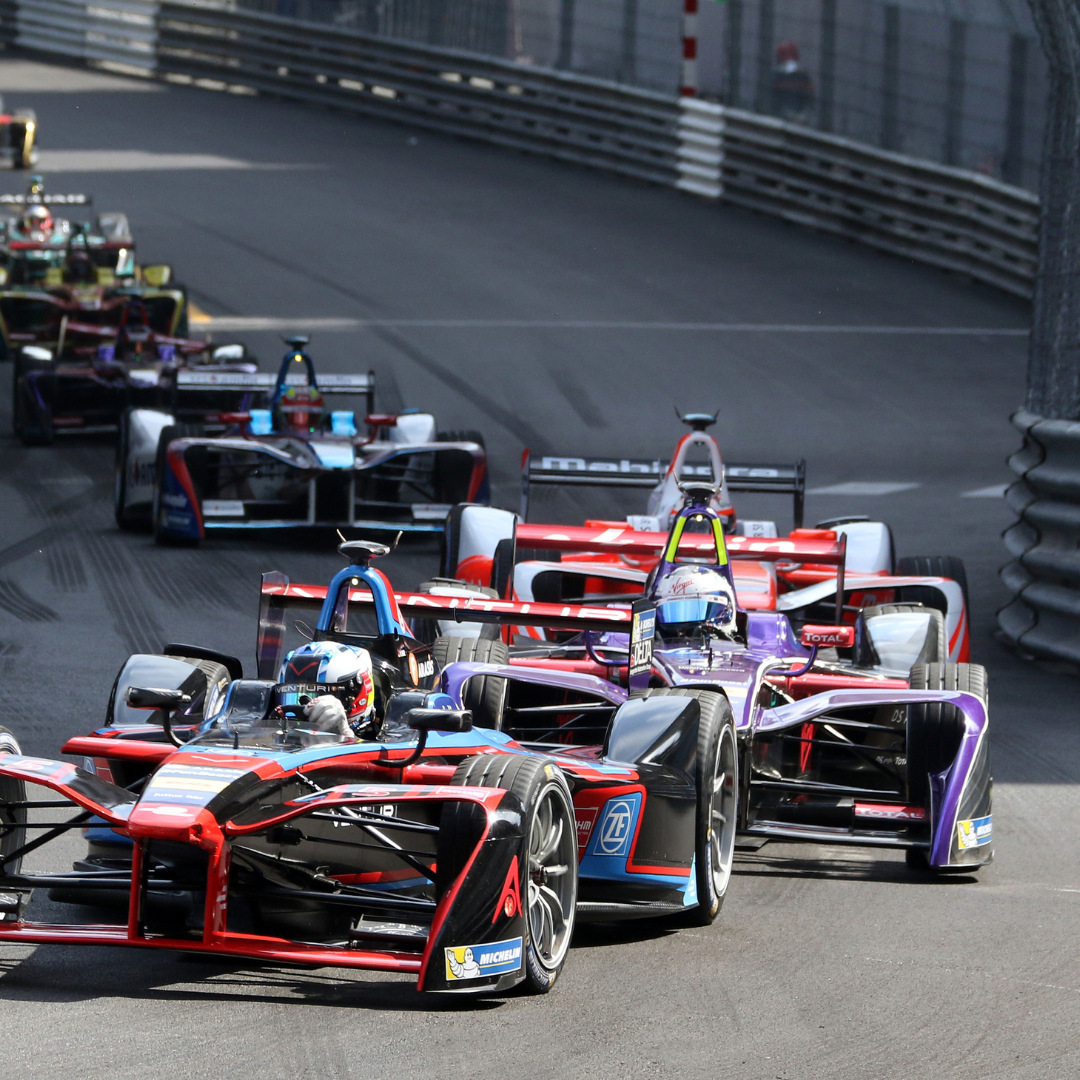
After touring the museum, Tim mentioned that Nürburgring, a famous Formula 1 track, was in the vicinity. I knew he was a big Formula 1 fan, so I quickly agreed to go with him to the track. We got to the track and parked the rental car. Since we didn’t have tickets, Tim was happy to just look at it from the outside.
I saw people walking in and suggested we join them inside. If we acted as if we belonged there, what was the worst that could happen? We joined the crowd and since no one was checking tickets, we made our way in. We climbed into the stands and watched as cars were “practicing” on the track.
Tim was in heaven. You could see he had ticked off a “bucket list” item. I enjoyed watching him as he was deep in his element. The sounds, smells, and experience filled him with joy. There was an infield section where cars were being maintained and tested. Tim looked longingly at the action, and I suddenly knew what I had to do.
I got up and said, “Follow me.” I started down the stands and Tim came along, saying, "There’s no way they’re going to let us go there.” I said, “What are they going to do, kick us out of the country?” Seemed unlikely, so we headed down and walked onto the infield, looking like we belonged there.
We spent the next two hours looking at cars and talking with drivers and mechanics. It was an amazing experience for Tim and me. I just enjoyed seeing Tim in his element, talking about cars, racing, and any other topics that I probably didn’t understand.
There’s a lot of similarities to what I do today as a consultant and my adventure with Tim. I venture out into the unknown, acting like I belong. I definitely enjoy living in the moment with my Kaizen teams and feeling pride when they win.

Getting More Than They Bargained For
My first Kaizen event with a new client in Oregon came as result of my site visit the month before. We were going to apply 5S to an area of their plant that was well behind budget. During my visit, I noticed that although prior efforts had been made to improve organization, they hadn’t stuck. With the appropriate use of Lean principles and the Wheel of Sustainability, I felt I could help them get back on track.
My first Kaizen event with a new client in Oregon came as result of my site visit the month before. We were going to apply 5S to an area of their plant that was well behind budget. During my visit, I noticed that although prior efforts had been made to improve organization, they hadn’t stuck. With the appropriate use of Lean principles and the Wheel of Sustainability, I felt I could help them get back on track.
After a few hours of training on Day 1, we took a Gemba walk into the space we were going to work on. There were several workstations with their own tools, tooling, and instructions. They were cluttered and disorganized. There was no indication of what was necessary and what was obsolete. There was a large central storage area, filled with heavy tooling for all the presses used at the workstations. One of our team members was responsible for the area and he admitted many items were no longer in use and were in the way of tooling that was current and needed.
Other areas were similar. Whenever someone needed tooling, materials, or supplies, they would have to wade through obsolete items to find them. That’s when it struck me – our 5S efforts could be used to make a direct impact on the productivity of the area. I proposed an experiment – perform a changeover on one of the presses and find out how much time, energy, and searching was required. Then, once we completed our major 5S work, we could compare “before and after” results.
I taught the team how to use spaghetti diagrams to follow the travel of the person doing the work. It would show the back-and-forth motions we could try to eliminate later. One of our team members volunteered to do the changeover. She had to search for materials, move things out of the way, and dig through clutter to do her work. Forty-five minutes later, she was finished. She looked frustrated. I asked if it was always this way. She said this was normal. Team members held up their diagrams and sure enough, they looked like spaghetti. We could make it much easier to do this work once we eliminated most of the “spaghetti” by applying 5S to the area.
I asked the team to write down their ideas to remove clutter (sort), optimize placement and create visuals (set in order), and to repair and clean equipment (shine). With almost 100 ideas on post-its, we prioritized our work. The team broke up into 3 sub-teams and worked on their critical projects.
After Day 3, there was an amazing transformation. All areas looked organized, well-labeled, and less cluttered. Over 30% of the tooling in the central storage area was identified as obsolete and was inventoried and relocated off-site.
On the morning of fourth day, we conducted another changeover with our original volunteer. She was able to complete the work in less than half the original time. She actually was able to slow down and take her time to do the work in a confident way. She didn’t have to move anything out of her way, sort through obsolete items, or search for what she needed. She took far fewer trips between her workstation and the central storage area. Our spaghetti diagrams looked much cleaner than on the first day.
My team was elated. But we were far from done. Now it was time to implement the Wheel of Sustainability to ensure their great results lived on. We named two Area Owners and built a board to post expectations, audits, and results.
We practiced the audits and checklists, and everyone agreed they could handle the tasks on a daily and weekly basis. They also felt that by doing these tasks, it would make work easier for everyone throughout the day and sustain the high performance we had demonstrated.
Following up with the team months later, they admitted they had a slow start, but after a few weeks, performance had reached budget levels. They are fully committed to continuing their great work in other areas.

Five Tips for Effective Meetings
Have you ever had a meeting where it seems like nothing was accomplished? Is every meeting this way for you? Do your meetings start late? I have facilitated hundreds of meetings and Kaizen events and have learned over the years these five key tips to an effective meeting.
Have you ever had a meeting where it seems like nothing was accomplished? Is every meeting this way for you? Do your meetings start late? I have facilitated hundreds of meetings and Kaizen events and have learned over the years these five key tips to an effective meeting.
1. Define the purpose.
2. Create a clear agenda.
3. Facilitate the meeting.
4. Set expectations.
5. Hold accountability for actions.
Define the purpose of the meeting.
Why are we meeting in the first place? What are the expectations for the team members in the meeting? Why are they there? If everyone knows why they’re there and what’s expected of them, they will more likely prepare and engage in the meeting. It also makes it easier to choose team members for the meeting. Simply put, if someone is not aligned with the purpose, they shouldn’t be invited.
Create a clear agenda.
The path from the beginning of the meeting to the end should be mapped out. How do we get to a decision as a team? What information will be shared? Who is expected to share it? What preparation should happen prior to the meeting? Does the agenda lead us to our purpose? Taking the time to create an agenda helps to remove any of the excess or unnecessary parts of the meeting, resulting in shorter, more focused meetings.
Facilitate the meeting.
Don’t leave things to chance. Someone should run and manage the meeting. This person can help the team stay on track, not wandering “into the weeds.” It’s best to use a facilitator who isn’t deeply invested in the topic being covered, but that may not be practical. Facilitation is a skill that’s highly valued, so rotating this responsibility will help team development.
Set expectations.
Start and end on time – that’s the first expectation of any effective meeting. It seems so simple, but we let things get in the way of being punctual. Other expectations should be shared as ground rules for the team. Examples include: One voice at time, be open to others’ views, work collaboratively, no calls or texting during the meeting, and others the team may develop. If anyone breaks a ground rule, the facilitator should call them out immediately and correct their behavior. The sooner this is done, the more serious the rest of the team will take these expectations. Following ground rules is a sign of respect for the team and the topic being discussed.
Hold accountability for actions.
Every meeting should have an outcome. Sometimes it’s the sharing of critical information. Other times, there are action items that must be completed. Team members should know what they’re accountable for and be responsible to meet their obligations. Therefore, assignments should be listed visually, with owners and due dates. Updates should be a part of the meeting agenda. Don’t wait until an assignment is due. You want to make sure the assignment owner has a chance to complete his/her task(s). If they’re on track, thank them. If not on track, provide help.
These tips work. It takes a while for the team members to get used to them. But once they do, your meetings will be more productive, effective, and engaging.